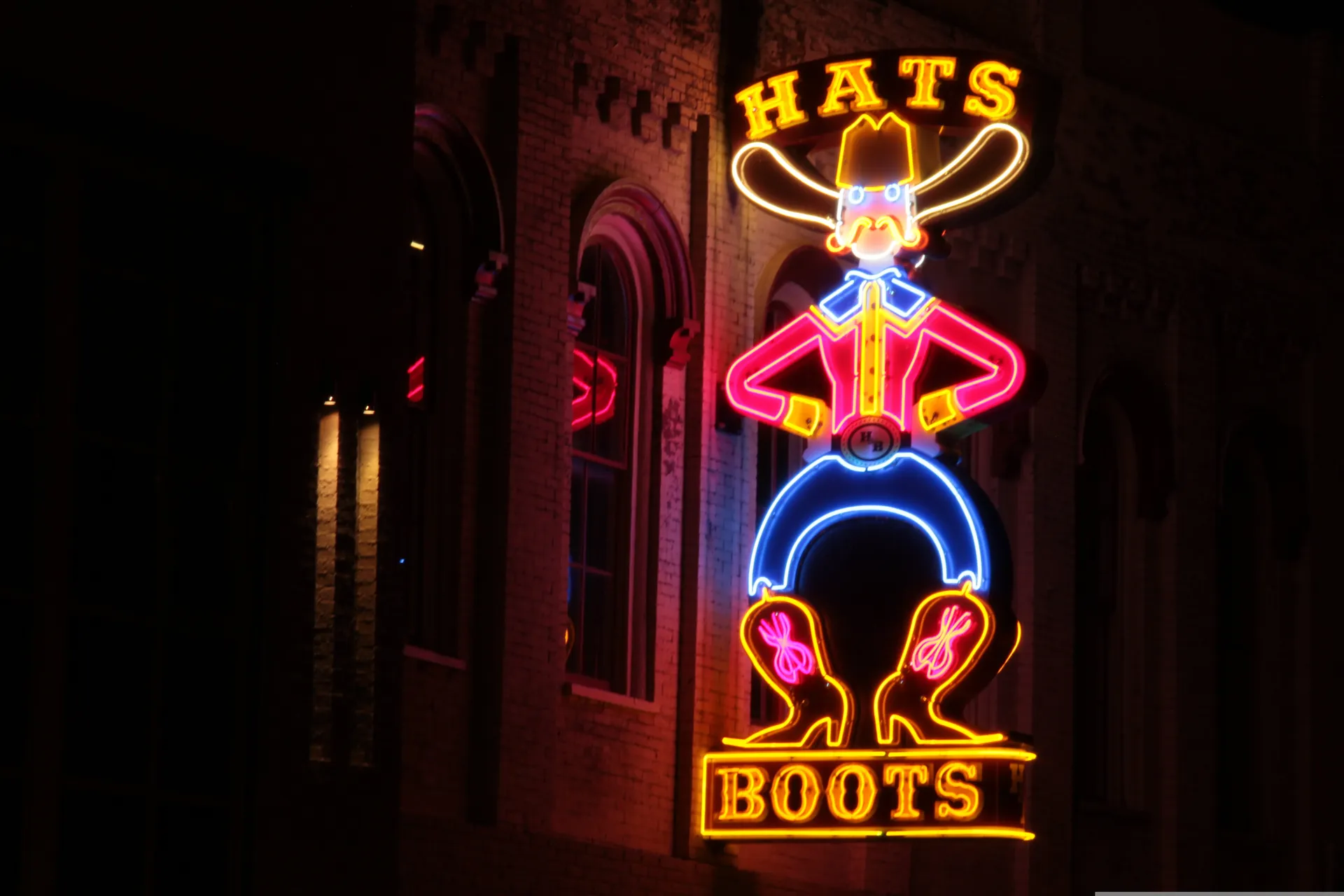
Nashville is a city built on sound. From the Grand Ole Opry, which has broadcast live country music every Saturday night since 1925, to the honky-tonks of Lower Broadway, where live bands play from ten in the morning until three the next, to the recording studios of Music Row, where Elvis, Dolly Parton, and Johnny Cash cut records that changed American culture—music is not just Nashville's industry but its identity, its atmosphere, and its beating heart. The city's unofficial title, "Music City," barely captures the scope: Nashville is now a center for pop, rock, Americana, gospel, and hip-hop, with a creative energy that has made it one of the fastest-growing cities in the United States.
But Nashville is far more than its soundtrack. The city sits on the Cumberland River in the rolling hills of Middle Tennessee, its skyline anchored by the AT&T Building (affectionately known as the "Batman Building" for its twin spires) and the full-scale replica of the Parthenon in Centennial Park—built for the 1897 Tennessee Centennial Exposition and now housing a forty-two-foot gilded statue of Athena. The historic neighborhoods of Germantown, East Nashville, and 12South have become destinations in their own right, their Victorian houses and industrial buildings repurposed as boutiques, cafés, and galleries that reflect the city's creative class. The Frist Art Museum, housed in a magnificent Art Deco post office, mounts exhibitions of national caliber.
Nashville's food scene has undergone a transformation that mirrors the city's broader renaissance. Hot chicken—a Nashville invention dating to the 1930s, involving cayenne-coated fried chicken served on white bread with pickles—has become a national phenomenon, with Prince's Hot Chicken Shack and Hattie B's leading the field. But the city's culinary ambitions extend far beyond its signature dish. The Catbird Seat, a chef's counter restaurant where diners watch a multi-course tasting menu prepared before them, has earned national acclaim. Biscuit Love serves the South's most celebrated breakfast. And the international food scene—Kurdish, Somali, Mexican, Vietnamese—reflects the city's growing diversity, concentrated in the Nolensville Pike corridor.
The music venues of Nashville range from intimate listening rooms to legendary institutions. The Ryman Auditorium, the "Mother Church of Country Music" and original home of the Grand Ole Opry, is a acoustically perfect former tabernacle where the audience sits in wooden pews. The Bluebird Cafe, a seventy-seat venue in a strip mall, is where songwriters perform their own compositions in the round—many of the songs that became hit records were first heard within these walls. The Country Music Hall of Fame and Museum, a state-of-the-art facility downtown, tells the story of American music with exhibits that are deeply researched and emotionally resonant. Beyond country, the city's jazz clubs, indie rock venues, and the annual Americana Music Festival draw music lovers from around the world.
Nashville is accessible by river and serves as a port of call on Cumberland and Tennessee River cruise itineraries. The city is a year-round destination, with spring (April–May) bringing mild temperatures and the blooming of dogwoods and redbuds across the hills, and autumn (September–October) offering comfortable weather and the CMA Music Festival's afterglow. Summer is hot and humid but brings the liveliest music scene. Winter is mild by Northern standards and offers a chance to experience the city's venues without the crowds.

