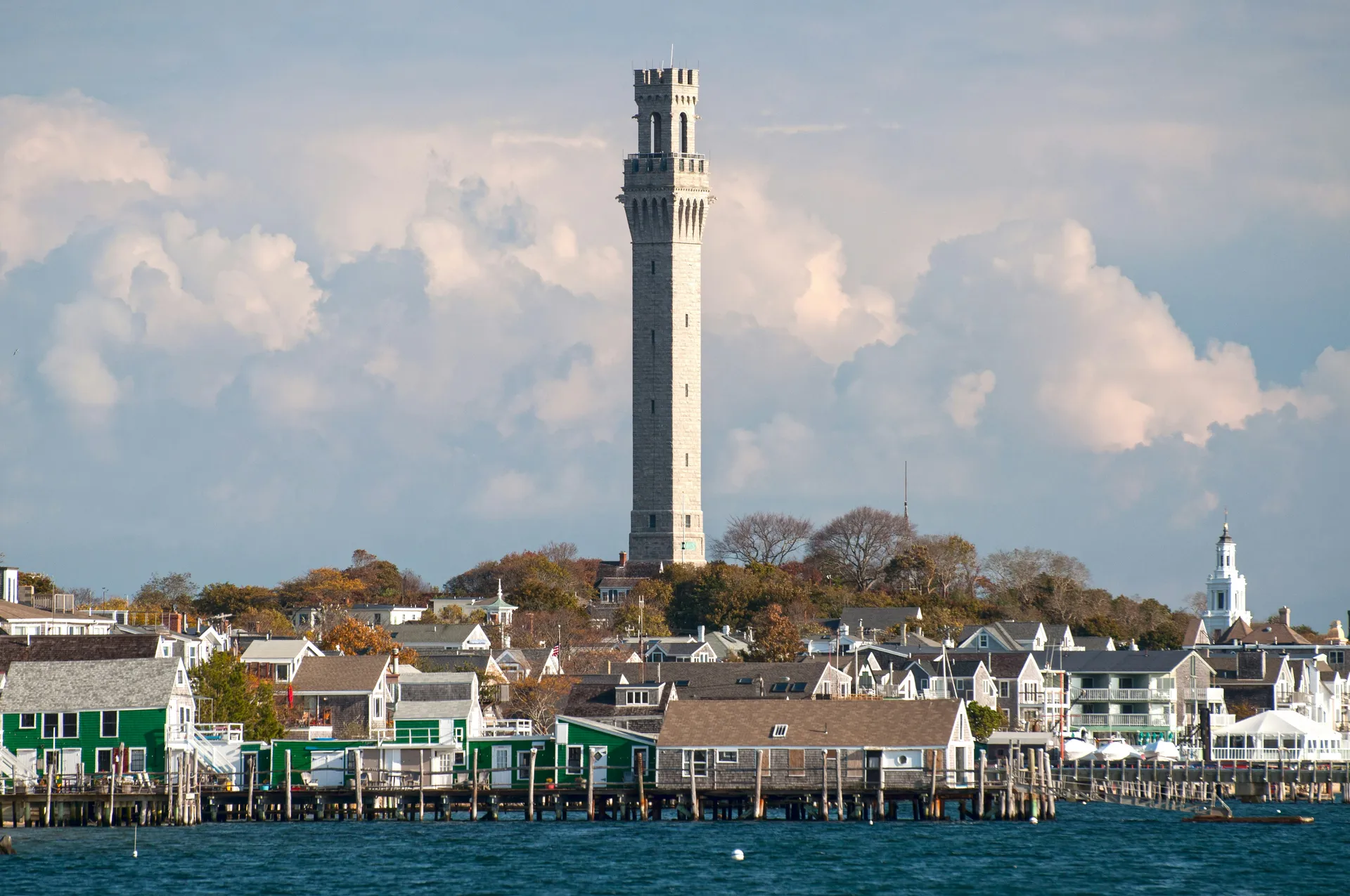
Provincetown curls around the tip of Cape Cod like a comma at the end of a long sentence, a three-mile-long town of barely three thousand year-round residents that punches wildly above its weight in art, culture, and historical significance. The Mayflower made its first American landfall here in November 1620—a full five weeks before the Pilgrims proceeded to Plymouth—and the Pilgrim Monument, a 252-foot granite tower modeled on the Torre del Mangia in Siena, commemorates the event with a prominence visible from twenty miles out to sea. But Provincetown's more lasting contribution to American culture has been as an art colony, a literary haven, and—since the mid-twentieth century—one of the most vibrant and welcoming LGBTQ+ communities in the world.
The town's artistic legacy is extraordinary. The Provincetown Art Association and Museum, founded in 1914, was at the center of a creative explosion that included Hans Hofmann's legendary painting school, the Provincetown Players theater company (which launched Eugene O'Neill's career), and a roster of writers, painters, and poets—Norman Mailer, Mark Rothko, Robert Motherwell, Mary Oliver—who found in this remote spit of sand the freedom and light that their work demanded. The quality of the light is not a romantic abstraction: the town is surrounded by water on three sides, and the reflected illumination creates a luminosity that artists have compared to the south of France.
Commercial Street, the town's main artery—so narrow that pedestrians, cyclists, and cars share the pavement in an intimate democracy—is lined with galleries, restaurants, drag shows, leather shops, and ice cream parlors in a juxtaposition that captures Provincetown's essential character: serious art and uninhibited fun, often in the same building. The dining scene is exceptional for a town of this size. The Mews Restaurant offers waterfront fine dining that would be noteworthy in Boston. Napi's, a local institution, serves creative American cuisine in a space filled with stained glass and found-art installations. The Portuguese bakeries, legacy of the Azorean fishing families who settled here in the nineteenth century, produce malasadas (fried dough) and linguiça (spiced sausage) that connect the town to its maritime roots.
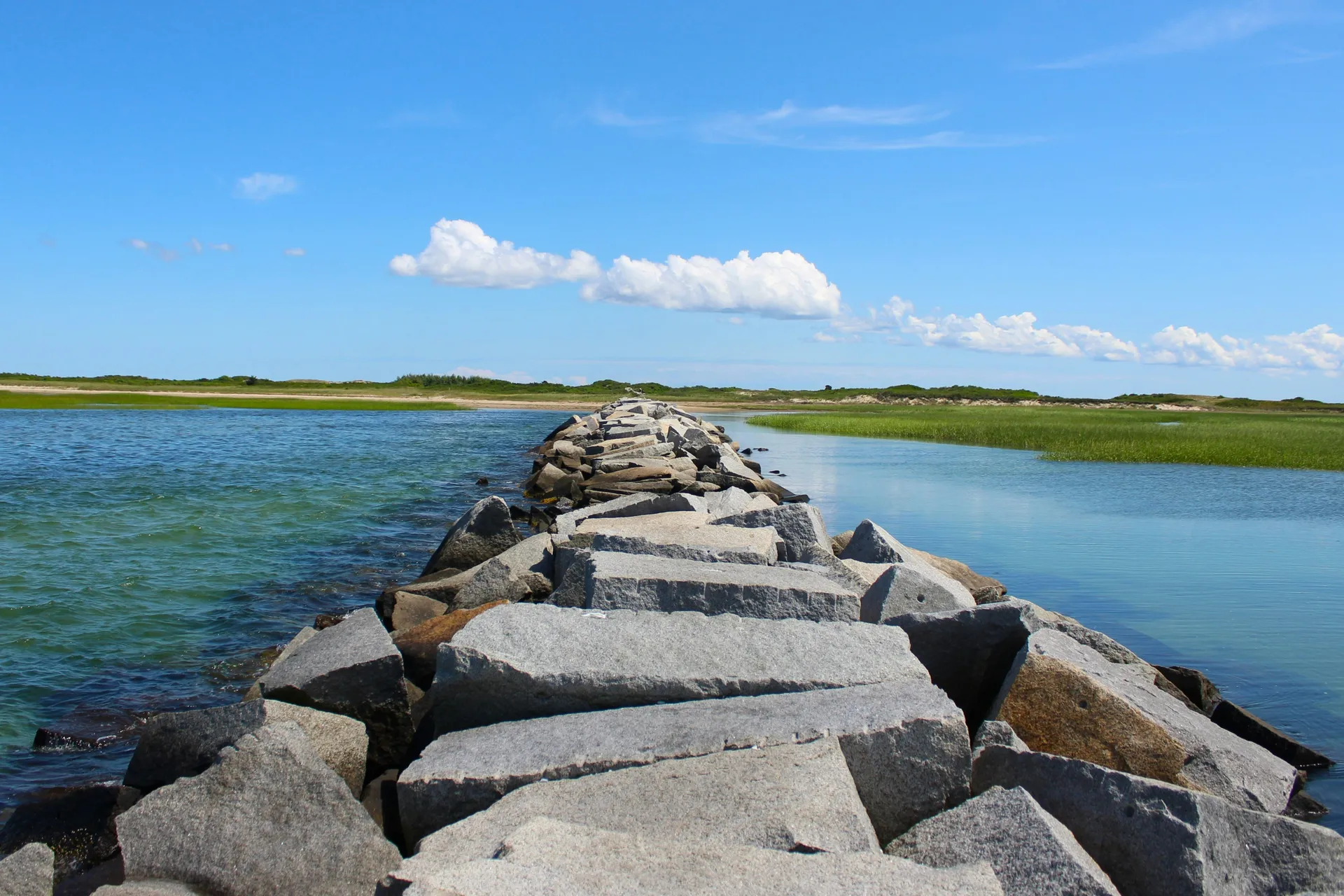
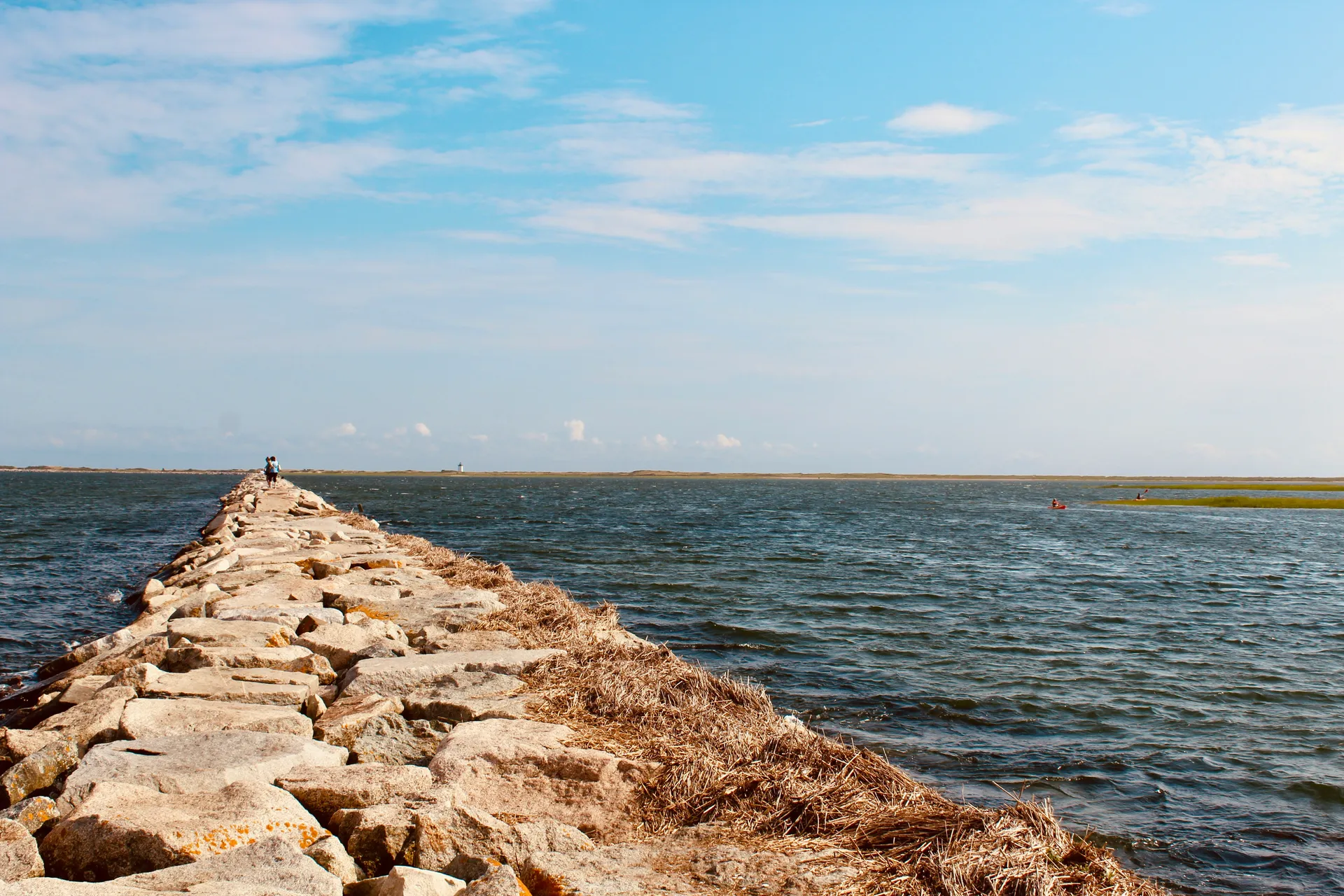
The natural landscape surrounding Provincetown is protected as part of the Cape Cod National Seashore, and its wild beauty provides a counterweight to the town's social energy. Race Point Beach, on the Atlantic side, offers powerful surf, pristine sand, and the sight of whales spouting offshore. The Province Lands Trail winds through dune forests of pitch pine and scrub oak—an ecosystem unique to the outer Cape. Whale-watching excursions, departing from MacMillan Wharf, venture into the Stellwagen Bank National Marine Sanctuary, where humpback whales, fin whales, and occasionally North Atlantic right whales feed from April through October. The breakwater walk—a mile-long granite jetty connecting the west end of town to Long Point, a remote spit of sand—offers a meditative experience of sky, sea, and solitude.
Provincetown is accessible by fast ferry from Boston (ninety minutes), by air from Boston, and as a port of call for New England coastal cruises. The town is at its most vibrant from Memorial Day through Labor Day (late May–early September), when the population swells tenfold. Carnival Week in August is the social apex—a week of parades, costumes, and celebration. October's Fantasia Fair and the New Year's celebrations extend the season. Winter is quiet, atmospheric, and beloved by writers and those who appreciate the austere beauty of the outer Cape in the cold months.