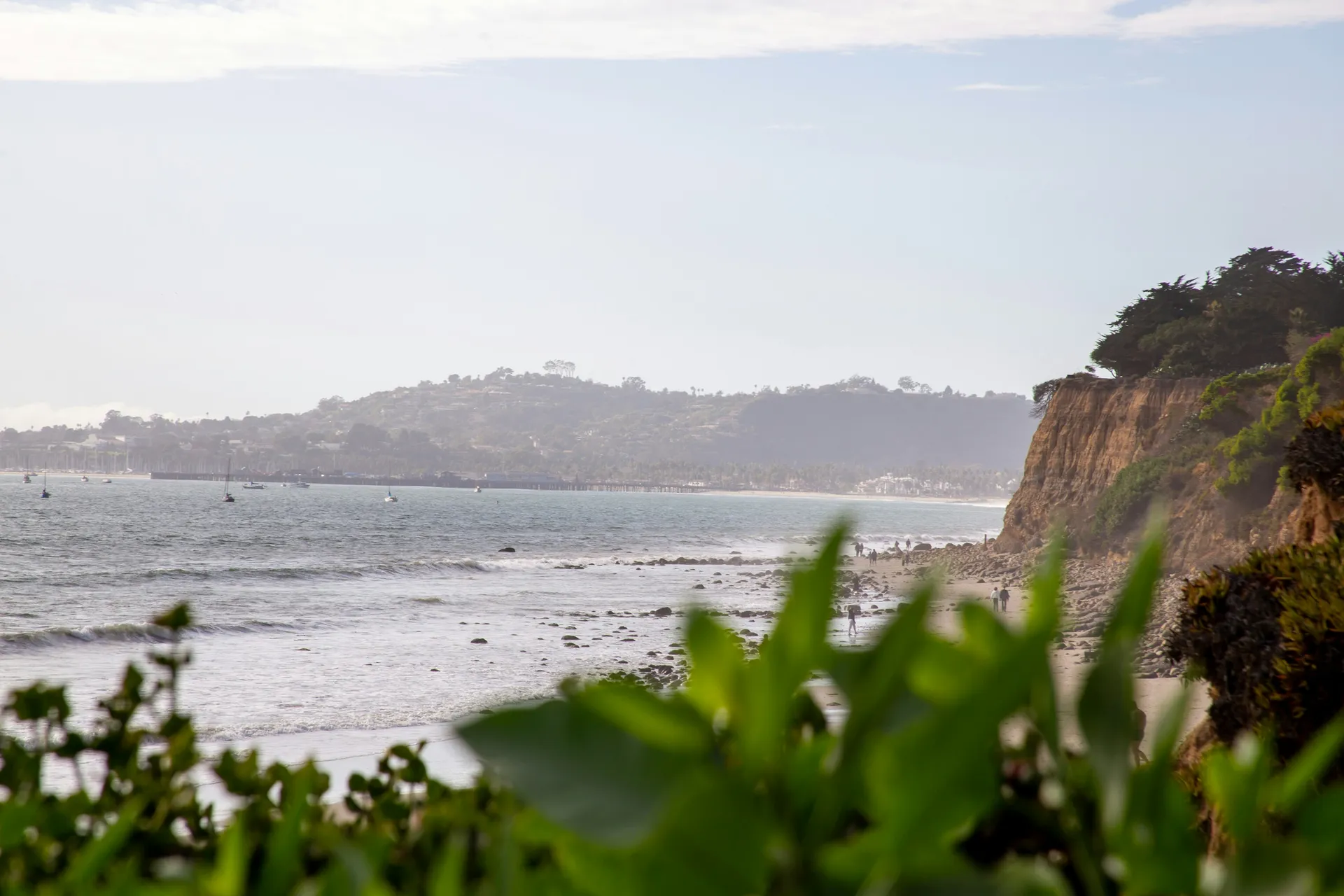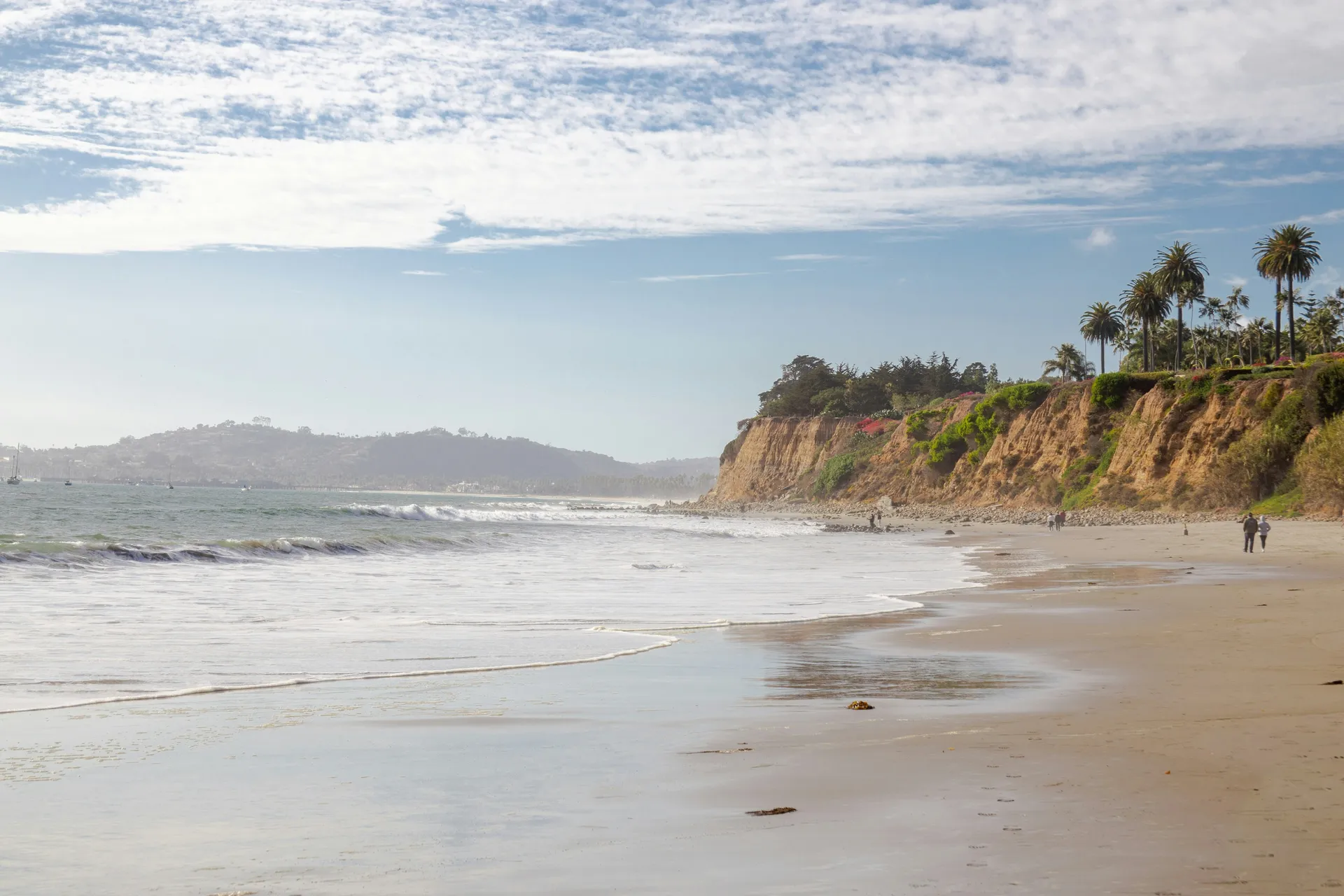
Santa Barbara has been called the American Riviera, and for once the comparison is not hyperbole. Cradled between the Santa Ynez Mountains and the Pacific Ocean along a rare east-west stretch of the California coast, this city of red-tile roofs, whitewashed adobe walls, and swaying fan palms enjoys a Mediterranean climate so consistently perfect that early Spanish settlers believed they had found paradise. The Chumash people, who inhabited these shores for at least 13,000 years before the Spanish arrived, would have agreed — their name for the region translates, roughly, as "the land of the abundant earth."
The city's architectural identity was shaped by a catastrophic earthquake in 1925 that destroyed much of the downtown. Rather than rebuild haphazardly, civic leaders mandated a unified Spanish Colonial Revival style, resulting in one of the most visually cohesive city centres in America. The Santa Barbara County Courthouse, completed in 1929, is the crown jewel: a Moorish-Spanish fantasy of hand-painted ceilings, wrought-iron balconies, and a clock tower whose observation deck offers a 360-degree panorama of mountains, city, and sea. Nearby, the Old Mission Santa Barbara — the "Queen of the Missions," founded in 1786 — gazes serenely over manicured gardens and a twin-towered sandstone façade that appears on more postcards than any other building in California.
Santa Barbara's food and wine scene punches well above its weight. The city sits at the southern gateway to Santa Barbara Wine Country, where the transverse valleys of the Santa Ynez Mountains create a mosaic of microclimates ideal for Pinot Noir, Chardonnay, and Syrah — a region that gained global attention after the film Sideways. Downtown's Funk Zone, a former industrial district between the freeway and the harbour, has been transformed into a walkable enclave of urban wineries, craft breweries, farm-to-table restaurants, and art galleries. For a quintessential Santa Barbara meal, post up at the harbour and order a Santa Barbara spot prawn taco from a fisherman's stand, or settle into a white-tablecloth restaurant on State Street for local uni, grilled abalone, and a glass of estate Pinot Noir as the sun melts into the Pacific.
The natural beauty surrounding Santa Barbara is staggering in its variety. The Channel Islands, California's Galápagos, lie just offshore — Anacapa and Santa Cruz islands offer world-class kayaking through sea caves, snorkelling with garibaldi and sea lions, and hiking across windswept bluffs carpeted in wildflowers. Back on the mainland, the Los Padres National Forest rises directly behind the city, threaded with trails that climb through chaparral and oak woodland to waterfalls and swimming holes. The Carpinteria Salt Marsh, one of the last remaining coastal estuaries in southern California, shelters shorebirds and harbour seals within sight of the freeway.
Santa Barbara is a port of call for Princess Cruises on their Pacific Coast itineraries, with ships typically anchoring offshore and tendering passengers to Stearns Wharf — the oldest working wharf on the West Coast, dating to 1872. From the wharf, the beach, the Funk Zone, and the heart of downtown are all within easy walking distance. The climate is glorious year-round, but spring (March through May) brings wildflower blooms and whale-watching season, while autumn (September through November) delivers the warmest ocean temperatures and the grape harvest in wine country. Santa Barbara is that rarest of coastal cities: glamorous without pretension, cultured without arrogance, and beautiful beyond argument.