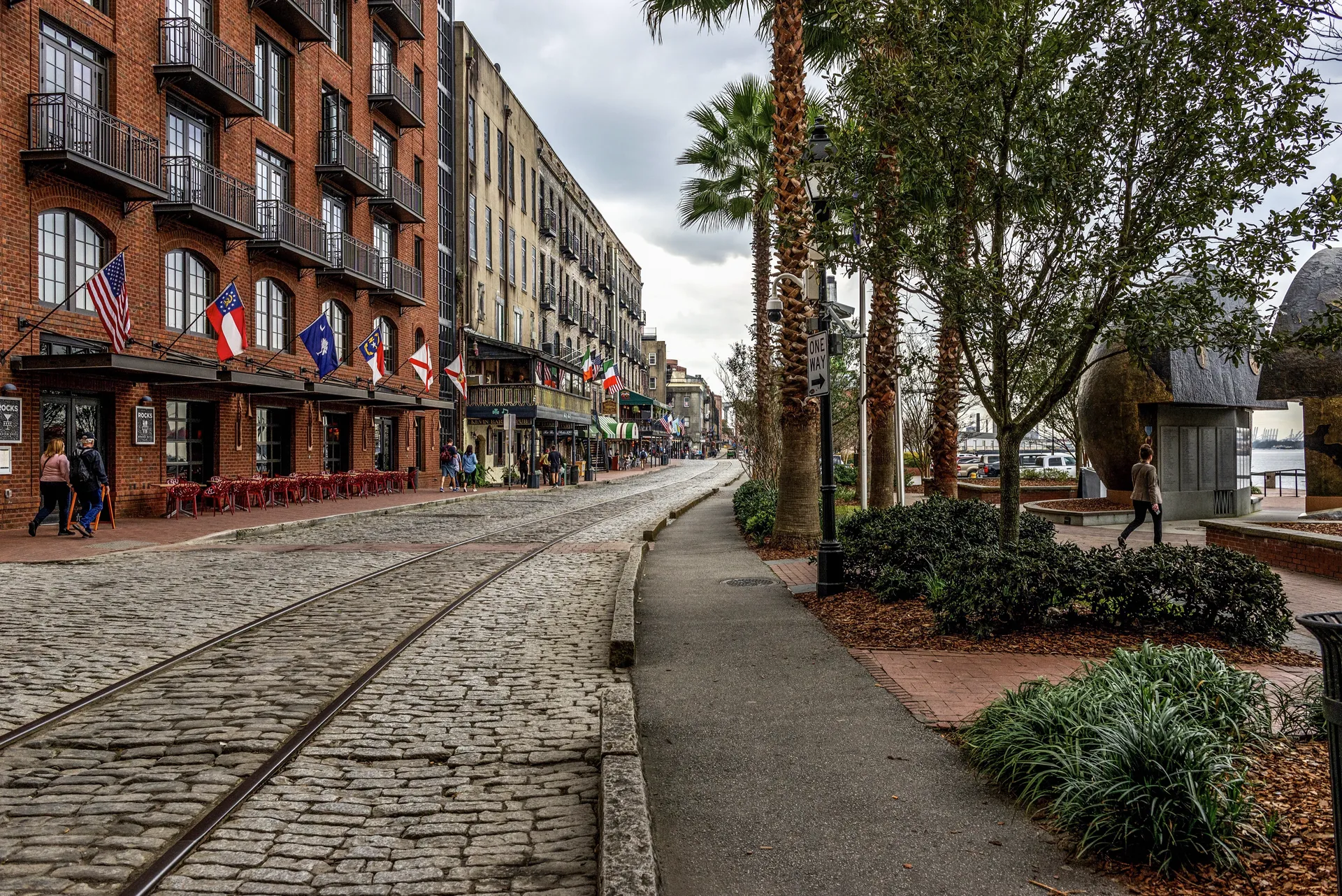
Savannah is the most beautiful city in North America—a claim that is, of course, subjective, but one that a remarkable number of travelers, architects, and urban planners are willing to defend. Founded in 1733 by General James Oglethorpe as the first city in the colony of Georgia, Savannah was laid out on a revolutionary grid of squares—twenty-two of the original twenty-four survive—each a pocket park shaded by massive live oak trees draped in Spanish moss, surrounded by historic townhouses, churches, and public buildings that span three centuries of American architecture. The effect, especially on a warm evening when the squares are lit by gas lamps and the scent of jasmine hangs in the air, is enchanting.
The city's architectural heritage is arguably the finest and most cohesive in the United States. The Savannah Historic District, a 2.5-square-mile area containing over 1,500 architecturally significant buildings, is the largest National Historic Landmark District in the country. Styles range from Georgian and Federal through Italianate and Victorian Gothic to Art Deco, and the extraordinary thing is how well they coexist—the squares impose a rhythm and scale that unifies the diverse architectural vocabulary into a coherent whole. The Mercer Williams House, made famous by John Berendt's bestseller "Midnight in the Garden of Good and Evil," is a particularly fine Italianate mansion, but it competes for attention with dozens of equally impressive neighbors.
Savannah's food culture is a celebration of the Lowcountry tradition—a cuisine shaped by the African, English, and Gullah-Geechee influences that have defined the coastal South for three centuries. Shrimp and grits, the region's iconic dish, reaches its apotheosis here—the shrimp pulled from the tidal creeks that morning, the grits stone-ground from local corn. Mrs. Wilkes' Dining Room, a boarding-house-style restaurant operating since 1943, serves communal platters of fried chicken, collard greens, sweet potatoes, and biscuits to lines that stretch around the block. The Grey, a critically acclaimed restaurant in a restored Greyhound bus station, represents the city's culinary evolution—Southern ingredients elevated by global technique in a setting of midcentury modern glamour. Leopold's Ice Cream, serving handmade flavors since 1919, provides a sweet conclusion to any Savannah meal.
Beyond the Historic District, Savannah offers experiences that extend the exploration in multiple directions. Forsyth Park, a thirty-acre green space anchored by a magnificent cast-iron fountain, provides the city's most photographed scene—particularly in March, when the azaleas bloom beneath the oaks. Bonaventure Cemetery, overlooking the Wilmington River on the city's eastern edge, is one of the most hauntingly beautiful burial grounds in America—its oak-canopied avenues and elaborately carved monuments have inspired writers and photographers for generations. Tybee Island, twenty minutes east, offers a laid-back beach escape with a historic lighthouse, fresh seafood shacks, and sunrises over the Atlantic. Fort Pulaski, a magnificent brick fortress at the mouth of the Savannah River, tells the story of a Civil War siege that changed military engineering forever.
Savannah is a major port of call for cruise ships operating along the U.S. East Coast, with vessels docking on the Savannah River within walking distance of the Historic District. The best time to visit is March through May, when the azaleas and dogwoods bloom, temperatures are comfortable, and the city celebrates St. Patrick's Day with the second-largest parade in the nation. Autumn (October–November) brings cooler weather and the Savannah Film Festival. Summer is hot and humid but atmospheric, with long evenings and the social rhythm that Southerners call "the slow season." Winter is mild, quiet, and lovely.

