Perched along the northern shore of the Río de la Plata, Montevideo was founded in 1724 by Bruno Mauricio de Zabala as a strategic military stronghold of the Spanish Empire, its natural harbor designed to counter Portuguese expansion from nearby Colonia del Sacramento. The city rose to prominence as a vital trading port throughout the nineteenth century, its Ciudad Vieja quarter accumulating layers of Art Deco, Neoclassical, and early Modernist architecture that remain remarkably intact today. That layered past is precisely what lends Montevideo its singular character — a capital city that wears its history not as museum piece, but as living texture.
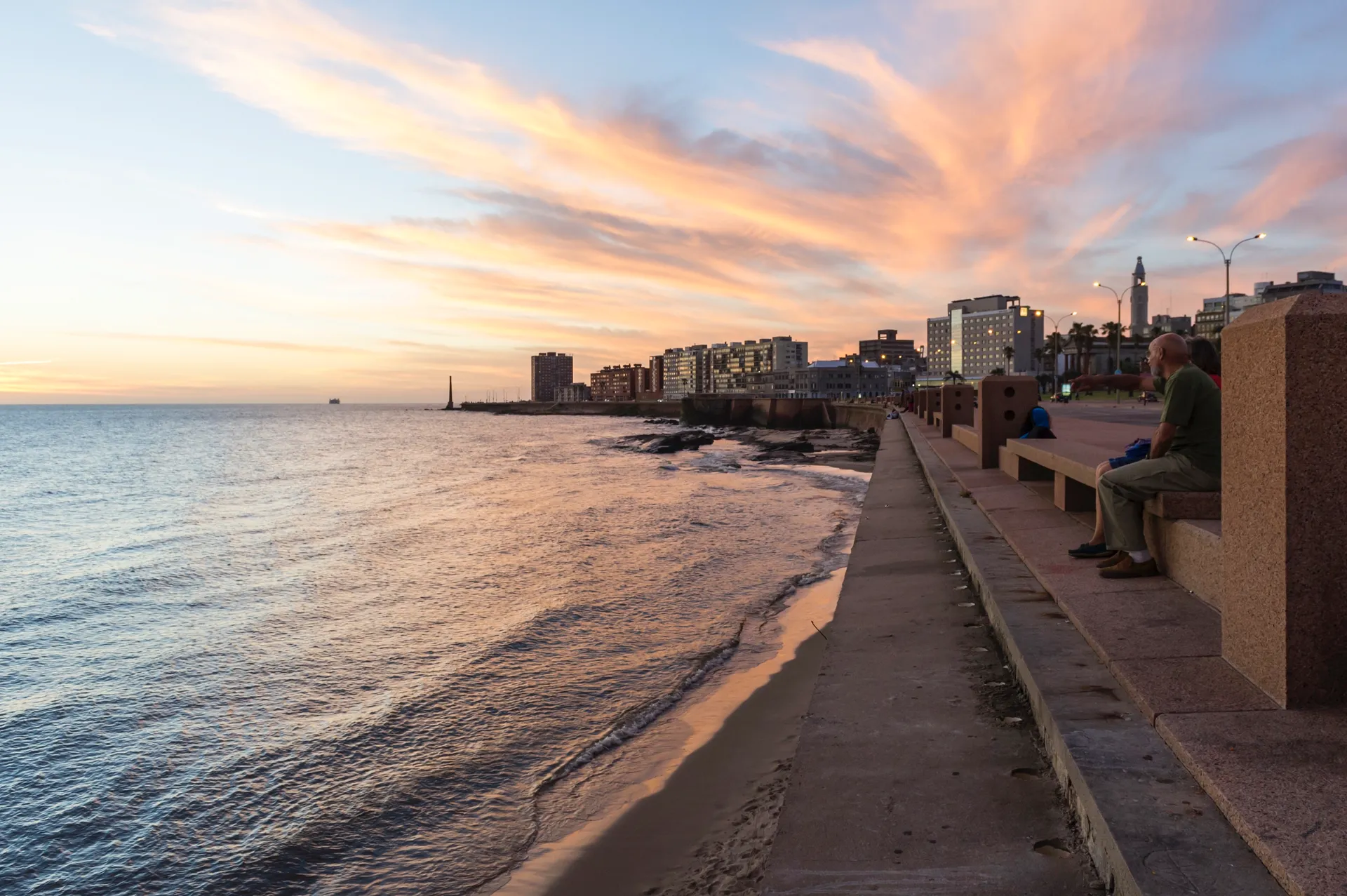
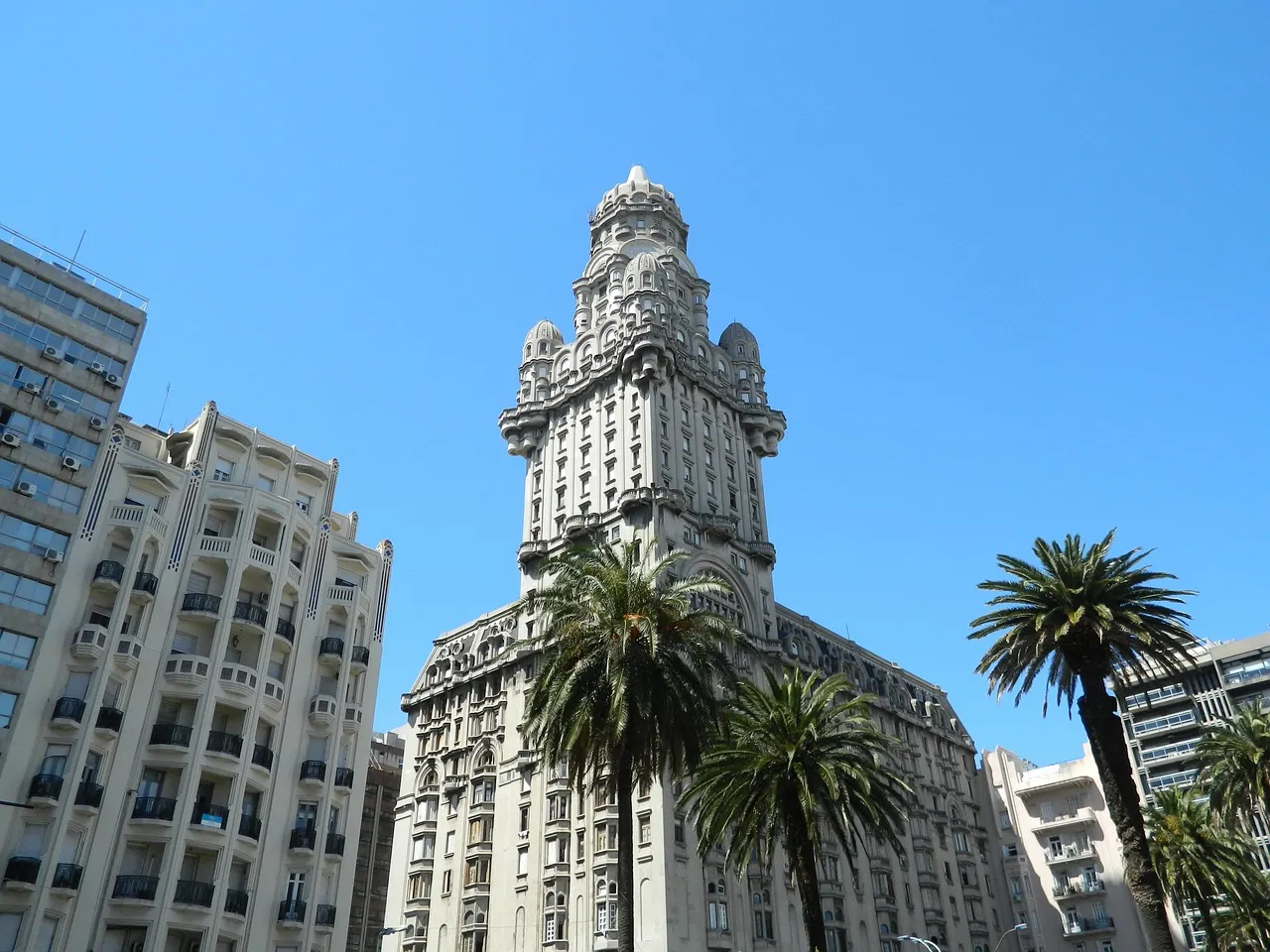
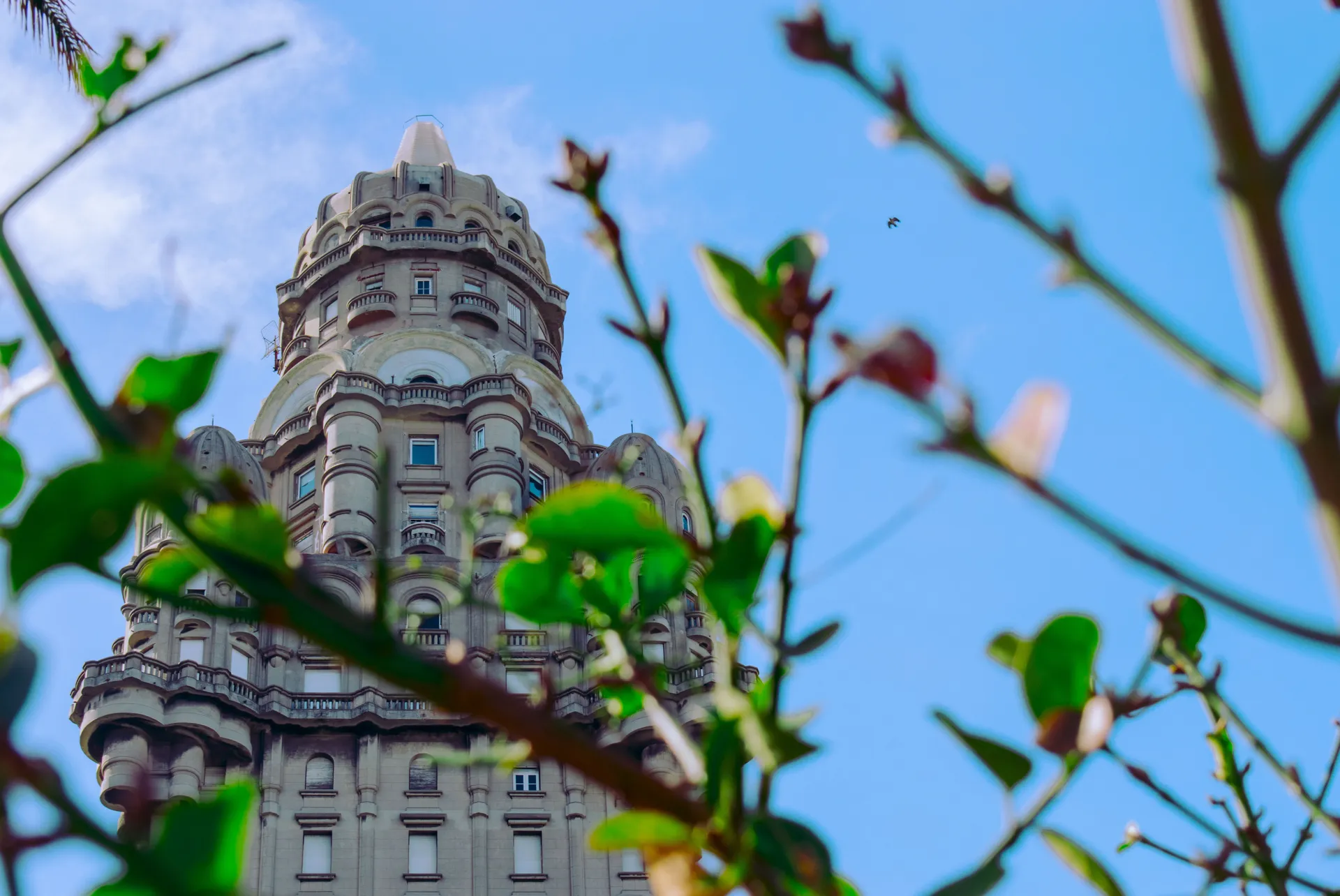
To arrive by sea is to understand Montevideo on its own terms. The port sits mere steps from the Ciudad Vieja, where wrought-iron balconies overhang cobblestone streets and the Palacio Salvo — once South America's tallest building — commands the skyline with its eclectic, almost fantastical silhouette. Along the Rambla, the city's legendary waterfront promenade stretching over twenty kilometers, locals sip mate from shared gourds as the afternoon light turns the estuary to hammered silver. There is a rhythm here that resists hurry, a sophistication born not from ostentation but from deeply held customs and an unhurried appreciation for the pleasures of daily life.
Montevideo's culinary landscape is a revelation for the discerning palate. The asado is not merely a meal but a ritual — whole cuts of beef, sweetbreads, and morcilla slow-cooked over wood embers at storied parrillas such as those lining the Mercado del Puerto, the magnificent iron-vaulted market hall built in 1868. Seek out chivito, Uruguay's legendary steak sandwich layered with ham, mozzarella, olives, and egg — a deceptively simple dish elevated to art form at the right hands. For something subtler, try torta frita on a rainy afternoon, the crisp fried dough a beloved comfort passed between generations, or finish an evening with a glass of Tannat, the robust red grape that has found its definitive expression in Uruguayan terroir. The city's emerging contemporary dining scene, particularly in the Pocitos and Carrasco neighborhoods, increasingly draws gastronomes who recognize that Montevideo's table rivals Buenos Aires without the crowds.
The surrounding region rewards those willing to extend their stay. A short journey east along the coast reveals Punta del Este, the storied resort peninsula where South American high society has gathered for decades — its beaches, sculptural landmarks like La Mano, and sophisticated dining scene offer a glamorous counterpoint to the capital's understated charm. To the west lies Colonia del Sacramento, a UNESCO World Heritage Site whose Portuguese colonial quarter, with its seventeenth-century stone walls and bougainvillea-draped lanes, feels suspended in amber. Both destinations pair naturally with Montevideo, creating a triptych of Uruguayan experiences that spans cosmopolitan energy, coastal glamour, and preserved colonial beauty.
Montevideo's deepwater port has established the city as a premier South American cruise destination, welcoming an impressive roster of distinguished lines. Azamara and Oceania Cruises bring their hallmark destination-immersive itineraries, allowing extended time to explore the capital's neighborhoods in depth. Silversea and Seabourn call with their ultra-luxury vessels, while Regent Seven Seas Cruises offers all-inclusive elegance perfectly suited to Uruguay's unhurried sensibility. Holland America Line and Princess Cruises feature Montevideo prominently on their South American grand voyages, and Norwegian Cruise Line provides flexible freestyle options for independent-minded travelers. Costa Cruises and MSC Cruises connect the port to broader Latin American and transatlantic routings, making Montevideo accessible from both European and North American departure points. Whichever vessel delivers you to this remarkable shore, the city rewards arrival with a warmth and authenticity that lingers well beyond departure.