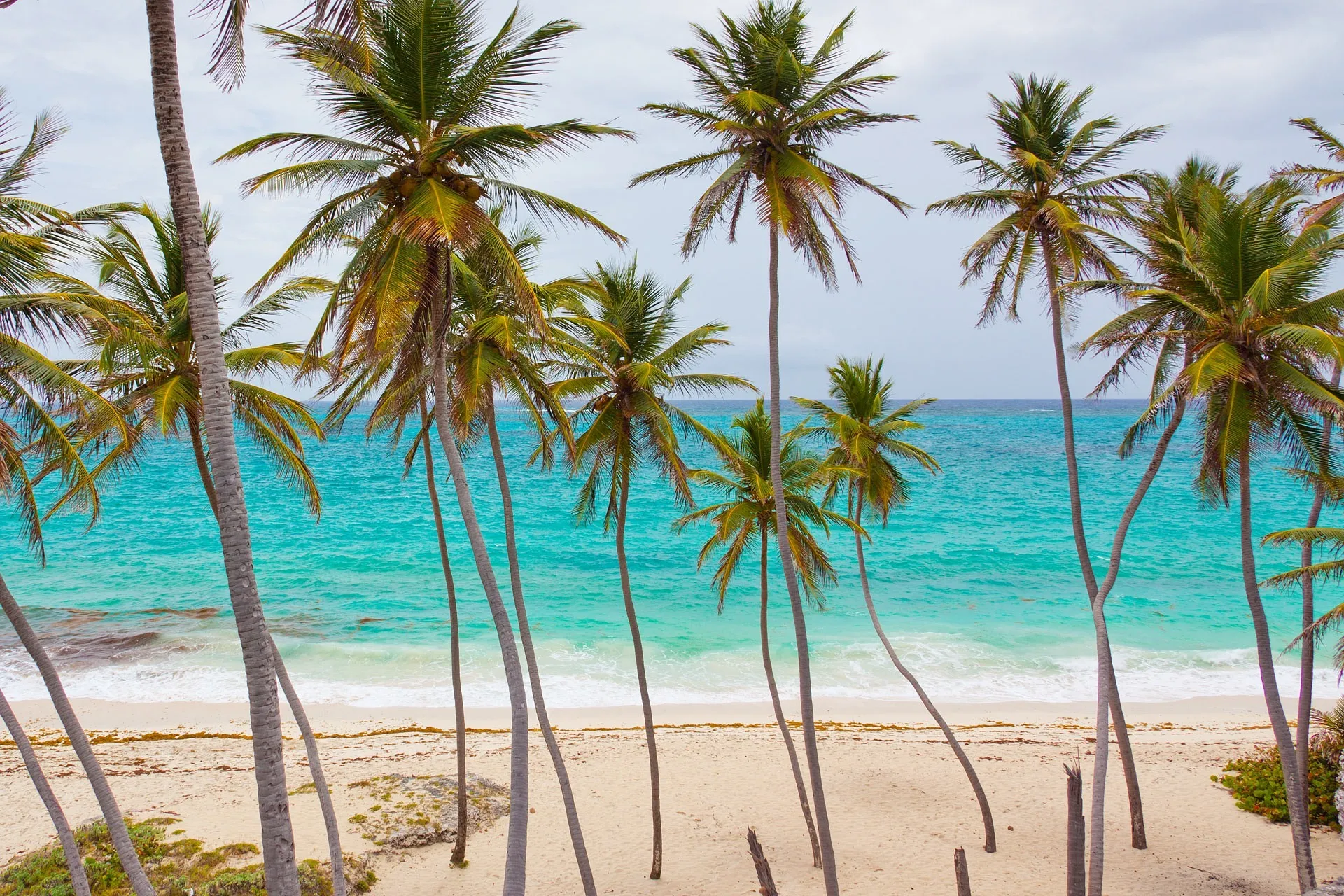
Saint John is the smallest of the three main U.S. Virgin Islands — and the most spectacular. Two-thirds of its twenty square miles are protected within the Virgin Islands National Park, a gift from Laurance Rockefeller who purchased much of the island in the 1950s and donated it to ensure that at least one Caribbean island would be preserved from the development that was transforming the rest of the region.
Trunk Bay, the park's most famous beach, regularly appears on lists of the world's most beautiful — a crescent of white sand lapped by water of such improbable turquoise that first-time visitors suspect a filter has been applied to reality. The underwater snorkeling trail, marked with interpretive signs on the seafloor, introduces non-divers to coral reef ecology with the pedagogical earnestness of a national park and the visual drama of the Caribbean at its finest.
Beyond Trunk Bay, the park encompasses hiking trails that wind through dry tropical forest to plantation ruins, petroglyphs carved by the island's pre-Columbian Taíno inhabitants, and beaches accessible only by trail or boat that offer the seclusion increasingly difficult to find anywhere in the Caribbean. Reef Bay Trail, the park's signature hike, descends through forest past sugar mill ruins and ancient rock carvings to a beach where a boat collects hikers — eliminating the return climb with welcome efficiency.
Azamara, Explorations by Norwegian, and Silversea include Saint John on Caribbean itineraries, typically tendering to Cruz Bay, the island's compact main town where restaurants and shops occupy a few colorful blocks. The island's lack of an airport means visitors arrive by ferry or tender — a logistical limitation that functions as quality control, keeping visitor numbers within the park's capacity.
December through April provides the driest and most comfortable conditions, though Saint John's park-protected environment ensures relatively uncrowded beaches year-round. Saint John is the Caribbean's most compelling argument for conservation — proof that a wealthy man's vision, a nation's park system, and an island's natural beauty can combine to preserve paradise not as a memory but as a living, swimmable, hikeable reality.

