Port Vila: Vanuatu's Enchanting South Pacific Capital
Port Vila has served as the capital of Vanuatu since independence in 1980, but the sheltered harbour of Vila Bay has attracted settlers for millennia — first the Melanesian ni-Vanuatu people, who cultivated the volcanic soil and navigated the Pacific in outrigger canoes, then the British and French, who administered the archipelago as the curious Anglo-French Condominium from 1906 to 1980. This unique dual colonial arrangement — where two European powers governed simultaneously with separate legal systems, hospitals, and police forces — gave Port Vila an eccentric bicultural character that persists today in the street names, the boulangeries alongside fish-and-chip shops, and the easygoing bilingualism of its residents.
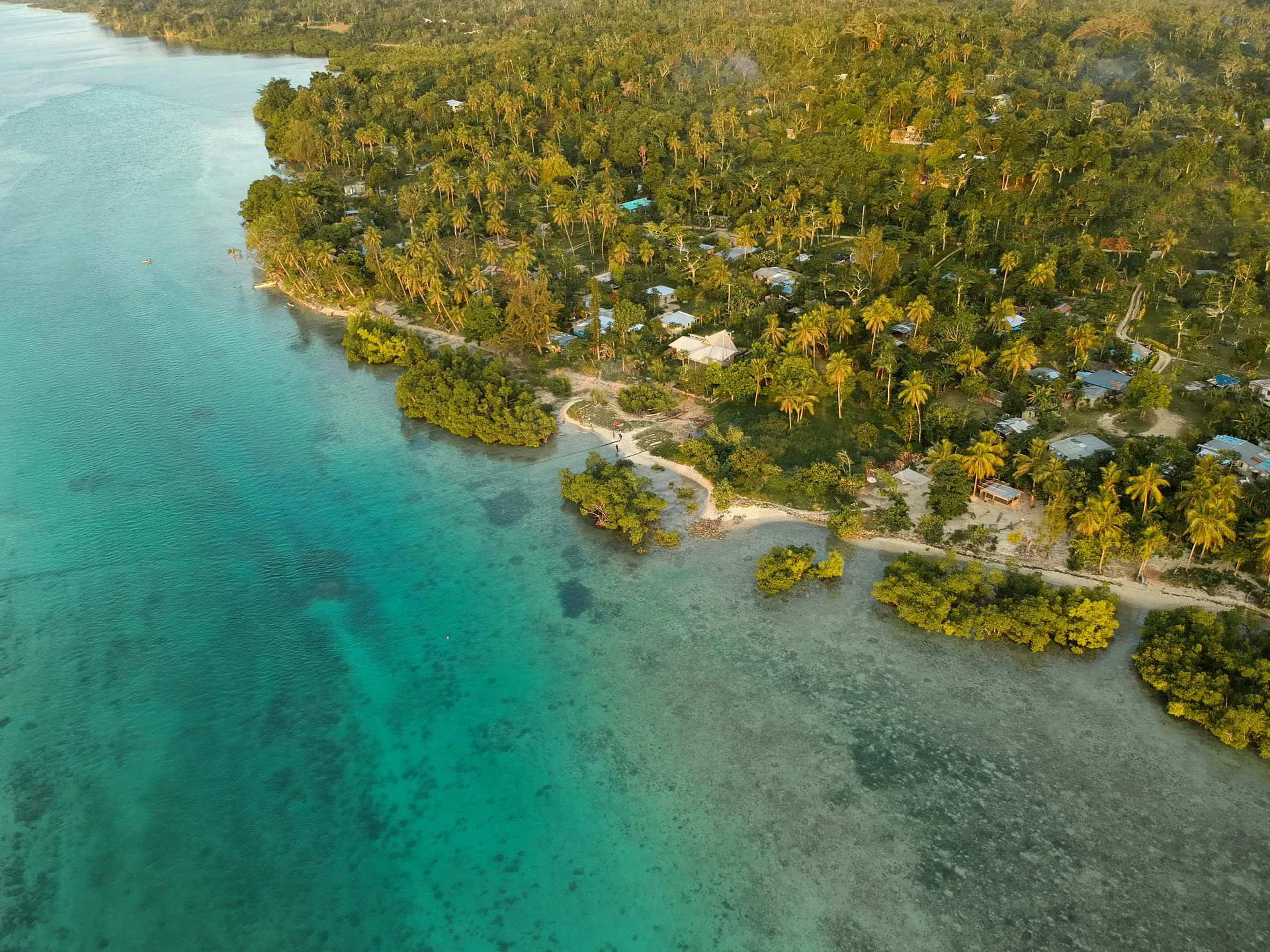
The character of Port Vila is that of a small South Pacific town blessed with extraordinary natural beauty and cursed with just enough tourism infrastructure to be comfortable without being overrun. The waterfront curves around Vila Bay, where fishing boats and island ferries share anchorage with visiting yachts. The municipal market — Mama's Market to locals — is a vivid display of tropical abundance: taro, yams, island cabbage, coconuts, pawpaw, and the kava root that is central to Vanuatu's social and ceremonial life. Behind the town, the hills rise steeply through residential neighbourhoods where bougainvillea cascades over corrugated iron roofs and breadfruit trees shade every garden. The pace of life is unhurried in a way that feels genuinely Pacific rather than performatively relaxed.
Vanuatu's cuisine is a fascinating blend of Melanesian tradition and Franco-British colonial influence. The national dish is laplap — grated yam, taro, or banana wrapped in banana leaves with coconut cream and island cabbage, then cooked in an underground oven on heated stones. The result is dense, earthy, and deeply satisfying. French bakeries in Port Vila produce baguettes and croissants that would not be out of place in Lyon. Seafood is exceptional: freshly grilled lobster, coconut crab (a massive land crab that climbs coconut palms), and raw fish marinated in lime and coconut cream. And then there is kava — the mildly narcotic drink made from the pounded root of the pepper plant, consumed at nakamals (kava bars) throughout the evening. The experience of sitting in a dirt-floored nakamal, drinking shells of earthy, tongue-numbing kava as the tropical darkness descends, is one of the most authentic cultural encounters in the South Pacific.
The excursion possibilities from Port Vila are remarkable for a destination of this size. Hideaway Island, just a short boat ride from the mainland, offers snorkelling over coral gardens and the world's only underwater post office — a genuine functioning mailbox on the sea floor where waterproof postcards can be posted. Mele Cascades, a series of tiered waterfalls tumbling through rainforest into swimming pools of crystal-clear water, is accessible within thirty minutes. The Ekasup Cultural Village offers an immersive experience of traditional ni-Vanuatu life, from coconut husking and basket weaving to the stories and dances that encode the archipelago's oral history. For divers, the SS President Coolidge — a luxury liner sunk during World War II and now lying in the harbour at nearby Luganville — is one of the world's most accessible and spectacular wreck dives.
Carnival Cruise Line, Cunard, Regent Seven Seas Cruises, and Royal Caribbean all call at Port Vila, using the port facilities at Vila Bay. The town is compact and walkable, with the market, waterfront restaurants, and duty-free shopping all within easy reach. For travellers exploring the South Pacific, Port Vila offers a rare combination of Melanesian culture, colonial eccentricity, and natural beauty that distinguishes Vanuatu from its better-known Polynesian neighbours. The dry season from May through October offers the most comfortable weather, with June through August being coolest and driest.

