Hanoi's recorded history stretches back to the 3rd century BC, when the Âu Lạc kingdom built the Co Loa Citadel — a spiral-walled fortress whose earthen ramparts still rise from the mist-shrouded plains north of the modern city. The city became the imperial capital of the Lý dynasty in 1010, when Emperor Lý Thái Tổ reportedly witnessed a golden dragon ascending from the Red River and renamed his city Thăng Long — "Rising Dragon." Through a millennium of dynastic change, French colonisation, and the devastating American War, Hanoi has retained an architectural and cultural density that makes it one of Southeast Asia's most compelling capitals.
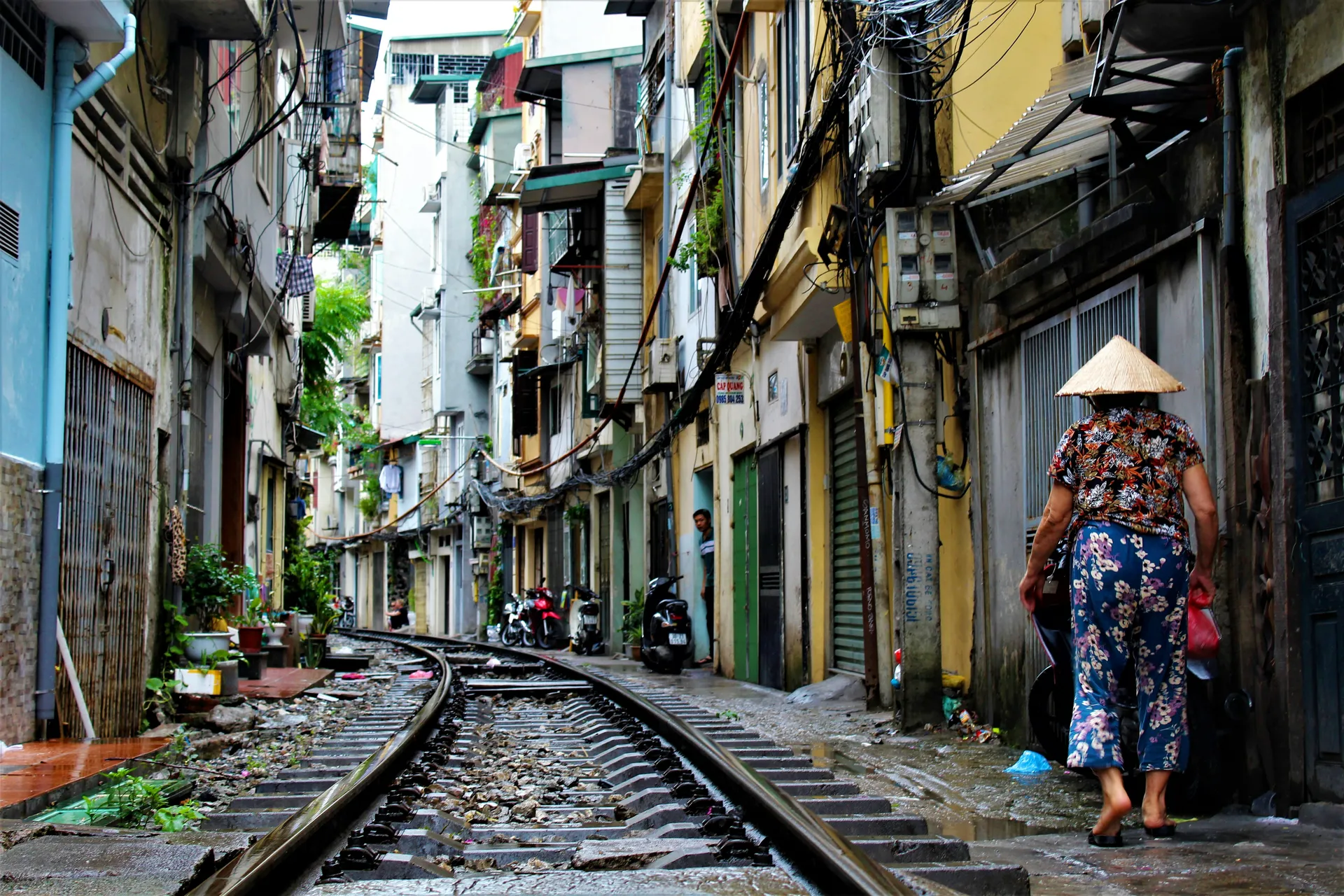
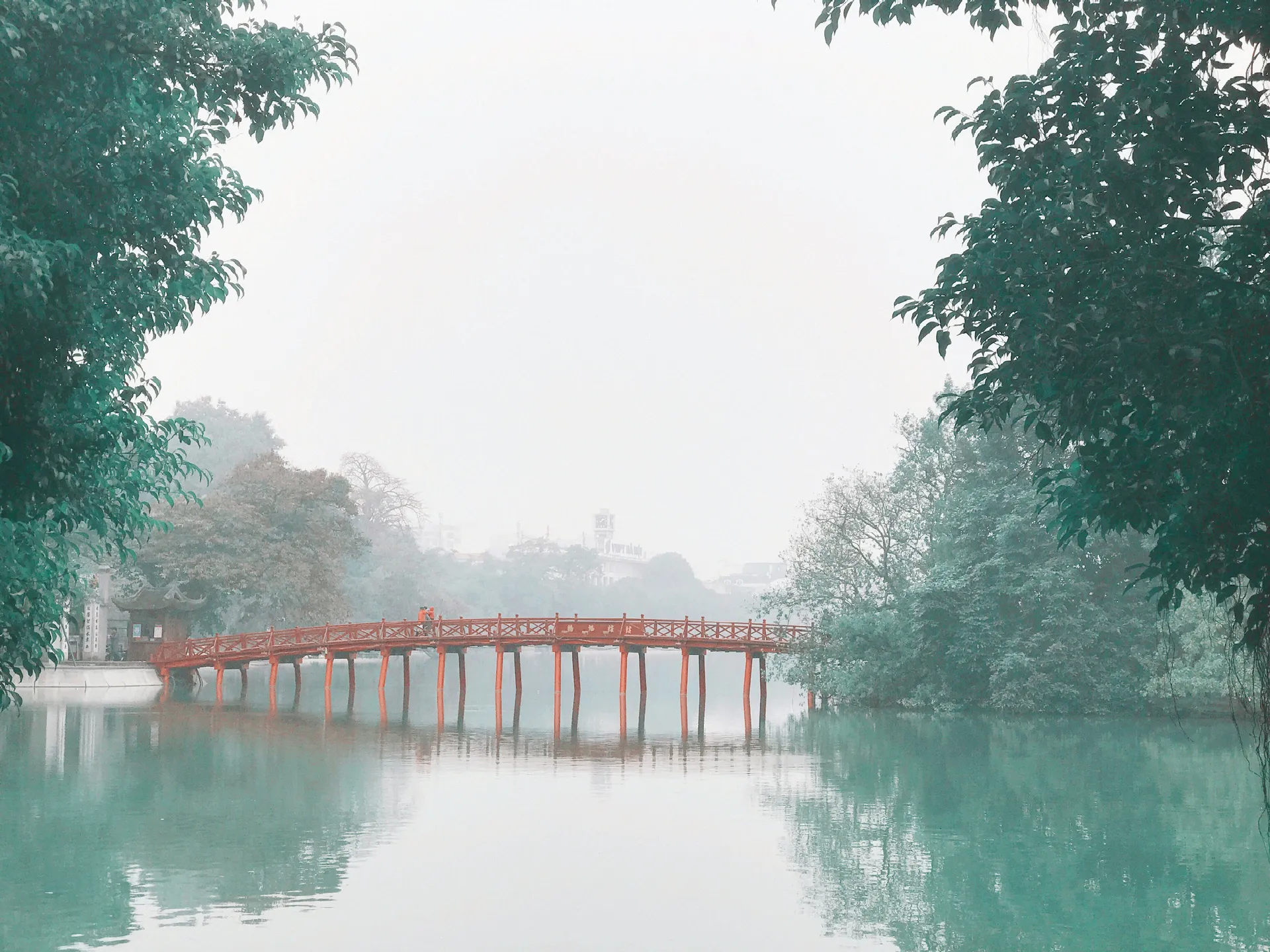
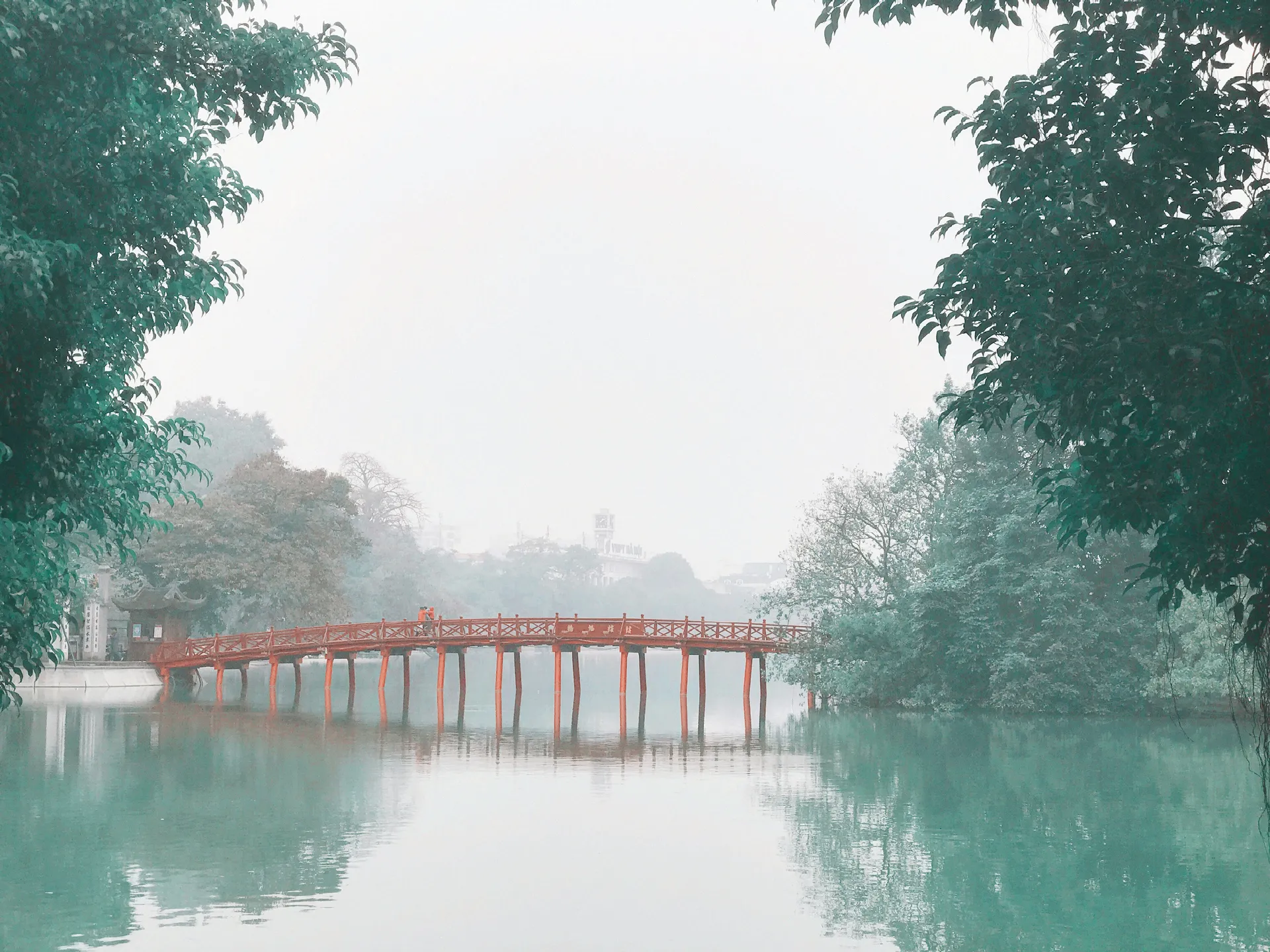
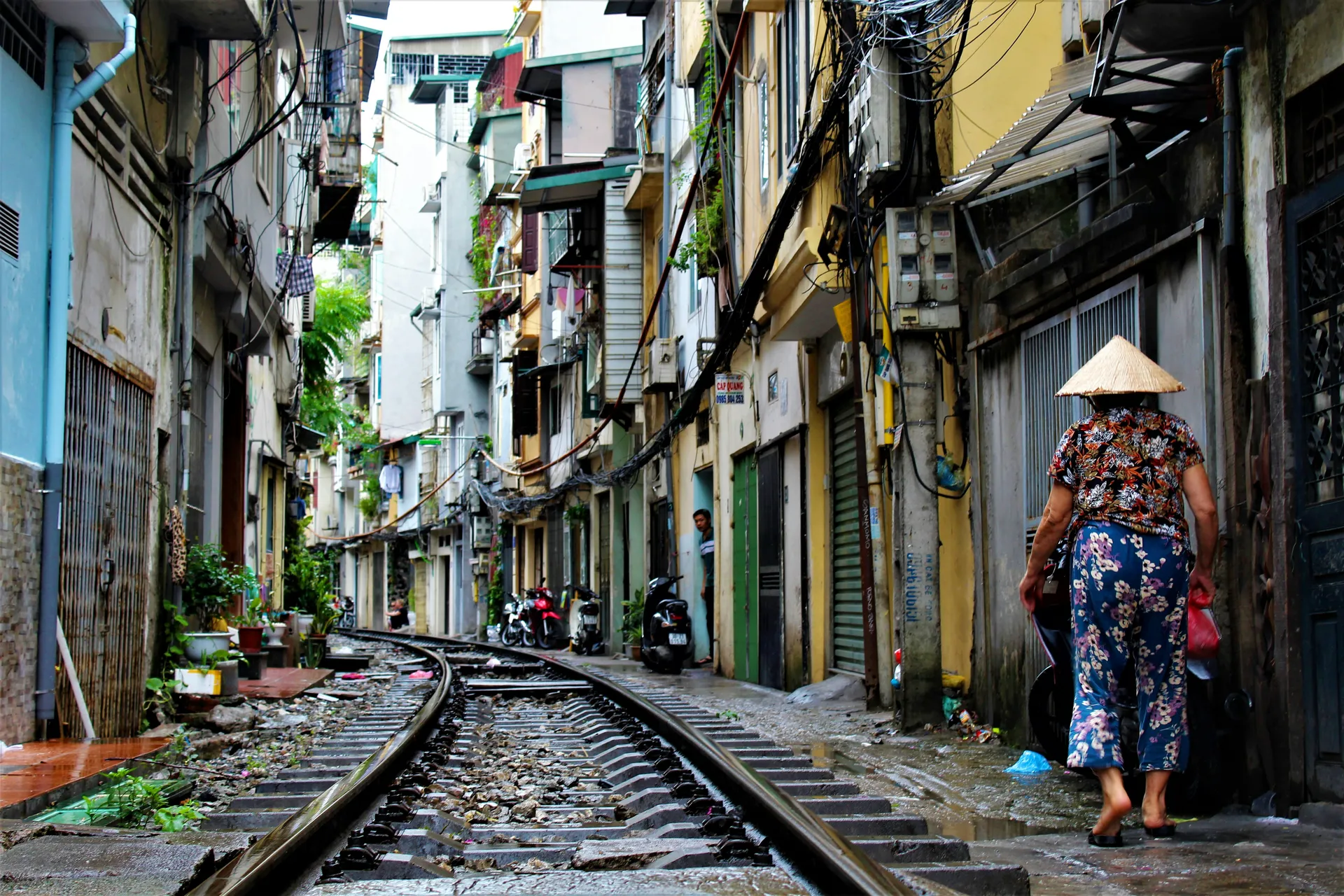
The French Quarter, laid out with Haussmann-inspired boulevards and graceful colonial villas from the 1880s onward, survives remarkably intact around Hoàn Kiếm Lake — the Lake of the Returned Sword, where legend holds that the Vietnamese king Lê Lợi returned a magic sword to a golden tortoise after defeating Chinese invaders in the 15th century. The vermilion Thê Húc Bridge leads to the ancient Ngọc Sơn Temple on a tiny island at the lake's northern shore. The 36 Streets of the Old Quarter, each historically dedicated to a single trade — silk, tin, paper, bamboo — remain a labyrinth of lacquerware shops, street vendors, and ancient temples: a living archaeological site of commercial tradition dating back a thousand years.
Hanoi's street food culture is among the most refined in the world, built on centuries of frugal ingenuity elevated to art form. Phở bò — beef noodle soup with paper-thin slices of sirloin, fragrant star anise broth, and a nest of fresh herbs — is the city's morning ritual, taken at low plastic stools before the traffic crescendos. Bún chả, smoky grilled pork patties served with cold noodles and a punchy fish sauce dipping broth with lime and chilli, achieved international fame when Anthony Bourdain shared a bowl with Barack Obama at a Hanoi pavement restaurant in 2016. The egg coffee of Café Giảng — a whipped yolk and condensed milk foam floated over Vietnamese robusta — is the city's most distinctive contribution to global café culture.
Halong Bay, three hours east by road, offers one of the world's most iconic seascapes: 1,600 limestone karst islands rising from jade-green water, best explored from the deck of a traditional wooden junk. Ninh Binh, 90 minutes south, has been called "Halong Bay on land" — the Tràng An boat tours wind through flooded limestone valleys beneath ancient citadels. The ancient port of Hội An, a UNESCO World Heritage town preserved in amber since the 17th century, is accessible via the cruise port of Chan May; its lantern-lit streets and tailor shops represent a world apart from Hanoi's urban intensity, as do the imperial tombs of the nearby city of Huế.
Hanoi and the nearby port of Chan May serve as key gateways for Mekong River and Southeast Asia itineraries operated by APT Cruising, Avalon Waterways, CroisiEurope, Emerald Cruises, Scenic River Cruises, Tauck, Uniworld River Cruises, and Viking, while Norwegian Cruise Line and Oceania Cruises include the region on ocean itineraries. October through April offers the most comfortable conditions — cool, dry air from the northeast monsoon keeps temperatures pleasant while the region is largely free of heavy rain.