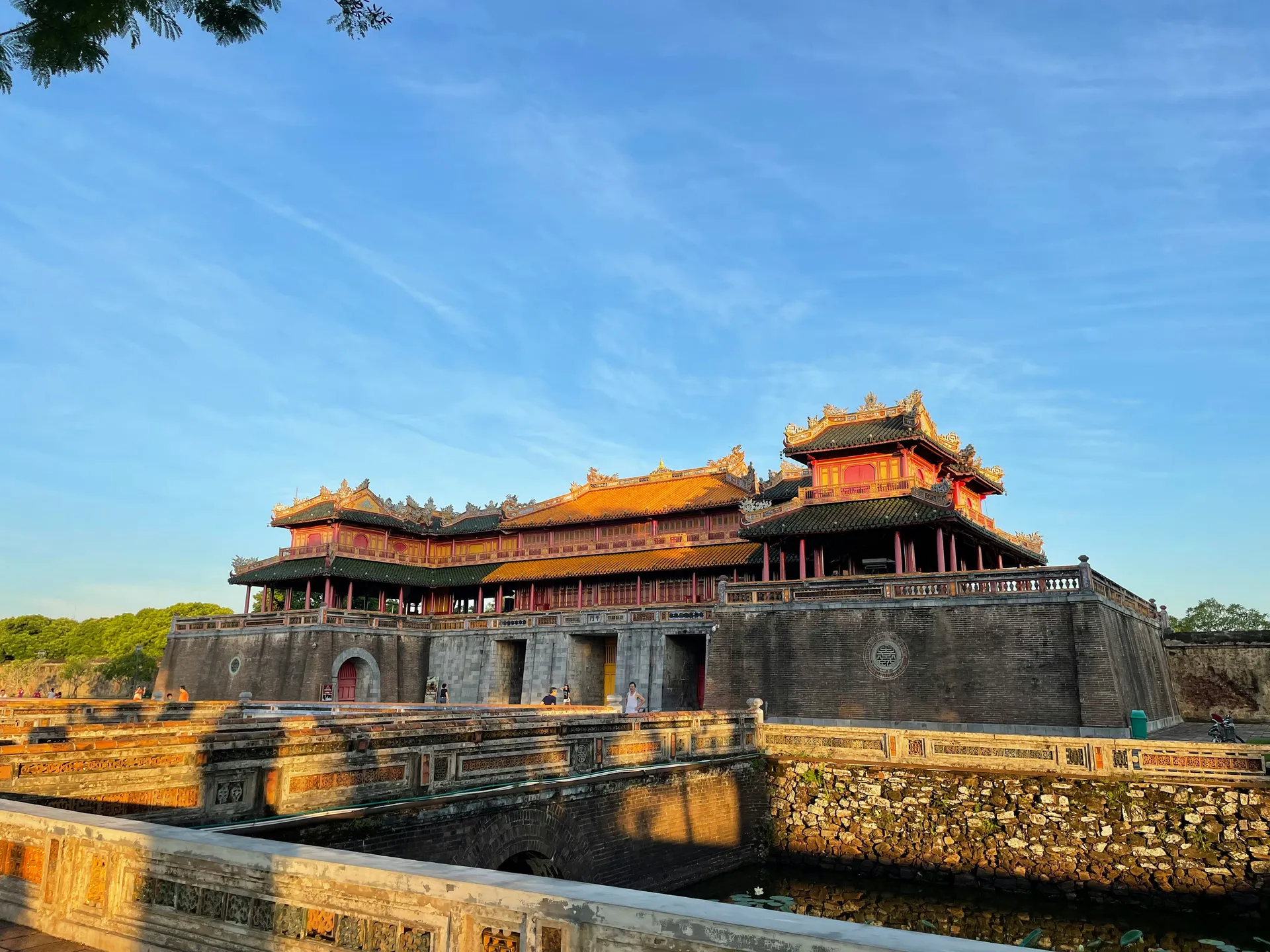
For 143 years, Hue served as the imperial capital of Vietnam — the seat of the Nguyen dynasty from 1802 until the abdication of Emperor Bao Dai in 1945 — and the city carries the weight of that history in every pagoda, every palace wall, every boat that drifts along the Perfume River beneath the watchful eyes of dragon-adorned ramparts. The Citadel, a vast fortified complex modeled on Beijing's Forbidden City but inflected with distinctly Vietnamese sensibility, occupies the northern bank of the river and remains one of Southeast Asia's most powerful UNESCO World Heritage Sites. To walk through the Noon Gate at sunrise, when mist rises from the lotus-filled moat and the only sounds are birdsong and the distant chanting of monks, is to step backward through time.
The city unfolds on both banks of the Perfume River, so named (legend says) for the fragrant flowers that fall into the water from orchards lining its upper reaches. The southern bank is the modern city, its tree-lined Le Loi Street bustling with motorcycles, coffee shops, and the kind of everyday Vietnamese life that charms with its energy and authenticity. The northern bank belongs to history: the Imperial Citadel, the Purple Forbidden City (the innermost sanctum where only the emperor and his concubines were permitted), and the Flag Tower, whose thirty-seven-meter height makes it visible from throughout the city. Many of the Citadel's structures were damaged during the 1968 Tet Offensive and have been painstakingly restored, while others remain in evocative ruin — moss-covered walls and doorways that frame nothing but sky.
Hue's cuisine is considered the most refined in Vietnam, a legacy of royal kitchens that demanded visual beauty, subtle flavor, and intricate presentation from every dish. Bun bo Hue, the city's signature noodle soup, combines lemongrass, fermented shrimp paste, and chili oil with beef and pork in a broth so complex it takes hours to prepare. Banh beo — tiny steamed rice cakes topped with dried shrimp and scallion oil, served on individual ceramic dishes — exemplify the royal kitchen's emphasis on delicacy and portion control. Banh khoai, a crispy rice crepe stuffed with shrimp and pork, and nem lui, grilled lemongrass pork wrapped in rice paper with herbs, are best eaten at the bustling stalls along Hang Me Street. For the full imperial experience, several restaurants recreate multicourse royal banquets, complete with lotus-leaf platters and traditional costume.
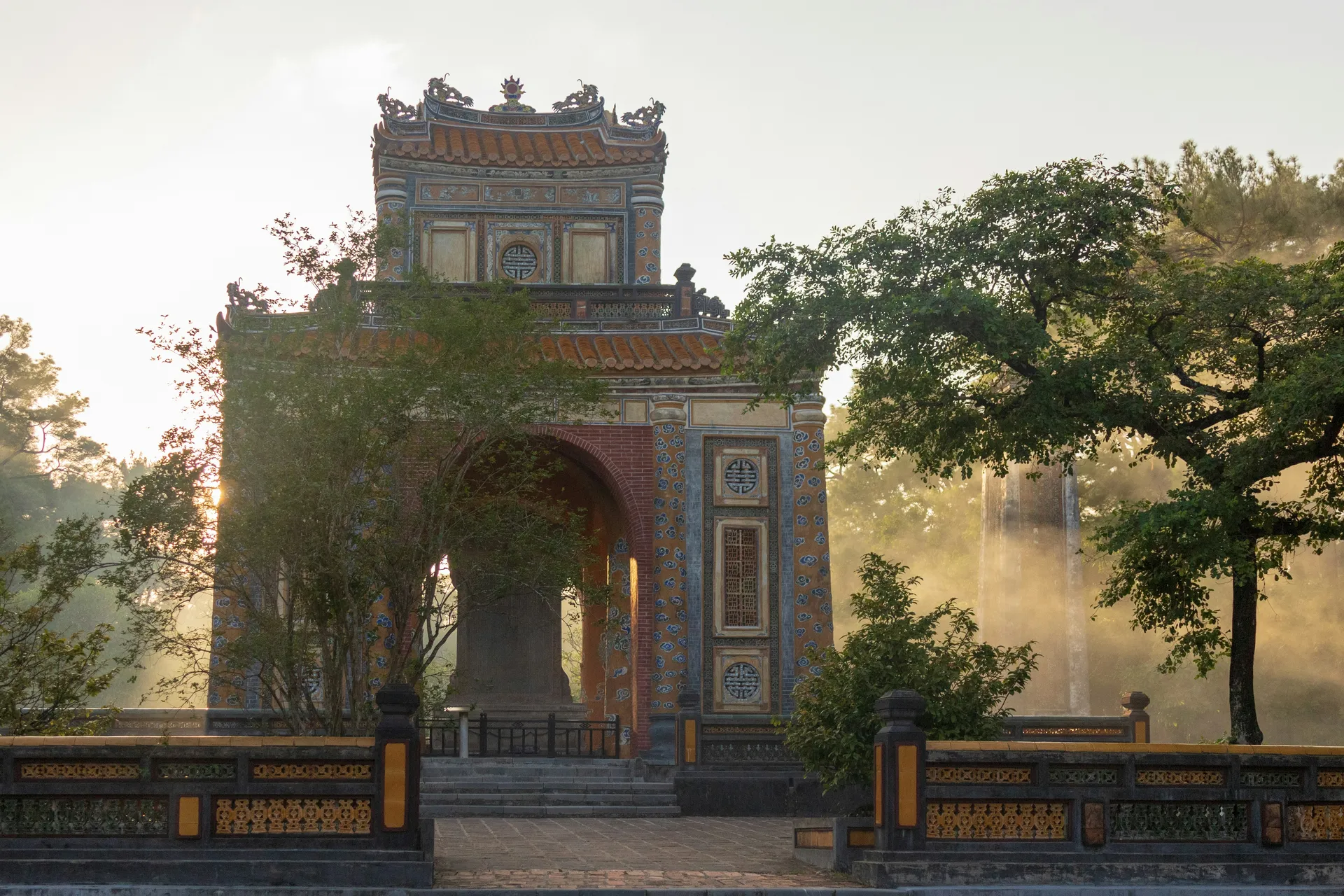
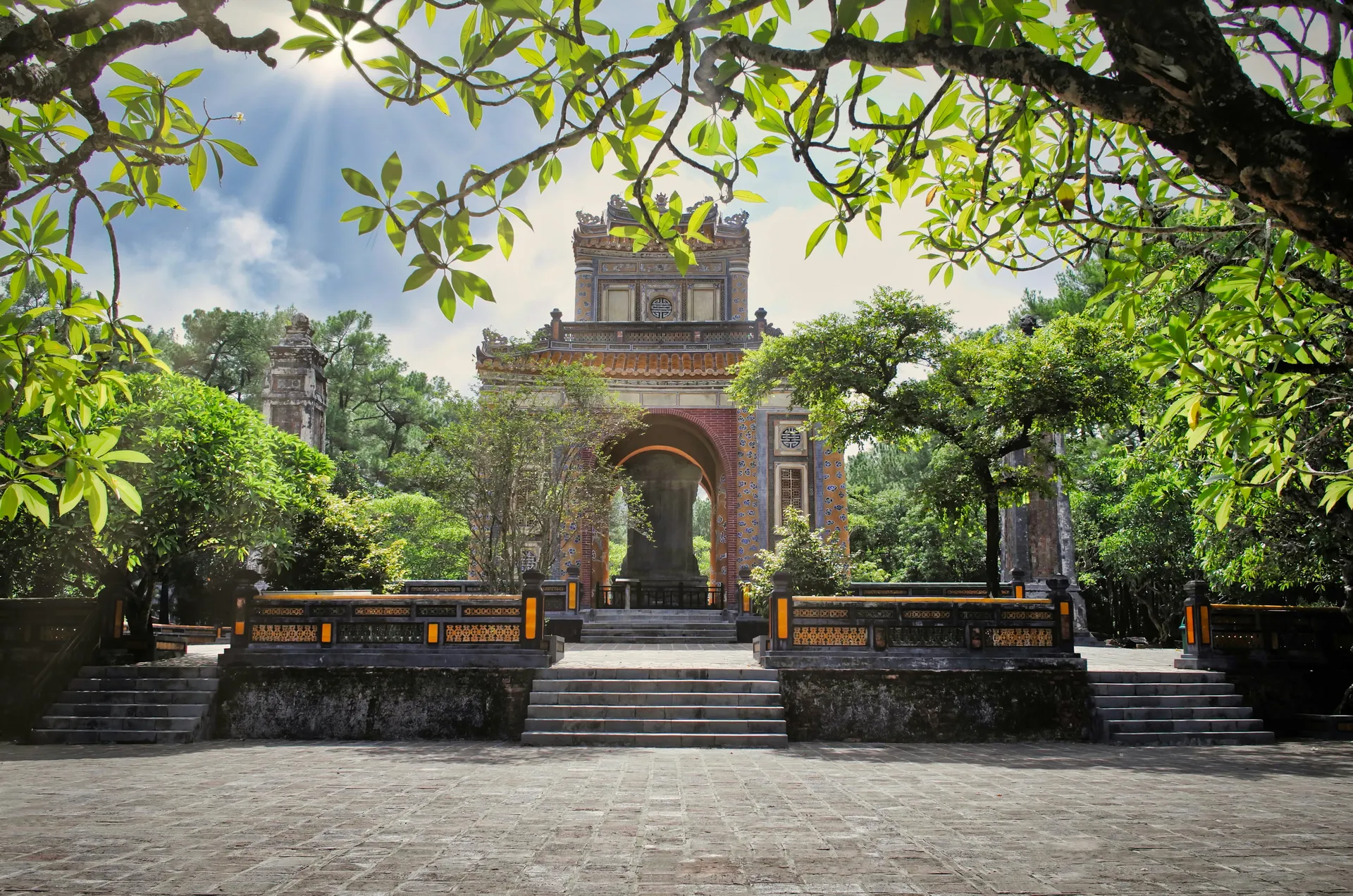
Beyond the Citadel, Hue's royal tombs are scattered through the pine-forested hills along the Perfume River, each one a masterwork of landscape architecture reflecting the personality of the emperor it memorializes. The Tomb of Tu Duc, set around a tranquil lake where the reclusive emperor composed poetry, is the most romantic. The Tomb of Khai Dinh, a fusion of Vietnamese and European styles with dazzling mosaic interiors, is the most visually extravagant. The Thien Mu Pagoda, the seven-story Buddhist icon overlooking the Perfume River, is perhaps Hue's most photographed monument and remains an active place of worship whose bells still mark the passage of the hours.
Scenic River Cruises includes Hue on its Southeast Asia itineraries, with the city typically accessed from the deep-water port of Chan May, a short drive south. River boat excursions on the Perfume River offer a serene perspective on the Citadel, the pagodas, and the tomb-dotted hills. The best time to visit is February through July, before the autumn monsoon brings heavy rainfall to central Vietnam, though the moody atmosphere of a rain-shrouded Citadel has its own melancholy beauty.