My Tho sits at the upper reaches of the Mekong Delta, the vast alluvial plain where the mighty Mekong River fractures into a labyrinth of channels, islands, and mangrove-fringed waterways before emptying into the South China Sea. Founded as a strategic garrison by the Nguyen Lords in the seventeenth century, the city later became a battleground during both the French colonial wars and the Vietnam War — the Tet Offensive of 1968 left deep scars on this riverside community. Today, with a population of around 220,000, My Tho serves as the capital of Tien Giang Province and the traditional gateway to the Delta's enchanting network of floating markets, fruit orchards, and canal-laced villages.
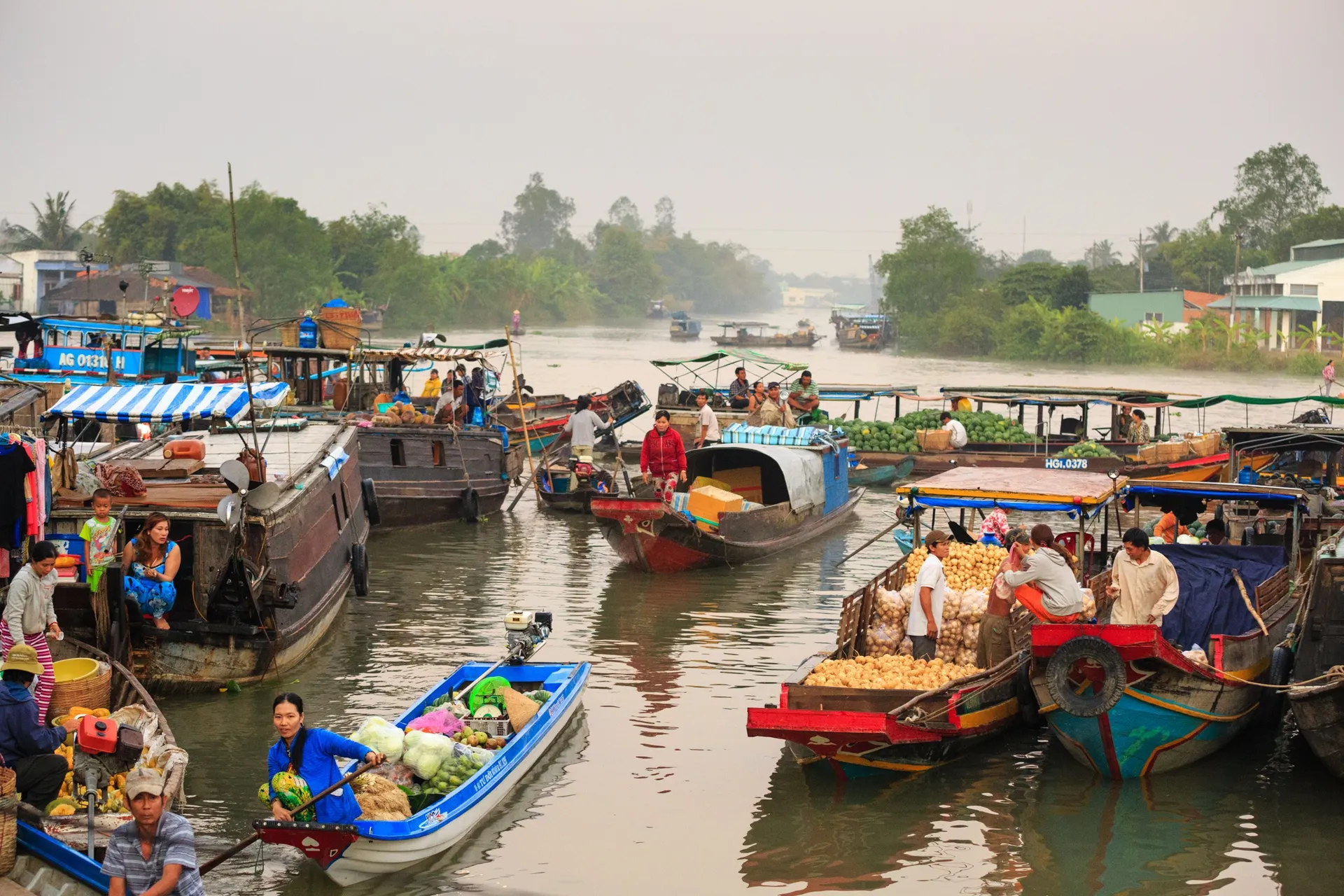
The city's riverside promenade along the Tien Giang River — the northernmost of the Mekong's major distributaries — offers a window into delta life. Wooden sampans piled high with tropical fruit jostle beside commercial barges, while fish farms and coconut groves line the banks. The Vinh Trang Pagoda, dating to 1849 and blending Vietnamese, Chinese, and Khmer architectural styles, shelters enormous Buddha statues within gardens of bonsai and frangipani. Across the river, the four islands of the Dragon, Unicorn, Phoenix, and Tortoise — named for the four sacred animals of Vietnamese mythology — provide idyllic escapes into orchards dripping with longan, rambutan, and pomelo.
Mekong Delta cuisine is among the most vibrant in Vietnam. Hu tieu My Tho, the city's signature noodle soup — clear pork broth ladled over rice noodles with shrimp, pork, and quail eggs, garnished with a thicket of fresh herbs — is considered the delta's finest, distinct from its Saigon and Phnom Penh cousins. Banh xeo, the crispy turmeric-yellow crepes filled with shrimp, pork, and bean sprouts, are wrapped in lettuce and mustard leaves with handfuls of fresh mint and basil. Elephant ear fish (ca tai tuong), deep-fried whole until crackling and served tableside for wrapping in rice paper with pickled vegetables, is the theatrical showpiece of any delta meal. The coconut candy of Ben Tre, produced from caramelized coconut milk in small family workshops, remains the region's sweetest souvenir.
Island-hopping by sampan is the quintessential My Tho experience. Unicorn Island (Thoi Son) offers coconut candy workshops, honey bee farms, and leisurely rowing through narrow palm-canopied canals. The Cai Be floating market, roughly ninety minutes upstream, is a more authentic and less touristed alternative to the famous Cai Rang market further south. For those venturing further, the Vinh Long province — two hours deeper into the delta — offers homestay experiences in fruit orchards and an immersion into the unhurried rhythm of riverside Vietnamese life.
My Tho is a key embarkation and disembarkation point for Mekong River cruises. AmaWaterways, APT Cruising, Avalon Waterways, CroisiEurope, Emerald Cruises, Scenic River Cruises, and Uniworld River Cruises operate from here, typically on itineraries connecting Ho Chi Minh City (Saigon) with Phnom Penh and Siem Reap. The dry season from December through April offers the most comfortable weather, though the wet season's lush green landscapes and higher water levels have their own appeal — the Delta is fascinating in any season.

