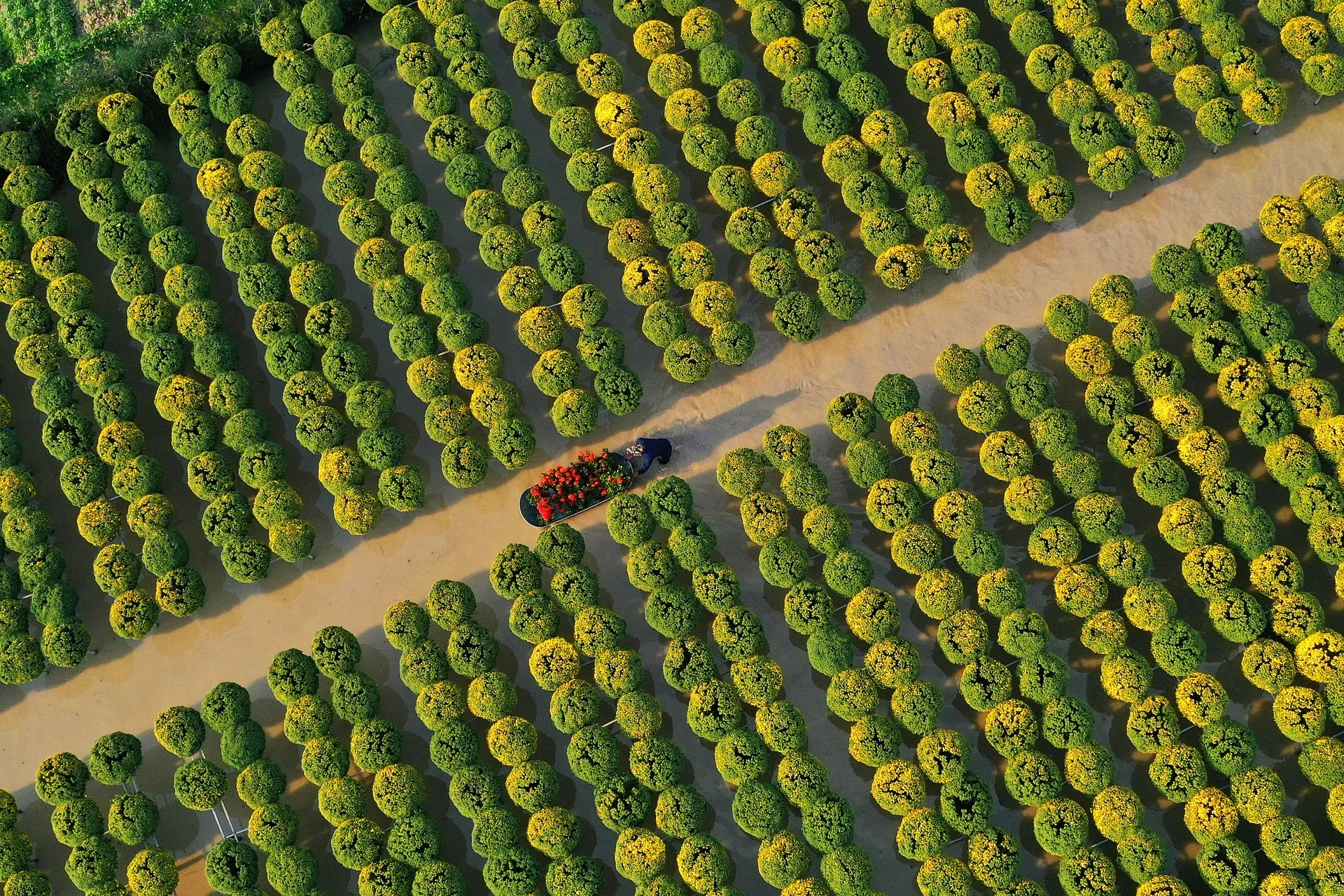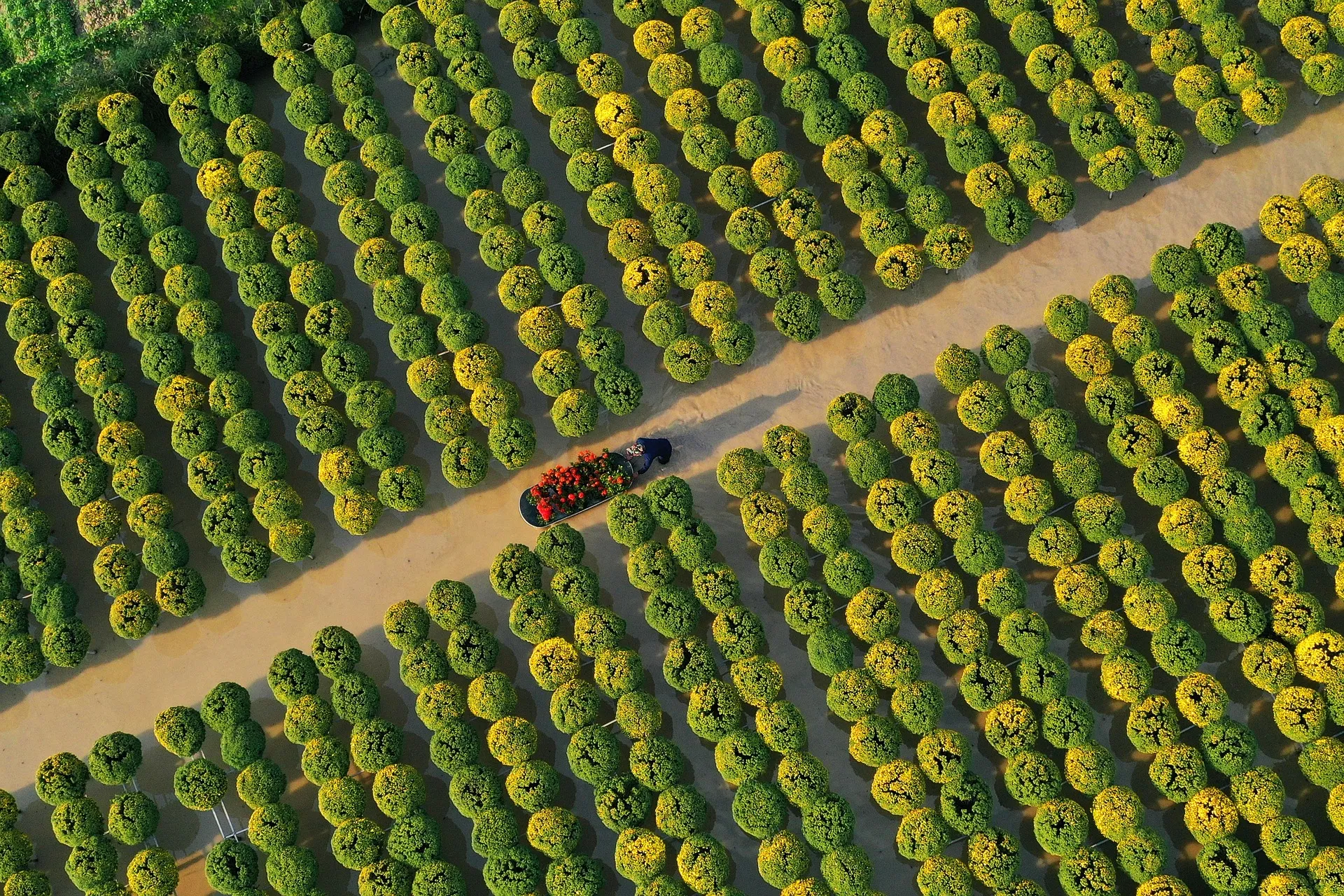
Sa Đéc, a languid town on the banks of the Mekong Delta's Sa Đéc River, achieved an unlikely literary immortality as the setting of Marguerite Duras's autobiographical novel "The Lover" (1984), which recounts the French author's passionate affair with a wealthy Chinese merchant's son in 1920s colonial Indochina. The merchant's house, a graceful blend of Chinese and French architectural styles, still stands on the riverfront and draws pilgrims from across the literary world. Long before Duras, Sa Đéc flourished as a center of the Mekong's flower-growing industry, and to this day it supplies the vast majority of ornamental plants sold during Tết, the Vietnamese Lunar New Year.
The town's defining characteristic is its profusion of color. The Sa Đéc flower village, sprawling across several kilometers along the riverbank, erupts in a kaleidoscope of chrysanthemums, roses, bougainvillea, and lotus during the growing season. Narrow lanes wind between nurseries where generations of families cultivate blooms in terracotta pots, their skills passed down through centuries. The central market, a covered labyrinth of vendors, overflows with tropical fruits — dragonfruit, rambutan, pomelo, and coconuts — alongside dried fish, pungent shrimp paste, and bolts of silk. French colonial shophouses with faded pastel facades line the waterfront, their upper balconies providing grandstand views of the perpetual river traffic.
Mekong Delta cuisine is among the most vibrant in all of Vietnam. Hủ tiếu Sa Đéc, the town's signature dish, is a pork-and-shrimp rice noodle soup distinguished by its uniquely chewy noodles, made from locally grown rice and sun-dried on bamboo racks — a craft visible along every village lane. Bánh xèo, sizzling turmeric-yellow crepes stuffed with shrimp, bean sprouts, and pork, are wrapped in rice paper with fresh herbs and dipped in nước chấm. Cá lóc nướng trui — snakehead fish roasted whole in a straw fire until the skin chars black — is a rustic Mekong specialty best eaten riverside, the flaky white flesh peeled from the bone and wrapped with herbs in rice paper. Wash it all down with trà đá, sweetened iced tea served in every roadside café.
Excursions from Sa Đéc reveal the Mekong Delta's extraordinary ecosystem. Cai Be floating market, where wooden boats laden with fruits and vegetables create a water-borne bazaar, is about an hour upstream and best visited at dawn. The Vinh Trang Pagoda in My Tho, a dazzling confection of Vietnamese, Khmer, and European architectural styles surrounded by a bonsai garden, is roughly ninety minutes away. Sampan rides through the narrow, palm-canopied waterways of An Binh island offer intimate encounters with delta life — coconut candy workshops, honey-bee farms, and family orchards.
River cruises through the Mekong Delta invariably include Sa Đéc among their most anticipated stops. AmaWaterways, Scenic River Cruises, and Uniworld River Cruises offer luxury vessels with expert guides who illuminate the delta's complex waterway culture. Emerald Cruises and Viking provide elegant, value-rich itineraries, while APT Cruising sails with its signature all-inclusive philosophy. CroisiEurope, the French river specialist, brings a distinctly Gallic sensibility to Mekong sailings. The dry season from November through April offers the most comfortable cruising conditions, with December and January being the coolest and most pleasant months.