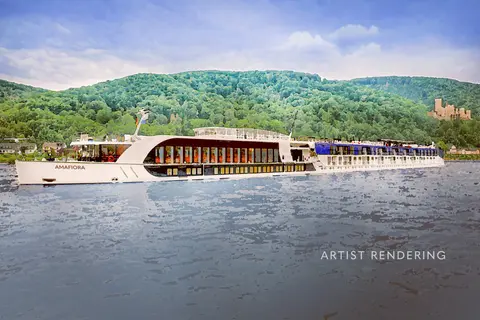
AmaWaterwaysAS270612CE
Grand Rhine & Dutch Canals From Amsterdam
Date
2027-06-12
Duration
14 nights
Departure Port
Amsterdam
Netherlands
Arrival Port
Basel
Switzerland
Rating
Luxury
Theme
—
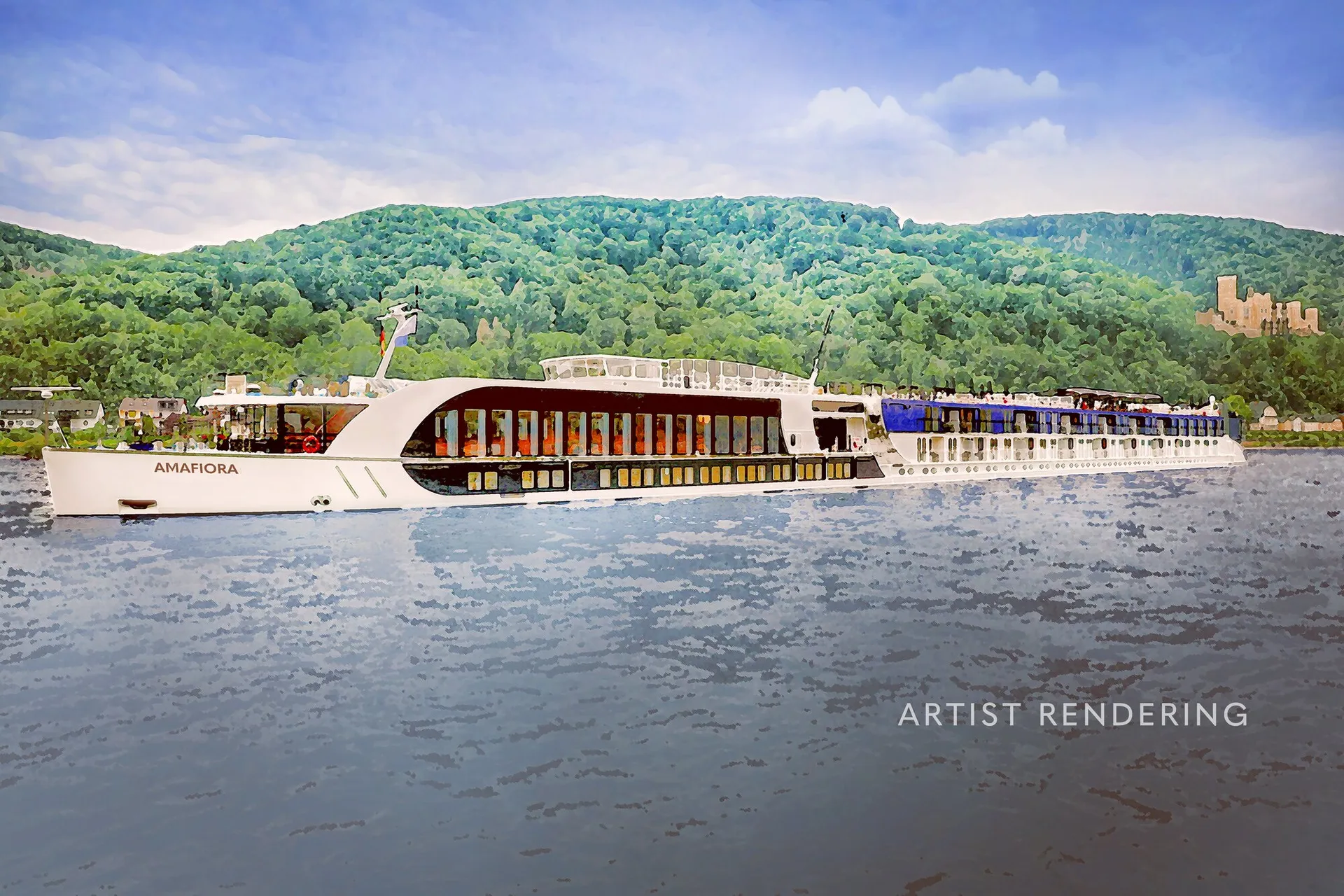
AmaWaterways
AmaFiora
Launched
—
Refitted
—
Tonnage
—
Passengers
—
Cabins
82
Crew
51
Length
443 m
Width
22 m
Speed
—
Adults Only
No
Itinerary
Day 1
Day 1
Amsterdam
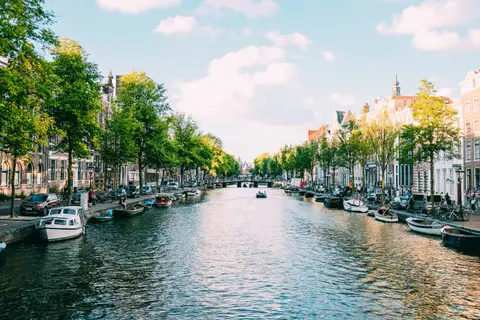
Amsterdam's UNESCO-listed canal ring — a concentric web of seventeenth-century merchant houses and arching stone bridges — remains one of the Western world's most perfectly preserved Golden Age cityscapes, best explored by bicycle or canal boat at a pace that lets the city's genius reveal itself slowly. The Rijksmuseum's collection of Rembrandt and Vermeer masterpieces is essential, while the Anne Frank House offers one of Europe's most profoundly moving historical encounters. Spring brings the iconic tulip season; summer fills the terraces of the Jordaan district. Schiphol Airport makes Amsterdam a seamless gateway to the entire European continent.
Day 2
Day 2
Utrecht
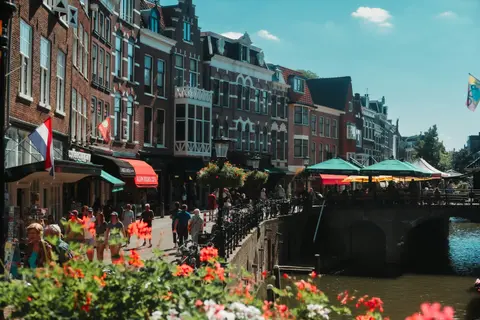
The port of Utrecht is a charming gateway to a city rich in history, offering a unique blend of medieval architecture and contemporary culture. Must-do experiences include savoring local delicacies like Utrechtsche taart and exploring the picturesque canals. The best time to visit is during the spring or early summer, when the city is alive with vibrant festivals and blooming landscapes.
Day 3
Day 3
Hellevoetsluis
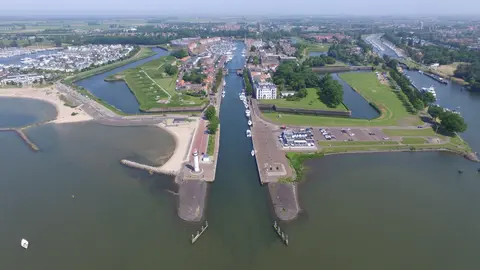
Hellevoetsluis is a beautifully preserved 17th-century Dutch naval fortress town on the Haringvliet, where historic dry docks, star-shaped ramparts, and harbourside galleries offer an intimate window into the Netherlands' maritime golden age. Visitors should explore the fortified waterfront and taste fresh Zeeuwse oysters or crisp kibbeling at the harbour, then venture to nearby Delft or Gouda for pottery workshops and cheese markets. Late spring through early autumn — May to September — delivers the finest weather for strolling the Vestingwal and cruising the Rhine-Maas delta waterways.
Day 4
Day 4
Ghent
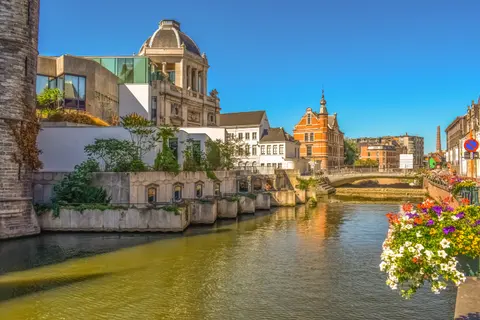
The port of Ghent, a historic trade hub with medieval architecture, is a vibrant gateway to Belgian culture. Don't miss savoring local dishes like "stoverij" and "waterzooi," or wandering the picturesque canals. The best time to visit is during the summer months, particularly during the lively ‘Gentse Feesten’ festival.
Day 5
Day 5
Brussel (Bruxelles)
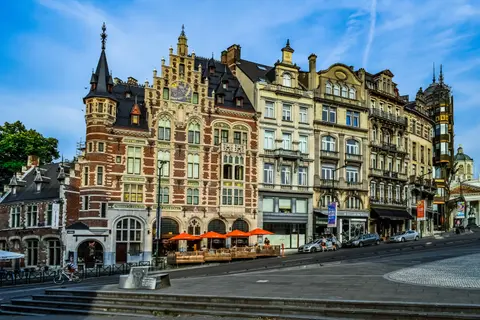
Brussels, the cosmopolitan capital of Belgium, enchants with its UNESCO-listed Grand-Place, extraordinary Art Nouveau architecture, and a culinary tradition that rivals any European capital — from hand-peeled shrimp croquettes to artisan pralines on the Sablon. Visitors should not miss exploring the Royal Museums of Fine Arts and taking a day trip to medieval Bruges or art-rich Ghent. The city is at its finest from April through October, when café terraces spill onto sunlit squares and the temperate climate invites long afternoons of wandering between chocolate ateliers and neighbourhood brasseries.
Day 6
Day 6
Antwerp
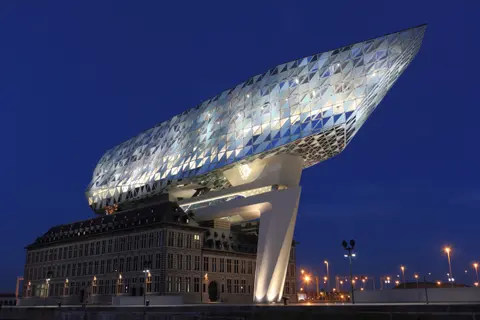
Antwerp has been one of Europe's great mercantile capitals since the fifteenth century, when it commanded the world's first commodity exchange and Peter Paul Rubens made it the artistic capital of the Baroque world — a legacy preserved in the magnificent Rubenshuis studio and the soaring Cathedral of Our Lady, whose nave houses four of the master's greatest altarpieces. Today the city leads global fashion from the acclaimed Antwerp Six design school and remains the diamond capital of the world, with 84% of the world's rough diamonds trading through its storied district. Visit in spring or autumn; Brussels and Bruges are each under an hour away by train.
Day 7
Day 7
Dordrecht
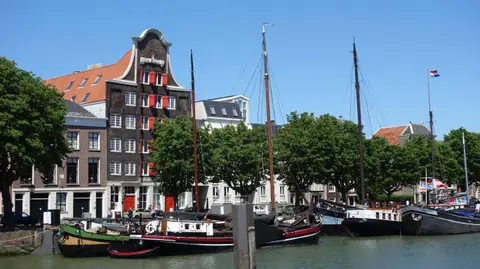
Dordrecht, one of the oldest cities in the Netherlands, is a historic port known for its medieval architecture and vibrant atmosphere. Must-do experiences include exploring its picturesque canals and indulging in local delicacies like herring and stroopwafels. The best time to visit is during the spring and summer months when the city comes alive with festivals and outdoor markets.
Day 7
Day 7
Kinderdijk
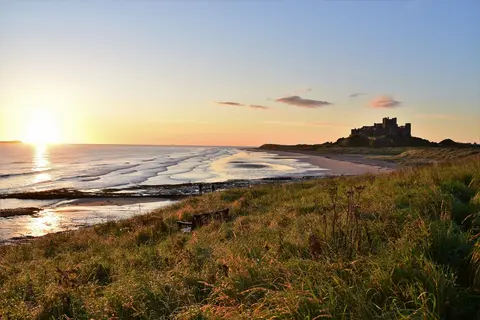
Kinderdijk is the Netherlands at its most mythically Dutch: nineteen historic windmills standing in solemn formation along a web of drainage canals that have held the North Sea at bay since the eighteenth century. Designated a UNESCO World Heritage Site in 1997, this South Holland polder is not merely a postcard — it is a functioning testament to centuries of hydraulic engineering, with several mills still operated by resident millers. Cycling the canal-side paths at sunset, when the reflections of the windmills shimmer in perfect stillness, is an unforgettable experience. Kinderdijk can be visited year-round; spring brings tulip fields nearby, while winter mists lend an atmospheric grandeur.
Day 8
Day 8
Amsterdam
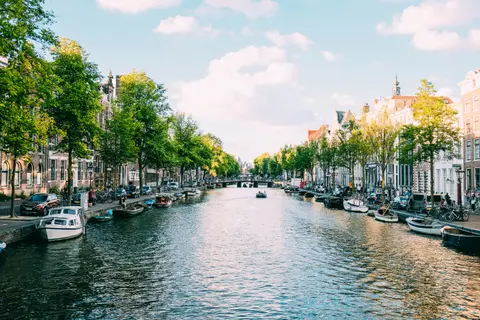
Amsterdam's UNESCO-listed canal ring — a concentric web of seventeenth-century merchant houses and arching stone bridges — remains one of the Western world's most perfectly preserved Golden Age cityscapes, best explored by bicycle or canal boat at a pace that lets the city's genius reveal itself slowly. The Rijksmuseum's collection of Rembrandt and Vermeer masterpieces is essential, while the Anne Frank House offers one of Europe's most profoundly moving historical encounters. Spring brings the iconic tulip season; summer fills the terraces of the Jordaan district. Schiphol Airport makes Amsterdam a seamless gateway to the entire European continent.
Day 10
Day 10
Dusseldorf
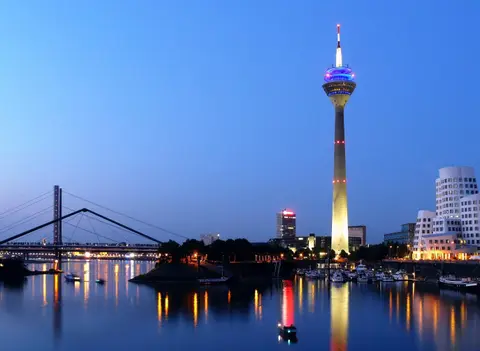
Düsseldorf's port is a vibrant hub of culture and history, offering a unique blend of modern architecture and traditional charm. Must-do experiences include sampling the local Altbier and Rheintopf stew and exploring the nearby picturesque town of Wertheim. The best season to visit is during the spring, when the city blossoms and outdoor activities abound.
Day 11
Day 11
At Sea
Day 11
Day 11
Rüdesheim am Rhein
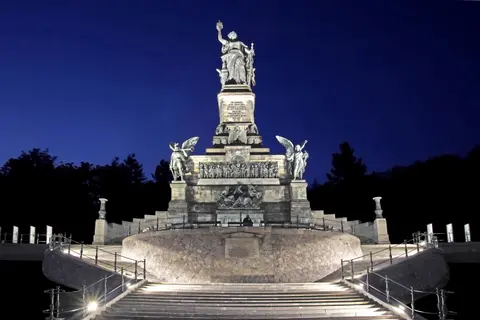
Rüdesheim am Rhein, a jewel of the UNESCO-listed Upper Middle Rhine Valley, is where Germany's most famous wine river cuts through vine-terraced slopes and medieval fortresses. The storied Drosselgasse laneway hums with taverns pouring the region's celebrated Rieslings — wonderfully crisp and mineral from the slate soils — while the Niederwald Monument crowns the vineyards above, accessible by cable car. Rheingau estates offer cellar door tastings of exceptional depth and character. Day excursions by river boat reveal Bacharach, Boppard, and the legendary Lorelei rock. September's harvest season transforms the entire valley into a celebration of the vintage.
Day 11
Day 11
Rhine Gorge
The Rhine Gorge, a UNESCO World Heritage site, is a stunning section of the Rhine River renowned for its historic castles and picturesque towns. Must-do experiences include savoring local Riesling wines and exploring the charming markets. The best season to visit is in late spring through early autumn when the vineyards are lush and the weather is delightful.
Day 12
Day 12
Ludwigshafen
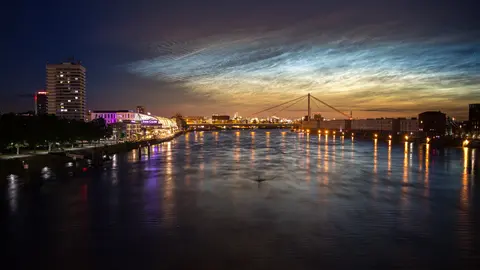
Ludwigshafen am Rhein was founded by Bavarian royal ambition in 1843 and grew rapidly into one of Germany's great industrial cities — home to BASF, the world's largest chemical company, whose vast campus stretches along the Rhine for kilometres. Though industrial in character, Ludwigshafen occupies a prime Rhine valley position that places it within easy reach of Heidelberg, Germany's most romantic university city, and the rolling vineyards of the Palatinate wine region. The Kunstmuseum Ludwigshafen houses a noteworthy collection of contemporary art. Ludwigshafen is a year-round river cruise port, though May through October offers the most pleasant conditions for excursions into the surrounding wine country.
Day 13
Day 13
Strasbourg
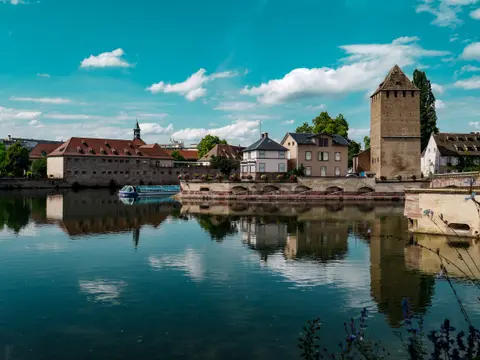
Strasbourg is one of Europe's great border cities, its Franco-German soul etched into every half-timbered façade of the UNESCO-listed Grande Île and every turret of the soaring rose-sandstone cathedral that reigned as the world's tallest building for over two centuries. As the seat of the European Parliament and home to the European Court of Human Rights, this sophisticated Alsatian capital savors outstanding Riesling and choucroute garnie with equal Continental pride. The city dazzles year-round, though December's legendary Christmas market — among the oldest in Europe — transforms its medieval squares into an enchanted winter spectacle.
Day 14
Day 14
Breisach
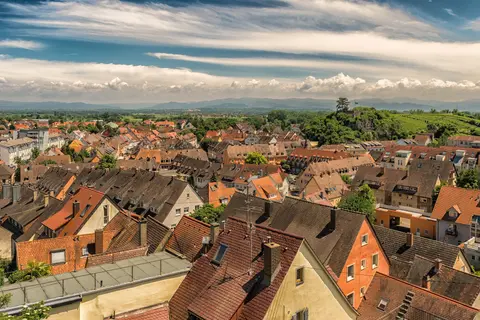
Breisach am Rhein clings to a volcanic hilltop at the French-German border, commanding the Upper Rhine crossing that made it one of the most fought-over towns in European history — a past the Romanesque-Gothic Münster St. Stephan surveys serenely from its commanding heights. Today peace reigns, and Breisach's true gift is its position as a gateway to three celebrated wine regions: the German Kaiserstuhl, producing some of Germany's finest Spätburgunder; the French Alsace, just across the Rhine; and the rolling hills of the Baden wine country to the east. Visit in autumn for harvest season across all three regions simultaneously. Freiburg im Breisgau, the Black Forest's graceful capital, lies twenty minutes east.
Day 15
Day 15
Basel
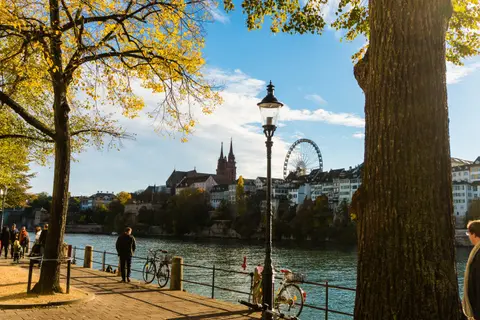
Basel, where Switzerland, France, and Germany converge at the Rhine's northward bend, hosts a concentration of world-class art institutions that rivals any city its size on earth — the Kunstmuseum alone, the world's oldest public art collection, could occupy days, and Art Basel each June draws every name that matters in the contemporary art world to this compact, elegant city. The Rhine itself is the city's great social artery: in summer, locals jump in with waterproof bags and float downstream, a tradition as charming as any museum. Spring through autumn is ideal for outdoor exploration; Paris is just three hours by TGV and Strasbourg a mere twenty minutes by train.
Day 1
Amsterdam
Amsterdam's UNESCO-listed canal ring — a concentric web of seventeenth-century merchant houses and arching stone bridges — remains one of the Western world's most perfectly preserved Golden Age cityscapes, best explored by bicycle or canal boat at a pace that lets the city's genius reveal itself slowly. The Rijksmuseum's collection of Rembrandt and Vermeer masterpieces is essential, while the Anne Frank House offers one of Europe's most profoundly moving historical encounters. Spring brings the iconic tulip season; summer fills the terraces of the Jordaan district. Schiphol Airport makes Amsterdam a seamless gateway to the entire European continent.
Day 2
Utrecht
The port of Utrecht is a charming gateway to a city rich in history, offering a unique blend of medieval architecture and contemporary culture. Must-do experiences include savoring local delicacies like Utrechtsche taart and exploring the picturesque canals. The best time to visit is during the spring or early summer, when the city is alive with vibrant festivals and blooming landscapes.
Day 3
Hellevoetsluis
Hellevoetsluis is a beautifully preserved 17th-century Dutch naval fortress town on the Haringvliet, where historic dry docks, star-shaped ramparts, and harbourside galleries offer an intimate window into the Netherlands' maritime golden age. Visitors should explore the fortified waterfront and taste fresh Zeeuwse oysters or crisp kibbeling at the harbour, then venture to nearby Delft or Gouda for pottery workshops and cheese markets. Late spring through early autumn — May to September — delivers the finest weather for strolling the Vestingwal and cruising the Rhine-Maas delta waterways.
Day 4
Ghent
The port of Ghent, a historic trade hub with medieval architecture, is a vibrant gateway to Belgian culture. Don't miss savoring local dishes like "stoverij" and "waterzooi," or wandering the picturesque canals. The best time to visit is during the summer months, particularly during the lively ‘Gentse Feesten’ festival.
Day 5
Brussel (Bruxelles)
Brussels, the cosmopolitan capital of Belgium, enchants with its UNESCO-listed Grand-Place, extraordinary Art Nouveau architecture, and a culinary tradition that rivals any European capital — from hand-peeled shrimp croquettes to artisan pralines on the Sablon. Visitors should not miss exploring the Royal Museums of Fine Arts and taking a day trip to medieval Bruges or art-rich Ghent. The city is at its finest from April through October, when café terraces spill onto sunlit squares and the temperate climate invites long afternoons of wandering between chocolate ateliers and neighbourhood brasseries.
Day 6
Antwerp
Antwerp has been one of Europe's great mercantile capitals since the fifteenth century, when it commanded the world's first commodity exchange and Peter Paul Rubens made it the artistic capital of the Baroque world — a legacy preserved in the magnificent Rubenshuis studio and the soaring Cathedral of Our Lady, whose nave houses four of the master's greatest altarpieces. Today the city leads global fashion from the acclaimed Antwerp Six design school and remains the diamond capital of the world, with 84% of the world's rough diamonds trading through its storied district. Visit in spring or autumn; Brussels and Bruges are each under an hour away by train.
Day 7
Dordrecht
Dordrecht, one of the oldest cities in the Netherlands, is a historic port known for its medieval architecture and vibrant atmosphere. Must-do experiences include exploring its picturesque canals and indulging in local delicacies like herring and stroopwafels. The best time to visit is during the spring and summer months when the city comes alive with festivals and outdoor markets.
Kinderdijk
Kinderdijk is the Netherlands at its most mythically Dutch: nineteen historic windmills standing in solemn formation along a web of drainage canals that have held the North Sea at bay since the eighteenth century. Designated a UNESCO World Heritage Site in 1997, this South Holland polder is not merely a postcard — it is a functioning testament to centuries of hydraulic engineering, with several mills still operated by resident millers. Cycling the canal-side paths at sunset, when the reflections of the windmills shimmer in perfect stillness, is an unforgettable experience. Kinderdijk can be visited year-round; spring brings tulip fields nearby, while winter mists lend an atmospheric grandeur.
Day 8
Amsterdam
Amsterdam's UNESCO-listed canal ring — a concentric web of seventeenth-century merchant houses and arching stone bridges — remains one of the Western world's most perfectly preserved Golden Age cityscapes, best explored by bicycle or canal boat at a pace that lets the city's genius reveal itself slowly. The Rijksmuseum's collection of Rembrandt and Vermeer masterpieces is essential, while the Anne Frank House offers one of Europe's most profoundly moving historical encounters. Spring brings the iconic tulip season; summer fills the terraces of the Jordaan district. Schiphol Airport makes Amsterdam a seamless gateway to the entire European continent.
Day 10
Dusseldorf
Düsseldorf's port is a vibrant hub of culture and history, offering a unique blend of modern architecture and traditional charm. Must-do experiences include sampling the local Altbier and Rheintopf stew and exploring the nearby picturesque town of Wertheim. The best season to visit is during the spring, when the city blossoms and outdoor activities abound.
Day 11
At Sea
Rüdesheim am Rhein
Rüdesheim am Rhein, a jewel of the UNESCO-listed Upper Middle Rhine Valley, is where Germany's most famous wine river cuts through vine-terraced slopes and medieval fortresses. The storied Drosselgasse laneway hums with taverns pouring the region's celebrated Rieslings — wonderfully crisp and mineral from the slate soils — while the Niederwald Monument crowns the vineyards above, accessible by cable car. Rheingau estates offer cellar door tastings of exceptional depth and character. Day excursions by river boat reveal Bacharach, Boppard, and the legendary Lorelei rock. September's harvest season transforms the entire valley into a celebration of the vintage.
Rhine Gorge
The Rhine Gorge, a UNESCO World Heritage site, is a stunning section of the Rhine River renowned for its historic castles and picturesque towns. Must-do experiences include savoring local Riesling wines and exploring the charming markets. The best season to visit is in late spring through early autumn when the vineyards are lush and the weather is delightful.
Day 12
Ludwigshafen
Ludwigshafen am Rhein was founded by Bavarian royal ambition in 1843 and grew rapidly into one of Germany's great industrial cities — home to BASF, the world's largest chemical company, whose vast campus stretches along the Rhine for kilometres. Though industrial in character, Ludwigshafen occupies a prime Rhine valley position that places it within easy reach of Heidelberg, Germany's most romantic university city, and the rolling vineyards of the Palatinate wine region. The Kunstmuseum Ludwigshafen houses a noteworthy collection of contemporary art. Ludwigshafen is a year-round river cruise port, though May through October offers the most pleasant conditions for excursions into the surrounding wine country.
Day 13
Strasbourg
Strasbourg is one of Europe's great border cities, its Franco-German soul etched into every half-timbered façade of the UNESCO-listed Grande Île and every turret of the soaring rose-sandstone cathedral that reigned as the world's tallest building for over two centuries. As the seat of the European Parliament and home to the European Court of Human Rights, this sophisticated Alsatian capital savors outstanding Riesling and choucroute garnie with equal Continental pride. The city dazzles year-round, though December's legendary Christmas market — among the oldest in Europe — transforms its medieval squares into an enchanted winter spectacle.
Day 14
Breisach
Breisach am Rhein clings to a volcanic hilltop at the French-German border, commanding the Upper Rhine crossing that made it one of the most fought-over towns in European history — a past the Romanesque-Gothic Münster St. Stephan surveys serenely from its commanding heights. Today peace reigns, and Breisach's true gift is its position as a gateway to three celebrated wine regions: the German Kaiserstuhl, producing some of Germany's finest Spätburgunder; the French Alsace, just across the Rhine; and the rolling hills of the Baden wine country to the east. Visit in autumn for harvest season across all three regions simultaneously. Freiburg im Breisgau, the Black Forest's graceful capital, lies twenty minutes east.
Day 15
Basel
Basel, where Switzerland, France, and Germany converge at the Rhine's northward bend, hosts a concentration of world-class art institutions that rivals any city its size on earth — the Kunstmuseum alone, the world's oldest public art collection, could occupy days, and Art Basel each June draws every name that matters in the contemporary art world to this compact, elegant city. The Rhine itself is the city's great social artery: in summer, locals jump in with waterproof bags and float downstream, a tradition as charming as any museum. Spring through autumn is ideal for outdoor exploration; Paris is just three hours by TGV and Strasbourg a mere twenty minutes by train.
Cabin Categories
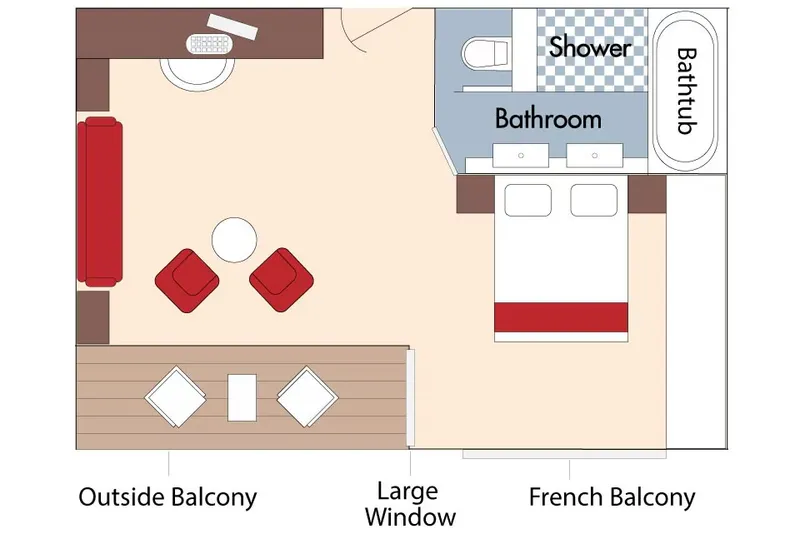
Suite
Suite
350 m²Max 2
S
Suite
BathDouble or Twin ConfigurationLounge AreaShowerToiletries ProvidedTelephone+6
View Details
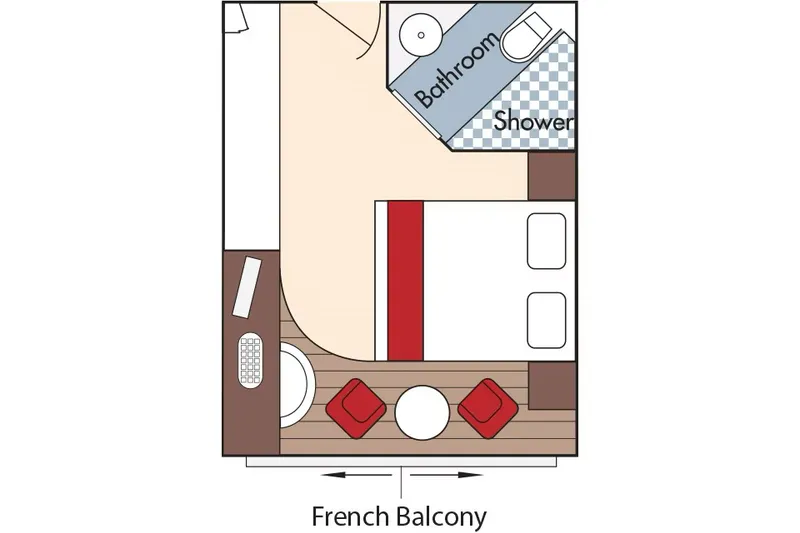
French Balcony
Balcony
155–235 m²Max 2
CACB
French Balcony
Queen or Twin ConfigurationShowerToiletries ProvidedRoom Service AvailableTVFree Wi-Fi+5
US$10,208 /person+ US$560 taxes & fees
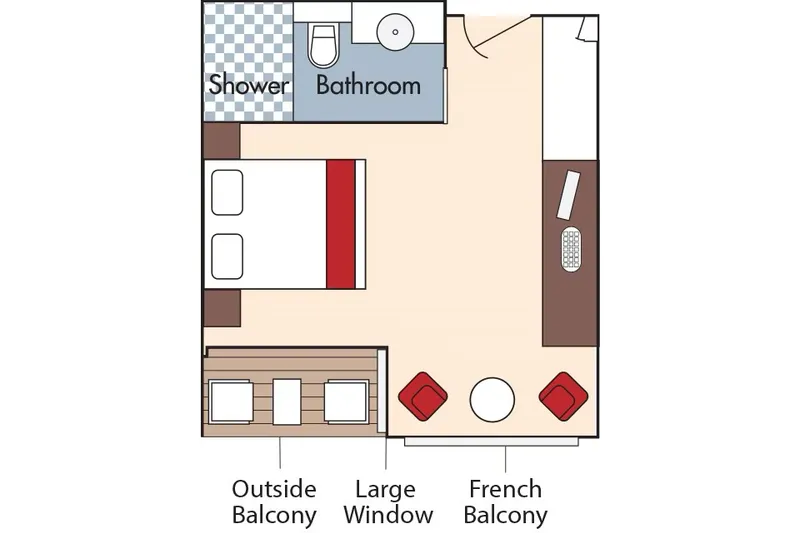
French Balcony & Outside Balcony
Balcony
210–235 m²Max 2
AAABBABB
French Balcony & Outside Balcony
Queen or Twin ConfigurationShowerToiletries ProvidedRoom Service AvailableTVFree Wi-Fi+6
US$12,208 /person+ US$560 taxes & fees
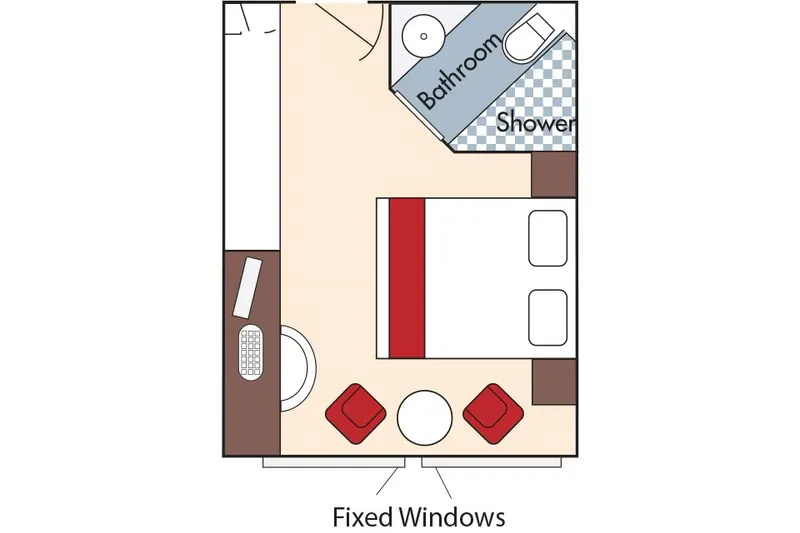
Fixed Window
Outside
160 m²Max 2
DE
Fixed Window
Queen or Twin ConfigurationShowerToiletries ProvidedRoom Service AvailableTVFree Wi-Fi+5
US$8,209 /person+ US$560 taxes & fees
Interested in This Voyage?
Our cruise specialists can help you find the perfect cabin and the best available pricing.
(+886) 02-2721-7300Contact Advisor