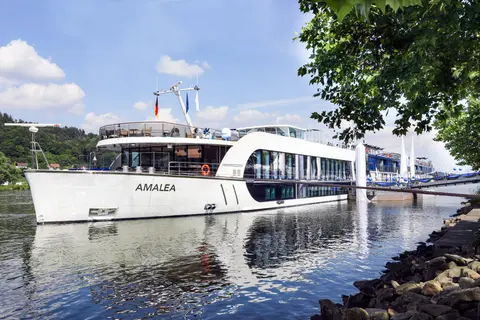
AmaWaterwaysAL260516AE
Magnificent Europe from Amsterdam
Date
2026-05-16
Duration
14 nights
Departure Port
Amsterdam
Netherlands
Arrival Port
Budapest
Hungary
Rating
Luxury
Theme
—
AmaWaterways
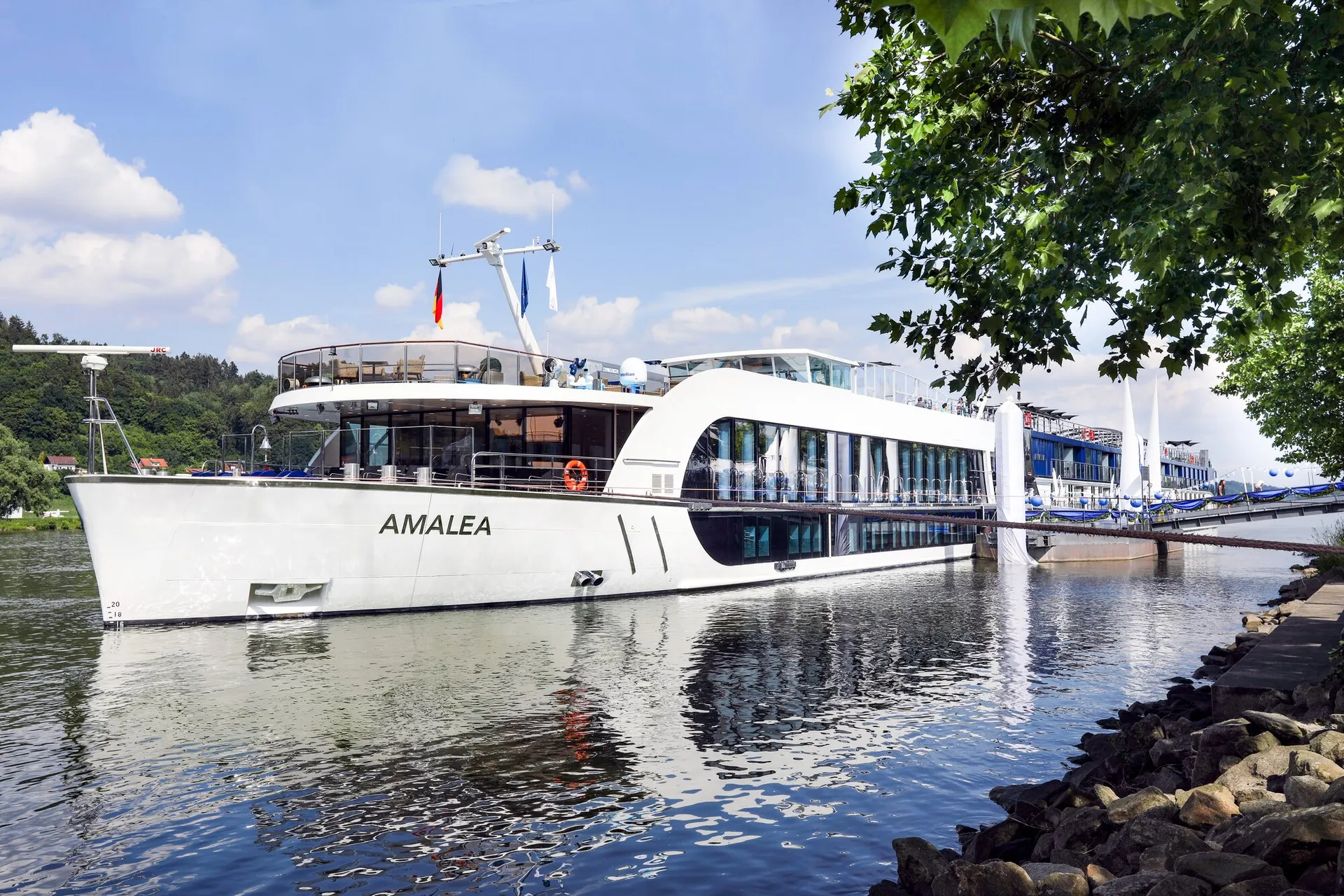
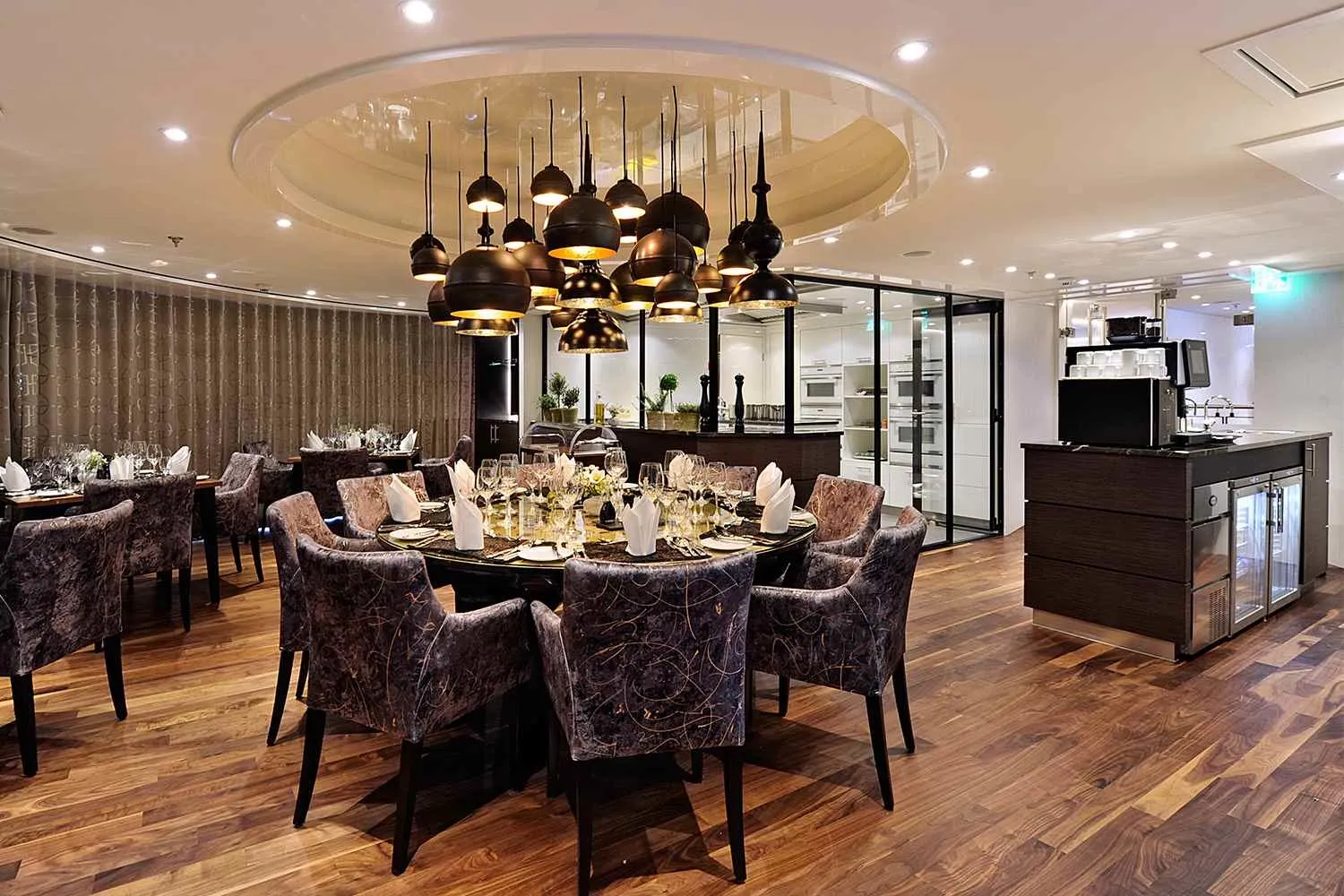
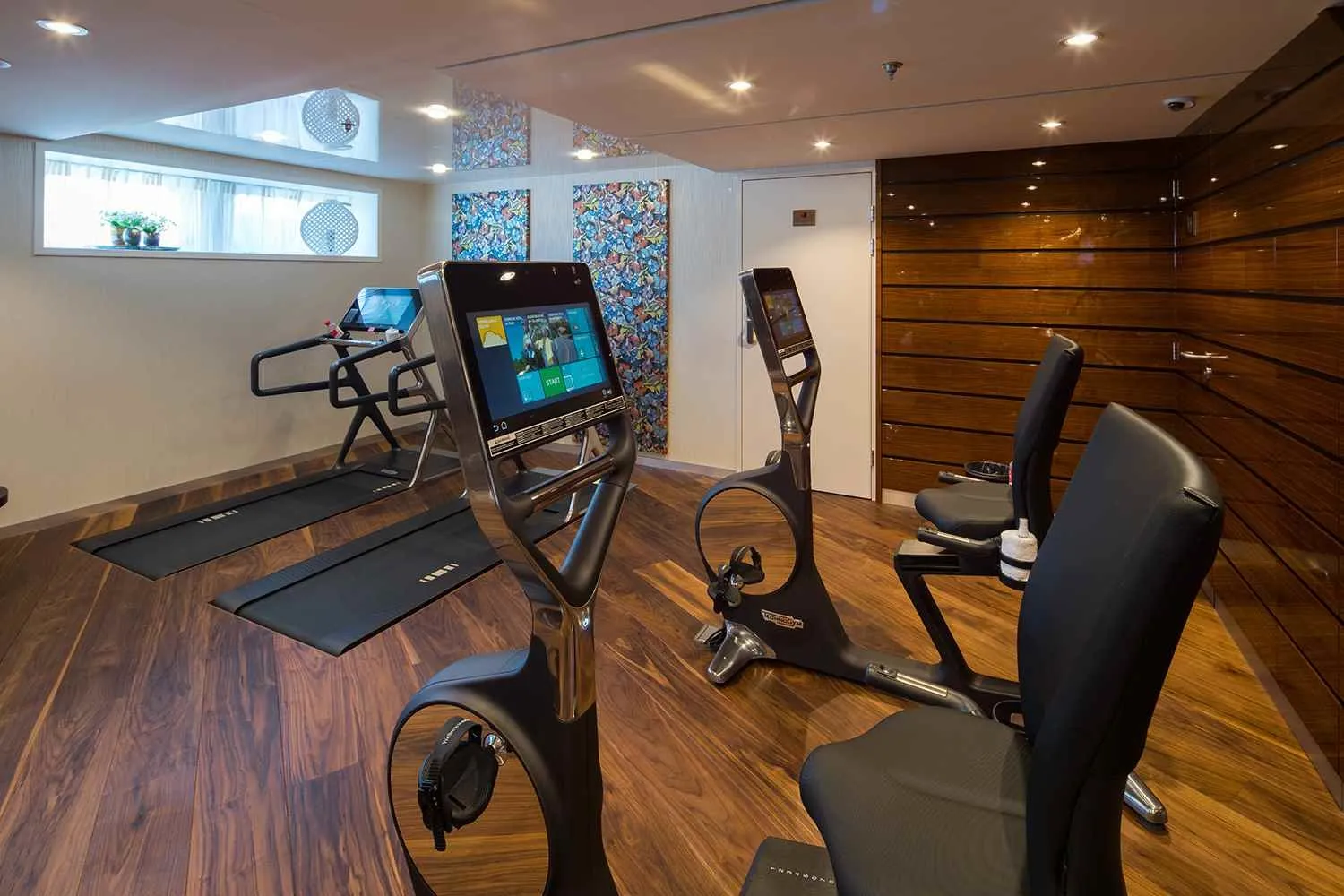
AmaLea
Launched
2018
Refitted
—
Tonnage
3,600 GT
Passengers
156
Cabins
78
Crew
51
Length
443 m
Width
11.5 m
Speed
11 knots
Adults Only
No
Itinerary
Day 1
Day 1
Amsterdam
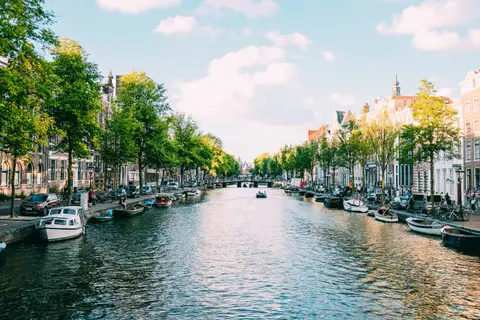
Amsterdam's UNESCO-listed canal ring — a concentric web of seventeenth-century merchant houses and arching stone bridges — remains one of the Western world's most perfectly preserved Golden Age cityscapes, best explored by bicycle or canal boat at a pace that lets the city's genius reveal itself slowly. The Rijksmuseum's collection of Rembrandt and Vermeer masterpieces is essential, while the Anne Frank House offers one of Europe's most profoundly moving historical encounters. Spring brings the iconic tulip season; summer fills the terraces of the Jordaan district. Schiphol Airport makes Amsterdam a seamless gateway to the entire European continent.
Day 3
Day 3
Dusseldorf
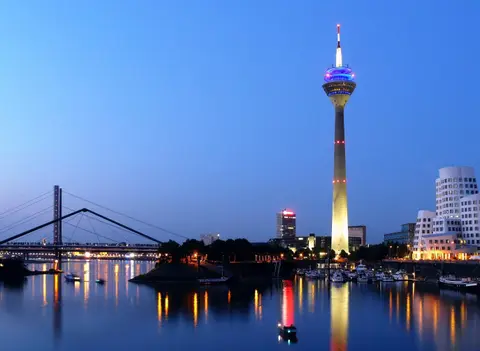
Düsseldorf's port is a vibrant hub of culture and history, offering a unique blend of modern architecture and traditional charm. Must-do experiences include sampling the local Altbier and Rheintopf stew and exploring the nearby picturesque town of Wertheim. The best season to visit is during the spring, when the city blossoms and outdoor activities abound.
Day 4
Day 4
Rüdesheim am Rhein
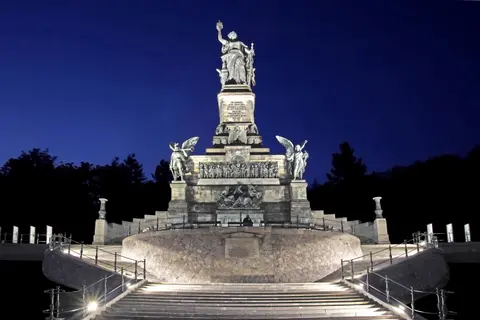
Rüdesheim am Rhein, a jewel of the UNESCO-listed Upper Middle Rhine Valley, is where Germany's most famous wine river cuts through vine-terraced slopes and medieval fortresses. The storied Drosselgasse laneway hums with taverns pouring the region's celebrated Rieslings — wonderfully crisp and mineral from the slate soils — while the Niederwald Monument crowns the vineyards above, accessible by cable car. Rheingau estates offer cellar door tastings of exceptional depth and character. Day excursions by river boat reveal Bacharach, Boppard, and the legendary Lorelei rock. September's harvest season transforms the entire valley into a celebration of the vintage.
Day 5
Day 5
Wertheim
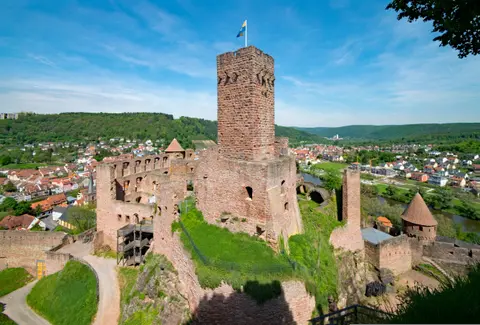
Perched at the confluence of the Main and Tauber rivers beneath the romantic ruins of a 12th-century count's castle, Wertheim is one of Franconia's most perfectly preserved medieval towns — a place where timber-framed houses lean over cobbled market squares and where the bone-dry Silvaner poured from the distinctive Bocksbeutel bottle defines the regional table. Day trips to baroque Würzburg, the medieval perfection of Rothenburg ob der Tauber, and the half-timbered town of Miltenberg complete the picture. September's wine harvest brings the Tauber Valley to its most golden.
Day 6
Day 6
Wurzburg
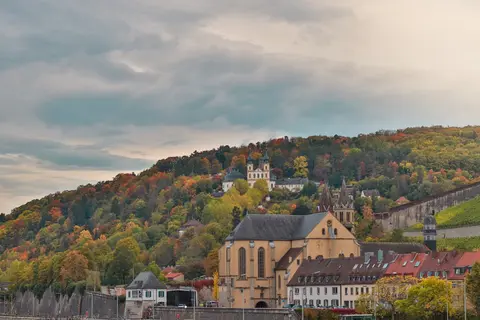
Würzburg, presiding over the Main River at the northern gateway of the Romantic Road, is Bavaria's most elegantly baroque city — its skyline commanded by the medieval Marienberg Fortress and its streets presided over by the magnificent Residenz, a UNESCO-listed princely palace whose frescoed Treppenhaus ceiling by Tiepolo is considered the largest fresco in the world. The surrounding Franconian wine country produces some of Germany's most distinctive Silvaner and Riesling, sold in the iconic bocksbeutel flask from cellars carved directly beneath the old city. Spring through autumn reveals the vine-clad hillsides in their most photogenic splendor; the historic Weinfest am Stein wine festival each September is a highlight of the Franconian calendar.
Day 7
Day 7
Eltmann
Eltmann is a charming Franconian town on the Main River in Bavaria, where medieval castle ruins overlook vineyards, half-timbered houses, and one of Germany's premier wine regions. Must-dos include climbing to the Wallburg Castle viewpoint, tasting dry Silvaner wines in their distinctive Bocksbeutel bottles, and excursing to the UNESCO-listed city of Bamberg. May through October offers the warmest weather, open beer gardens, and the most pleasant Main valley cruising conditions.
Day 8
Day 8
Nuremberg
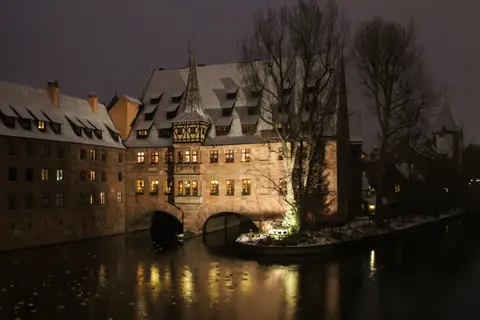
Nuremberg commands the imagination on two levels: as the glittering medieval city where Holy Roman Emperors held court, Albrecht Dürer was born, and craftsmen produced the first pocket watch — and as the site of the 20th century's darkest chapter, where Nazi rallies and subsequent war crimes trials left permanent marks on European history and conscience. The Kaiserburg castle crowning the hill above the perfectly preserved old town offers sweeping views of a cityscape that, despite wartime bombing, remains one of Germany's most beautiful. The Documentation Centre on the former Nazi Rally Grounds is essential, sobering history; the Christmas Market on the Hauptmarkt, held since 1628, is among Europe's finest. Visit May through October or December.
Day 10
Day 10
Regensburg
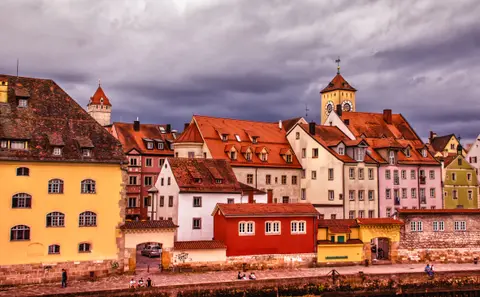
Regensburg, Bavaria's medieval masterpiece on the Danube, is one of Central Europe's most intact ancient cities — its Roman origins visible in the Porta Praetoria stone gate, its medieval prosperity celebrated in the soaring twin towers of St. Peter's Cathedral and the twelfth-century Stone Bridge. UNESCO World Heritage status acknowledges a skyline dotted with patrician towers, while the famous Historische Wurstküchl, Germany's oldest operating sausage kitchen, has been serving spit-grilled bratwurst since the 1140s. The surrounding hills produce excellent Bavarian whites. May through September offers the most convivial riverbank atmosphere.
Day 11
Day 11
Passau
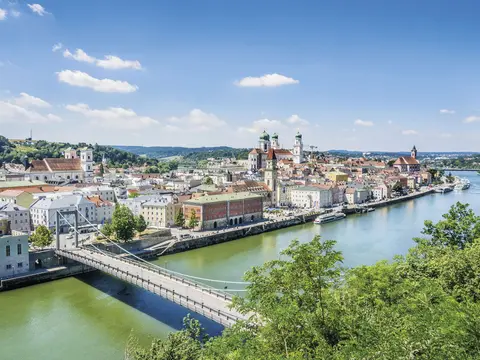
Passau occupies one of Central Europe's most dramatic natural stages — a narrow peninsula at the confluence of three rivers, the Danube, Inn, and Ilz, where the old town's baroque spires and shuttered merchants' houses crowd the very tip of the land between the waters. St. Stephen's Cathedral houses the world's largest church organ, a 17,974-pipe instrument whose daily concerts fill the nave with a sound that seems architectural in its density. The Veste Oberhaus fortress above the city commands panoramic views across three countries on clear days. Passau is a classic Danube river cruise departure point; spring and early autumn, when the river runs high and the light turns golden, are the finest seasons.
Day 12
Day 12
Melk
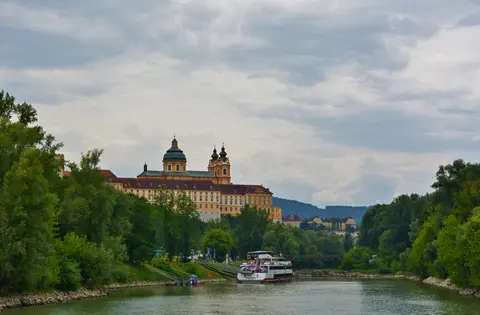
Melk Abbey is among the most theatrical expressions of Baroque ambition in all of Europe — a gilded monastery perched on a granite outcrop above the Danube, its domed church and frescoed library presiding over the Wachau Valley with serene authority since Benedictine monks replaced the Babenberg fortress in 1089. Umberto Eco immortalised it as the inspiration for his labyrinthine monastery in "The Name of the Rose," and the library's 100,000 medieval manuscripts remain one of the continent's supreme collections. After the abbey, stroll down to the historic market town and sample the valley's celebrated Grüner Veltliner wines. The Wachau is at its most bewitching in April and October.
Day 13
Day 13
Vienna
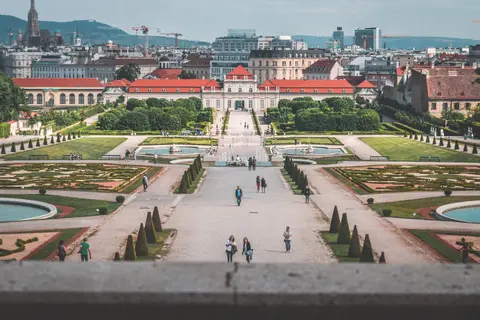
The port of Vienna is a cultural gem along the Danube River, famous for its stunning architecture, rich history, and vibrant culinary scene. Must-do experiences include sampling authentic Wiener Schnitzel and visiting the picturesque village of Dürnstein. The best season to visit is spring or early fall, when the city's gardens bloom and outdoor activities abound.
Day 14
Day 14
Budapest
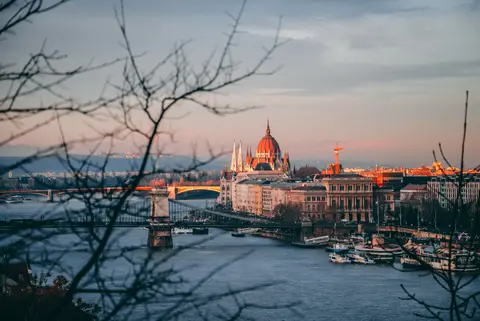
Budapest, divided by the Danube into the hilly Buda of thermal baths and medieval castle lanes on one bank and the grand Pest of coffee-house culture and Art Nouveau splendor on the other, delivers the most theatrical first impression of any European capital — whether approached by river as the neo-Gothic Parliament materializes from the water or by night from the Citadella's sweep of illuminated panorama below. The city's celebrated thermal bath culture, rooted in Ottoman-era hammams and perfected in palatial Secession-era pools like the Széchenyi, is an experience entirely unlike anything else in Europe. Visit spring and autumn for comfortable temperatures; Vienna is two and a half hours west by train.
Day 1
Amsterdam
Amsterdam's UNESCO-listed canal ring — a concentric web of seventeenth-century merchant houses and arching stone bridges — remains one of the Western world's most perfectly preserved Golden Age cityscapes, best explored by bicycle or canal boat at a pace that lets the city's genius reveal itself slowly. The Rijksmuseum's collection of Rembrandt and Vermeer masterpieces is essential, while the Anne Frank House offers one of Europe's most profoundly moving historical encounters. Spring brings the iconic tulip season; summer fills the terraces of the Jordaan district. Schiphol Airport makes Amsterdam a seamless gateway to the entire European continent.
Day 3
Dusseldorf
Düsseldorf's port is a vibrant hub of culture and history, offering a unique blend of modern architecture and traditional charm. Must-do experiences include sampling the local Altbier and Rheintopf stew and exploring the nearby picturesque town of Wertheim. The best season to visit is during the spring, when the city blossoms and outdoor activities abound.
Day 4
Rüdesheim am Rhein
Rüdesheim am Rhein, a jewel of the UNESCO-listed Upper Middle Rhine Valley, is where Germany's most famous wine river cuts through vine-terraced slopes and medieval fortresses. The storied Drosselgasse laneway hums with taverns pouring the region's celebrated Rieslings — wonderfully crisp and mineral from the slate soils — while the Niederwald Monument crowns the vineyards above, accessible by cable car. Rheingau estates offer cellar door tastings of exceptional depth and character. Day excursions by river boat reveal Bacharach, Boppard, and the legendary Lorelei rock. September's harvest season transforms the entire valley into a celebration of the vintage.
Day 5
Wertheim
Perched at the confluence of the Main and Tauber rivers beneath the romantic ruins of a 12th-century count's castle, Wertheim is one of Franconia's most perfectly preserved medieval towns — a place where timber-framed houses lean over cobbled market squares and where the bone-dry Silvaner poured from the distinctive Bocksbeutel bottle defines the regional table. Day trips to baroque Würzburg, the medieval perfection of Rothenburg ob der Tauber, and the half-timbered town of Miltenberg complete the picture. September's wine harvest brings the Tauber Valley to its most golden.
Day 6
Wurzburg
Würzburg, presiding over the Main River at the northern gateway of the Romantic Road, is Bavaria's most elegantly baroque city — its skyline commanded by the medieval Marienberg Fortress and its streets presided over by the magnificent Residenz, a UNESCO-listed princely palace whose frescoed Treppenhaus ceiling by Tiepolo is considered the largest fresco in the world. The surrounding Franconian wine country produces some of Germany's most distinctive Silvaner and Riesling, sold in the iconic bocksbeutel flask from cellars carved directly beneath the old city. Spring through autumn reveals the vine-clad hillsides in their most photogenic splendor; the historic Weinfest am Stein wine festival each September is a highlight of the Franconian calendar.
Day 7
Eltmann
Eltmann is a charming Franconian town on the Main River in Bavaria, where medieval castle ruins overlook vineyards, half-timbered houses, and one of Germany's premier wine regions. Must-dos include climbing to the Wallburg Castle viewpoint, tasting dry Silvaner wines in their distinctive Bocksbeutel bottles, and excursing to the UNESCO-listed city of Bamberg. May through October offers the warmest weather, open beer gardens, and the most pleasant Main valley cruising conditions.
Day 8
Nuremberg
Nuremberg commands the imagination on two levels: as the glittering medieval city where Holy Roman Emperors held court, Albrecht Dürer was born, and craftsmen produced the first pocket watch — and as the site of the 20th century's darkest chapter, where Nazi rallies and subsequent war crimes trials left permanent marks on European history and conscience. The Kaiserburg castle crowning the hill above the perfectly preserved old town offers sweeping views of a cityscape that, despite wartime bombing, remains one of Germany's most beautiful. The Documentation Centre on the former Nazi Rally Grounds is essential, sobering history; the Christmas Market on the Hauptmarkt, held since 1628, is among Europe's finest. Visit May through October or December.
Day 10
Regensburg
Regensburg, Bavaria's medieval masterpiece on the Danube, is one of Central Europe's most intact ancient cities — its Roman origins visible in the Porta Praetoria stone gate, its medieval prosperity celebrated in the soaring twin towers of St. Peter's Cathedral and the twelfth-century Stone Bridge. UNESCO World Heritage status acknowledges a skyline dotted with patrician towers, while the famous Historische Wurstküchl, Germany's oldest operating sausage kitchen, has been serving spit-grilled bratwurst since the 1140s. The surrounding hills produce excellent Bavarian whites. May through September offers the most convivial riverbank atmosphere.
Day 11
Passau
Passau occupies one of Central Europe's most dramatic natural stages — a narrow peninsula at the confluence of three rivers, the Danube, Inn, and Ilz, where the old town's baroque spires and shuttered merchants' houses crowd the very tip of the land between the waters. St. Stephen's Cathedral houses the world's largest church organ, a 17,974-pipe instrument whose daily concerts fill the nave with a sound that seems architectural in its density. The Veste Oberhaus fortress above the city commands panoramic views across three countries on clear days. Passau is a classic Danube river cruise departure point; spring and early autumn, when the river runs high and the light turns golden, are the finest seasons.
Day 12
Melk
Melk Abbey is among the most theatrical expressions of Baroque ambition in all of Europe — a gilded monastery perched on a granite outcrop above the Danube, its domed church and frescoed library presiding over the Wachau Valley with serene authority since Benedictine monks replaced the Babenberg fortress in 1089. Umberto Eco immortalised it as the inspiration for his labyrinthine monastery in "The Name of the Rose," and the library's 100,000 medieval manuscripts remain one of the continent's supreme collections. After the abbey, stroll down to the historic market town and sample the valley's celebrated Grüner Veltliner wines. The Wachau is at its most bewitching in April and October.
Day 13
Vienna
The port of Vienna is a cultural gem along the Danube River, famous for its stunning architecture, rich history, and vibrant culinary scene. Must-do experiences include sampling authentic Wiener Schnitzel and visiting the picturesque village of Dürnstein. The best season to visit is spring or early fall, when the city's gardens bloom and outdoor activities abound.
Day 14
Budapest
Budapest, divided by the Danube into the hilly Buda of thermal baths and medieval castle lanes on one bank and the grand Pest of coffee-house culture and Art Nouveau splendor on the other, delivers the most theatrical first impression of any European capital — whether approached by river as the neo-Gothic Parliament materializes from the water or by night from the Citadella's sweep of illuminated panorama below. The city's celebrated thermal bath culture, rooted in Ottoman-era hammams and perfected in palatial Secession-era pools like the Széchenyi, is an experience entirely unlike anything else in Europe. Visit spring and autumn for comfortable temperatures; Vienna is two and a half hours west by train.
Cabin Categories
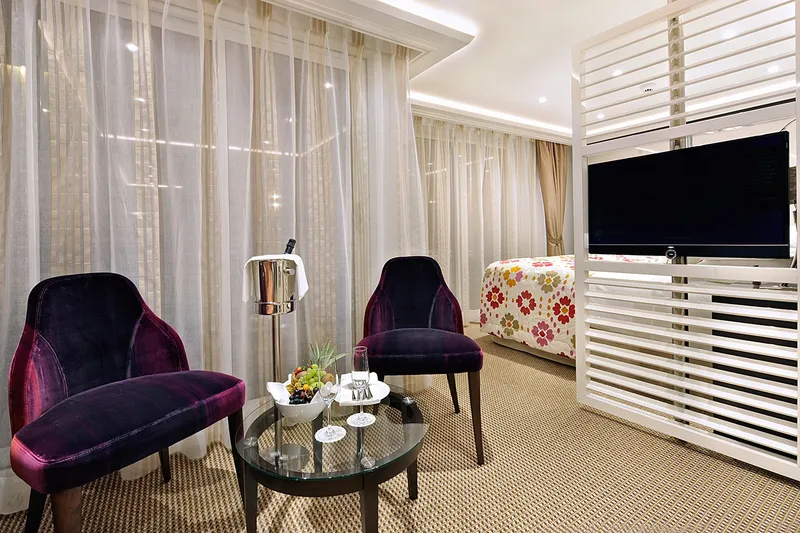
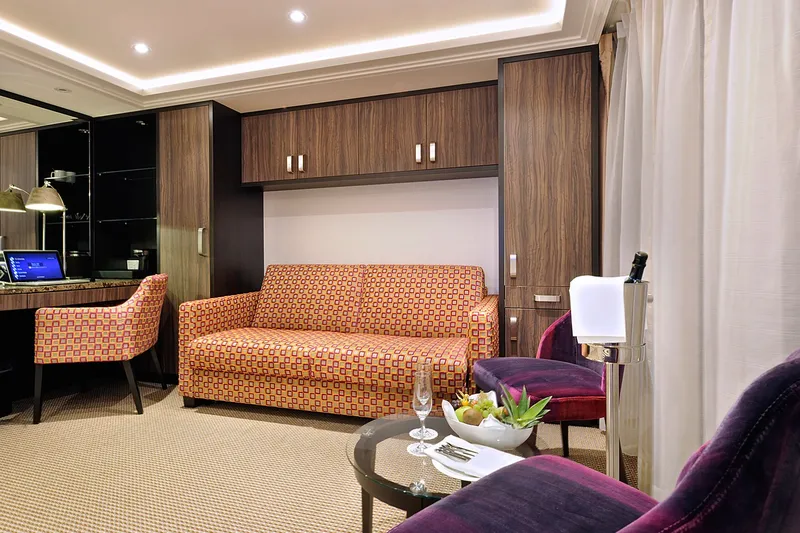
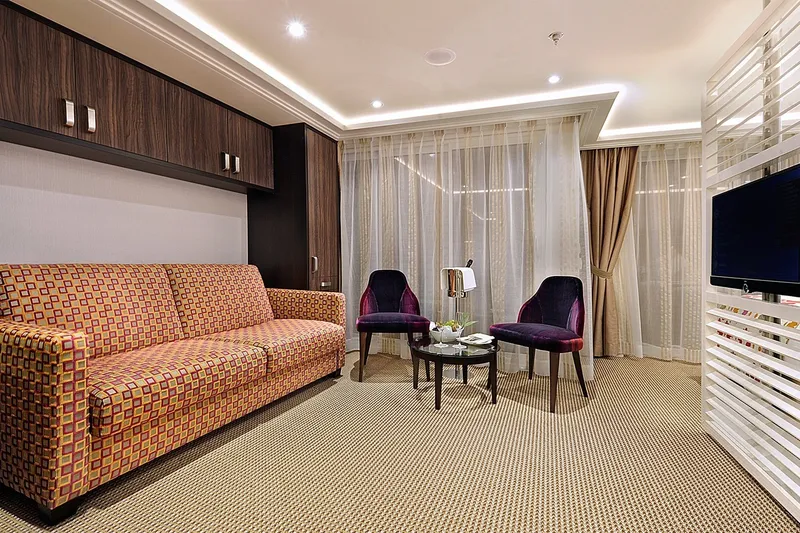
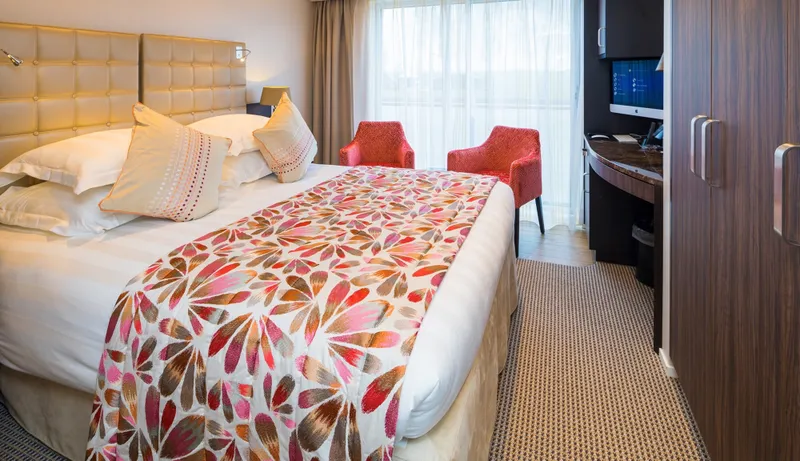
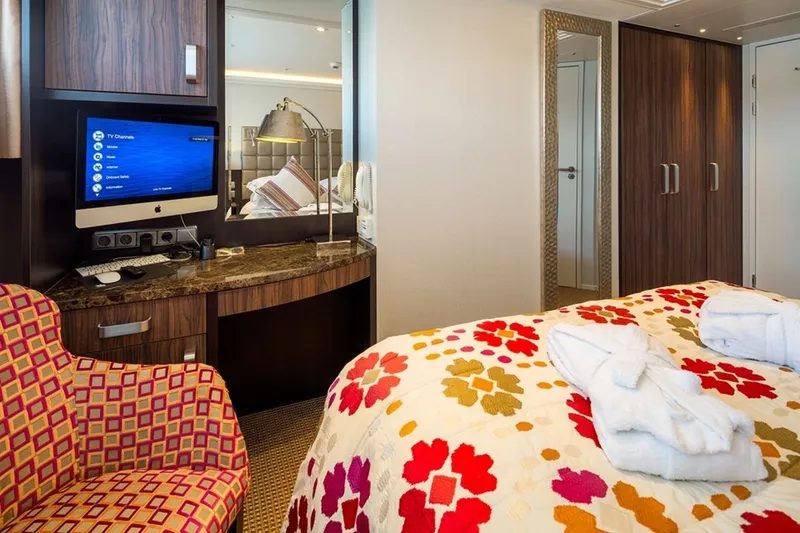
Suite
Suite
350 m²Max 2
SS
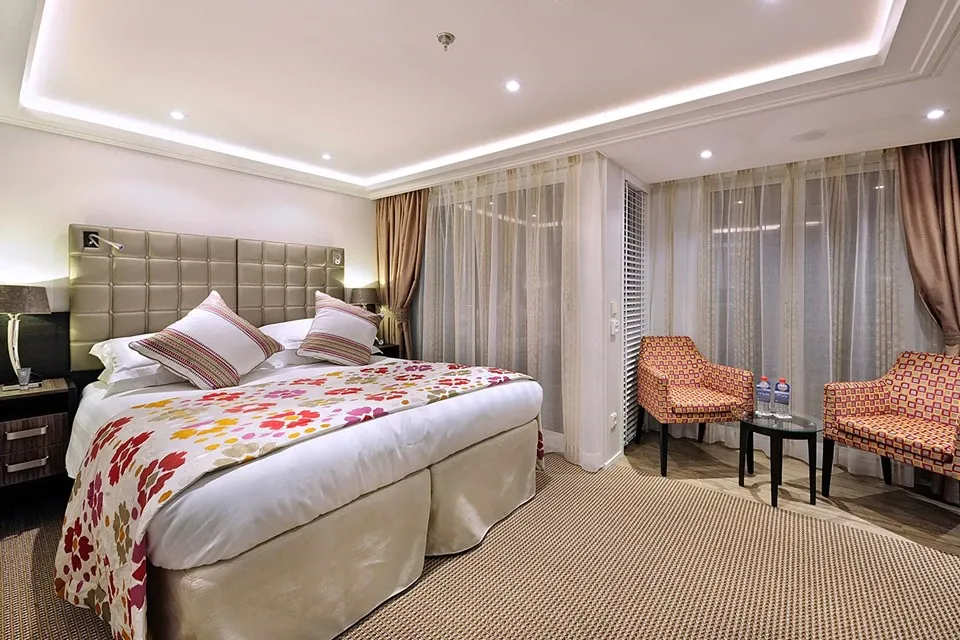
In-room temperature control
Deluxe hotel-style bedding with Egyptian linen, down pillows and duvet
Spacious bathrooms with multi-jet showerheads
Large wardrobe, full-length mirror, hair dryer, safe and direct-dial telephone
Flat-screen TV that also works as a computer
Entertainment on Demand system providing complimentary TV, movies and music library
Complimentary internet and Wi-Fi
Complimentary bottled water replenished daily
Desk and chair
Media/Entertainment StationTelephoneAir ConditioningQueen or Twin ConfigurationLounge AreaShower+9
View Details
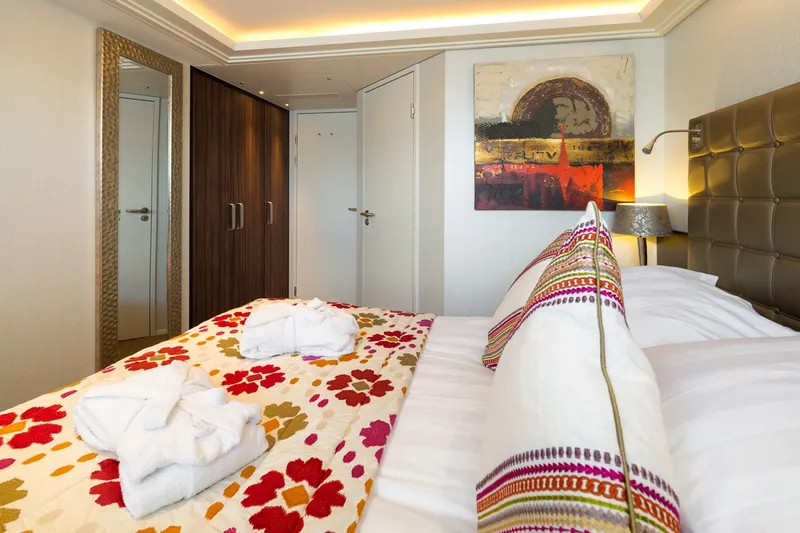
French Balcony
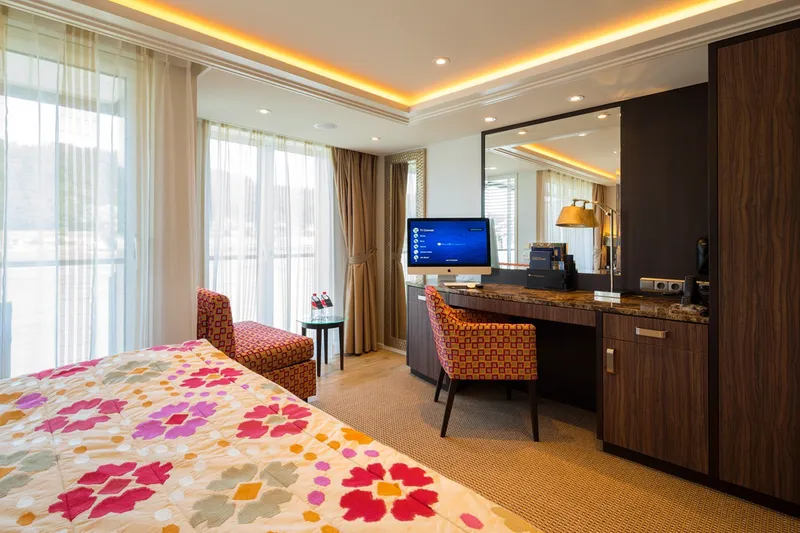
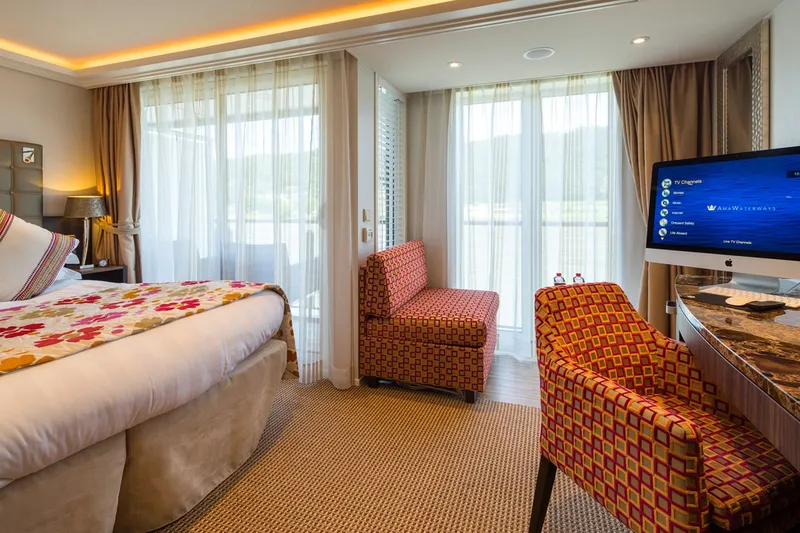
Balcony
155–170 m²Max 2
CACB
In-room temperature control
Deluxe hotel-style bedding with Egyptian linen, down pillows and duvet
Spacious bathrooms with multi-jet showerheads
Large wardrobe, full-length mirror, hair dryer, safe and direct-dial telephone
Flat-screen TV that also works as a computer
Entertainment on Demand system providing complimentary TV, movies and music library
Complimentary internet and Wi-Fi
Complimentary bottled water replenished daily
Desk and chair
Media/Entertainment StationTelephoneAir ConditioningQueen or Twin ConfigurationShowerToiletries Provided+6
View Details
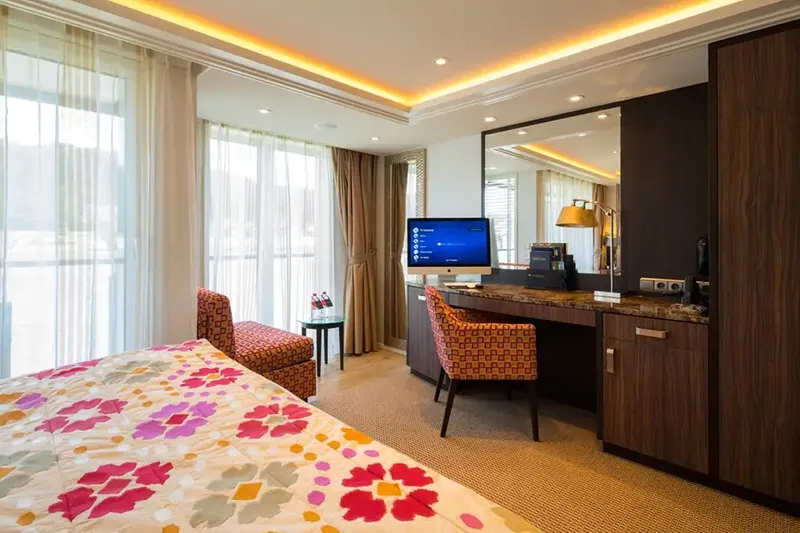
Twin Balcony
Balcony
210–235 m²Max 2
AAABBABB
In-room temperature control
Deluxe hotel-style bedding with Egyptian linen, down pillows and duvet
Spacious bathrooms with multi-jet showerheads
Large wardrobe, full-length mirror, hair dryer, safe and direct-dial telephone
Flat-screen TV that also works as a computer
Entertainment on Demand system providing complimentary TV, movies and music library
Complimentary internet and Wi-Fi
Complimentary bottled water replenished daily
Desk and chair
Free Wi-FiMedia/Entertainment StationAir ConditioningQueen or Twin ConfigurationShowerToiletries Provided+6
View Details
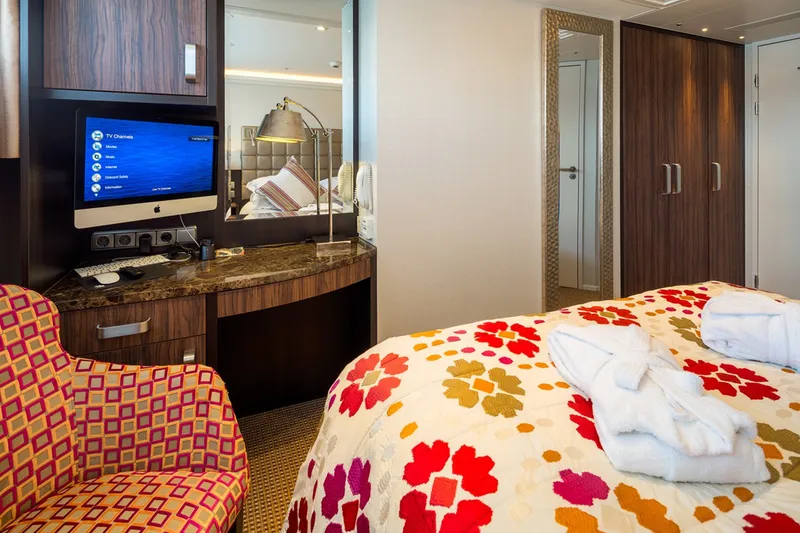
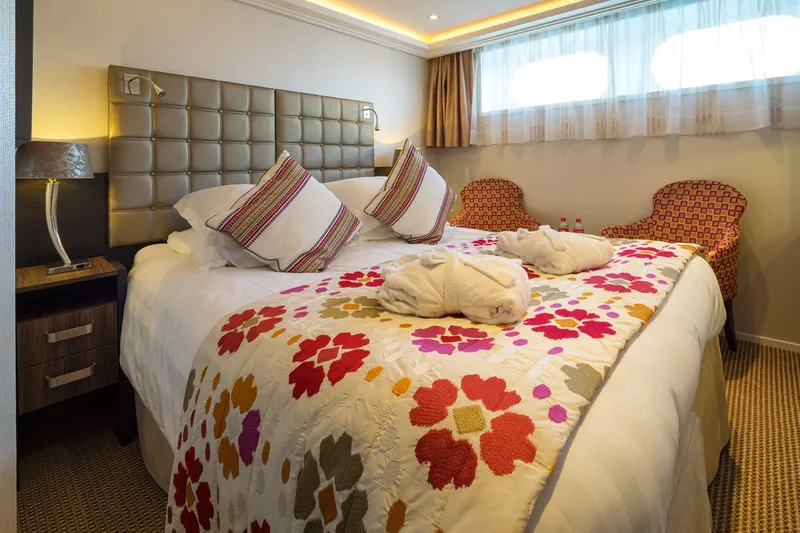
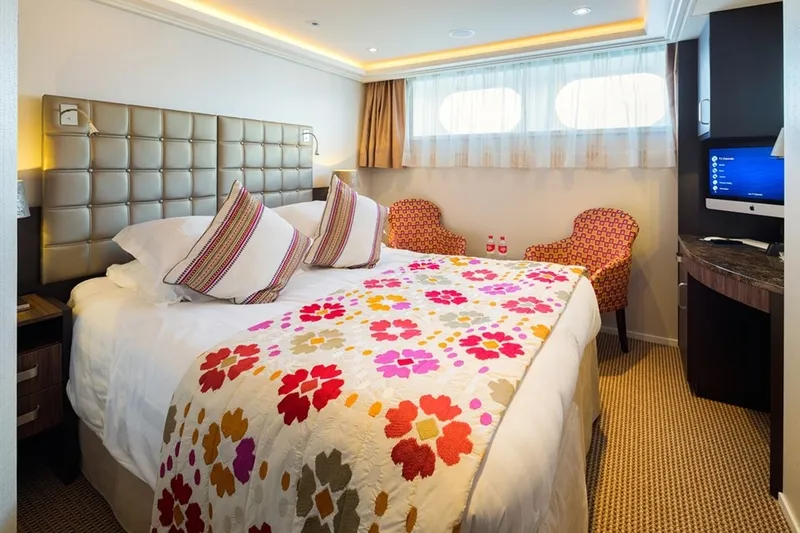
Fixed Window
Outside
160 m²Max 2
DE
In-room temperature control
Deluxe hotel-style bedding with Egyptian linen, down pillows and duvet
Spacious bathrooms with multi-jet showerheads
Large wardrobe, full-length mirror, hair dryer, safe and direct-dial telephone
Flat-screen TV that also works as a computer
Entertainment on Demand system providing complimentary TV, movies and music library
Complimentary internet and Wi-Fi
Complimentary bottled water replenished daily
Desk and chair
Media/Entertainment StationTelephoneAir ConditioningQueen or Twin ConfigurationShowerToiletries Provided+6
View Details
Interested in This Voyage?
Our cruise specialists can help you find the perfect cabin and the best available pricing.
(+886) 02-2721-7300Contact Advisor