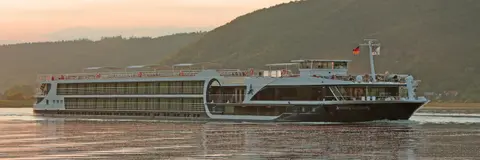
Rhine & Rhône Revealed (Northbound)
Date
2026-04-14
Duration
14 nights
Departure Port
Arles
United Kingdom
Arrival Port
Amsterdam
Netherlands
Rating
—
Theme
—
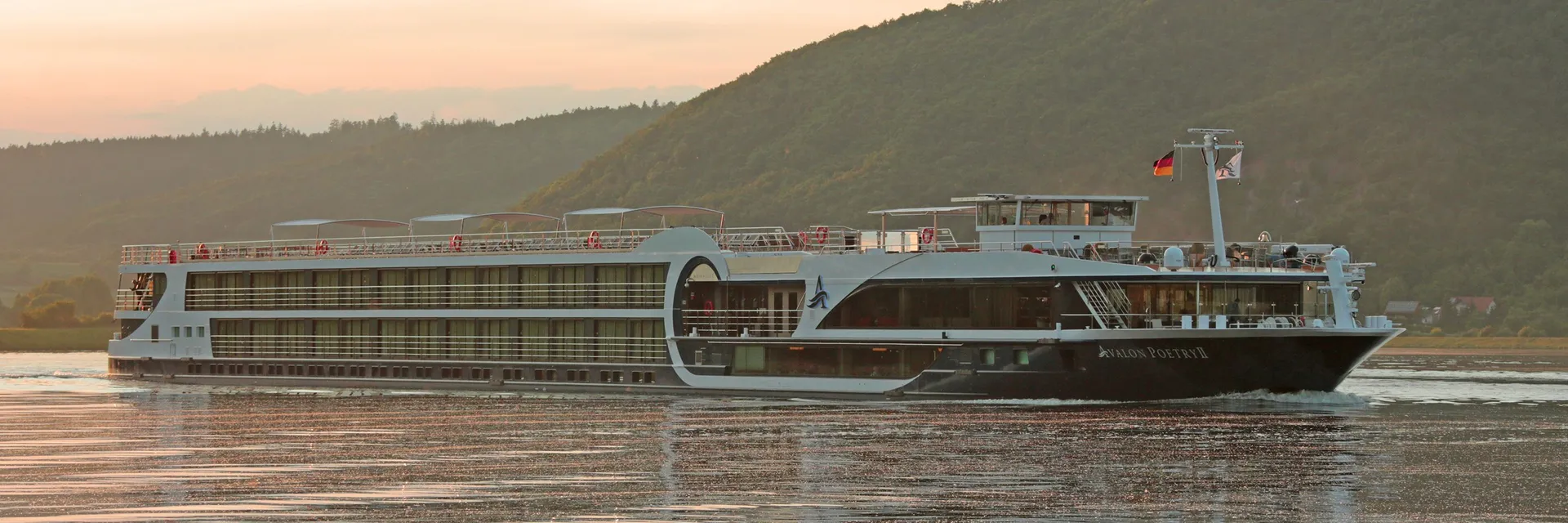
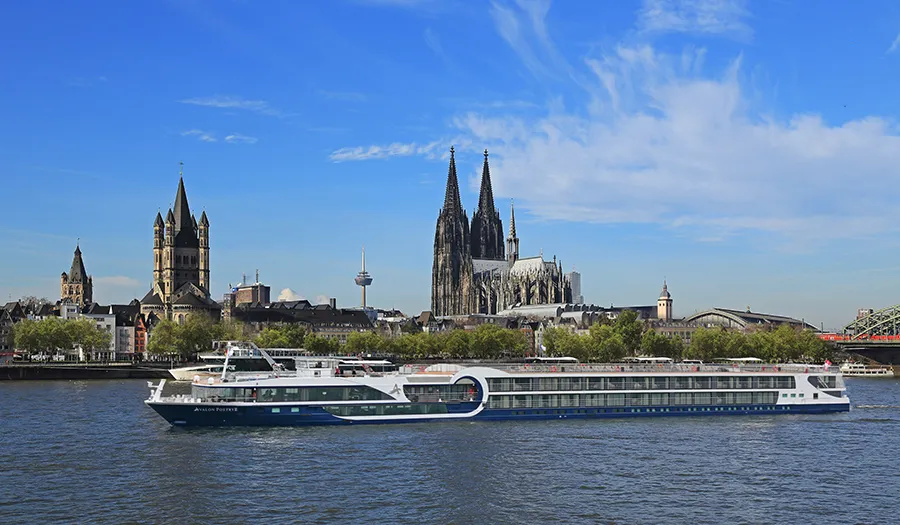
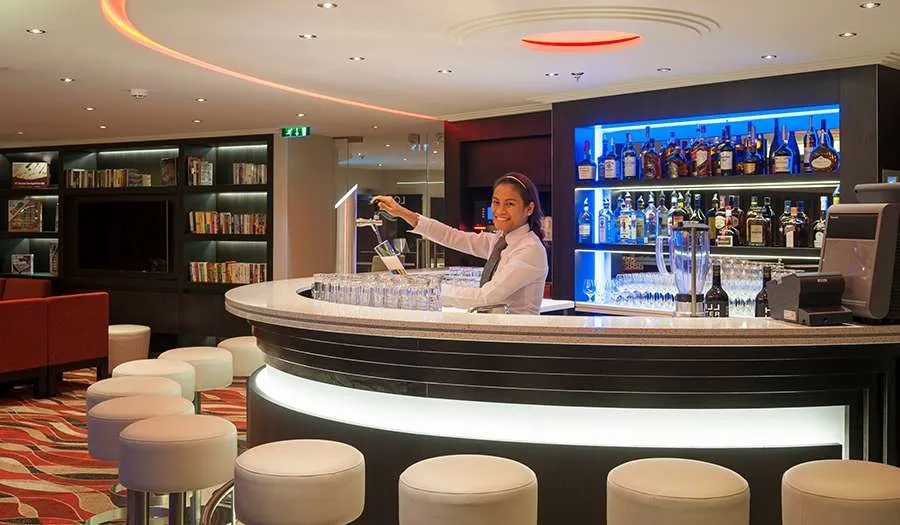
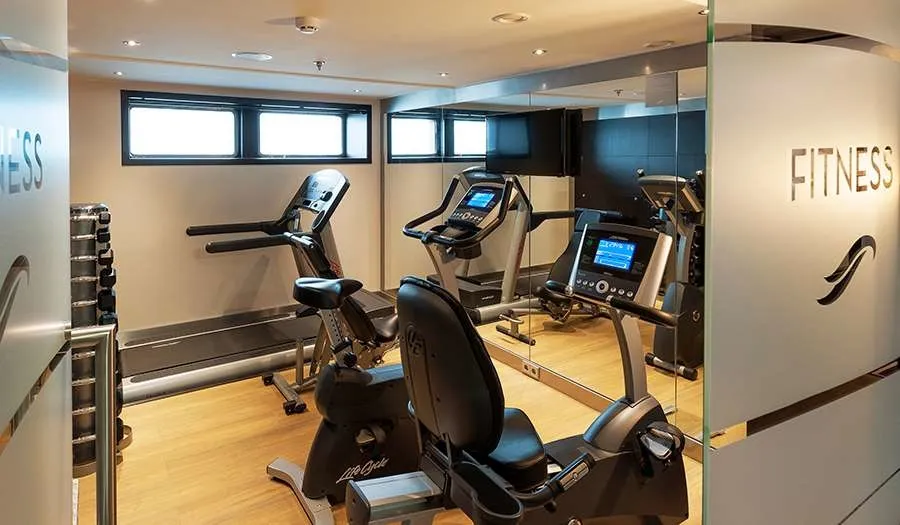
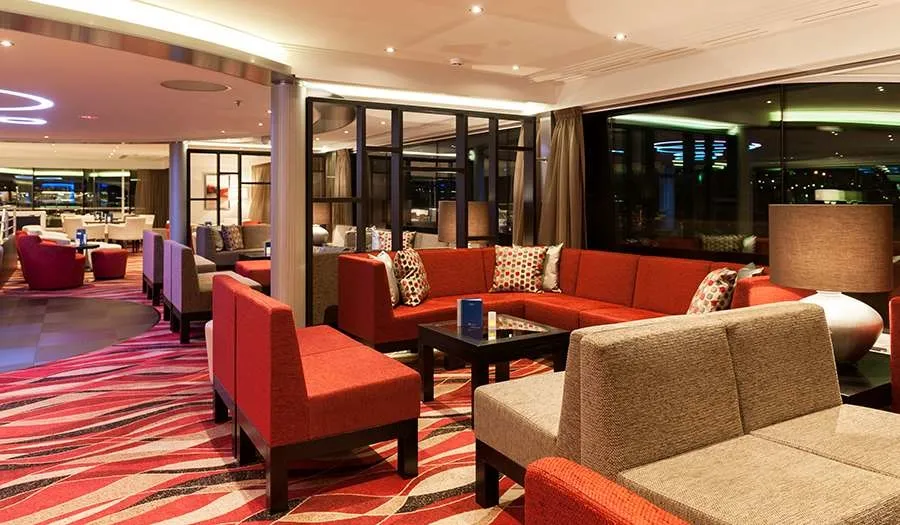
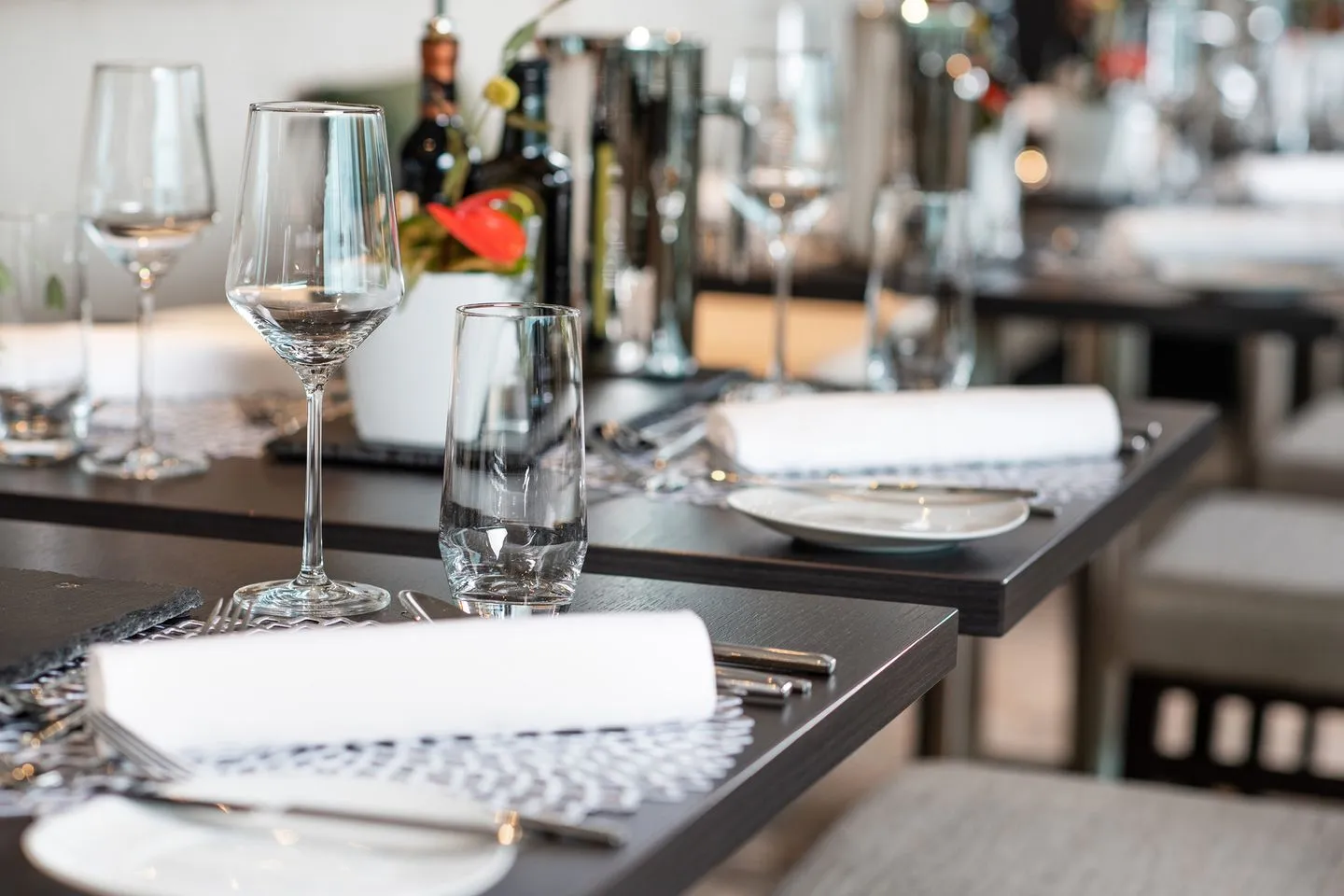
Avalon Waterways
Avalon Poetry II
Suite Ship
Launched
2014
Refitted
—
Tonnage
2,022 GT
Passengers
130
Cabins
64
Crew
37
Length
361 m
Width
12 m
Speed
12 knots
Adults Only
No
Itinerary
Day 1
Day 1
Arles
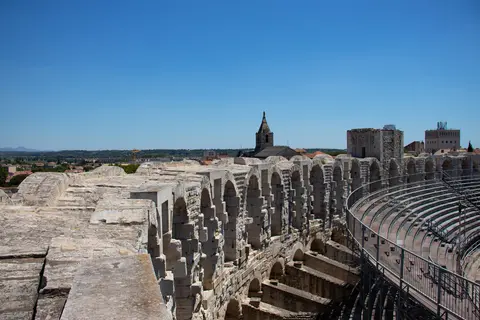
Arles, the most important city in Roman Gaul after Lyon, wears its history with casual magnificence: a first-century amphitheatre still hosts bullfights beneath open skies, and the haunting Alyscamps necropolis — once among the most prestigious burial grounds in the Western world — lines a poplar-shaded avenue with ancient sarcophagi. Yet Arles is equally celebrated as the city that intoxicated Vincent van Gogh, who produced over three hundred works here in fifteen fevered months; the Fondation Vincent van Gogh now honors his legacy in beautifully renovated rooms. Spring and autumn are ideal, with the Camargue's flamingo-filled wetlands just minutes south. Lyon is two hours north by TGV.
Day 3
Day 3
Avignon
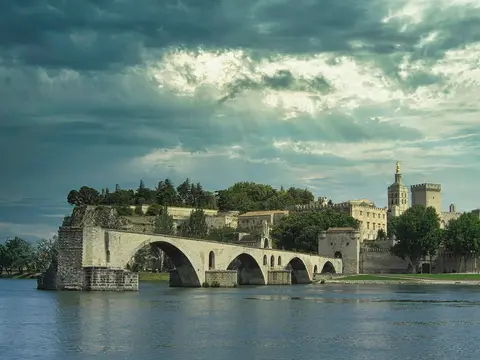
Avignon's Palais des Papes — a fortress-palace of staggering medieval ambition where seven successive popes held court for seventy years — still dominates this Provençal city's skyline, its limestone bulk enclosing frescoed chapels and vast ceremonial halls that once shaped the destiny of Christendom. In July, the city transforms for the celebrated Festival d'Avignon, Europe's premier theatre gathering, turning every courtyard and cloister into a stage. Year-round, the beautifully preserved historic centre offers world-class Rhône Valley wines, refined Provençal cuisine, and the beguiling spectacle of the Pont Saint-Bénézet stretching halfway across the river. Lyon and Marseille are each accessible in under ninety minutes by TGV.
Day 4
Day 4
Viviers
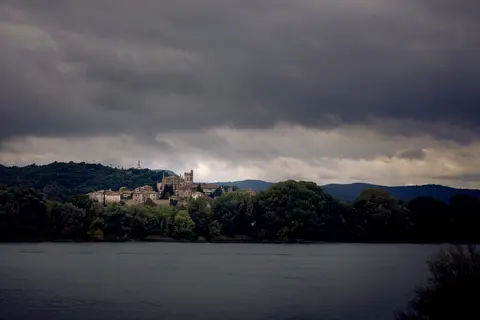
Viviers is one of France's most beautifully preserved medieval secrets — a cathedral town of barely four thousand souls perched on a limestone spur above the Rhône, serving as an episcopal seat since the fifth century when its bishops chose this formidable rock over the declining Roman city below. The Romanesque bell tower, vaulted passageways, and Renaissance townhouses of the haute ville form an ensemble of extraordinary architectural coherence, virtually unaltered since the seventeenth century. River cruise guests arriving from Lyon or Avignon typically spend languid afternoons exploring these narrow, time-suspended streets, best visited in spring or early autumn when Rhône Valley light is at its most golden.
Day 5
Day 5
Tain L’Hermitage
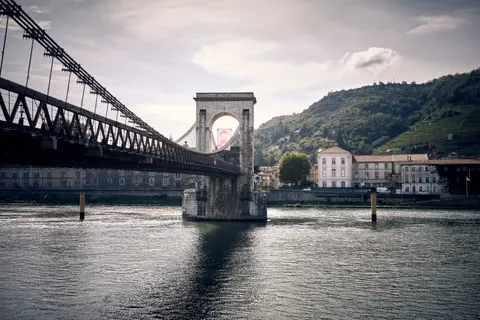
Tain-l'Hermitage is the beating heart of the northern Rhône wine country, a compact town whose steeply terraced granite hill has yielded some of France's most majestic Syrahs and finest Marsannes since the Roman era. The revered Hermitage hill — its legend entwined with a thirteenth-century crusader hermit — rises directly behind the main street, and the great wine estates of Jaboulet, Chapoutier, and Ferraton offer some of the Loire Valley's most memorable cellar tastings. Autumn harvest season brings the vineyards to their most photogenic golden glory; spring and summer offer ideal touring weather along the Rhône cycling routes between vines and river.
Day 6
Day 6
Lyon
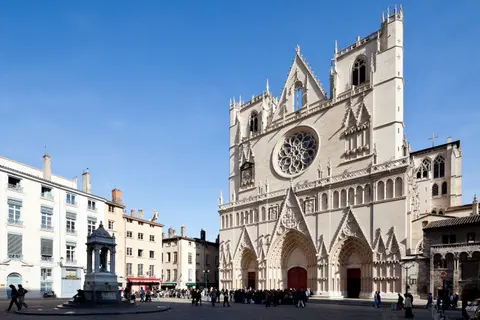
Lyon sits at the confluence of the Rhône and the Saône — a geographic destiny that made it the capital of Roman Gaul, a Renaissance silk-trading powerhouse, and, by contemporary consensus, the undisputed gastronomic capital of France. The UNESCO-listed Vieux Lyon preserves Europe's finest concentration of Renaissance architecture, its labyrinthine traboules — secret passageways threading through courtyard after courtyard — offering endless discovery. Paul Bocuse's legacy lives on in the city's constellation of bouchons, where quenelles de brochet and tablier de sapeur are served with the straightforward confidence of a city that has never needed to prove its culinary supremacy. Lyon rewards a visit in any season, with the Festival of Lights in December being particularly magical.
Day 7
Day 7
Tournus
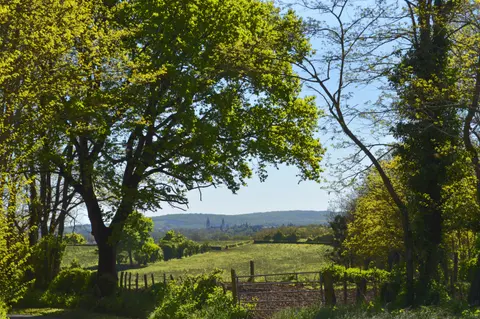
Tournus is a captivating commune in eastern France, renowned for its rich history, stunning architecture, and exceptional culinary experiences. Must-do activities include exploring the Abbey of Saint-Philibert and indulging in local dishes like coq au vin. The best season to visit is spring or early autumn when the weather is mild and the local markets are brimming with fresh produce.
Day 7
Day 7
Chalon-Sur-Saone
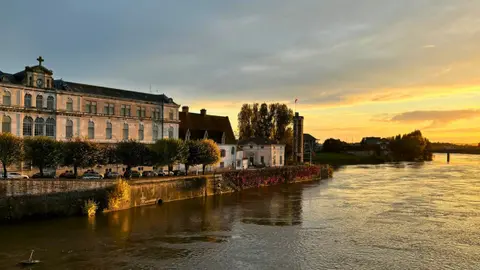
Birthplace of photography and gateway to Burgundy's finest vineyards, Chalon-sur-Saône is a Saône River gem that rewards those who linger beyond its famous streets. The Musée Nicéphore Niépce, housed in a riverside mansion, chronicles the invention of the medium that changed human perception forever, while the surrounding Côte Chalonnaise wine villages — Mercurey, Givry, Rully — offer some of Burgundy's most approachable yet complex Pinot Noirs. Visit in late summer or early autumn for harvest season, when the vineyards blush gold and local restaurants celebrate the new vintage.
Day 8
Day 8
Beaune
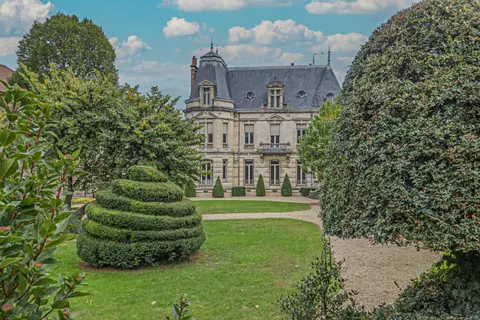
Beaune is a historic walled town in Burgundy, renowned for its vibrant wine culture and the striking Hôtel-Dieu. Must-do experiences include savoring coq au vin and participating in the famous wine auction. The best season to visit is during the harvest in autumn, when the region bursts with color and flavor.
Day 8
Day 8
Basel
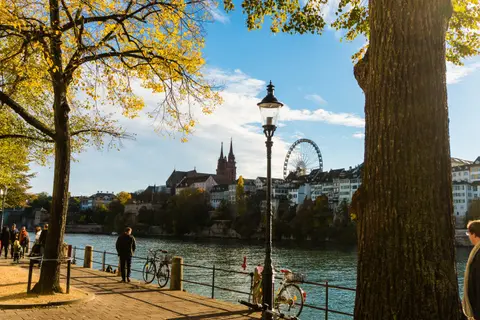
Basel, where Switzerland, France, and Germany converge at the Rhine's northward bend, hosts a concentration of world-class art institutions that rivals any city its size on earth — the Kunstmuseum alone, the world's oldest public art collection, could occupy days, and Art Basel each June draws every name that matters in the contemporary art world to this compact, elegant city. The Rhine itself is the city's great social artery: in summer, locals jump in with waterproof bags and float downstream, a tradition as charming as any museum. Spring through autumn is ideal for outdoor exploration; Paris is just three hours by TGV and Strasbourg a mere twenty minutes by train.
Day 9
Day 9
Breisach
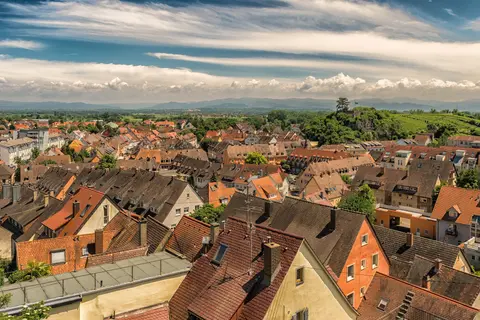
Breisach am Rhein clings to a volcanic hilltop at the French-German border, commanding the Upper Rhine crossing that made it one of the most fought-over towns in European history — a past the Romanesque-Gothic Münster St. Stephan surveys serenely from its commanding heights. Today peace reigns, and Breisach's true gift is its position as a gateway to three celebrated wine regions: the German Kaiserstuhl, producing some of Germany's finest Spätburgunder; the French Alsace, just across the Rhine; and the rolling hills of the Baden wine country to the east. Visit in autumn for harvest season across all three regions simultaneously. Freiburg im Breisgau, the Black Forest's graceful capital, lies twenty minutes east.
Day 10
Day 10
Strasbourg
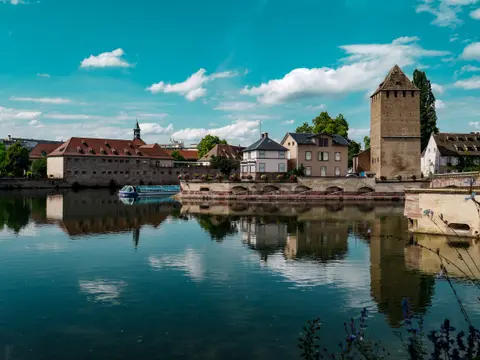
Strasbourg is one of Europe's great border cities, its Franco-German soul etched into every half-timbered façade of the UNESCO-listed Grande Île and every turret of the soaring rose-sandstone cathedral that reigned as the world's tallest building for over two centuries. As the seat of the European Parliament and home to the European Court of Human Rights, this sophisticated Alsatian capital savors outstanding Riesling and choucroute garnie with equal Continental pride. The city dazzles year-round, though December's legendary Christmas market — among the oldest in Europe — transforms its medieval squares into an enchanted winter spectacle.
Day 11
Day 11
Mainz
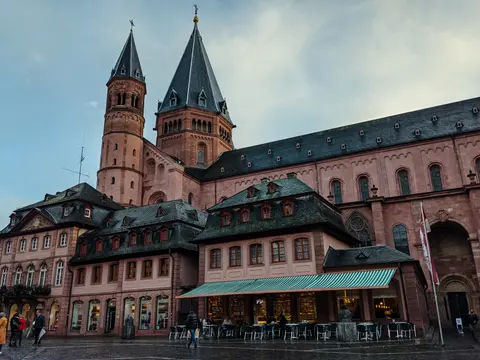
Mainz is where the modern world was printed into existence: Johannes Gutenberg's invention of movable-type printing around 1440 transformed this ancient Rhine city into the birthplace of the information age, a legacy honoured at the extraordinary Gutenberg Museum, home to one of the surviving original Bibles. The Romanesque cathedral of St. Martin, built over a millennium from the year 975, anchors a charming old town of wine taverns and market squares where Rhenish Rieslings flow freely. Visit between spring and autumn for the famous Mainz Wine Market held beside the Rhine. A day-cruise port with surprising cultural depth.
Day 11
Day 11
Heidelberg
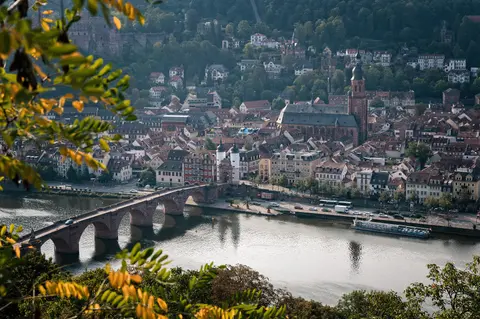
Heidelberg, a historic town on the Neckar River, is renowned for its stunning architecture, including the iconic Heidelberg Castle and the Gothic Heiliggeistkirche. Must-do experiences include indulging in local delicacies such as Sauerbraten and exploring the vibrant markets. The best season to visit is spring or fall, when the weather complements the town's romantic charm.
Day 12
Day 12
Rudesheim
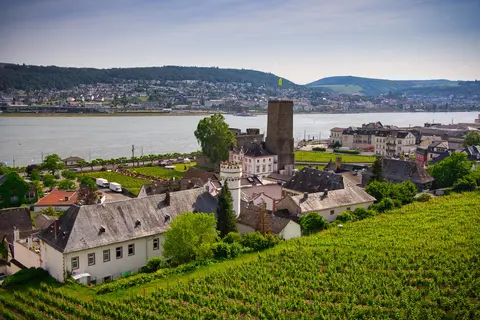
Rüdesheim am Rhein, a jewel of the UNESCO-listed Upper Middle Rhine Valley, is where Germany's most storied wine river cuts through vine-terraced slopes and medieval castle ruins. The pedestrianised Drosselgasse laneway — beloved since the Romantic era — hums with wine taverns pouring the region's celebrated Rieslings, crisp and mineral from the slate soils. The Niederwald Monument surveys the river from the heights, reached by cable car above the vineyards. Day trips by boat unlock Bacharach, Boppard, and the legendary Lorelei rock. September's harvest festivals transform the entire valley into a convivial celebration of the vintage.
Day 12
Day 12
Rhine Gorge
The Rhine Gorge, a UNESCO World Heritage site, is a stunning section of the Rhine River renowned for its historic castles and picturesque towns. Must-do experiences include savoring local Riesling wines and exploring the charming markets. The best season to visit is in late spring through early autumn when the vineyards are lush and the weather is delightful.
Day 12
Day 12
Koblenz
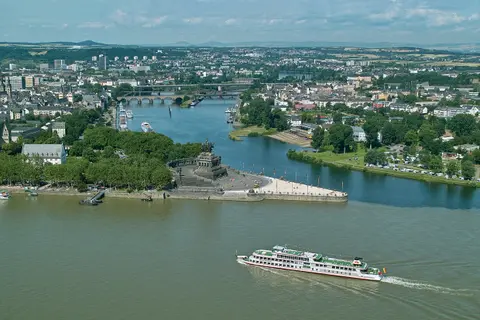
Koblenz stands at the Deutsches Eck — the German Corner — where the Moselle river pours into the Rhine in a confluence so geographically commanding that the Romans built a fortress here in 9 BC. The result is a city of exceptional Rhine Gorge scenery, with the formidable Ehrenbreitstein Fortress, one of Europe's largest, crowning the opposite bank and reachable by gondola for panoramas that stretch across three river valleys. A Rhine wine tasting at one of the city's historic Weinstuben, followed by a stroll through the Altstadt's baroque squares, is the definitive Koblenz afternoon. The finest weather arrives April through October, with the Rhine in Flames fireworks festival in August being particularly spectacular.
Day 13
Day 13
Cologne
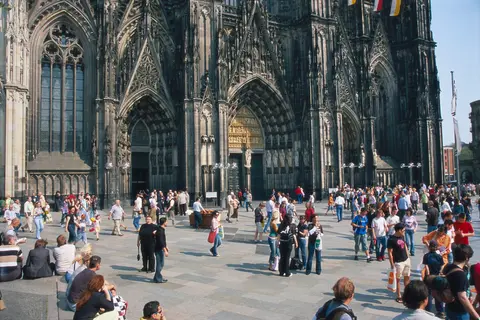
Cologne's twin-spired Gothic cathedral, six hundred years in the building and still the city's defining monument, is the inevitable starting point — but this ancient Rhine city rewards exploration well beyond its iconic silhouette. The Romano-Germanic Museum reveals the city's Roman foundations, while the Chocolate Museum on the riverbank offers a distinctly sweeter history lesson. Cologne's famed Kölsch beer culture thrives in the old town's traditional brew-houses, where one round follows another in centuries-old wooden halls. The city is welcoming year-round, though the legendary Christmas markets (November–December) attract visitors from across Europe.
Day 14
Day 14
Amsterdam
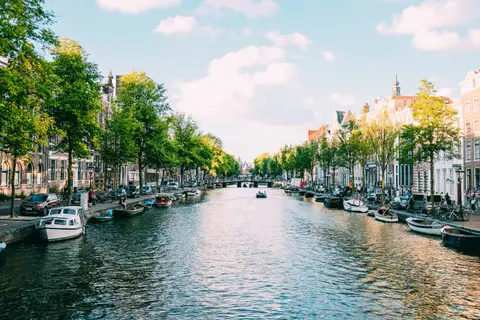
Amsterdam's UNESCO-listed canal ring — a concentric web of seventeenth-century merchant houses and arching stone bridges — remains one of the Western world's most perfectly preserved Golden Age cityscapes, best explored by bicycle or canal boat at a pace that lets the city's genius reveal itself slowly. The Rijksmuseum's collection of Rembrandt and Vermeer masterpieces is essential, while the Anne Frank House offers one of Europe's most profoundly moving historical encounters. Spring brings the iconic tulip season; summer fills the terraces of the Jordaan district. Schiphol Airport makes Amsterdam a seamless gateway to the entire European continent.
Day 1
Arles
Arles, the most important city in Roman Gaul after Lyon, wears its history with casual magnificence: a first-century amphitheatre still hosts bullfights beneath open skies, and the haunting Alyscamps necropolis — once among the most prestigious burial grounds in the Western world — lines a poplar-shaded avenue with ancient sarcophagi. Yet Arles is equally celebrated as the city that intoxicated Vincent van Gogh, who produced over three hundred works here in fifteen fevered months; the Fondation Vincent van Gogh now honors his legacy in beautifully renovated rooms. Spring and autumn are ideal, with the Camargue's flamingo-filled wetlands just minutes south. Lyon is two hours north by TGV.
Day 3
Avignon
Avignon's Palais des Papes — a fortress-palace of staggering medieval ambition where seven successive popes held court for seventy years — still dominates this Provençal city's skyline, its limestone bulk enclosing frescoed chapels and vast ceremonial halls that once shaped the destiny of Christendom. In July, the city transforms for the celebrated Festival d'Avignon, Europe's premier theatre gathering, turning every courtyard and cloister into a stage. Year-round, the beautifully preserved historic centre offers world-class Rhône Valley wines, refined Provençal cuisine, and the beguiling spectacle of the Pont Saint-Bénézet stretching halfway across the river. Lyon and Marseille are each accessible in under ninety minutes by TGV.
Day 4
Viviers
Viviers is one of France's most beautifully preserved medieval secrets — a cathedral town of barely four thousand souls perched on a limestone spur above the Rhône, serving as an episcopal seat since the fifth century when its bishops chose this formidable rock over the declining Roman city below. The Romanesque bell tower, vaulted passageways, and Renaissance townhouses of the haute ville form an ensemble of extraordinary architectural coherence, virtually unaltered since the seventeenth century. River cruise guests arriving from Lyon or Avignon typically spend languid afternoons exploring these narrow, time-suspended streets, best visited in spring or early autumn when Rhône Valley light is at its most golden.
Day 5
Tain L’Hermitage
Tain-l'Hermitage is the beating heart of the northern Rhône wine country, a compact town whose steeply terraced granite hill has yielded some of France's most majestic Syrahs and finest Marsannes since the Roman era. The revered Hermitage hill — its legend entwined with a thirteenth-century crusader hermit — rises directly behind the main street, and the great wine estates of Jaboulet, Chapoutier, and Ferraton offer some of the Loire Valley's most memorable cellar tastings. Autumn harvest season brings the vineyards to their most photogenic golden glory; spring and summer offer ideal touring weather along the Rhône cycling routes between vines and river.
Day 6
Lyon
Lyon sits at the confluence of the Rhône and the Saône — a geographic destiny that made it the capital of Roman Gaul, a Renaissance silk-trading powerhouse, and, by contemporary consensus, the undisputed gastronomic capital of France. The UNESCO-listed Vieux Lyon preserves Europe's finest concentration of Renaissance architecture, its labyrinthine traboules — secret passageways threading through courtyard after courtyard — offering endless discovery. Paul Bocuse's legacy lives on in the city's constellation of bouchons, where quenelles de brochet and tablier de sapeur are served with the straightforward confidence of a city that has never needed to prove its culinary supremacy. Lyon rewards a visit in any season, with the Festival of Lights in December being particularly magical.
Day 7
Tournus
Tournus is a captivating commune in eastern France, renowned for its rich history, stunning architecture, and exceptional culinary experiences. Must-do activities include exploring the Abbey of Saint-Philibert and indulging in local dishes like coq au vin. The best season to visit is spring or early autumn when the weather is mild and the local markets are brimming with fresh produce.
Chalon-Sur-Saone
Birthplace of photography and gateway to Burgundy's finest vineyards, Chalon-sur-Saône is a Saône River gem that rewards those who linger beyond its famous streets. The Musée Nicéphore Niépce, housed in a riverside mansion, chronicles the invention of the medium that changed human perception forever, while the surrounding Côte Chalonnaise wine villages — Mercurey, Givry, Rully — offer some of Burgundy's most approachable yet complex Pinot Noirs. Visit in late summer or early autumn for harvest season, when the vineyards blush gold and local restaurants celebrate the new vintage.
Day 8
Beaune
Beaune is a historic walled town in Burgundy, renowned for its vibrant wine culture and the striking Hôtel-Dieu. Must-do experiences include savoring coq au vin and participating in the famous wine auction. The best season to visit is during the harvest in autumn, when the region bursts with color and flavor.
Basel
Basel, where Switzerland, France, and Germany converge at the Rhine's northward bend, hosts a concentration of world-class art institutions that rivals any city its size on earth — the Kunstmuseum alone, the world's oldest public art collection, could occupy days, and Art Basel each June draws every name that matters in the contemporary art world to this compact, elegant city. The Rhine itself is the city's great social artery: in summer, locals jump in with waterproof bags and float downstream, a tradition as charming as any museum. Spring through autumn is ideal for outdoor exploration; Paris is just three hours by TGV and Strasbourg a mere twenty minutes by train.
Day 9
Breisach
Breisach am Rhein clings to a volcanic hilltop at the French-German border, commanding the Upper Rhine crossing that made it one of the most fought-over towns in European history — a past the Romanesque-Gothic Münster St. Stephan surveys serenely from its commanding heights. Today peace reigns, and Breisach's true gift is its position as a gateway to three celebrated wine regions: the German Kaiserstuhl, producing some of Germany's finest Spätburgunder; the French Alsace, just across the Rhine; and the rolling hills of the Baden wine country to the east. Visit in autumn for harvest season across all three regions simultaneously. Freiburg im Breisgau, the Black Forest's graceful capital, lies twenty minutes east.
Day 10
Strasbourg
Strasbourg is one of Europe's great border cities, its Franco-German soul etched into every half-timbered façade of the UNESCO-listed Grande Île and every turret of the soaring rose-sandstone cathedral that reigned as the world's tallest building for over two centuries. As the seat of the European Parliament and home to the European Court of Human Rights, this sophisticated Alsatian capital savors outstanding Riesling and choucroute garnie with equal Continental pride. The city dazzles year-round, though December's legendary Christmas market — among the oldest in Europe — transforms its medieval squares into an enchanted winter spectacle.
Day 11
Mainz
Mainz is where the modern world was printed into existence: Johannes Gutenberg's invention of movable-type printing around 1440 transformed this ancient Rhine city into the birthplace of the information age, a legacy honoured at the extraordinary Gutenberg Museum, home to one of the surviving original Bibles. The Romanesque cathedral of St. Martin, built over a millennium from the year 975, anchors a charming old town of wine taverns and market squares where Rhenish Rieslings flow freely. Visit between spring and autumn for the famous Mainz Wine Market held beside the Rhine. A day-cruise port with surprising cultural depth.
Heidelberg
Heidelberg, a historic town on the Neckar River, is renowned for its stunning architecture, including the iconic Heidelberg Castle and the Gothic Heiliggeistkirche. Must-do experiences include indulging in local delicacies such as Sauerbraten and exploring the vibrant markets. The best season to visit is spring or fall, when the weather complements the town's romantic charm.
Day 12
Rudesheim
Rüdesheim am Rhein, a jewel of the UNESCO-listed Upper Middle Rhine Valley, is where Germany's most storied wine river cuts through vine-terraced slopes and medieval castle ruins. The pedestrianised Drosselgasse laneway — beloved since the Romantic era — hums with wine taverns pouring the region's celebrated Rieslings, crisp and mineral from the slate soils. The Niederwald Monument surveys the river from the heights, reached by cable car above the vineyards. Day trips by boat unlock Bacharach, Boppard, and the legendary Lorelei rock. September's harvest festivals transform the entire valley into a convivial celebration of the vintage.
Rhine Gorge
The Rhine Gorge, a UNESCO World Heritage site, is a stunning section of the Rhine River renowned for its historic castles and picturesque towns. Must-do experiences include savoring local Riesling wines and exploring the charming markets. The best season to visit is in late spring through early autumn when the vineyards are lush and the weather is delightful.
Koblenz
Koblenz stands at the Deutsches Eck — the German Corner — where the Moselle river pours into the Rhine in a confluence so geographically commanding that the Romans built a fortress here in 9 BC. The result is a city of exceptional Rhine Gorge scenery, with the formidable Ehrenbreitstein Fortress, one of Europe's largest, crowning the opposite bank and reachable by gondola for panoramas that stretch across three river valleys. A Rhine wine tasting at one of the city's historic Weinstuben, followed by a stroll through the Altstadt's baroque squares, is the definitive Koblenz afternoon. The finest weather arrives April through October, with the Rhine in Flames fireworks festival in August being particularly spectacular.
Day 13
Cologne
Cologne's twin-spired Gothic cathedral, six hundred years in the building and still the city's defining monument, is the inevitable starting point — but this ancient Rhine city rewards exploration well beyond its iconic silhouette. The Romano-Germanic Museum reveals the city's Roman foundations, while the Chocolate Museum on the riverbank offers a distinctly sweeter history lesson. Cologne's famed Kölsch beer culture thrives in the old town's traditional brew-houses, where one round follows another in centuries-old wooden halls. The city is welcoming year-round, though the legendary Christmas markets (November–December) attract visitors from across Europe.
Day 14
Amsterdam
Amsterdam's UNESCO-listed canal ring — a concentric web of seventeenth-century merchant houses and arching stone bridges — remains one of the Western world's most perfectly preserved Golden Age cityscapes, best explored by bicycle or canal boat at a pace that lets the city's genius reveal itself slowly. The Rijksmuseum's collection of Rembrandt and Vermeer masterpieces is essential, while the Anne Frank House offers one of Europe's most profoundly moving historical encounters. Spring brings the iconic tulip season; summer fills the terraces of the Jordaan district. Schiphol Airport makes Amsterdam a seamless gateway to the entire European continent.
Cabin Categories
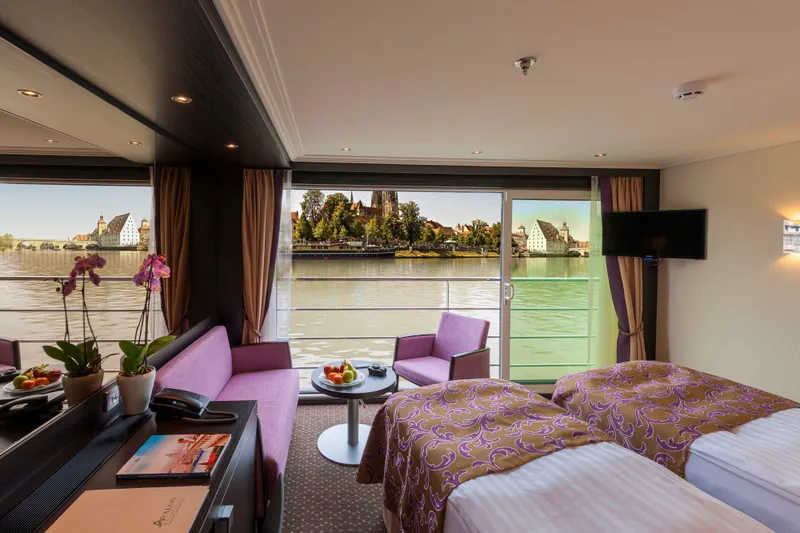
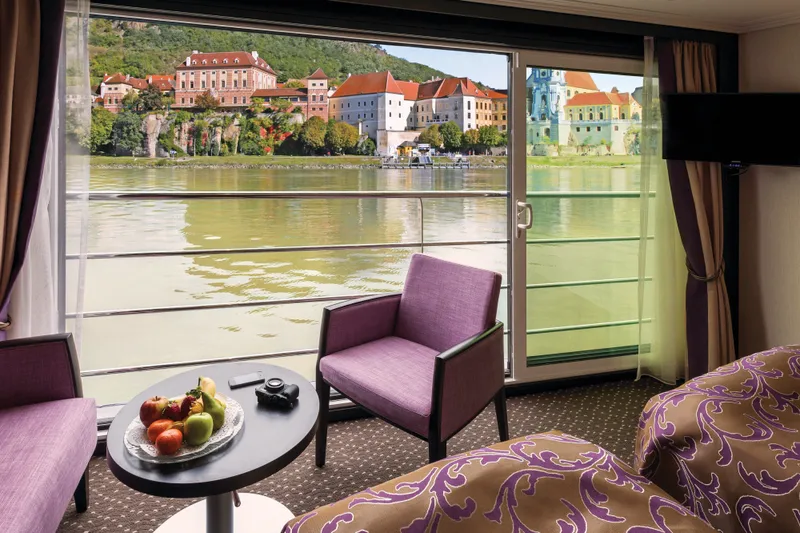
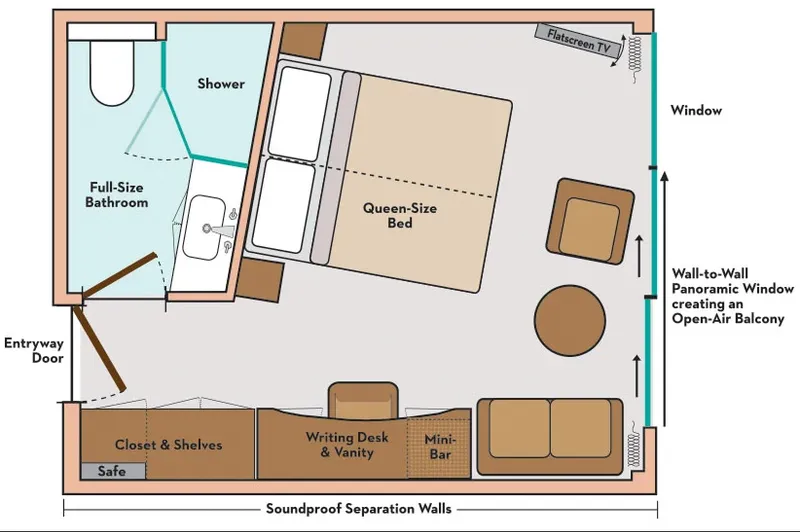
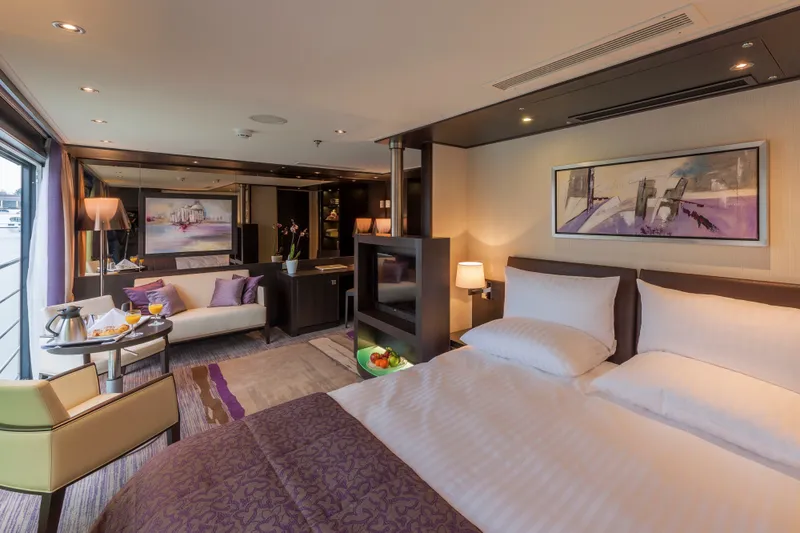
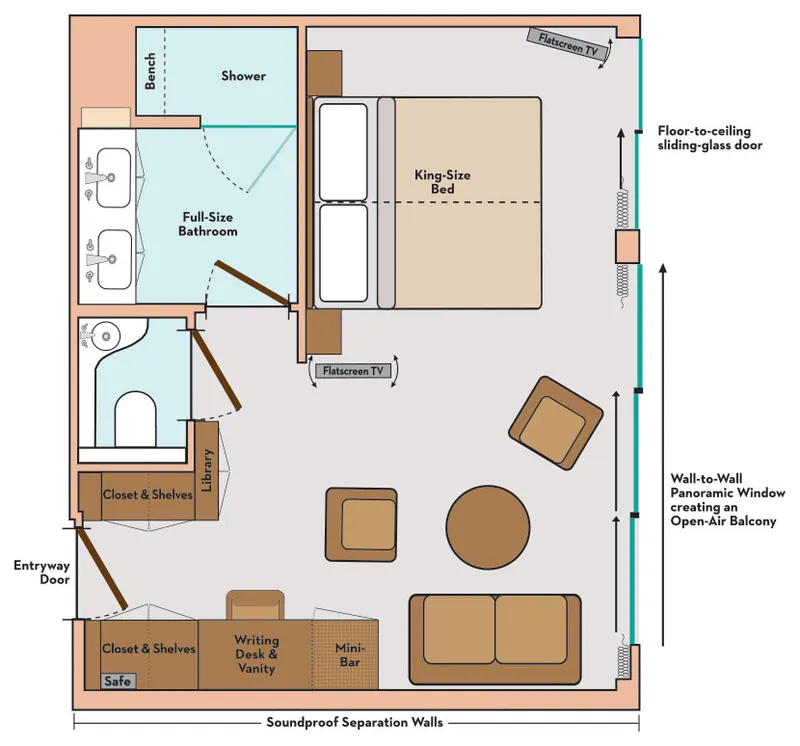
Panorama Suite
Suite
200 m²Max 2
ABP
Stateroom Features:
Comfort Collection Beds
Luxurious mattress toppers
Egyptian super-combed cotton linens
European-style duvets
Soft & firm pillows
Extra blankets
Choice of bed configuration
Nightly turn-down service
Bedside tables with reading lamps
Premium Hairdryer
L'Occitane bath products
Spacious 3-door closets with shelves for ample storage
Easy under-bed luggage storage
Flatscreen satellite TV with English-speaking channels & over 100 free movie options
Alarm clock
Make-up mirror
Direct-dial telephone
Bathrobes & slippers
Well-stocked minibar
Complimentary filtered water
In-room safe
Individual climate control
Elegant, contemporary design
Large mirror in bathroom
Marble countertops in bathroom
Wall-to-Wall Panoramic Window with Open-Air Balcony
6-person sitting area
Full shower with glass door
Writing desk and chair
Lighted makeup mirror
Sofa
Coffee table
Complimentary Wi-Fi
One Queen-Sized Bed or Two Twins
USB Ports
Queen or Twin ConfigurationShowerToiletries ProvidedRoom Service AvailableTVFree Wi-Fi+4
View Details
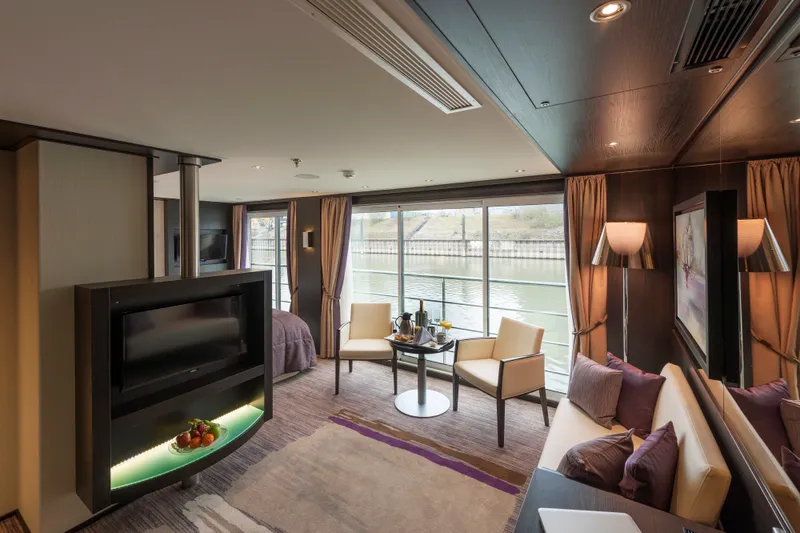
Royal Suite
Suite
300 m²Max 2
S
Stateroom Features:
Comfort Collection Beds
Luxurious mattress toppers
Egyptian super-combed cotton linens
European-style duvets
Soft & firm pillows
Extra blankets
Choice of bed configuration
Nightly turn-down service
Bedside tables with reading lamps
Premium Hairdryer
L'Occitane bath products
Spacious 3-door closets with shelves for ample storage
Easy under-bed luggage storage
Flatscreen satellite TV with English-speaking channels & over 100 free movie options
Alarm clock
Make-up mirror
Direct-dial telephone
Bathrobes & slippers
Well-stocked minibar
Complimentary filtered water
In-room safe
Individual climate control
Elegant, contemporary design
Large mirror in bathroom
Marble countertops in bathroom
Wall-to-Wall Panoramic Window with Open-Air Balcony
6-person sitting area
Full shower with glass door
Writing desk and chair
Lighted makeup mirror
Sofa
Coffee table
Complimentary Wi-Fi
One Queen-Sized Bed or Two Twins
USB Ports
King or Twin ConfigurationShowerToiletries ProvidedRoom Service AvailableTVFree Wi-Fi+3
View Details
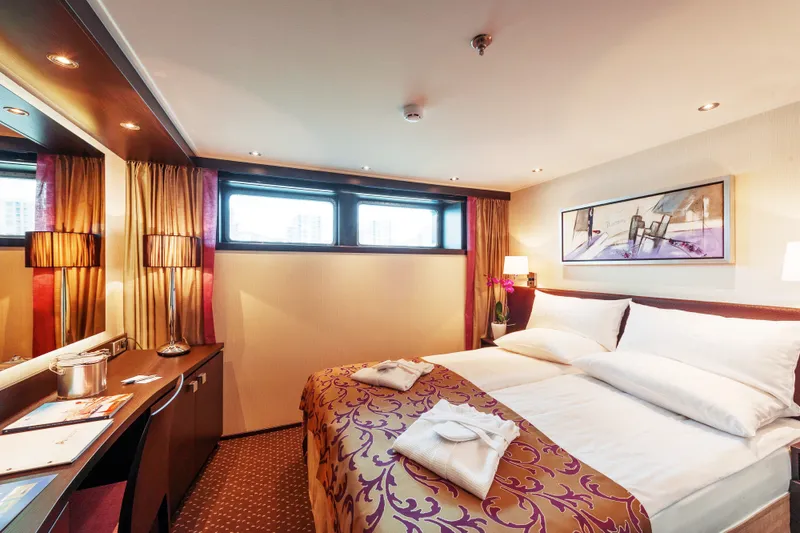
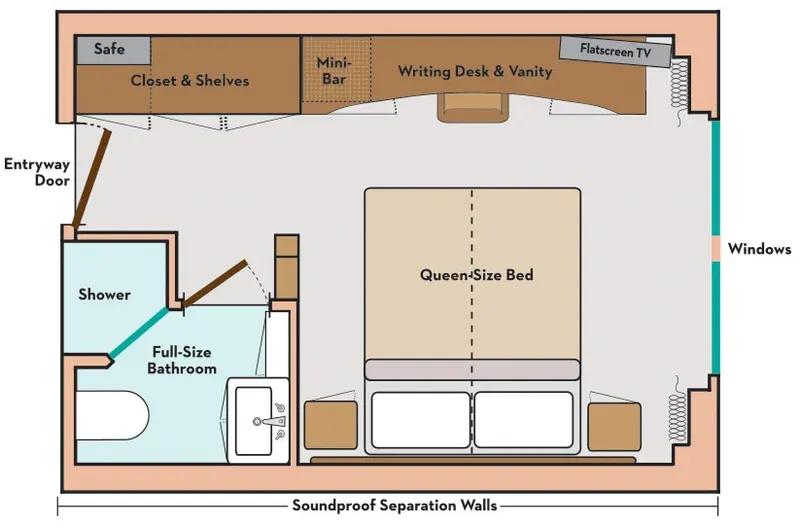
Deluxe Stateroom
Outside
172 m²Max 2
DE
Stateroom Features:
Comfort Collection Beds
Luxurious mattress toppers
Egyptian super-combed cotton linens
European-style duvets
Soft & firm pillows
Extra blankets
Choice of bed configuration
Nightly turn-down service
Bedside tables with reading lamps
Premium Hairdryer
L'Occitane bath products
Spacious 3-door closets with shelves for ample storage
Easy under-bed luggage storage
Flatscreen satellite TV with English-speaking channels & over 100 free movie options
Alarm clock
Make-up mirror
Direct-dial telephone
Bathrobes & slippers
Well-stocked minibar
Complimentary filtered water
In-room safe
Individual climate control
Elegant, contemporary design
Large mirror in bathroom
Marble countertops in bathroom
Wall-to-Wall Panoramic Window with Open-Air Balcony
6-person sitting area
Full shower with glass door
Writing desk and chair
Lighted makeup mirror
Sofa
Coffee table
Complimentary Wi-Fi
One Queen-Sized Bed or Two Twins
USB Ports
Queen or Twin ConfigurationShowerToiletries ProvidedRoom Service AvailableMini Bar (Additional Cost)TV+2
View Details
Interested in This Voyage?
Our cruise specialists can help you find the perfect cabin and the best available pricing.
(+886) 02-2721-7300Contact Advisor