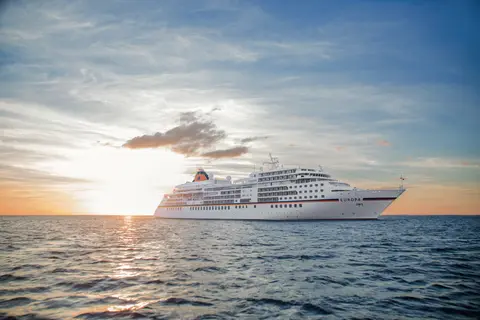
Hapag-Lloyd CruisesEUR2721
Hamburg
Date
2027-10-10
Duration
54 nights
Departure Port
Hamburg
Germany
Arrival Port
Cape Town
South Africa
Rating
—
Theme
—

Hapag-Lloyd Cruises
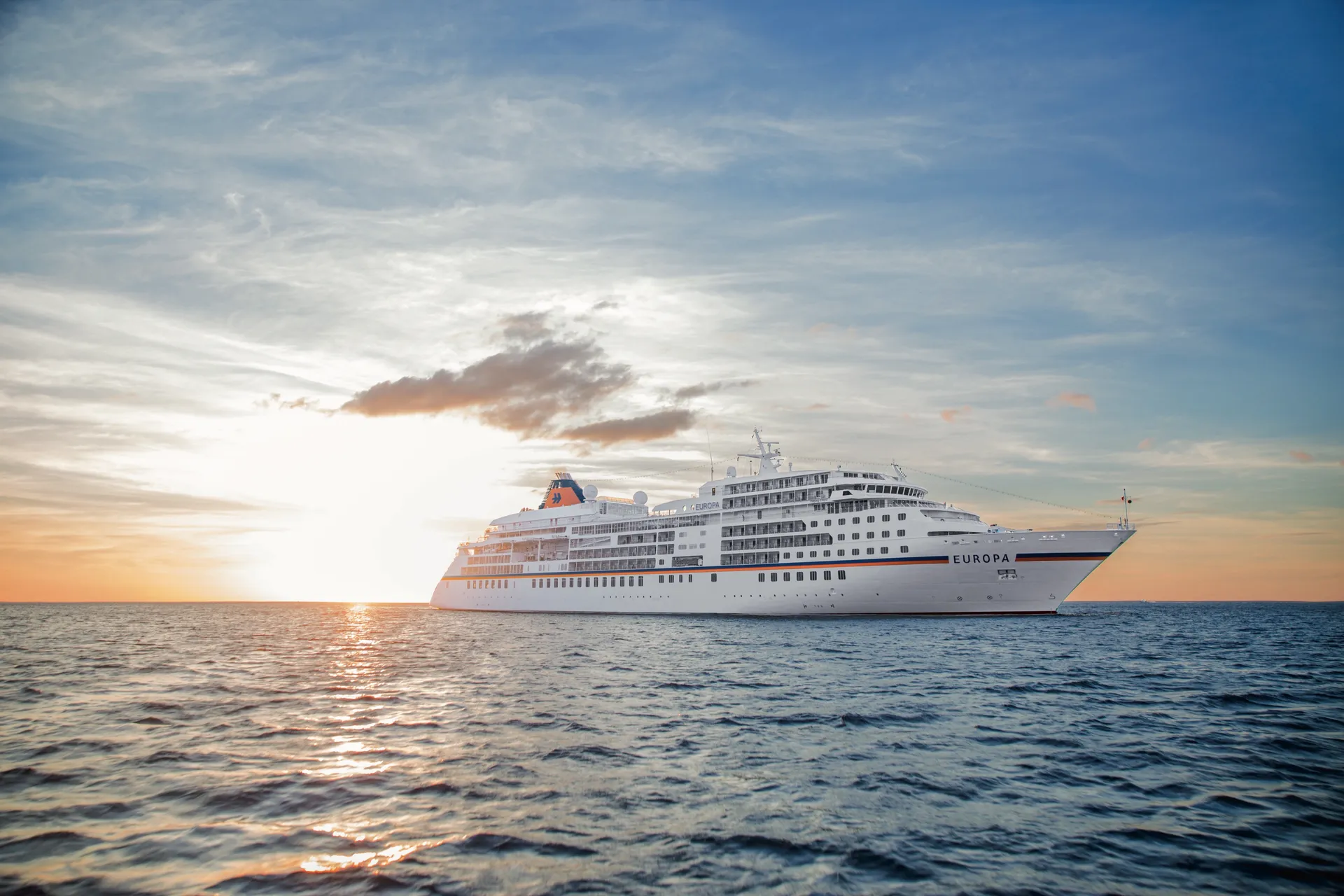
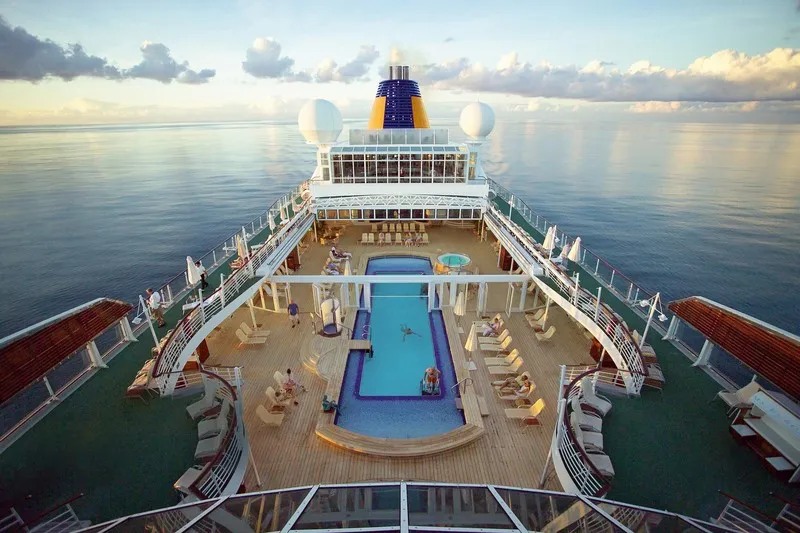
MS EUROPA
Launched
1999
Refitted
2013
Tonnage
28,437 GT
Passengers
400
Cabins
204
Crew
285
Length
651 m
Width
24 m
Speed
21 knots
Adults Only
No
Itinerary
Day 1
Day 1
Hamburg
Depart 19:00
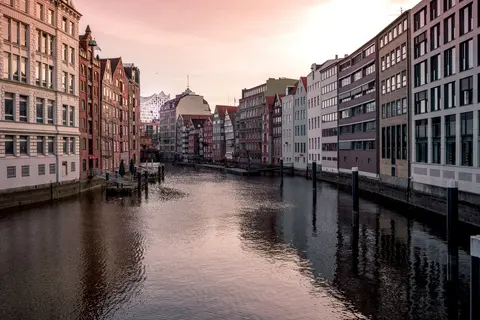
Hamburg — once the 'Gateway to the World' and still Germany's greatest port — combines Hanseatic grandeur with an unmatched contemporary creative energy. The Speicherstadt, a vast nineteenth-century brick warehouse district now housing design studios, museums, and the Elbphilharmonie concert hall perched dramatically above the Elbe, exemplifies the city's gift for transforming history into living culture. The Reeperbahn's legendary nightlife, the Alster lake's elegant promenades, and an exceptional restaurant scene anchored by the finest fresh fish from the daily harbour market complete an irresistible portrait. Hamburg rewards visits year-round, though May through September offers the longest, most luminous days.
Day 2
Day 2
At Sea
Day 3
Day 3
Antwerp
Arrive 06:45Depart 18:00
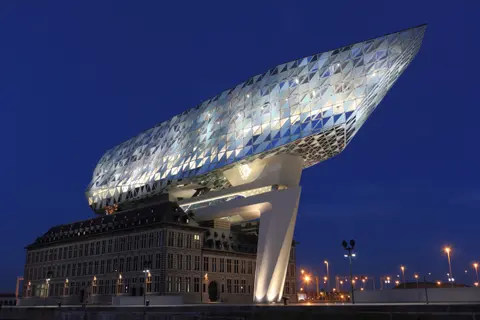
Antwerp has been one of Europe's great mercantile capitals since the fifteenth century, when it commanded the world's first commodity exchange and Peter Paul Rubens made it the artistic capital of the Baroque world — a legacy preserved in the magnificent Rubenshuis studio and the soaring Cathedral of Our Lady, whose nave houses four of the master's greatest altarpieces. Today the city leads global fashion from the acclaimed Antwerp Six design school and remains the diamond capital of the world, with 84% of the world's rough diamonds trading through its storied district. Visit in spring or autumn; Brussels and Bruges are each under an hour away by train.
Day 4
Day 4
At Sea
Day 5
Day 5
St. Malo
Arrive 08:00Depart 17:00
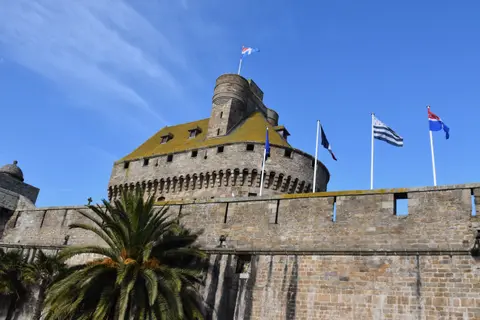
Saint-Malo is a historic fortified port city in France, renowned for its maritime heritage and picturesque architecture. Must-do experiences include savoring local delicacies like galettes and oysters while exploring its charming cobbled streets. The best time to visit is during the summer months when the city comes alive with vibrant festivals and outdoor activities.
Day 6
Day 6
Brest
Arrive 12:01Depart 19:00

Brest is Brittany's principal Atlantic port, where seventeen centuries of naval heritage meet vibrant Breton culture in a city rebuilt with defiant spirit after wartime destruction. Visitors should explore the ancient Château de Brest, feast on buckwheat galettes and Cancale oysters, and take excursions to the dramatic Crozon Peninsula. May through September is ideal, especially during the biennial Fêtes Maritimes tall ship festival.
Day 7
Day 7
At Sea
Day 8
Day 8
La Coruna
Arrive 08:00Depart 23:30
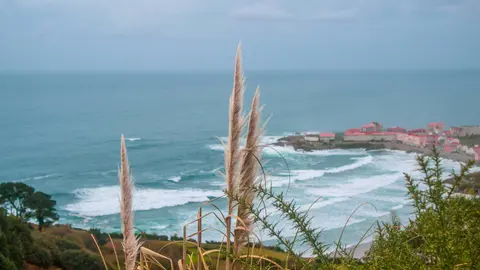
La Coruña, the Atlantic gateway to Spain's verdant Galicia region, is home to the Tower of Hercules — the world's oldest functioning Roman lighthouse and a UNESCO World Heritage Site — and a waterfront of luminous glass galleries unlike anything else in Europe. Visitors should not miss savouring pulpo á feira and wild percebes at the local markets, nor the short journey to Santiago de Compostela along the Camino. Late spring through early autumn offers the mildest weather, with September providing warm days, golden light, and fewer crowds along the granite streets of the Ciudad Vieja.
Day 9
Day 9
At Sea
Day 10
Day 10
Lisbon
Arrive 08:00Depart 18:00
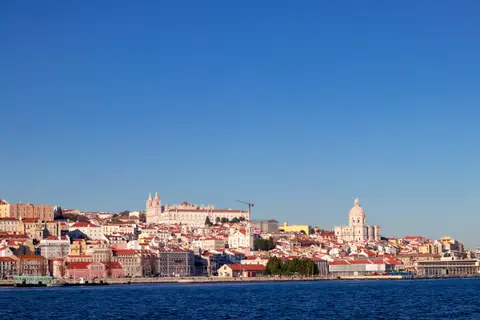
Lisbon, Portugal's enchanting capital, stands out for its rich history, stunning architecture, and vibrant culture. Must-try experiences include savoring local dishes like bacalhau à brás and pastéis de nata at Mercado da Ribeira. The best time to visit is during the spring or fall, when the weather is mild and the city is alive with festivals and events.
Day 11
Day 11
Portimao
Arrive 08:00Depart 18:00
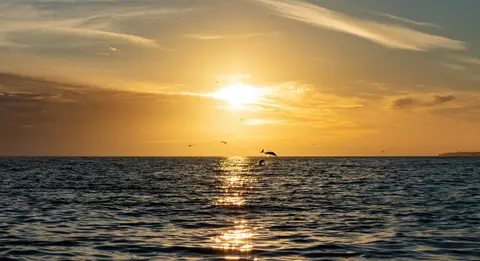
Portimão is the Algarve's most storied port city, where Phoenician trading heritage meets golden-cliff beaches and Portugal's finest grilled sardine tradition along the Arade River. Visitors should not miss the charcoal-grilled sardines at the riverside churrasqueiras and the dramatic sandstone formations of Praia da Rocha. The port is at its luminous best from May through October, when long Atlantic days bathe the coastline in honeyed light and the August Sardine Festival electrifies the waterfront.
Day 12
Day 12
Cadiz
Arrive 08:00Depart 18:00
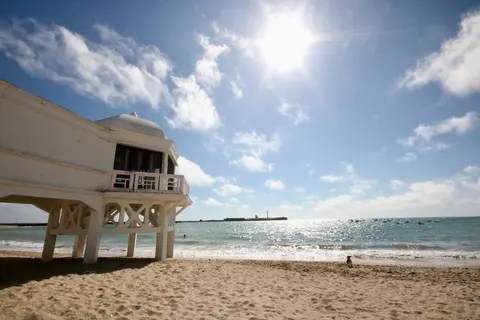
Cádiz, founded by Phoenician traders around 1100 BC and a strong contender for the oldest continuously inhabited city in Western Europe, juts into the Atlantic on a narrow peninsula where honey-colored ramparts frame improbable views of open ocean and the sun sets directly into the sea. The old quarter is an intoxicating labyrinth of baroque churches, hidden plazas, and carnival spirit — Cádiz's annual February carnival is the wildest and most satirically sharp in Spain — while the tapas culture here, centered on fresh Atlantic seafood cooked with Andalusian simplicity, represents Spanish cuisine at its most elemental and joyful. Visit February for carnival or spring for gentle Atlantic breezes. Seville is ninety minutes inland by bus or rail.
Day 13
Day 13
Malaga
Arrive 08:00Depart 18:00
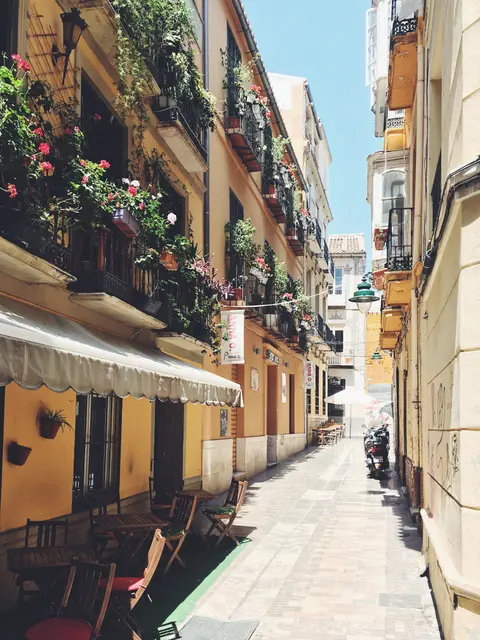
Málaga distils three thousand years of Mediterranean civilisation into one of Andalusia's most compelling port cities, where the Moorish Alcazaba fortress surveys a modern waterfront of elegant promenades and sun-drenched café terraces. Do not leave without visiting the Museo Picasso — the artist was born here in 1881 — and ascending to the ruined Castillo de Gibralfaro for panoramic views stretching to the Rif Mountains of Morocco on clear days. Malagueta anchovies fried in olive oil and the sweet Pedro Ximénez-laced dessert wine are the city's defining pleasures. The shoulder seasons of April, May, and October offer perfect Mediterranean warmth.
Day 14
Day 14
At Sea
Day 15
Day 15
Ibiza
Arrive 12:01Depart 18:00
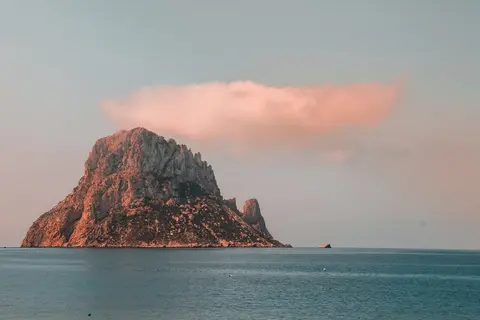
Beneath Ibiza's sun-drenched reputation as the world's clubbing capital lies a layered history stretching back to Phoenician traders who settled this Balearic island in 654 BC. The UNESCO-listed Dalt Vila — the walled hilltop citadel above Eivissa town — rewards exploration with Carthaginian burial grounds, Renaissance ramparts, and sweeping Mediterranean panoramas. For quieter pleasures, the crystalline coves of the island's north, such as Cala d'en Serra and Es Portitxol, rival any beach in Europe. The Phoenician necropolis of Puig des Molins is unmissable for history devotees. The season runs May through October, with June and September offering ideal weather without peak-summer crowds.
Day 16
Day 16
Palma de Mallorca
Arrive 05:00Depart 21:00
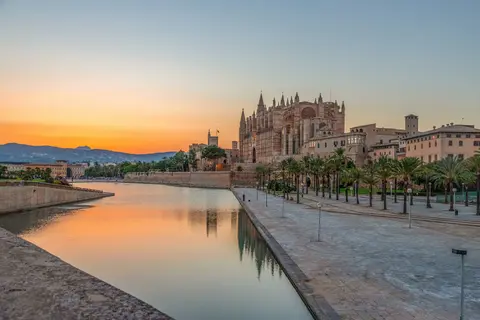
Palma de Mallorca announces itself with one of the most spectacular Gothic cathedrals in the world — La Seu, its honey-coloured sandstone buttresses rising directly from the bay, its interior modified by Antoni Gaudí and illuminated by the world's largest Gothic rose window. The old town behind it is a quarter of Arab baths, Renaissance palaces converted into boutique hotels, and the Passeig del Born — a plane-tree-shaded promenade where Balearic life conducts itself with unhurried grace. The local ensaïmada pastry and fresh sobrasada sausage from the island's black pigs are essential breakfast rituals. Visit May, June, or September: warm, brilliant, and measurably calmer than the July–August peak.
Day 17
Day 17
Valencia
Arrive 12:01Depart 22:00
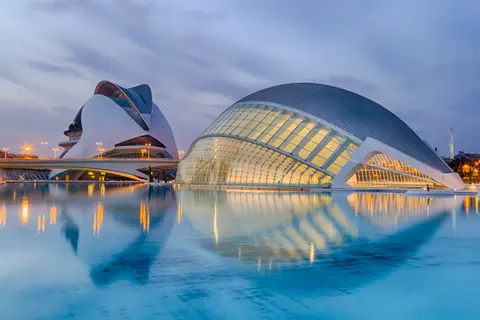
Valencia, Spain's luminous third city, dazzles with a creative energy anchored by two thousand years of layered civilization — Roman foundations, Moorish irrigation gardens, a Gothic cathedral housing what many believe to be the Holy Grail, and Santiago Calatrava's futuristic City of Arts and Sciences gleaming beside a park-filled riverbed. The city invented paella over an open fire of orange-wood in the surrounding huerta, and the Las Fallas festival each March — when neighborhoods compete to erect and then ceremonially burn towering satirical sculptures — is one of Europe's most spectacular celebrations. Valencia's Mediterranean climate makes it exceptional year-round.
Day 18
Day 18
At Sea
Day 19
Day 19
Malaga
Arrive 07:00Depart 22:00
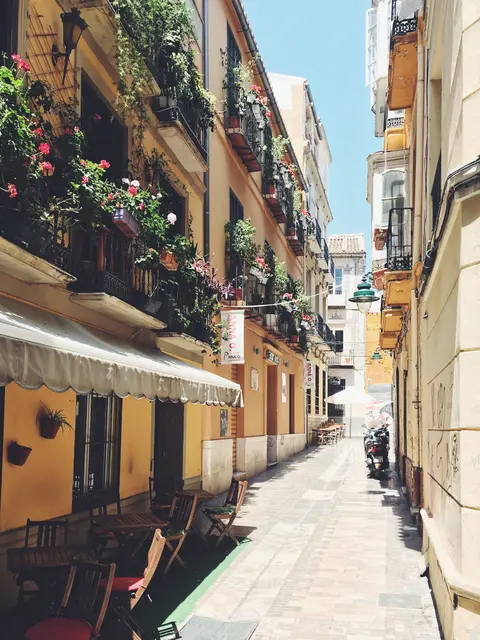
Málaga distils three thousand years of Mediterranean civilisation into one of Andalusia's most compelling port cities, where the Moorish Alcazaba fortress surveys a modern waterfront of elegant promenades and sun-drenched café terraces. Do not leave without visiting the Museo Picasso — the artist was born here in 1881 — and ascending to the ruined Castillo de Gibralfaro for panoramic views stretching to the Rif Mountains of Morocco on clear days. Malagueta anchovies fried in olive oil and the sweet Pedro Ximénez-laced dessert wine are the city's defining pleasures. The shoulder seasons of April, May, and October offer perfect Mediterranean warmth.
Day 20
Day 20
Gibraltar
Arrive 08:00Depart 13:00
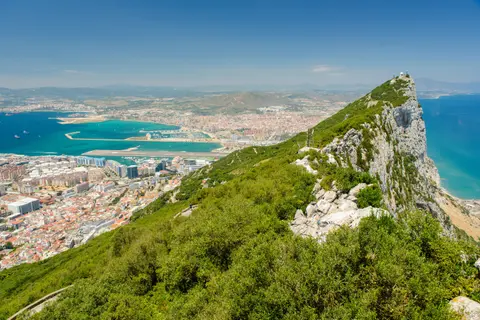
Gibraltar is a British Overseas Territory perched at the southern tip of the Iberian Peninsula, where the Mediterranean meets the Atlantic beneath an iconic limestone monolith steeped in over a millennium of contested history. No visit is complete without ascending the Rock to encounter the Barbary macaques and the panoramic views stretching to North Africa, followed by a plate of calentita — the territory's beloved Genoese-heritage chickpea bake — at a Main Street bakery. The mild Mediterranean climate makes Gibraltar a rewarding port call year-round, though spring and early autumn offer the clearest skies for spotting whales and dolphins in the Strait.
Day 21
Day 21
Casablanca
Arrive 08:00Depart 20:00
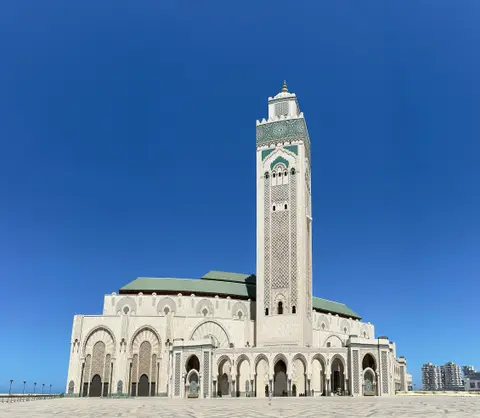
Casablanca is Morocco's largest city, a striking fusion of Berber heritage, French colonial art deco architecture, and contemporary ambition anchored by the towering Hassan II Mosque on the Atlantic shore. Visitors should not miss the Central Market's freshly grilled seafood and a half-day excursion to the imperial capital Rabat or the UNESCO-listed fortress of Aït Ben Haddou. The optimal season for cruising into Casablanca is April through June or September through November, when temperatures hover between twenty and twenty-seven degrees and the Atlantic light renders the white city at its most luminous.
Day 22
Day 22
At Sea
Day 23
Day 23
Agadir
Arrive 07:00Depart 18:00
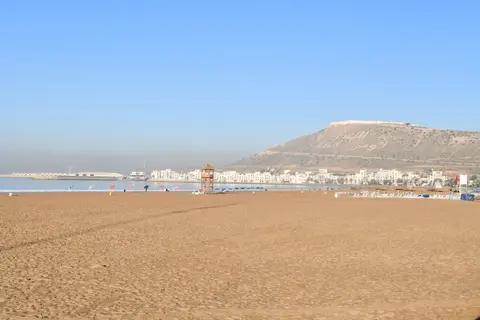
Agadir is southern Morocco's premier coastal resort, rebuilt after a devastating 1960 earthquake into a modern city framed by a magnificent six-kilometer beach and the Atlas Mountains. Feast on just-caught sardines grilled at the harbor, shop for argan oil at the vast Souk El Had, and day-trip to the palm-shaded swimming pools of Paradise Valley. October through April provides ideal temperatures, with Azamara, Costa, and Viking calling at the commercial port.
Day 24
Day 24
Arrecife
Arrive 12:01Depart 19:00
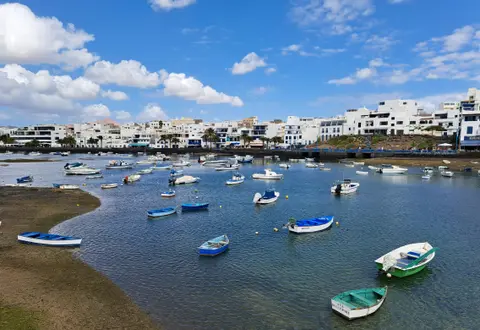
Arrecife, the unpretentious capital of Lanzarote in Spain's Canary Islands, serves as the gateway to one of the volcanic world's most surreal and spellbinding landscapes — shaped by César Manrique, the visionary artist who ensured there are no high-rises, no billboards, and no compromise between tourism and the island's extraordinary terrain. The Timanfaya National Park's lava fields, the underground lake of the Jameos del Agua, and Manrique's own clifftop home-turned-museum are among the most singular attractions in all of Spain. The Canary Islands enjoy a year-round temperate climate, making any month suitable for a visit. Gran Canaria lies forty minutes by ferry.
Day 25
Day 25
At Sea
Day 26
Day 26
San Sebastian
Arrive 07:00Depart 23:00
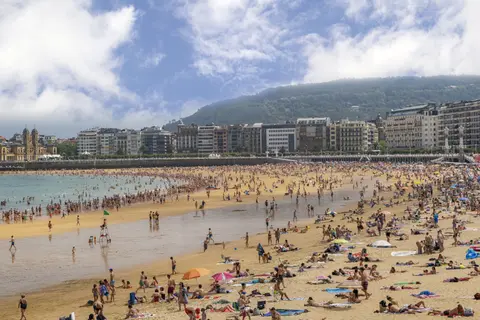
San Sebastián de La Gomera is the tranquil capital of a UNESCO Biosphere Reserve in the Canary Islands — the very harbour from which Columbus departed for the New World in 1492. Visitors should lose themselves in the primordial laurel forests of Garajonay National Park and taste almogrote, the island's singular smoked-cheese spread, at a hillside terrace overlooking the Atlantic. The mild subtropical climate makes La Gomera rewarding year-round, though late spring and autumn offer the clearest skies for hiking the cloud forest trails.
Day 27
Day 27
Santa Cruz de la Palma
Arrive 07:00Depart 17:00
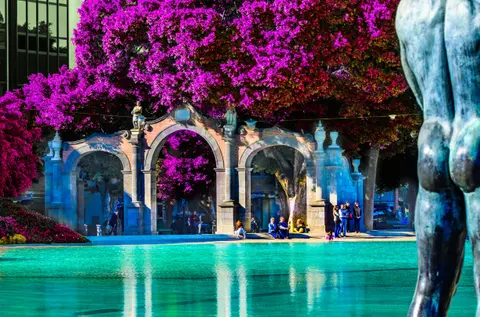
Santa Cruz de la Palma is the charming capital of La Palma, known for its colonial architecture and rich maritime history. Must-do experiences include savoring local dishes like "papas arrugadas" and exploring the stunning landscapes of Taburiente National Park. The best time to visit is during the spring and fall months when the weather is mild and perfect for outdoor adventures.
Day 28
Day 28
Santa Cruz de Tenerife
Arrive 06:00Depart 19:00
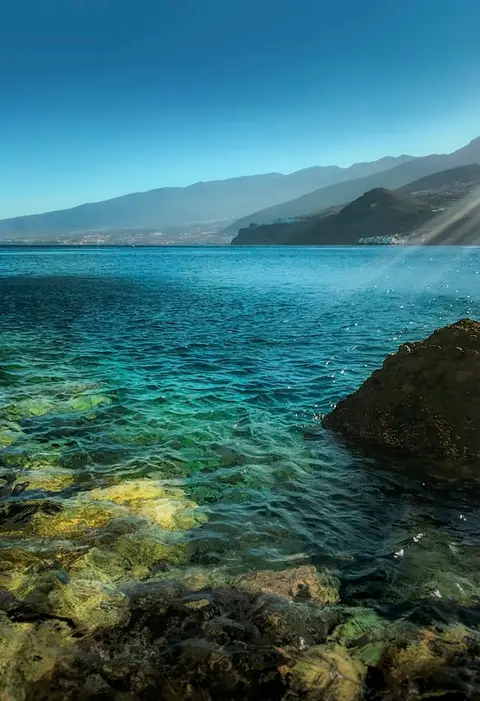
Santa Cruz de Tenerife, the cosmopolitan capital of the Canary Islands, balances volcanic grandeur with refined urban pleasures — from the Santiago Calatrava–designed Auditorio rising beside the Atlantic to the ancient dragon tree at Icod de los Vinos and the World Heritage Teide volcano looming above the island. The city's Carnival, second in scale only to Rio de Janeiro's, erupts each February in spectacular costumes and street revelry. Local wines from the volcanic slopes, wrinkled potatoes with mojo verde, and fresh Atlantic fish define the island's culinary character. November through April offers reliably warm, sun-drenched conditions.
Day 29
Day 29
At Sea
Day 30
Day 30
At Sea
Day 31
Day 31
At Sea
Day 32
Day 32
At Sea
Day 33
Day 33
At Sea
Day 34
Day 34
At Sea
Day 35
Day 35
At Sea
Day 36
Day 36
At Sea
Day 37
Day 37
At Sea
Day 38
Day 38
At Sea
Day 39
Day 39
At Sea
Day 40
Day 40
Cape Town
Arrive 05:00Depart 22:00
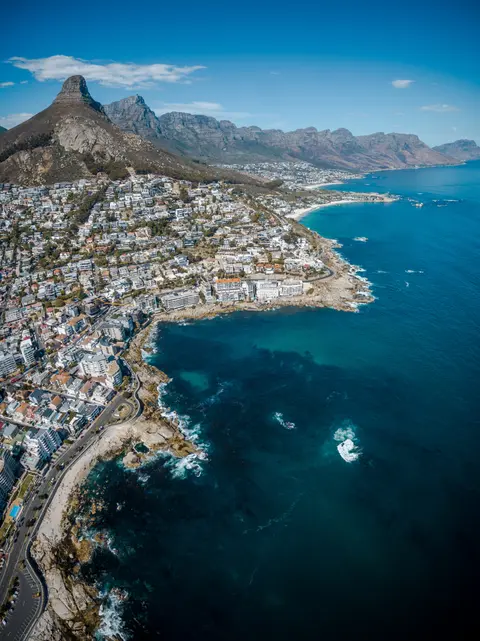
Cape Town's port is a vibrant blend of history, culture, and natural beauty, making it a premier destination for travelers. Must-do experiences include savoring local dishes like bobotie and exploring the bustling V&A Waterfront. The best season to visit is during the Southern Hemisphere summer, from December to February, when the weather is warm and perfect for outdoor adventures.
Day 41
Day 41
At Sea
Day 42
Day 42
Luderitz
Arrive 08:00Depart 13:00

Luderitz is a surreal German colonial town on Namibia's desert coast, where Art Nouveau architecture, Lutheran churches, and half-timbered houses face the cold Atlantic amid some of Earth's most desolate terrain. Must-dos include visiting the sand-swallowed ghost town of Kolmanskop, feasting on West Coast crayfish, and admiring the Jugendstil Goerke Haus. September through April offers the warmest weather for this extraordinary desert-meets-ocean destination.
Day 43
Day 43
Walvis Bay
Arrive 08:00
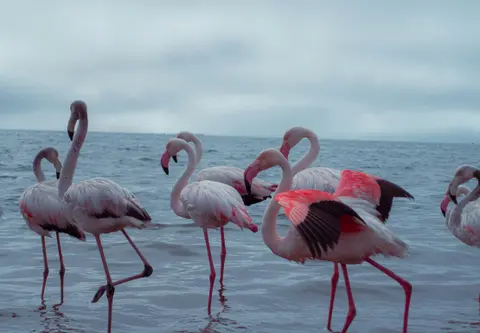
Walvis Bay is Namibia's principal deep-water port, set between the ancient dunes of the Namib Desert and the wildlife-rich Atlantic lagoon famed for its vast flamingo colonies. Visitors should not miss a catamaran cruise through the lagoon for close encounters with dolphins and Cape fur seals, nor the otherworldly dune landscapes of Sossusvlei in the Namib-Naukluft National Park. The optimal season for cruising is October through April, when southern-hemisphere spring and summer bring warm, clear days and peak flamingo populations to the bay.
Day 45
Day 45
At Sea
Day 46
Day 46
At Sea
Day 47
Day 47
At Sea
Day 48
Day 48
Gqeberha
Arrive 07:30Depart 19:00
Gqeberha (formerly Port Elizabeth) is a welcoming Eastern Cape city on South Africa's Indian Ocean coast, gateway to the elephant-rich Addo National Park and a coastline of warm-water beaches. Must-dos include a Big Five game drive at Addo, the Route 67 Mandela art trail, and swimming at pristine Sardinia Bay. Visit September through November for spring wildlife, wildflowers, and whale watching.
Day 49
Day 49
At Sea
Day 50
Day 50
Durban
Arrive 08:00
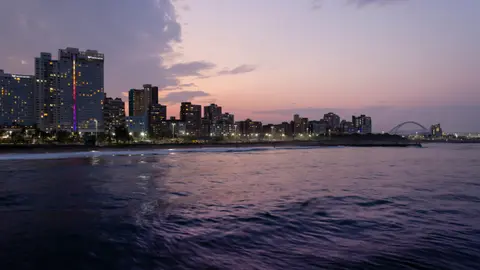
Durban is South Africa's subtropical gateway on the Indian Ocean, where Zulu, Indian, and colonial heritage converge to create one of the continent's most culturally rich port cities. Visitors should not miss savouring an authentic bunny chow in the Grey Street quarter and exploring the nearby uKhahlamba-Drakensberg mountains or iSimangaliso Wetland Park. The South African summer — November through March — delivers warm seas ideal for swimming, though the mild winters (June to August) offer comfortable touring temperatures and prime whale-watching along the KwaZulu-Natal coast.
Day 52
Day 52
At Sea
Day 53
Day 53
Mossel Bay
Arrive 08:00Depart 18:00
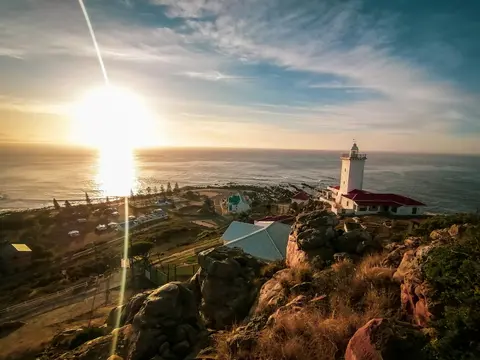
Mossel Bay, on South Africa's Garden Route, shelters Pinnacle Point caves where 164,000-year-old evidence of modern human behavior was discovered, and the harbor where Bartolomeu Dias first rounded the Cape. Great white shark encounters, coastal whale watching, and exceptional braai-grilled seafood define this unpretentious coastal town. Azamara, Hapag-Lloyd Cruises, and Regent Seven Seas Cruises bring travelers to a destination layered with human history from prehistoric caves to the age of exploration.
Day 54
Day 54
Cape Town
Arrive 13:00
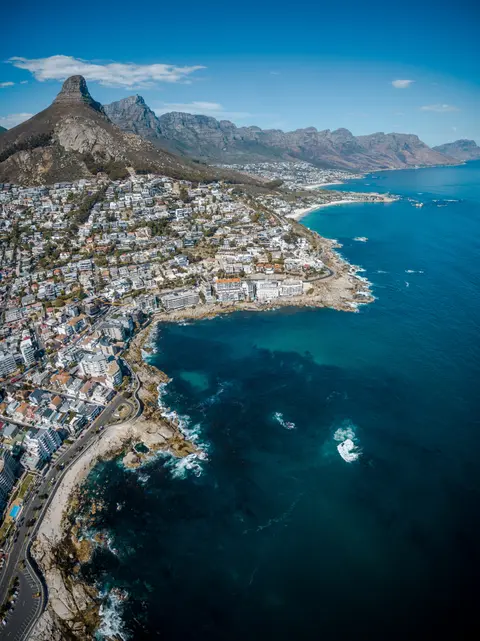
Cape Town's port is a vibrant blend of history, culture, and natural beauty, making it a premier destination for travelers. Must-do experiences include savoring local dishes like bobotie and exploring the bustling V&A Waterfront. The best season to visit is during the Southern Hemisphere summer, from December to February, when the weather is warm and perfect for outdoor adventures.
Day 1
Hamburg
Depart 19:00
Hamburg — once the 'Gateway to the World' and still Germany's greatest port — combines Hanseatic grandeur with an unmatched contemporary creative energy. The Speicherstadt, a vast nineteenth-century brick warehouse district now housing design studios, museums, and the Elbphilharmonie concert hall perched dramatically above the Elbe, exemplifies the city's gift for transforming history into living culture. The Reeperbahn's legendary nightlife, the Alster lake's elegant promenades, and an exceptional restaurant scene anchored by the finest fresh fish from the daily harbour market complete an irresistible portrait. Hamburg rewards visits year-round, though May through September offers the longest, most luminous days.
Day 2
At Sea
Day 3
Antwerp
Arrive 06:45Depart 18:00
Antwerp has been one of Europe's great mercantile capitals since the fifteenth century, when it commanded the world's first commodity exchange and Peter Paul Rubens made it the artistic capital of the Baroque world — a legacy preserved in the magnificent Rubenshuis studio and the soaring Cathedral of Our Lady, whose nave houses four of the master's greatest altarpieces. Today the city leads global fashion from the acclaimed Antwerp Six design school and remains the diamond capital of the world, with 84% of the world's rough diamonds trading through its storied district. Visit in spring or autumn; Brussels and Bruges are each under an hour away by train.
Day 4
At Sea
Day 5
St. Malo
Arrive 08:00Depart 17:00
Saint-Malo is a historic fortified port city in France, renowned for its maritime heritage and picturesque architecture. Must-do experiences include savoring local delicacies like galettes and oysters while exploring its charming cobbled streets. The best time to visit is during the summer months when the city comes alive with vibrant festivals and outdoor activities.
Day 6
Brest
Arrive 12:01Depart 19:00
Brest is Brittany's principal Atlantic port, where seventeen centuries of naval heritage meet vibrant Breton culture in a city rebuilt with defiant spirit after wartime destruction. Visitors should explore the ancient Château de Brest, feast on buckwheat galettes and Cancale oysters, and take excursions to the dramatic Crozon Peninsula. May through September is ideal, especially during the biennial Fêtes Maritimes tall ship festival.
Day 7
At Sea
Day 8
La Coruna
Arrive 08:00Depart 23:30
La Coruña, the Atlantic gateway to Spain's verdant Galicia region, is home to the Tower of Hercules — the world's oldest functioning Roman lighthouse and a UNESCO World Heritage Site — and a waterfront of luminous glass galleries unlike anything else in Europe. Visitors should not miss savouring pulpo á feira and wild percebes at the local markets, nor the short journey to Santiago de Compostela along the Camino. Late spring through early autumn offers the mildest weather, with September providing warm days, golden light, and fewer crowds along the granite streets of the Ciudad Vieja.
Day 9
At Sea
Day 10
Lisbon
Arrive 08:00Depart 18:00
Lisbon, Portugal's enchanting capital, stands out for its rich history, stunning architecture, and vibrant culture. Must-try experiences include savoring local dishes like bacalhau à brás and pastéis de nata at Mercado da Ribeira. The best time to visit is during the spring or fall, when the weather is mild and the city is alive with festivals and events.
Day 11
Portimao
Arrive 08:00Depart 18:00
Portimão is the Algarve's most storied port city, where Phoenician trading heritage meets golden-cliff beaches and Portugal's finest grilled sardine tradition along the Arade River. Visitors should not miss the charcoal-grilled sardines at the riverside churrasqueiras and the dramatic sandstone formations of Praia da Rocha. The port is at its luminous best from May through October, when long Atlantic days bathe the coastline in honeyed light and the August Sardine Festival electrifies the waterfront.
Day 12
Cadiz
Arrive 08:00Depart 18:00
Cádiz, founded by Phoenician traders around 1100 BC and a strong contender for the oldest continuously inhabited city in Western Europe, juts into the Atlantic on a narrow peninsula where honey-colored ramparts frame improbable views of open ocean and the sun sets directly into the sea. The old quarter is an intoxicating labyrinth of baroque churches, hidden plazas, and carnival spirit — Cádiz's annual February carnival is the wildest and most satirically sharp in Spain — while the tapas culture here, centered on fresh Atlantic seafood cooked with Andalusian simplicity, represents Spanish cuisine at its most elemental and joyful. Visit February for carnival or spring for gentle Atlantic breezes. Seville is ninety minutes inland by bus or rail.
Day 13
Malaga
Arrive 08:00Depart 18:00
Málaga distils three thousand years of Mediterranean civilisation into one of Andalusia's most compelling port cities, where the Moorish Alcazaba fortress surveys a modern waterfront of elegant promenades and sun-drenched café terraces. Do not leave without visiting the Museo Picasso — the artist was born here in 1881 — and ascending to the ruined Castillo de Gibralfaro for panoramic views stretching to the Rif Mountains of Morocco on clear days. Malagueta anchovies fried in olive oil and the sweet Pedro Ximénez-laced dessert wine are the city's defining pleasures. The shoulder seasons of April, May, and October offer perfect Mediterranean warmth.
Day 14
At Sea
Day 15
Ibiza
Arrive 12:01Depart 18:00
Beneath Ibiza's sun-drenched reputation as the world's clubbing capital lies a layered history stretching back to Phoenician traders who settled this Balearic island in 654 BC. The UNESCO-listed Dalt Vila — the walled hilltop citadel above Eivissa town — rewards exploration with Carthaginian burial grounds, Renaissance ramparts, and sweeping Mediterranean panoramas. For quieter pleasures, the crystalline coves of the island's north, such as Cala d'en Serra and Es Portitxol, rival any beach in Europe. The Phoenician necropolis of Puig des Molins is unmissable for history devotees. The season runs May through October, with June and September offering ideal weather without peak-summer crowds.
Day 16
Palma de Mallorca
Arrive 05:00Depart 21:00
Palma de Mallorca announces itself with one of the most spectacular Gothic cathedrals in the world — La Seu, its honey-coloured sandstone buttresses rising directly from the bay, its interior modified by Antoni Gaudí and illuminated by the world's largest Gothic rose window. The old town behind it is a quarter of Arab baths, Renaissance palaces converted into boutique hotels, and the Passeig del Born — a plane-tree-shaded promenade where Balearic life conducts itself with unhurried grace. The local ensaïmada pastry and fresh sobrasada sausage from the island's black pigs are essential breakfast rituals. Visit May, June, or September: warm, brilliant, and measurably calmer than the July–August peak.
Day 17
Valencia
Arrive 12:01Depart 22:00
Valencia, Spain's luminous third city, dazzles with a creative energy anchored by two thousand years of layered civilization — Roman foundations, Moorish irrigation gardens, a Gothic cathedral housing what many believe to be the Holy Grail, and Santiago Calatrava's futuristic City of Arts and Sciences gleaming beside a park-filled riverbed. The city invented paella over an open fire of orange-wood in the surrounding huerta, and the Las Fallas festival each March — when neighborhoods compete to erect and then ceremonially burn towering satirical sculptures — is one of Europe's most spectacular celebrations. Valencia's Mediterranean climate makes it exceptional year-round.
Day 18
At Sea
Day 19
Malaga
Arrive 07:00Depart 22:00
Málaga distils three thousand years of Mediterranean civilisation into one of Andalusia's most compelling port cities, where the Moorish Alcazaba fortress surveys a modern waterfront of elegant promenades and sun-drenched café terraces. Do not leave without visiting the Museo Picasso — the artist was born here in 1881 — and ascending to the ruined Castillo de Gibralfaro for panoramic views stretching to the Rif Mountains of Morocco on clear days. Malagueta anchovies fried in olive oil and the sweet Pedro Ximénez-laced dessert wine are the city's defining pleasures. The shoulder seasons of April, May, and October offer perfect Mediterranean warmth.
Day 20
Gibraltar
Arrive 08:00Depart 13:00
Gibraltar is a British Overseas Territory perched at the southern tip of the Iberian Peninsula, where the Mediterranean meets the Atlantic beneath an iconic limestone monolith steeped in over a millennium of contested history. No visit is complete without ascending the Rock to encounter the Barbary macaques and the panoramic views stretching to North Africa, followed by a plate of calentita — the territory's beloved Genoese-heritage chickpea bake — at a Main Street bakery. The mild Mediterranean climate makes Gibraltar a rewarding port call year-round, though spring and early autumn offer the clearest skies for spotting whales and dolphins in the Strait.
Day 21
Casablanca
Arrive 08:00Depart 20:00
Casablanca is Morocco's largest city, a striking fusion of Berber heritage, French colonial art deco architecture, and contemporary ambition anchored by the towering Hassan II Mosque on the Atlantic shore. Visitors should not miss the Central Market's freshly grilled seafood and a half-day excursion to the imperial capital Rabat or the UNESCO-listed fortress of Aït Ben Haddou. The optimal season for cruising into Casablanca is April through June or September through November, when temperatures hover between twenty and twenty-seven degrees and the Atlantic light renders the white city at its most luminous.
Day 22
At Sea
Day 23
Agadir
Arrive 07:00Depart 18:00
Agadir is southern Morocco's premier coastal resort, rebuilt after a devastating 1960 earthquake into a modern city framed by a magnificent six-kilometer beach and the Atlas Mountains. Feast on just-caught sardines grilled at the harbor, shop for argan oil at the vast Souk El Had, and day-trip to the palm-shaded swimming pools of Paradise Valley. October through April provides ideal temperatures, with Azamara, Costa, and Viking calling at the commercial port.
Day 24
Arrecife
Arrive 12:01Depart 19:00
Arrecife, the unpretentious capital of Lanzarote in Spain's Canary Islands, serves as the gateway to one of the volcanic world's most surreal and spellbinding landscapes — shaped by César Manrique, the visionary artist who ensured there are no high-rises, no billboards, and no compromise between tourism and the island's extraordinary terrain. The Timanfaya National Park's lava fields, the underground lake of the Jameos del Agua, and Manrique's own clifftop home-turned-museum are among the most singular attractions in all of Spain. The Canary Islands enjoy a year-round temperate climate, making any month suitable for a visit. Gran Canaria lies forty minutes by ferry.
Day 25
At Sea
Day 26
San Sebastian
Arrive 07:00Depart 23:00
San Sebastián de La Gomera is the tranquil capital of a UNESCO Biosphere Reserve in the Canary Islands — the very harbour from which Columbus departed for the New World in 1492. Visitors should lose themselves in the primordial laurel forests of Garajonay National Park and taste almogrote, the island's singular smoked-cheese spread, at a hillside terrace overlooking the Atlantic. The mild subtropical climate makes La Gomera rewarding year-round, though late spring and autumn offer the clearest skies for hiking the cloud forest trails.
Day 27
Santa Cruz de la Palma
Arrive 07:00Depart 17:00
Santa Cruz de la Palma is the charming capital of La Palma, known for its colonial architecture and rich maritime history. Must-do experiences include savoring local dishes like "papas arrugadas" and exploring the stunning landscapes of Taburiente National Park. The best time to visit is during the spring and fall months when the weather is mild and perfect for outdoor adventures.
Day 28
Santa Cruz de Tenerife
Arrive 06:00Depart 19:00
Santa Cruz de Tenerife, the cosmopolitan capital of the Canary Islands, balances volcanic grandeur with refined urban pleasures — from the Santiago Calatrava–designed Auditorio rising beside the Atlantic to the ancient dragon tree at Icod de los Vinos and the World Heritage Teide volcano looming above the island. The city's Carnival, second in scale only to Rio de Janeiro's, erupts each February in spectacular costumes and street revelry. Local wines from the volcanic slopes, wrinkled potatoes with mojo verde, and fresh Atlantic fish define the island's culinary character. November through April offers reliably warm, sun-drenched conditions.
Day 29
At Sea
Day 30
At Sea
Day 31
At Sea
Day 32
At Sea
Day 33
At Sea
Day 34
At Sea
Day 35
At Sea
Day 36
At Sea
Day 37
At Sea
Day 38
At Sea
Day 39
At Sea
Day 40
Cape Town
Arrive 05:00Depart 22:00
Cape Town's port is a vibrant blend of history, culture, and natural beauty, making it a premier destination for travelers. Must-do experiences include savoring local dishes like bobotie and exploring the bustling V&A Waterfront. The best season to visit is during the Southern Hemisphere summer, from December to February, when the weather is warm and perfect for outdoor adventures.
Day 41
At Sea
Day 42
Luderitz
Arrive 08:00Depart 13:00
Luderitz is a surreal German colonial town on Namibia's desert coast, where Art Nouveau architecture, Lutheran churches, and half-timbered houses face the cold Atlantic amid some of Earth's most desolate terrain. Must-dos include visiting the sand-swallowed ghost town of Kolmanskop, feasting on West Coast crayfish, and admiring the Jugendstil Goerke Haus. September through April offers the warmest weather for this extraordinary desert-meets-ocean destination.
Day 43
Walvis Bay
Arrive 08:00
Walvis Bay is Namibia's principal deep-water port, set between the ancient dunes of the Namib Desert and the wildlife-rich Atlantic lagoon famed for its vast flamingo colonies. Visitors should not miss a catamaran cruise through the lagoon for close encounters with dolphins and Cape fur seals, nor the otherworldly dune landscapes of Sossusvlei in the Namib-Naukluft National Park. The optimal season for cruising is October through April, when southern-hemisphere spring and summer bring warm, clear days and peak flamingo populations to the bay.
Day 45
At Sea
Day 46
At Sea
Day 47
At Sea
Day 48
Gqeberha
Arrive 07:30Depart 19:00
Gqeberha (formerly Port Elizabeth) is a welcoming Eastern Cape city on South Africa's Indian Ocean coast, gateway to the elephant-rich Addo National Park and a coastline of warm-water beaches. Must-dos include a Big Five game drive at Addo, the Route 67 Mandela art trail, and swimming at pristine Sardinia Bay. Visit September through November for spring wildlife, wildflowers, and whale watching.
Day 49
At Sea
Day 50
Durban
Arrive 08:00
Durban is South Africa's subtropical gateway on the Indian Ocean, where Zulu, Indian, and colonial heritage converge to create one of the continent's most culturally rich port cities. Visitors should not miss savouring an authentic bunny chow in the Grey Street quarter and exploring the nearby uKhahlamba-Drakensberg mountains or iSimangaliso Wetland Park. The South African summer — November through March — delivers warm seas ideal for swimming, though the mild winters (June to August) offer comfortable touring temperatures and prime whale-watching along the KwaZulu-Natal coast.
Day 52
At Sea
Day 53
Mossel Bay
Arrive 08:00Depart 18:00
Mossel Bay, on South Africa's Garden Route, shelters Pinnacle Point caves where 164,000-year-old evidence of modern human behavior was discovered, and the harbor where Bartolomeu Dias first rounded the Cape. Great white shark encounters, coastal whale watching, and exceptional braai-grilled seafood define this unpretentious coastal town. Azamara, Hapag-Lloyd Cruises, and Regent Seven Seas Cruises bring travelers to a destination layered with human history from prehistoric caves to the age of exploration.
Day 54
Cape Town
Arrive 13:00
Cape Town's port is a vibrant blend of history, culture, and natural beauty, making it a premier destination for travelers. Must-do experiences include savoring local dishes like bobotie and exploring the bustling V&A Waterfront. The best season to visit is during the Southern Hemisphere summer, from December to February, when the weather is warm and perfect for outdoor adventures.
Cabin Categories
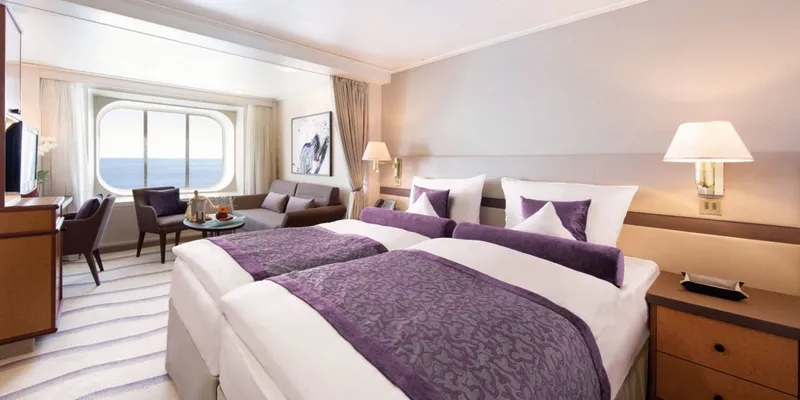
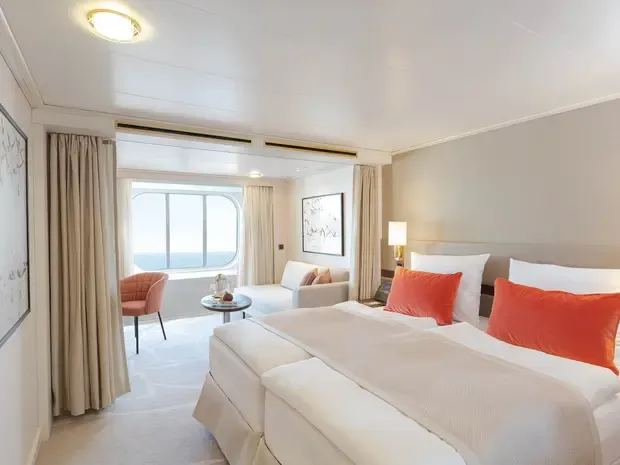
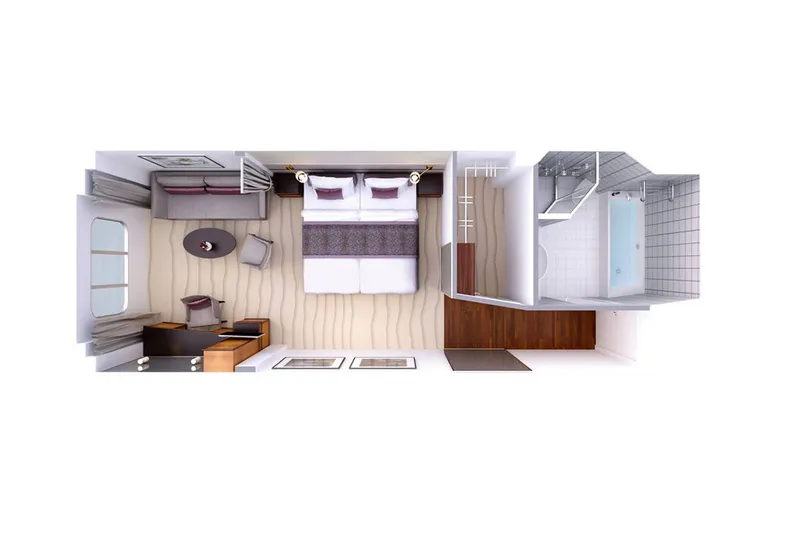
Guarantee Suite
Suite
291 m²Max 2
S01S02S03S04S05S06S07S08S10SSUSSVSV4SV6SVE
Guarantee Veranda Suite
BathDouble or Twin ConfigurationShowerRoom Service AvailableFree Mini BarTV+5
View Details
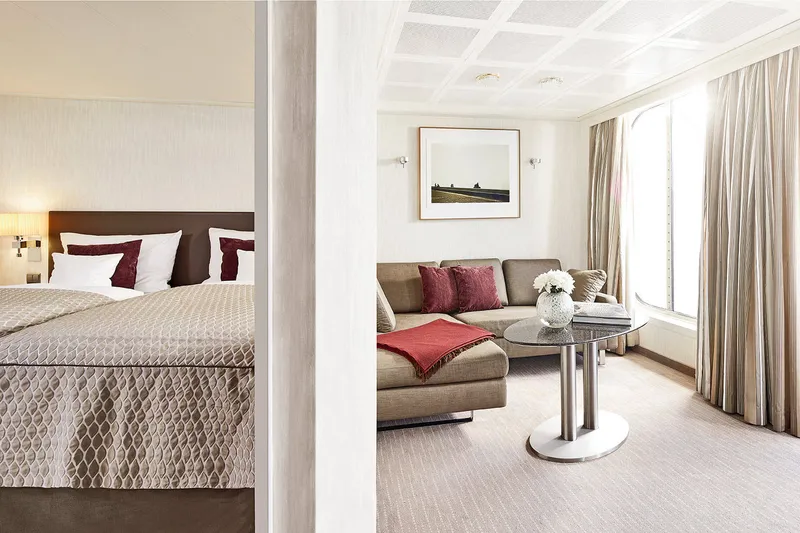
Penthouse Deluxe Suite
Suite
484 m²Max 3
08
Max passengers: 4
Staterooms number:
Cabin size: 485 ft2 / 45 m2
Balcony size: included
Location (on decks): 10-Penthouse
Type (categories): (K08) Penthouse Deluxe Suite
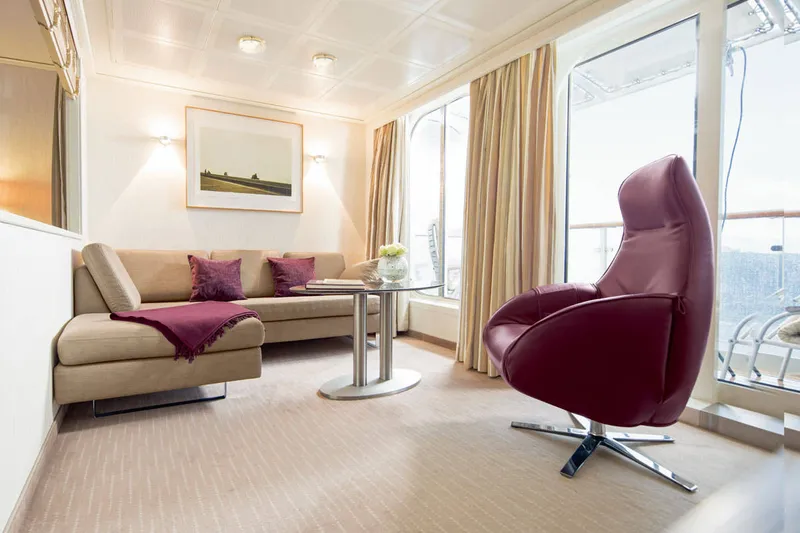
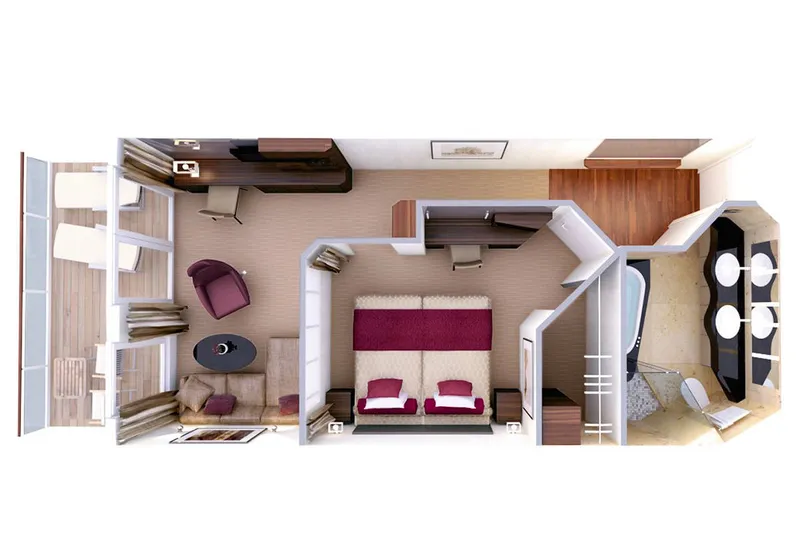
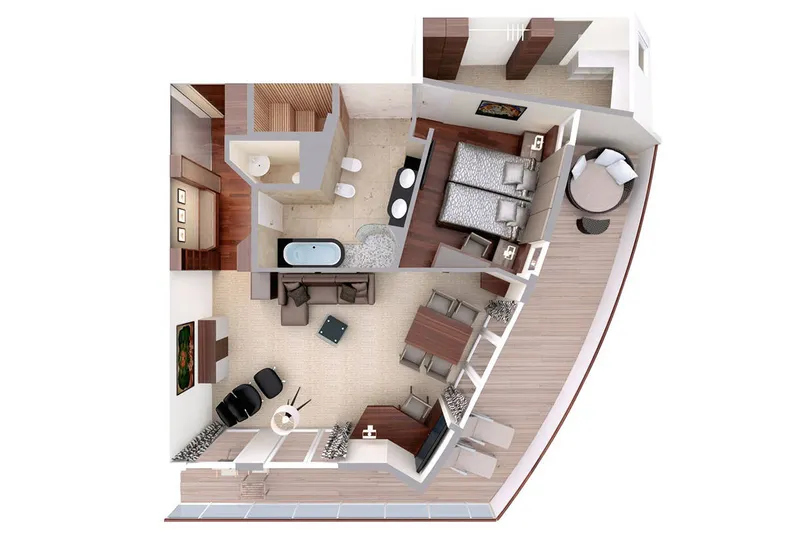
Each Penthouse Deluxe Suite has step-out balcony (furnished with 2 padded loungers, low table, 2 deckchairs), 24-hour butler service (packing / unpacking, laundry, ironing, onboard reservations), daily in-cabin dining (fresh canapes, chocolates), Nespresso coffee maker, separate bedroom, bathroom (floor heating, 2 sinks, shower, whirlpool bath), walk-in closet, free minibar (re-stocked daily with bottled water, juices, soft drinks, beer, premium spirits).
Double or Twin ConfigurationLounge AreaShowerFree Mini BarTVFree Wi-Fi+5
US$65,366 /person+ US$0 taxes & fees
Penthouse Grand Suite
Suite
915 m²Max 4
09
Max passengers: 4
Staterooms number: 2
Cabin size: 915 ft2 / 85 m2
Balcony size: included
Location (on decks): forward on deck 10-Penthouse
Type (categories): (K09) Penthouse Grand Suite
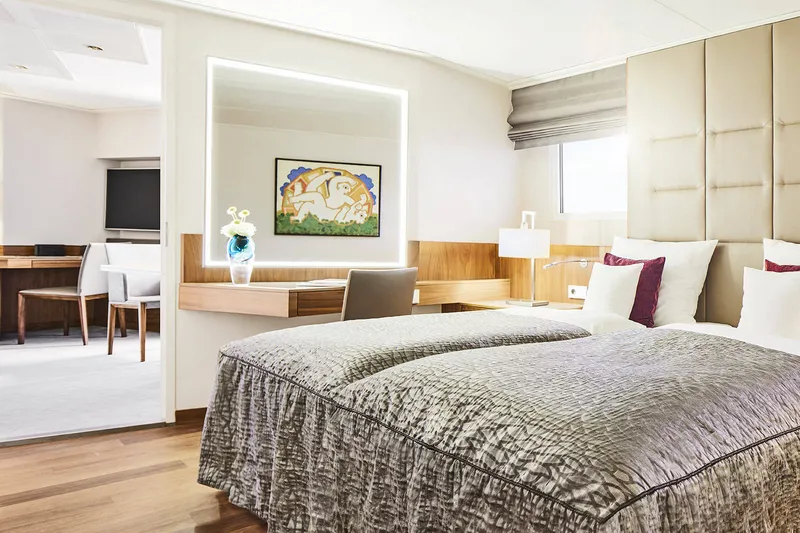
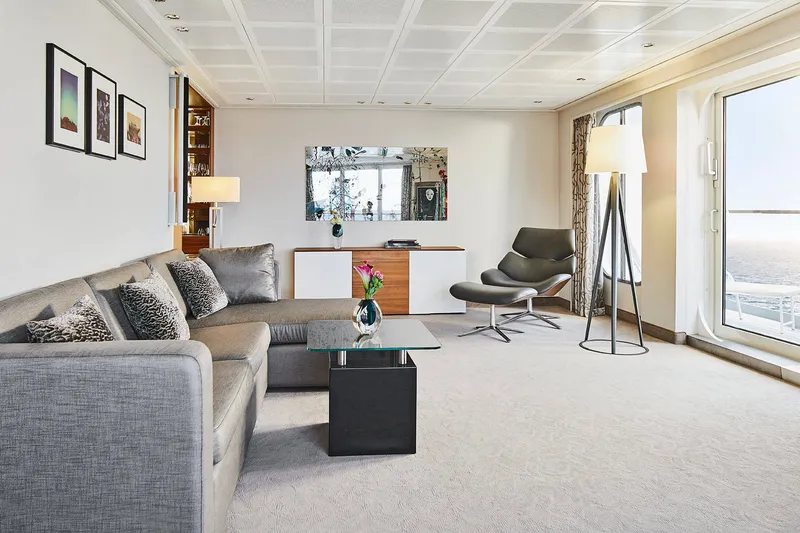
Each of the fore-located Penthouse Grand Suites has wrap-around, partly covered balcony and offers as bonus perks 24-hour butler service (packing / unpacking, laundry, ironing, onboard reservations), free Internet, free ironing service, daily in-cabin dining (canapes, pralines), Nespresso coffee maker, separate bedroom, 6-seat dining table, bathroom (walk-in shower, Jacuzzi whirlpool, sauna), guest bathroom, large walk-in wardrobe, Bang und Olufsen audio system, free minibar (re-stocked daily with bottled water, juices, soft drinks, beer, premium spirits), luxury balcony furniture (DEDON daybed / sonneninsel, cushioned loungers).
Double or Twin ConfigurationLounge AreaWhirlpool BathRoom Service AvailableFree Mini BarButler Service+7
View Details
Spa Suite
Suite
291 m²Max 2
10
Max passengers: 3
Staterooms number:
Cabin size: 290 ft2 / 27 m2
Balcony size: included
Location (on decks): 7-Sport
Type (categories): (K10) Spa Suite
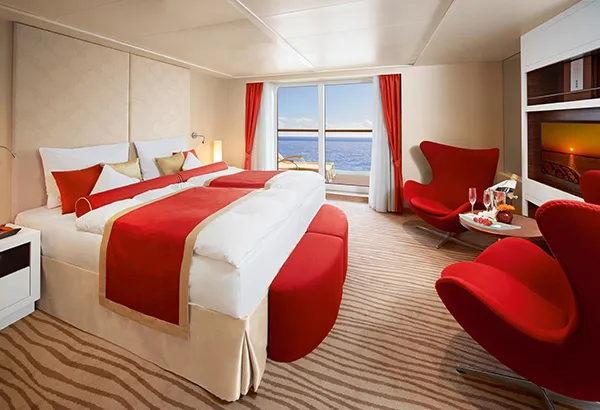
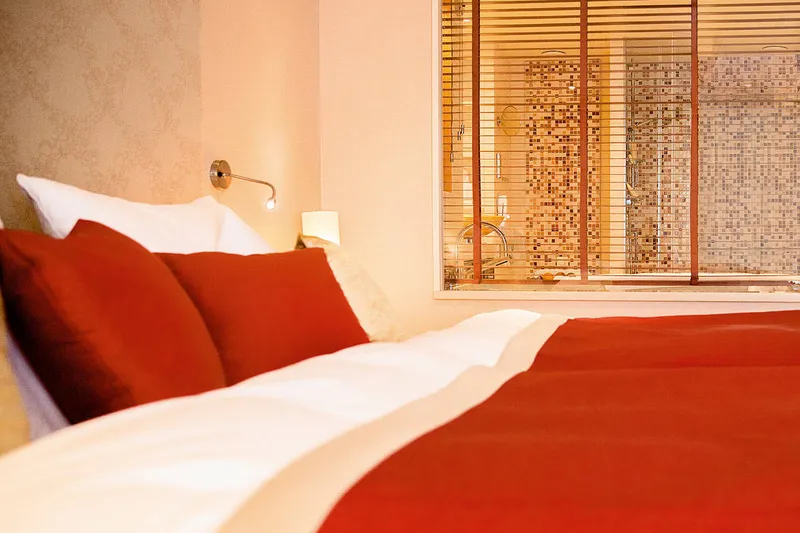
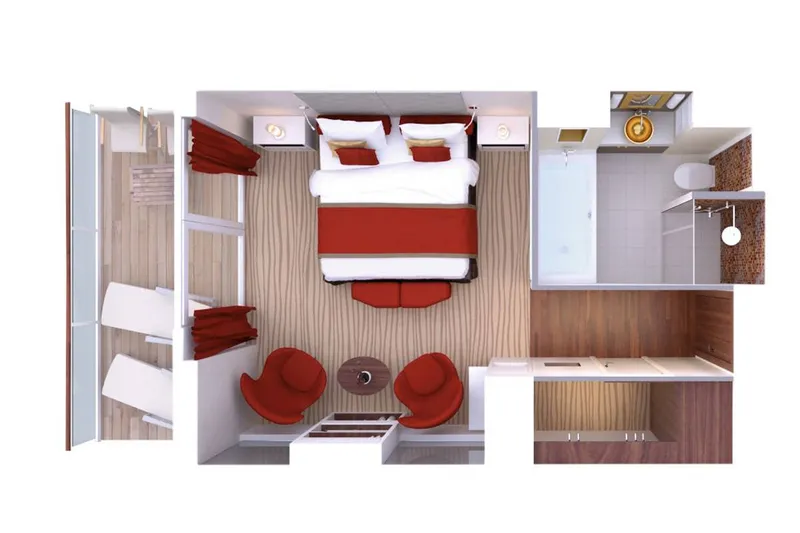
SPA Suite passengers receive 24-hour butler service (packing / unpacking, laundry, ironing, onboard reservations), SPA package, cabin balcony treatments (on request), SPA service privileges (nutritional advice), SPA drinks (smoothies, fresh fruit juices, wellness tea), daily in-cabin dining (fresh canapes, chocolates), Nespresso coffee maker, bathroom with large window (natural light and sea view, blinds between bathroom-living area), Jacuzzi whirlpool bath, emotional shower (color effects and sequences of alternating water jets), walk-in closet, free minibar (re-stocked daily with bottled water, juices, soft drinks, beer, premium spirits).
Double or Twin ConfigurationWhirlpool BathRoom Service AvailableFree Mini BarTVFree Wi-Fi+5
US$40,411 /person+ US$0 taxes & fees
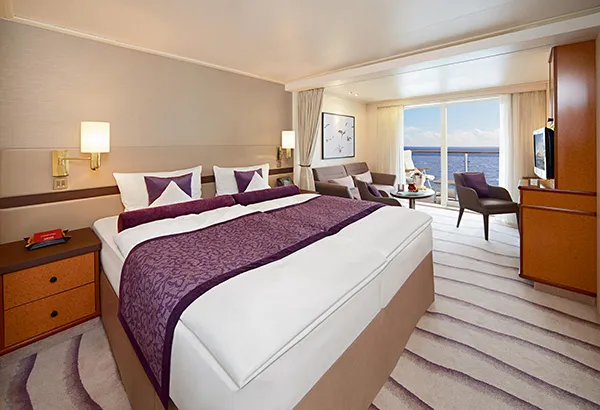
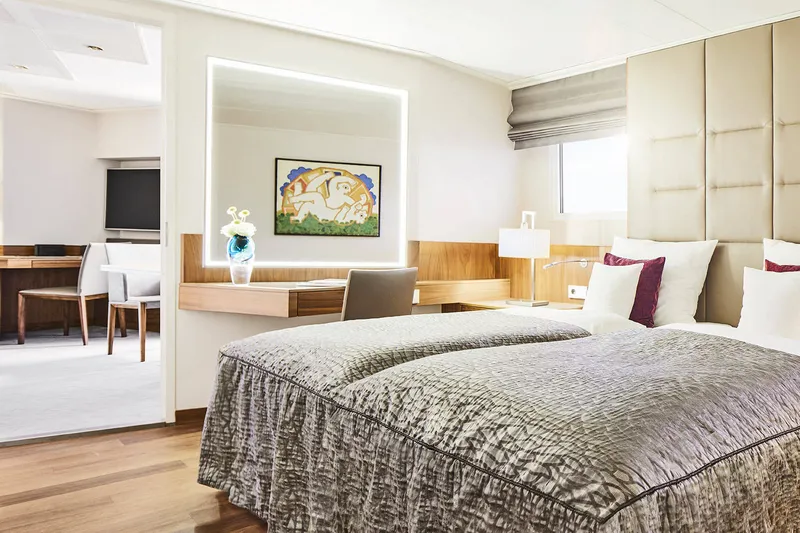
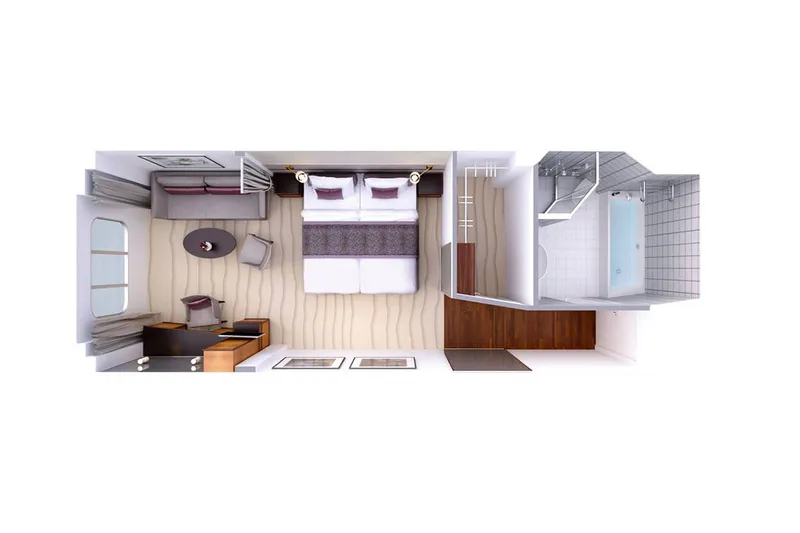
Suite
Suite
915 m²Max 4
010203
Max passengers: 2
Staterooms number:
Cabin size: 290 ft2 / 27 m2
Balcony size: none
Location (on decks): 5-Pazifik, 6-Atlantik, 7-Sport
Type (categories): (E01, E02, E03) Single Suite with Window
Veranda Suite offers 24-hour room service, curtain divider (between living-sleeping areas), en-suite bathroom (WC, shower, bathtub), walk-in closet, free minibar (re-stocked daily with bottled water, juices, soft drinks, beer). Instead of step-out balcony, Single Suites have large rounded window.
Double or Twin ConfigurationLounge AreaWhirlpool BathRoom Service AvailableFree Mini BarButler Service+7
View Details
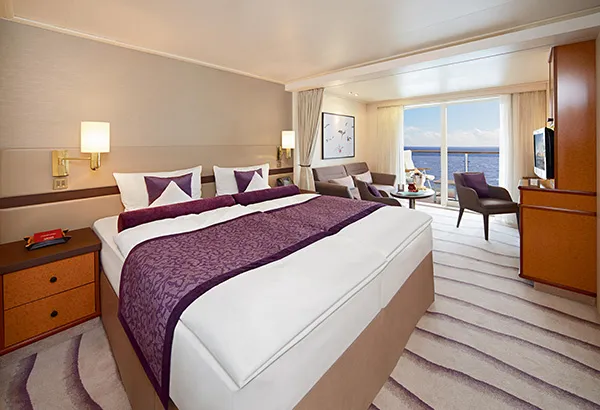
Veranda Suite
Suite
291 m²Max 2
04050607
Max passengers: 4
Staterooms number:
Cabin size: 290 ft2 / 27 m2
Balcony size: included
Location (on decks): 5-Pazifik, 6-Atlantik, 7-Sport, 9-Bellevue
Type (categories): (E04, E05, E06, E07) Veranda Suite
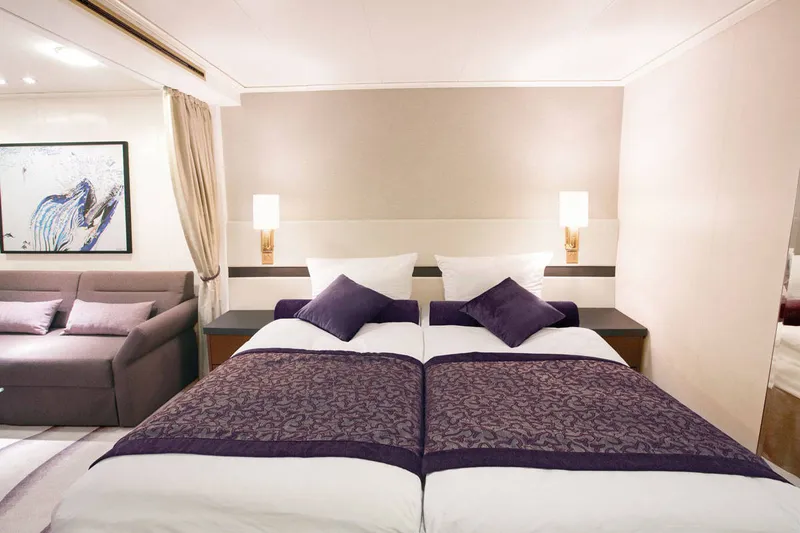
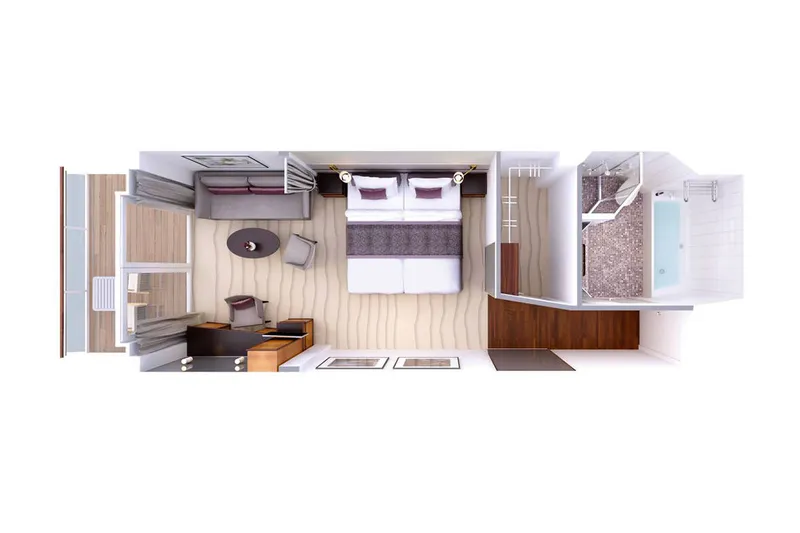
Veranda Suite offers 24-hour room service, step-out balcony (furnished with 2 padded deckchairs, 1 table), curtain divider (between living-sleeping areas), en-suite bathroom (WC, shower, bathtub), walk-in closet, free minibar (re-stocked daily with bottled water, juices, soft drinks, beer). Veranda Suite category also offers wheelchair-accessible (handicapped) and connecting cabins.
BathDouble or Twin ConfigurationShowerFree Mini BarTVCoffee Machine+4
US$29,314 /person+ US$0 taxes & fees
Interested in This Voyage?
Our cruise specialists can help you find the perfect cabin and the best available pricing.
(+886) 02-2721-7300Contact Advisor