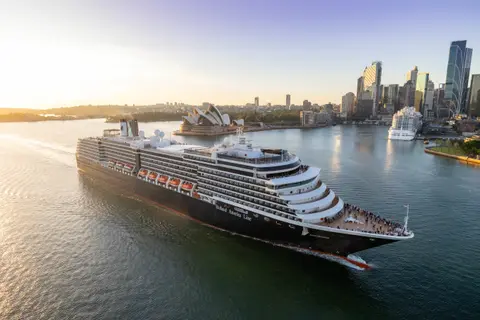
Holland America LineN671A
South Pacific Crossing & Australia Circumnavigation
Date
2026-10-11
Duration
69 nights
Departure Port
Seattle
United States
Arrival Port
Sydney
Canada
Rating
Premium
Theme
—
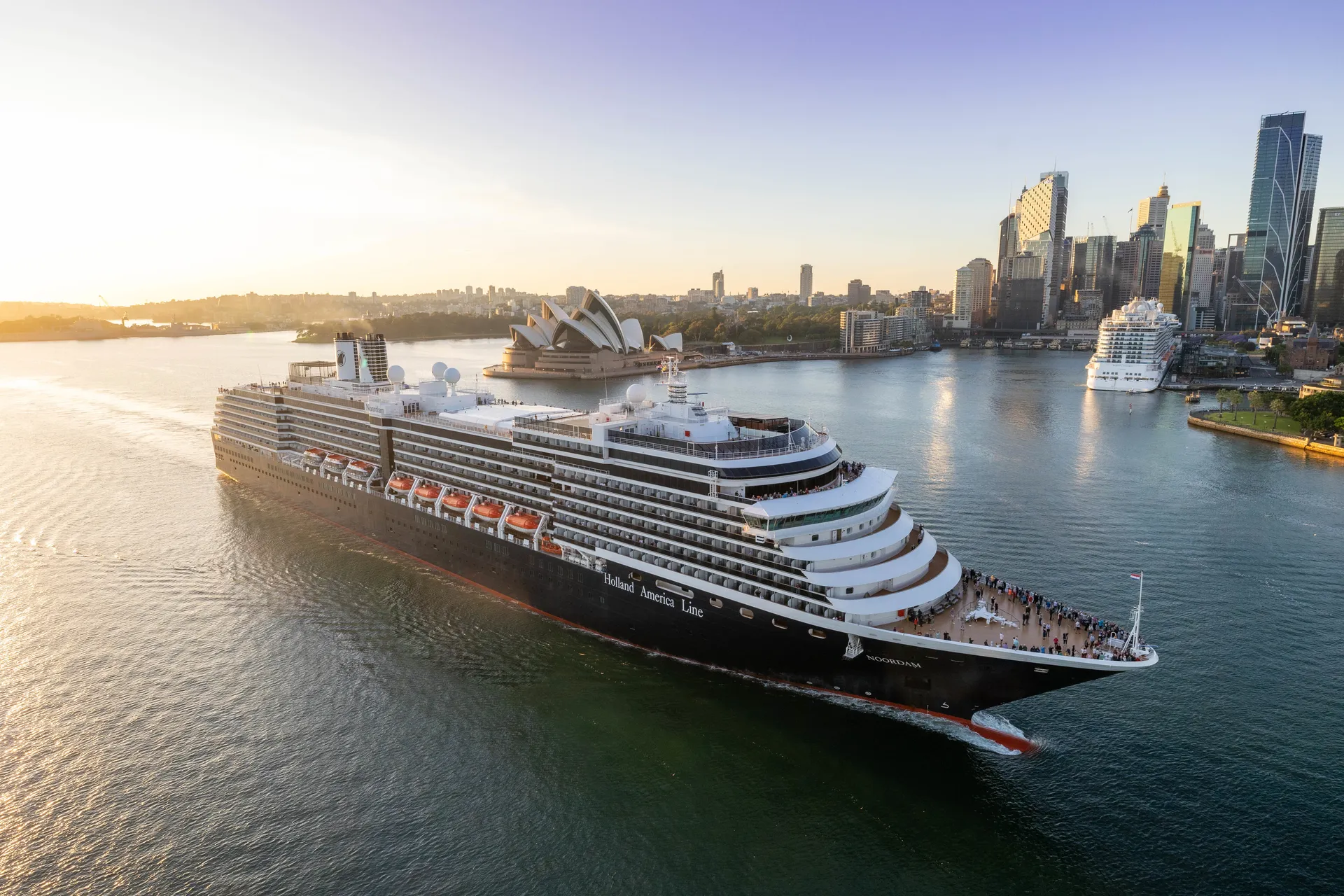




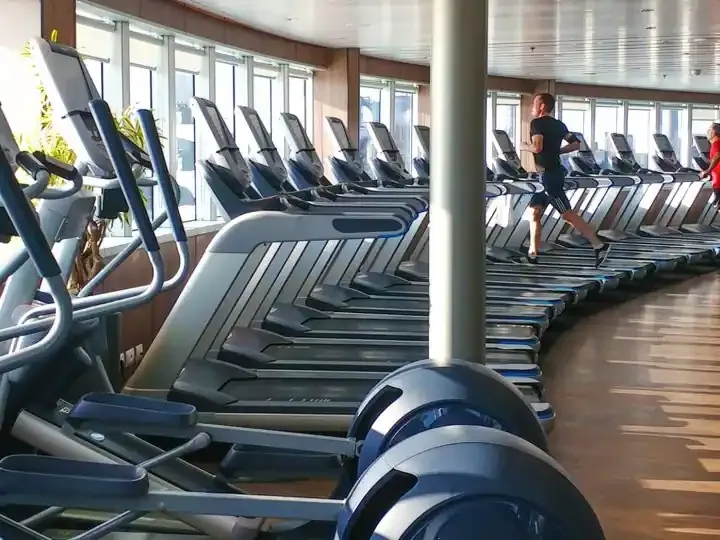


Holland America Line
Noordam
Launched
2006
Refitted
2019
Tonnage
82,318 GT
Passengers
1,924
Cabins
986
Crew
800
Length
936 m
Width
32 m
Speed
24 knots
Adults Only
No
Itinerary
Day 1
Day 1
Seattle
Depart 17:00
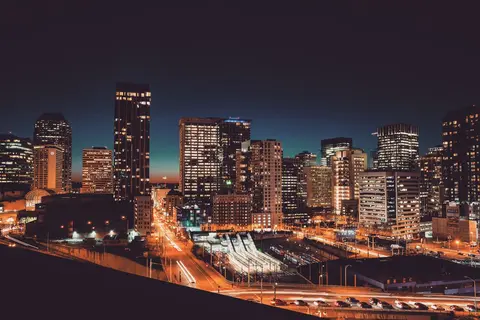
Seattle, the Pacific Northwest's rain-kissed metropolis, commands one of America's most spectacular urban settings — a skyline of glass towers reflected in Elliott Bay with the white cone of Mount Rainier presiding over the horizon on clear days. Pike Place Market, one of the oldest and most vibrant public markets in the country, overflows with Dungeness crab, wild salmon, and blooms of tulips from the Skagit Valley. The neighbourhood of Capitol Hill pulses with independent bookshops and craft breweries; the Space Needle delivers sweeping views of the Cascades and the Olympic Peninsula. Summer, from June through September, offers Seattle's most generous sunshine.
Day 2
Day 2
At Sea
Day 3
Day 3
At Sea
Day 4
Day 4
At Sea
Day 5
Day 5
At Sea
Day 6
Day 6
At Sea
Day 7
Day 7
Hilo
Arrive 08:00Depart 17:00
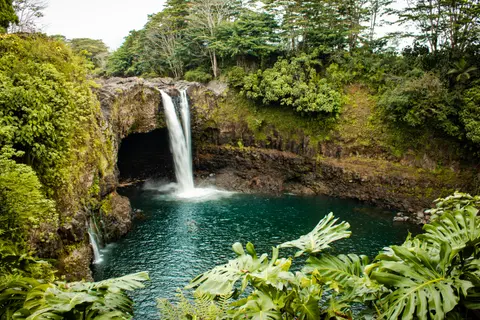
Hilo is the lush, rain-blessed gateway to Hawaii Volcanoes National Park on the Big Island's windward coast, where active lava flows, cascading waterfalls, and an authentic plantation-era town create Hawaii's most dramatically natural destination. Must-dos include Kilauea crater, Rainbow Falls, and the legendary Hilo Farmers Market. September and October tend to be driest, though Hilo rewards visitors year-round.
Day 8
Day 8
Honolulu
Arrive 07:00Depart 21:00
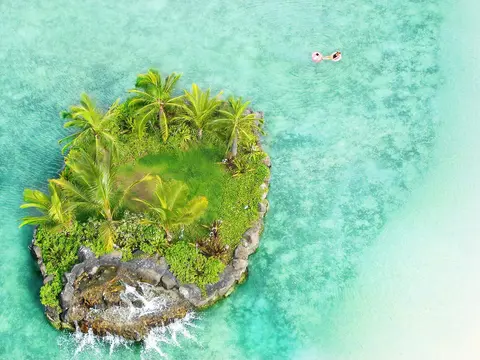
Honolulu, the vibrant capital of Hawaii, is a unique port known for its rich history, beautiful beaches, and diverse culinary scene. Must-do experiences include visiting the historic Pearl Harbor and savoring local delicacies like poke and loco moco. The best time to visit is during the dry season, from April to October, when the weather is perfect for exploring this tropical paradise.
Day 9
Day 9
Lihue
Arrive 08:00Depart 16:00
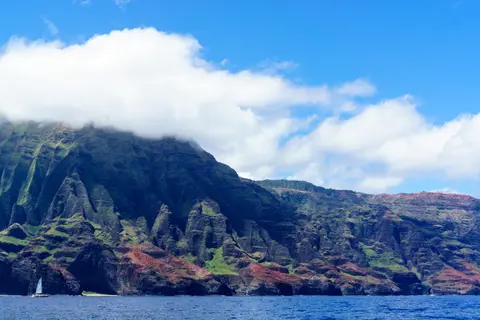
Lihue is the gateway to Kauai, Hawaii's oldest and most lush island, home to the spectacular Na Pali Coast cliffs and the "Grand Canyon of the Pacific" at Waimea Canyon. Must-dos include a Na Pali Coast boat tour, driving to Waimea Canyon's overlooks, and tasting shave ice made with fresh island fruits. The dry season (April–September) offers the best weather and calmest seas for coastal excursions.
Day 10
Day 10
Kailua Kona
Arrive 08:00Depart 17:00
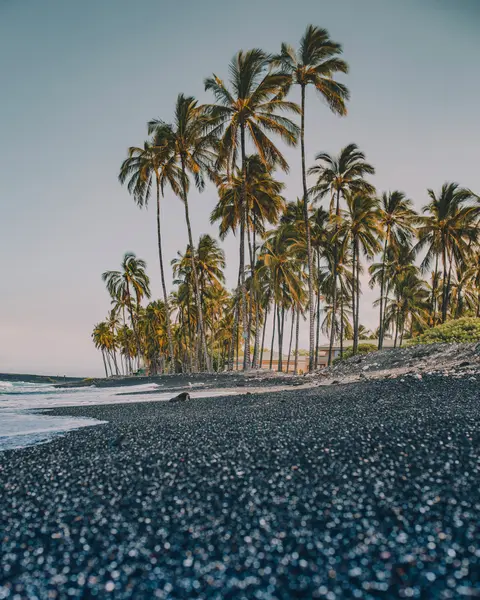
Kailua Kona, United States is a distinctive port city where deep cultural heritage meets authentic local atmosphere, featured on itineraries by Oceania Cruises. Must-do experiences include exploring the vibrant local markets for regional specialties and fresh seafood, and discovering the waterfront quarter where maritime heritage meets contemporary energy. The optimal time to visit is November through April, when cooler dry months offer the most comfortable conditions for exploration.
Day 11
Day 11
At Sea
Day 12
Day 12
Crossing the International Date line
Day 13
Day 13
At Sea
Day 14
Day 14
Christmas Island
Arrive 08:00Depart 15:00
Christmas Island (Kiritimati) in Kiribati is the world's largest coral atoll, hosting millions of breeding seabirds and legendary bonefish flats that draw saltwater fly fishers from around the globe. Must-dos include fly fishing for bonefish and giant trevally on the crystal-clear flats and witnessing the massive seabird colonies numbering in the millions. The equatorial climate is warm year-round, with expedition cruise visits possible during Pacific-crossing itineraries.
Day 14
Day 14
Crossing the International Date line
Day 14
Day 14
At Sea
Day 15
Day 15
Crossing the Equator
Day 16
Day 16
Papeete
Arrive 14:00Depart 23:00
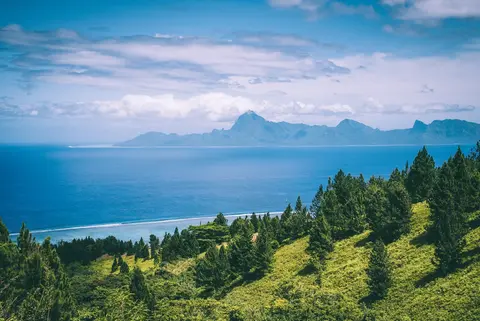
Papeete is the spirited, slightly ragged capital of French Polynesia — not the languorous paradise of travel-poster imagination, but a working harbour city of fresh produce markets, baguette bakeries, and Tahitian outrigger canoe clubs that provides an authentic counterpoint to the pearl-still lagoons of Bora Bora and Moorea nearby. The daily Marché de Papeete is the city's essential experience, its stalls piling high with vanilla pods, monoi-scented oils, black pearls, and the most exuberant floral arrangements in the Pacific. Moorea, visible across the Sea of the Moon and just 30 minutes by fast ferry, offers a dramatically quieter alternative. The dry season, May through October, brings the finest weather.
Day 18
Day 18
Moorea
Arrive 07:00Depart 17:00
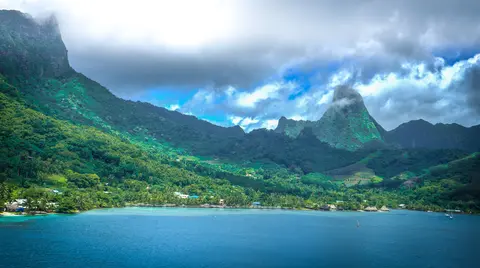
Moorea is a volcanic island in French Polynesia, separated from Tahiti by a narrow channel known as the Sea of the Moon, celebrated for its twin cathedral-like bays, jagged emerald peaks, and lagoons of almost surreal turquoise clarity. Visitors should not miss savouring authentic *poisson cru* at a beachside roulotte and exploring Ōpūnohu Bay by outrigger canoe or guided hiking trail. The ideal season to visit is May through October — the dry, austral winter — when skies are reliably clear, humidity is gentle, and humpback whales pass through the surrounding waters on their annual migration.
Day 19
Day 19
Raiatea
Arrive 07:00Depart 17:00
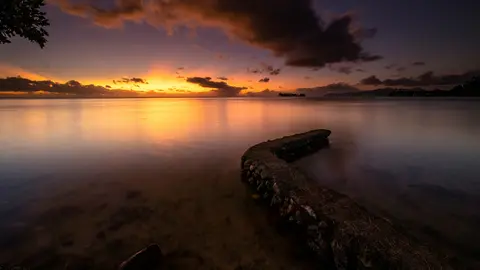
Raiatea, the sacred ancestral homeland of Polynesian navigation and home to the UNESCO-listed Taputapuātea marae, offers an unhurried immersion into French Polynesia's deepest cultural roots. Visitors should not miss kayaking the Faaroa River — the only navigable river in French Polynesia — and crossing the shared lagoon to Taha'a's vanilla plantations and pristine motu. The dry season from May through October brings warm days, gentle trade winds, and optimal conditions for both lagoon exploration and open-ocean sailing.
Day 20
Day 20
At Sea
Day 21
Day 21
Rarotonga
Arrive 08:00Depart 17:00
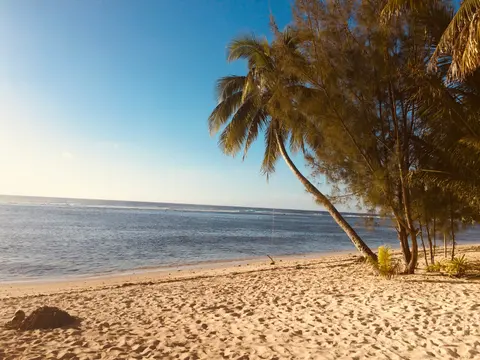
Rarotonga, the largest Cook Island, is a volcanic paradise ringed by a luminous lagoon and crowned by jungle-clad peaks. Must-dos include snorkeling Muri Lagoon, exploring the ancient Ara Metua road, and savoring ika mata at the Punanga Nui Market. The dry season from May through October offers the most pleasant weather, with warm waters and gentle trade winds ideal for reef exploration.
Day 22
Day 22
At Sea
Day 23
Day 23
Crossing the International Date line
Day 24
Day 24
Vava'u
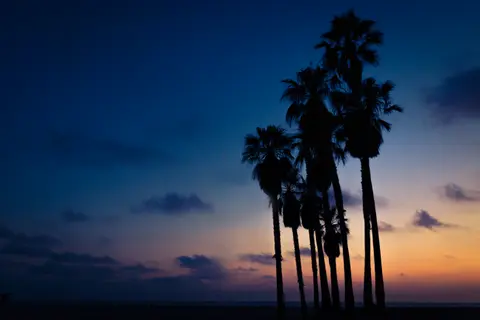
Vava'u is a stunning island group in the Kingdom of Tonga, one of the few places on earth where swimming with humpback whales is permitted, set amid a sailing paradise of 60 coral-fringed islands. Must-dos include swimming alongside mother-and-calf humpback whales (July-October), kayaking through the turquoise lagoons, and attending a traditional Sunday umu feast. Visit July through October for peak whale season and the most comfortable dry-season conditions.
Day 25
Day 25
Nuku'alofa
Arrive 08:00Depart 17:00
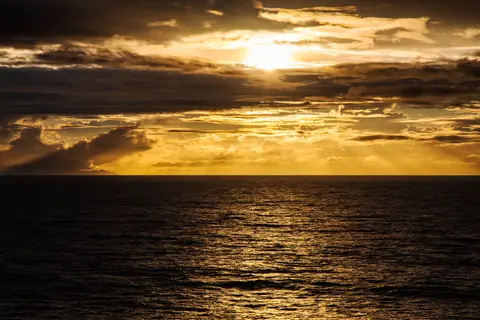
Nuku'alofa is the capital of the Kingdom of Tonga, the last Polynesian monarchy, where ancient royal tombs, powerful Sunday church singing, and traditional kava ceremonies preserve a Pacific Island culture of remarkable depth. Must-dos include the Ha'amonga trilithon "Stonehenge of the Pacific," a Sunday church service with Tongan choral singing, and swimming with humpback whales in season. Visit July through October for whale season and dry weather.
Day 27
Day 27
At Sea
Day 28
Day 28
Waitangi
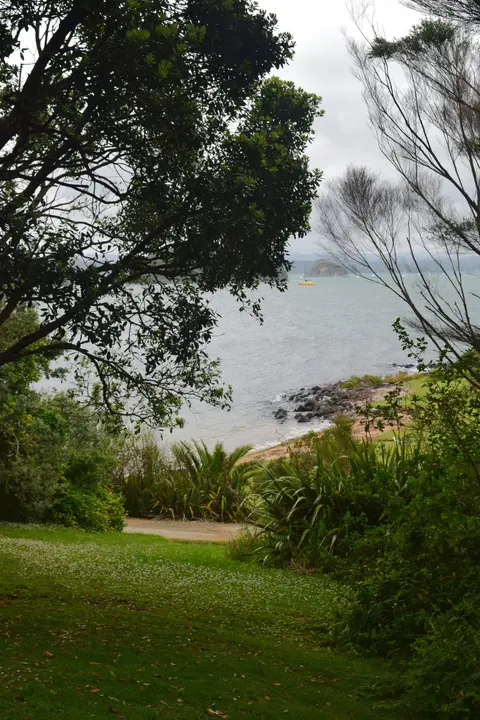
Waitangi in the Bay of Islands is New Zealand's most historically significant site, where the founding Treaty of Waitangi was signed in 1840 between the British Crown and Māori chiefs. Must-dos include visiting the Treaty House and Māori meeting house, cruising to the Hole in the Rock, and exploring historic Russell across the bay. November through April offers warm weather and calm seas in this subtropical setting.
Day 29
Day 29
Auckland
Arrive 08:00Depart 17:00
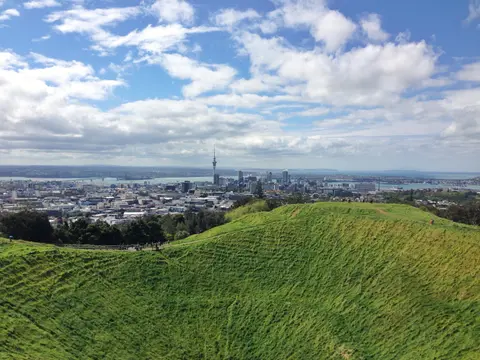
Auckland, New Zealand's largest city, straddles a volcanic isthmus between two harbours, offering a rare blend of Pacific Rim sophistication, Māori heritage, and dramatic natural beauty. Must-do experiences include a wine-and-oyster afternoon on Waiheke Island and the panoramic ascent of Maungawhau (Mount Eden) overlooking the harbour and Rangitoto Island. The ideal cruising season runs from November through March, when long summer days, calm seas, and pohutukawa trees in scarlet bloom make the Waitematā Harbour approach truly unforgettable.
Day 31
Day 31
Wellington
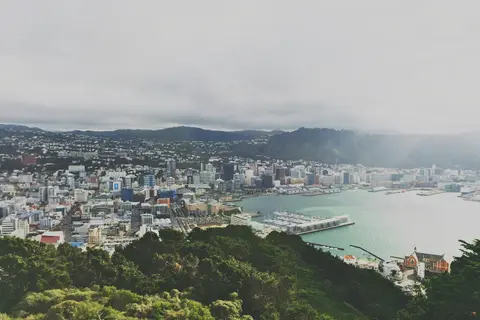
Wellington is New Zealand's compact, creative capital, home to the world-class Te Papa museum, the Peter Jackson filmmaking empire, and a café-and-craft-beer culture rivalling cities many times its size. Must-do experiences include Te Papa's Gallipoli exhibition, Cuba Street's bohemian dining scene, and the cable car ride to the Botanic Garden. November through March is warmest, though Wellington's four-seasons-in-a-day climate adds character year-round.
Day 33
Day 33
At Sea
Day 34
Day 34
At Sea
Day 35
Day 35
Sydney
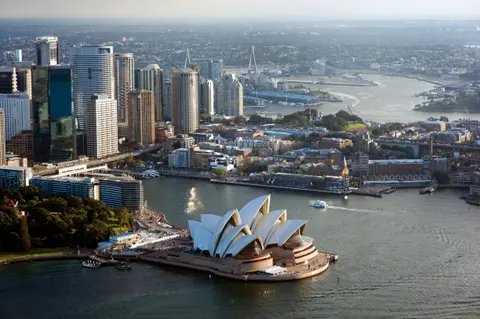
Set on what Captain Arthur Phillip called "the finest harbour in the world," Sydney stakes its claim on the global imagination with Jørn Utzon's sail-roofed Opera House, a bridge you can climb for panoramic views, and a food scene anchored by Sydney rock oysters and the largest fish market in the Southern Hemisphere. The Blue Mountains and Hunter Valley wine country extend the adventure beyond the city. October through April brings summer warmth and the harbour at its most luminously blue.
Day 37
Day 37
Brisbane
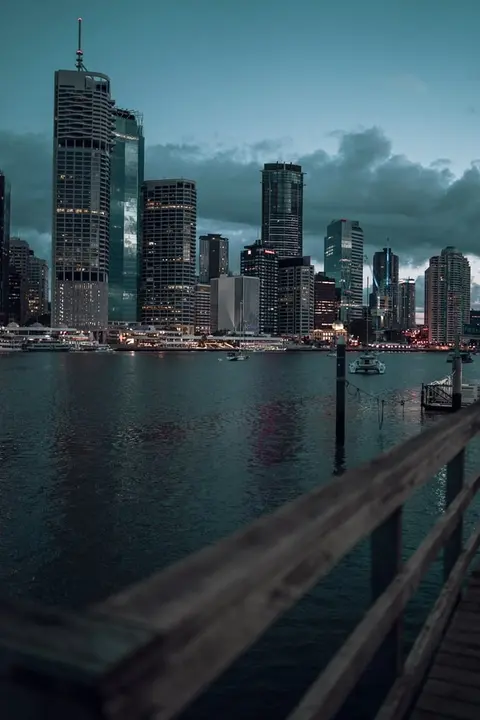
Brisbane, Australia's sun-drenched Queensland capital, is a sophisticated river city where subtropical warmth meets world-class dining, striking modern architecture, and lush parklands — all framed by proximity to the Great Barrier Reef and ancient rainforests. Visitors should not miss the Moreton Bay bug at a waterfront restaurant and the panoramic twilight views from Kangaroo Point cliffs. With over 280 days of sunshine annually, Brisbane shines brightest from April through October, when mild winters and cobalt skies create ideal conditions for exploring both the city and its remarkable coastal surroundings.
Day 39
Day 39
At Sea
Day 40
Day 40
Alotau
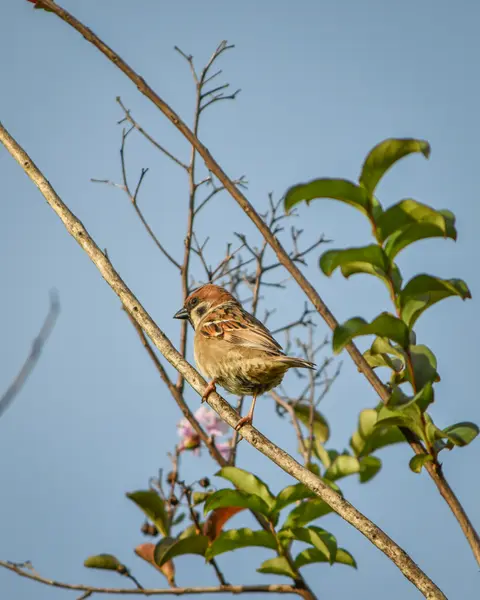
Alotau is the gateway to Papua New Guinea's Milne Bay, one of Earth's most biodiverse marine regions with over 1,400 islands harboring extraordinary coral reefs, manta rays, and the living Kula Ring ceremonial exchange. Must-dos include snorkeling the world-class reefs, visiting the waterfront market by outrigger canoe, and experiencing a traditional mumu feast. Visit May to October for the best diving conditions.
Day 41
Day 41
Kiriwina Island
Arrive 08:00Depart 18:00
Kiriwina is the largest of Papua New Guinea's Trobriand Islands, renowned as the birthplace of modern anthropology and home to the living Kula Ring ceremonial exchange tradition. Visitors can witness yam festival celebrations, admire masterful traditional woodcarving, and experience authentic Melanesian hospitality. The dry season from May to October offers the most reliable weather for visiting this culturally extraordinary island.
Day 43
Day 43
Cairns
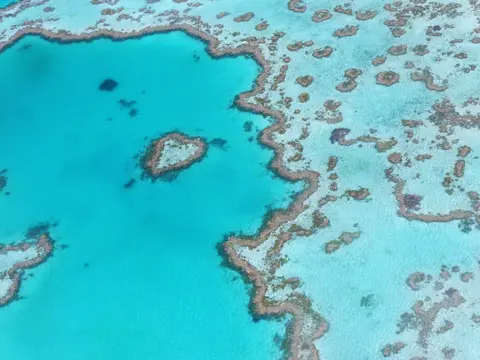
Cairns is the only city on Earth positioned between two UNESCO World Heritage Sites — the Great Barrier Reef and the ancient Daintree Rainforest. Visit June through October via Celebrity Cruises or Viking for outer reef snorkeling, Daintree River crocodile cruises, cassowary encounters, and the unique privilege of experiencing 180 million years of rainforest evolution alongside the planet's largest living structure.
Day 45
Day 45
Townsville
Depart 17:00
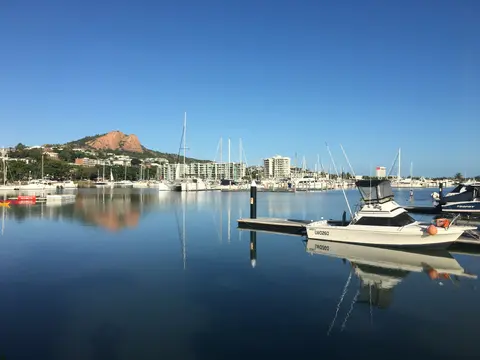
Townsville is North Queensland's gateway to the central Great Barrier Reef, where Magnetic Island's wild koalas and granite beaches lie twenty minutes by ferry and the legendary SS Yongala shipwreck offers one of the world's top ten dives. Visit June through October via Cunard or Holland America Line for pristine reef sections, the world's largest living coral reef aquarium, and the quieter alternative to Cairns that delivers equal natural wonder with fewer crowds.
Day 46
Day 46
At Sea
Day 47
Day 47
At Sea
Day 48
Day 48
Torres Strait (scenic cruising)
Day 49
Day 49
Darwin
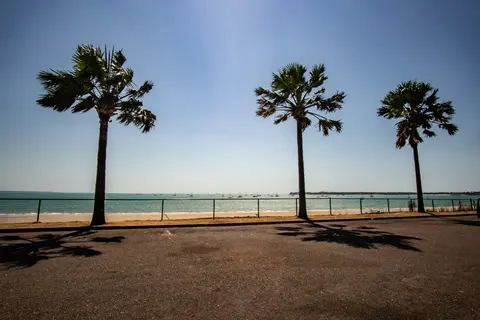
Darwin is Australia's tropical Top End capital, where sixty-five thousand years of Indigenous heritage meets extraordinary multiculturalism, saltwater crocodiles, and gateway access to Kakadu's ancient rock art. Must-do experiences include the Mindil Beach Sunset Market, swimming beneath Litchfield's waterfalls, and viewing twenty-thousand-year-old Aboriginal paintings at Ubirr. May through October's Dry season offers clear skies and outdoor market culture.
Day 51
Day 51
Broome
Broome is a remote pearling town in Western Australia where Cable Beach's 22-kilometer white sand meets Kimberley wilderness and a multicultural heritage shaped by the South Sea pearl industry. Must-dos include sunset camel rides on Cable Beach, visiting the world's oldest outdoor cinema, and excursions to the Horizontal Falls. The dry season (May–October) offers ideal conditions.
Day 53
Day 53
Exmouth
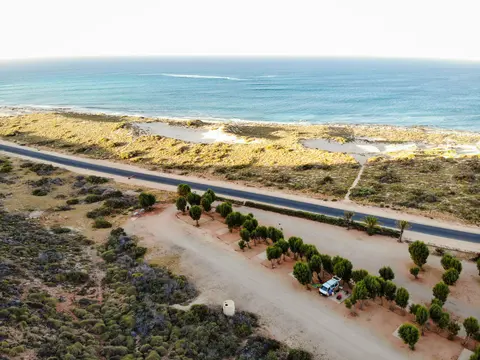
Exmouth is the gateway to Ningaloo Reef in Western Australia — the world's largest fringing reef, where coral begins just meters from shore and whale sharks, manta rays, and humpback whales gather in extraordinary concentrations. Must-do experiences include swimming with whale sharks, snorkeling the pristine coral gardens, and hiking the red-rock gorges of Cape Range National Park. March through July is whale shark season, while November through March brings turtle nesting — each period offering world-class wildlife encounters.
Day 55
Day 55
Perth
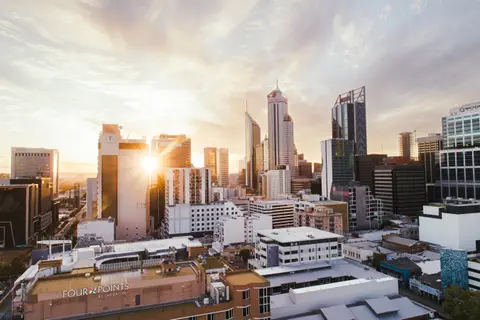
Perth is the most isolated major city on Earth, a sun-drenched Indian Ocean capital where four hundred hectares of native bushland in Kings Park overlook the Swan River and spring wildflowers create one of Australia's most celebrated natural displays. Ferry to car-free Rottnest Island to meet the smiling quokka, taste Shark Bay prawns in Fremantle's historic harbor, and discover Margaret River wines. September through November offers the most spectacular conditions, with P&O and Seabourn docking at Fremantle port.
Day 57
Day 57
Perth
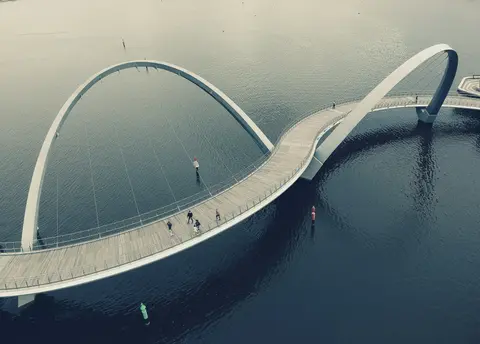
Perth is the most isolated major city on Earth, a sun-drenched Indian Ocean capital where four hundred hectares of native bushland in Kings Park overlook the Swan River and spring wildflowers create one of Australia's most celebrated natural displays. Ferry to car-free Rottnest Island to meet the smiling quokka, taste Shark Bay prawns in Fremantle's historic harbor, and discover Margaret River wines. September through November offers the most spectacular conditions, with P&O and Seabourn docking at Fremantle port.
Day 58
Day 58
At Sea
Day 59
Day 59
Albany
Arrive 08:00Depart 18:00
Established in 1826, Albany was the first European settlement in Western Australia and quickly grew into a bustling commercial hub. Its historic heart has a certain faded grandeur, while the modern waterfront is undergoing major redevelopment. The area’s most striking features, however, predate the original settlement. Its natural wonders include stunning coastline stretching from Torndirrup National Park’s majestic cliffs to the tranquil bay at King George Sound. In the interior, the peaks of the Stirling Range reach heights of more than 1,000 meters (3,280 feet) and offer opportunities for day hikes with breathtaking views. During the 19th century, Albany played an important role as a center of shipping between Britain and its Australian colonies, as it was long the only deepwater port on the continent. It was through Albany that some 40,000 Anzac troops departed for Europe, an event that is being recognized through 2018 with a series of events marking the centennial of World War I. The Whaling Station here, which did not cease operations until 1978, has been converted to a fascinating museum on the history of the industry. It has the distinction of being the last operating station in both the Southern Hemisphere and the English-speaking world. Humpback, southern right and blue whales continue to be pursued here, though now by curious sightseers on whale-watching cruises during the annual whale season from June to October. Today, “Amazing Albany” earns the adjective the city has bestowed upon itself, as it draws travelers eager to explore an unexpected and amazing corner of Australia.
Day 60
Day 60
At Sea
Day 61
Day 61
Adelaide
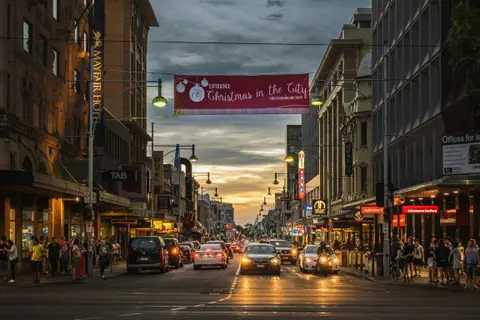
Adelaide is South Australia's elegant, parkland-ringed capital, uniquely positioned within an hour's drive of three world-class wine regions — the Barossa Valley, McLaren Vale, and the Adelaide Hills. Must-dos include the Central Market's 80-plus food stalls, Barossa Valley Shiraz tasting, and North Terrace's museum precinct. Visit March for the Adelaide Festival and Fringe, or October through April for warm Mediterranean-climate weather.
Day 62
Day 62
Kangaroo Island
Arrive 08:00Depart 23:00
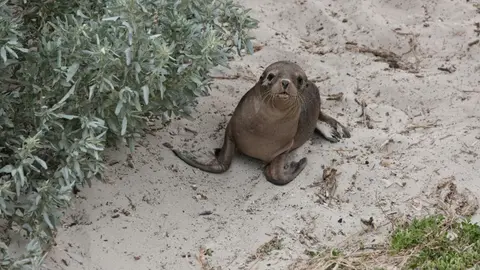
Kangaroo Island is Australia's premier wildlife sanctuary, home to sea lion colonies, koalas, little penguins, and the world's only purebred Ligurian bee population, set against a coastline of sculpted granite and limestone cliffs. Must-do experiences include walking among sea lions at Seal Bay, visiting the Remarkable Rocks, and sampling the island's artisan honey and cheeses. Spring (September-November) brings wildflowers and baby animals, while summer offers the warmest conditions for coastal exploration.
Day 63
Day 63
Penneshaw
Arrive 08:00Depart 18:00
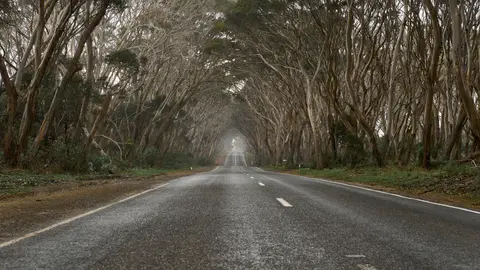
Penneshaw, Kangaroo Island, Australia is a distinctive port city where deep cultural heritage meets authentic local atmosphere, featured on itineraries by Seabourn. Must-do experiences include walking the historic center to experience the layered architectural heritage, and seeking out the regional culinary traditions at a locally favored establishment away from the port area. The optimal time to visit is November through March, when mild temperatures and long days favor unhurried exploration.
Day 64
Day 64
Melbourne
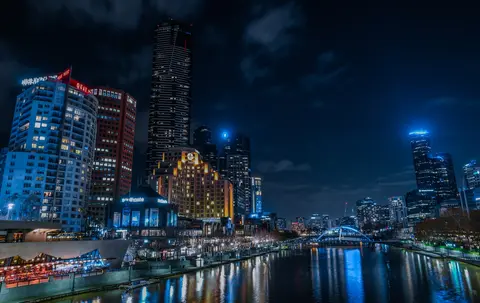
Melbourne is Australia's cultural capital, a city of labyrinthine laneways, world-class coffee, street art, and one of the most diverse food scenes on earth. Must-dos include exploring Hosier Lane's street art, eating your way through the Queen Victoria Market, and driving the Great Ocean Road to the Twelve Apostles. October through April offers the warmest weather, though Melbourne's famous changeability keeps visitors on their toes.
Day 65
Day 65
Phillip Island
Arrive 08:00Depart 17:00
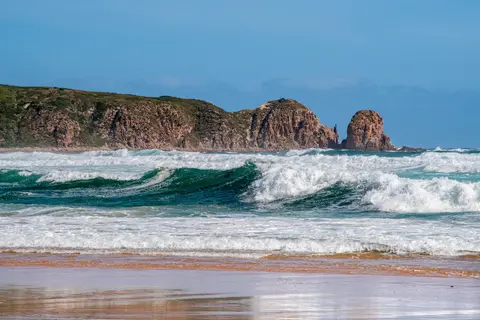
Phillip Island, two hours from Melbourne, is home to the world-famous Penguin Parade where thousands of little penguins waddle ashore at sunset, plus a 25,000-strong fur seal colony and excellent coastal hiking. Must-dos include the nightly Penguin Parade, Seal Rocks viewing, and the koala boardwalk. The parade runs year-round; November through March brings the largest penguin numbers.
Day 67
Day 67
Hobart
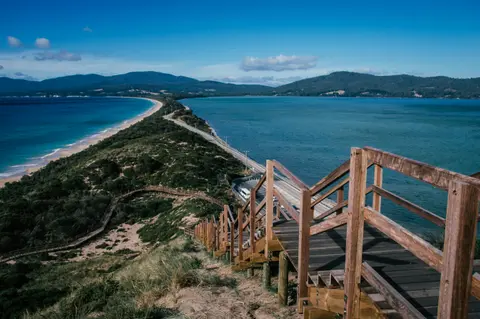
Hobart is Tasmania's cultured harbour capital, home to the boundary-pushing MONA museum, the legendary Salamanca Market, and world-class produce from pristine Tasmanian waters and farmland. Must-do experiences include MONA's subterranean galleries, the summit of kunanyi/Mount Wellington, and tasting Tasmanian oysters and Pinot Noir on the waterfront. December through March is warmest; June's Dark Mofo festival transforms the city.
Day 69
Day 69
Hobart
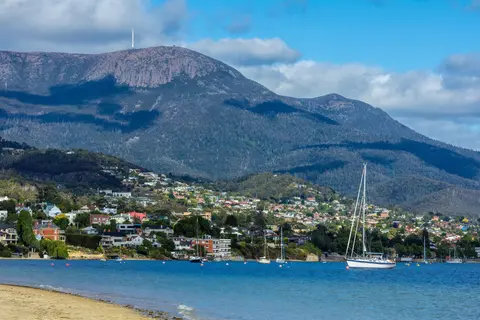
Hobart is Tasmania's cultured harbour capital, home to the boundary-pushing MONA museum, the legendary Salamanca Market, and world-class produce from pristine Tasmanian waters and farmland. Must-do experiences include MONA's subterranean galleries, the summit of kunanyi/Mount Wellington, and tasting Tasmanian oysters and Pinot Noir on the waterfront. December through March is warmest; June's Dark Mofo festival transforms the city.
Day 69
Day 69
Port Arthur
Arrive 10:00Depart 18:00
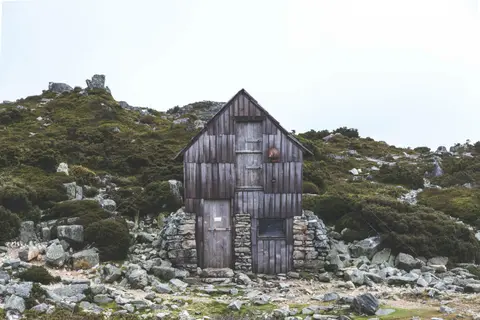
Port Arthur, Tasmania, Australia, showcases the Southern Hemisphere's remarkable natural heritage—pristine coastlines, unique wildlife, and landscapes of ancient geological drama. Must-do experiences include sampling the exceptional local seafood and exploring the surrounding national parks. The most rewarding visiting window is November through February, when the austral summer brings the longest days and mildest conditions. Cruise lines including Carnival Cruise Line feature this port on their most compelling itineraries. Whether you have a few hours or a full day, the port rewards exploration at every pace and in every direction.
Day 70
Day 70
Sydney
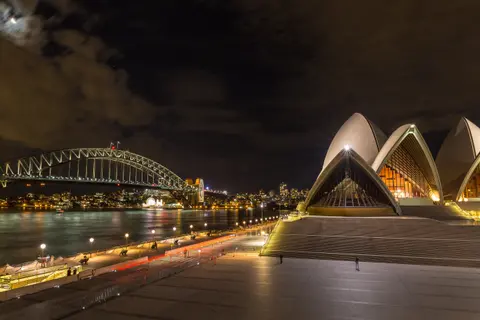
Set on what Captain Arthur Phillip called "the finest harbour in the world," Sydney stakes its claim on the global imagination with Jørn Utzon's sail-roofed Opera House, a bridge you can climb for panoramic views, and a food scene anchored by Sydney rock oysters and the largest fish market in the Southern Hemisphere. The Blue Mountains and Hunter Valley wine country extend the adventure beyond the city. October through April brings summer warmth and the harbour at its most luminously blue.
Day 1
Seattle
Depart 17:00
Seattle, the Pacific Northwest's rain-kissed metropolis, commands one of America's most spectacular urban settings — a skyline of glass towers reflected in Elliott Bay with the white cone of Mount Rainier presiding over the horizon on clear days. Pike Place Market, one of the oldest and most vibrant public markets in the country, overflows with Dungeness crab, wild salmon, and blooms of tulips from the Skagit Valley. The neighbourhood of Capitol Hill pulses with independent bookshops and craft breweries; the Space Needle delivers sweeping views of the Cascades and the Olympic Peninsula. Summer, from June through September, offers Seattle's most generous sunshine.
Day 2
At Sea
Day 3
At Sea
Day 4
At Sea
Day 5
At Sea
Day 6
At Sea
Day 7
Hilo
Arrive 08:00Depart 17:00
Hilo is the lush, rain-blessed gateway to Hawaii Volcanoes National Park on the Big Island's windward coast, where active lava flows, cascading waterfalls, and an authentic plantation-era town create Hawaii's most dramatically natural destination. Must-dos include Kilauea crater, Rainbow Falls, and the legendary Hilo Farmers Market. September and October tend to be driest, though Hilo rewards visitors year-round.
Day 8
Honolulu
Arrive 07:00Depart 21:00
Honolulu, the vibrant capital of Hawaii, is a unique port known for its rich history, beautiful beaches, and diverse culinary scene. Must-do experiences include visiting the historic Pearl Harbor and savoring local delicacies like poke and loco moco. The best time to visit is during the dry season, from April to October, when the weather is perfect for exploring this tropical paradise.
Day 9
Lihue
Arrive 08:00Depart 16:00
Lihue is the gateway to Kauai, Hawaii's oldest and most lush island, home to the spectacular Na Pali Coast cliffs and the "Grand Canyon of the Pacific" at Waimea Canyon. Must-dos include a Na Pali Coast boat tour, driving to Waimea Canyon's overlooks, and tasting shave ice made with fresh island fruits. The dry season (April–September) offers the best weather and calmest seas for coastal excursions.
Day 10
Kailua Kona
Arrive 08:00Depart 17:00
Kailua Kona, United States is a distinctive port city where deep cultural heritage meets authentic local atmosphere, featured on itineraries by Oceania Cruises. Must-do experiences include exploring the vibrant local markets for regional specialties and fresh seafood, and discovering the waterfront quarter where maritime heritage meets contemporary energy. The optimal time to visit is November through April, when cooler dry months offer the most comfortable conditions for exploration.
Day 11
At Sea
Day 12
Crossing the International Date line
Day 13
At Sea
Day 14
Christmas Island
Arrive 08:00Depart 15:00
Christmas Island (Kiritimati) in Kiribati is the world's largest coral atoll, hosting millions of breeding seabirds and legendary bonefish flats that draw saltwater fly fishers from around the globe. Must-dos include fly fishing for bonefish and giant trevally on the crystal-clear flats and witnessing the massive seabird colonies numbering in the millions. The equatorial climate is warm year-round, with expedition cruise visits possible during Pacific-crossing itineraries.
Crossing the International Date line
At Sea
Day 15
Crossing the Equator
Day 16
Papeete
Arrive 14:00Depart 23:00
Papeete is the spirited, slightly ragged capital of French Polynesia — not the languorous paradise of travel-poster imagination, but a working harbour city of fresh produce markets, baguette bakeries, and Tahitian outrigger canoe clubs that provides an authentic counterpoint to the pearl-still lagoons of Bora Bora and Moorea nearby. The daily Marché de Papeete is the city's essential experience, its stalls piling high with vanilla pods, monoi-scented oils, black pearls, and the most exuberant floral arrangements in the Pacific. Moorea, visible across the Sea of the Moon and just 30 minutes by fast ferry, offers a dramatically quieter alternative. The dry season, May through October, brings the finest weather.
Day 18
Moorea
Arrive 07:00Depart 17:00
Moorea is a volcanic island in French Polynesia, separated from Tahiti by a narrow channel known as the Sea of the Moon, celebrated for its twin cathedral-like bays, jagged emerald peaks, and lagoons of almost surreal turquoise clarity. Visitors should not miss savouring authentic *poisson cru* at a beachside roulotte and exploring Ōpūnohu Bay by outrigger canoe or guided hiking trail. The ideal season to visit is May through October — the dry, austral winter — when skies are reliably clear, humidity is gentle, and humpback whales pass through the surrounding waters on their annual migration.
Day 19
Raiatea
Arrive 07:00Depart 17:00
Raiatea, the sacred ancestral homeland of Polynesian navigation and home to the UNESCO-listed Taputapuātea marae, offers an unhurried immersion into French Polynesia's deepest cultural roots. Visitors should not miss kayaking the Faaroa River — the only navigable river in French Polynesia — and crossing the shared lagoon to Taha'a's vanilla plantations and pristine motu. The dry season from May through October brings warm days, gentle trade winds, and optimal conditions for both lagoon exploration and open-ocean sailing.
Day 20
At Sea
Day 21
Rarotonga
Arrive 08:00Depart 17:00
Rarotonga, the largest Cook Island, is a volcanic paradise ringed by a luminous lagoon and crowned by jungle-clad peaks. Must-dos include snorkeling Muri Lagoon, exploring the ancient Ara Metua road, and savoring ika mata at the Punanga Nui Market. The dry season from May through October offers the most pleasant weather, with warm waters and gentle trade winds ideal for reef exploration.
Day 22
At Sea
Day 23
Crossing the International Date line
Day 24
Vava'u
Vava'u is a stunning island group in the Kingdom of Tonga, one of the few places on earth where swimming with humpback whales is permitted, set amid a sailing paradise of 60 coral-fringed islands. Must-dos include swimming alongside mother-and-calf humpback whales (July-October), kayaking through the turquoise lagoons, and attending a traditional Sunday umu feast. Visit July through October for peak whale season and the most comfortable dry-season conditions.
Day 25
Nuku'alofa
Arrive 08:00Depart 17:00
Nuku'alofa is the capital of the Kingdom of Tonga, the last Polynesian monarchy, where ancient royal tombs, powerful Sunday church singing, and traditional kava ceremonies preserve a Pacific Island culture of remarkable depth. Must-dos include the Ha'amonga trilithon "Stonehenge of the Pacific," a Sunday church service with Tongan choral singing, and swimming with humpback whales in season. Visit July through October for whale season and dry weather.
Day 27
At Sea
Day 28
Waitangi
Waitangi in the Bay of Islands is New Zealand's most historically significant site, where the founding Treaty of Waitangi was signed in 1840 between the British Crown and Māori chiefs. Must-dos include visiting the Treaty House and Māori meeting house, cruising to the Hole in the Rock, and exploring historic Russell across the bay. November through April offers warm weather and calm seas in this subtropical setting.
Day 29
Auckland
Arrive 08:00Depart 17:00
Auckland, New Zealand's largest city, straddles a volcanic isthmus between two harbours, offering a rare blend of Pacific Rim sophistication, Māori heritage, and dramatic natural beauty. Must-do experiences include a wine-and-oyster afternoon on Waiheke Island and the panoramic ascent of Maungawhau (Mount Eden) overlooking the harbour and Rangitoto Island. The ideal cruising season runs from November through March, when long summer days, calm seas, and pohutukawa trees in scarlet bloom make the Waitematā Harbour approach truly unforgettable.
Day 31
Wellington
Wellington is New Zealand's compact, creative capital, home to the world-class Te Papa museum, the Peter Jackson filmmaking empire, and a café-and-craft-beer culture rivalling cities many times its size. Must-do experiences include Te Papa's Gallipoli exhibition, Cuba Street's bohemian dining scene, and the cable car ride to the Botanic Garden. November through March is warmest, though Wellington's four-seasons-in-a-day climate adds character year-round.
Day 33
At Sea
Day 34
At Sea
Day 35
Sydney
Set on what Captain Arthur Phillip called "the finest harbour in the world," Sydney stakes its claim on the global imagination with Jørn Utzon's sail-roofed Opera House, a bridge you can climb for panoramic views, and a food scene anchored by Sydney rock oysters and the largest fish market in the Southern Hemisphere. The Blue Mountains and Hunter Valley wine country extend the adventure beyond the city. October through April brings summer warmth and the harbour at its most luminously blue.
Day 37
Brisbane
Brisbane, Australia's sun-drenched Queensland capital, is a sophisticated river city where subtropical warmth meets world-class dining, striking modern architecture, and lush parklands — all framed by proximity to the Great Barrier Reef and ancient rainforests. Visitors should not miss the Moreton Bay bug at a waterfront restaurant and the panoramic twilight views from Kangaroo Point cliffs. With over 280 days of sunshine annually, Brisbane shines brightest from April through October, when mild winters and cobalt skies create ideal conditions for exploring both the city and its remarkable coastal surroundings.
Day 39
At Sea
Day 40
Alotau
Alotau is the gateway to Papua New Guinea's Milne Bay, one of Earth's most biodiverse marine regions with over 1,400 islands harboring extraordinary coral reefs, manta rays, and the living Kula Ring ceremonial exchange. Must-dos include snorkeling the world-class reefs, visiting the waterfront market by outrigger canoe, and experiencing a traditional mumu feast. Visit May to October for the best diving conditions.
Day 41
Kiriwina Island
Arrive 08:00Depart 18:00
Kiriwina is the largest of Papua New Guinea's Trobriand Islands, renowned as the birthplace of modern anthropology and home to the living Kula Ring ceremonial exchange tradition. Visitors can witness yam festival celebrations, admire masterful traditional woodcarving, and experience authentic Melanesian hospitality. The dry season from May to October offers the most reliable weather for visiting this culturally extraordinary island.
Day 43
Cairns
Cairns is the only city on Earth positioned between two UNESCO World Heritage Sites — the Great Barrier Reef and the ancient Daintree Rainforest. Visit June through October via Celebrity Cruises or Viking for outer reef snorkeling, Daintree River crocodile cruises, cassowary encounters, and the unique privilege of experiencing 180 million years of rainforest evolution alongside the planet's largest living structure.
Day 45
Townsville
Depart 17:00
Townsville is North Queensland's gateway to the central Great Barrier Reef, where Magnetic Island's wild koalas and granite beaches lie twenty minutes by ferry and the legendary SS Yongala shipwreck offers one of the world's top ten dives. Visit June through October via Cunard or Holland America Line for pristine reef sections, the world's largest living coral reef aquarium, and the quieter alternative to Cairns that delivers equal natural wonder with fewer crowds.
Day 46
At Sea
Day 47
At Sea
Day 48
Torres Strait (scenic cruising)
Day 49
Darwin
Darwin is Australia's tropical Top End capital, where sixty-five thousand years of Indigenous heritage meets extraordinary multiculturalism, saltwater crocodiles, and gateway access to Kakadu's ancient rock art. Must-do experiences include the Mindil Beach Sunset Market, swimming beneath Litchfield's waterfalls, and viewing twenty-thousand-year-old Aboriginal paintings at Ubirr. May through October's Dry season offers clear skies and outdoor market culture.
Day 51
Broome
Broome is a remote pearling town in Western Australia where Cable Beach's 22-kilometer white sand meets Kimberley wilderness and a multicultural heritage shaped by the South Sea pearl industry. Must-dos include sunset camel rides on Cable Beach, visiting the world's oldest outdoor cinema, and excursions to the Horizontal Falls. The dry season (May–October) offers ideal conditions.
Day 53
Exmouth
Exmouth is the gateway to Ningaloo Reef in Western Australia — the world's largest fringing reef, where coral begins just meters from shore and whale sharks, manta rays, and humpback whales gather in extraordinary concentrations. Must-do experiences include swimming with whale sharks, snorkeling the pristine coral gardens, and hiking the red-rock gorges of Cape Range National Park. March through July is whale shark season, while November through March brings turtle nesting — each period offering world-class wildlife encounters.
Day 55
Perth
Perth is the most isolated major city on Earth, a sun-drenched Indian Ocean capital where four hundred hectares of native bushland in Kings Park overlook the Swan River and spring wildflowers create one of Australia's most celebrated natural displays. Ferry to car-free Rottnest Island to meet the smiling quokka, taste Shark Bay prawns in Fremantle's historic harbor, and discover Margaret River wines. September through November offers the most spectacular conditions, with P&O and Seabourn docking at Fremantle port.
Day 57
Perth
Perth is the most isolated major city on Earth, a sun-drenched Indian Ocean capital where four hundred hectares of native bushland in Kings Park overlook the Swan River and spring wildflowers create one of Australia's most celebrated natural displays. Ferry to car-free Rottnest Island to meet the smiling quokka, taste Shark Bay prawns in Fremantle's historic harbor, and discover Margaret River wines. September through November offers the most spectacular conditions, with P&O and Seabourn docking at Fremantle port.
Day 58
At Sea
Day 59
Albany
Arrive 08:00Depart 18:00
Established in 1826, Albany was the first European settlement in Western Australia and quickly grew into a bustling commercial hub. Its historic heart has a certain faded grandeur, while the modern waterfront is undergoing major redevelopment. The area’s most striking features, however, predate the original settlement. Its natural wonders include stunning coastline stretching from Torndirrup National Park’s majestic cliffs to the tranquil bay at King George Sound. In the interior, the peaks of the Stirling Range reach heights of more than 1,000 meters (3,280 feet) and offer opportunities for day hikes with breathtaking views. During the 19th century, Albany played an important role as a center of shipping between Britain and its Australian colonies, as it was long the only deepwater port on the continent. It was through Albany that some 40,000 Anzac troops departed for Europe, an event that is being recognized through 2018 with a series of events marking the centennial of World War I. The Whaling Station here, which did not cease operations until 1978, has been converted to a fascinating museum on the history of the industry. It has the distinction of being the last operating station in both the Southern Hemisphere and the English-speaking world. Humpback, southern right and blue whales continue to be pursued here, though now by curious sightseers on whale-watching cruises during the annual whale season from June to October. Today, “Amazing Albany” earns the adjective the city has bestowed upon itself, as it draws travelers eager to explore an unexpected and amazing corner of Australia.
Day 60
At Sea
Day 61
Adelaide
Adelaide is South Australia's elegant, parkland-ringed capital, uniquely positioned within an hour's drive of three world-class wine regions — the Barossa Valley, McLaren Vale, and the Adelaide Hills. Must-dos include the Central Market's 80-plus food stalls, Barossa Valley Shiraz tasting, and North Terrace's museum precinct. Visit March for the Adelaide Festival and Fringe, or October through April for warm Mediterranean-climate weather.
Day 62
Kangaroo Island
Arrive 08:00Depart 23:00
Kangaroo Island is Australia's premier wildlife sanctuary, home to sea lion colonies, koalas, little penguins, and the world's only purebred Ligurian bee population, set against a coastline of sculpted granite and limestone cliffs. Must-do experiences include walking among sea lions at Seal Bay, visiting the Remarkable Rocks, and sampling the island's artisan honey and cheeses. Spring (September-November) brings wildflowers and baby animals, while summer offers the warmest conditions for coastal exploration.
Day 63
Penneshaw
Arrive 08:00Depart 18:00
Penneshaw, Kangaroo Island, Australia is a distinctive port city where deep cultural heritage meets authentic local atmosphere, featured on itineraries by Seabourn. Must-do experiences include walking the historic center to experience the layered architectural heritage, and seeking out the regional culinary traditions at a locally favored establishment away from the port area. The optimal time to visit is November through March, when mild temperatures and long days favor unhurried exploration.
Day 64
Melbourne
Melbourne is Australia's cultural capital, a city of labyrinthine laneways, world-class coffee, street art, and one of the most diverse food scenes on earth. Must-dos include exploring Hosier Lane's street art, eating your way through the Queen Victoria Market, and driving the Great Ocean Road to the Twelve Apostles. October through April offers the warmest weather, though Melbourne's famous changeability keeps visitors on their toes.
Day 65
Phillip Island
Arrive 08:00Depart 17:00
Phillip Island, two hours from Melbourne, is home to the world-famous Penguin Parade where thousands of little penguins waddle ashore at sunset, plus a 25,000-strong fur seal colony and excellent coastal hiking. Must-dos include the nightly Penguin Parade, Seal Rocks viewing, and the koala boardwalk. The parade runs year-round; November through March brings the largest penguin numbers.
Day 67
Hobart
Hobart is Tasmania's cultured harbour capital, home to the boundary-pushing MONA museum, the legendary Salamanca Market, and world-class produce from pristine Tasmanian waters and farmland. Must-do experiences include MONA's subterranean galleries, the summit of kunanyi/Mount Wellington, and tasting Tasmanian oysters and Pinot Noir on the waterfront. December through March is warmest; June's Dark Mofo festival transforms the city.
Day 69
Hobart
Hobart is Tasmania's cultured harbour capital, home to the boundary-pushing MONA museum, the legendary Salamanca Market, and world-class produce from pristine Tasmanian waters and farmland. Must-do experiences include MONA's subterranean galleries, the summit of kunanyi/Mount Wellington, and tasting Tasmanian oysters and Pinot Noir on the waterfront. December through March is warmest; June's Dark Mofo festival transforms the city.
Port Arthur
Arrive 10:00Depart 18:00
Port Arthur, Tasmania, Australia, showcases the Southern Hemisphere's remarkable natural heritage—pristine coastlines, unique wildlife, and landscapes of ancient geological drama. Must-do experiences include sampling the exceptional local seafood and exploring the surrounding national parks. The most rewarding visiting window is November through February, when the austral summer brings the longest days and mildest conditions. Cruise lines including Carnival Cruise Line feature this port on their most compelling itineraries. Whether you have a few hours or a full day, the port rewards exploration at every pace and in every direction.
Day 70
Sydney
Set on what Captain Arthur Phillip called "the finest harbour in the world," Sydney stakes its claim on the global imagination with Jørn Utzon's sail-roofed Opera House, a bridge you can climb for panoramic views, and a food scene anchored by Sydney rock oysters and the largest fish market in the Southern Hemisphere. The Blue Mountains and Hunter Valley wine country extend the adventure beyond the city. October through April brings summer warmth and the harbour at its most luminously blue.
Cabin Categories
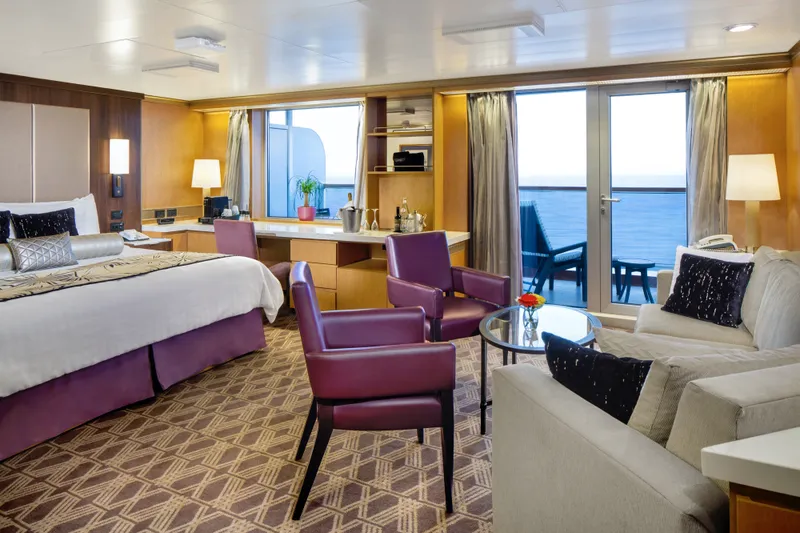
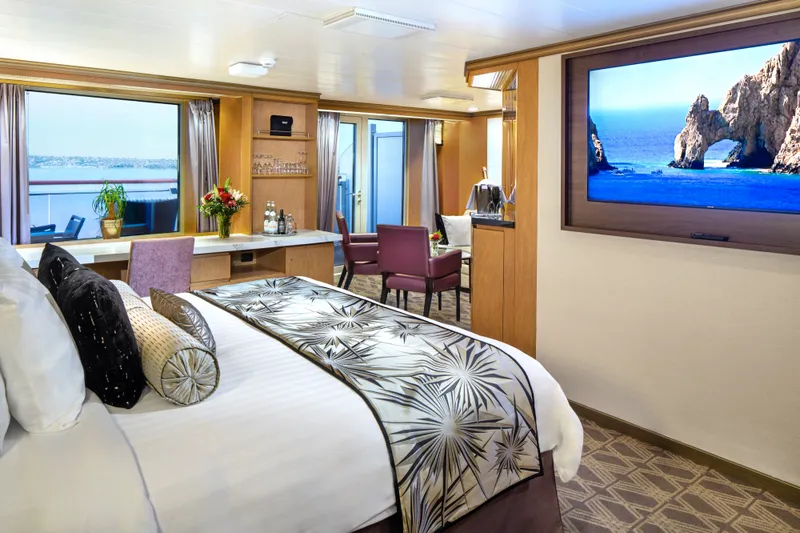
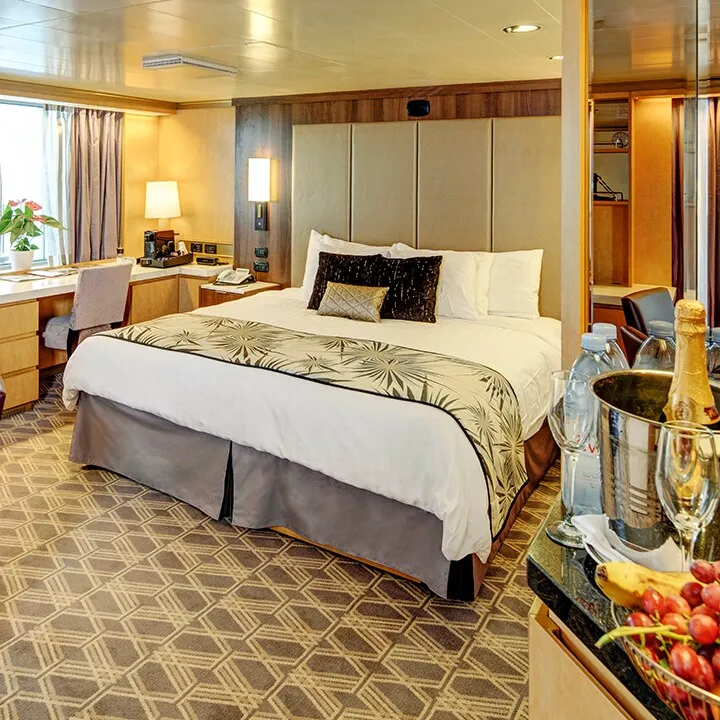
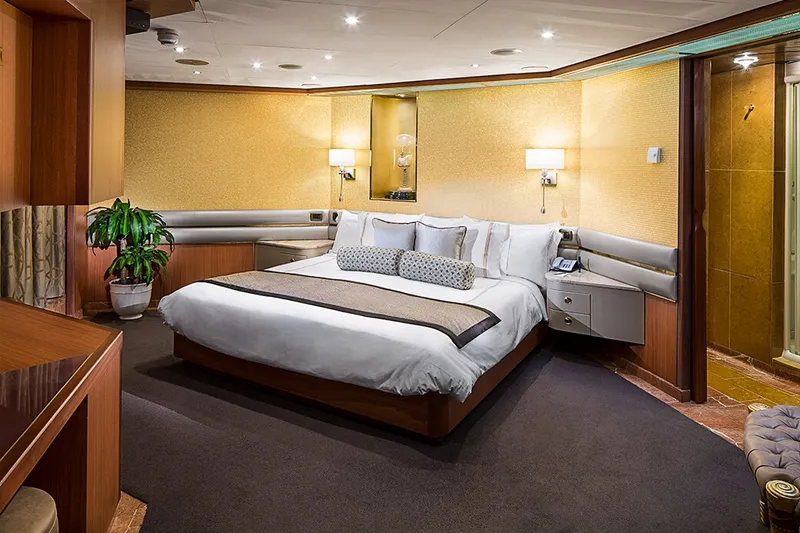
Neptune Suite
Suite
500–712 m²Max 2
SASBSC
Approximately 500-712 sq. ft. including verandah
With floor-to-ceiling windows overlooking a private verandah, these spacious suites are flooded with light. They feature a large sitting area and two lower beds convertible to one king-size bed—our signature Mariner's Dream bed with plush Euro-Top mattresses plus a separate dressing room. The bathroom comes with a dual-sink vanity, full-size whirlpool bath and shower, plus additional shower stall. Amenities include use of the exclusive Neptune Lounge, a private concierge and an array of complimentary services. The configuration of staterooms may vary from the images shown.
King or Twin ConfigurationShowerWhirlpool BathTVWi-Fi (Additional Cost)Safe+8
View Details
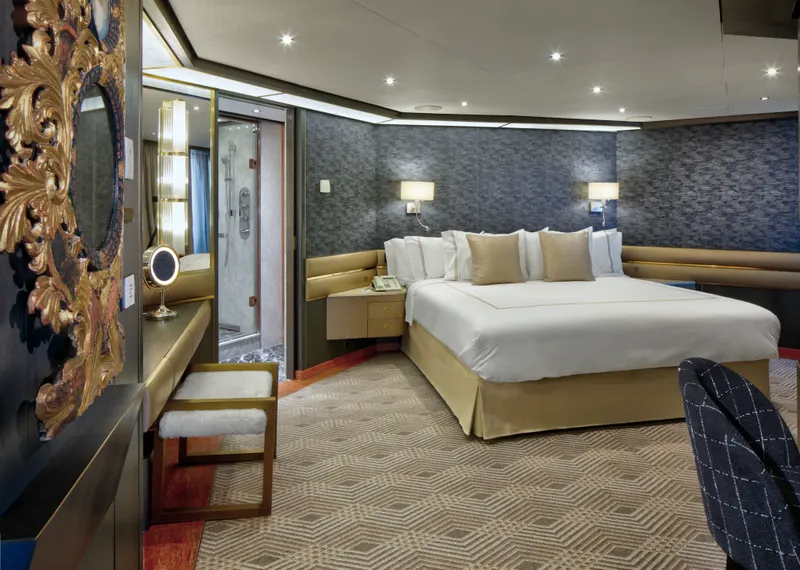
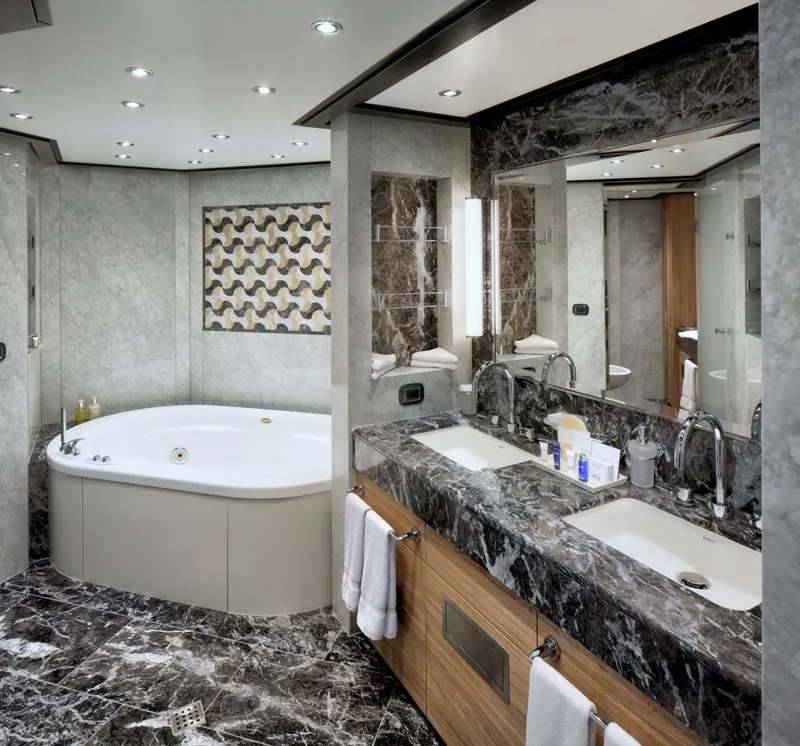
Pinnacle Suite
Suite
1150 m²Max 4
PS
Approximately 1150 sq. ft including verandah
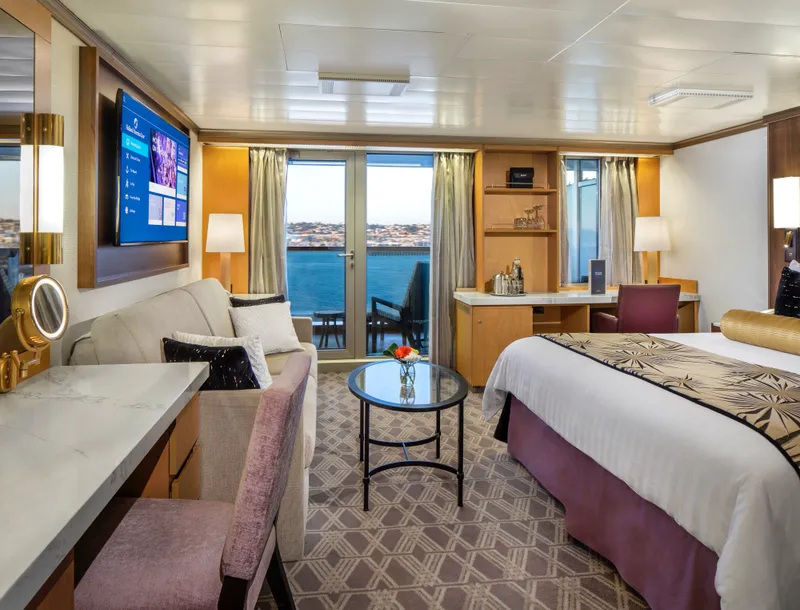
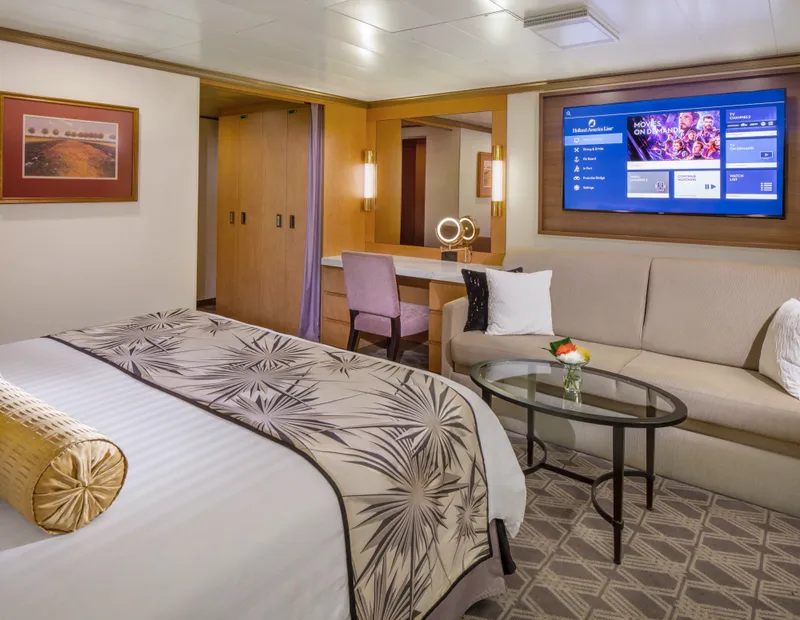
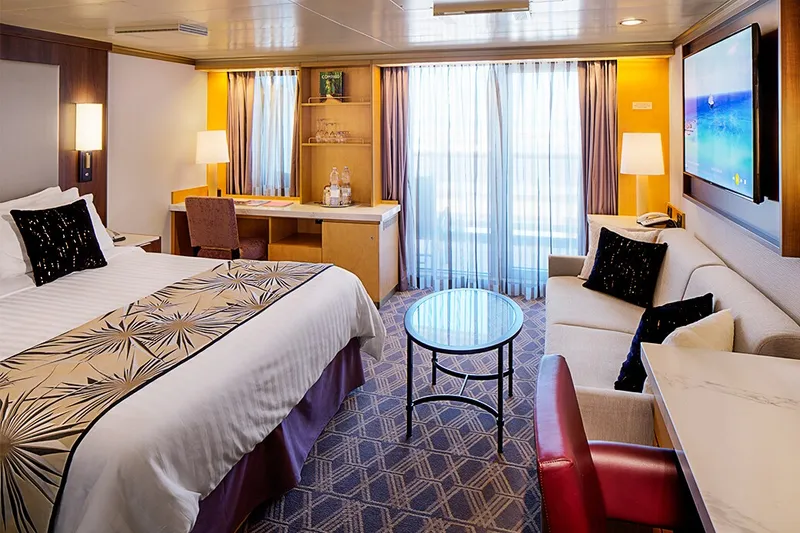
Generously proportioned and filled with light, these elegant suites include a living room, dining room, pantry with microwave and refrigerator, and floor-to-ceiling windows overlooking a private verandah with whirlpool. The bedroom features a king-size bed—our Signature Mariner's Dream bed with plush Euro-Top mattresses, plus a separate dressing room and the bath includes an oversize whirlpool bath and shower as well as an additional shower stall. There's also a sofa bed, suitable for two people, and a guest toilet. Amenities include a private stereo system, use of the exclusive Neptune Lounge, private concierge and an array of complimentary services. The configuration of staterooms may vary from the images shown.
Sofa BedShowerWhirlpool BathRoom Service AvailableSuite BenefitsTV+11
View Details
Signature Suite
Suite
372–384 m²Max 3
SSSYSZ
Approximately 372-384 sq. ft. including verandah
These large, comfortable suites feature a spacious sitting area with floor-to-ceiling windows overlooking a private verandah, two lower beds convertible to one queen-size bed—our signature Mariner's Dream bed with plush Euro-Top mattresses, and one sofa bed for one person. The bathroom includes a dual-sink vanity, full-size whirlpool bath and shower, and an additional shower stall. The configuration of staterooms may vary from the images shown.
Queen or Twin ConfigurationSofa BedShowerWhirlpool BathTVSafe+9
View Details
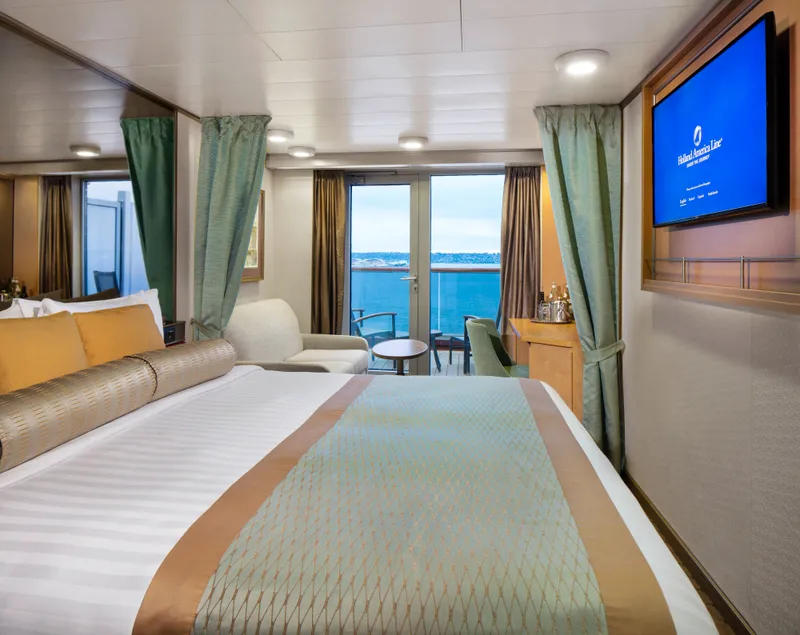
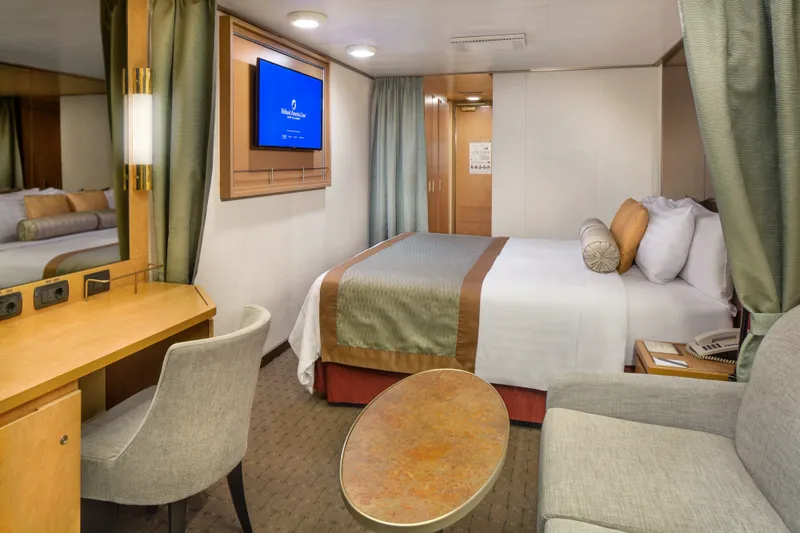
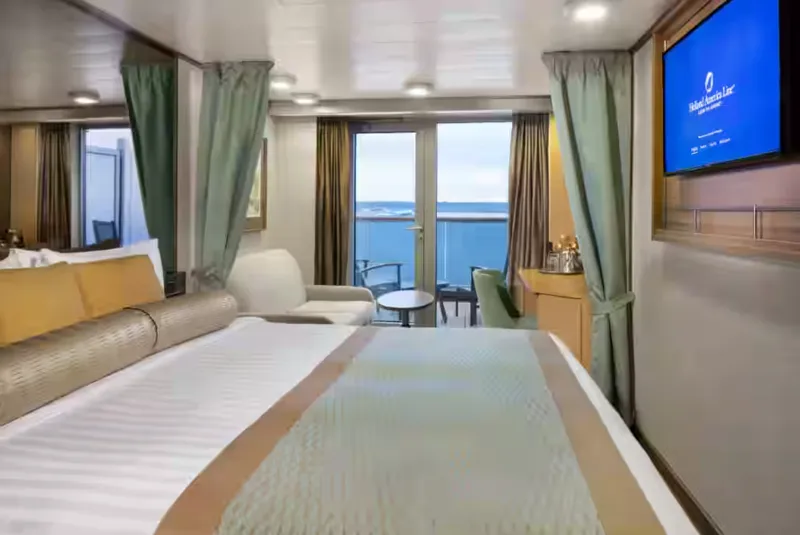
Verandah Stateroom
Balcony
212–359 m²Max 2
VAVBVCVDVEVFVH
Approximately 212-359 sq. ft. including verandah
Filled with light from floor-to-ceiling windows overlooking a private verandah, these staterooms include a sitting area, two lower beds convertible to one queen-size bed—our signature Mariner's Dream bed with plush Euro-Top mattresses, and bath tub with premium massage showerheads. The configuration of staterooms may vary from the images shown.
Queen or Twin ConfigurationShowerBathTVSafeHair Dryer+6
View Details
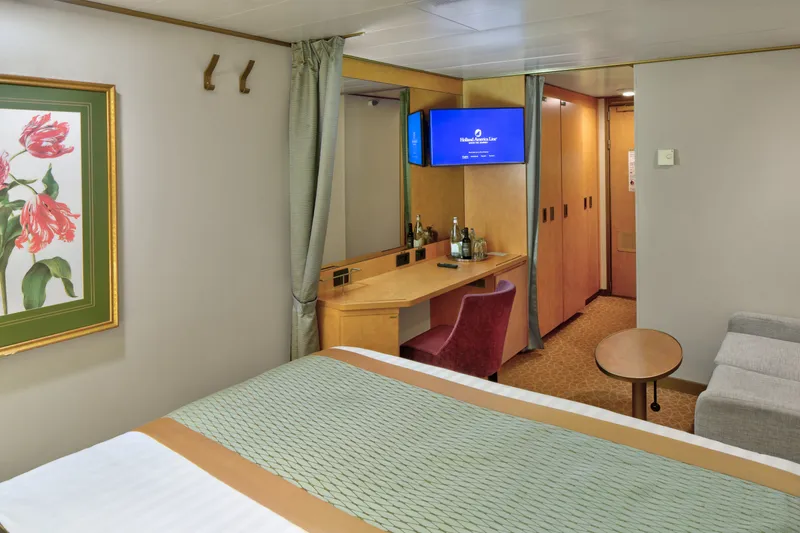
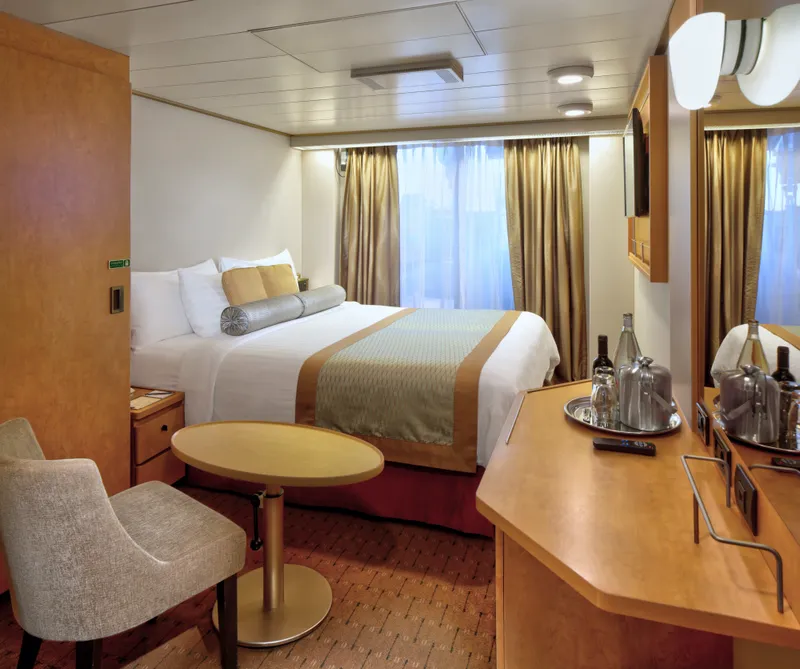
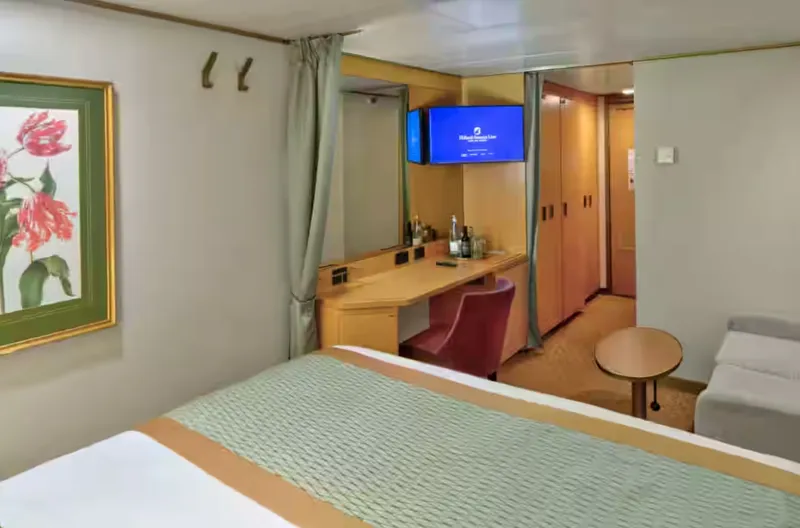
Large Ocean view Stateroom
Outside
174–180 m²Max 2
CDDDEF
Approximately 174-180 sq. ft.
These expansive staterooms include include two lower beds convertible to one queen-size bed—our Signature Mariner's Dream bed with plush Euro-Top mattresses, premium massage shower heads, a host of amenities and an ocean view. The configuration of staterooms may vary from the images shown.
Queen or Twin ConfigurationShowerTVSafeHair DryerRoom Service Available+5
View Details
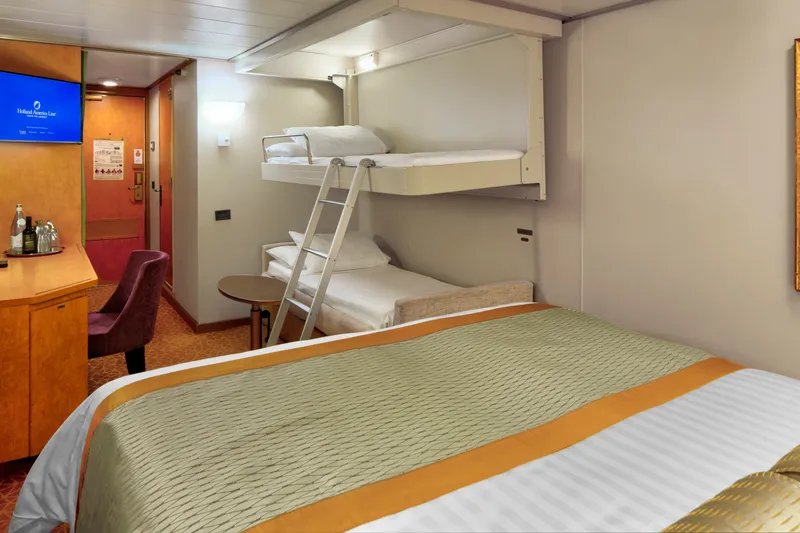
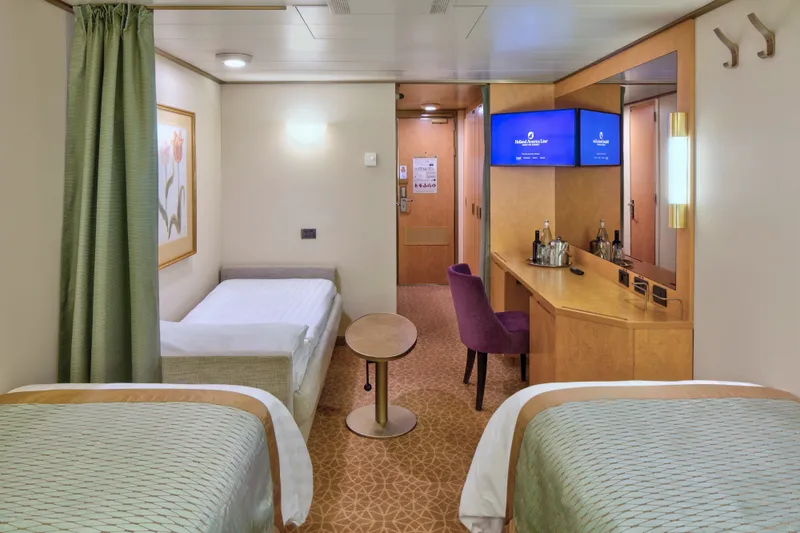
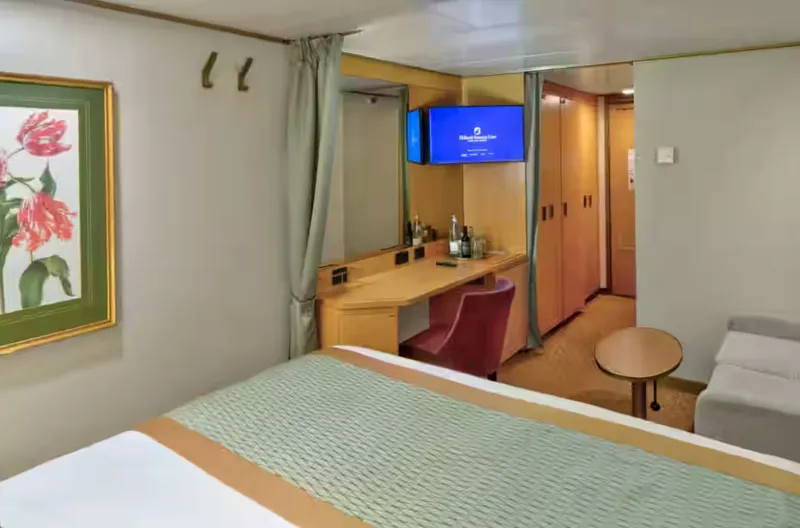
Large Ocean view Stateroom (Fully Obstructed View)
Outside
174–180 m²Max 2
HHH
Approximately 174-180 sq. ft.
These large staterooms include two lower beds convertible to one queen-size bed—our Signature Mariner's Dream bed with plush Euro-Top mattresses, premium massage shower heads and a host of amenities. The view is fully obstructed. The configuration of staterooms may vary from the images shown.
Queen or Twin ConfigurationShowerRoom Service AvailableTVSafeHair Dryer+2
View Details
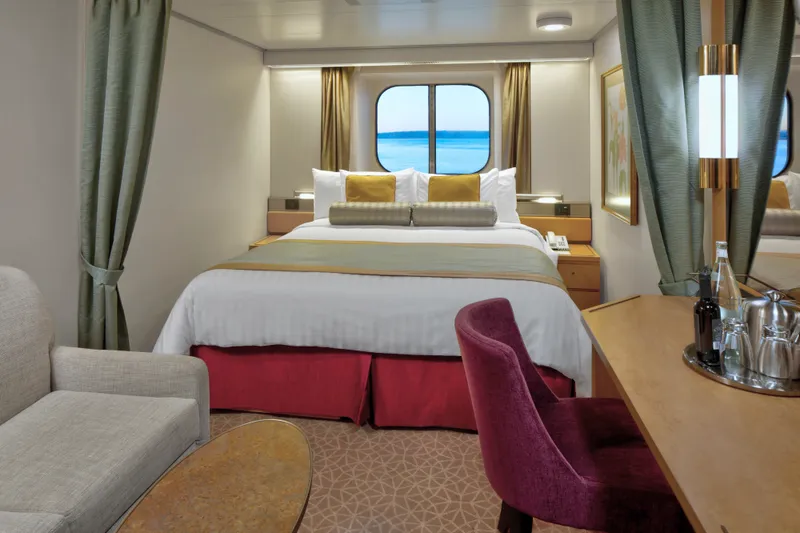
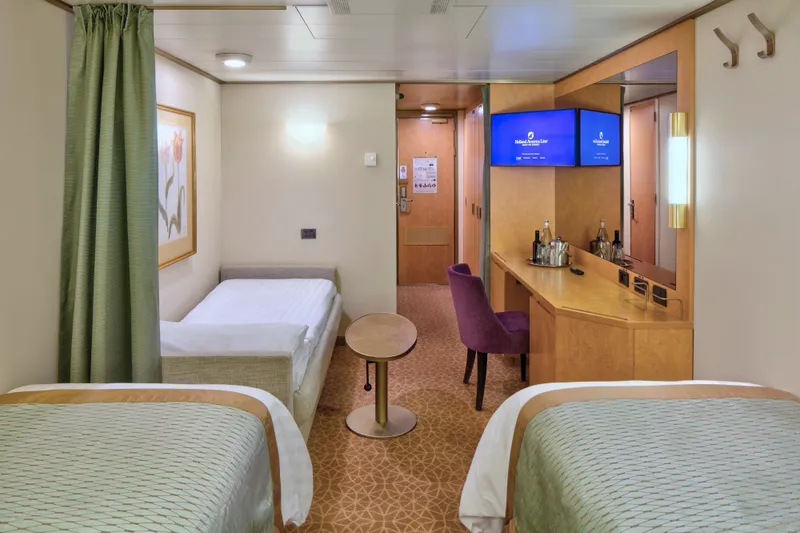
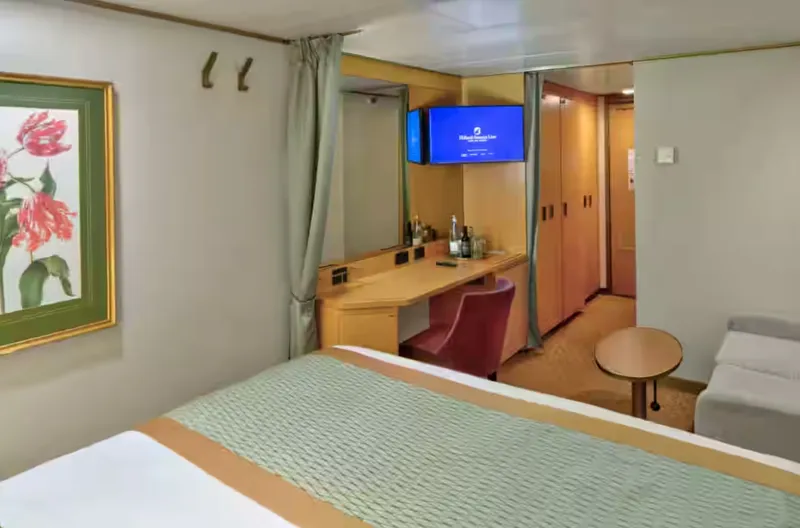
Large Ocean view Stateroom (Partial Sea View)
Outside
174–180 m²Max 2
G
Approximately 174-180 sq. ft.
These staterooms feature a partial sea view and include two lower beds convertible to one queen-size bed—our signature Mariner's Dream bed with plush Euro-Top mattresses, plus premium massage shower heads and a variety of amenities. The configuration of staterooms may vary from the images shown.
Queen or Twin ConfigurationShowerRoom Service AvailableTVSafeHair Dryer+4
View Details
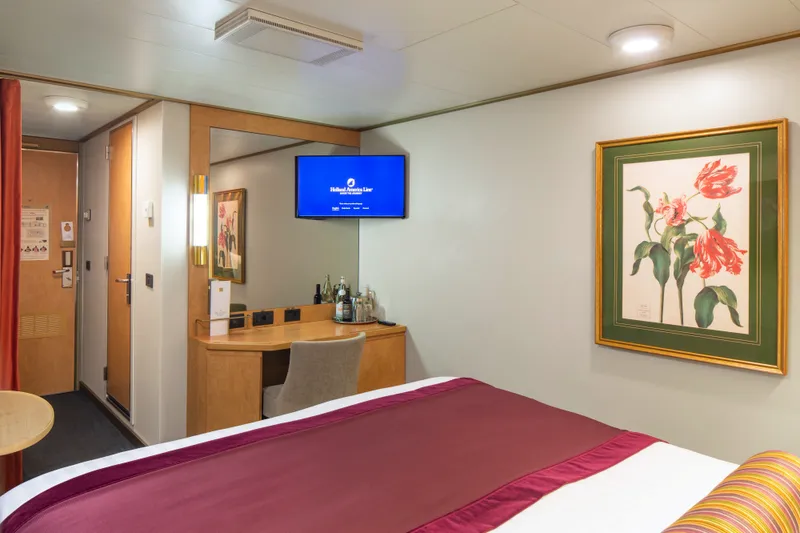
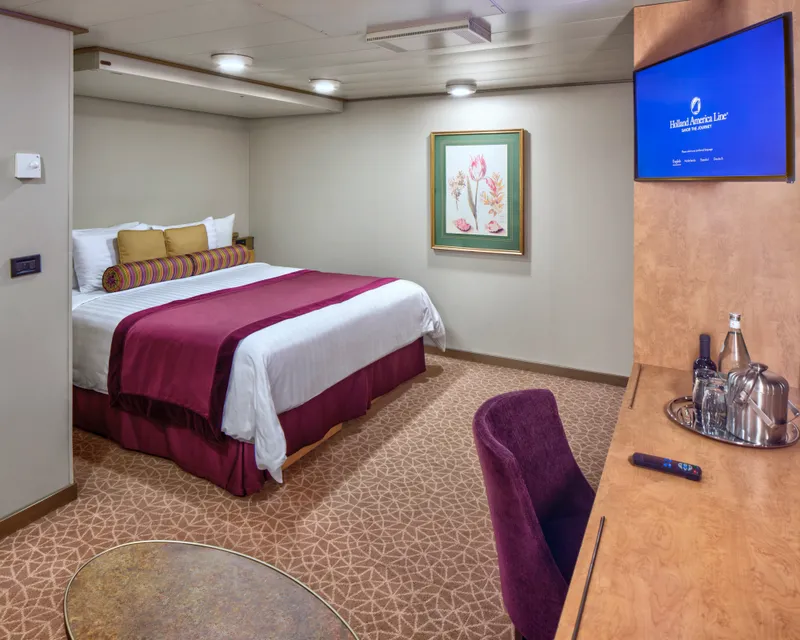
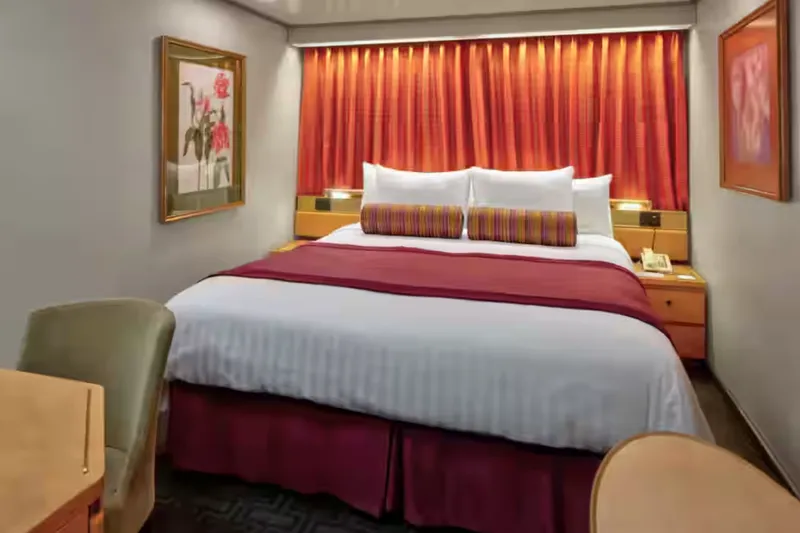
Large Interior Stateroom
Inside
151–233 m²Max 2
J
Approximately 151-233 sq. ft.
These spacious staterooms include two lower beds convertible to one queen-size bed—our Signature Mariner's Dream bed with plush Euro-Top mattresses, premium massage shower heads and a host of amenities. The configuration of staterooms may vary from the images shown.
Queen or Twin ConfigurationShowerRoom Service AvailableTVSafeHair Dryer+4
View Details
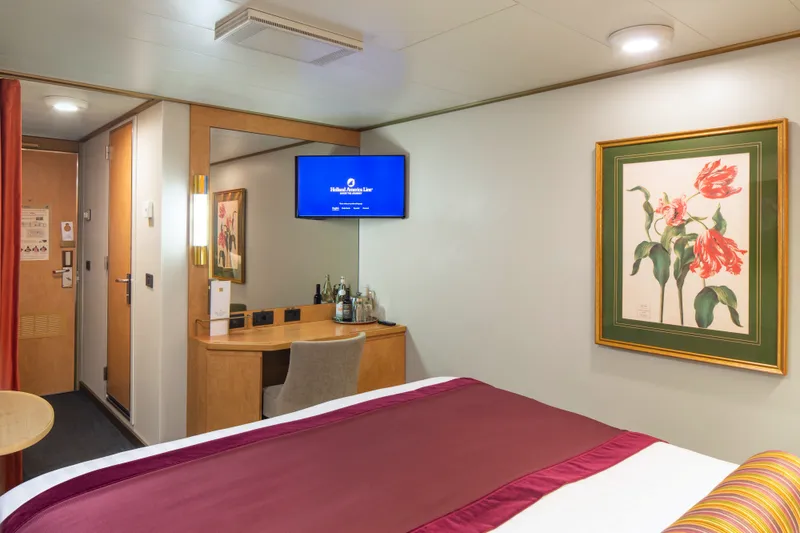
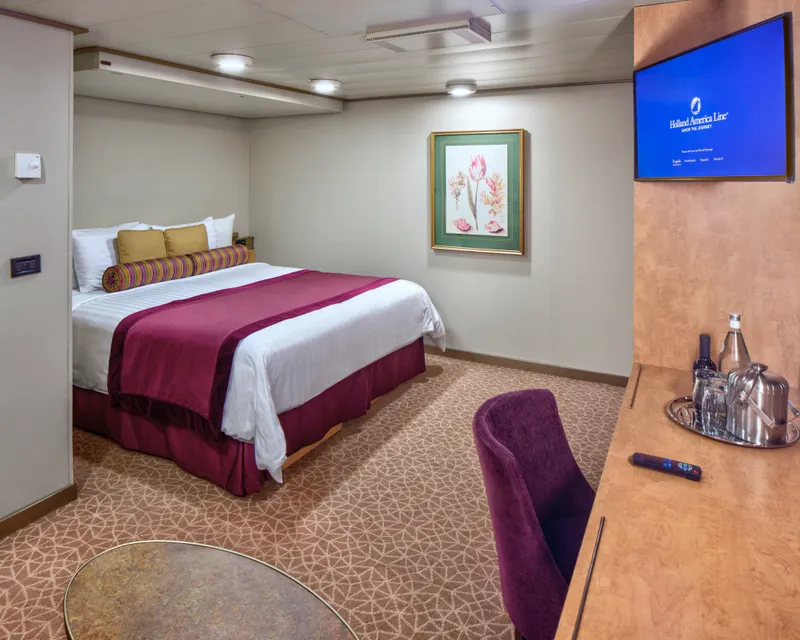
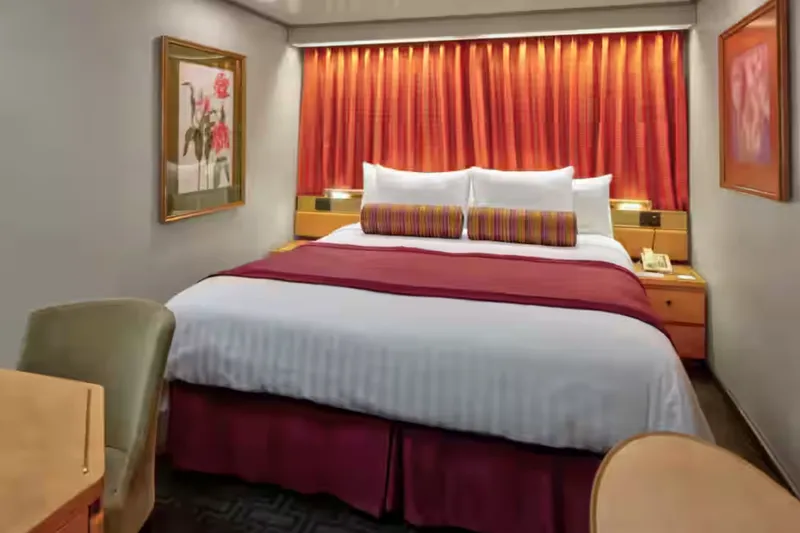
Large/Standard Inside Stateroom
Inside
151–233 m²Max 2
IKLMMN
Approximately 151-233 sq. ft.
These spacious staterooms include two lower beds convertible to one queen-size bed—our Signature Mariner's Dream bed with plush Euro-Top mattresses, premium massage shower heads and a host of amenities. The configuration of staterooms may vary from the images shown.
Queen or Twin ConfigurationShowerTVSafeHair DryerRoom Service Available+5
View Details
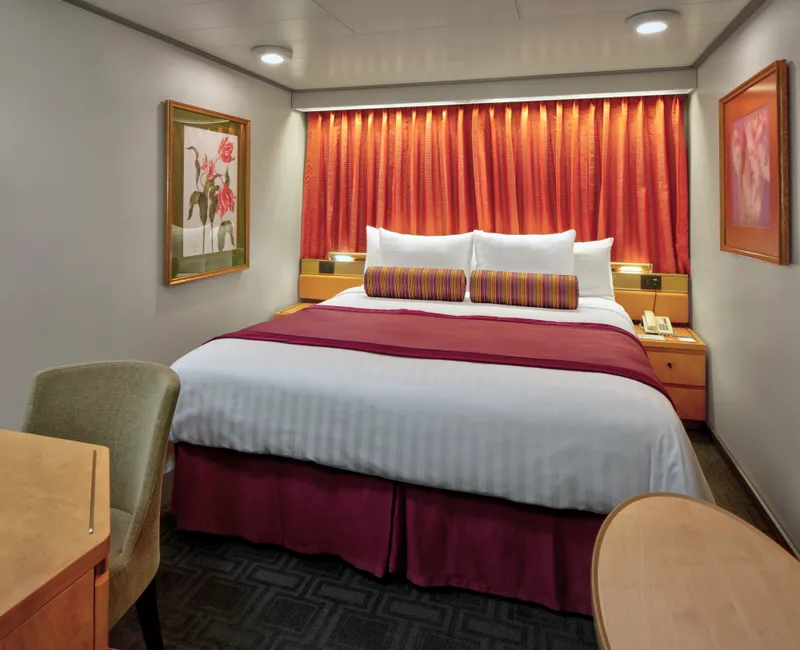
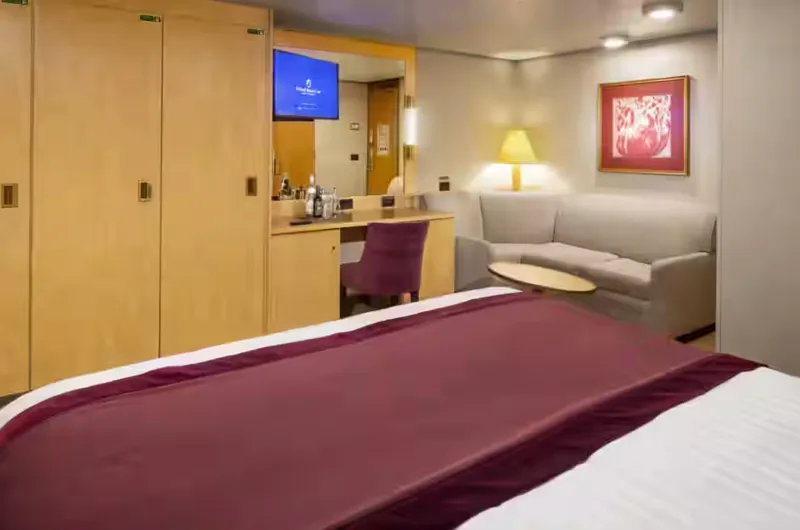
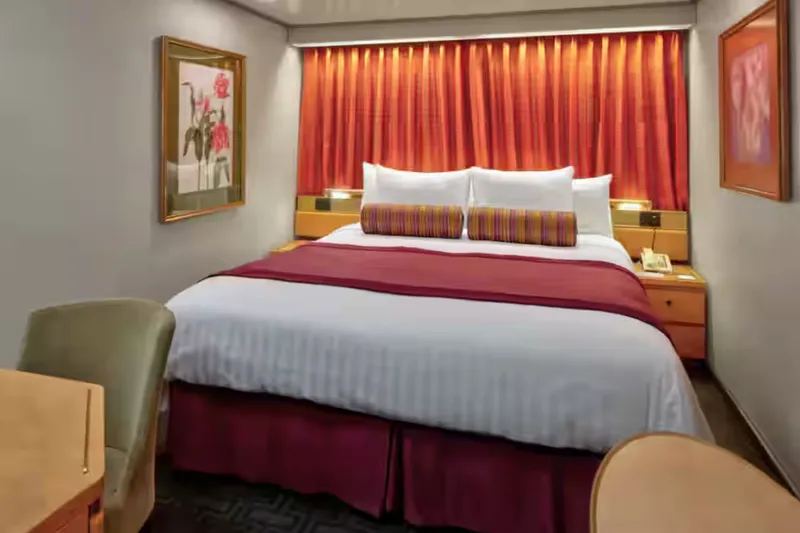
Standard Interior Stateroom
Inside
151–233 m²Max 2
M
Approximately 151-233 sq. ft.
Two lower beds convertible to one queen-size bed—our signature Mariner's Dream bed with plush Euro-Top mattresses, premium massage shower heads and a host of amenities are featured in these comfortable staterooms. The configuration of staterooms may vary from the images shown.
Queen or Twin ConfigurationShowerTVSafeHair DryerRoom Service Available+5
View Details
Interested in This Voyage?
Our cruise specialists can help you find the perfect cabin and the best available pricing.
(+886) 02-2721-7300Contact Advisor