Holland America LineO638B
Ultimate Mediterranean Marvels Collectors' Voyage
Date
2026-07-05
Duration
21 nights
Departure Port
Athens (Piraeus)
Greece
Arrival Port
Civitavecchia
Italy
Rating
Premium
Theme
—





Holland America Line
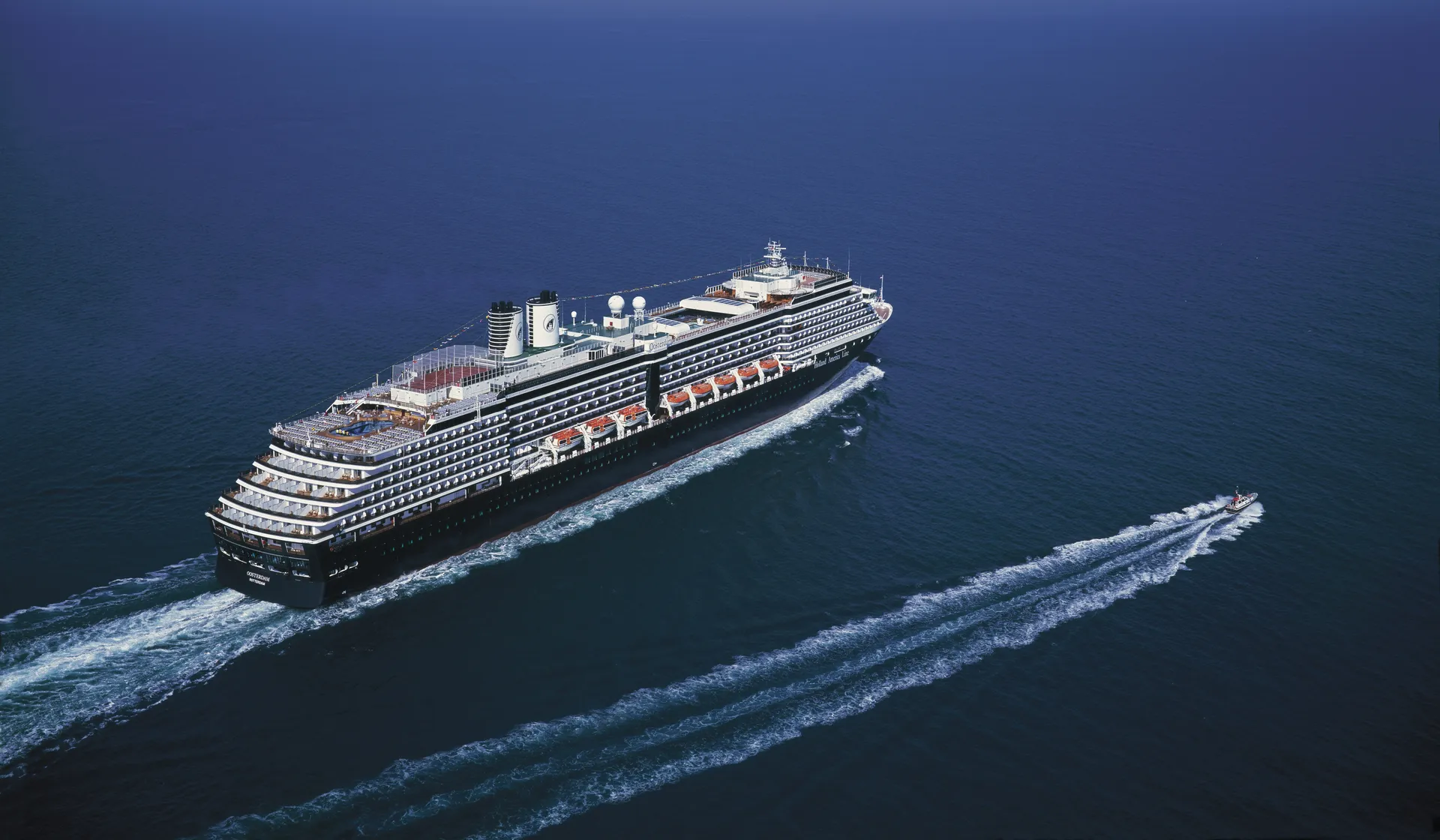
Oosterdam
Launched
2003
Refitted
2018
Tonnage
82,305 GT
Passengers
1,916
Cabins
1,012
Crew
817
Length
936 m
Width
32 m
Speed
24 knots
Adults Only
No
Itinerary
Day 1
Day 1
Piraeus
Depart 16:00
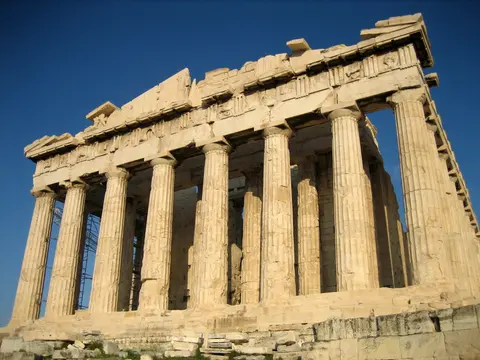
The port that launched Athenian democracy's naval supremacy at the Battle of Salamis, Piraeus remains Greece's maritime heartbeat — and the most convenient gateway to both the Acropolis and the Aegean island chains. Dine on grilled sea bream at a Mikrolimano harbourside taverna, visit the extraordinary bronze Piraeus Apollo, and set sail for Hydra or Santorini by afternoon. Late April through June and September offer the Aegean at its most golden and uncrowded.
Day 2
Day 2
At Sea
Day 3
Day 3
Kotor
Arrive 07:00Depart 16:00
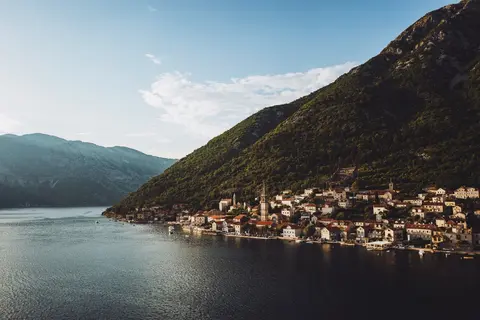
The port of Kotor, a UNESCO World Heritage site, is renowned for its stunning natural beauty and rich historical tapestry. A must-do experience includes wandering the cobblestone streets of the Old Town, where culinary delights like "kacamak" and fresh seafood await. The best time to visit is during the spring or early fall, when the weather is pleasant and the crowds are fewer.
Day 4
Day 4
Corfu
Arrive 08:00Depart 17:00
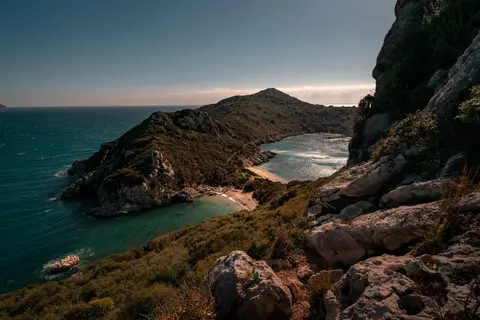
Where Homer placed the island of the Phaeacians and four centuries of Venetian rule left their most enduring Mediterranean legacy, Corfu is a singular island of extraordinary historical depth and natural beauty. The UNESCO-listed Old Town — its narrow Kantounia alleyways, the elegant Liston arcade, and twin Venetian fortresses — is the finest preserved Venetian streetscape in Greece. Beyond the town, secret coves, olive groves of immense antiquity, and mountain villages offer weeks of unhurried discovery. May through June and September offer perfect conditions: warm sea temperatures, clear skies, and the island before or after its summer crescendo.
Day 5
Day 5
Stromboli
Arrive 12:00Depart 19:00
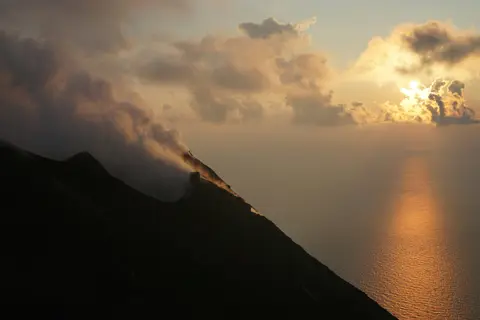
Stromboli is an active volcanic island in the Aeolian archipelago that has erupted continuously for over two thousand years, earning its nickname as the Lighthouse of the Mediterranean. Must-dos include witnessing nighttime eruptions from the sea, hiking to the Sciara del Fuoco viewpoint, and tasting salt-cured capers and Malvasia wine on a terrace beneath the glowing summit. May through October offers calm seas and clear skies for the best eruption viewing.
Day 6
Day 6
At Sea
Day 7
Day 7
Palma de Mallorca
Arrive 08:00Depart 17:00
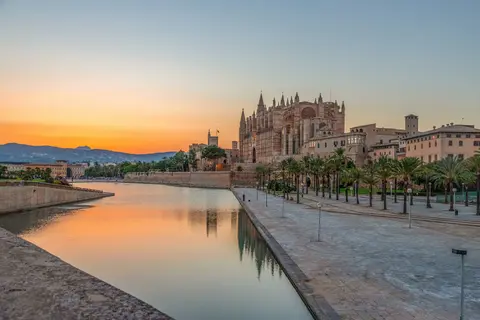
Palma de Mallorca announces itself with one of the most spectacular Gothic cathedrals in the world — La Seu, its honey-coloured sandstone buttresses rising directly from the bay, its interior modified by Antoni Gaudí and illuminated by the world's largest Gothic rose window. The old town behind it is a quarter of Arab baths, Renaissance palaces converted into boutique hotels, and the Passeig del Born — a plane-tree-shaded promenade where Balearic life conducts itself with unhurried grace. The local ensaïmada pastry and fresh sobrasada sausage from the island's black pigs are essential breakfast rituals. Visit May, June, or September: warm, brilliant, and measurably calmer than the July–August peak.
Day 8
Day 8
Barcelona
Arrive 07:00
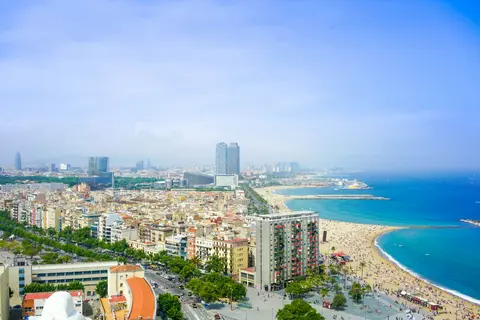
Barcelona is the city where Roman history, Gothic grandeur, and Gaudí's delirious Modernisme collide in a Mediterranean coastal capital of astonishing energy and beauty. The Sagrada Família — still under construction after 140 years — continues its audacious ascent toward completion, while the Gothic Quarter's Roman-era foundations and the Passeig de Gràcia's extraordinary concentration of Modernisme masterpieces reward days of exploration. For a complete sensory experience, lose an afternoon in the covered labyrinth of La Boqueria market before descending to the waterfront for Catalan seafood at its finest. May through June and September through October offer the most pleasant weather; the city connects directly to Paris by overnight train.
Day 9
Day 9
At Sea
Day 10
Day 10
Valletta
Arrive 08:00Depart 17:00
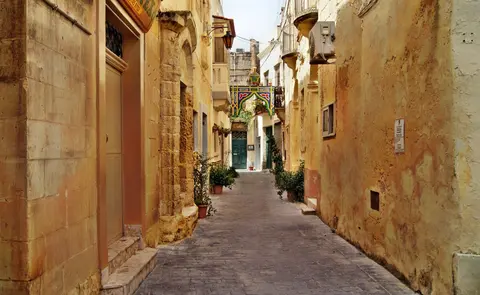
Valletta, Europe's smallest capital, is a fortress city of exceptional grandeur raised from bare limestone in just fifteen years after the Knights of St. John repelled the great Ottoman siege of 1565 — its rigid Renaissance grid of sun-drenched streets concealing a density of baroque palaces, gilded oratories, and subterranean World War II shelters unrivaled anywhere in the Mediterranean. The Grand Harbour, framed by golden bastions plunging into startlingly blue water, offers one of the most dramatically photogenic arrivals in the world for arriving vessels. Spring and autumn deliver the most comfortable temperatures for exploring this UNESCO-listed gem.
Day 11
Day 11
At Sea
Day 12
Day 12
Souda (Chania)
Arrive 08:00Depart 17:00
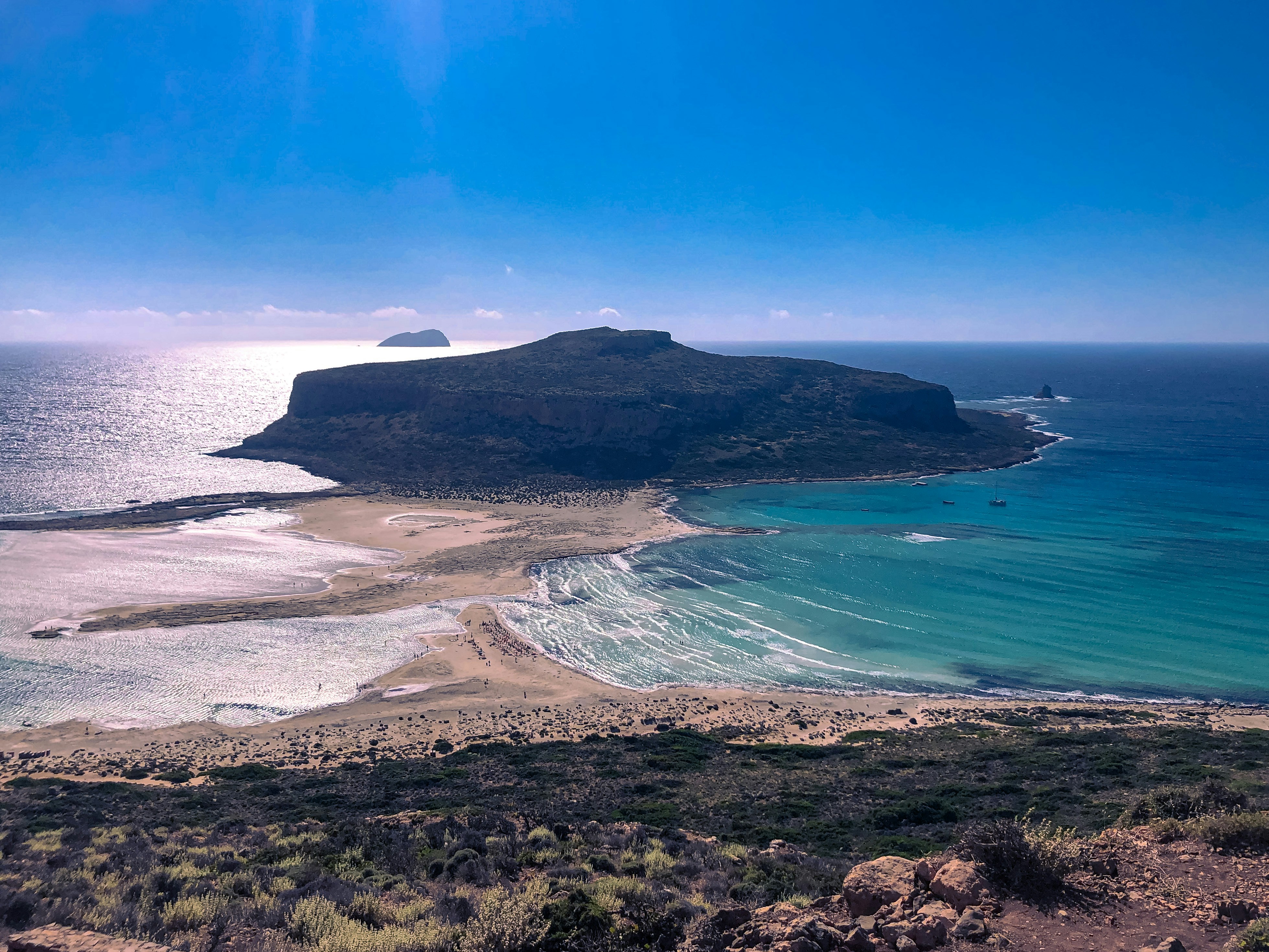
The port of Souda on the Aegean Sea is home to a Greek and NATO naval base and is located six kilometers (three miles) from Chania—the second-largest city on Crete, which itself is the largest of the Greek Islands. Once you’re in Chania, set your compass for the historic waterfront with its famous Venetian Harbor dating to the 14th century. Walk along the breakwater to the restored 500-year-old lighthouse for views that are particularly photogenic from late afternoon until sunset. The atmospheric tangle of streets that is Old Town is easily explored on foot, and you can stop at one of the many outdoor cafés for a bouyatsa (custard pastry) or a glass of Cretan red wine.Soúda can also be a jumping-off point for a visit to Rethymnon, located about 54 kilometers (33 miles) to the east. Shaped by centuries of invasion, namely by the Venetians and Turks, its Fortezza was built by the Venetians in the late 16th century and captured by the Ottomans in 1646. The Old Town has the same kind of architectural character as Chania, but on a smaller scale.
Day 13
Day 13
Santorini
Arrive 08:00Depart 17:00
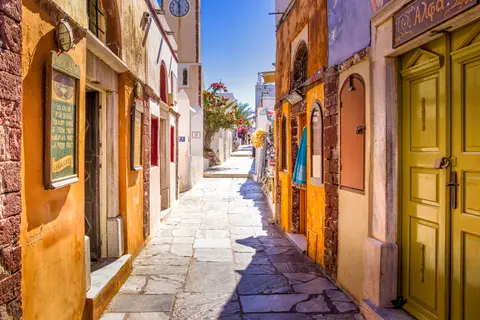
Santorini, the ancient volcanic caldera rising from the Aegean, is Greece's most theatrical landscape — a crescentic island of sheer white cliffs plunging into an indigo sea, its clifftop villages of Fira and Oia draped in bougainvillea and culminating in the world's most photographed sunset. The island's unique Assyrtiko wine, grown on ancient ungrafted vines in volcanic pumice, is one of the Mediterranean's greatest expressions of terroir. Byzantine frescoes of extraordinary beauty fill the Prehistoric Museum of Thera. The volcanic black and red sand beaches of Perissa and Perivolos are unlike any others in Greece. April through June and September through October offer the finest conditions.
Day 14
Day 14
Kusadasi
Arrive 07:00Depart 18:00
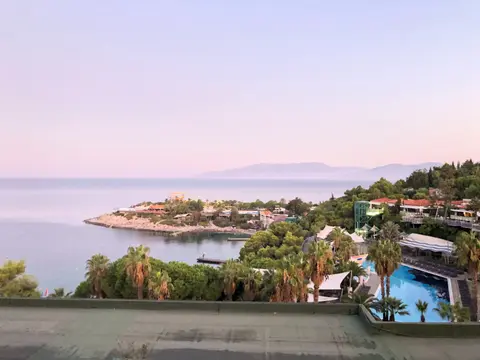
Kuşadası owes its place on the world's cruise itineraries to one extraordinary proximity: the ancient city of Ephesus, one of the greatest metropolises of the Greco-Roman world, lies just seventeen kilometres from the port. Ephesus — with its two-kilometre marble colonnade, the Library of Celsus, and the Temple of Artemis (one of the Seven Wonders of the Ancient World) — demands at least half a day of unhurried exploration. The House of the Virgin Mary, a pilgrimage site believed to be where Mary spent her final years, adds a profound spiritual dimension. Kuşadası itself is a lively Aegean resort; the season runs April through October, with May and September offering ideal temperatures and smaller crowds.
Day 15
Day 15
Piraeus
Arrive 07:00Depart 18:00
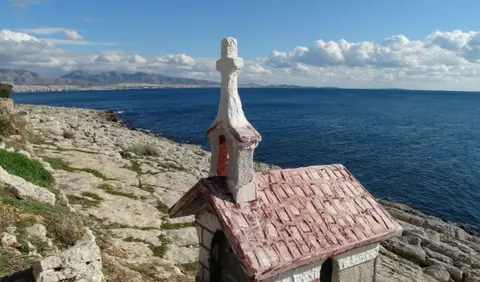
The port that launched Athenian democracy's naval supremacy at the Battle of Salamis, Piraeus remains Greece's maritime heartbeat — and the most convenient gateway to both the Acropolis and the Aegean island chains. Dine on grilled sea bream at a Mikrolimano harbourside taverna, visit the extraordinary bronze Piraeus Apollo, and set sail for Hydra or Santorini by afternoon. Late April through June and September offer the Aegean at its most golden and uncrowded.
Day 16
Day 16
At Sea
Day 17
Day 17
Kotor
Arrive 08:00Depart 17:00
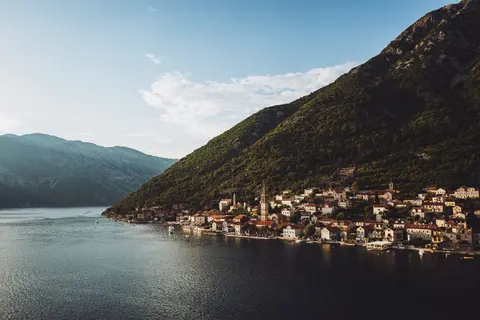
The port of Kotor, a UNESCO World Heritage site, is renowned for its stunning natural beauty and rich historical tapestry. A must-do experience includes wandering the cobblestone streets of the Old Town, where culinary delights like "kacamak" and fresh seafood await. The best time to visit is during the spring or early fall, when the weather is pleasant and the crowds are fewer.
Day 18
Day 18
Corfu
Arrive 08:00Depart 17:00
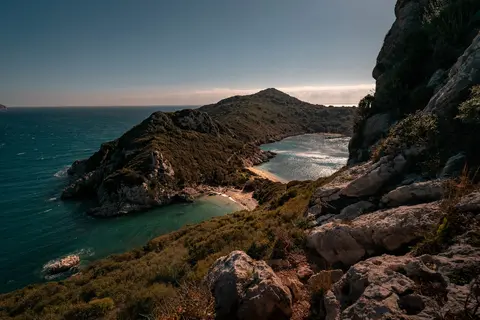
Where Homer placed the island of the Phaeacians and four centuries of Venetian rule left their most enduring Mediterranean legacy, Corfu is a singular island of extraordinary historical depth and natural beauty. The UNESCO-listed Old Town — its narrow Kantounia alleyways, the elegant Liston arcade, and twin Venetian fortresses — is the finest preserved Venetian streetscape in Greece. Beyond the town, secret coves, olive groves of immense antiquity, and mountain villages offer weeks of unhurried discovery. May through June and September offer perfect conditions: warm sea temperatures, clear skies, and the island before or after its summer crescendo.
Day 19
Day 19
Stromboli
Arrive 11:00Depart 18:00
Stromboli is an active volcanic island in the Aeolian archipelago that has erupted continuously for over two thousand years, earning its nickname as the Lighthouse of the Mediterranean. Must-dos include witnessing nighttime eruptions from the sea, hiking to the Sciara del Fuoco viewpoint, and tasting salt-cured capers and Malvasia wine on a terrace beneath the glowing summit. May through October offers calm seas and clear skies for the best eruption viewing.
Day 19
Day 19
Cruising Strait Of Messina
Day 20
Day 20
Naples
Arrive 08:00
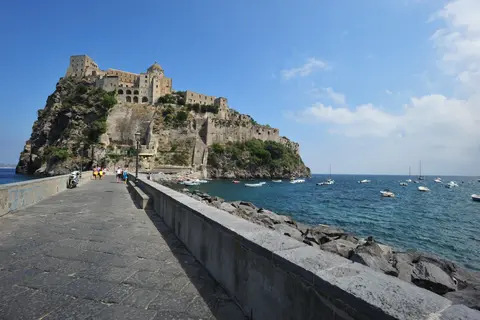
Naples — Napoli — is Europe's most operatically alive city, a sun-battered baroque metropolis where Vesuvius broods on the horizon and the streets below pulse with 2,500 years of continuous human drama. The unmissable Museo Archeologico Nazionale houses the world's finest collection of artefacts from Pompeii and Herculaneum, while the Spaccanapoli, the arrow-straight artery that has bisected the city since Greek times, delivers an unfiltered encounter with Neapolitan life. A single slice of pizza Margherita from one of the centro storico's historic pizzerias is a culinary pilgrimage in itself. Visit between April and June or September and October for warmth, manageable crowds, and the city at its golden best.
Day 22
Day 22
Civitavecchia
Arrive 07:00
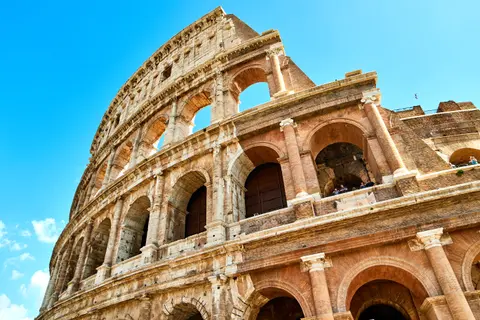
Rome's ancient maritime gateway since the Emperor Trajan commissioned its harbour in 106 AD, Civitavecchia is the natural prologue to the Eternal City — just seventy minutes southeast by express rail. The port's Renaissance fortress, designed in part by Michelangelo, anchors a working waterfront that has welcomed travellers for millennia. Beyond Rome's unmissable monuments, consider an afternoon in the Civitavecchia thermal baths, drawing on mineral waters prized since antiquity. Spring and autumn offer the ideal balance of mild weather and manageable crowds for exploring the capital's layered history.
Day 1
Piraeus
Depart 16:00
The port that launched Athenian democracy's naval supremacy at the Battle of Salamis, Piraeus remains Greece's maritime heartbeat — and the most convenient gateway to both the Acropolis and the Aegean island chains. Dine on grilled sea bream at a Mikrolimano harbourside taverna, visit the extraordinary bronze Piraeus Apollo, and set sail for Hydra or Santorini by afternoon. Late April through June and September offer the Aegean at its most golden and uncrowded.
Day 2
At Sea
Day 3
Kotor
Arrive 07:00Depart 16:00
The port of Kotor, a UNESCO World Heritage site, is renowned for its stunning natural beauty and rich historical tapestry. A must-do experience includes wandering the cobblestone streets of the Old Town, where culinary delights like "kacamak" and fresh seafood await. The best time to visit is during the spring or early fall, when the weather is pleasant and the crowds are fewer.
Day 4
Corfu
Arrive 08:00Depart 17:00
Where Homer placed the island of the Phaeacians and four centuries of Venetian rule left their most enduring Mediterranean legacy, Corfu is a singular island of extraordinary historical depth and natural beauty. The UNESCO-listed Old Town — its narrow Kantounia alleyways, the elegant Liston arcade, and twin Venetian fortresses — is the finest preserved Venetian streetscape in Greece. Beyond the town, secret coves, olive groves of immense antiquity, and mountain villages offer weeks of unhurried discovery. May through June and September offer perfect conditions: warm sea temperatures, clear skies, and the island before or after its summer crescendo.
Day 5
Stromboli
Arrive 12:00Depart 19:00
Stromboli is an active volcanic island in the Aeolian archipelago that has erupted continuously for over two thousand years, earning its nickname as the Lighthouse of the Mediterranean. Must-dos include witnessing nighttime eruptions from the sea, hiking to the Sciara del Fuoco viewpoint, and tasting salt-cured capers and Malvasia wine on a terrace beneath the glowing summit. May through October offers calm seas and clear skies for the best eruption viewing.
Day 6
At Sea
Day 7
Palma de Mallorca
Arrive 08:00Depart 17:00
Palma de Mallorca announces itself with one of the most spectacular Gothic cathedrals in the world — La Seu, its honey-coloured sandstone buttresses rising directly from the bay, its interior modified by Antoni Gaudí and illuminated by the world's largest Gothic rose window. The old town behind it is a quarter of Arab baths, Renaissance palaces converted into boutique hotels, and the Passeig del Born — a plane-tree-shaded promenade where Balearic life conducts itself with unhurried grace. The local ensaïmada pastry and fresh sobrasada sausage from the island's black pigs are essential breakfast rituals. Visit May, June, or September: warm, brilliant, and measurably calmer than the July–August peak.
Day 8
Barcelona
Arrive 07:00
Barcelona is the city where Roman history, Gothic grandeur, and Gaudí's delirious Modernisme collide in a Mediterranean coastal capital of astonishing energy and beauty. The Sagrada Família — still under construction after 140 years — continues its audacious ascent toward completion, while the Gothic Quarter's Roman-era foundations and the Passeig de Gràcia's extraordinary concentration of Modernisme masterpieces reward days of exploration. For a complete sensory experience, lose an afternoon in the covered labyrinth of La Boqueria market before descending to the waterfront for Catalan seafood at its finest. May through June and September through October offer the most pleasant weather; the city connects directly to Paris by overnight train.
Day 9
At Sea
Day 10
Valletta
Arrive 08:00Depart 17:00
Valletta, Europe's smallest capital, is a fortress city of exceptional grandeur raised from bare limestone in just fifteen years after the Knights of St. John repelled the great Ottoman siege of 1565 — its rigid Renaissance grid of sun-drenched streets concealing a density of baroque palaces, gilded oratories, and subterranean World War II shelters unrivaled anywhere in the Mediterranean. The Grand Harbour, framed by golden bastions plunging into startlingly blue water, offers one of the most dramatically photogenic arrivals in the world for arriving vessels. Spring and autumn deliver the most comfortable temperatures for exploring this UNESCO-listed gem.
Day 11
At Sea
Day 12
Souda (Chania)
Arrive 08:00Depart 17:00
The port of Souda on the Aegean Sea is home to a Greek and NATO naval base and is located six kilometers (three miles) from Chania—the second-largest city on Crete, which itself is the largest of the Greek Islands. Once you’re in Chania, set your compass for the historic waterfront with its famous Venetian Harbor dating to the 14th century. Walk along the breakwater to the restored 500-year-old lighthouse for views that are particularly photogenic from late afternoon until sunset. The atmospheric tangle of streets that is Old Town is easily explored on foot, and you can stop at one of the many outdoor cafés for a bouyatsa (custard pastry) or a glass of Cretan red wine.Soúda can also be a jumping-off point for a visit to Rethymnon, located about 54 kilometers (33 miles) to the east. Shaped by centuries of invasion, namely by the Venetians and Turks, its Fortezza was built by the Venetians in the late 16th century and captured by the Ottomans in 1646. The Old Town has the same kind of architectural character as Chania, but on a smaller scale.
Day 13
Santorini
Arrive 08:00Depart 17:00
Santorini, the ancient volcanic caldera rising from the Aegean, is Greece's most theatrical landscape — a crescentic island of sheer white cliffs plunging into an indigo sea, its clifftop villages of Fira and Oia draped in bougainvillea and culminating in the world's most photographed sunset. The island's unique Assyrtiko wine, grown on ancient ungrafted vines in volcanic pumice, is one of the Mediterranean's greatest expressions of terroir. Byzantine frescoes of extraordinary beauty fill the Prehistoric Museum of Thera. The volcanic black and red sand beaches of Perissa and Perivolos are unlike any others in Greece. April through June and September through October offer the finest conditions.
Day 14
Kusadasi
Arrive 07:00Depart 18:00
Kuşadası owes its place on the world's cruise itineraries to one extraordinary proximity: the ancient city of Ephesus, one of the greatest metropolises of the Greco-Roman world, lies just seventeen kilometres from the port. Ephesus — with its two-kilometre marble colonnade, the Library of Celsus, and the Temple of Artemis (one of the Seven Wonders of the Ancient World) — demands at least half a day of unhurried exploration. The House of the Virgin Mary, a pilgrimage site believed to be where Mary spent her final years, adds a profound spiritual dimension. Kuşadası itself is a lively Aegean resort; the season runs April through October, with May and September offering ideal temperatures and smaller crowds.
Day 15
Piraeus
Arrive 07:00Depart 18:00
The port that launched Athenian democracy's naval supremacy at the Battle of Salamis, Piraeus remains Greece's maritime heartbeat — and the most convenient gateway to both the Acropolis and the Aegean island chains. Dine on grilled sea bream at a Mikrolimano harbourside taverna, visit the extraordinary bronze Piraeus Apollo, and set sail for Hydra or Santorini by afternoon. Late April through June and September offer the Aegean at its most golden and uncrowded.
Day 16
At Sea
Day 17
Kotor
Arrive 08:00Depart 17:00
The port of Kotor, a UNESCO World Heritage site, is renowned for its stunning natural beauty and rich historical tapestry. A must-do experience includes wandering the cobblestone streets of the Old Town, where culinary delights like "kacamak" and fresh seafood await. The best time to visit is during the spring or early fall, when the weather is pleasant and the crowds are fewer.
Day 18
Corfu
Arrive 08:00Depart 17:00
Where Homer placed the island of the Phaeacians and four centuries of Venetian rule left their most enduring Mediterranean legacy, Corfu is a singular island of extraordinary historical depth and natural beauty. The UNESCO-listed Old Town — its narrow Kantounia alleyways, the elegant Liston arcade, and twin Venetian fortresses — is the finest preserved Venetian streetscape in Greece. Beyond the town, secret coves, olive groves of immense antiquity, and mountain villages offer weeks of unhurried discovery. May through June and September offer perfect conditions: warm sea temperatures, clear skies, and the island before or after its summer crescendo.
Day 19
Stromboli
Arrive 11:00Depart 18:00
Stromboli is an active volcanic island in the Aeolian archipelago that has erupted continuously for over two thousand years, earning its nickname as the Lighthouse of the Mediterranean. Must-dos include witnessing nighttime eruptions from the sea, hiking to the Sciara del Fuoco viewpoint, and tasting salt-cured capers and Malvasia wine on a terrace beneath the glowing summit. May through October offers calm seas and clear skies for the best eruption viewing.
Cruising Strait Of Messina
Day 20
Naples
Arrive 08:00
Naples — Napoli — is Europe's most operatically alive city, a sun-battered baroque metropolis where Vesuvius broods on the horizon and the streets below pulse with 2,500 years of continuous human drama. The unmissable Museo Archeologico Nazionale houses the world's finest collection of artefacts from Pompeii and Herculaneum, while the Spaccanapoli, the arrow-straight artery that has bisected the city since Greek times, delivers an unfiltered encounter with Neapolitan life. A single slice of pizza Margherita from one of the centro storico's historic pizzerias is a culinary pilgrimage in itself. Visit between April and June or September and October for warmth, manageable crowds, and the city at its golden best.
Day 22
Civitavecchia
Arrive 07:00
Rome's ancient maritime gateway since the Emperor Trajan commissioned its harbour in 106 AD, Civitavecchia is the natural prologue to the Eternal City — just seventy minutes southeast by express rail. The port's Renaissance fortress, designed in part by Michelangelo, anchors a working waterfront that has welcomed travellers for millennia. Beyond Rome's unmissable monuments, consider an afternoon in the Civitavecchia thermal baths, drawing on mineral waters prized since antiquity. Spring and autumn offer the ideal balance of mild weather and manageable crowds for exploring the capital's layered history.
Cabin Categories
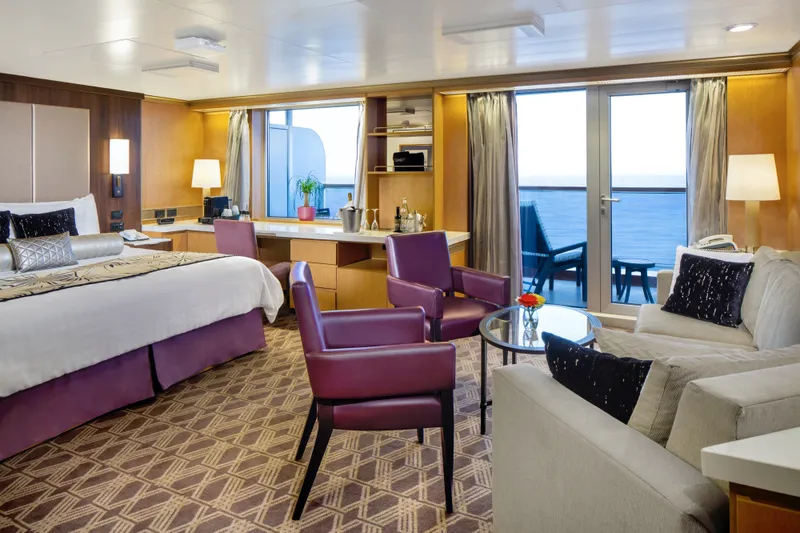
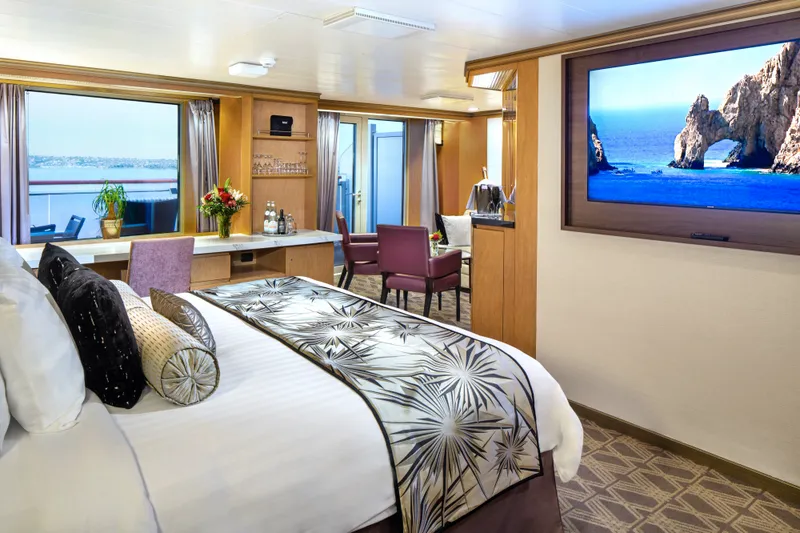
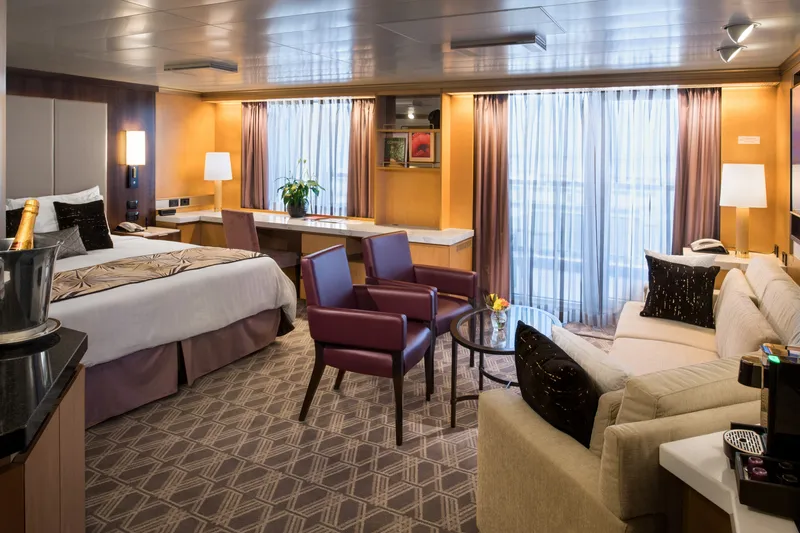
Neptune Suite
Suite
500–712 m²Max 4
SASBSC
Approximately 500-712 sq. ft. including verandah
With floor-to-ceiling windows overlooking a private verandah, these spacious suites are flooded with light. They feature a large sitting area and two lower beds convertible to one king-size bed—our signature Mariner's Dream bed with plush Euro-Top mattresses plus a separate dressing room. There's also a sofa bed, suitable for two people. The bathroom comes with a dual-sink vanity, full-size whirlpool bath and shower, plus additional shower stall. Amenities include use of the exclusive Neptune Lounge, a private concierge and an array of complimentary services. The configuration of staterooms may vary from the images shown.
King or Twin ConfigurationShowerWhirlpool BathTVSafeHair Dryer+11
View Details
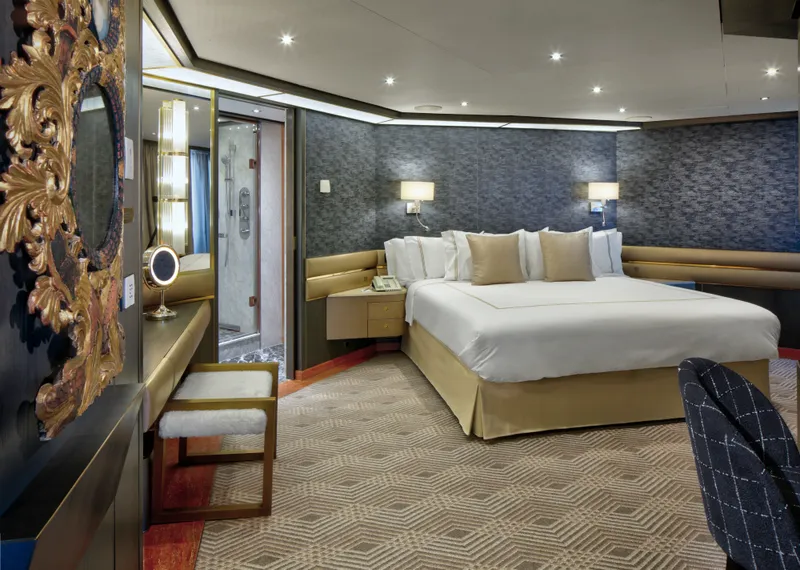
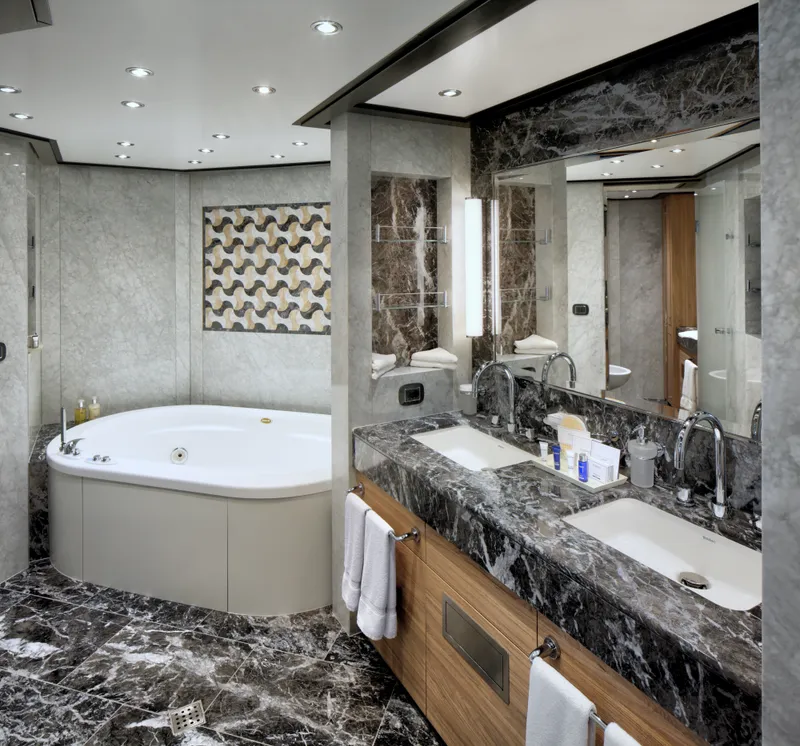
Pinnacle Suite
Suite
1150 m²Max 4
PS
Approximately 1,150 sq. ft. including verahdah
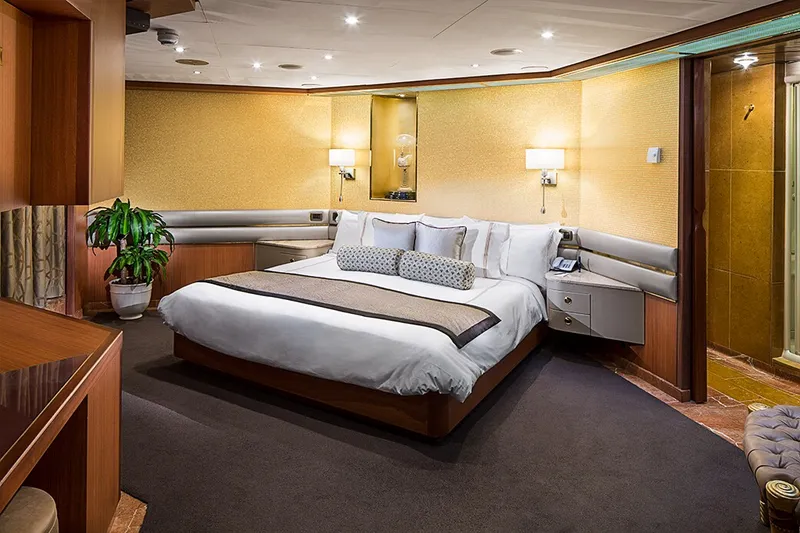
Generously proportioned and filled with light, these elegant suites include a living room, dining room, pantry with microwave and refrigerator, and floor-to-ceiling windows overlooking a private verandah with whirlpool. The bedroom features a king-size bed—our Signature Mariner's Dream bed with plush Euro-Top mattresses, plus a separate dressing room and the bath includes an oversize whirlpool bath and shower as well as an additional shower stall. There's also a sofa bed, suitable for two people, and a guest toilet. Amenities include a private stereo system, use of the exclusive Neptune Lounge, private concierge and an array of complimentary services. The configuration of staterooms may vary from the images shown.
Sofa BedShowerWhirlpool BathSuite BenefitsWi-Fi (Additional Cost)Safe+12
View Details
Signature Suite
Suite
372–384 m²Max 3
SSSYSZ
Approximately 372-384 sq. ft. including verandah
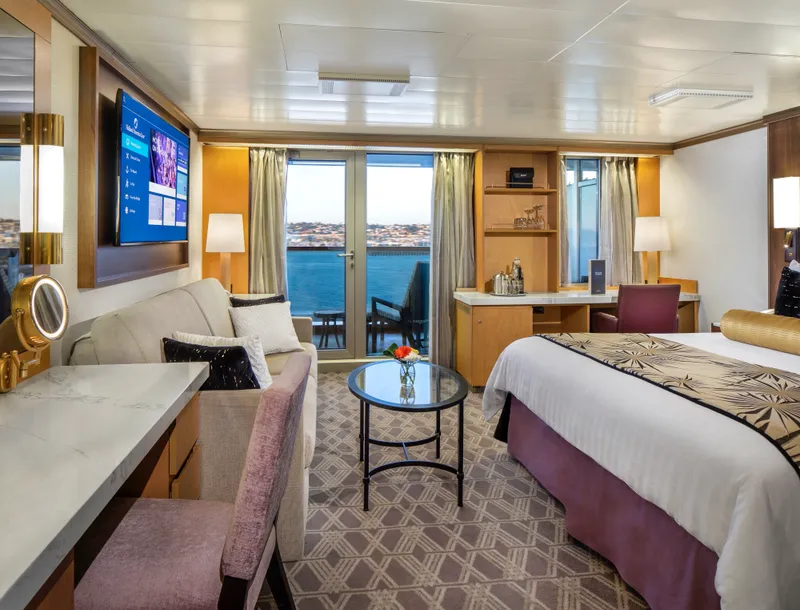
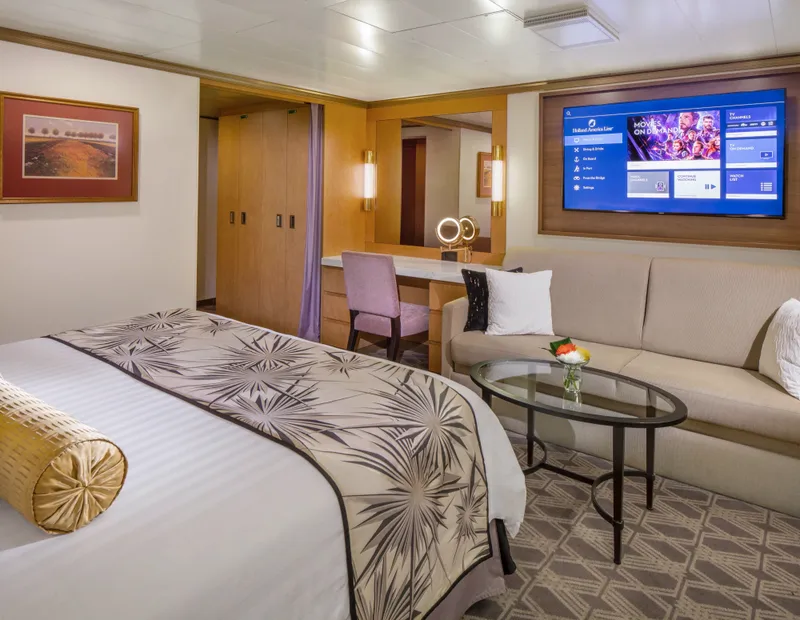
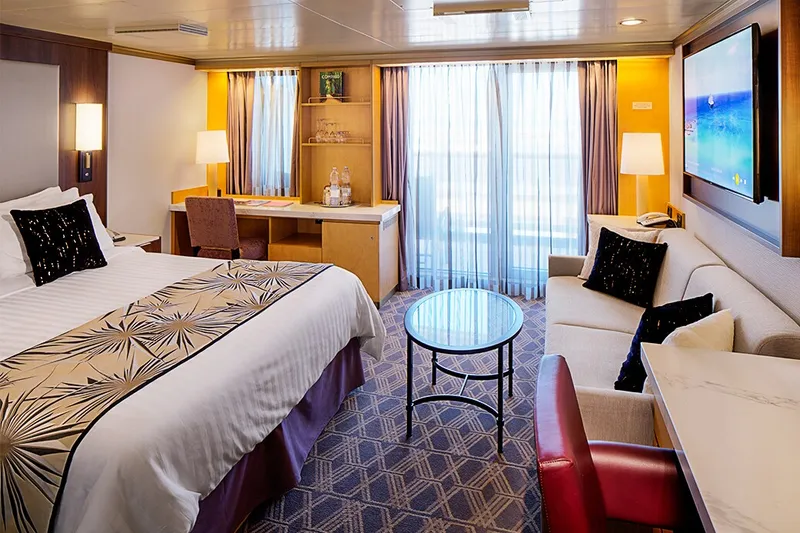
These large, comfortable suites feature a spacious sitting area with floor-to-ceiling windows overlooking a private verandah, two lower beds convertible to one queen-size bed—our signature Mariner's Dream bed with plush Euro-Top mattresses, and one sofa bed for one person. The bathroom includes a dual-sink vanity, full-size whirlpool bath and shower, and an additional shower stall. The configuration of staterooms may vary from the images shown.
Queen or Twin ConfigurationSofa BedLounge AreaShowerWhirlpool BathSuite Benefits+10
US$7,514 /person+ US$835 taxes & fees
Verandah Stateroom
Balcony
212–359 m²Max 2
VAVBVCVDVEVFVH
Approximately 212-359 sq. ft. including verandah
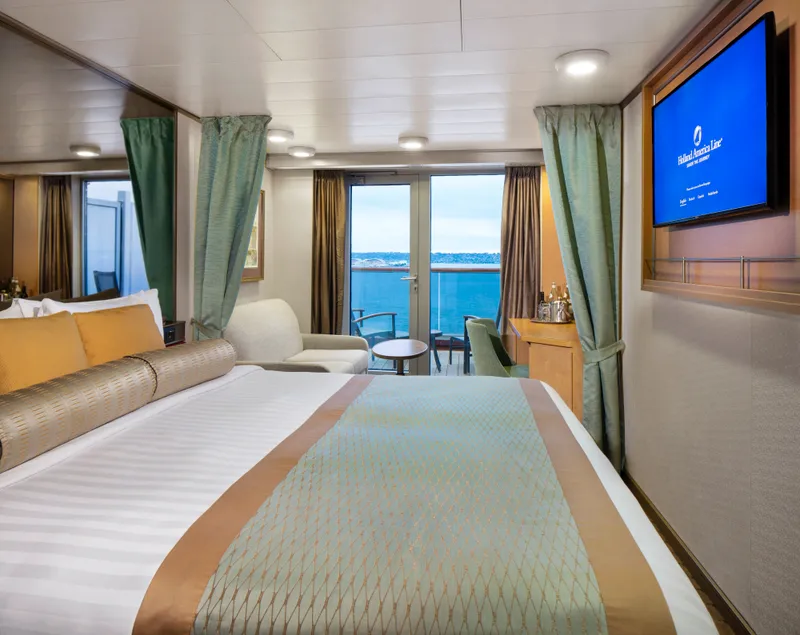
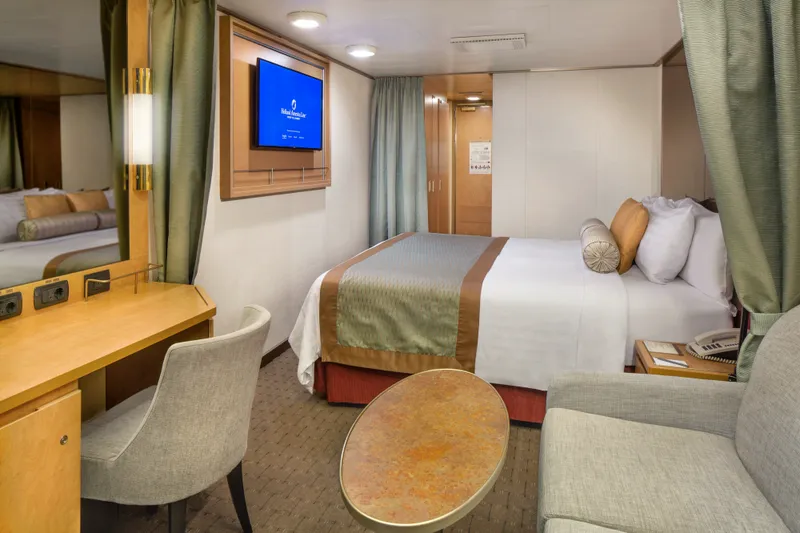
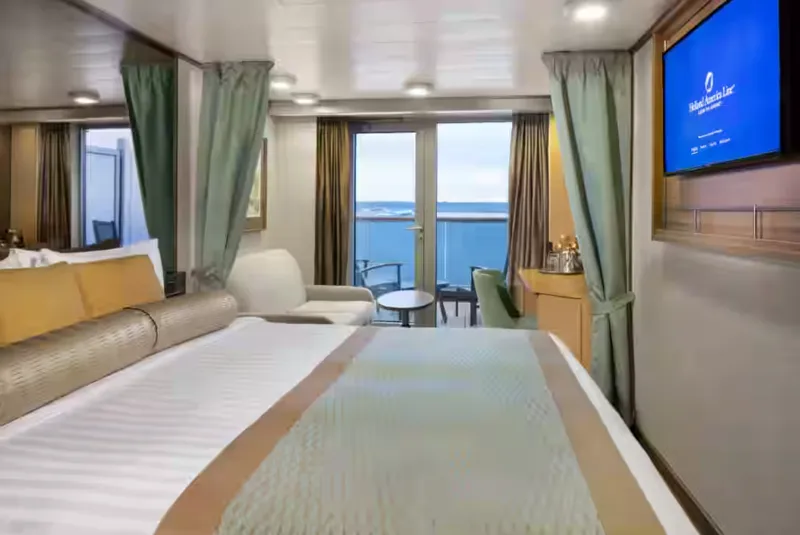
Filled with light from floor-to-ceiling windows overlooking a private verandah, these staterooms include a sitting area, two lower beds convertible to one queen-size bed—our signature Mariner's Dream bed with plush Euro-Top mattresses, and bath tub with premium massage showerheads. The configuration of staterooms may vary from the images shown.
Queen or Twin ConfigurationShowerBathTVSafeHair Dryer+8
US$6,114 /person+ US$835 taxes & fees
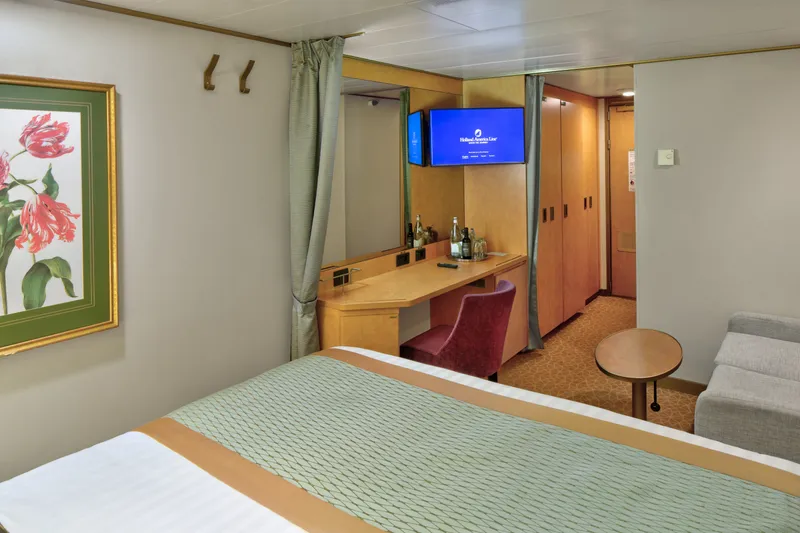
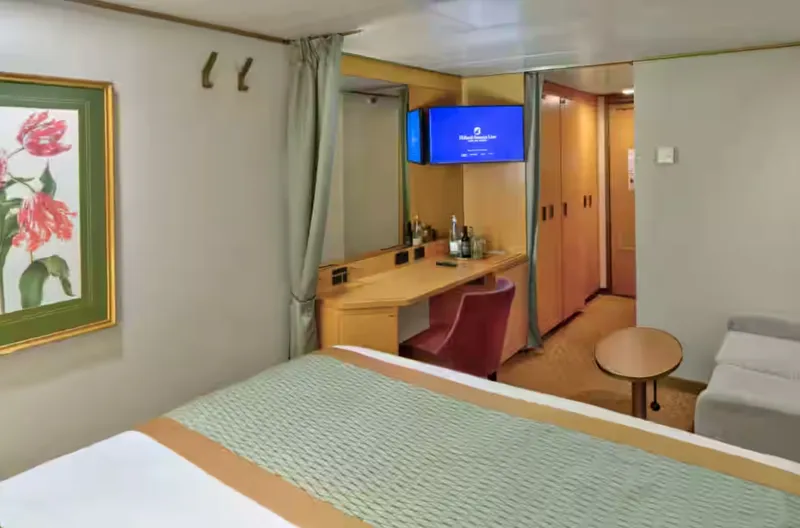
Large Ocean view Stateroom
Outside
174–180 m²Max 2
CDDDEF
Approximately 174-180 sq. ft.
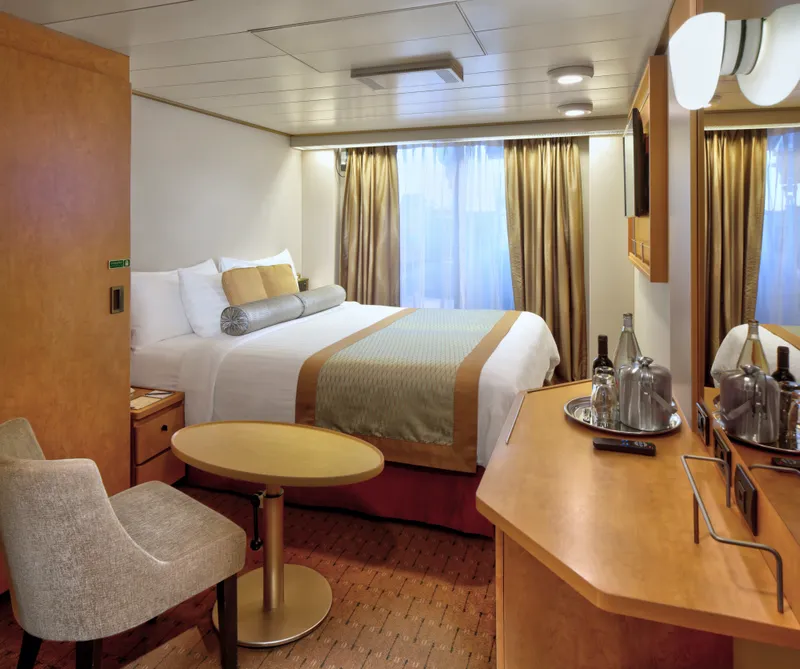
These expansive staterooms include include two lower beds convertible to one queen-size bed—our Signature Mariner's Dream bed with plush Euro-Top mattresses, premium massage shower heads, a host of amenities and an ocean view. The configuration of staterooms may vary from the images.
Queen or Twin ConfigurationShowerTVSafeHair DryerRoom Service Available+5
US$4,964 /person+ US$835 taxes & fees
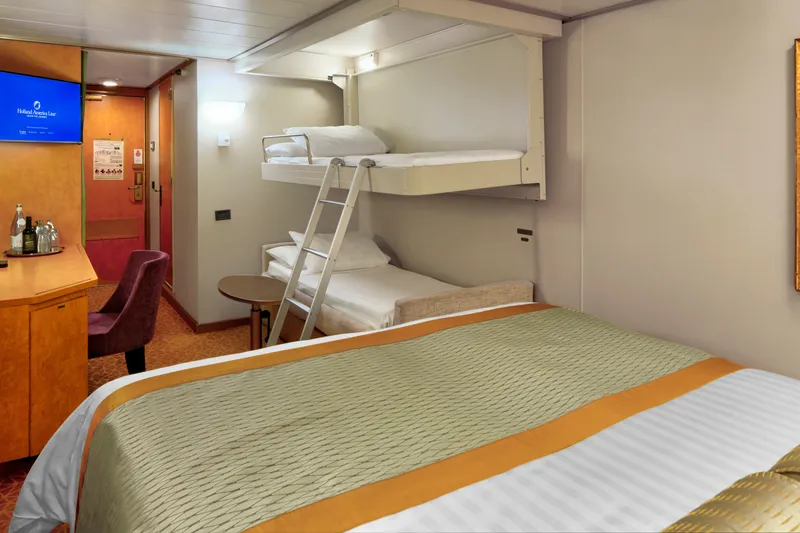
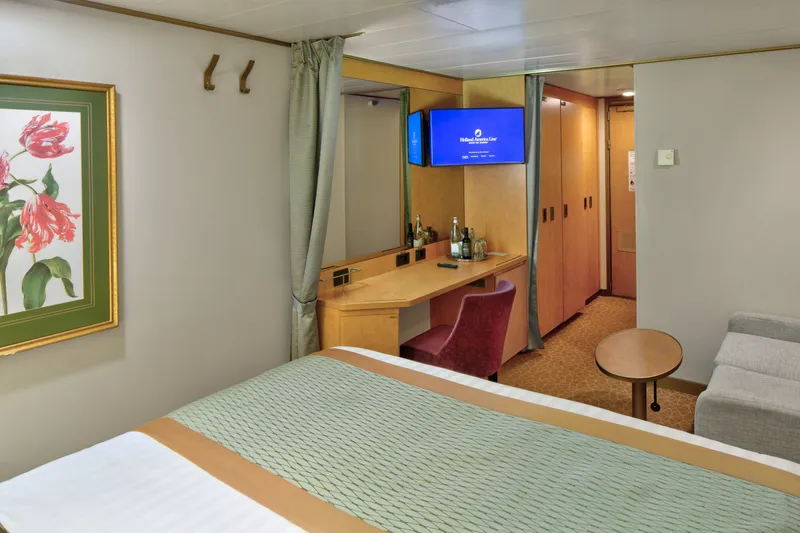
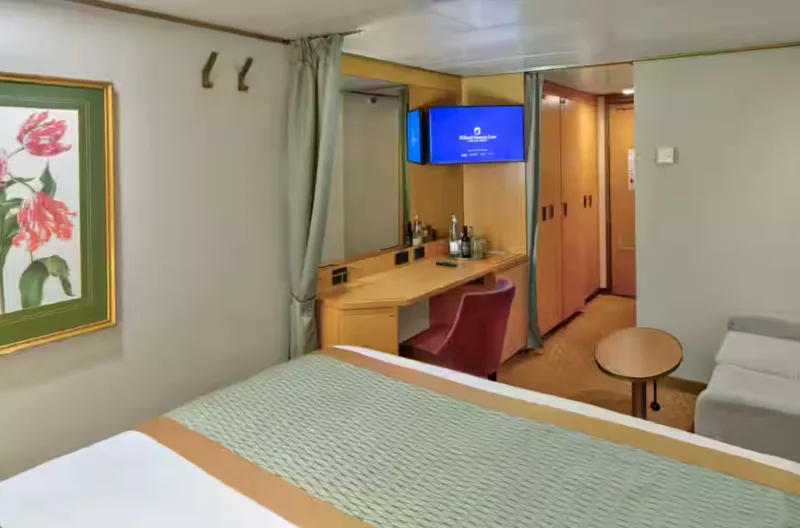
Large Ocean view Stateroom (Fully Obstructed View)
Outside
174–180 m²Max 2
HHH
Approximately 174-180 sq. ft.
These large staterooms include two lower beds convertible to one queen-size bed—our Signature Mariner's Dream bed with plush Euro-Top mattresses, premium massage shower heads and a host of amenities. The view is fully obstructed. The configuration of staterooms may vary from the images shown.
Queen or Twin ConfigurationShowerRoom Service AvailableTVSafeHair Dryer+5
US$4,564 /person+ US$835 taxes & fees
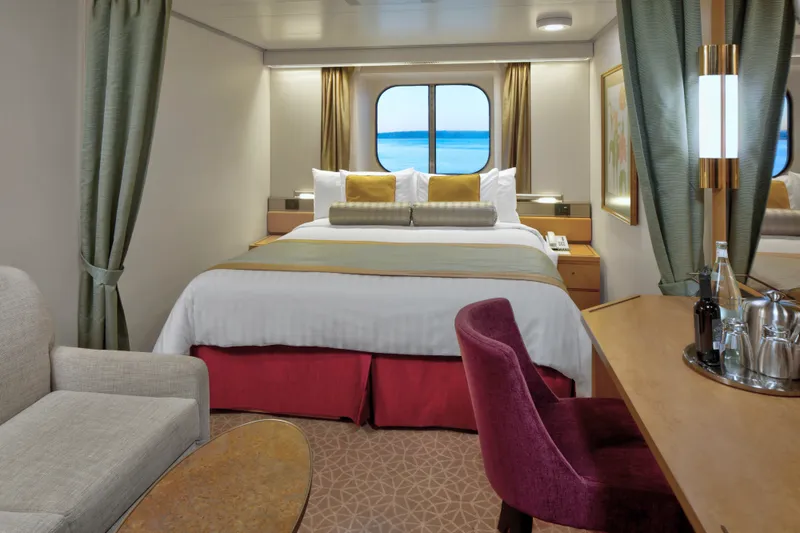
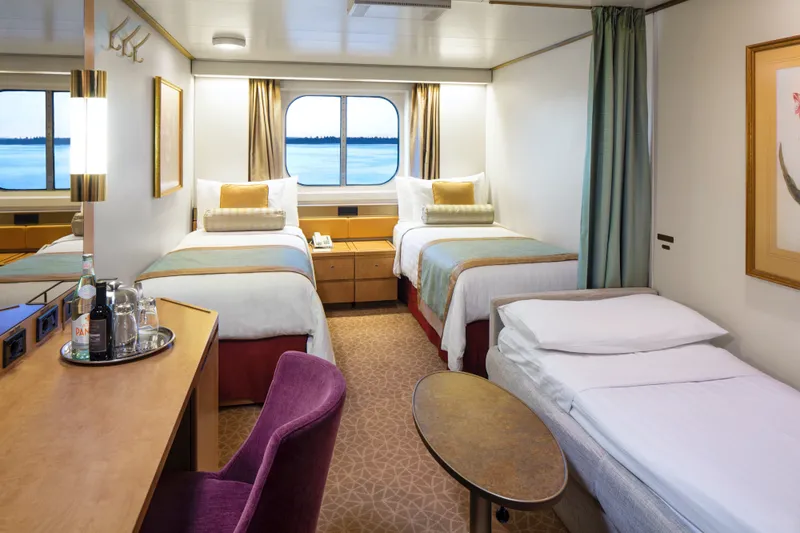
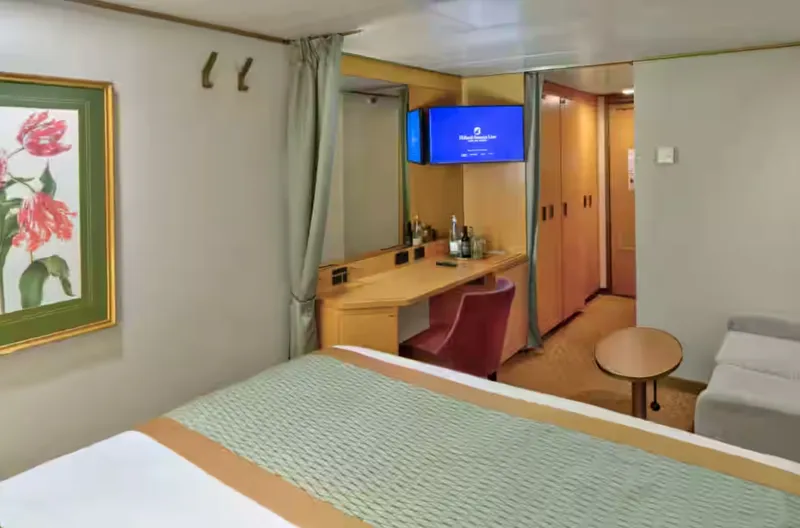
Large Ocean view Stateroom (Partial Sea View)
Outside
174–180 m²Max 2
G
Approximately 174-180 sq. ft.
These staterooms feature a partial sea view and include two lower beds convertible to one queen-size bed—our signature Mariner's Dream bed with plush Euro-Top mattresses, plus premium massage shower heads and a variety of amenities. The configuration of staterooms may vary from the image.
Queen or Twin ConfigurationShowerRoom Service AvailableTVSafeHair Dryer+5
US$4,724 /person+ US$835 taxes & fees
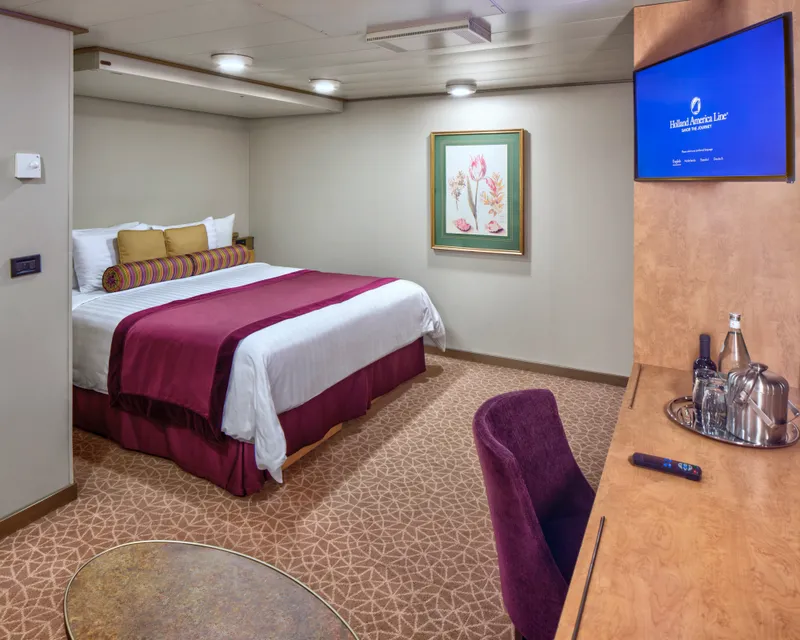
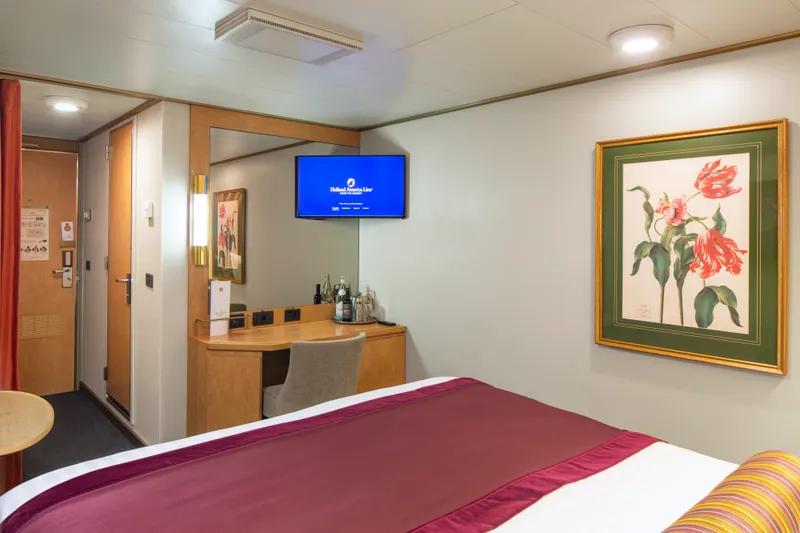
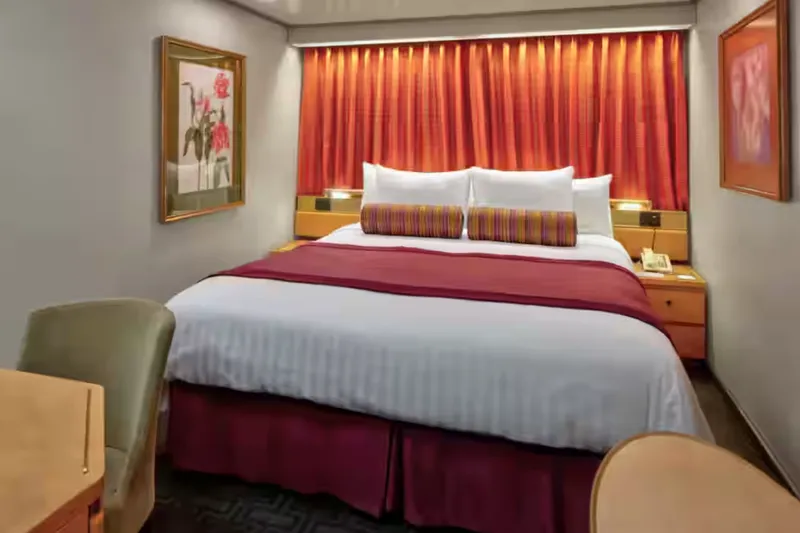
Large Interior Stateroom
Inside
151–233 m²Max 2
J
Approximately 151-233 sq. ft.
These spacious staterooms include two lower beds convertible to one queen-size bed—our Signature Mariner's Dream bed with plush Euro-Top mattresses, premium massage shower heads and a host of amenities. The configuration of staterooms may vary from the images shown.
Queen or Twin ConfigurationShowerRoom Service AvailableTVSafeHair Dryer+5
US$5,104 /person+ US$835 taxes & fees
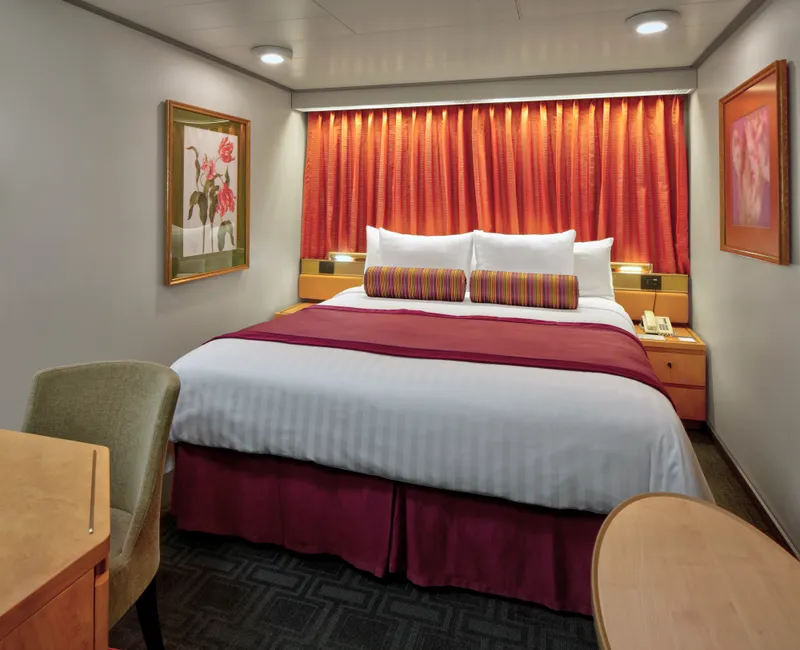
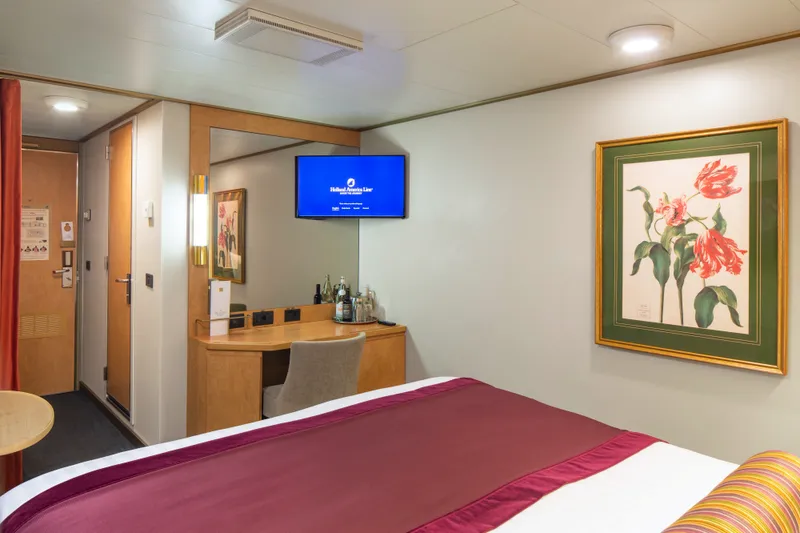
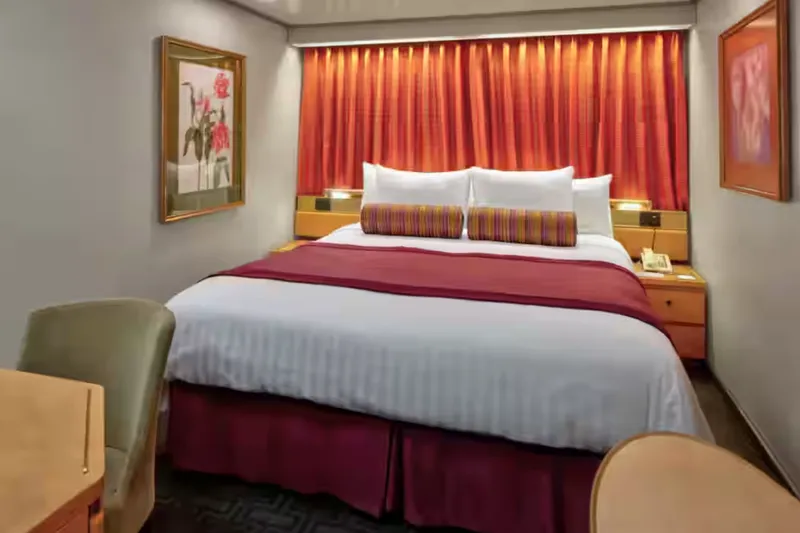
Large/Standard Inside Stateroom
Inside
151–233 m²Max 2
IKMM
Approximately 151-233 sq. ft.
These spacious staterooms include two lower beds convertible to one queen-size bed—our Signature Mariner's Dream bed with plush Euro-Top mattresses, premium massage shower heads and a host of amenities. The configuration of staterooms may vary from the images shown.
Queen or Twin ConfigurationShowerTVSafeHair DryerRoom Service Available+5
US$4,654 /person+ US$835 taxes & fees
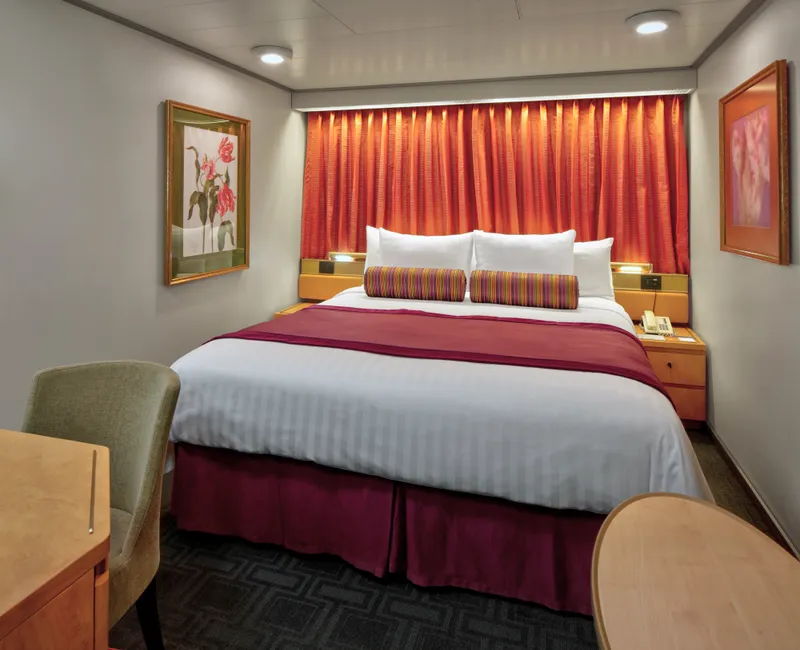
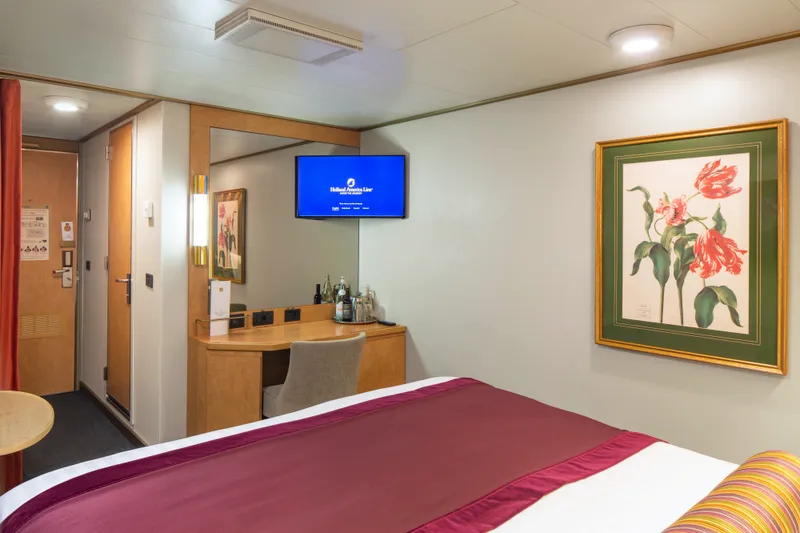

Standard Interior Stateroom
Inside
151–233 m²Max 2
LMN
Approximately 151-233 sq. ft.
Two lower beds convertible to one queen-size bed—our signature Mariner's Dream bed with plush Euro-Top mattresses, premium massage shower heads and a host of amenities are featured in these comfortable staterooms. The configuration of staterooms may vary from the images shown.
Queen or Twin ConfigurationShowerTVSafeHair DryerRoom Service Available+5
US$4,564 /person+ US$835 taxes & fees
Interested in This Voyage?
Our cruise specialists can help you find the perfect cabin and the best available pricing.
(+886) 02-2721-7300Contact Advisor