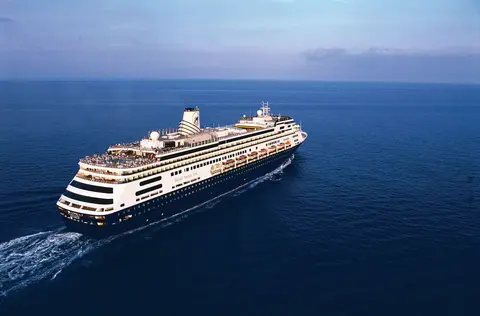
Legendary Ultimate Mediterranean & Atlantic Passage
Date
2026-10-08
Duration
45 nights
Departure Port
New York
United States
Arrival Port
New York
United States
Rating
Premium
Theme
—
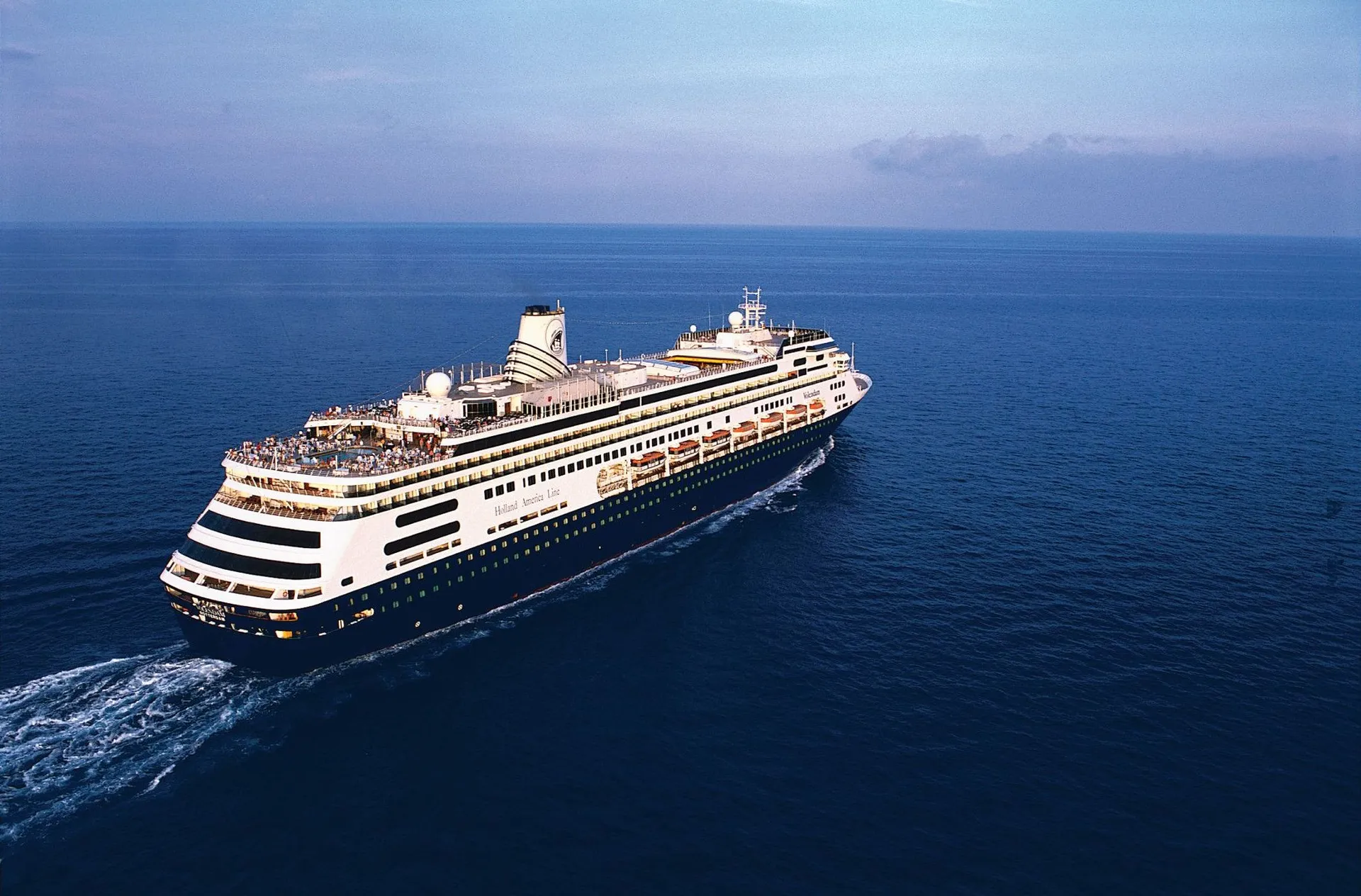





Holland America Line
Volendam
Launched
1999
Refitted
2019
Tonnage
61,214 GT
Passengers
1,432
Cabins
716
Crew
615
Length
781 m
Width
32 m
Speed
23 knots
Adults Only
No
Itinerary
Day 1
Day 1
New York
Depart 16:30

The Port of New York is a bustling maritime gateway rich in history and cultural diversity, making it a must-visit destination. Don't miss the chance to savor authentic New York pizza and explore the vibrant Chelsea Market. The best time to visit is during the spring or fall, when the weather is pleasant, and the city is alive with activity.
Day 2
Day 2
At Sea
Day 3
Day 3
At Sea
Day 4
Day 4
At Sea
Day 5
Day 5
At Sea
Day 6
Day 6
At Sea
Day 7
Day 7
Ponta Delgada
Arrive 08:00Depart 17:00

Ponta Delgada, Portugal, offers the Atlantic coast of Europe at its most authentic—fresh seafood, dramatic coastal scenery, and the maritime character of communities shaped by centuries of oceanic tradition. Don't miss the local markets and the regional wines that complement the cuisine perfectly. Best visited October through April, when cooler temperatures and lower humidity create ideal conditions. Cruise lines including P&O Cruises feature this port on their most compelling itineraries. Whether you have a few hours or a full day, the port rewards exploration at every pace and in every direction.
Day 8
Day 8
At Sea
Day 9
Day 9
At Sea
Day 10
Day 10
Lisbon
Arrive 08:00Depart 17:00
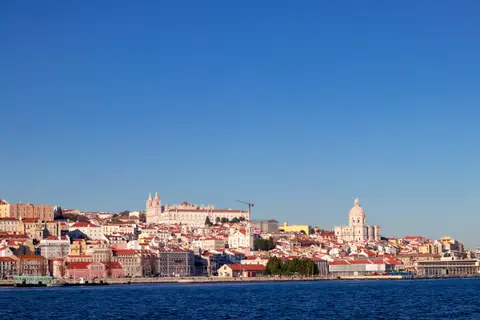
Lisbon, Portugal's enchanting capital, stands out for its rich history, stunning architecture, and vibrant culture. Must-try experiences include savoring local dishes like bacalhau à brás and pastéis de nata at Mercado da Ribeira. The best time to visit is during the spring or fall, when the weather is mild and the city is alive with festivals and events.
Day 11
Day 11
Gibraltar
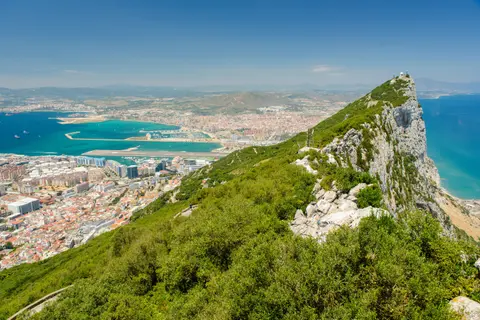
Gibraltar is a British Overseas Territory perched at the southern tip of the Iberian Peninsula, where the Mediterranean meets the Atlantic beneath an iconic limestone monolith steeped in over a millennium of contested history. No visit is complete without ascending the Rock to encounter the Barbary macaques and the panoramic views stretching to North Africa, followed by a plate of calentita — the territory's beloved Genoese-heritage chickpea bake — at a Main Street bakery. The mild Mediterranean climate makes Gibraltar a rewarding port call year-round, though spring and early autumn offer the clearest skies for spotting whales and dolphins in the Strait.
Day 12
Day 12
Cartagena
Arrive 08:00Depart 14:30
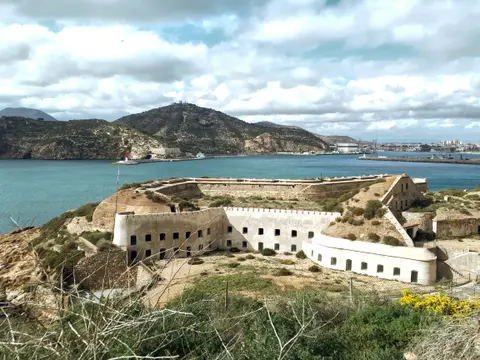
Cartagena, Spain, is a storied Mediterranean port city founded by the Carthaginians in 227 BC, where a spectacularly preserved Roman Theatre and Modernista architecture reveal layers of civilisation along a sheltered natural harbour. Visitors should not miss the caldero rice at a harbourside restaurant and a morning exploring the archaeological quarter from the Roman Forum to the Punic Wall. The mild Murcian climate makes autumn through late spring ideal, when temperatures invite leisurely wandering without the intensity of high summer.
Day 13
Day 13
Barcelona
Arrive 08:00Depart 17:00
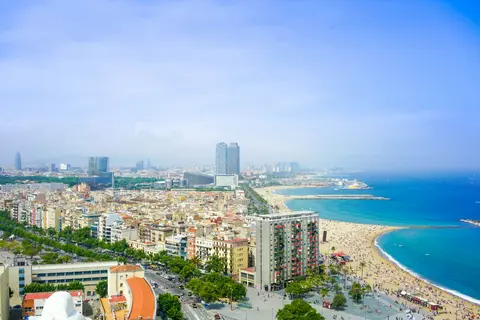
Barcelona is the city where Roman history, Gothic grandeur, and Gaudí's delirious Modernisme collide in a Mediterranean coastal capital of astonishing energy and beauty. The Sagrada Família — still under construction after 140 years — continues its audacious ascent toward completion, while the Gothic Quarter's Roman-era foundations and the Passeig de Gràcia's extraordinary concentration of Modernisme masterpieces reward days of exploration. For a complete sensory experience, lose an afternoon in the covered labyrinth of La Boqueria market before descending to the waterfront for Catalan seafood at its finest. May through June and September through October offer the most pleasant weather; the city connects directly to Paris by overnight train.
Day 14
Day 14
Villefranche-sur-Mer
Arrive 11:00Depart 21:00
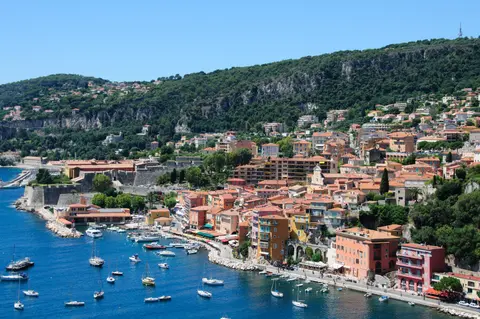
Villefranche-sur-Mer is a thirteenth-century duty-free port town on the French Riviera, where medieval stone passages and ochre-walled lanes cascade toward one of the Mediterranean's most spectacular natural harbours. Visitors should not miss Jean Cocteau's painted Chapelle Saint-Pierre and the covered Rue Obscure, followed by socca and Bellet rosé at the waterfront. The town is at its luminous best from late April through early October, when the bay glows cobalt and the evening light lingers long enough for an unhurried dinner along the Plage des Marinières.
Day 15
Day 15
Livorno
Arrive 07:00Depart 19:00
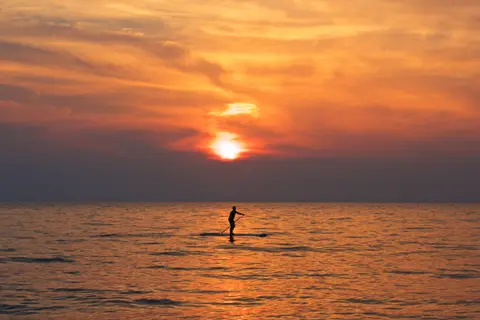
Purpose-built as a Medici utopia in the late sixteenth century, Livorno was conceived from the outset as a city without discrimination — its founding Leggi Livornine granted equal rights to Jews, Christians, Muslims, and merchants of every nation, making it one of the most cosmopolitan cities in Renaissance Europe. Today, the Venetian-style canals of the Venezia Nuova quarter reflect colourful palazzi with a distinctly faded glamour, while the Mercato Centrale's fish counters display the cacciucco ingredients — a robust Livornese brodetto of five sea creatures — that make this port city a pilgrimage for serious eaters. Day trips to Pisa and Lucca are effortless from here. The season runs April through October.
Day 16
Day 16
Civitavecchia
Arrive 07:00Depart 22:00
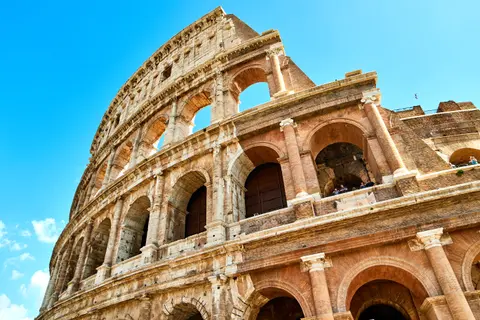
Rome's ancient maritime gateway since the Emperor Trajan commissioned its harbour in 106 AD, Civitavecchia is the natural prologue to the Eternal City — just seventy minutes southeast by express rail. The port's Renaissance fortress, designed in part by Michelangelo, anchors a working waterfront that has welcomed travellers for millennia. Beyond Rome's unmissable monuments, consider an afternoon in the Civitavecchia thermal baths, drawing on mineral waters prized since antiquity. Spring and autumn offer the ideal balance of mild weather and manageable crowds for exploring the capital's layered history.
Day 17
Day 17
Naples
Arrive 10:00Depart 18:00
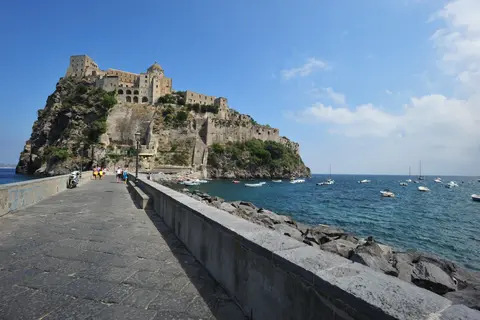
Naples — Napoli — is Europe's most operatically alive city, a sun-battered baroque metropolis where Vesuvius broods on the horizon and the streets below pulse with 2,500 years of continuous human drama. The unmissable Museo Archeologico Nazionale houses the world's finest collection of artefacts from Pompeii and Herculaneum, while the Spaccanapoli, the arrow-straight artery that has bisected the city since Greek times, delivers an unfiltered encounter with Neapolitan life. A single slice of pizza Margherita from one of the centro storico's historic pizzerias is a culinary pilgrimage in itself. Visit between April and June or September and October for warmth, manageable crowds, and the city at its golden best.
Day 18
Day 18
Messina
Arrive 08:00Depart 17:00

Messina guards the storied strait that separates Sicily from the Italian mainland — the passage Homer mythologised as Scylla and Charybdis — and its Norman cathedral's astronomical clock, one of the world's largest mechanical clocks, puts on a captivating automated display each noon as gilded figures enact scenes of the Resurrection. The city was catastrophically rebuilt after the 1908 earthquake, but its markets and waterfront convey the fierce energy of a Sicilian port that has witnessed two and a half millennia of Mediterranean history. Messina is the perfect gateway to Taormina, a 40-minute drive into the hills above the Ionian coast, with views of Etna at their most dramatic. Spring and autumn are ideal.
Day 19
Day 19
Heraklion (Iraklion)
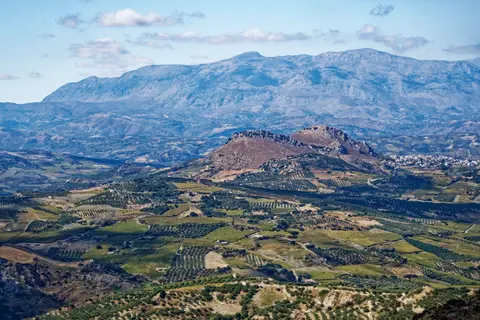
Heraklion, the capital of Crete, is a historic port city rich in Minoan heritage and Venetian architecture, making it an essential stop for cruise travelers. Must-do experiences include exploring the Palace of Knossos and indulging in local dishes like moussaka and dakos. The best season to visit is during the spring and early fall when the weather is mild and the local festivals are in full swing.
Day 20
Day 20
Corfu
Arrive 08:00Depart 21:00
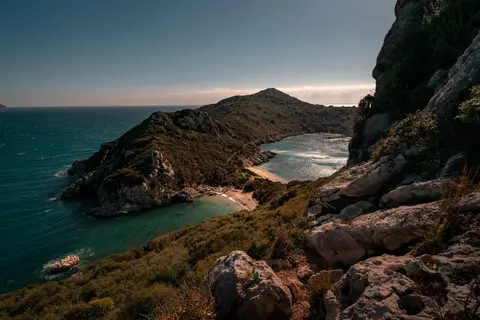
Where Homer placed the island of the Phaeacians and four centuries of Venetian rule left their most enduring Mediterranean legacy, Corfu is a singular island of extraordinary historical depth and natural beauty. The UNESCO-listed Old Town — its narrow Kantounia alleyways, the elegant Liston arcade, and twin Venetian fortresses — is the finest preserved Venetian streetscape in Greece. Beyond the town, secret coves, olive groves of immense antiquity, and mountain villages offer weeks of unhurried discovery. May through June and September offer perfect conditions: warm sea temperatures, clear skies, and the island before or after its summer crescendo.
Day 21
Day 21
Ashdod
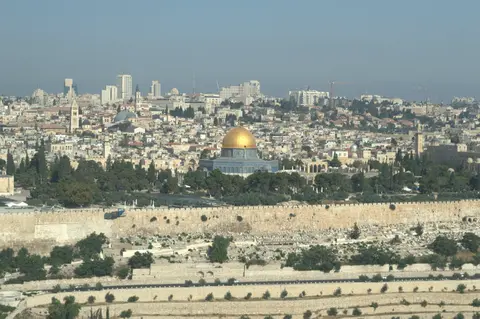
Ashdod is Israel's primary cruise port on the Mediterranean coast, an ancient Philistine city now serving as the gateway to Jerusalem, Tel Aviv, Bethlehem, the Dead Sea, and Masada. Must-do experiences include day trips to Jerusalem's Old City, exploring Tel Aviv's Bauhaus architecture and culinary scene, and visiting the archaeological remains of ancient Philistine settlements. Spring (March-May) and autumn (September-November) offer the most comfortable temperatures for touring.
Day 22
Day 22
Haifa
Arrive 08:00Depart 23:00
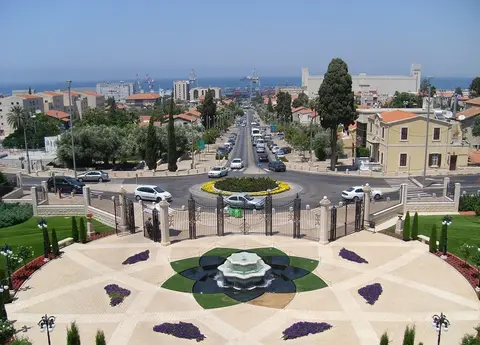
Haifa, Israel is a distinctive port city where deep cultural heritage meets authentic local atmosphere, featured on itineraries by Viking. Must-do experiences include walking the historic center to experience the layered architectural heritage, and seeking out the regional culinary traditions at a locally favored establishment away from the port area. The optimal time to visit is April through October, when warm weather and extended daylight create ideal conditions.
Day 23
Day 23
At Sea
Day 24
Day 24
Alexandria
Arrive 08:00Depart 21:00

Alexandria is the ancient Mediterranean port where the Great Library, Euclid's geometry, and the Pharos lighthouse defined Western civilization, now home to the stunning Bibliotheca Alexandrina and the multicultural Catacombs of Kom el-Shoqafa. Visit October through April via Oceania Cruises or Royal Caribbean for twenty-three centuries of layered history, optional Cairo excursions, and the city whose intellectual legacy surpasses most nations.
Day 26
Day 26
Kusadasi
Arrive 08:00Depart 21:00
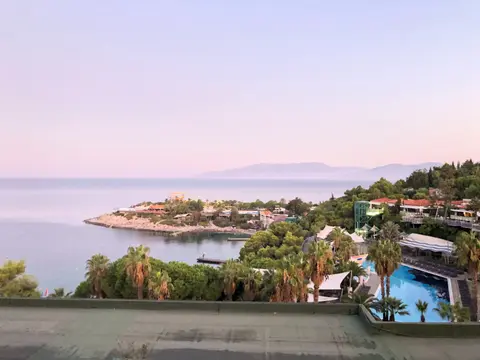
Kuşadası owes its place on the world's cruise itineraries to one extraordinary proximity: the ancient city of Ephesus, one of the greatest metropolises of the Greco-Roman world, lies just seventeen kilometres from the port. Ephesus — with its two-kilometre marble colonnade, the Library of Celsus, and the Temple of Artemis (one of the Seven Wonders of the Ancient World) — demands at least half a day of unhurried exploration. The House of the Virgin Mary, a pilgrimage site believed to be where Mary spent her final years, adds a profound spiritual dimension. Kuşadası itself is a lively Aegean resort; the season runs April through October, with May and September offering ideal temperatures and smaller crowds.
Day 28
Day 28
Istanbul

For more than fifteen centuries, Istanbul has been the pivot upon which empires turned — Byzantium, Constantinople, the Ottoman capital — and nowhere else on earth compresses so much history into a single horizon. The Hagia Sophia, the Blue Mosque, and the Topkapi Palace form an incomparable trinity of architectural genius along the Golden Horn; the Grand Bazaar's four thousand shops offer a sensory immersion unlike any other marketplace. Must-dos include a Bosphorus sunset cruise and a meal of mezze along the waterfront at Karaköy. Spring (April–May) and autumn (September–October) offer the most gracious climate for this inexhaustible city.
Day 28
Day 28
Luganville
Arrive 16:00
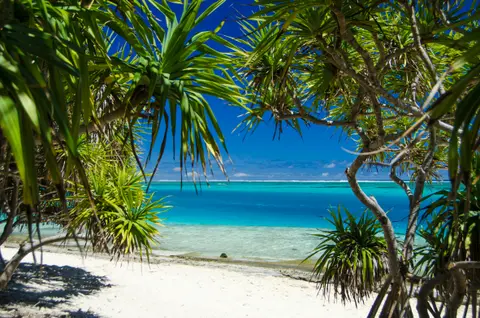
Luganville, Vanuatu is a distinctive port city where deep cultural heritage meets authentic local atmosphere, featured on itineraries by Royal Caribbean. Must-do experiences include exploring the vibrant local markets for regional specialties and fresh seafood, and discovering the waterfront quarter where maritime heritage meets contemporary energy. The optimal time to visit is May through October, when cooler dry months offer the most comfortable conditions for exploration.
Day 30
Day 30
At Sea
Day 31
Day 31
Piraeus
Arrive 08:00Depart 17:00
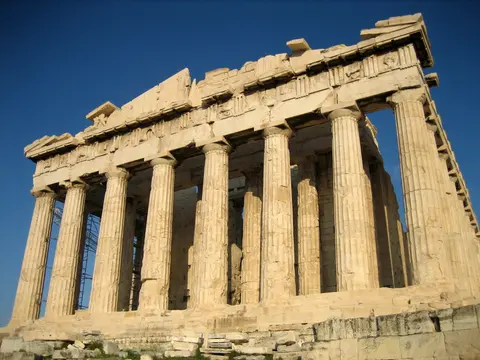
The port that launched Athenian democracy's naval supremacy at the Battle of Salamis, Piraeus remains Greece's maritime heartbeat — and the most convenient gateway to both the Acropolis and the Aegean island chains. Dine on grilled sea bream at a Mikrolimano harbourside taverna, visit the extraordinary bronze Piraeus Apollo, and set sail for Hydra or Santorini by afternoon. Late April through June and September offer the Aegean at its most golden and uncrowded.
Day 32
Day 32
At Sea
Day 33
Day 33
Valletta
Arrive 08:00Depart 17:00
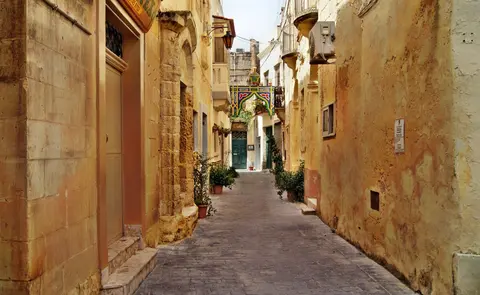
Valletta, Europe's smallest capital, is a fortress city of exceptional grandeur raised from bare limestone in just fifteen years after the Knights of St. John repelled the great Ottoman siege of 1565 — its rigid Renaissance grid of sun-drenched streets concealing a density of baroque palaces, gilded oratories, and subterranean World War II shelters unrivaled anywhere in the Mediterranean. The Grand Harbour, framed by golden bastions plunging into startlingly blue water, offers one of the most dramatically photogenic arrivals in the world for arriving vessels. Spring and autumn deliver the most comfortable temperatures for exploring this UNESCO-listed gem.
Day 34
Day 34
La Goulette
Arrive 08:00Depart 16:30
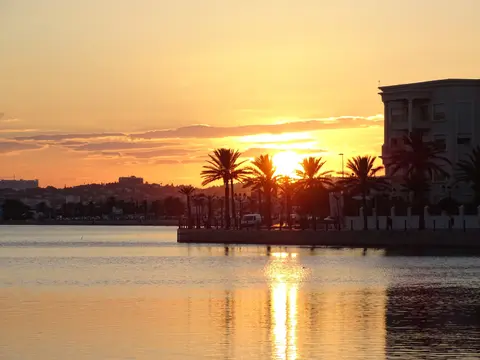
La Goulette guards the narrow channel linking the Lake of Tunis to the Mediterranean — a strategic passage coveted by every power that ruled this sea, from the Ottoman corsair Barbarossa to Charles V of Habsburg. Today the port is the gateway to Tunis and to Carthage, the Phoenician city-empire whose ruins scatter across a leafy suburb of the modern capital and whose legacy shaped the entire western Mediterranean world. Must-dos include the Bardo Museum, housing the world's finest collection of Roman mosaics, and the Tophet sanctuary at Carthage, one of antiquity's most evocative sites. Tunisia is best visited spring (March–May) and autumn (September–November) to avoid the intense summer heat.
Day 35
Day 35
At Sea
Day 36
Day 36
Spitsbergen
Arrive 12:00Depart 22:00

Spitsbergen is the largest island in the Svalbard archipelago, a thousand kilometres from the North Pole, where polar bears outnumber humans, glaciers calve into pristine fjords, and the midnight sun illuminates an Arctic wilderness of extraordinary beauty. Must-do experiences include Zodiac cruises along glacier fronts, wildlife watching for polar bears and walruses, and visiting the Global Seed Vault in Longyearbyen. June through September is the expedition season.
Day 37
Day 37
Cadiz
Arrive 08:00Depart 18:00
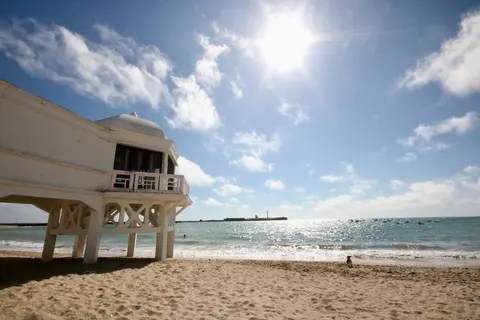
Cádiz, founded by Phoenician traders around 1100 BC and a strong contender for the oldest continuously inhabited city in Western Europe, juts into the Atlantic on a narrow peninsula where honey-colored ramparts frame improbable views of open ocean and the sun sets directly into the sea. The old quarter is an intoxicating labyrinth of baroque churches, hidden plazas, and carnival spirit — Cádiz's annual February carnival is the wildest and most satirically sharp in Spain — while the tapas culture here, centered on fresh Atlantic seafood cooked with Andalusian simplicity, represents Spanish cuisine at its most elemental and joyful. Visit February for carnival or spring for gentle Atlantic breezes. Seville is ninety minutes inland by bus or rail.
Day 38
Day 38
At Sea
Day 39
Day 39
Funchal
Arrive 08:00Depart 17:00

Funchal — Madeira's radiant capital, its name derived from the wild fennel that greeted Portuguese settlers in 1419 — cascades down volcanic hillsides to a deep-water harbour that has welcomed mariners and wanderers for six centuries. The Reid's Palace, opened in 1891, remains one of the Atlantic's most legendary hotels, its clifftop terraces commanding views that inspired Churchill, Shaw, and a century of distinguished guests. The city's floating flower market, levada walks through ancient laurisilva forest, and the exhilarating toboggan descent from Monte combine for days of effortless discovery. The subtropical climate makes Funchal appealing year-round, with spring particularly spectacular for wildflowers.
Day 40
Day 40
At Sea
Day 41
Day 41
At Sea
Day 42
Day 42
At Sea
Day 43
Day 43
At Sea
Day 44
Day 44
At Sea
Day 45
Day 45
At Sea
Day 46
Day 46
New York
Arrive 07:00

The Port of New York is a bustling maritime gateway rich in history and cultural diversity, making it a must-visit destination. Don't miss the chance to savor authentic New York pizza and explore the vibrant Chelsea Market. The best time to visit is during the spring or fall, when the weather is pleasant, and the city is alive with activity.
Day 1
New York
Depart 16:30
The Port of New York is a bustling maritime gateway rich in history and cultural diversity, making it a must-visit destination. Don't miss the chance to savor authentic New York pizza and explore the vibrant Chelsea Market. The best time to visit is during the spring or fall, when the weather is pleasant, and the city is alive with activity.
Day 2
At Sea
Day 3
At Sea
Day 4
At Sea
Day 5
At Sea
Day 6
At Sea
Day 7
Ponta Delgada
Arrive 08:00Depart 17:00
Ponta Delgada, Portugal, offers the Atlantic coast of Europe at its most authentic—fresh seafood, dramatic coastal scenery, and the maritime character of communities shaped by centuries of oceanic tradition. Don't miss the local markets and the regional wines that complement the cuisine perfectly. Best visited October through April, when cooler temperatures and lower humidity create ideal conditions. Cruise lines including P&O Cruises feature this port on their most compelling itineraries. Whether you have a few hours or a full day, the port rewards exploration at every pace and in every direction.
Day 8
At Sea
Day 9
At Sea
Day 10
Lisbon
Arrive 08:00Depart 17:00
Lisbon, Portugal's enchanting capital, stands out for its rich history, stunning architecture, and vibrant culture. Must-try experiences include savoring local dishes like bacalhau à brás and pastéis de nata at Mercado da Ribeira. The best time to visit is during the spring or fall, when the weather is mild and the city is alive with festivals and events.
Day 11
Gibraltar
Gibraltar is a British Overseas Territory perched at the southern tip of the Iberian Peninsula, where the Mediterranean meets the Atlantic beneath an iconic limestone monolith steeped in over a millennium of contested history. No visit is complete without ascending the Rock to encounter the Barbary macaques and the panoramic views stretching to North Africa, followed by a plate of calentita — the territory's beloved Genoese-heritage chickpea bake — at a Main Street bakery. The mild Mediterranean climate makes Gibraltar a rewarding port call year-round, though spring and early autumn offer the clearest skies for spotting whales and dolphins in the Strait.
Day 12
Cartagena
Arrive 08:00Depart 14:30
Cartagena, Spain, is a storied Mediterranean port city founded by the Carthaginians in 227 BC, where a spectacularly preserved Roman Theatre and Modernista architecture reveal layers of civilisation along a sheltered natural harbour. Visitors should not miss the caldero rice at a harbourside restaurant and a morning exploring the archaeological quarter from the Roman Forum to the Punic Wall. The mild Murcian climate makes autumn through late spring ideal, when temperatures invite leisurely wandering without the intensity of high summer.
Day 13
Barcelona
Arrive 08:00Depart 17:00
Barcelona is the city where Roman history, Gothic grandeur, and Gaudí's delirious Modernisme collide in a Mediterranean coastal capital of astonishing energy and beauty. The Sagrada Família — still under construction after 140 years — continues its audacious ascent toward completion, while the Gothic Quarter's Roman-era foundations and the Passeig de Gràcia's extraordinary concentration of Modernisme masterpieces reward days of exploration. For a complete sensory experience, lose an afternoon in the covered labyrinth of La Boqueria market before descending to the waterfront for Catalan seafood at its finest. May through June and September through October offer the most pleasant weather; the city connects directly to Paris by overnight train.
Day 14
Villefranche-sur-Mer
Arrive 11:00Depart 21:00
Villefranche-sur-Mer is a thirteenth-century duty-free port town on the French Riviera, where medieval stone passages and ochre-walled lanes cascade toward one of the Mediterranean's most spectacular natural harbours. Visitors should not miss Jean Cocteau's painted Chapelle Saint-Pierre and the covered Rue Obscure, followed by socca and Bellet rosé at the waterfront. The town is at its luminous best from late April through early October, when the bay glows cobalt and the evening light lingers long enough for an unhurried dinner along the Plage des Marinières.
Day 15
Livorno
Arrive 07:00Depart 19:00
Purpose-built as a Medici utopia in the late sixteenth century, Livorno was conceived from the outset as a city without discrimination — its founding Leggi Livornine granted equal rights to Jews, Christians, Muslims, and merchants of every nation, making it one of the most cosmopolitan cities in Renaissance Europe. Today, the Venetian-style canals of the Venezia Nuova quarter reflect colourful palazzi with a distinctly faded glamour, while the Mercato Centrale's fish counters display the cacciucco ingredients — a robust Livornese brodetto of five sea creatures — that make this port city a pilgrimage for serious eaters. Day trips to Pisa and Lucca are effortless from here. The season runs April through October.
Day 16
Civitavecchia
Arrive 07:00Depart 22:00
Rome's ancient maritime gateway since the Emperor Trajan commissioned its harbour in 106 AD, Civitavecchia is the natural prologue to the Eternal City — just seventy minutes southeast by express rail. The port's Renaissance fortress, designed in part by Michelangelo, anchors a working waterfront that has welcomed travellers for millennia. Beyond Rome's unmissable monuments, consider an afternoon in the Civitavecchia thermal baths, drawing on mineral waters prized since antiquity. Spring and autumn offer the ideal balance of mild weather and manageable crowds for exploring the capital's layered history.
Day 17
Naples
Arrive 10:00Depart 18:00
Naples — Napoli — is Europe's most operatically alive city, a sun-battered baroque metropolis where Vesuvius broods on the horizon and the streets below pulse with 2,500 years of continuous human drama. The unmissable Museo Archeologico Nazionale houses the world's finest collection of artefacts from Pompeii and Herculaneum, while the Spaccanapoli, the arrow-straight artery that has bisected the city since Greek times, delivers an unfiltered encounter with Neapolitan life. A single slice of pizza Margherita from one of the centro storico's historic pizzerias is a culinary pilgrimage in itself. Visit between April and June or September and October for warmth, manageable crowds, and the city at its golden best.
Day 18
Messina
Arrive 08:00Depart 17:00
Messina guards the storied strait that separates Sicily from the Italian mainland — the passage Homer mythologised as Scylla and Charybdis — and its Norman cathedral's astronomical clock, one of the world's largest mechanical clocks, puts on a captivating automated display each noon as gilded figures enact scenes of the Resurrection. The city was catastrophically rebuilt after the 1908 earthquake, but its markets and waterfront convey the fierce energy of a Sicilian port that has witnessed two and a half millennia of Mediterranean history. Messina is the perfect gateway to Taormina, a 40-minute drive into the hills above the Ionian coast, with views of Etna at their most dramatic. Spring and autumn are ideal.
Day 19
Heraklion (Iraklion)
Heraklion, the capital of Crete, is a historic port city rich in Minoan heritage and Venetian architecture, making it an essential stop for cruise travelers. Must-do experiences include exploring the Palace of Knossos and indulging in local dishes like moussaka and dakos. The best season to visit is during the spring and early fall when the weather is mild and the local festivals are in full swing.
Day 20
Corfu
Arrive 08:00Depart 21:00
Where Homer placed the island of the Phaeacians and four centuries of Venetian rule left their most enduring Mediterranean legacy, Corfu is a singular island of extraordinary historical depth and natural beauty. The UNESCO-listed Old Town — its narrow Kantounia alleyways, the elegant Liston arcade, and twin Venetian fortresses — is the finest preserved Venetian streetscape in Greece. Beyond the town, secret coves, olive groves of immense antiquity, and mountain villages offer weeks of unhurried discovery. May through June and September offer perfect conditions: warm sea temperatures, clear skies, and the island before or after its summer crescendo.
Day 21
Ashdod
Ashdod is Israel's primary cruise port on the Mediterranean coast, an ancient Philistine city now serving as the gateway to Jerusalem, Tel Aviv, Bethlehem, the Dead Sea, and Masada. Must-do experiences include day trips to Jerusalem's Old City, exploring Tel Aviv's Bauhaus architecture and culinary scene, and visiting the archaeological remains of ancient Philistine settlements. Spring (March-May) and autumn (September-November) offer the most comfortable temperatures for touring.
Day 22
Haifa
Arrive 08:00Depart 23:00
Haifa, Israel is a distinctive port city where deep cultural heritage meets authentic local atmosphere, featured on itineraries by Viking. Must-do experiences include walking the historic center to experience the layered architectural heritage, and seeking out the regional culinary traditions at a locally favored establishment away from the port area. The optimal time to visit is April through October, when warm weather and extended daylight create ideal conditions.
Day 23
At Sea
Day 24
Alexandria
Arrive 08:00Depart 21:00
Alexandria is the ancient Mediterranean port where the Great Library, Euclid's geometry, and the Pharos lighthouse defined Western civilization, now home to the stunning Bibliotheca Alexandrina and the multicultural Catacombs of Kom el-Shoqafa. Visit October through April via Oceania Cruises or Royal Caribbean for twenty-three centuries of layered history, optional Cairo excursions, and the city whose intellectual legacy surpasses most nations.
Day 26
Kusadasi
Arrive 08:00Depart 21:00
Kuşadası owes its place on the world's cruise itineraries to one extraordinary proximity: the ancient city of Ephesus, one of the greatest metropolises of the Greco-Roman world, lies just seventeen kilometres from the port. Ephesus — with its two-kilometre marble colonnade, the Library of Celsus, and the Temple of Artemis (one of the Seven Wonders of the Ancient World) — demands at least half a day of unhurried exploration. The House of the Virgin Mary, a pilgrimage site believed to be where Mary spent her final years, adds a profound spiritual dimension. Kuşadası itself is a lively Aegean resort; the season runs April through October, with May and September offering ideal temperatures and smaller crowds.
Day 28
Istanbul
For more than fifteen centuries, Istanbul has been the pivot upon which empires turned — Byzantium, Constantinople, the Ottoman capital — and nowhere else on earth compresses so much history into a single horizon. The Hagia Sophia, the Blue Mosque, and the Topkapi Palace form an incomparable trinity of architectural genius along the Golden Horn; the Grand Bazaar's four thousand shops offer a sensory immersion unlike any other marketplace. Must-dos include a Bosphorus sunset cruise and a meal of mezze along the waterfront at Karaköy. Spring (April–May) and autumn (September–October) offer the most gracious climate for this inexhaustible city.
Luganville
Arrive 16:00
Luganville, Vanuatu is a distinctive port city where deep cultural heritage meets authentic local atmosphere, featured on itineraries by Royal Caribbean. Must-do experiences include exploring the vibrant local markets for regional specialties and fresh seafood, and discovering the waterfront quarter where maritime heritage meets contemporary energy. The optimal time to visit is May through October, when cooler dry months offer the most comfortable conditions for exploration.
Day 30
At Sea
Day 31
Piraeus
Arrive 08:00Depart 17:00
The port that launched Athenian democracy's naval supremacy at the Battle of Salamis, Piraeus remains Greece's maritime heartbeat — and the most convenient gateway to both the Acropolis and the Aegean island chains. Dine on grilled sea bream at a Mikrolimano harbourside taverna, visit the extraordinary bronze Piraeus Apollo, and set sail for Hydra or Santorini by afternoon. Late April through June and September offer the Aegean at its most golden and uncrowded.
Day 32
At Sea
Day 33
Valletta
Arrive 08:00Depart 17:00
Valletta, Europe's smallest capital, is a fortress city of exceptional grandeur raised from bare limestone in just fifteen years after the Knights of St. John repelled the great Ottoman siege of 1565 — its rigid Renaissance grid of sun-drenched streets concealing a density of baroque palaces, gilded oratories, and subterranean World War II shelters unrivaled anywhere in the Mediterranean. The Grand Harbour, framed by golden bastions plunging into startlingly blue water, offers one of the most dramatically photogenic arrivals in the world for arriving vessels. Spring and autumn deliver the most comfortable temperatures for exploring this UNESCO-listed gem.
Day 34
La Goulette
Arrive 08:00Depart 16:30
La Goulette guards the narrow channel linking the Lake of Tunis to the Mediterranean — a strategic passage coveted by every power that ruled this sea, from the Ottoman corsair Barbarossa to Charles V of Habsburg. Today the port is the gateway to Tunis and to Carthage, the Phoenician city-empire whose ruins scatter across a leafy suburb of the modern capital and whose legacy shaped the entire western Mediterranean world. Must-dos include the Bardo Museum, housing the world's finest collection of Roman mosaics, and the Tophet sanctuary at Carthage, one of antiquity's most evocative sites. Tunisia is best visited spring (March–May) and autumn (September–November) to avoid the intense summer heat.
Day 35
At Sea
Day 36
Spitsbergen
Arrive 12:00Depart 22:00
Spitsbergen is the largest island in the Svalbard archipelago, a thousand kilometres from the North Pole, where polar bears outnumber humans, glaciers calve into pristine fjords, and the midnight sun illuminates an Arctic wilderness of extraordinary beauty. Must-do experiences include Zodiac cruises along glacier fronts, wildlife watching for polar bears and walruses, and visiting the Global Seed Vault in Longyearbyen. June through September is the expedition season.
Day 37
Cadiz
Arrive 08:00Depart 18:00
Cádiz, founded by Phoenician traders around 1100 BC and a strong contender for the oldest continuously inhabited city in Western Europe, juts into the Atlantic on a narrow peninsula where honey-colored ramparts frame improbable views of open ocean and the sun sets directly into the sea. The old quarter is an intoxicating labyrinth of baroque churches, hidden plazas, and carnival spirit — Cádiz's annual February carnival is the wildest and most satirically sharp in Spain — while the tapas culture here, centered on fresh Atlantic seafood cooked with Andalusian simplicity, represents Spanish cuisine at its most elemental and joyful. Visit February for carnival or spring for gentle Atlantic breezes. Seville is ninety minutes inland by bus or rail.
Day 38
At Sea
Day 39
Funchal
Arrive 08:00Depart 17:00
Funchal — Madeira's radiant capital, its name derived from the wild fennel that greeted Portuguese settlers in 1419 — cascades down volcanic hillsides to a deep-water harbour that has welcomed mariners and wanderers for six centuries. The Reid's Palace, opened in 1891, remains one of the Atlantic's most legendary hotels, its clifftop terraces commanding views that inspired Churchill, Shaw, and a century of distinguished guests. The city's floating flower market, levada walks through ancient laurisilva forest, and the exhilarating toboggan descent from Monte combine for days of effortless discovery. The subtropical climate makes Funchal appealing year-round, with spring particularly spectacular for wildflowers.
Day 40
At Sea
Day 41
At Sea
Day 42
At Sea
Day 43
At Sea
Day 44
At Sea
Day 45
At Sea
Day 46
New York
Arrive 07:00
The Port of New York is a bustling maritime gateway rich in history and cultural diversity, making it a must-visit destination. Don't miss the chance to savor authentic New York pizza and explore the vibrant Chelsea Market. The best time to visit is during the spring or fall, when the weather is pleasant, and the city is alive with activity.
Cabin Categories

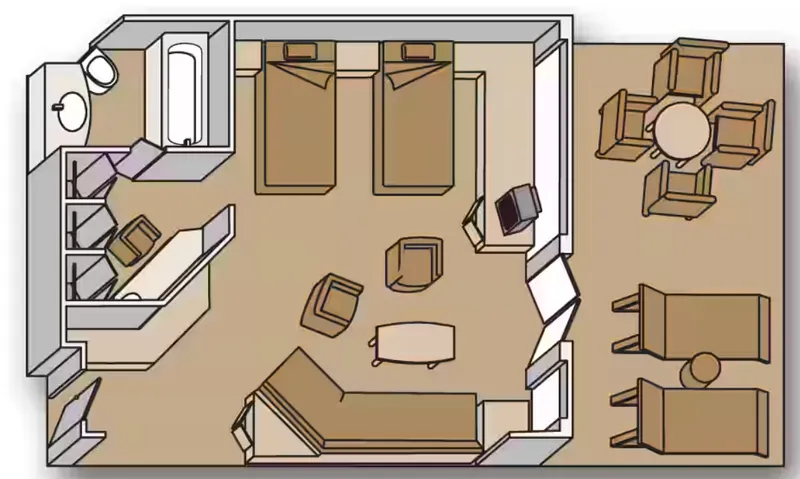

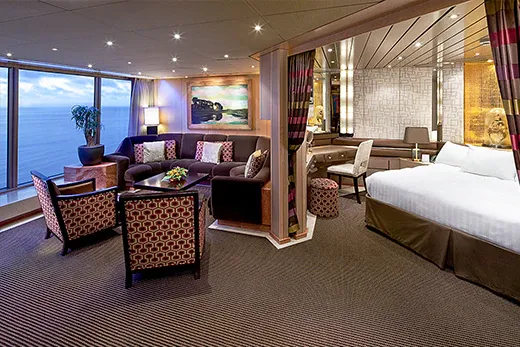
Neptune Suite
Suite
558–566 m²Max 4
SASB
Approximately 558-566 sq. ft. including verandah
With floor-to-ceiling windows overlooking a private verandah, these spacious suites are flooded with light. They feature a large sitting area with a mini-bar and refrigerator, and two lower beds convertible to one king-size bed—our signature Mariner's Dream bed with plush Euro-Top mattresses plus a separate dressing room. There's also a sofa bed, suitable for two people. The bathroom comes with a full-size whirlpool bath and shower. Amenities include use of the exclusive Neptune Lounge, a private concierge and an array of complimentary services. The configuration of staterooms may vary from the images.
King or Twin ConfigurationSofa BedShowerWhirlpool BathSuite BenefitsTV+9
View Details
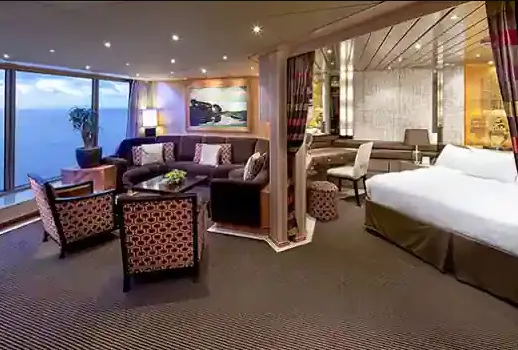

Pinnacle Suite
Suite
1296 m²Max 4
PS
Approximately 1,296 sq. ft. including verandah
Generously proportioned and filled with light, these elegant suites include a living room, dining room, pantry with microwave and refrigerator, and floor-to-ceiling windows overlooking a private verandah. The bedroom features a king-size bed—our Signature Mariner's Dream bed with plush Euro-Top mattresses, plus a separate dressing room and the bath includes an oversize whirlpool bath and shower as well as an additional shower stall. There's also a sofa bed, suitable for two people, and a guest toilet. Amenities include a private stereo system, use of the exclusive Neptune Lounge, private concierge and an array of complimentary services. The configuration of staterooms may vary from the images shown.
Sofa BedShowerWhirlpool BathSuite BenefitsTVSafe+10
US$67,019 /person+ US$1,610 taxes & fees

Vista Suite
Suite
297–379 m²Max 2
AAABBBBC
Approximately 297-379 sq. ft. including verandah
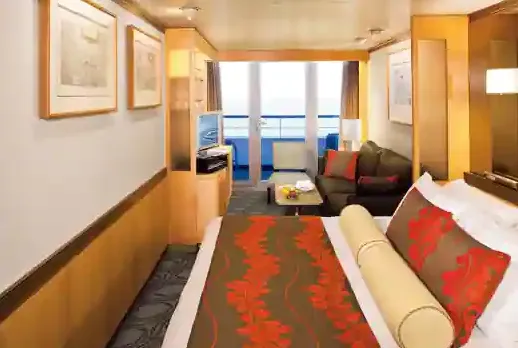
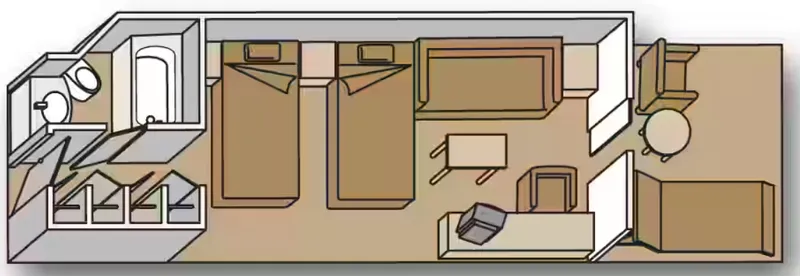
With a teak-lined verandah, floor-to-ceiling windows and comfortable sitting area, these comfortable suites are filled with light. They include two lower beds convertible to one queen-size bed—our signature Mariner's Dream bed with plush Euro-Top mattresses, plus a whirlpool bath and shower, mini-bar and refrigerator. The configuration of staterooms may vary from the images shown.
Queen or Twin ConfigurationShowerTVSafeHair DryerRoom Service Available+9
US$19,904 /person+ US$1,610 taxes & fees
Lanai Stateroom
Balcony
Lanai Stateroom
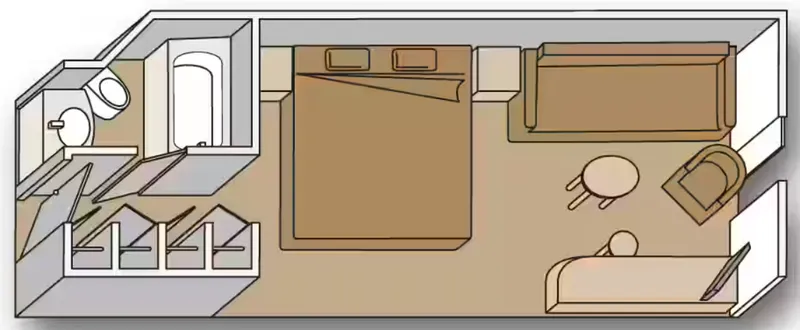
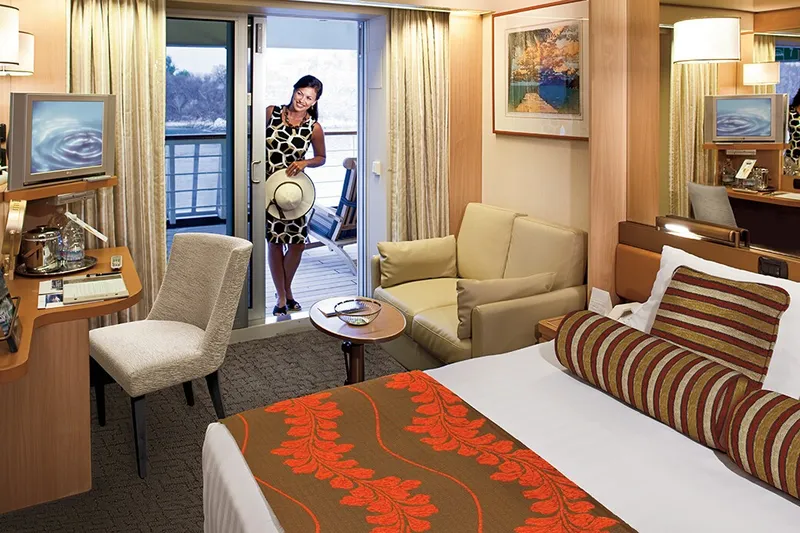
196–240 m²Max 2
CA
Approximately 196-240 sq. ft.
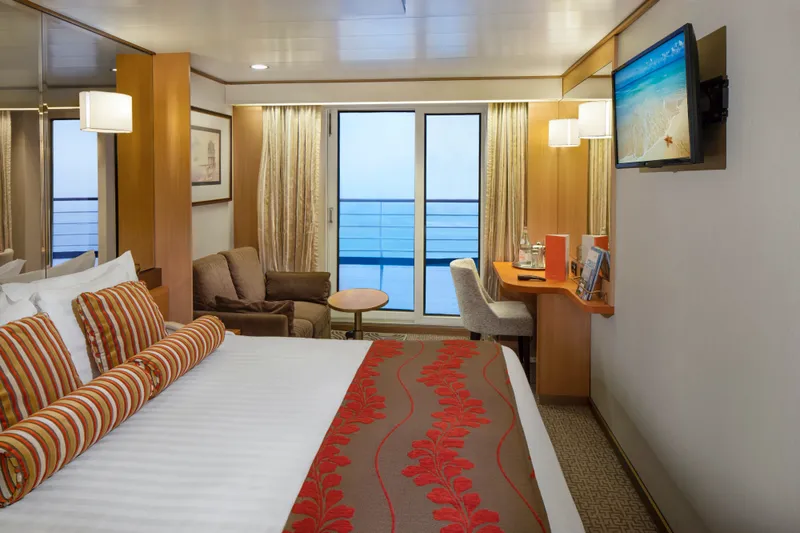
Sliding glass doors (mirrored for privacy) open onto our Promenade deck from this comfortable stateroom, which includes two lower beds convertible to one queen-size bed—our Signature Mariner's Dream bed with plush Euro-Top mattresses, premium massage shower heads and other amenities. The configuration of staterooms may vary from the images shown.
Queen or Twin ConfigurationTVSafeHair DryerRoom Service AvailableTelephone+5
US$17,564 /person+ US$1,610 taxes & fees


Large Ocean view Stateroom
Outside
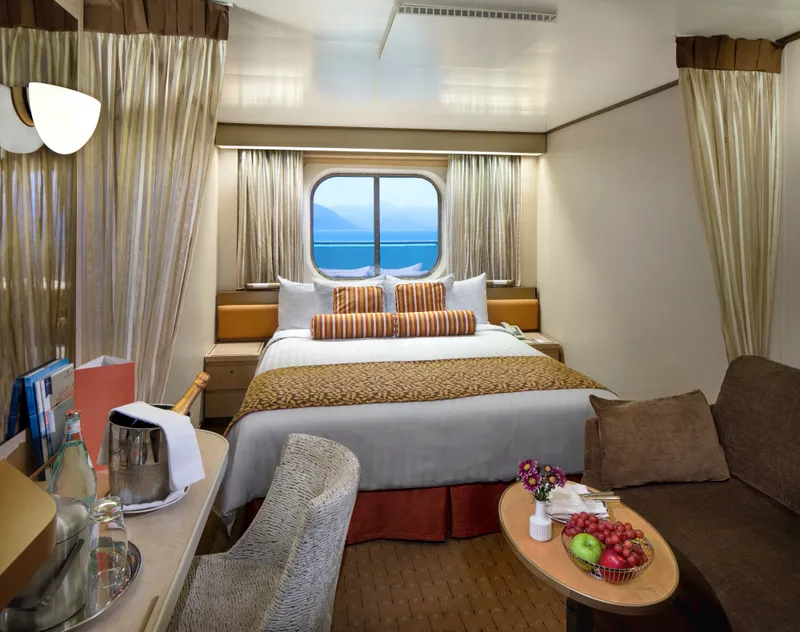
140–319 m²Max 2
CDDADDEEEFFF
Approximately 140-319 sq. ft.
These expansive staterooms include include two lower beds convertible to one queen-size bed—our Signature Mariner's Dream bed with plush Euro-Top mattresses, premium massage shower heads, a host of amenities and an ocean view. The configuration of staterooms may vary from the images shown.
Queen or Twin ConfigurationShowerTVSafeHair DryerRoom Service Available+5
US$11,564 /person+ US$1,610 taxes & fees


Large Ocean view Stateroom (Fully Obstructed View)
Outside
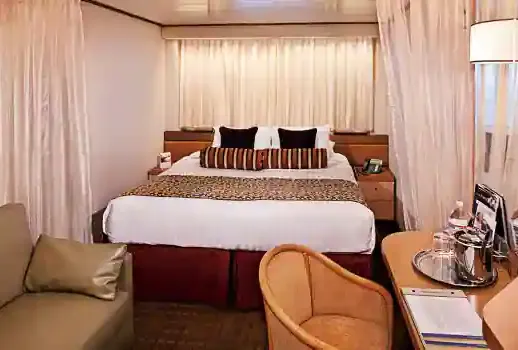
140–319 m²Max 2
HH
Approximately 140-319 sq. ft.
These large staterooms include two lower beds convertible to one queen-size bed—our Signature Mariner's Dream bed with plush Euro-Top mattresses, premium massage shower heads and a host of amenities. The view is fully obstructed. The configuration of staterooms may vary from the images shown.
Queen or Twin ConfigurationShowerRoom Service AvailableTVSafeHair Dryer+5
US$11,164 /person+ US$1,610 taxes & fees
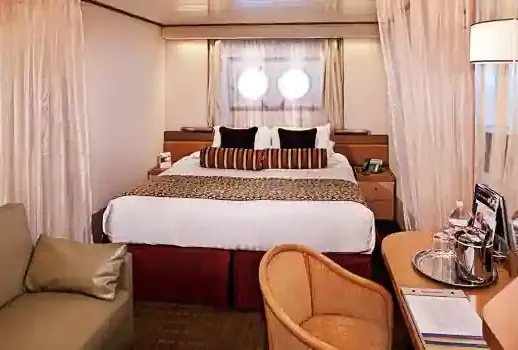


Large Ocean view Stateroom (Partial Sea View)
Outside
140–319 m²Max 2
H
Approximately 140-319 sq. ft.
These staterooms feature a partial sea view and include two lower beds convertible to one queen-size bed—our signature Mariner's Dream bed with plush Euro-Top mattresses, plus premium massage shower heads and a variety of amenities. The configuration of staterooms may vary from the images shown.
Queen or Twin ConfigurationShowerRoom Service AvailableTVSafeHair Dryer+5
US$11,304 /person+ US$1,610 taxes & fees
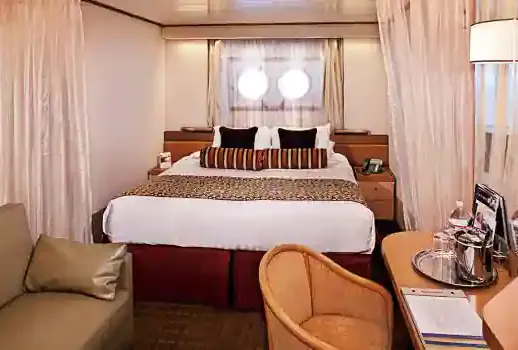


Large Ocean view Stateroom (Porthole View)
Outside
140–319 m²Max 2
G
Approximately 140-319 sq. ft.
These spacious staterooms include two lower beds convertible to one queen-size bed—our Signature Mariner's Dream bed with plush Euro-Top mattresses, premium massage shower heads, an array of modern amenities and a porthole. The configuration of staterooms may vary from the images shown.
Queen or Twin ConfigurationShowerRoom Service AvailableTVSafeHair Dryer+5
US$11,414 /person+ US$1,610 taxes & fees

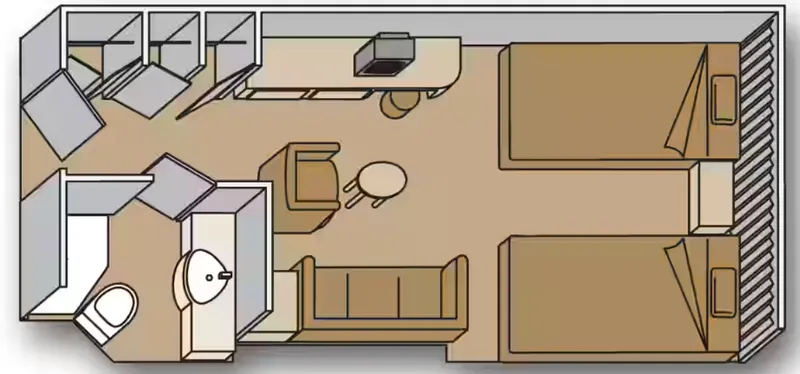

Large Interior Stateroom
Inside
151–233 m²Max 2
IJKLMMMN
Approximately 151–233 sq. ft.
Two lower beds convertible to one queen-size bed—our signature Mariner's Dream bed with plush Euro-Top mattresses, premium massage shower heads and a host of amenities are featured in these comfortable staterooms. The configuration of staterooms may vary from the images shown.
Queen or Twin ConfigurationShowerTVSafeHair DryerRoom Service Available+5
US$10,764 /person+ US$1,610 taxes & fees
Interested in This Voyage?
Our cruise specialists can help you find the perfect cabin and the best available pricing.
(+886) 02-2721-7300Contact Advisor