HX Expeditions980769980796
Greenland, Labrador and Newfoundland – Encounters at the Edge
Date
2026-09-20
Duration
17 nights
Departure Port
Nuuk Godthaab
Greenland
Arrival Port
St John's
Canada
Rating
Expedition
Theme
—
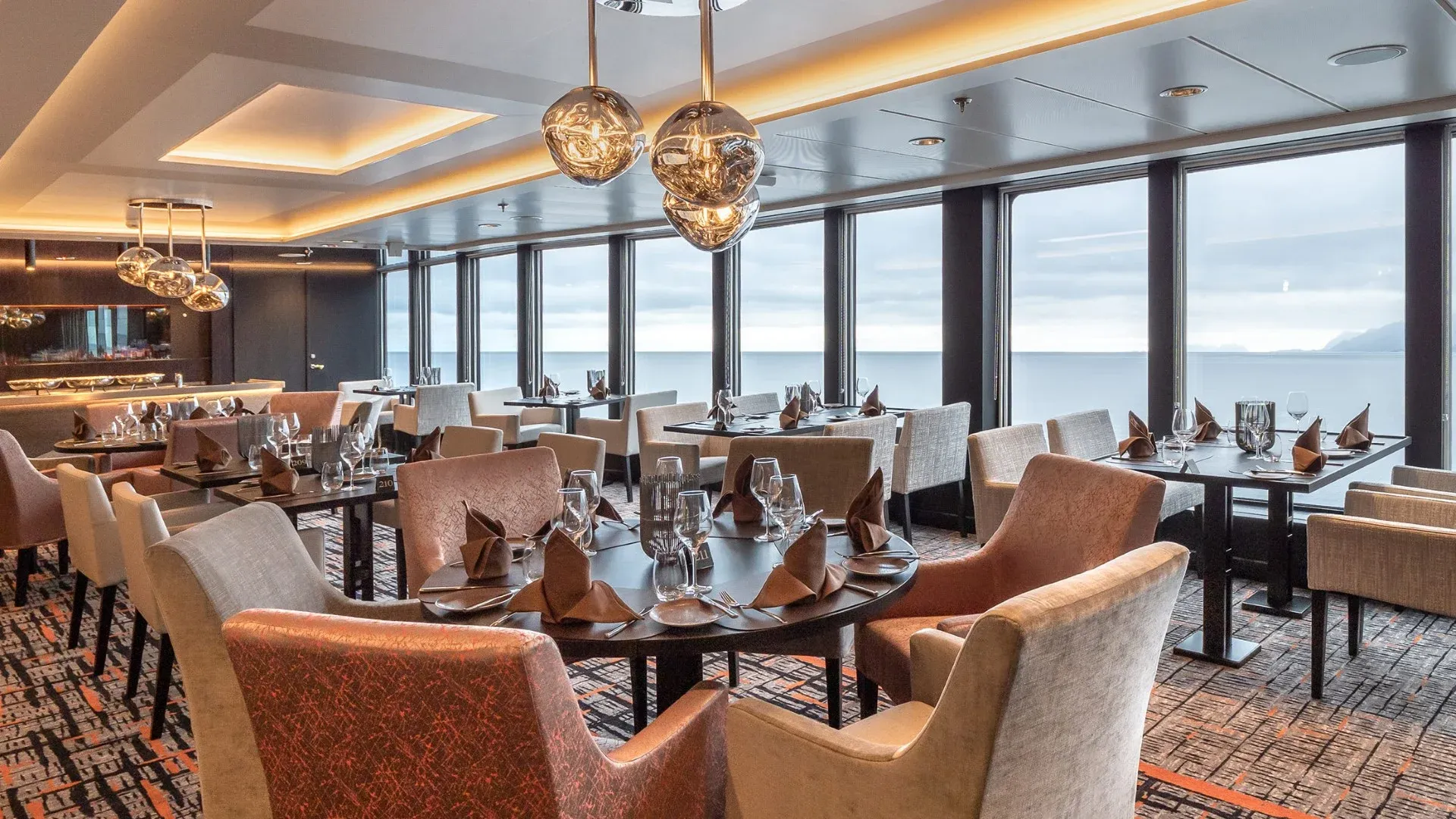
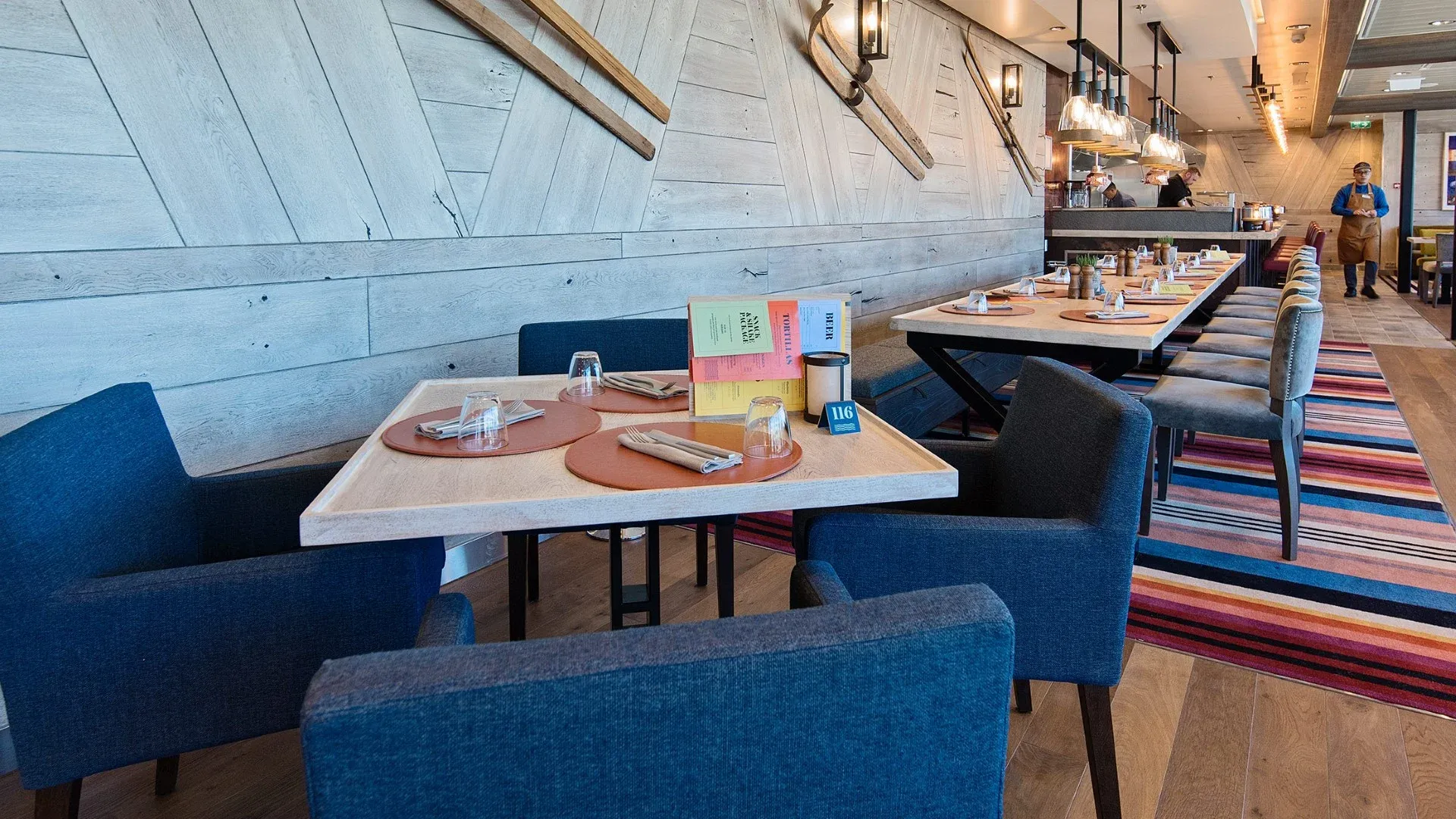
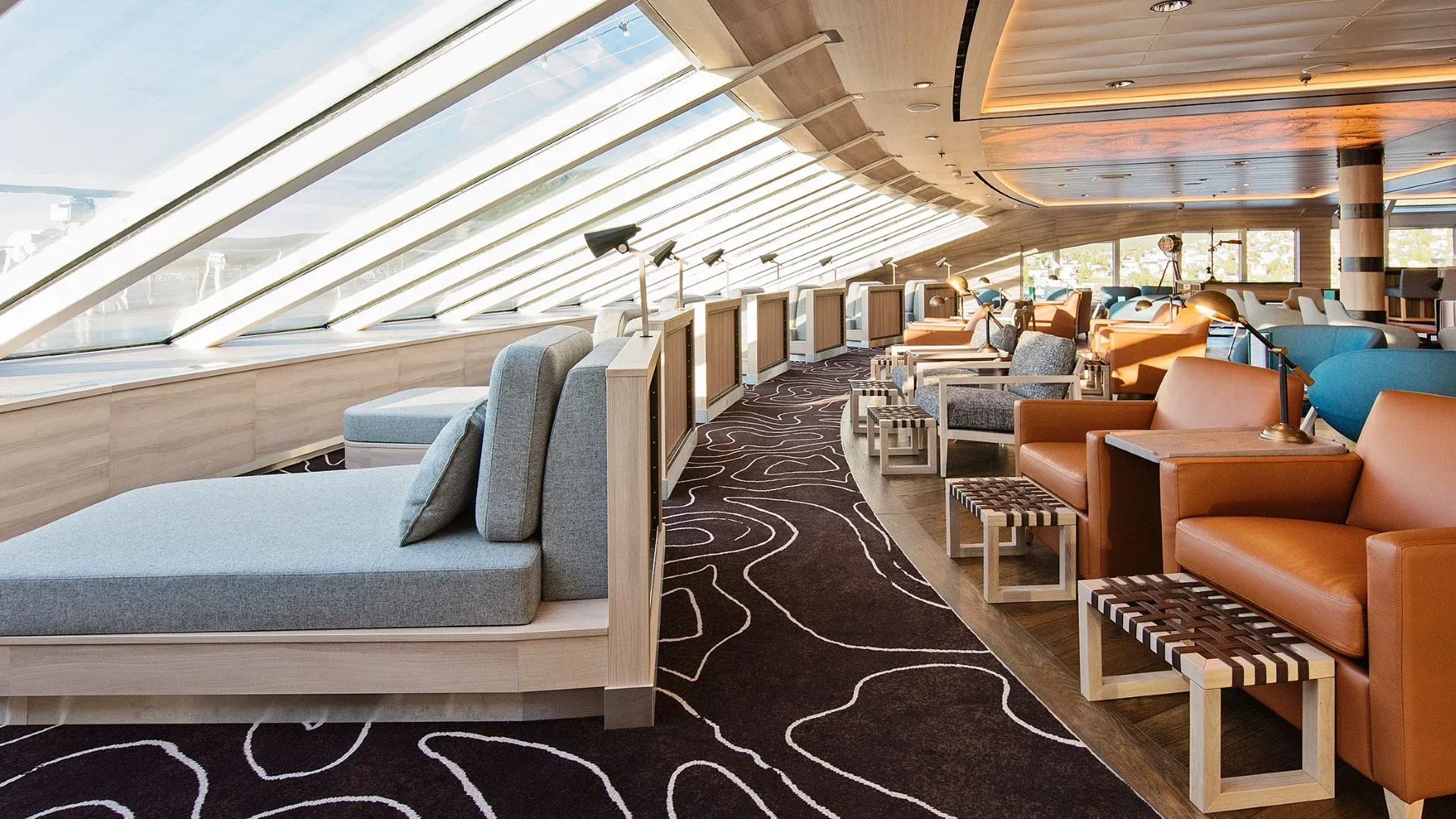
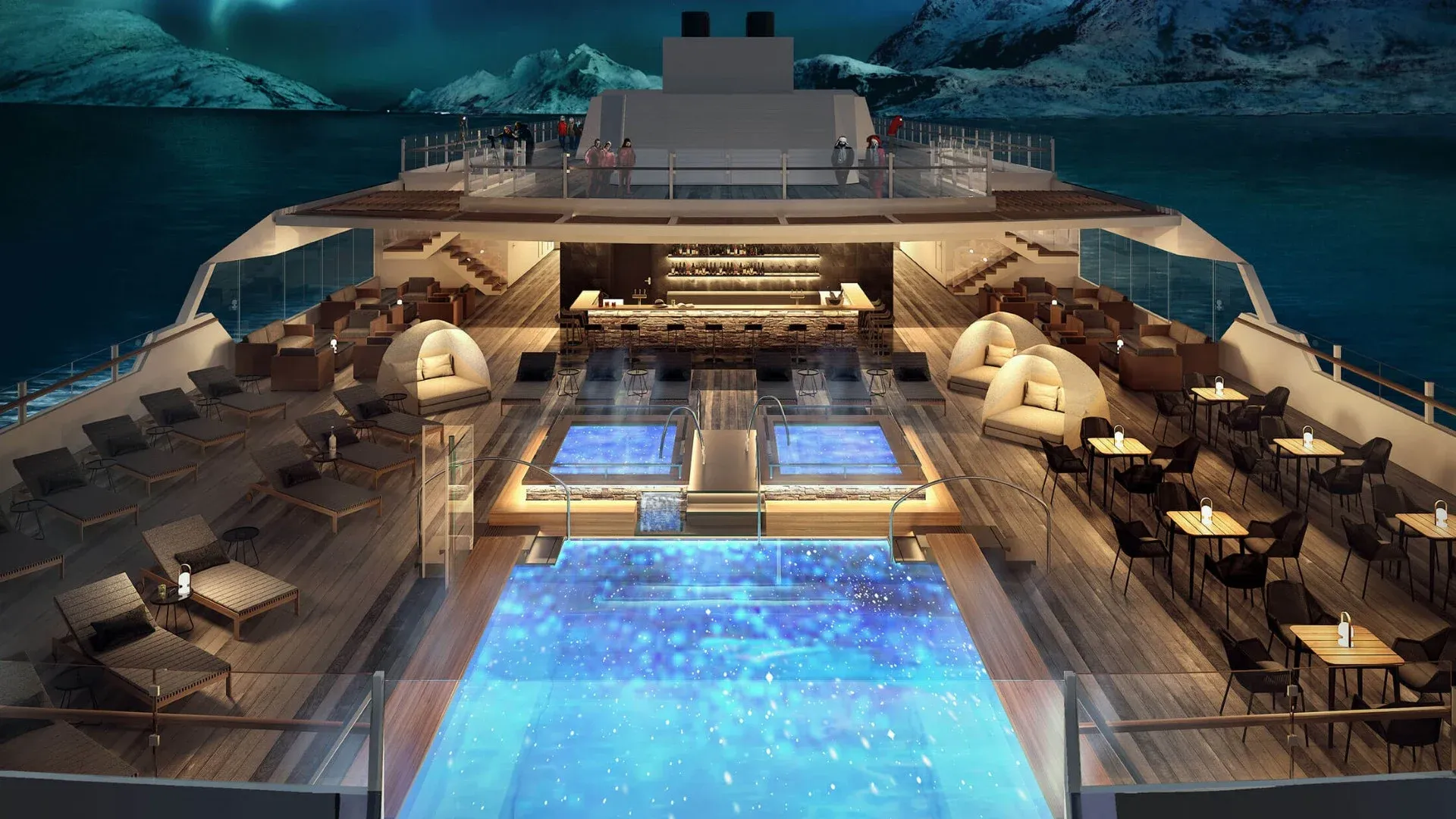
HX Expeditions
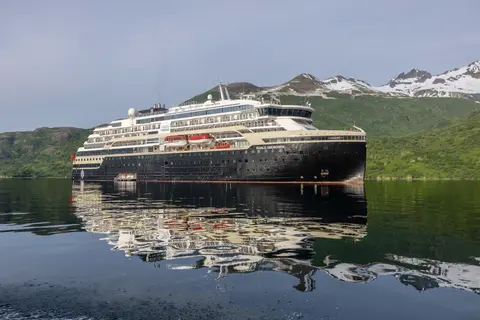
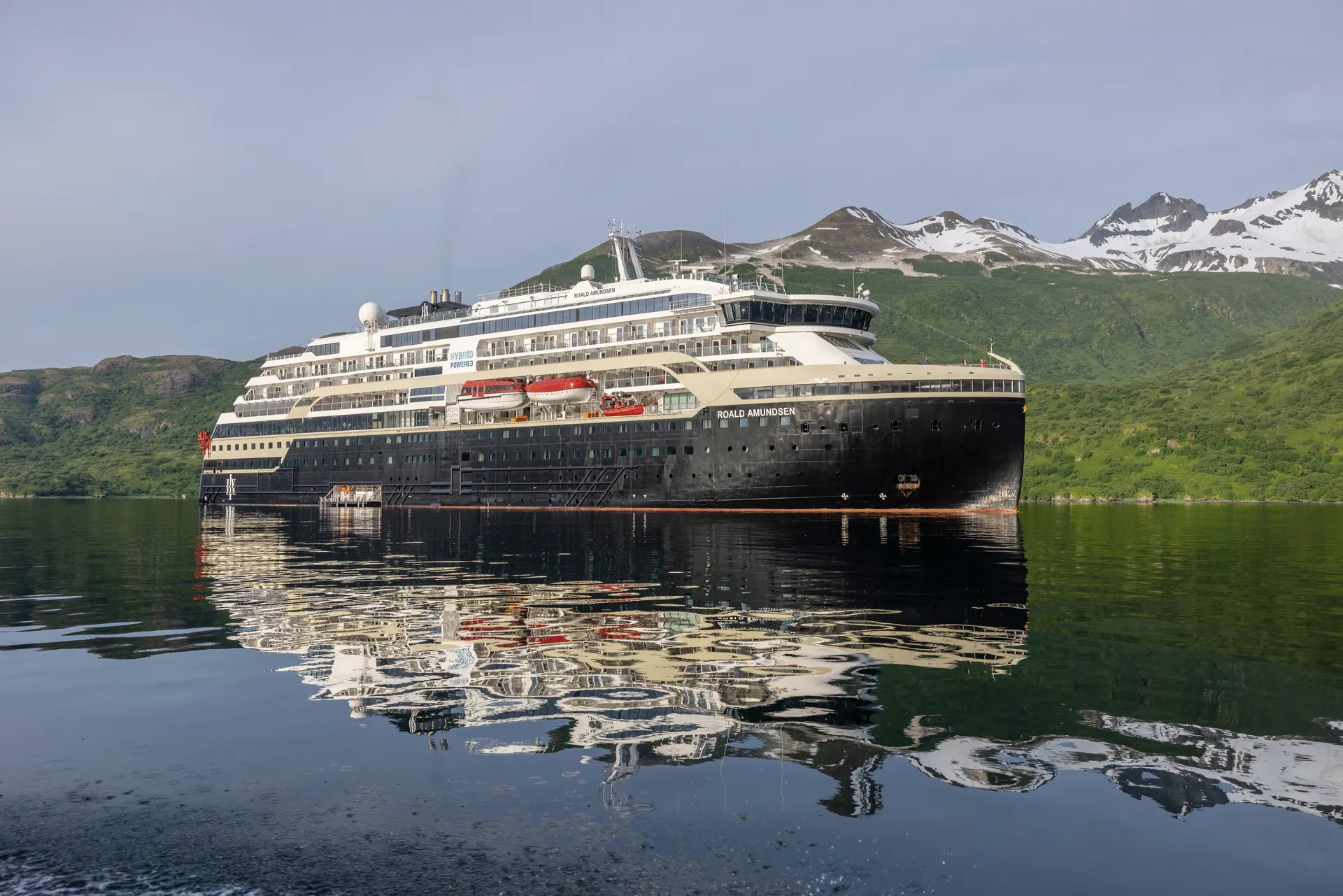
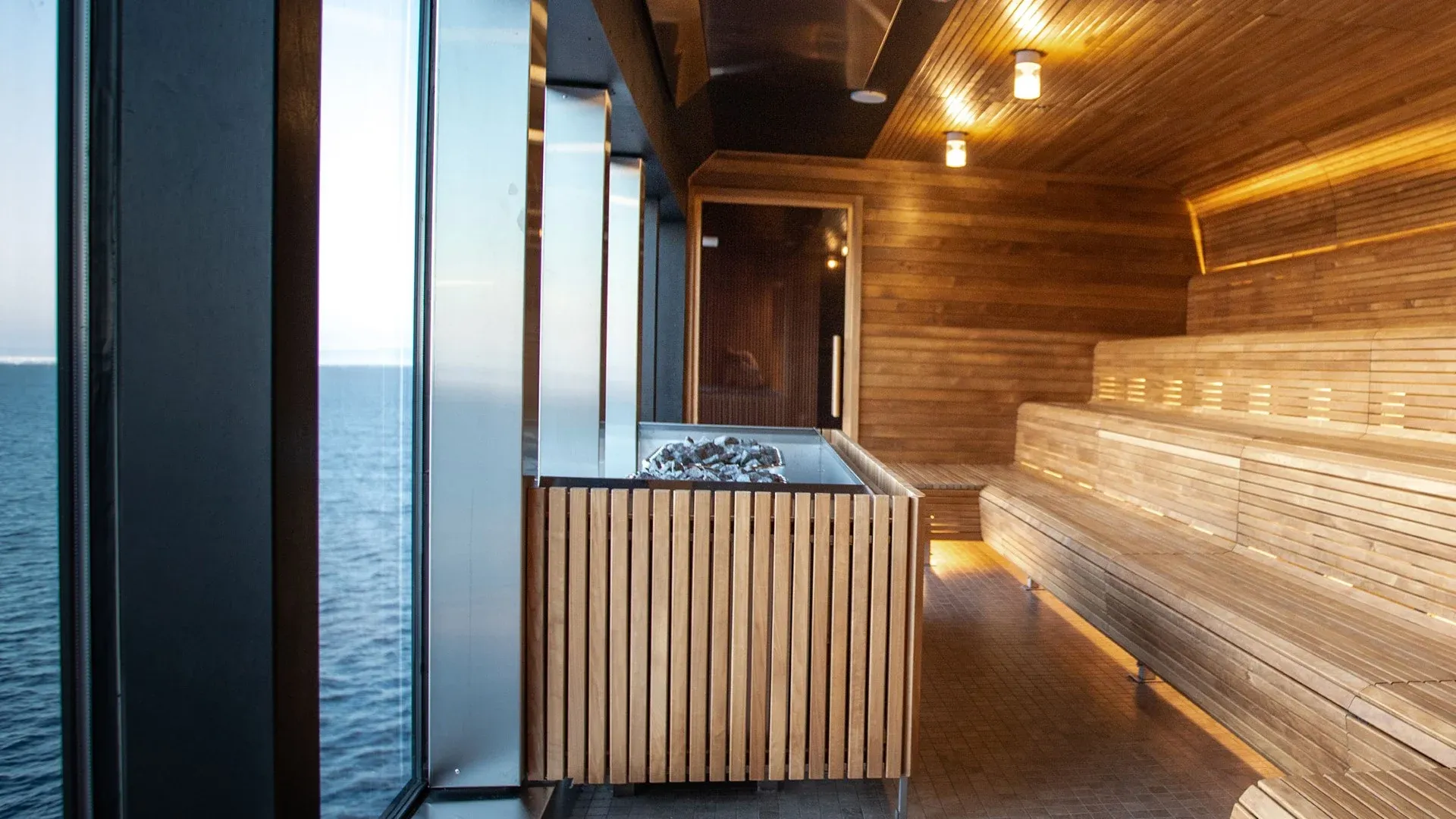
MS Roald Amundsen
Launched
2019
Refitted
—
Tonnage
20,889 GT
Passengers
530
Cabins
265
Crew
150
Length
459 m
Width
23.6 m
Speed
15 knots
Adults Only
No
Itinerary
Day 2
Day 2
Nuuk Godthaab
Depart 22:00
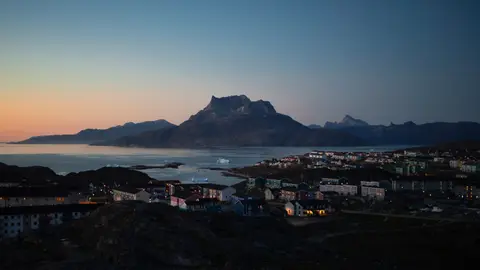
Nuuk, Greenland's diminutive capital, is a city of vivid contrasts — colourful colonial houses against Arctic granite, Inuit heritage alongside contemporary Nordic culture, and world-class museums steps from untamed fjords. Visitors should not miss the Greenland National Museum's Qilakitsoq mummies and a Zodiac excursion into the surrounding iceberg-studded fjord system. The prime cruising season runs from June through September, when extended daylight illuminates the landscape in an ethereal sub-Arctic glow and waters remain navigable for expedition vessels.
Day 3
Day 3
Kvanefjord
Arrive 13:00Depart 17:00
Kvanefjord, Greenland, Greenland is a spectacular maritime passage celebrated for its dramatic natural scenery and wildlife encounters, featured on expedition itineraries by HX Expeditions. Travelers should position themselves on open decks with quality binoculars for the best viewing experience, and take advantage of Zodiac excursions when conditions permit. The optimal season is June through August, when summer months bring the warmest temperatures and longest days.
Day 4
Day 4
Brattahlid (Qassiarsuk)
Arrive 08:30Depart 18:00
Qassiarsuk (Brattahlíð) in southern Greenland is where Erik the Red founded the first European settlement in the Americas in 985 AD — today a tiny sheep-farming village preserving Norse ruins, a reconstructed Viking church, and a graveyard of 144 colonists. Must-dos include walking the archaeological remains with a local guide, visiting Hans Lynge's bronze Erik the Red, and absorbing the fjord-and-ice-cap setting. June through September provides snow-free access and wildflower-dotted ruins.
Day 5
Day 5
Hvalsø
Arrive 08:00Depart 09:00
Hvalsø in southern Greenland is home to the best-preserved Norse ruin in the country—a fourteenth-century church where the last recorded event of Norse Greenland, a 1408 wedding, took place. Must-dos include exploring the enigmatic church ruins and contemplating the mystery of the vanished Norse civilization. Visit July through August for the warmest conditions and extended Arctic daylight.
Day 5
Day 5
Qaqortoq
Arrive 10:30Depart 19:00
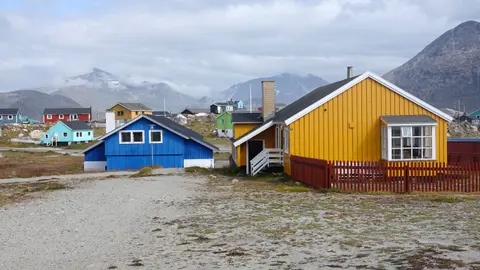
Qaqortoq is southern Greenland's largest town, where brightly painted houses climb above a fjord harbour amid open-air stone sculptures and Norse ruins. Must-do experiences include visiting the Hvalsey Norse church ruins, soaking in the Uunartoq hot springs surrounded by icebergs, and tasting Arctic char and musk ox. June through September offers the accessible season, with July and August warmest for fjord exploration.
Day 6
Day 6
At Sea
Day 8
Day 8
Saglek Fjord
Arrive 07:00Depart 19:00
Saglek Fjord in Labrador's Torngat Mountains National Park is one of North America's most remote wilderness destinations, featuring nearly four-billion-year-old rock formations, polar bears, caribou migrations, and deep Inuit cultural heritage. Must-dos include zodiac cruises along ancient cliff faces and guided Inuit cultural experiences. Best visited July through September when sea ice permits access.
Day 9
Day 9
Narvik
Arrive 07:00Depart 19:00
Narvik is a vibrant Arctic port city known for its rich history and year-round ice-free harbor, making it a crucial hub for iron ore exports. Must-do experiences include savoring traditional dishes like Reinsdyrstek and exploring the scenic Ofoten Railway. The best season to visit is during the summer months when the long days and stunning natural beauty are at their peak.
Day 10
Day 10
Ramah Bay
Arrive 07:00Depart 19:00
Ramah Bay is a remote Labrador fjord within Canada's Torngat Mountains National Park, where 3-billion-year-old peaks rise from polar bear territory and 7,000-year-old Indigenous chert quarries reveal ancient trade networks. Must-dos include exploring under Inuit bear guard protection, viewing ancient Ramah chert quarry sites, and spotting humpback whales in the Labrador Sea. Visit late July through August for the brief ice-free window and peak wildlife activity.
Day 11
Day 11
Hebron
Arrive 07:00Depart 17:00
Hebron, a former Moravian mission on Labrador's Arctic coast, stands as one of Canada's most significant and haunting historical sites—its Inuit residents forcibly relocated in 1959 in a trauma still reverberating today. The restored mission buildings sit within Torngat Mountains National Park, a wilderness of polar bears, caribou, and glacier-carved fjords. HX Expeditions and Seabourn bring expedition travelers by Zodiac to this roadless shore where Inuit heritage, Arctic grandeur, and the ongoing journey of reconciliation converge.
Day 12
Day 12
Hopedale
Arrive 13:00Depart 19:00
Hopedale on Labrador's remote coast preserves one of Canada's oldest wooden structures — a 1782 Moravian mission complex that documents nearly 250 years of Inuit-European encounter. The community of 600 Inuit residents maintains active subsistence traditions alongside this historical heritage. Must-dos include the mission museum tour with local guides, whale watching for humpbacks and minkes, and witnessing the capelin spawning. July through September offers ice-free access and long subarctic days.
Day 13
Day 13
At Sea
Day 14
Day 14
Battle Harbor
Arrive 07:00Depart 18:00
Battle Harbor, Newfoundland and Labrador, Canada, offers an authentic North American experience where stunning natural landscapes meet communities of genuine character. Visitors should explore the surrounding wilderness and sample the honest, locally sourced cuisine that defines the region. The ideal visiting period is May through October, when the climate is at its most welcoming for outdoor exploration. Cruise lines including Ponant feature this port on their most compelling itineraries. Whether you have a few hours or a full day, the port rewards exploration at every pace and in every direction.
Day 15
Day 15
Red Bay
Arrive 07:00Depart 19:00
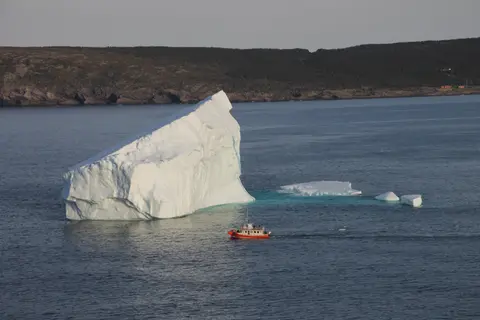
Red Bay is a UNESCO World Heritage Site on Labrador's coast where sixteenth-century Basque whalers operated the world's largest whaling industry, leaving remarkably preserved shipwrecks and onshore tryworks. Must-dos include visiting the National Historic Site museum, taking a boat to Saddle Island's tryworks ruins, and watching for whales and icebergs in the Strait of Belle Isle. Visit July to August for the warmest weather and best wildlife sightings.
Day 16
Day 16
Saint-Anthony
Arrive 07:00Depart 18:00
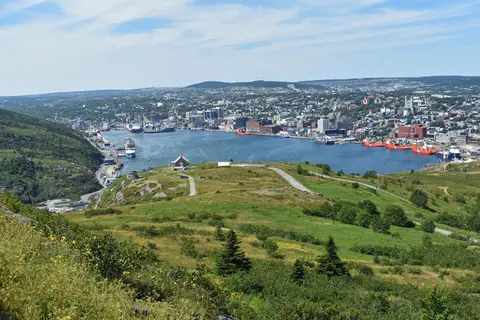
Saint-Anthony perches at Newfoundland's northern tip, where massive Greenland icebergs drift past headlands and humpback whales chase capelin through frigid waters. Must-dos include iceberg boat tours (May-July), visiting the Grenfell Historic Properties, and day-tripping to L'Anse aux Meadows — the Viking settlement predating Columbus by five centuries. The best season spans June through September, with May-July ideal for iceberg viewing and July-August for whale watching.
Day 17
Day 17
Berlevag
Arrive 09:00Depart 19:00
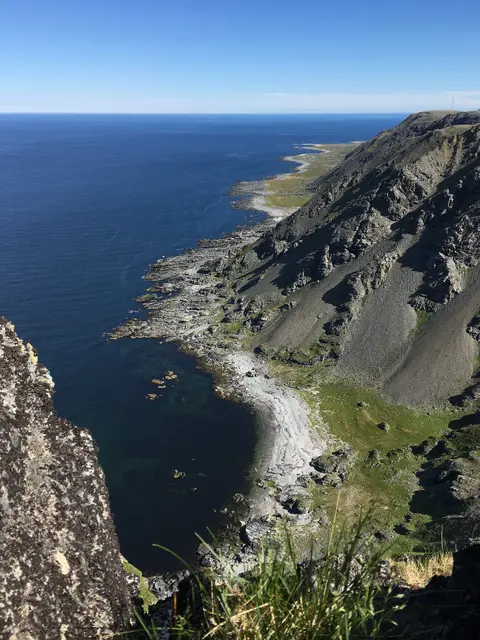
Berlevåg, clinging to Norway's exposed Barents Sea coast at 70°N, is among the most remote inhabited places in continental Europe — a fishing town whose sheer defiance of the Arctic elements became the subject of the celebrated 2001 documentary 'Cool and Crazy.' The town's iconic wave-breaker, stretching 600 metres into the Barents Sea, is an engineering feat as audacious as the community it protects; beyond it, the Varanger Peninsula's treeless tundra offers extraordinary birdwatching, with rare species gathered in the surrounding estuary reserves. Visit in summer for the midnight sun; winter brings the Northern Lights dancing over the Arctic Ocean. Vadsø is an hour's drive east along the Varanger coast.
Day 18
Day 18
St John's
Arrive 07:00
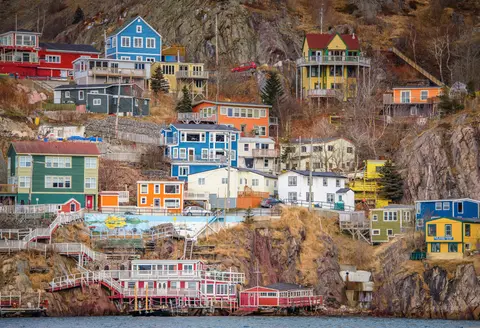
St. John's is North America's oldest English-founded city, a colourful Newfoundland harbour capital where Jellybean Row houses climb steep hills, Marconi received the first transatlantic wireless signal, and icebergs drift past the harbour mouth each spring. Must-dos include climbing Signal Hill for Atlantic panoramas, the screech-in cod-kissing ceremony, and hiking to Cape Spear — the continent's easternmost point. Visit July or August for warm weather and iceberg season.
Day 2
Nuuk Godthaab
Depart 22:00
Nuuk, Greenland's diminutive capital, is a city of vivid contrasts — colourful colonial houses against Arctic granite, Inuit heritage alongside contemporary Nordic culture, and world-class museums steps from untamed fjords. Visitors should not miss the Greenland National Museum's Qilakitsoq mummies and a Zodiac excursion into the surrounding iceberg-studded fjord system. The prime cruising season runs from June through September, when extended daylight illuminates the landscape in an ethereal sub-Arctic glow and waters remain navigable for expedition vessels.
Day 3
Kvanefjord
Arrive 13:00Depart 17:00
Kvanefjord, Greenland, Greenland is a spectacular maritime passage celebrated for its dramatic natural scenery and wildlife encounters, featured on expedition itineraries by HX Expeditions. Travelers should position themselves on open decks with quality binoculars for the best viewing experience, and take advantage of Zodiac excursions when conditions permit. The optimal season is June through August, when summer months bring the warmest temperatures and longest days.
Day 4
Brattahlid (Qassiarsuk)
Arrive 08:30Depart 18:00
Qassiarsuk (Brattahlíð) in southern Greenland is where Erik the Red founded the first European settlement in the Americas in 985 AD — today a tiny sheep-farming village preserving Norse ruins, a reconstructed Viking church, and a graveyard of 144 colonists. Must-dos include walking the archaeological remains with a local guide, visiting Hans Lynge's bronze Erik the Red, and absorbing the fjord-and-ice-cap setting. June through September provides snow-free access and wildflower-dotted ruins.
Day 5
Hvalsø
Arrive 08:00Depart 09:00
Hvalsø in southern Greenland is home to the best-preserved Norse ruin in the country—a fourteenth-century church where the last recorded event of Norse Greenland, a 1408 wedding, took place. Must-dos include exploring the enigmatic church ruins and contemplating the mystery of the vanished Norse civilization. Visit July through August for the warmest conditions and extended Arctic daylight.
Qaqortoq
Arrive 10:30Depart 19:00
Qaqortoq is southern Greenland's largest town, where brightly painted houses climb above a fjord harbour amid open-air stone sculptures and Norse ruins. Must-do experiences include visiting the Hvalsey Norse church ruins, soaking in the Uunartoq hot springs surrounded by icebergs, and tasting Arctic char and musk ox. June through September offers the accessible season, with July and August warmest for fjord exploration.
Day 6
At Sea
Day 8
Saglek Fjord
Arrive 07:00Depart 19:00
Saglek Fjord in Labrador's Torngat Mountains National Park is one of North America's most remote wilderness destinations, featuring nearly four-billion-year-old rock formations, polar bears, caribou migrations, and deep Inuit cultural heritage. Must-dos include zodiac cruises along ancient cliff faces and guided Inuit cultural experiences. Best visited July through September when sea ice permits access.
Day 9
Narvik
Arrive 07:00Depart 19:00
Narvik is a vibrant Arctic port city known for its rich history and year-round ice-free harbor, making it a crucial hub for iron ore exports. Must-do experiences include savoring traditional dishes like Reinsdyrstek and exploring the scenic Ofoten Railway. The best season to visit is during the summer months when the long days and stunning natural beauty are at their peak.
Day 10
Ramah Bay
Arrive 07:00Depart 19:00
Ramah Bay is a remote Labrador fjord within Canada's Torngat Mountains National Park, where 3-billion-year-old peaks rise from polar bear territory and 7,000-year-old Indigenous chert quarries reveal ancient trade networks. Must-dos include exploring under Inuit bear guard protection, viewing ancient Ramah chert quarry sites, and spotting humpback whales in the Labrador Sea. Visit late July through August for the brief ice-free window and peak wildlife activity.
Day 11
Hebron
Arrive 07:00Depart 17:00
Hebron, a former Moravian mission on Labrador's Arctic coast, stands as one of Canada's most significant and haunting historical sites—its Inuit residents forcibly relocated in 1959 in a trauma still reverberating today. The restored mission buildings sit within Torngat Mountains National Park, a wilderness of polar bears, caribou, and glacier-carved fjords. HX Expeditions and Seabourn bring expedition travelers by Zodiac to this roadless shore where Inuit heritage, Arctic grandeur, and the ongoing journey of reconciliation converge.
Day 12
Hopedale
Arrive 13:00Depart 19:00
Hopedale on Labrador's remote coast preserves one of Canada's oldest wooden structures — a 1782 Moravian mission complex that documents nearly 250 years of Inuit-European encounter. The community of 600 Inuit residents maintains active subsistence traditions alongside this historical heritage. Must-dos include the mission museum tour with local guides, whale watching for humpbacks and minkes, and witnessing the capelin spawning. July through September offers ice-free access and long subarctic days.
Day 13
At Sea
Day 14
Battle Harbor
Arrive 07:00Depart 18:00
Battle Harbor, Newfoundland and Labrador, Canada, offers an authentic North American experience where stunning natural landscapes meet communities of genuine character. Visitors should explore the surrounding wilderness and sample the honest, locally sourced cuisine that defines the region. The ideal visiting period is May through October, when the climate is at its most welcoming for outdoor exploration. Cruise lines including Ponant feature this port on their most compelling itineraries. Whether you have a few hours or a full day, the port rewards exploration at every pace and in every direction.
Day 15
Red Bay
Arrive 07:00Depart 19:00
Red Bay is a UNESCO World Heritage Site on Labrador's coast where sixteenth-century Basque whalers operated the world's largest whaling industry, leaving remarkably preserved shipwrecks and onshore tryworks. Must-dos include visiting the National Historic Site museum, taking a boat to Saddle Island's tryworks ruins, and watching for whales and icebergs in the Strait of Belle Isle. Visit July to August for the warmest weather and best wildlife sightings.
Day 16
Saint-Anthony
Arrive 07:00Depart 18:00
Saint-Anthony perches at Newfoundland's northern tip, where massive Greenland icebergs drift past headlands and humpback whales chase capelin through frigid waters. Must-dos include iceberg boat tours (May-July), visiting the Grenfell Historic Properties, and day-tripping to L'Anse aux Meadows — the Viking settlement predating Columbus by five centuries. The best season spans June through September, with May-July ideal for iceberg viewing and July-August for whale watching.
Day 17
Berlevag
Arrive 09:00Depart 19:00
Berlevåg, clinging to Norway's exposed Barents Sea coast at 70°N, is among the most remote inhabited places in continental Europe — a fishing town whose sheer defiance of the Arctic elements became the subject of the celebrated 2001 documentary 'Cool and Crazy.' The town's iconic wave-breaker, stretching 600 metres into the Barents Sea, is an engineering feat as audacious as the community it protects; beyond it, the Varanger Peninsula's treeless tundra offers extraordinary birdwatching, with rare species gathered in the surrounding estuary reserves. Visit in summer for the midnight sun; winter brings the Northern Lights dancing over the Arctic Ocean. Vadsø is an hour's drive east along the Varanger coast.
Day 18
St John's
Arrive 07:00
St. John's is North America's oldest English-founded city, a colourful Newfoundland harbour capital where Jellybean Row houses climb steep hills, Marconi received the first transatlantic wireless signal, and icebergs drift past the harbour mouth each spring. Must-dos include climbing Signal Hill for Atlantic panoramas, the screech-in cod-kissing ceremony, and hiking to Cape Spear — the continent's easternmost point. Visit July or August for warm weather and iceberg season.
Cabin Categories
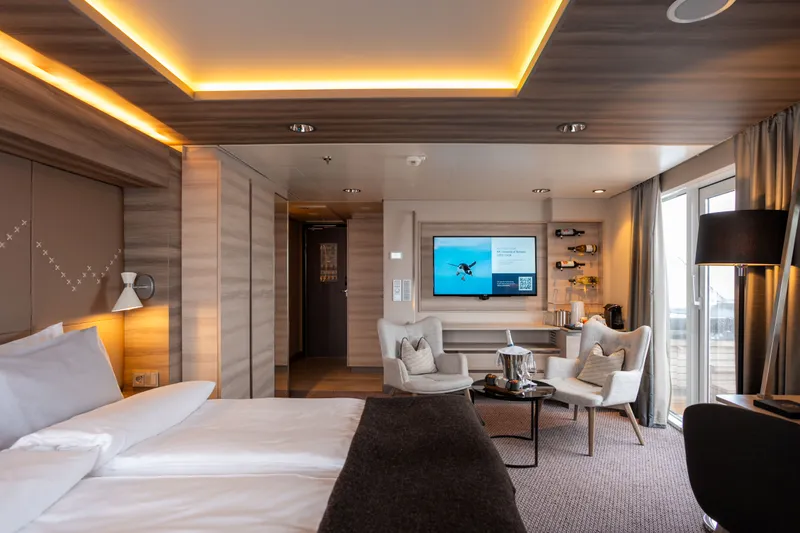

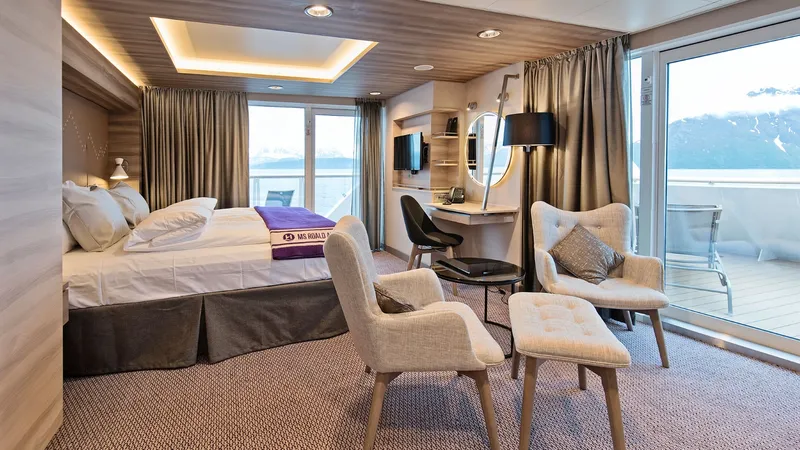
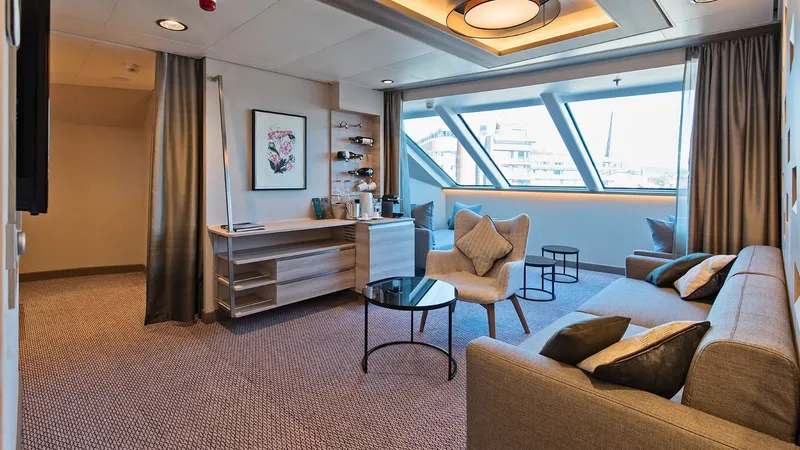
Expedition Corner Suite
Suite
215–323 m²Max 2
MCMF
Aft corner suite with private balcony and jacuzzi, various sizes, large windows, flexible sleeping arrangements, some w/sofa, TV, mini-bar, amenity kit, bathrobe, kettle, tea and coffee, espresso maker
DoubleShowerToiletries ProvidedFree Mini BarTVCoffee Machine+5
View Details
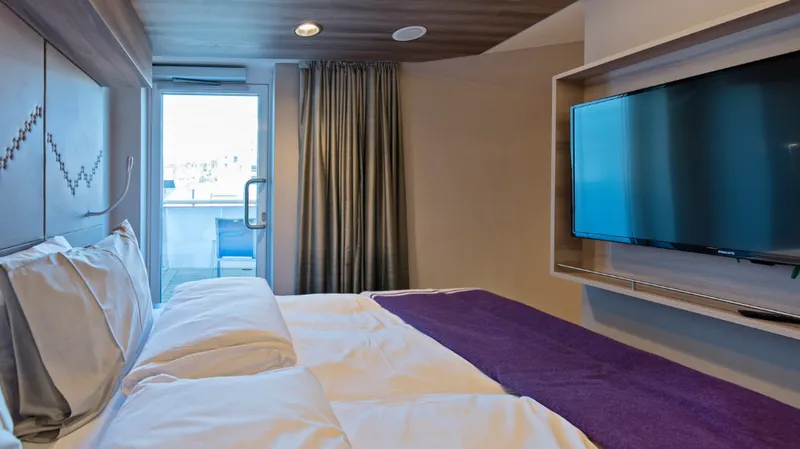
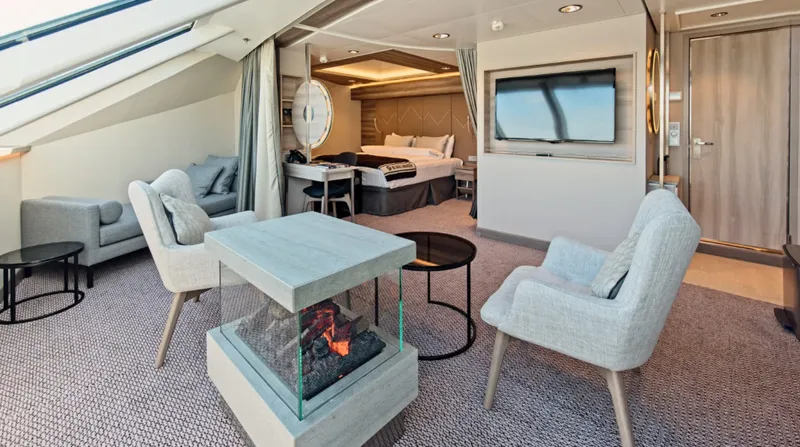
Expedition Large Suite
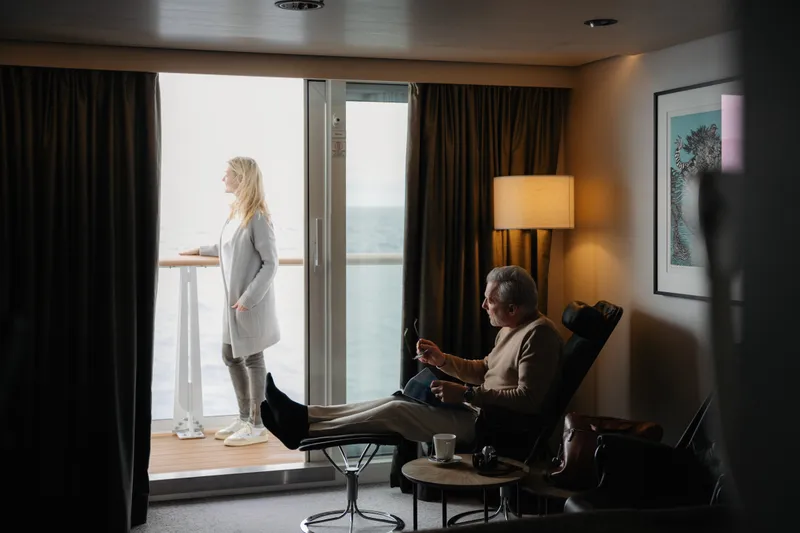
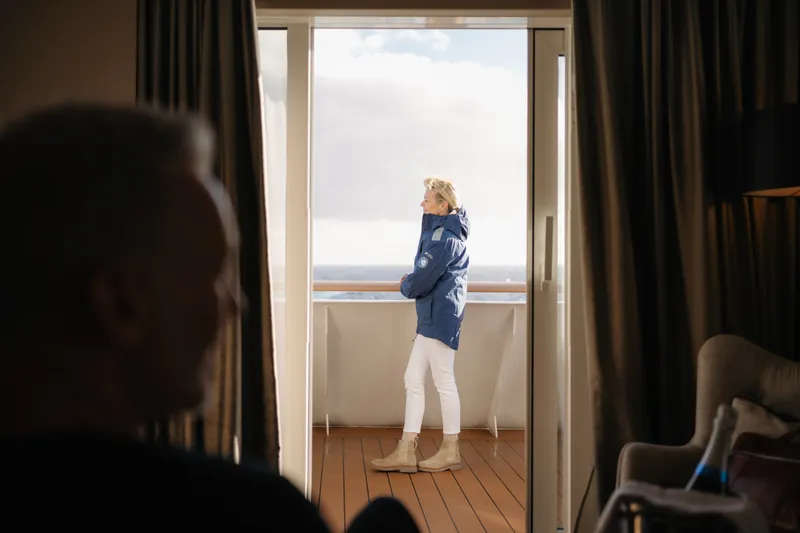
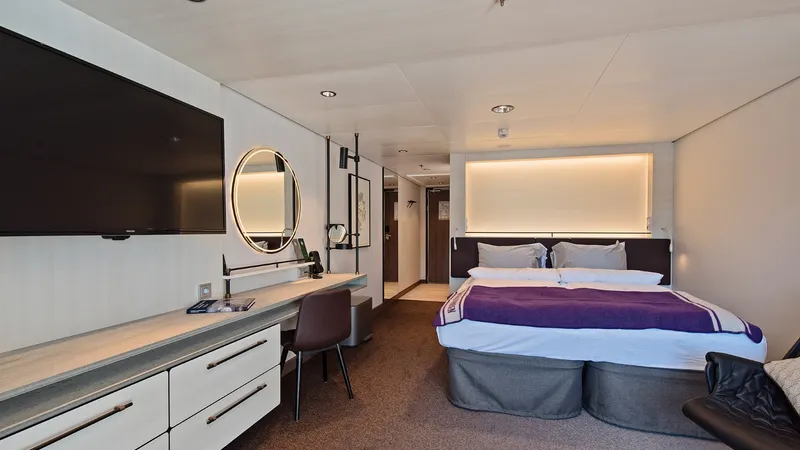
Suite
378 m²Max 4
MD
Large corner suite with private balcony, flexible sleeping arrangements, sofabed, TV, mini-bar, amenity kit, bathrobe, kettle espresso maker, adapted for guests with wheelchair ]
DoubleShowerToiletries ProvidedFree Mini BarMini Bar (Additional Cost)TV+6
View Details
Expedition Suite
Suite
236–301 m²Max 4
ME
Suites with private balcony, different sizes, top-high decks, flexible sleeping arrangements, some with sofabed, TV, mini-bar, amenity kit, kettle, tea and coffee, bathrobe, espresso maker
DoubleShowerWhirlpool BathToiletries ProvidedTVHair Dryer+4
View Details


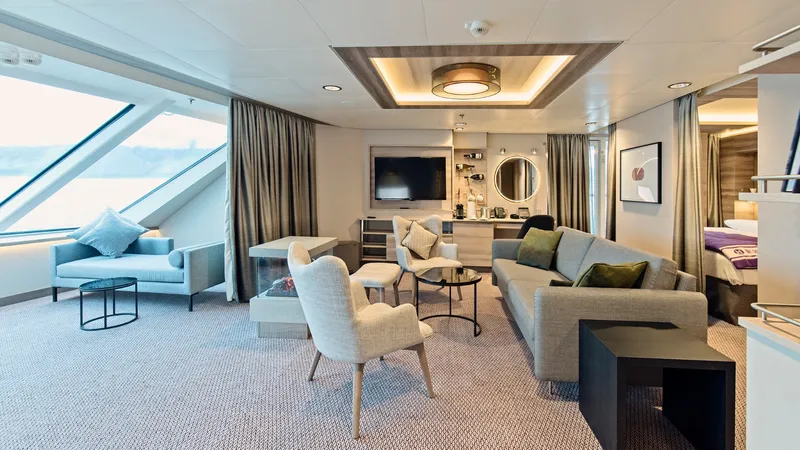
Expedition XL Suite
Suite
474–517 m²Max 4
MAMB
Extra large corner suite with private balcony, most spacious cabins w/flexible sleeping arrangements, large windows, sofa bed, TV, mini-bar, amenity kit, bathrobe kettle, tea and coffee, espresso maker
DoubleSofa BedShowerToiletries ProvidedTVCoffee Machine+6
View Details
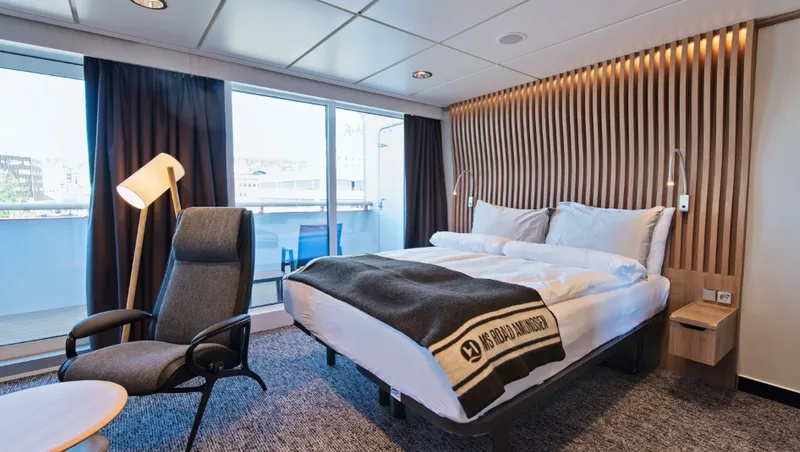
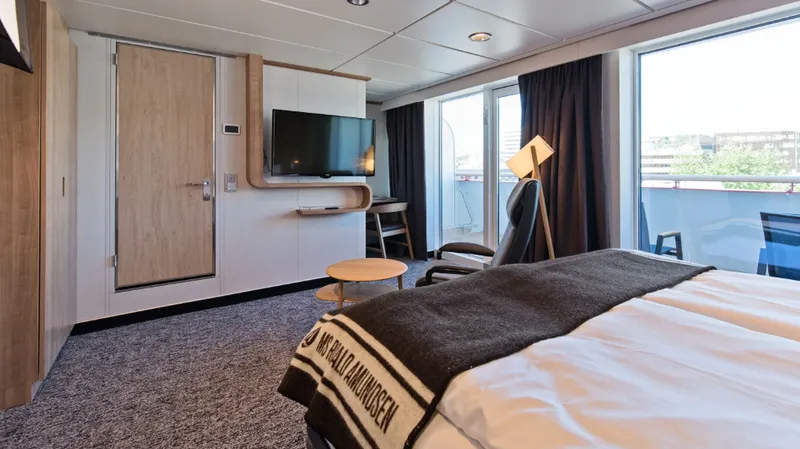
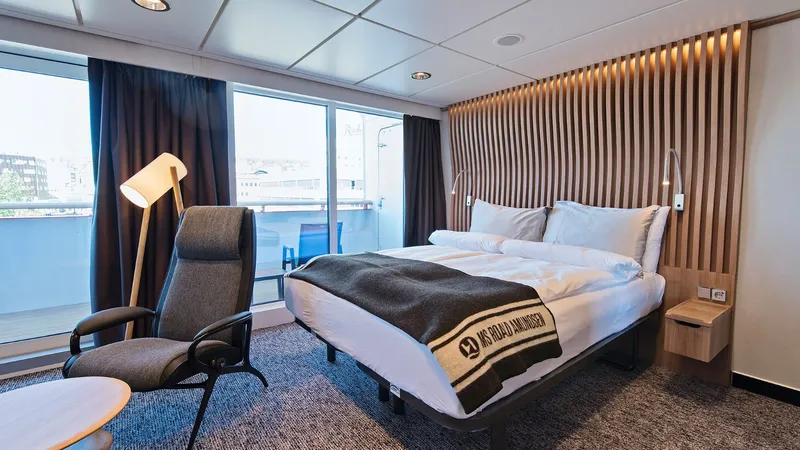
Arctic Superior
Balcony
Arctic Superior
161–290 m²Max 4
TTTYXTXTDXTJXY
High deck cabins with balcony. Spacious cabins, different sizes, flexible sleeping arrangements, some with sofabed, TV, kettle, tea and coffee. With limited view.
DoubleShowerToiletries ProvidedRoom Service AvailableTVCoffee Machine+6
View Details
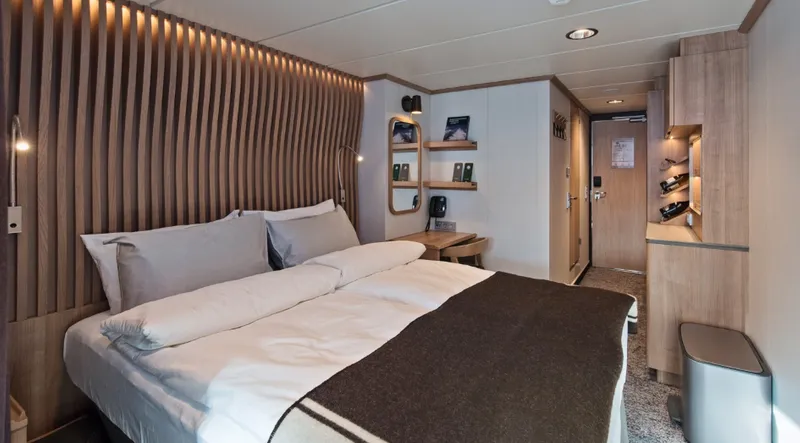
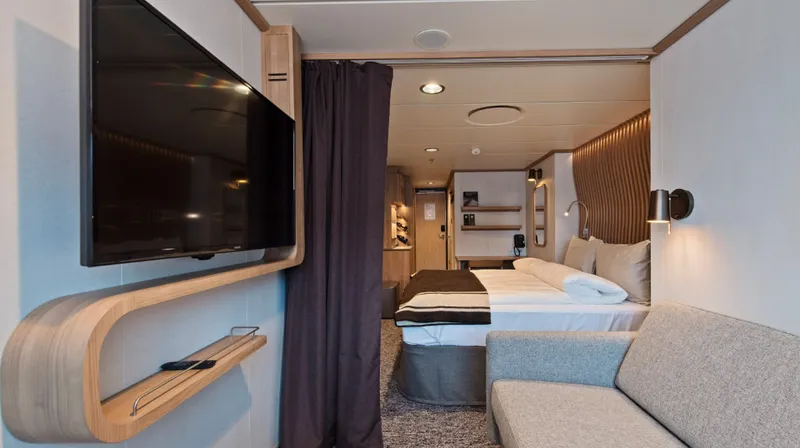
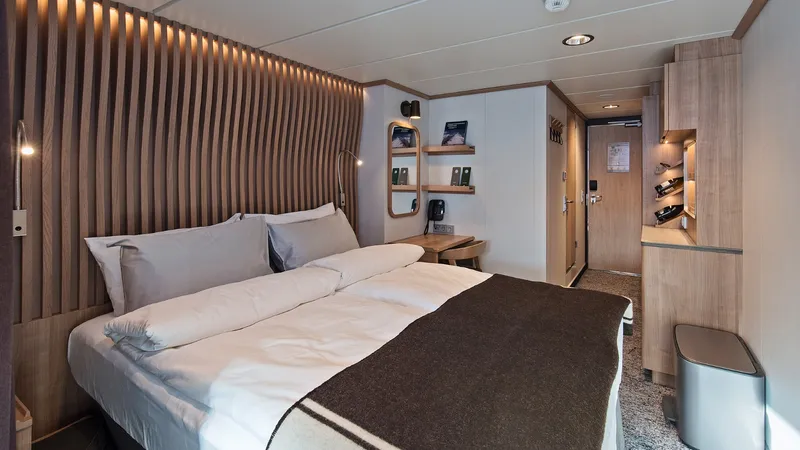
Polar Outside
Outside
204–247 m²Max 2
RRRS
Cabins on middle decks, double bed, TV
DoubleTwinShowerToiletries ProvidedTVHair Dryer+4
View Details
Interested in This Voyage?
Our cruise specialists can help you find the perfect cabin and the best available pricing.
(+886) 02-2721-7300Contact Advisor