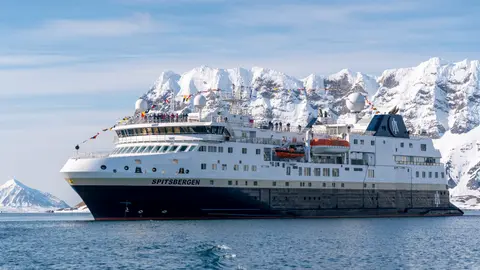
Iceland and Beyond Reykjavík to Hamburg via Scotla
Date
2026-09-21
Duration
13 nights
Departure Port
Reykjavik
Iceland
Arrival Port
Orkney Islands
United Kingdom
Rating
Expedition
Theme
—
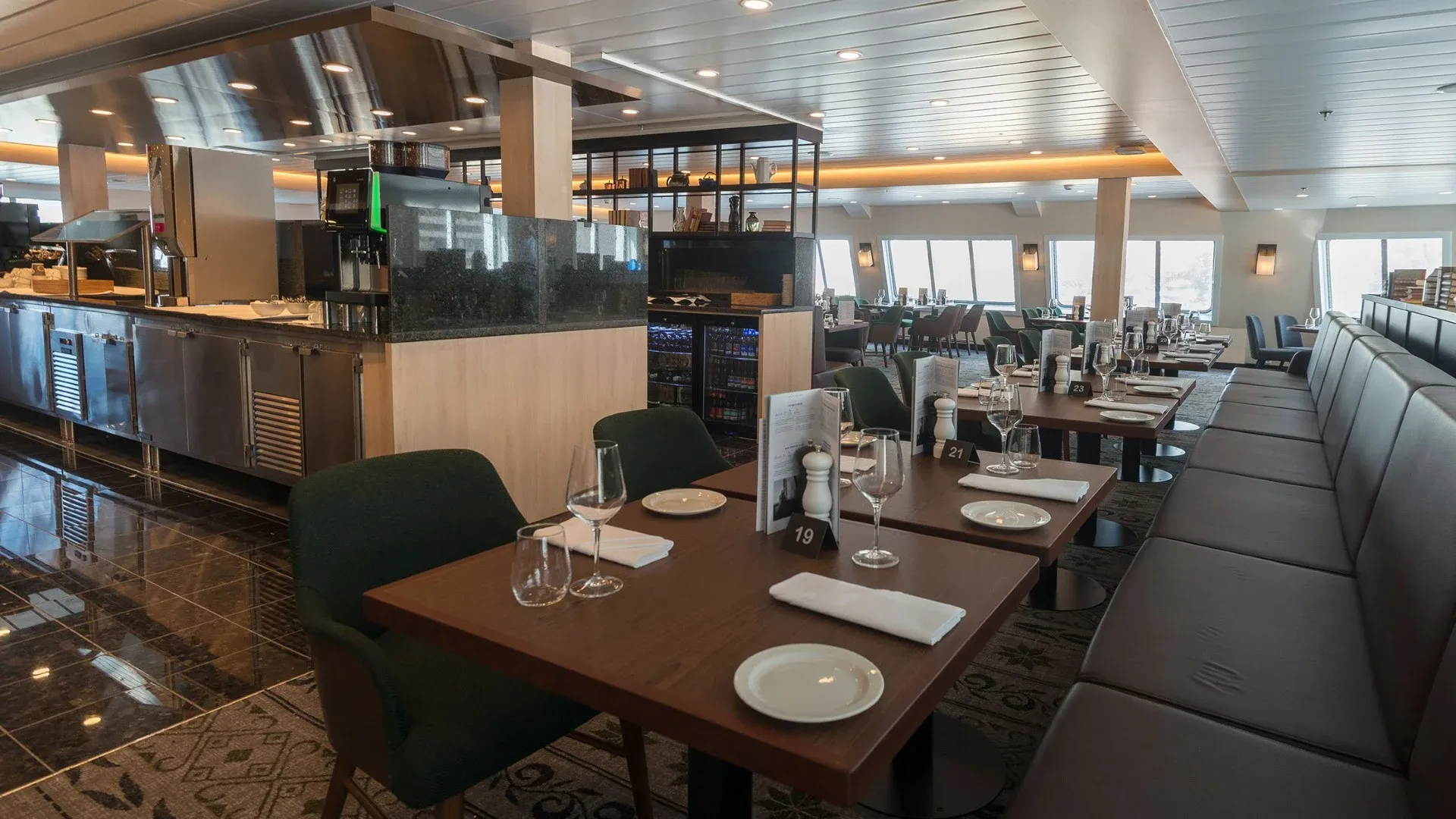
HX Expeditions
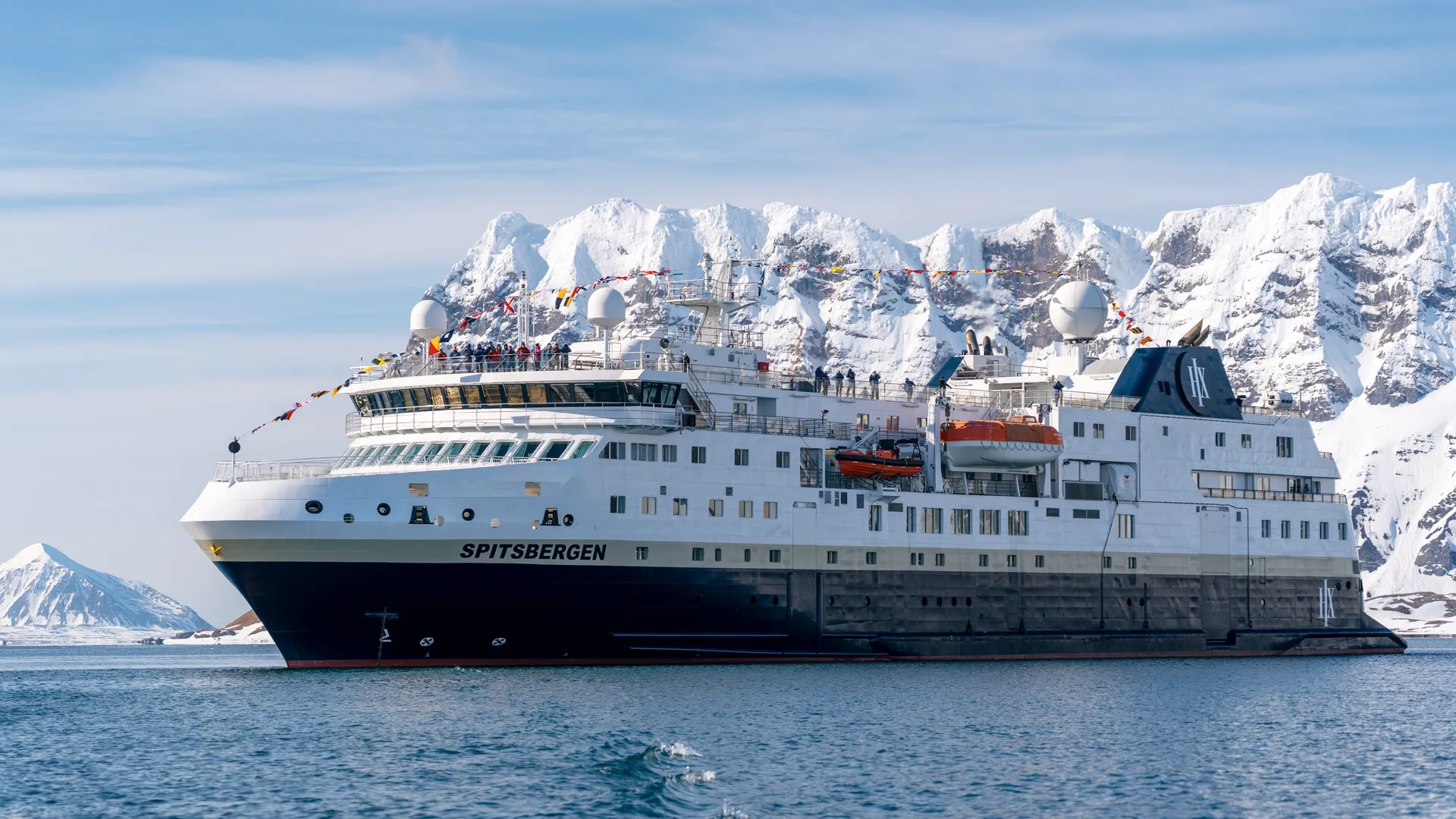
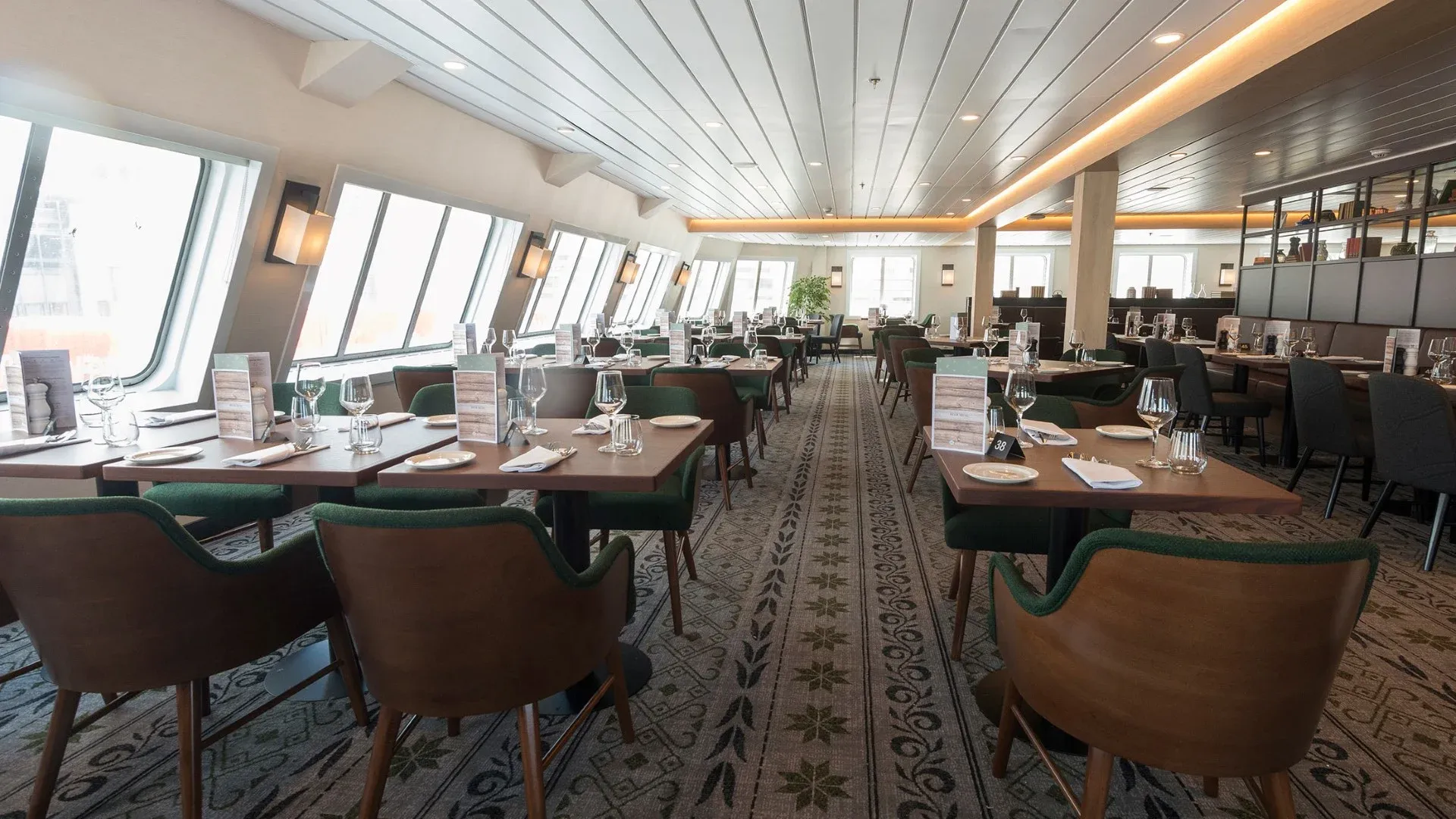
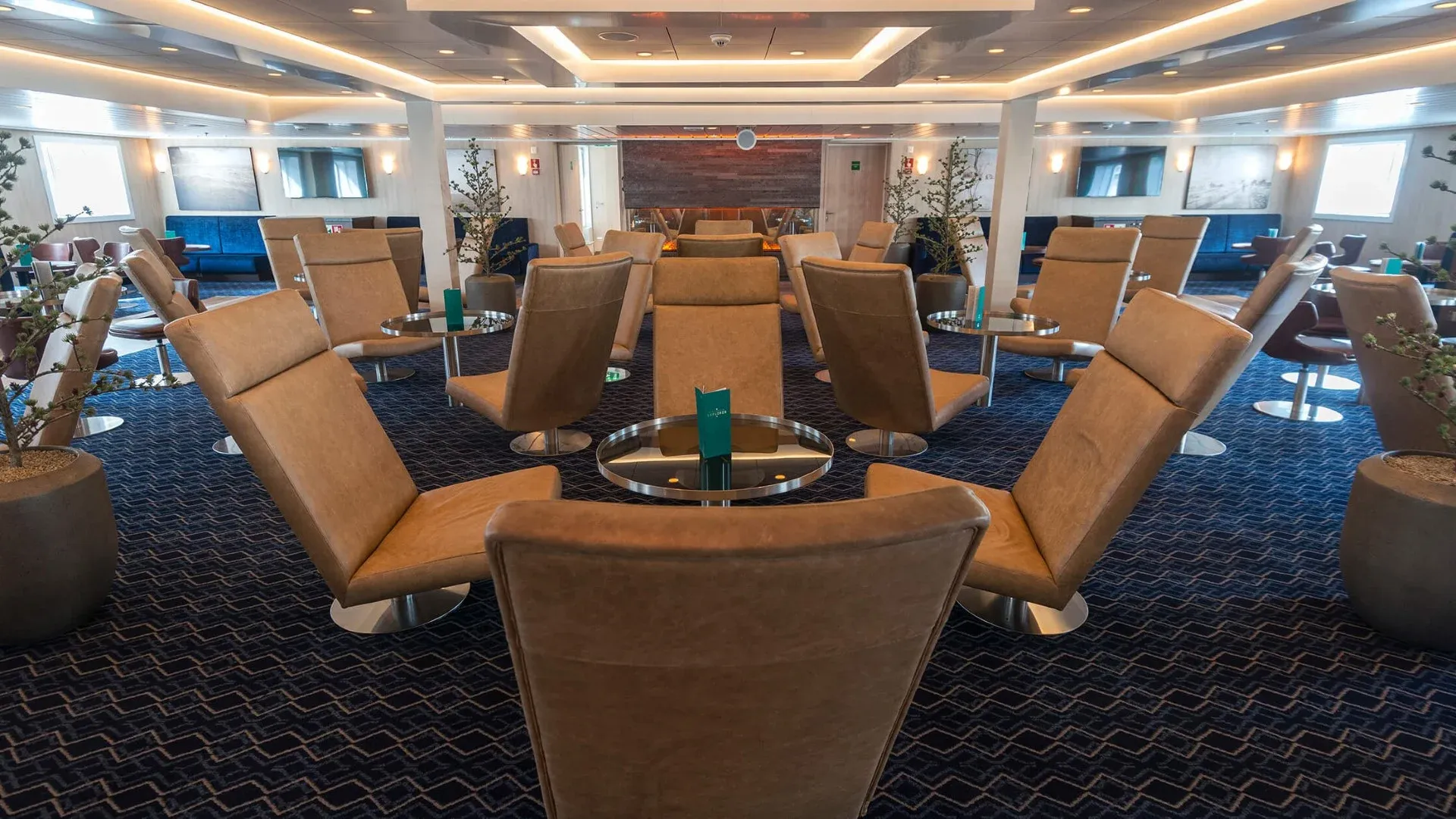
MS Spitsbergen
Explorer
Launched
2016
Refitted
2025
Tonnage
7,344 GT
Passengers
335
Cabins
100
Crew
65
Length
331 m
Width
18 m
Speed
14 knots
Adults Only
No
Itinerary
Day 1
Day 1
Reykjavik
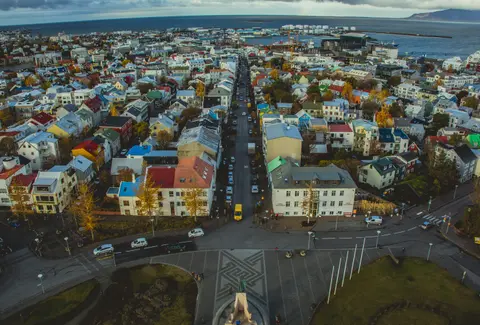
Reykjavik, the world's northernmost capital, distils the entire improbable beauty of Iceland into one compact, creatively charged city. The soaring basalt columns of Hallgrímskirkja dominate a skyline of primary-coloured rooftops, while the Harpa Concert Hall shimmers beside the harbour like a captured aurora. Day trips from the city unlock the Golden Circle's geysers and Geysir hot spring, the black sand beaches of Vík, and the ethereal glacier lagoon at Jökulsárlón. Geothermal pools — from the legendary Blue Lagoon to intimate neighbourhood hot pots — offer warmth year-round. June and July bring the bewitching midnight sun.
Day 2
Day 2
Heimaey
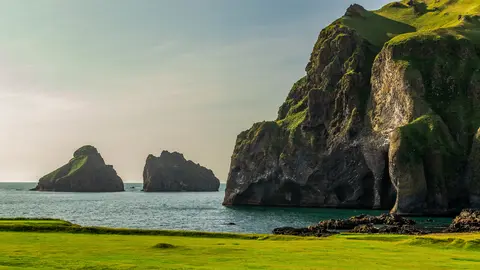
Heimaey is Iceland's volcanic island where the dramatic 1973 eruption story, the world's largest puffin colony of one million breeding pairs, and the children's annual puffling rescue create one of the North Atlantic's most extraordinary port experiences. Visit May through August via Lindblad or Windstar for Eldfell volcano hikes, the Eldheimar Museum's excavated homes, and the harbor approach through a channel literally reshaped by eruption.
Day 3
Day 3
Grundarfjørdur
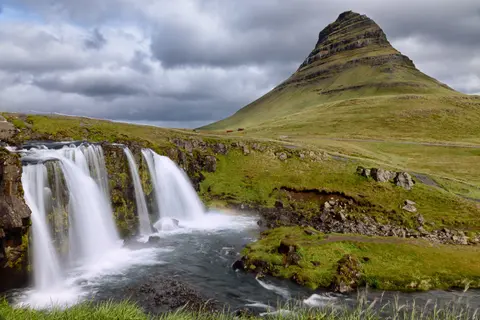
Grundarfjörður is a fishing town at the base of Kirkjufell, Iceland's most photographed mountain, and the gateway to the Snæfellsnes Peninsula—dubbed "Iceland in miniature" for its concentrated geological diversity. Must-dos include photographing Kirkjufell with its companion waterfall and exploring Snæfellsjökull, the glacier volcano from Jules Verne's novel. June and July offer midnight sun and the most reliable weather for peninsula exploration.
Day 4
Day 4
Isafjordur
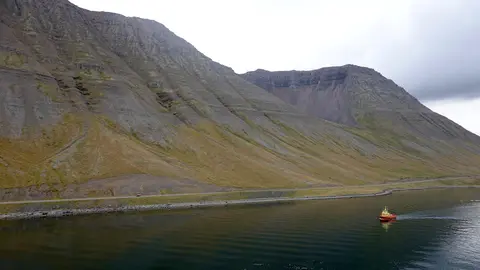
Ísafjörður is the cultural and historical capital of Iceland's remote Westfjords, a dramatic fjord-side settlement where centuries of fishing heritage meet stark Arctic grandeur. Visitors should not miss the communal seafood feast at Tjöruhúsið restaurant and a journey to the surreal red sands of Rauðasandur beach near Patreksfjörður. The optimal visiting window is June through August, when nearly perpetual daylight illuminates the encircling mountains and the town's vibrant cultural calendar reaches its peak.
Day 5
Day 5
Djupavik
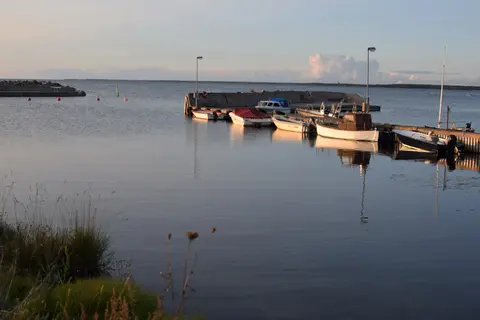
Djupavik in Iceland offers dramatic Nordic landscapes where fjords, glaciers, and pristine wilderness create scenes of remarkable natural grandeur. The essential experience is immersion in the outdoor environment—hiking, wildlife watching, and savoring the region's exceptional seafood in settings of extraordinary beauty. Best visited June through August, when the midnight sun bathes the landscape in golden light for nearly twenty-four hours. Cruise lines including Silversea feature this port on their most compelling itineraries. Whether you have a few hours or a full day, the port rewards exploration at every pace and in every direction.
Day 6
Day 6
Akureyri
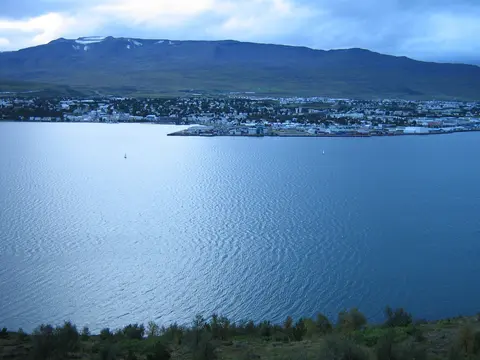
Akureyri, the cultural capital of northern Iceland, sits at the head of the majestic Eyjafjörður and serves as a gateway to some of the island's most dramatic landscapes, including the thundering Goðafoss waterfall, the volcanic wonderland of Lake Mývatn, and Europe's most powerful cascade at Dettifoss. Visitors should not miss the excursion to Mývatn's geothermal pools and the tasting of traditional *hangikjöt* smoked lamb at a harbourside restaurant. The ideal season to visit is June through August, when the midnight sun bathes the fjord in endless golden light and the botanical gardens reach their luminous peak.
Day 7
Day 7
Husavik
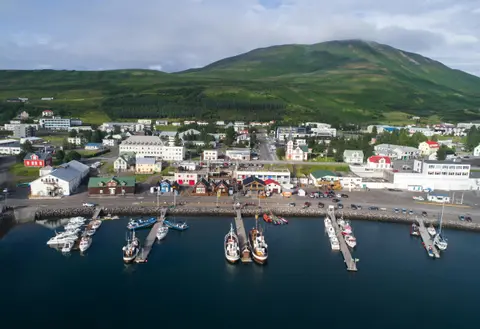
Húsavík, Europe's whale-watching capital on northern Iceland's Skjálfandi Bay, offers over ninety-five percent sighting rates of humpbacks, blue whales, and minke whales in nutrient-rich Arctic waters. A world-class whale museum and proximity to Dettifoss waterfall, Ásbyrgi canyon, and Mývatn's geothermal wonders extend the experience. HX Expeditions, Lindblad Expeditions, and Seabourn bring expedition travelers to this colorful fishing town where Arctic cuisine and cetacean encounters converge with quiet Icelandic authority.
Day 8
Day 8
Bakkagerði
Bakkagerði is a tiny village in eastern Iceland celebrated for the Hafnarhólmi puffin colony—one of the most accessible in the country—and its backdrop of spectacular rhyolite mountains streaked in vivid colors. Essential experiences include watching puffins from the harbor boardwalk, hiking to the Stórurð boulder field, and visiting the legendary Álfaborg elf rock. The best time to visit is June through July, when puffins are nesting, wildflowers blanket the hillsides, and the midnight sun illuminates the fjord around the clock.
Day 9
Day 9
Vatnajökull
Day 10
Day 10
At Sea
Day 11
Day 11
Lerwick
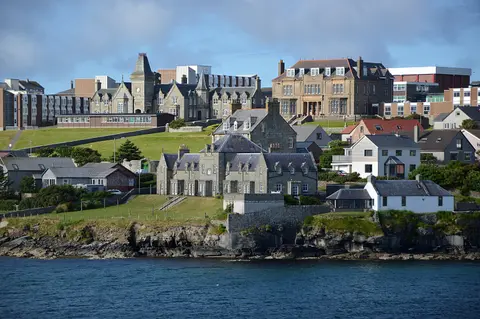
Lerwick, capital of Scotland's Shetland Islands, is a captivating Norse-Scottish harbour town renowned for its seventeenth-century granite waterfront, Viking heritage, and pristine maritime larder of wind-dried reestit mutton and hand-dived scallops. Visitors should explore the lodberries along Commercial Street and the award-winning Shetland Museum at Hay's Dock. The optimal season is late May through August, when near-perpetual daylight — the famous "simmer dim" — bathes the islands in an ethereal golden glow and seabird colonies along the cliffs reach their spectacular peak.
Day 12
Day 12
North Haven
Fair Isle is one of Britain's most remote inhabited islands, lying between Orkney and Shetland, famed worldwide for its extraordinary bird observatory recording over 380 species and its iconic geometric knitting tradition. Visitors arrive at North Haven harbour to experience a community of sixty living in self-sufficient harmony with the elements. Spring and autumn migrations (May-June, September-October) bring the most spectacular birding.
Day 13
Day 13
Kirkwall
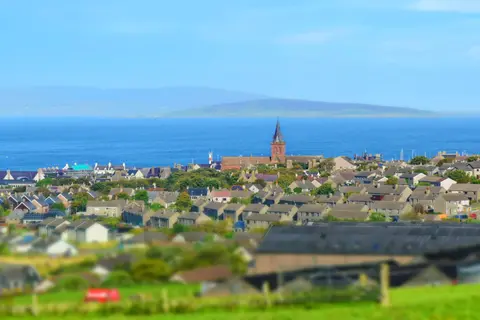
Kirkwall, the Norse-founded capital of Scotland's Orkney Islands, is a sandstone harbour town framed by UNESCO-listed Neolithic monuments, a twelfth-century cathedral, and some of Britain's finest coastal landscapes. Visitors should not miss the five-thousand-year-old village of Skara Brae and a tasting of North Ronaldsay seaweed-fed lamb paired with Highland Park whisky. The prime cruising season runs from May through August, when Orkney enjoys up to nineteen hours of daylight and the wild coastal light is at its most luminous.
Day 14
Day 14
At Sea
Day 1
Reykjavik
Reykjavik, the world's northernmost capital, distils the entire improbable beauty of Iceland into one compact, creatively charged city. The soaring basalt columns of Hallgrímskirkja dominate a skyline of primary-coloured rooftops, while the Harpa Concert Hall shimmers beside the harbour like a captured aurora. Day trips from the city unlock the Golden Circle's geysers and Geysir hot spring, the black sand beaches of Vík, and the ethereal glacier lagoon at Jökulsárlón. Geothermal pools — from the legendary Blue Lagoon to intimate neighbourhood hot pots — offer warmth year-round. June and July bring the bewitching midnight sun.
Day 2
Heimaey
Heimaey is Iceland's volcanic island where the dramatic 1973 eruption story, the world's largest puffin colony of one million breeding pairs, and the children's annual puffling rescue create one of the North Atlantic's most extraordinary port experiences. Visit May through August via Lindblad or Windstar for Eldfell volcano hikes, the Eldheimar Museum's excavated homes, and the harbor approach through a channel literally reshaped by eruption.
Day 3
Grundarfjørdur
Grundarfjörður is a fishing town at the base of Kirkjufell, Iceland's most photographed mountain, and the gateway to the Snæfellsnes Peninsula—dubbed "Iceland in miniature" for its concentrated geological diversity. Must-dos include photographing Kirkjufell with its companion waterfall and exploring Snæfellsjökull, the glacier volcano from Jules Verne's novel. June and July offer midnight sun and the most reliable weather for peninsula exploration.
Day 4
Isafjordur
Ísafjörður is the cultural and historical capital of Iceland's remote Westfjords, a dramatic fjord-side settlement where centuries of fishing heritage meet stark Arctic grandeur. Visitors should not miss the communal seafood feast at Tjöruhúsið restaurant and a journey to the surreal red sands of Rauðasandur beach near Patreksfjörður. The optimal visiting window is June through August, when nearly perpetual daylight illuminates the encircling mountains and the town's vibrant cultural calendar reaches its peak.
Day 5
Djupavik
Djupavik in Iceland offers dramatic Nordic landscapes where fjords, glaciers, and pristine wilderness create scenes of remarkable natural grandeur. The essential experience is immersion in the outdoor environment—hiking, wildlife watching, and savoring the region's exceptional seafood in settings of extraordinary beauty. Best visited June through August, when the midnight sun bathes the landscape in golden light for nearly twenty-four hours. Cruise lines including Silversea feature this port on their most compelling itineraries. Whether you have a few hours or a full day, the port rewards exploration at every pace and in every direction.
Day 6
Akureyri
Akureyri, the cultural capital of northern Iceland, sits at the head of the majestic Eyjafjörður and serves as a gateway to some of the island's most dramatic landscapes, including the thundering Goðafoss waterfall, the volcanic wonderland of Lake Mývatn, and Europe's most powerful cascade at Dettifoss. Visitors should not miss the excursion to Mývatn's geothermal pools and the tasting of traditional *hangikjöt* smoked lamb at a harbourside restaurant. The ideal season to visit is June through August, when the midnight sun bathes the fjord in endless golden light and the botanical gardens reach their luminous peak.
Day 7
Husavik
Húsavík, Europe's whale-watching capital on northern Iceland's Skjálfandi Bay, offers over ninety-five percent sighting rates of humpbacks, blue whales, and minke whales in nutrient-rich Arctic waters. A world-class whale museum and proximity to Dettifoss waterfall, Ásbyrgi canyon, and Mývatn's geothermal wonders extend the experience. HX Expeditions, Lindblad Expeditions, and Seabourn bring expedition travelers to this colorful fishing town where Arctic cuisine and cetacean encounters converge with quiet Icelandic authority.
Day 8
Bakkagerði
Bakkagerði is a tiny village in eastern Iceland celebrated for the Hafnarhólmi puffin colony—one of the most accessible in the country—and its backdrop of spectacular rhyolite mountains streaked in vivid colors. Essential experiences include watching puffins from the harbor boardwalk, hiking to the Stórurð boulder field, and visiting the legendary Álfaborg elf rock. The best time to visit is June through July, when puffins are nesting, wildflowers blanket the hillsides, and the midnight sun illuminates the fjord around the clock.
Day 9
Vatnajökull
Day 10
At Sea
Day 11
Lerwick
Lerwick, capital of Scotland's Shetland Islands, is a captivating Norse-Scottish harbour town renowned for its seventeenth-century granite waterfront, Viking heritage, and pristine maritime larder of wind-dried reestit mutton and hand-dived scallops. Visitors should explore the lodberries along Commercial Street and the award-winning Shetland Museum at Hay's Dock. The optimal season is late May through August, when near-perpetual daylight — the famous "simmer dim" — bathes the islands in an ethereal golden glow and seabird colonies along the cliffs reach their spectacular peak.
Day 12
North Haven
Fair Isle is one of Britain's most remote inhabited islands, lying between Orkney and Shetland, famed worldwide for its extraordinary bird observatory recording over 380 species and its iconic geometric knitting tradition. Visitors arrive at North Haven harbour to experience a community of sixty living in self-sufficient harmony with the elements. Spring and autumn migrations (May-June, September-October) bring the most spectacular birding.
Day 13
Kirkwall
Kirkwall, the Norse-founded capital of Scotland's Orkney Islands, is a sandstone harbour town framed by UNESCO-listed Neolithic monuments, a twelfth-century cathedral, and some of Britain's finest coastal landscapes. Visitors should not miss the five-thousand-year-old village of Skara Brae and a tasting of North Ronaldsay seaweed-fed lamb paired with Highland Park whisky. The prime cruising season runs from May through August, when Orkney enjoys up to nineteen hours of daylight and the wild coastal light is at its most luminous.
Day 14
At Sea
Cabin Categories
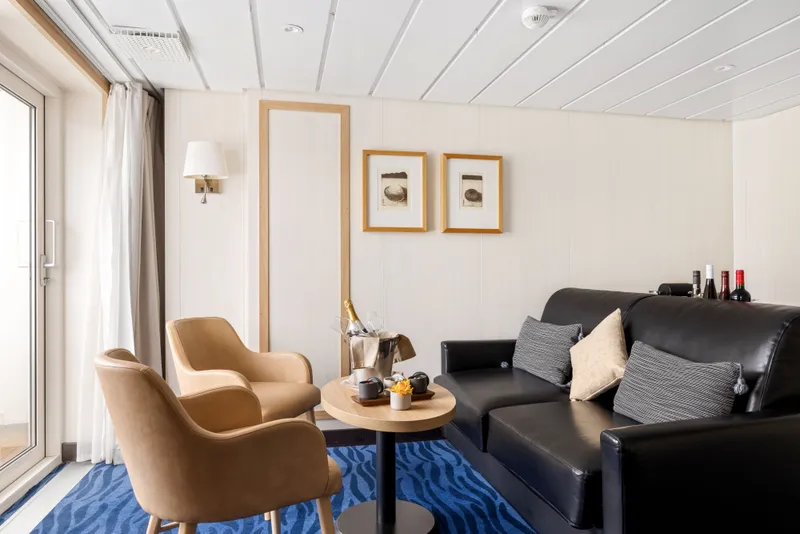
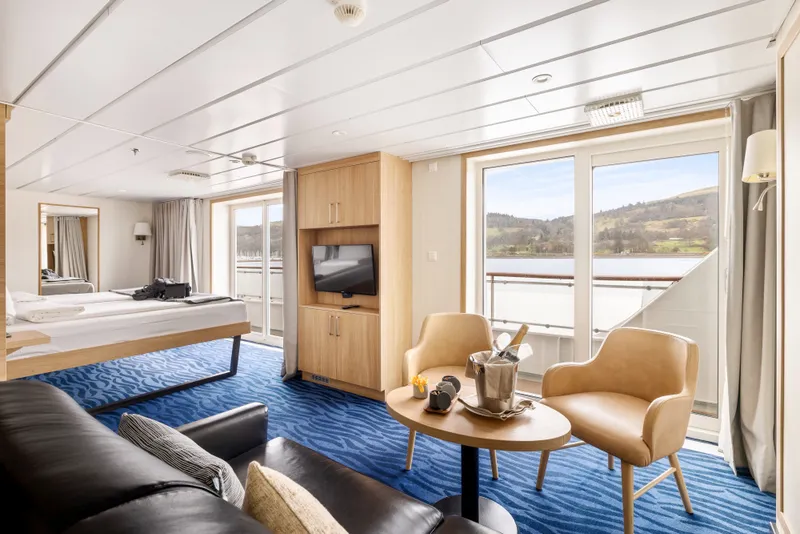
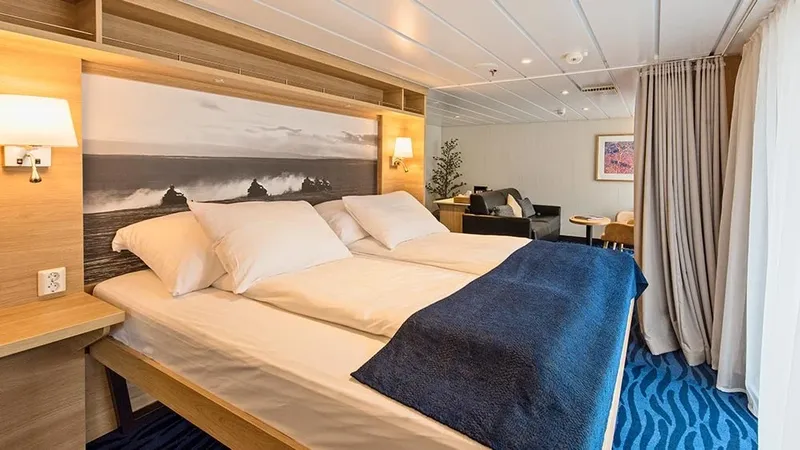
Expedition Grand Suite
Suite
301–312 m²Max 4
MG
One room, seating area and double bed, TV, mini-bar, kettle, private balcony
DoubleLounge AreaShowerToiletries ProvidedFree Mini BarTV+6
View Details
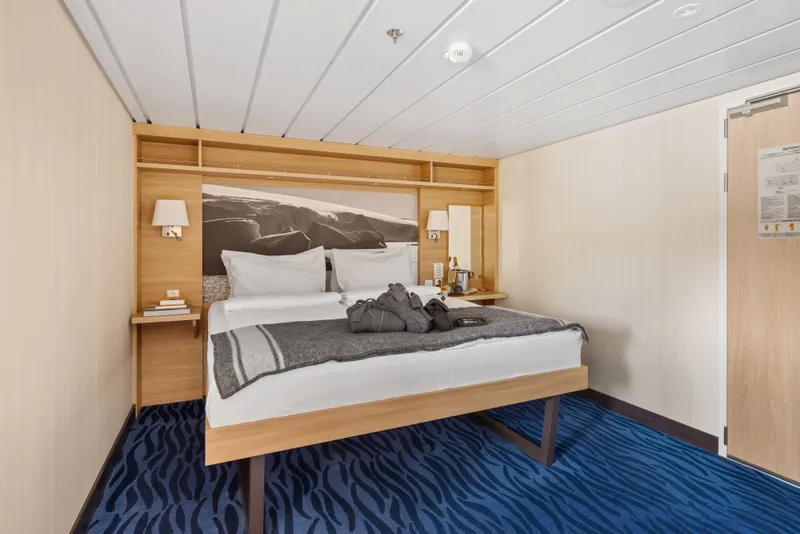
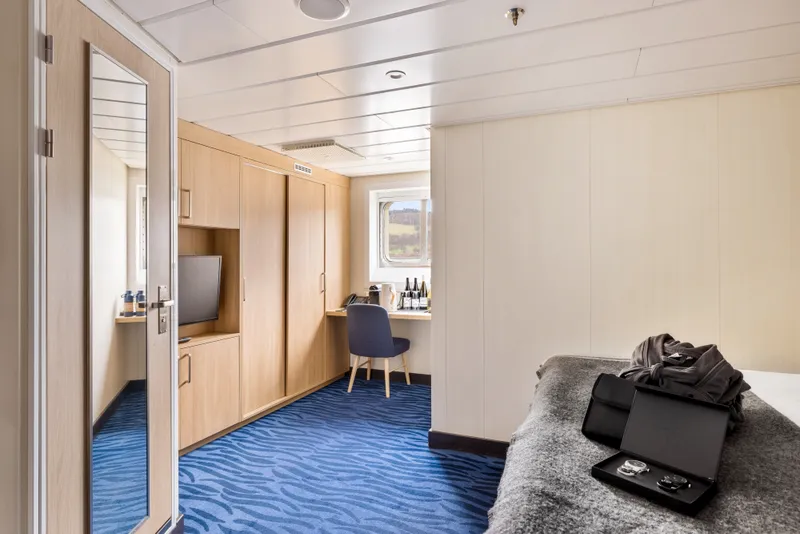
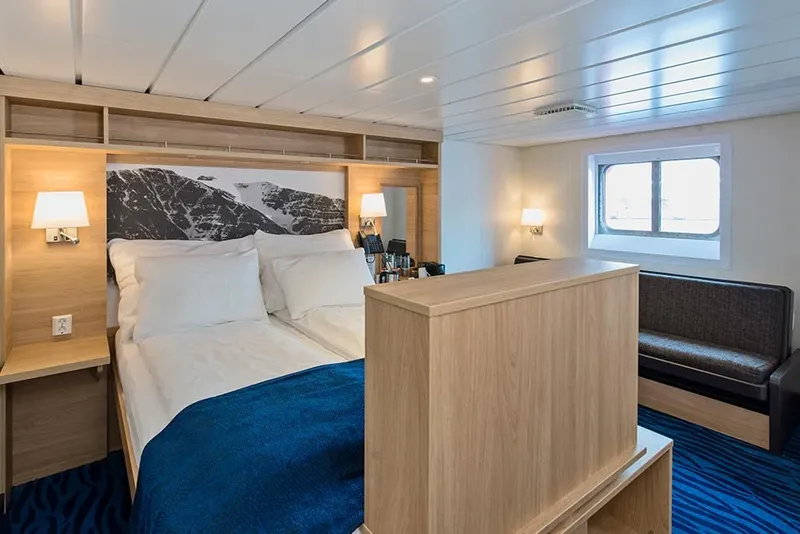
Expedition Mini Suite
Suite
172–248 m²Max 4
Q2Q3Q4
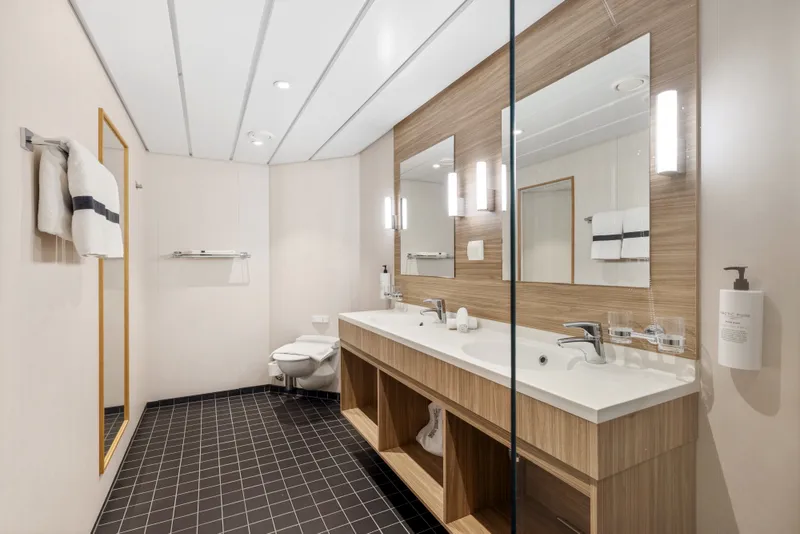
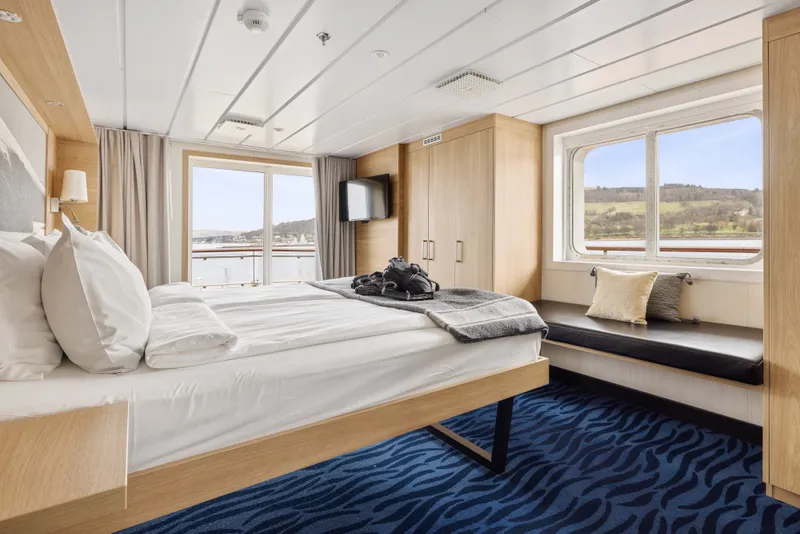
This mini suite for up to three people on lower deck have a double bed with an extra sofabed, window, TV, and bathroom with shower/WC.
DoubleSofa BedLounge AreaVanity AreaShowerRoom Service Available+7
View Details
Expedition Owner's Suite
Suite
344–355 m²Max 4
MX
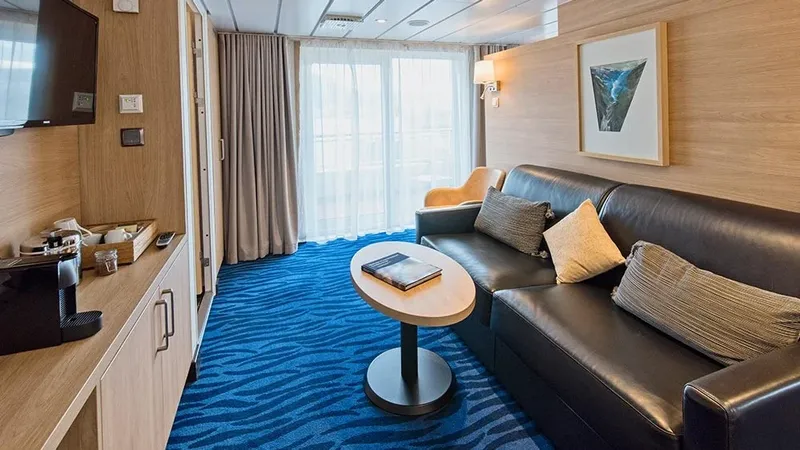
Two rooms with doubel bed, seating area, TV, mini-bar, kettle, stereo, shower, private balcony or bay window
DoubleLounge AreaShowerToiletries ProvidedTVCoffee Machine+5
View Details
Arctic Superior
Outside
Arctic Superior
118–194 m²Max 4
P2DQJU2DYA
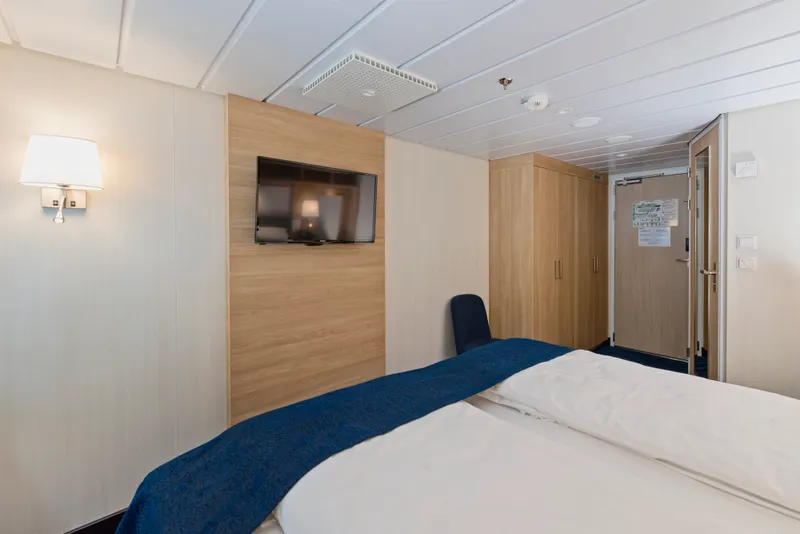
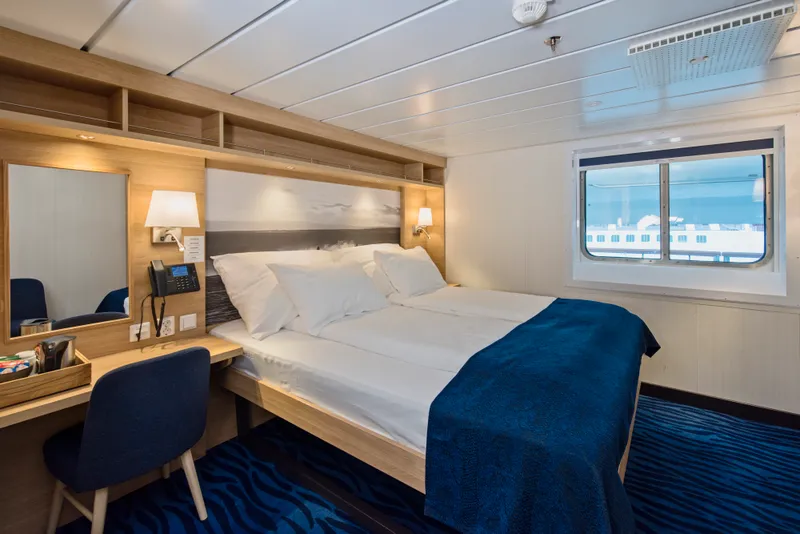
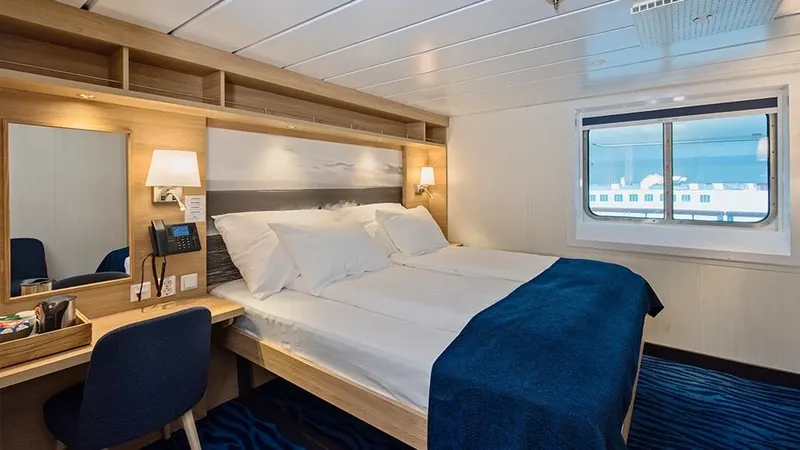
Smaller Outside Arctic Superior cabin with double bed, TV, table and kettle.
11 - 14 m2
Window
Bathroom
TV
Double bed
DoubleShowerToiletries ProvidedTVCoffee MachineHair Dryer+7
View Details
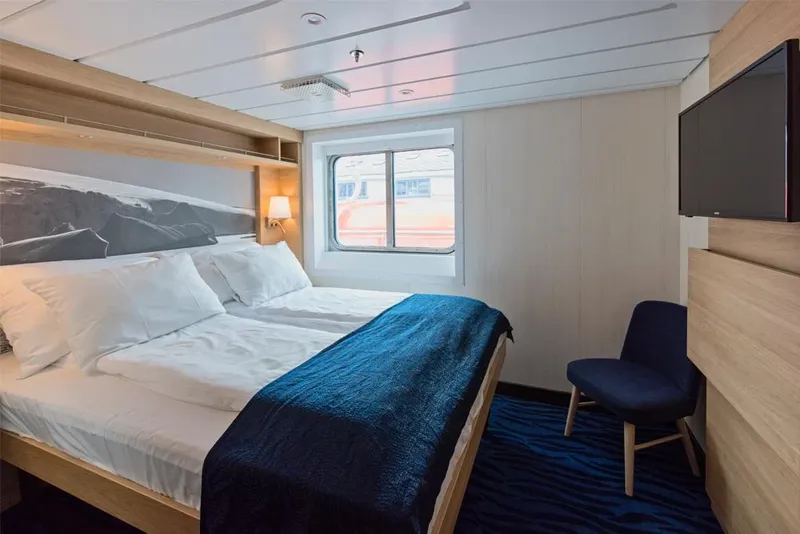
Outside Cabin
Outside
118–129 m²Max 2
J2J2D
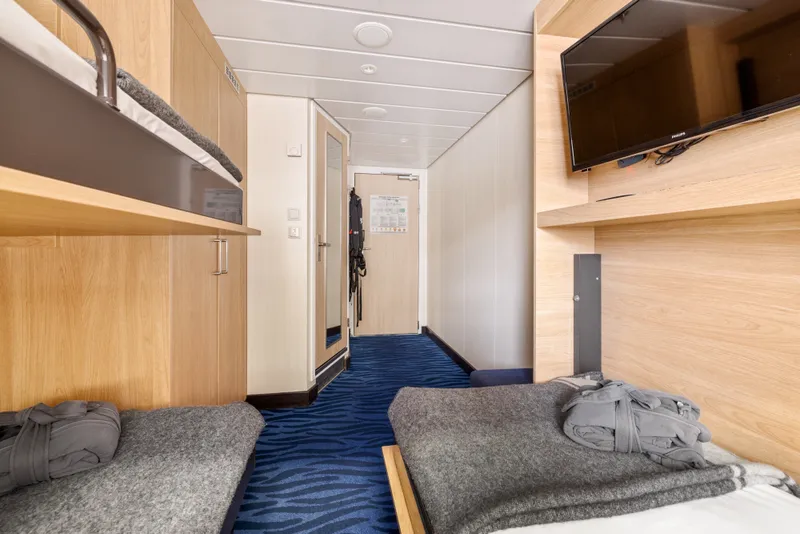
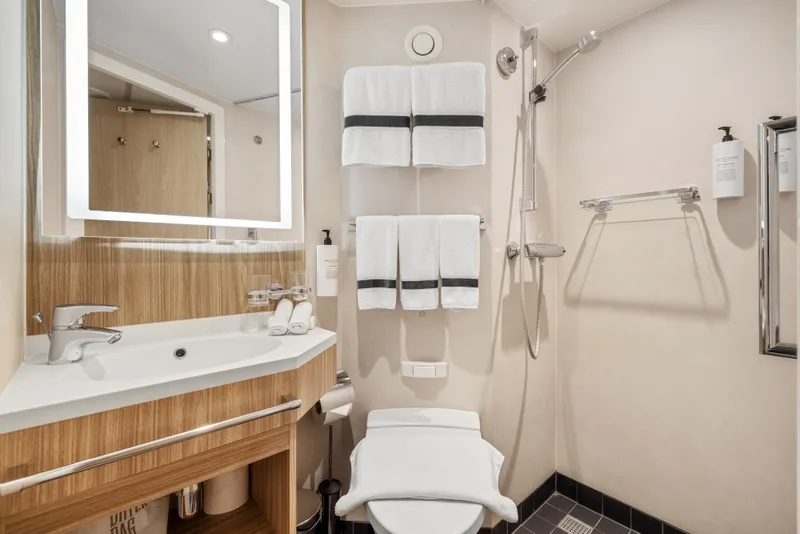
Double bed, TV, limited/no view
Vanity AreaShowerRoom Service AvailableTVSafeHair Dryer+2
View Details
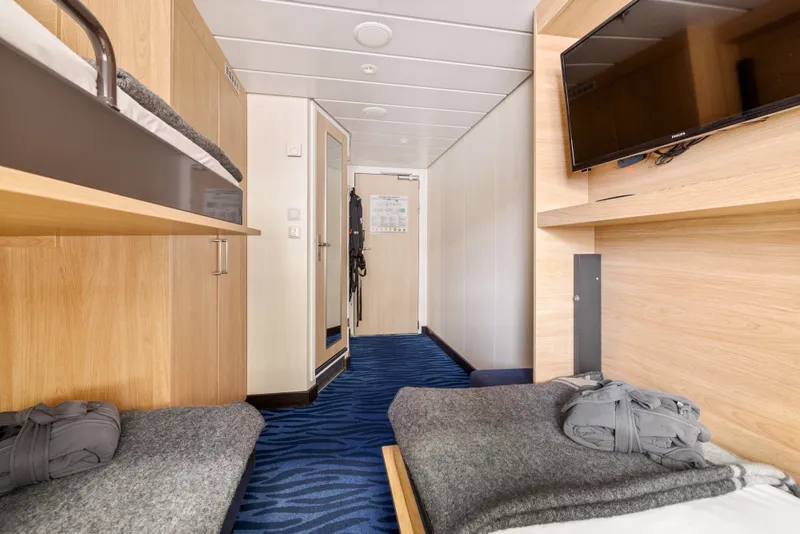
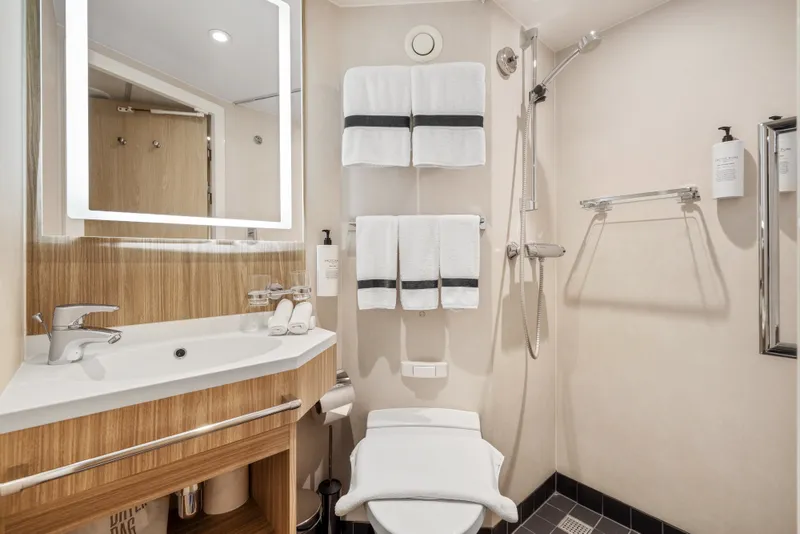
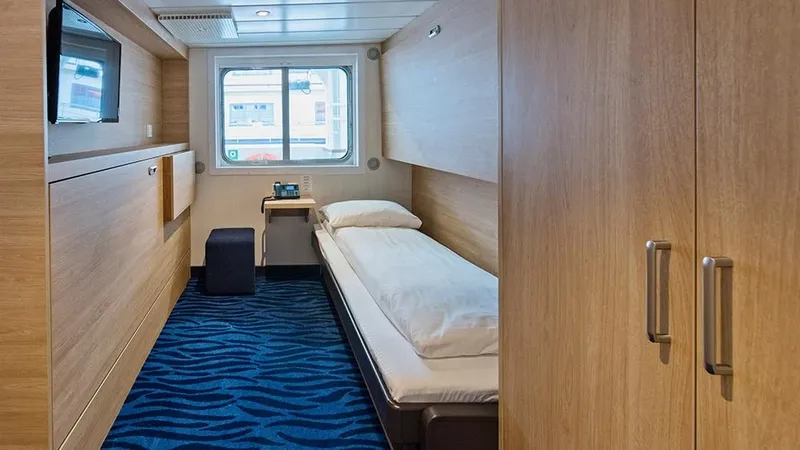
Polar Outside
Outside
118–151 m²Max 3
A2AJJ3O2DO3
Outside cabin with double bed, TV and window.
13 - 14 m2
Window
Bathroom
TV
Double bed
DoubleShowerToiletries ProvidedTVHair DryerRoom Service Available+7
View Details
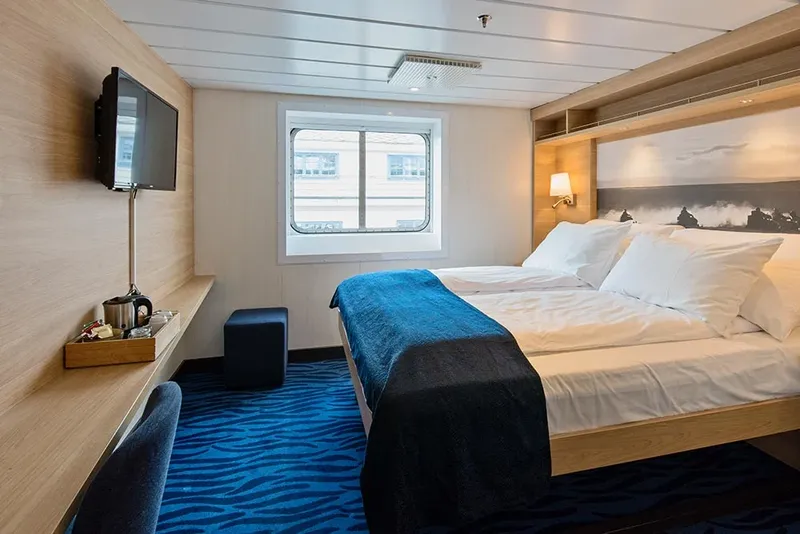
Unspecified Arctic Superior
Outside
USPD
Unspecified Arctic Superior
View Details
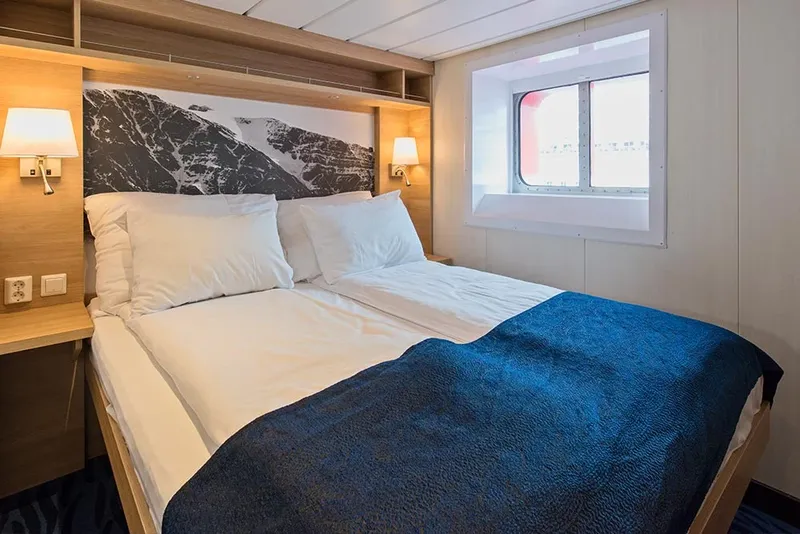
Unspecified Outside Cabin
Outside
USPT
Unspecified Outside Cabin
View Details
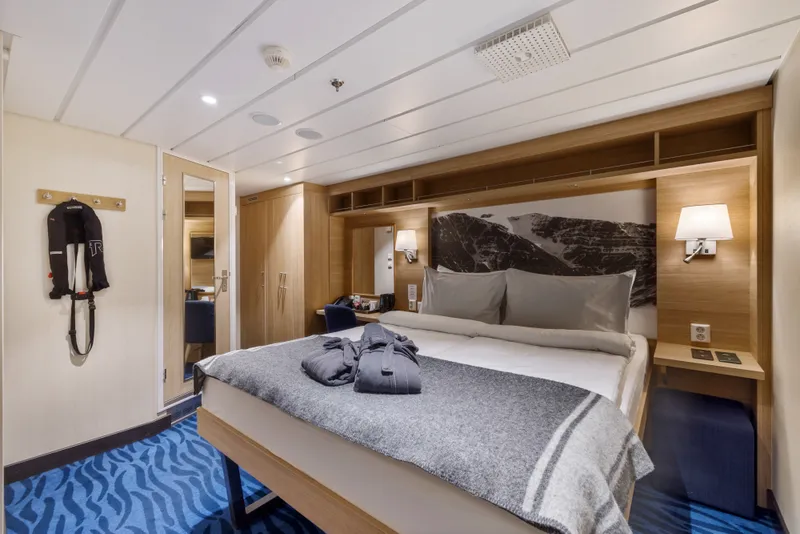
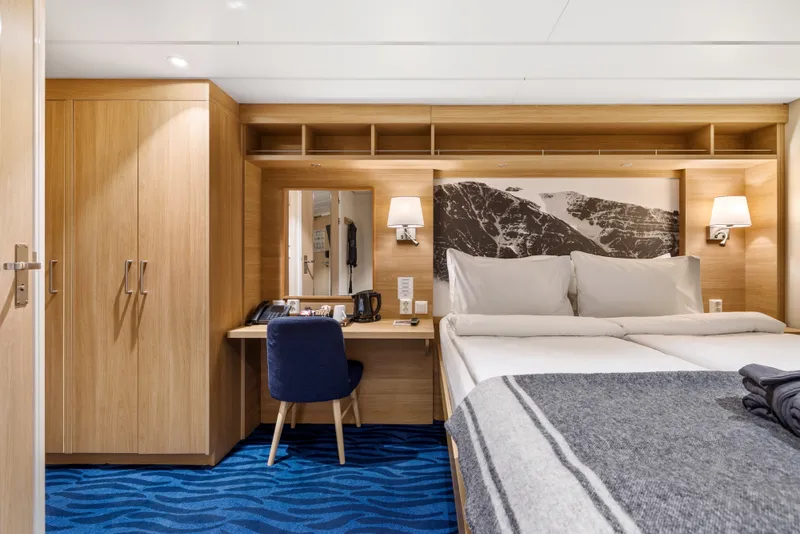
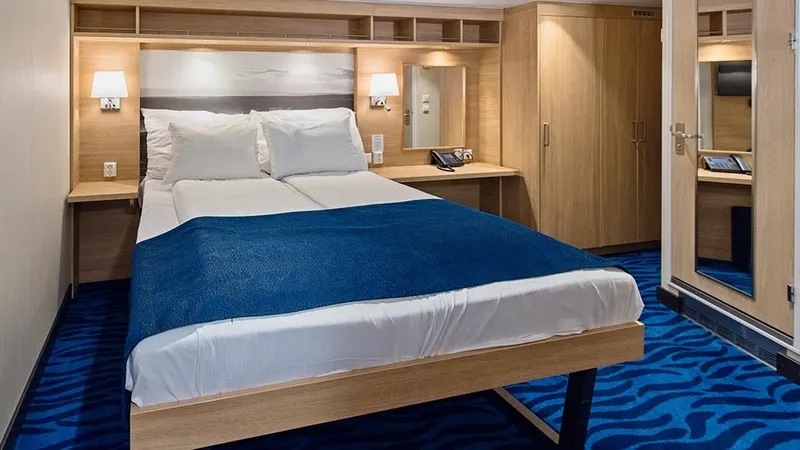
Polar Inside Cabin
Inside
97–151 m²Max 2
I2D
Inside cabin with double bed and TV for up to two people.
9 - 14 m2
No window
Bathroom
TV
Double bed
DoubleShowerToiletries ProvidedRoom Service AvailableTVSafe+3
View Details
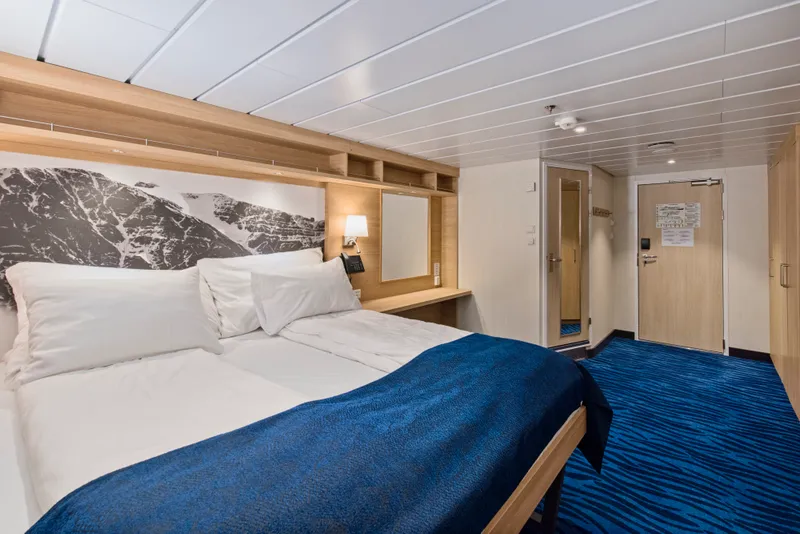
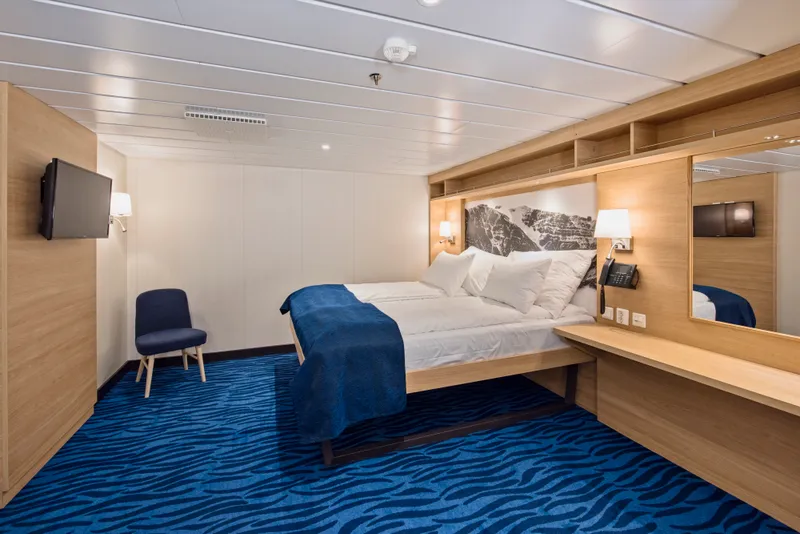
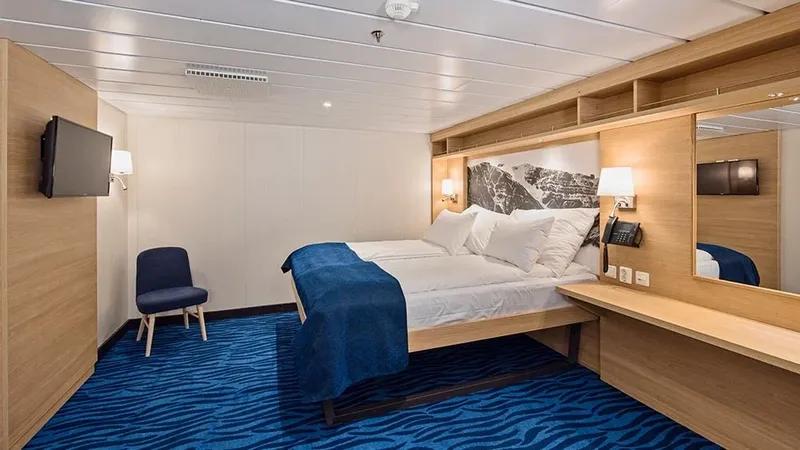
Superior Inside Cabin
Inside
161–215 m²Max 4
K2DK4D
Spacious inside cabin for four travellers, with one double bed and TV.
15 - 20 m2
No window
Bathroom
TV
Mixed beds
DoublePullman Bed x2ShowerToiletries ProvidedTVHair Dryer+4
View Details
Interested in This Voyage?
Our cruise specialists can help you find the perfect cabin and the best available pricing.
(+886) 02-2721-7300Contact Advisor