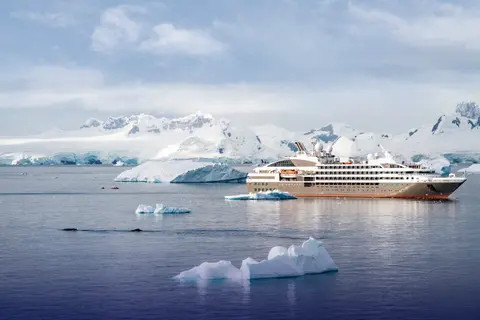
PonantBO101026
Cruising the Mediterranean: Sicily, Sardinia, and Mallorca – with Smithsonian Journeys
Date
2026-10-10
Duration
7 nights
Departure Port
Valletta
Malta
Arrival Port
Barcelona
Spain
Rating
Luxury
Theme
—
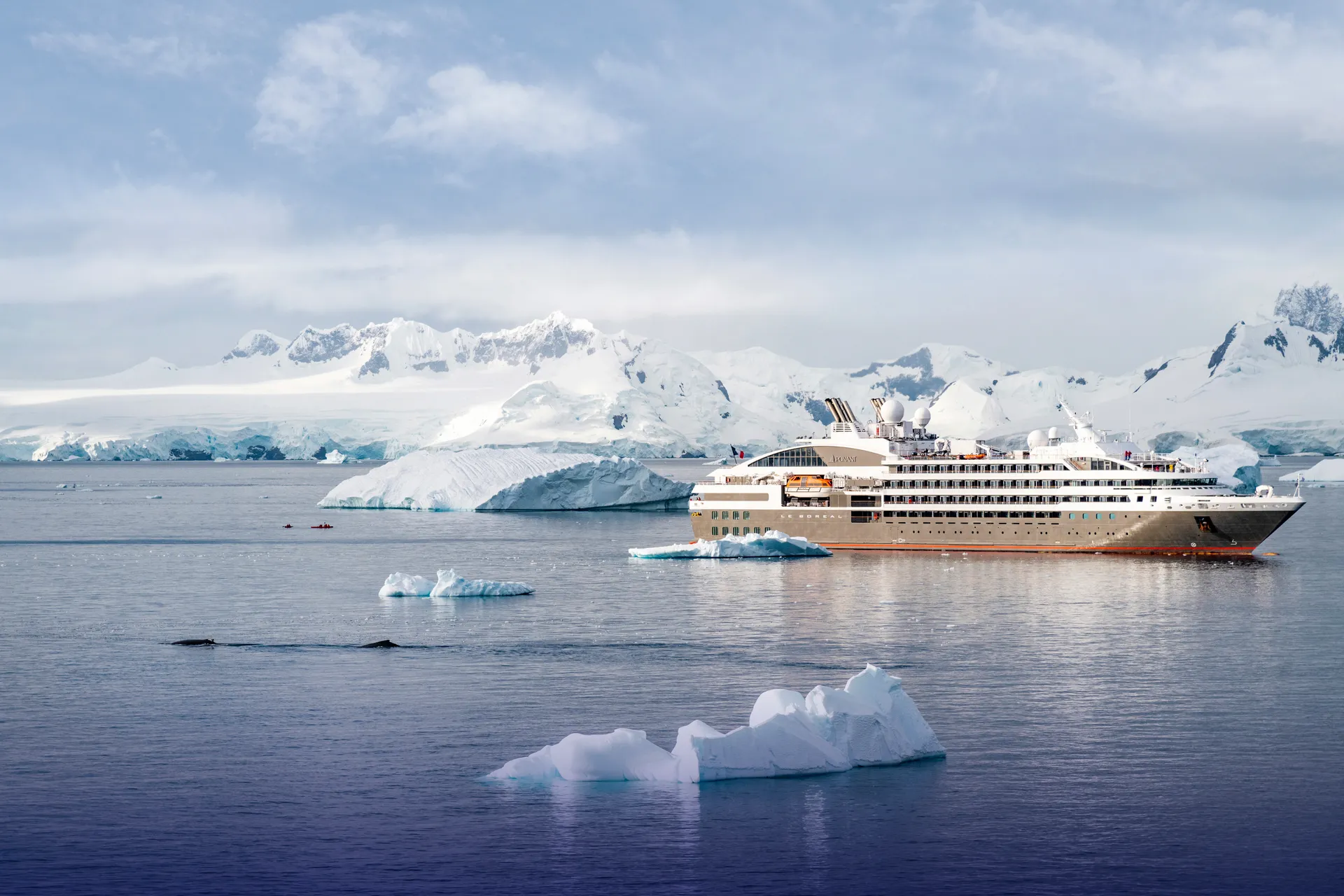
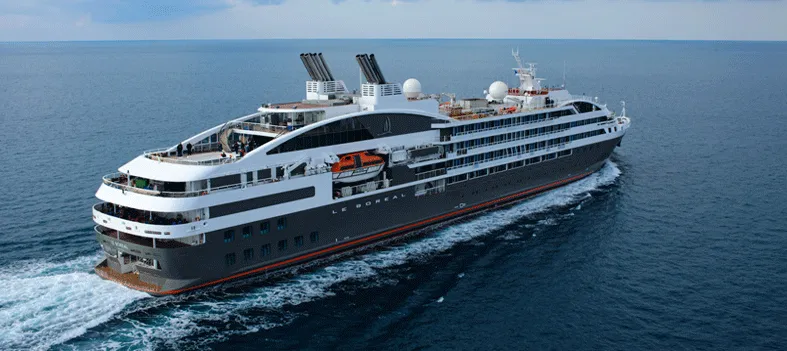
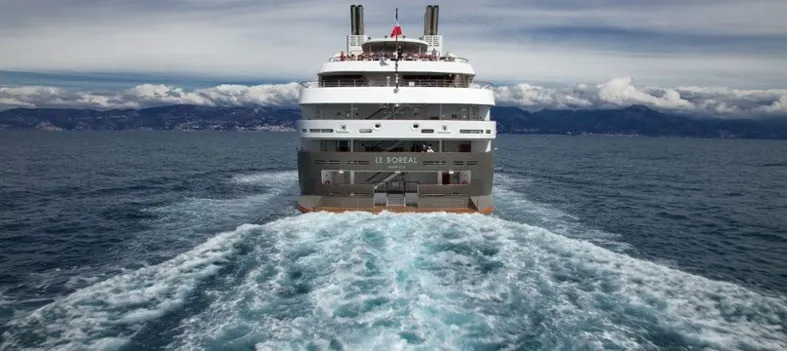
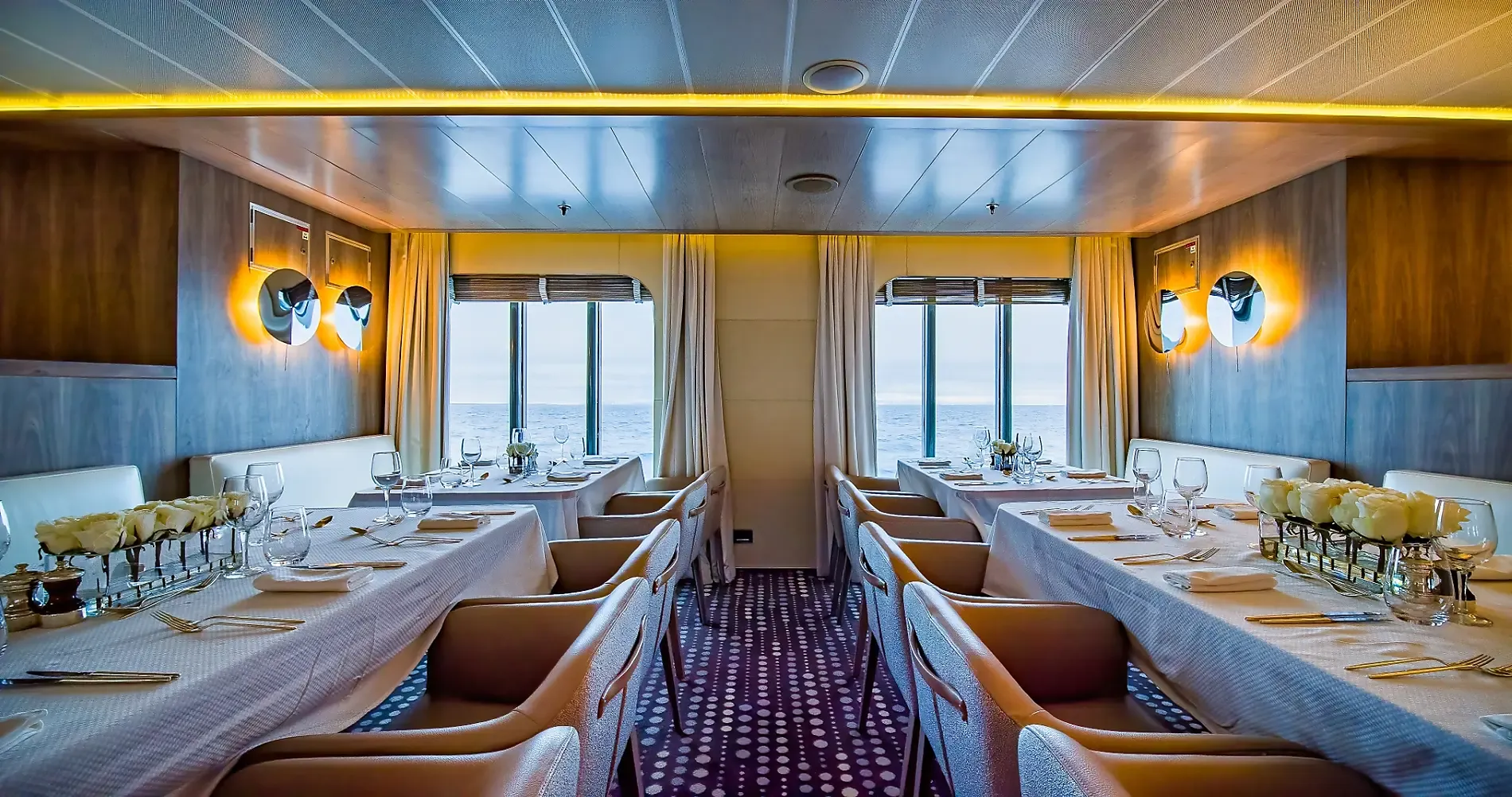
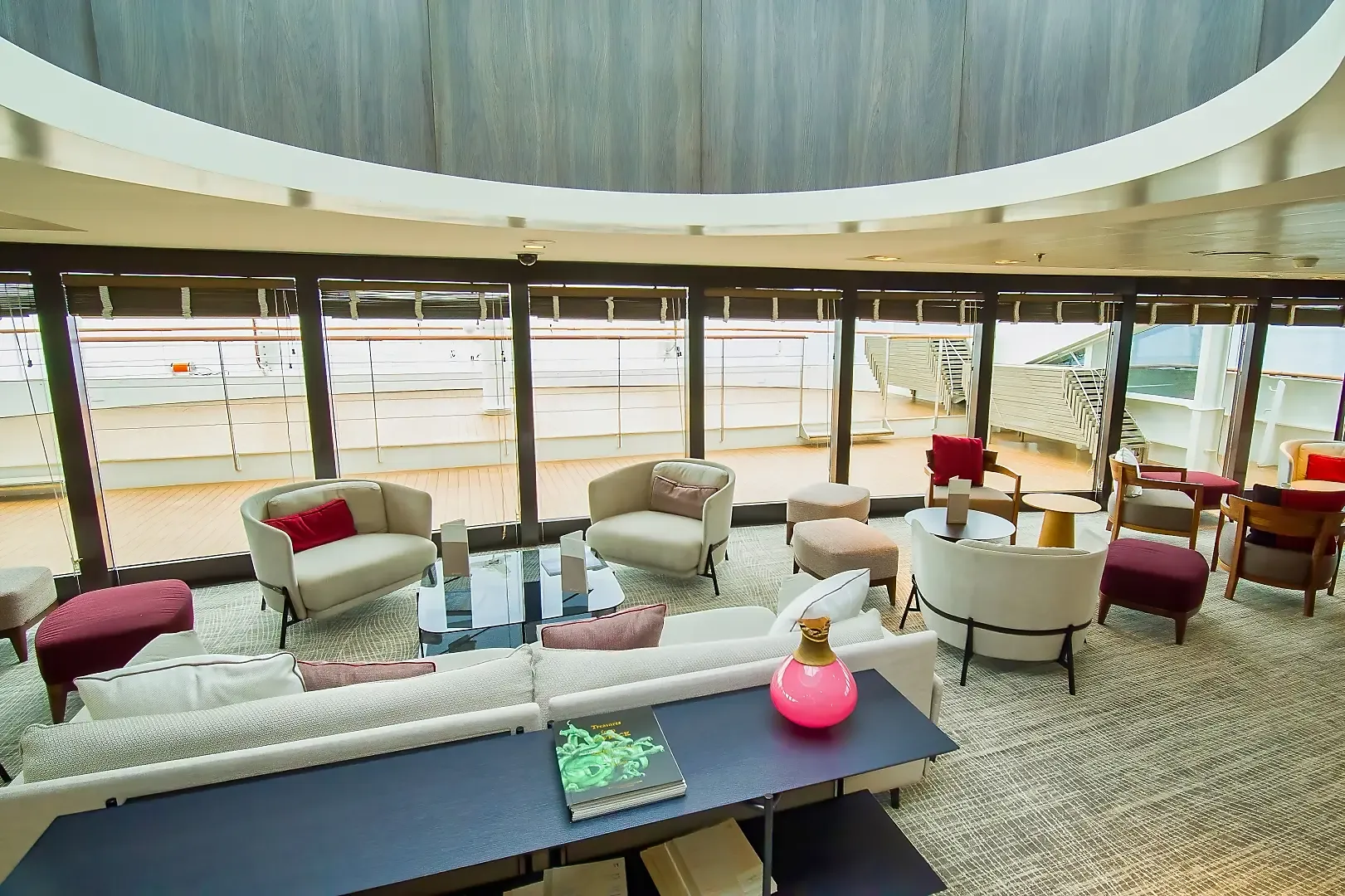
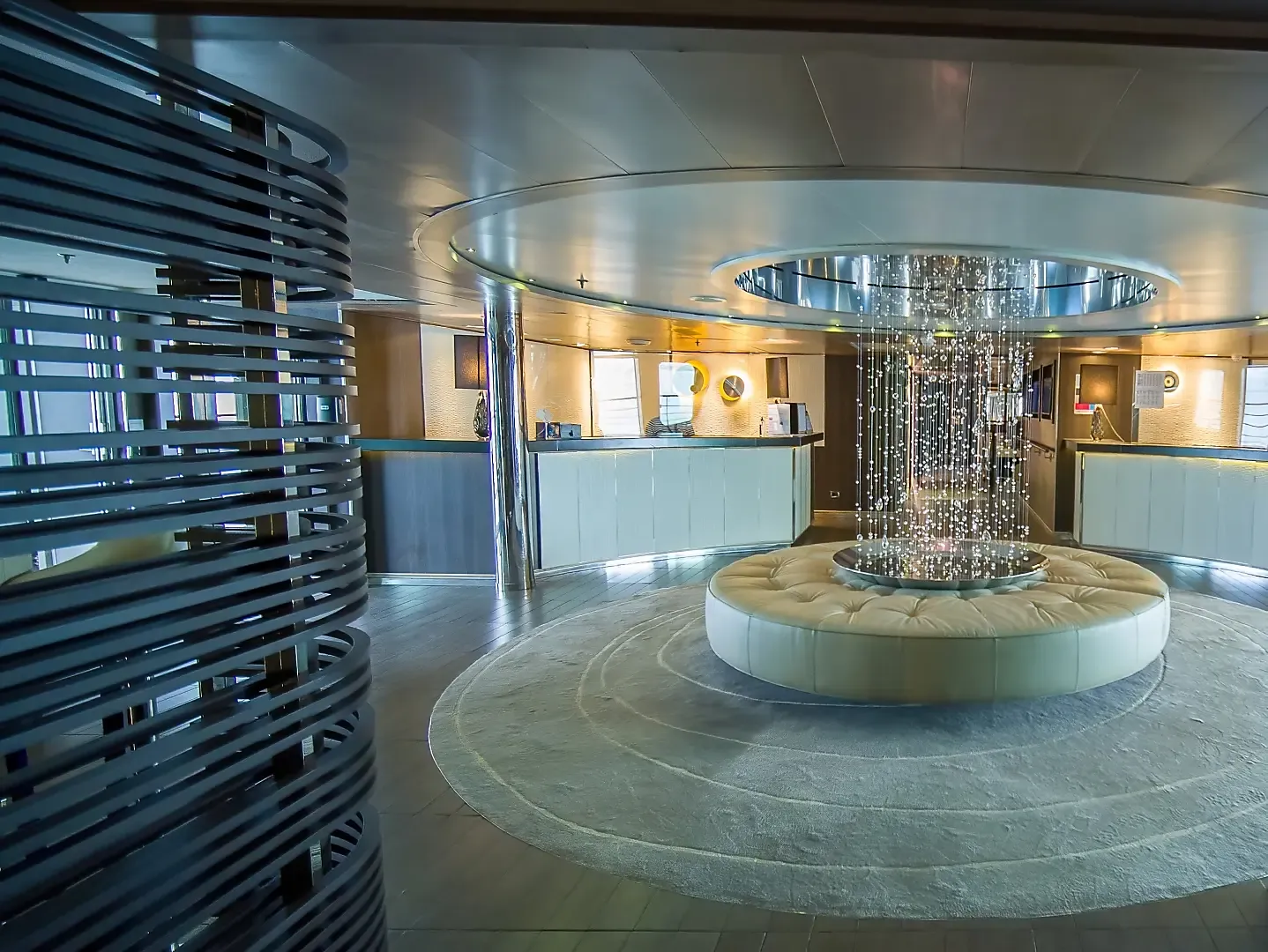
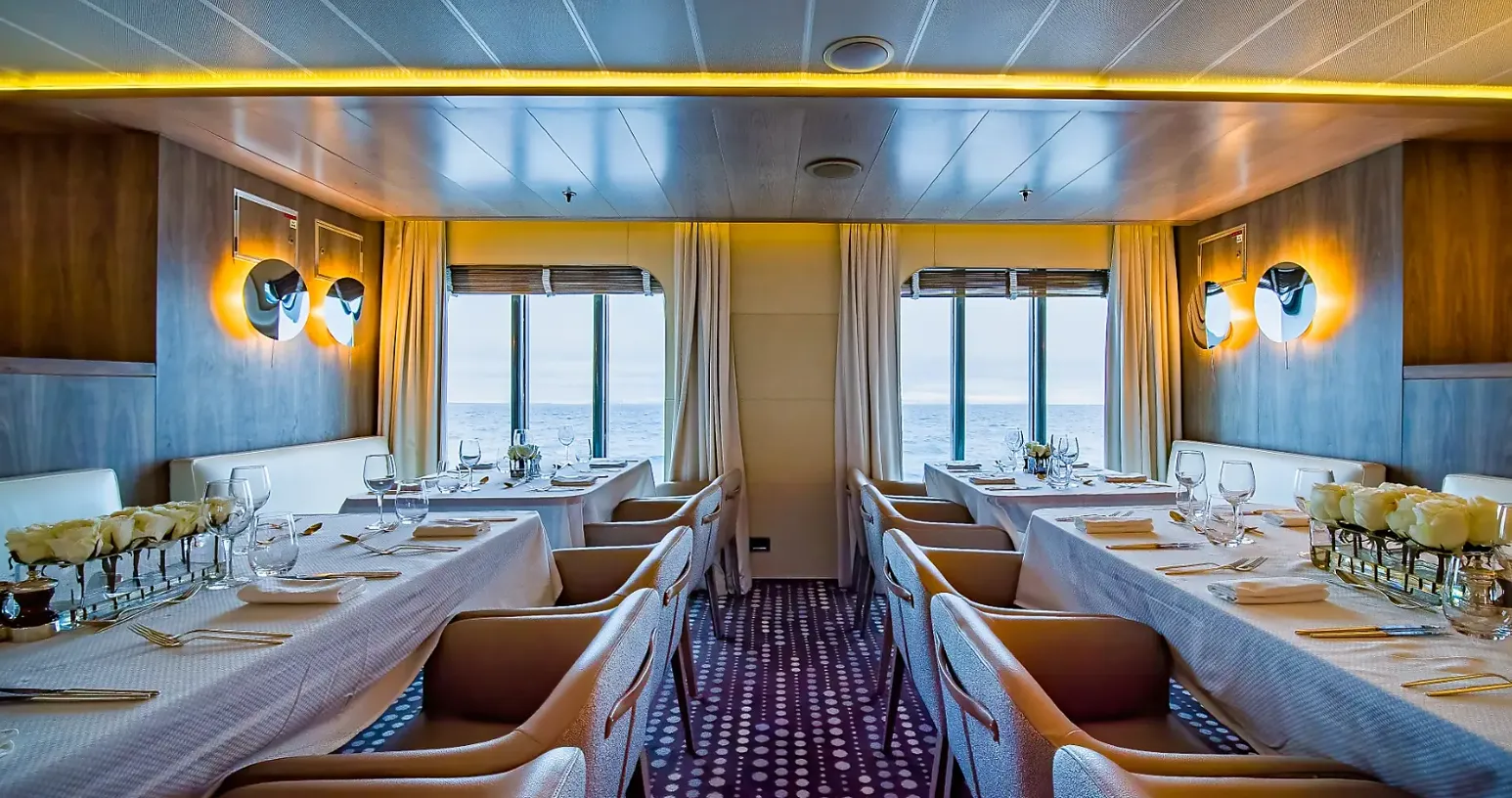
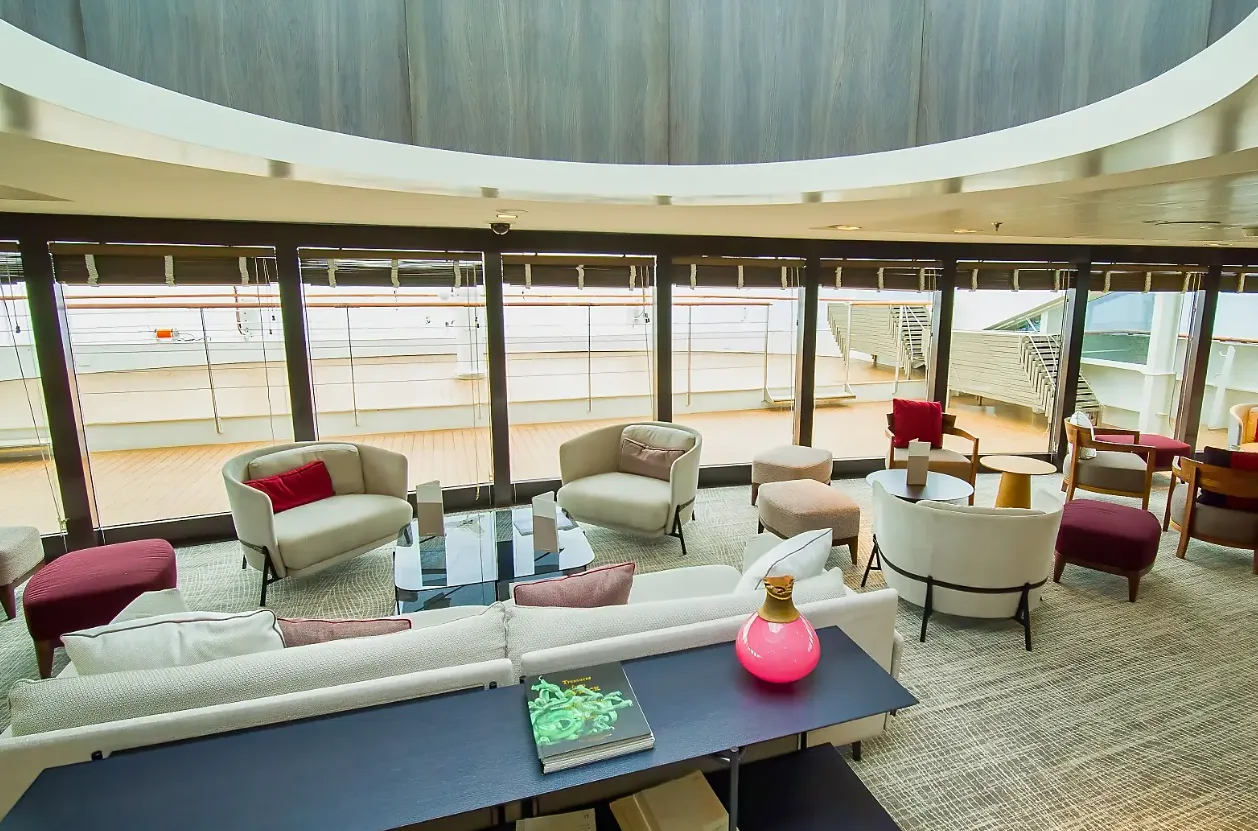
Ponant
Le Boréal
Launched
2010
Refitted
—
Tonnage
10,944 GT
Passengers
264
Cabins
132
Crew
139
Length
466 m
Width
18 m
Speed
14 knots
Adults Only
No
Itinerary
Day 1
Day 1
Valletta
Depart 18:00
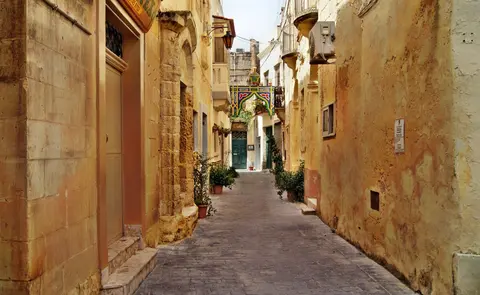
Valletta, Europe's smallest capital, is a fortress city of exceptional grandeur raised from bare limestone in just fifteen years after the Knights of St. John repelled the great Ottoman siege of 1565 — its rigid Renaissance grid of sun-drenched streets concealing a density of baroque palaces, gilded oratories, and subterranean World War II shelters unrivaled anywhere in the Mediterranean. The Grand Harbour, framed by golden bastions plunging into startlingly blue water, offers one of the most dramatically photogenic arrivals in the world for arriving vessels. Spring and autumn deliver the most comfortable temperatures for exploring this UNESCO-listed gem.
Day 2
Day 2
Trapani (Sicily)
Arrive 12:00Depart 18:30
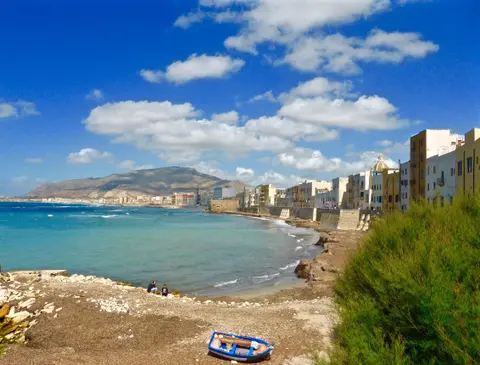
Trapani is western Sicily's sickle-shaped port city where ancient salt flats, cloud-wrapped medieval Erice, and the crystal-clear Egadi Islands converge at the Mediterranean's cultural crossroads. Visit April through October via Seabourn or Windstar for cable-car ascents to Norman-era pastry shops, sunset salt-flat reflections, and the Arab-influenced seafood couscous that distinguishes this coast from anywhere else in Italy.
Day 3
Day 3
Palermo
Arrive 07:00Depart 18:00
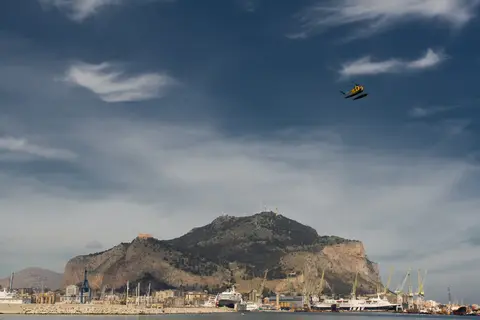
Palermo is the Mediterranean's most intoxicating crossroads of civilisations — Arab arches meet Byzantine gold mosaics beneath Norman royal chapels in the extraordinary Palatine Chapel, a monument to 12th-century multicultural brilliance that is Sicily's single greatest work of art. The Ballarò and Capo street markets, among southern Italy's most atmospheric, tumble through the ancient city in a sensory barrage of swordfish, blood oranges, jasmine, and street food improvised across centuries. Do not leave without tasting arancini and sfincione, Sicily's gloriously thick street pizza. Spring (April–May) and autumn (September–October) offer the ideal climate — warm enough for the sea, cool enough for extended walking.
Day 4
Day 4
Cagliari
Arrive 12:30Depart 20:00
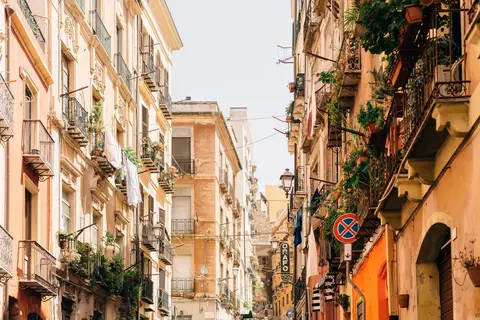
Cagliari, Sardinia's sun-drenched capital overlooking the Gulf of Angels, has absorbed three thousand years of Phoenician, Carthaginian, Roman, Pisan, and Spanish ambitions into a layered and deeply compelling Mediterranean city — where the flamingo-fringed salt lagoons stretching to the city's western edge create one of Europe's most surreal urban vistas. The Castello quarter's medieval ramparts enclose a cathedral, Pisan towers, and panoramic terraces that survey the entire city and coastline, while the Marina district below offers some of the finest bottarga pasta and fresh tuna in Italy. Visit May through September for beach perfection; the prehistoric Nuraghe Su Nuraxi at Barumini, a UNESCO Wonder, is an hour's drive north.
Day 5
Day 5
At Sea
Day 6
Day 6
Mahon
Arrive 07:00Depart 19:00
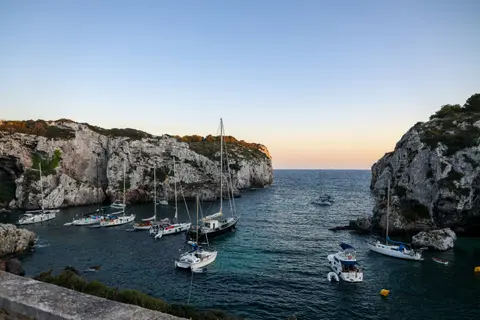
Mahón commands one of the Mediterranean's deepest natural harbours, a fjord-like inlet on Menorca that captivated British admirals, Phoenician traders, and Roman generals in turn — its Georgian townhouses and gin distilleries speaking eloquently to centuries of contested heritage. Explore the clifftop old town's baroque Santa María church with its 3,200-pipe organ, then cross the water to the imposing fortress of La Mola for sweeping harbour views. The island's prized caldereta de langosta, a slow-simmered lobster stew, is best savoured at the fishing village of Fornells. Visit between May and June or September and October for warmth without the summer crowds.
Day 7
Day 7
Palma de Mallorca
Arrive 08:00Depart 19:00
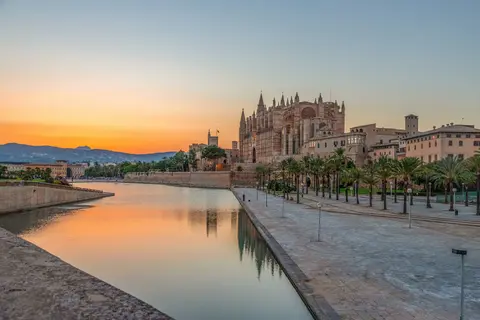
Palma de Mallorca announces itself with one of the most spectacular Gothic cathedrals in the world — La Seu, its honey-coloured sandstone buttresses rising directly from the bay, its interior modified by Antoni Gaudí and illuminated by the world's largest Gothic rose window. The old town behind it is a quarter of Arab baths, Renaissance palaces converted into boutique hotels, and the Passeig del Born — a plane-tree-shaded promenade where Balearic life conducts itself with unhurried grace. The local ensaïmada pastry and fresh sobrasada sausage from the island's black pigs are essential breakfast rituals. Visit May, June, or September: warm, brilliant, and measurably calmer than the July–August peak.
Day 8
Day 8
Barcelona
Arrive 07:00
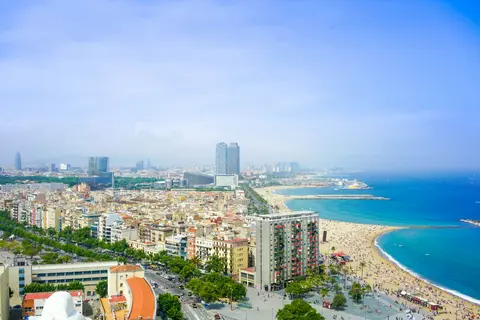
Barcelona is the city where Roman history, Gothic grandeur, and Gaudí's delirious Modernisme collide in a Mediterranean coastal capital of astonishing energy and beauty. The Sagrada Família — still under construction after 140 years — continues its audacious ascent toward completion, while the Gothic Quarter's Roman-era foundations and the Passeig de Gràcia's extraordinary concentration of Modernisme masterpieces reward days of exploration. For a complete sensory experience, lose an afternoon in the covered labyrinth of La Boqueria market before descending to the waterfront for Catalan seafood at its finest. May through June and September through October offer the most pleasant weather; the city connects directly to Paris by overnight train.
Day 1
Valletta
Depart 18:00
Valletta, Europe's smallest capital, is a fortress city of exceptional grandeur raised from bare limestone in just fifteen years after the Knights of St. John repelled the great Ottoman siege of 1565 — its rigid Renaissance grid of sun-drenched streets concealing a density of baroque palaces, gilded oratories, and subterranean World War II shelters unrivaled anywhere in the Mediterranean. The Grand Harbour, framed by golden bastions plunging into startlingly blue water, offers one of the most dramatically photogenic arrivals in the world for arriving vessels. Spring and autumn deliver the most comfortable temperatures for exploring this UNESCO-listed gem.
Day 2
Trapani (Sicily)
Arrive 12:00Depart 18:30
Trapani is western Sicily's sickle-shaped port city where ancient salt flats, cloud-wrapped medieval Erice, and the crystal-clear Egadi Islands converge at the Mediterranean's cultural crossroads. Visit April through October via Seabourn or Windstar for cable-car ascents to Norman-era pastry shops, sunset salt-flat reflections, and the Arab-influenced seafood couscous that distinguishes this coast from anywhere else in Italy.
Day 3
Palermo
Arrive 07:00Depart 18:00
Palermo is the Mediterranean's most intoxicating crossroads of civilisations — Arab arches meet Byzantine gold mosaics beneath Norman royal chapels in the extraordinary Palatine Chapel, a monument to 12th-century multicultural brilliance that is Sicily's single greatest work of art. The Ballarò and Capo street markets, among southern Italy's most atmospheric, tumble through the ancient city in a sensory barrage of swordfish, blood oranges, jasmine, and street food improvised across centuries. Do not leave without tasting arancini and sfincione, Sicily's gloriously thick street pizza. Spring (April–May) and autumn (September–October) offer the ideal climate — warm enough for the sea, cool enough for extended walking.
Day 4
Cagliari
Arrive 12:30Depart 20:00
Cagliari, Sardinia's sun-drenched capital overlooking the Gulf of Angels, has absorbed three thousand years of Phoenician, Carthaginian, Roman, Pisan, and Spanish ambitions into a layered and deeply compelling Mediterranean city — where the flamingo-fringed salt lagoons stretching to the city's western edge create one of Europe's most surreal urban vistas. The Castello quarter's medieval ramparts enclose a cathedral, Pisan towers, and panoramic terraces that survey the entire city and coastline, while the Marina district below offers some of the finest bottarga pasta and fresh tuna in Italy. Visit May through September for beach perfection; the prehistoric Nuraghe Su Nuraxi at Barumini, a UNESCO Wonder, is an hour's drive north.
Day 5
At Sea
Day 6
Mahon
Arrive 07:00Depart 19:00
Mahón commands one of the Mediterranean's deepest natural harbours, a fjord-like inlet on Menorca that captivated British admirals, Phoenician traders, and Roman generals in turn — its Georgian townhouses and gin distilleries speaking eloquently to centuries of contested heritage. Explore the clifftop old town's baroque Santa María church with its 3,200-pipe organ, then cross the water to the imposing fortress of La Mola for sweeping harbour views. The island's prized caldereta de langosta, a slow-simmered lobster stew, is best savoured at the fishing village of Fornells. Visit between May and June or September and October for warmth without the summer crowds.
Day 7
Palma de Mallorca
Arrive 08:00Depart 19:00
Palma de Mallorca announces itself with one of the most spectacular Gothic cathedrals in the world — La Seu, its honey-coloured sandstone buttresses rising directly from the bay, its interior modified by Antoni Gaudí and illuminated by the world's largest Gothic rose window. The old town behind it is a quarter of Arab baths, Renaissance palaces converted into boutique hotels, and the Passeig del Born — a plane-tree-shaded promenade where Balearic life conducts itself with unhurried grace. The local ensaïmada pastry and fresh sobrasada sausage from the island's black pigs are essential breakfast rituals. Visit May, June, or September: warm, brilliant, and measurably calmer than the July–August peak.
Day 8
Barcelona
Arrive 07:00
Barcelona is the city where Roman history, Gothic grandeur, and Gaudí's delirious Modernisme collide in a Mediterranean coastal capital of astonishing energy and beauty. The Sagrada Família — still under construction after 140 years — continues its audacious ascent toward completion, while the Gothic Quarter's Roman-era foundations and the Passeig de Gràcia's extraordinary concentration of Modernisme masterpieces reward days of exploration. For a complete sensory experience, lose an afternoon in the covered labyrinth of La Boqueria market before descending to the waterfront for Catalan seafood at its finest. May through June and September through October offer the most pleasant weather; the city connects directly to Paris by overnight train.
Cabin Categories
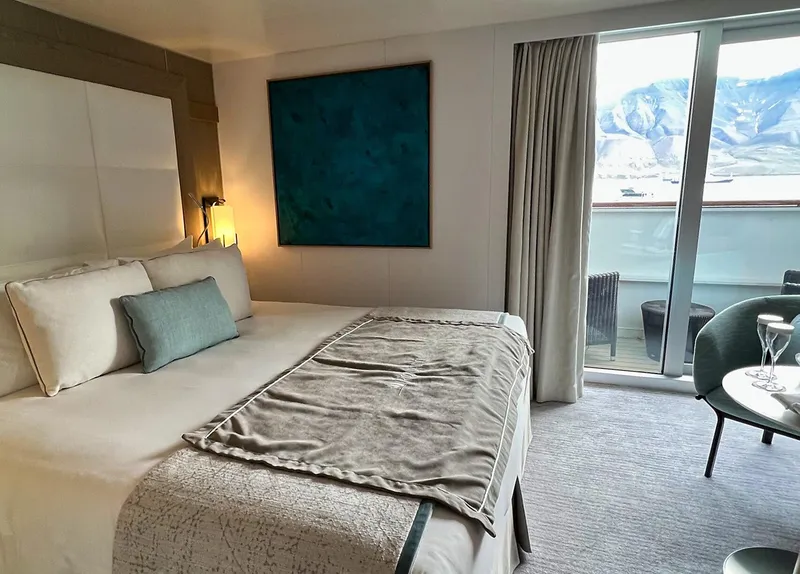
Deluxe Suite Deck 6
Suite
DS
In addition to the common services provided to all our suites and staterooms:
Priority boarding (depending on port of embarkation)
Champagne and fruit basket upon arrival
Butler service
An assortment of sweet or savoury canapés and fruit basket every day
One king-size bed (180 x 200 cm) or two single beds (90 x 200 cm)
An armchair and sofa (167 x 70 cm)
A bathroom with shower and small bathtub
A private 5 m² balcony
A panoramic sliding bay window
View Details
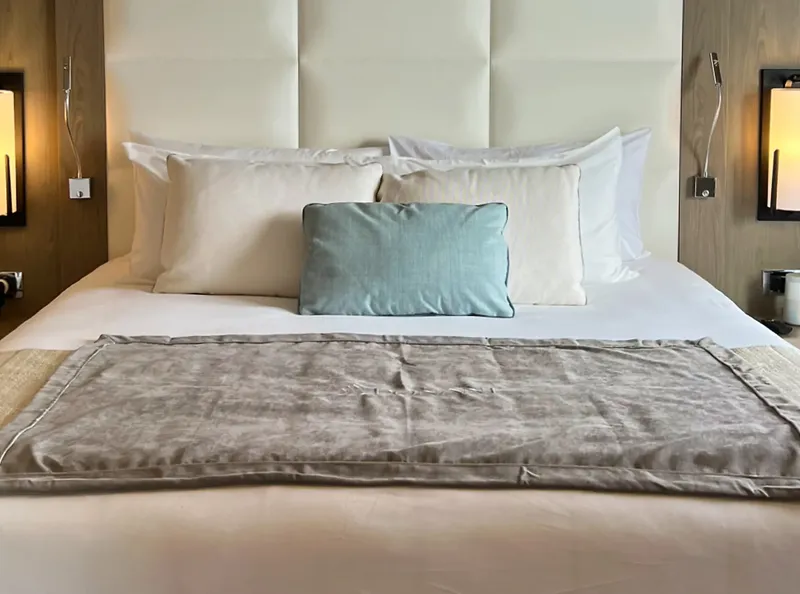
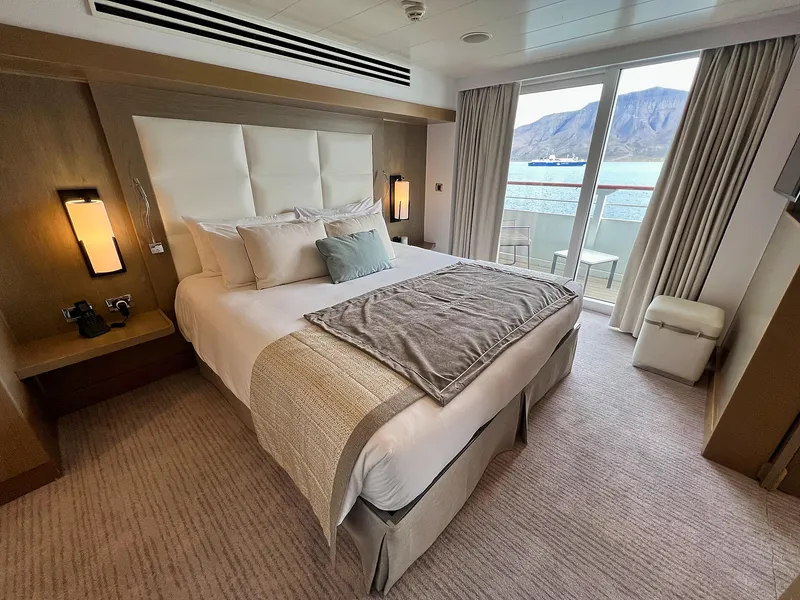
Owner's Suite
Suite
OS
In addition to the common services provided to all our suites and staterooms:
Private return transfer
Priority boarding (depending on port of embarkation)
Champagne and fruit basket upon arrival
Butler service
An assortment of sweet or savoury canapés and fruit basket every day
A bedroom with one king-size bed (180 x 200 cm) or two single beds (90 x 200 cm)
A living/dining room with a sofa, armchair, second TV, 4-seater table, and sliding courtesy door
A bathroom with shower and Balneo bathtub
A one-hour spa treatments per person (for 2 people) in the well-being space, chosen from the facial and body treatments on offer
Included premium pass: access to a selection of premium spirits at the bar
A private 9 m² balcony
Two panoramic sliding bay windows
View Details
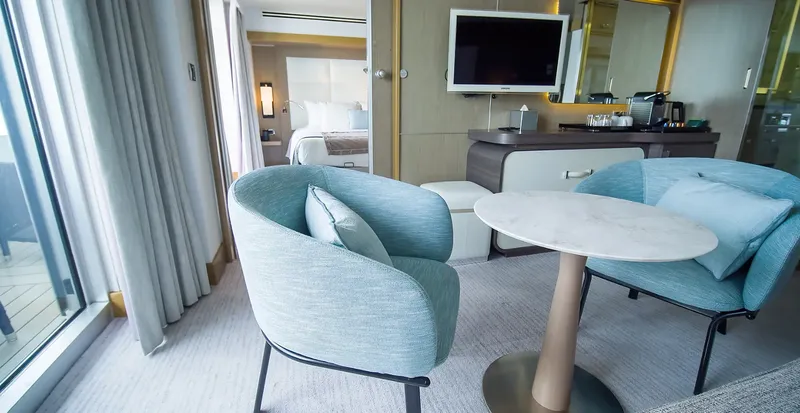
Prestige Suite Deck 5
Suite
4
In addition to the common services provided to all our suites and staterooms:
Champagne and fruit basket upon arrival
An assortment of sweet or savoury canapés and fruit basket every day
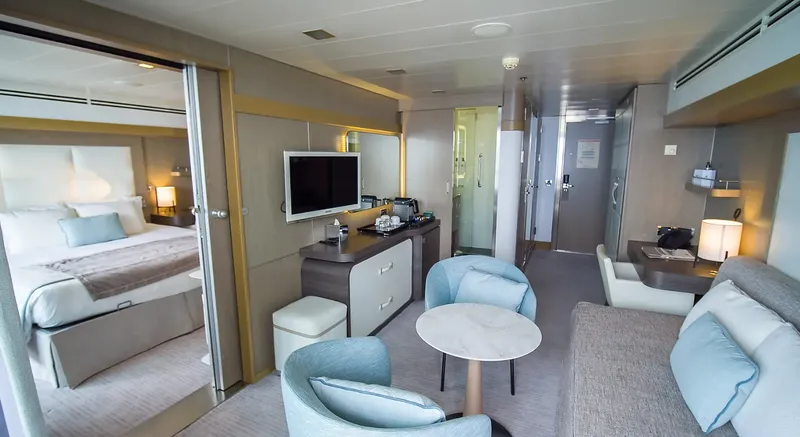
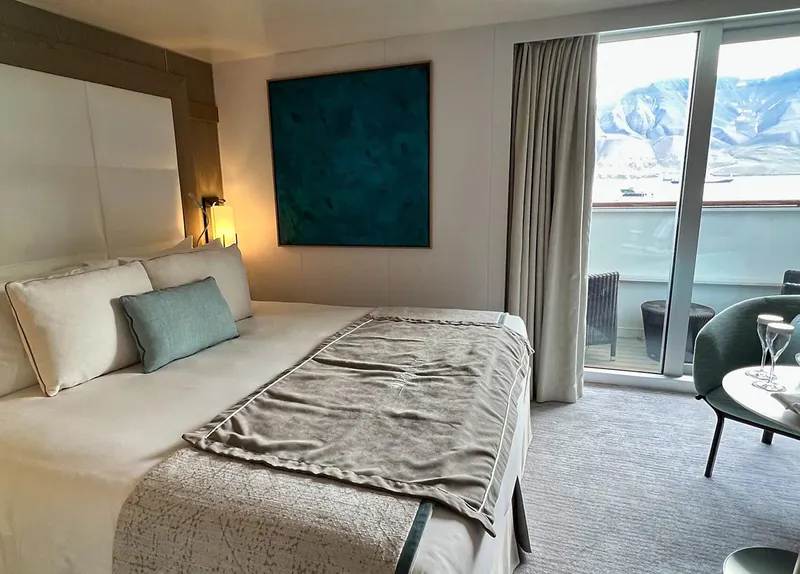
A bedroom with king-size bed (180 x 200 cm) or two single beds (90 x 200 cm)
A lounge with convertible sofa to a king-size bed (180 x 200 cm) or two single beds (90 x 200 cm), armchairs, second TV, and sliding courtesy door
Two bathrooms with showers
A private 8 m² balcony
Two panoramic sliding bay windows
View Details
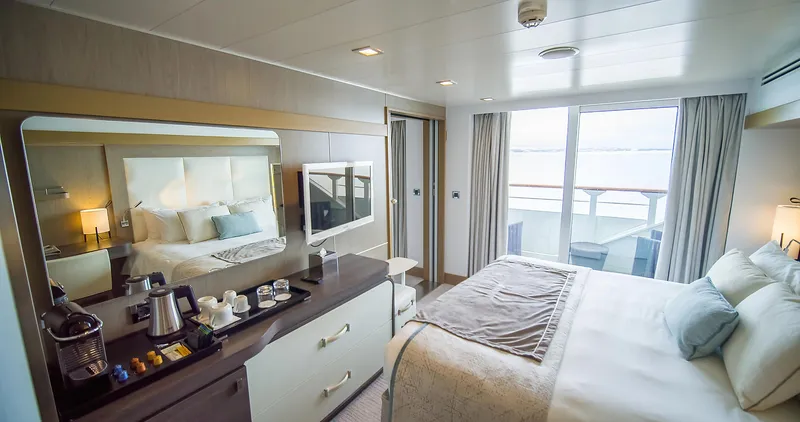
Prestige Suite Deck 6
Suite
5
In addition to the common services provided to all our suites and staterooms:
Priority boarding (depending on port of embarkation)
Champagne and fruit basket upon arrival
Butler service
An assortment of sweet or savoury canapés and fruit basket every day
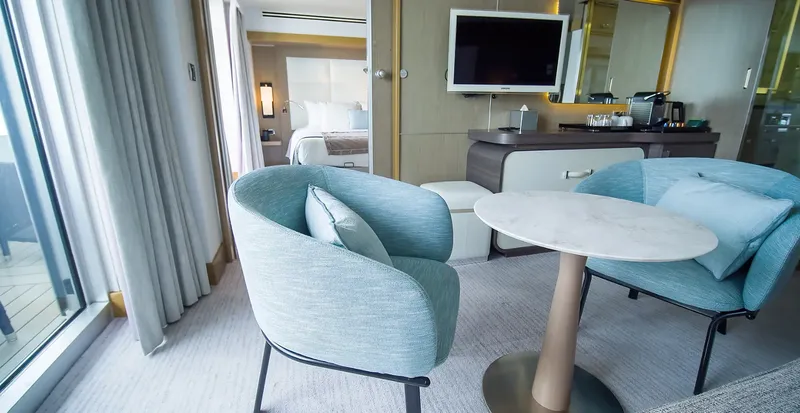
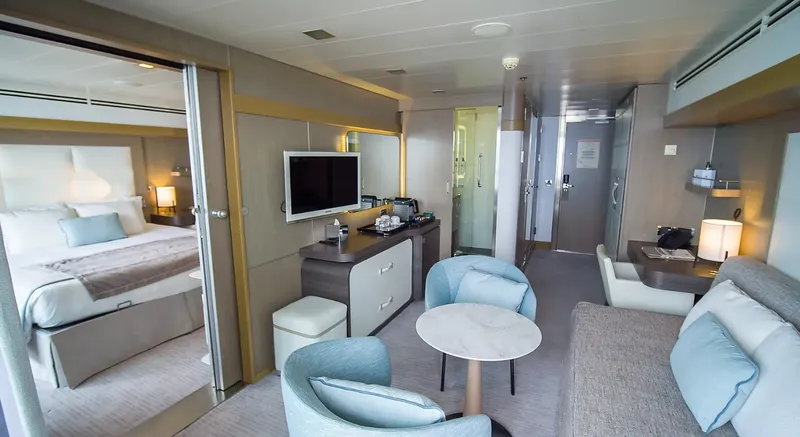
A bedroom with king-size bed (180 x 200 cm) or two single beds (90 x 200 cm)
A lounge with convertible sofa to a king-size bed (180 x 200 cm) or two single beds (90 x 200 cm), armchairs, second TV, and sliding courtesy door
Two bathrooms with showers
A private 8 m² balcony
Two panoramic sliding bay windows
View Details
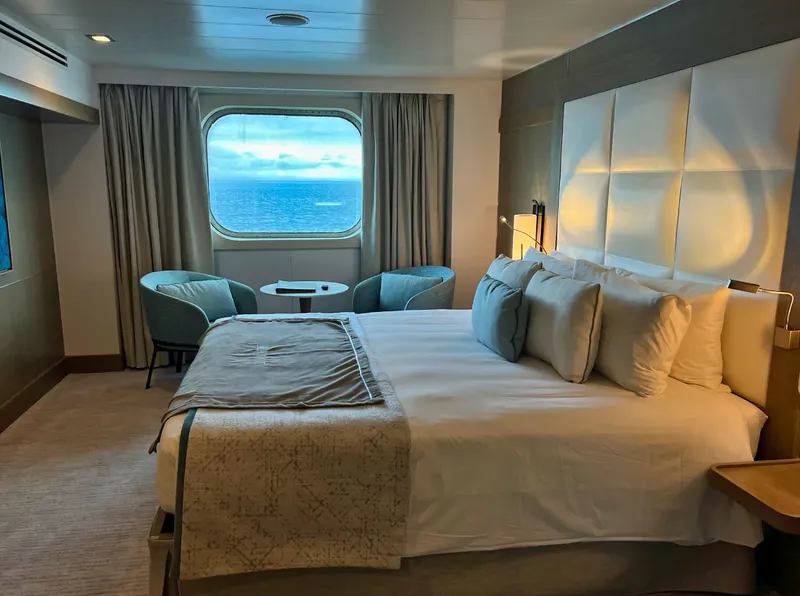
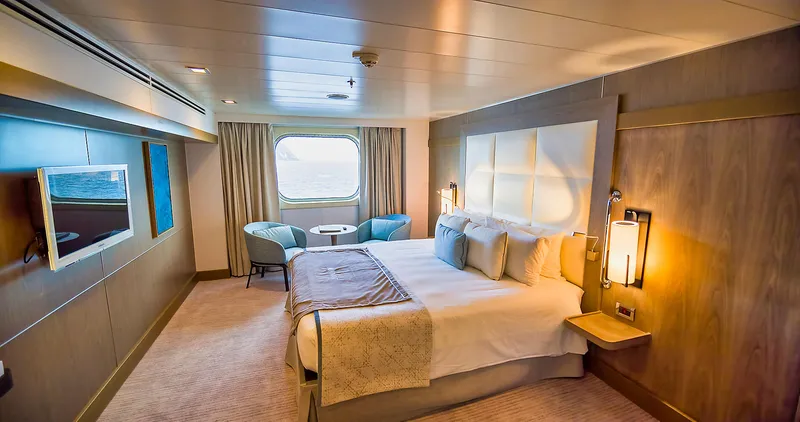
Superior Stateroom Deck 3
Suite
6
In addition to the common services provided to all our suites and staterooms:
One king-size bed or two single beds (180 x 200 cm)
A bathroom with shower
A window (except for stateroom 300: a round porthole only)
View Details
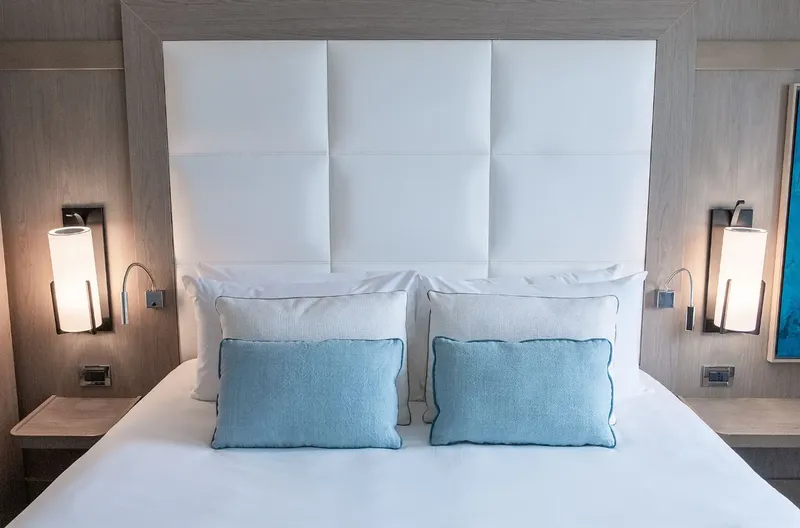
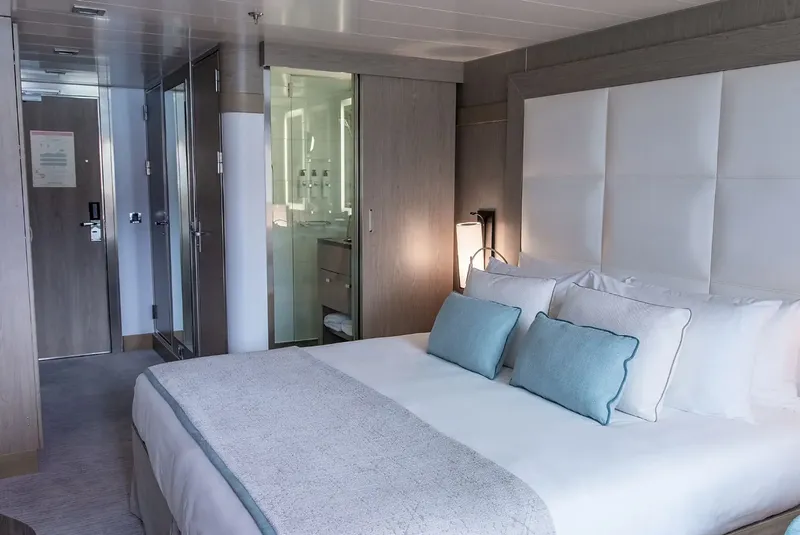
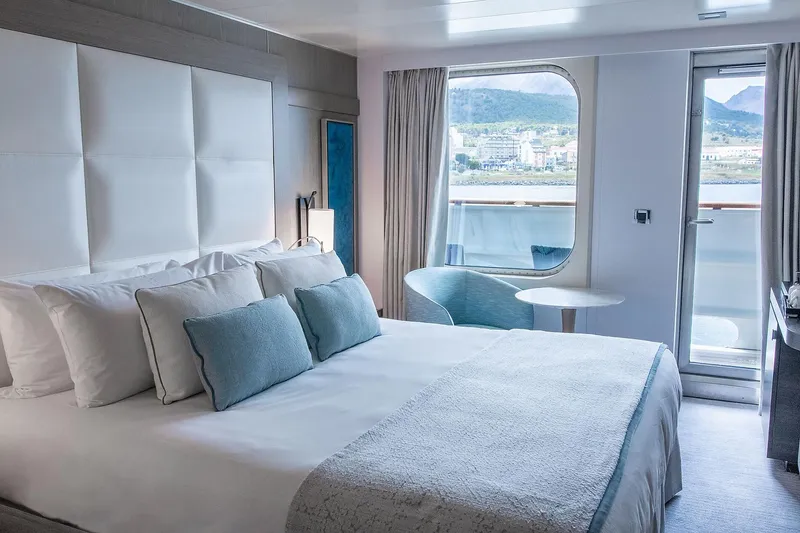
Deluxe Stateroom
Balcony
D
In addition to the common services provided to all our suites and staterooms:
One king-size bed (180 x 200 cm) or two single beds (90 x 200 cm)
A bathroom with shower
A private 4 m² balcony
A window and panoramic glazed swing door
View Details
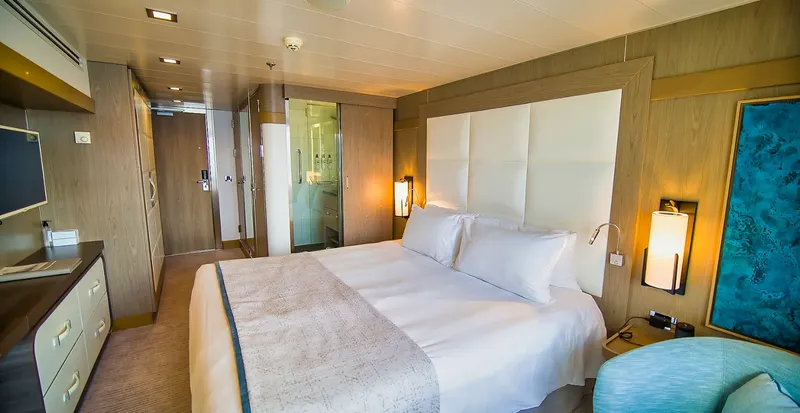
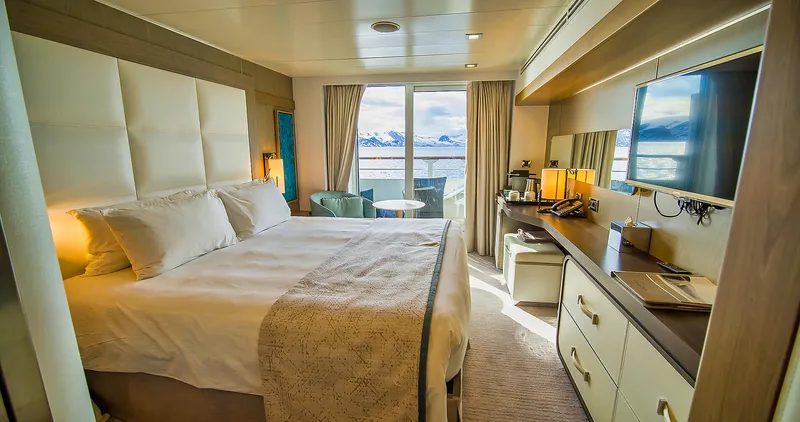
Prestige Stateroom Deck 4
Balcony
1
In addition to the common services provided to all our suites and staterooms:
One king-size bed (180 x 200 cm) or two single beds (90 x 200 cm)
A bathroom with shower
A private 4 m² balcony
A panoramic sliding bay window
View Details
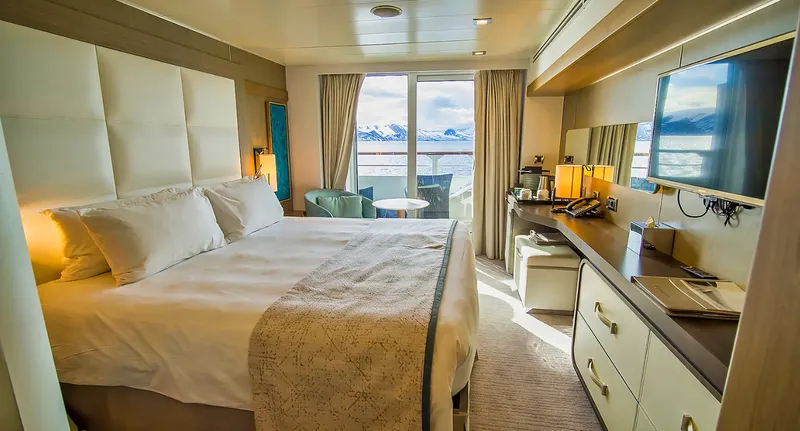
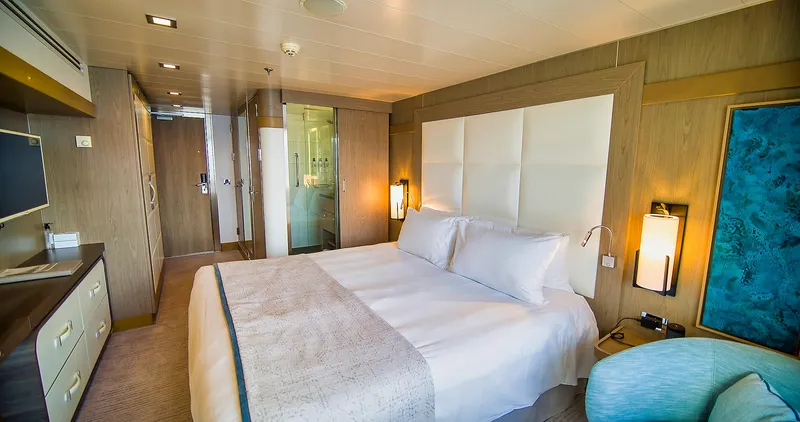
Prestige Stateroom Deck 5
Balcony
2
In addition to the common services provided to all our suites and staterooms:
One king-size bed (180 x 200 cm) or two single beds (90 x 200 cm)
A bathroom with shower
A private 4 m² balcony
A panoramic sliding bay window
View Details
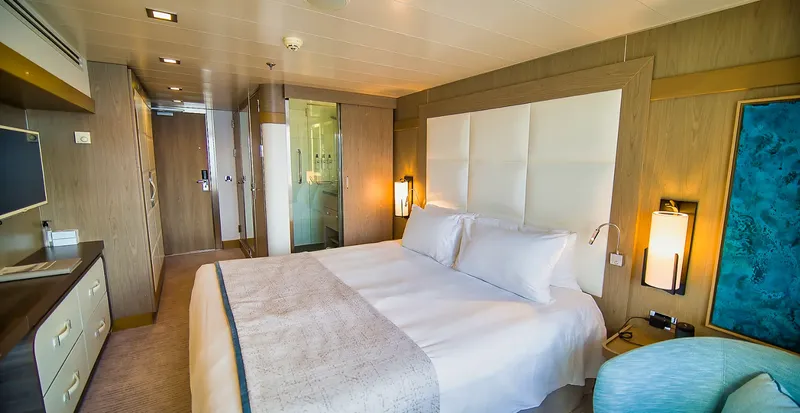
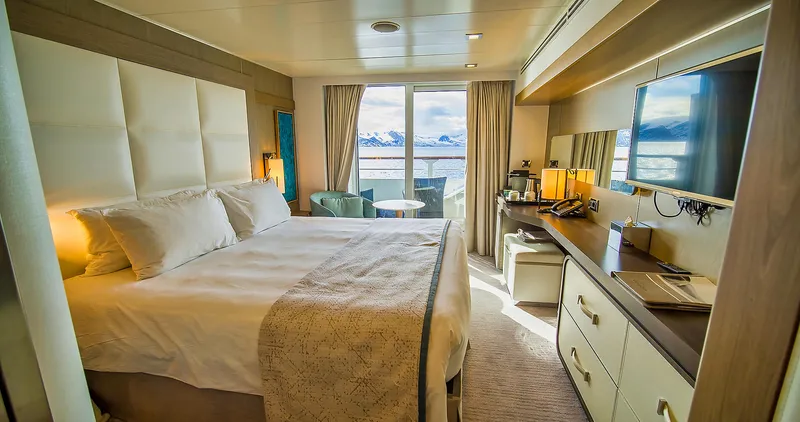
Prestige Stateroom Deck 6
Balcony
3
In addition to the common services provided to all our suites and staterooms:
One king-size bed (180 x 200 cm) or two single beds (90 x 200 cm)
A bathroom with shower
A private 4 m² balcony
A panoramic sliding bay window
View Details
Interested in This Voyage?
Our cruise specialists can help you find the perfect cabin and the best available pricing.
(+886) 02-2721-7300Contact Advisor