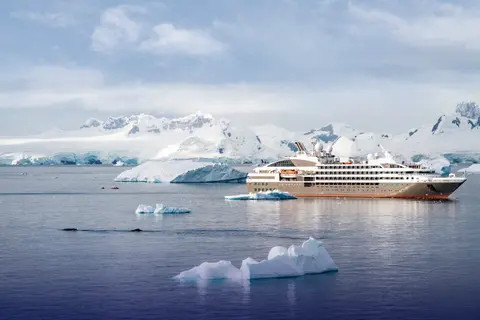
PonantBO060627
Authentic Mediterranean Shores
Date
2027-06-06
Duration
8 nights
Departure Port
Valletta
Malta
Arrival Port
Valletta
Malta
Rating
Luxury
Theme
—
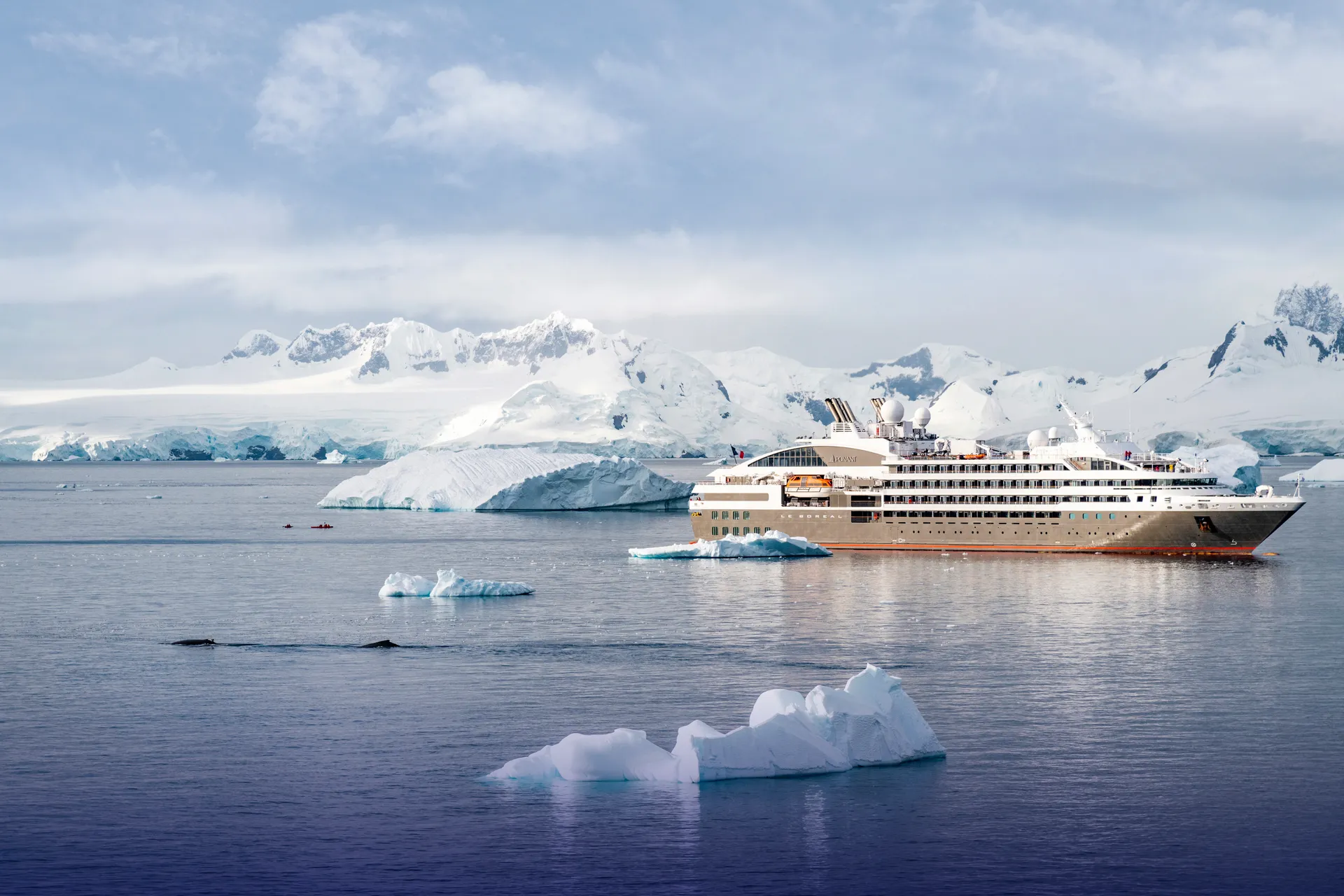
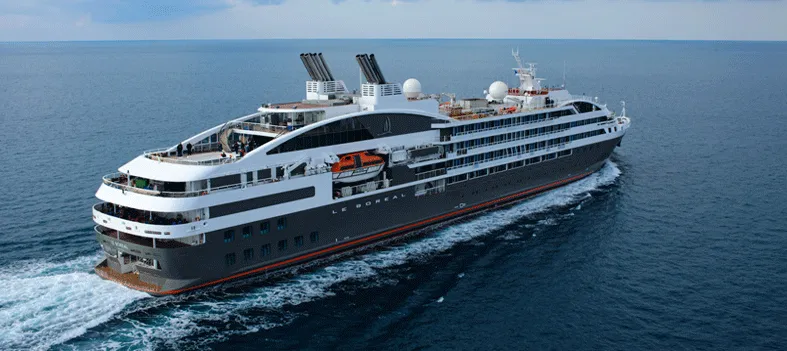
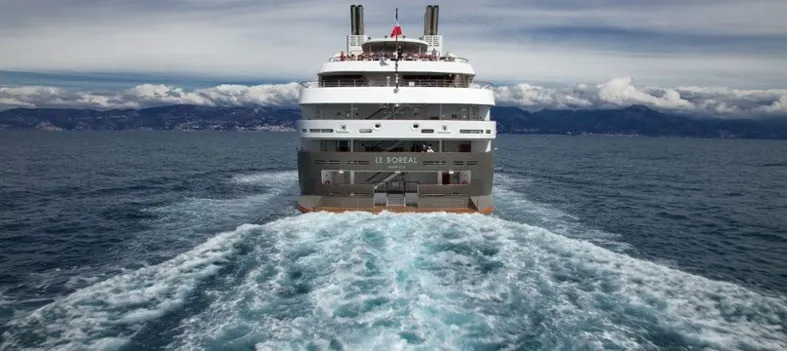
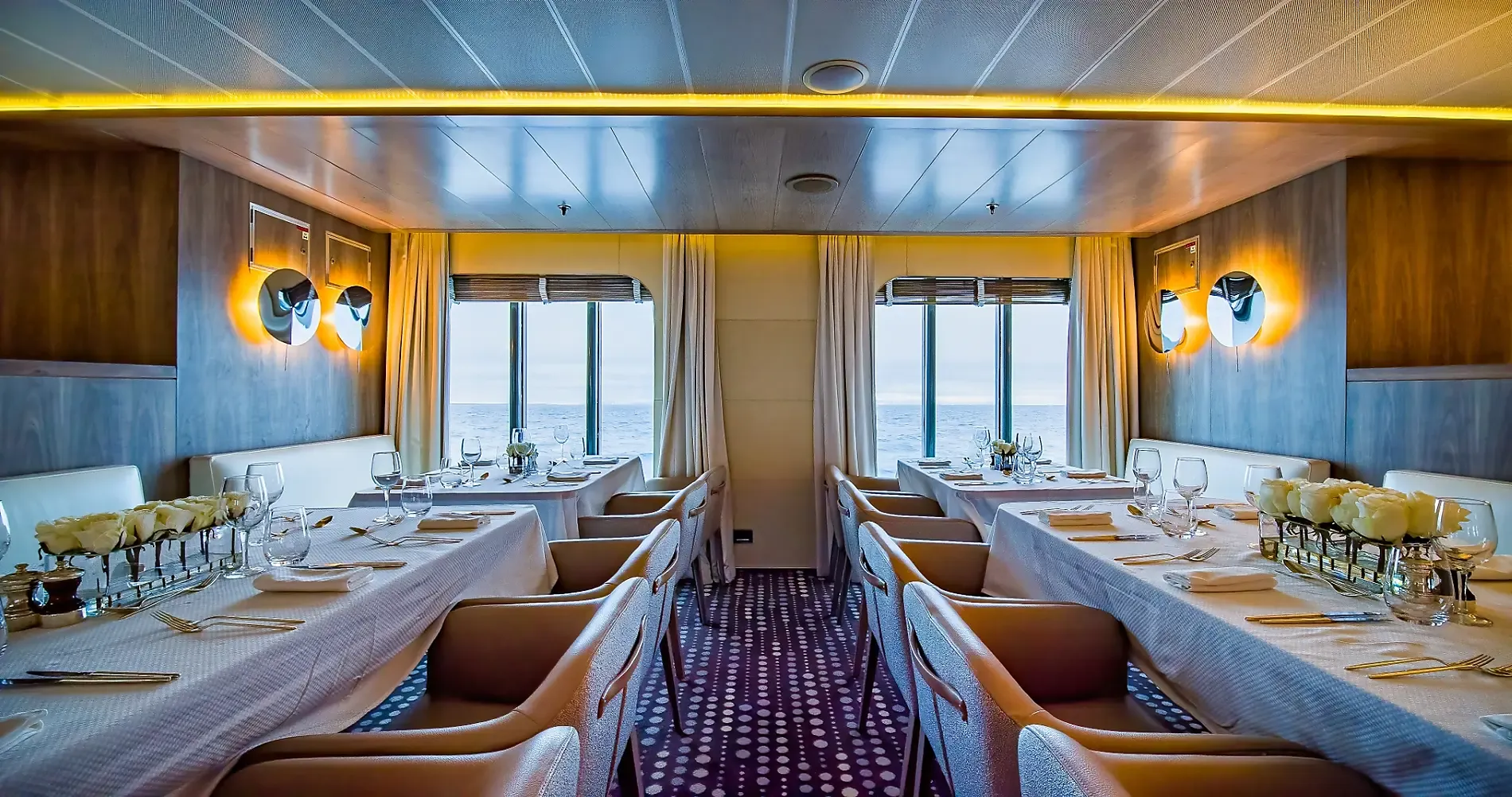
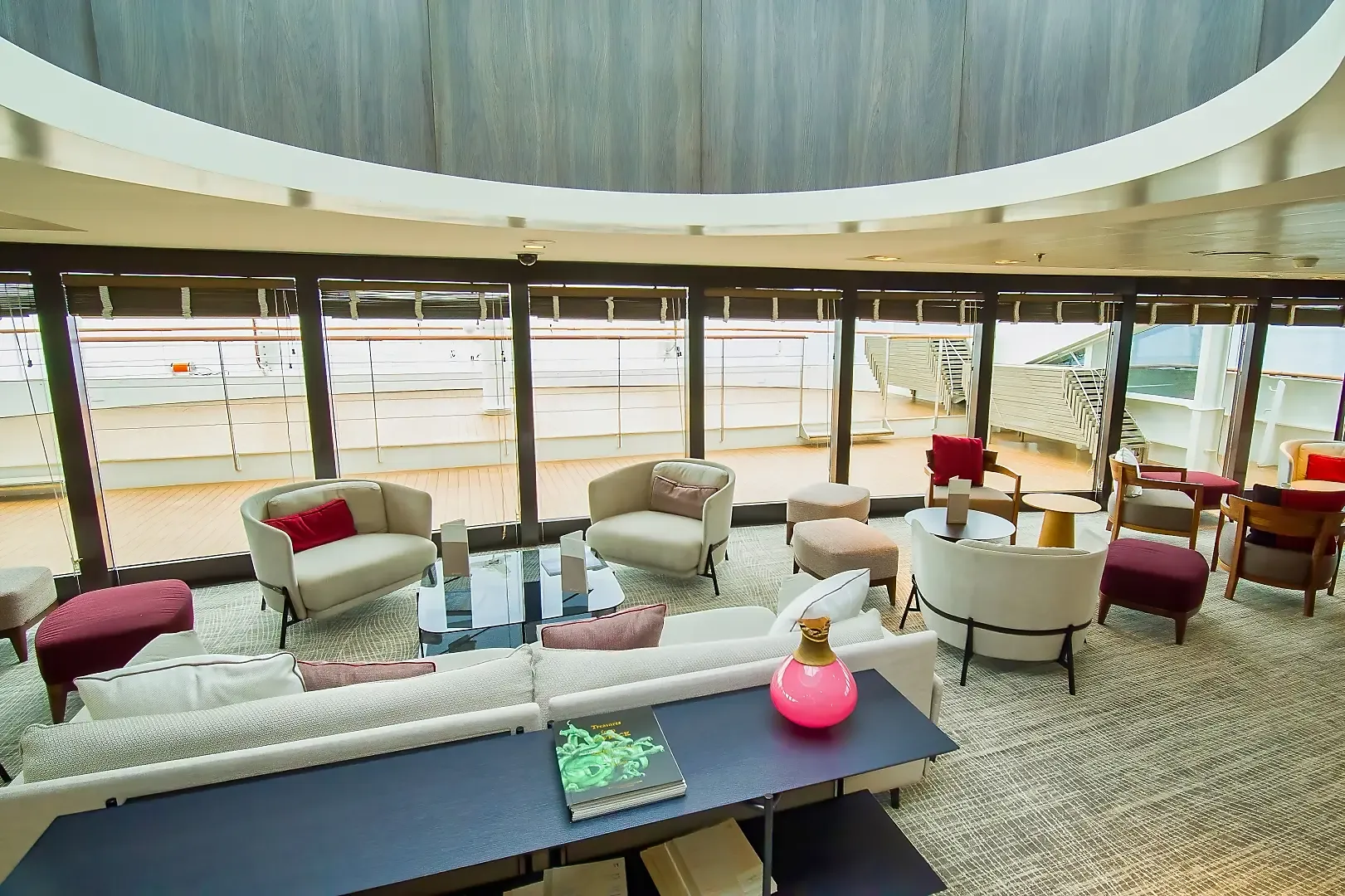
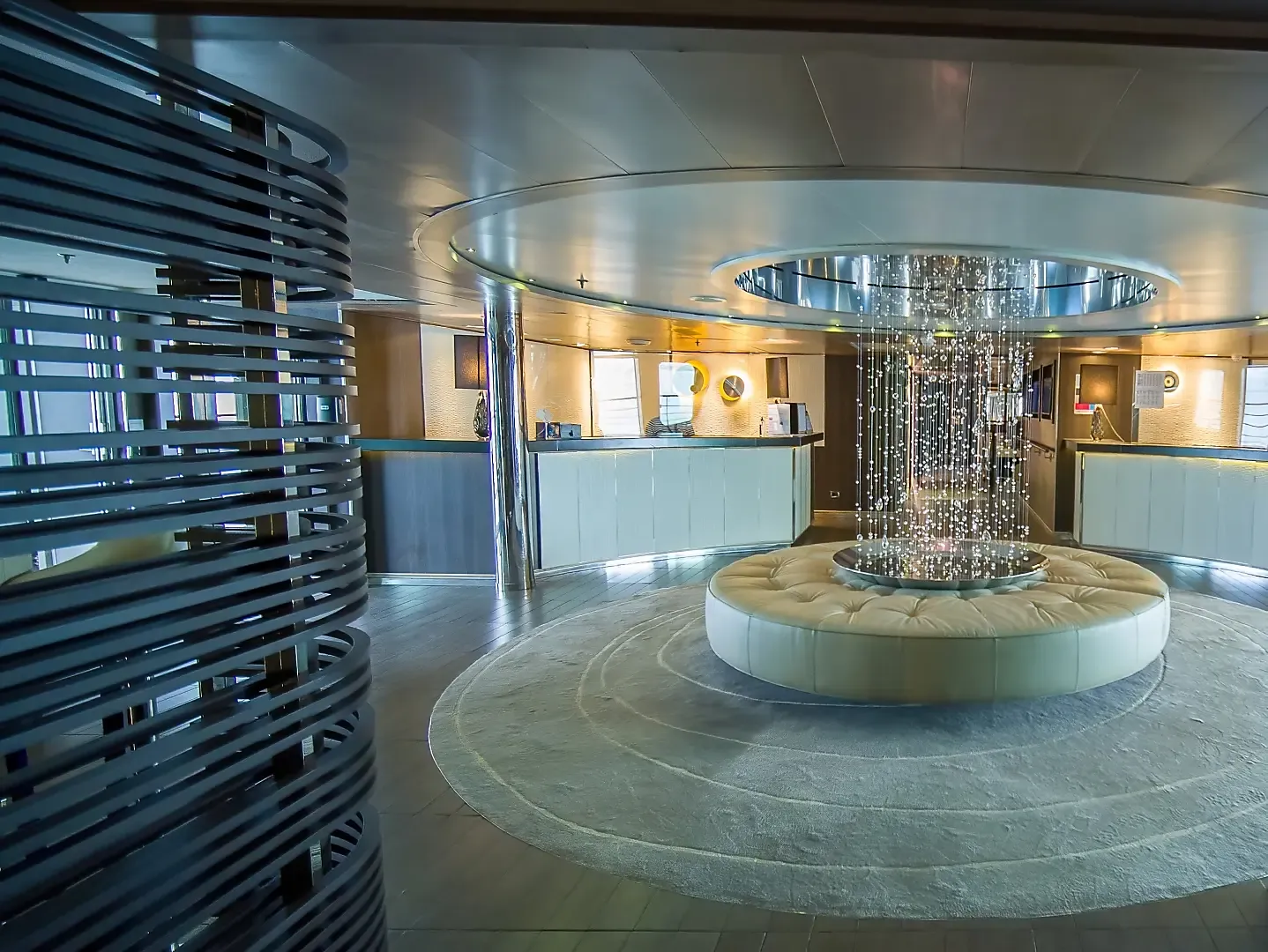
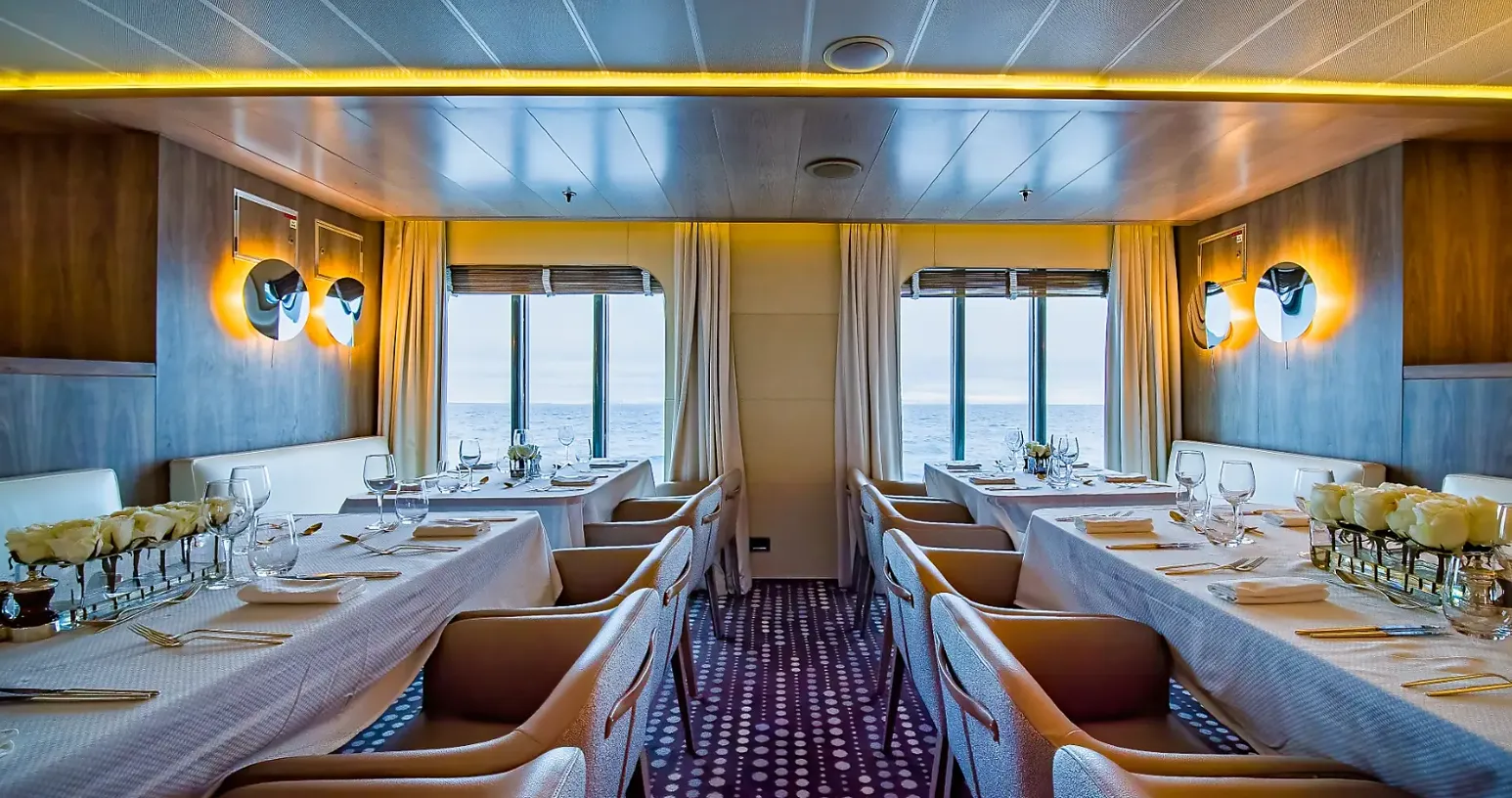
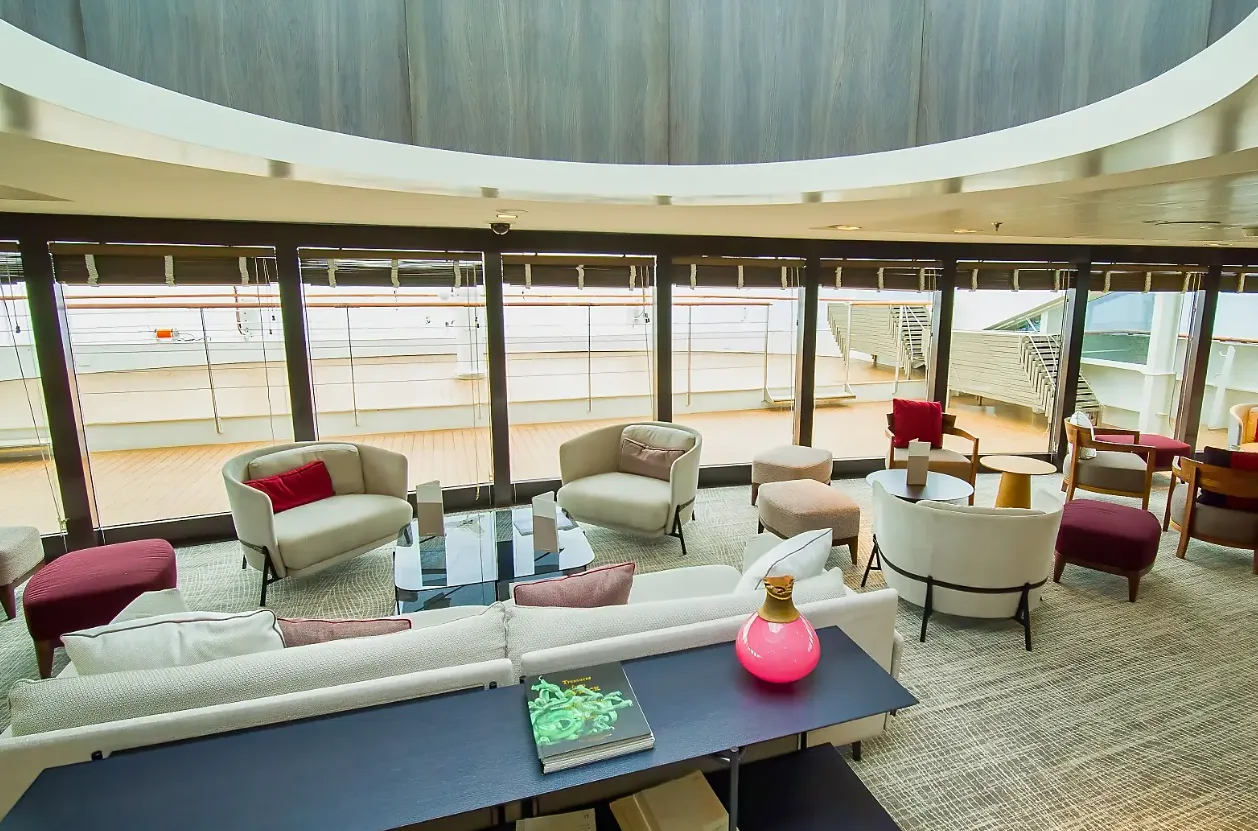
Ponant
Le Boréal
Launched
2010
Refitted
—
Tonnage
10,944 GT
Passengers
264
Cabins
132
Crew
139
Length
466 m
Width
18 m
Speed
14 knots
Adults Only
No
Itinerary
Day 1
Day 1
Valletta
Depart 18:30
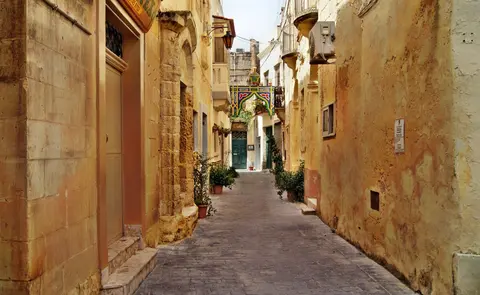
Valletta, Europe's smallest capital, is a fortress city of exceptional grandeur raised from bare limestone in just fifteen years after the Knights of St. John repelled the great Ottoman siege of 1565 — its rigid Renaissance grid of sun-drenched streets concealing a density of baroque palaces, gilded oratories, and subterranean World War II shelters unrivaled anywhere in the Mediterranean. The Grand Harbour, framed by golden bastions plunging into startlingly blue water, offers one of the most dramatically photogenic arrivals in the world for arriving vessels. Spring and autumn deliver the most comfortable temperatures for exploring this UNESCO-listed gem.
Day 2
Day 2
Porto Empedocle
Arrive 12:00Depart 18:00
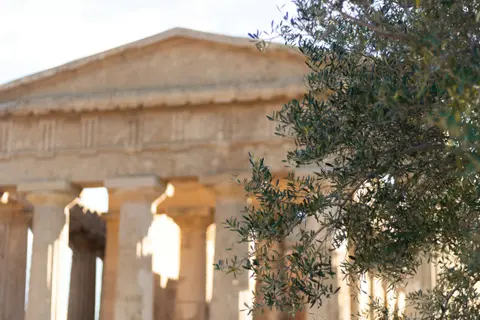
Porto Empedocle is Sicily’s gateway to the Valley of the Temples—a UNESCO ridge of seven Doric masterpieces including the extraordinarily preserved Temple of Concordia, rivaling anything in Greece. Must-dos include dawn visits to the Valley of the Temples, exploring Camilleri’s Montalbano country, and breakfast granita with brioche. Visit March through June or September through November for comfortable temperatures; evening visits offer illuminated temple views against the Mediterranean sky.
Day 3
Day 3
Trapani (Sicily)
Arrive 07:00Depart 20:00
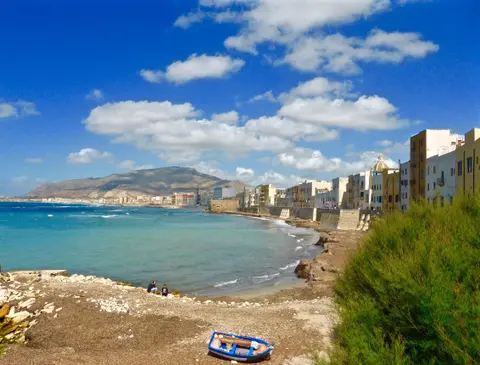
Trapani is western Sicily's sickle-shaped port city where ancient salt flats, cloud-wrapped medieval Erice, and the crystal-clear Egadi Islands converge at the Mediterranean's cultural crossroads. Visit April through October via Seabourn or Windstar for cable-car ascents to Norman-era pastry shops, sunset salt-flat reflections, and the Arab-influenced seafood couscous that distinguishes this coast from anywhere else in Italy.
Day 4
Day 4
Palermo
Arrive 07:00Depart 22:00
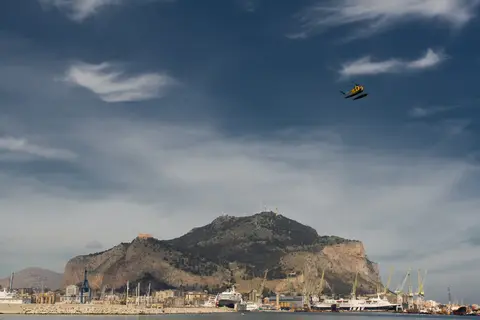
Palermo is the Mediterranean's most intoxicating crossroads of civilisations — Arab arches meet Byzantine gold mosaics beneath Norman royal chapels in the extraordinary Palatine Chapel, a monument to 12th-century multicultural brilliance that is Sicily's single greatest work of art. The Ballarò and Capo street markets, among southern Italy's most atmospheric, tumble through the ancient city in a sensory barrage of swordfish, blood oranges, jasmine, and street food improvised across centuries. Do not leave without tasting arancini and sfincione, Sicily's gloriously thick street pizza. Spring (April–May) and autumn (September–October) offer the ideal climate — warm enough for the sea, cool enough for extended walking.
Day 5
Day 5
Lipari
Arrive 07:00Depart 18:00
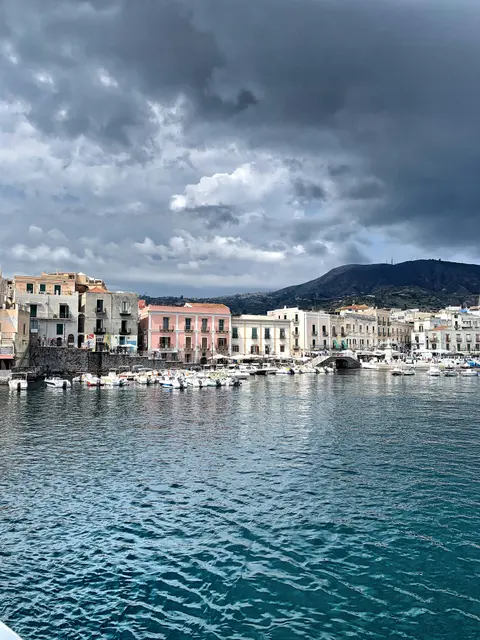
Lipari, the largest of Sicily's volcanic Aeolian Islands, has been a Mediterranean trading hub for over 6,000 years, featuring a dramatic Castello, world-class archaeological museum, and gateway access to Stromboli's erupting crater. Must-dos include exploring the fortified old town, tasting caper-laced Aeolian cuisine and Malvasia wine, and island-hopping to Vulcano and Stromboli. May through October offers ideal conditions.
Day 5
Day 5
Stromboli
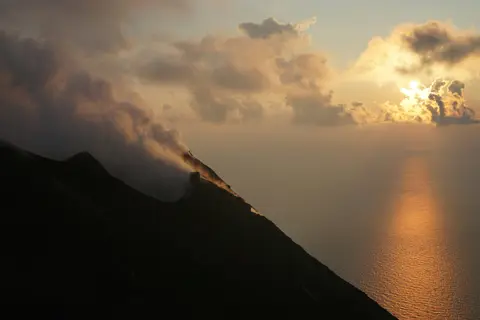
Stromboli is an active volcanic island in the Aeolian archipelago that has erupted continuously for over two thousand years, earning its nickname as the Lighthouse of the Mediterranean. Must-dos include witnessing nighttime eruptions from the sea, hiking to the Sciara del Fuoco viewpoint, and tasting salt-cured capers and Malvasia wine on a terrace beneath the glowing summit. May through October offers calm seas and clear skies for the best eruption viewing.
Day 6
Day 6
Reggio Di Calabria
Arrive 07:00Depart 23:59
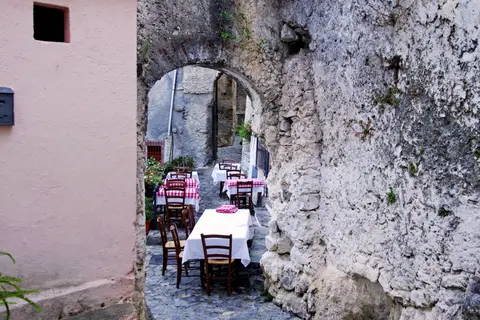
Reggio di Calabria is the toe of Italy's boot, home to the magnificent Bronzi di Riace bronze warriors and a sun-drenched waterfront promenade overlooking the Strait of Messina and Sicily. Must-dos include visiting the Magna Grecia museum, tasting 'nduja and grilled swordfish, and walking the Lungomare with Mount Etna in view. May through October offers the warmest weather and calmest strait conditions.
Day 7
Day 7
Syracuse
Arrive 07:00Depart 22:00
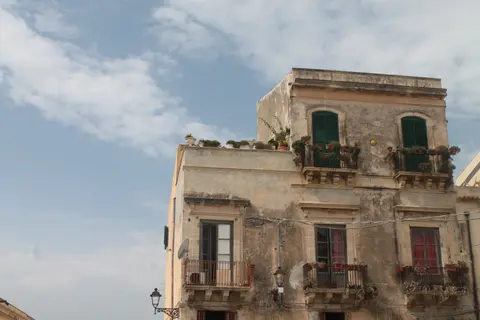
Syracuse (Siracusa) is one of the ancient world's greatest cities, featuring the island quarter of Ortigia—a baroque masterpiece built over Greek temple ruins—and an archaeological park with a fifth-century BC theatre still hosting summer performances. Must-dos include Ortigia's cathedral with its embedded Greek columns, the morning market, and tasting pasta with sea urchin. April through June and September through November offer ideal temperatures.
Day 8
Day 8
Taormina
Arrive 07:00Depart 18:00
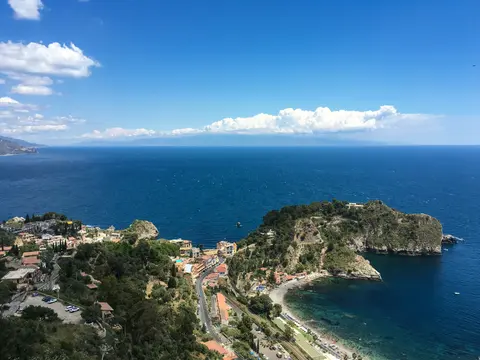
Taormina is a cliffside Sicilian jewel 200 meters above the Ionian Sea, featuring an ancient Greek theater with Mount Etna as its backdrop, the exquisite Isola Bella bay, and some of Sicily's finest cuisine. Must-dos include a performance at the Teatro Antico, the cable car to Isola Bella, and tasting Etna volcanic wines. April through June and September through October offer ideal temperatures.
Day 9
Day 9
Valletta
Arrive 07:00
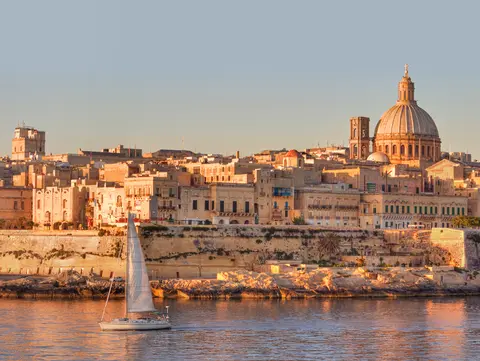
Valletta, Europe's smallest capital, is a fortress city of exceptional grandeur raised from bare limestone in just fifteen years after the Knights of St. John repelled the great Ottoman siege of 1565 — its rigid Renaissance grid of sun-drenched streets concealing a density of baroque palaces, gilded oratories, and subterranean World War II shelters unrivaled anywhere in the Mediterranean. The Grand Harbour, framed by golden bastions plunging into startlingly blue water, offers one of the most dramatically photogenic arrivals in the world for arriving vessels. Spring and autumn deliver the most comfortable temperatures for exploring this UNESCO-listed gem.
Day 1
Valletta
Depart 18:30
Valletta, Europe's smallest capital, is a fortress city of exceptional grandeur raised from bare limestone in just fifteen years after the Knights of St. John repelled the great Ottoman siege of 1565 — its rigid Renaissance grid of sun-drenched streets concealing a density of baroque palaces, gilded oratories, and subterranean World War II shelters unrivaled anywhere in the Mediterranean. The Grand Harbour, framed by golden bastions plunging into startlingly blue water, offers one of the most dramatically photogenic arrivals in the world for arriving vessels. Spring and autumn deliver the most comfortable temperatures for exploring this UNESCO-listed gem.
Day 2
Porto Empedocle
Arrive 12:00Depart 18:00
Porto Empedocle is Sicily’s gateway to the Valley of the Temples—a UNESCO ridge of seven Doric masterpieces including the extraordinarily preserved Temple of Concordia, rivaling anything in Greece. Must-dos include dawn visits to the Valley of the Temples, exploring Camilleri’s Montalbano country, and breakfast granita with brioche. Visit March through June or September through November for comfortable temperatures; evening visits offer illuminated temple views against the Mediterranean sky.
Day 3
Trapani (Sicily)
Arrive 07:00Depart 20:00
Trapani is western Sicily's sickle-shaped port city where ancient salt flats, cloud-wrapped medieval Erice, and the crystal-clear Egadi Islands converge at the Mediterranean's cultural crossroads. Visit April through October via Seabourn or Windstar for cable-car ascents to Norman-era pastry shops, sunset salt-flat reflections, and the Arab-influenced seafood couscous that distinguishes this coast from anywhere else in Italy.
Day 4
Palermo
Arrive 07:00Depart 22:00
Palermo is the Mediterranean's most intoxicating crossroads of civilisations — Arab arches meet Byzantine gold mosaics beneath Norman royal chapels in the extraordinary Palatine Chapel, a monument to 12th-century multicultural brilliance that is Sicily's single greatest work of art. The Ballarò and Capo street markets, among southern Italy's most atmospheric, tumble through the ancient city in a sensory barrage of swordfish, blood oranges, jasmine, and street food improvised across centuries. Do not leave without tasting arancini and sfincione, Sicily's gloriously thick street pizza. Spring (April–May) and autumn (September–October) offer the ideal climate — warm enough for the sea, cool enough for extended walking.
Day 5
Lipari
Arrive 07:00Depart 18:00
Lipari, the largest of Sicily's volcanic Aeolian Islands, has been a Mediterranean trading hub for over 6,000 years, featuring a dramatic Castello, world-class archaeological museum, and gateway access to Stromboli's erupting crater. Must-dos include exploring the fortified old town, tasting caper-laced Aeolian cuisine and Malvasia wine, and island-hopping to Vulcano and Stromboli. May through October offers ideal conditions.
Stromboli
Stromboli is an active volcanic island in the Aeolian archipelago that has erupted continuously for over two thousand years, earning its nickname as the Lighthouse of the Mediterranean. Must-dos include witnessing nighttime eruptions from the sea, hiking to the Sciara del Fuoco viewpoint, and tasting salt-cured capers and Malvasia wine on a terrace beneath the glowing summit. May through October offers calm seas and clear skies for the best eruption viewing.
Day 6
Reggio Di Calabria
Arrive 07:00Depart 23:59
Reggio di Calabria is the toe of Italy's boot, home to the magnificent Bronzi di Riace bronze warriors and a sun-drenched waterfront promenade overlooking the Strait of Messina and Sicily. Must-dos include visiting the Magna Grecia museum, tasting 'nduja and grilled swordfish, and walking the Lungomare with Mount Etna in view. May through October offers the warmest weather and calmest strait conditions.
Day 7
Syracuse
Arrive 07:00Depart 22:00
Syracuse (Siracusa) is one of the ancient world's greatest cities, featuring the island quarter of Ortigia—a baroque masterpiece built over Greek temple ruins—and an archaeological park with a fifth-century BC theatre still hosting summer performances. Must-dos include Ortigia's cathedral with its embedded Greek columns, the morning market, and tasting pasta with sea urchin. April through June and September through November offer ideal temperatures.
Day 8
Taormina
Arrive 07:00Depart 18:00
Taormina is a cliffside Sicilian jewel 200 meters above the Ionian Sea, featuring an ancient Greek theater with Mount Etna as its backdrop, the exquisite Isola Bella bay, and some of Sicily's finest cuisine. Must-dos include a performance at the Teatro Antico, the cable car to Isola Bella, and tasting Etna volcanic wines. April through June and September through October offer ideal temperatures.
Day 9
Valletta
Arrive 07:00
Valletta, Europe's smallest capital, is a fortress city of exceptional grandeur raised from bare limestone in just fifteen years after the Knights of St. John repelled the great Ottoman siege of 1565 — its rigid Renaissance grid of sun-drenched streets concealing a density of baroque palaces, gilded oratories, and subterranean World War II shelters unrivaled anywhere in the Mediterranean. The Grand Harbour, framed by golden bastions plunging into startlingly blue water, offers one of the most dramatically photogenic arrivals in the world for arriving vessels. Spring and autumn deliver the most comfortable temperatures for exploring this UNESCO-listed gem.
Cabin Categories
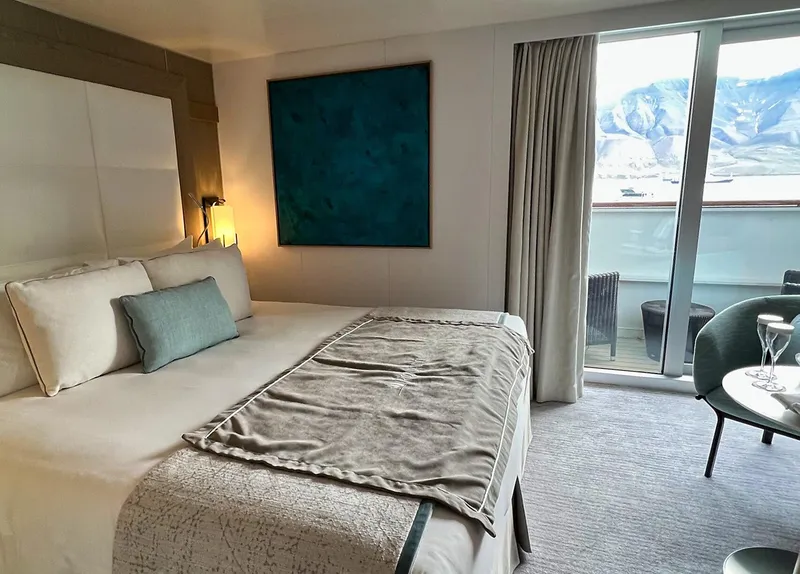
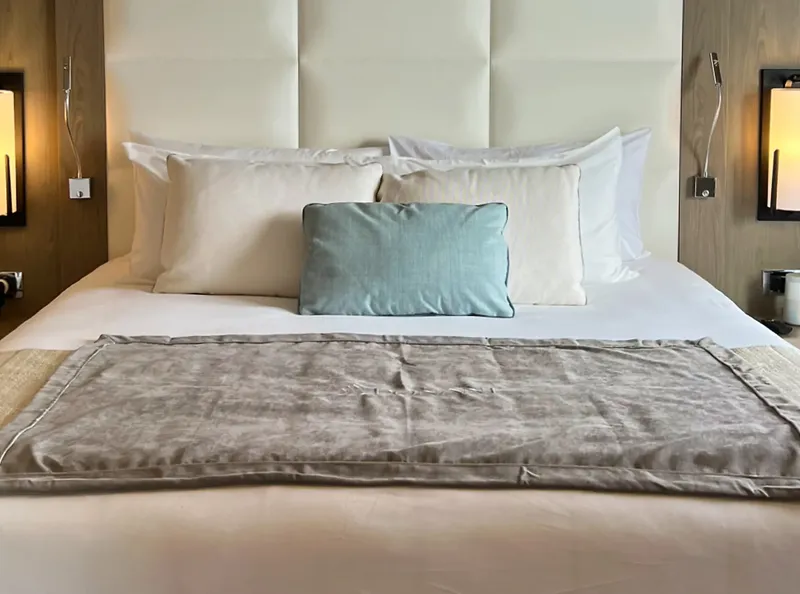
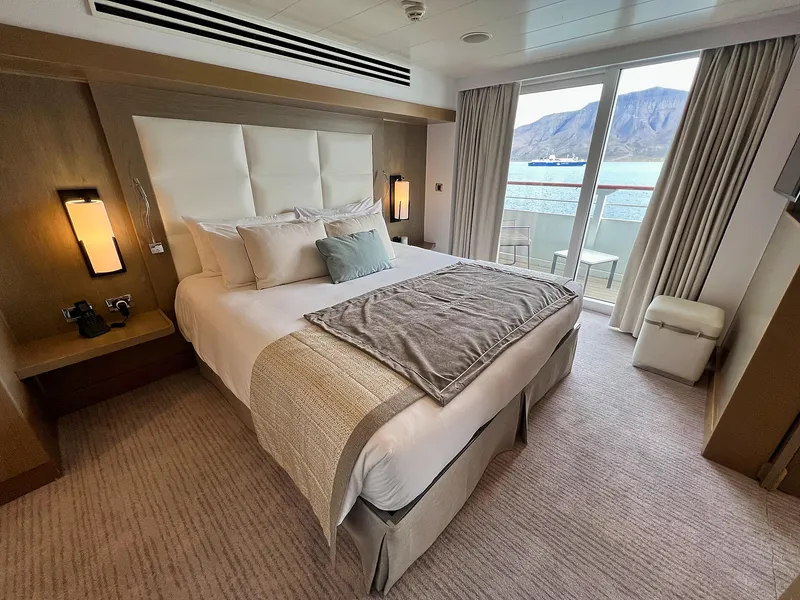
Deluxe Suite Deck 6
Suite
DS
In addition to the common services provided to all our suites and staterooms:
Priority boarding (depending on port of embarkation)
Champagne and fruit basket upon arrival
Butler service
An assortment of sweet or savoury canapés and fruit basket every day
One king-size bed (180 x 200 cm) or two single beds (90 x 200 cm)
An armchair and sofa (167 x 70 cm)
A bathroom with shower and small bathtub
A private 5 m² balcony
A panoramic sliding bay window
View Details
Owner's Suite
Suite
OS
In addition to the common services provided to all our suites and staterooms:
Private return transfer
Priority boarding (depending on port of embarkation)
Champagne and fruit basket upon arrival
Butler service
An assortment of sweet or savoury canapés and fruit basket every day
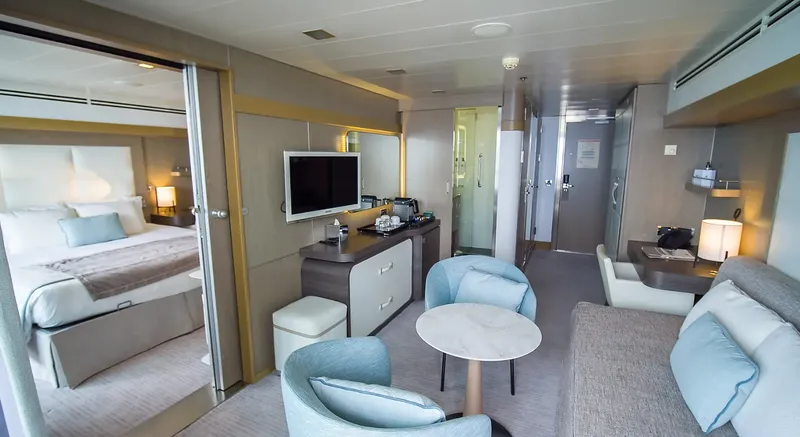
A bedroom with one king-size bed (180 x 200 cm) or two single beds (90 x 200 cm)
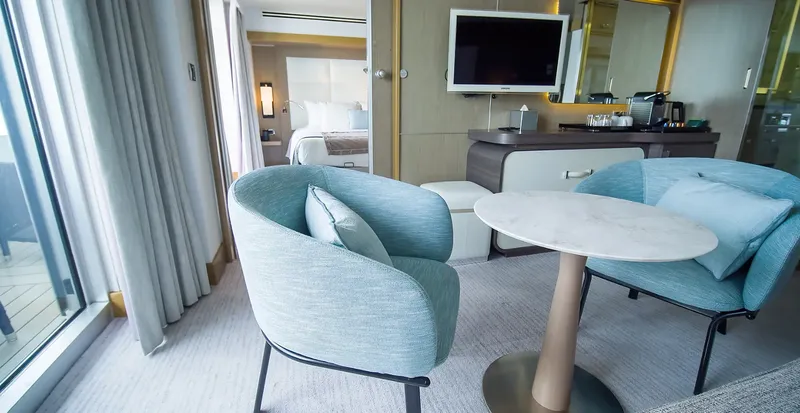
A living/dining room with a sofa, armchair, second TV, 4-seater table, and sliding courtesy door
A bathroom with shower and Balneo bathtub
A one-hour spa treatments per person (for 2 people) in the well-being space, chosen from the facial and body treatments on offer
Included premium pass: access to a selection of premium spirits at the bar
A private 9 m² balcony
Two panoramic sliding bay windows
View Details
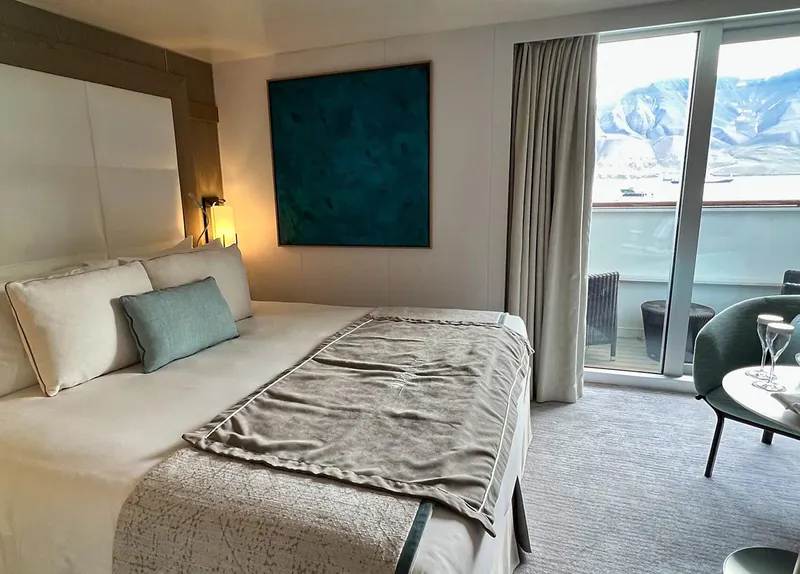
Prestige Suite Deck 5
Suite
4
In addition to the common services provided to all our suites and staterooms:
Champagne and fruit basket upon arrival
An assortment of sweet or savoury canapés and fruit basket every day
A bedroom with king-size bed (180 x 200 cm) or two single beds (90 x 200 cm)
A lounge with convertible sofa to a king-size bed (180 x 200 cm) or two single beds (90 x 200 cm), armchairs, second TV, and sliding courtesy door
Two bathrooms with showers
A private 8 m² balcony
Two panoramic sliding bay windows
View Details
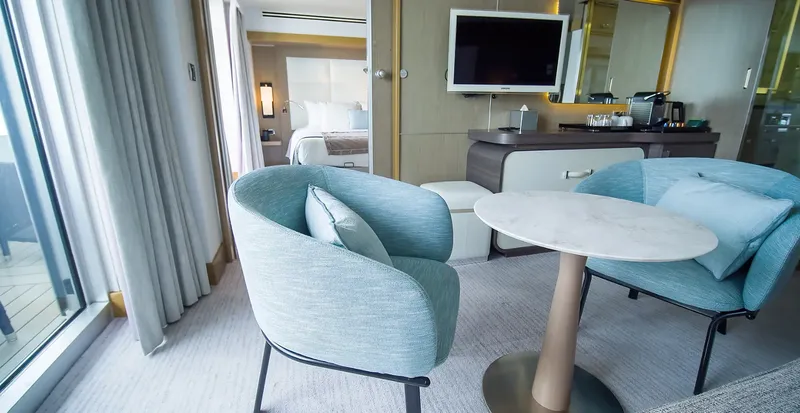
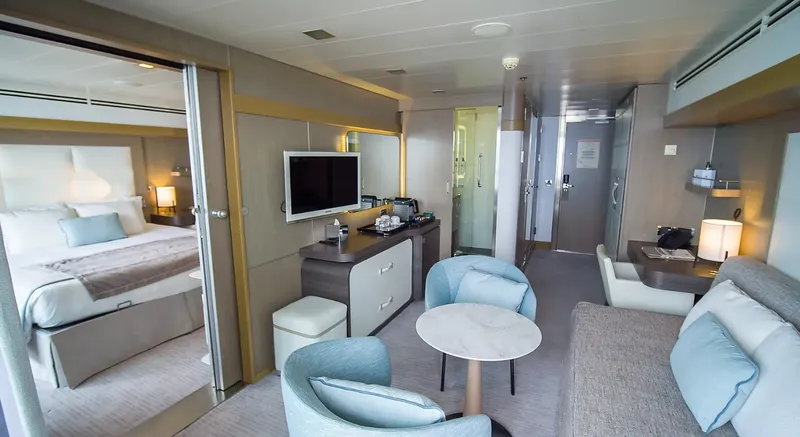
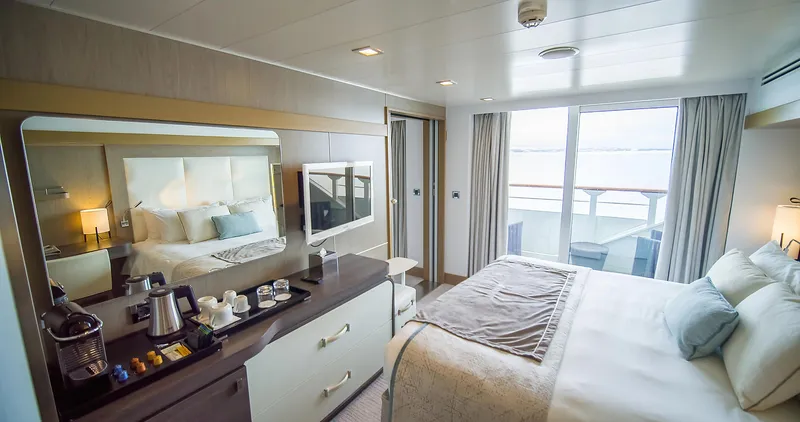
Prestige Suite Deck 6
Suite
5
In addition to the common services provided to all our suites and staterooms:
Priority boarding (depending on port of embarkation)
Champagne and fruit basket upon arrival
Butler service
An assortment of sweet or savoury canapés and fruit basket every day
A bedroom with king-size bed (180 x 200 cm) or two single beds (90 x 200 cm)
A lounge with convertible sofa to a king-size bed (180 x 200 cm) or two single beds (90 x 200 cm), armchairs, second TV, and sliding courtesy door
Two bathrooms with showers
A private 8 m² balcony
Two panoramic sliding bay windows
View Details
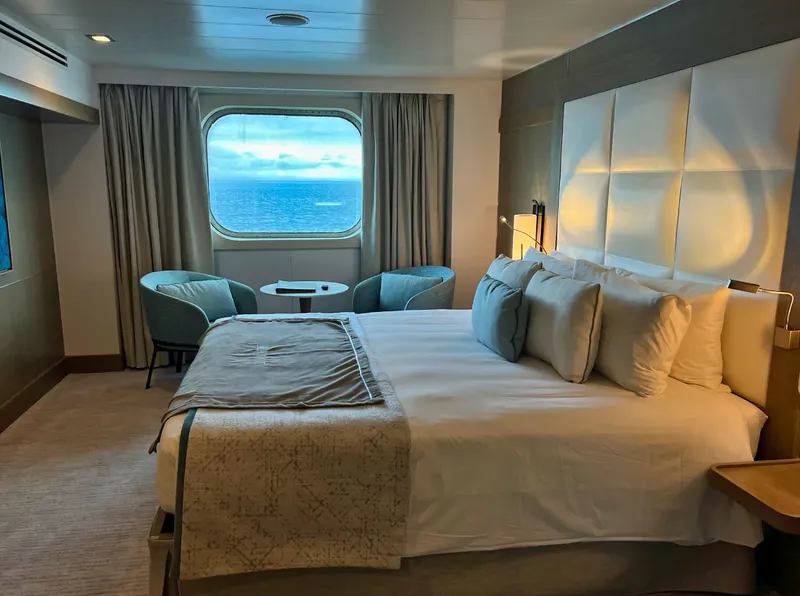
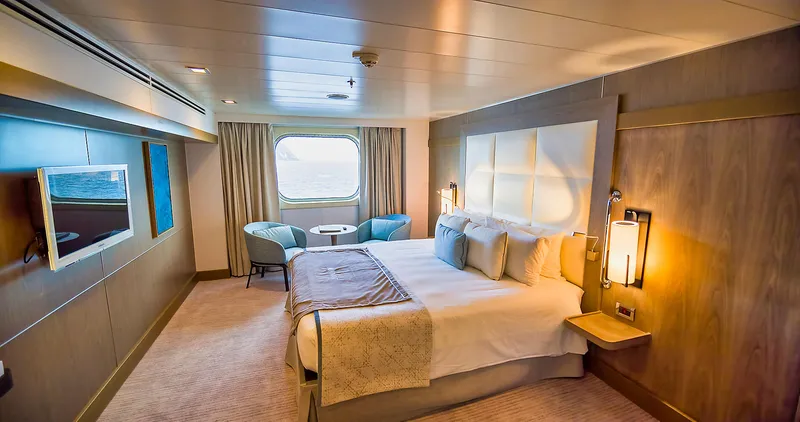
Superior Stateroom Deck 3
Suite
6
In addition to the common services provided to all our suites and staterooms:
One king-size bed or two single beds (180 x 200 cm)
A bathroom with shower
A window (except for stateroom 300: a round porthole only)
View Details
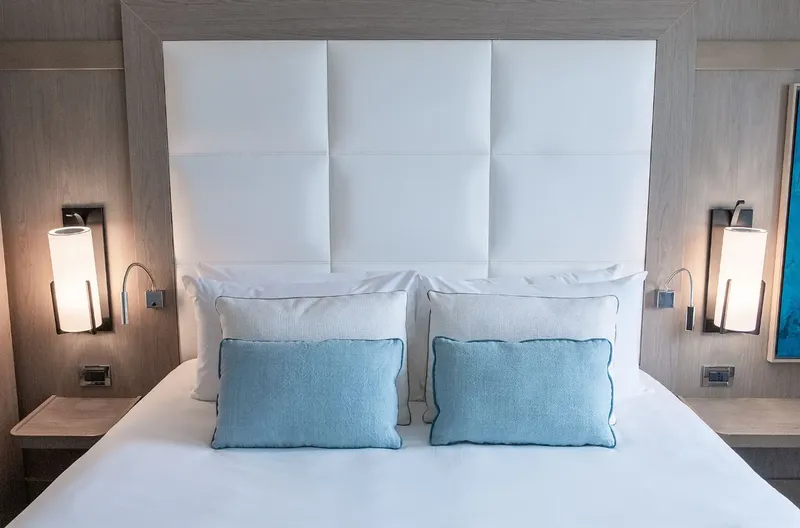
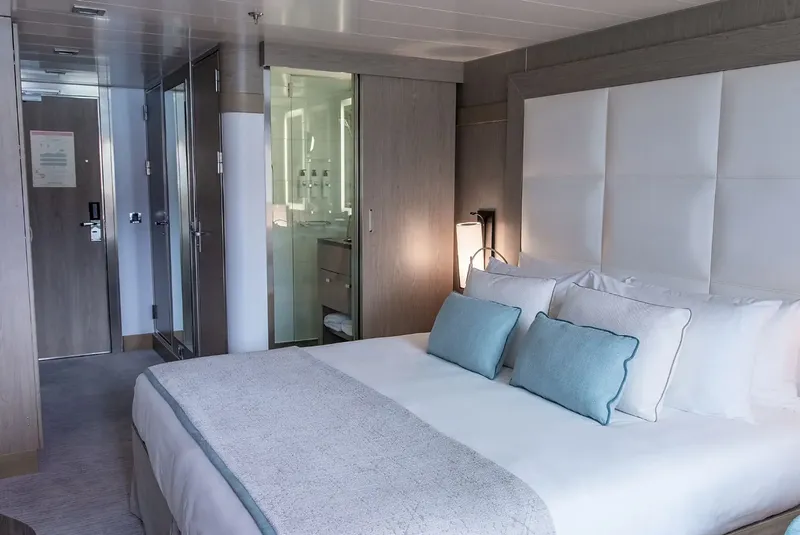
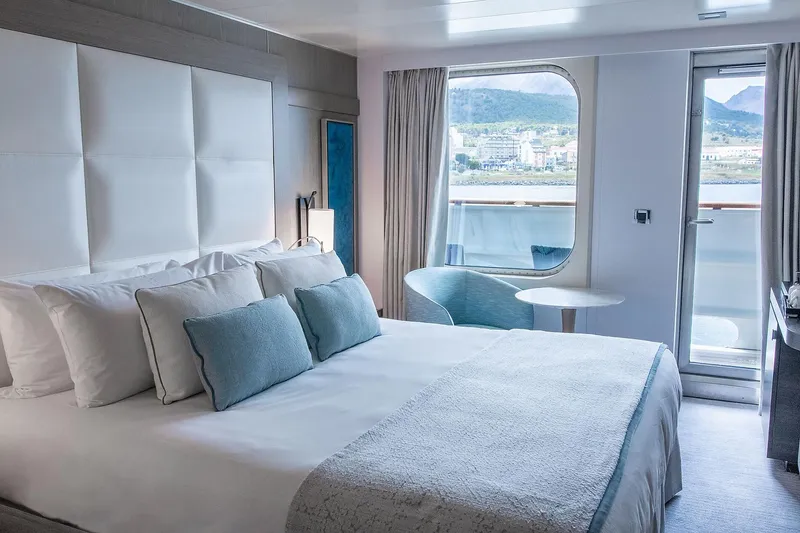
Deluxe Stateroom
Balcony
D
In addition to the common services provided to all our suites and staterooms:
One king-size bed (180 x 200 cm) or two single beds (90 x 200 cm)
A bathroom with shower
A private 4 m² balcony
A window and panoramic glazed swing door
View Details
Prestige Stateroom Deck 4
Balcony
1
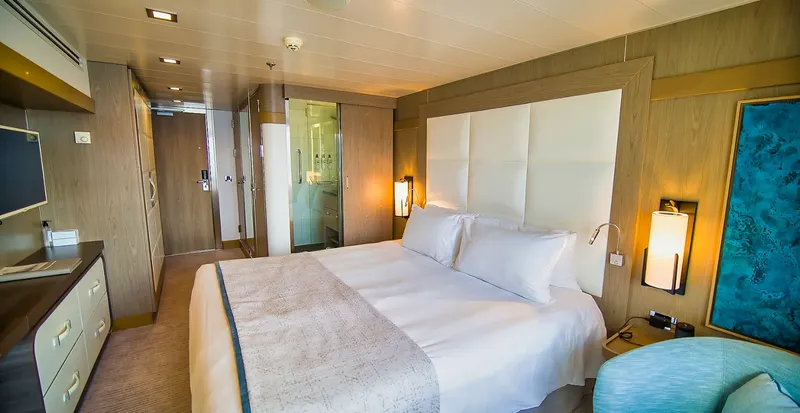
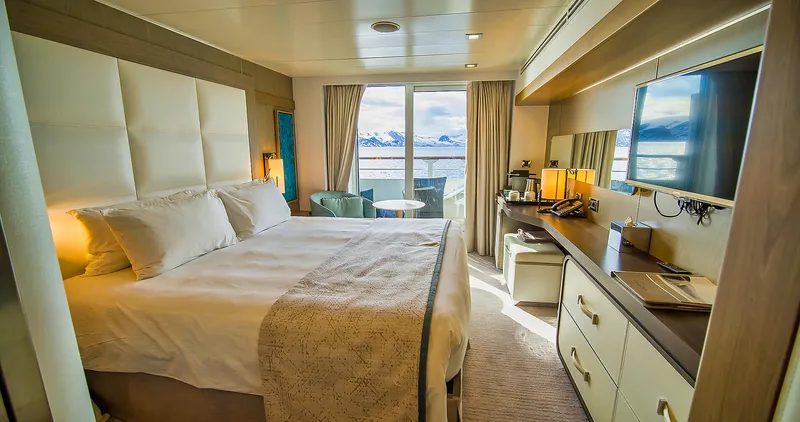
In addition to the common services provided to all our suites and staterooms:
One king-size bed (180 x 200 cm) or two single beds (90 x 200 cm)
A bathroom with shower
A private 4 m² balcony
A panoramic sliding bay window
View Details
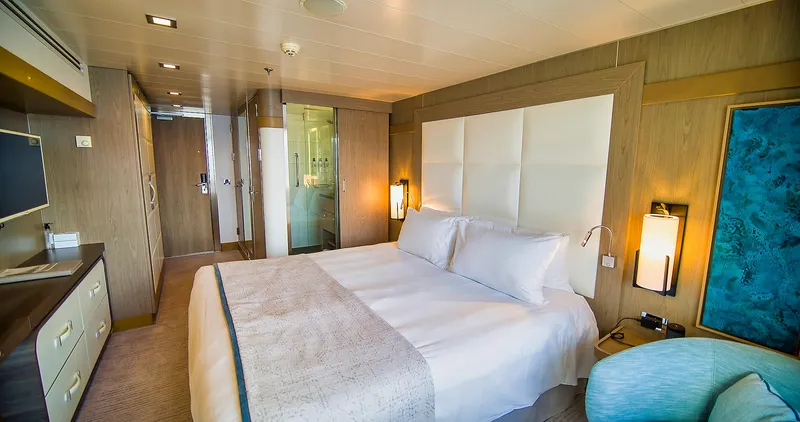
Prestige Stateroom Deck 5
Balcony
2
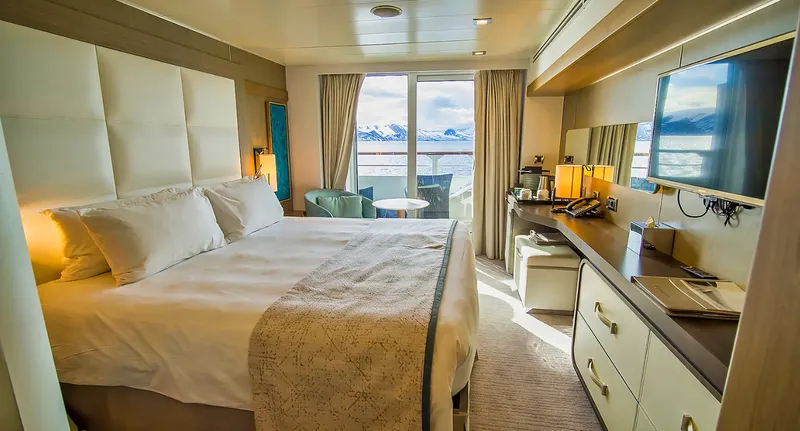
In addition to the common services provided to all our suites and staterooms:
One king-size bed (180 x 200 cm) or two single beds (90 x 200 cm)
A bathroom with shower
A private 4 m² balcony
A panoramic sliding bay window
View Details
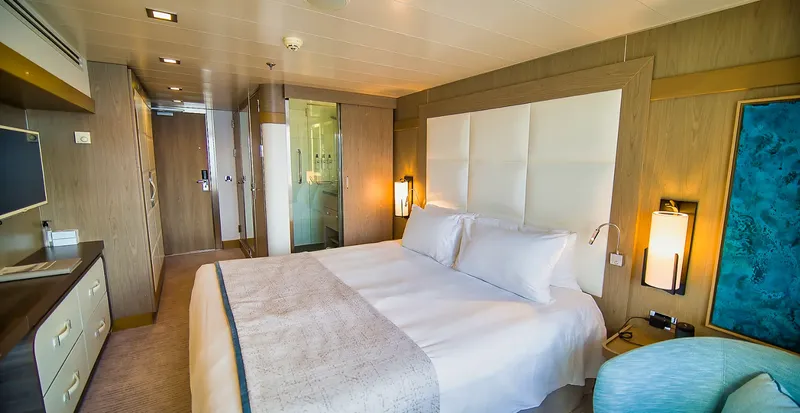
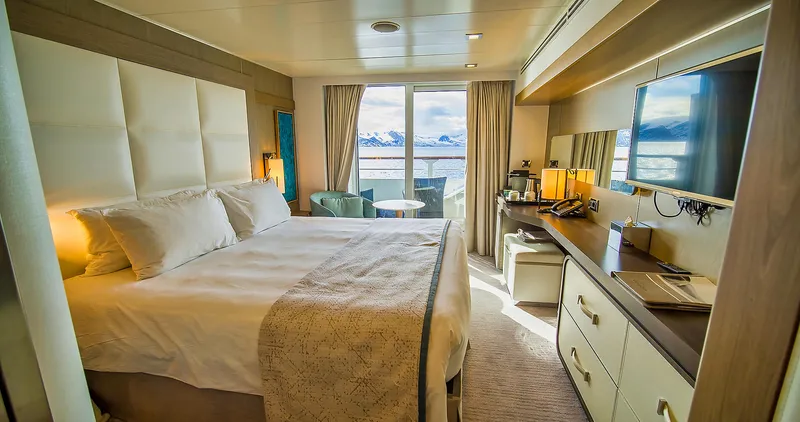
Prestige Stateroom Deck 6
Balcony
3
In addition to the common services provided to all our suites and staterooms:
One king-size bed (180 x 200 cm) or two single beds (90 x 200 cm)
A bathroom with shower
A private 4 m² balcony
A panoramic sliding bay window
View Details
Interested in This Voyage?
Our cruise specialists can help you find the perfect cabin and the best available pricing.
(+886) 02-2721-7300Contact Advisor