
Ultimate Voyage: Ancient Empires, Adriatic & Amalfi Coast
Date
2028-08-12
Duration
32 nights
Departure Port
Istanbul
Turkey
Arrival Port
Civitavecchia
Italy
Rating
Ultra Luxury
Theme
—
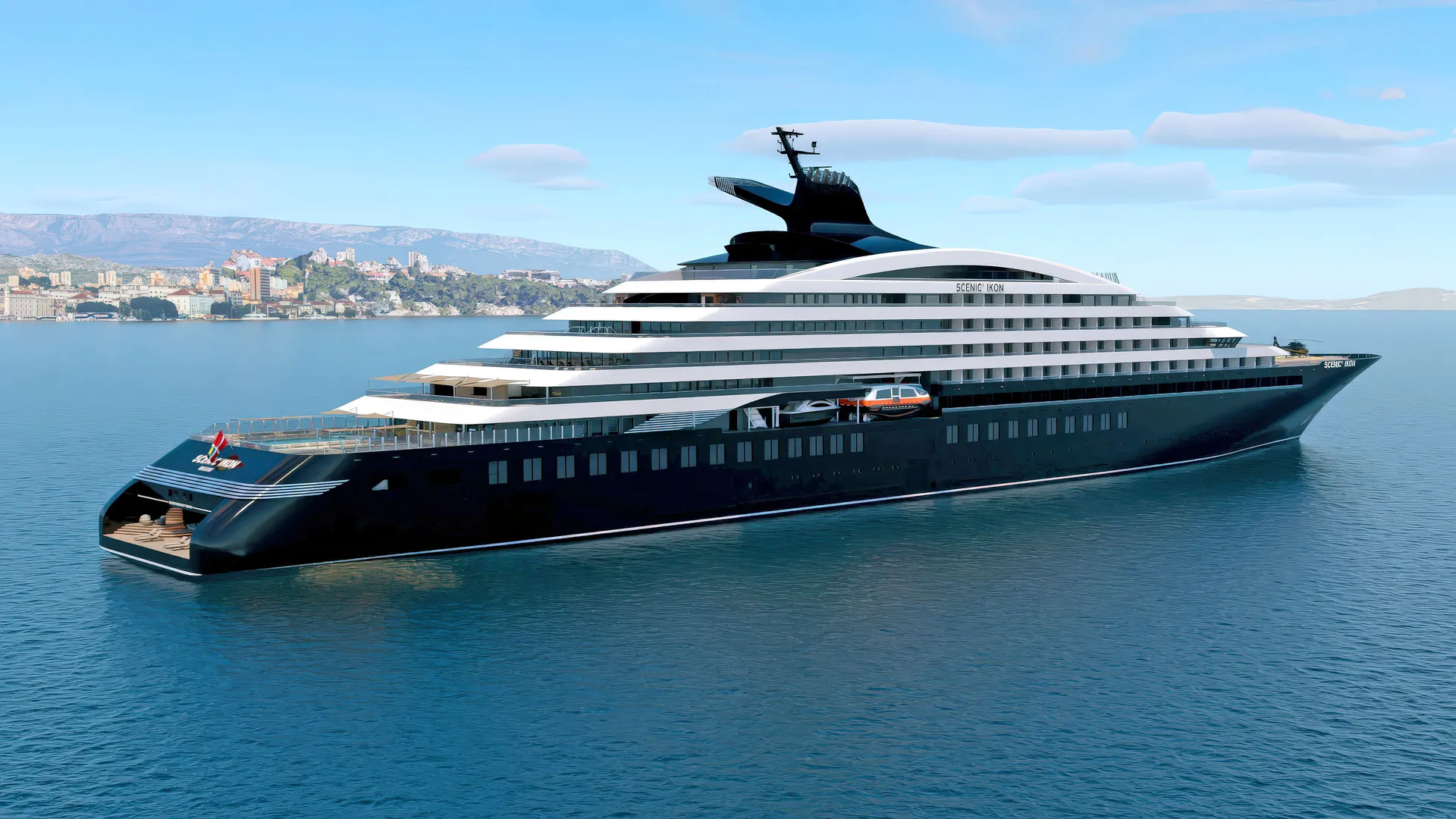
Scenic Ocean Cruises
Scenic Ikon
Itinerary
Day 1
Day 1
Istanbul

For more than fifteen centuries, Istanbul has been the pivot upon which empires turned — Byzantium, Constantinople, the Ottoman capital — and nowhere else on earth compresses so much history into a single horizon. The Hagia Sophia, the Blue Mosque, and the Topkapi Palace form an incomparable trinity of architectural genius along the Golden Horn; the Grand Bazaar's four thousand shops offer a sensory immersion unlike any other marketplace. Must-dos include a Bosphorus sunset cruise and a meal of mezze along the waterfront at Karaköy. Spring (April–May) and autumn (September–October) offer the most gracious climate for this inexhaustible city.
Day 3
Day 3
Canakkale
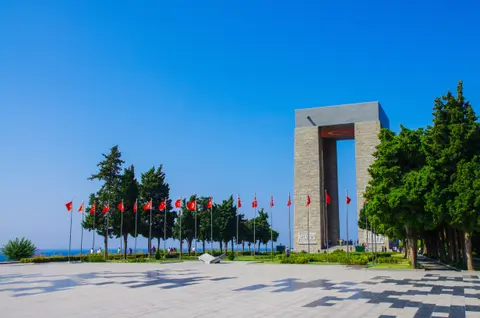
Çanakkale is a vibrant Turkish university town commanding the Dardanelles strait, serving as the gateway to ancient Troy and the Gallipoli battlefields—two of the most emotionally powerful historical sites in the world. Must-dos include the Troy archaeological site and museum, Gallipoli memorials, and waterfront meyhane dining with fresh Dardanelles seafood. April through October is ideal, with spring best for Anzac Day and wildflower-covered battlefields.
Day 4
Day 4
At Sea
Day 5
Day 5
Dikili
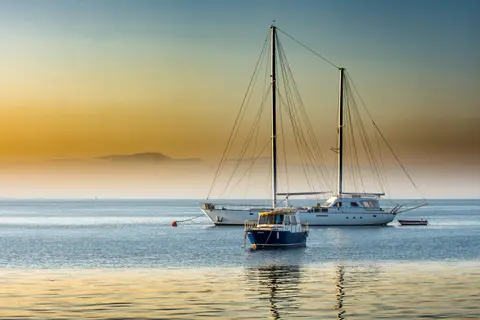
Dikili is an unspoiled Aegean coastal town in western Turkey, serving as the gateway to the UNESCO-listed ancient city of Pergamon and the hilltop ruins of Atarneus where Aristotle once taught. Essential experiences include exploring Pergamon's dramatic acropolis, savoring fresh Aegean seafood at the harbor, and visiting the Roman thermal springs at Kocaoba. The best months are May and September for warm weather, clear light, and few crowds.
Day 6
Day 6
Kusadasi
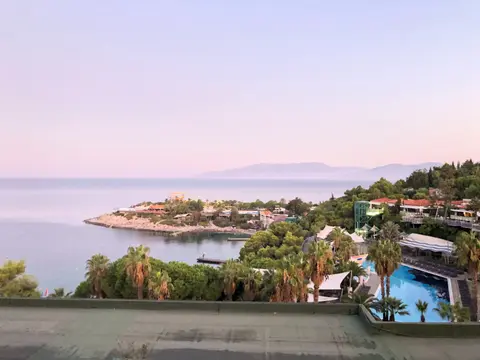
Kuşadası owes its place on the world's cruise itineraries to one extraordinary proximity: the ancient city of Ephesus, one of the greatest metropolises of the Greco-Roman world, lies just seventeen kilometres from the port. Ephesus — with its two-kilometre marble colonnade, the Library of Celsus, and the Temple of Artemis (one of the Seven Wonders of the Ancient World) — demands at least half a day of unhurried exploration. The House of the Virgin Mary, a pilgrimage site believed to be where Mary spent her final years, adds a profound spiritual dimension. Kuşadası itself is a lively Aegean resort; the season runs April through October, with May and September offering ideal temperatures and smaller crowds.
Day 7
Day 7
Naxos
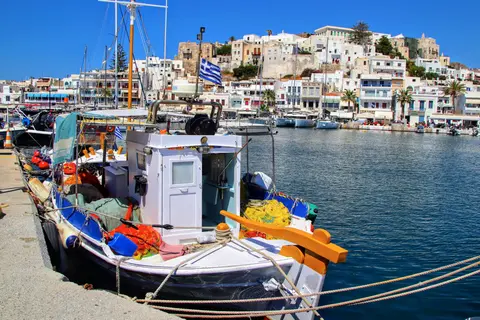
Naxos, Greece is a distinctive port city where deep cultural heritage meets authentic local atmosphere, featured on itineraries by Windstar Cruises. Must-do experiences include walking the historic center to experience the layered architectural heritage, and seeking out the regional culinary traditions at a locally favored establishment away from the port area. The optimal time to visit is May through September, when mild temperatures and long days favor unhurried exploration.
Day 8
Day 8
Santorini
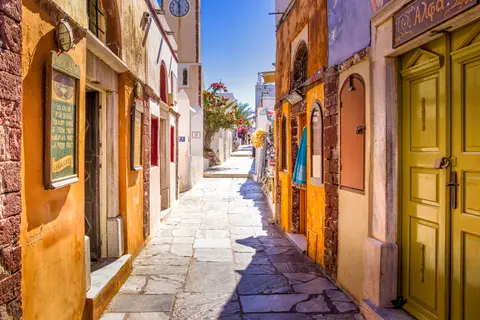
Santorini, the ancient volcanic caldera rising from the Aegean, is Greece's most theatrical landscape — a crescentic island of sheer white cliffs plunging into an indigo sea, its clifftop villages of Fira and Oia draped in bougainvillea and culminating in the world's most photographed sunset. The island's unique Assyrtiko wine, grown on ancient ungrafted vines in volcanic pumice, is one of the Mediterranean's greatest expressions of terroir. Byzantine frescoes of extraordinary beauty fill the Prehistoric Museum of Thera. The volcanic black and red sand beaches of Perissa and Perivolos are unlike any others in Greece. April through June and September through October offer the finest conditions.
Day 9
Day 9
Heraklion (Iraklion)
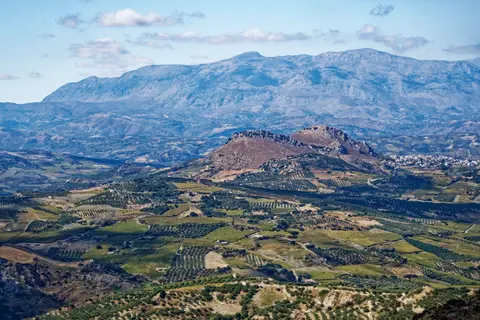
Heraklion, the capital of Crete, is a historic port city rich in Minoan heritage and Venetian architecture, making it an essential stop for cruise travelers. Must-do experiences include exploring the Palace of Knossos and indulging in local dishes like moussaka and dakos. The best season to visit is during the spring and early fall when the weather is mild and the local festivals are in full swing.
Day 10
Day 10
Milos
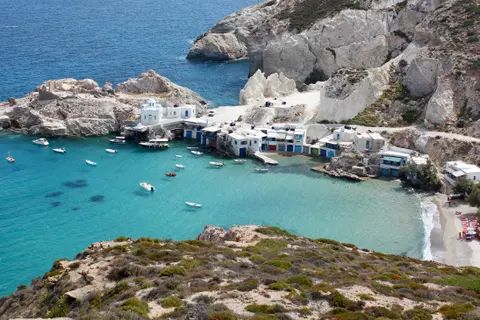
Milos, a captivating volcanic island in the Aegean Sea, is renowned for its stunning landscapes, rich history, and delectable local cuisine. Must-do experiences include savoring traditional dishes like "pitarakia" and exploring the nearby ruins of Delos. The best season to visit is from late spring to early autumn when the weather is warm, and the island is alive with vibrant local culture.
Day 11
Day 11
Hydra
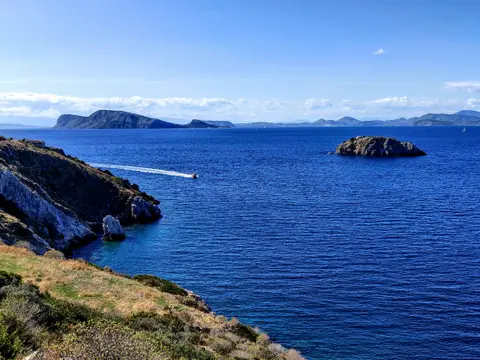
Hydra is a car-free Greek island in the Saronic Gulf, celebrated for its 1821 revolutionary naval history, neoclassical stone mansions, and an artistic heritage that once drew Leonard Cohen. Wander the cobblestone lanes by foot or donkey, taste *amygdalota* almond cookies and lemon-bright *psarosoupa* at harborside tavernas, and hike pine-shaded trails to clifftop monasteries overlooking the Aegean. Visit between late April and mid-June or September through October for wildflower-strewn hillsides, warm seas, and the golden light that has captivated painters and poets for generations.
Day 12
Day 12
Athens (Piraeus)
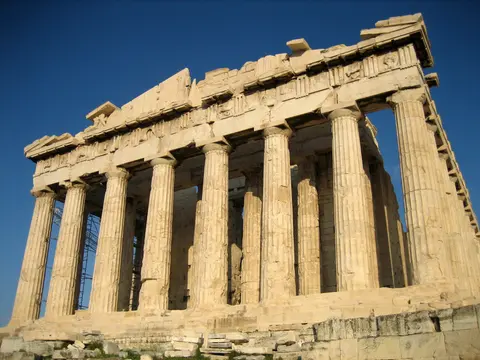
Piraeus, the bustling port city of Athens, is a vibrant blend of ancient history and modern charm, inviting travelers to explore its rich culture. Must-do experiences include savoring traditional Greek dishes at the Varvakeios Agora and embarking on day trips to nearby islands like Symi and Nydri. The best time to visit is during the spring and fall when the weather is pleasant and the tourist crowds are fewer.
Day 13
Day 13
Nafplion
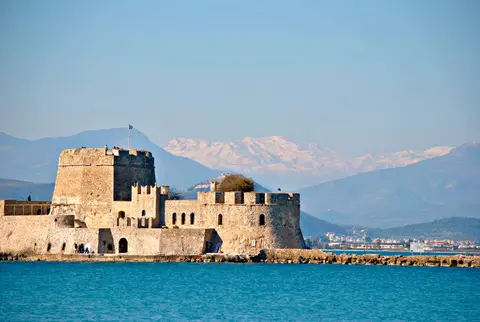
Nafplion, the first capital of modern Greece, is a refined Peloponnesian port town where Venetian architecture, Byzantine churches, and neoclassical elegance converge along one of the Mediterranean's most beautiful waterfronts. Climb the 999 steps to the Palamidi Fortress for commanding views of the Argolic Gulf, then descend for an afternoon tasting Agiorgitiko wines in the nearby Nemean valley. The best months to visit are April through June and September through October, when mild temperatures and fewer crowds allow the town's intimate charm to shine.
Day 14
Day 14
At Sea
Day 15
Day 15
Corfu
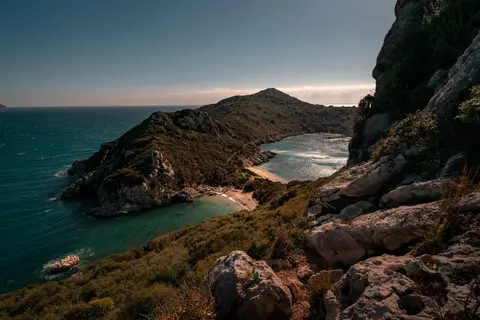
Where Homer placed the island of the Phaeacians and four centuries of Venetian rule left their most enduring Mediterranean legacy, Corfu is a singular island of extraordinary historical depth and natural beauty. The UNESCO-listed Old Town — its narrow Kantounia alleyways, the elegant Liston arcade, and twin Venetian fortresses — is the finest preserved Venetian streetscape in Greece. Beyond the town, secret coves, olive groves of immense antiquity, and mountain villages offer weeks of unhurried discovery. May through June and September offer perfect conditions: warm sea temperatures, clear skies, and the island before or after its summer crescendo.
Day 16
Day 16
Monopoli
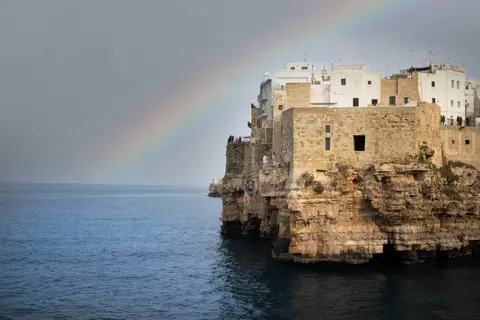
Monopoli is a 2,500-year-old whitewashed port town on Puglia's Adriatic coast, where 20 churches fill a medieval labyrinth above tiny swimming coves of crystalline water. Must-dos include the morning fish market at the old port, tasting burrata and crudo at harbour-side restaurants, and swimming at the hidden calette beaches. Visit June or September for warm seas and luminous Puglian light.
Day 17
Day 17
Kotor
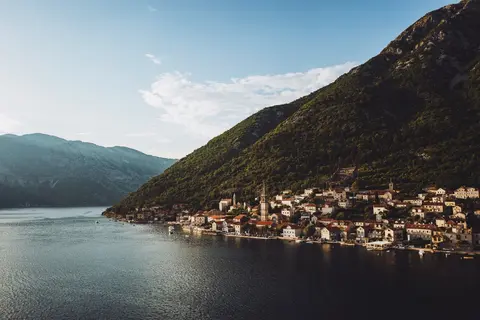
The port of Kotor, a UNESCO World Heritage site, is renowned for its stunning natural beauty and rich historical tapestry. A must-do experience includes wandering the cobblestone streets of the Old Town, where culinary delights like "kacamak" and fresh seafood await. The best time to visit is during the spring or early fall, when the weather is pleasant and the crowds are fewer.
Day 18
Day 18
Dubrovnik
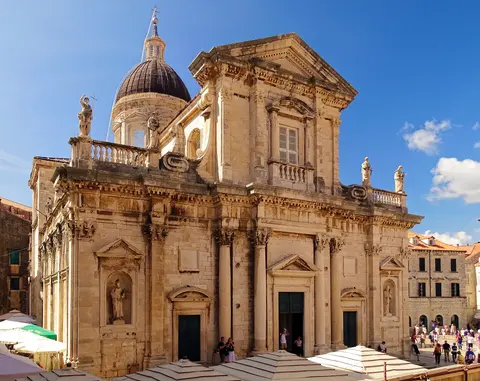
Dubrovnik, Croatia's stunning port city, is a blend of rich history, dramatic architecture, and vibrant culture, making it a must-visit destination. Don't miss a stroll along the city walls for breathtaking views and savor local dishes like "peka" and "black risotto." The best time to visit is in late spring or early fall when the weather is pleasant and the crowds are thinner.
Day 19
Day 19
Korcula
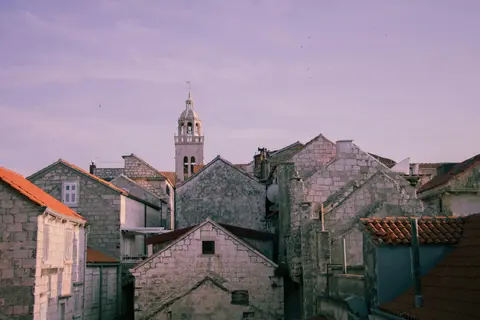
Korčula is a magnificently preserved medieval island town on Croatia's Dalmatian coast, renowned as the legendary birthplace of Marco Polo and celebrated for its Venetian herringbone streets, exceptional white wines like Grk and Pošip, and centuries-old culinary traditions including slow-braised pašticada and fresh Adriatic seafood. Visitors should explore the fortified old town's limestone calles at golden hour and taste the island's rare vintages in a harbourside konoba. The best months to visit are May through early October, with late September offering warm seas, golden light, and blissful absence of peak-season crowds.
Day 20
Day 20
Sibenik
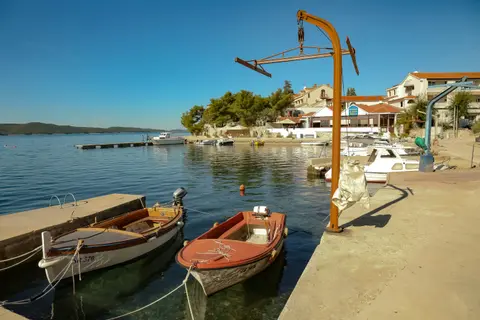
Šibenik is a captivating port city on the Croatian Adriatic, celebrated for its rich history and stunning architecture, including the UNESCO-listed Cathedral of St. James. A must-do experience is savoring local delicacies like “školjka” and “pašticada” at the bustling fish market. The best time to visit is during the summer months when the city comes alive with cultural events and vibrant local life.
Day 21
Day 21
Piran
Piran is Slovenia's Venetian masterpiece — a medieval peninsula town where Tartini Square's Gothic facades, hilltop cathedral panoramas, and traditional salt-pan harvesting create the Adriatic's most concentrated Mediterranean charm. Visit June via Windstar or Emerald Yacht Cruises for the Venetian town Slovenia has preserved more perfectly than most of Italy.
Day 22
Day 22
Venice
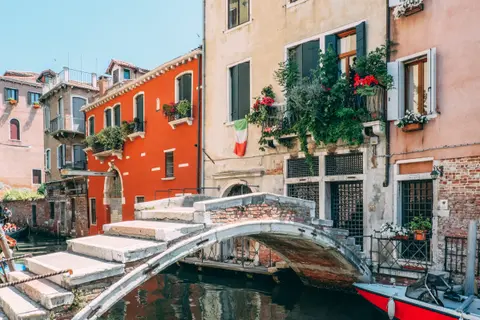
Venice, a historic port city, captivates with its unique canals and rich cultural heritage. Must-do experiences include visiting the iconic Basilica di San Marco and indulging in local delicacies like risotto al nero di seppia. The best time to visit is during the mild, vibrant spring months when the city comes alive with festivals and outdoor activities.
Day 23
Day 23
Rovinj
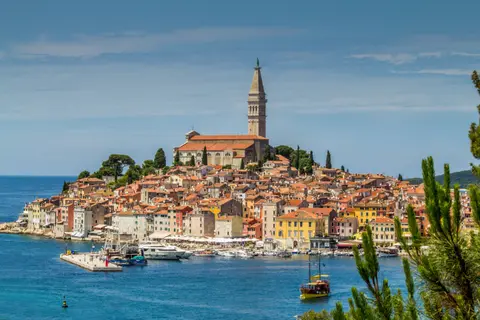
Rovinj, a historic port on Croatia's Istrian coast, is renowned for its medieval architecture, vibrant atmosphere, and delectable local cuisine. Be sure to savor dishes like **fuži** and **škampi na buzaru** while exploring its charming streets. The best time to visit is during the summer months when cultural festivals bring the town to life.
Day 24
Day 24
Zadar
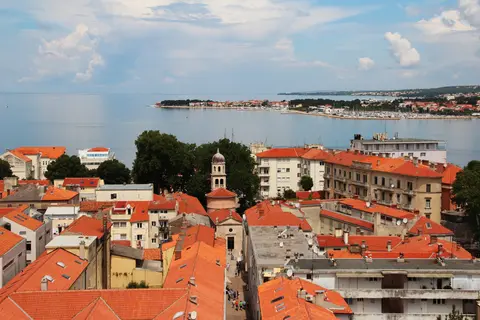
Zadar, a historic port city on Croatia's Dalmatian coast, is a captivating blend of ancient architecture and vibrant culture. Must-do experiences include visiting the Church of St. Donatus and enjoying the enchanting music of the Sea Organ. The best season to visit is during the warm summer months when the city comes alive with festivals and outdoor activities.
Day 25
Day 25
Hvar
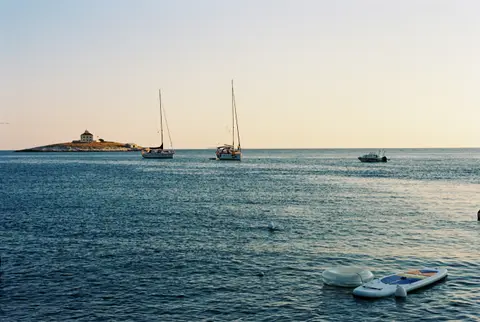
Hvar port, with its rich history and stunning coastal charm, is a must-visit destination in Croatia. Don't miss indulging in local specialties like pašticada and the breathtaking views from the fortress. The best time to visit is during the late spring or early fall when the weather is delightful and the crowds are manageable.
Day 26
Day 26
At Sea
Day 27
Day 27
Syracuse
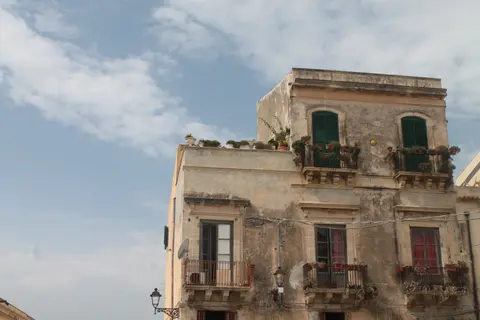
Syracuse (Siracusa) is one of the ancient world's greatest cities, featuring the island quarter of Ortigia—a baroque masterpiece built over Greek temple ruins—and an archaeological park with a fifth-century BC theatre still hosting summer performances. Must-dos include Ortigia's cathedral with its embedded Greek columns, the morning market, and tasting pasta with sea urchin. April through June and September through November offer ideal temperatures.
Day 28
Day 28
Giardini Naxos
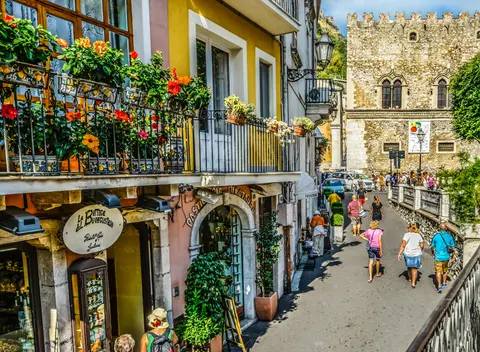
Giardini Naxos is the Sicilian bay where Greek civilization first touched western shores in 734 BC, serving today as the gateway to hilltop Taormina's extraordinary Greek-Roman theatre with Mount Etna as its eternal backdrop. Visit May or September via Windstar or Explora Journeys for ancient ruins, cable-car ascents to Sicily's most famous resort, and the view that convinced the first Greek colonists they had found paradise.
Day 29
Day 29
Palermo
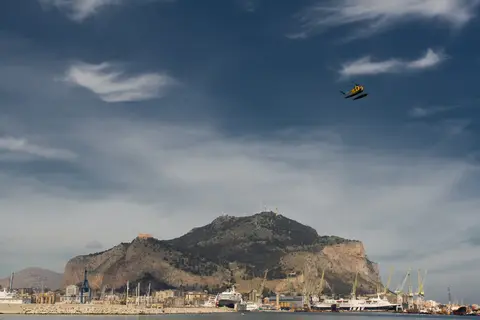
Palermo is the Mediterranean's most intoxicating crossroads of civilisations — Arab arches meet Byzantine gold mosaics beneath Norman royal chapels in the extraordinary Palatine Chapel, a monument to 12th-century multicultural brilliance that is Sicily's single greatest work of art. The Ballarò and Capo street markets, among southern Italy's most atmospheric, tumble through the ancient city in a sensory barrage of swordfish, blood oranges, jasmine, and street food improvised across centuries. Do not leave without tasting arancini and sfincione, Sicily's gloriously thick street pizza. Spring (April–May) and autumn (September–October) offer the ideal climate — warm enough for the sea, cool enough for extended walking.
Day 30
Day 30
Lipari
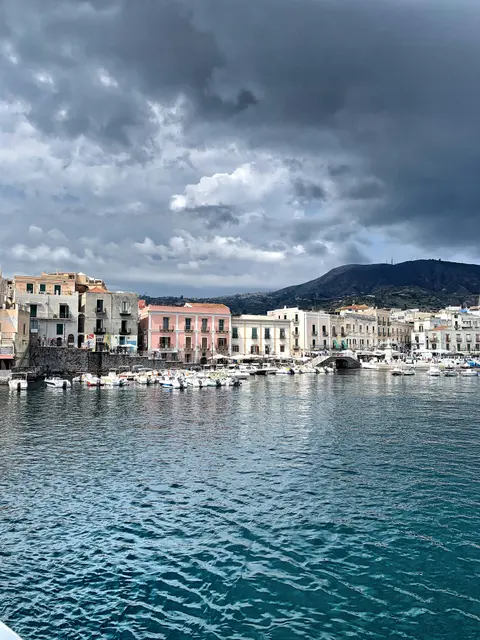
Lipari, the largest of Sicily's volcanic Aeolian Islands, has been a Mediterranean trading hub for over 6,000 years, featuring a dramatic Castello, world-class archaeological museum, and gateway access to Stromboli's erupting crater. Must-dos include exploring the fortified old town, tasting caper-laced Aeolian cuisine and Malvasia wine, and island-hopping to Vulcano and Stromboli. May through October offers ideal conditions.
Day 31
Day 31
Amalfi
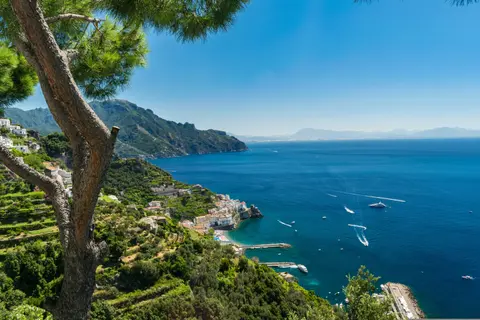
Amalfi is the former maritime republic that gave its name to Italy's most celebrated coastline, where the Arab-Norman cathedral, medieval paper mills, and whitewashed buildings cascading to the Tyrrhenian Sea create the definitive image of Italian coastal beauty. Visit April through June via Windstar or Azamara for the Cloister of Paradise and the coastline that has been the world's standard for scenic perfection.
Day 32
Day 32
Capri
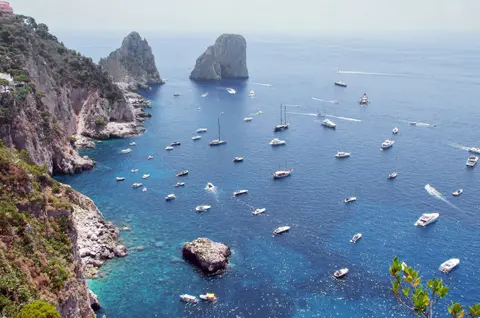
Capri is a legendary limestone island rising from the Bay of Naples, celebrated since Roman antiquity for its dramatic cliffs, the ethereal Blue Grotto, and an atmosphere of effortless Mediterranean elegance. Visitors should not miss the Grotta Azzurra's cobalt light show and the sunset view of the Faraglioni from the Piazzetta's café tables. The island is magnificent year-round, though late April through June offers ideal conditions — warm days without peak-summer crowds, wildflowers blanketing the cliff paths, and crystalline waters already inviting enough for a swim off the rocks at Marina Piccola.
Day 33
Day 33
Civitavecchia
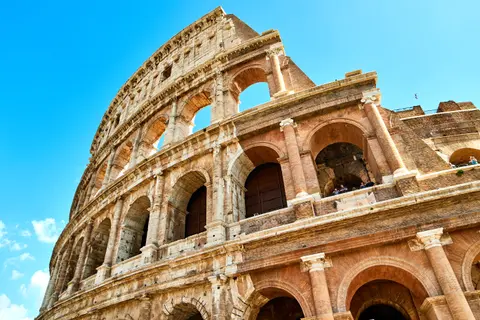
Rome's ancient maritime gateway since the Emperor Trajan commissioned its harbour in 106 AD, Civitavecchia is the natural prologue to the Eternal City — just seventy minutes southeast by express rail. The port's Renaissance fortress, designed in part by Michelangelo, anchors a working waterfront that has welcomed travellers for millennia. Beyond Rome's unmissable monuments, consider an afternoon in the Civitavecchia thermal baths, drawing on mineral waters prized since antiquity. Spring and autumn offer the ideal balance of mild weather and manageable crowds for exploring the capital's layered history.
Day 1
Istanbul
For more than fifteen centuries, Istanbul has been the pivot upon which empires turned — Byzantium, Constantinople, the Ottoman capital — and nowhere else on earth compresses so much history into a single horizon. The Hagia Sophia, the Blue Mosque, and the Topkapi Palace form an incomparable trinity of architectural genius along the Golden Horn; the Grand Bazaar's four thousand shops offer a sensory immersion unlike any other marketplace. Must-dos include a Bosphorus sunset cruise and a meal of mezze along the waterfront at Karaköy. Spring (April–May) and autumn (September–October) offer the most gracious climate for this inexhaustible city.
Day 3
Canakkale
Çanakkale is a vibrant Turkish university town commanding the Dardanelles strait, serving as the gateway to ancient Troy and the Gallipoli battlefields—two of the most emotionally powerful historical sites in the world. Must-dos include the Troy archaeological site and museum, Gallipoli memorials, and waterfront meyhane dining with fresh Dardanelles seafood. April through October is ideal, with spring best for Anzac Day and wildflower-covered battlefields.
Day 4
At Sea
Day 5
Dikili
Dikili is an unspoiled Aegean coastal town in western Turkey, serving as the gateway to the UNESCO-listed ancient city of Pergamon and the hilltop ruins of Atarneus where Aristotle once taught. Essential experiences include exploring Pergamon's dramatic acropolis, savoring fresh Aegean seafood at the harbor, and visiting the Roman thermal springs at Kocaoba. The best months are May and September for warm weather, clear light, and few crowds.
Day 6
Kusadasi
Kuşadası owes its place on the world's cruise itineraries to one extraordinary proximity: the ancient city of Ephesus, one of the greatest metropolises of the Greco-Roman world, lies just seventeen kilometres from the port. Ephesus — with its two-kilometre marble colonnade, the Library of Celsus, and the Temple of Artemis (one of the Seven Wonders of the Ancient World) — demands at least half a day of unhurried exploration. The House of the Virgin Mary, a pilgrimage site believed to be where Mary spent her final years, adds a profound spiritual dimension. Kuşadası itself is a lively Aegean resort; the season runs April through October, with May and September offering ideal temperatures and smaller crowds.
Day 7
Naxos
Naxos, Greece is a distinctive port city where deep cultural heritage meets authentic local atmosphere, featured on itineraries by Windstar Cruises. Must-do experiences include walking the historic center to experience the layered architectural heritage, and seeking out the regional culinary traditions at a locally favored establishment away from the port area. The optimal time to visit is May through September, when mild temperatures and long days favor unhurried exploration.
Day 8
Santorini
Santorini, the ancient volcanic caldera rising from the Aegean, is Greece's most theatrical landscape — a crescentic island of sheer white cliffs plunging into an indigo sea, its clifftop villages of Fira and Oia draped in bougainvillea and culminating in the world's most photographed sunset. The island's unique Assyrtiko wine, grown on ancient ungrafted vines in volcanic pumice, is one of the Mediterranean's greatest expressions of terroir. Byzantine frescoes of extraordinary beauty fill the Prehistoric Museum of Thera. The volcanic black and red sand beaches of Perissa and Perivolos are unlike any others in Greece. April through June and September through October offer the finest conditions.
Day 9
Heraklion (Iraklion)
Heraklion, the capital of Crete, is a historic port city rich in Minoan heritage and Venetian architecture, making it an essential stop for cruise travelers. Must-do experiences include exploring the Palace of Knossos and indulging in local dishes like moussaka and dakos. The best season to visit is during the spring and early fall when the weather is mild and the local festivals are in full swing.
Day 10
Milos
Milos, a captivating volcanic island in the Aegean Sea, is renowned for its stunning landscapes, rich history, and delectable local cuisine. Must-do experiences include savoring traditional dishes like "pitarakia" and exploring the nearby ruins of Delos. The best season to visit is from late spring to early autumn when the weather is warm, and the island is alive with vibrant local culture.
Day 11
Hydra
Hydra is a car-free Greek island in the Saronic Gulf, celebrated for its 1821 revolutionary naval history, neoclassical stone mansions, and an artistic heritage that once drew Leonard Cohen. Wander the cobblestone lanes by foot or donkey, taste *amygdalota* almond cookies and lemon-bright *psarosoupa* at harborside tavernas, and hike pine-shaded trails to clifftop monasteries overlooking the Aegean. Visit between late April and mid-June or September through October for wildflower-strewn hillsides, warm seas, and the golden light that has captivated painters and poets for generations.
Day 12
Athens (Piraeus)
Piraeus, the bustling port city of Athens, is a vibrant blend of ancient history and modern charm, inviting travelers to explore its rich culture. Must-do experiences include savoring traditional Greek dishes at the Varvakeios Agora and embarking on day trips to nearby islands like Symi and Nydri. The best time to visit is during the spring and fall when the weather is pleasant and the tourist crowds are fewer.
Day 13
Nafplion
Nafplion, the first capital of modern Greece, is a refined Peloponnesian port town where Venetian architecture, Byzantine churches, and neoclassical elegance converge along one of the Mediterranean's most beautiful waterfronts. Climb the 999 steps to the Palamidi Fortress for commanding views of the Argolic Gulf, then descend for an afternoon tasting Agiorgitiko wines in the nearby Nemean valley. The best months to visit are April through June and September through October, when mild temperatures and fewer crowds allow the town's intimate charm to shine.
Day 14
At Sea
Day 15
Corfu
Where Homer placed the island of the Phaeacians and four centuries of Venetian rule left their most enduring Mediterranean legacy, Corfu is a singular island of extraordinary historical depth and natural beauty. The UNESCO-listed Old Town — its narrow Kantounia alleyways, the elegant Liston arcade, and twin Venetian fortresses — is the finest preserved Venetian streetscape in Greece. Beyond the town, secret coves, olive groves of immense antiquity, and mountain villages offer weeks of unhurried discovery. May through June and September offer perfect conditions: warm sea temperatures, clear skies, and the island before or after its summer crescendo.
Day 16
Monopoli
Monopoli is a 2,500-year-old whitewashed port town on Puglia's Adriatic coast, where 20 churches fill a medieval labyrinth above tiny swimming coves of crystalline water. Must-dos include the morning fish market at the old port, tasting burrata and crudo at harbour-side restaurants, and swimming at the hidden calette beaches. Visit June or September for warm seas and luminous Puglian light.
Day 17
Kotor
The port of Kotor, a UNESCO World Heritage site, is renowned for its stunning natural beauty and rich historical tapestry. A must-do experience includes wandering the cobblestone streets of the Old Town, where culinary delights like "kacamak" and fresh seafood await. The best time to visit is during the spring or early fall, when the weather is pleasant and the crowds are fewer.
Day 18
Dubrovnik
Dubrovnik, Croatia's stunning port city, is a blend of rich history, dramatic architecture, and vibrant culture, making it a must-visit destination. Don't miss a stroll along the city walls for breathtaking views and savor local dishes like "peka" and "black risotto." The best time to visit is in late spring or early fall when the weather is pleasant and the crowds are thinner.
Day 19
Korcula
Korčula is a magnificently preserved medieval island town on Croatia's Dalmatian coast, renowned as the legendary birthplace of Marco Polo and celebrated for its Venetian herringbone streets, exceptional white wines like Grk and Pošip, and centuries-old culinary traditions including slow-braised pašticada and fresh Adriatic seafood. Visitors should explore the fortified old town's limestone calles at golden hour and taste the island's rare vintages in a harbourside konoba. The best months to visit are May through early October, with late September offering warm seas, golden light, and blissful absence of peak-season crowds.
Day 20
Sibenik
Šibenik is a captivating port city on the Croatian Adriatic, celebrated for its rich history and stunning architecture, including the UNESCO-listed Cathedral of St. James. A must-do experience is savoring local delicacies like “školjka” and “pašticada” at the bustling fish market. The best time to visit is during the summer months when the city comes alive with cultural events and vibrant local life.
Day 21
Piran
Piran is Slovenia's Venetian masterpiece — a medieval peninsula town where Tartini Square's Gothic facades, hilltop cathedral panoramas, and traditional salt-pan harvesting create the Adriatic's most concentrated Mediterranean charm. Visit June via Windstar or Emerald Yacht Cruises for the Venetian town Slovenia has preserved more perfectly than most of Italy.
Day 22
Venice
Venice, a historic port city, captivates with its unique canals and rich cultural heritage. Must-do experiences include visiting the iconic Basilica di San Marco and indulging in local delicacies like risotto al nero di seppia. The best time to visit is during the mild, vibrant spring months when the city comes alive with festivals and outdoor activities.
Day 23
Rovinj
Rovinj, a historic port on Croatia's Istrian coast, is renowned for its medieval architecture, vibrant atmosphere, and delectable local cuisine. Be sure to savor dishes like **fuži** and **škampi na buzaru** while exploring its charming streets. The best time to visit is during the summer months when cultural festivals bring the town to life.
Day 24
Zadar
Zadar, a historic port city on Croatia's Dalmatian coast, is a captivating blend of ancient architecture and vibrant culture. Must-do experiences include visiting the Church of St. Donatus and enjoying the enchanting music of the Sea Organ. The best season to visit is during the warm summer months when the city comes alive with festivals and outdoor activities.
Day 25
Hvar
Hvar port, with its rich history and stunning coastal charm, is a must-visit destination in Croatia. Don't miss indulging in local specialties like pašticada and the breathtaking views from the fortress. The best time to visit is during the late spring or early fall when the weather is delightful and the crowds are manageable.
Day 26
At Sea
Day 27
Syracuse
Syracuse (Siracusa) is one of the ancient world's greatest cities, featuring the island quarter of Ortigia—a baroque masterpiece built over Greek temple ruins—and an archaeological park with a fifth-century BC theatre still hosting summer performances. Must-dos include Ortigia's cathedral with its embedded Greek columns, the morning market, and tasting pasta with sea urchin. April through June and September through November offer ideal temperatures.
Day 28
Giardini Naxos
Giardini Naxos is the Sicilian bay where Greek civilization first touched western shores in 734 BC, serving today as the gateway to hilltop Taormina's extraordinary Greek-Roman theatre with Mount Etna as its eternal backdrop. Visit May or September via Windstar or Explora Journeys for ancient ruins, cable-car ascents to Sicily's most famous resort, and the view that convinced the first Greek colonists they had found paradise.
Day 29
Palermo
Palermo is the Mediterranean's most intoxicating crossroads of civilisations — Arab arches meet Byzantine gold mosaics beneath Norman royal chapels in the extraordinary Palatine Chapel, a monument to 12th-century multicultural brilliance that is Sicily's single greatest work of art. The Ballarò and Capo street markets, among southern Italy's most atmospheric, tumble through the ancient city in a sensory barrage of swordfish, blood oranges, jasmine, and street food improvised across centuries. Do not leave without tasting arancini and sfincione, Sicily's gloriously thick street pizza. Spring (April–May) and autumn (September–October) offer the ideal climate — warm enough for the sea, cool enough for extended walking.
Day 30
Lipari
Lipari, the largest of Sicily's volcanic Aeolian Islands, has been a Mediterranean trading hub for over 6,000 years, featuring a dramatic Castello, world-class archaeological museum, and gateway access to Stromboli's erupting crater. Must-dos include exploring the fortified old town, tasting caper-laced Aeolian cuisine and Malvasia wine, and island-hopping to Vulcano and Stromboli. May through October offers ideal conditions.
Day 31
Amalfi
Amalfi is the former maritime republic that gave its name to Italy's most celebrated coastline, where the Arab-Norman cathedral, medieval paper mills, and whitewashed buildings cascading to the Tyrrhenian Sea create the definitive image of Italian coastal beauty. Visit April through June via Windstar or Azamara for the Cloister of Paradise and the coastline that has been the world's standard for scenic perfection.
Day 32
Capri
Capri is a legendary limestone island rising from the Bay of Naples, celebrated since Roman antiquity for its dramatic cliffs, the ethereal Blue Grotto, and an atmosphere of effortless Mediterranean elegance. Visitors should not miss the Grotta Azzurra's cobalt light show and the sunset view of the Faraglioni from the Piazzetta's café tables. The island is magnificent year-round, though late April through June offers ideal conditions — warm days without peak-summer crowds, wildflowers blanketing the cliff paths, and crystalline waters already inviting enough for a swim off the rocks at Marina Piccola.
Day 33
Civitavecchia
Rome's ancient maritime gateway since the Emperor Trajan commissioned its harbour in 106 AD, Civitavecchia is the natural prologue to the Eternal City — just seventy minutes southeast by express rail. The port's Renaissance fortress, designed in part by Michelangelo, anchors a working waterfront that has welcomed travellers for millennia. Beyond Rome's unmissable monuments, consider an afternoon in the Civitavecchia thermal baths, drawing on mineral waters prized since antiquity. Spring and autumn offer the ideal balance of mild weather and manageable crowds for exploring the capital's layered history.
Cabin Categories
No Image
Deluxe Verandah Suite
Inside
DVS
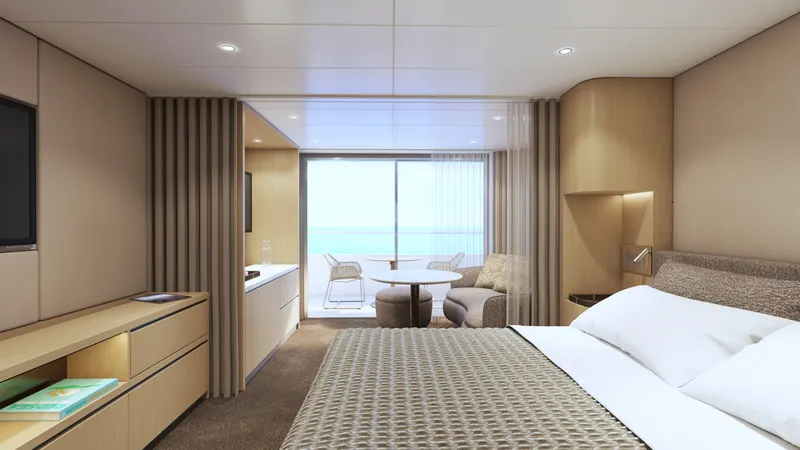
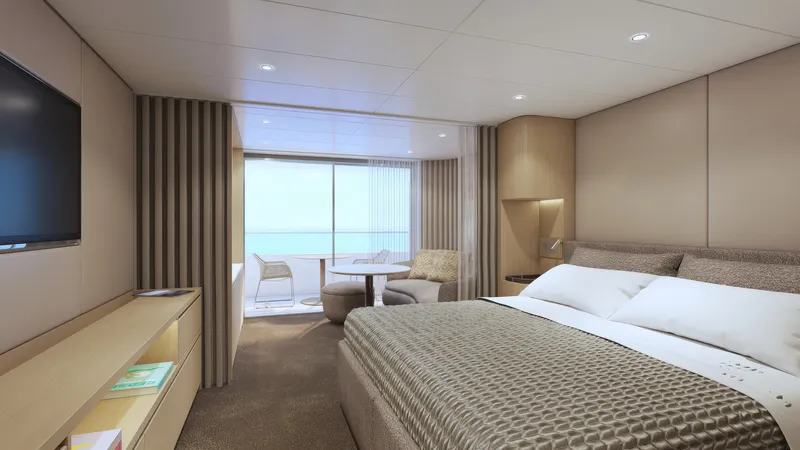
Separate sleep and lounge areas for the ultimate comfort. Enhanced spaces and elevated amenities. Walk-in wardrobes, Glam Bar, and fully appointed all-inclusive Butler Bars with custom tables for private in-suite dining.
View Details

Grand Deluxe Verandah Suite
Inside
GDVS
Separate sleep and lounge areas for the ultimate comfort. Enhanced spaces and elevated amenities. Walk-in wardrobes, Glam Bar, and fully appointed all-inclusive Butler Bars with custom tables for private in-suite dining.
View Details
No Image
Grand Terrace Suite
Inside
GTS
Enjoy enhanced space and bespoke amenities. Each suite features spacious walk-in wardrobes and Glam Bars. These top-tier suites further elevate indulgence with expansive, fully appointed Butler Bars, offering a personalised selection of refreshments and in-suite dining options. Full-size bath, double vanity, Glam bar, and elevated ESPA amenities, delivering unparalleled comfort and refined ultra-luxury. A private terrace with jacuzzi, cabana and dining.
View Details
No Image
Horizon Suite
Inside
HS
Separate bedroom for enhanced privacy. Full-size bath, double vanity, walk-in wardrobe, and Glam Bar, ensuring every detail is designed for comfort, privacy, and indulgence.
View Details
No Image
Ikon Penthouse
Inside
IP
Your own private residence at sea.
The lounge is thoughtfully appointed areas for relaxation, dining, and entertaining, with a fully appointed bar island: delight in anything your heart desires — from crafted cocktails to wellness-inspired refreshments and light dining — all served discreetly by your private butler. The suite features a master bedroom plus a wellness studio with in-suite ESPA spa services and private fitness amenities. Which can transform into a second bedroom for family or guests. The bathroom is enhanced with steam and infrared experiences for ultimate wellbeing and indulgence with full-size baths and double vanities, ensuring the utmost in comfort and indulgence. A spacious walk-in wardrobe and private Glam Bar, fully appointed with Dyson’s advanced hair care tools and elevated ESPA amenities, complete the suite, offering effortless luxury and the ultimate in oceanfront living. An expansive terrace with Jacuzzi, private cabana, and outdoor lounge and dining areas provides the perfect space to relax or entertain under open skies.
View Details

Master One Bedroom Suite
Inside
MOBS
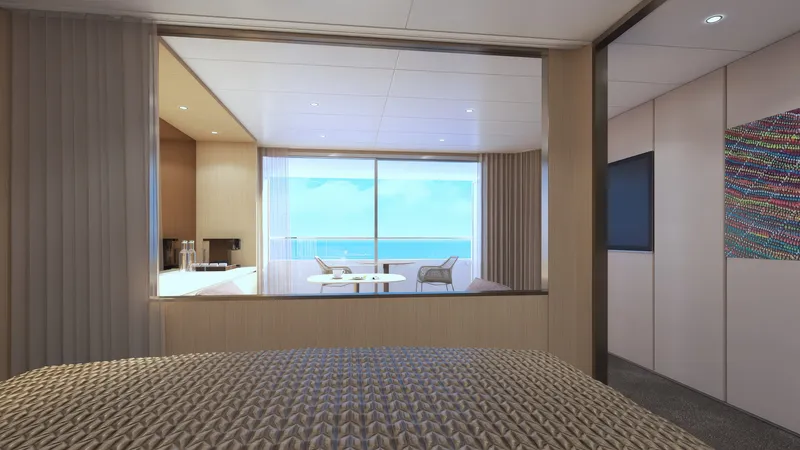
Separate bedrooms for enhanced privacy. Master Suite also offering adjoining suites for family accommodation. Full-size bath, double vanity, walk-in wardrobe, and Glam Bars, ensuring every detail is designed for comfort, privacy, and indulgence.
View Details
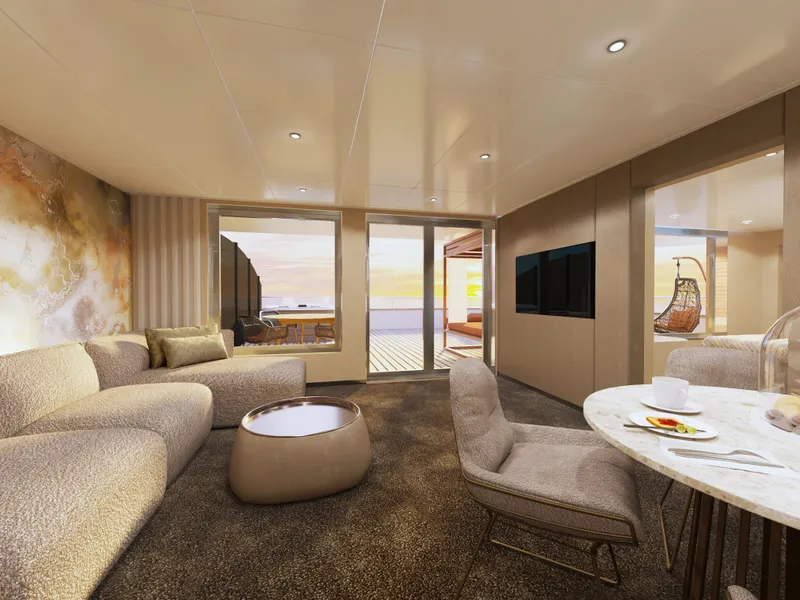

Scenic Yacht Suite
Inside
SYS
Enjoy enhanced space and bespoke amenities. Each suite features spacious walk-in wardrobes and Glam Bars. These top-tier suites further elevate indulgence with expansive, fully appointed Butler Bars, offering a personalised selection of refreshments and in-suite dining options. Full-size bath, double vanity, Glam bar, and elevated ESPA amenities, delivering unparalleled comfort and refined ultra-luxury. A private terrace with jacuzzi, cabana and dining.
View Details
No Image
Signature Spa Suite
Inside
SSS
A romantic retreat for couples, featuring a luxurious four-poster bed and indulgent wellness bathroom with a soaking spa bath, steam shower, soothing light therapy, and ocean vista, double vanity, and elevated ESPA spa amenities. Every detail is designed for shared relaxation and rejuvenation.
View Details
Interested in This Voyage?
Our cruise specialists can help you find the perfect cabin and the best available pricing.
(+886) 02-2721-7300Contact Advisor