Scenic River CruisesSEBO130426.1
Normandy & Gems of the Seine & Beautiful Bordeaux Paris > Bordeaux
Date
2026-04-13
Duration
20 nights
Departure Port
Paris
France
Arrival Port
Bordeaux
France
Rating
Luxury
Theme
—
Scenic River Cruises
Scenic Gem
Space-Ship
Launched
2014
Refitted
2024
Tonnage
2,200 GT
Passengers
128
Cabins
—
Crew
44
Length
—
Width
—
Speed
—
Adults Only
No
Itinerary
Day 1
Day 1
Paris
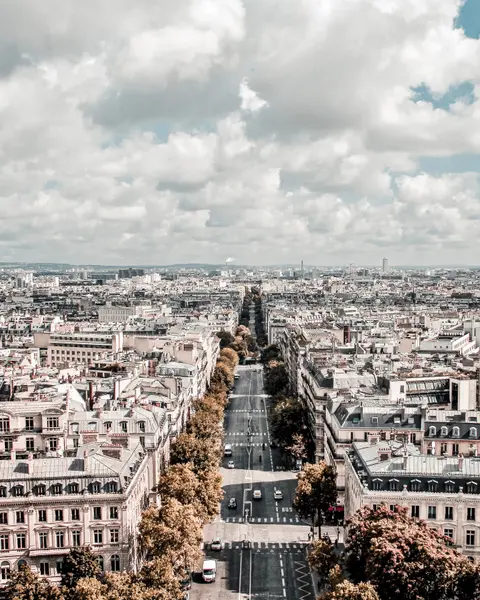
Paris rewards every arrival as though it were the first — the sweep of the Seine, the Gothic tracery of Notre-Dame rising again from its 2019 ashes, the Eiffel Tower somehow managing to astonish at each encounter, the Louvre's glass pyramid reflecting clouds in the courtyard of a palace that served French kings for four centuries. Beyond the monuments, Paris is a city of neighbourhoods: the Belle Époque brasseries of Montparnasse, the covered passages of the 2nd arrondissement, the rooftop terraces of Le Marais. The Luxembourg Gardens in April, or a late-September evening on the Canal Saint-Martin, are among the most civilised experiences in the world.
Day 2
Day 2
Les Andelys
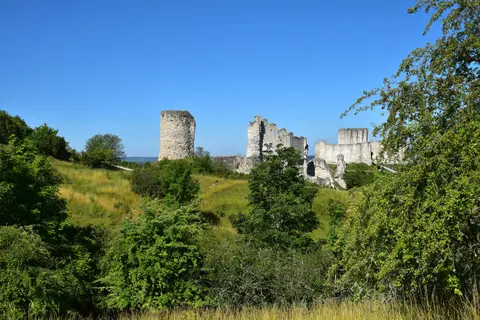
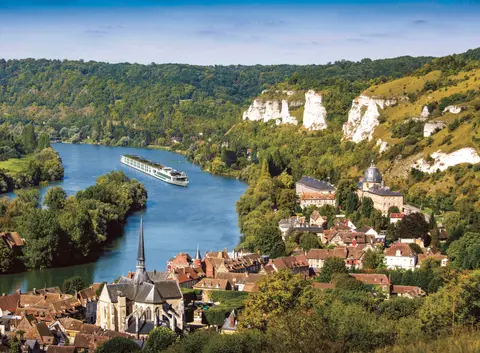
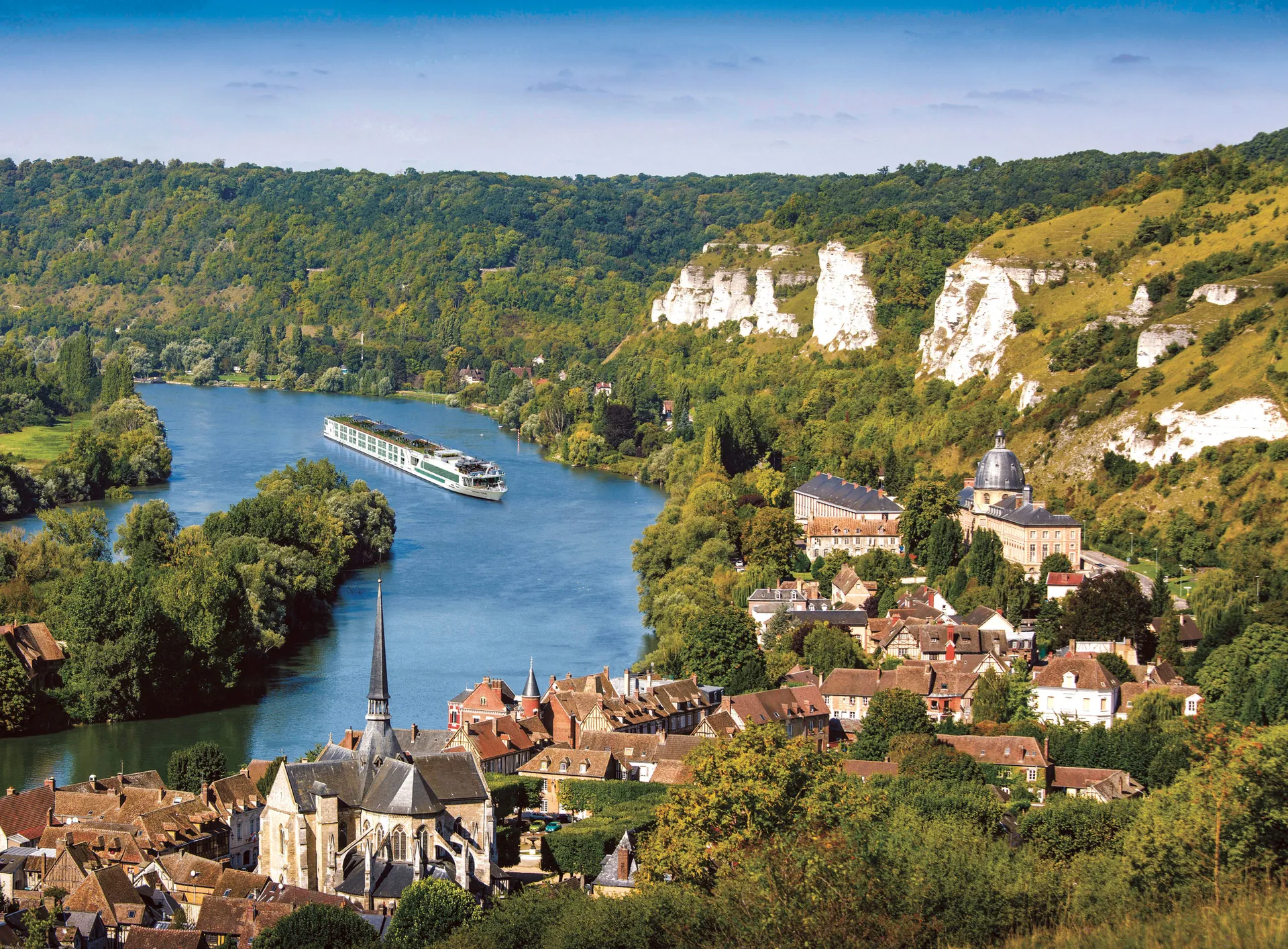
Les Andelys occupies one of the Seine's most dramatic bends, dominated by the spectral ruins of Château Gaillard — Richard the Lionheart's 'Saucy Castle,' built with medieval speed in a single year and considered a masterpiece of twelfth-century military engineering. The view from the castle's white chalk promontory across the river's great loop is among the most beautiful in Normandy, a landscape that captivated Monet and Pissarro. Below, the twin villages of Grand and Petit Andely offer excellent Normandy cuisine, notably duck dishes prepared with local cider. Les Andelys is best visited April through October as part of a Seine river cruise; golden autumn light renders the chalk cliffs particularly luminous.
Day 3
Day 3
Rouen
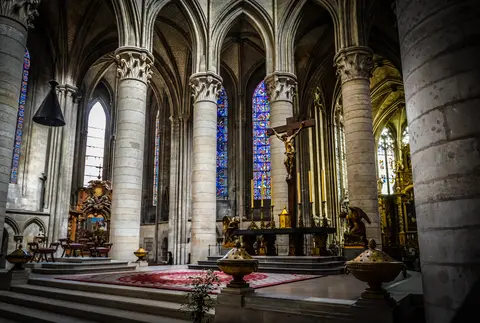
Rouen, the medieval capital of Normandy set in a wooded meander of the Seine, rewards slow exploration with one of France's richest concentrations of Gothic architecture. The vast cathedral — immortalised by Monet in his celebrated series of canvases — dominates a city where half-timbered lanes wind between Renaissance mansions and the square where Joan of Arc was burned in 1431. The covered market overflows with Normandy's great dairy bounty: camembert, livarot, and pont-l'évêque alongside cider and calvados. Paris lies just ninety minutes south by train. Spring and early autumn offer the most atmospheric conditions.
Day 5
Day 5
Honfleur
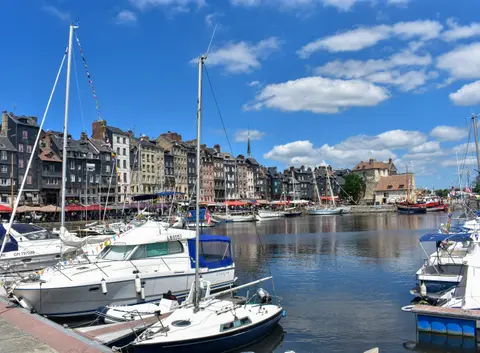
Honfleur, a historic port in Normandy, is known for its stunning waterfront and vibrant artistic heritage, having been a launching point for significant voyages like Samuel de Champlain's to Quebec. Don’t miss the chance to savor local specialties such as moules marinières and tarte normande while exploring the charming cobbled streets. The best time to visit is during the spring and summer months when the town bursts into bloom and outdoor dining thrives.
Day 7
Day 7
Caudebec-en-Caux
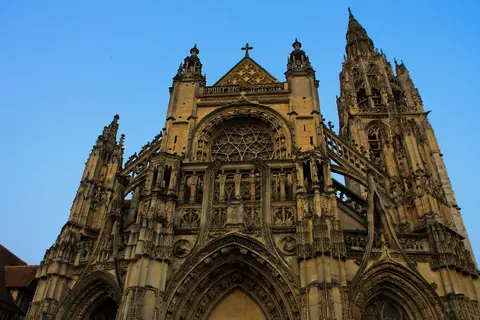
Caudebec-en-Caux nestles in a Seine meander between Rouen and the sea, famous for its Flamboyant Gothic Eglise Notre-Dame — a masterwork of late medieval stone lacework so exquisite that Henri IV called it 'the most beautiful chapel in my kingdom.' The town serves as an ideal quiet base for exploring the Seine Valley's quieter pleasures: the remarkable Abbaye de Jumiéges, its roofless nave open to the Norman sky, and the Manoir d'Ango, a Renaissance manor of extraordinary ambition, are both within easy reach. The tidal atmosphere of the Seine at this point rewards early morning walks along the embankment. Rouen, with its Gothic cathedral and Impressionist legacy, lies forty minutes east.
Day 8
Day 8
Vernon
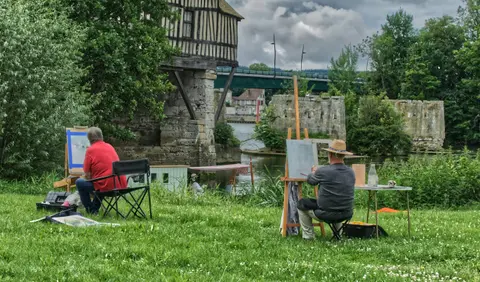
Vernon is a quietly beguiling Norman town on the Seine whose greatest treasure lies just four kilometers beyond its medieval bridge: the garden and water lily ponds at Giverny, where Claude Monet lived and painted for forty-three years, creating the luminous imagery that changed the course of modern art. The town itself retains considerable charm — a romanticly ruined twelfth-century bridge tower draped in ivy, half-timbered houses along the riverbank, and a fine museum housing several original Monet canvases. Monet's garden is open from April through October, reaching its peak splendor in May and June when his beloved water lilies are in full, painterly bloom.
Day 8
Day 8
La Roche Guyon
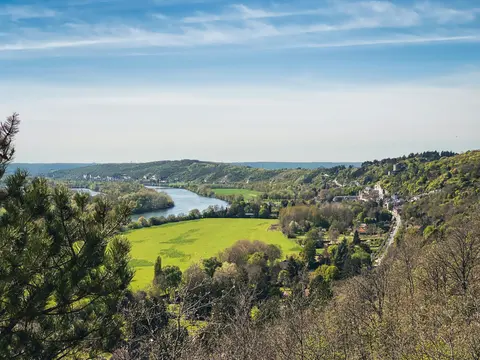
La Roche-Guyon is arguably the most dramatically situated village in the Île-de-France: a medieval castle and Renaissance château built directly into sheer white chalk cliffs above a perfect bend in the Seine, seventy kilometres northwest of Paris. Richard the Lionheart and Rommel both knew these cliffs, the latter using the château as his headquarters during the final weeks before D-Day. Today it rewards visitors with troglodyte caves carved into the rock, immaculate French gardens, and river views of extraordinary pastoral beauty. La Roche-Guyon is at its most enchanting April through October; it pairs naturally with a leisurely cruise along the Seine's Norman reaches.
Day 9
Day 9
Conflans
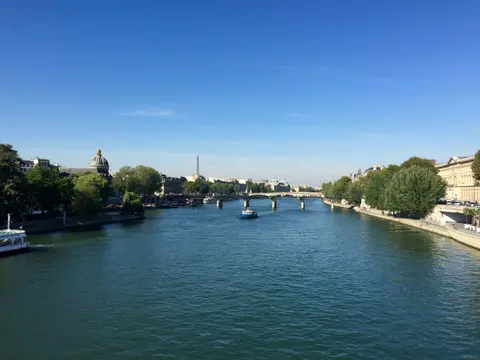
Poised at the confluence of the Oise and the Seine, Conflans-Sainte-Honorine has been France's inland waterway capital for over a century, its quays mooring more than a thousand traditional péniches whose painted hulls form a floating village of singular charm. The hilltop medieval town commands sweeping views over the meeting of rivers, while the National Inland Waterways Museum aboard a converted barge chronicles France's extraordinary network of canals and waterways. Just thirty kilometres from Paris, Conflans is best visited in summer, when barge festivals fill the riverbank with music, local produce, and the unhurried pleasures of la vie fluviale.
Day 9
Day 9
Paris
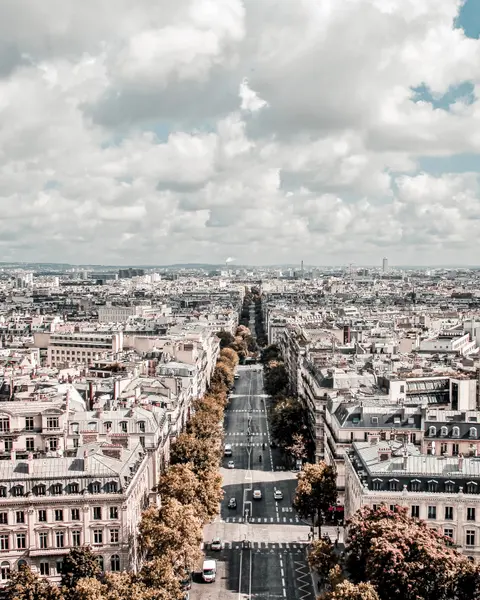
Paris rewards every arrival as though it were the first — the sweep of the Seine, the Gothic tracery of Notre-Dame rising again from its 2019 ashes, the Eiffel Tower somehow managing to astonish at each encounter, the Louvre's glass pyramid reflecting clouds in the courtyard of a palace that served French kings for four centuries. Beyond the monuments, Paris is a city of neighbourhoods: the Belle Époque brasseries of Montparnasse, the covered passages of the 2nd arrondissement, the rooftop terraces of Le Marais. The Luxembourg Gardens in April, or a late-September evening on the Canal Saint-Martin, are among the most civilised experiences in the world.
Day 11
Day 11
Paris
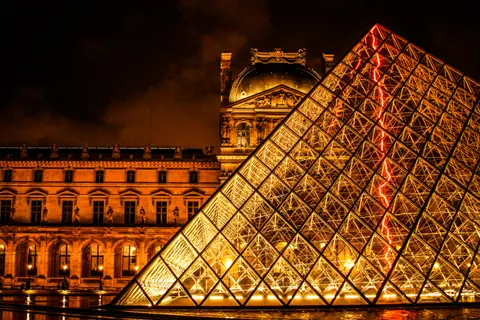
Paris rewards every arrival as though it were the first — the sweep of the Seine, the Gothic tracery of Notre-Dame rising again from its 2019 ashes, the Eiffel Tower somehow managing to astonish at each encounter, the Louvre's glass pyramid reflecting clouds in the courtyard of a palace that served French kings for four centuries. Beyond the monuments, Paris is a city of neighbourhoods: the Belle Époque brasseries of Montparnasse, the covered passages of the 2nd arrondissement, the rooftop terraces of Le Marais. The Luxembourg Gardens in April, or a late-September evening on the Canal Saint-Martin, are among the most civilised experiences in the world.
Day 12
Day 12
Bordeaux
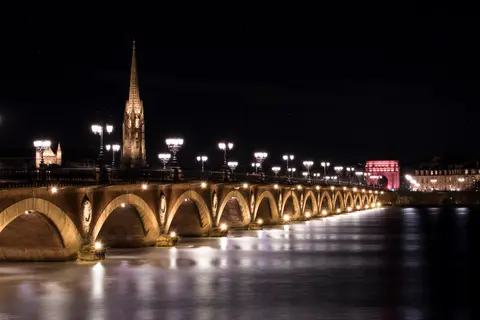
Bordeaux, France's premier port city, is renowned for its historical significance, stunning architecture, and world-class wine. Must-do experiences include savoring local delicacies at Marché des Quais and exploring the breathtaking art installations at Place de la Bourse. The best season to visit is during the late spring and early autumn, when the weather is pleasant and the vineyards are in full bloom.
Day 13
Day 13
Libourne
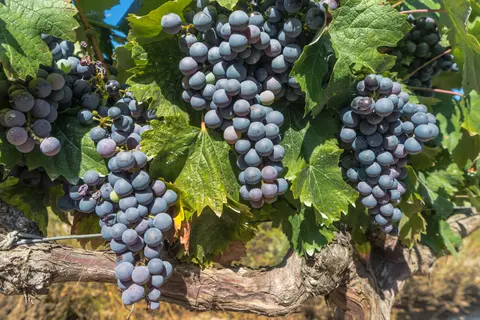
Founded in 1270 by an English lieutenant of Edward I at the confluence of the Isle and Dordogne rivers, Libourne is the fortified bastide heart of Bordeaux wine country — and the historic trading capital of some of the world's most celebrated appellations: Pomerol and Saint-Émilion both lie within minutes. The medieval market square, ringed by arcaded stone buildings, still hosts produce markets and wine négociant houses that have traded here for centuries. A half-day excursion to the UNESCO-listed hilltop village of Saint-Émilion, with its monolithic church carved from a single limestone cliff, is unmissable. Libourne is most rewarding during harvest (September–October) and spring flowering (April–May).
Day 14
Day 14
Cussac Fort Médoc
Where the Gironde estuary broadens toward the Atlantic, Cussac-Fort-Médoc occupies a quietly magnificent corner of Bordeaux wine country, its landscape shaped by Vauban's seventeenth-century star-shaped citadel — a UNESCO World Heritage fortification — and by centuries of châteaux producing some of the Left Bank's most distinguished Haut-Médoc cuvées. River cruisers dock here for château visits and private cellar tastings amid working vineyards, far from the tourist circuits of Saint-Émilion. September brings the harvest, filling the air with the intoxicating scent of fermenting Cabernet Sauvignon; the temperate maritime climate makes spring and autumn equally rewarding.
Day 16
Day 16
Cadillac
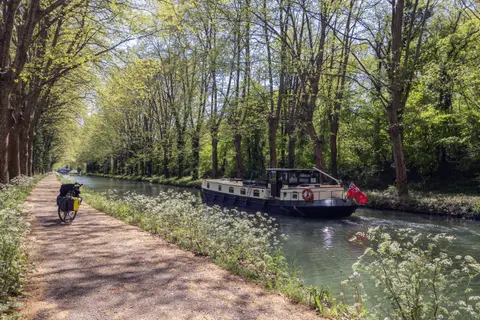
Cadillac, a picturesque commune in the Gironde department, is celebrated for its rich history, charming architecture, and exquisite culinary offerings. Must-do experiences include savoring local delicacies like foie gras and exploring the historical Château de Cadillac. The best season to visit is during the spring and early autumn, when the weather is delightful, and local markets are bustling with fresh produce.
Day 17
Day 17
Bordeaux
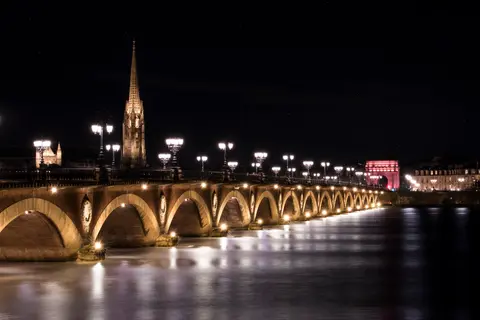
Bordeaux, France's premier port city, is renowned for its historical significance, stunning architecture, and world-class wine. Must-do experiences include savoring local delicacies at Marché des Quais and exploring the breathtaking art installations at Place de la Bourse. The best season to visit is during the late spring and early autumn, when the weather is pleasant and the vineyards are in full bloom.
Day 19
Day 19
Bourg
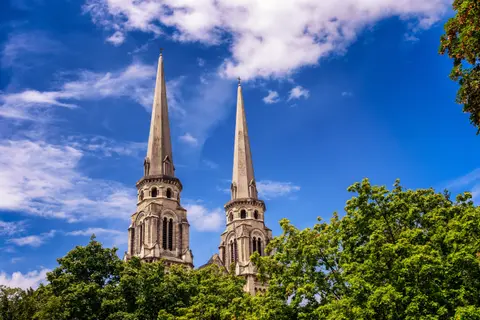
The port of Bourg, with its Roman roots and charming medieval architecture, offers a unique glimpse into southern France's history and culture. Must-do experiences include savoring local delicacies like "Pâté en Croûte" and exploring nearby attractions such as the Lascaux caves and the ancient city of Arles. The best season to visit is spring, when the region blooms into life and the markets are brimming with fresh produce.
Day 21
Day 21
Bordeaux
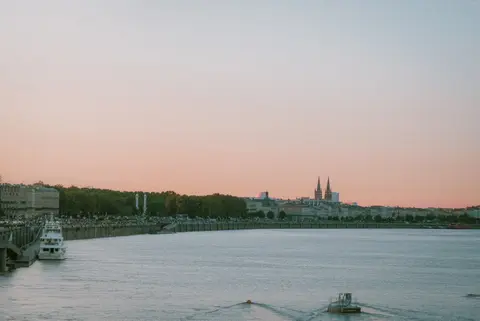
Bordeaux, France's premier port city, is renowned for its historical significance, stunning architecture, and world-class wine. Must-do experiences include savoring local delicacies at Marché des Quais and exploring the breathtaking art installations at Place de la Bourse. The best season to visit is during the late spring and early autumn, when the weather is pleasant and the vineyards are in full bloom.
Day 1
Paris
Paris rewards every arrival as though it were the first — the sweep of the Seine, the Gothic tracery of Notre-Dame rising again from its 2019 ashes, the Eiffel Tower somehow managing to astonish at each encounter, the Louvre's glass pyramid reflecting clouds in the courtyard of a palace that served French kings for four centuries. Beyond the monuments, Paris is a city of neighbourhoods: the Belle Époque brasseries of Montparnasse, the covered passages of the 2nd arrondissement, the rooftop terraces of Le Marais. The Luxembourg Gardens in April, or a late-September evening on the Canal Saint-Martin, are among the most civilised experiences in the world.
Day 2
Les Andelys
Les Andelys occupies one of the Seine's most dramatic bends, dominated by the spectral ruins of Château Gaillard — Richard the Lionheart's 'Saucy Castle,' built with medieval speed in a single year and considered a masterpiece of twelfth-century military engineering. The view from the castle's white chalk promontory across the river's great loop is among the most beautiful in Normandy, a landscape that captivated Monet and Pissarro. Below, the twin villages of Grand and Petit Andely offer excellent Normandy cuisine, notably duck dishes prepared with local cider. Les Andelys is best visited April through October as part of a Seine river cruise; golden autumn light renders the chalk cliffs particularly luminous.
Day 3
Rouen
Rouen, the medieval capital of Normandy set in a wooded meander of the Seine, rewards slow exploration with one of France's richest concentrations of Gothic architecture. The vast cathedral — immortalised by Monet in his celebrated series of canvases — dominates a city where half-timbered lanes wind between Renaissance mansions and the square where Joan of Arc was burned in 1431. The covered market overflows with Normandy's great dairy bounty: camembert, livarot, and pont-l'évêque alongside cider and calvados. Paris lies just ninety minutes south by train. Spring and early autumn offer the most atmospheric conditions.
Day 5
Honfleur
Honfleur, a historic port in Normandy, is known for its stunning waterfront and vibrant artistic heritage, having been a launching point for significant voyages like Samuel de Champlain's to Quebec. Don’t miss the chance to savor local specialties such as moules marinières and tarte normande while exploring the charming cobbled streets. The best time to visit is during the spring and summer months when the town bursts into bloom and outdoor dining thrives.
Day 7
Caudebec-en-Caux
Caudebec-en-Caux nestles in a Seine meander between Rouen and the sea, famous for its Flamboyant Gothic Eglise Notre-Dame — a masterwork of late medieval stone lacework so exquisite that Henri IV called it 'the most beautiful chapel in my kingdom.' The town serves as an ideal quiet base for exploring the Seine Valley's quieter pleasures: the remarkable Abbaye de Jumiéges, its roofless nave open to the Norman sky, and the Manoir d'Ango, a Renaissance manor of extraordinary ambition, are both within easy reach. The tidal atmosphere of the Seine at this point rewards early morning walks along the embankment. Rouen, with its Gothic cathedral and Impressionist legacy, lies forty minutes east.
Day 8
Vernon
Vernon is a quietly beguiling Norman town on the Seine whose greatest treasure lies just four kilometers beyond its medieval bridge: the garden and water lily ponds at Giverny, where Claude Monet lived and painted for forty-three years, creating the luminous imagery that changed the course of modern art. The town itself retains considerable charm — a romanticly ruined twelfth-century bridge tower draped in ivy, half-timbered houses along the riverbank, and a fine museum housing several original Monet canvases. Monet's garden is open from April through October, reaching its peak splendor in May and June when his beloved water lilies are in full, painterly bloom.
La Roche Guyon
La Roche-Guyon is arguably the most dramatically situated village in the Île-de-France: a medieval castle and Renaissance château built directly into sheer white chalk cliffs above a perfect bend in the Seine, seventy kilometres northwest of Paris. Richard the Lionheart and Rommel both knew these cliffs, the latter using the château as his headquarters during the final weeks before D-Day. Today it rewards visitors with troglodyte caves carved into the rock, immaculate French gardens, and river views of extraordinary pastoral beauty. La Roche-Guyon is at its most enchanting April through October; it pairs naturally with a leisurely cruise along the Seine's Norman reaches.
Day 9
Conflans
Poised at the confluence of the Oise and the Seine, Conflans-Sainte-Honorine has been France's inland waterway capital for over a century, its quays mooring more than a thousand traditional péniches whose painted hulls form a floating village of singular charm. The hilltop medieval town commands sweeping views over the meeting of rivers, while the National Inland Waterways Museum aboard a converted barge chronicles France's extraordinary network of canals and waterways. Just thirty kilometres from Paris, Conflans is best visited in summer, when barge festivals fill the riverbank with music, local produce, and the unhurried pleasures of la vie fluviale.
Paris
Paris rewards every arrival as though it were the first — the sweep of the Seine, the Gothic tracery of Notre-Dame rising again from its 2019 ashes, the Eiffel Tower somehow managing to astonish at each encounter, the Louvre's glass pyramid reflecting clouds in the courtyard of a palace that served French kings for four centuries. Beyond the monuments, Paris is a city of neighbourhoods: the Belle Époque brasseries of Montparnasse, the covered passages of the 2nd arrondissement, the rooftop terraces of Le Marais. The Luxembourg Gardens in April, or a late-September evening on the Canal Saint-Martin, are among the most civilised experiences in the world.
Day 11
Paris
Paris rewards every arrival as though it were the first — the sweep of the Seine, the Gothic tracery of Notre-Dame rising again from its 2019 ashes, the Eiffel Tower somehow managing to astonish at each encounter, the Louvre's glass pyramid reflecting clouds in the courtyard of a palace that served French kings for four centuries. Beyond the monuments, Paris is a city of neighbourhoods: the Belle Époque brasseries of Montparnasse, the covered passages of the 2nd arrondissement, the rooftop terraces of Le Marais. The Luxembourg Gardens in April, or a late-September evening on the Canal Saint-Martin, are among the most civilised experiences in the world.
Day 12
Bordeaux
Bordeaux, France's premier port city, is renowned for its historical significance, stunning architecture, and world-class wine. Must-do experiences include savoring local delicacies at Marché des Quais and exploring the breathtaking art installations at Place de la Bourse. The best season to visit is during the late spring and early autumn, when the weather is pleasant and the vineyards are in full bloom.
Day 13
Libourne
Founded in 1270 by an English lieutenant of Edward I at the confluence of the Isle and Dordogne rivers, Libourne is the fortified bastide heart of Bordeaux wine country — and the historic trading capital of some of the world's most celebrated appellations: Pomerol and Saint-Émilion both lie within minutes. The medieval market square, ringed by arcaded stone buildings, still hosts produce markets and wine négociant houses that have traded here for centuries. A half-day excursion to the UNESCO-listed hilltop village of Saint-Émilion, with its monolithic church carved from a single limestone cliff, is unmissable. Libourne is most rewarding during harvest (September–October) and spring flowering (April–May).
Day 14
Cussac Fort Médoc
Where the Gironde estuary broadens toward the Atlantic, Cussac-Fort-Médoc occupies a quietly magnificent corner of Bordeaux wine country, its landscape shaped by Vauban's seventeenth-century star-shaped citadel — a UNESCO World Heritage fortification — and by centuries of châteaux producing some of the Left Bank's most distinguished Haut-Médoc cuvées. River cruisers dock here for château visits and private cellar tastings amid working vineyards, far from the tourist circuits of Saint-Émilion. September brings the harvest, filling the air with the intoxicating scent of fermenting Cabernet Sauvignon; the temperate maritime climate makes spring and autumn equally rewarding.
Day 16
Cadillac
Cadillac, a picturesque commune in the Gironde department, is celebrated for its rich history, charming architecture, and exquisite culinary offerings. Must-do experiences include savoring local delicacies like foie gras and exploring the historical Château de Cadillac. The best season to visit is during the spring and early autumn, when the weather is delightful, and local markets are bustling with fresh produce.
Day 17
Bordeaux
Bordeaux, France's premier port city, is renowned for its historical significance, stunning architecture, and world-class wine. Must-do experiences include savoring local delicacies at Marché des Quais and exploring the breathtaking art installations at Place de la Bourse. The best season to visit is during the late spring and early autumn, when the weather is pleasant and the vineyards are in full bloom.
Day 19
Bourg
The port of Bourg, with its Roman roots and charming medieval architecture, offers a unique glimpse into southern France's history and culture. Must-do experiences include savoring local delicacies like "Pâté en Croûte" and exploring nearby attractions such as the Lascaux caves and the ancient city of Arles. The best season to visit is spring, when the region blooms into life and the markets are brimming with fresh produce.
Day 21
Bordeaux
Bordeaux, France's premier port city, is renowned for its historical significance, stunning architecture, and world-class wine. Must-do experiences include savoring local delicacies at Marché des Quais and exploring the breathtaking art installations at Place de la Bourse. The best season to visit is during the late spring and early autumn, when the weather is pleasant and the vineyards are in full bloom.
Cabin Categories
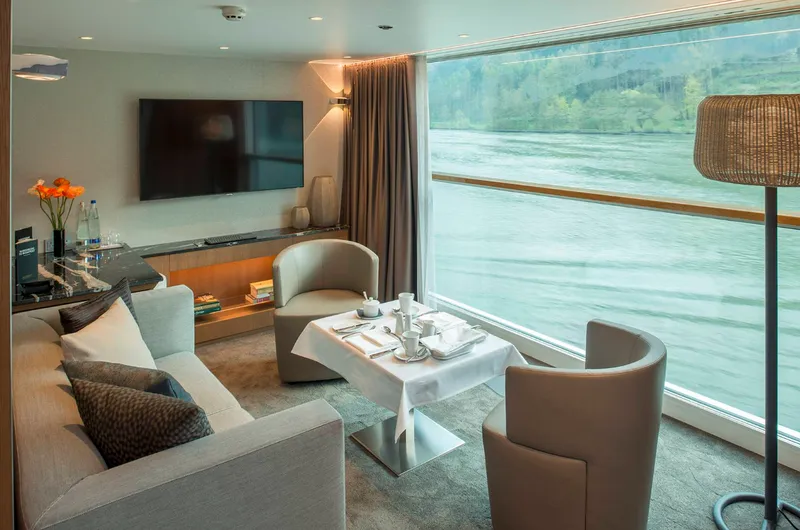
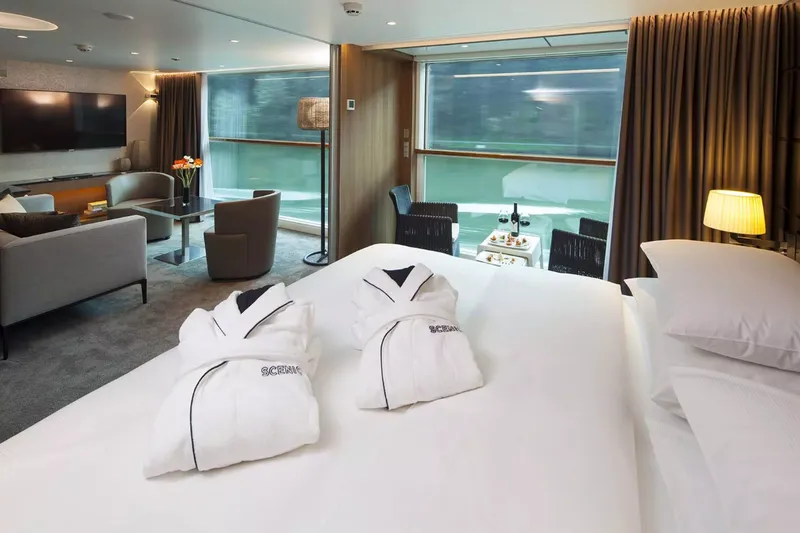
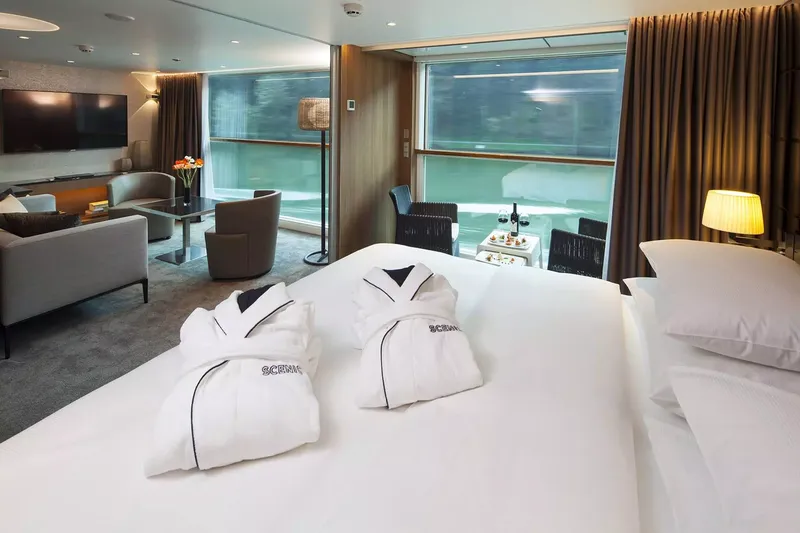
Royal Balcony Suite
Suite
315 m²Max 2
R
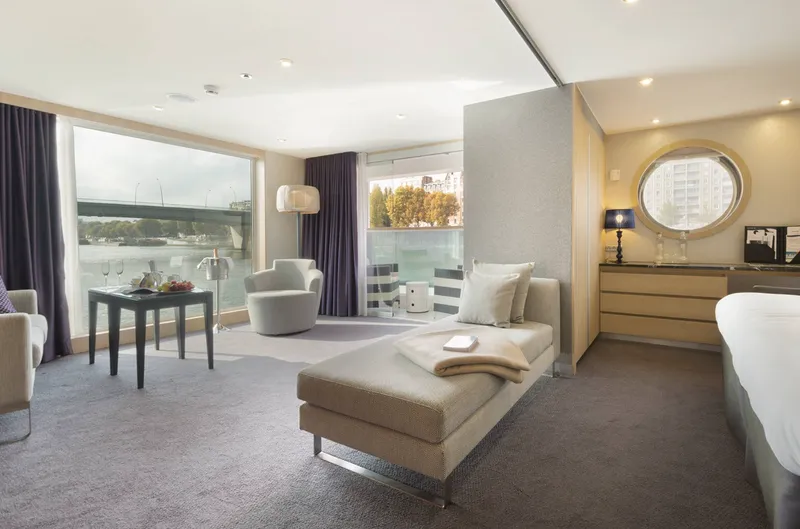
These Suites on the Diamond Deck are the ultimate in luxury with more space (305ft²), impeccable service, thoughtful touches, an outdoor balcony, lounge area and an oversized bathroom.
Queen or Twin ConfigurationShowerToiletries ProvidedRoom Service AvailableSuite BenefitsFree Wi-Fi+3
View Details
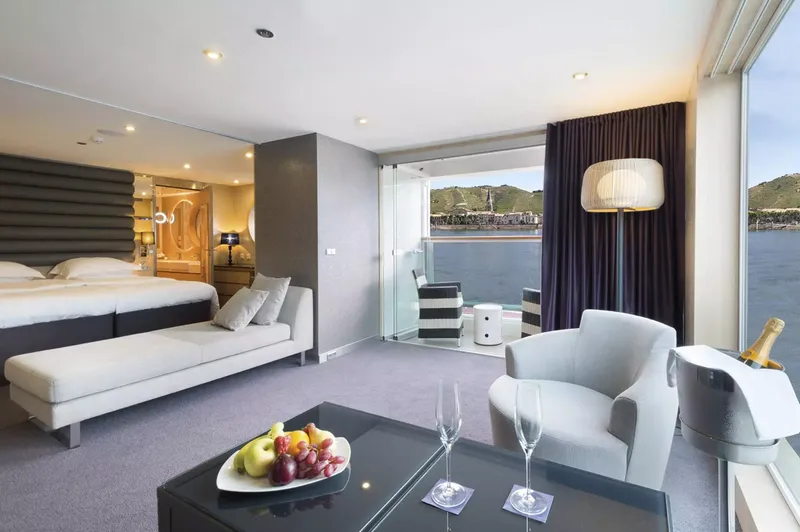
Royal One-Bedroom Suite
Suite
455 m²Max 2
RP
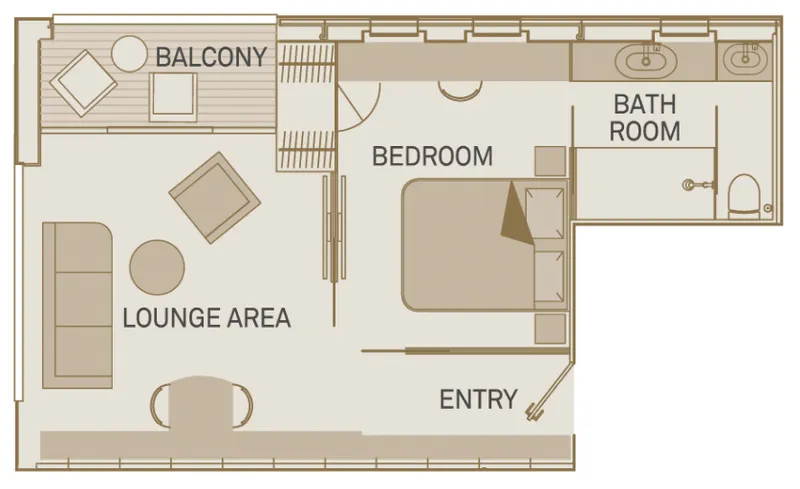
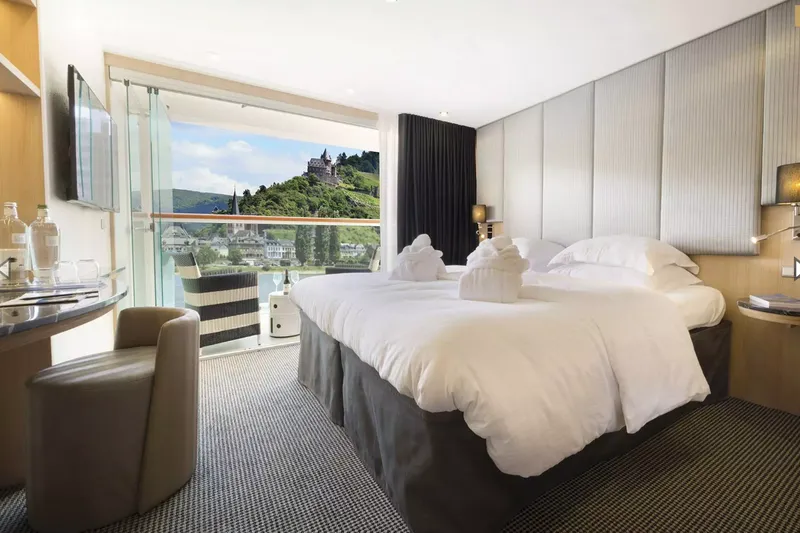
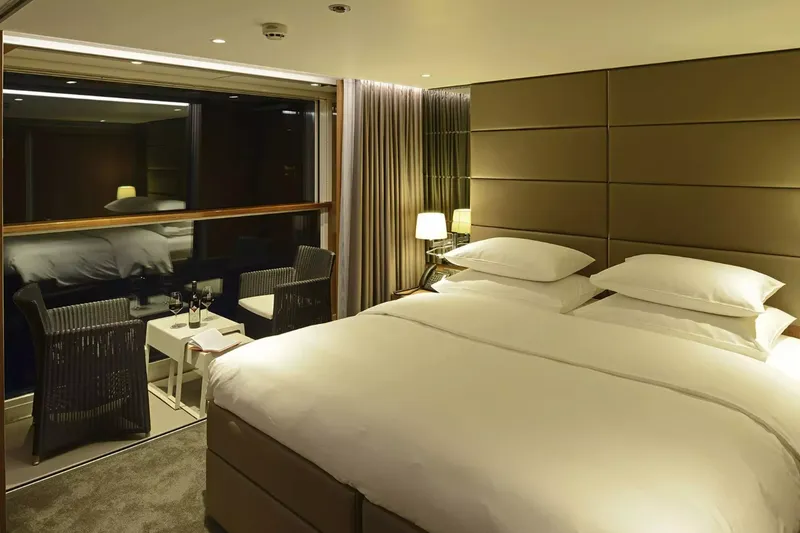
At 455ft², these are amoungst the largest suites on Europe’s rivers. At the rear of the Diamond Deck, enjoy fantastic views of the passing scenery, separate lounge and dining area and luxurious oversized bathroom.
Queen or Twin ConfigurationShowerToiletries ProvidedRoom Service AvailableTVFree Wi-Fi+3
View Details
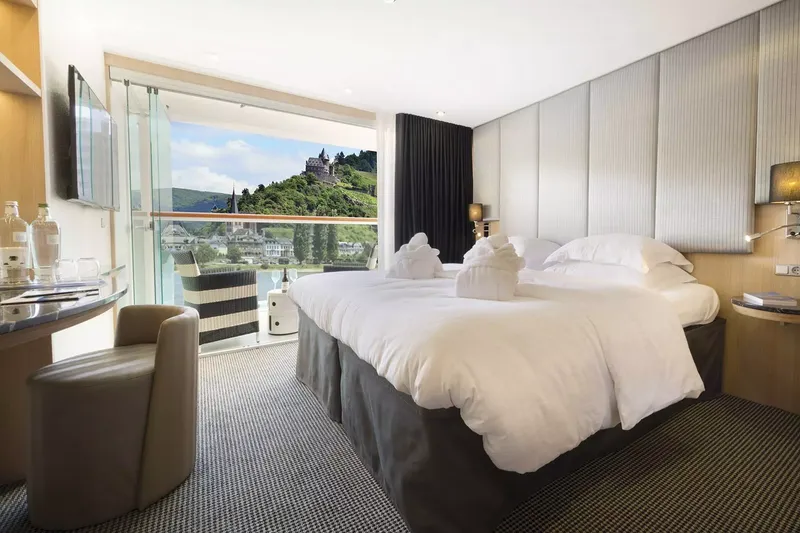
Balcony Suite
Suite
205 m²Max 2
CPPA
Located on the Sapphire and Diamond Decks they feature a full-length outdoor balcony with the exclusive Scenic Sun Lounge system and are larger than the standard river cruise cabins on Europe’s rivers.
Queen or Twin ConfigurationShowerToiletries ProvidedRoom Service AvailableTVFree Wi-Fi+3
View Details
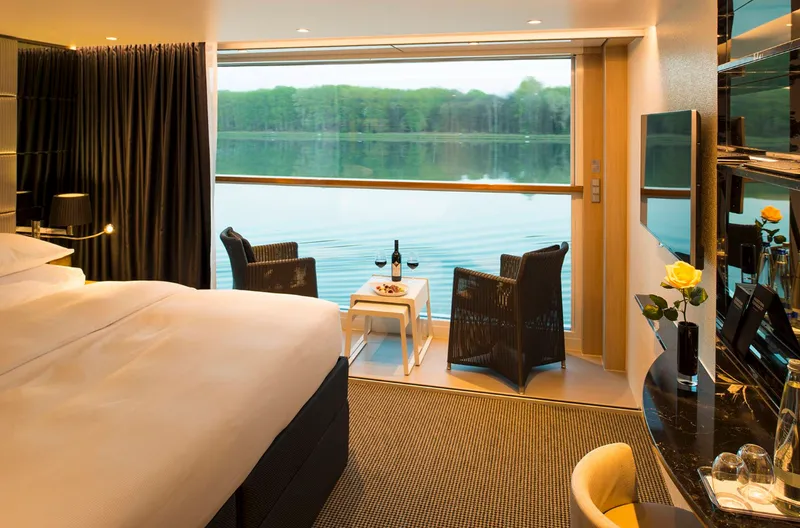
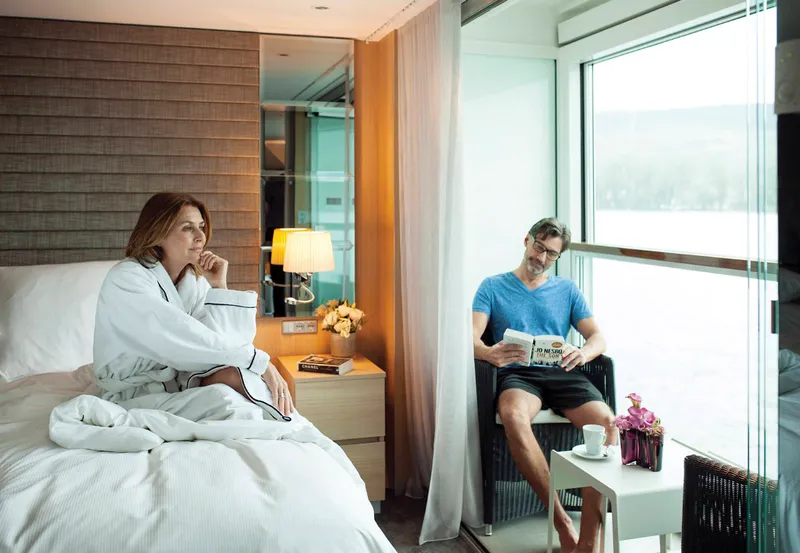
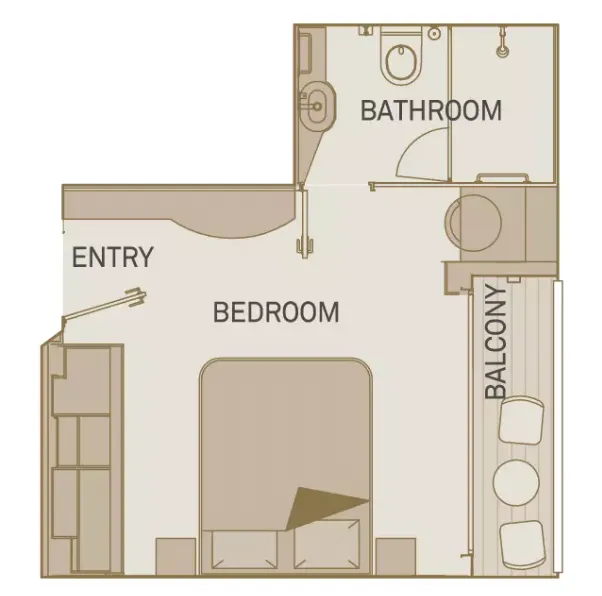
Deluxe Balcony Suite
Suite
225 m²Max 2
BDPD
Located in prime locations at the front of the ship on both the Sapphire and Diamond Decks, they offer all the features of our private Balcony Suites with our ingenious Scenic Sun Lounge, but with even more space to relax.
Queen or Twin ConfigurationShowerToiletries ProvidedRoom Service AvailableTVSafe+2
View Details
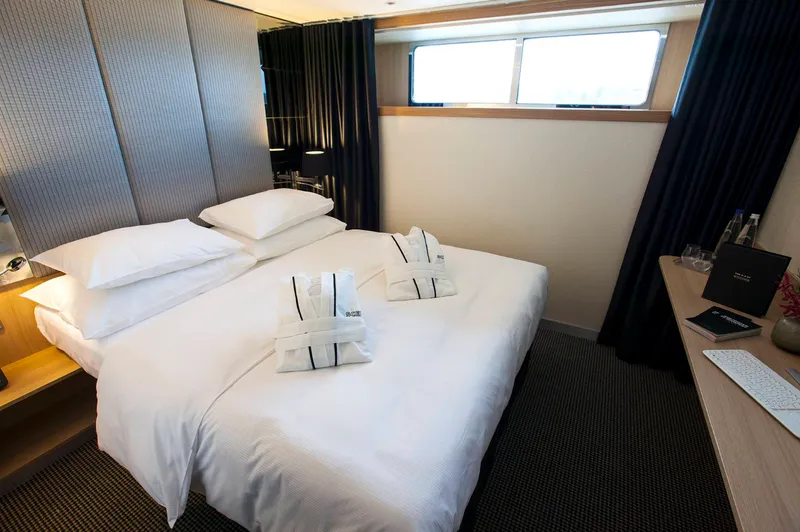
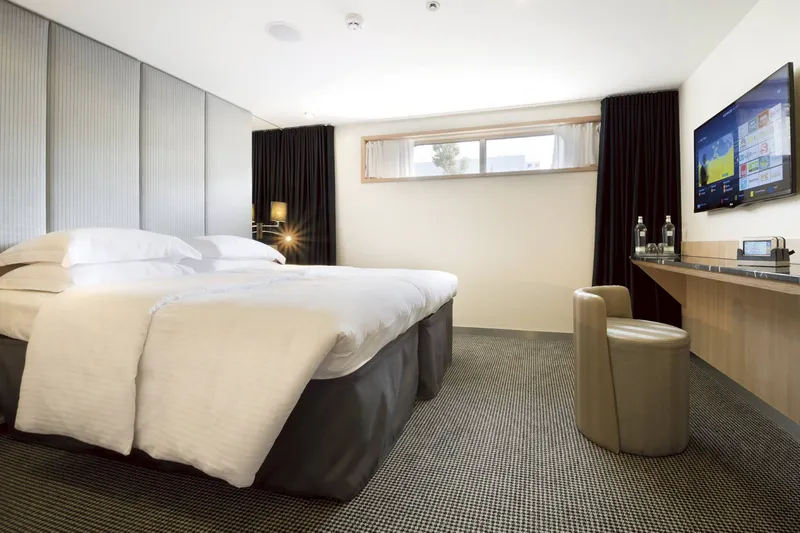
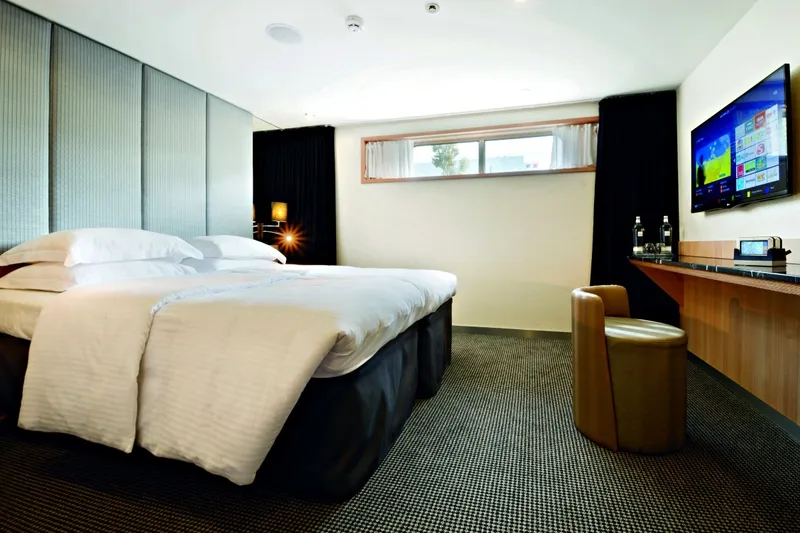
Standard Suite
Outside
160 m²Max 2
E
Standard Suites are located on the Jewel Deck with large picture windows to ensure a great view. They have a spacious design and clever layout alongside all the usual luxurious amenities and furnishings.
Queen or Twin ConfigurationShowerToiletries ProvidedRoom Service AvailableTVFree Wi-Fi+3
View Details
Interested in This Voyage?
Our cruise specialists can help you find the perfect cabin and the best available pricing.
(+886) 02-2721-7300Contact Advisor