Scenic River CruisesEESC280626.1
Jewels of Europe with Eastern Europe Explorer
Date
2026-06-28
Duration
14 nights
Departure Port
Prague
Czech Republic
Arrival Port
Amsterdam
Netherlands
Rating
Luxury
Theme
—
Scenic River Cruises
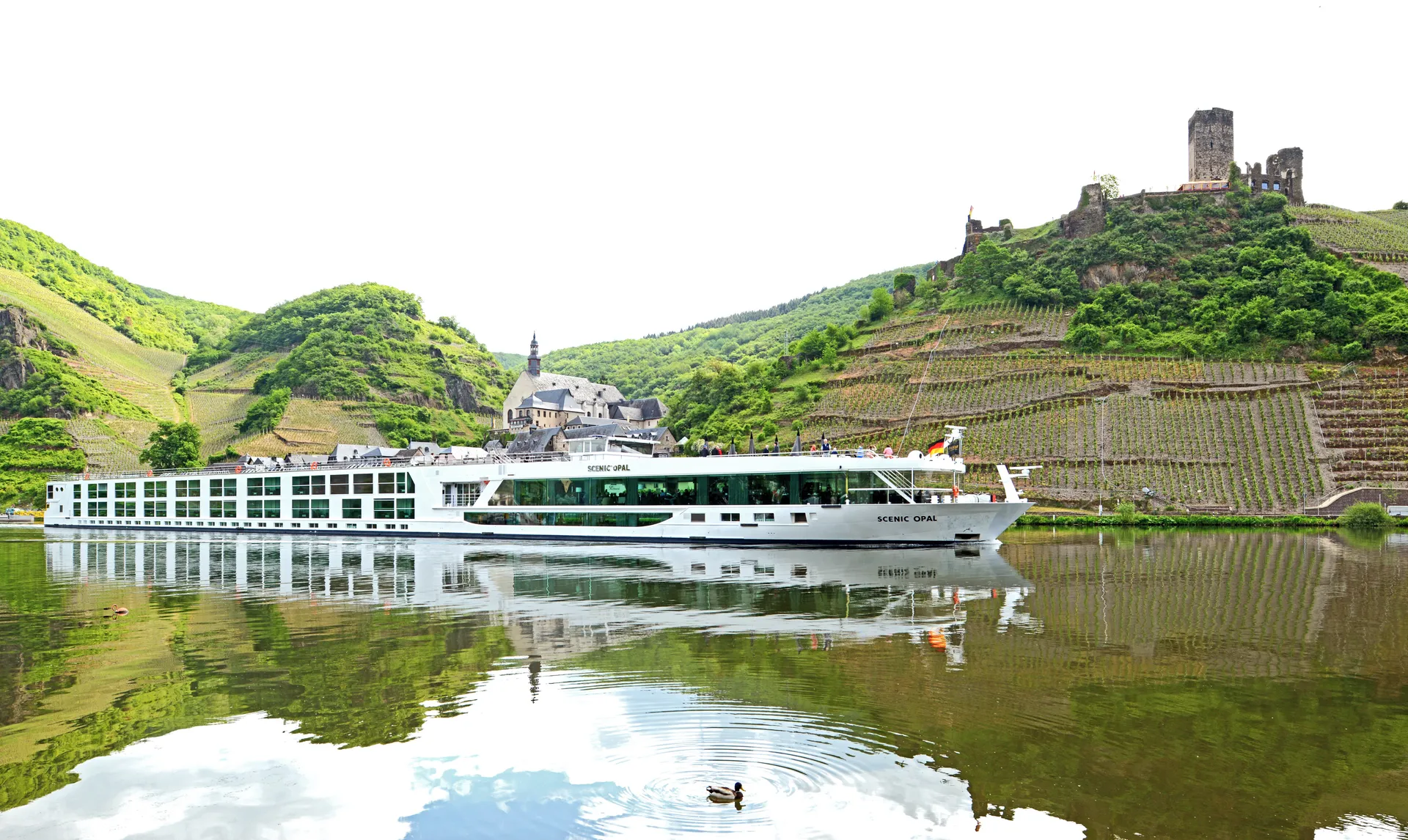
Scenic Opal
Space-Ship
Launched
2015
Refitted
—
Tonnage
2,721 GT
Passengers
169
Cabins
—
Crew
53
Length
—
Width
—
Speed
—
Adults Only
No
Itinerary
Day 1
Day 1
Prague
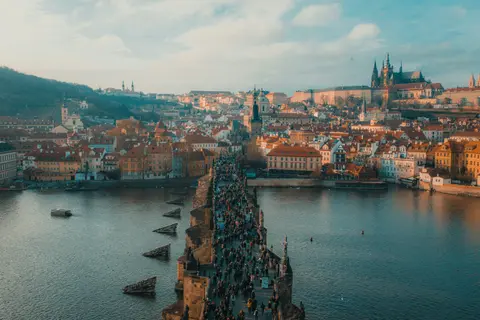
The port of Prague is a vibrant gateway to Central Europe, renowned for its stunning architecture, rich history, and culinary delights. Must-do experiences include savoring traditional dishes like svíčková and exploring the charming streets of Český Krumlov. The best time to visit is during spring or early fall when the weather is pleasant and the city is alive with cultural festivals.
Day 3
Day 3
Prague
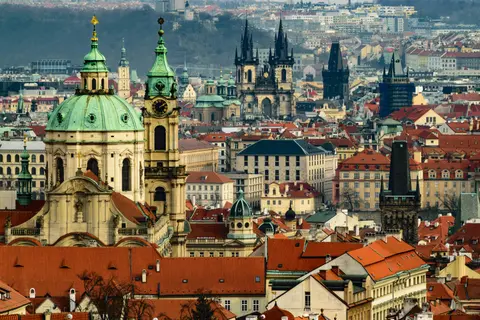
The port of Prague is a vibrant gateway to Central Europe, renowned for its stunning architecture, rich history, and culinary delights. Must-do experiences include savoring traditional dishes like svíčková and exploring the charming streets of Český Krumlov. The best time to visit is during spring or early fall when the weather is pleasant and the city is alive with cultural festivals.
Day 3
Day 3
Dresden
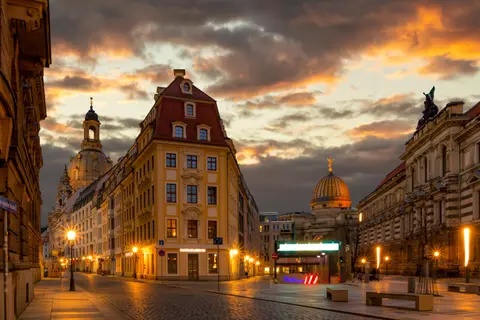
Dresden, an elegant port city in Saxony, is celebrated for its baroque architecture and rich cultural heritage. Must-do experiences include visiting the stunning Frauenkirche and sampling local delicacies like Dresdner Stollen. The best season to visit is during the spring or fall when the weather is mild and the city buzzes with vibrant festivals and events.
Day 3
Day 3
Berlin
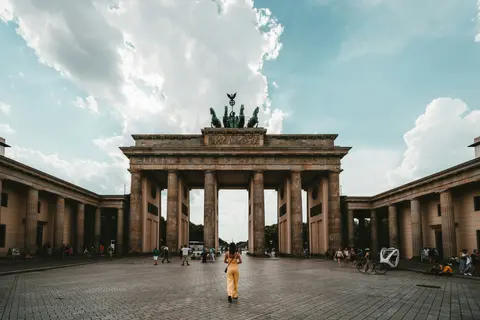
Berlin is Germany's dynamic capital, a city of profound historical layers from Prussian grandeur through Cold War division to its current status as Europe's creative capital. Must-do experiences include Museum Island's five world-class collections and a day trip to Potsdam's Sanssouci Palace. May through September offers the best weather for exploring the city's parks, beer gardens, and vibrant outdoor culture.
Day 5
Day 5
Berlin
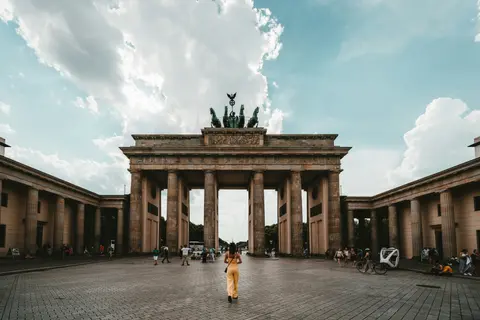
Berlin is Germany's dynamic capital, a city of profound historical layers from Prussian grandeur through Cold War division to its current status as Europe's creative capital. Must-do experiences include Museum Island's five world-class collections and a day trip to Potsdam's Sanssouci Palace. May through September offers the best weather for exploring the city's parks, beer gardens, and vibrant outdoor culture.
Day 7
Day 7
Warsaw
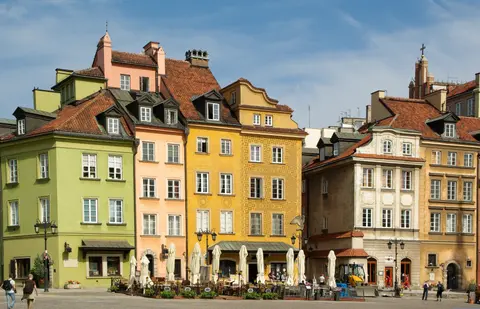
Warsaw is Poland's resilient capital, rebuilt from wartime devastation with a UNESCO-listed Old Town that stands as a monument to cultural determination, now complemented by a dynamic modern food and arts scene. Must-dos include exploring the reconstructed Old Town and Royal Castle, visiting the Chopin Museum, and sampling the city's reimagined Polish cuisine at Hala Koszyki food hall. Visit May through September for outdoor dining, cultural festivals, and the longest days.
Day 9
Day 9
Krakow
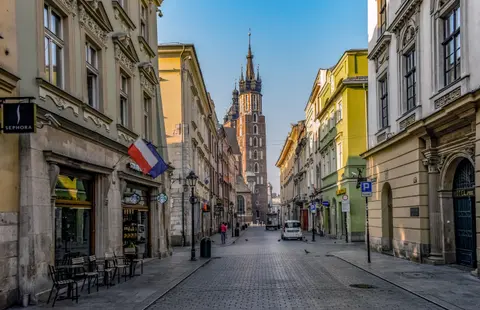
Krakow is one of Europe's most perfectly preserved medieval cities, centred on the Rynek Główny — Europe's largest medieval square — with Wawel Castle, the revived Jewish quarter of Kazimierz, and the extraordinary Wieliczka Salt Mine cathedral. Must-dos include Schindler's Factory museum, sampling pierogi and obwarzanek from street carts, and exploring the underground salt cathedral. Visit year-round — summer for outdoor café culture, December for atmospheric Christmas markets in the historic square.
Day 11
Day 11
Budapest
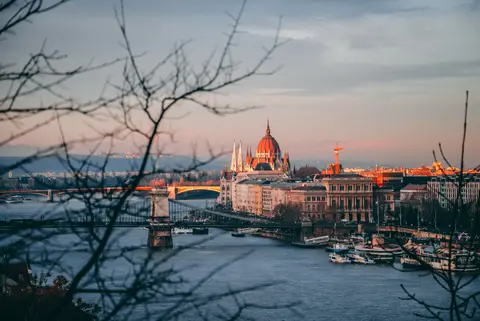
Budapest, divided by the Danube into the hilly Buda of thermal baths and medieval castle lanes on one bank and the grand Pest of coffee-house culture and Art Nouveau splendor on the other, delivers the most theatrical first impression of any European capital — whether approached by river as the neo-Gothic Parliament materializes from the water or by night from the Citadella's sweep of illuminated panorama below. The city's celebrated thermal bath culture, rooted in Ottoman-era hammams and perfected in palatial Secession-era pools like the Széchenyi, is an experience entirely unlike anything else in Europe. Visit spring and autumn for comfortable temperatures; Vienna is two and a half hours west by train.
Day 12
Day 12
Vienna
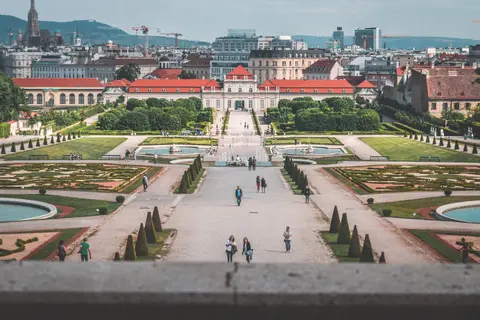
The port of Vienna is a cultural gem along the Danube River, famous for its stunning architecture, rich history, and vibrant culinary scene. Must-do experiences include sampling authentic Wiener Schnitzel and visiting the picturesque village of Dürnstein. The best season to visit is spring or early fall, when the city's gardens bloom and outdoor activities abound.
Day 14
Day 14
Krems
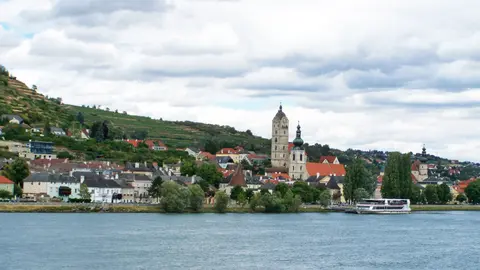
Krems an der Donau has stood at the eastern gateway of the Wachau Valley — Austria's most beautiful stretch of the Danube — since Emperor Otto III granted it market rights in 995 AD, making it one of the country's oldest documented towns. The UNESCO-listed Wachau landscape surrounding the city is a masterpiece of vineyard terraces, Baroque abbeys, and medieval castles reflected in the river; the Grüner Veltliner and Riesling wines produced here are among Austria's finest. Must-dos include visiting the monumental Melk Abbey and cycling the Danube Cycle Path through the valley. Krems is most enchanting April through October, with the harvest season in September offering wine cellar tastings of exceptional depth.
Day 15
Day 15
Brandstatt
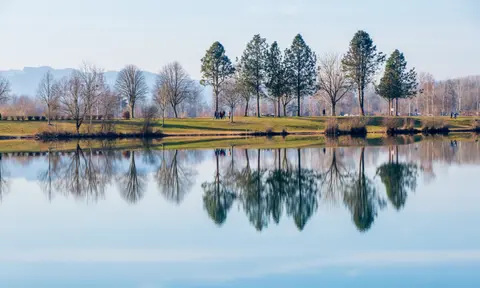
Brandstatt, Austria, is a charming port on the Danube River, rich in history and culture. Visitors must try the traditional Wiener Schnitzel and Apfelstrudel while exploring local markets. The best time to visit is during the spring and summer months, when the region's natural beauty and vibrant atmosphere are at their peak.
Day 15
Day 15
Passau
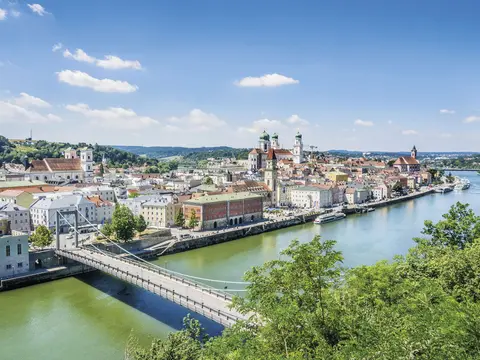
Passau occupies one of Central Europe's most dramatic natural stages — a narrow peninsula at the confluence of three rivers, the Danube, Inn, and Ilz, where the old town's baroque spires and shuttered merchants' houses crowd the very tip of the land between the waters. St. Stephen's Cathedral houses the world's largest church organ, a 17,974-pipe instrument whose daily concerts fill the nave with a sound that seems architectural in its density. The Veste Oberhaus fortress above the city commands panoramic views across three countries on clear days. Passau is a classic Danube river cruise departure point; spring and early autumn, when the river runs high and the light turns golden, are the finest seasons.
Day 1
Prague
The port of Prague is a vibrant gateway to Central Europe, renowned for its stunning architecture, rich history, and culinary delights. Must-do experiences include savoring traditional dishes like svíčková and exploring the charming streets of Český Krumlov. The best time to visit is during spring or early fall when the weather is pleasant and the city is alive with cultural festivals.
Day 3
Prague
The port of Prague is a vibrant gateway to Central Europe, renowned for its stunning architecture, rich history, and culinary delights. Must-do experiences include savoring traditional dishes like svíčková and exploring the charming streets of Český Krumlov. The best time to visit is during spring or early fall when the weather is pleasant and the city is alive with cultural festivals.
Dresden
Dresden, an elegant port city in Saxony, is celebrated for its baroque architecture and rich cultural heritage. Must-do experiences include visiting the stunning Frauenkirche and sampling local delicacies like Dresdner Stollen. The best season to visit is during the spring or fall when the weather is mild and the city buzzes with vibrant festivals and events.
Berlin
Berlin is Germany's dynamic capital, a city of profound historical layers from Prussian grandeur through Cold War division to its current status as Europe's creative capital. Must-do experiences include Museum Island's five world-class collections and a day trip to Potsdam's Sanssouci Palace. May through September offers the best weather for exploring the city's parks, beer gardens, and vibrant outdoor culture.
Day 5
Berlin
Berlin is Germany's dynamic capital, a city of profound historical layers from Prussian grandeur through Cold War division to its current status as Europe's creative capital. Must-do experiences include Museum Island's five world-class collections and a day trip to Potsdam's Sanssouci Palace. May through September offers the best weather for exploring the city's parks, beer gardens, and vibrant outdoor culture.
Day 7
Warsaw
Warsaw is Poland's resilient capital, rebuilt from wartime devastation with a UNESCO-listed Old Town that stands as a monument to cultural determination, now complemented by a dynamic modern food and arts scene. Must-dos include exploring the reconstructed Old Town and Royal Castle, visiting the Chopin Museum, and sampling the city's reimagined Polish cuisine at Hala Koszyki food hall. Visit May through September for outdoor dining, cultural festivals, and the longest days.
Day 9
Krakow
Krakow is one of Europe's most perfectly preserved medieval cities, centred on the Rynek Główny — Europe's largest medieval square — with Wawel Castle, the revived Jewish quarter of Kazimierz, and the extraordinary Wieliczka Salt Mine cathedral. Must-dos include Schindler's Factory museum, sampling pierogi and obwarzanek from street carts, and exploring the underground salt cathedral. Visit year-round — summer for outdoor café culture, December for atmospheric Christmas markets in the historic square.
Day 11
Budapest
Budapest, divided by the Danube into the hilly Buda of thermal baths and medieval castle lanes on one bank and the grand Pest of coffee-house culture and Art Nouveau splendor on the other, delivers the most theatrical first impression of any European capital — whether approached by river as the neo-Gothic Parliament materializes from the water or by night from the Citadella's sweep of illuminated panorama below. The city's celebrated thermal bath culture, rooted in Ottoman-era hammams and perfected in palatial Secession-era pools like the Széchenyi, is an experience entirely unlike anything else in Europe. Visit spring and autumn for comfortable temperatures; Vienna is two and a half hours west by train.
Day 12
Vienna
The port of Vienna is a cultural gem along the Danube River, famous for its stunning architecture, rich history, and vibrant culinary scene. Must-do experiences include sampling authentic Wiener Schnitzel and visiting the picturesque village of Dürnstein. The best season to visit is spring or early fall, when the city's gardens bloom and outdoor activities abound.
Day 14
Krems
Krems an der Donau has stood at the eastern gateway of the Wachau Valley — Austria's most beautiful stretch of the Danube — since Emperor Otto III granted it market rights in 995 AD, making it one of the country's oldest documented towns. The UNESCO-listed Wachau landscape surrounding the city is a masterpiece of vineyard terraces, Baroque abbeys, and medieval castles reflected in the river; the Grüner Veltliner and Riesling wines produced here are among Austria's finest. Must-dos include visiting the monumental Melk Abbey and cycling the Danube Cycle Path through the valley. Krems is most enchanting April through October, with the harvest season in September offering wine cellar tastings of exceptional depth.
Day 15
Brandstatt
Brandstatt, Austria, is a charming port on the Danube River, rich in history and culture. Visitors must try the traditional Wiener Schnitzel and Apfelstrudel while exploring local markets. The best time to visit is during the spring and summer months, when the region's natural beauty and vibrant atmosphere are at their peak.
Passau
Passau occupies one of Central Europe's most dramatic natural stages — a narrow peninsula at the confluence of three rivers, the Danube, Inn, and Ilz, where the old town's baroque spires and shuttered merchants' houses crowd the very tip of the land between the waters. St. Stephen's Cathedral houses the world's largest church organ, a 17,974-pipe instrument whose daily concerts fill the nave with a sound that seems architectural in its density. The Veste Oberhaus fortress above the city commands panoramic views across three countries on clear days. Passau is a classic Danube river cruise departure point; spring and early autumn, when the river runs high and the light turns golden, are the finest seasons.
Cabin Categories
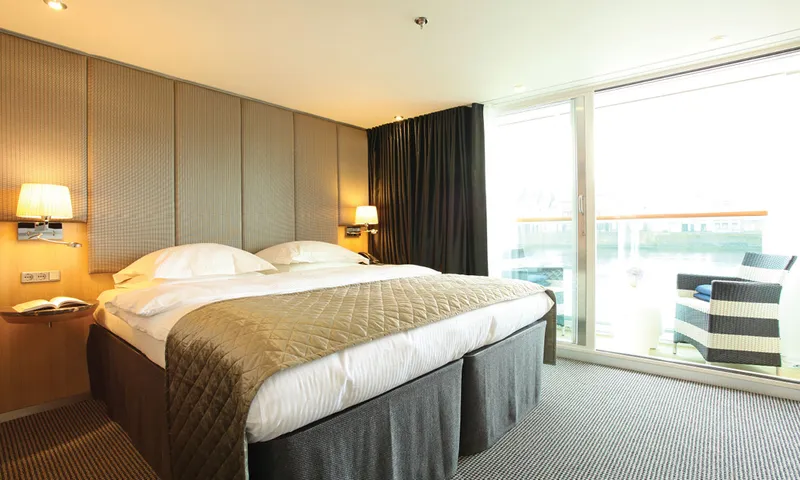
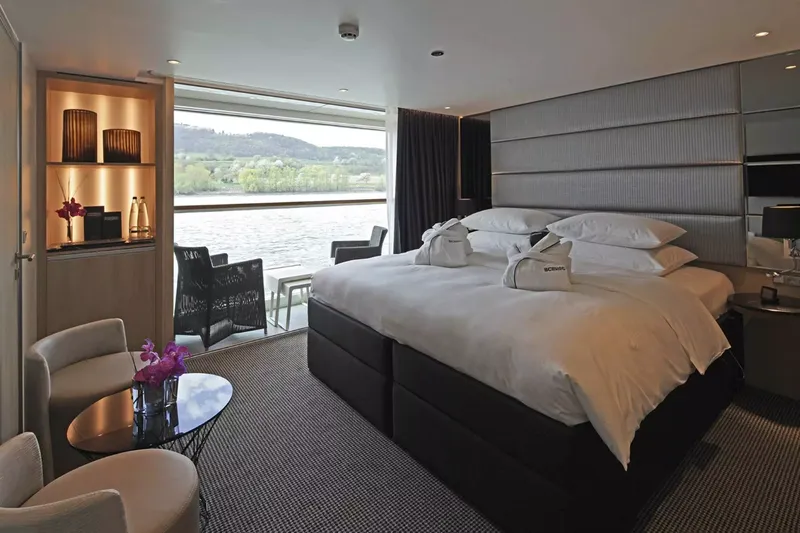
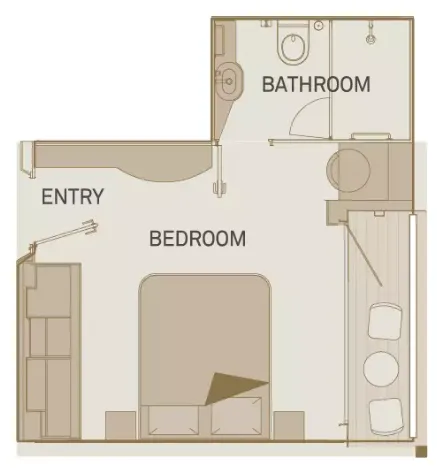
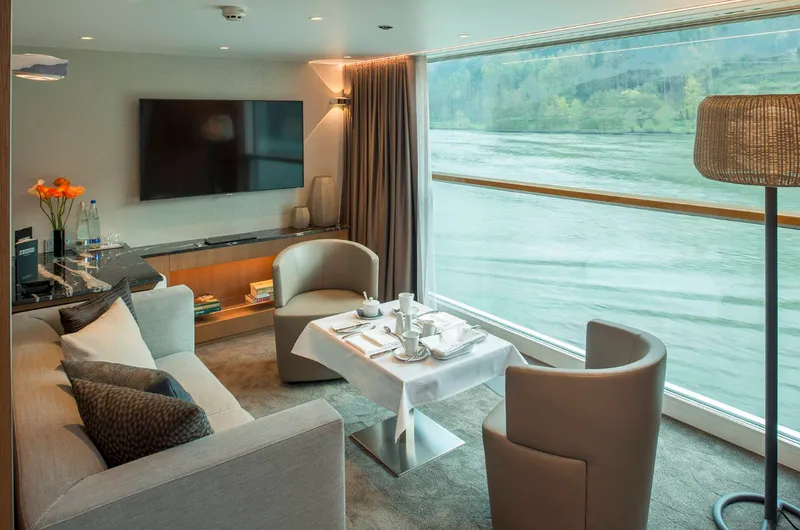
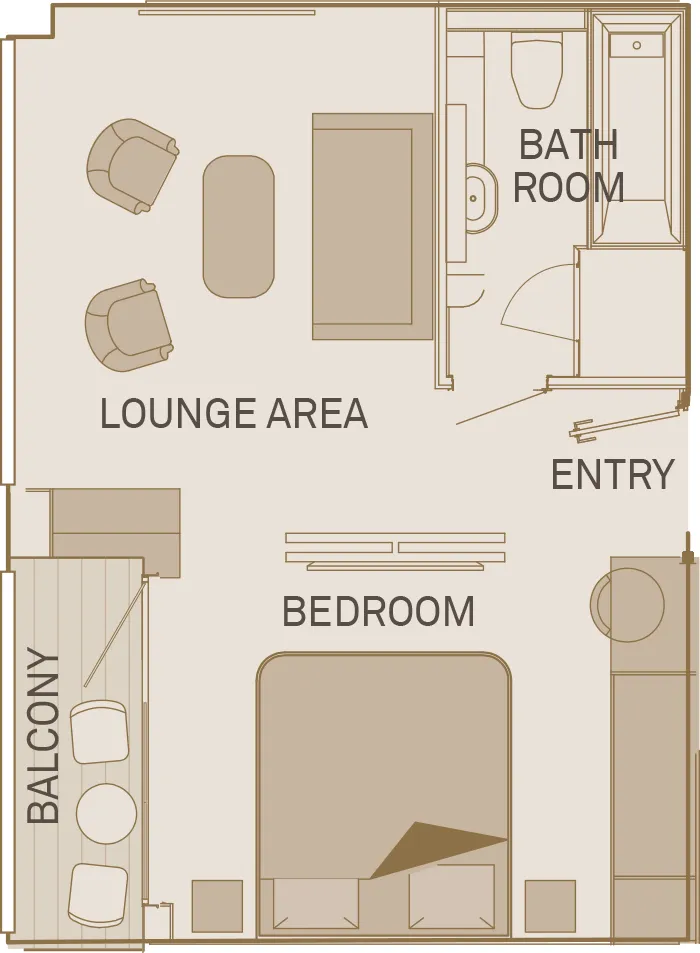
Junior Balcony Suite
Suite
250 m²Max 2
B1JBJRJ
These spacious Suites, located on the Sapphire and Diamond Decks, have a private full-length balcony complete with a Scenic Sun Lounge and elegant en-suite bathrooms featuring a large vanity basin and shower.
Queen or Twin ConfigurationLounge AreaShowerToiletries ProvidedRoom Service AvailableSuite Benefits+6
View Details
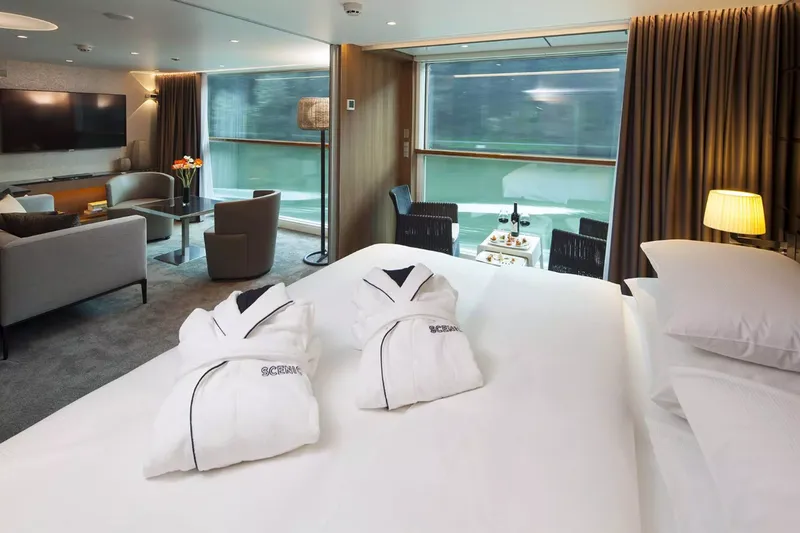
Royal Balcony Suite
Suite
360 m²Max 2
RR
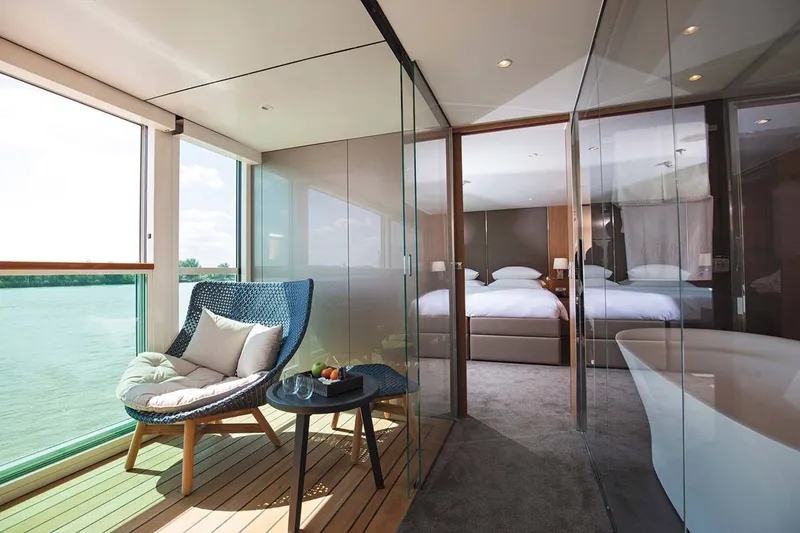
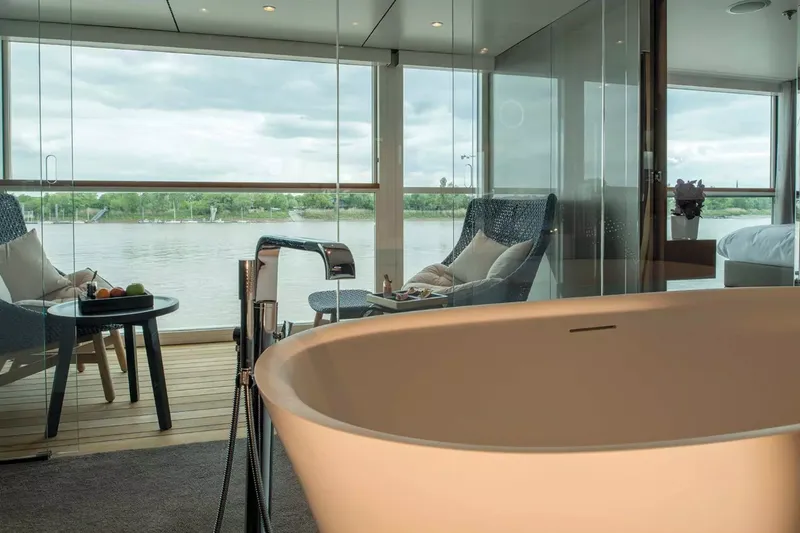
These Suites located on the Diamond Deck are the ultimate in luxury with more space, impeccable service, thoughtful touches, an outdoor balcony, lounge area and an oversized bathroom.
Queen or Twin ConfigurationLounge AreaShowerBathToiletries ProvidedRoom Service Available+7
View Details
Royal Owner's Suite
Suite
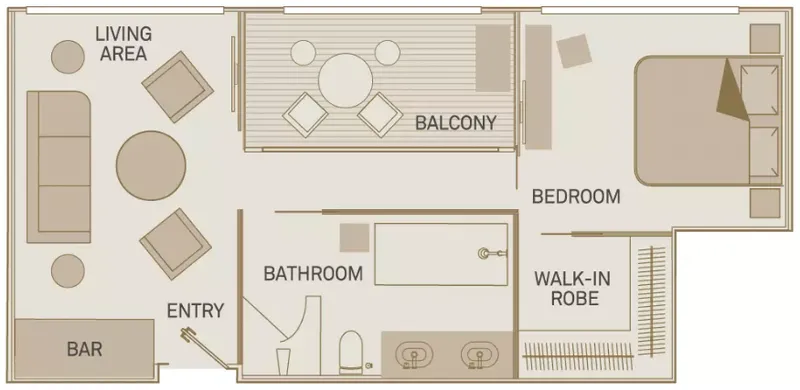
315 m²Max 2
RO
These Suites on the Diamond Deck are the ultimate in luxury with more space (315ft²), impeccable service, thoughtful touches, an outdoor balcony, lounge area and an oversized bathroom.
Queen or Twin ConfigurationLounge AreaShowerBathToiletries ProvidedRoom Service Available+7
View Details
Royal Panorama Suite
Suite
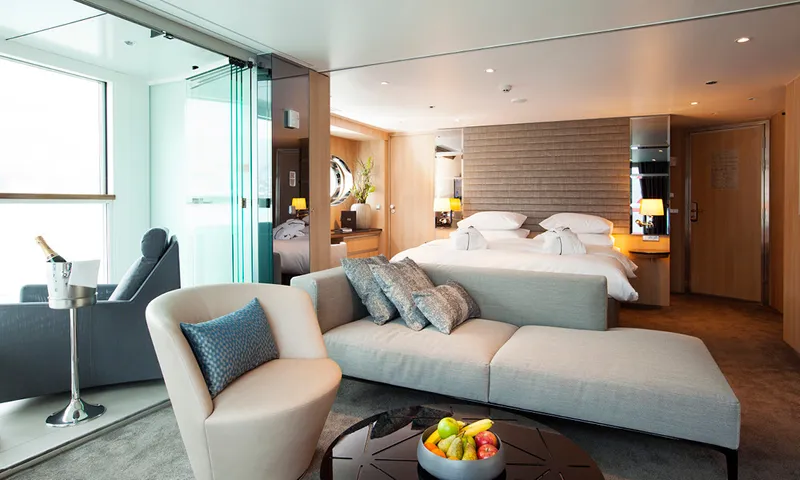
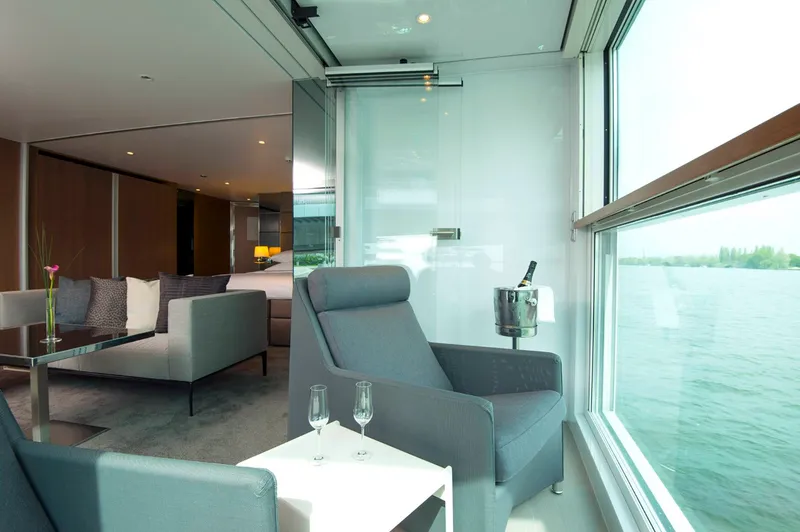
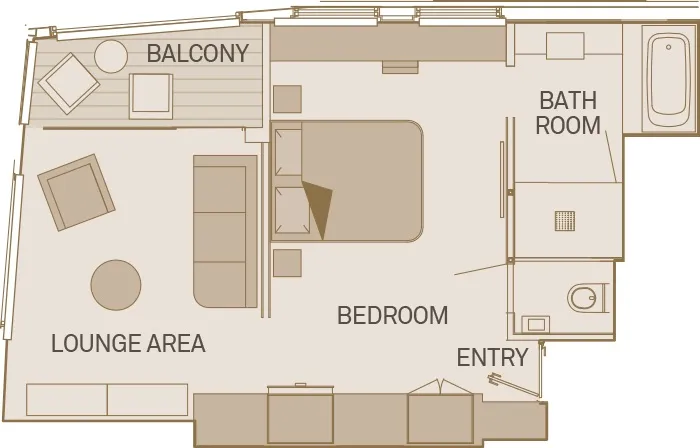
475 m²Max 2
RP
These Suites located on the Diamond Deck are the ultimate in luxury with more space, impeccable service, thoughtful touches, an outdoor balcony, lounge area and an oversized bathroom.
Queen or Twin ConfigurationShowerBathToiletries ProvidedRoom Service AvailableSuite Benefits+6
View Details
Balcony Suite
Suite
205 m²Max 2
AC
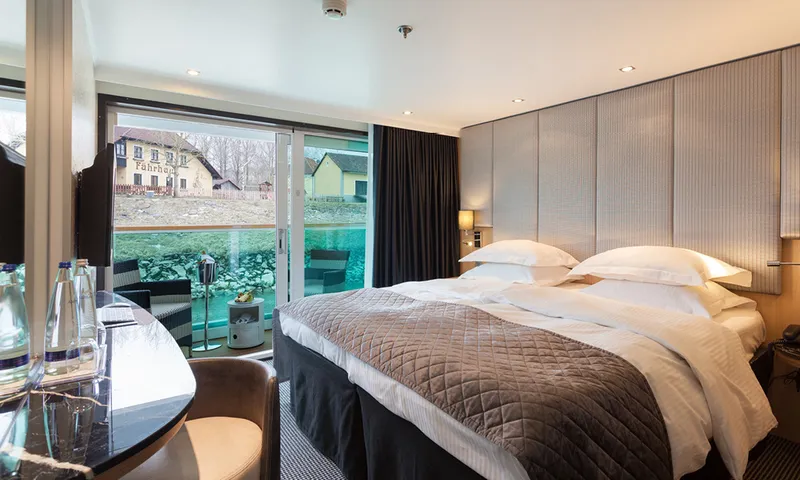
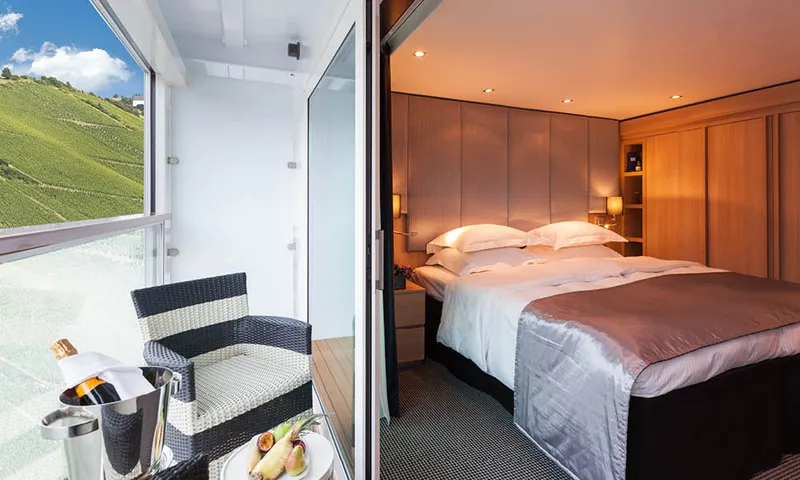
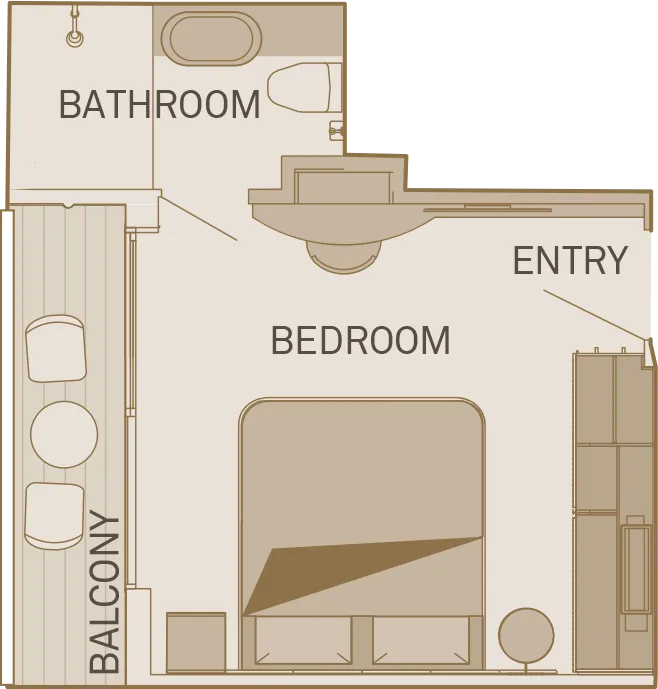
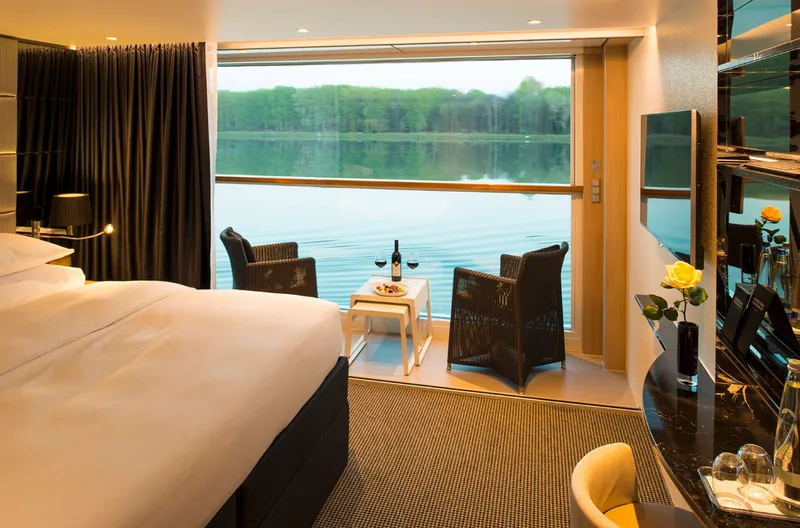
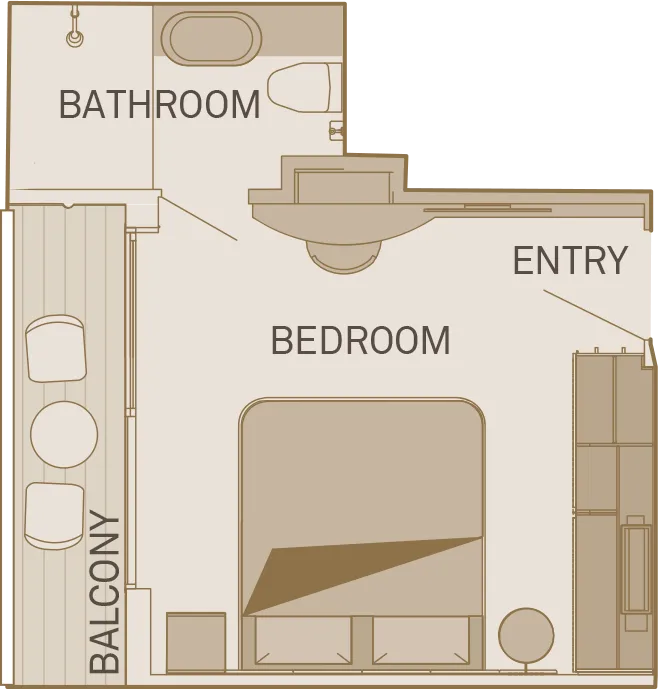
Located on the Sapphire and Diamond Decks these stylishly decorated suites feature a full-length outdoor balcony with the exclusive Scenic Sun Lounge and offer private bathrooms with a luxurious vanity basin and shower.
Queen or Twin ConfigurationShowerToiletries ProvidedRoom Service AvailableFree Mini BarTV+4
View Details
Deluxe Balcony Suite
Suite
225 m²Max 2
BDPD
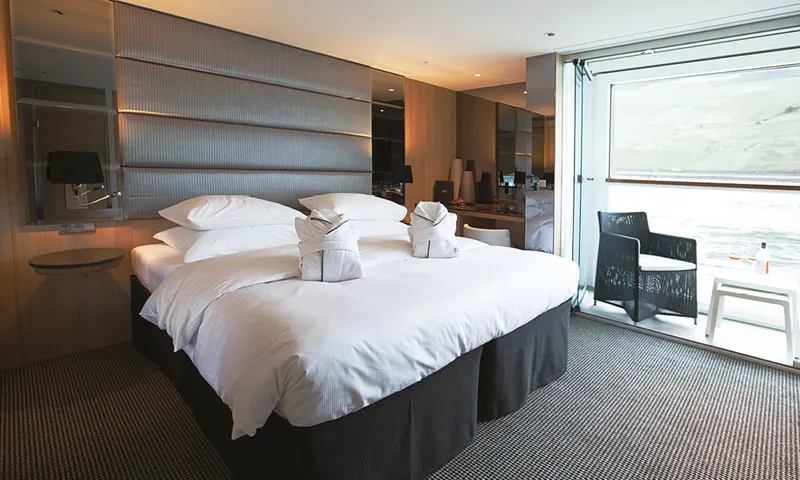
Located in prime locations at the front of the ship on both the Sapphire and Diamond Decks, they offer all the features of our private Balcony Suites with our ingenious Scenic Sun Lounge, but with even more space to relax.
Queen or Twin ConfigurationLounge AreaShowerToiletries ProvidedRoom Service AvailableSuite Benefits+5
View Details
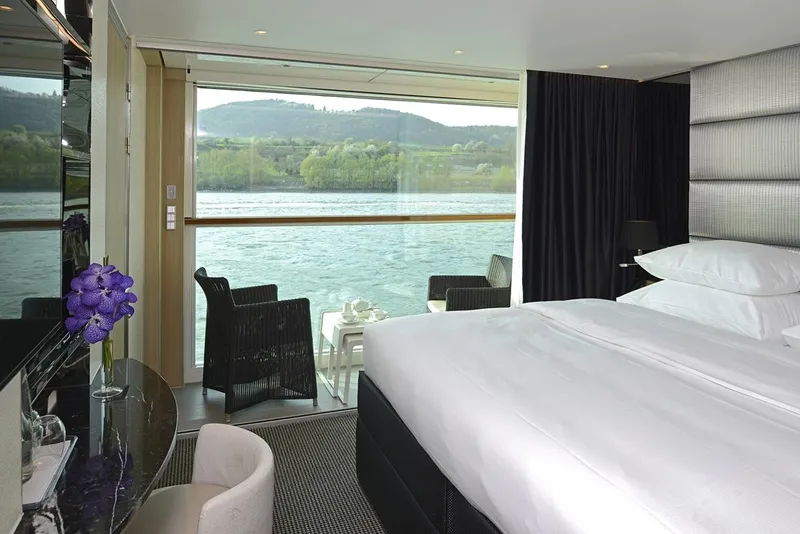
Single Balcony Suite
Suite
153–170 m²Max 2
BS
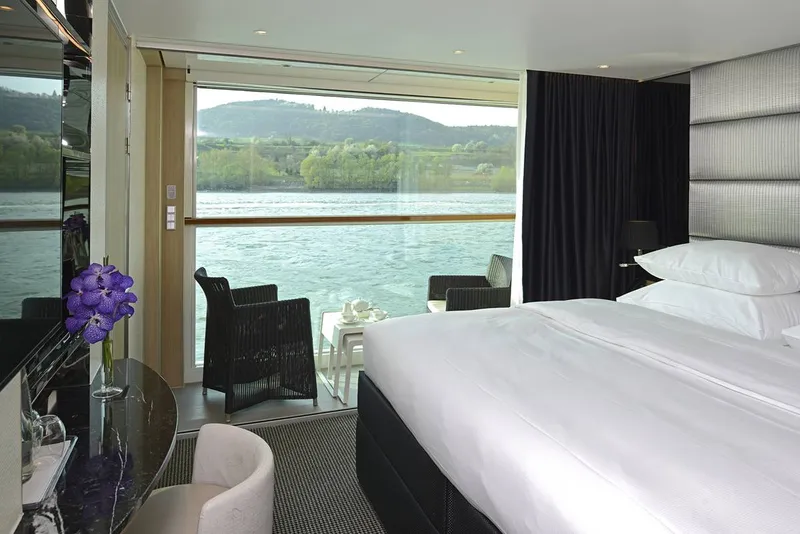
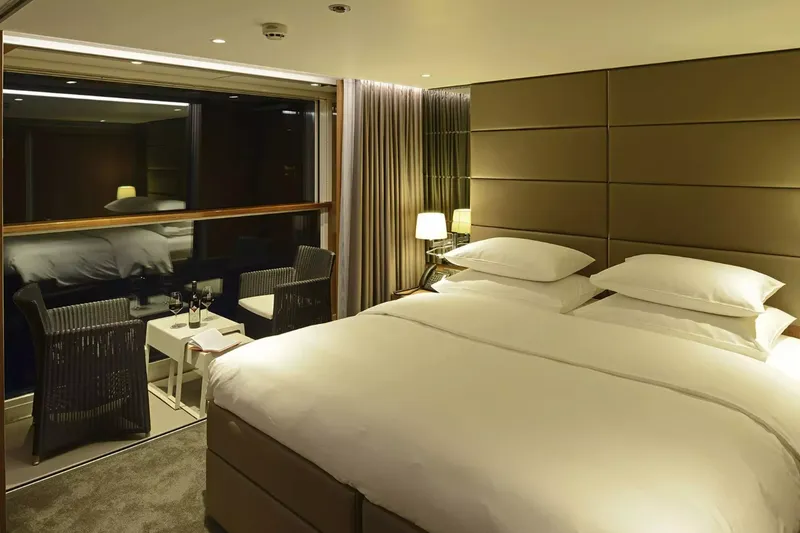
Located on the Sapphire deck this suite is perfect for the solo traveller. Enjoy fantastic views from your full size balcony complete with Scenic Sun Lounge. This cabin also includes an elegant bathroon with a luxurious vanity basin and shower.
One Single BedShowerToiletries ProvidedRoom Service AvailableTVFree Wi-Fi+3
View Details
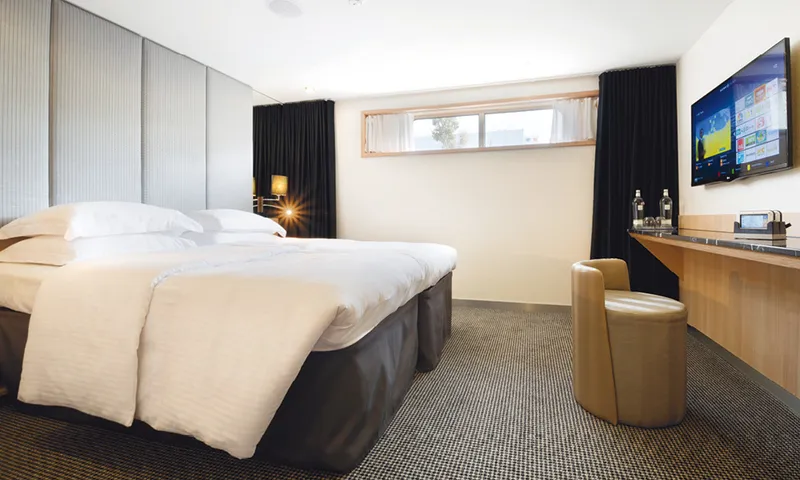
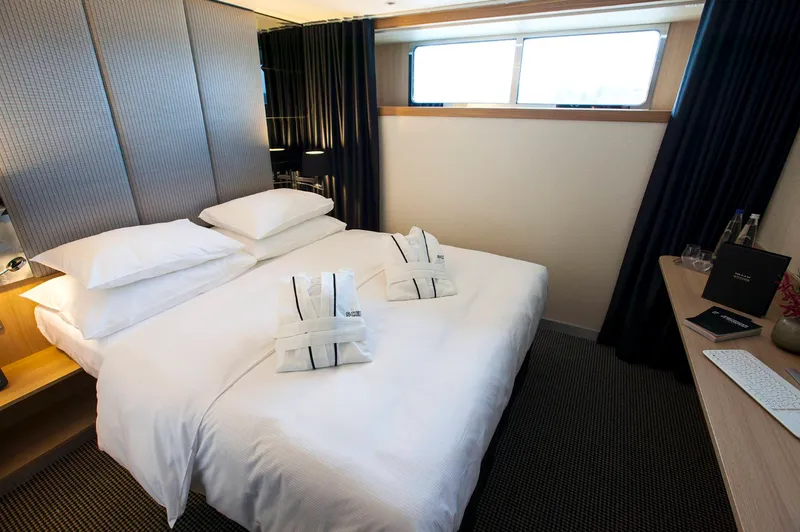
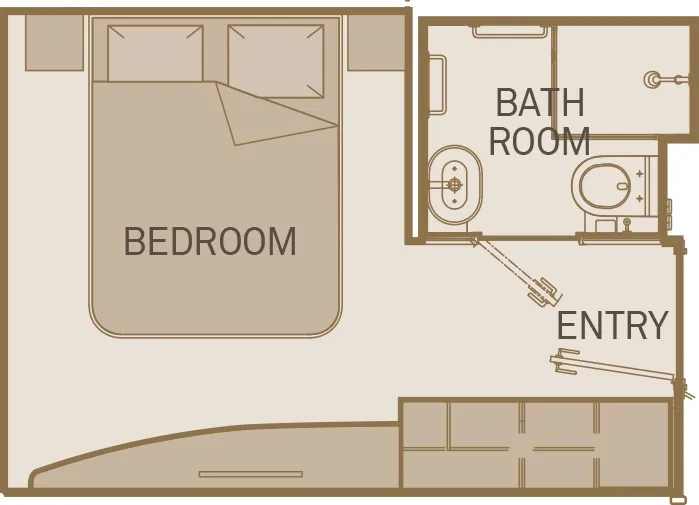
Standard Suite
Suite
160 m²Max 2
E
Our Jewel Deck Suites provide a lovely introduction to river cruising. Comfortable and luxurious with the finest in amenities.
Queen or Twin ConfigurationShowerToiletries ProvidedRoom Service AvailableTVFree Wi-Fi+3
View Details
Interested in This Voyage?
Our cruise specialists can help you find the perfect cabin and the best available pricing.
(+886) 02-2721-7300Contact Advisor