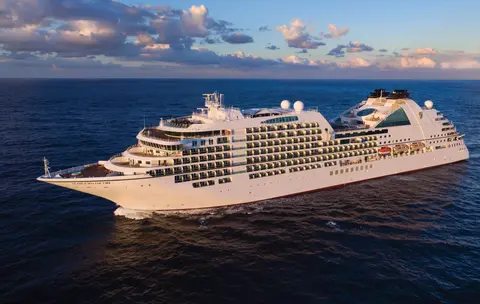
Seabourn7662
Glaciers & Alaska Inside Passage
Date
2026-09-04
Duration
7 nights
Departure Port
Vancouver
Canada
Arrival Port
Juneau
United States
Rating
Luxury
Theme
—





Seabourn
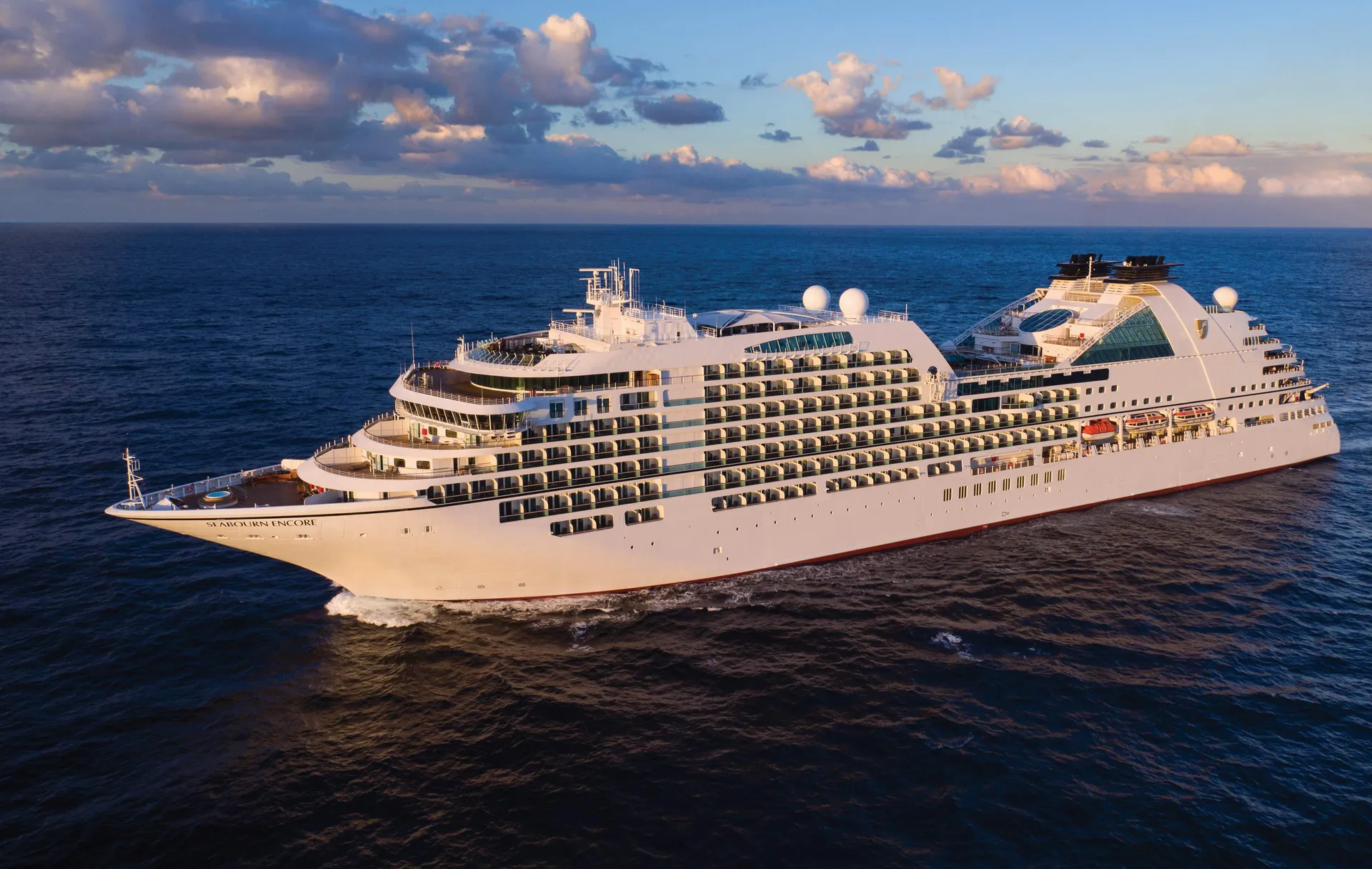
Seabourn Encore
Launched
2016
Refitted
—
Tonnage
40,350 GT
Passengers
600
Cabins
266
Crew
330
Length
690 m
Width
28 m
Speed
19 knots
Adults Only
No
Itinerary
Day 1
Day 1
Vancouver
Depart 17:00
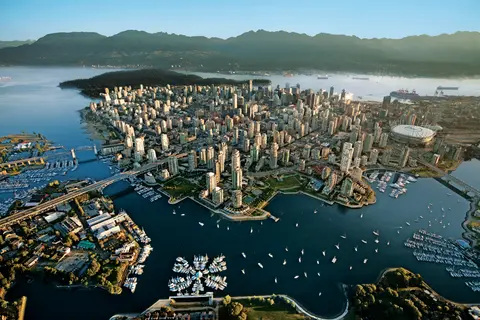
Pressed between the Pacific and the Coast Mountains, Vancouver is the natural gateway to Alaska's Inside Passage — a city where temperate rainforest meets glass towers and where Dungeness crab and wild sockeye salmon define a Pacific Rim cuisine that rivals any in North America. Walk the 22-kilometre Stanley Park seawall, lose yourself in the Granville Island market, then ferry across to Victoria's Edwardian splendour. Alaska cruise season peaks from May through September, making Vancouver an ideal starting point for one of the world's great ocean journeys.
Day 1
Day 1
Transit the Seymour Narrows
The Seymour Narrows is a 3-mile/5 km stretch of the Discovery Channel north of Vancouver Island, British Columbia that is notorious for the strength of the tidal currents flowing through it. The average width of the narrows is just 750 meters. During extreme tides, the current through the narrows is subject to severe Venturi effect, resulting in an increased velocity that can reach 15 knots. For much of its modern history, there was an additional hazard in the narrows called Ripple Rock, a shallow obstruction that claimed no fewer than 119 ships and 114 lives. In 1958, after months of tunneling and preparation, Ripple Rock was blown up in the largest commercial, non-nuclear explosion ever recorded in North America. Still, the navigation of Seymour Narrows is dependent on tidal and other conditions, and requires skill and technical accomplishment.
Day 2
Day 2
Cruising the Queen Charlotte Sound
The Queen Charlotte Sound lies between the Queen Charlotte Strait, which winds between Vancouver Island and the British Columbia mainland in the south, and Hecate Strait, which is northward, adjacent to the Haida Gwaii Islands off the Pacific coast of British Columbia. It is a broad reach in the long shipping route called the Inside Passage threading the myriad islands stretching from Washington’s Puget Sound to Alaska.
Day 3
Day 3
Ketchikan
Arrive 07:00Depart 15:00
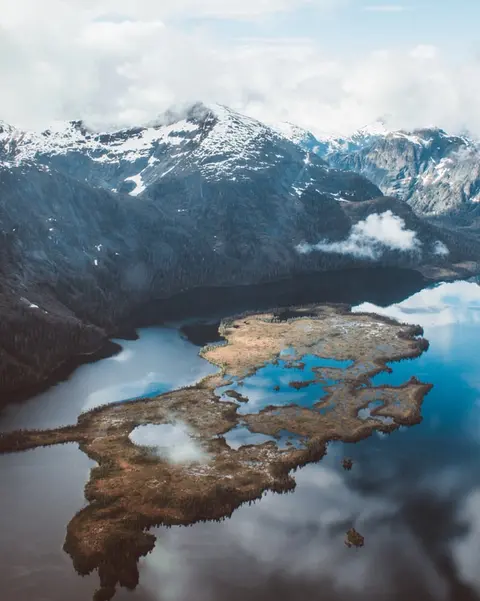
Ketchikan clings to the forested shore of Revillagigedo Island in Alaska's southeastern panhandle — a town so narrow that locals joke it is three miles long and three blocks wide. Revered by the Tlingit people for millennia as a place of abundant salmon, it is today celebrated as the Totem Pole Capital of the World: the collections at Saxman Native Village and Totem Bight State Historical Park preserve the most significant concentration of these monumental artworks anywhere. Creek Street, a boardwalk of colorful historic houses built over Ketchikan Creek, should not be missed. Summer (May–September) brings the best weather, with salmon running in the creeks below.
Day 3
Day 3
Transit Snow Pass
In the passage between Sumner Strait and Clarence Strait in Southeast Alaska’s Alexander Archipelago, midway between Price of Wales Island on the west and Zarembo Island on the east, is a small cluster of islands with a picturesque passageway between them called Snow Pass. It makes a scenic up-close route for your Seabourn ship during the transit.
Day 3
Day 3
Transit Decision Passage
Decision Passage is the western end of the Sumner Strait, which runs through the Alexander Archipelago into the Pacific Ocean in Southeastern Alaska, bounded on the north by Kuiu Island and Cape Decision, the location of a 1932 lighthouse. This is the route your ship takes when coming from or going to the colorful historic community of Sitka on the west coast of Baranof Island, which was originally the Russian fortress town of New Archangel.
Day 4
Day 4
Sitka
Arrive 08:00Depart 18:00
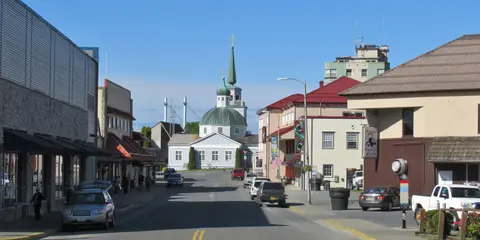
Sitka, set on the wild west coast of Baranof Island in Southeast Alaska, is one of the Pacific Northwest's most historically resonant ports — a place where Russian Orthodox onion domes rise above totem poles and the great temperate rainforest presses down to the water's edge. The Sitka National Historical Park preserves the site of the 1804 battle between Tlingit warriors and Russian colonisers alongside a magnificent collection of monumental poles. Whale-watching, sea kayaking among sea otters, and brown bear spotting in the surrounding wilderness define the outdoor experience. May through September offers the most accessible and luminous conditions.
Day 5
Day 5
Hubbard Glacier
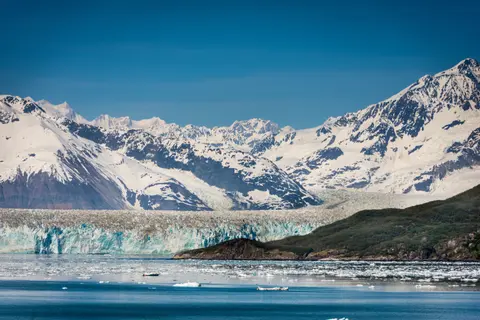
Hubbard Glacier, known as the "Galloping Glacier," is a breathtaking natural wonder in East Alaska, captivating visitors with its stunning ice formations and wildlife. Must-do experiences include witnessing the glacier calving and savoring local delicacies such as Dungeness crab and reindeer sausage in nearby Skagway. The best season to visit is during the summer months when the weather is milder and wildlife is abundant.
Day 6
Day 6
Inian Islands
Arrive 05:00Depart 12:00
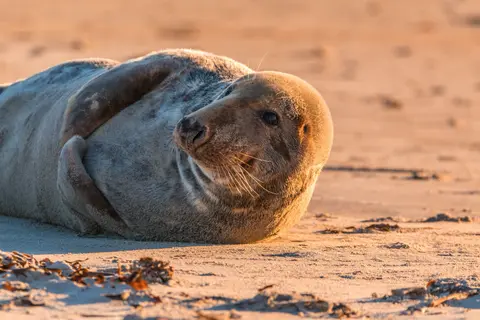
The Inian Islands are a wild, uninhabited cluster at the entrance to Alaska's Cross Sound, renowned for extraordinary wildlife encounters including humpback whale bubble-net feeding and massive Steller sea lion colonies. Must-dos include Zodiac excursions along the islands' rocky shores, watching cooperative whale feeding, and exploring tide pools teeming with marine life. Visit July–August for peak whale activity and the best sea conditions.
Day 7
Day 7
Haines
Arrive 06:00Depart 18:00
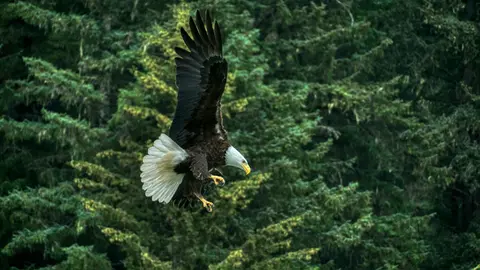
Haines is an authentic Alaskan town on North America's deepest fjord, home to the world's largest bald eagle congregation — up to four thousand birds along the Chilkat River — and a thriving arts community preserving Tlingit cultural traditions. Visit June through August via Cunard or Lindblad for glacier helicopter landings and coastal hikes, or October through February for the extraordinary eagle spectacle that makes Haines Alaska's best-kept secret.
Day 8
Day 8
Juneau
Depart 21:00
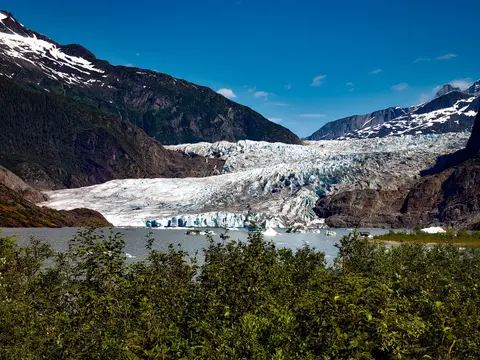
America's only state capital unreachable by road, Juneau rewards the journey with a wilderness grandeur that few cities on earth can match. The Mendenhall Glacier — a living river of ancient ice — lies just fifteen minutes from downtown, where floatplanes dart above a waterfront flanked by spruce-draped mountains plunging straight into the sea. The must-do experience is a helicopter landing atop the icefield or a whale-watching excursion in Stephens Passage, where humpbacks breach in astonishing proximity. Juneau is warmest from June to August, though even summer days can bring the famous Southeast Alaska rain that keeps the rainforest perpetually luminous.
Day 1
Vancouver
Depart 17:00
Pressed between the Pacific and the Coast Mountains, Vancouver is the natural gateway to Alaska's Inside Passage — a city where temperate rainforest meets glass towers and where Dungeness crab and wild sockeye salmon define a Pacific Rim cuisine that rivals any in North America. Walk the 22-kilometre Stanley Park seawall, lose yourself in the Granville Island market, then ferry across to Victoria's Edwardian splendour. Alaska cruise season peaks from May through September, making Vancouver an ideal starting point for one of the world's great ocean journeys.
Transit the Seymour Narrows
The Seymour Narrows is a 3-mile/5 km stretch of the Discovery Channel north of Vancouver Island, British Columbia that is notorious for the strength of the tidal currents flowing through it. The average width of the narrows is just 750 meters. During extreme tides, the current through the narrows is subject to severe Venturi effect, resulting in an increased velocity that can reach 15 knots. For much of its modern history, there was an additional hazard in the narrows called Ripple Rock, a shallow obstruction that claimed no fewer than 119 ships and 114 lives. In 1958, after months of tunneling and preparation, Ripple Rock was blown up in the largest commercial, non-nuclear explosion ever recorded in North America. Still, the navigation of Seymour Narrows is dependent on tidal and other conditions, and requires skill and technical accomplishment.
Day 2
Cruising the Queen Charlotte Sound
The Queen Charlotte Sound lies between the Queen Charlotte Strait, which winds between Vancouver Island and the British Columbia mainland in the south, and Hecate Strait, which is northward, adjacent to the Haida Gwaii Islands off the Pacific coast of British Columbia. It is a broad reach in the long shipping route called the Inside Passage threading the myriad islands stretching from Washington’s Puget Sound to Alaska.
Day 3
Ketchikan
Arrive 07:00Depart 15:00
Ketchikan clings to the forested shore of Revillagigedo Island in Alaska's southeastern panhandle — a town so narrow that locals joke it is three miles long and three blocks wide. Revered by the Tlingit people for millennia as a place of abundant salmon, it is today celebrated as the Totem Pole Capital of the World: the collections at Saxman Native Village and Totem Bight State Historical Park preserve the most significant concentration of these monumental artworks anywhere. Creek Street, a boardwalk of colorful historic houses built over Ketchikan Creek, should not be missed. Summer (May–September) brings the best weather, with salmon running in the creeks below.
Transit Snow Pass
In the passage between Sumner Strait and Clarence Strait in Southeast Alaska’s Alexander Archipelago, midway between Price of Wales Island on the west and Zarembo Island on the east, is a small cluster of islands with a picturesque passageway between them called Snow Pass. It makes a scenic up-close route for your Seabourn ship during the transit.
Transit Decision Passage
Decision Passage is the western end of the Sumner Strait, which runs through the Alexander Archipelago into the Pacific Ocean in Southeastern Alaska, bounded on the north by Kuiu Island and Cape Decision, the location of a 1932 lighthouse. This is the route your ship takes when coming from or going to the colorful historic community of Sitka on the west coast of Baranof Island, which was originally the Russian fortress town of New Archangel.
Day 4
Sitka
Arrive 08:00Depart 18:00
Sitka, set on the wild west coast of Baranof Island in Southeast Alaska, is one of the Pacific Northwest's most historically resonant ports — a place where Russian Orthodox onion domes rise above totem poles and the great temperate rainforest presses down to the water's edge. The Sitka National Historical Park preserves the site of the 1804 battle between Tlingit warriors and Russian colonisers alongside a magnificent collection of monumental poles. Whale-watching, sea kayaking among sea otters, and brown bear spotting in the surrounding wilderness define the outdoor experience. May through September offers the most accessible and luminous conditions.
Day 5
Hubbard Glacier
Hubbard Glacier, known as the "Galloping Glacier," is a breathtaking natural wonder in East Alaska, captivating visitors with its stunning ice formations and wildlife. Must-do experiences include witnessing the glacier calving and savoring local delicacies such as Dungeness crab and reindeer sausage in nearby Skagway. The best season to visit is during the summer months when the weather is milder and wildlife is abundant.
Day 6
Inian Islands
Arrive 05:00Depart 12:00
The Inian Islands are a wild, uninhabited cluster at the entrance to Alaska's Cross Sound, renowned for extraordinary wildlife encounters including humpback whale bubble-net feeding and massive Steller sea lion colonies. Must-dos include Zodiac excursions along the islands' rocky shores, watching cooperative whale feeding, and exploring tide pools teeming with marine life. Visit July–August for peak whale activity and the best sea conditions.
Day 7
Haines
Arrive 06:00Depart 18:00
Haines is an authentic Alaskan town on North America's deepest fjord, home to the world's largest bald eagle congregation — up to four thousand birds along the Chilkat River — and a thriving arts community preserving Tlingit cultural traditions. Visit June through August via Cunard or Lindblad for glacier helicopter landings and coastal hikes, or October through February for the extraordinary eagle spectacle that makes Haines Alaska's best-kept secret.
Day 8
Juneau
Depart 21:00
America's only state capital unreachable by road, Juneau rewards the journey with a wilderness grandeur that few cities on earth can match. The Mendenhall Glacier — a living river of ancient ice — lies just fifteen minutes from downtown, where floatplanes dart above a waterfront flanked by spruce-draped mountains plunging straight into the sea. The must-do experience is a helicopter landing atop the icefield or a whale-watching excursion in Stephens Passage, where humpbacks breach in astonishing proximity. Juneau is warmest from June to August, though even summer days can bring the famous Southeast Alaska rain that keeps the rainforest perpetually luminous.
Cabin Categories
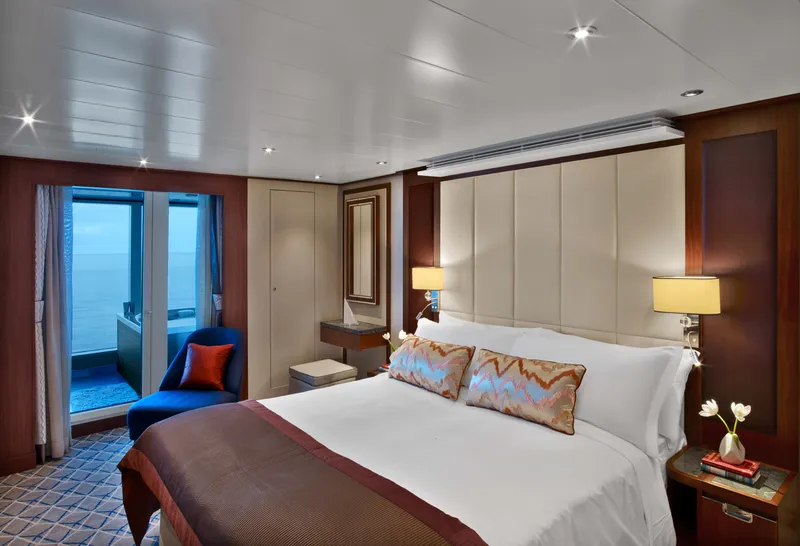
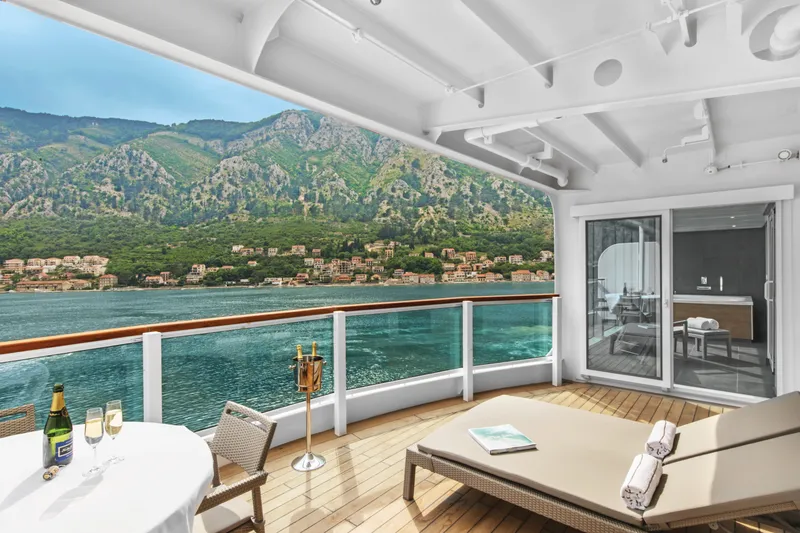
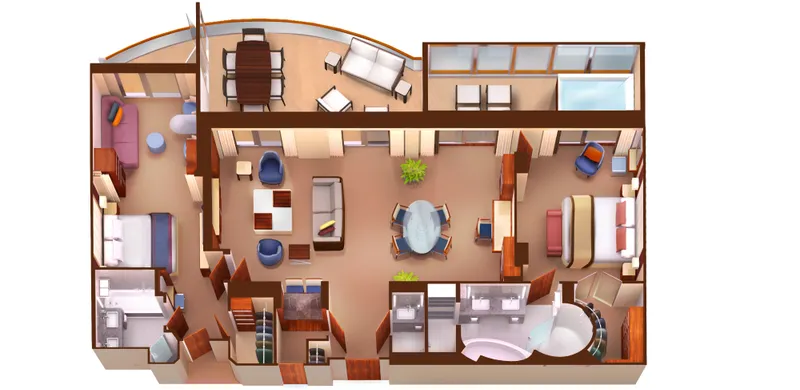
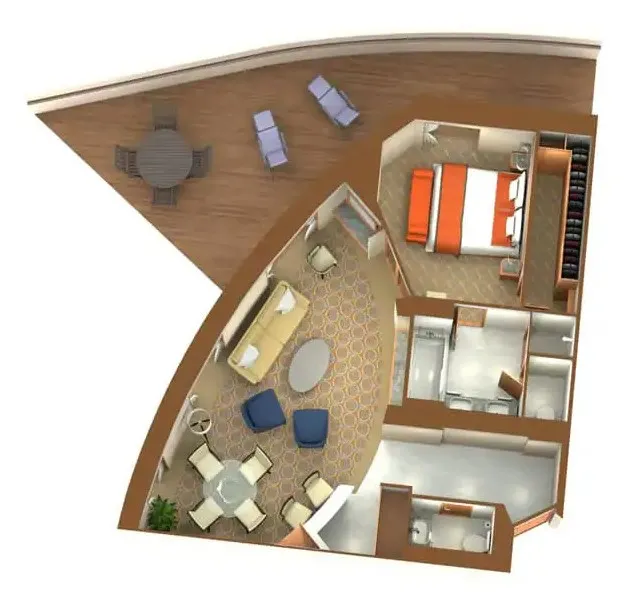
Grand Wintergarden Suite
Suite
1536 m²Max 4
GR
Located on Deck 8; Combine mid-ship suites 849 and 851 for suite 8491 or suites 846 and 848 for suite 8468 for a total inside space of 1,292 square feet (120 square meters) plus two verandas totaling 244 square feet (23 square meters)
Grand Wintergarden Suites feature
Large windows
Dining for six
Glass-enclosed solarium with tub and day bed
Two bedrooms
Two bathrooms (one whirlpool)
Convertible sofa bed for one
Pantry with wet bar
Two flat-screen TVs
Complimentary Internet/Wi-Fi service
Queen or Twin ConfigurationSecond BedroomSofa BedShowerWhirlpool BathTV+13
View Details
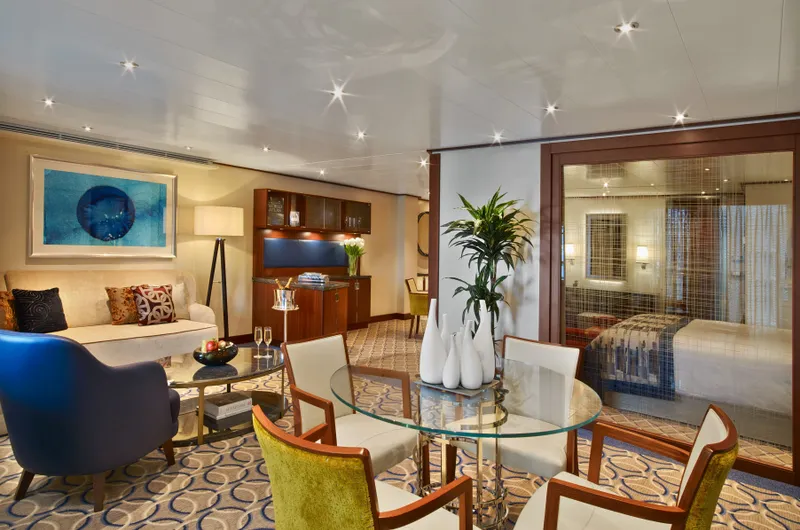
Owners Suite
Suite
718–1375 m²Max 2
O1O2
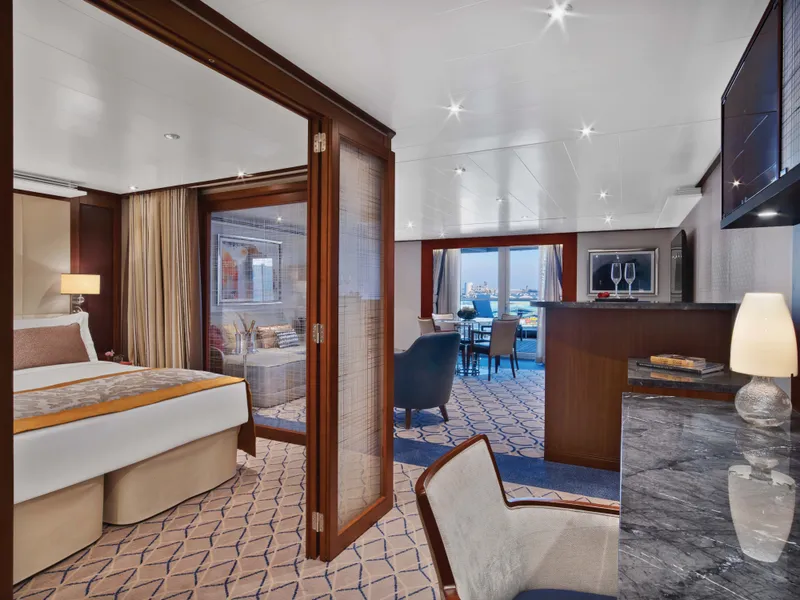
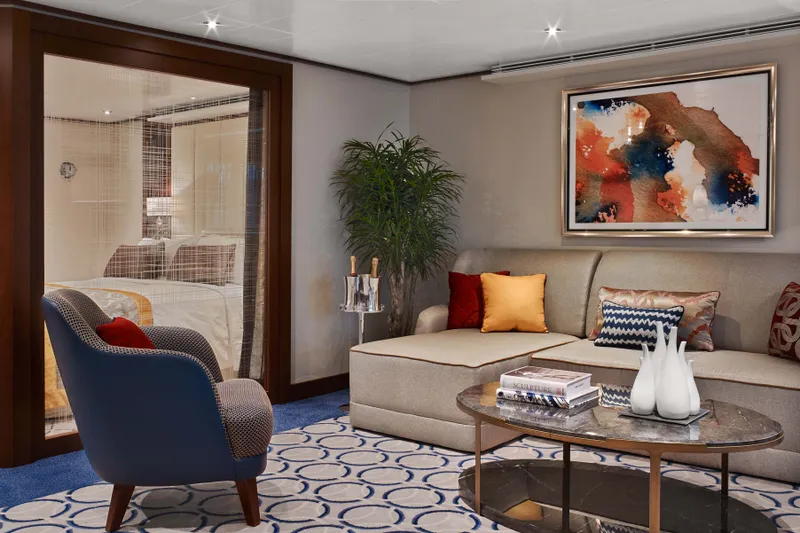
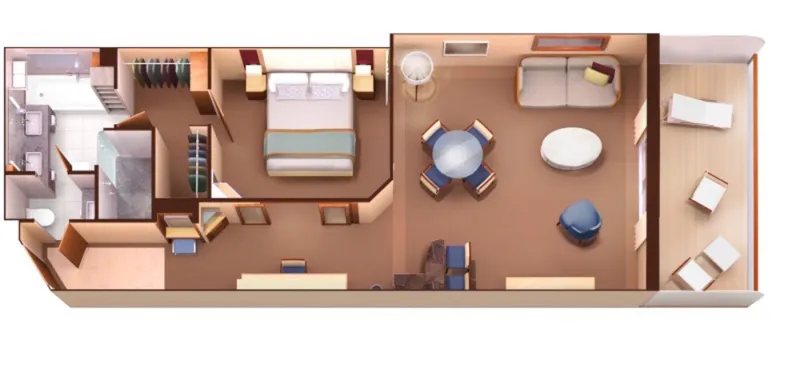
Located on Deck 7, 8, 9 and 10; total inside space of between 576 and 597 square feet (54 and 55 square meters) plus veranda of between 142 and 778 square feet (13 and 72 square meters).
Owner's Suites feature:
Expansive ocean views
Forward-facing windows
Dining for four to six
Bathroom with whirlpool bathtub
Guest bath
Pantry with wet bar
Two flat-screen TVs
Complimentary Internet/Wi-Fi service.
Queen or Twin ConfigurationDining AreaShowerWhirlpool BathTVSafe+11
View Details
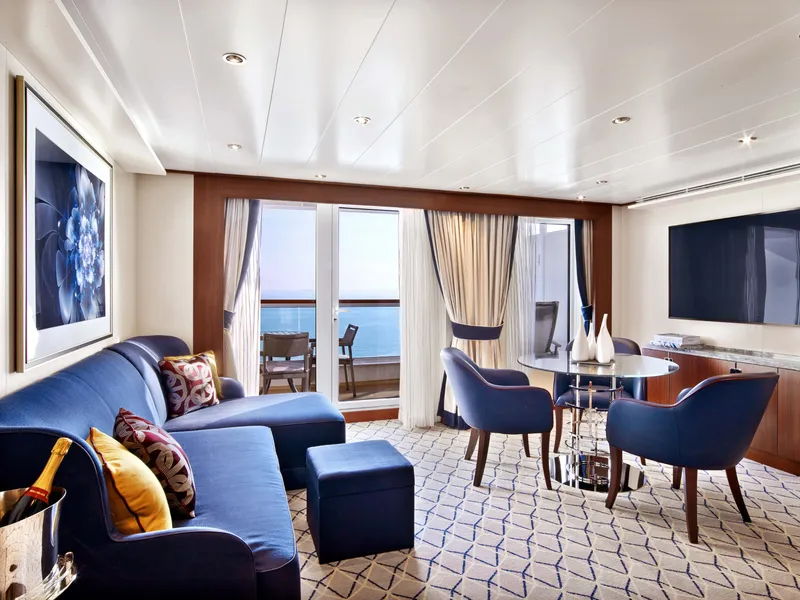
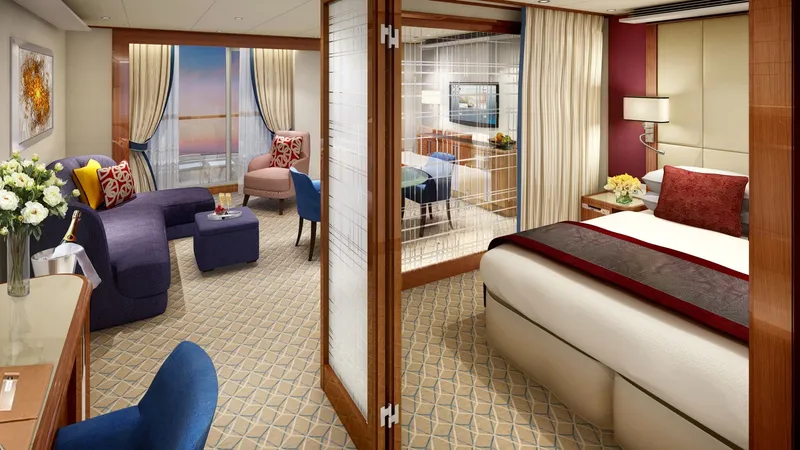
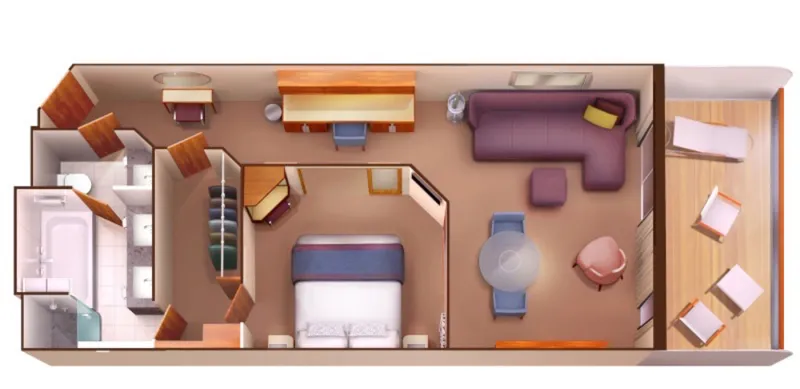
Penthouse Spa Suite
Suite
893–965 m²Max 2
PS
Penthouse Spa Suite
Located on Deck 11; total inside space of between 639 and 677 square feet (59 and 63 square meters) plus veranda of between 254 and 288 square feet (24 and 27 square meters)
All Penthouse Spa Suites feature
Dining table for two to four
Separate bedroom
Glass door to veranda
Two flat-screen TVs
Fully stocked bar
Spacious bathroom with tub, shower and large vanity
Lounge AreaVanity AreaToiletries ProvidedSuite BenefitsFull BarFree Wi-Fi+10
View Details
Penthouse Suite
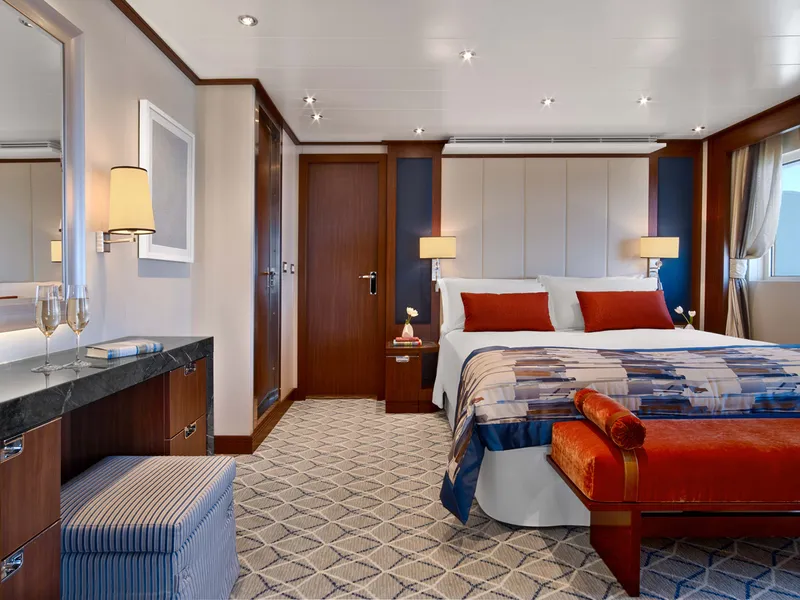
Suite
542–553 m²Max 2
PH
Located on Deck 10 and 11; total inside space of between 449 and 450 square feet (42 square meters) plus one veranda of between 93 and 103 square feet (9 and 10 square meters)
All Penthouse Suites feature:
Dining table for two to four
Separate bedroom
Glass door to veranda
Two flat-screen TVs
Fully stocked bar
Spacious bathroom with tub, shower and large vanity
Queen or Twin ConfigurationShowerBathTVSafeHair Dryer+11
View Details
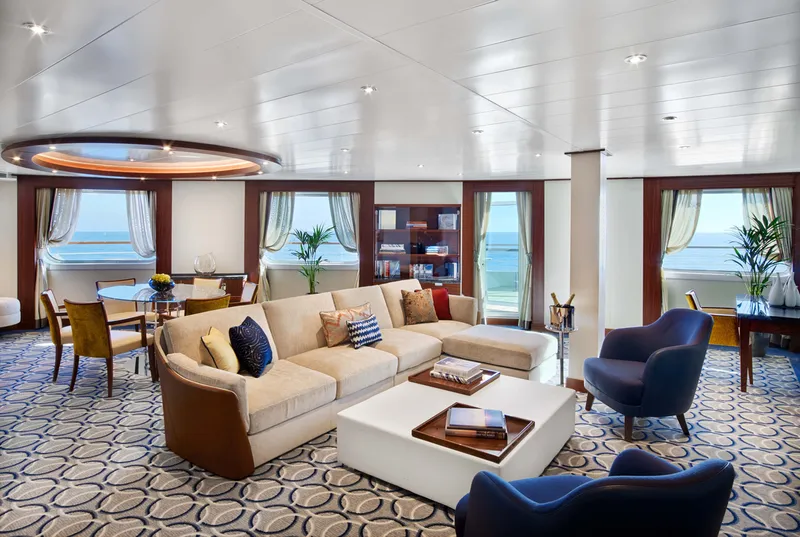
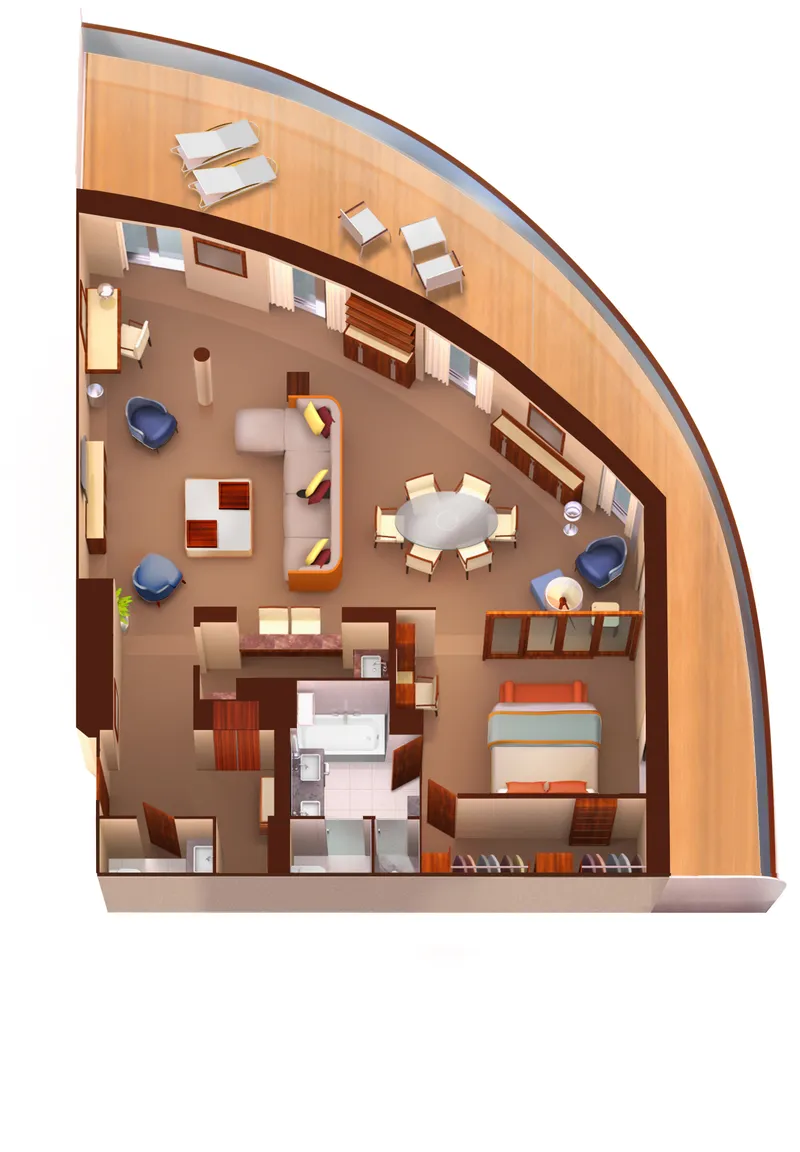
Signature Suite
Suite
1937 m²Max 2
SS
Located on Deck 8; forward suites 800 and 801 inside space of approximately 977 square feet of inside space (90 square meters), plus one veranda of 960 square feet (89 square meters).
Signature Suites feature
Expansive ocean views
Forward-facing windows
Dining for four to six
Bathroom with whirlpool bathtub
Guest bath
Pantry with wet bar
Two flat-screen TVs
Complimentary Internet/Wi-Fi service
Queen or Twin ConfigurationShowerTVFree Wi-FiSafeHair Dryer+11
View Details
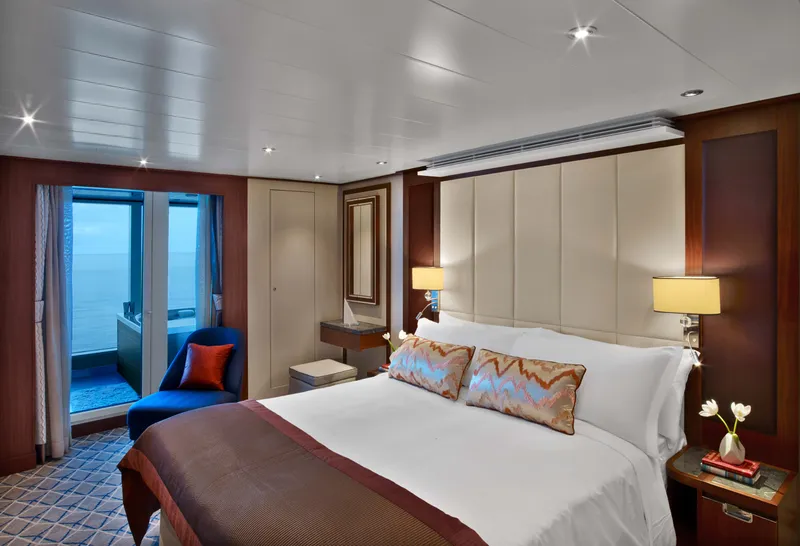
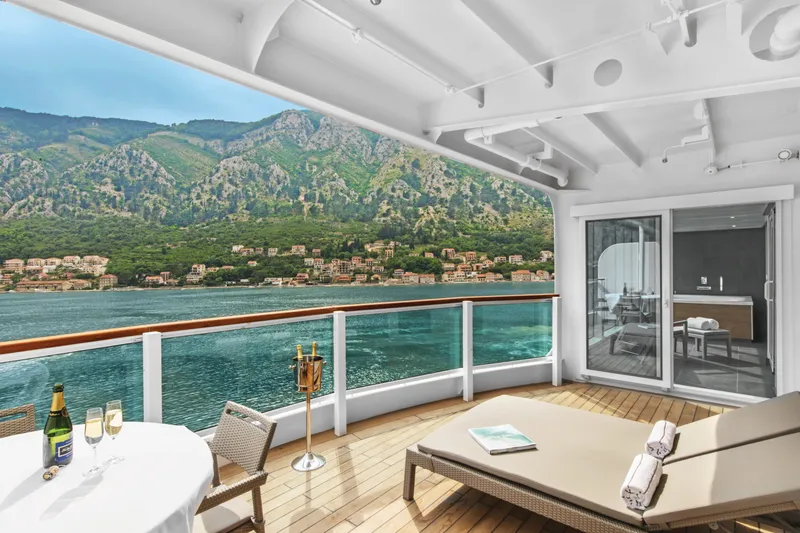
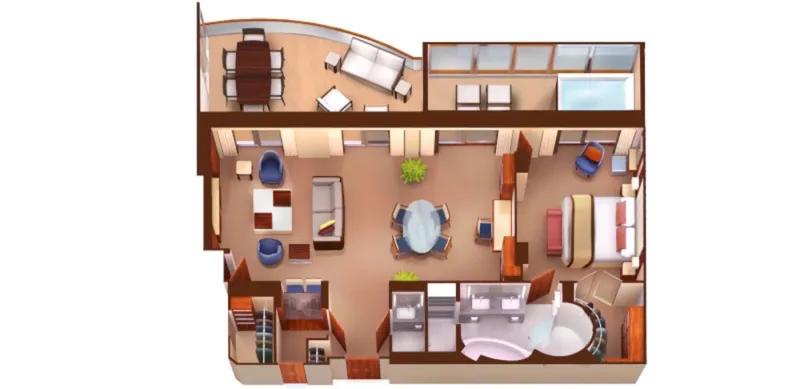
Wintergarden Suite
Suite
1186 m²Max 3
WG
Located on Deck 8; mid-ship suites 846 and 849 inside space of 989 square feet (92 square meters) plus one veranda of 197 square feet (18 square meters)
Wintergarden Suites feature:
Large windows
Dining for six
Whirlpool bathtub
Guest bath
Convertible sofa bed for one
Pantry with wet bar
Glass-enclosed solarium with tub and day bed
Two closets
Two flat-screen TVs
Complimentary Internet/Wi-Fi service.
Queen or Twin ConfigurationSofa BedDining AreaShowerTVFree Wi-Fi+11
View Details
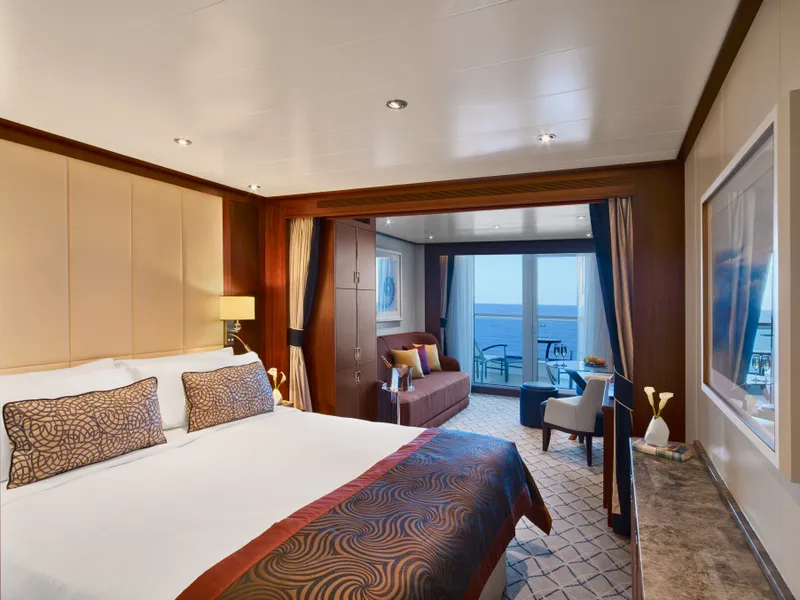
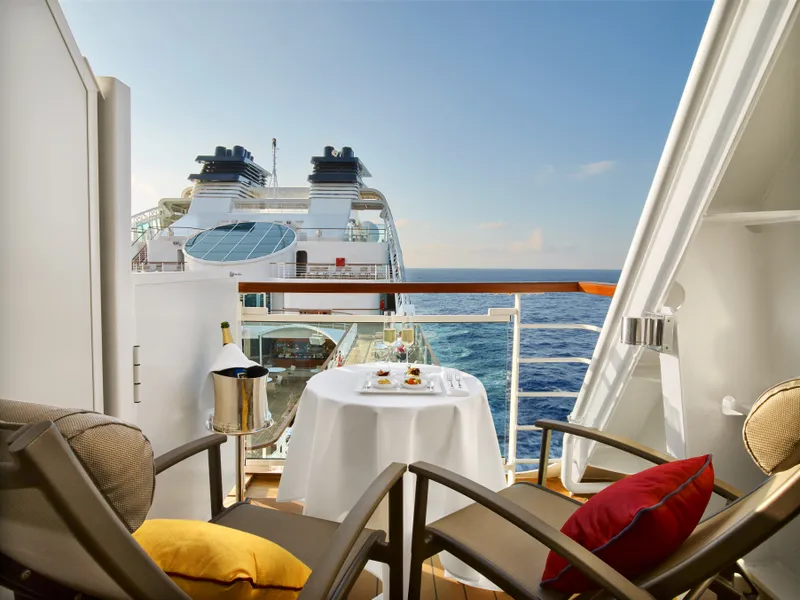
Single Veranda Suite Guarantee
Suite
314–385 m²Max 2
SV
Single Veranda Suite Guarantee
BathQueen or Twin ConfigurationLounge AreaDining AreaVanity AreaShower+11
View Details
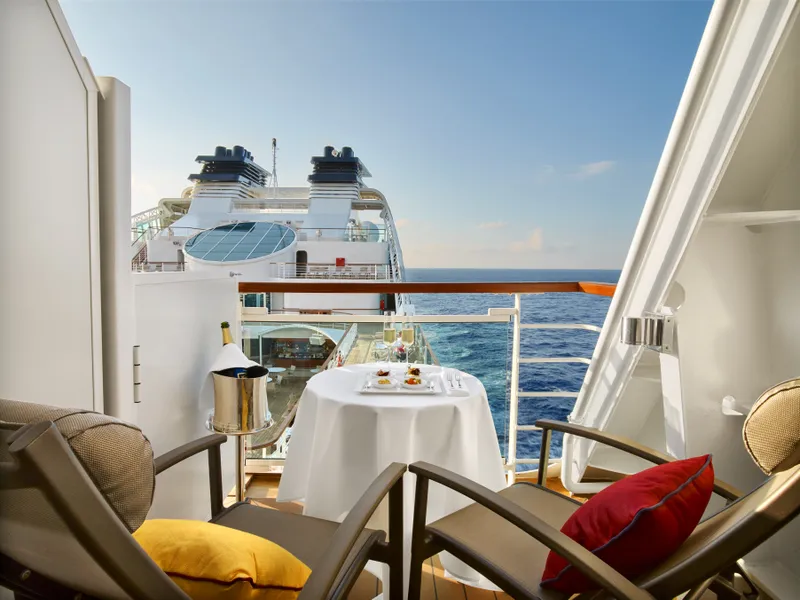
Veranda Suite
Suite
314–385 m²Max 2
V1V2V3V4
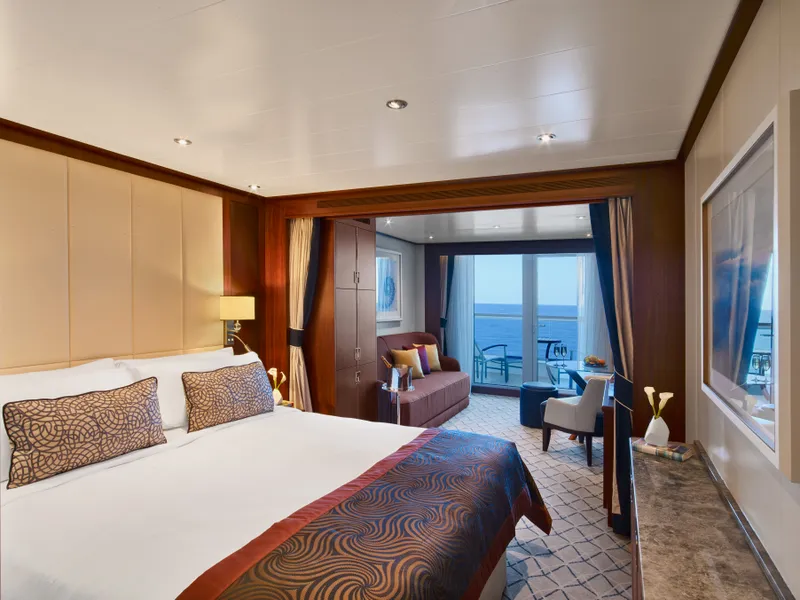
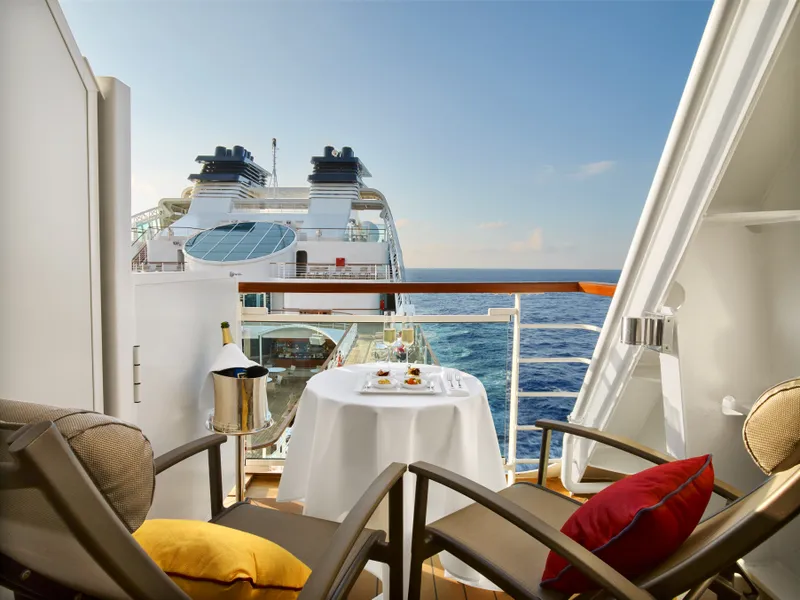
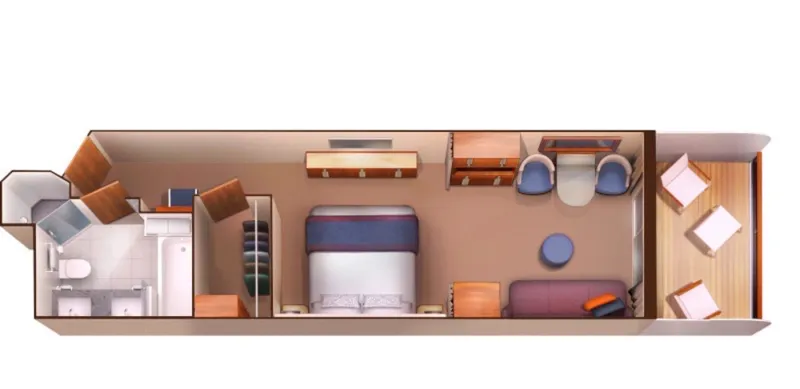
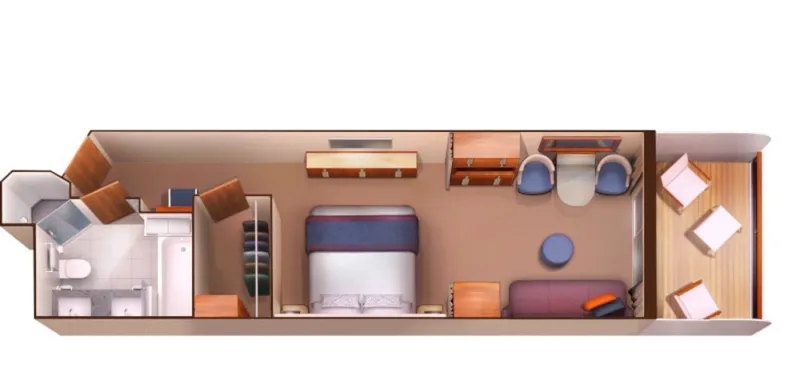
Located on Deck 6, Deck 7; total inside space of between 246 and 302 square feet (23 and 28 square meters) plus one veranda of between 68 and 83 square feet (6 and 7 square meters)
All Veranda Suites feature
A full-length window
Glass door to private veranda
Comfortable living area
Queen-size bed or two twin beds
Dining table for two
Walk-in closet
Interactive flat-screen television with music and movies
Fully stocked bar and refrigerator
Makeup vanity
Spacious bathroom with separate tub and shower
ShowerBathTVSafeHair DryerRoom Service Available+11
View Details
Veranda Suite Guarantee
Suite
314–385 m²Max 2
OBRB
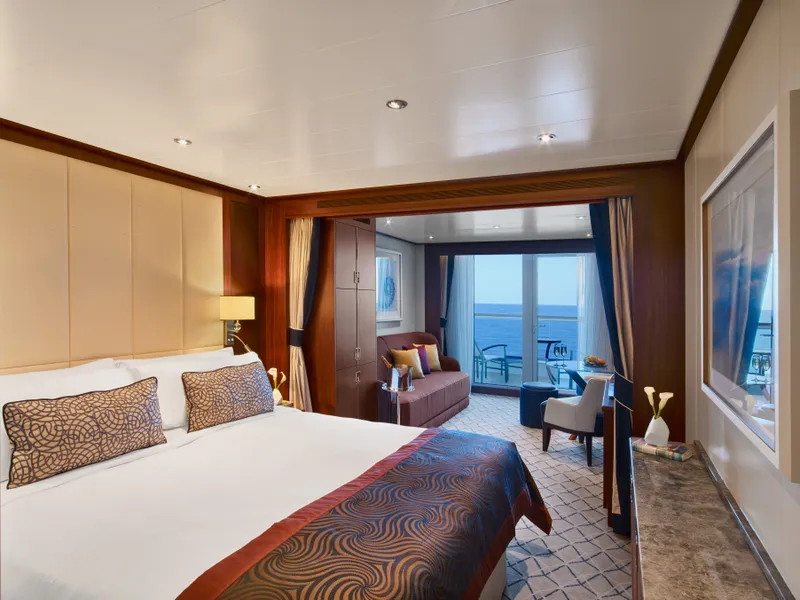
VERANDA SUITE GUARANTEE
BathQueen or Twin ConfigurationLounge AreaShowerToiletries ProvidedRoom Service Available+11
View Details
Interested in This Voyage?
Our cruise specialists can help you find the perfect cabin and the best available pricing.
(+886) 02-2721-7300Contact Advisor