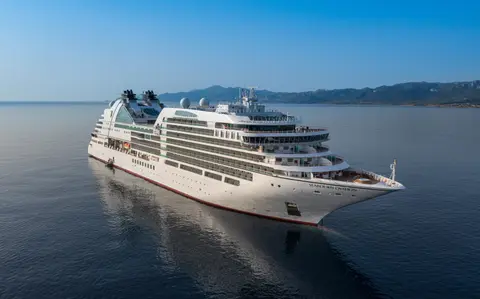
Seabourn8642A
Norwegian Fjords & Icelandic Intrigue
Date
2026-05-16
Duration
21 nights
Departure Port
Arrival Port
Reykjavik
Iceland
Rating
Luxury
Theme
—
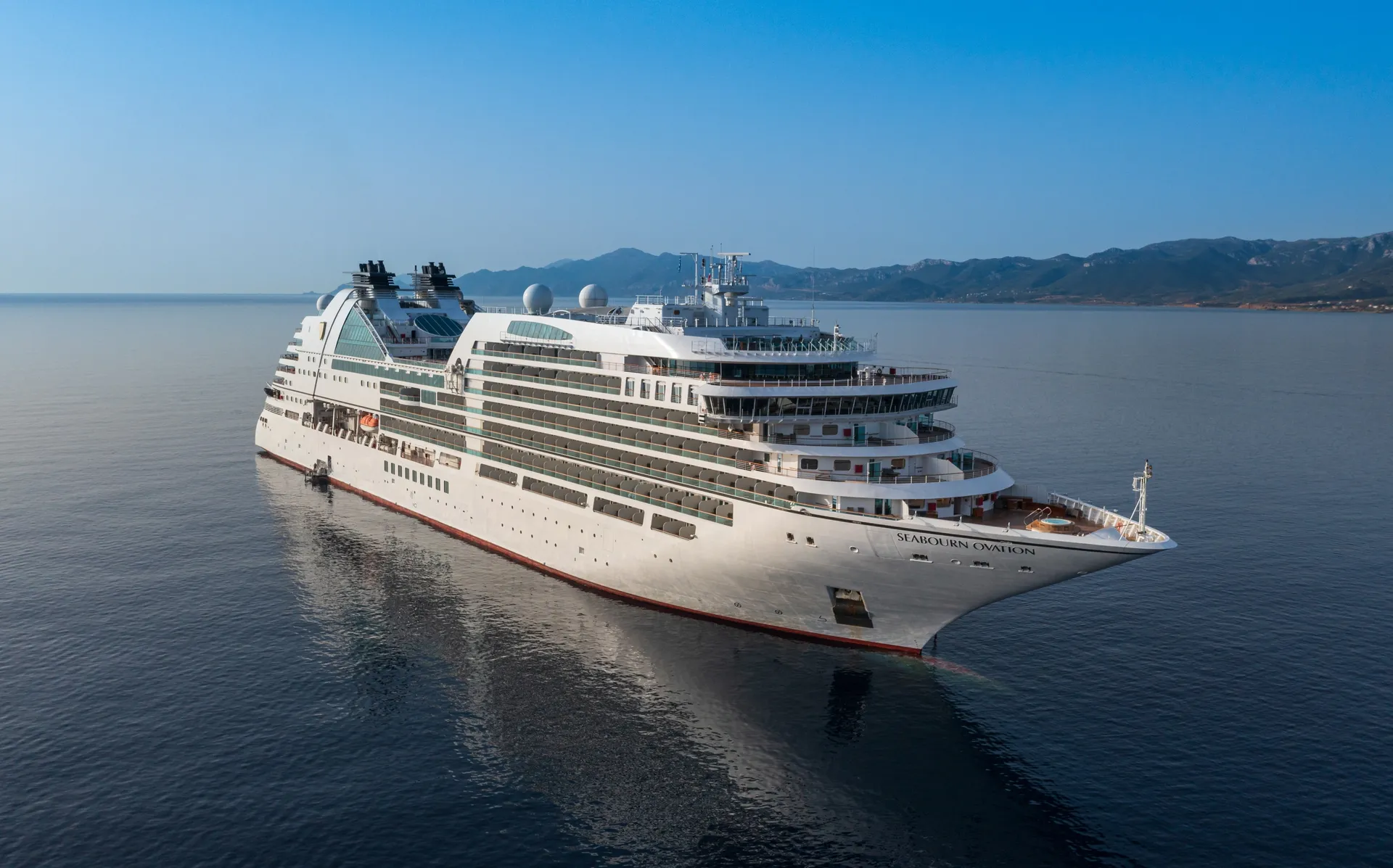



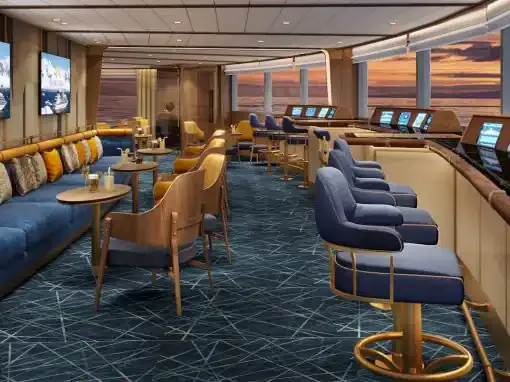
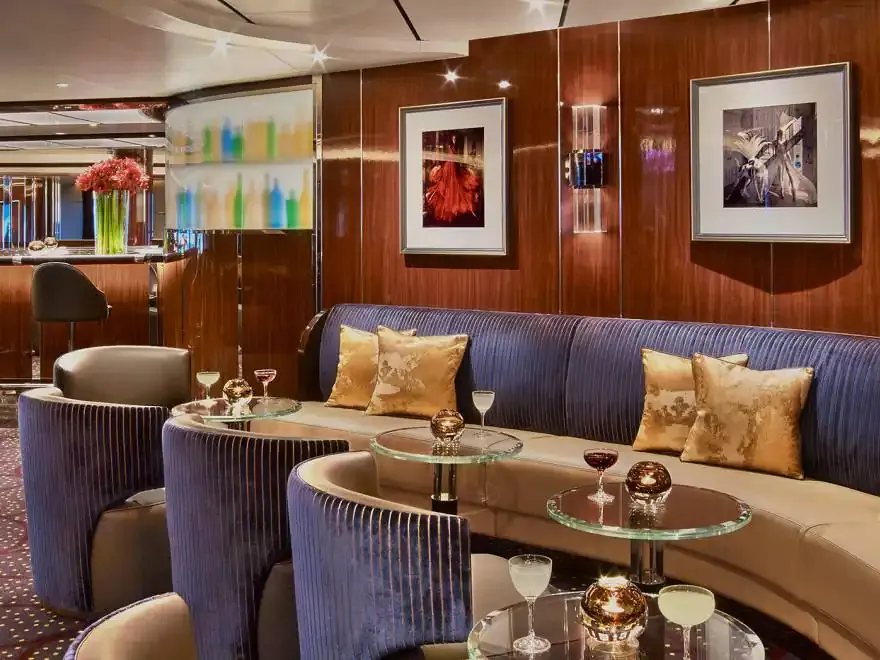
Seabourn
Seabourn Ovation
Launched
2017
Refitted
—
Tonnage
40,350 GT
Passengers
600
Cabins
266
Crew
330
Length
690 m
Width
28 m
Speed
19 knots
Adults Only
No
Itinerary
Day 1
Day 1
Dover (London)
Depart 17:00
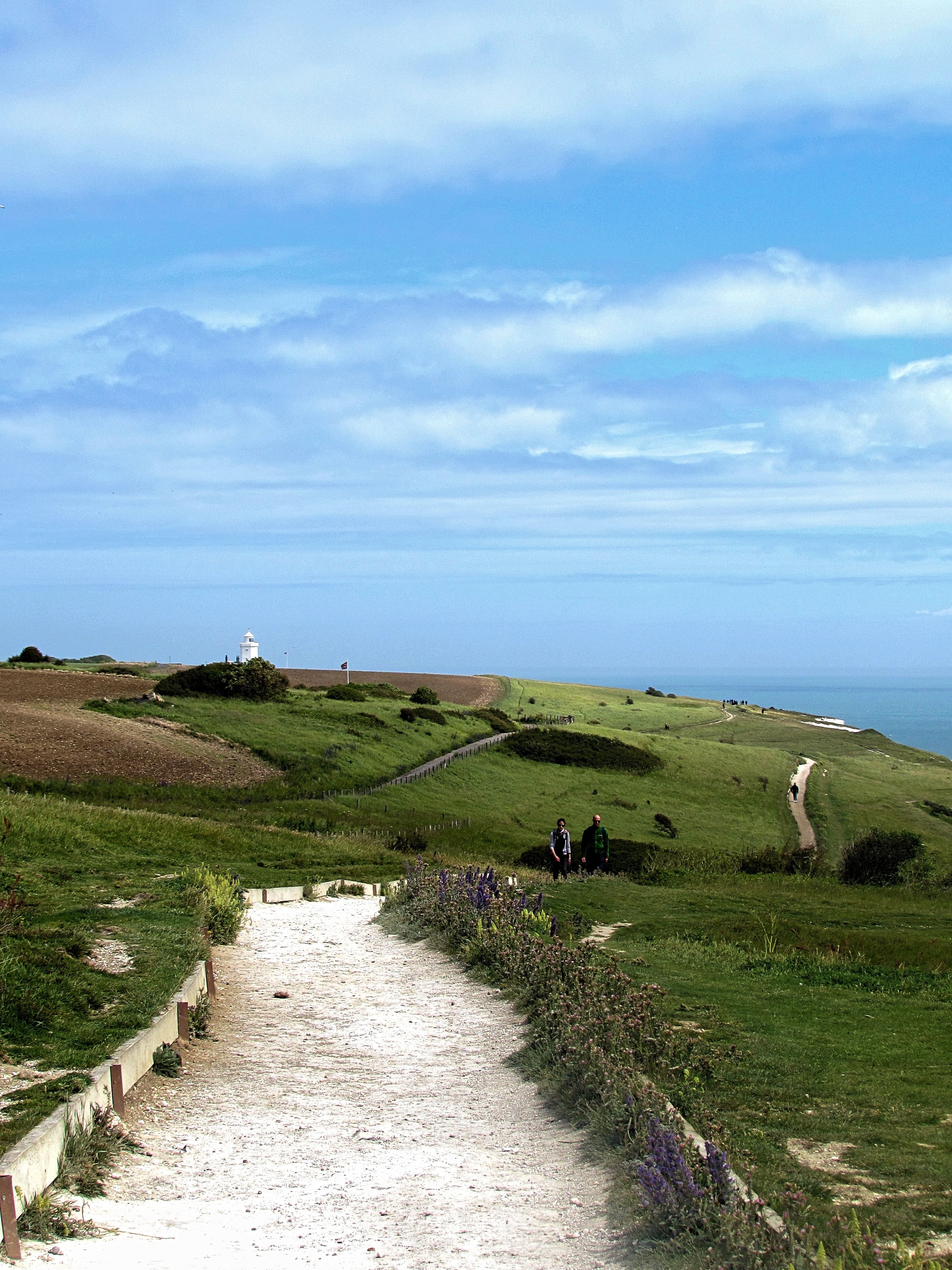
Crossing the English Channel from continental Europe to Great Britain, the first view of England is the milky-white strip of land called the White Cliffs of Dover. As you get closer, the coastline unfolds before you in all its striking beauty. White chalk cliffs with streaks of black flint rise straight from the sea to a height of 350’ (110 m). Numerous archaeological finds reveal people were present in the area during the Stone Age. Yet the first record of Dover is from Romans, who valued its close proximity to the mainland. A mere 21 miles (33 km) separate Dover from the closest point in France. A Roman-built lighthouse in the area is the tallest Roman structure still standing in Britain. The remains of a Roman villa with the only preserved Roman wall mural outside of Italy are another unique survivor from ancient times which make Dover one of a kind.
Day 2
Day 2
At Sea
Day 3
Day 3
At Sea
Day 4
Day 4
Trondheim
Arrive 08:00Depart 18:00
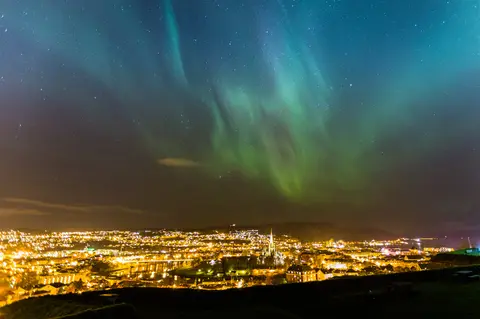
Trondheim, Norway's ancient first capital, has drawn pilgrims for a thousand years to the Nidaros Cathedral — Scandinavia's greatest medieval building, raised over the tomb of Saint Olav and still serving as Norway's royal coronation church, its Gothic west facade a sublime gallery of stone scripture. The city unfolds along the banks of the Nidelva River in a harmonious mix of centuries-old wooden wharfhouses, elegant baroque streetscapes, and a confident contemporary university culture. Summer is the ideal season for Trondheim, when long golden evenings allow leisurely exploration of Bakklandet's cafés and the Ringve Music Museum's extraordinary instrument collections.
Day 5
Day 5
Bronnoysund
Arrive 08:00Depart 17:30
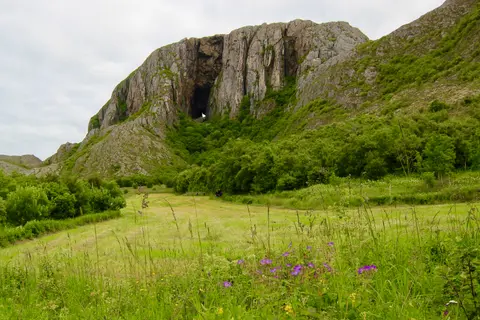
Brønnøysund, a small service town on Norway's Helgeland coast just south of the Arctic Circle, is the gateway to one of Scandinavia's most extraordinary coastal landscapes — a constellation of twelve thousand islands where the defining landmark is Torghatten, a mountain with a 160-metre tunnel punched clean through its summit by the sea at the end of the last Ice Age, framing a perfect circle of sky. The surrounding Helgeland archipelago rewards island-hopping by small boat, with pristine beaches, ancient Bronze Age rock carvings, and the haunting ruins of medieval trading settlements accessible by kayak or ferry. Midnight sun visits from late May through mid-July; the Svartisen glacier is visible from the coastal route north.
Day 6
Day 6
Svolvaer
Arrive 08:00Depart 17:00
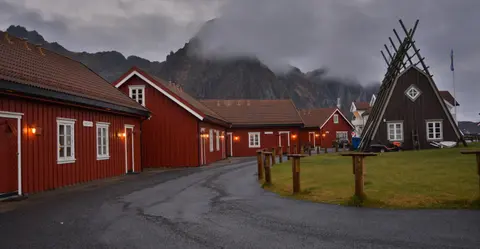
Svolvær, the de facto capital of Norway's mythical Lofoten Islands, commands a harbor beneath granite peaks that plunge almost vertically into the Arctic sea — a visual drama that rivals anything in Europe. The town is the gateway to the archipelago's famed fishing culture, midnight-sun hikes, and the iconic Svolværgeita rock pinnacle that challenges intrepid climbers above the town. May through September delivers the best conditions for hiking and sea kayaking in the perpetual golden light, while January through March rewards visitors with the northern lights and the spectacle of the traditional Lofoten cod fishery in full swing.
Day 7
Day 7
Tromso
Arrive 08:00Depart 17:00
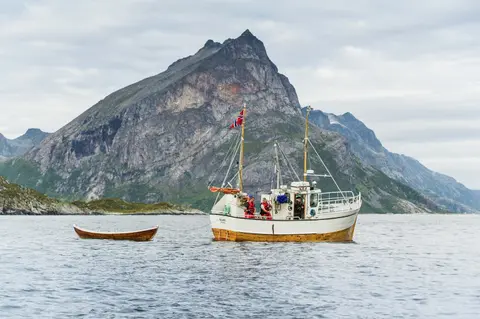
Tromsø, perched 300 kilometers north of the Arctic Circle on its own island in a fjord-carved landscape of breathtaking severity, is the world's finest base for witnessing the northern lights — a phenomenon that illuminates the polar night here from late September through March with an intensity unmatched across Scandinavia. The city's striking Arctic Cathedral, vibrant university culture, and excellent Polar Museum trace Norway's heroic age of polar exploration, while dog sledding, snowshoeing, and whale-watching expeditions provide exhilarating encounters with the high Arctic wilderness. Summer's unbroken midnight sun offers an equally otherworldly experience beneath skies that never darken.
Day 8
Day 8
Honningsvag
Arrive 08:00Depart 18:00
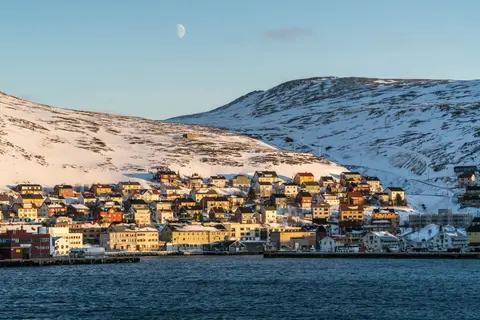
Perched at the very tip of Norway on the island of Magerøya, Honningsvåg is the storied gateway to the North Cape — the dramatic cliff that marks Europe's northernmost point, where the Arctic Ocean stretches uninterrupted to the Pole. The town's modest fishing-village character only deepens the sense of extraordinary remoteness, making arrival here feel like a genuine expedition. Visit the North Cape plateau for a midnight sun spectacle or the mesmerizing curtains of the northern lights; both experiences are among the most transcendent in nature. Summer (June–August) brings perpetual daylight; winter (November–February) offers prime aurora viewing.
Day 9
Day 9
At Sea
Day 10
Day 10
At Sea
Day 11
Day 11
Olden
Arrive 08:00Depart 17:00
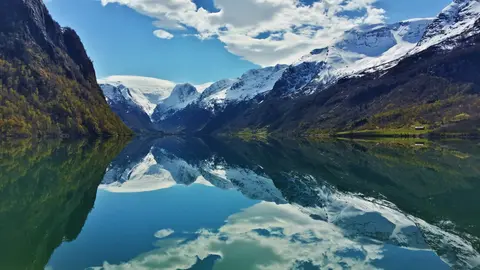
Olden is a serene fjord village at the head of Nordfjord in western Norway, where glacial rivers meet emerald waters beneath towering peaks. The essential experience is the journey to Briksdal Glacier, an arm of Europe's largest ice cap, followed by tasting traditional *raspeball* dumplings and cloudberry cream at a local farmstead. The prime visiting season stretches from June through August, when near-endless daylight illuminates the valley and summer temperatures make glacier hikes and fjord kayaking particularly rewarding.
Day 12
Day 12
Bergen
Arrive 08:00Depart 18:00
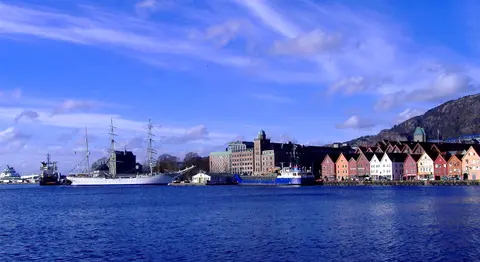
Bergen, Norway's charming coastal city and historic trading hub, is known for its picturesque Bryggen Wharf and rich maritime heritage. Must-do experiences include sampling local delicacies at the vibrant Fish Market and exploring the medieval Hanseatic quarter. The best season to visit is during the summer months, when the city's lively atmosphere and stunning fjord landscapes are at their peak.
Day 13
Day 13
At Sea
Day 14
Day 14
Amsterdam
Arrive 08:00Depart 18:00
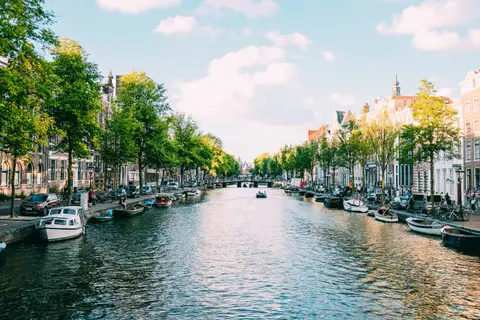
Amsterdam's UNESCO-listed canal ring — a concentric web of seventeenth-century merchant houses and arching stone bridges — remains one of the Western world's most perfectly preserved Golden Age cityscapes, best explored by bicycle or canal boat at a pace that lets the city's genius reveal itself slowly. The Rijksmuseum's collection of Rembrandt and Vermeer masterpieces is essential, while the Anne Frank House offers one of Europe's most profoundly moving historical encounters. Spring brings the iconic tulip season; summer fills the terraces of the Jordaan district. Schiphol Airport makes Amsterdam a seamless gateway to the entire European continent.
Day 15
Day 15
Dover (London)
Arrive 07:30Depart 17:30
Crossing the English Channel from continental Europe to Great Britain, the first view of England is the milky-white strip of land called the White Cliffs of Dover. As you get closer, the coastline unfolds before you in all its striking beauty. White chalk cliffs with streaks of black flint rise straight from the sea to a height of 350’ (110 m). Numerous archaeological finds reveal people were present in the area during the Stone Age. Yet the first record of Dover is from Romans, who valued its close proximity to the mainland. A mere 21 miles (33 km) separate Dover from the closest point in France. A Roman-built lighthouse in the area is the tallest Roman structure still standing in Britain. The remains of a Roman villa with the only preserved Roman wall mural outside of Italy are another unique survivor from ancient times which make Dover one of a kind.
Day 16
Day 16
At Sea
Day 17
Day 17
Kirkwall
Arrive 08:00Depart 17:00
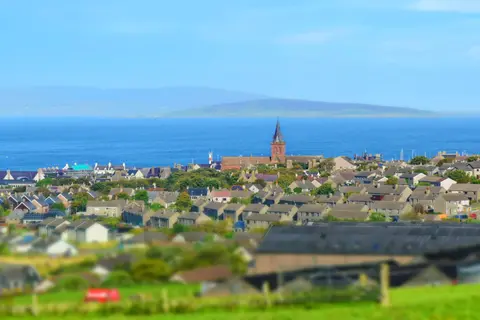
Kirkwall, the Norse-founded capital of Scotland's Orkney Islands, is a sandstone harbour town framed by UNESCO-listed Neolithic monuments, a twelfth-century cathedral, and some of Britain's finest coastal landscapes. Visitors should not miss the five-thousand-year-old village of Skara Brae and a tasting of North Ronaldsay seaweed-fed lamb paired with Highland Park whisky. The prime cruising season runs from May through August, when Orkney enjoys up to nineteen hours of daylight and the wild coastal light is at its most luminous.
Day 18
Day 18
At Sea
Day 19
Day 19
Vopnafjordur
Arrive 08:00Depart 17:30
Vopnafjörður is a remote fjord settlement of 700 residents on Iceland's northeastern coast, steeped in Viking saga history and surrounded by waterfalls, geothermal vents, and highland desert landscapes. Essential experiences include visiting the medieval Bustarfell turf farmstead, tasting geothermally baked rúgbrauð bread with fresh Arctic char, and hiking highland trails under the midnight sun. June through August provides the visiting window when the harbor is ice-free and temperatures reach 8-15°C.
Day 20
Day 20
Akureyri
Arrive 08:00Depart 17:00
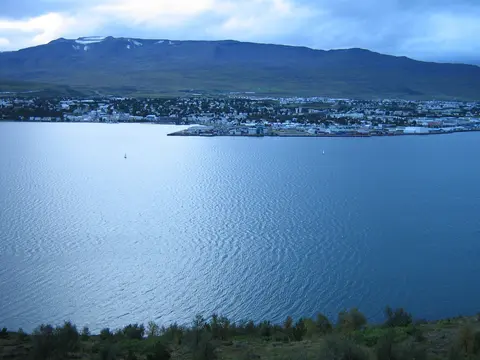
Akureyri, the cultural capital of northern Iceland, sits at the head of the majestic Eyjafjörður and serves as a gateway to some of the island's most dramatic landscapes, including the thundering Goðafoss waterfall, the volcanic wonderland of Lake Mývatn, and Europe's most powerful cascade at Dettifoss. Visitors should not miss the excursion to Mývatn's geothermal pools and the tasting of traditional *hangikjöt* smoked lamb at a harbourside restaurant. The ideal season to visit is June through August, when the midnight sun bathes the fjord in endless golden light and the botanical gardens reach their luminous peak.
Day 21
Day 21
Isafjordur
Arrive 08:00Depart 17:00
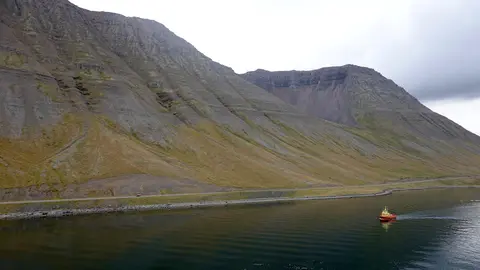
Ísafjörður is the cultural and historical capital of Iceland's remote Westfjords, a dramatic fjord-side settlement where centuries of fishing heritage meet stark Arctic grandeur. Visitors should not miss the communal seafood feast at Tjöruhúsið restaurant and a journey to the surreal red sands of Rauðasandur beach near Patreksfjörður. The optimal visiting window is June through August, when nearly perpetual daylight illuminates the encircling mountains and the town's vibrant cultural calendar reaches its peak.
Day 22
Day 22
Reykjavik
Arrive 07:00Depart 17:00
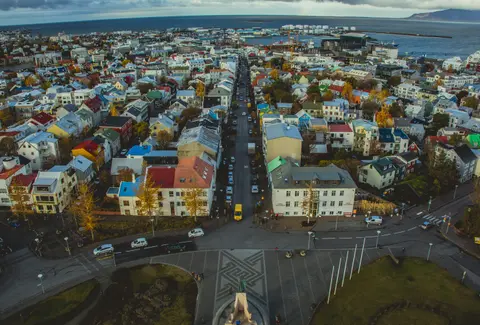
Reykjavik, the world's northernmost capital, distils the entire improbable beauty of Iceland into one compact, creatively charged city. The soaring basalt columns of Hallgrímskirkja dominate a skyline of primary-coloured rooftops, while the Harpa Concert Hall shimmers beside the harbour like a captured aurora. Day trips from the city unlock the Golden Circle's geysers and Geysir hot spring, the black sand beaches of Vík, and the ethereal glacier lagoon at Jökulsárlón. Geothermal pools — from the legendary Blue Lagoon to intimate neighbourhood hot pots — offer warmth year-round. June and July bring the bewitching midnight sun.
Day 1
Dover (London)
Depart 17:00
Crossing the English Channel from continental Europe to Great Britain, the first view of England is the milky-white strip of land called the White Cliffs of Dover. As you get closer, the coastline unfolds before you in all its striking beauty. White chalk cliffs with streaks of black flint rise straight from the sea to a height of 350’ (110 m). Numerous archaeological finds reveal people were present in the area during the Stone Age. Yet the first record of Dover is from Romans, who valued its close proximity to the mainland. A mere 21 miles (33 km) separate Dover from the closest point in France. A Roman-built lighthouse in the area is the tallest Roman structure still standing in Britain. The remains of a Roman villa with the only preserved Roman wall mural outside of Italy are another unique survivor from ancient times which make Dover one of a kind.
Day 2
At Sea
Day 3
At Sea
Day 4
Trondheim
Arrive 08:00Depart 18:00
Trondheim, Norway's ancient first capital, has drawn pilgrims for a thousand years to the Nidaros Cathedral — Scandinavia's greatest medieval building, raised over the tomb of Saint Olav and still serving as Norway's royal coronation church, its Gothic west facade a sublime gallery of stone scripture. The city unfolds along the banks of the Nidelva River in a harmonious mix of centuries-old wooden wharfhouses, elegant baroque streetscapes, and a confident contemporary university culture. Summer is the ideal season for Trondheim, when long golden evenings allow leisurely exploration of Bakklandet's cafés and the Ringve Music Museum's extraordinary instrument collections.
Day 5
Bronnoysund
Arrive 08:00Depart 17:30
Brønnøysund, a small service town on Norway's Helgeland coast just south of the Arctic Circle, is the gateway to one of Scandinavia's most extraordinary coastal landscapes — a constellation of twelve thousand islands where the defining landmark is Torghatten, a mountain with a 160-metre tunnel punched clean through its summit by the sea at the end of the last Ice Age, framing a perfect circle of sky. The surrounding Helgeland archipelago rewards island-hopping by small boat, with pristine beaches, ancient Bronze Age rock carvings, and the haunting ruins of medieval trading settlements accessible by kayak or ferry. Midnight sun visits from late May through mid-July; the Svartisen glacier is visible from the coastal route north.
Day 6
Svolvaer
Arrive 08:00Depart 17:00
Svolvær, the de facto capital of Norway's mythical Lofoten Islands, commands a harbor beneath granite peaks that plunge almost vertically into the Arctic sea — a visual drama that rivals anything in Europe. The town is the gateway to the archipelago's famed fishing culture, midnight-sun hikes, and the iconic Svolværgeita rock pinnacle that challenges intrepid climbers above the town. May through September delivers the best conditions for hiking and sea kayaking in the perpetual golden light, while January through March rewards visitors with the northern lights and the spectacle of the traditional Lofoten cod fishery in full swing.
Day 7
Tromso
Arrive 08:00Depart 17:00
Tromsø, perched 300 kilometers north of the Arctic Circle on its own island in a fjord-carved landscape of breathtaking severity, is the world's finest base for witnessing the northern lights — a phenomenon that illuminates the polar night here from late September through March with an intensity unmatched across Scandinavia. The city's striking Arctic Cathedral, vibrant university culture, and excellent Polar Museum trace Norway's heroic age of polar exploration, while dog sledding, snowshoeing, and whale-watching expeditions provide exhilarating encounters with the high Arctic wilderness. Summer's unbroken midnight sun offers an equally otherworldly experience beneath skies that never darken.
Day 8
Honningsvag
Arrive 08:00Depart 18:00
Perched at the very tip of Norway on the island of Magerøya, Honningsvåg is the storied gateway to the North Cape — the dramatic cliff that marks Europe's northernmost point, where the Arctic Ocean stretches uninterrupted to the Pole. The town's modest fishing-village character only deepens the sense of extraordinary remoteness, making arrival here feel like a genuine expedition. Visit the North Cape plateau for a midnight sun spectacle or the mesmerizing curtains of the northern lights; both experiences are among the most transcendent in nature. Summer (June–August) brings perpetual daylight; winter (November–February) offers prime aurora viewing.
Day 9
At Sea
Day 10
At Sea
Day 11
Olden
Arrive 08:00Depart 17:00
Olden is a serene fjord village at the head of Nordfjord in western Norway, where glacial rivers meet emerald waters beneath towering peaks. The essential experience is the journey to Briksdal Glacier, an arm of Europe's largest ice cap, followed by tasting traditional *raspeball* dumplings and cloudberry cream at a local farmstead. The prime visiting season stretches from June through August, when near-endless daylight illuminates the valley and summer temperatures make glacier hikes and fjord kayaking particularly rewarding.
Day 12
Bergen
Arrive 08:00Depart 18:00
Bergen, Norway's charming coastal city and historic trading hub, is known for its picturesque Bryggen Wharf and rich maritime heritage. Must-do experiences include sampling local delicacies at the vibrant Fish Market and exploring the medieval Hanseatic quarter. The best season to visit is during the summer months, when the city's lively atmosphere and stunning fjord landscapes are at their peak.
Day 13
At Sea
Day 14
Amsterdam
Arrive 08:00Depart 18:00
Amsterdam's UNESCO-listed canal ring — a concentric web of seventeenth-century merchant houses and arching stone bridges — remains one of the Western world's most perfectly preserved Golden Age cityscapes, best explored by bicycle or canal boat at a pace that lets the city's genius reveal itself slowly. The Rijksmuseum's collection of Rembrandt and Vermeer masterpieces is essential, while the Anne Frank House offers one of Europe's most profoundly moving historical encounters. Spring brings the iconic tulip season; summer fills the terraces of the Jordaan district. Schiphol Airport makes Amsterdam a seamless gateway to the entire European continent.
Day 15
Dover (London)
Arrive 07:30Depart 17:30
Crossing the English Channel from continental Europe to Great Britain, the first view of England is the milky-white strip of land called the White Cliffs of Dover. As you get closer, the coastline unfolds before you in all its striking beauty. White chalk cliffs with streaks of black flint rise straight from the sea to a height of 350’ (110 m). Numerous archaeological finds reveal people were present in the area during the Stone Age. Yet the first record of Dover is from Romans, who valued its close proximity to the mainland. A mere 21 miles (33 km) separate Dover from the closest point in France. A Roman-built lighthouse in the area is the tallest Roman structure still standing in Britain. The remains of a Roman villa with the only preserved Roman wall mural outside of Italy are another unique survivor from ancient times which make Dover one of a kind.
Day 16
At Sea
Day 17
Kirkwall
Arrive 08:00Depart 17:00
Kirkwall, the Norse-founded capital of Scotland's Orkney Islands, is a sandstone harbour town framed by UNESCO-listed Neolithic monuments, a twelfth-century cathedral, and some of Britain's finest coastal landscapes. Visitors should not miss the five-thousand-year-old village of Skara Brae and a tasting of North Ronaldsay seaweed-fed lamb paired with Highland Park whisky. The prime cruising season runs from May through August, when Orkney enjoys up to nineteen hours of daylight and the wild coastal light is at its most luminous.
Day 18
At Sea
Day 19
Vopnafjordur
Arrive 08:00Depart 17:30
Vopnafjörður is a remote fjord settlement of 700 residents on Iceland's northeastern coast, steeped in Viking saga history and surrounded by waterfalls, geothermal vents, and highland desert landscapes. Essential experiences include visiting the medieval Bustarfell turf farmstead, tasting geothermally baked rúgbrauð bread with fresh Arctic char, and hiking highland trails under the midnight sun. June through August provides the visiting window when the harbor is ice-free and temperatures reach 8-15°C.
Day 20
Akureyri
Arrive 08:00Depart 17:00
Akureyri, the cultural capital of northern Iceland, sits at the head of the majestic Eyjafjörður and serves as a gateway to some of the island's most dramatic landscapes, including the thundering Goðafoss waterfall, the volcanic wonderland of Lake Mývatn, and Europe's most powerful cascade at Dettifoss. Visitors should not miss the excursion to Mývatn's geothermal pools and the tasting of traditional *hangikjöt* smoked lamb at a harbourside restaurant. The ideal season to visit is June through August, when the midnight sun bathes the fjord in endless golden light and the botanical gardens reach their luminous peak.
Day 21
Isafjordur
Arrive 08:00Depart 17:00
Ísafjörður is the cultural and historical capital of Iceland's remote Westfjords, a dramatic fjord-side settlement where centuries of fishing heritage meet stark Arctic grandeur. Visitors should not miss the communal seafood feast at Tjöruhúsið restaurant and a journey to the surreal red sands of Rauðasandur beach near Patreksfjörður. The optimal visiting window is June through August, when nearly perpetual daylight illuminates the encircling mountains and the town's vibrant cultural calendar reaches its peak.
Day 22
Reykjavik
Arrive 07:00Depart 17:00
Reykjavik, the world's northernmost capital, distils the entire improbable beauty of Iceland into one compact, creatively charged city. The soaring basalt columns of Hallgrímskirkja dominate a skyline of primary-coloured rooftops, while the Harpa Concert Hall shimmers beside the harbour like a captured aurora. Day trips from the city unlock the Golden Circle's geysers and Geysir hot spring, the black sand beaches of Vík, and the ethereal glacier lagoon at Jökulsárlón. Geothermal pools — from the legendary Blue Lagoon to intimate neighbourhood hot pots — offer warmth year-round. June and July bring the bewitching midnight sun.
Cabin Categories
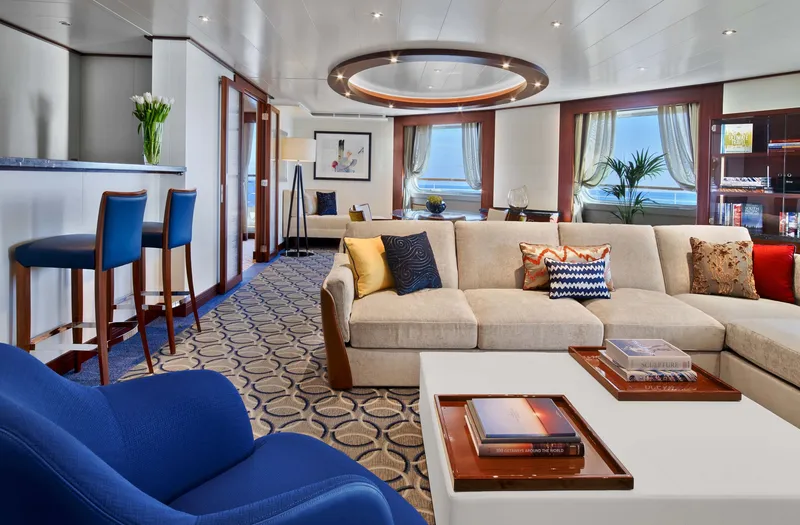
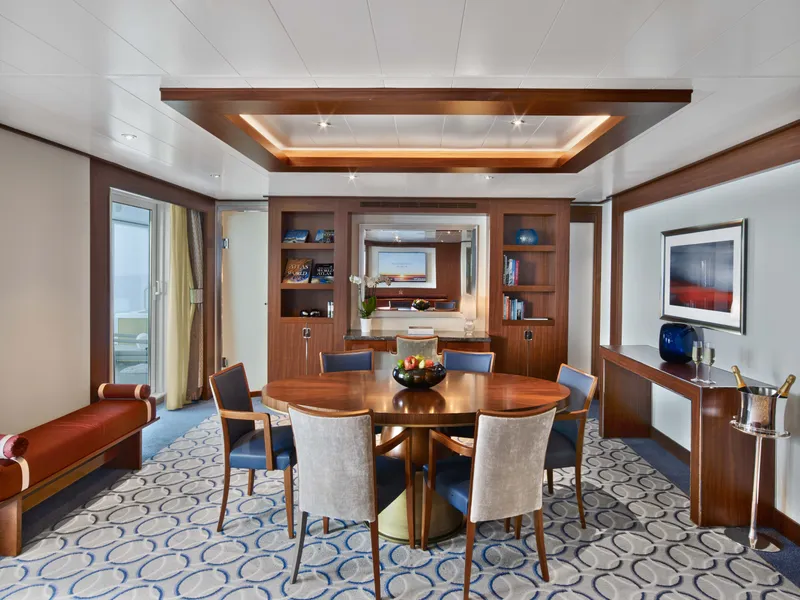
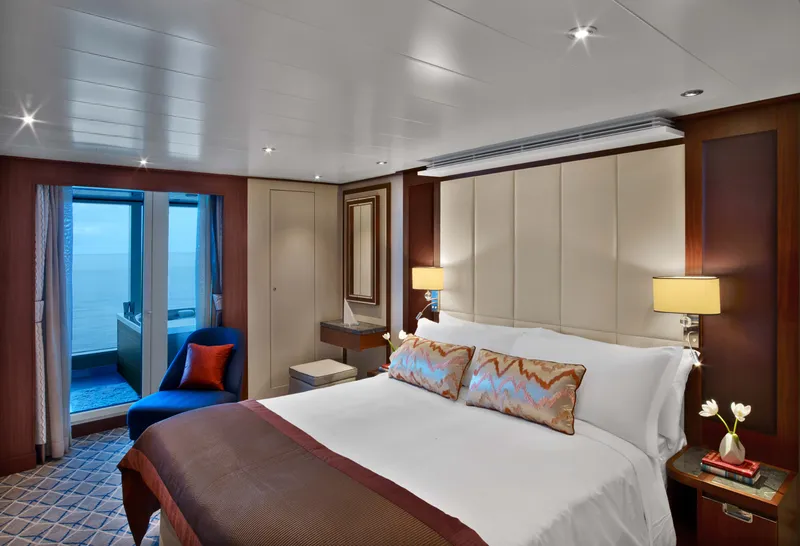
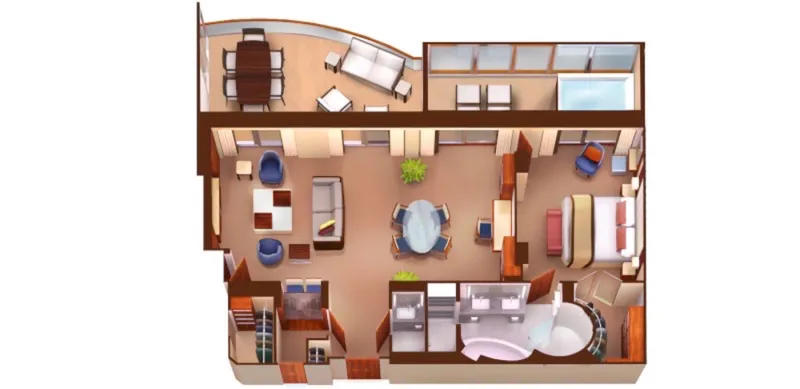
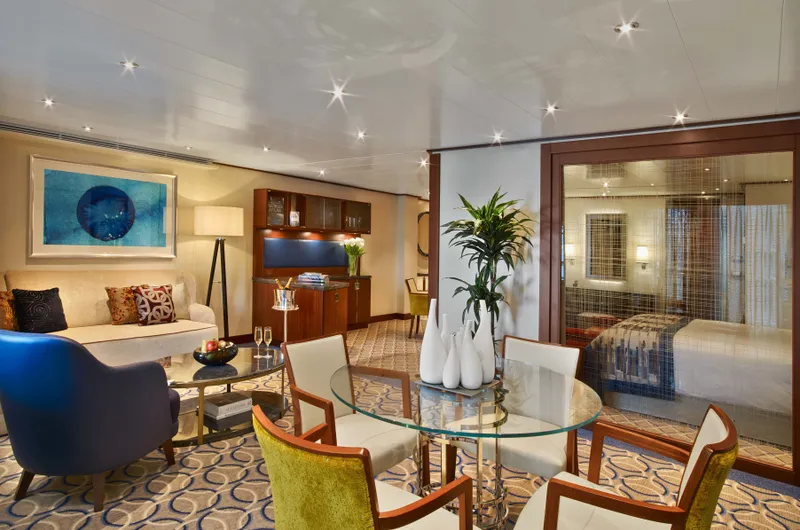
Grand Signature Suite
Suite
Grand Signature Suite
GRSS
Located on Deck 8; Combine mid-ship suites 800 and 804 for suite 8004 or suites 801 and 805 for suite 8015 for a total inside space of 1,292 square feet (120 square meters) plus two verandas totaling 244 square feet (23 square meters)
Signature Suites feature
Expansive ocean views
Forward-facing windows
Dining for four to six
Bathroom with whirlpool bathtub
Guest bath
Pantry with wet bar
Two flat-screen TVs
Complimentary Internet/Wi-Fi service
View Details
Grand Wintergarden Suite
Suite
1536 m²Max 5
GRWG
Located on Deck 8; Combine mid-ship suites 849 and 851 for suite 8491 or suites 846 and 848 for suite 8468 for a total inside space of 1,292 square feet (120 square meters) plus two verandas totaling 244 square feet (23 square meters)
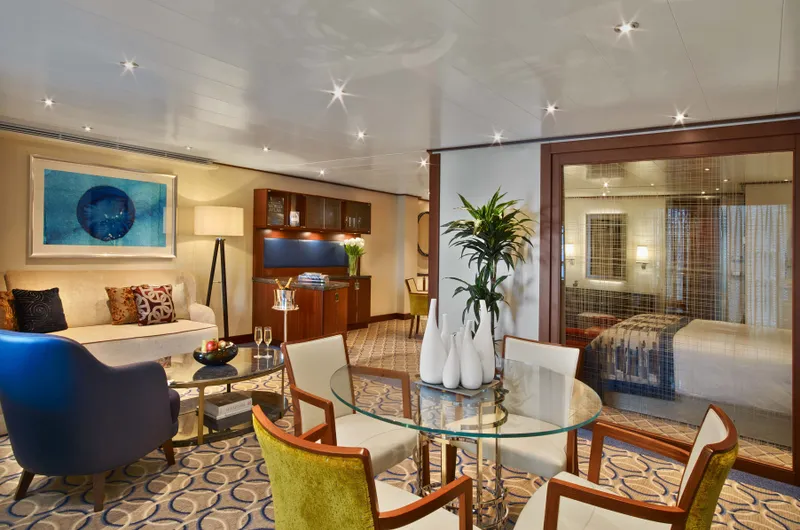
Grand Wintergarden Suites feature:
Large windows
Dining for six
Glass-enclosed solarium with tub and day bed
Bathroom with whirlpool bathtub
Two bedrooms
Two bathrooms (one whirlpool)
Convertible sofa bed for one
Pantry with wet bar
Two flat-screen TVs
Queen or Twin ConfigurationSecond BedroomSofa BedShowerBathWhirlpool Bath+13
View Details

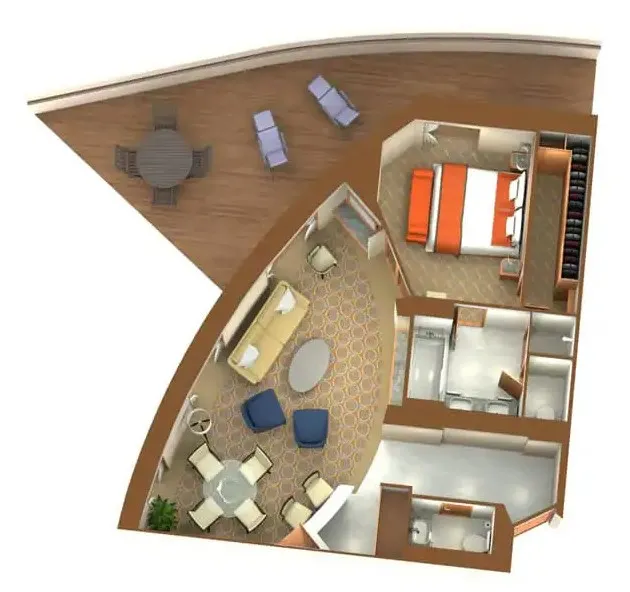
Owners Suite
Suite
718–1375 m²Max 2
O1O2
Located on Deck 7, 8, 9 and 10; total inside space of between 576 and 597 square feet (54 and 55 square meters) plus veranda of between 142 and 778 square feet (13 to 72 square meters)
Owner's Suites feature:
Expansive ocean views
Forward-facing windows
Dining for four to six
Bathroom with whirlpool bathtub
Guest bath
Pantry with wet bar
Two flat-screen TV
Complimentary Internet/Wi-Fi service
Dining AreaShowerWhirlpool BathTVFree Wi-FiSafe+10
View Details
Penthouse Suite
Suite
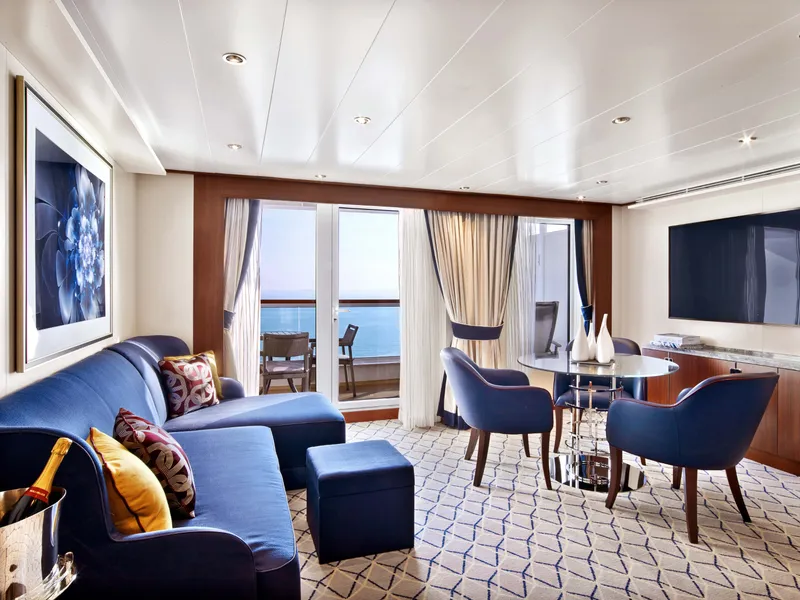
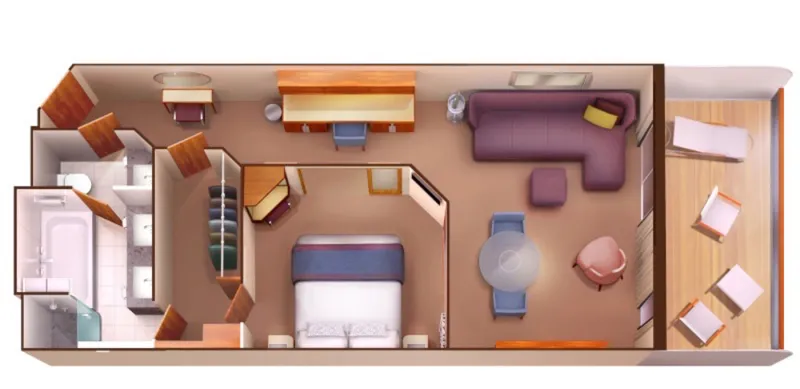
542–553 m²Max 2
PH
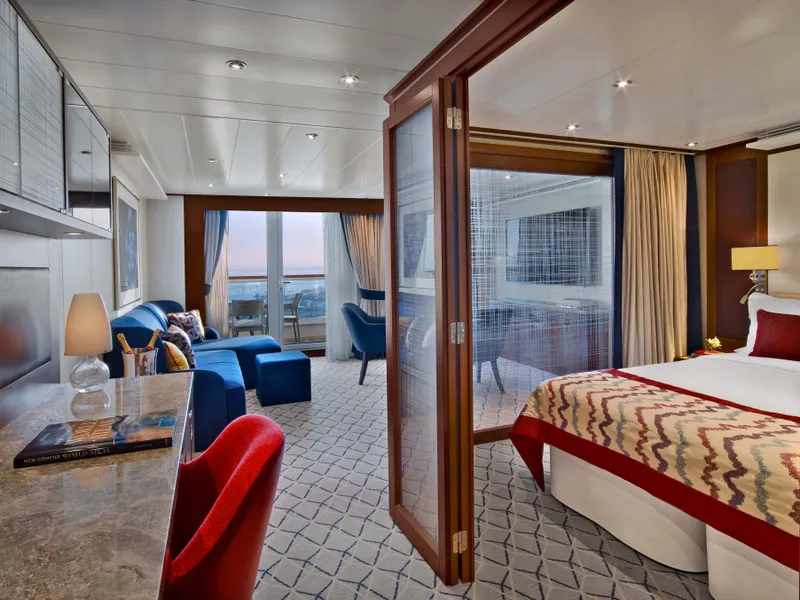
Located on Deck 10 and 11; total inside space of between 449 and 450 square feet (42 square meters) plus one veranda of between 93 and 103 square feet (9 and 10 square meters)
All Penthouse Suites feature:
Dining table for two to four
Separate bedroom
Glass door to veranda
Two flat-screen TVs
Fully stocked bar
Spacious bathroom with tub
Shower and large vanity
ShowerToiletries ProvidedTVSafeHair DryerBath+10
View Details
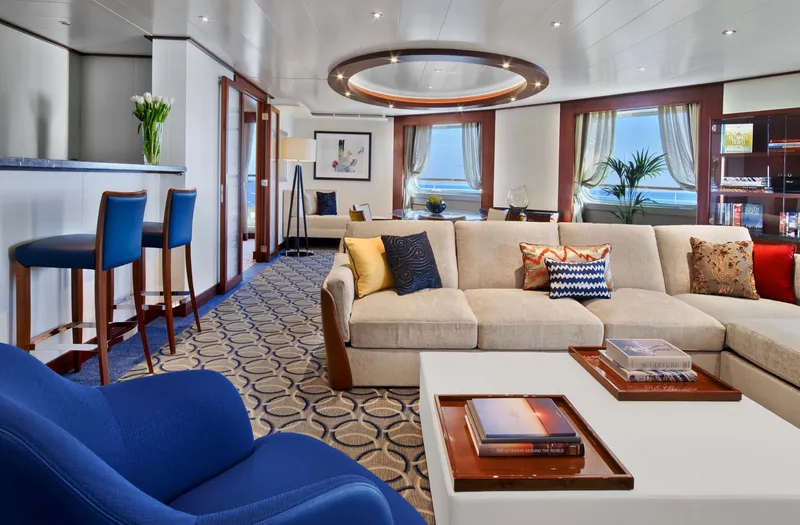
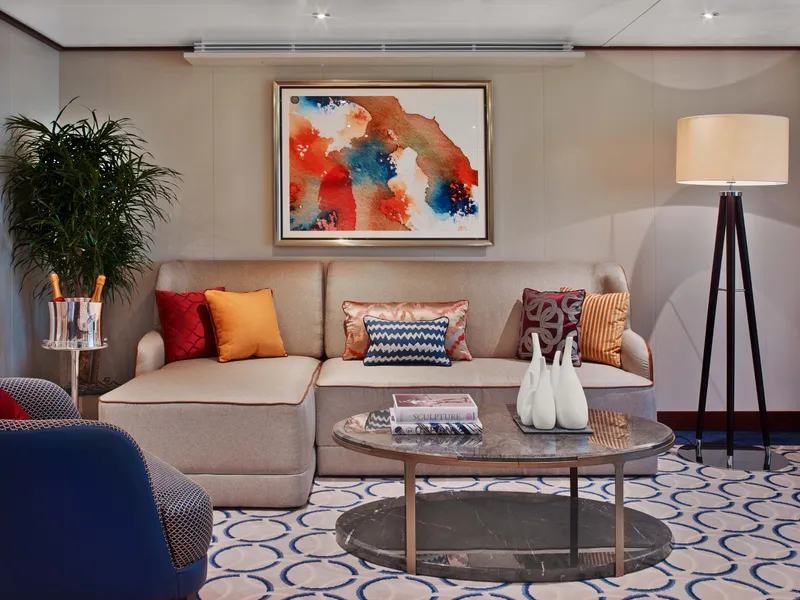
Signature Suite
Suite
1937 m²Max 2
SS
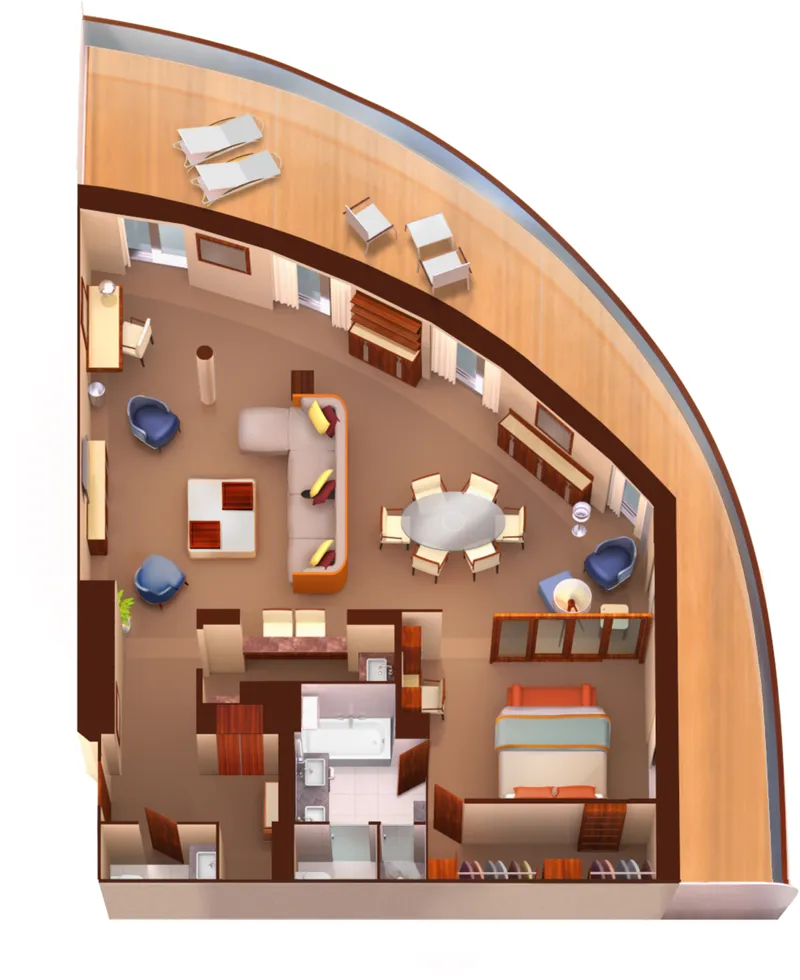
Located on Deck 8; forward suites 800 and 801 inside space of approximately 977 square feet of inside space, plus one veranda of 960 square feet (89 square meters).
Signature Suites feature:
Expansive ocean views
Forward-facing windows
Dining for four to six
Bathroom with whirlpool bathtub
Guest bath
Pantry with wet bar
Two flat-screen TVs
Complimentary Internet/Wi-Fi service
ShowerWhirlpool BathSuite BenefitsFree Mini BarSafeHair Dryer+11
View Details
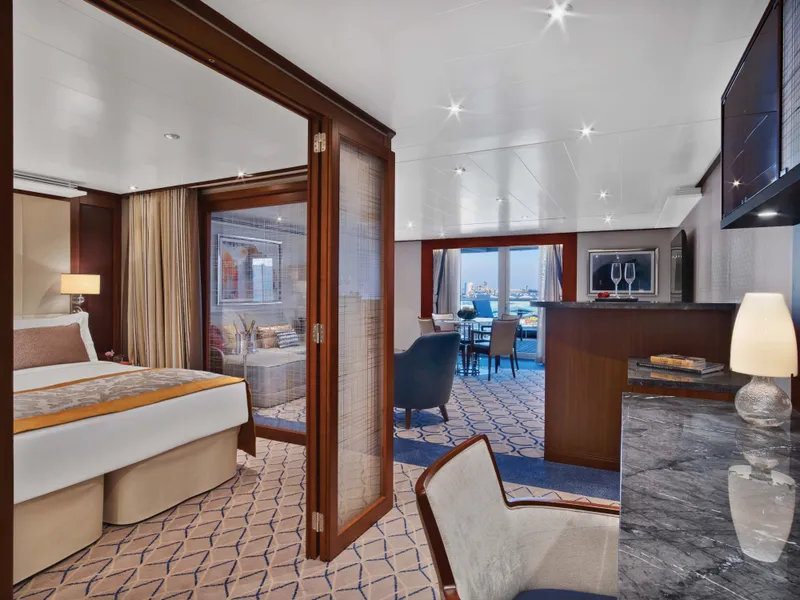
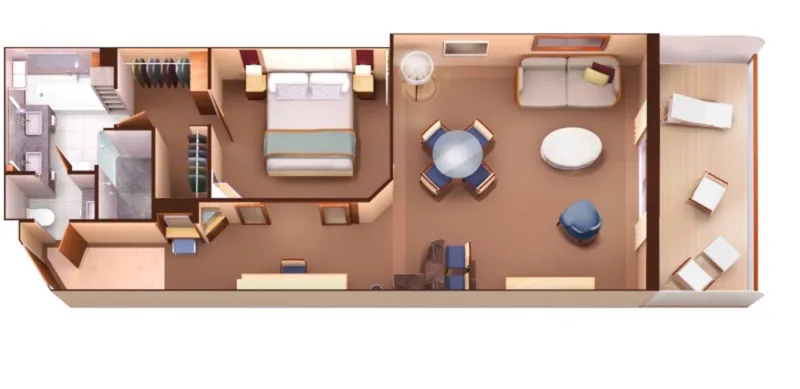
Spa Penthouse Suite
Suite
893–965 m²Max 2
PS
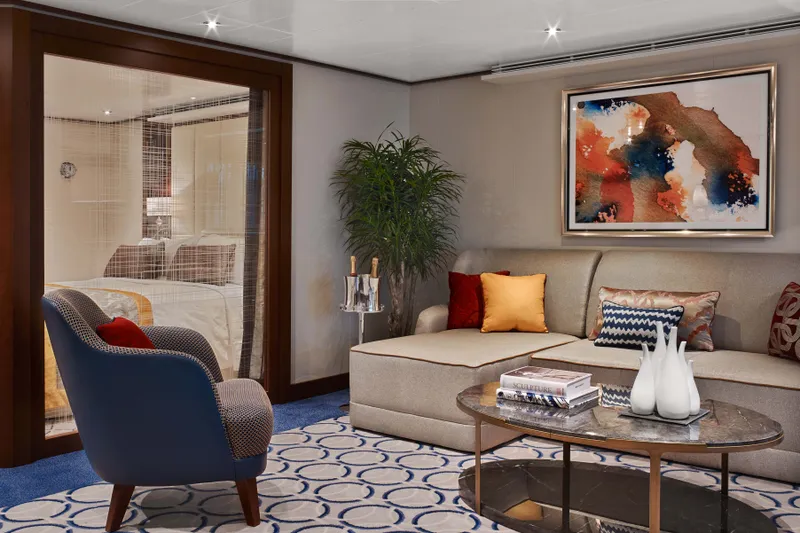
Located on Deck 11; total inside space of between 639 and 677 square feet (59 and 63 square meters) plus one veranda of 254 and 288 square feet. (24 and 27 square meters).
All Penthouse Spa Suites feature:
Dining table for two to four
Separate bedroom
Glass door to veranda
Two flat-screen TVs
Fully stocked bar
Spacious bathroom with tub
Shower and large vanity
Dining AreaVanity AreaShowerToiletries ProvidedRoom Service AvailableSuite Benefits+10
View Details
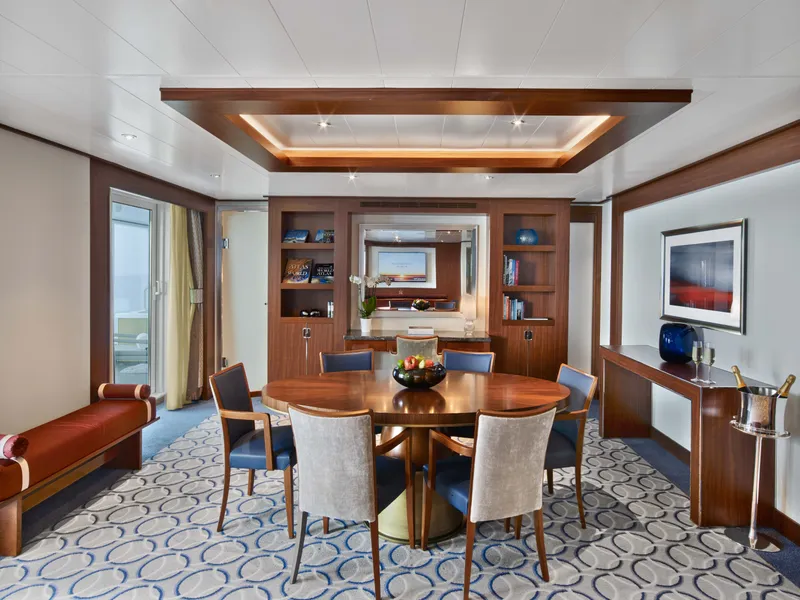
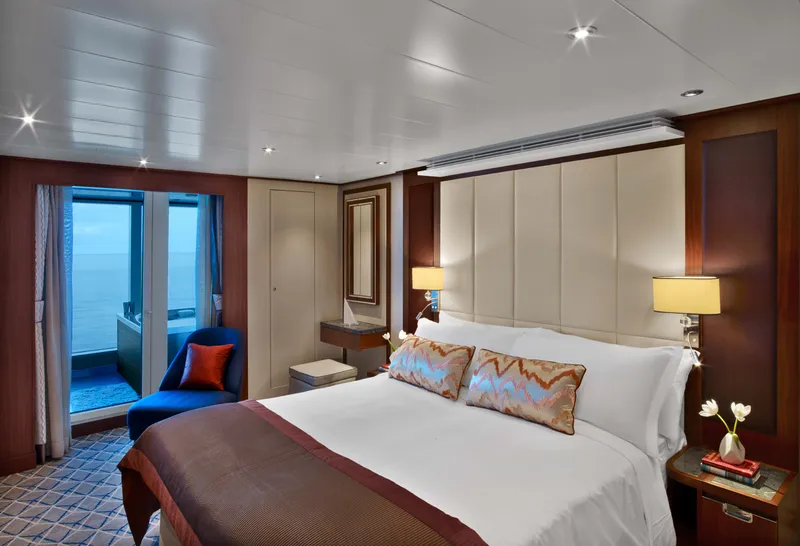
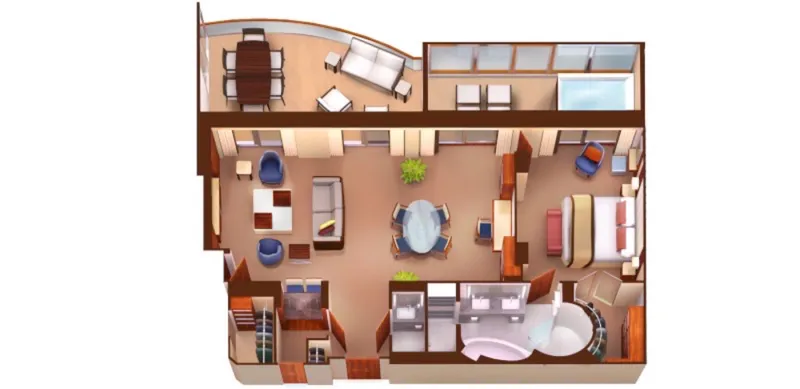
Wintergarden Suite
Suite
1536 m²Max 5
WG
Located on Deck 8; mid-ship suites 846 and 849 inside space of 989 square feet (92 square meters) plus one veranda of 197 square feet (18 square meters)
Wintergarden Suites feature:
Large windows
Dining for six
Whirlpool bathtub
Guest bath
Convertible sofa bed for one
Pantry with wet bar
Glass-enclosed solarium with tub and day bed
Two closets
Two flat-screen TVs
Complimentary Internet/Wi-Fi service
Queen or Twin ConfigurationSecond BedroomSofa BedShowerBathWhirlpool Bath+13
View Details
Veranda Suite
Suite
314–385 m²Max 2
OBV1V2V3V4
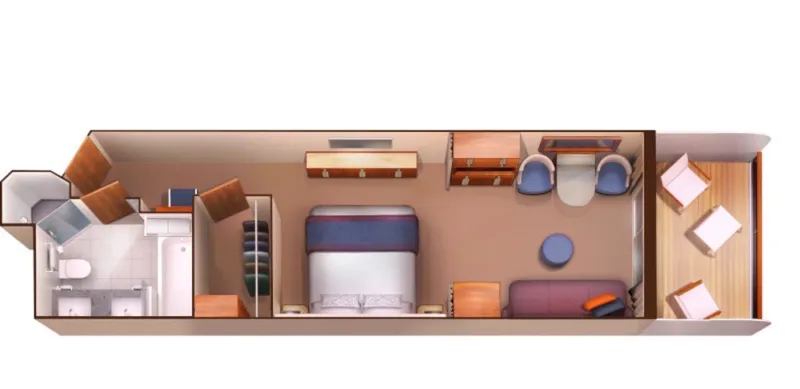
Veranda Suite (V3)
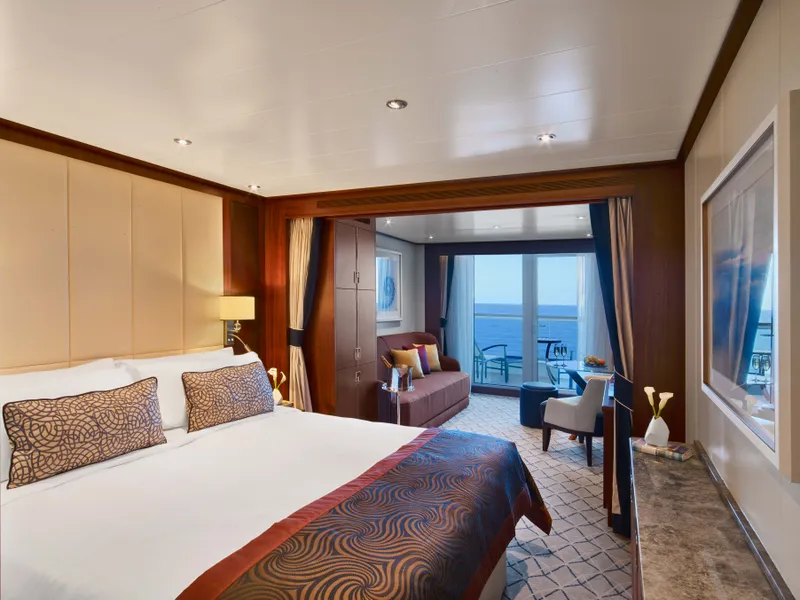
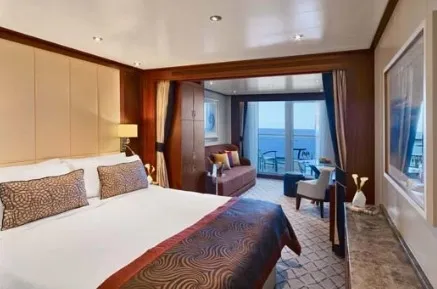
Located on Decks 6, 7 ; total inside space of between 246 and 302 square feet (23 and 28 square meters) plus one veranda of between 68 and 83 square feet (6 and 7 square meters)
All Veranda Suites feature:
A full-length window
Glass door to private veranda
Comfortable living area
Queen-size bed or two twin beds
Dining table for two
Walk-in closet
Interactive flat-screen television with music and movies
Fully stocked bar and refrigerator
Makeup vanity
Spacious bathroom with separate tub and shower
ShowerBathTVSafeHair DryerQueen or Twin Configuration+9
View Details
Veranda Suite Guarantee
Suite
718–1375 m²Max 2
RB
Veranda Suite Guarantee
BathQueen or Twin ConfigurationLounge AreaShowerToiletries ProvidedRoom Service Available+12
View Details
Interested in This Voyage?
Our cruise specialists can help you find the perfect cabin and the best available pricing.
(+886) 02-2721-7300Contact Advisor