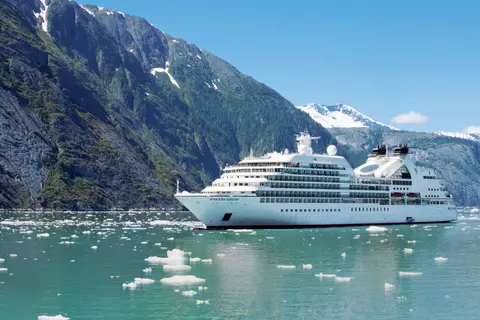
Seabourn5649B
Solar Eclipse, French Riviera & Iberian Coast
Date
2026-07-28
Duration
30 nights
Departure Port
Monte Carlo
Monaco
Arrival Port
Monte Carlo
Monaco
Rating
—
Theme
—
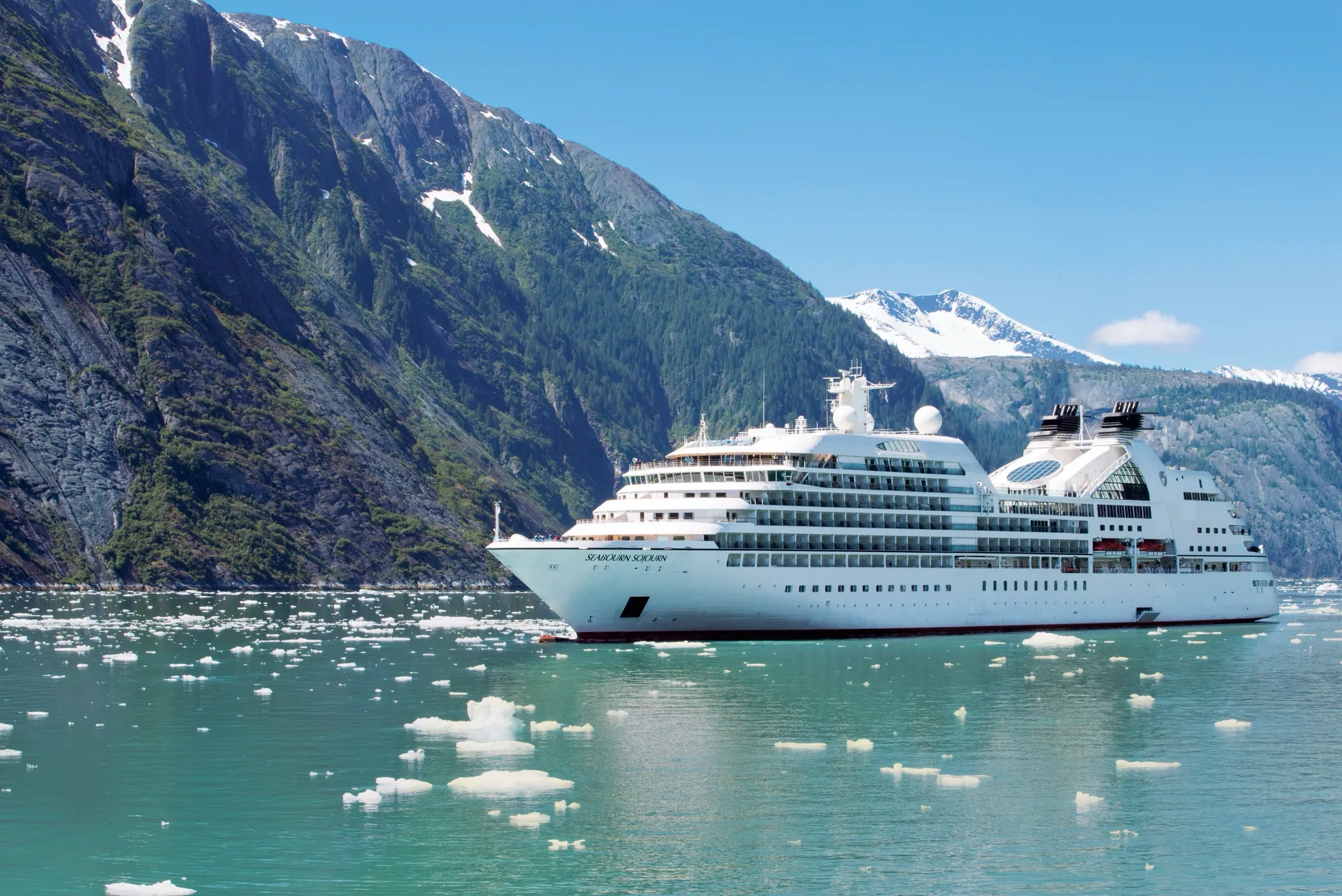
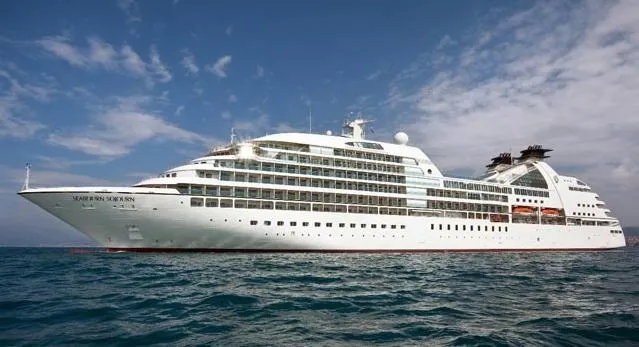


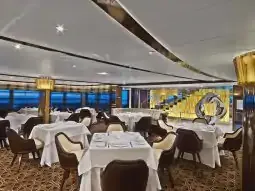
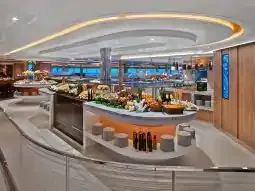

Seabourn
Seabourn Sojourn
Launched
2010
Refitted
2018
Tonnage
32,000 GT
Passengers
450
Cabins
225
Crew
330
Length
650 m
Width
25.6 m
Speed
19 knots
Adults Only
No
Itinerary
Day 1
Day 1
Monte Carlo
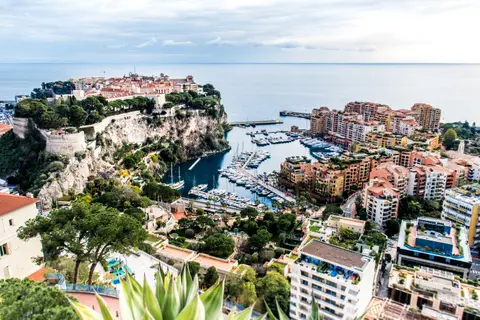
Monte Carlo, Monaco is a sovereign principality on the French Riviera where centuries of Grimaldi rule have forged an extraordinary concentration of elegance — from the legendary Casino de Monte-Carlo to the cliff-top Oceanographic Museum founded by Prince Albert I. No visit is complete without savouring *barbagiuan* at the Condamine market and exploring the old town of Monaco-Ville, where the cathedral and prince's palace command sweeping Mediterranean views. The most luminous months are May through September, with late spring offering the electric atmosphere of the Grand Prix season alongside gentler crowds and pristine coastal light.
Day 2
Day 2
At Sea
Day 3
Day 3
Vidin
Arrive 08:00Depart 18:00
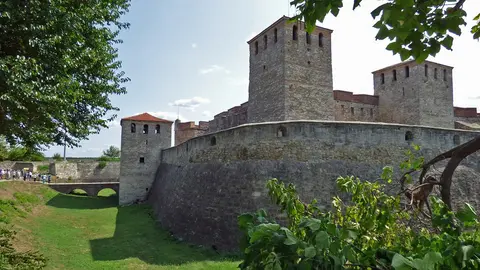
Vidin is a captivating port town on the Danube River known for its rich history, eclectic architecture, and vibrant local culture. Must-do experiences include exploring the Baba Vida Fortress and savoring local dishes like **kavarma** and **lutenitsa**. The best time to visit is during the spring and autumn months when the weather is pleasant and the local markets are bustling with activity.
Day 4
Day 4
Versailles
Arrive 07:00Depart 18:00
Versailles is the legendary seat of French royal power, home to the Chateau de Versailles and its 800-hectare formal gardens — perhaps the most influential palace complex ever built. Must-dos include the Hall of Mirrors, the Grandes Eaux Musicales fountain shows, and browsing the Marche Notre-Dame food market in town. Visit April through October for the gardens in full bloom and weekend fountain performances.
Day 5
Day 5
Nice
Arrive 08:00Depart 18:00
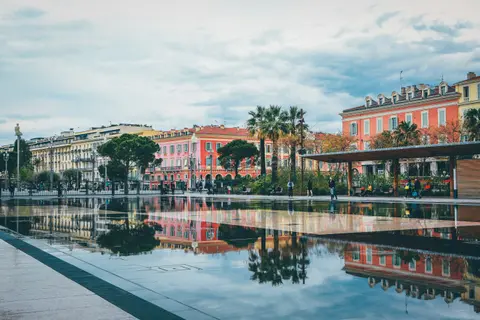
The port of Nice is a vibrant gateway to the French Riviera, offering a rich tapestry of history, stunning architecture, and delectable local cuisine. Must-do experiences include savoring local specialties at the bustling Cours Saleya Market and exploring the charming streets of Vieux Nice. The best time to visit is during the spring and early fall when the weather is mild and the city is alive with cultural festivities.
Day 6
Day 6
Marseille
Arrive 08:00

Founded by Greek sailors in 600 BC, Marseille is France's oldest and most viscerally alive city — a Mediterranean port where the catch is still sold from fishing boat decks at the Vieux-Port each morning beneath the golden Madonna of Notre-Dame de la Garde, gleaming on her basilica above the city. The bouillabaisse served at harbourside institutions such as Chez Fonfon is not merely a dish but a rite, its saffron-stained broth tying Marseille to its Hellenic roots. Explore the dramatic Calanques national park, a coastal labyrinth of turquoise coves just south of the city. Spring and autumn are the finest seasons.
Day 8
Day 8
Sete
Arrive 08:00Depart 18:00
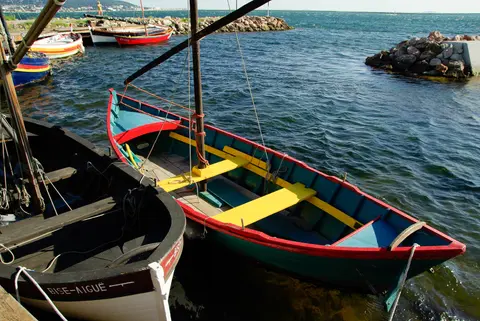
Sète is a canal-laced fishing port on France's Languedoc coast, built around the terminus of the Canal du Midi and crowned by the panoramic heights of Mont Saint-Clair. Visitors should not miss the iconic *tielle sétoise* pastry paired with Bouzigues oysters at the covered market, and the contemplative walk through the Cimetière Marin above the Mediterranean. Late spring through early autumn offers the finest conditions, with September bringing warm seas, golden light, and the spirited jousting tournaments on the canal that have defined Sète's character for over three hundred years.
Day 9
Day 9
Roses
Arrive 08:00Depart 18:00
Roses is a historic Catalan fishing town on the Costa Brava, where Greek ruins inside a sixteenth-century fortress overlook a sheltered bay renowned for its prized red prawns and proximity to Dalí country. Must-dos include touring the Ciutadella's layered archaeological site, tasting gamba de Roses at a harbor restaurant, and hiking the surreal Cap de Creus coastline. Visit May to June or September to October for warm weather without peak crowds.
Day 10
Day 10
Trapani (Sicily)
Arrive 08:00Depart 18:00
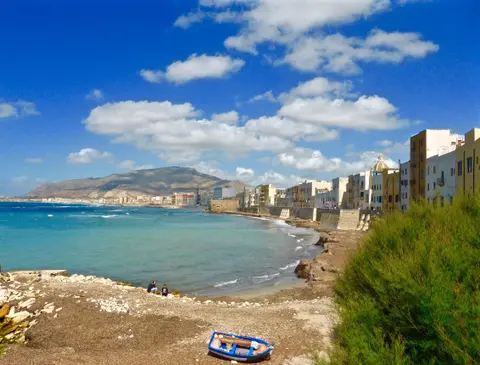
Trapani is western Sicily's sickle-shaped port city where ancient salt flats, cloud-wrapped medieval Erice, and the crystal-clear Egadi Islands converge at the Mediterranean's cultural crossroads. Visit April through October via Seabourn or Windstar for cable-car ascents to Norman-era pastry shops, sunset salt-flat reflections, and the Arab-influenced seafood couscous that distinguishes this coast from anywhere else in Italy.
Day 11
Day 11
Salerno
Arrive 08:00
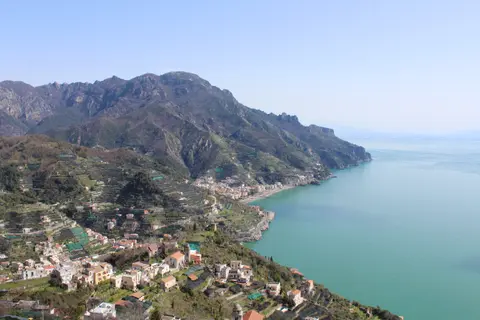
Salerno is a historic Campanian port city nestled between the Amalfi Coast and Cilento National Park, home to Europe's first medieval medical school and a magnificent Romanesque cathedral with Byzantine bronze doors. Visitors should not miss the Lungomare Trieste promenade at sunset and a plate of hand-rolled scialatielli ai frutti di mare in the atmospheric old town. The mild Mediterranean climate makes Salerno enchanting year-round, though late spring through early autumn offers the most luminous light and the fullest expression of its coastal character.
Day 12
Day 12
Valencia
Arrive 08:00Depart 18:00
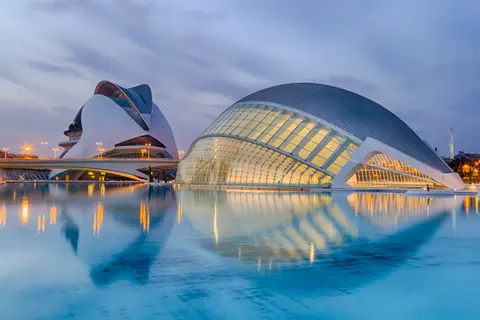
Valencia, Spain's luminous third city, dazzles with a creative energy anchored by two thousand years of layered civilization — Roman foundations, Moorish irrigation gardens, a Gothic cathedral housing what many believe to be the Holy Grail, and Santiago Calatrava's futuristic City of Arts and Sciences gleaming beside a park-filled riverbed. The city invented paella over an open fire of orange-wood in the surrounding huerta, and the Las Fallas festival each March — when neighborhoods compete to erect and then ceremonially burn towering satirical sculptures — is one of Europe's most spectacular celebrations. Valencia's Mediterranean climate makes it exceptional year-round.
Day 13
Day 13
Cartagena
Arrive 08:00Depart 18:00
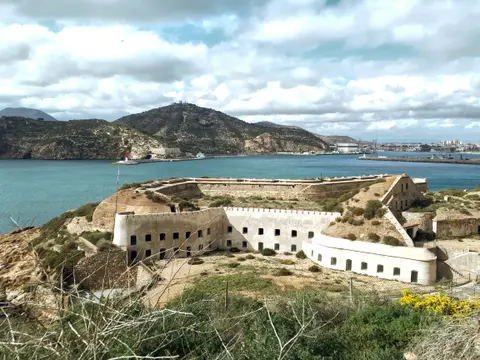
Cartagena, Spain, is a storied Mediterranean port city founded by the Carthaginians in 227 BC, where a spectacularly preserved Roman Theatre and Modernista architecture reveal layers of civilisation along a sheltered natural harbour. Visitors should not miss the caldero rice at a harbourside restaurant and a morning exploring the archaeological quarter from the Roman Forum to the Punic Wall. The mild Murcian climate makes autumn through late spring ideal, when temperatures invite leisurely wandering without the intensity of high summer.
Day 14
Day 14
Motril
Arrive 08:00Depart 18:00
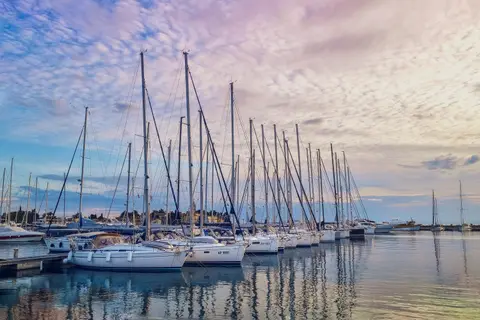
Motril, a captivating port on the Costa Tropical, shines with its rich history and unique blend of cultures, making it a perfect stop for travelers seeking both relaxation and local charm. Must-try experiences include savoring *tortilla del Sacromonte* and visiting the Mercado Municipal de Abastos. The best time to visit is in spring or fall, when the mild climate and local festivities create an enchanting atmosphere.
Day 15
Day 15
Melilla
Arrive 08:00Depart 16:00
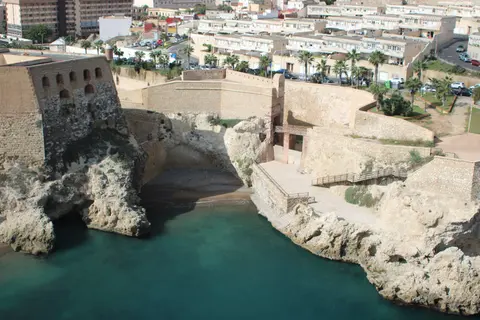
Melilla is a Spanish autonomous city on the North African coast, home to Spain's second-largest collection of Art Nouveau architecture and a unique multicultural blend of Spanish, Amazigh, Sephardic, and Sindhi communities. Must-dos include exploring the Modernista facades designed by Gaudí's student Enrique Nieto, wandering the fifteenth-century fortress, and tasting the fusion cuisine at the central market. April through October offers the warmest Mediterranean weather for this extraordinary cultural crossroads.
Day 16
Day 16
Solar Eclipse
Arrive 18:00Depart 21:00
Day 17
Day 17
Palma de Mallorca
Arrive 08:00Depart 22:00
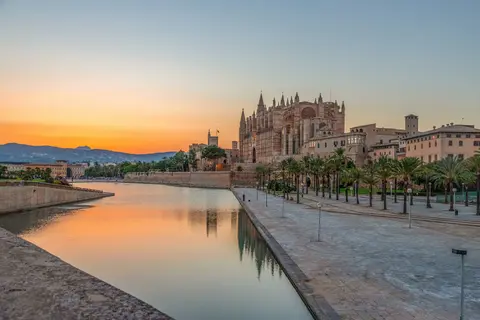
Palma de Mallorca announces itself with one of the most spectacular Gothic cathedrals in the world — La Seu, its honey-coloured sandstone buttresses rising directly from the bay, its interior modified by Antoni Gaudí and illuminated by the world's largest Gothic rose window. The old town behind it is a quarter of Arab baths, Renaissance palaces converted into boutique hotels, and the Passeig del Born — a plane-tree-shaded promenade where Balearic life conducts itself with unhurried grace. The local ensaïmada pastry and fresh sobrasada sausage from the island's black pigs are essential breakfast rituals. Visit May, June, or September: warm, brilliant, and measurably calmer than the July–August peak.
Day 18
Day 18
At Sea
Day 19
Day 19
Saint Tropez
Arrive 08:00Depart 18:00
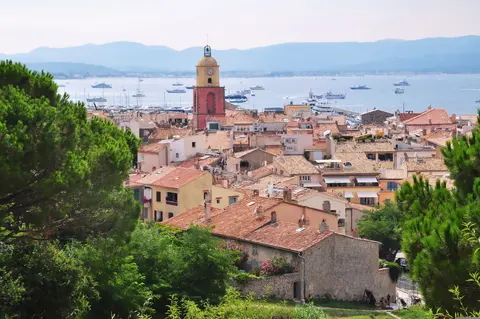
Saint-Tropez is the legendary Côte d'Azur fishing port turned global glamour destination, where Provençal authenticity endures beneath the mythology of yachts and celebrities. Must-dos include browsing the Musée de l'Annonciade's Fauvist masterpieces, tasting tarte tropézienne and fresh-caught rouget, and strolling the Sentier du Littoral coastal path to hidden coves. May through June and September through October offer the best weather with fewer crowds.
Day 20
Day 20
La Ciotat
Arrive 07:00Depart 16:00
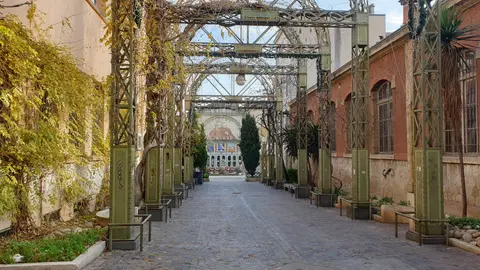
La Ciotat is a Provencal port town between Marseille and Toulon, famous as the birthplace of cinema at the Eden Theatre — the world's oldest movie house — and gateway to the dramatic Calanques limestone inlets. Must-dos include visiting the historic Eden Theatre, swimming in the turquoise Calanque de Figuerolles, and feasting on bouillabaisse at the Vieux Port. Visit May through October for warm Mediterranean swimming and vibrant open-air dining.
Day 21
Day 21
Salerno
Arrive 07:00Depart 17:00
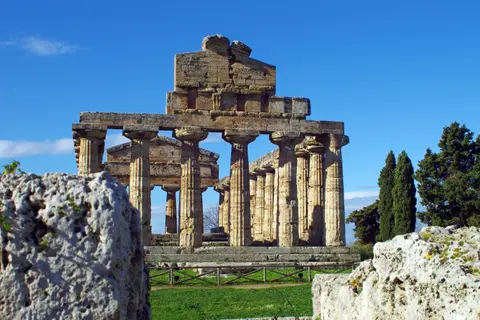
Salerno is a historic Campanian port city nestled between the Amalfi Coast and Cilento National Park, home to Europe's first medieval medical school and a magnificent Romanesque cathedral with Byzantine bronze doors. Visitors should not miss the Lungomare Trieste promenade at sunset and a plate of hand-rolled scialatielli ai frutti di mare in the atmospheric old town. The mild Mediterranean climate makes Salerno enchanting year-round, though late spring through early autumn offers the most luminous light and the fullest expression of its coastal character.
Day 22
Day 22
Trapani (Sicily)
Arrive 08:00Depart 18:00
Trapani is western Sicily's sickle-shaped port city where ancient salt flats, cloud-wrapped medieval Erice, and the crystal-clear Egadi Islands converge at the Mediterranean's cultural crossroads. Visit April through October via Seabourn or Windstar for cable-car ascents to Norman-era pastry shops, sunset salt-flat reflections, and the Arab-influenced seafood couscous that distinguishes this coast from anywhere else in Italy.
Day 23
Day 23
Roses
Arrive 08:00Depart 18:00
Roses is a historic Catalan fishing town on the Costa Brava, where Greek ruins inside a sixteenth-century fortress overlook a sheltered bay renowned for its prized red prawns and proximity to Dalí country. Must-dos include touring the Ciutadella's layered archaeological site, tasting gamba de Roses at a harbor restaurant, and hiking the surreal Cap de Creus coastline. Visit May to June or September to October for warm weather without peak crowds.
Day 24
Day 24
Sete
Arrive 08:00Depart 18:00
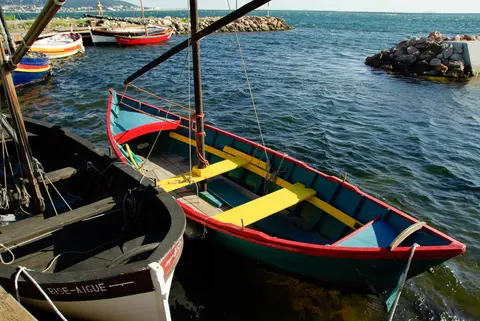
Sète is a canal-laced fishing port on France's Languedoc coast, built around the terminus of the Canal du Midi and crowned by the panoramic heights of Mont Saint-Clair. Visitors should not miss the iconic *tielle sétoise* pastry paired with Bouzigues oysters at the covered market, and the contemplative walk through the Cimetière Marin above the Mediterranean. Late spring through early autumn offers the finest conditions, with September bringing warm seas, golden light, and the spirited jousting tournaments on the canal that have defined Sète's character for over three hundred years.
Day 25
Day 25
Marseille
Arrive 08:00

Founded by Greek sailors in 600 BC, Marseille is France's oldest and most viscerally alive city — a Mediterranean port where the catch is still sold from fishing boat decks at the Vieux-Port each morning beneath the golden Madonna of Notre-Dame de la Garde, gleaming on her basilica above the city. The bouillabaisse served at harbourside institutions such as Chez Fonfon is not merely a dish but a rite, its saffron-stained broth tying Marseille to its Hellenic roots. Explore the dramatic Calanques national park, a coastal labyrinth of turquoise coves just south of the city. Spring and autumn are the finest seasons.
Day 27
Day 27
Nice
Arrive 08:00Depart 18:00
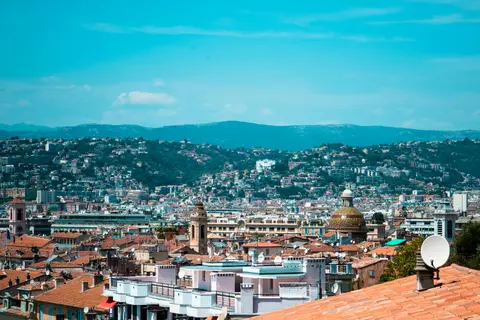
The port of Nice is a vibrant gateway to the French Riviera, offering a rich tapestry of history, stunning architecture, and delectable local cuisine. Must-do experiences include savoring local specialties at the bustling Cours Saleya Market and exploring the charming streets of Vieux Nice. The best time to visit is during the spring and early fall when the weather is mild and the city is alive with cultural festivities.
Day 28
Day 28
At Sea
Day 29
Day 29
Vidin
Arrive 08:00Depart 18:00

Vidin is a captivating port town on the Danube River known for its rich history, eclectic architecture, and vibrant local culture. Must-do experiences include exploring the Baba Vida Fortress and savoring local dishes like **kavarma** and **lutenitsa**. The best time to visit is during the spring and autumn months when the weather is pleasant and the local markets are bustling with activity.
Day 30
Day 30
Versailles
Arrive 07:00Depart 18:00
Versailles is the legendary seat of French royal power, home to the Chateau de Versailles and its 800-hectare formal gardens — perhaps the most influential palace complex ever built. Must-dos include the Hall of Mirrors, the Grandes Eaux Musicales fountain shows, and browsing the Marche Notre-Dame food market in town. Visit April through October for the gardens in full bloom and weekend fountain performances.
Day 31
Day 31
Monte Carlo
Arrive 07:00
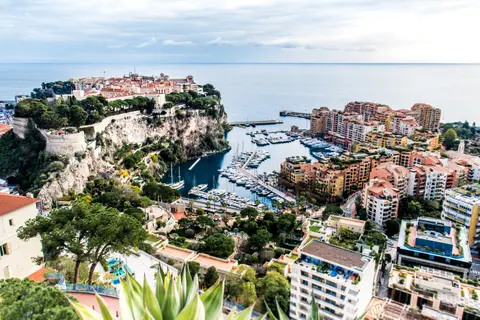
Monte Carlo, Monaco is a sovereign principality on the French Riviera where centuries of Grimaldi rule have forged an extraordinary concentration of elegance — from the legendary Casino de Monte-Carlo to the cliff-top Oceanographic Museum founded by Prince Albert I. No visit is complete without savouring *barbagiuan* at the Condamine market and exploring the old town of Monaco-Ville, where the cathedral and prince's palace command sweeping Mediterranean views. The most luminous months are May through September, with late spring offering the electric atmosphere of the Grand Prix season alongside gentler crowds and pristine coastal light.
Day 1
Monte Carlo
Monte Carlo, Monaco is a sovereign principality on the French Riviera where centuries of Grimaldi rule have forged an extraordinary concentration of elegance — from the legendary Casino de Monte-Carlo to the cliff-top Oceanographic Museum founded by Prince Albert I. No visit is complete without savouring *barbagiuan* at the Condamine market and exploring the old town of Monaco-Ville, where the cathedral and prince's palace command sweeping Mediterranean views. The most luminous months are May through September, with late spring offering the electric atmosphere of the Grand Prix season alongside gentler crowds and pristine coastal light.
Day 2
At Sea
Day 3
Vidin
Arrive 08:00Depart 18:00
Vidin is a captivating port town on the Danube River known for its rich history, eclectic architecture, and vibrant local culture. Must-do experiences include exploring the Baba Vida Fortress and savoring local dishes like **kavarma** and **lutenitsa**. The best time to visit is during the spring and autumn months when the weather is pleasant and the local markets are bustling with activity.
Day 4
Versailles
Arrive 07:00Depart 18:00
Versailles is the legendary seat of French royal power, home to the Chateau de Versailles and its 800-hectare formal gardens — perhaps the most influential palace complex ever built. Must-dos include the Hall of Mirrors, the Grandes Eaux Musicales fountain shows, and browsing the Marche Notre-Dame food market in town. Visit April through October for the gardens in full bloom and weekend fountain performances.
Day 5
Nice
Arrive 08:00Depart 18:00
The port of Nice is a vibrant gateway to the French Riviera, offering a rich tapestry of history, stunning architecture, and delectable local cuisine. Must-do experiences include savoring local specialties at the bustling Cours Saleya Market and exploring the charming streets of Vieux Nice. The best time to visit is during the spring and early fall when the weather is mild and the city is alive with cultural festivities.
Day 6
Marseille
Arrive 08:00
Founded by Greek sailors in 600 BC, Marseille is France's oldest and most viscerally alive city — a Mediterranean port where the catch is still sold from fishing boat decks at the Vieux-Port each morning beneath the golden Madonna of Notre-Dame de la Garde, gleaming on her basilica above the city. The bouillabaisse served at harbourside institutions such as Chez Fonfon is not merely a dish but a rite, its saffron-stained broth tying Marseille to its Hellenic roots. Explore the dramatic Calanques national park, a coastal labyrinth of turquoise coves just south of the city. Spring and autumn are the finest seasons.
Day 8
Sete
Arrive 08:00Depart 18:00
Sète is a canal-laced fishing port on France's Languedoc coast, built around the terminus of the Canal du Midi and crowned by the panoramic heights of Mont Saint-Clair. Visitors should not miss the iconic *tielle sétoise* pastry paired with Bouzigues oysters at the covered market, and the contemplative walk through the Cimetière Marin above the Mediterranean. Late spring through early autumn offers the finest conditions, with September bringing warm seas, golden light, and the spirited jousting tournaments on the canal that have defined Sète's character for over three hundred years.
Day 9
Roses
Arrive 08:00Depart 18:00
Roses is a historic Catalan fishing town on the Costa Brava, where Greek ruins inside a sixteenth-century fortress overlook a sheltered bay renowned for its prized red prawns and proximity to Dalí country. Must-dos include touring the Ciutadella's layered archaeological site, tasting gamba de Roses at a harbor restaurant, and hiking the surreal Cap de Creus coastline. Visit May to June or September to October for warm weather without peak crowds.
Day 10
Trapani (Sicily)
Arrive 08:00Depart 18:00
Trapani is western Sicily's sickle-shaped port city where ancient salt flats, cloud-wrapped medieval Erice, and the crystal-clear Egadi Islands converge at the Mediterranean's cultural crossroads. Visit April through October via Seabourn or Windstar for cable-car ascents to Norman-era pastry shops, sunset salt-flat reflections, and the Arab-influenced seafood couscous that distinguishes this coast from anywhere else in Italy.
Day 11
Salerno
Arrive 08:00
Salerno is a historic Campanian port city nestled between the Amalfi Coast and Cilento National Park, home to Europe's first medieval medical school and a magnificent Romanesque cathedral with Byzantine bronze doors. Visitors should not miss the Lungomare Trieste promenade at sunset and a plate of hand-rolled scialatielli ai frutti di mare in the atmospheric old town. The mild Mediterranean climate makes Salerno enchanting year-round, though late spring through early autumn offers the most luminous light and the fullest expression of its coastal character.
Day 12
Valencia
Arrive 08:00Depart 18:00
Valencia, Spain's luminous third city, dazzles with a creative energy anchored by two thousand years of layered civilization — Roman foundations, Moorish irrigation gardens, a Gothic cathedral housing what many believe to be the Holy Grail, and Santiago Calatrava's futuristic City of Arts and Sciences gleaming beside a park-filled riverbed. The city invented paella over an open fire of orange-wood in the surrounding huerta, and the Las Fallas festival each March — when neighborhoods compete to erect and then ceremonially burn towering satirical sculptures — is one of Europe's most spectacular celebrations. Valencia's Mediterranean climate makes it exceptional year-round.
Day 13
Cartagena
Arrive 08:00Depart 18:00
Cartagena, Spain, is a storied Mediterranean port city founded by the Carthaginians in 227 BC, where a spectacularly preserved Roman Theatre and Modernista architecture reveal layers of civilisation along a sheltered natural harbour. Visitors should not miss the caldero rice at a harbourside restaurant and a morning exploring the archaeological quarter from the Roman Forum to the Punic Wall. The mild Murcian climate makes autumn through late spring ideal, when temperatures invite leisurely wandering without the intensity of high summer.
Day 14
Motril
Arrive 08:00Depart 18:00
Motril, a captivating port on the Costa Tropical, shines with its rich history and unique blend of cultures, making it a perfect stop for travelers seeking both relaxation and local charm. Must-try experiences include savoring *tortilla del Sacromonte* and visiting the Mercado Municipal de Abastos. The best time to visit is in spring or fall, when the mild climate and local festivities create an enchanting atmosphere.
Day 15
Melilla
Arrive 08:00Depart 16:00
Melilla is a Spanish autonomous city on the North African coast, home to Spain's second-largest collection of Art Nouveau architecture and a unique multicultural blend of Spanish, Amazigh, Sephardic, and Sindhi communities. Must-dos include exploring the Modernista facades designed by Gaudí's student Enrique Nieto, wandering the fifteenth-century fortress, and tasting the fusion cuisine at the central market. April through October offers the warmest Mediterranean weather for this extraordinary cultural crossroads.
Day 16
Solar Eclipse
Arrive 18:00Depart 21:00
Day 17
Palma de Mallorca
Arrive 08:00Depart 22:00
Palma de Mallorca announces itself with one of the most spectacular Gothic cathedrals in the world — La Seu, its honey-coloured sandstone buttresses rising directly from the bay, its interior modified by Antoni Gaudí and illuminated by the world's largest Gothic rose window. The old town behind it is a quarter of Arab baths, Renaissance palaces converted into boutique hotels, and the Passeig del Born — a plane-tree-shaded promenade where Balearic life conducts itself with unhurried grace. The local ensaïmada pastry and fresh sobrasada sausage from the island's black pigs are essential breakfast rituals. Visit May, June, or September: warm, brilliant, and measurably calmer than the July–August peak.
Day 18
At Sea
Day 19
Saint Tropez
Arrive 08:00Depart 18:00
Saint-Tropez is the legendary Côte d'Azur fishing port turned global glamour destination, where Provençal authenticity endures beneath the mythology of yachts and celebrities. Must-dos include browsing the Musée de l'Annonciade's Fauvist masterpieces, tasting tarte tropézienne and fresh-caught rouget, and strolling the Sentier du Littoral coastal path to hidden coves. May through June and September through October offer the best weather with fewer crowds.
Day 20
La Ciotat
Arrive 07:00Depart 16:00
La Ciotat is a Provencal port town between Marseille and Toulon, famous as the birthplace of cinema at the Eden Theatre — the world's oldest movie house — and gateway to the dramatic Calanques limestone inlets. Must-dos include visiting the historic Eden Theatre, swimming in the turquoise Calanque de Figuerolles, and feasting on bouillabaisse at the Vieux Port. Visit May through October for warm Mediterranean swimming and vibrant open-air dining.
Day 21
Salerno
Arrive 07:00Depart 17:00
Salerno is a historic Campanian port city nestled between the Amalfi Coast and Cilento National Park, home to Europe's first medieval medical school and a magnificent Romanesque cathedral with Byzantine bronze doors. Visitors should not miss the Lungomare Trieste promenade at sunset and a plate of hand-rolled scialatielli ai frutti di mare in the atmospheric old town. The mild Mediterranean climate makes Salerno enchanting year-round, though late spring through early autumn offers the most luminous light and the fullest expression of its coastal character.
Day 22
Trapani (Sicily)
Arrive 08:00Depart 18:00
Trapani is western Sicily's sickle-shaped port city where ancient salt flats, cloud-wrapped medieval Erice, and the crystal-clear Egadi Islands converge at the Mediterranean's cultural crossroads. Visit April through October via Seabourn or Windstar for cable-car ascents to Norman-era pastry shops, sunset salt-flat reflections, and the Arab-influenced seafood couscous that distinguishes this coast from anywhere else in Italy.
Day 23
Roses
Arrive 08:00Depart 18:00
Roses is a historic Catalan fishing town on the Costa Brava, where Greek ruins inside a sixteenth-century fortress overlook a sheltered bay renowned for its prized red prawns and proximity to Dalí country. Must-dos include touring the Ciutadella's layered archaeological site, tasting gamba de Roses at a harbor restaurant, and hiking the surreal Cap de Creus coastline. Visit May to June or September to October for warm weather without peak crowds.
Day 24
Sete
Arrive 08:00Depart 18:00
Sète is a canal-laced fishing port on France's Languedoc coast, built around the terminus of the Canal du Midi and crowned by the panoramic heights of Mont Saint-Clair. Visitors should not miss the iconic *tielle sétoise* pastry paired with Bouzigues oysters at the covered market, and the contemplative walk through the Cimetière Marin above the Mediterranean. Late spring through early autumn offers the finest conditions, with September bringing warm seas, golden light, and the spirited jousting tournaments on the canal that have defined Sète's character for over three hundred years.
Day 25
Marseille
Arrive 08:00
Founded by Greek sailors in 600 BC, Marseille is France's oldest and most viscerally alive city — a Mediterranean port where the catch is still sold from fishing boat decks at the Vieux-Port each morning beneath the golden Madonna of Notre-Dame de la Garde, gleaming on her basilica above the city. The bouillabaisse served at harbourside institutions such as Chez Fonfon is not merely a dish but a rite, its saffron-stained broth tying Marseille to its Hellenic roots. Explore the dramatic Calanques national park, a coastal labyrinth of turquoise coves just south of the city. Spring and autumn are the finest seasons.
Day 27
Nice
Arrive 08:00Depart 18:00
The port of Nice is a vibrant gateway to the French Riviera, offering a rich tapestry of history, stunning architecture, and delectable local cuisine. Must-do experiences include savoring local specialties at the bustling Cours Saleya Market and exploring the charming streets of Vieux Nice. The best time to visit is during the spring and early fall when the weather is mild and the city is alive with cultural festivities.
Day 28
At Sea
Day 29
Vidin
Arrive 08:00Depart 18:00
Vidin is a captivating port town on the Danube River known for its rich history, eclectic architecture, and vibrant local culture. Must-do experiences include exploring the Baba Vida Fortress and savoring local dishes like **kavarma** and **lutenitsa**. The best time to visit is during the spring and autumn months when the weather is pleasant and the local markets are bustling with activity.
Day 30
Versailles
Arrive 07:00Depart 18:00
Versailles is the legendary seat of French royal power, home to the Chateau de Versailles and its 800-hectare formal gardens — perhaps the most influential palace complex ever built. Must-dos include the Hall of Mirrors, the Grandes Eaux Musicales fountain shows, and browsing the Marche Notre-Dame food market in town. Visit April through October for the gardens in full bloom and weekend fountain performances.
Day 31
Monte Carlo
Arrive 07:00
Monte Carlo, Monaco is a sovereign principality on the French Riviera where centuries of Grimaldi rule have forged an extraordinary concentration of elegance — from the legendary Casino de Monte-Carlo to the cliff-top Oceanographic Museum founded by Prince Albert I. No visit is complete without savouring *barbagiuan* at the Condamine market and exploring the old town of Monaco-Ville, where the cathedral and prince's palace command sweeping Mediterranean views. The most luminous months are May through September, with late spring offering the electric atmosphere of the Grand Prix season alongside gentler crowds and pristine coastal light.
Cabin Categories
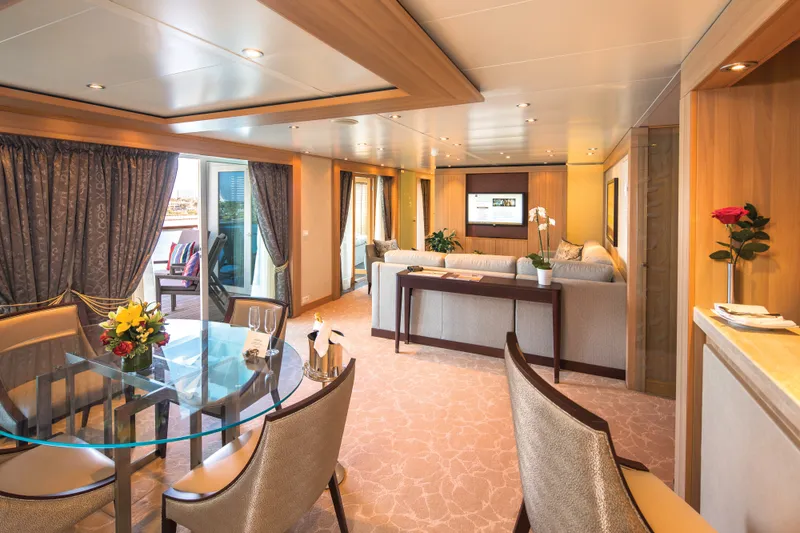
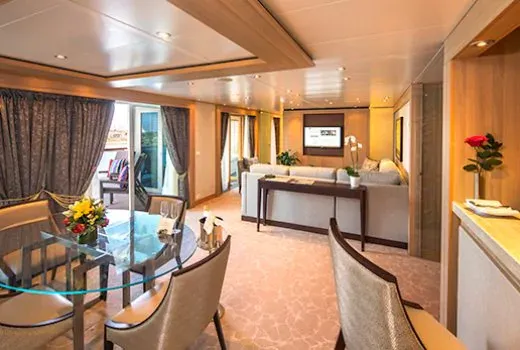
Grand Wintergarden Suite
Suite
1403 m²Max 5
GR
Approximately 1189 square feet (110 square meters) of inside space, plus two verandas totaling 214 square feet (20 square meters)
Grand Wintergarden Suites feature:
Large windows
Dining for six
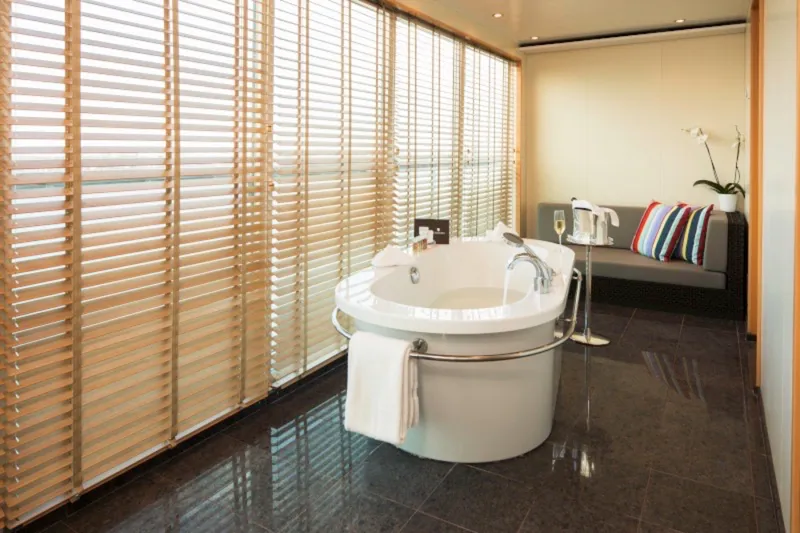
Glass-enclosed solarium with tub and day bed
Bathroom with whirlpool bathtub
Guest bath
Glass-enclosed solarium with tub and day bed
Two bedrooms
Two bathrooms (one whirlpool)
Convertible sofa bed for one
Pantry with wet bar
Two flat-screen TVs
Complimentary Internet/Wi-Fi service.
Queen or Twin ConfigurationLounge AreaShowerBathWhirlpool BathSuite Benefits+14
View Details
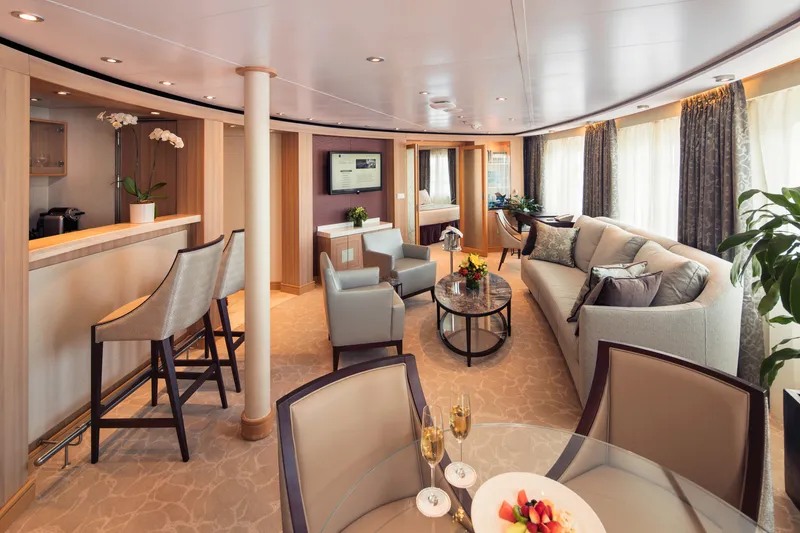
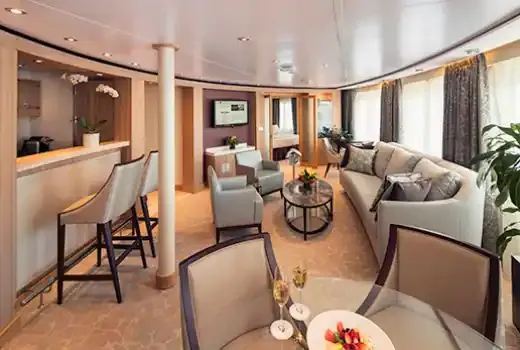
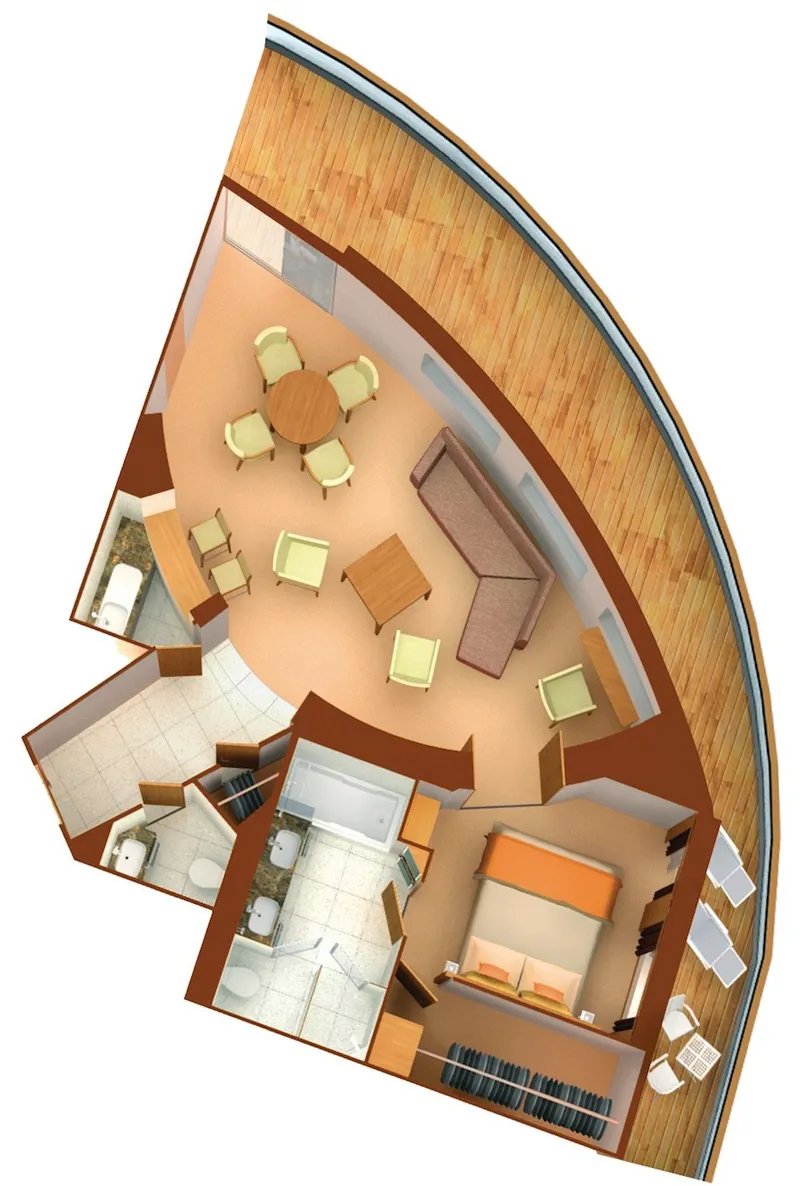
Owner's Suite
Suite
526–593 m²Max 3
O1O2
Approximately 526 and 593 square feet (49 and 55 square meters) of inside space, plus one veranda of 133 & 354 square feet (12 and 33 square meters).
Owner's Suites feature:
Expansive ocean views
Forward-facing windows
Dining for four to six
Bathroom with whirlpool bathtub
Guest bath
Pantry with wet bar
Two flat-screen TVs
Complimentary Internet/Wi-Fi service.
Queen or Twin ConfigurationLounge AreaShowerBathWhirlpool BathTV+10
View Details
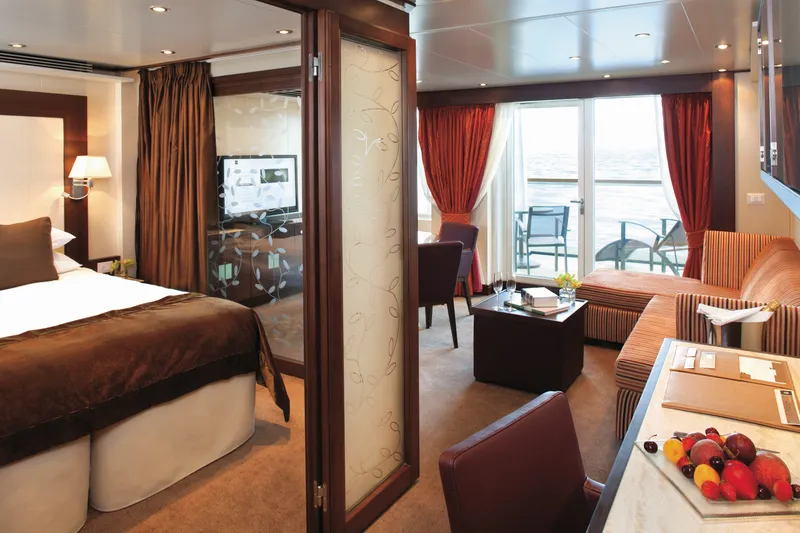
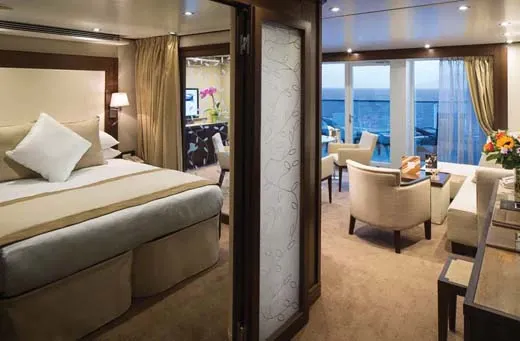
Penthouse Spa Suite
Suite
536–539 m²Max 2
PS
Approximately 536 to 539 square feet (50 square meters) of inside space, plus one veranda of 167 to 200 square feet (16 to 19 square meters)
All Penthouse Spa Suite feature
Dining table for two to four
Separate bedroom
Glass door to veranda
Two flat-screen TVs
Fully stocked bar
Spacious bathroom with tub, shower and large vanity
Queen or Twin ConfigurationShowerBathTVSafeHair Dryer+11
View Details
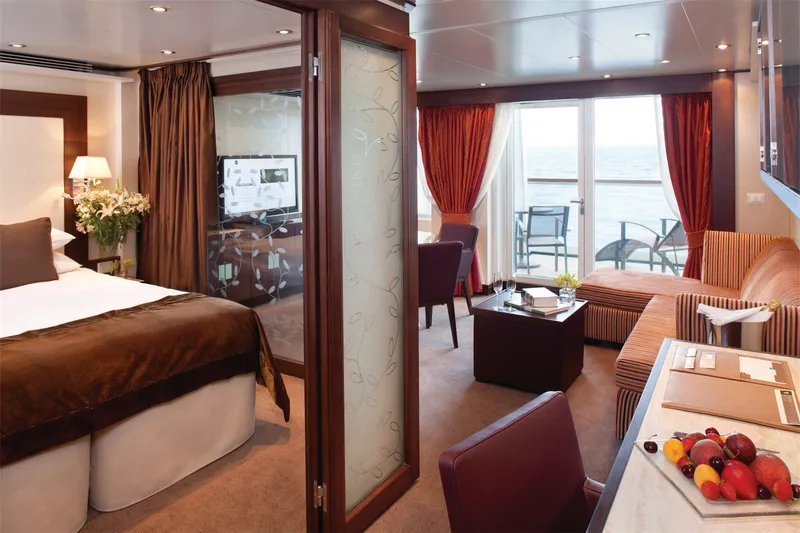
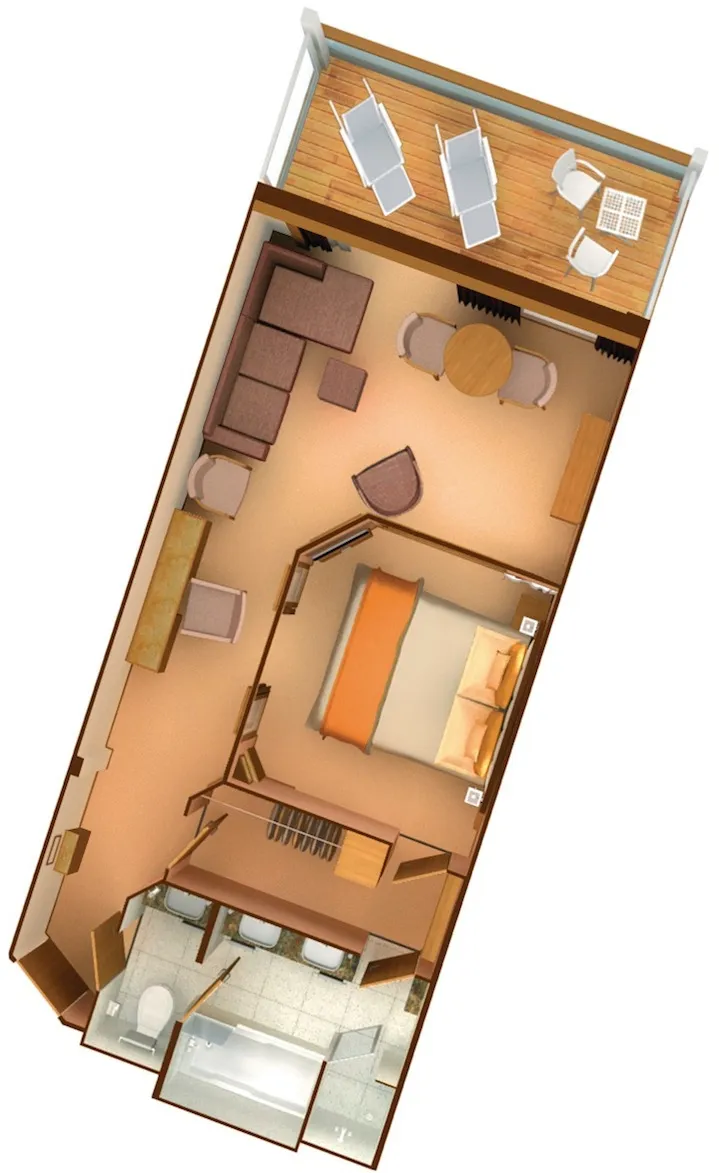
Penthouse Suite
Suite
Penthouse Suite
436 m²Max 2
PH
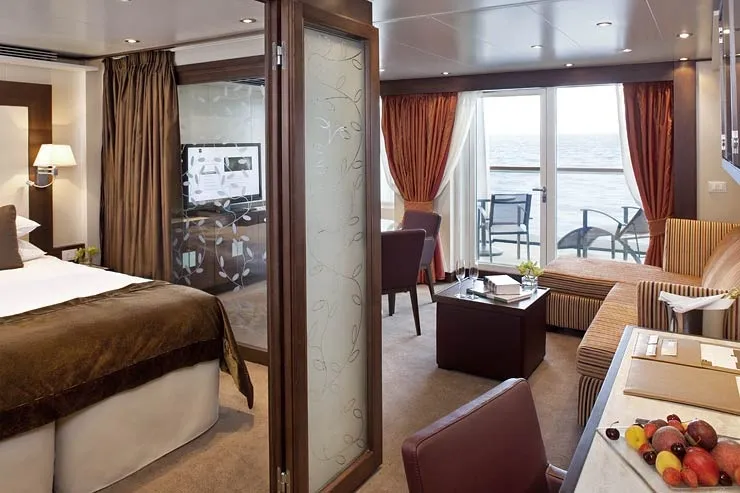
Approximately 436 square feet (41 square meters) of inside space, plus one veranda of 98 square feet (9 square meters)
All Penthouse Suite feature
Dining table for two to four
Separate bedroom
Glass door to veranda
Two flat-screen TVs
Fully stocked bar
Spacious bathroom with tub, shower and large vanity.
Queen or Twin ConfigurationLounge AreaShowerTVSafeHair Dryer+10
View Details
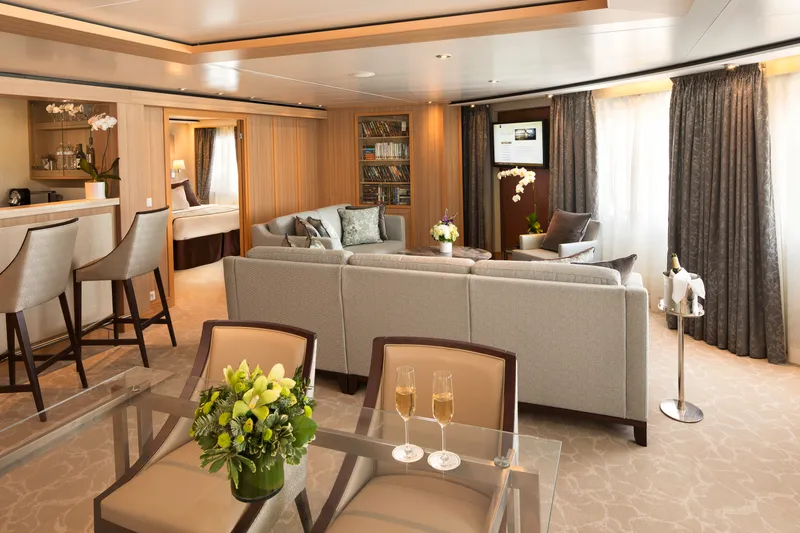
Signature Suite
Suite
Signature Suite
859 m²Max 4
SS
Approximately 859 square feet (80 square meters) of inside space, plus one veranda of 493 square feet (46 square meters)
Signature Suites feature
Expansive ocean views
Forward-facing windows
Dining for four to six
Bathroom with whirlpool bathtub
Guest bath
Pantry with wet bar
Two flat-screen TVs
Complimentary Internet/Wi-Fi service.
Queen or Twin ConfigurationSecond BedroomShowerBathWhirlpool BathTV+12
View Details
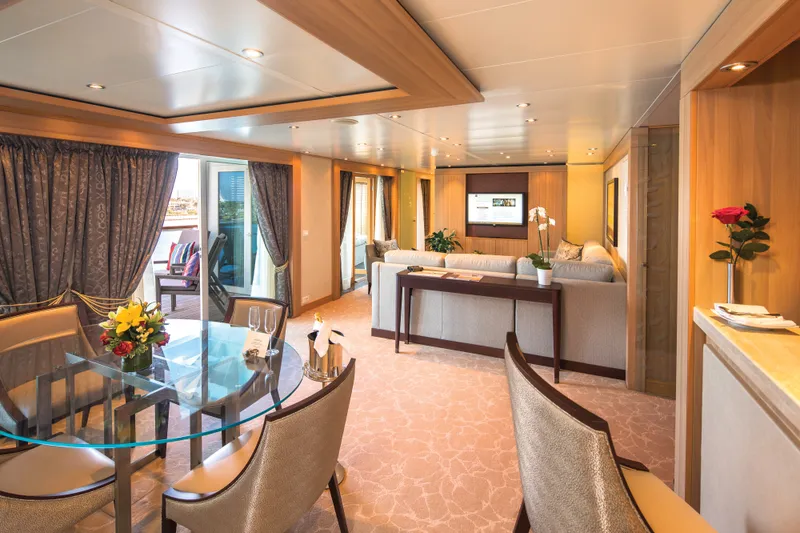
Wintergarden Suite
Suite
914 m²Max 3
WG
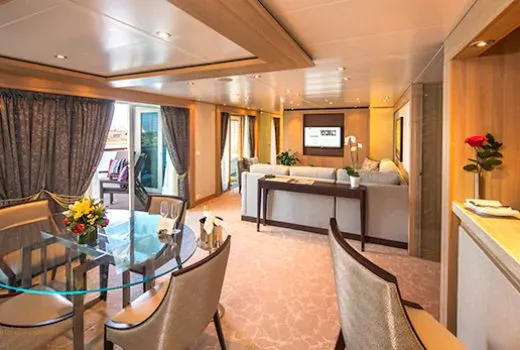
Approximately 914 square feet (85 square meters) of inside space, one veranda of 183 sq. ft. (17 square meters.).
Wintergarden Suites feature:
Large windows
Dining for six
Whirlpool bathtub
Guest bath
Convertible sofa bed for one
Pantry with wet bar
Glass-enclosed solarium with tub and day bed
Two closets
Two flat-screen TVs
Complimentary Internet/Wi-Fi service
Queen or Twin ConfigurationSofa BedLounge AreaShowerBathWhirlpool Bath+13
View Details
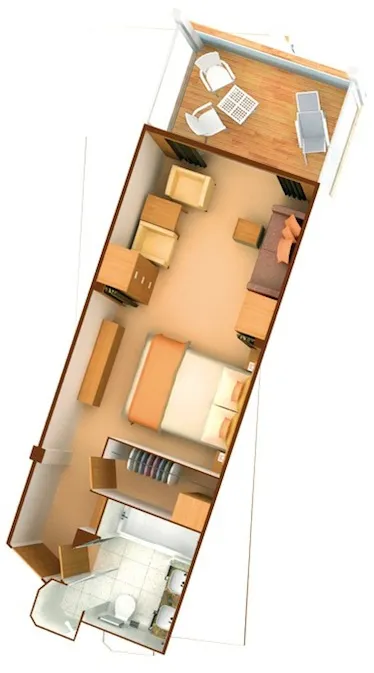
Veranda Suite
Suite
Veranda Suite
246–302 m²Max 2
V1V2V3V4
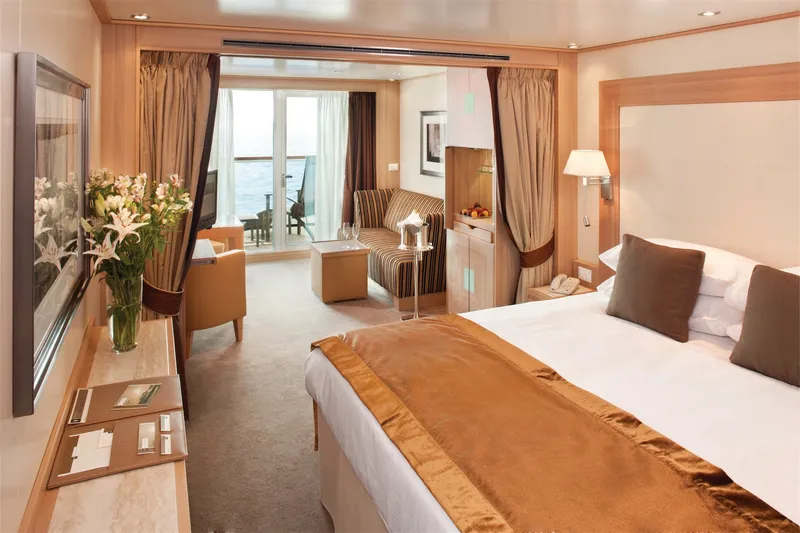
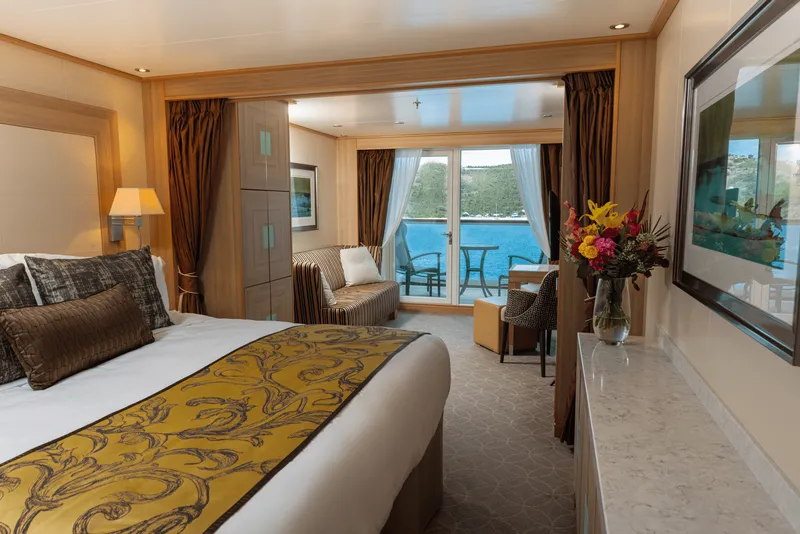
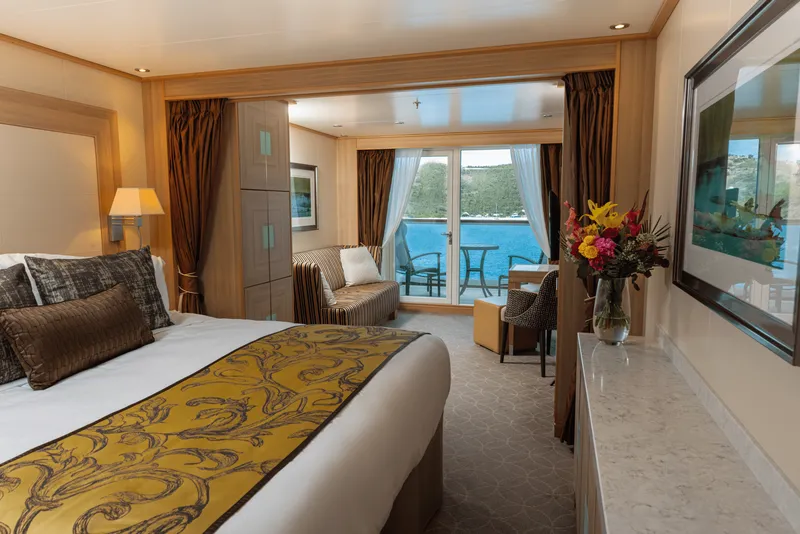
Located on Deck 7; Approximately 300 square feet (28 square meters) of inside space, plus one veranda of 65 square feet (6 square meters)
All Veranda Suites feature
A full-length window
Glass door to private veranda
Comfortable living area
Queen-size bed or two twin beds
Dining table for two
Walk-in closet
Interactive flat-screen television with music and movies
Fully stocked bar and refrigerator
Makeup vanity
Spacious bathroom with separate tub and shower
Queen or Twin ConfigurationLounge AreaShowerBathTVSafe+11
View Details
Veranda Suite Guarantee
Suite
Max 2
RB
Veranda Suite Guarantee
BathQueen or Twin ConfigurationLounge AreaShowerToiletries ProvidedRoom Service Available+9
View Details
Ocean View Suite
Suite
Ocean View Suite
295 m²Max 2
AA1
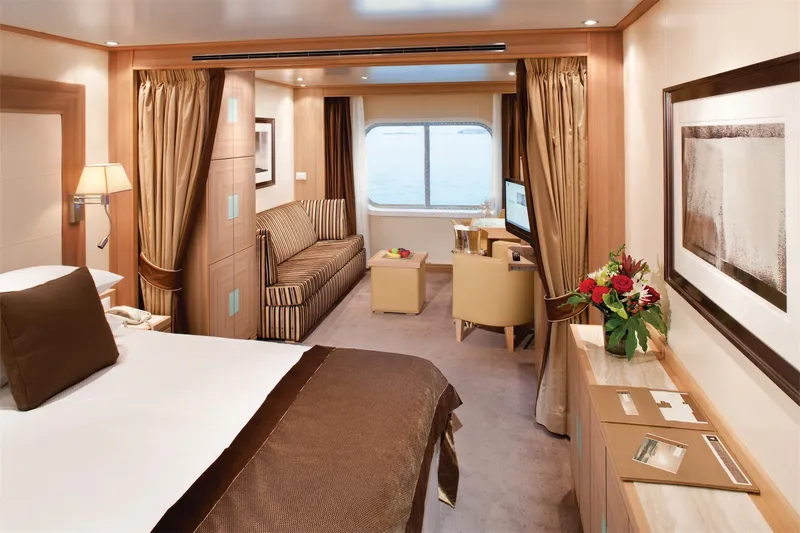
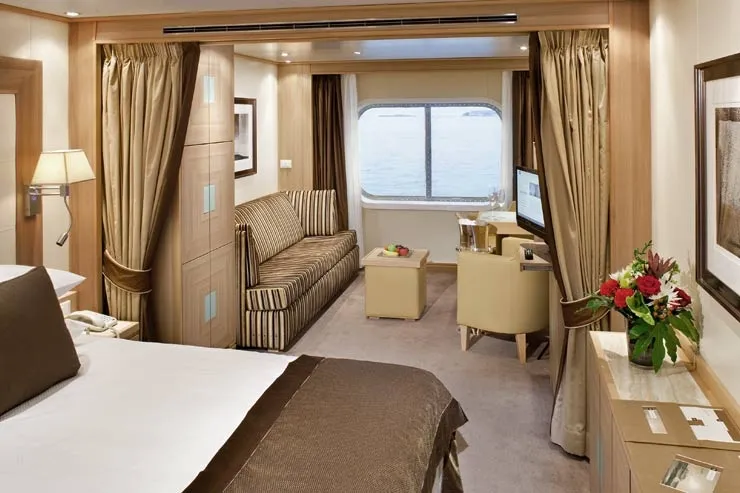
Located on Deck 4; Approximately 295 square feet (28 square meters) of inside space
All Ocean View Suites feature:
A large picture window
Comfortable living area
Queen-size bed or two twin beds
Dining table for two
Walk-in closet
Interactive flat-screen television with music and movies
Fully stocked bar and refrigerator
Makeup vanity
Spacious bathroom with separate tub and shower.
Queen or Twin ConfigurationShowerBathTVSafeHair Dryer+8
View Details
Interested in This Voyage?
Our cruise specialists can help you find the perfect cabin and the best available pricing.
(+886) 02-2721-7300Contact Advisor