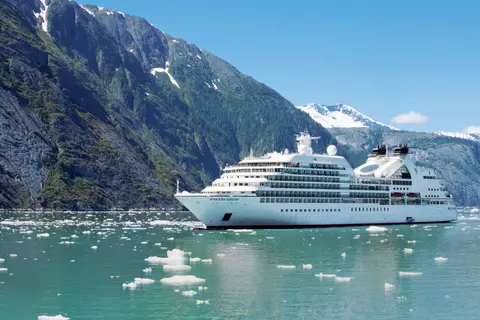
Seabourn5662B
Mediterranean Overture
Date
2026-09-26
Duration
30 nights
Departure Port
Civitavecchia
Italy
Arrival Port
Monte Carlo
Monaco
Rating
—
Theme
—
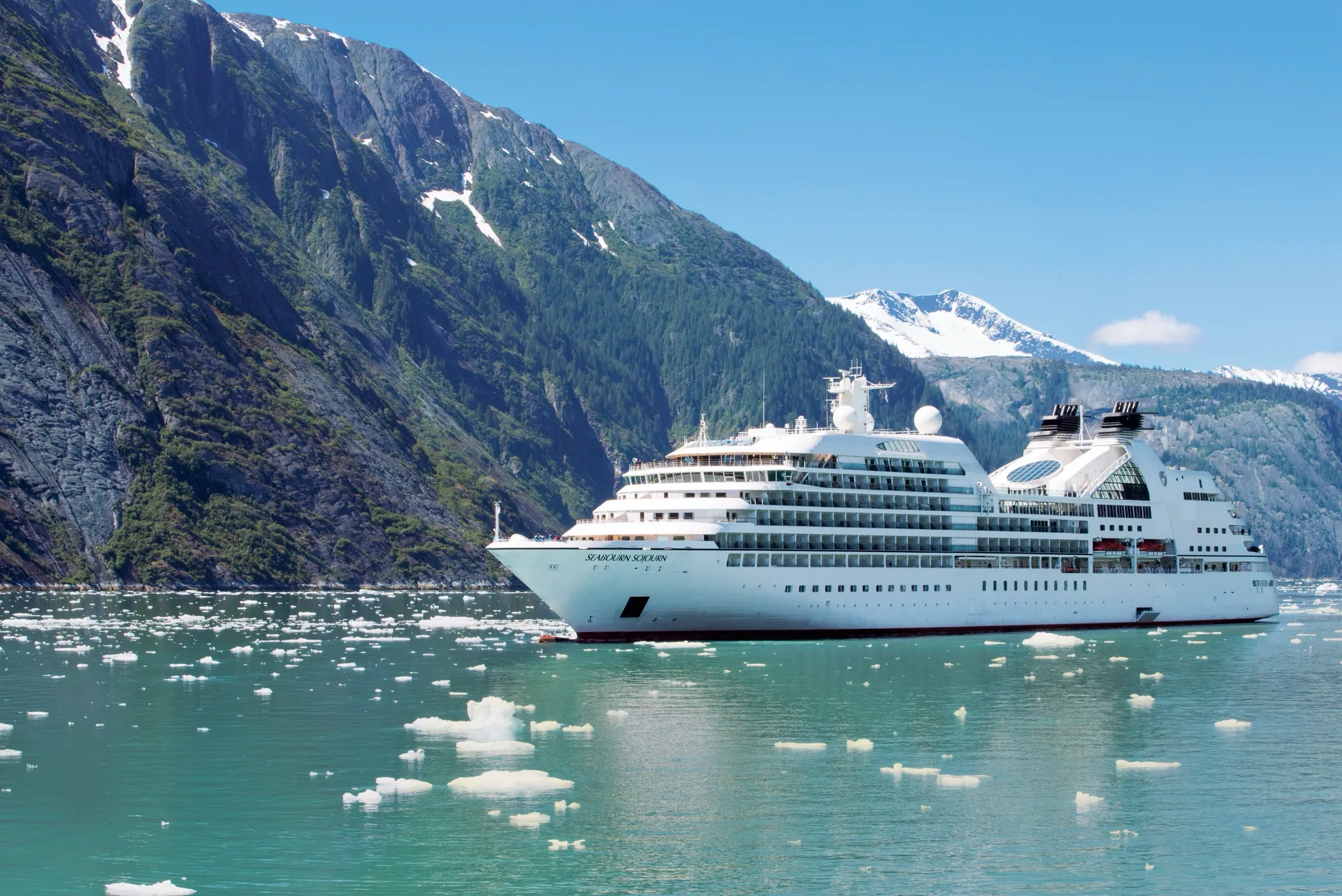
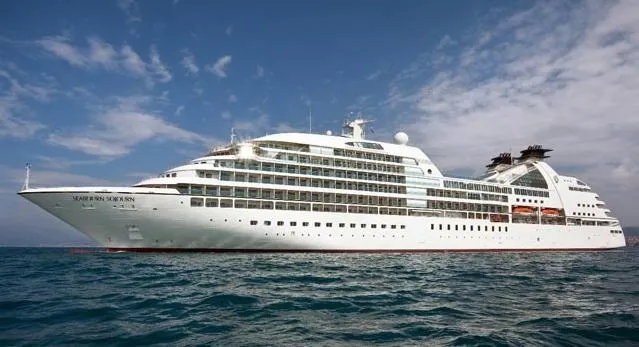


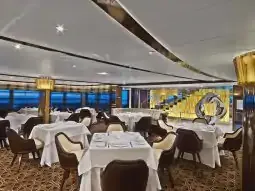
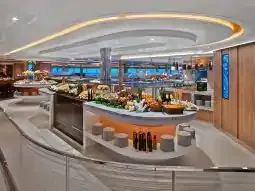

Seabourn
Seabourn Sojourn
Launched
2010
Refitted
2018
Tonnage
32,000 GT
Passengers
450
Cabins
225
Crew
330
Length
650 m
Width
25.6 m
Speed
19 knots
Adults Only
No
Itinerary
Day 1
Day 1
Civitavecchia
Depart 17:00
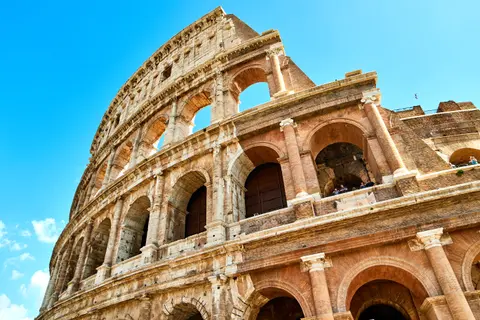
Rome's ancient maritime gateway since the Emperor Trajan commissioned its harbour in 106 AD, Civitavecchia is the natural prologue to the Eternal City — just seventy minutes southeast by express rail. The port's Renaissance fortress, designed in part by Michelangelo, anchors a working waterfront that has welcomed travellers for millennia. Beyond Rome's unmissable monuments, consider an afternoon in the Civitavecchia thermal baths, drawing on mineral waters prized since antiquity. Spring and autumn offer the ideal balance of mild weather and manageable crowds for exploring the capital's layered history.
Day 2
Day 2
Portofino
Arrive 08:00Depart 18:00
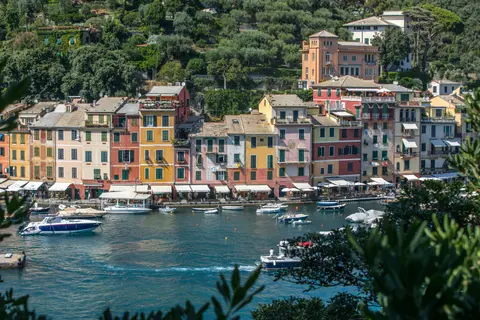
Portofino is a jewel-box fishing village on Italy's Ligurian coast, renowned for its pastel harbour, Castello Brown fortress views, and exquisite pesto-dressed trofie pasta at waterside trattorias. Visitors should walk the coastal trail to the Cristo degli Abissi underwater statue at San Fruttuoso and savour focaccia di Recco with a glass of local Vermentino. The ideal season stretches from late April through October, with September offering the perfect balance of warm Mediterranean light and the intimate calm that returns after summer's peak.
Day 3
Day 3
Livorno
Arrive 07:00Depart 19:00
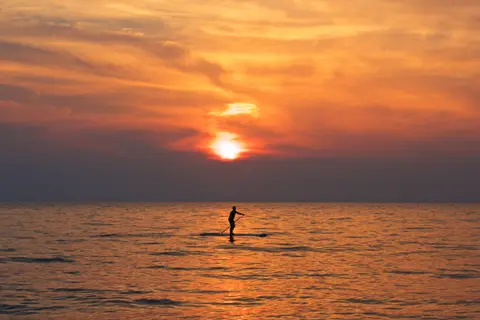
Purpose-built as a Medici utopia in the late sixteenth century, Livorno was conceived from the outset as a city without discrimination — its founding Leggi Livornine granted equal rights to Jews, Christians, Muslims, and merchants of every nation, making it one of the most cosmopolitan cities in Renaissance Europe. Today, the Venetian-style canals of the Venezia Nuova quarter reflect colourful palazzi with a distinctly faded glamour, while the Mercato Centrale's fish counters display the cacciucco ingredients — a robust Livornese brodetto of five sea creatures — that make this port city a pilgrimage for serious eaters. Day trips to Pisa and Lucca are effortless from here. The season runs April through October.
Day 4
Day 4
Tournon-sur-Rhône
Arrive 08:00Depart 18:00
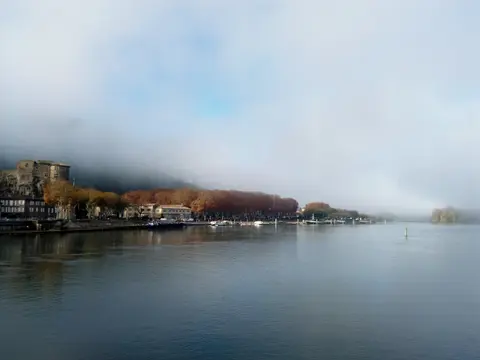
Tournon-sur-Rhône is a captivating port town steeped in history, known for its medieval architecture and vibrant culinary scene. Must-do experiences include savoring local specialties such as caillettes and exploring the bustling Saturday market. The best time to visit is in the late spring or early fall when the weather is mild and the local festivities are in full swing.
Day 5
Day 5
Sanary Sur Mer
Arrive 07:00Depart 16:00
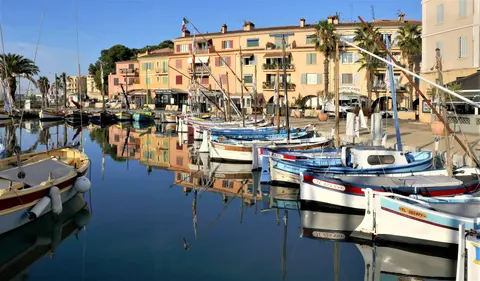
Sanary-sur-Mer is an authentically preserved Provencal fishing port on France's Var coast, where colourful pointu boats, a daily harbour fish market, and the birthplace of modern scuba diving create a Mediterranean village of genuine charm. Must-dos include the harbour fish market, bouillabaisse at a waterfront restaurant paired with Bandol wine, and the Ile des Embiez. Visit May or June for warm Provencal light and the season's first rose wines.
Day 6
Day 6
At Sea
Day 7
Day 7
Melilla
Arrive 12:01Depart 20:00
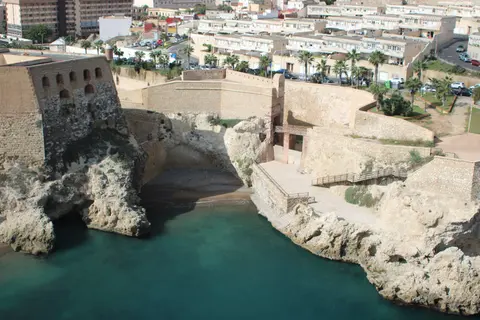
Melilla is a Spanish autonomous city on the North African coast, home to Spain's second-largest collection of Art Nouveau architecture and a unique multicultural blend of Spanish, Amazigh, Sephardic, and Sindhi communities. Must-dos include exploring the Modernista facades designed by Gaudí's student Enrique Nieto, wandering the fifteenth-century fortress, and tasting the fusion cuisine at the central market. April through October offers the warmest Mediterranean weather for this extraordinary cultural crossroads.
Day 8
Day 8
Malaga
Arrive 07:00Depart 17:00
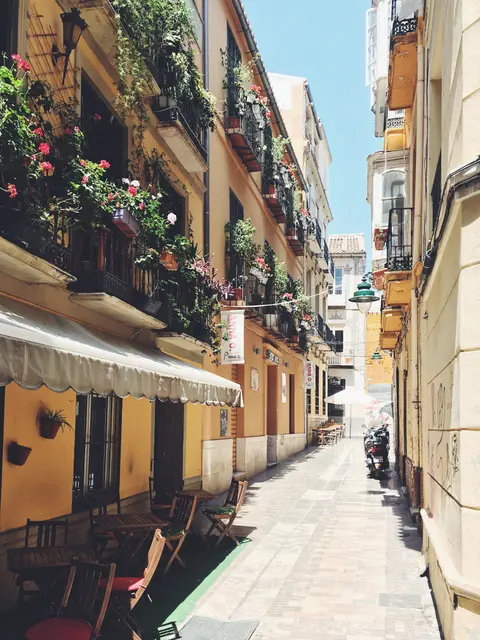
Málaga distils three thousand years of Mediterranean civilisation into one of Andalusia's most compelling port cities, where the Moorish Alcazaba fortress surveys a modern waterfront of elegant promenades and sun-drenched café terraces. Do not leave without visiting the Museo Picasso — the artist was born here in 1881 — and ascending to the ruined Castillo de Gibralfaro for panoramic views stretching to the Rif Mountains of Morocco on clear days. Malagueta anchovies fried in olive oil and the sweet Pedro Ximénez-laced dessert wine are the city's defining pleasures. The shoulder seasons of April, May, and October offer perfect Mediterranean warmth.
Day 9
Day 9
Cartagena
Arrive 09:00Depart 18:00
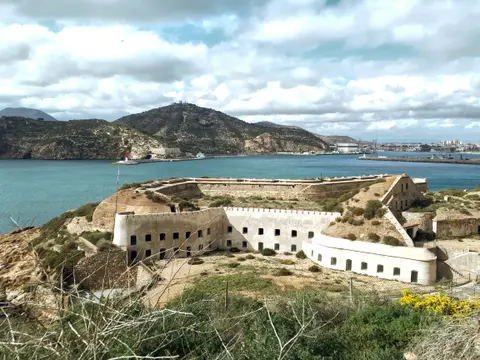
Cartagena, Spain, is a storied Mediterranean port city founded by the Carthaginians in 227 BC, where a spectacularly preserved Roman Theatre and Modernista architecture reveal layers of civilisation along a sheltered natural harbour. Visitors should not miss the caldero rice at a harbourside restaurant and a morning exploring the archaeological quarter from the Roman Forum to the Punic Wall. The mild Murcian climate makes autumn through late spring ideal, when temperatures invite leisurely wandering without the intensity of high summer.
Day 10
Day 10
Ibiza
Arrive 08:00Depart 18:00
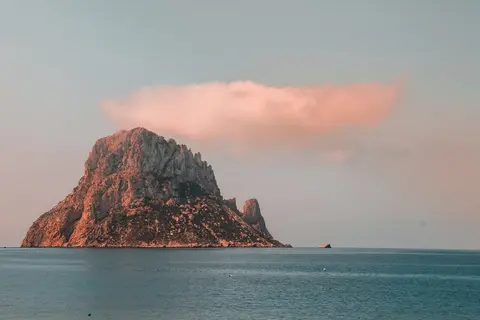
Beneath Ibiza's sun-drenched reputation as the world's clubbing capital lies a layered history stretching back to Phoenician traders who settled this Balearic island in 654 BC. The UNESCO-listed Dalt Vila — the walled hilltop citadel above Eivissa town — rewards exploration with Carthaginian burial grounds, Renaissance ramparts, and sweeping Mediterranean panoramas. For quieter pleasures, the crystalline coves of the island's north, such as Cala d'en Serra and Es Portitxol, rival any beach in Europe. The Phoenician necropolis of Puig des Molins is unmissable for history devotees. The season runs May through October, with June and September offering ideal weather without peak-summer crowds.
Day 11
Day 11
Salerno
Arrive 07:00
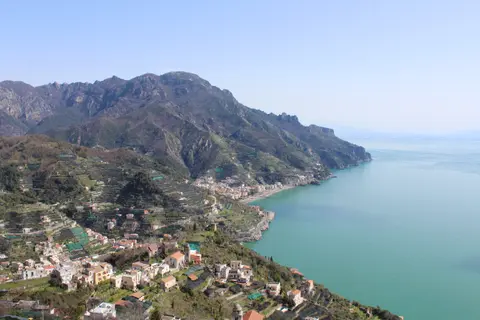
Salerno is a historic Campanian port city nestled between the Amalfi Coast and Cilento National Park, home to Europe's first medieval medical school and a magnificent Romanesque cathedral with Byzantine bronze doors. Visitors should not miss the Lungomare Trieste promenade at sunset and a plate of hand-rolled scialatielli ai frutti di mare in the atmospheric old town. The mild Mediterranean climate makes Salerno enchanting year-round, though late spring through early autumn offers the most luminous light and the fullest expression of its coastal character.
Day 12
Day 12
Palma de Mallorca
Arrive 07:00Depart 17:00
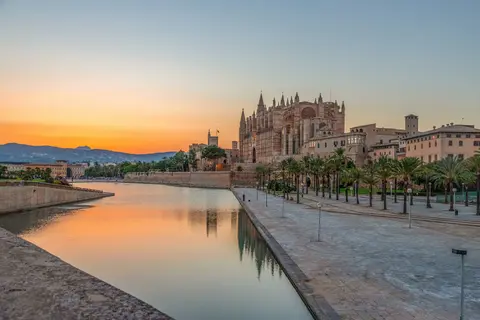
Palma de Mallorca announces itself with one of the most spectacular Gothic cathedrals in the world — La Seu, its honey-coloured sandstone buttresses rising directly from the bay, its interior modified by Antoni Gaudí and illuminated by the world's largest Gothic rose window. The old town behind it is a quarter of Arab baths, Renaissance palaces converted into boutique hotels, and the Passeig del Born — a plane-tree-shaded promenade where Balearic life conducts itself with unhurried grace. The local ensaïmada pastry and fresh sobrasada sausage from the island's black pigs are essential breakfast rituals. Visit May, June, or September: warm, brilliant, and measurably calmer than the July–August peak.
Day 13
Day 13
Mahon
Arrive 07:00Depart 16:00
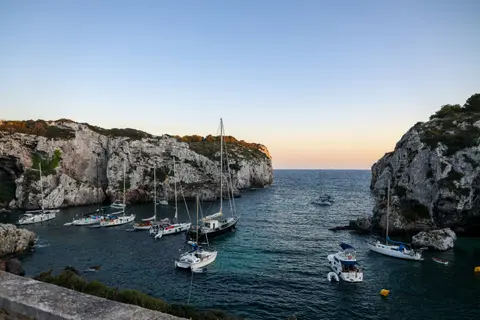
Mahón commands one of the Mediterranean's deepest natural harbours, a fjord-like inlet on Menorca that captivated British admirals, Phoenician traders, and Roman generals in turn — its Georgian townhouses and gin distilleries speaking eloquently to centuries of contested heritage. Explore the clifftop old town's baroque Santa María church with its 3,200-pipe organ, then cross the water to the imposing fortress of La Mola for sweeping harbour views. The island's prized caldereta de langosta, a slow-simmered lobster stew, is best savoured at the fishing village of Fornells. Visit between May and June or September and October for warmth without the summer crowds.
Day 14
Day 14
At Sea
Day 15
Day 15
Valletta
Arrive 09:00Depart 23:00
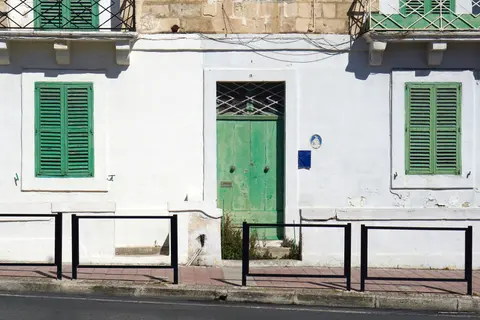
Valletta, the golden fortress capital of Malta, was hewn from a limestone peninsula in defiant haste after the Knights of Saint John — warrior monks of extraordinary valor — repulsed an overwhelming Ottoman assault in 1565. Its grid of steep baroque streets is dense with Caravaggio masterworks in the Co-Cathedral of St. John, shaded piazzas alive with café society, and bastions commanding breathtaking views over the Grand Harbour's legendary twin forts. The mild Mediterranean climate welcomes visitors year-round, though spring and autumn offer the most pleasurable temperatures for unhurried exploration of this compact UNESCO World Heritage capital.
Day 16
Day 16
Mgarr
Arrive 08:00Depart 16:00
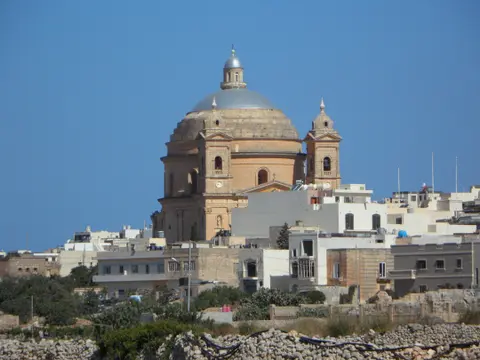
Mġarr is the harbor gateway to Gozo, Malta's greener sister island, home to the Ġgantija Temples—among the oldest free-standing structures on Earth, predating the pyramids—and the medieval Citadella fortress. Must-dos include visiting the 5,600-year-old temples, diving at Dwejra's dramatic coastline, and tasting fresh ġbejna cheese and rabbit stew. April through June and September through November offer ideal mild temperatures.
Day 17
Day 17
Burg
Arrive 08:00Depart 18:00
Burg, Germany is a distinctive port city where deep cultural heritage meets authentic local atmosphere, featured on itineraries by CroisiEurope. Must-do experiences include walking the historic center to experience the layered architectural heritage, and seeking out the regional culinary traditions at a locally favored establishment away from the port area. The optimal time to visit is June through August, when summer months bring the warmest temperatures and longest days.
Day 18
Day 18
Cagliari
Arrive 09:00Depart 18:00
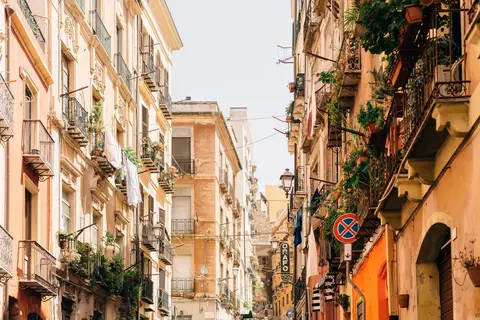
Cagliari, Sardinia's sun-drenched capital overlooking the Gulf of Angels, has absorbed three thousand years of Phoenician, Carthaginian, Roman, Pisan, and Spanish ambitions into a layered and deeply compelling Mediterranean city — where the flamingo-fringed salt lagoons stretching to the city's western edge create one of Europe's most surreal urban vistas. The Castello quarter's medieval ramparts enclose a cathedral, Pisan towers, and panoramic terraces that survey the entire city and coastline, while the Marina district below offers some of the finest bottarga pasta and fresh tuna in Italy. Visit May through September for beach perfection; the prehistoric Nuraghe Su Nuraxi at Barumini, a UNESCO Wonder, is an hour's drive north.
Day 19
Day 19
Olbia
Arrive 08:00Depart 18:00
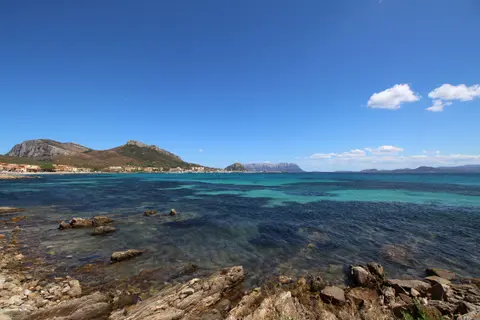
Olbia, Sardinia's northeastern gateway, offers three millennia of history from Carthaginian trading post to today's vibrant Italian city, too often bypassed in the rush to the Costa Smeralda. Sardinia's ceremonial suckling pig, DOCG Vermentino wines, and Bronze Age Nuragic ruins reward those who explore beyond the beach. AIDA, MSC Cruises, and Oceania Cruises dock at this convenient port where a walkable historic center and world-class coastline meet fiercely independent Sardinian culture.
Day 20
Day 20
Bonifacio
Arrive 08:00Depart 18:00
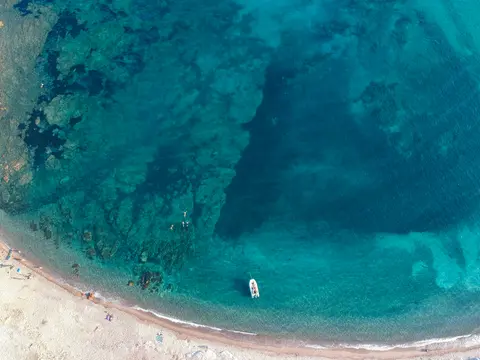
Bonifacio is a dramatically cliff-perched medieval citadel at Corsica's southern tip, where Genoese ramparts tower above a fjord-like natural harbour in the turquoise Strait of Bonifacio. Visitors should descend the vertiginous Escalier du Roi d'Aragon carved into the limestone cliffs and take a boat excursion to the pristine Lavezzi archipelago nature reserve for world-class snorkelling among sculpted granite formations. The ideal window is June or September, when the Mediterranean light is at its most luminous and the narrow streets of the haute ville remain blissfully uncrowded.
Day 21
Day 21
Civitavecchia
Arrive 07:00
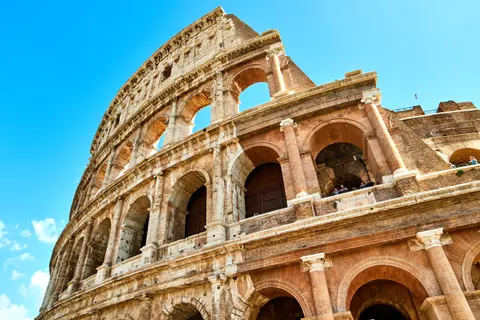
Rome's ancient maritime gateway since the Emperor Trajan commissioned its harbour in 106 AD, Civitavecchia is the natural prologue to the Eternal City — just seventy minutes southeast by express rail. The port's Renaissance fortress, designed in part by Michelangelo, anchors a working waterfront that has welcomed travellers for millennia. Beyond Rome's unmissable monuments, consider an afternoon in the Civitavecchia thermal baths, drawing on mineral waters prized since antiquity. Spring and autumn offer the ideal balance of mild weather and manageable crowds for exploring the capital's layered history.
Day 22
Day 22
Potsdam
Arrive 08:00Depart 18:00
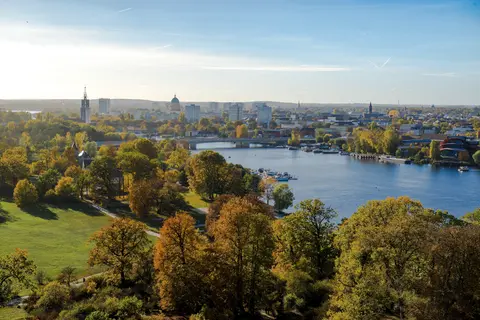
Potsdam is the former Prussian royal capital on the Havel River, home to the UNESCO-listed Sanssouci Palace and park — Frederick the Great's rococo masterpiece surrounded by 300 hectares of manicured gardens. Must-dos include touring the palace interiors, visiting the Cecilienhof where the Potsdam Conference shaped post-war Europe, and exploring the charming Dutch Quarter. May through October offers the best weather for enjoying the expansive palace grounds.
Day 23
Day 23
At Sea
Day 24
Day 24
Sarande
Arrive 07:00Depart 18:00
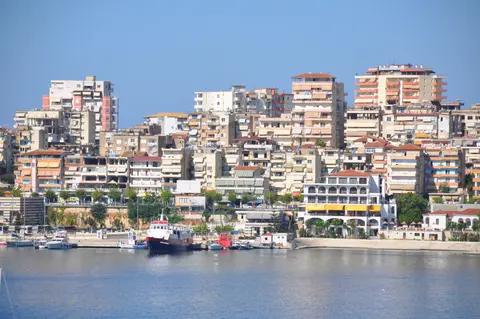
Sarandë is Albania's Ionian coast jewel, where the UNESCO-listed Butrint archaeological marvel and the impossibly turquoise Blue Eye spring create a Mediterranean experience rivaling Greece at a fraction of the cost. Visit June via Emerald Yacht Cruises or Virgin Voyages for six-civilization archaeological sites and Albania's exciting Mediterranean frontier.
Day 25
Day 25
Gallipoli
Arrive 07:00Depart 17:00
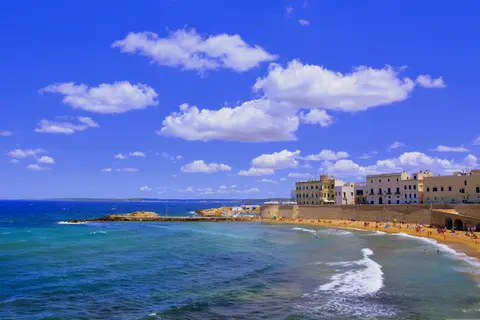
Gallipoli is a compelling Mediterranean port in Italy where centuries of history, vibrant local cuisine, and luminous coastal scenery converge. Visitors should explore the historic quarters on foot and surrender to the local dining culture, where fresh seafood and regional wines provide a masterclass in Mediterranean living. Best visited May through October, when the climate is at its most welcoming for outdoor exploration. Cruise lines including Windstar Cruises feature this port on their most compelling itineraries. Whether you have a few hours or a full day, the port rewards exploration at every pace and in every direction.
Day 26
Day 26
Taormina
Arrive 09:00Depart 21:00
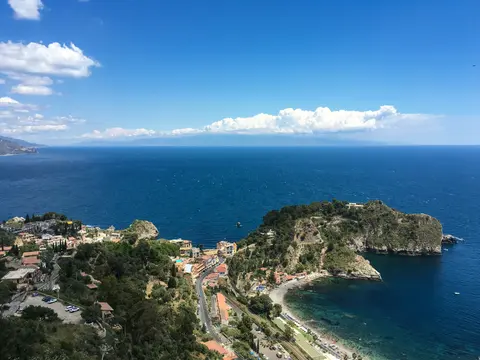
Taormina is a cliffside Sicilian jewel 200 meters above the Ionian Sea, featuring an ancient Greek theater with Mount Etna as its backdrop, the exquisite Isola Bella bay, and some of Sicily's finest cuisine. Must-dos include a performance at the Teatro Antico, the cable car to Isola Bella, and tasting Etna volcanic wines. April through June and September through October offer ideal temperatures.
Day 27
Day 27
Lipari
Arrive 07:00Depart 18:00
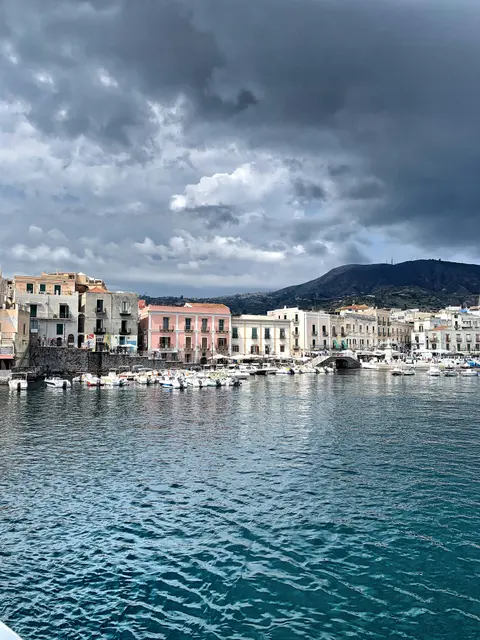
Lipari, the largest of Sicily's volcanic Aeolian Islands, has been a Mediterranean trading hub for over 6,000 years, featuring a dramatic Castello, world-class archaeological museum, and gateway access to Stromboli's erupting crater. Must-dos include exploring the fortified old town, tasting caper-laced Aeolian cuisine and Malvasia wine, and island-hopping to Vulcano and Stromboli. May through October offers ideal conditions.
Day 28
Day 28
Trapani (Sicily)
Arrive 07:00Depart 16:00
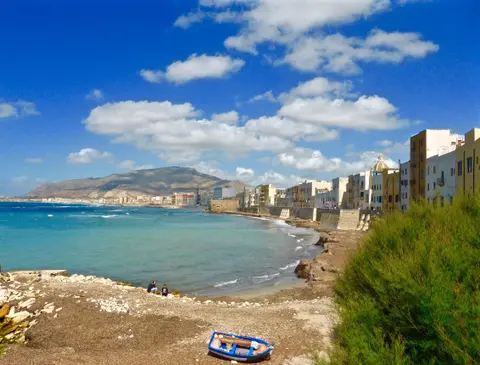
Trapani is western Sicily's sickle-shaped port city where ancient salt flats, cloud-wrapped medieval Erice, and the crystal-clear Egadi Islands converge at the Mediterranean's cultural crossroads. Visit April through October via Seabourn or Windstar for cable-car ascents to Norman-era pastry shops, sunset salt-flat reflections, and the Arab-influenced seafood couscous that distinguishes this coast from anywhere else in Italy.
Day 29
Day 29
Porto Cervo
Arrive 10:00Depart 19:00
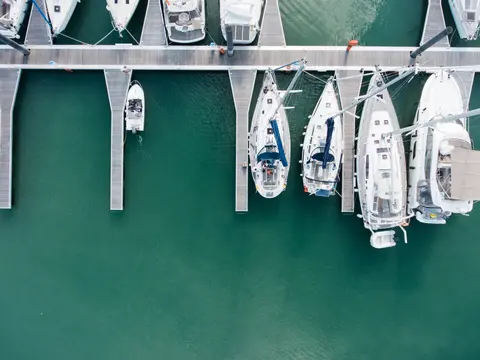
Porto Cervo is the jewel of Sardinia's Costa Smeralda, a purpose-built luxury village where world-class sailing, pristine emerald beaches, and ancient Nuragic archaeology coexist against a backdrop of sculpted granite coastline. Visit from May through October, with June and September offering the ideal balance of Mediterranean warmth and refined exclusivity.
Day 30
Day 30
Calvi
Arrive 08:00Depart 18:00
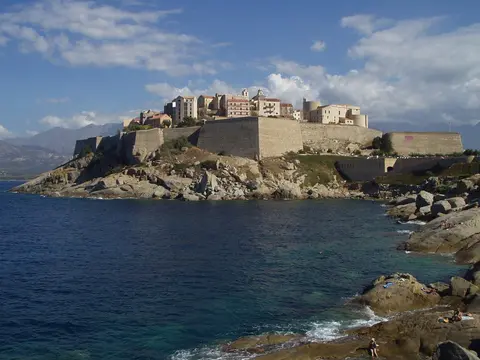
Calvi is Corsica's jewel-box port town where a commanding Genoese citadel overlooks the Mediterranean's finest urban beach — four miles of white sand lapped by Caribbean-clear water beneath snow-capped mountains. Visit June or September via Ponant or Explora Journeys for citadel walks, Corsican wild boar and brocciu cheese, and the essential paradox of an island that is French by law but entirely its own in character.
Day 31
Day 31
Monte Carlo
Arrive 07:00
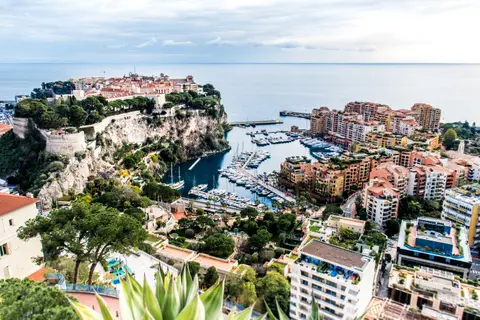
Monte Carlo, Monaco is a sovereign principality on the French Riviera where centuries of Grimaldi rule have forged an extraordinary concentration of elegance — from the legendary Casino de Monte-Carlo to the cliff-top Oceanographic Museum founded by Prince Albert I. No visit is complete without savouring *barbagiuan* at the Condamine market and exploring the old town of Monaco-Ville, where the cathedral and prince's palace command sweeping Mediterranean views. The most luminous months are May through September, with late spring offering the electric atmosphere of the Grand Prix season alongside gentler crowds and pristine coastal light.
Day 1
Civitavecchia
Depart 17:00
Rome's ancient maritime gateway since the Emperor Trajan commissioned its harbour in 106 AD, Civitavecchia is the natural prologue to the Eternal City — just seventy minutes southeast by express rail. The port's Renaissance fortress, designed in part by Michelangelo, anchors a working waterfront that has welcomed travellers for millennia. Beyond Rome's unmissable monuments, consider an afternoon in the Civitavecchia thermal baths, drawing on mineral waters prized since antiquity. Spring and autumn offer the ideal balance of mild weather and manageable crowds for exploring the capital's layered history.
Day 2
Portofino
Arrive 08:00Depart 18:00
Portofino is a jewel-box fishing village on Italy's Ligurian coast, renowned for its pastel harbour, Castello Brown fortress views, and exquisite pesto-dressed trofie pasta at waterside trattorias. Visitors should walk the coastal trail to the Cristo degli Abissi underwater statue at San Fruttuoso and savour focaccia di Recco with a glass of local Vermentino. The ideal season stretches from late April through October, with September offering the perfect balance of warm Mediterranean light and the intimate calm that returns after summer's peak.
Day 3
Livorno
Arrive 07:00Depart 19:00
Purpose-built as a Medici utopia in the late sixteenth century, Livorno was conceived from the outset as a city without discrimination — its founding Leggi Livornine granted equal rights to Jews, Christians, Muslims, and merchants of every nation, making it one of the most cosmopolitan cities in Renaissance Europe. Today, the Venetian-style canals of the Venezia Nuova quarter reflect colourful palazzi with a distinctly faded glamour, while the Mercato Centrale's fish counters display the cacciucco ingredients — a robust Livornese brodetto of five sea creatures — that make this port city a pilgrimage for serious eaters. Day trips to Pisa and Lucca are effortless from here. The season runs April through October.
Day 4
Tournon-sur-Rhône
Arrive 08:00Depart 18:00
Tournon-sur-Rhône is a captivating port town steeped in history, known for its medieval architecture and vibrant culinary scene. Must-do experiences include savoring local specialties such as caillettes and exploring the bustling Saturday market. The best time to visit is in the late spring or early fall when the weather is mild and the local festivities are in full swing.
Day 5
Sanary Sur Mer
Arrive 07:00Depart 16:00
Sanary-sur-Mer is an authentically preserved Provencal fishing port on France's Var coast, where colourful pointu boats, a daily harbour fish market, and the birthplace of modern scuba diving create a Mediterranean village of genuine charm. Must-dos include the harbour fish market, bouillabaisse at a waterfront restaurant paired with Bandol wine, and the Ile des Embiez. Visit May or June for warm Provencal light and the season's first rose wines.
Day 6
At Sea
Day 7
Melilla
Arrive 12:01Depart 20:00
Melilla is a Spanish autonomous city on the North African coast, home to Spain's second-largest collection of Art Nouveau architecture and a unique multicultural blend of Spanish, Amazigh, Sephardic, and Sindhi communities. Must-dos include exploring the Modernista facades designed by Gaudí's student Enrique Nieto, wandering the fifteenth-century fortress, and tasting the fusion cuisine at the central market. April through October offers the warmest Mediterranean weather for this extraordinary cultural crossroads.
Day 8
Malaga
Arrive 07:00Depart 17:00
Málaga distils three thousand years of Mediterranean civilisation into one of Andalusia's most compelling port cities, where the Moorish Alcazaba fortress surveys a modern waterfront of elegant promenades and sun-drenched café terraces. Do not leave without visiting the Museo Picasso — the artist was born here in 1881 — and ascending to the ruined Castillo de Gibralfaro for panoramic views stretching to the Rif Mountains of Morocco on clear days. Malagueta anchovies fried in olive oil and the sweet Pedro Ximénez-laced dessert wine are the city's defining pleasures. The shoulder seasons of April, May, and October offer perfect Mediterranean warmth.
Day 9
Cartagena
Arrive 09:00Depart 18:00
Cartagena, Spain, is a storied Mediterranean port city founded by the Carthaginians in 227 BC, where a spectacularly preserved Roman Theatre and Modernista architecture reveal layers of civilisation along a sheltered natural harbour. Visitors should not miss the caldero rice at a harbourside restaurant and a morning exploring the archaeological quarter from the Roman Forum to the Punic Wall. The mild Murcian climate makes autumn through late spring ideal, when temperatures invite leisurely wandering without the intensity of high summer.
Day 10
Ibiza
Arrive 08:00Depart 18:00
Beneath Ibiza's sun-drenched reputation as the world's clubbing capital lies a layered history stretching back to Phoenician traders who settled this Balearic island in 654 BC. The UNESCO-listed Dalt Vila — the walled hilltop citadel above Eivissa town — rewards exploration with Carthaginian burial grounds, Renaissance ramparts, and sweeping Mediterranean panoramas. For quieter pleasures, the crystalline coves of the island's north, such as Cala d'en Serra and Es Portitxol, rival any beach in Europe. The Phoenician necropolis of Puig des Molins is unmissable for history devotees. The season runs May through October, with June and September offering ideal weather without peak-summer crowds.
Day 11
Salerno
Arrive 07:00
Salerno is a historic Campanian port city nestled between the Amalfi Coast and Cilento National Park, home to Europe's first medieval medical school and a magnificent Romanesque cathedral with Byzantine bronze doors. Visitors should not miss the Lungomare Trieste promenade at sunset and a plate of hand-rolled scialatielli ai frutti di mare in the atmospheric old town. The mild Mediterranean climate makes Salerno enchanting year-round, though late spring through early autumn offers the most luminous light and the fullest expression of its coastal character.
Day 12
Palma de Mallorca
Arrive 07:00Depart 17:00
Palma de Mallorca announces itself with one of the most spectacular Gothic cathedrals in the world — La Seu, its honey-coloured sandstone buttresses rising directly from the bay, its interior modified by Antoni Gaudí and illuminated by the world's largest Gothic rose window. The old town behind it is a quarter of Arab baths, Renaissance palaces converted into boutique hotels, and the Passeig del Born — a plane-tree-shaded promenade where Balearic life conducts itself with unhurried grace. The local ensaïmada pastry and fresh sobrasada sausage from the island's black pigs are essential breakfast rituals. Visit May, June, or September: warm, brilliant, and measurably calmer than the July–August peak.
Day 13
Mahon
Arrive 07:00Depart 16:00
Mahón commands one of the Mediterranean's deepest natural harbours, a fjord-like inlet on Menorca that captivated British admirals, Phoenician traders, and Roman generals in turn — its Georgian townhouses and gin distilleries speaking eloquently to centuries of contested heritage. Explore the clifftop old town's baroque Santa María church with its 3,200-pipe organ, then cross the water to the imposing fortress of La Mola for sweeping harbour views. The island's prized caldereta de langosta, a slow-simmered lobster stew, is best savoured at the fishing village of Fornells. Visit between May and June or September and October for warmth without the summer crowds.
Day 14
At Sea
Day 15
Valletta
Arrive 09:00Depart 23:00
Valletta, the golden fortress capital of Malta, was hewn from a limestone peninsula in defiant haste after the Knights of Saint John — warrior monks of extraordinary valor — repulsed an overwhelming Ottoman assault in 1565. Its grid of steep baroque streets is dense with Caravaggio masterworks in the Co-Cathedral of St. John, shaded piazzas alive with café society, and bastions commanding breathtaking views over the Grand Harbour's legendary twin forts. The mild Mediterranean climate welcomes visitors year-round, though spring and autumn offer the most pleasurable temperatures for unhurried exploration of this compact UNESCO World Heritage capital.
Day 16
Mgarr
Arrive 08:00Depart 16:00
Mġarr is the harbor gateway to Gozo, Malta's greener sister island, home to the Ġgantija Temples—among the oldest free-standing structures on Earth, predating the pyramids—and the medieval Citadella fortress. Must-dos include visiting the 5,600-year-old temples, diving at Dwejra's dramatic coastline, and tasting fresh ġbejna cheese and rabbit stew. April through June and September through November offer ideal mild temperatures.
Day 17
Burg
Arrive 08:00Depart 18:00
Burg, Germany is a distinctive port city where deep cultural heritage meets authentic local atmosphere, featured on itineraries by CroisiEurope. Must-do experiences include walking the historic center to experience the layered architectural heritage, and seeking out the regional culinary traditions at a locally favored establishment away from the port area. The optimal time to visit is June through August, when summer months bring the warmest temperatures and longest days.
Day 18
Cagliari
Arrive 09:00Depart 18:00
Cagliari, Sardinia's sun-drenched capital overlooking the Gulf of Angels, has absorbed three thousand years of Phoenician, Carthaginian, Roman, Pisan, and Spanish ambitions into a layered and deeply compelling Mediterranean city — where the flamingo-fringed salt lagoons stretching to the city's western edge create one of Europe's most surreal urban vistas. The Castello quarter's medieval ramparts enclose a cathedral, Pisan towers, and panoramic terraces that survey the entire city and coastline, while the Marina district below offers some of the finest bottarga pasta and fresh tuna in Italy. Visit May through September for beach perfection; the prehistoric Nuraghe Su Nuraxi at Barumini, a UNESCO Wonder, is an hour's drive north.
Day 19
Olbia
Arrive 08:00Depart 18:00
Olbia, Sardinia's northeastern gateway, offers three millennia of history from Carthaginian trading post to today's vibrant Italian city, too often bypassed in the rush to the Costa Smeralda. Sardinia's ceremonial suckling pig, DOCG Vermentino wines, and Bronze Age Nuragic ruins reward those who explore beyond the beach. AIDA, MSC Cruises, and Oceania Cruises dock at this convenient port where a walkable historic center and world-class coastline meet fiercely independent Sardinian culture.
Day 20
Bonifacio
Arrive 08:00Depart 18:00
Bonifacio is a dramatically cliff-perched medieval citadel at Corsica's southern tip, where Genoese ramparts tower above a fjord-like natural harbour in the turquoise Strait of Bonifacio. Visitors should descend the vertiginous Escalier du Roi d'Aragon carved into the limestone cliffs and take a boat excursion to the pristine Lavezzi archipelago nature reserve for world-class snorkelling among sculpted granite formations. The ideal window is June or September, when the Mediterranean light is at its most luminous and the narrow streets of the haute ville remain blissfully uncrowded.
Day 21
Civitavecchia
Arrive 07:00
Rome's ancient maritime gateway since the Emperor Trajan commissioned its harbour in 106 AD, Civitavecchia is the natural prologue to the Eternal City — just seventy minutes southeast by express rail. The port's Renaissance fortress, designed in part by Michelangelo, anchors a working waterfront that has welcomed travellers for millennia. Beyond Rome's unmissable monuments, consider an afternoon in the Civitavecchia thermal baths, drawing on mineral waters prized since antiquity. Spring and autumn offer the ideal balance of mild weather and manageable crowds for exploring the capital's layered history.
Day 22
Potsdam
Arrive 08:00Depart 18:00
Potsdam is the former Prussian royal capital on the Havel River, home to the UNESCO-listed Sanssouci Palace and park — Frederick the Great's rococo masterpiece surrounded by 300 hectares of manicured gardens. Must-dos include touring the palace interiors, visiting the Cecilienhof where the Potsdam Conference shaped post-war Europe, and exploring the charming Dutch Quarter. May through October offers the best weather for enjoying the expansive palace grounds.
Day 23
At Sea
Day 24
Sarande
Arrive 07:00Depart 18:00
Sarandë is Albania's Ionian coast jewel, where the UNESCO-listed Butrint archaeological marvel and the impossibly turquoise Blue Eye spring create a Mediterranean experience rivaling Greece at a fraction of the cost. Visit June via Emerald Yacht Cruises or Virgin Voyages for six-civilization archaeological sites and Albania's exciting Mediterranean frontier.
Day 25
Gallipoli
Arrive 07:00Depart 17:00
Gallipoli is a compelling Mediterranean port in Italy where centuries of history, vibrant local cuisine, and luminous coastal scenery converge. Visitors should explore the historic quarters on foot and surrender to the local dining culture, where fresh seafood and regional wines provide a masterclass in Mediterranean living. Best visited May through October, when the climate is at its most welcoming for outdoor exploration. Cruise lines including Windstar Cruises feature this port on their most compelling itineraries. Whether you have a few hours or a full day, the port rewards exploration at every pace and in every direction.
Day 26
Taormina
Arrive 09:00Depart 21:00
Taormina is a cliffside Sicilian jewel 200 meters above the Ionian Sea, featuring an ancient Greek theater with Mount Etna as its backdrop, the exquisite Isola Bella bay, and some of Sicily's finest cuisine. Must-dos include a performance at the Teatro Antico, the cable car to Isola Bella, and tasting Etna volcanic wines. April through June and September through October offer ideal temperatures.
Day 27
Lipari
Arrive 07:00Depart 18:00
Lipari, the largest of Sicily's volcanic Aeolian Islands, has been a Mediterranean trading hub for over 6,000 years, featuring a dramatic Castello, world-class archaeological museum, and gateway access to Stromboli's erupting crater. Must-dos include exploring the fortified old town, tasting caper-laced Aeolian cuisine and Malvasia wine, and island-hopping to Vulcano and Stromboli. May through October offers ideal conditions.
Day 28
Trapani (Sicily)
Arrive 07:00Depart 16:00
Trapani is western Sicily's sickle-shaped port city where ancient salt flats, cloud-wrapped medieval Erice, and the crystal-clear Egadi Islands converge at the Mediterranean's cultural crossroads. Visit April through October via Seabourn or Windstar for cable-car ascents to Norman-era pastry shops, sunset salt-flat reflections, and the Arab-influenced seafood couscous that distinguishes this coast from anywhere else in Italy.
Day 29
Porto Cervo
Arrive 10:00Depart 19:00
Porto Cervo is the jewel of Sardinia's Costa Smeralda, a purpose-built luxury village where world-class sailing, pristine emerald beaches, and ancient Nuragic archaeology coexist against a backdrop of sculpted granite coastline. Visit from May through October, with June and September offering the ideal balance of Mediterranean warmth and refined exclusivity.
Day 30
Calvi
Arrive 08:00Depart 18:00
Calvi is Corsica's jewel-box port town where a commanding Genoese citadel overlooks the Mediterranean's finest urban beach — four miles of white sand lapped by Caribbean-clear water beneath snow-capped mountains. Visit June or September via Ponant or Explora Journeys for citadel walks, Corsican wild boar and brocciu cheese, and the essential paradox of an island that is French by law but entirely its own in character.
Day 31
Monte Carlo
Arrive 07:00
Monte Carlo, Monaco is a sovereign principality on the French Riviera where centuries of Grimaldi rule have forged an extraordinary concentration of elegance — from the legendary Casino de Monte-Carlo to the cliff-top Oceanographic Museum founded by Prince Albert I. No visit is complete without savouring *barbagiuan* at the Condamine market and exploring the old town of Monaco-Ville, where the cathedral and prince's palace command sweeping Mediterranean views. The most luminous months are May through September, with late spring offering the electric atmosphere of the Grand Prix season alongside gentler crowds and pristine coastal light.
Cabin Categories
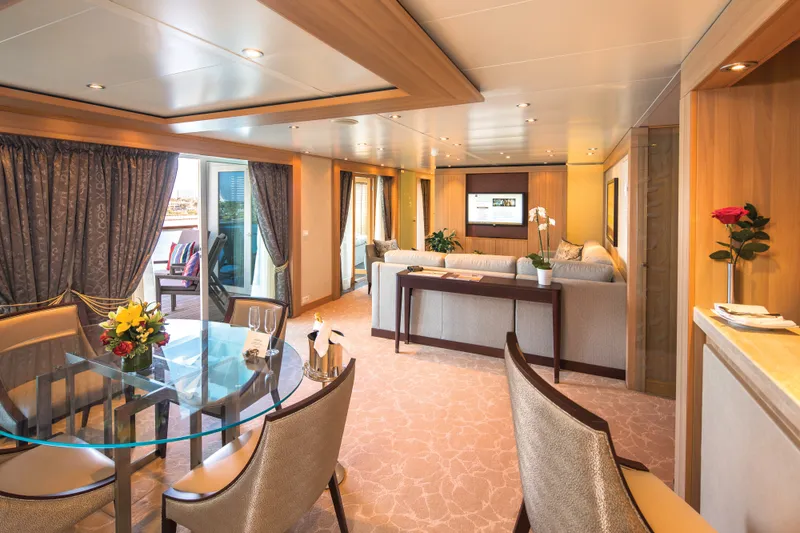
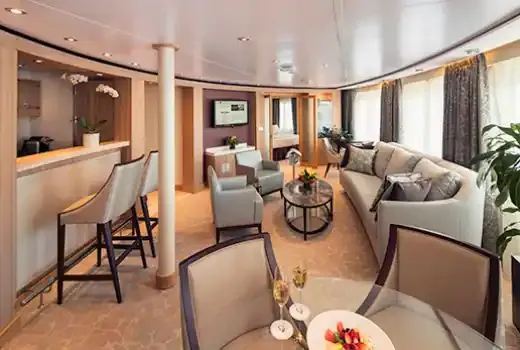
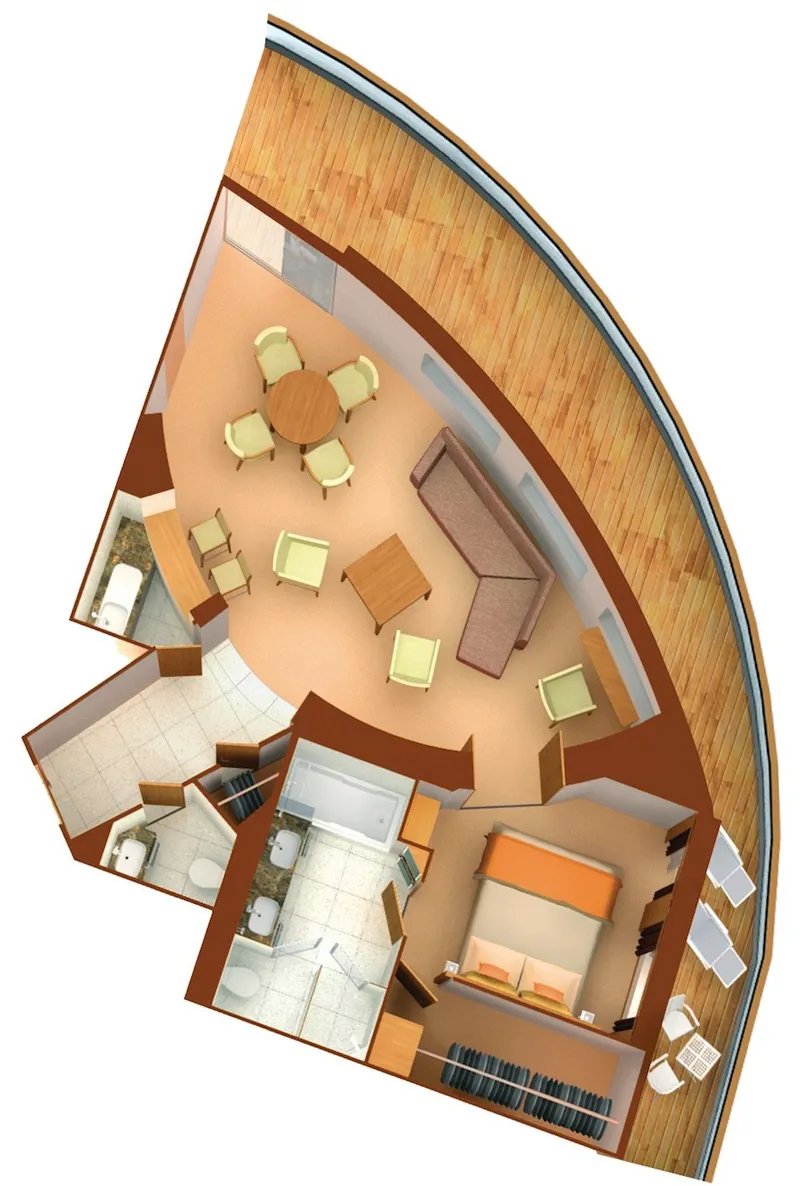
Grand Wintergarden Suite
Suite
1403 m²Max 5
GR
Approximately 1189 square feet (110 square meters) of inside space, plus two verandas totaling 214 square feet (20 square meters)
Grand Wintergarden Suites feature:
Large windows
Dining for six
Glass-enclosed solarium with tub and day bed
Bathroom with whirlpool bathtub
Guest bath
Glass-enclosed solarium with tub and day bed
Two bedrooms
Two bathrooms (one whirlpool)
Convertible sofa bed for one
Pantry with wet bar
Two flat-screen TVs
Complimentary Internet/Wi-Fi service.
Queen or Twin ConfigurationLounge AreaShowerBathWhirlpool BathSuite Benefits+14
View Details
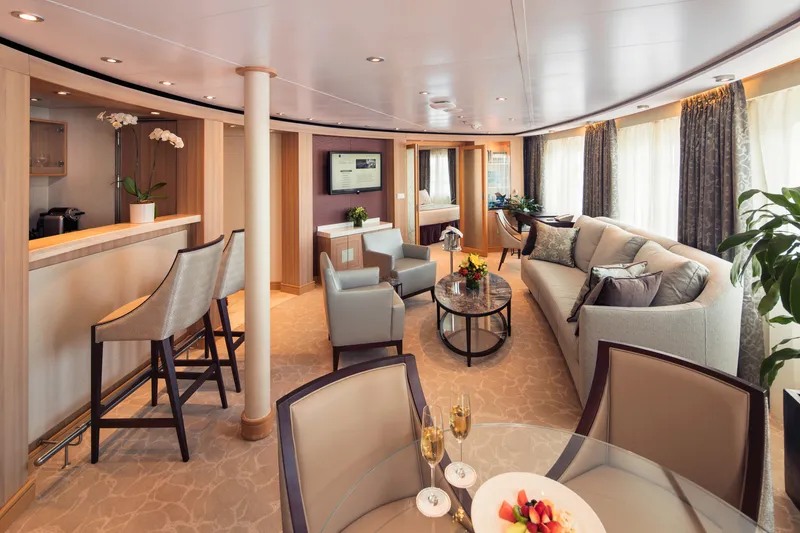
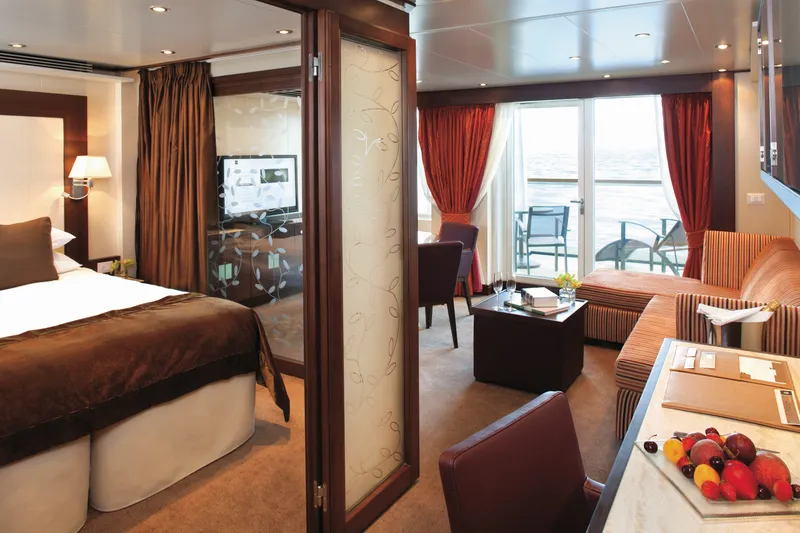
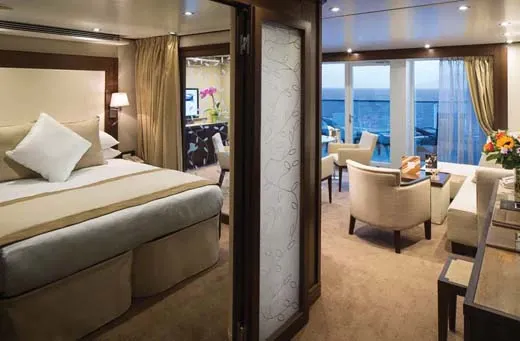
Owner's Suite
Suite
526–593 m²Max 3
O1O2
Approximately 526 and 593 square feet (49 and 55 square meters) of inside space, plus one veranda of 133 & 354 square feet (12 and 33 square meters).
Owner's Suites feature:
Expansive ocean views
Forward-facing windows
Dining for four to six
Bathroom with whirlpool bathtub
Guest bath
Pantry with wet bar
Two flat-screen TVs
Complimentary Internet/Wi-Fi service.
Queen or Twin ConfigurationLounge AreaShowerBathWhirlpool BathTV+10
View Details
Penthouse Spa Suite
Suite
536–539 m²Max 2
PS
Approximately 536 to 539 square feet (50 square meters) of inside space, plus one veranda of 167 to 200 square feet (16 to 19 square meters)
All Penthouse Spa Suite feature
Dining table for two to four
Separate bedroom
Glass door to veranda
Two flat-screen TVs
Fully stocked bar
Spacious bathroom with tub, shower and large vanity
Queen or Twin ConfigurationShowerBathTVSafeHair Dryer+11
View Details
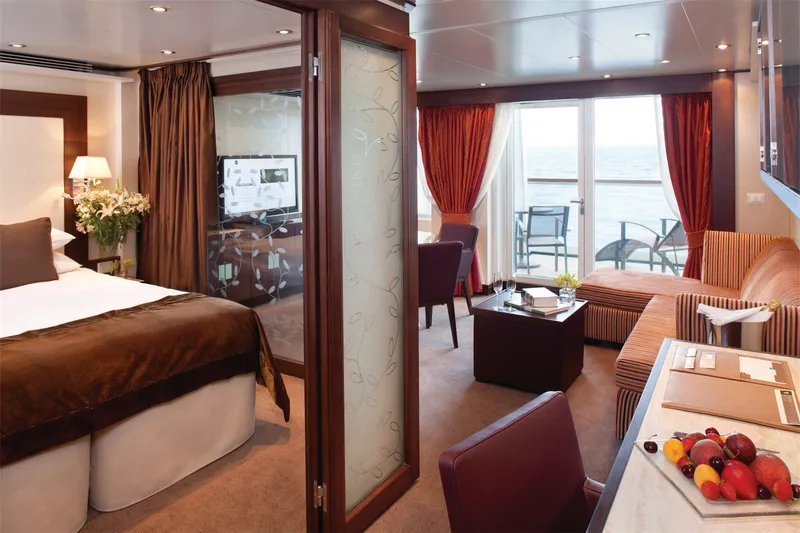
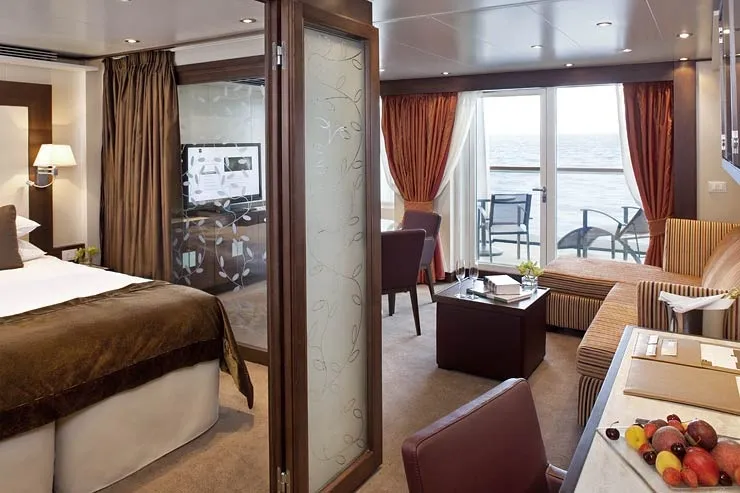
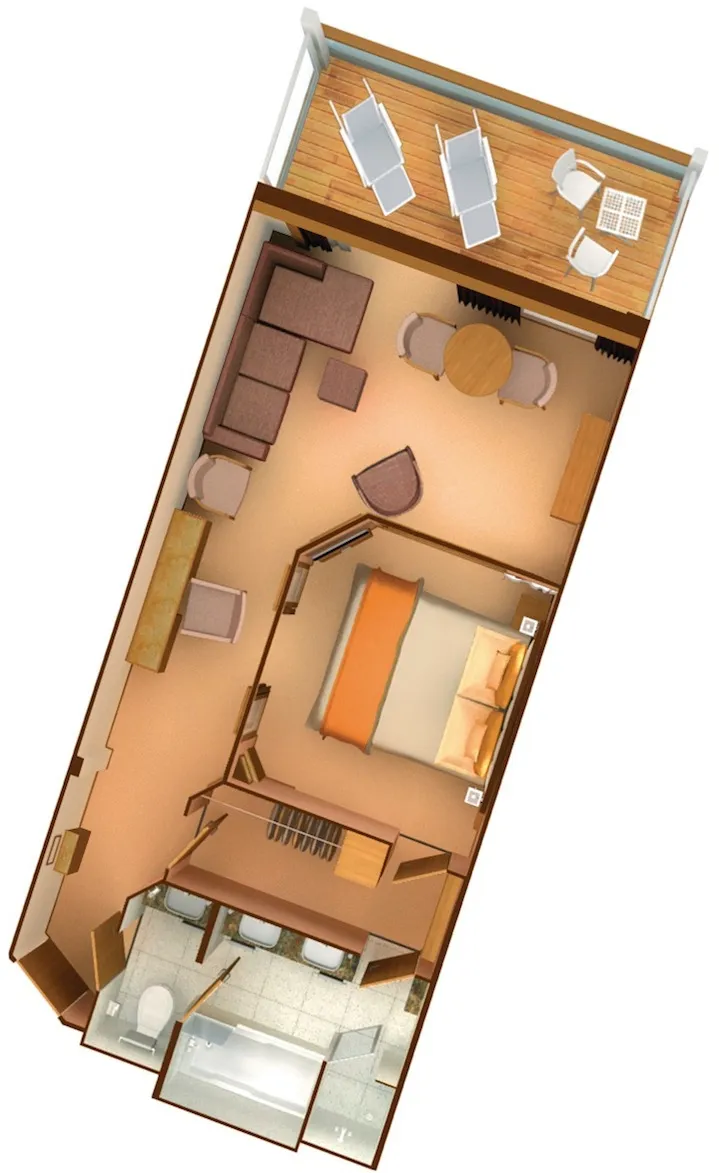
Penthouse Suite
Suite
Penthouse Suite
436 m²Max 2
PH
Approximately 436 square feet (41 square meters) of inside space, plus one veranda of 98 square feet (9 square meters)
All Penthouse Suite feature
Dining table for two to four
Separate bedroom
Glass door to veranda
Two flat-screen TVs
Fully stocked bar
Spacious bathroom with tub, shower and large vanity.
Queen or Twin ConfigurationLounge AreaShowerTVSafeHair Dryer+10
View Details
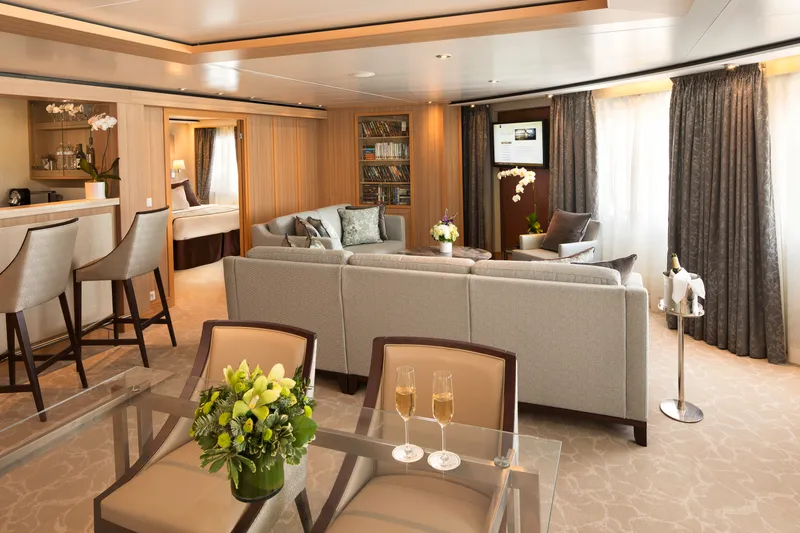
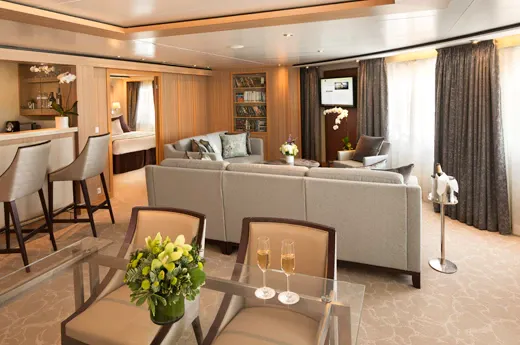
Signature Suite
Suite
Signature Suite
859 m²Max 4
SS
Approximately 859 square feet (80 square meters) of inside space, plus one veranda of 493 square feet (46 square meters)
Signature Suites feature
Expansive ocean views
Forward-facing windows
Dining for four to six
Bathroom with whirlpool bathtub
Guest bath
Pantry with wet bar
Two flat-screen TVs
Complimentary Internet/Wi-Fi service.
Queen or Twin ConfigurationSecond BedroomShowerBathWhirlpool BathTV+12
View Details
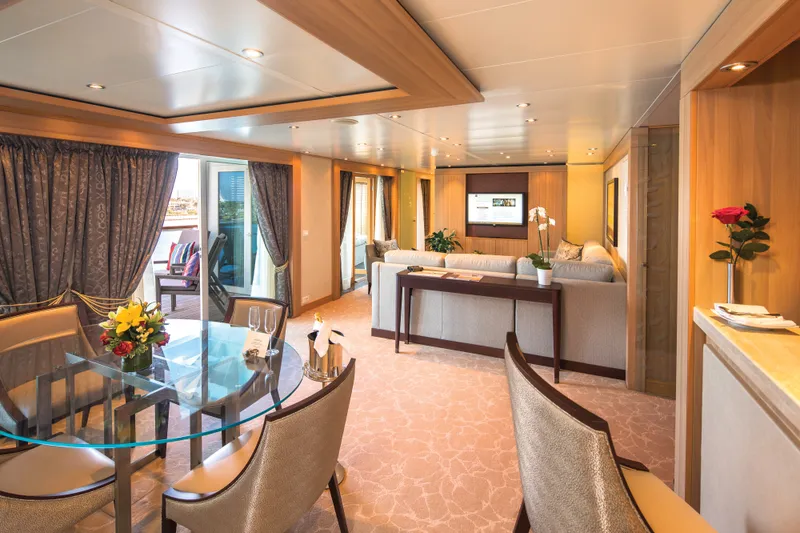
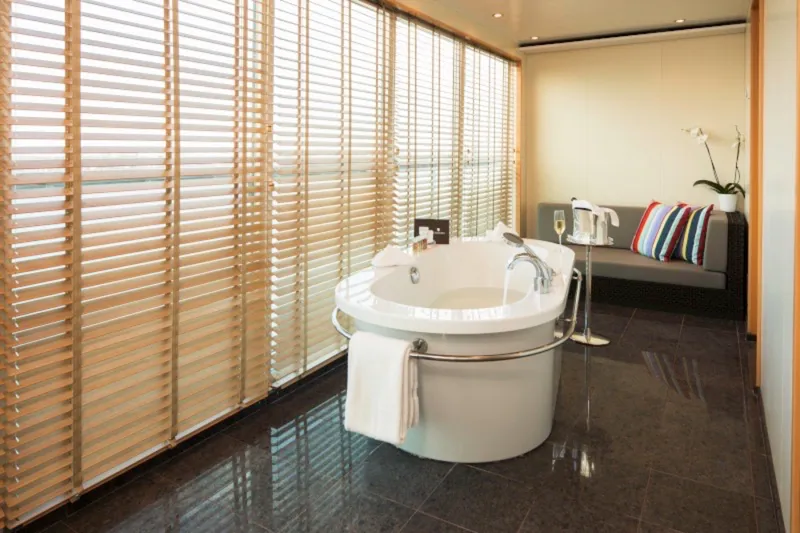
Wintergarden Suite
Suite
914 m²Max 3
WG
Approximately 914 square feet (85 square meters) of inside space, one veranda of 183 sq. ft. (17 square meters.).
Wintergarden Suites feature:
Large windows
Dining for six
Whirlpool bathtub
Guest bath
Convertible sofa bed for one
Pantry with wet bar
Glass-enclosed solarium with tub and day bed
Two closets
Two flat-screen TVs
Complimentary Internet/Wi-Fi service
Queen or Twin ConfigurationSofa BedLounge AreaShowerBathWhirlpool Bath+13
View Details
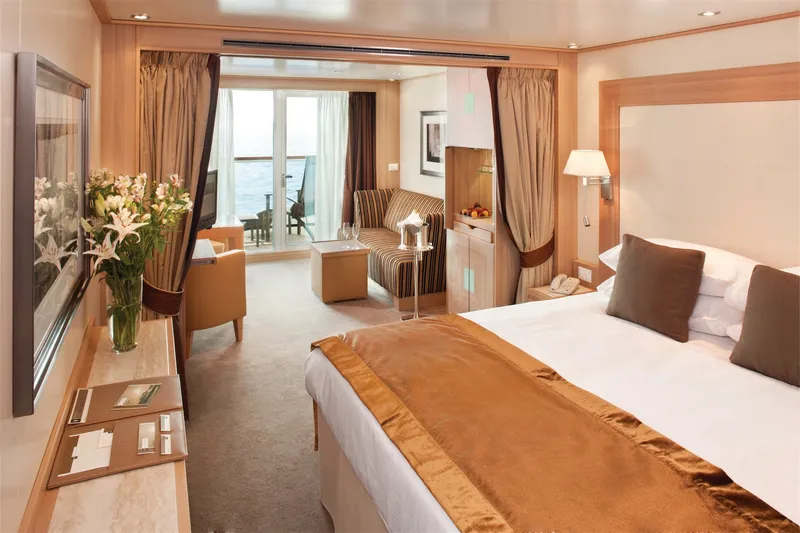
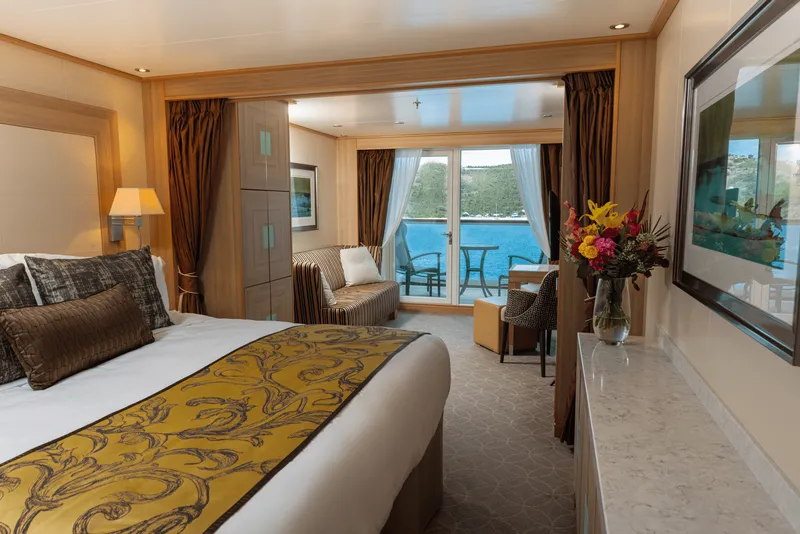
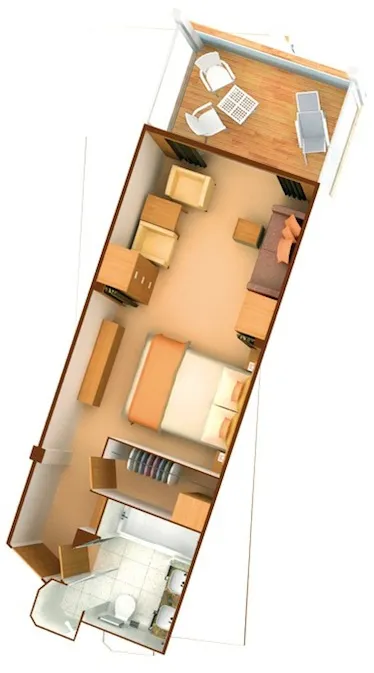
Veranda Suite
Suite
Veranda Suite
246–302 m²Max 2
V1V2V3V4
Located on Deck 7; Approximately 300 square feet (28 square meters) of inside space, plus one veranda of 65 square feet (6 square meters)
All Veranda Suites feature
A full-length window
Glass door to private veranda
Comfortable living area
Queen-size bed or two twin beds
Dining table for two
Walk-in closet
Interactive flat-screen television with music and movies
Fully stocked bar and refrigerator
Makeup vanity
Spacious bathroom with separate tub and shower
Queen or Twin ConfigurationLounge AreaShowerBathTVSafe+11
View Details
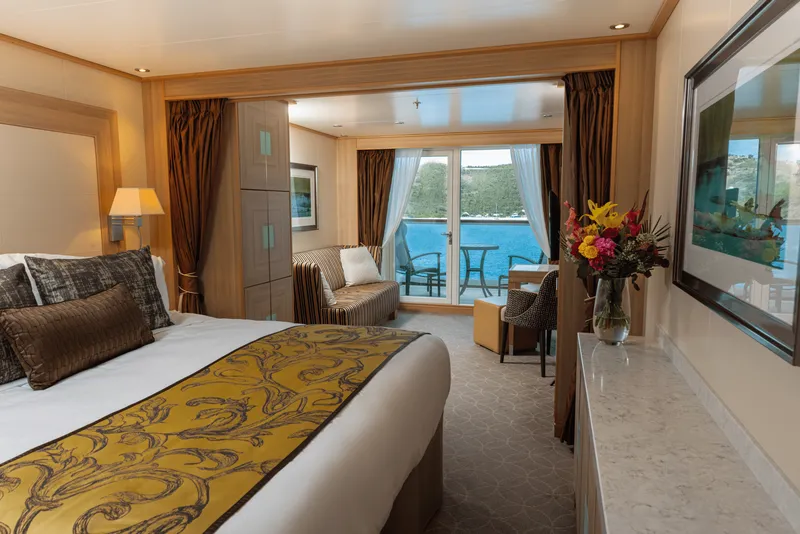
Veranda Suite Guarantee
Suite
Max 2
RB
Veranda Suite Guarantee
BathQueen or Twin ConfigurationLounge AreaShowerToiletries ProvidedRoom Service Available+9
View Details
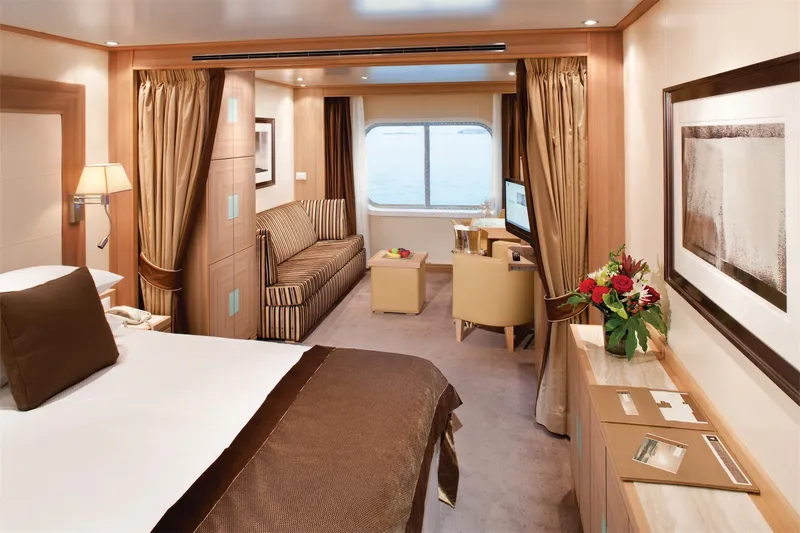
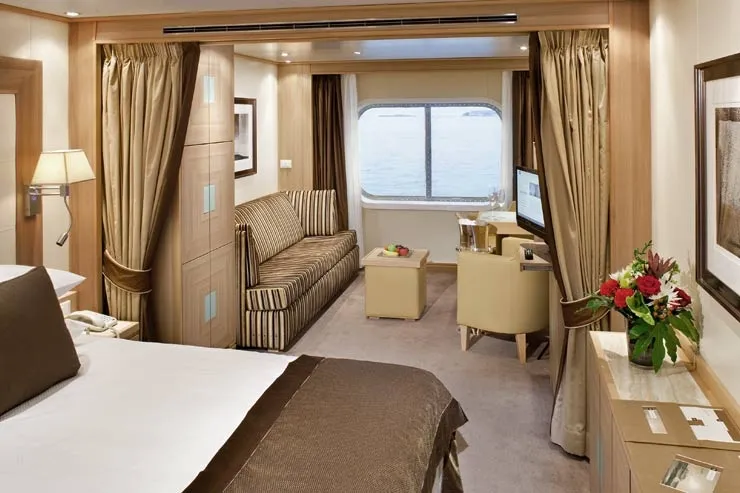
Ocean View Suite
Suite
Ocean View Suite
295 m²Max 2
AA1
Located on Deck 4; Approximately 295 square feet (28 square meters) of inside space
All Ocean View Suites feature:
A large picture window
Comfortable living area
Queen-size bed or two twin beds
Dining table for two
Walk-in closet
Interactive flat-screen television with music and movies
Fully stocked bar and refrigerator
Makeup vanity
Spacious bathroom with separate tub and shower.
Queen or Twin ConfigurationShowerBathTVSafeHair Dryer+8
View Details
Interested in This Voyage?
Our cruise specialists can help you find the perfect cabin and the best available pricing.
(+886) 02-2721-7300Contact Advisor