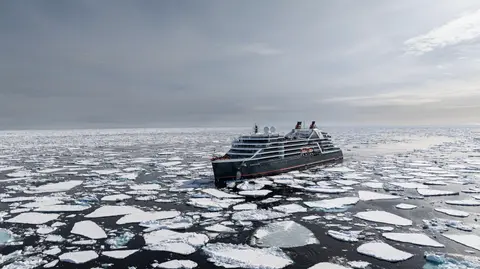
SeabournV641A
Scottish Isles, Iceland & Scoresbysund
Date
2026-07-06
Duration
20 nights
Departure Port
Dublin
Ireland
Arrival Port
Reykjavik
Iceland
Rating
Expedition
Theme
—
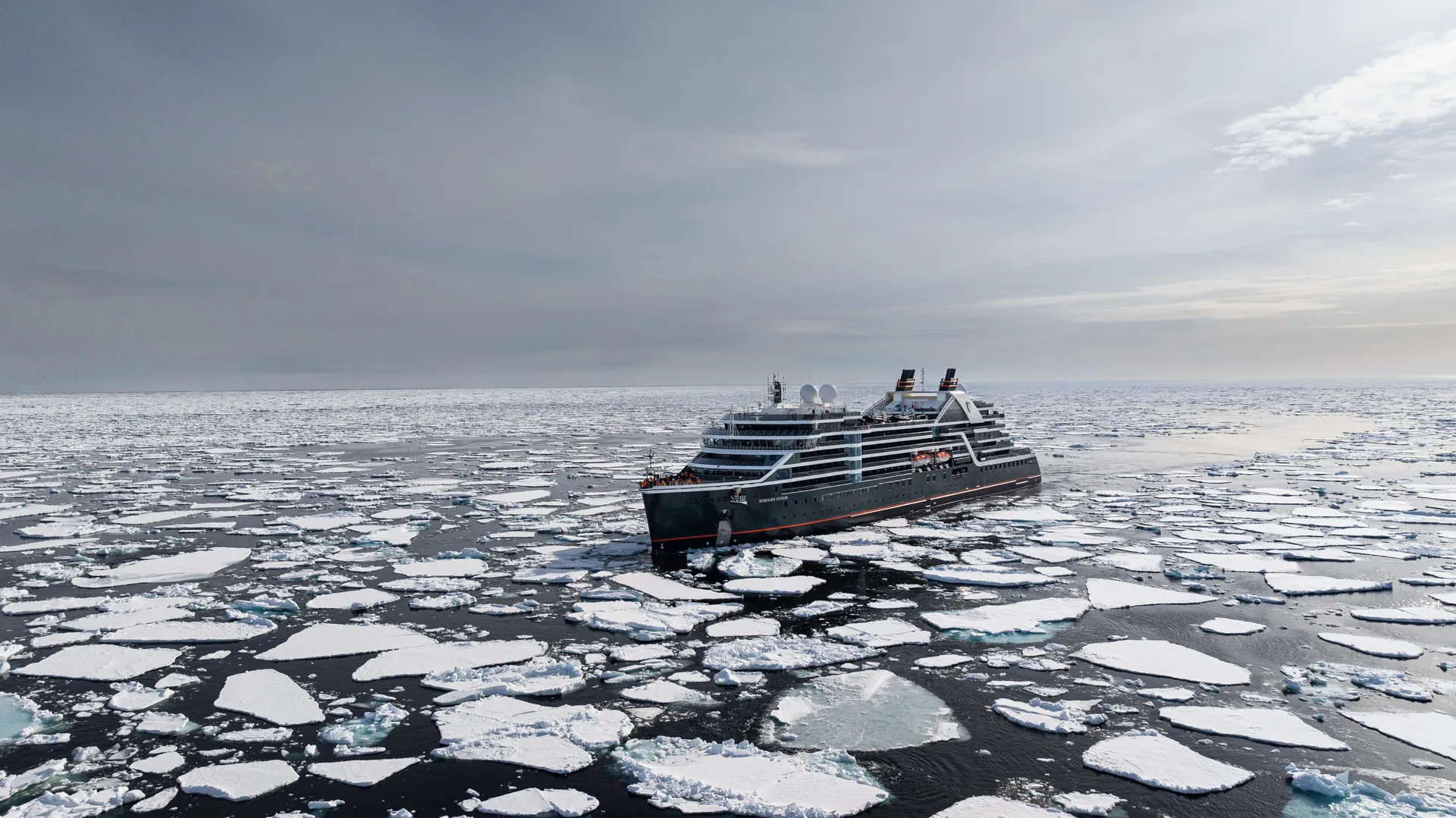
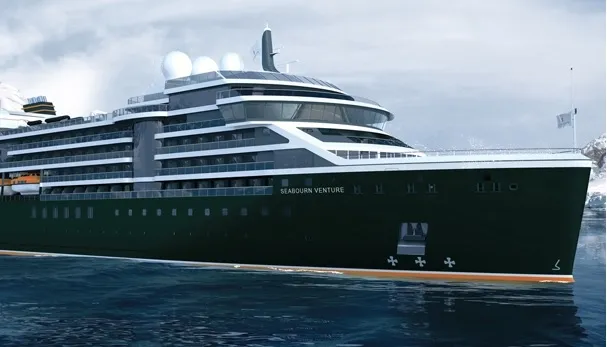

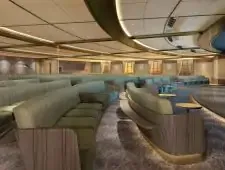



Seabourn
Seabourn Venture
Launched
2021
Refitted
—
Tonnage
23,000 GT
Passengers
264
Cabins
132
Crew
120
Length
558 m
Width
24 m
Speed
19 knots
Adults Only
No
Itinerary
Day 1
Day 1
Dublin
Depart 17:00
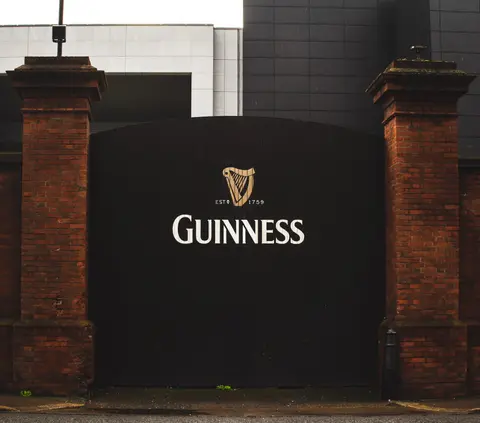
Dublin is Europe's most literary capital, home to four Nobel laureates in literature, the extraordinary Book of Kells, and Georgian architecture rivaling any on the continent. Visit May through September via Holland America Line or Windstar for Trinity College's Long Room, the definitive Guinness pint at St. James's Gate, and the spontaneous pub conversations that make this city one of the world's most immediately welcoming.
Day 2
Day 2
Calf of Man
Arrive 06:00Depart 10:00
The Calf of Man is an uninhabited nature reserve off the Isle of Man's southern tip, home to significant breeding colonies of Manx shearwaters, puffins, and grey seals in the nutrient-rich tidal streams of the Irish Sea. Must-do experiences include witnessing the eerie dusk chorus of returning shearwaters, observing grey seal colonies, and scanning for basking sharks in the surrounding waters. May and June offer peak seabird activity, while September through November brings the grey seal pupping season.
Day 3
Day 3
Rothesay
Arrive 07:00Depart 18:00
Rothesay is a Victorian resort town on Scotland's Isle of Bute, home to a rare circular thirteenth-century castle and the opulent Mount Stuart mansion—a Gothic palace of extraordinary interiors. Must-dos include touring Rothesay Castle and Mount Stuart, sampling fish and chips on the esplanade overlooking the Firth of Clyde, and walking the island's gentle western coast. May–September offers the best weather, with the Gulf Stream keeping the island mild enough to earn the nickname "Madeira of Scotland."
Day 4
Day 4
Tobermory
Arrive 07:00Depart 14:00
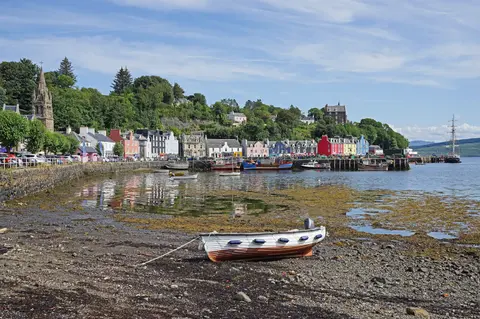
Tobermory is the rainbow-painted harbor capital of Mull in Scotland's Inner Hebrides, gateway to reintroduced white-tailed eagles and the sacred island of Iona where Christianity took root in the British Isles in 563 AD. Visit June via Tauck or Windstar for the longest days, eagle-watching boat trips, and the spiritual tranquility of Iona Abbey — the cradle of Scottish Christianity.
Day 5
Day 5
Stornoway
Arrive 07:00Depart 19:00
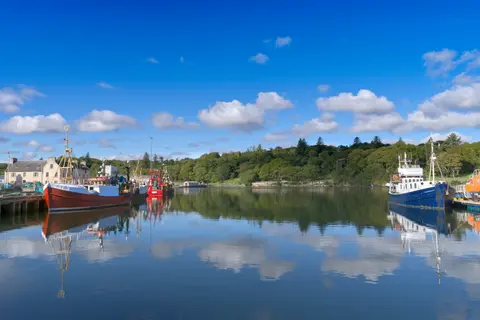
Stornoway, the sheltered harbour capital of Scotland's Isle of Lewis in the Outer Hebrides, offers an extraordinary blend of Norse heritage, Victorian architecture, and raw Atlantic beauty. Visitors should not miss the twelfth-century Lewis Chessmen at Museum nan Eilean inside the restored Lews Castle, nor the chance to taste the island's PGI-protected Stornoway black pudding at its source. The sailing season from May through September delivers the longest daylight hours and mildest conditions, with late June offering near-endless twilight that bathes the ancient Callanish Standing Stones in an ethereal glow.
Day 6
Day 6
St. Kilda
Arrive 07:00Depart 12:00
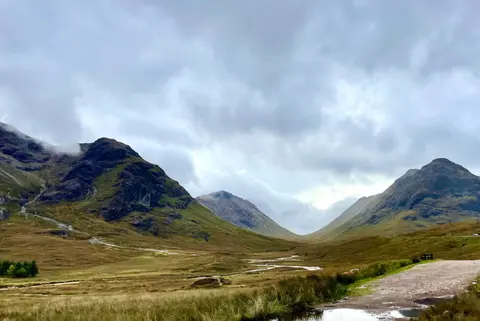
St. Kilda is a remote UNESCO World Heritage archipelago forty miles west of Scotland's Outer Hebrides, famous for Britain's highest sea cliffs, the world's largest gannet colony, and the poignant remains of a community evacuated in 1930. Must-dos include exploring the restored village on Hirta, witnessing the extraordinary seabird colonies, and walking to the summit of Conachair. Visit between May and September, though landings depend on Atlantic weather.
Day 7
Day 7
Lerwick
Arrive 08:00Depart 15:00
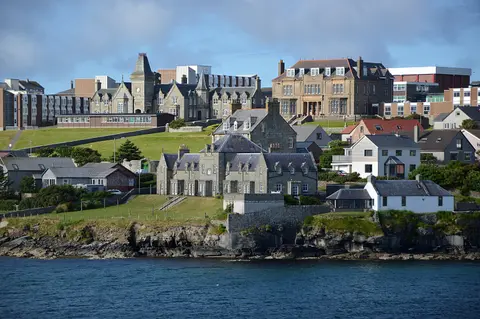
Lerwick, capital of Scotland's Shetland Islands, is a captivating Norse-Scottish harbour town renowned for its seventeenth-century granite waterfront, Viking heritage, and pristine maritime larder of wind-dried reestit mutton and hand-dived scallops. Visitors should explore the lodberries along Commercial Street and the award-winning Shetland Museum at Hay's Dock. The optimal season is late May through August, when near-perpetual daylight — the famous "simmer dim" — bathes the islands in an ethereal golden glow and seabird colonies along the cliffs reach their spectacular peak.
Day 8
Day 8
At Sea
Day 9
Day 9
At Sea
Day 10
Day 10
Heimaey
Arrive 07:00Depart 11:00
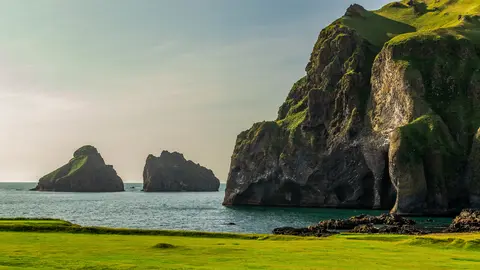
Heimaey is Iceland's volcanic island where the dramatic 1973 eruption story, the world's largest puffin colony of one million breeding pairs, and the children's annual puffling rescue create one of the North Atlantic's most extraordinary port experiences. Visit May through August via Lindblad or Windstar for Eldfell volcano hikes, the Eldheimar Museum's excavated homes, and the harbor approach through a channel literally reshaped by eruption.
Day 11
Day 11
Reykjavik
Arrive 07:00Depart 17:00
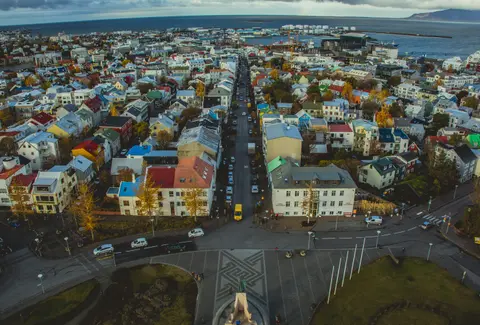
Reykjavik, the world's northernmost capital, distils the entire improbable beauty of Iceland into one compact, creatively charged city. The soaring basalt columns of Hallgrímskirkja dominate a skyline of primary-coloured rooftops, while the Harpa Concert Hall shimmers beside the harbour like a captured aurora. Day trips from the city unlock the Golden Circle's geysers and Geysir hot spring, the black sand beaches of Vík, and the ethereal glacier lagoon at Jökulsárlón. Geothermal pools — from the legendary Blue Lagoon to intimate neighbourhood hot pots — offer warmth year-round. June and July bring the bewitching midnight sun.
Day 12
Day 12
Grundarfjørdur
Arrive 07:00Depart 17:00
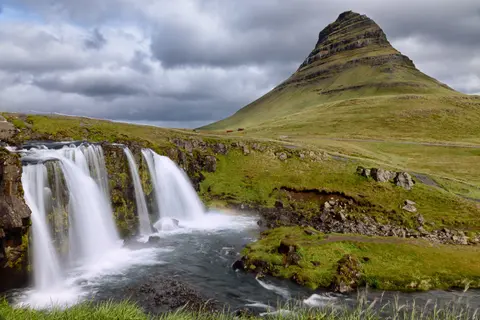
Grundarfjörður is a fishing town at the base of Kirkjufell, Iceland's most photographed mountain, and the gateway to the Snæfellsnes Peninsula—dubbed "Iceland in miniature" for its concentrated geological diversity. Must-dos include photographing Kirkjufell with its companion waterfall and exploring Snæfellsjökull, the glacier volcano from Jules Verne's novel. June and July offer midnight sun and the most reliable weather for peninsula exploration.
Day 13
Day 13
Patreksfjorour
Arrive 07:00Depart 11:00
Patreksfjörður is a fishing town in Iceland's remote Westfjords, gateway to Látrabjarg — Europe's westernmost point and home to millions of nesting seabirds including famously approachable puffins — and the surreal beauty of Rauðisandur beach. Must-do experiences include the Látrabjarg cliff walk among puffins, contemplating the vast red sands of Rauðisandur, and soaking in the town's geothermal pool. June through August offers continuous daylight and peak seabird activity.
Day 14
Day 14
Saudarkrokur - høfn
Arrive 08:00Depart 18:00
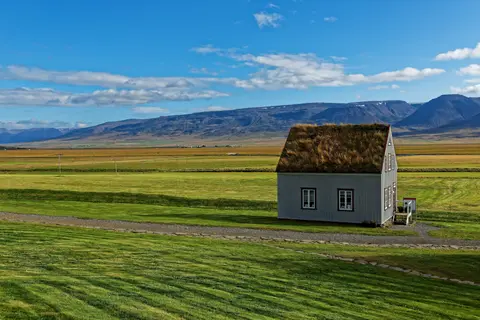
Sauðárkrókur is the heart of Iceland's premier horse-breeding district in the fertile Skagafjörður valley, where turf farmsteads, saga history, and world-class lamb create a deeply authentic northern Iceland experience. Must-dos include riding the five-gaited Icelandic horse through the valley, visiting the Glaumbær turf farm museum, and tasting Skagafjörður lamb and skyr. Visit June to August for midnight sun and the best riding conditions.
Day 15
Day 15
At Sea
Day 16
Day 16
Ittoqqortoormiit (ex Scoresbysund)
Arrive 07:00Depart 17:00
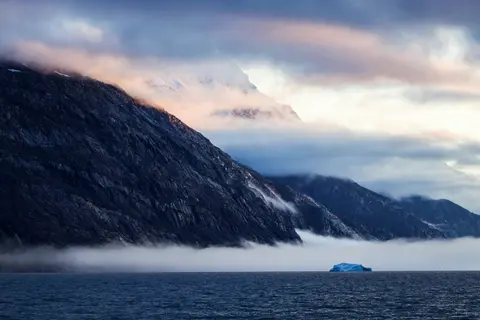
Ittoqqortoormiit is one of Earth's most isolated settlements, a 350-person Inuit community at the mouth of the world's longest fjord system on Greenland's remote east coast. Must-dos include Zodiac exploration of the monumental Scoresby Sund fjords, watching for musk oxen on the tundra, and visiting the colorful Arctic community. Mid-July through September offers the narrow window when sea ice permits access.
Day 18
Day 18
Ittoqqortoormiit (ex Scoresbysund)
Arrive 07:00Depart 15:00
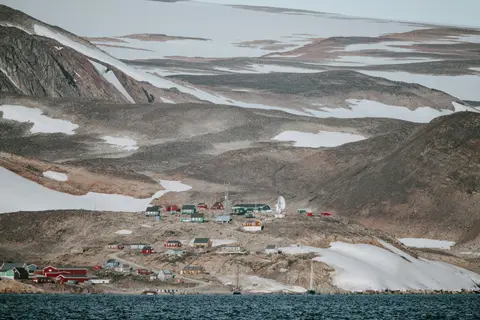
Ittoqqortoormiit is one of Earth's most isolated settlements, a 350-person Inuit community at the mouth of the world's longest fjord system on Greenland's remote east coast. Must-dos include Zodiac exploration of the monumental Scoresby Sund fjords, watching for musk oxen on the tundra, and visiting the colorful Arctic community. Mid-July through September offers the narrow window when sea ice permits access.
Day 19
Day 19
At Sea
Day 20
Day 20
Heimaey
Arrive 07:00Depart 11:00
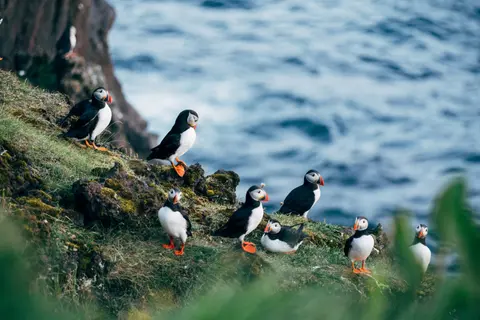
Heimaey is Iceland's volcanic island where the dramatic 1973 eruption story, the world's largest puffin colony of one million breeding pairs, and the children's annual puffling rescue create one of the North Atlantic's most extraordinary port experiences. Visit May through August via Lindblad or Windstar for Eldfell volcano hikes, the Eldheimar Museum's excavated homes, and the harbor approach through a channel literally reshaped by eruption.
Day 21
Day 21
Reykjavik
Arrive 07:00
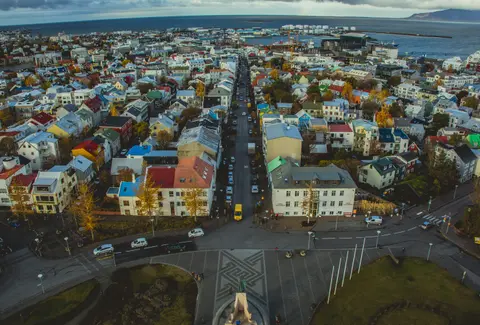
Reykjavik, the world's northernmost capital, distils the entire improbable beauty of Iceland into one compact, creatively charged city. The soaring basalt columns of Hallgrímskirkja dominate a skyline of primary-coloured rooftops, while the Harpa Concert Hall shimmers beside the harbour like a captured aurora. Day trips from the city unlock the Golden Circle's geysers and Geysir hot spring, the black sand beaches of Vík, and the ethereal glacier lagoon at Jökulsárlón. Geothermal pools — from the legendary Blue Lagoon to intimate neighbourhood hot pots — offer warmth year-round. June and July bring the bewitching midnight sun.
Day 1
Dublin
Depart 17:00
Dublin is Europe's most literary capital, home to four Nobel laureates in literature, the extraordinary Book of Kells, and Georgian architecture rivaling any on the continent. Visit May through September via Holland America Line or Windstar for Trinity College's Long Room, the definitive Guinness pint at St. James's Gate, and the spontaneous pub conversations that make this city one of the world's most immediately welcoming.
Day 2
Calf of Man
Arrive 06:00Depart 10:00
The Calf of Man is an uninhabited nature reserve off the Isle of Man's southern tip, home to significant breeding colonies of Manx shearwaters, puffins, and grey seals in the nutrient-rich tidal streams of the Irish Sea. Must-do experiences include witnessing the eerie dusk chorus of returning shearwaters, observing grey seal colonies, and scanning for basking sharks in the surrounding waters. May and June offer peak seabird activity, while September through November brings the grey seal pupping season.
Day 3
Rothesay
Arrive 07:00Depart 18:00
Rothesay is a Victorian resort town on Scotland's Isle of Bute, home to a rare circular thirteenth-century castle and the opulent Mount Stuart mansion—a Gothic palace of extraordinary interiors. Must-dos include touring Rothesay Castle and Mount Stuart, sampling fish and chips on the esplanade overlooking the Firth of Clyde, and walking the island's gentle western coast. May–September offers the best weather, with the Gulf Stream keeping the island mild enough to earn the nickname "Madeira of Scotland."
Day 4
Tobermory
Arrive 07:00Depart 14:00
Tobermory is the rainbow-painted harbor capital of Mull in Scotland's Inner Hebrides, gateway to reintroduced white-tailed eagles and the sacred island of Iona where Christianity took root in the British Isles in 563 AD. Visit June via Tauck or Windstar for the longest days, eagle-watching boat trips, and the spiritual tranquility of Iona Abbey — the cradle of Scottish Christianity.
Day 5
Stornoway
Arrive 07:00Depart 19:00
Stornoway, the sheltered harbour capital of Scotland's Isle of Lewis in the Outer Hebrides, offers an extraordinary blend of Norse heritage, Victorian architecture, and raw Atlantic beauty. Visitors should not miss the twelfth-century Lewis Chessmen at Museum nan Eilean inside the restored Lews Castle, nor the chance to taste the island's PGI-protected Stornoway black pudding at its source. The sailing season from May through September delivers the longest daylight hours and mildest conditions, with late June offering near-endless twilight that bathes the ancient Callanish Standing Stones in an ethereal glow.
Day 6
St. Kilda
Arrive 07:00Depart 12:00
St. Kilda is a remote UNESCO World Heritage archipelago forty miles west of Scotland's Outer Hebrides, famous for Britain's highest sea cliffs, the world's largest gannet colony, and the poignant remains of a community evacuated in 1930. Must-dos include exploring the restored village on Hirta, witnessing the extraordinary seabird colonies, and walking to the summit of Conachair. Visit between May and September, though landings depend on Atlantic weather.
Day 7
Lerwick
Arrive 08:00Depart 15:00
Lerwick, capital of Scotland's Shetland Islands, is a captivating Norse-Scottish harbour town renowned for its seventeenth-century granite waterfront, Viking heritage, and pristine maritime larder of wind-dried reestit mutton and hand-dived scallops. Visitors should explore the lodberries along Commercial Street and the award-winning Shetland Museum at Hay's Dock. The optimal season is late May through August, when near-perpetual daylight — the famous "simmer dim" — bathes the islands in an ethereal golden glow and seabird colonies along the cliffs reach their spectacular peak.
Day 8
At Sea
Day 9
At Sea
Day 10
Heimaey
Arrive 07:00Depart 11:00
Heimaey is Iceland's volcanic island where the dramatic 1973 eruption story, the world's largest puffin colony of one million breeding pairs, and the children's annual puffling rescue create one of the North Atlantic's most extraordinary port experiences. Visit May through August via Lindblad or Windstar for Eldfell volcano hikes, the Eldheimar Museum's excavated homes, and the harbor approach through a channel literally reshaped by eruption.
Day 11
Reykjavik
Arrive 07:00Depart 17:00
Reykjavik, the world's northernmost capital, distils the entire improbable beauty of Iceland into one compact, creatively charged city. The soaring basalt columns of Hallgrímskirkja dominate a skyline of primary-coloured rooftops, while the Harpa Concert Hall shimmers beside the harbour like a captured aurora. Day trips from the city unlock the Golden Circle's geysers and Geysir hot spring, the black sand beaches of Vík, and the ethereal glacier lagoon at Jökulsárlón. Geothermal pools — from the legendary Blue Lagoon to intimate neighbourhood hot pots — offer warmth year-round. June and July bring the bewitching midnight sun.
Day 12
Grundarfjørdur
Arrive 07:00Depart 17:00
Grundarfjörður is a fishing town at the base of Kirkjufell, Iceland's most photographed mountain, and the gateway to the Snæfellsnes Peninsula—dubbed "Iceland in miniature" for its concentrated geological diversity. Must-dos include photographing Kirkjufell with its companion waterfall and exploring Snæfellsjökull, the glacier volcano from Jules Verne's novel. June and July offer midnight sun and the most reliable weather for peninsula exploration.
Day 13
Patreksfjorour
Arrive 07:00Depart 11:00
Patreksfjörður is a fishing town in Iceland's remote Westfjords, gateway to Látrabjarg — Europe's westernmost point and home to millions of nesting seabirds including famously approachable puffins — and the surreal beauty of Rauðisandur beach. Must-do experiences include the Látrabjarg cliff walk among puffins, contemplating the vast red sands of Rauðisandur, and soaking in the town's geothermal pool. June through August offers continuous daylight and peak seabird activity.
Day 14
Saudarkrokur - høfn
Arrive 08:00Depart 18:00
Sauðárkrókur is the heart of Iceland's premier horse-breeding district in the fertile Skagafjörður valley, where turf farmsteads, saga history, and world-class lamb create a deeply authentic northern Iceland experience. Must-dos include riding the five-gaited Icelandic horse through the valley, visiting the Glaumbær turf farm museum, and tasting Skagafjörður lamb and skyr. Visit June to August for midnight sun and the best riding conditions.
Day 15
At Sea
Day 16
Ittoqqortoormiit (ex Scoresbysund)
Arrive 07:00Depart 17:00
Ittoqqortoormiit is one of Earth's most isolated settlements, a 350-person Inuit community at the mouth of the world's longest fjord system on Greenland's remote east coast. Must-dos include Zodiac exploration of the monumental Scoresby Sund fjords, watching for musk oxen on the tundra, and visiting the colorful Arctic community. Mid-July through September offers the narrow window when sea ice permits access.
Day 18
Ittoqqortoormiit (ex Scoresbysund)
Arrive 07:00Depart 15:00
Ittoqqortoormiit is one of Earth's most isolated settlements, a 350-person Inuit community at the mouth of the world's longest fjord system on Greenland's remote east coast. Must-dos include Zodiac exploration of the monumental Scoresby Sund fjords, watching for musk oxen on the tundra, and visiting the colorful Arctic community. Mid-July through September offers the narrow window when sea ice permits access.
Day 19
At Sea
Day 20
Heimaey
Arrive 07:00Depart 11:00
Heimaey is Iceland's volcanic island where the dramatic 1973 eruption story, the world's largest puffin colony of one million breeding pairs, and the children's annual puffling rescue create one of the North Atlantic's most extraordinary port experiences. Visit May through August via Lindblad or Windstar for Eldfell volcano hikes, the Eldheimar Museum's excavated homes, and the harbor approach through a channel literally reshaped by eruption.
Day 21
Reykjavik
Arrive 07:00
Reykjavik, the world's northernmost capital, distils the entire improbable beauty of Iceland into one compact, creatively charged city. The soaring basalt columns of Hallgrímskirkja dominate a skyline of primary-coloured rooftops, while the Harpa Concert Hall shimmers beside the harbour like a captured aurora. Day trips from the city unlock the Golden Circle's geysers and Geysir hot spring, the black sand beaches of Vík, and the ethereal glacier lagoon at Jökulsárlón. Geothermal pools — from the legendary Blue Lagoon to intimate neighbourhood hot pots — offer warmth year-round. June and July bring the bewitching midnight sun.
Cabin Categories
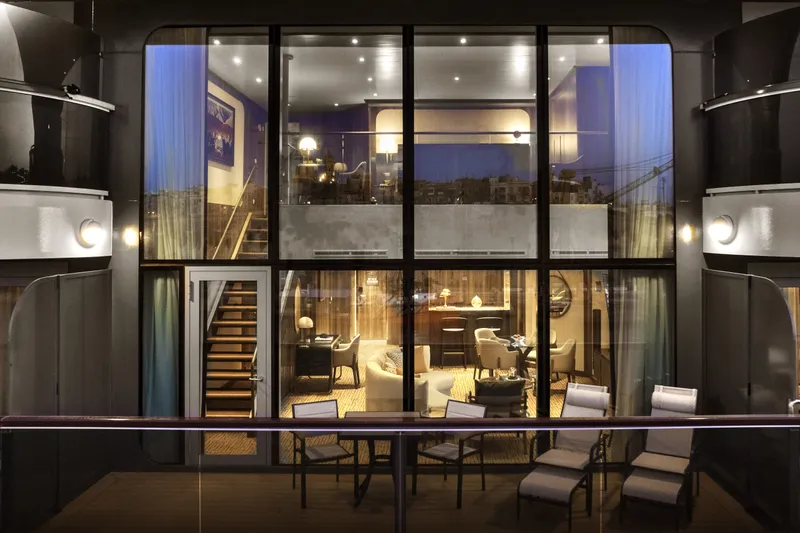
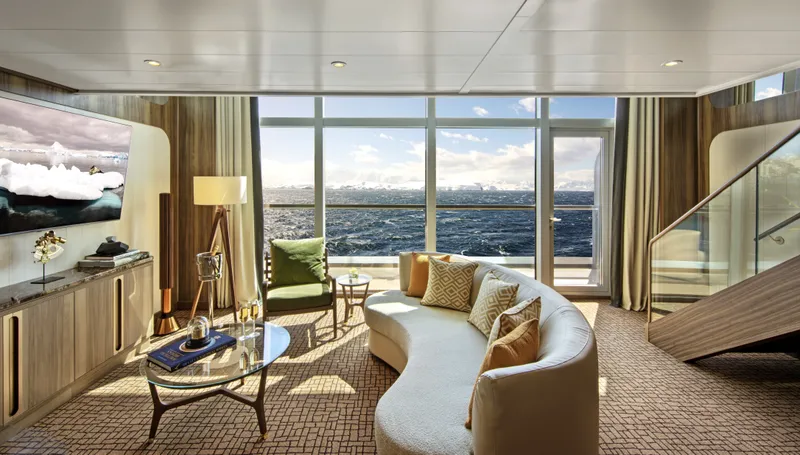
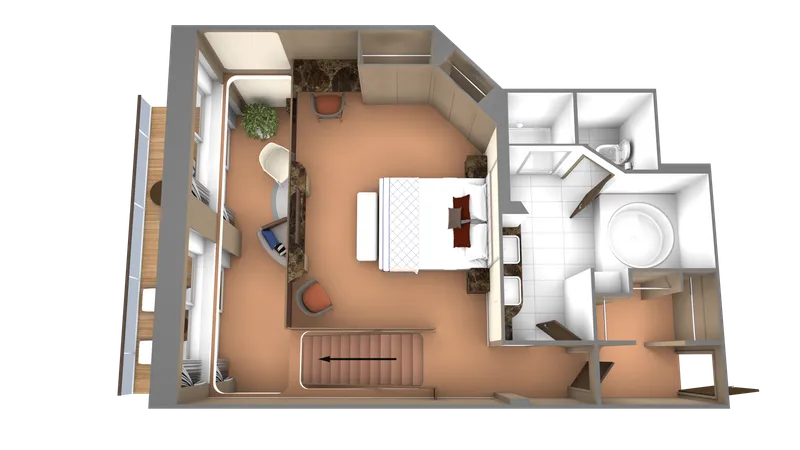
Grand Wintergarden Suite
Suite
1399 m²Max 4
GR
Deck 7 Combine mid-ship Suites 733 and 735 for Suite 7353, or Suites 734 and 736 for Suite 7364 Total space: 1,399 sq. ft. (130 sq. m.) including two verandas totaling 205 sq. ft. (19 sq. m.)
All Grand Wintergarden Suites onboard Seabourn Venture feature a comfortable living area; private veranda; queen-size bed or two twin beds; walk-in closet; personal safe; interactive TV with music and movies; fully stocked bar and refrigerator; writing desk with personalized stationery; makeup vanity; spacious bathroom, separate tub and shower, plush robes, slippers, luxury health and beauty products, hairdryer and 110/220V AC outlets.
Queen or Twin ConfigurationLounge AreaShowerToiletries ProvidedRoom Service AvailableSuite Benefits+13
View Details
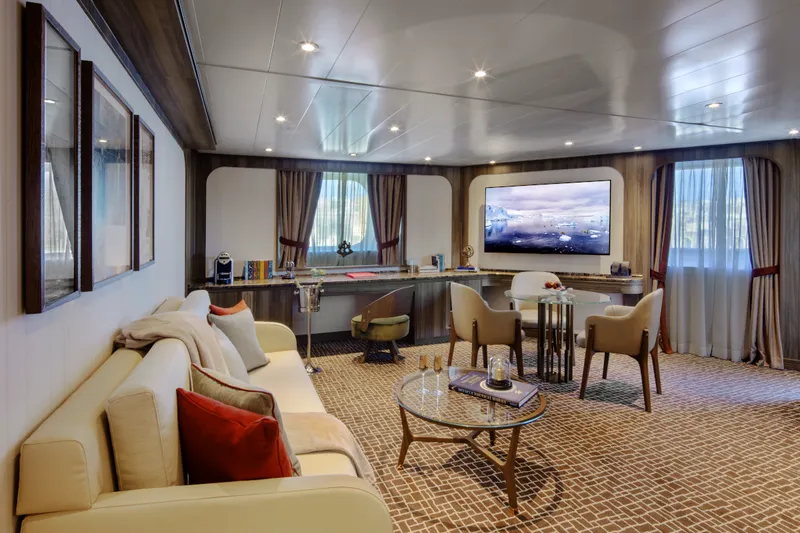
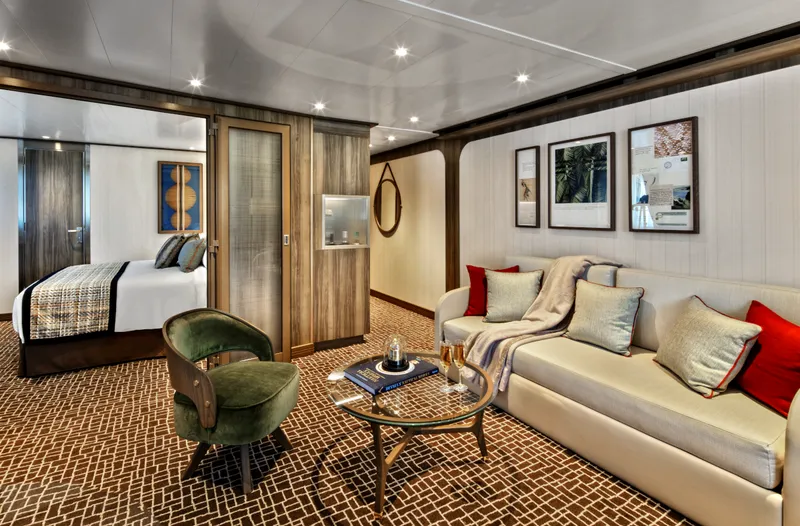
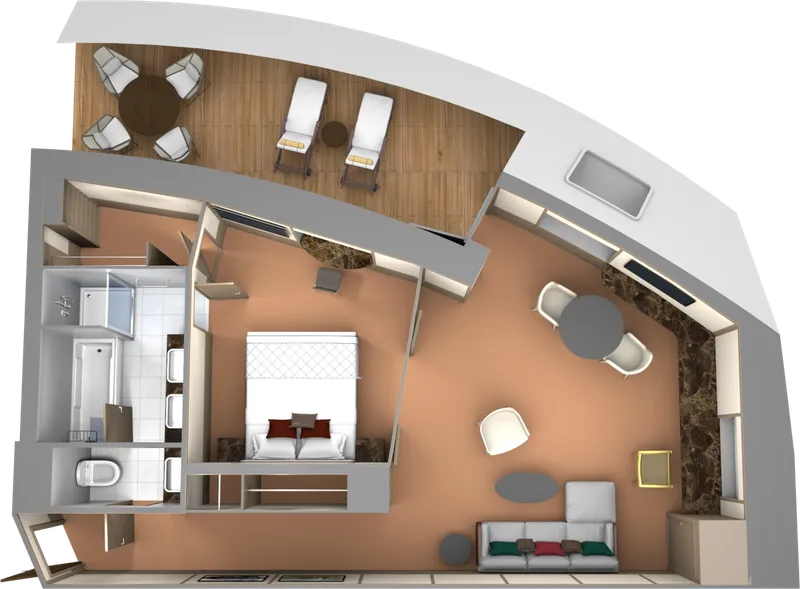
Owners Suite
Suite
1023 m²Max 2
OW
Deck 7 Suites 700, 701 Total space 1,023 sq. ft. (95 sq. m.) incl. veranda of 484 sq. ft. (45 sq. m.)
Owner's Suites on Seabourn Venture feature a comfortable living area; private veranda; queen-size bed or two twin beds; extra-large walk-in closet for expedition gear; personal safe; interactive flat-screen TV with music and movies; fully stocked bar and refrigerator; writing desk with personalized stationery; makeup vanity; spacious bathroom with double vanities, tub and shower, plush robes, slippers, hairdryer and 110/220V AC outlets.
Queen or Twin ConfigurationLounge AreaShowerToiletries ProvidedRoom Service AvailableTV+10
View Details
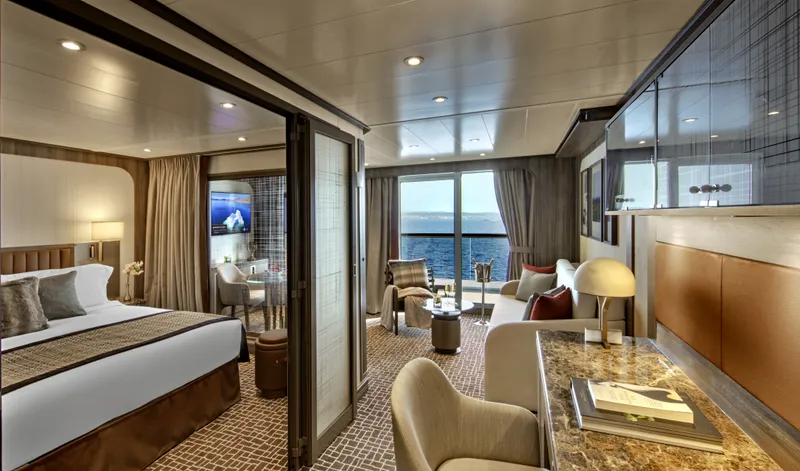
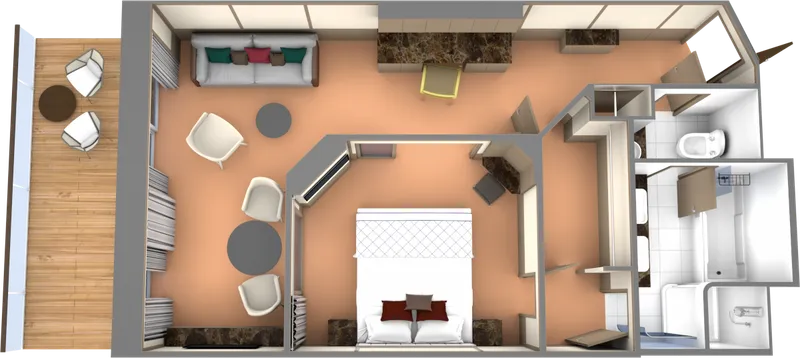
Penthouse Panorama Suite
Suite
417 m²Max 2
PA
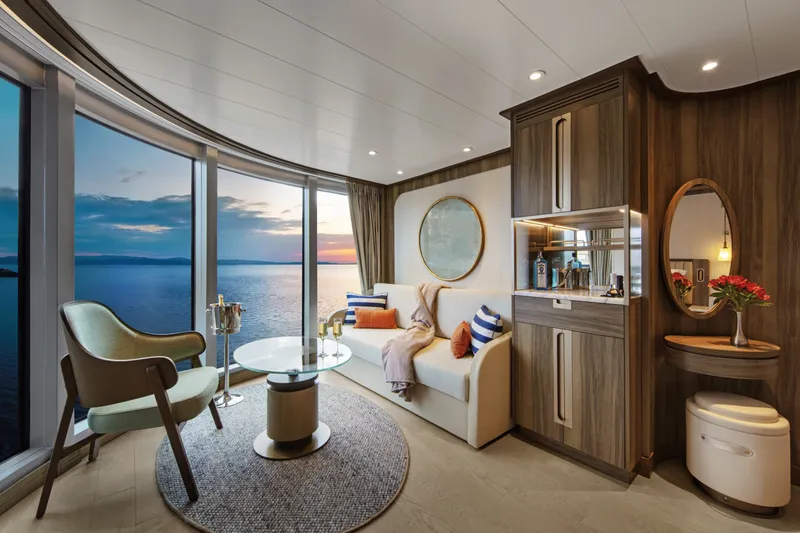
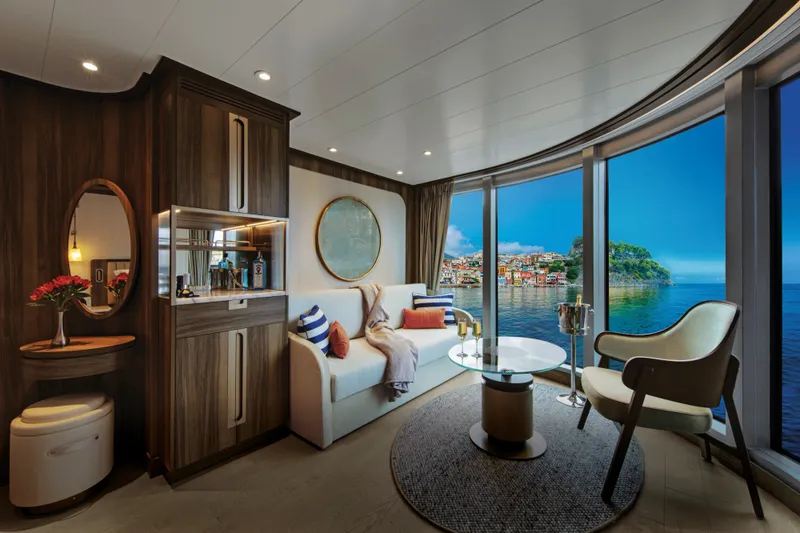
Suites 513-516, 611-614, 711-714, 802-805; Total space: 417 sq. ft. (39 sq. m.) incl. veranda of 85 sq. ft. (8 sq. m.) All Panorama Veranda Suites feature a comfortable living area; private veranda; queen-size bed or two twin beds; walk-in closet; personal safe; interactive TV with music and movies; fully stocked bar and refrigerator; writing desk with personalized stationery; makeup vanity; spacious bathroom, separate tub and shower, plush robes, slippers, luxury health and beauty products, hairdryer and 110/220V AC outlets. *Some veranda sizes vary.
BathQueen or Twin ConfigurationLounge AreaShowerToiletries ProvidedRoom Service Available+8
View Details
Penthouse Suite
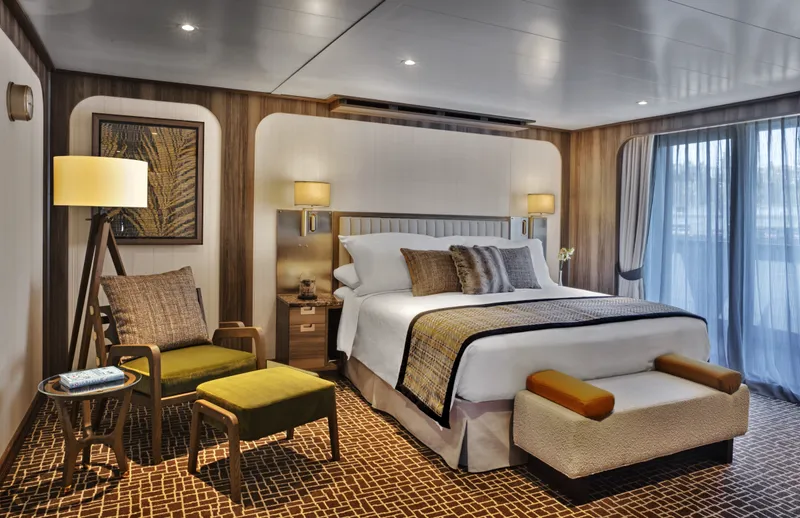
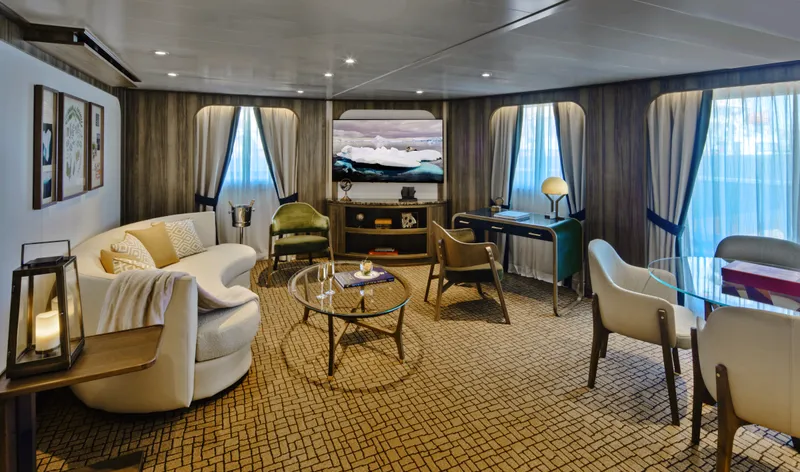
Suite
527 m²Max 2
PH
Deck 8 Suites 818-821; Approximate total space: 527 sq. ft. (49 sq. m.) including veranda of 97 sq. ft. (9 sq. m.)
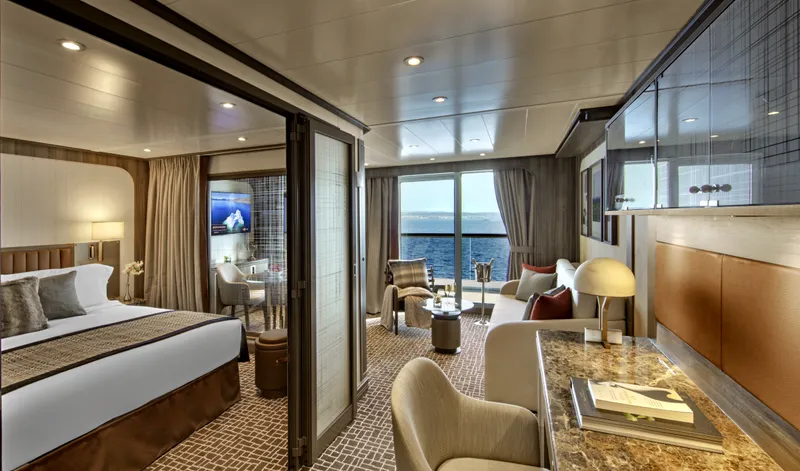
All Penthouse Suites onboard Seabourn Venture feature a comfortable living area; private veranda; queen-size bed or two twin beds; walk-in closet; personal safe; interactive TV with music and movies; fully stocked bar and refrigerator; writing desk with personalized stationery; makeup vanity; spacious bathroom, separate tub and shower, plush robes, slippers, luxury health and beauty products, hairdryer and 110/220V AC outlets.
Queen or Twin ConfigurationLounge AreaShowerToiletries ProvidedRoom Service AvailableTV+9
View Details
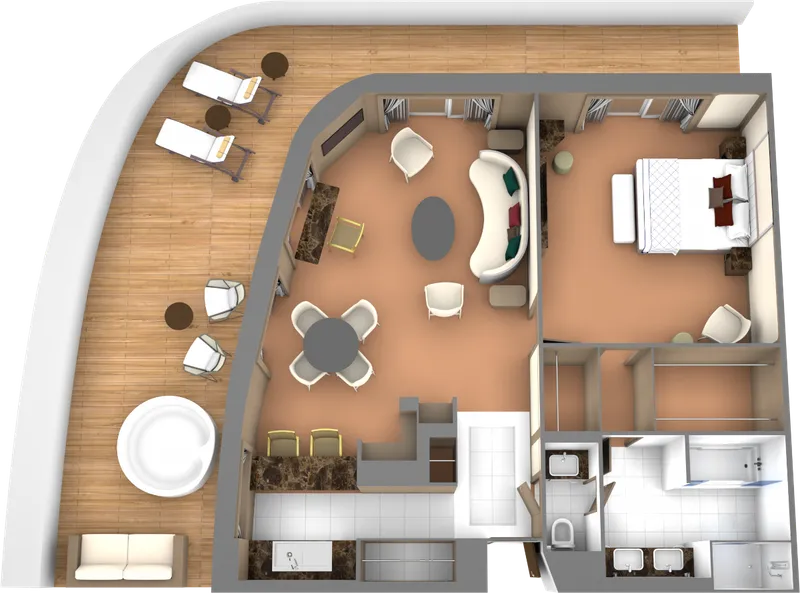
Signature Suite
Suite
1377 m²Max 4
SS
All Signature Suites onboard Seabourn Venture feature a comfortable living area; private veranda; queen-size bed or two twin beds; walk-in closet, personal safe; interactive TV with music and movies; fully stocked bar and refrigerator; writing desk with personalized stationery; makeup vanity; spacious bathroom, separate tub and shower, plush robes, slippers, luxury health and beauty products, hairdryer and 110/220V AC outlets.
Queen or Twin ConfigurationLounge AreaShowerToiletries ProvidedRoom Service AvailableSuite Benefits+10
View Details
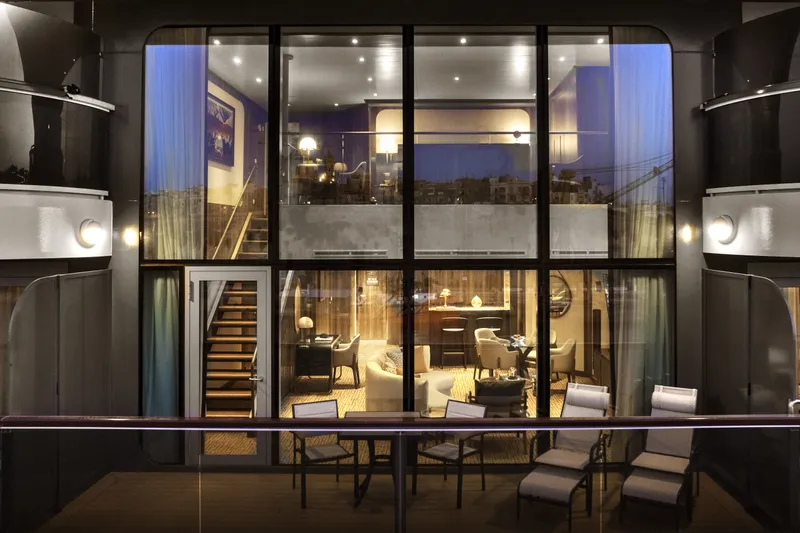
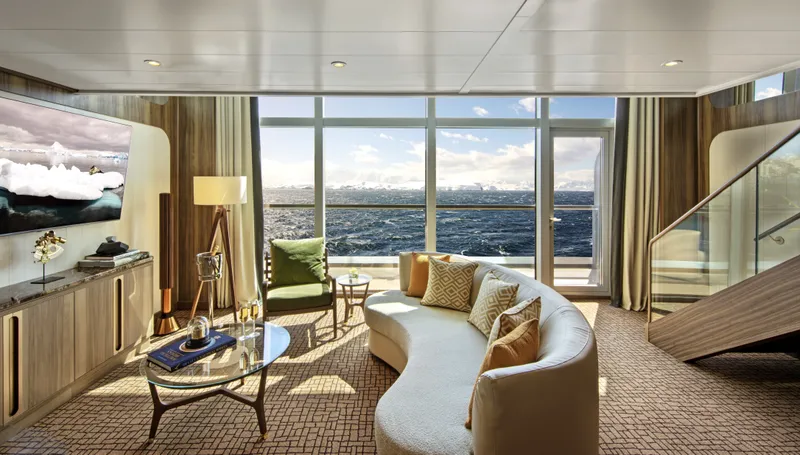
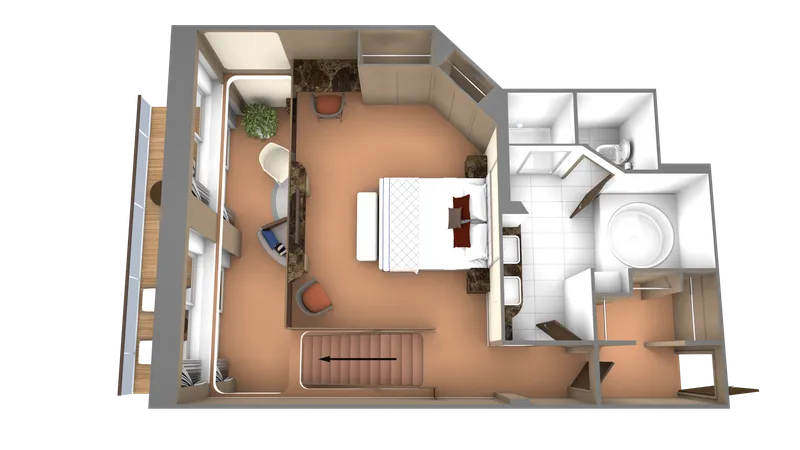
Wintergraden Suite
Suite
1044 m²Max 4
WG
Deck 7 Suites 735, 736; Total space: 1,044 sq. ft. (97 sq. m.) including veranda of 129 sq. ft. (12 sq. m.)
All Wintergarden Suites onboard Seabourn Venture feature a comfortable living area; private veranda; queen-size bed or two twin beds; walk-in closet; personal safe; interactive TV with music and movies; fully stocked bar and refrigerator; writing desk with personalized stationery; makeup vanity; spacious bathroom, separate tub and shower, plush robes, slippers, luxury health and beauty products, hairdryer and 110/220V AC outlets.
Queen or Twin ConfigurationLounge AreaShowerFree Mini BarTVWi-Fi (Additional Cost)+11
View Details
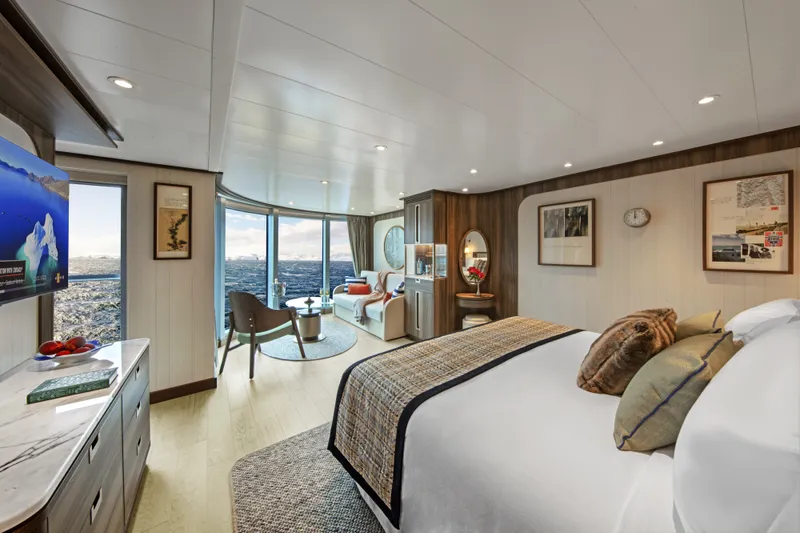
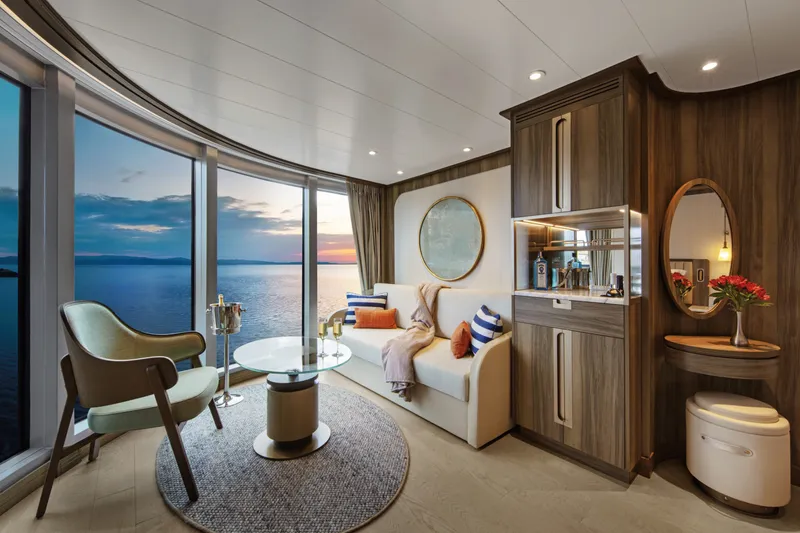
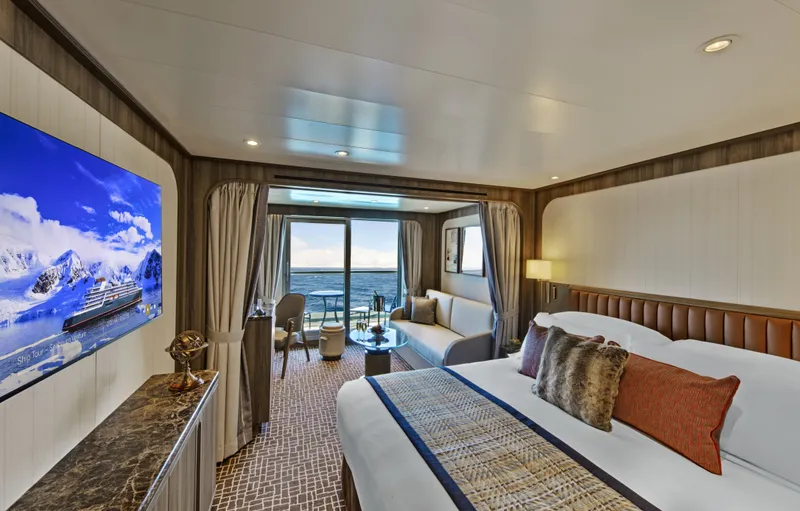
Veranda Suite
Suite
Veranda Suite
417 m²Max 2
V1V2V3V4
Decks 6, 7, 8; Approximate total space: 355 sq. ft. (33 sq. m.) including veranda of 75 sq. ft. (7 sq. m.)*
All Veranda Suites onboard Seabourn Venture feature a comfortable living area; private veranda; queen-size bed or two twin beds; walk-in closet; personal safe; interactive TV with music and movies; fully stocked bar and refrigerator; writing desk with personalized stationery; makeup vanity; spacious bathroom, separate tub and shower, plush robes, slippers, luxury health and beauty products, hairdryer and 110/220V AC outlets. *Some veranda sizes vary.
Queen or Twin ConfigurationLounge AreaShowerBathToiletries ProvidedRoom Service Available+8
View Details
Interested in This Voyage?
Our cruise specialists can help you find the perfect cabin and the best available pricing.
(+886) 02-2721-7300Contact Advisor