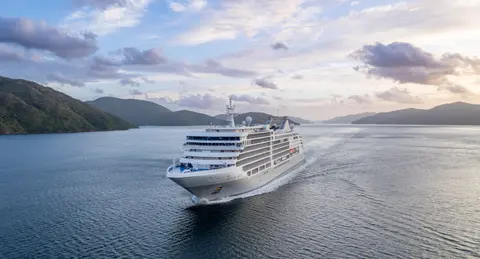
SilverseaSM260731C20
Civitavecchia (Rome) to Lisbon
Date
2026-07-31
Duration
20 nights
Departure Port
Civitavecchia
Italy
Arrival Port
Lisbon
Portugal
Rating
—
Theme
—
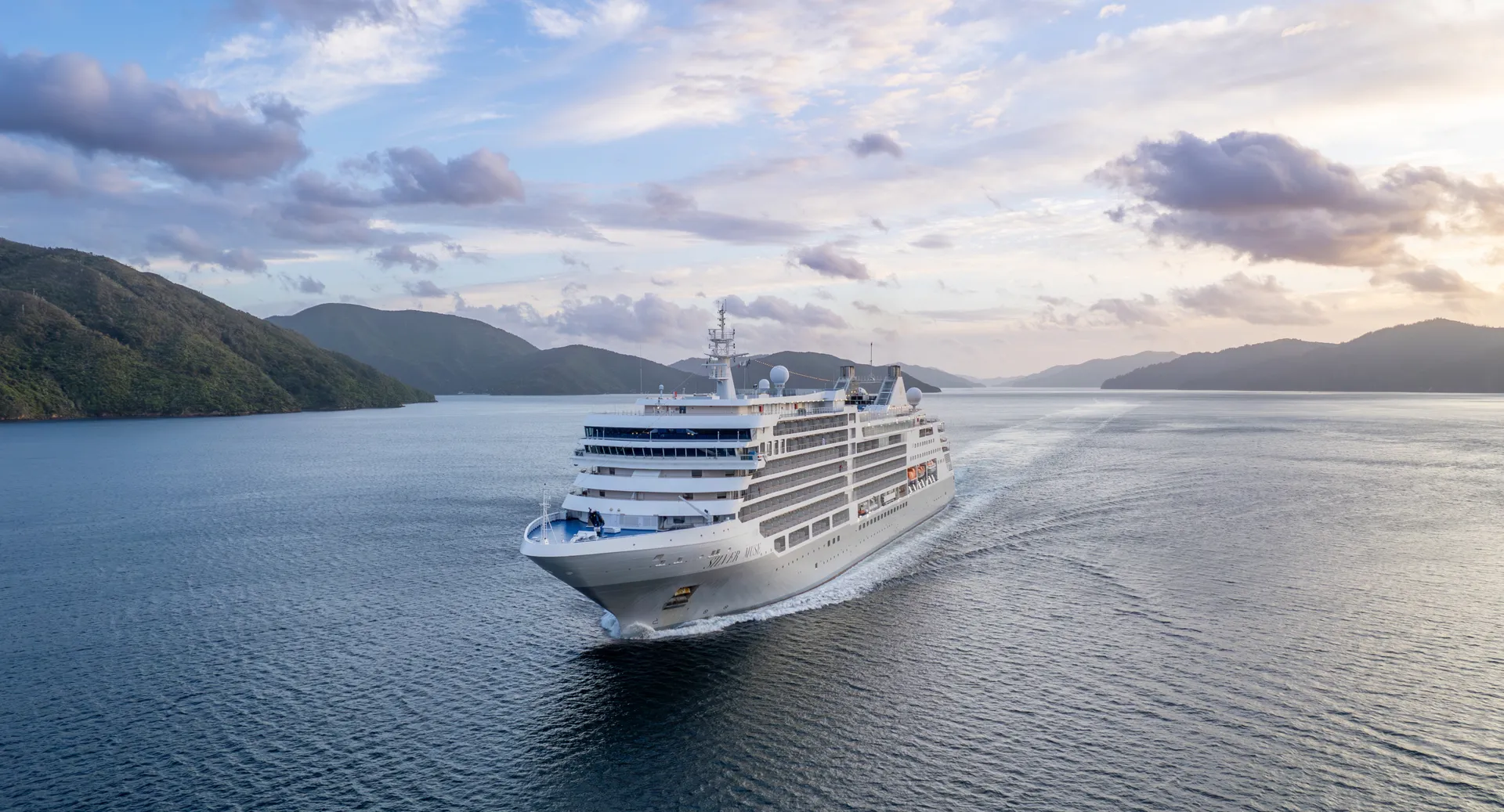
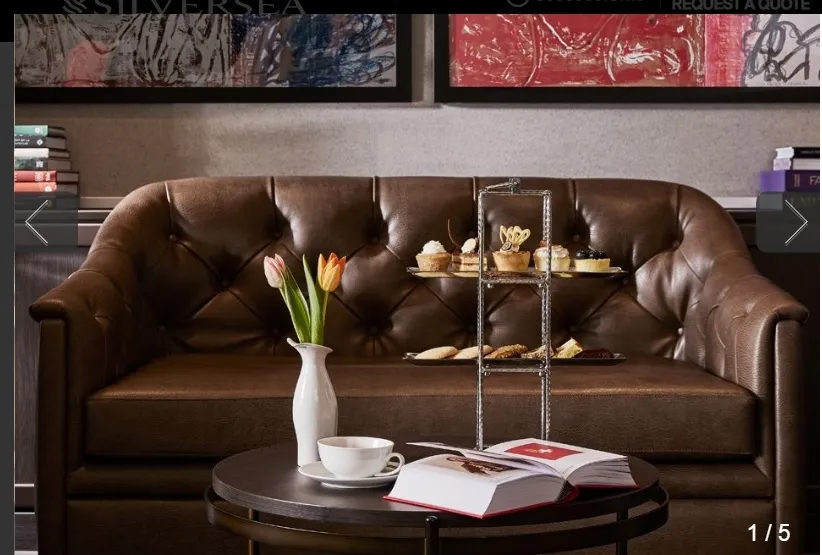
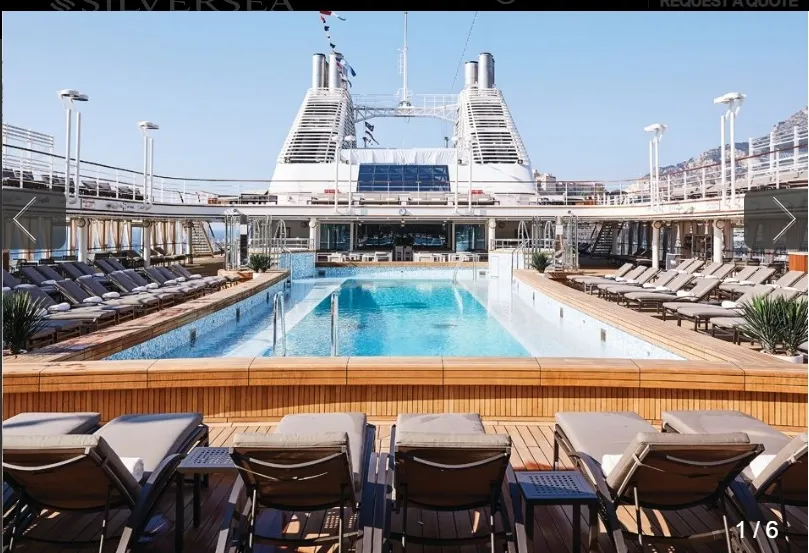
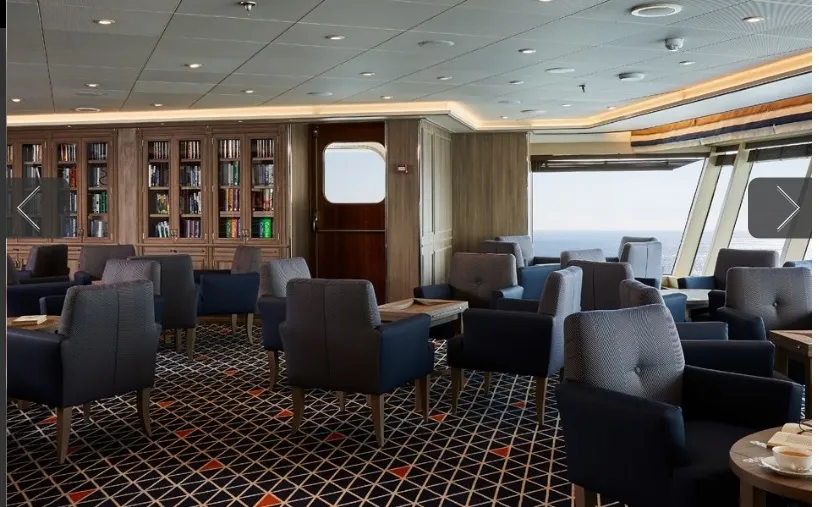
Silversea
Silver Muse
Launched
2017
Refitted
2025
Tonnage
40,700 GT
Passengers
596
Cabins
288
Crew
411
Length
699 m
Width
26 m
Speed
20 knots
Adults Only
No
Itinerary
Day 1
Day 1
Civitavecchia
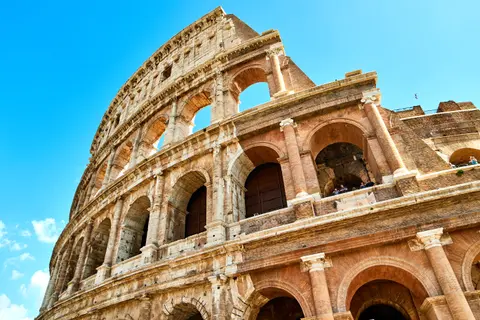
Rome's ancient maritime gateway since the Emperor Trajan commissioned its harbour in 106 AD, Civitavecchia is the natural prologue to the Eternal City — just seventy minutes southeast by express rail. The port's Renaissance fortress, designed in part by Michelangelo, anchors a working waterfront that has welcomed travellers for millennia. Beyond Rome's unmissable monuments, consider an afternoon in the Civitavecchia thermal baths, drawing on mineral waters prized since antiquity. Spring and autumn offer the ideal balance of mild weather and manageable crowds for exploring the capital's layered history.
Day 2
Day 2
At Sea
Day 3
Day 3
Giardini Naxos
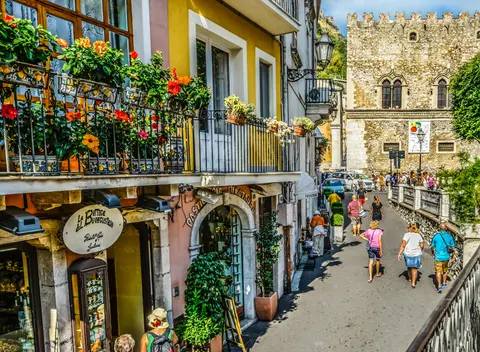
Giardini Naxos is the Sicilian bay where Greek civilization first touched western shores in 734 BC, serving today as the gateway to hilltop Taormina's extraordinary Greek-Roman theatre with Mount Etna as its eternal backdrop. Visit May or September via Windstar or Explora Journeys for ancient ruins, cable-car ascents to Sicily's most famous resort, and the view that convinced the first Greek colonists they had found paradise.
Day 4
Day 4
Valletta
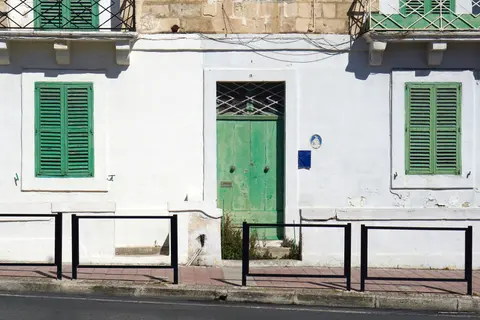
Valletta, the golden fortress capital of Malta, was hewn from a limestone peninsula in defiant haste after the Knights of Saint John — warrior monks of extraordinary valor — repulsed an overwhelming Ottoman assault in 1565. Its grid of steep baroque streets is dense with Caravaggio masterworks in the Co-Cathedral of St. John, shaded piazzas alive with café society, and bastions commanding breathtaking views over the Grand Harbour's legendary twin forts. The mild Mediterranean climate welcomes visitors year-round, though spring and autumn offer the most pleasurable temperatures for unhurried exploration of this compact UNESCO World Heritage capital.
Day 5
Day 5
Trapani (Sicily)
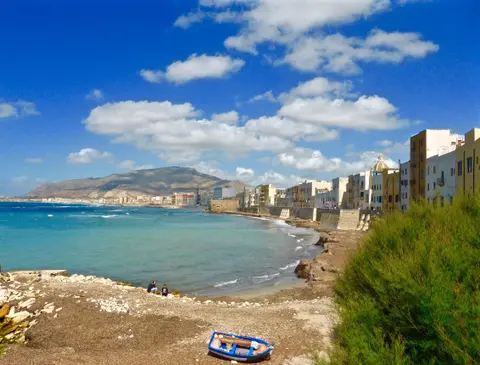
Trapani is western Sicily's sickle-shaped port city where ancient salt flats, cloud-wrapped medieval Erice, and the crystal-clear Egadi Islands converge at the Mediterranean's cultural crossroads. Visit April through October via Seabourn or Windstar for cable-car ascents to Norman-era pastry shops, sunset salt-flat reflections, and the Arab-influenced seafood couscous that distinguishes this coast from anywhere else in Italy.
Day 6
Day 6
La Goulette
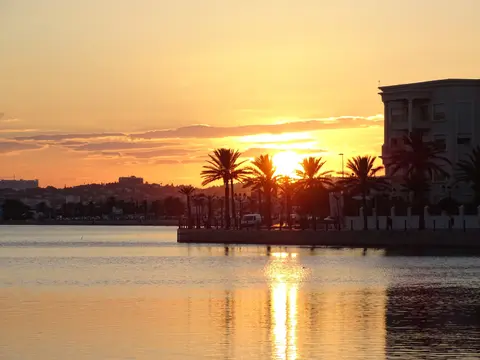
La Goulette guards the narrow channel linking the Lake of Tunis to the Mediterranean — a strategic passage coveted by every power that ruled this sea, from the Ottoman corsair Barbarossa to Charles V of Habsburg. Today the port is the gateway to Tunis and to Carthage, the Phoenician city-empire whose ruins scatter across a leafy suburb of the modern capital and whose legacy shaped the entire western Mediterranean world. Must-dos include the Bardo Museum, housing the world's finest collection of Roman mosaics, and the Tophet sanctuary at Carthage, one of antiquity's most evocative sites. Tunisia is best visited spring (March–May) and autumn (September–November) to avoid the intense summer heat.
Day 7
Day 7
Cagliari
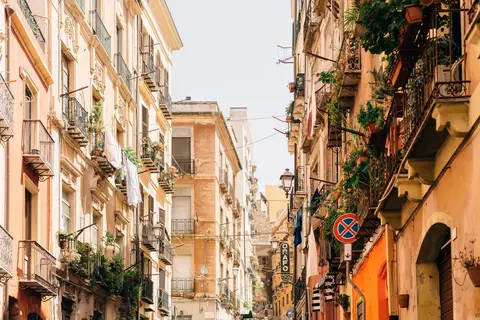
Cagliari, Sardinia's sun-drenched capital overlooking the Gulf of Angels, has absorbed three thousand years of Phoenician, Carthaginian, Roman, Pisan, and Spanish ambitions into a layered and deeply compelling Mediterranean city — where the flamingo-fringed salt lagoons stretching to the city's western edge create one of Europe's most surreal urban vistas. The Castello quarter's medieval ramparts enclose a cathedral, Pisan towers, and panoramic terraces that survey the entire city and coastline, while the Marina district below offers some of the finest bottarga pasta and fresh tuna in Italy. Visit May through September for beach perfection; the prehistoric Nuraghe Su Nuraxi at Barumini, a UNESCO Wonder, is an hour's drive north.
Day 8
Day 8
At Sea
Day 9
Day 9
Palma de Mallorca
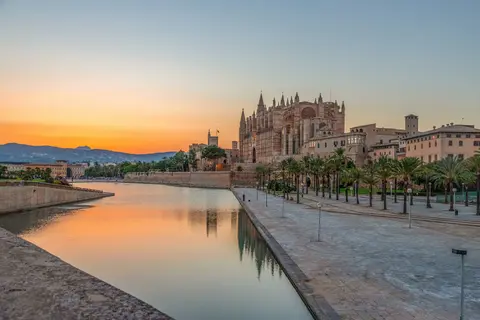
Palma de Mallorca announces itself with one of the most spectacular Gothic cathedrals in the world — La Seu, its honey-coloured sandstone buttresses rising directly from the bay, its interior modified by Antoni Gaudí and illuminated by the world's largest Gothic rose window. The old town behind it is a quarter of Arab baths, Renaissance palaces converted into boutique hotels, and the Passeig del Born — a plane-tree-shaded promenade where Balearic life conducts itself with unhurried grace. The local ensaïmada pastry and fresh sobrasada sausage from the island's black pigs are essential breakfast rituals. Visit May, June, or September: warm, brilliant, and measurably calmer than the July–August peak.
Day 10
Day 10
Palamos
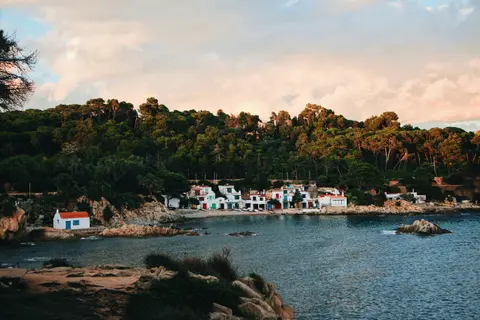
Palamós is an authentic Catalan fishing port on the Costa Brava, renowned for its legendary deep-water Gamba de Palamós red prawns and a vibrant working harbor where daily fish auctions continue centuries of maritime tradition. Must-dos include the Fishing Museum, coastal walks on the Camí de Ronda, and dining on fresh-from-the-sea Catalan cuisine. May through October offers ideal Mediterranean conditions.
Day 11
Day 11
Barcelona
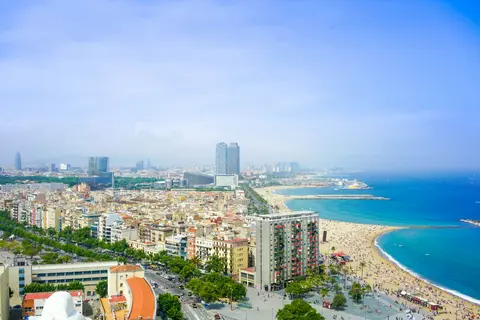
Barcelona is the city where Roman history, Gothic grandeur, and Gaudí's delirious Modernisme collide in a Mediterranean coastal capital of astonishing energy and beauty. The Sagrada Família — still under construction after 140 years — continues its audacious ascent toward completion, while the Gothic Quarter's Roman-era foundations and the Passeig de Gràcia's extraordinary concentration of Modernisme masterpieces reward days of exploration. For a complete sensory experience, lose an afternoon in the covered labyrinth of La Boqueria market before descending to the waterfront for Catalan seafood at its finest. May through June and September through October offer the most pleasant weather; the city connects directly to Paris by overnight train.
Day 12
Day 12
Clarence Town
Arrive 07:30Depart 17:00
Clarence Town, Long Island, Bahamas is a distinctive port city where deep cultural heritage meets authentic local atmosphere, featured on itineraries by Silversea. Must-do experiences include exploring the vibrant local markets for regional specialties and fresh seafood, and discovering the waterfront quarter where maritime heritage meets contemporary energy. The optimal time to visit is November through April, when cooler dry months offer the most comfortable conditions for exploration.
Day 13
Day 13
Cartagena
Arrive 08:00Depart 18:00
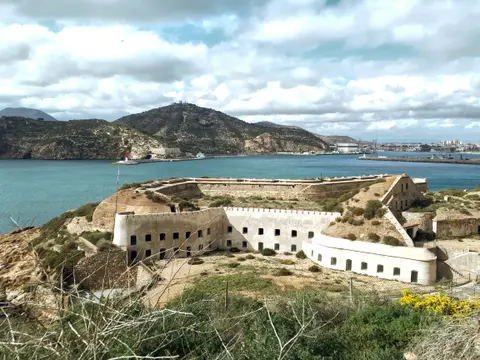
Cartagena, Spain, is a storied Mediterranean port city founded by the Carthaginians in 227 BC, where a spectacularly preserved Roman Theatre and Modernista architecture reveal layers of civilisation along a sheltered natural harbour. Visitors should not miss the caldero rice at a harbourside restaurant and a morning exploring the archaeological quarter from the Roman Forum to the Punic Wall. The mild Murcian climate makes autumn through late spring ideal, when temperatures invite leisurely wandering without the intensity of high summer.
Day 14
Day 14
Malaga
Arrive 13:00
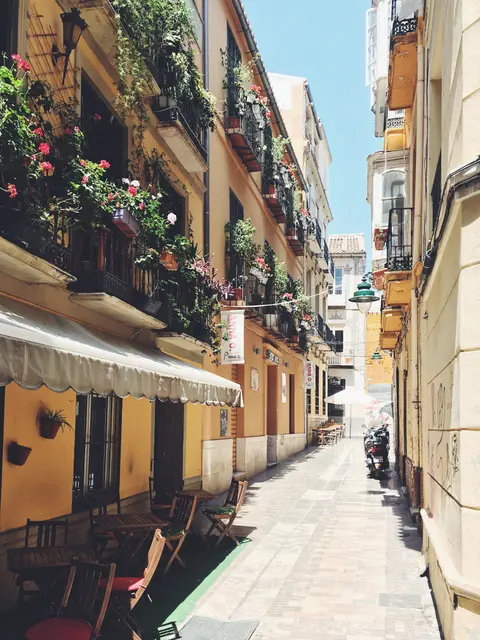
Málaga distils three thousand years of Mediterranean civilisation into one of Andalusia's most compelling port cities, where the Moorish Alcazaba fortress surveys a modern waterfront of elegant promenades and sun-drenched café terraces. Do not leave without visiting the Museo Picasso — the artist was born here in 1881 — and ascending to the ruined Castillo de Gibralfaro for panoramic views stretching to the Rif Mountains of Morocco on clear days. Malagueta anchovies fried in olive oil and the sweet Pedro Ximénez-laced dessert wine are the city's defining pleasures. The shoulder seasons of April, May, and October offer perfect Mediterranean warmth.
Day 16
Day 16
Gibraltar
Arrive 08:00Depart 18:00
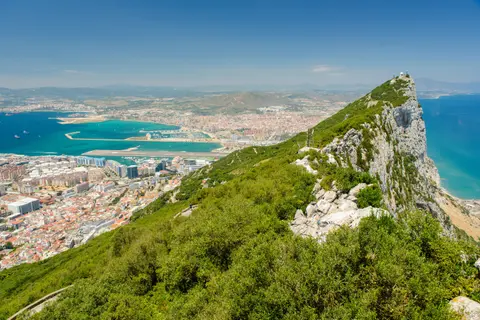
Gibraltar is a British Overseas Territory perched at the southern tip of the Iberian Peninsula, where the Mediterranean meets the Atlantic beneath an iconic limestone monolith steeped in over a millennium of contested history. No visit is complete without ascending the Rock to encounter the Barbary macaques and the panoramic views stretching to North Africa, followed by a plate of calentita — the territory's beloved Genoese-heritage chickpea bake — at a Main Street bakery. The mild Mediterranean climate makes Gibraltar a rewarding port call year-round, though spring and early autumn offer the clearest skies for spotting whales and dolphins in the Strait.
Day 17
Day 17
Cadiz
Arrive 08:00Depart 23:00
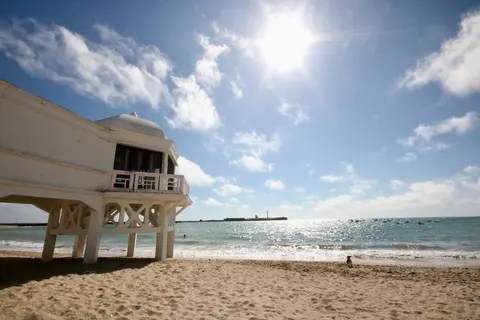
Cádiz, founded by Phoenician traders around 1100 BC and a strong contender for the oldest continuously inhabited city in Western Europe, juts into the Atlantic on a narrow peninsula where honey-colored ramparts frame improbable views of open ocean and the sun sets directly into the sea. The old quarter is an intoxicating labyrinth of baroque churches, hidden plazas, and carnival spirit — Cádiz's annual February carnival is the wildest and most satirically sharp in Spain — while the tapas culture here, centered on fresh Atlantic seafood cooked with Andalusian simplicity, represents Spanish cuisine at its most elemental and joyful. Visit February for carnival or spring for gentle Atlantic breezes. Seville is ninety minutes inland by bus or rail.
Day 18
Day 18
Tangier
Arrive 08:00Depart 18:00
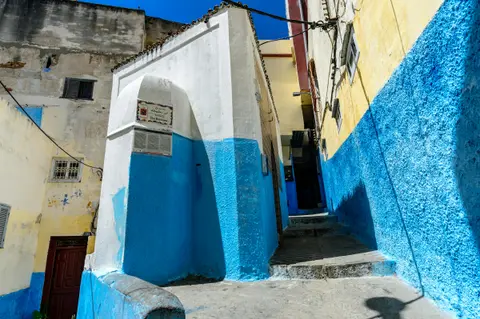
Tangier is Morocco's storied gateway between Africa and Europe, a city of Phoenician origins where a whitewashed medina, vibrant souks, and a cosmopolitan waterfront converge at the Strait of Gibraltar. Visitors should not miss savouring traditional pastilla in a rooftop riad and exploring the Kasbah's amber-lit ramparts at sunset. The ideal season to arrive is April through June or September through October, when mild Mediterranean temperatures and fewer crowds allow the city's layered beauty to reveal itself at an unhurried, luxurious pace.
Day 19
Day 19
Casablanca
Arrive 08:00Depart 18:00
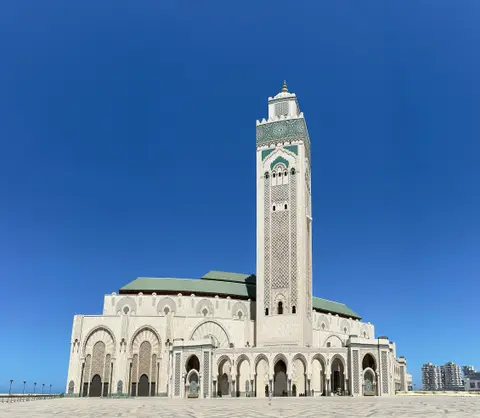
Casablanca is Morocco's largest city, a striking fusion of Berber heritage, French colonial art deco architecture, and contemporary ambition anchored by the towering Hassan II Mosque on the Atlantic shore. Visitors should not miss the Central Market's freshly grilled seafood and a half-day excursion to the imperial capital Rabat or the UNESCO-listed fortress of Aït Ben Haddou. The optimal season for cruising into Casablanca is April through June or September through November, when temperatures hover between twenty and twenty-seven degrees and the Atlantic light renders the white city at its most luminous.
Day 20
Day 20
At Sea
Day 21
Day 21
Lisbon
Arrive 07:00
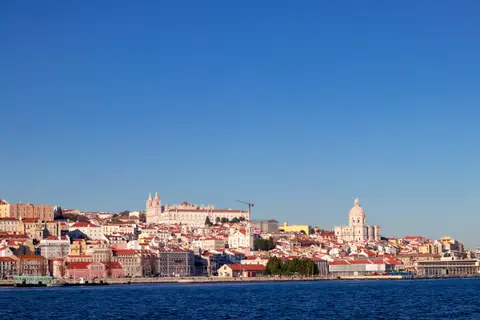
Lisbon, Portugal's enchanting capital, stands out for its rich history, stunning architecture, and vibrant culture. Must-try experiences include savoring local dishes like bacalhau à brás and pastéis de nata at Mercado da Ribeira. The best time to visit is during the spring or fall, when the weather is mild and the city is alive with festivals and events.
Day 1
Civitavecchia
Rome's ancient maritime gateway since the Emperor Trajan commissioned its harbour in 106 AD, Civitavecchia is the natural prologue to the Eternal City — just seventy minutes southeast by express rail. The port's Renaissance fortress, designed in part by Michelangelo, anchors a working waterfront that has welcomed travellers for millennia. Beyond Rome's unmissable monuments, consider an afternoon in the Civitavecchia thermal baths, drawing on mineral waters prized since antiquity. Spring and autumn offer the ideal balance of mild weather and manageable crowds for exploring the capital's layered history.
Day 2
At Sea
Day 3
Giardini Naxos
Giardini Naxos is the Sicilian bay where Greek civilization first touched western shores in 734 BC, serving today as the gateway to hilltop Taormina's extraordinary Greek-Roman theatre with Mount Etna as its eternal backdrop. Visit May or September via Windstar or Explora Journeys for ancient ruins, cable-car ascents to Sicily's most famous resort, and the view that convinced the first Greek colonists they had found paradise.
Day 4
Valletta
Valletta, the golden fortress capital of Malta, was hewn from a limestone peninsula in defiant haste after the Knights of Saint John — warrior monks of extraordinary valor — repulsed an overwhelming Ottoman assault in 1565. Its grid of steep baroque streets is dense with Caravaggio masterworks in the Co-Cathedral of St. John, shaded piazzas alive with café society, and bastions commanding breathtaking views over the Grand Harbour's legendary twin forts. The mild Mediterranean climate welcomes visitors year-round, though spring and autumn offer the most pleasurable temperatures for unhurried exploration of this compact UNESCO World Heritage capital.
Day 5
Trapani (Sicily)
Trapani is western Sicily's sickle-shaped port city where ancient salt flats, cloud-wrapped medieval Erice, and the crystal-clear Egadi Islands converge at the Mediterranean's cultural crossroads. Visit April through October via Seabourn or Windstar for cable-car ascents to Norman-era pastry shops, sunset salt-flat reflections, and the Arab-influenced seafood couscous that distinguishes this coast from anywhere else in Italy.
Day 6
La Goulette
La Goulette guards the narrow channel linking the Lake of Tunis to the Mediterranean — a strategic passage coveted by every power that ruled this sea, from the Ottoman corsair Barbarossa to Charles V of Habsburg. Today the port is the gateway to Tunis and to Carthage, the Phoenician city-empire whose ruins scatter across a leafy suburb of the modern capital and whose legacy shaped the entire western Mediterranean world. Must-dos include the Bardo Museum, housing the world's finest collection of Roman mosaics, and the Tophet sanctuary at Carthage, one of antiquity's most evocative sites. Tunisia is best visited spring (March–May) and autumn (September–November) to avoid the intense summer heat.
Day 7
Cagliari
Cagliari, Sardinia's sun-drenched capital overlooking the Gulf of Angels, has absorbed three thousand years of Phoenician, Carthaginian, Roman, Pisan, and Spanish ambitions into a layered and deeply compelling Mediterranean city — where the flamingo-fringed salt lagoons stretching to the city's western edge create one of Europe's most surreal urban vistas. The Castello quarter's medieval ramparts enclose a cathedral, Pisan towers, and panoramic terraces that survey the entire city and coastline, while the Marina district below offers some of the finest bottarga pasta and fresh tuna in Italy. Visit May through September for beach perfection; the prehistoric Nuraghe Su Nuraxi at Barumini, a UNESCO Wonder, is an hour's drive north.
Day 8
At Sea
Day 9
Palma de Mallorca
Palma de Mallorca announces itself with one of the most spectacular Gothic cathedrals in the world — La Seu, its honey-coloured sandstone buttresses rising directly from the bay, its interior modified by Antoni Gaudí and illuminated by the world's largest Gothic rose window. The old town behind it is a quarter of Arab baths, Renaissance palaces converted into boutique hotels, and the Passeig del Born — a plane-tree-shaded promenade where Balearic life conducts itself with unhurried grace. The local ensaïmada pastry and fresh sobrasada sausage from the island's black pigs are essential breakfast rituals. Visit May, June, or September: warm, brilliant, and measurably calmer than the July–August peak.
Day 10
Palamos
Palamós is an authentic Catalan fishing port on the Costa Brava, renowned for its legendary deep-water Gamba de Palamós red prawns and a vibrant working harbor where daily fish auctions continue centuries of maritime tradition. Must-dos include the Fishing Museum, coastal walks on the Camí de Ronda, and dining on fresh-from-the-sea Catalan cuisine. May through October offers ideal Mediterranean conditions.
Day 11
Barcelona
Barcelona is the city where Roman history, Gothic grandeur, and Gaudí's delirious Modernisme collide in a Mediterranean coastal capital of astonishing energy and beauty. The Sagrada Família — still under construction after 140 years — continues its audacious ascent toward completion, while the Gothic Quarter's Roman-era foundations and the Passeig de Gràcia's extraordinary concentration of Modernisme masterpieces reward days of exploration. For a complete sensory experience, lose an afternoon in the covered labyrinth of La Boqueria market before descending to the waterfront for Catalan seafood at its finest. May through June and September through October offer the most pleasant weather; the city connects directly to Paris by overnight train.
Day 12
Clarence Town
Arrive 07:30Depart 17:00
Clarence Town, Long Island, Bahamas is a distinctive port city where deep cultural heritage meets authentic local atmosphere, featured on itineraries by Silversea. Must-do experiences include exploring the vibrant local markets for regional specialties and fresh seafood, and discovering the waterfront quarter where maritime heritage meets contemporary energy. The optimal time to visit is November through April, when cooler dry months offer the most comfortable conditions for exploration.
Day 13
Cartagena
Arrive 08:00Depart 18:00
Cartagena, Spain, is a storied Mediterranean port city founded by the Carthaginians in 227 BC, where a spectacularly preserved Roman Theatre and Modernista architecture reveal layers of civilisation along a sheltered natural harbour. Visitors should not miss the caldero rice at a harbourside restaurant and a morning exploring the archaeological quarter from the Roman Forum to the Punic Wall. The mild Murcian climate makes autumn through late spring ideal, when temperatures invite leisurely wandering without the intensity of high summer.
Day 14
Malaga
Arrive 13:00
Málaga distils three thousand years of Mediterranean civilisation into one of Andalusia's most compelling port cities, where the Moorish Alcazaba fortress surveys a modern waterfront of elegant promenades and sun-drenched café terraces. Do not leave without visiting the Museo Picasso — the artist was born here in 1881 — and ascending to the ruined Castillo de Gibralfaro for panoramic views stretching to the Rif Mountains of Morocco on clear days. Malagueta anchovies fried in olive oil and the sweet Pedro Ximénez-laced dessert wine are the city's defining pleasures. The shoulder seasons of April, May, and October offer perfect Mediterranean warmth.
Day 16
Gibraltar
Arrive 08:00Depart 18:00
Gibraltar is a British Overseas Territory perched at the southern tip of the Iberian Peninsula, where the Mediterranean meets the Atlantic beneath an iconic limestone monolith steeped in over a millennium of contested history. No visit is complete without ascending the Rock to encounter the Barbary macaques and the panoramic views stretching to North Africa, followed by a plate of calentita — the territory's beloved Genoese-heritage chickpea bake — at a Main Street bakery. The mild Mediterranean climate makes Gibraltar a rewarding port call year-round, though spring and early autumn offer the clearest skies for spotting whales and dolphins in the Strait.
Day 17
Cadiz
Arrive 08:00Depart 23:00
Cádiz, founded by Phoenician traders around 1100 BC and a strong contender for the oldest continuously inhabited city in Western Europe, juts into the Atlantic on a narrow peninsula where honey-colored ramparts frame improbable views of open ocean and the sun sets directly into the sea. The old quarter is an intoxicating labyrinth of baroque churches, hidden plazas, and carnival spirit — Cádiz's annual February carnival is the wildest and most satirically sharp in Spain — while the tapas culture here, centered on fresh Atlantic seafood cooked with Andalusian simplicity, represents Spanish cuisine at its most elemental and joyful. Visit February for carnival or spring for gentle Atlantic breezes. Seville is ninety minutes inland by bus or rail.
Day 18
Tangier
Arrive 08:00Depart 18:00
Tangier is Morocco's storied gateway between Africa and Europe, a city of Phoenician origins where a whitewashed medina, vibrant souks, and a cosmopolitan waterfront converge at the Strait of Gibraltar. Visitors should not miss savouring traditional pastilla in a rooftop riad and exploring the Kasbah's amber-lit ramparts at sunset. The ideal season to arrive is April through June or September through October, when mild Mediterranean temperatures and fewer crowds allow the city's layered beauty to reveal itself at an unhurried, luxurious pace.
Day 19
Casablanca
Arrive 08:00Depart 18:00
Casablanca is Morocco's largest city, a striking fusion of Berber heritage, French colonial art deco architecture, and contemporary ambition anchored by the towering Hassan II Mosque on the Atlantic shore. Visitors should not miss the Central Market's freshly grilled seafood and a half-day excursion to the imperial capital Rabat or the UNESCO-listed fortress of Aït Ben Haddou. The optimal season for cruising into Casablanca is April through June or September through November, when temperatures hover between twenty and twenty-seven degrees and the Atlantic light renders the white city at its most luminous.
Day 20
At Sea
Day 21
Lisbon
Arrive 07:00
Lisbon, Portugal's enchanting capital, stands out for its rich history, stunning architecture, and vibrant culture. Must-try experiences include savoring local dishes like bacalhau à brás and pastéis de nata at Mercado da Ribeira. The best time to visit is during the spring or fall, when the weather is mild and the city is alive with festivals and events.
Cabin Categories
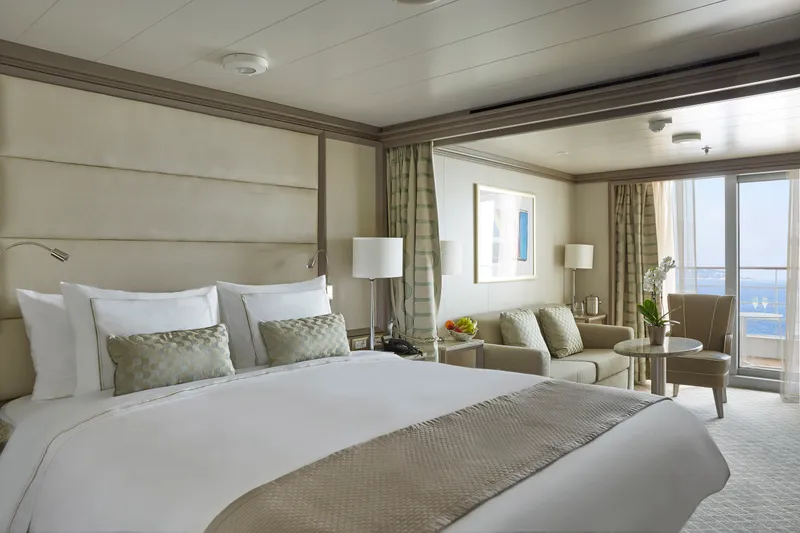
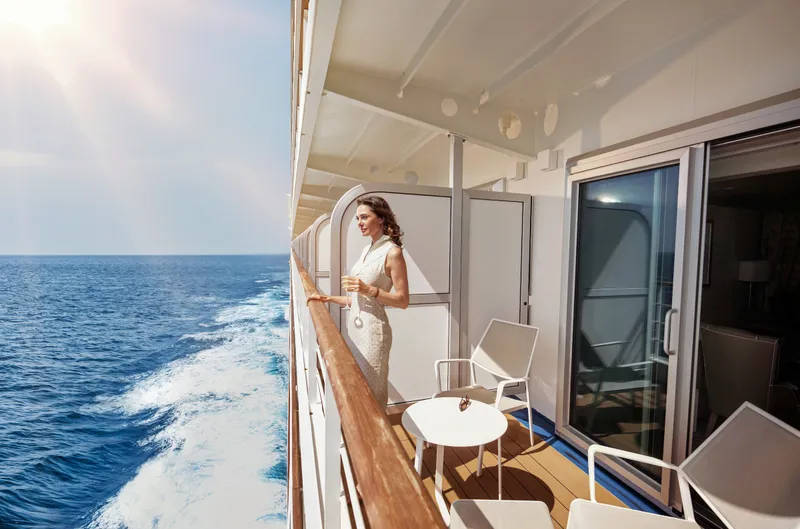
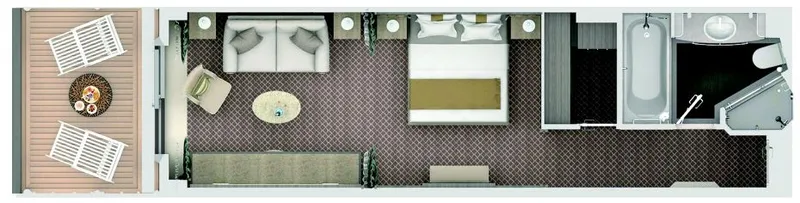
Classic Veranda Suite
Suite
452 m²Max 2
CV
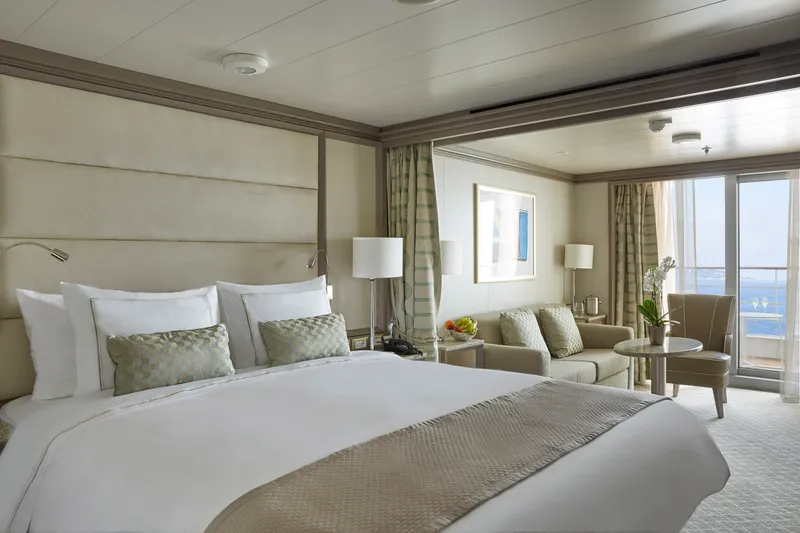
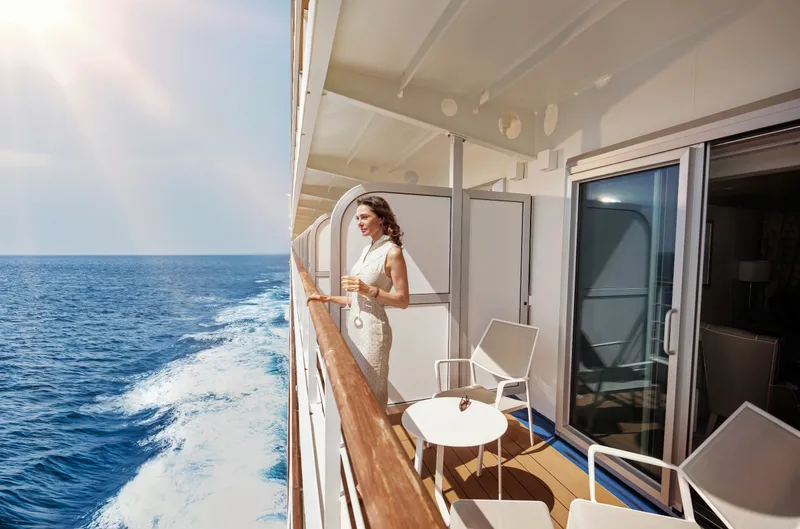
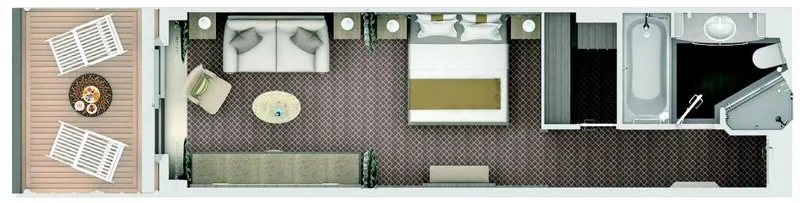
The Classic Veranda Suite provides generous living space for voyagers. Located lower bow, the Classic Veranda Suite offers all the comfort and attention to detail that you can expect aboard — both inside and out. A generous expanse of interior comforts — elegant décor, stunning marble bathroom and ample seating area, make this a cosy home away from home. But perhaps this suite’s finest asset lies just outside, as floor-to-ceiling glass doors open onto a private veranda, making every sunset feel as if it is yours alone.
Teak veranda with patio furniture and floor-to-ceiling glass doors.
Sitting area.
Twin beds or queen-sized bed.
Marble bathroom with vanity, full-sized bath, separate shower.
A choice of pillows.
Walk-in wardrobe with personal safe.
Writing desk.
Two 42” / 106 cm flat-screen HD TVs.
Interactive Media Library.
Unlimited Standard Wifi.
Queen or Twin ConfigurationLounge AreaShowerBathToiletries ProvidedRoom Service Available+12
View Details
Deluxe Veranda Suite
Suite
452 m²Max 3
DX
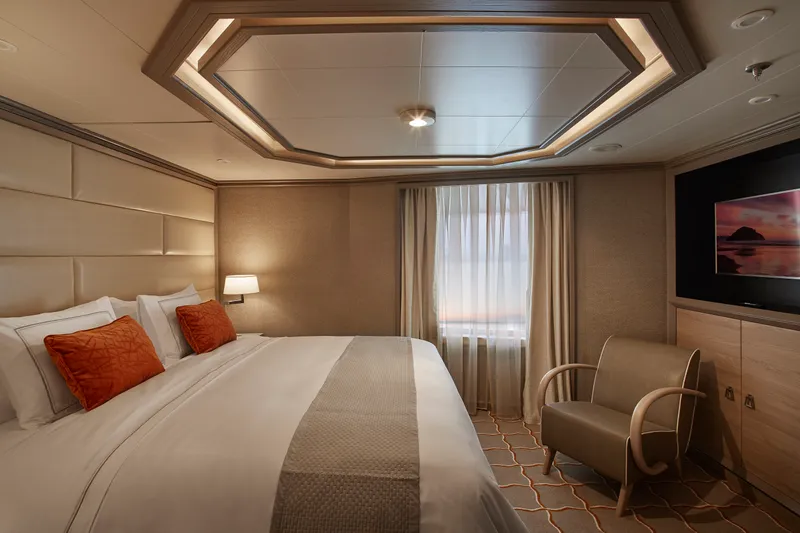
The Deluxe Veranda Suite offers a comfortable living space, close to the heart of the ship. With its preferred mid-ship location and all the comfort and attention to detail that you can expect aboard, the Deluxe Veranda Suite is the savvy traveller’s paradise— both inside and out. Elegant décor, stunning marble bathroom and ample seating area, make this a cosy home away from home. But perhaps this suite’s finest asset lies just outside, as floor-to-ceiling glass doors open onto a private veranda, making every sunset feel as if it is yours alone.
Teak veranda with patio furniture and floor-to-ceiling glass doors.
Sitting area.
Twin beds or queen-sized bed.
Marble bathroom with vanity, full-sized bath, separate shower.
A choice of pillows.
Walk-in wardrobe with personal safe.
Writing desk.
Two 42” / 106 cm flat-screen HD TVs.
Interactive Media Library.
Unlimited Standard Wifi.
Queen or Twin ConfigurationShowerBathToiletries ProvidedRoom Service AvailableTV+13
View Details
Grand Suite
Suite
1948–2605 m²Max 5
G1G2
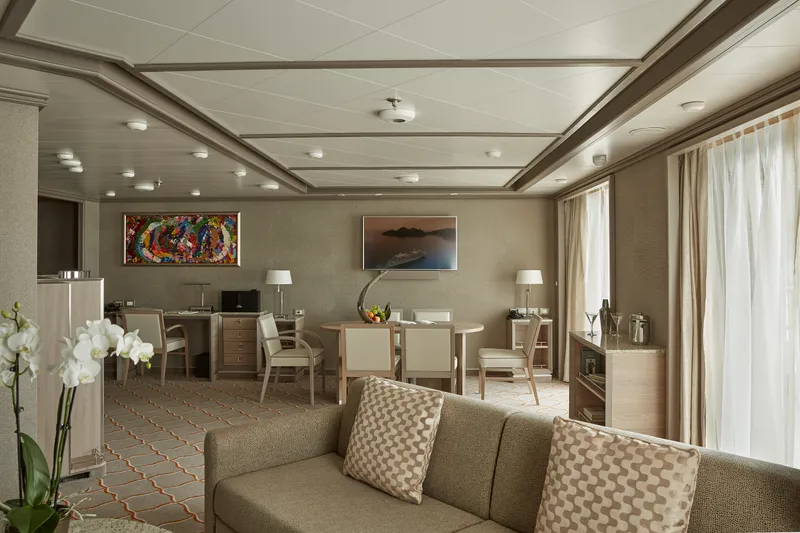
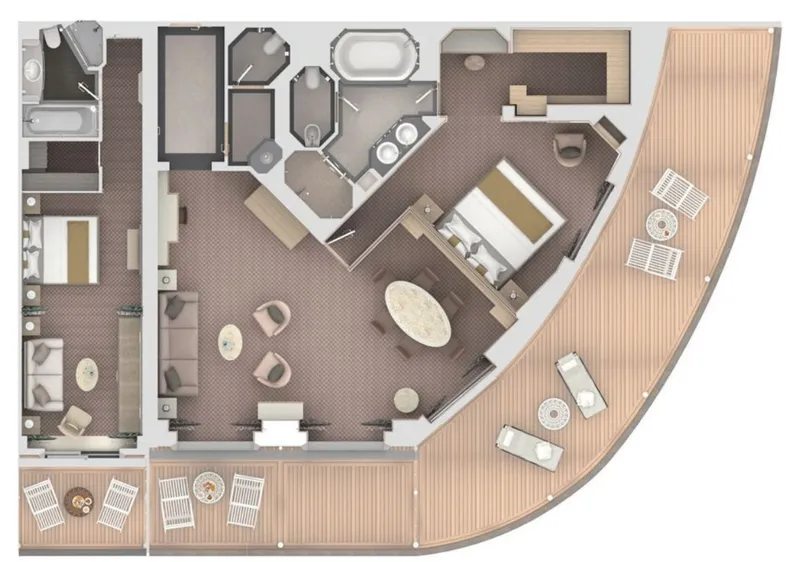
Indulge in the epitome of ultra-luxury cruising. The Grand Suite is for those who want to experience sailing in style. The sophistication of the Silversea philosophy coupled with ample interior and exterior space makes this the perfect choice for serious travellers. With the biggest verandas on board, enjoy entertaining new friends or simply sharing intimate meals while contemplating spectacular sunsets. Savour the sense of well-being offered by the luxurious furnishings and modern amenities. Offering an unprecedented level of relaxation, the Grand Suite is the perfect romantic getaway.
Two teak verandas with patio furniture and floor-to-ceiling glass doors; bedroom two has additional veranda.
Living room with convertible sofa to accommodate an additional guest.
Sitting area; bedroom two has additional sitting area.
Separate dining area.
Twin beds or king-sized bed; bedroom two has additional twin beds or queensized bed.
Marble bathroom with double vanity, separate shower and full-sized bath, plus a powder room; bedroom two has
additional marble bathroom with fullsized bath.
Savoir Beds mattresses and a choice of pillows.
Walk-in wardrobe(s) with personal safe.
Vanity table(s).
Writing desk(s).
One 55” / 140 cm and one 42” / 106 cm flat-screen HD TV in main suite, plus two 42” / 106 cm flat-screen HD TVs
in bedroom two.
Interactive Media Library.
Bose Sound Touch 30 with Bluetooth connectivity.
Illy espresso machine.
Unlimited Premium Wifi.
Lounge AreaShowerToiletries ProvidedRoom Service AvailableTVFree Wi-Fi+16
View Details
Owner's Suite
Suite
1076–1518 m²Max 5
O1O2
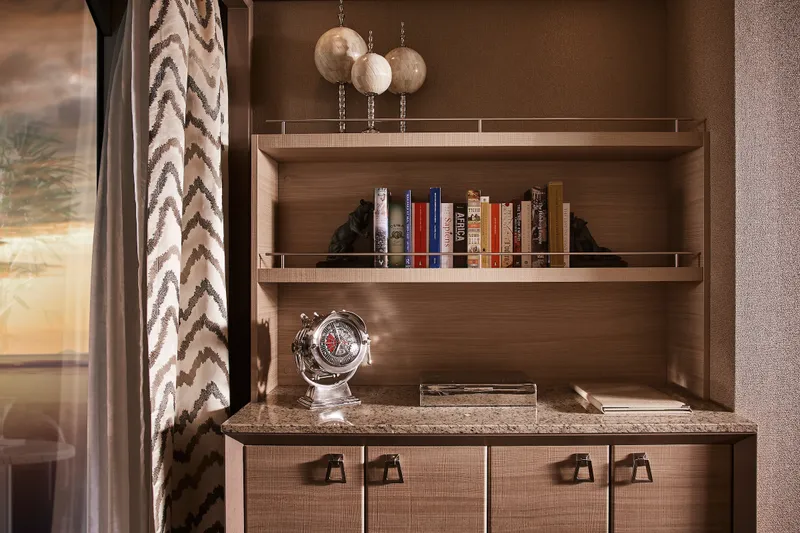
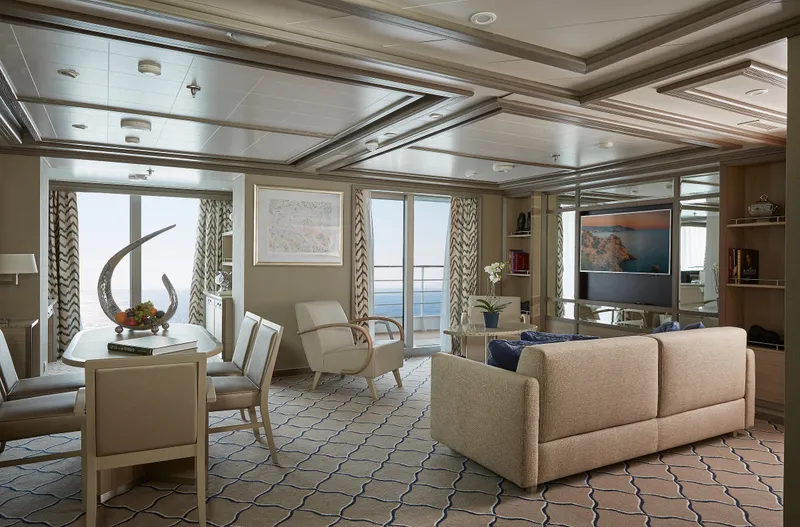
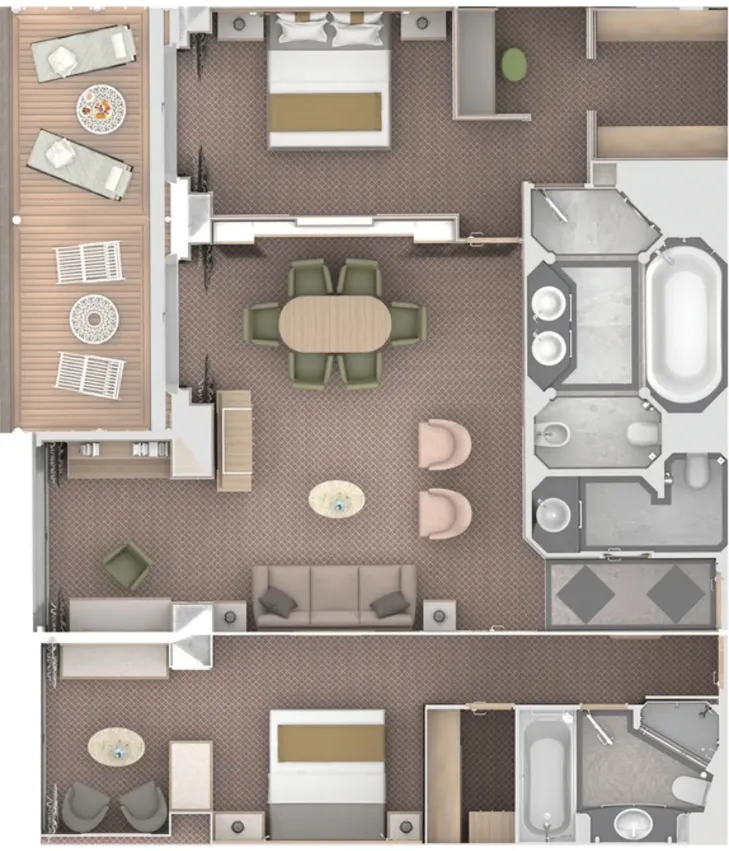
Picture yourself taking a delicious breakfast on your private veranda. Imagine watching the sun set, a flute of chilled champagne in hand, setting sail for your next destination. Prestigious, classic and sophisticated, this stylish apartment suite offers the ultimate in finest accommodation on board. Set aside for those who seek a superlative level of space, comfort and service, the Owner’s Suite has it all. The adjoining bedroom, with its en-suite bathroom, offers its own spectacular sea views.
Large teak veranda with patio furniture and floor-to-ceiling glass doors; bedroom two has additional large picture window.
Living room with sitting area; bedroom two has additional sitting area.
Separate dining area.
Twin beds or king-sized bed; bedroom two has additional twin beds or queensized bed.
Marble bathroom with double vanity, separate shower and full-sized bath, plus a powder room; bedroom two has
additional marble bathroom with shower.
Savoir Beds mattresses and a choice of pillows.
Walk-in wardrobe(s) with personal safe.
Vanity table(s).
Writing desk(s).
One 55” / 140 cm and one 42” / 106 cm flat-screen HD TV in main suite, plus two 42” / 106 cm flat-screen HD TVs
in bedroom two.
Interactive Media Library.
Bose Sound Touch 30 with Bluetooth connectivity.
Illy espresso machine.
Unlimited Premium Wifi.
Lounge AreaShowerToiletries ProvidedRoom Service AvailableSuite BenefitsTV+17
View Details
Panorama Suite
Suite
334 m²Max 2
PA
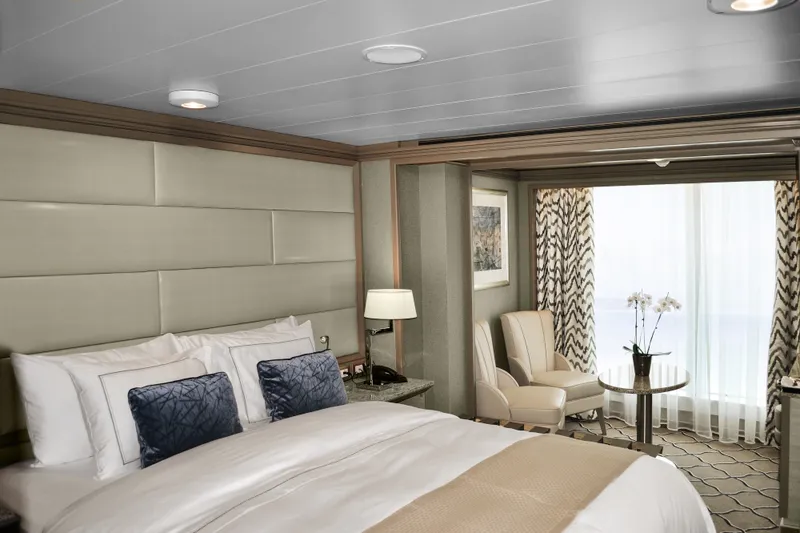
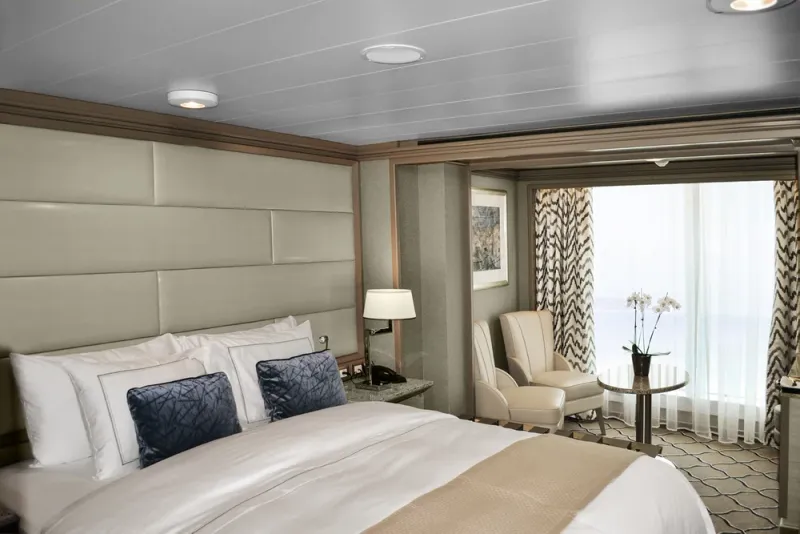
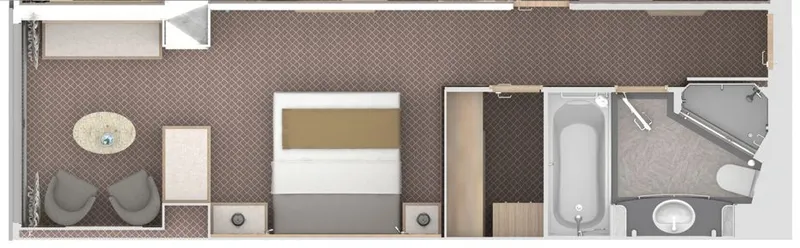
The Panorama Suite provides generous living space for voyagers. Located on deck 9, the Panorama offers all the comfort and attention to detail that you can expect aboard. A generous expanse of interior comforts — elegant décor, stunning marble bathroom and ample seating area, make this a cosy home away from home. The seating area of the Panorama Suite has plenty of room to relax, while large picture windows frame panoramic ocean views.
Sitting area.
Twin beds or queen-sized bed.
Marble bathroom with vanity, full-sized bath, separate shower.
A choice of pillows.
Walk-in wardrobe with personal safe.
Writing desk.
Two 42” / 106 cm flat-screen HD TVs.
Interactive Media Library.
Unlimited Standard Wifi.
Queen or Twin ConfigurationShowerToiletries ProvidedRoom Service AvailableTVFree Wi-Fi+12
View Details
Royal Suite
Suite
1259–1722 m²Max 4
R1R2
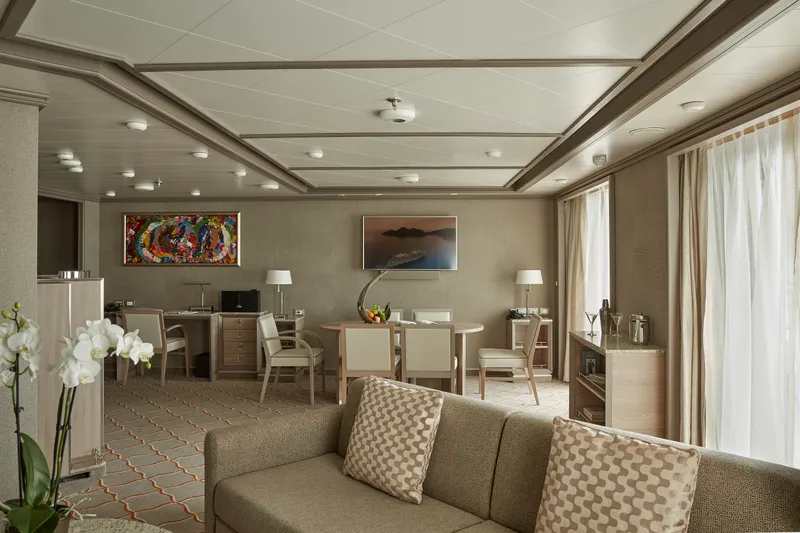
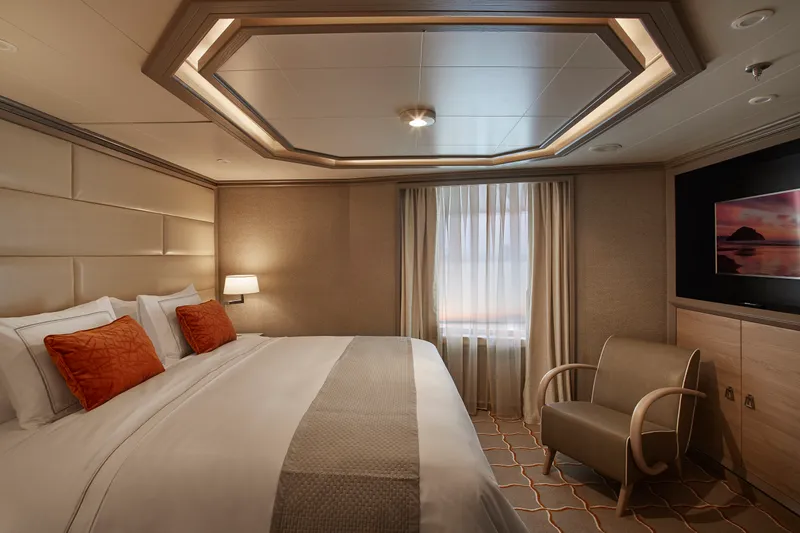
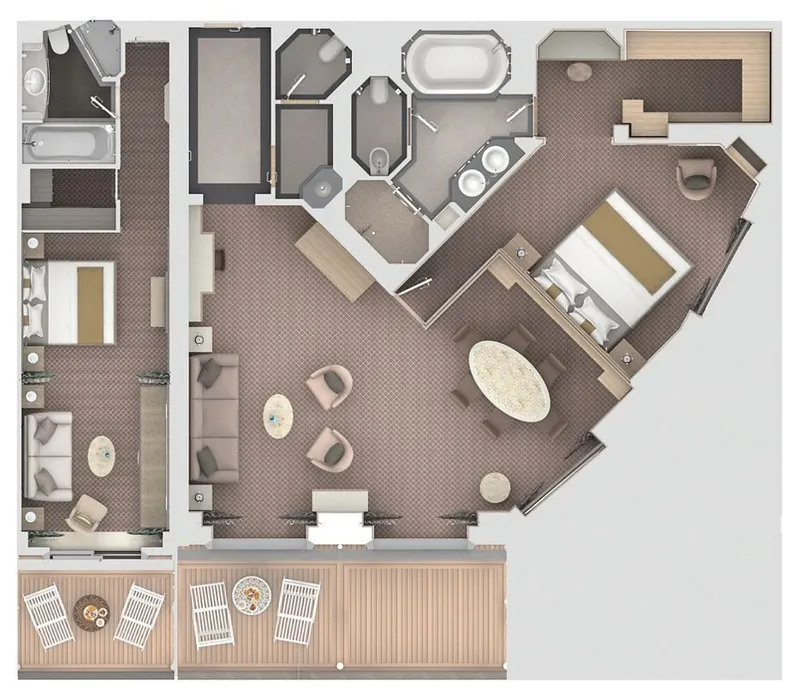
Designed with the values of the culture of living in mind, the Royal Suite offers a vast, eloquent space. Precise lines, authentic Italian craftsmanship and fine materials make up just some of the details of this stunning suite. Commanding and majestic, the Royal Suite boasts a lavish living area perfect for entertaining, plush interior furnishings and sweeping seascapes from the private terrace. The comfort of the spacious apartment makes this the ideal space for those wanting to feel the true comfort and luxury of the Silversea philosophy.
Large teak veranda with patio furniture and floor-to-ceiling glass doors; bedroom two has additional veranda.
Living room with convertible sofa to accommodate an additional guest.
Sitting area; bedroom two has additional sitting area.
Separate dining area.
Twin beds or king-sized bed; bedroom two has additional twin beds or queensized bed
Marble bathroom with double vanity, separate shower and full-sized bath, plus a powder room; bedroom two has additional marble bathroom with full-sized bath.
Savoir Beds mattresses and a choice of pillows.
Walk-in wardrobe(s) with personal safe.
Vanity table(s).
Writing desk(s).
One 55” / 140 cm and one 42” / 106 cm flat-screen HD TV in main suite, plus two 42” / 106 cm flat-screen HD TVs
in bedroom two.
Interactive Media Library.
Bose Sound Touch 30 with Bluetooth connectivity.
Illy espresso machine.
Unlimited Premium Wifi.
ShowerToiletries ProvidedRoom Service AvailableTVFree Wi-FiSafe+17
View Details
Silver Suite
Suite
915–1249 m²Max 5
S2SL
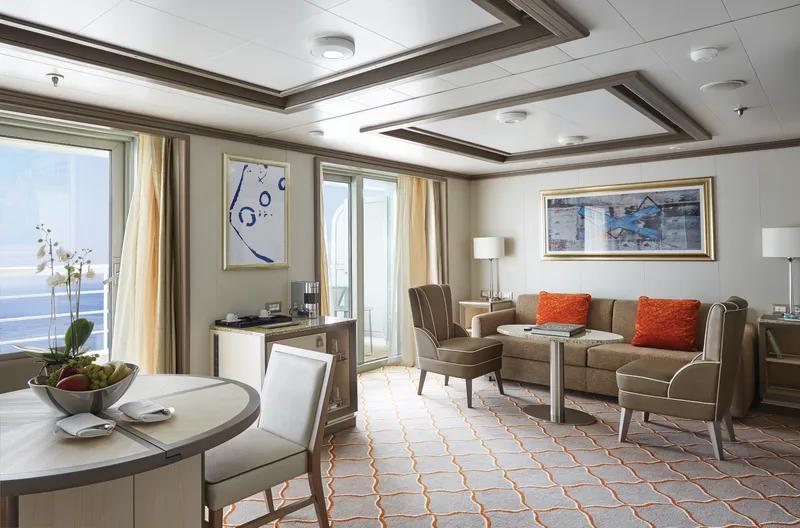
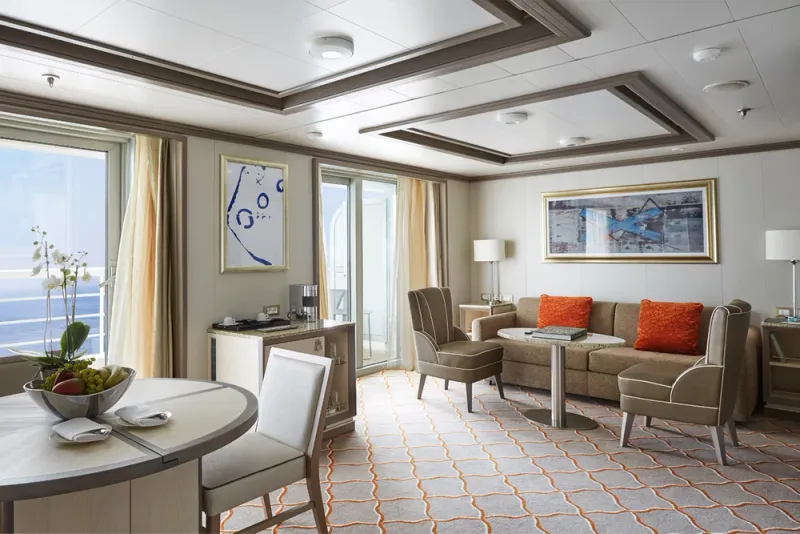
Step onto your terrace and bask in the calm feeling of the ocean breeze. Dissolve into the comfort of your king size bed. Prepare for the evening in the beautiful marble bathroom. The upper deck location gives the most spectacular of sea views, the spacious living area allows for comfortable relaxing where cosy nights in become veritable experiences in themselves. The two-bedroom configuration of this suite makes this it the ideal option for families.
Teak veranda with patio furniture and floor-to-ceiling glass doors.
Living room with convertible sofa to accommodate an additional guest.
Sitting area.
Separate dining area.
Twin beds or king-sized bed.
Marble bathroom with double vanity, full-sized bath, separate shower; bedroom two has additional marble.
bathroom with full-sized bath.
Wheelchair accessible suite has a marble bathroom with vanity and separate shower (no full-sized bath as illustrated).
A choice of pillows.
Walk-in wardrobe with personal safe.
Vanity table.
Writing desk.
Two 55” / 140 cm flat-screen HD TV in main suite, plus two 42” / 106 cm flatscreen HD TVs in bedroom two
Interactive Media Library.
Unlimited Premium Wifi.
Toiletries ProvidedRoom Service AvailableTVFree Wi-FiSafeHair Dryer+16
View Details
Superior Veranda Suite
Suite
452 m²Max 3
SV
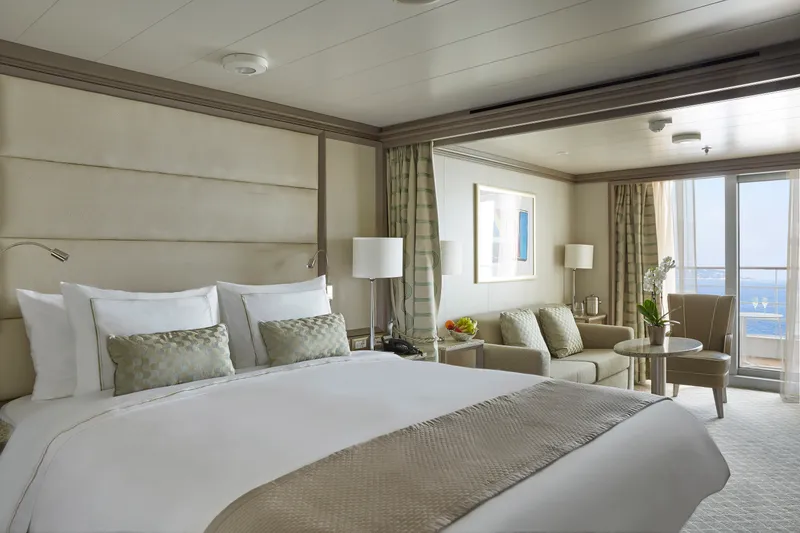
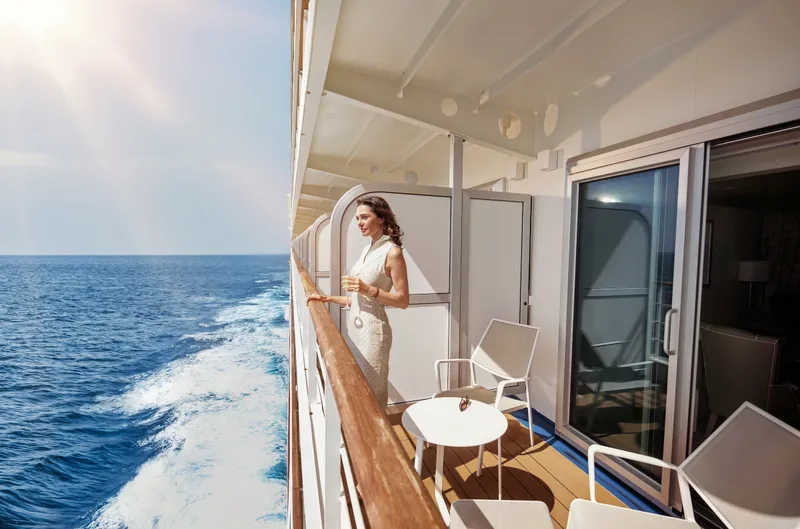
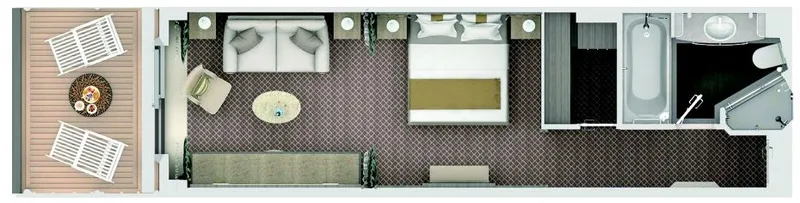
Located on the upper deck, and offering spectacular sunset views, the Superior Veranda Suite has all the comforts and luxury that you can expect aboard. A comfortable living space, attention to detail and a generous expanse of amenities, this stunning suite makes for a cosy home while on the seas. But perhaps this suite’s finest asset lies just outside, as floor-to-ceiling glass doors open onto a private veranda, making every sunset feel as if it is yours alone.
Teak veranda with patio furniture and floor-to-ceiling glass doors.
Sitting area.
Twin beds or queen-sized bed.
Marble bathroom with vanity, full-sized bath, separate shower.
A choice of pillows.
Walk-in wardrobe with personal safe.
Writing desk.
Two 42” / 106 cm flat-screen HD TVs.
Interactive Media Library.
Unlimited Standard Wifi.
Queen or Twin ConfigurationLounge AreaShowerToiletries ProvidedRoom Service AvailableTV+13
View Details
Vista Suite
Suite
344 m²Max 2
VI
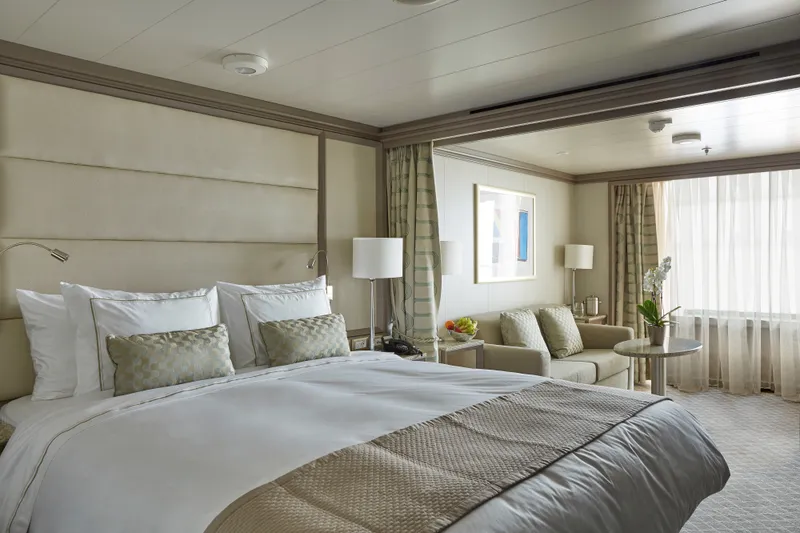
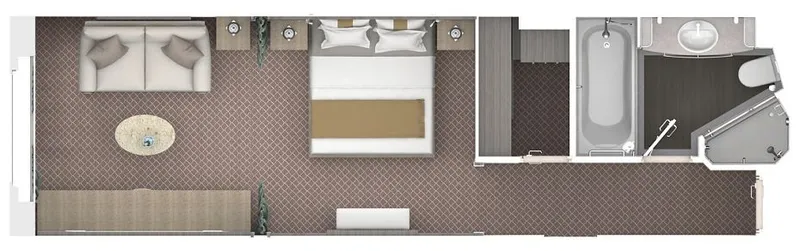
The Vista Suite provides generous living space for all travellers. The Vista Suite offers all the comfort and attention to detail that you can expect aboard. A generous expanse of interior comforts — elegant décor, stunning marble bathroom and ample seating area, make this a cosy home away from home. The seating area of the Vista Suite has plenty of room to relax, while large picture windows frame panoramic ocean views, the perfect backdrop for breakfast in bed! 3 Wheelchair Accessible Suites (407, 409, 417)
Sitting area.
Twin beds or queen-sized bed.
Marble bathroom with vanity, full-sized bath, separate shower.
Wheelchair accessible suite has a marble bathroom with vanity and separate shower (no full-sized bath).
A choice of pillows.
Walk-in wardrobe with personal safe.
Writing desk.
Two 42” / 106 cm flat-screen HD TVs.
Interactive Media Library.
Unlimited Standard Wifi.
Queen or Twin ConfigurationShowerToiletries ProvidedRoom Service AvailableTVSafe+12
View Details
Interested in This Voyage?
Our cruise specialists can help you find the perfect cabin and the best available pricing.
(+886) 02-2721-7300Contact Advisor