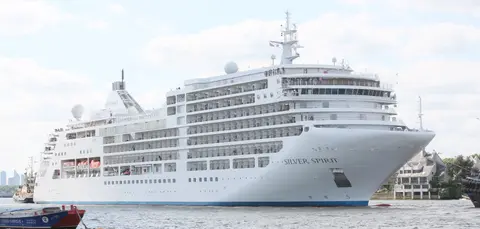
SilverseaSL260918010
Lisbon to Athens (piraeus)
Date
2026-09-18
Duration
50 nights
Departure Port
Lisbon
Portugal
Arrival Port
Athens (Piraeus)
Greece
Rating
—
Theme
—
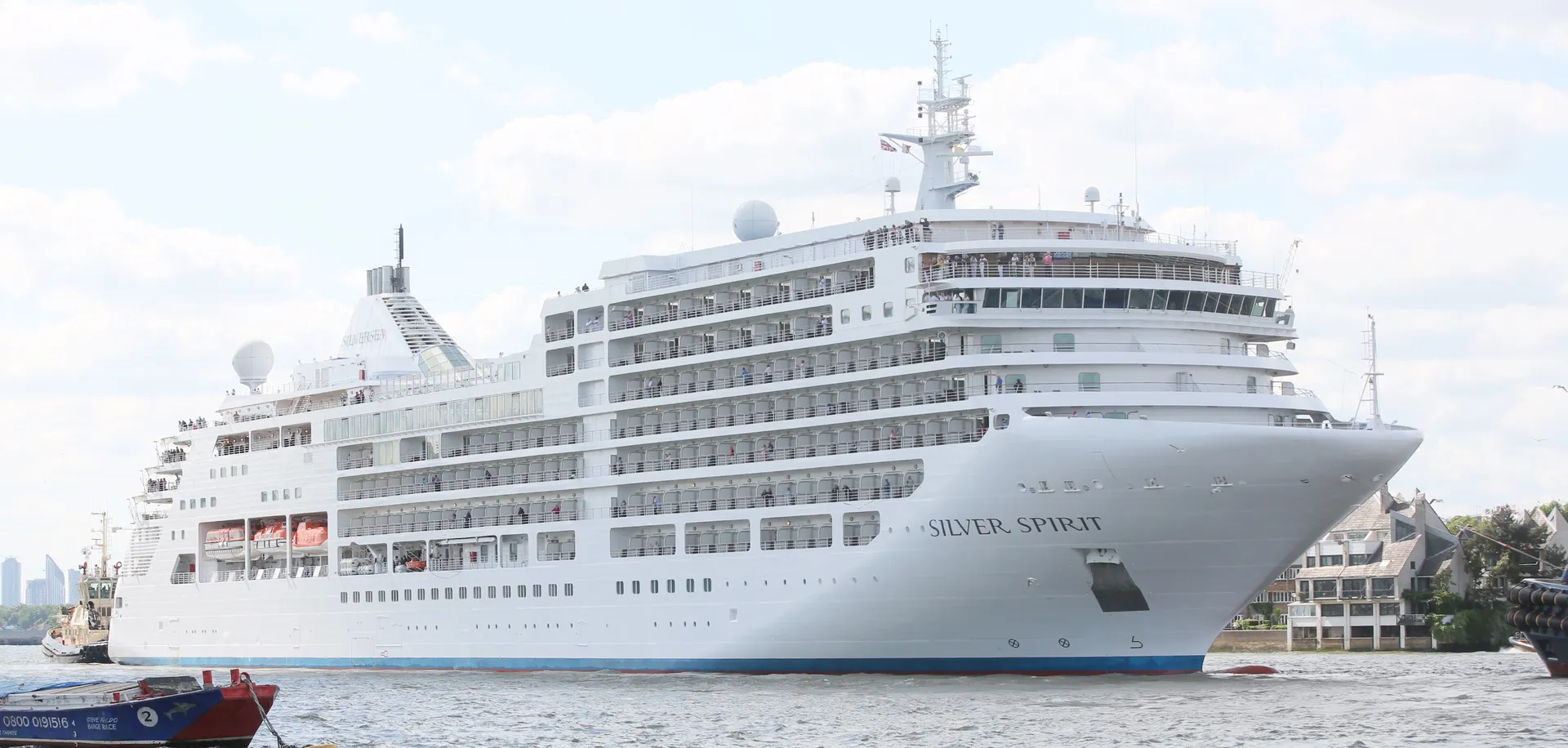
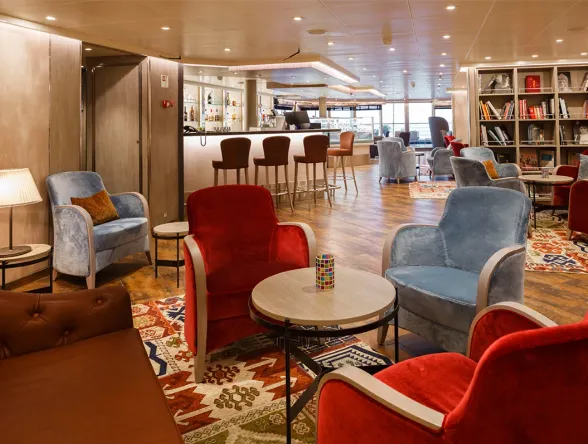
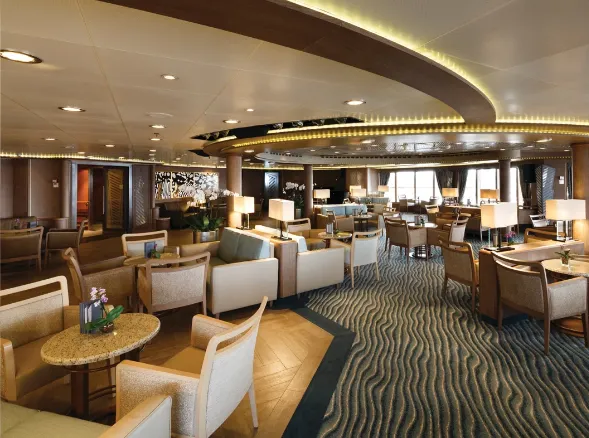
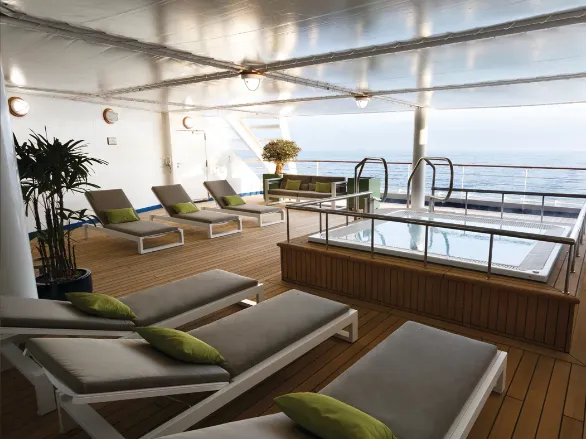
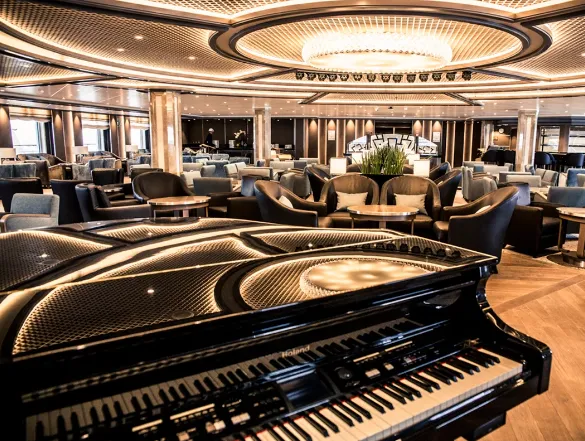
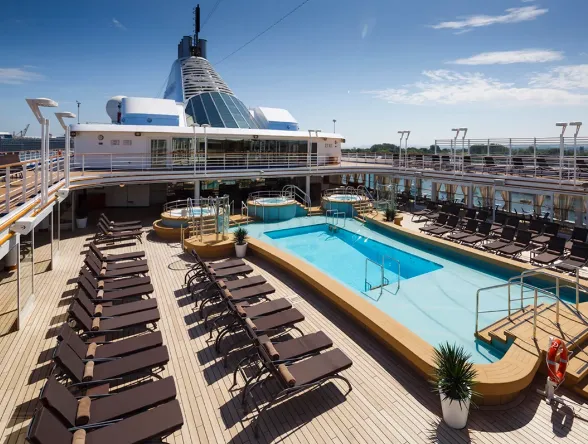
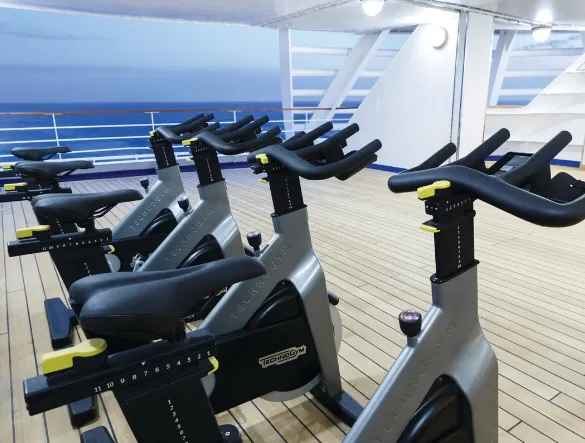
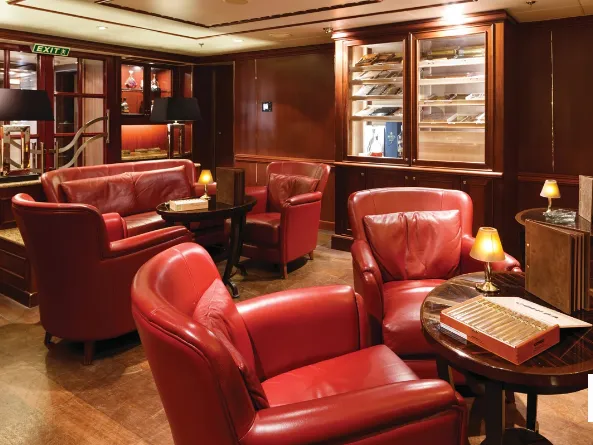
Silversea
Silver Spirit
Launched
2009
Refitted
2018
Tonnage
39,519 GT
Passengers
608
Cabins
270
Crew
411
Length
692 m
Width
27 m
Speed
20 knots
Adults Only
No
Itinerary
Day 1
Day 1
Lisbon
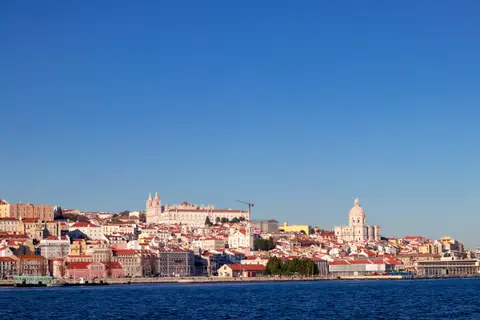
Lisbon, Portugal's enchanting capital, stands out for its rich history, stunning architecture, and vibrant culture. Must-try experiences include savoring local dishes like bacalhau à brás and pastéis de nata at Mercado da Ribeira. The best time to visit is during the spring or fall, when the weather is mild and the city is alive with festivals and events.
Day 2
Day 2
At Sea
Day 3
Day 3
Casablanca
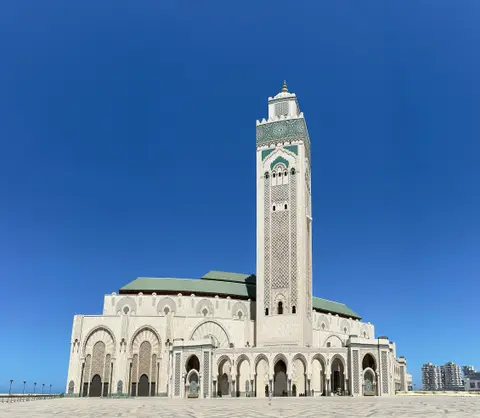
Casablanca is Morocco's largest city, a striking fusion of Berber heritage, French colonial art deco architecture, and contemporary ambition anchored by the towering Hassan II Mosque on the Atlantic shore. Visitors should not miss the Central Market's freshly grilled seafood and a half-day excursion to the imperial capital Rabat or the UNESCO-listed fortress of Aït Ben Haddou. The optimal season for cruising into Casablanca is April through June or September through November, when temperatures hover between twenty and twenty-seven degrees and the Atlantic light renders the white city at its most luminous.
Day 4
Day 4
Tangier
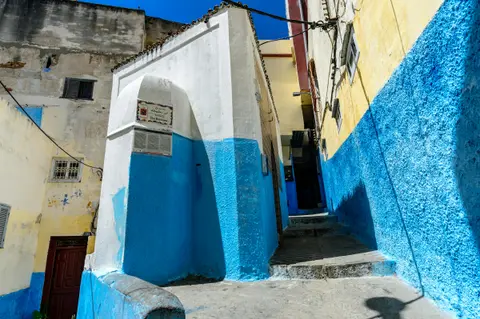
Tangier is Morocco's storied gateway between Africa and Europe, a city of Phoenician origins where a whitewashed medina, vibrant souks, and a cosmopolitan waterfront converge at the Strait of Gibraltar. Visitors should not miss savouring traditional pastilla in a rooftop riad and exploring the Kasbah's amber-lit ramparts at sunset. The ideal season to arrive is April through June or September through October, when mild Mediterranean temperatures and fewer crowds allow the city's layered beauty to reveal itself at an unhurried, luxurious pace.
Day 5
Day 5
Cadiz
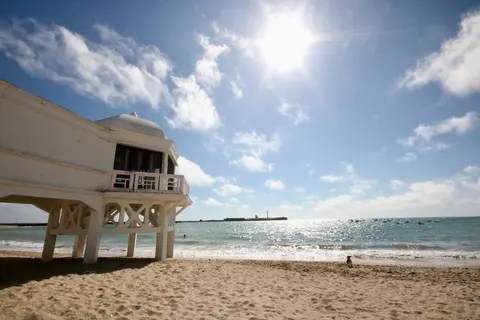
Cádiz, founded by Phoenician traders around 1100 BC and a strong contender for the oldest continuously inhabited city in Western Europe, juts into the Atlantic on a narrow peninsula where honey-colored ramparts frame improbable views of open ocean and the sun sets directly into the sea. The old quarter is an intoxicating labyrinth of baroque churches, hidden plazas, and carnival spirit — Cádiz's annual February carnival is the wildest and most satirically sharp in Spain — while the tapas culture here, centered on fresh Atlantic seafood cooked with Andalusian simplicity, represents Spanish cuisine at its most elemental and joyful. Visit February for carnival or spring for gentle Atlantic breezes. Seville is ninety minutes inland by bus or rail.
Day 6
Day 6
Gibraltar
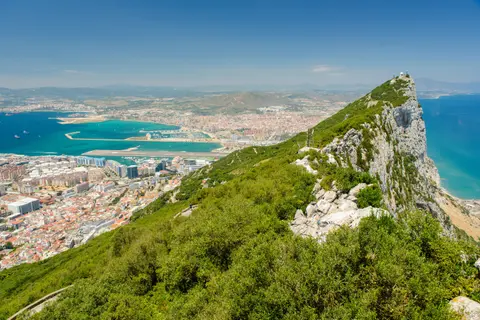
Gibraltar is a British Overseas Territory perched at the southern tip of the Iberian Peninsula, where the Mediterranean meets the Atlantic beneath an iconic limestone monolith steeped in over a millennium of contested history. No visit is complete without ascending the Rock to encounter the Barbary macaques and the panoramic views stretching to North Africa, followed by a plate of calentita — the territory's beloved Genoese-heritage chickpea bake — at a Main Street bakery. The mild Mediterranean climate makes Gibraltar a rewarding port call year-round, though spring and early autumn offer the clearest skies for spotting whales and dolphins in the Strait.
Day 7
Day 7
Malaga
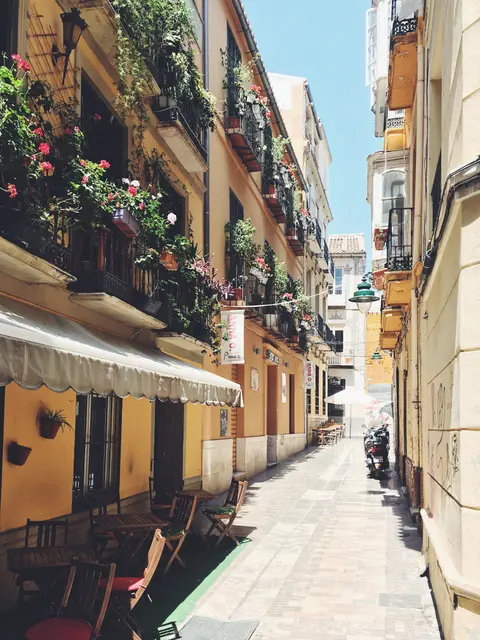
Málaga distils three thousand years of Mediterranean civilisation into one of Andalusia's most compelling port cities, where the Moorish Alcazaba fortress surveys a modern waterfront of elegant promenades and sun-drenched café terraces. Do not leave without visiting the Museo Picasso — the artist was born here in 1881 — and ascending to the ruined Castillo de Gibralfaro for panoramic views stretching to the Rif Mountains of Morocco on clear days. Malagueta anchovies fried in olive oil and the sweet Pedro Ximénez-laced dessert wine are the city's defining pleasures. The shoulder seasons of April, May, and October offer perfect Mediterranean warmth.
Day 9
Day 9
At Sea
Day 10
Day 10
Clarence Town
Clarence Town, Long Island, Bahamas is a distinctive port city where deep cultural heritage meets authentic local atmosphere, featured on itineraries by Silversea. Must-do experiences include exploring the vibrant local markets for regional specialties and fresh seafood, and discovering the waterfront quarter where maritime heritage meets contemporary energy. The optimal time to visit is November through April, when cooler dry months offer the most comfortable conditions for exploration.
Day 11
Day 11
Barcelona
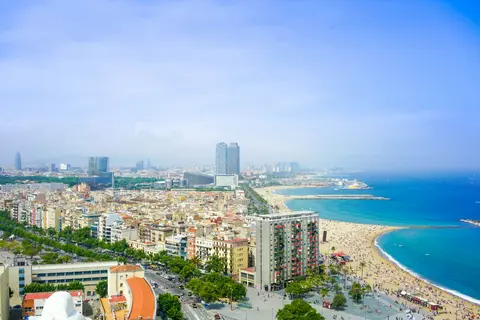
Barcelona is the city where Roman history, Gothic grandeur, and Gaudí's delirious Modernisme collide in a Mediterranean coastal capital of astonishing energy and beauty. The Sagrada Família — still under construction after 140 years — continues its audacious ascent toward completion, while the Gothic Quarter's Roman-era foundations and the Passeig de Gràcia's extraordinary concentration of Modernisme masterpieces reward days of exploration. For a complete sensory experience, lose an afternoon in the covered labyrinth of La Boqueria market before descending to the waterfront for Catalan seafood at its finest. May through June and September through October offer the most pleasant weather; the city connects directly to Paris by overnight train.
Day 12
Day 12
Palamos
Arrive 08:00Depart 18:00
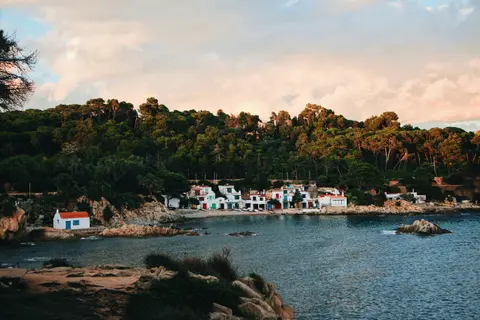
Palamós is an authentic Catalan fishing port on the Costa Brava, renowned for its legendary deep-water Gamba de Palamós red prawns and a vibrant working harbor where daily fish auctions continue centuries of maritime tradition. Must-dos include the Fishing Museum, coastal walks on the Camí de Ronda, and dining on fresh-from-the-sea Catalan cuisine. May through October offers ideal Mediterranean conditions.
Day 13
Day 13
Palma de Mallorca
Depart 23:00
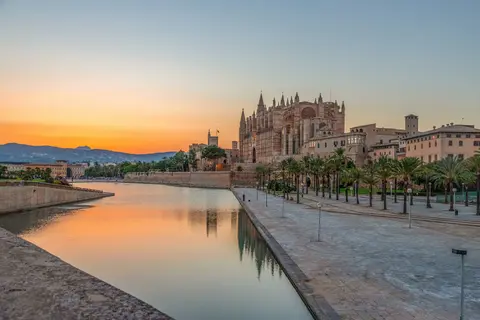
Palma de Mallorca announces itself with one of the most spectacular Gothic cathedrals in the world — La Seu, its honey-coloured sandstone buttresses rising directly from the bay, its interior modified by Antoni Gaudí and illuminated by the world's largest Gothic rose window. The old town behind it is a quarter of Arab baths, Renaissance palaces converted into boutique hotels, and the Passeig del Born — a plane-tree-shaded promenade where Balearic life conducts itself with unhurried grace. The local ensaïmada pastry and fresh sobrasada sausage from the island's black pigs are essential breakfast rituals. Visit May, June, or September: warm, brilliant, and measurably calmer than the July–August peak.
Day 14
Day 14
At Sea
Day 15
Day 15
Sete
Arrive 08:00Depart 21:00
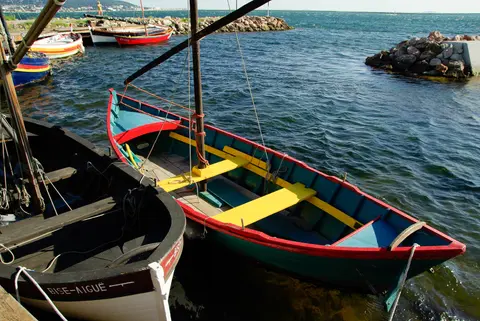
Sète is a canal-laced fishing port on France's Languedoc coast, built around the terminus of the Canal du Midi and crowned by the panoramic heights of Mont Saint-Clair. Visitors should not miss the iconic *tielle sétoise* pastry paired with Bouzigues oysters at the covered market, and the contemplative walk through the Cimetière Marin above the Mediterranean. Late spring through early autumn offers the finest conditions, with September bringing warm seas, golden light, and the spirited jousting tournaments on the canal that have defined Sète's character for over three hundred years.
Day 16
Day 16
Marseille
Arrive 08:00Depart 18:00
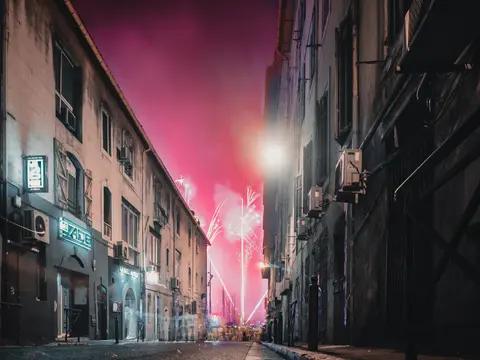
Founded by Greek sailors in 600 BC, Marseille is France's oldest and most viscerally alive city — a Mediterranean port where the catch is still sold from fishing boat decks at the Vieux-Port each morning beneath the golden Madonna of Notre-Dame de la Garde, gleaming on her basilica above the city. The bouillabaisse served at harbourside institutions such as Chez Fonfon is not merely a dish but a rite, its saffron-stained broth tying Marseille to its Hellenic roots. Explore the dramatic Calanques national park, a coastal labyrinth of turquoise coves just south of the city. Spring and autumn are the finest seasons.
Day 17
Day 17
Monte Carlo
Arrive 08:00Depart 21:00
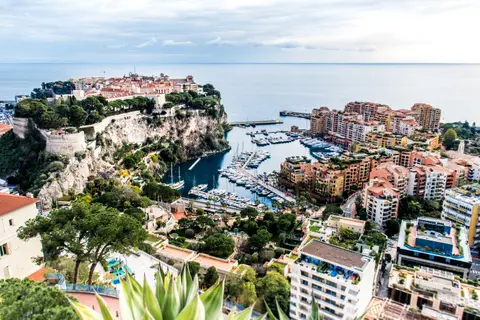
Monte Carlo, Monaco is a sovereign principality on the French Riviera where centuries of Grimaldi rule have forged an extraordinary concentration of elegance — from the legendary Casino de Monte-Carlo to the cliff-top Oceanographic Museum founded by Prince Albert I. No visit is complete without savouring *barbagiuan* at the Condamine market and exploring the old town of Monaco-Ville, where the cathedral and prince's palace command sweeping Mediterranean views. The most luminous months are May through September, with late spring offering the electric atmosphere of the Grand Prix season alongside gentler crowds and pristine coastal light.
Day 18
Day 18
Livorno
Arrive 08:00
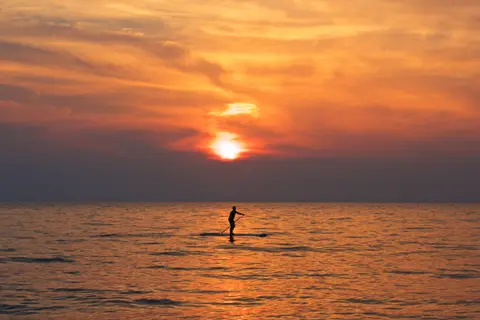
Purpose-built as a Medici utopia in the late sixteenth century, Livorno was conceived from the outset as a city without discrimination — its founding Leggi Livornine granted equal rights to Jews, Christians, Muslims, and merchants of every nation, making it one of the most cosmopolitan cities in Renaissance Europe. Today, the Venetian-style canals of the Venezia Nuova quarter reflect colourful palazzi with a distinctly faded glamour, while the Mercato Centrale's fish counters display the cacciucco ingredients — a robust Livornese brodetto of five sea creatures — that make this port city a pilgrimage for serious eaters. Day trips to Pisa and Lucca are effortless from here. The season runs April through October.
Day 20
Day 20
Porto Santo Stefano
Arrive 08:00Depart 18:00
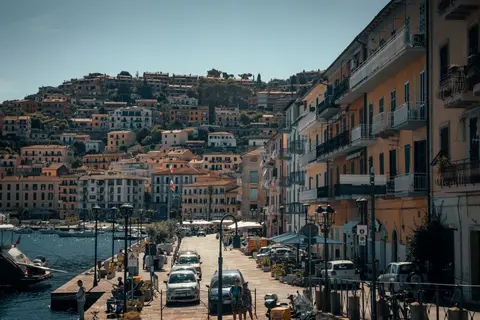
Porto Santo Stefano is a picturesque Tuscan port town on the Monte Argentario peninsula, combining working-harbor authenticity with some of the Tyrrhenian coast's finest seafood and hidden swimming coves. Must-dos include dining on caldaro fish stew at a waterfront trattoria, taking a ferry to the island of Giglio, and driving the panoramic road around the promontory. Visit May to October for swimming weather, with shoulder months offering the best balance of warmth and tranquility.
Day 21
Day 21
Civitavecchia
Arrive 07:00
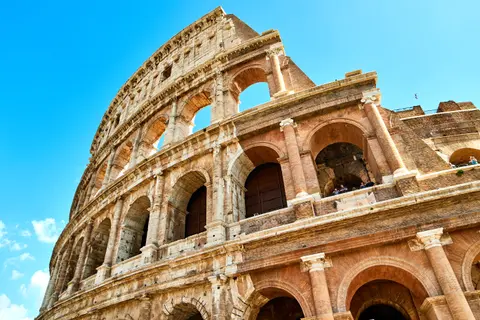
Rome's ancient maritime gateway since the Emperor Trajan commissioned its harbour in 106 AD, Civitavecchia is the natural prologue to the Eternal City — just seventy minutes southeast by express rail. The port's Renaissance fortress, designed in part by Michelangelo, anchors a working waterfront that has welcomed travellers for millennia. Beyond Rome's unmissable monuments, consider an afternoon in the Civitavecchia thermal baths, drawing on mineral waters prized since antiquity. Spring and autumn offer the ideal balance of mild weather and manageable crowds for exploring the capital's layered history.
Day 22
Day 22
Naples
Arrive 08:00Depart 22:00
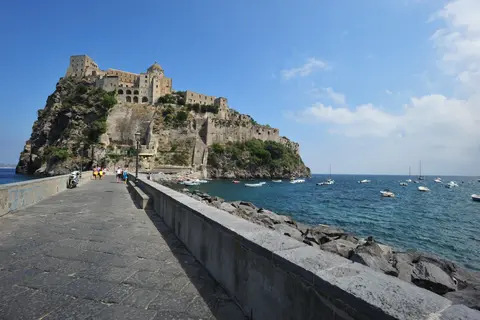
Naples — Napoli — is Europe's most operatically alive city, a sun-battered baroque metropolis where Vesuvius broods on the horizon and the streets below pulse with 2,500 years of continuous human drama. The unmissable Museo Archeologico Nazionale houses the world's finest collection of artefacts from Pompeii and Herculaneum, while the Spaccanapoli, the arrow-straight artery that has bisected the city since Greek times, delivers an unfiltered encounter with Neapolitan life. A single slice of pizza Margherita from one of the centro storico's historic pizzerias is a culinary pilgrimage in itself. Visit between April and June or September and October for warmth, manageable crowds, and the city at its golden best.
Day 23
Day 23
Amalfi
Arrive 08:00Depart 18:00
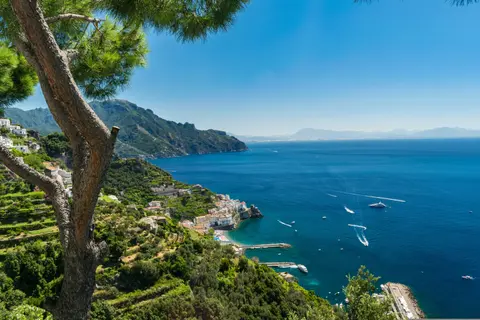
Amalfi is the former maritime republic that gave its name to Italy's most celebrated coastline, where the Arab-Norman cathedral, medieval paper mills, and whitewashed buildings cascading to the Tyrrhenian Sea create the definitive image of Italian coastal beauty. Visit April through June via Windstar or Azamara for the Cloister of Paradise and the coastline that has been the world's standard for scenic perfection.
Day 24
Day 24
Giardini Naxos
Arrive 08:00Depart 18:00
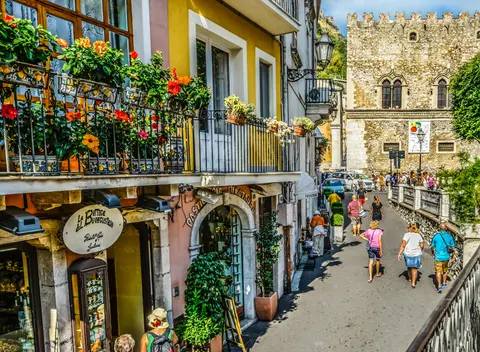
Giardini Naxos is the Sicilian bay where Greek civilization first touched western shores in 734 BC, serving today as the gateway to hilltop Taormina's extraordinary Greek-Roman theatre with Mount Etna as its eternal backdrop. Visit May or September via Windstar or Explora Journeys for ancient ruins, cable-car ascents to Sicily's most famous resort, and the view that convinced the first Greek colonists they had found paradise.
Day 25
Day 25
Valletta
Arrive 08:00Depart 18:00
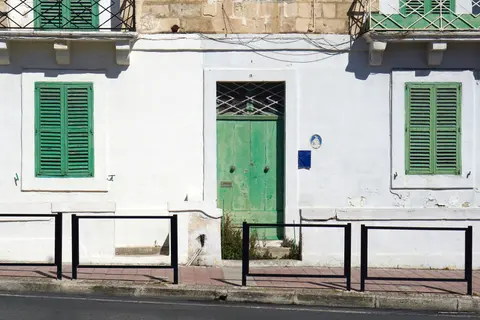
Valletta, the golden fortress capital of Malta, was hewn from a limestone peninsula in defiant haste after the Knights of Saint John — warrior monks of extraordinary valor — repulsed an overwhelming Ottoman assault in 1565. Its grid of steep baroque streets is dense with Caravaggio masterworks in the Co-Cathedral of St. John, shaded piazzas alive with café society, and bastions commanding breathtaking views over the Grand Harbour's legendary twin forts. The mild Mediterranean climate welcomes visitors year-round, though spring and autumn offer the most pleasurable temperatures for unhurried exploration of this compact UNESCO World Heritage capital.
Day 26
Day 26
At Sea
Day 27
Day 27
Ica
Arrive 08:00Depart 18:00
Ica is Peru's desert wine country and gateway to the enigmatic Nazca Lines, set in an arid valley that has sustained civilizations for over two millennia. Must-dos include overflying the Nazca geoglyphs, sandboarding at the Huacachina oasis, and tasting pisco at colonial-era bodegas. The region enjoys sunshine year-round, with December through March best for coastal wildlife excursions.
Day 28
Day 28
Split
Arrive 08:00Depart 18:00
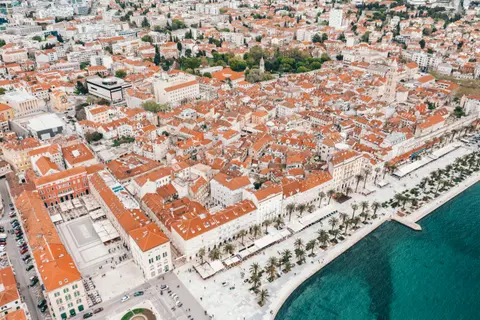
Split, Croatia's vibrant port city, is a unique blend of ancient history and modern life, centered around the remarkable Diocletian's Palace. Must-do experiences include savoring local dishes like pašticada and exploring the bustling markets. The best time to visit is during the spring and early fall, when the weather is pleasant and the tourist crowds are more manageable.
Day 29
Day 29
Zadar
Arrive 08:00Depart 21:00
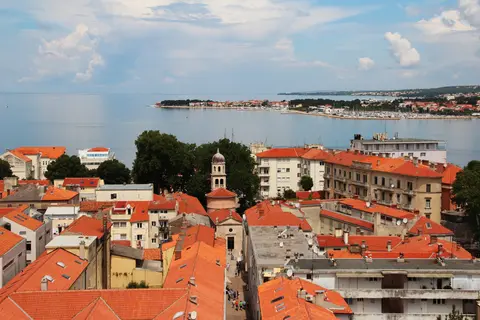
Zadar, a historic port city on Croatia's Dalmatian coast, is a captivating blend of ancient architecture and vibrant culture. Must-do experiences include visiting the Church of St. Donatus and enjoying the enchanting music of the Sea Organ. The best season to visit is during the warm summer months when the city comes alive with festivals and outdoor activities.
Day 30
Day 30
Rovinj
Arrive 08:00Depart 18:00
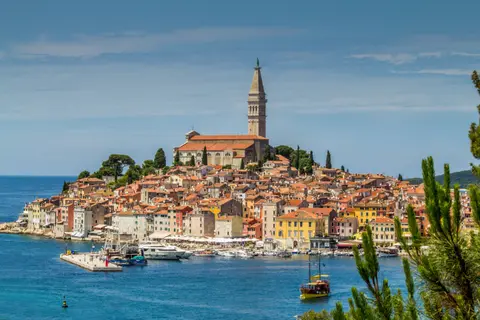
Rovinj, a historic port on Croatia's Istrian coast, is renowned for its medieval architecture, vibrant atmosphere, and delectable local cuisine. Be sure to savor dishes like **fuži** and **škampi na buzaru** while exploring its charming streets. The best time to visit is during the summer months when cultural festivals bring the town to life.
Day 31
Day 31
Venice (Fusina)
Arrive 07:00Depart 19:00
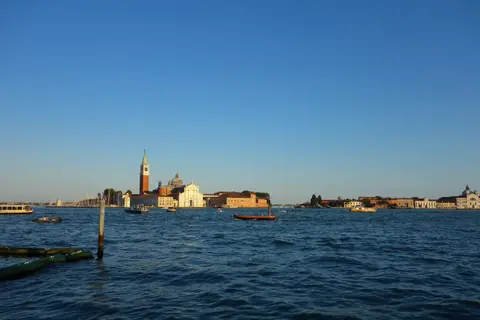
Venice, approached from the Fusina port across its luminous lagoon, remains one of the world's most extraordinary cities — a thousand-year-old republic built on 118 islands and laced with canals, palaces, and masterpieces. Must-dos include riding the Grand Canal by vaporetto, savouring cicchetti at a traditional bacaro, and visiting the colourful islands of Murano and Burano. April through June and September through November offer the finest light and the most manageable crowds.
Day 32
Day 32
Koper
Arrive 08:00Depart 18:00
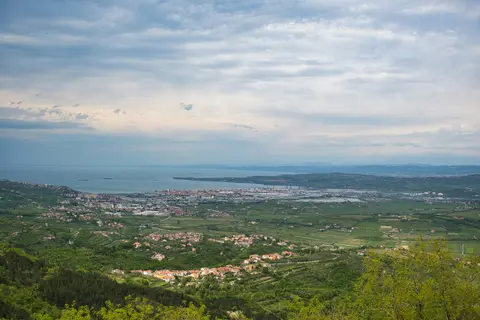
Koper is Slovenia's historic Adriatic port with a beautifully preserved Venetian old town, world-class Istrian olive oil, and easy access to the spectacular Škocjan Caves. Essential experiences include tasting Malvazija wines in hillside villages, exploring the medieval Dance of Death frescoes at Hrastovlje, and dining on truffle pasta in centuries-old courtyards. May through October is prime season, with September ideal for harvest festivities.
Day 33
Day 33
Rijeka
Arrive 08:00Depart 16:00
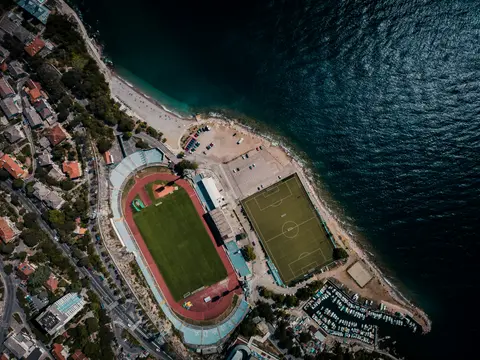
Rijeka is Croatia's vibrant third city and 2020 European Capital of Culture, where Habsburg waterfront architecture, a thriving arts scene, and one of Europe's most exuberant carnivals create an authentic alternative to the Dalmatian tourist trail. Visit from April through October for the magnificent Korzo promenade, Trsat Castle views, and gateway access to the Kvarner islands.
Day 34
Day 34
At Sea
Day 35
Day 35
Dubrovnik
Arrive 08:00Depart 18:00
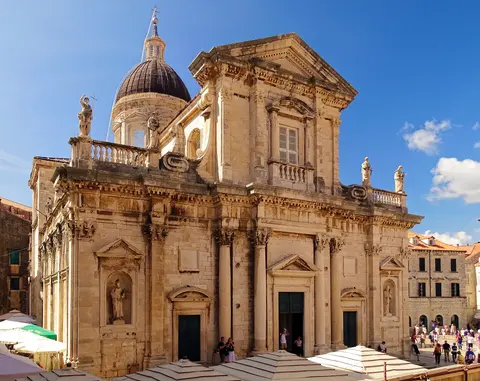
Dubrovnik, Croatia's stunning port city, is a blend of rich history, dramatic architecture, and vibrant culture, making it a must-visit destination. Don't miss a stroll along the city walls for breathtaking views and savor local dishes like "peka" and "black risotto." The best time to visit is in late spring or early fall when the weather is pleasant and the crowds are thinner.
Day 36
Day 36
Bari
Arrive 08:00Depart 18:00
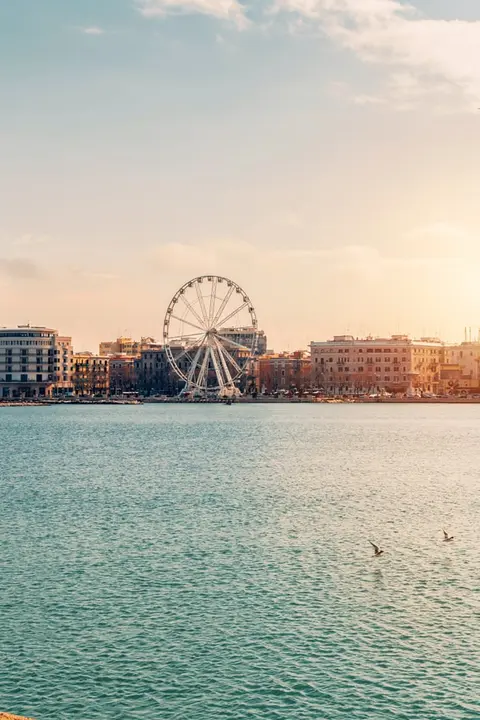
Bari, Puglia's ancient capital on the Adriatic, has served as a bridge between Western Europe and the Eastern Mediterranean for over two millennia — a heritage visible in the magnificent Basilica di San Nicola, one of medieval Christendom's most important pilgrimage churches, and in the labyrinthine Bari Vecchia where elderly women still hand-roll orecchiette in the street. The surrounding region of Puglia is among Italy's most compelling culinary destinations: burrata born in Andria, focaccia barese, and the puglian cuisine that has recently attracted international attention as Rome's and Florence's quieter, more authentic cousin. Visit April through June and September through October; the Trulli of Alberobello are forty minutes south.
Day 37
Day 37
Corfu
Arrive 09:00Depart 18:00
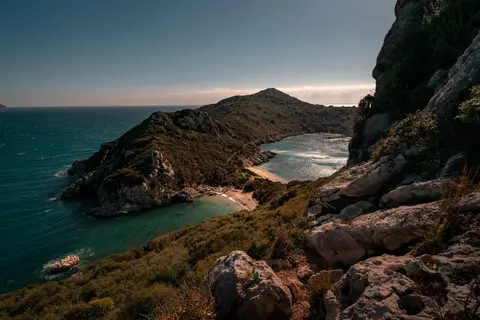
Where Homer placed the island of the Phaeacians and four centuries of Venetian rule left their most enduring Mediterranean legacy, Corfu is a singular island of extraordinary historical depth and natural beauty. The UNESCO-listed Old Town — its narrow Kantounia alleyways, the elegant Liston arcade, and twin Venetian fortresses — is the finest preserved Venetian streetscape in Greece. Beyond the town, secret coves, olive groves of immense antiquity, and mountain villages offer weeks of unhurried discovery. May through June and September offer perfect conditions: warm sea temperatures, clear skies, and the island before or after its summer crescendo.
Day 38
Day 38
Katakolon
Depart 18:00
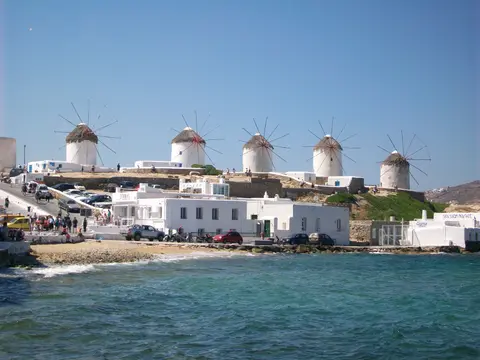
Katakolon is the unassuming port that holds an extraordinary secret: just fourteen kilometres inland lies ancient Olympia, birthplace of the Olympic Games and one of the most sacred sites in the ancient world. The Archaeological Museum of Olympia — housing the breathtaking sculptures from the Temple of Zeus — ranks among Greece's finest, while walking the original stadium still sends a current of wonder through even the most seasoned traveller. The village itself charms with whitewashed tavernas and a relaxed pace that feels authentically Greek. Katakolon is best visited April through October; late spring and early autumn offer ideal temperatures for the Olympia excursion.
Day 39
Day 39
Gythio
Arrive 08:00Depart 19:00
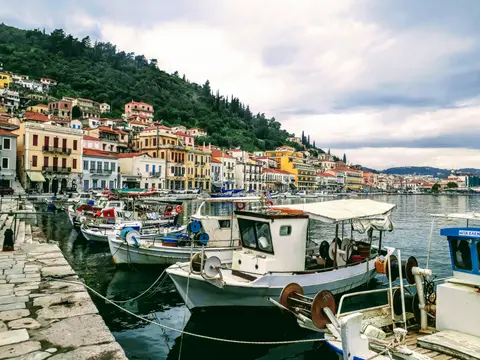
Gythio is ancient Sparta's port town on the Laconian Gulf, where Homeric mythology, neoclassical waterfront charm, and the wild Mani Peninsula's tower houses and underground caves converge. Visit from April through October for Diros Cave boat tours, Cape Tenaro's mythological Underworld entrance, and waterfront dining in one of the Peloponnese's most atmospheric harbor towns.
Day 40
Day 40
Souda Bay
Arrive 08:00Depart 19:00
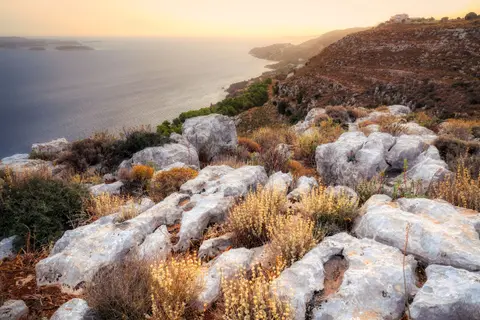
Souda Bay is western Crete's deep-water gateway to Chania, one of Greece's most atmospheric cities, where Venetian and Ottoman architecture frames a harbour of extraordinary beauty. Visitors should explore the old town labyrinth, taste legendary Cretan olive oil and dakos, and venture to the Samaria Gorge or Akrotiri Peninsula monasteries. May through October offers ideal conditions with warm seas and luminous Aegean light.
Day 41
Day 41
Athens (Piraeus)
Arrive 08:00
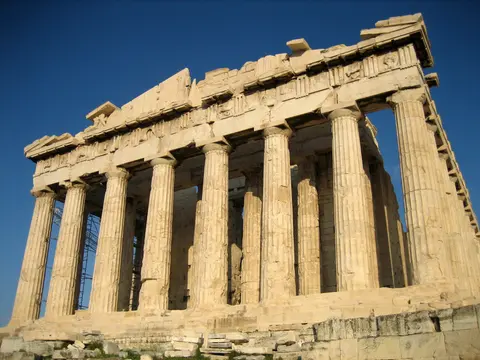
Piraeus, the bustling port city of Athens, is a vibrant blend of ancient history and modern charm, inviting travelers to explore its rich culture. Must-do experiences include savoring traditional Greek dishes at the Varvakeios Agora and embarking on day trips to nearby islands like Symi and Nydri. The best time to visit is during the spring and fall when the weather is pleasant and the tourist crowds are fewer.
Day 42
Day 42
Mykonos
Arrive 08:00Depart 18:00
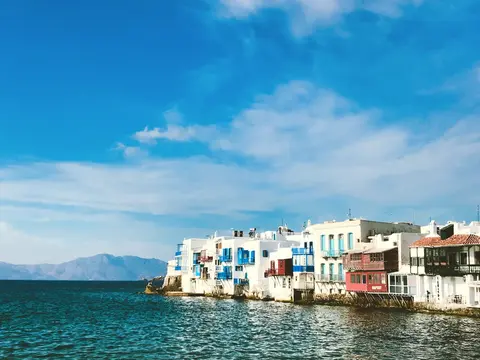
Mykonos is the Aegean at its most seductive — a labyrinth of bougainvillea-draped whitewashed alleys designed to disorient pirates (and occasionally visitors) leading to Kástro, the medieval hilltop quarter overlooking Little Venice, where balconied houses hang directly above the sea. The island's famous windmills, perched on a ridge above the old harbour, are best photographed at golden hour as pelicans patrol the waterfront below. Visit the sacred archaeological island of Delos — a 30-minute boat crossing — for one of the most significant ancient sites in the Greek world. May, June, and September offer the perfect balance of warmth, light, and bearable crowds.
Day 43
Day 43
Volos
Arrive 08:00Depart 19:00
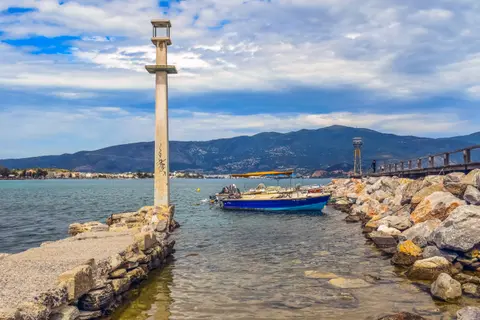
Volos is a Greek port city at the foot of mythical Mount Pelion, where Jason launched the Argonauts, famous for its unique tsipouro taverna culture where endless meze plates accompany rounds of grape spirit. Must-dos include a tsipouradiko session on the waterfront, exploring Pelion's stone-built mountain villages, and the narrow-gauge Pelion train. April through October is ideal, with June and September best for combining beach and mountain.
Day 44
Day 44
Thessaloniki
Arrive 08:00Depart 23:00
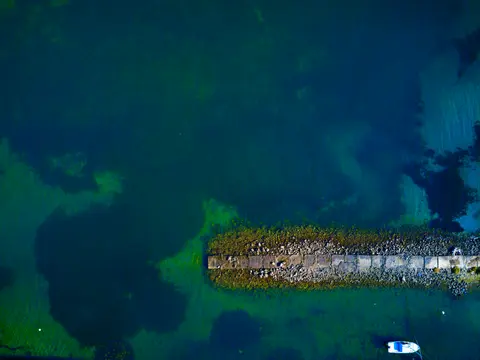
Thessaloniki, Greece’s vibrant port city, is a breathtaking blend of historical significance and modern charm, making it a must-visit destination. Don’t miss sampling local delights like **bougatsa** and exploring the bustling Modiano Market. The best time to visit is during the mild spring or fall, when the weather is perfect for exploring both the city and its nearby attractions.
Day 45
Day 45
At Sea
Day 46
Day 46
Istanbul
Arrive 07:00

For more than fifteen centuries, Istanbul has been the pivot upon which empires turned — Byzantium, Constantinople, the Ottoman capital — and nowhere else on earth compresses so much history into a single horizon. The Hagia Sophia, the Blue Mosque, and the Topkapi Palace form an incomparable trinity of architectural genius along the Golden Horn; the Grand Bazaar's four thousand shops offer a sensory immersion unlike any other marketplace. Must-dos include a Bosphorus sunset cruise and a meal of mezze along the waterfront at Karaköy. Spring (April–May) and autumn (September–October) offer the most gracious climate for this inexhaustible city.
Day 48
Day 48
At Sea
Day 49
Day 49
Rhodes
Arrive 08:00Depart 18:00
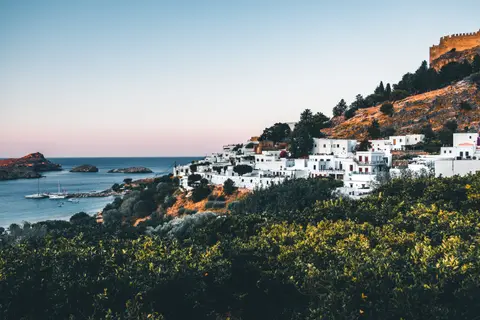
Rhodes, Greece's resplendent Dodecanese jewel, merges a UNESCO-listed Medieval Old Town built by the Knights of St. John with sun-soaked Aegean beauty just seven miles from the Turkish coast. Wander the Street of the Knights before tasting *pitaroudia* fritters and local Athiri wine at an Old Town taverna, then take a catamaran to the neoclassical harbor of Symi. The island basks in over 300 days of sunshine annually, with April through June and September through October offering ideal temperatures for exploration without the peak-summer crowds.
Day 50
Day 50
Santorini
Arrive 08:00Depart 18:00
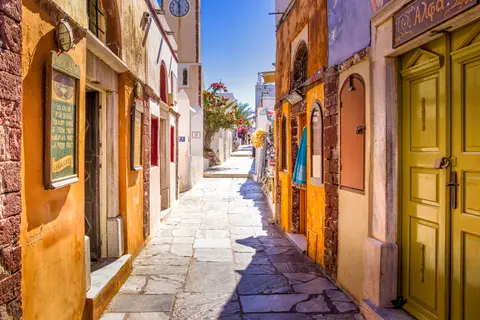
Santorini, the ancient volcanic caldera rising from the Aegean, is Greece's most theatrical landscape — a crescentic island of sheer white cliffs plunging into an indigo sea, its clifftop villages of Fira and Oia draped in bougainvillea and culminating in the world's most photographed sunset. The island's unique Assyrtiko wine, grown on ancient ungrafted vines in volcanic pumice, is one of the Mediterranean's greatest expressions of terroir. Byzantine frescoes of extraordinary beauty fill the Prehistoric Museum of Thera. The volcanic black and red sand beaches of Perissa and Perivolos are unlike any others in Greece. April through June and September through October offer the finest conditions.
Day 51
Day 51
Athens (Piraeus)
Arrive 05:00
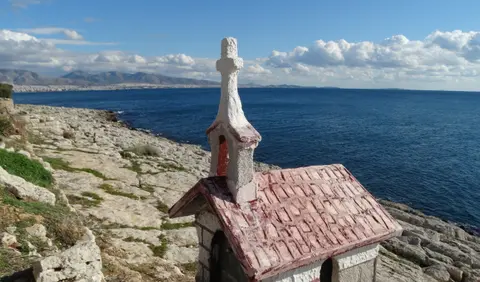
Piraeus, the bustling port city of Athens, is a vibrant blend of ancient history and modern charm, inviting travelers to explore its rich culture. Must-do experiences include savoring traditional Greek dishes at the Varvakeios Agora and embarking on day trips to nearby islands like Symi and Nydri. The best time to visit is during the spring and fall when the weather is pleasant and the tourist crowds are fewer.
Day 1
Lisbon
Lisbon, Portugal's enchanting capital, stands out for its rich history, stunning architecture, and vibrant culture. Must-try experiences include savoring local dishes like bacalhau à brás and pastéis de nata at Mercado da Ribeira. The best time to visit is during the spring or fall, when the weather is mild and the city is alive with festivals and events.
Day 2
At Sea
Day 3
Casablanca
Casablanca is Morocco's largest city, a striking fusion of Berber heritage, French colonial art deco architecture, and contemporary ambition anchored by the towering Hassan II Mosque on the Atlantic shore. Visitors should not miss the Central Market's freshly grilled seafood and a half-day excursion to the imperial capital Rabat or the UNESCO-listed fortress of Aït Ben Haddou. The optimal season for cruising into Casablanca is April through June or September through November, when temperatures hover between twenty and twenty-seven degrees and the Atlantic light renders the white city at its most luminous.
Day 4
Tangier
Tangier is Morocco's storied gateway between Africa and Europe, a city of Phoenician origins where a whitewashed medina, vibrant souks, and a cosmopolitan waterfront converge at the Strait of Gibraltar. Visitors should not miss savouring traditional pastilla in a rooftop riad and exploring the Kasbah's amber-lit ramparts at sunset. The ideal season to arrive is April through June or September through October, when mild Mediterranean temperatures and fewer crowds allow the city's layered beauty to reveal itself at an unhurried, luxurious pace.
Day 5
Cadiz
Cádiz, founded by Phoenician traders around 1100 BC and a strong contender for the oldest continuously inhabited city in Western Europe, juts into the Atlantic on a narrow peninsula where honey-colored ramparts frame improbable views of open ocean and the sun sets directly into the sea. The old quarter is an intoxicating labyrinth of baroque churches, hidden plazas, and carnival spirit — Cádiz's annual February carnival is the wildest and most satirically sharp in Spain — while the tapas culture here, centered on fresh Atlantic seafood cooked with Andalusian simplicity, represents Spanish cuisine at its most elemental and joyful. Visit February for carnival or spring for gentle Atlantic breezes. Seville is ninety minutes inland by bus or rail.
Day 6
Gibraltar
Gibraltar is a British Overseas Territory perched at the southern tip of the Iberian Peninsula, where the Mediterranean meets the Atlantic beneath an iconic limestone monolith steeped in over a millennium of contested history. No visit is complete without ascending the Rock to encounter the Barbary macaques and the panoramic views stretching to North Africa, followed by a plate of calentita — the territory's beloved Genoese-heritage chickpea bake — at a Main Street bakery. The mild Mediterranean climate makes Gibraltar a rewarding port call year-round, though spring and early autumn offer the clearest skies for spotting whales and dolphins in the Strait.
Day 7
Malaga
Málaga distils three thousand years of Mediterranean civilisation into one of Andalusia's most compelling port cities, where the Moorish Alcazaba fortress surveys a modern waterfront of elegant promenades and sun-drenched café terraces. Do not leave without visiting the Museo Picasso — the artist was born here in 1881 — and ascending to the ruined Castillo de Gibralfaro for panoramic views stretching to the Rif Mountains of Morocco on clear days. Malagueta anchovies fried in olive oil and the sweet Pedro Ximénez-laced dessert wine are the city's defining pleasures. The shoulder seasons of April, May, and October offer perfect Mediterranean warmth.
Day 9
At Sea
Day 10
Clarence Town
Clarence Town, Long Island, Bahamas is a distinctive port city where deep cultural heritage meets authentic local atmosphere, featured on itineraries by Silversea. Must-do experiences include exploring the vibrant local markets for regional specialties and fresh seafood, and discovering the waterfront quarter where maritime heritage meets contemporary energy. The optimal time to visit is November through April, when cooler dry months offer the most comfortable conditions for exploration.
Day 11
Barcelona
Barcelona is the city where Roman history, Gothic grandeur, and Gaudí's delirious Modernisme collide in a Mediterranean coastal capital of astonishing energy and beauty. The Sagrada Família — still under construction after 140 years — continues its audacious ascent toward completion, while the Gothic Quarter's Roman-era foundations and the Passeig de Gràcia's extraordinary concentration of Modernisme masterpieces reward days of exploration. For a complete sensory experience, lose an afternoon in the covered labyrinth of La Boqueria market before descending to the waterfront for Catalan seafood at its finest. May through June and September through October offer the most pleasant weather; the city connects directly to Paris by overnight train.
Day 12
Palamos
Arrive 08:00Depart 18:00
Palamós is an authentic Catalan fishing port on the Costa Brava, renowned for its legendary deep-water Gamba de Palamós red prawns and a vibrant working harbor where daily fish auctions continue centuries of maritime tradition. Must-dos include the Fishing Museum, coastal walks on the Camí de Ronda, and dining on fresh-from-the-sea Catalan cuisine. May through October offers ideal Mediterranean conditions.
Day 13
Palma de Mallorca
Depart 23:00
Palma de Mallorca announces itself with one of the most spectacular Gothic cathedrals in the world — La Seu, its honey-coloured sandstone buttresses rising directly from the bay, its interior modified by Antoni Gaudí and illuminated by the world's largest Gothic rose window. The old town behind it is a quarter of Arab baths, Renaissance palaces converted into boutique hotels, and the Passeig del Born — a plane-tree-shaded promenade where Balearic life conducts itself with unhurried grace. The local ensaïmada pastry and fresh sobrasada sausage from the island's black pigs are essential breakfast rituals. Visit May, June, or September: warm, brilliant, and measurably calmer than the July–August peak.
Day 14
At Sea
Day 15
Sete
Arrive 08:00Depart 21:00
Sète is a canal-laced fishing port on France's Languedoc coast, built around the terminus of the Canal du Midi and crowned by the panoramic heights of Mont Saint-Clair. Visitors should not miss the iconic *tielle sétoise* pastry paired with Bouzigues oysters at the covered market, and the contemplative walk through the Cimetière Marin above the Mediterranean. Late spring through early autumn offers the finest conditions, with September bringing warm seas, golden light, and the spirited jousting tournaments on the canal that have defined Sète's character for over three hundred years.
Day 16
Marseille
Arrive 08:00Depart 18:00
Founded by Greek sailors in 600 BC, Marseille is France's oldest and most viscerally alive city — a Mediterranean port where the catch is still sold from fishing boat decks at the Vieux-Port each morning beneath the golden Madonna of Notre-Dame de la Garde, gleaming on her basilica above the city. The bouillabaisse served at harbourside institutions such as Chez Fonfon is not merely a dish but a rite, its saffron-stained broth tying Marseille to its Hellenic roots. Explore the dramatic Calanques national park, a coastal labyrinth of turquoise coves just south of the city. Spring and autumn are the finest seasons.
Day 17
Monte Carlo
Arrive 08:00Depart 21:00
Monte Carlo, Monaco is a sovereign principality on the French Riviera where centuries of Grimaldi rule have forged an extraordinary concentration of elegance — from the legendary Casino de Monte-Carlo to the cliff-top Oceanographic Museum founded by Prince Albert I. No visit is complete without savouring *barbagiuan* at the Condamine market and exploring the old town of Monaco-Ville, where the cathedral and prince's palace command sweeping Mediterranean views. The most luminous months are May through September, with late spring offering the electric atmosphere of the Grand Prix season alongside gentler crowds and pristine coastal light.
Day 18
Livorno
Arrive 08:00
Purpose-built as a Medici utopia in the late sixteenth century, Livorno was conceived from the outset as a city without discrimination — its founding Leggi Livornine granted equal rights to Jews, Christians, Muslims, and merchants of every nation, making it one of the most cosmopolitan cities in Renaissance Europe. Today, the Venetian-style canals of the Venezia Nuova quarter reflect colourful palazzi with a distinctly faded glamour, while the Mercato Centrale's fish counters display the cacciucco ingredients — a robust Livornese brodetto of five sea creatures — that make this port city a pilgrimage for serious eaters. Day trips to Pisa and Lucca are effortless from here. The season runs April through October.
Day 20
Porto Santo Stefano
Arrive 08:00Depart 18:00
Porto Santo Stefano is a picturesque Tuscan port town on the Monte Argentario peninsula, combining working-harbor authenticity with some of the Tyrrhenian coast's finest seafood and hidden swimming coves. Must-dos include dining on caldaro fish stew at a waterfront trattoria, taking a ferry to the island of Giglio, and driving the panoramic road around the promontory. Visit May to October for swimming weather, with shoulder months offering the best balance of warmth and tranquility.
Day 21
Civitavecchia
Arrive 07:00
Rome's ancient maritime gateway since the Emperor Trajan commissioned its harbour in 106 AD, Civitavecchia is the natural prologue to the Eternal City — just seventy minutes southeast by express rail. The port's Renaissance fortress, designed in part by Michelangelo, anchors a working waterfront that has welcomed travellers for millennia. Beyond Rome's unmissable monuments, consider an afternoon in the Civitavecchia thermal baths, drawing on mineral waters prized since antiquity. Spring and autumn offer the ideal balance of mild weather and manageable crowds for exploring the capital's layered history.
Day 22
Naples
Arrive 08:00Depart 22:00
Naples — Napoli — is Europe's most operatically alive city, a sun-battered baroque metropolis where Vesuvius broods on the horizon and the streets below pulse with 2,500 years of continuous human drama. The unmissable Museo Archeologico Nazionale houses the world's finest collection of artefacts from Pompeii and Herculaneum, while the Spaccanapoli, the arrow-straight artery that has bisected the city since Greek times, delivers an unfiltered encounter with Neapolitan life. A single slice of pizza Margherita from one of the centro storico's historic pizzerias is a culinary pilgrimage in itself. Visit between April and June or September and October for warmth, manageable crowds, and the city at its golden best.
Day 23
Amalfi
Arrive 08:00Depart 18:00
Amalfi is the former maritime republic that gave its name to Italy's most celebrated coastline, where the Arab-Norman cathedral, medieval paper mills, and whitewashed buildings cascading to the Tyrrhenian Sea create the definitive image of Italian coastal beauty. Visit April through June via Windstar or Azamara for the Cloister of Paradise and the coastline that has been the world's standard for scenic perfection.
Day 24
Giardini Naxos
Arrive 08:00Depart 18:00
Giardini Naxos is the Sicilian bay where Greek civilization first touched western shores in 734 BC, serving today as the gateway to hilltop Taormina's extraordinary Greek-Roman theatre with Mount Etna as its eternal backdrop. Visit May or September via Windstar or Explora Journeys for ancient ruins, cable-car ascents to Sicily's most famous resort, and the view that convinced the first Greek colonists they had found paradise.
Day 25
Valletta
Arrive 08:00Depart 18:00
Valletta, the golden fortress capital of Malta, was hewn from a limestone peninsula in defiant haste after the Knights of Saint John — warrior monks of extraordinary valor — repulsed an overwhelming Ottoman assault in 1565. Its grid of steep baroque streets is dense with Caravaggio masterworks in the Co-Cathedral of St. John, shaded piazzas alive with café society, and bastions commanding breathtaking views over the Grand Harbour's legendary twin forts. The mild Mediterranean climate welcomes visitors year-round, though spring and autumn offer the most pleasurable temperatures for unhurried exploration of this compact UNESCO World Heritage capital.
Day 26
At Sea
Day 27
Ica
Arrive 08:00Depart 18:00
Ica is Peru's desert wine country and gateway to the enigmatic Nazca Lines, set in an arid valley that has sustained civilizations for over two millennia. Must-dos include overflying the Nazca geoglyphs, sandboarding at the Huacachina oasis, and tasting pisco at colonial-era bodegas. The region enjoys sunshine year-round, with December through March best for coastal wildlife excursions.
Day 28
Split
Arrive 08:00Depart 18:00
Split, Croatia's vibrant port city, is a unique blend of ancient history and modern life, centered around the remarkable Diocletian's Palace. Must-do experiences include savoring local dishes like pašticada and exploring the bustling markets. The best time to visit is during the spring and early fall, when the weather is pleasant and the tourist crowds are more manageable.
Day 29
Zadar
Arrive 08:00Depart 21:00
Zadar, a historic port city on Croatia's Dalmatian coast, is a captivating blend of ancient architecture and vibrant culture. Must-do experiences include visiting the Church of St. Donatus and enjoying the enchanting music of the Sea Organ. The best season to visit is during the warm summer months when the city comes alive with festivals and outdoor activities.
Day 30
Rovinj
Arrive 08:00Depart 18:00
Rovinj, a historic port on Croatia's Istrian coast, is renowned for its medieval architecture, vibrant atmosphere, and delectable local cuisine. Be sure to savor dishes like **fuži** and **škampi na buzaru** while exploring its charming streets. The best time to visit is during the summer months when cultural festivals bring the town to life.
Day 31
Venice (Fusina)
Arrive 07:00Depart 19:00
Venice, approached from the Fusina port across its luminous lagoon, remains one of the world's most extraordinary cities — a thousand-year-old republic built on 118 islands and laced with canals, palaces, and masterpieces. Must-dos include riding the Grand Canal by vaporetto, savouring cicchetti at a traditional bacaro, and visiting the colourful islands of Murano and Burano. April through June and September through November offer the finest light and the most manageable crowds.
Day 32
Koper
Arrive 08:00Depart 18:00
Koper is Slovenia's historic Adriatic port with a beautifully preserved Venetian old town, world-class Istrian olive oil, and easy access to the spectacular Škocjan Caves. Essential experiences include tasting Malvazija wines in hillside villages, exploring the medieval Dance of Death frescoes at Hrastovlje, and dining on truffle pasta in centuries-old courtyards. May through October is prime season, with September ideal for harvest festivities.
Day 33
Rijeka
Arrive 08:00Depart 16:00
Rijeka is Croatia's vibrant third city and 2020 European Capital of Culture, where Habsburg waterfront architecture, a thriving arts scene, and one of Europe's most exuberant carnivals create an authentic alternative to the Dalmatian tourist trail. Visit from April through October for the magnificent Korzo promenade, Trsat Castle views, and gateway access to the Kvarner islands.
Day 34
At Sea
Day 35
Dubrovnik
Arrive 08:00Depart 18:00
Dubrovnik, Croatia's stunning port city, is a blend of rich history, dramatic architecture, and vibrant culture, making it a must-visit destination. Don't miss a stroll along the city walls for breathtaking views and savor local dishes like "peka" and "black risotto." The best time to visit is in late spring or early fall when the weather is pleasant and the crowds are thinner.
Day 36
Bari
Arrive 08:00Depart 18:00
Bari, Puglia's ancient capital on the Adriatic, has served as a bridge between Western Europe and the Eastern Mediterranean for over two millennia — a heritage visible in the magnificent Basilica di San Nicola, one of medieval Christendom's most important pilgrimage churches, and in the labyrinthine Bari Vecchia where elderly women still hand-roll orecchiette in the street. The surrounding region of Puglia is among Italy's most compelling culinary destinations: burrata born in Andria, focaccia barese, and the puglian cuisine that has recently attracted international attention as Rome's and Florence's quieter, more authentic cousin. Visit April through June and September through October; the Trulli of Alberobello are forty minutes south.
Day 37
Corfu
Arrive 09:00Depart 18:00
Where Homer placed the island of the Phaeacians and four centuries of Venetian rule left their most enduring Mediterranean legacy, Corfu is a singular island of extraordinary historical depth and natural beauty. The UNESCO-listed Old Town — its narrow Kantounia alleyways, the elegant Liston arcade, and twin Venetian fortresses — is the finest preserved Venetian streetscape in Greece. Beyond the town, secret coves, olive groves of immense antiquity, and mountain villages offer weeks of unhurried discovery. May through June and September offer perfect conditions: warm sea temperatures, clear skies, and the island before or after its summer crescendo.
Day 38
Katakolon
Depart 18:00
Katakolon is the unassuming port that holds an extraordinary secret: just fourteen kilometres inland lies ancient Olympia, birthplace of the Olympic Games and one of the most sacred sites in the ancient world. The Archaeological Museum of Olympia — housing the breathtaking sculptures from the Temple of Zeus — ranks among Greece's finest, while walking the original stadium still sends a current of wonder through even the most seasoned traveller. The village itself charms with whitewashed tavernas and a relaxed pace that feels authentically Greek. Katakolon is best visited April through October; late spring and early autumn offer ideal temperatures for the Olympia excursion.
Day 39
Gythio
Arrive 08:00Depart 19:00
Gythio is ancient Sparta's port town on the Laconian Gulf, where Homeric mythology, neoclassical waterfront charm, and the wild Mani Peninsula's tower houses and underground caves converge. Visit from April through October for Diros Cave boat tours, Cape Tenaro's mythological Underworld entrance, and waterfront dining in one of the Peloponnese's most atmospheric harbor towns.
Day 40
Souda Bay
Arrive 08:00Depart 19:00
Souda Bay is western Crete's deep-water gateway to Chania, one of Greece's most atmospheric cities, where Venetian and Ottoman architecture frames a harbour of extraordinary beauty. Visitors should explore the old town labyrinth, taste legendary Cretan olive oil and dakos, and venture to the Samaria Gorge or Akrotiri Peninsula monasteries. May through October offers ideal conditions with warm seas and luminous Aegean light.
Day 41
Athens (Piraeus)
Arrive 08:00
Piraeus, the bustling port city of Athens, is a vibrant blend of ancient history and modern charm, inviting travelers to explore its rich culture. Must-do experiences include savoring traditional Greek dishes at the Varvakeios Agora and embarking on day trips to nearby islands like Symi and Nydri. The best time to visit is during the spring and fall when the weather is pleasant and the tourist crowds are fewer.
Day 42
Mykonos
Arrive 08:00Depart 18:00
Mykonos is the Aegean at its most seductive — a labyrinth of bougainvillea-draped whitewashed alleys designed to disorient pirates (and occasionally visitors) leading to Kástro, the medieval hilltop quarter overlooking Little Venice, where balconied houses hang directly above the sea. The island's famous windmills, perched on a ridge above the old harbour, are best photographed at golden hour as pelicans patrol the waterfront below. Visit the sacred archaeological island of Delos — a 30-minute boat crossing — for one of the most significant ancient sites in the Greek world. May, June, and September offer the perfect balance of warmth, light, and bearable crowds.
Day 43
Volos
Arrive 08:00Depart 19:00
Volos is a Greek port city at the foot of mythical Mount Pelion, where Jason launched the Argonauts, famous for its unique tsipouro taverna culture where endless meze plates accompany rounds of grape spirit. Must-dos include a tsipouradiko session on the waterfront, exploring Pelion's stone-built mountain villages, and the narrow-gauge Pelion train. April through October is ideal, with June and September best for combining beach and mountain.
Day 44
Thessaloniki
Arrive 08:00Depart 23:00
Thessaloniki, Greece’s vibrant port city, is a breathtaking blend of historical significance and modern charm, making it a must-visit destination. Don’t miss sampling local delights like **bougatsa** and exploring the bustling Modiano Market. The best time to visit is during the mild spring or fall, when the weather is perfect for exploring both the city and its nearby attractions.
Day 45
At Sea
Day 46
Istanbul
Arrive 07:00
For more than fifteen centuries, Istanbul has been the pivot upon which empires turned — Byzantium, Constantinople, the Ottoman capital — and nowhere else on earth compresses so much history into a single horizon. The Hagia Sophia, the Blue Mosque, and the Topkapi Palace form an incomparable trinity of architectural genius along the Golden Horn; the Grand Bazaar's four thousand shops offer a sensory immersion unlike any other marketplace. Must-dos include a Bosphorus sunset cruise and a meal of mezze along the waterfront at Karaköy. Spring (April–May) and autumn (September–October) offer the most gracious climate for this inexhaustible city.
Day 48
At Sea
Day 49
Rhodes
Arrive 08:00Depart 18:00
Rhodes, Greece's resplendent Dodecanese jewel, merges a UNESCO-listed Medieval Old Town built by the Knights of St. John with sun-soaked Aegean beauty just seven miles from the Turkish coast. Wander the Street of the Knights before tasting *pitaroudia* fritters and local Athiri wine at an Old Town taverna, then take a catamaran to the neoclassical harbor of Symi. The island basks in over 300 days of sunshine annually, with April through June and September through October offering ideal temperatures for exploration without the peak-summer crowds.
Day 50
Santorini
Arrive 08:00Depart 18:00
Santorini, the ancient volcanic caldera rising from the Aegean, is Greece's most theatrical landscape — a crescentic island of sheer white cliffs plunging into an indigo sea, its clifftop villages of Fira and Oia draped in bougainvillea and culminating in the world's most photographed sunset. The island's unique Assyrtiko wine, grown on ancient ungrafted vines in volcanic pumice, is one of the Mediterranean's greatest expressions of terroir. Byzantine frescoes of extraordinary beauty fill the Prehistoric Museum of Thera. The volcanic black and red sand beaches of Perissa and Perivolos are unlike any others in Greece. April through June and September through October offer the finest conditions.
Day 51
Athens (Piraeus)
Arrive 05:00
Piraeus, the bustling port city of Athens, is a vibrant blend of ancient history and modern charm, inviting travelers to explore its rich culture. Must-do experiences include savoring traditional Greek dishes at the Varvakeios Agora and embarking on day trips to nearby islands like Symi and Nydri. The best time to visit is during the spring and fall when the weather is pleasant and the tourist crowds are fewer.
Cabin Categories
Classic Veranda Suite
Suite
Classic Veranda Suite
377 m²Max 3
CV
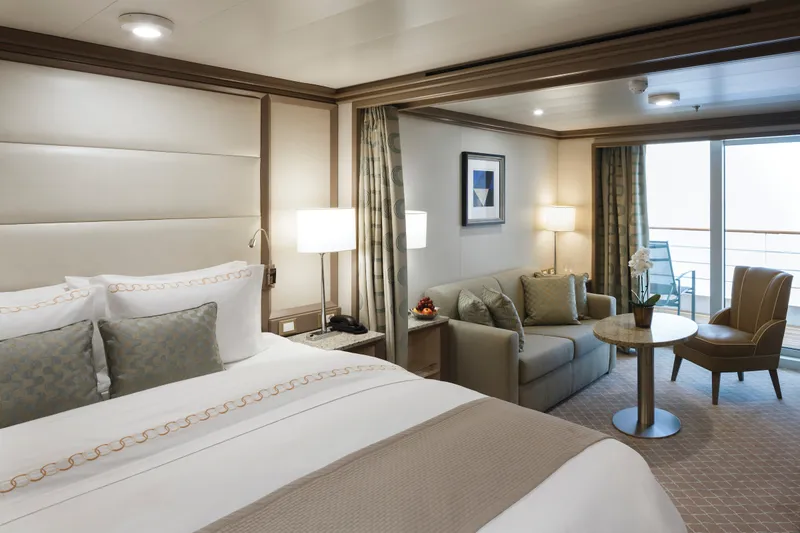
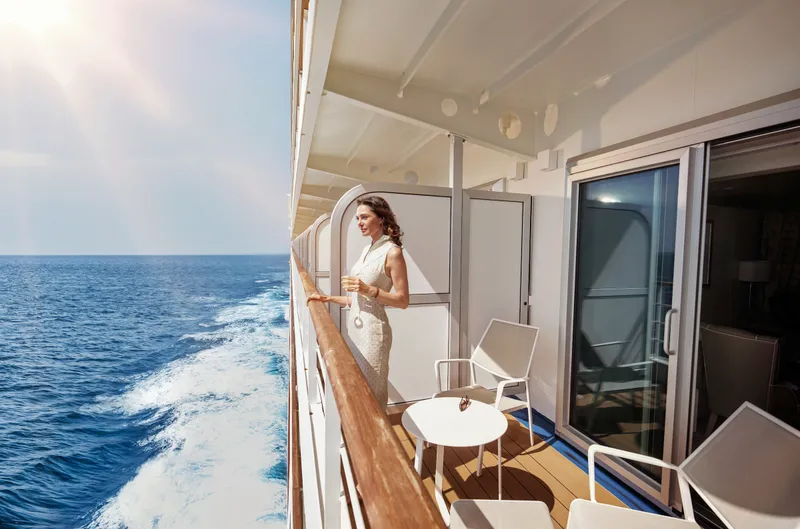
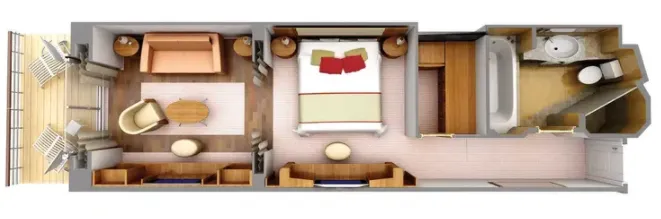
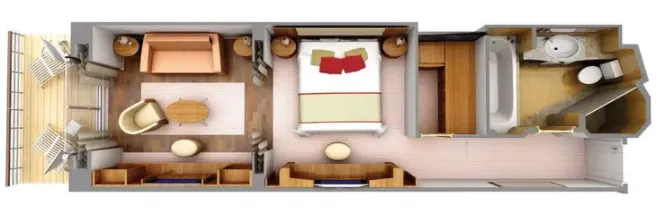
The Classic Veranda Suite provides generous living space for voyagers. Located lower bow, the Classic Veranda Suite offers all the comfort and attention to detail that you can expect aboard — both inside and out. A generous expanse of interior comforts — elegant décor, stunning marble bathroom and ample seating area, make this a cosy home away from home. But perhaps this suite’s finest asset lies just outside, as floor-to-ceiling glass doors open onto a private veranda, making every sunset feel as if it is yours alone.
Veranda with patio furniture and floor-to-ceiling glass doors.
Sitting area.
Twin beds or queen-sized bed.
Marble bathroom with vanity, full-sized bath, separate shower.
Walk-in rain shower (no full-sized bath.
Walk-in wardrobe with personal safe.
Writing desk.
One 40” / 102 cm flat-screen HD TV.
Unlimited Standard Wifi.
Queen or Twin ConfigurationShowerWhirlpool BathToiletries ProvidedRoom Service AvailableSuite Benefits+13
View Details
Deluxe Veranda Suite
Suite
377 m²Max 3
DX
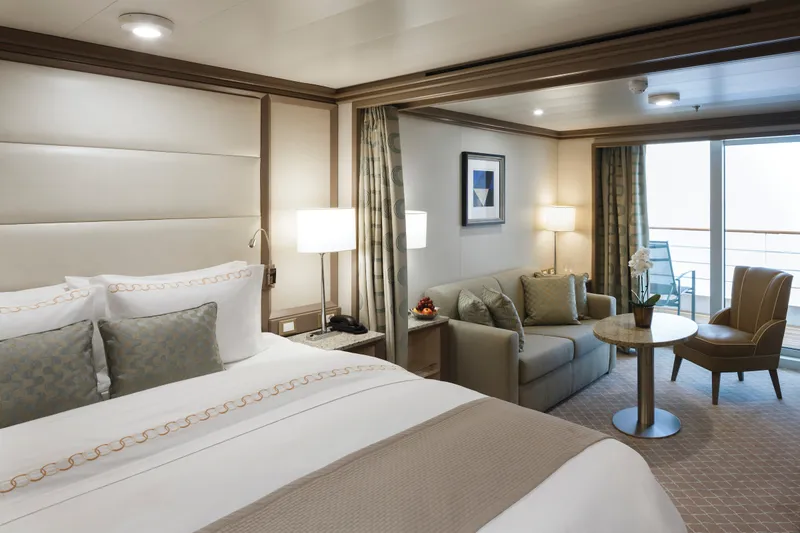
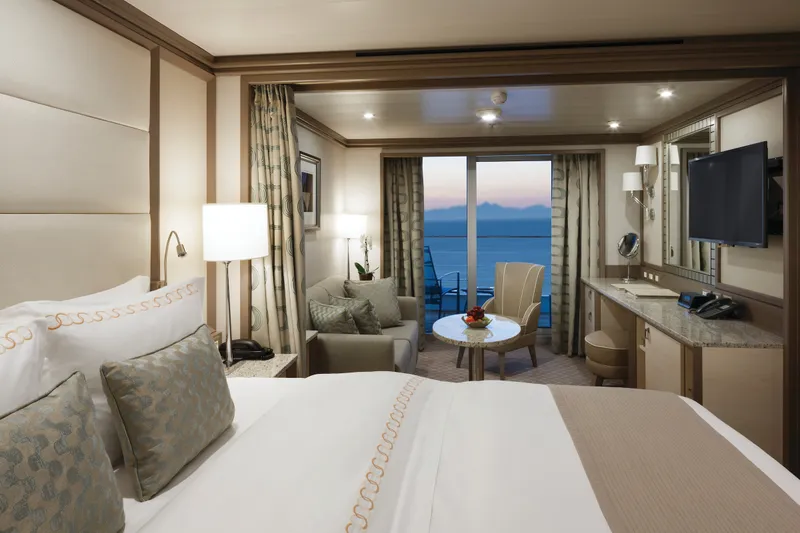
The Deluxe Veranda Suite offers a comfortable living space, close to the heart of the ship. With its preferred mid-ship location and all the comfort and attention to detail that you can expect aboard, the Deluxe Veranda Suite is the savvy traveller’s paradise— both inside and out. Elegant décor, stunning marble bathroom and ample seating area, make this a cosy home away from home. But perhaps this suite’s finest asset lies just outside, as floor-to-ceiling glass doors open onto a private veranda, making every sunset feel as if it is yours alone.
Veranda with patio furniture and floor-to-ceiling glass doors.
Sitting area.
Twin beds or queen-sized bed.
Marble bathroom with vanity, full-sized bath, separate shower.
Walk-in rain shower (no full-sized bath.
Walk-in wardrobe with personal safe.
Writing desk.
One 40” / 102 cm flat-screen HD TV.
Unlimited Standard Wifi.
Queen or Twin ConfigurationShowerToiletries ProvidedRoom Service AvailableSuite BenefitsTV+13
View Details
Grand 1 Suite
Suite
1421–1884 m²Max 5
G1
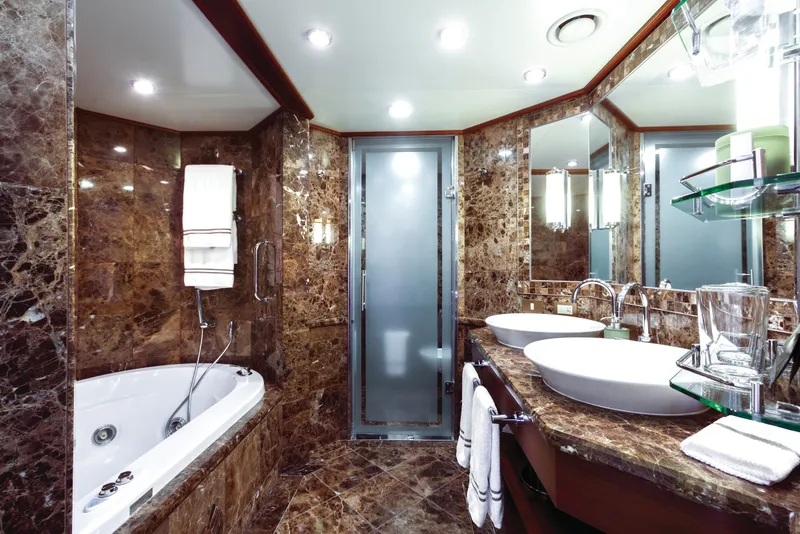
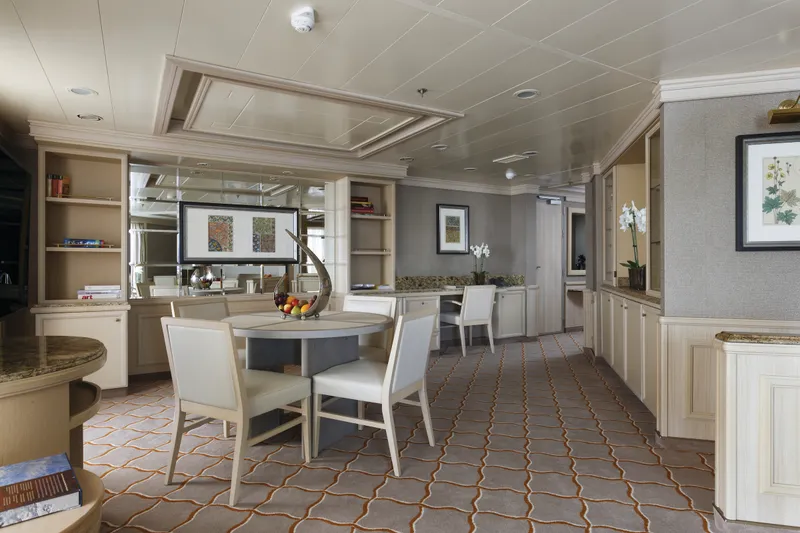
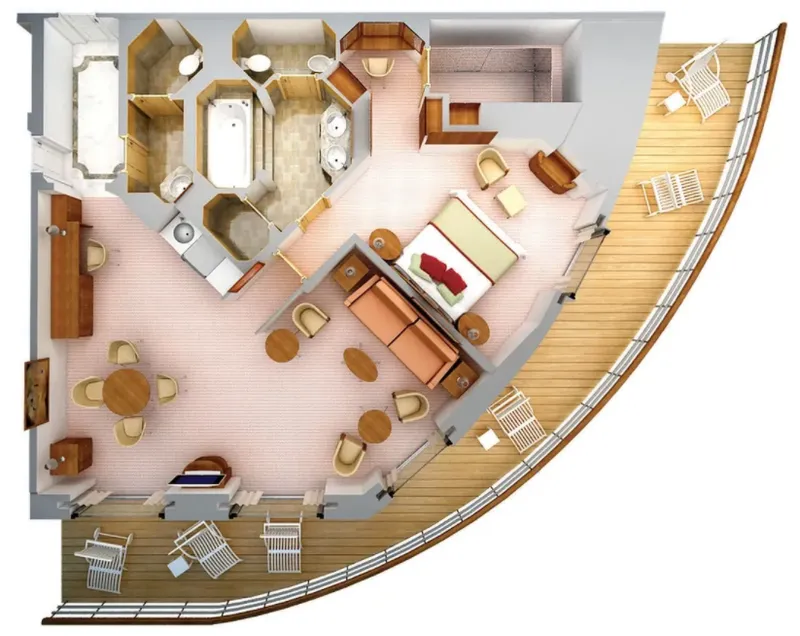
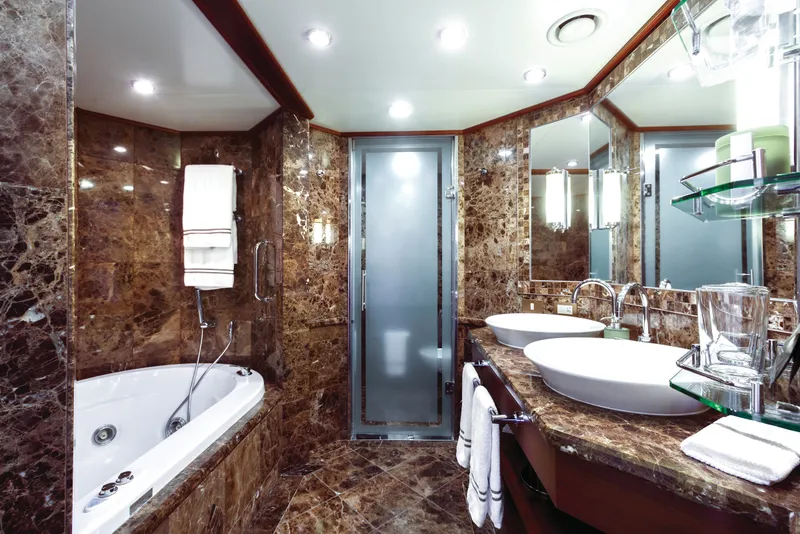
Expertly designed and exquisitely appointed. Ideal for entertaining friends while you cruise or enjoying a quiet dinner “at home”. Available as a one-bedroom configuration or as two-bedrooms by adjoining with a Veranda Suite.
Two verandas with patio furniture and floor-to-ceiling glass doors; bedroom two has additional veranda.
Living room with convertible sofa to accommodate an additional guest.
Sitting area; bedroom two has additional sitting area.
Separate dining area.
Twin beds or king-sized bed; bedroom two has additional twin beds or queensized bed.
Marble bathroom with double vanity, separate shower and full-sized bath, plus a powder room; bedroom two has
additional marble bathroom with fullsized bath, separate shower.
Beds mattresses.
Walk-in wardrobe(s) with personal safe.
Vanity table(s).
Writing desk(s).
One 55” / 140 cm and one 40” / 102 cm flat-screen HD TVs in main suite, plus one 40” / 102 cm flat-screen HD TV in
bedroom two.
Sound System with Bluetooth connectivity.
Illy espresso machine.
Unlimited Premium Wifi.
Lounge AreaShowerToiletries ProvidedRoom Service AvailableSuite BenefitsTV+17
View Details
Grand 2 Suite
Suite
1421–1884 m²Max 5
G2
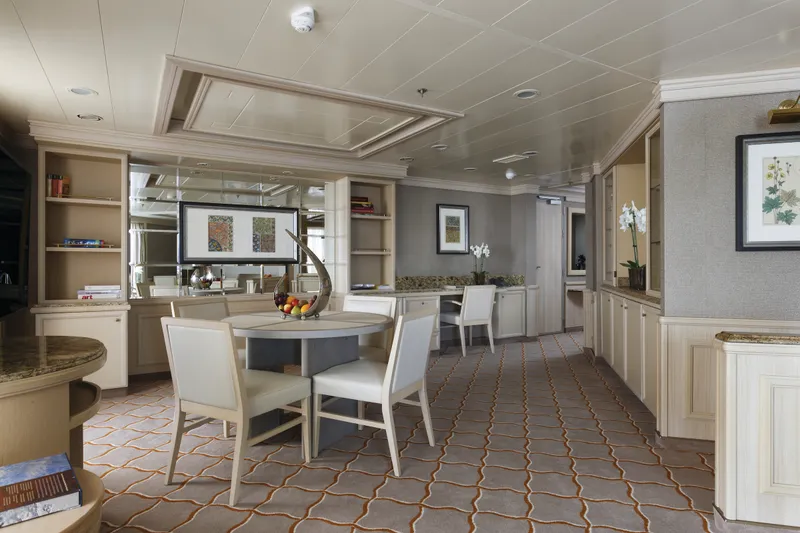
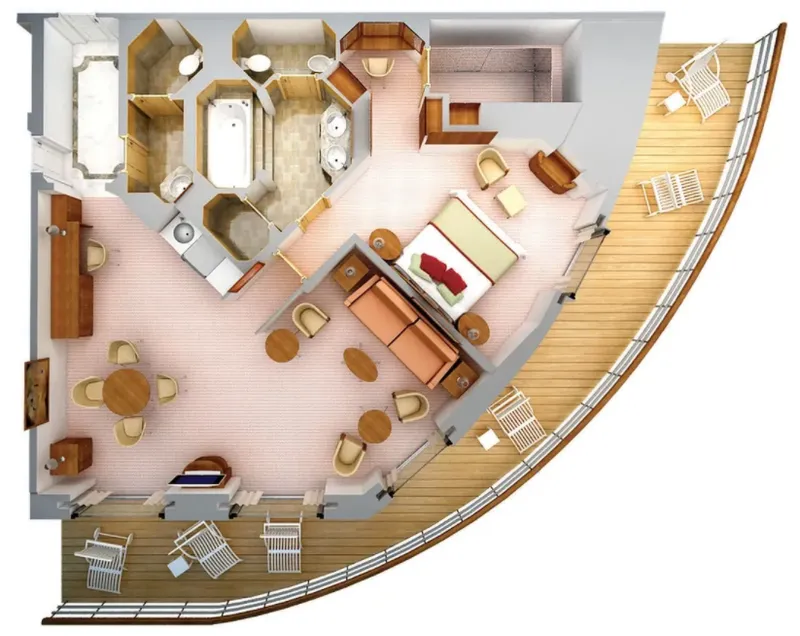
Expertly designed and exquisitely appointed. Ideal for entertaining friends while you cruise or enjoying a quiet dinner “at home”. Available as a one-bedroom configuration or as two-bedrooms by adjoining with a Veranda Suite.
Two verandas with patio furniture and floor-to-ceiling glass doors; bedroom two has additional veranda.
Living room with convertible sofa to accommodate an additional guest.
Sitting area; bedroom two has additional sitting area.
Separate dining area.
Twin beds or king-sized bed; bedroom two has additional twin beds or queensized bed.
Marble bathroom with double vanity, separate shower and full-sized bath, plus a powder room; bedroom two has
additional marble bathroom with fullsized bath, separate shower.
Beds mattresses.
Walk-in wardrobe(s) with personal safe.
Vanity table(s).
Writing desk(s).
One 55” / 140 cm and one 40” / 102 cm flat-screen HD TVs in main suite, plus one 40” / 102 cm flat-screen HD TV in
bedroom two.
Sound System with Bluetooth connectivity.
Illy espresso machine.
Unlimited Premium Wifi.
Lounge AreaShowerToiletries ProvidedRoom Service AvailableSuite BenefitsTV+17
View Details
Owner's 1 Suite
Suite
1227–1292 m²Max 5
O1
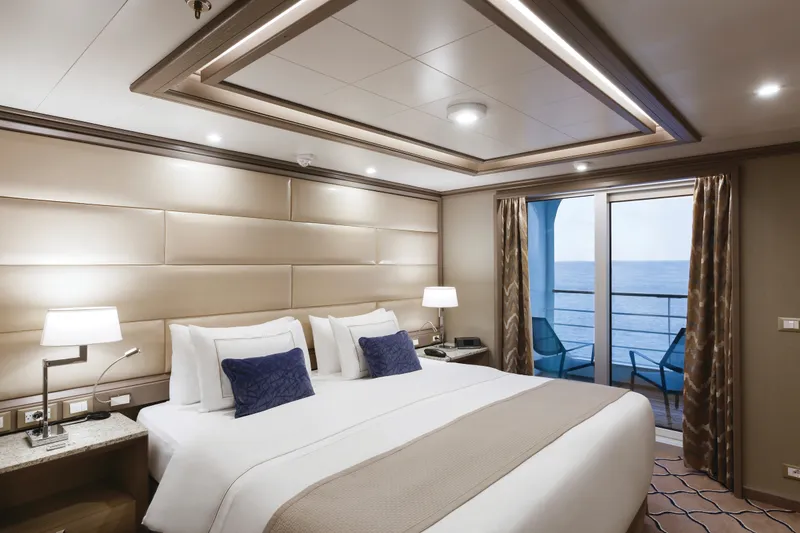
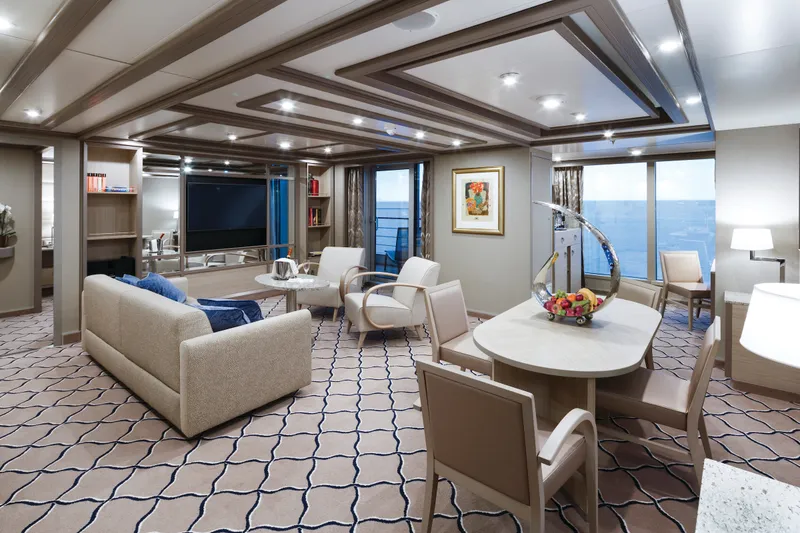
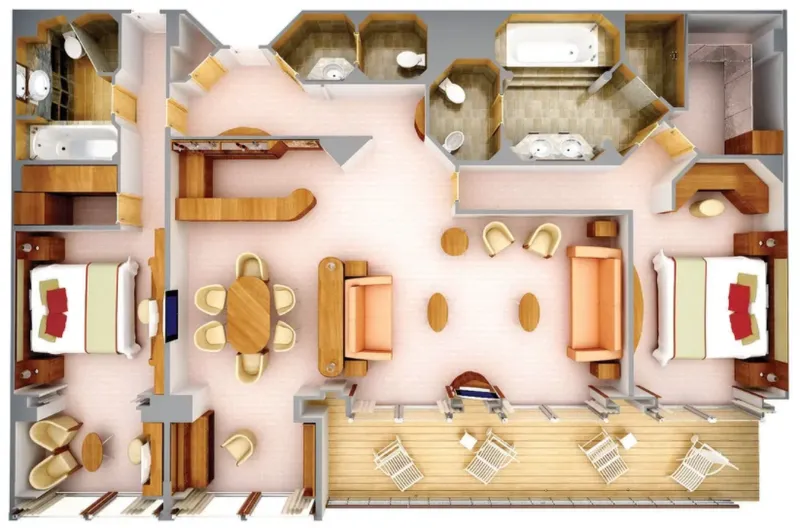
The name Owner's Suite says it all. A stylish apartment. Prestigious and classic. For those who seek the superlative level of space, comfort and service on board. Available as a one-bedroom configuration or as two-bedrooms by adjoining with Panorama Suite.
Large veranda with patio furniture and floor-to-ceiling glass doors; bedroom two has additional large picture window.
Living room with sitting area; bedroom two has additional sitting area.
Separate dining area.
Twin beds or king-sized bed; bedroom two has additional twin beds or queensized bed.
Marble bathroom with double vanity, separate shower and full-sized bath, plus a powder room; bedroom two has
additional marble bathroom with fullsized bath, separate shower.
Beds mattresses.
Walk-in wardrobe(s) with personal safe.
Vanity table(s).
Writing desk(s).
One 55” / 140 cm and one 40” / 102 cm flat-screen HD TVs in main suite, plus one 40” / 102 cm flat-screen HD TV in
bedroom two.
Sound System with Bluetooth connectivity.
Illy espresso machine.
Unlimited Premium Wifi.
Lounge AreaShowerToiletries ProvidedRoom Service AvailableSuite BenefitsTV+17
View Details
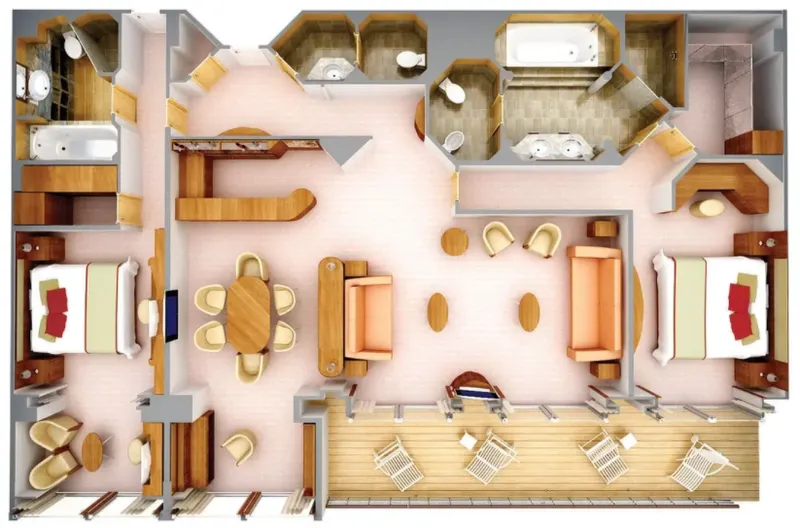
Owner's 2 Suite
Suite
1227–1292 m²Max 5
O2
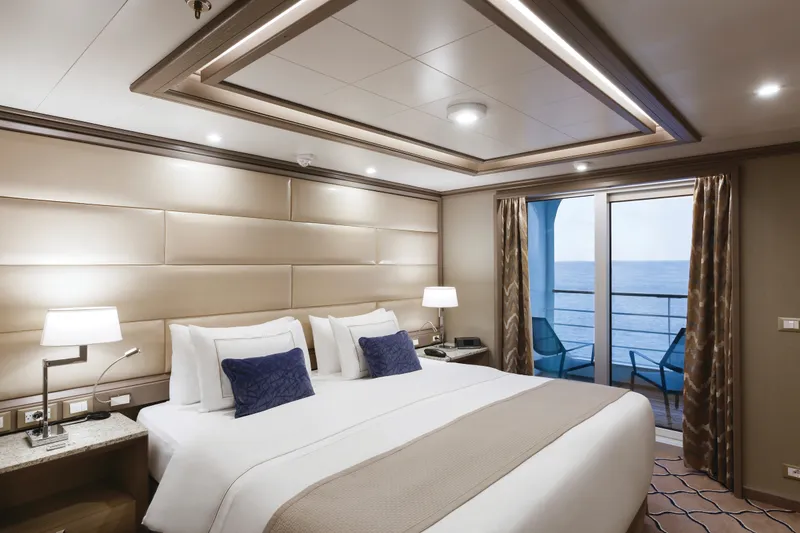
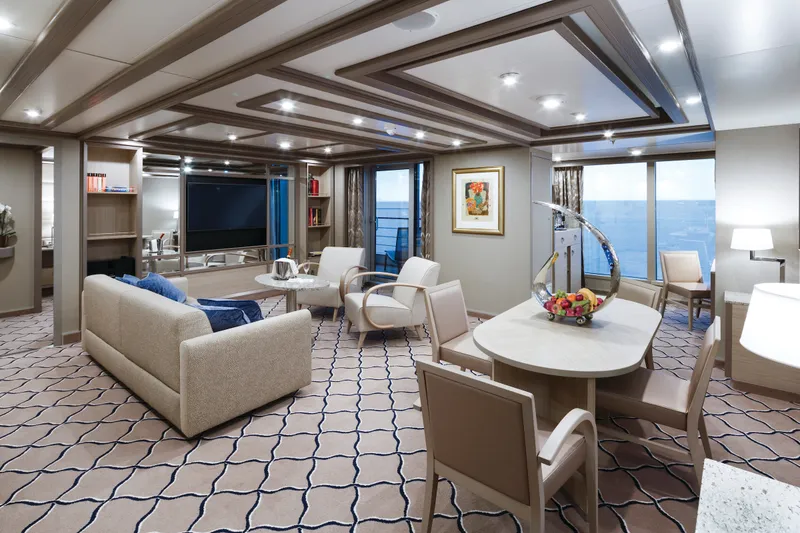
The name Owner's Suite says it all. A stylish apartment. Prestigious and classic. For those who seek the superlative level of space, comfort and service on board. Available as a one-bedroom configuration or as two-bedrooms by adjoining with Panorama Suite.
Large veranda with patio furniture and floor-to-ceiling glass doors; bedroom two has additional large picture window.
Living room with sitting area; bedroom two has additional sitting area.
Separate dining area.
Twin beds or king-sized bed; bedroom two has additional twin beds or queensized bed.
Marble bathroom with double vanity, separate shower and full-sized bath, plus a powder room; bedroom two has
additional marble bathroom with fullsized bath, separate shower.
Beds mattresses.
Walk-in wardrobe(s) with personal safe.
Vanity table(s).
Writing desk(s).
One 55” / 140 cm and one 40” / 102 cm flat-screen HD TVs in main suite, plus one 40” / 102 cm flat-screen HD TV in
bedroom two.
Sound System with Bluetooth connectivity.
Illy espresso machine.
Unlimited Premium Wifi.
Lounge AreaShowerToiletries ProvidedRoom Service AvailableSuite BenefitsTV+17
View Details
Panorama Suite
Suite
Panorama Suite
334 m²Max 2
PA
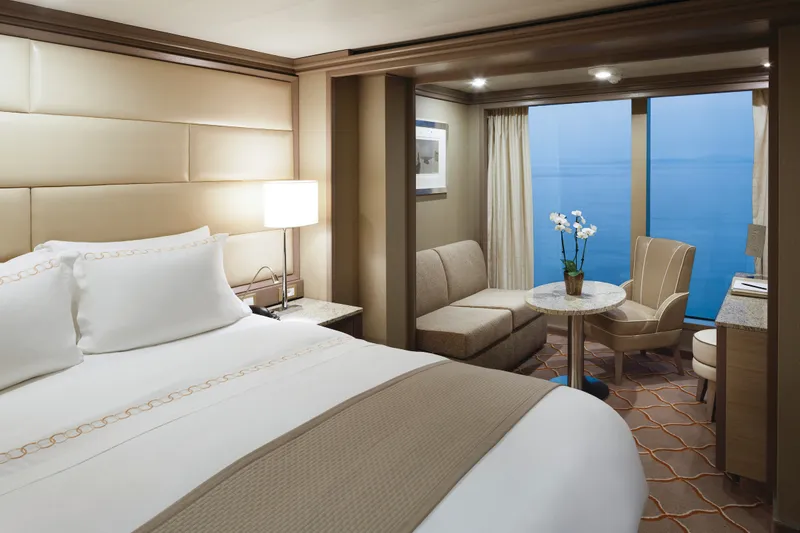
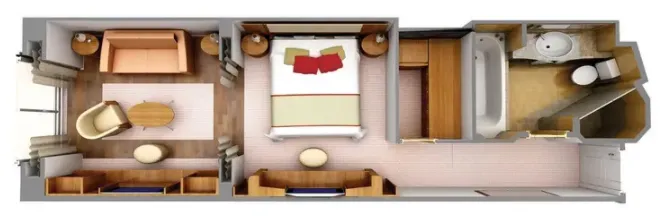
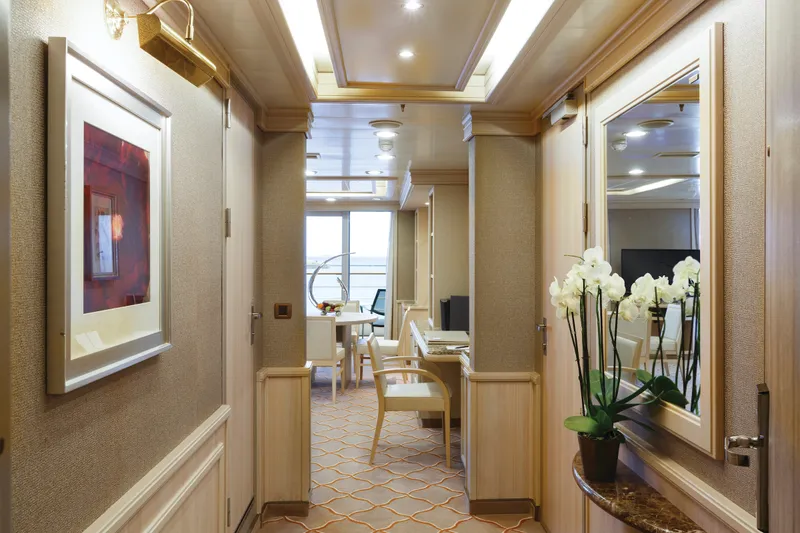
The Panorama Suite provides generous living space for voyagers. Located lower bow, the Panorama offers all the comfort and attention to detail that you can expect aboard. A generous expanse of interior comforts — elegant décor, stunning marble bathroom and ample seating area, make this a cosy home away from home. The seating area of the Panorama Suite has plenty of room to relax, while large picture windows frame panoramic ocean views.
Sitting area.
Twin beds or queen-sized bed.
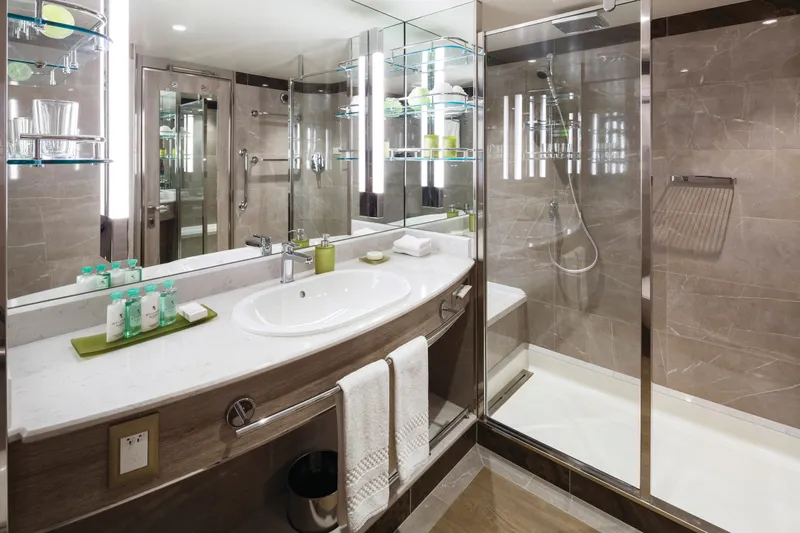
Marble bathroom with vanity, full-sized bath, separate shower.
Walk-in rain shower (no full-sized bath) from suite number 852 to 853.
Walk-in wardrobe with personal safe.
Writing desk.
One 40” / 102 cm flat-screen HD TV.
Unlimited Standard Wifi.
Queen or Twin ConfigurationShowerToiletries ProvidedRoom Service AvailableSuite BenefitsTV+11
View Details
Royal 1 Suite
Suite
990–1367 m²Max 5
R1
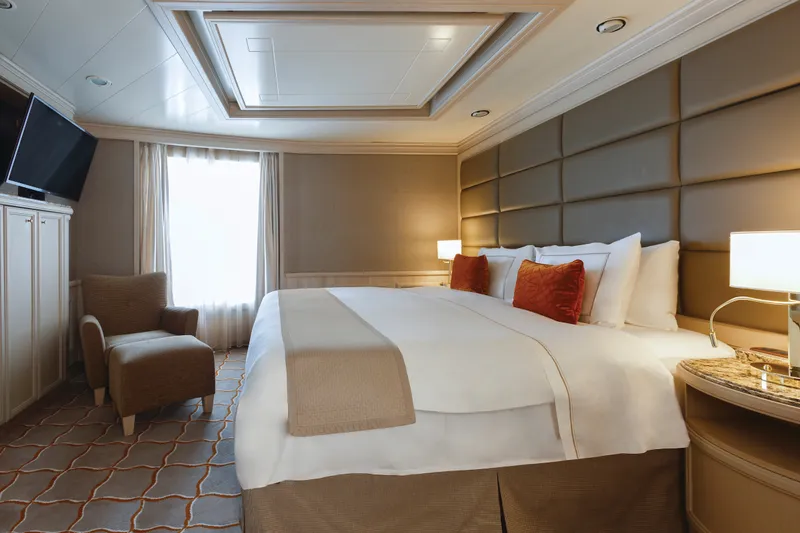
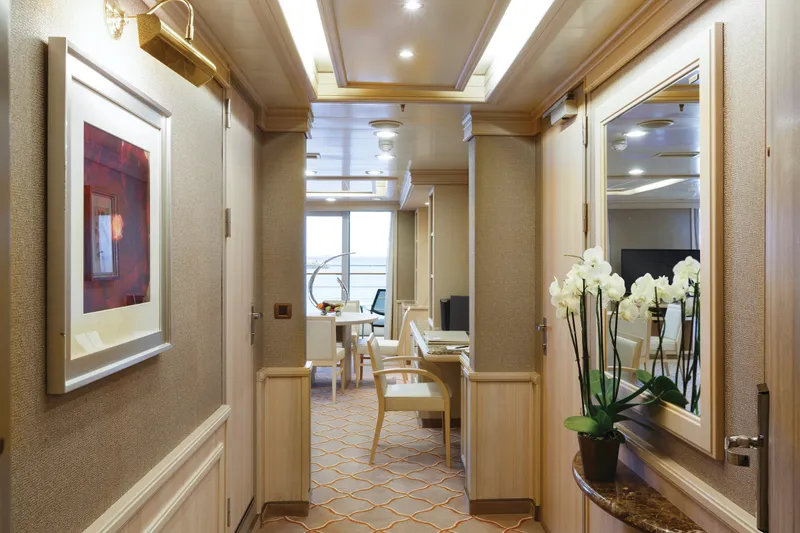
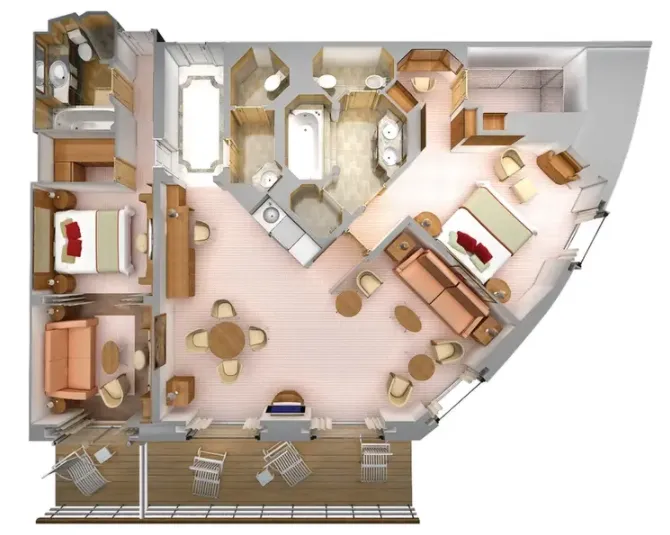
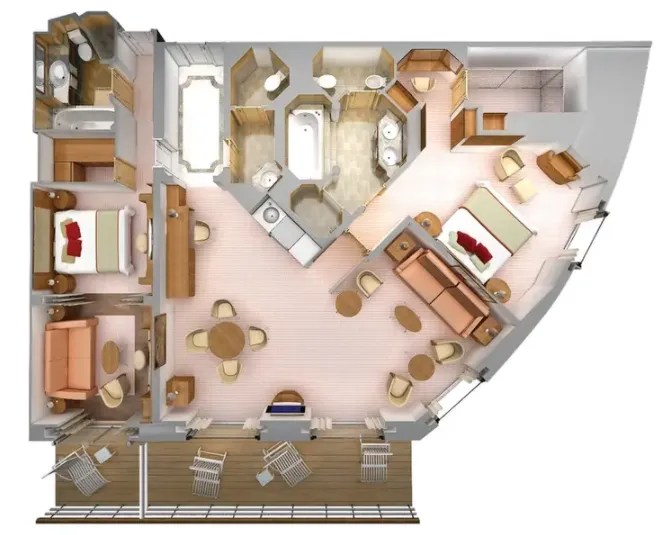
Stately describes the Royal Suite. Commanding and majestic. Perfect for entertaining. Enough living space to roam. The pinnacle of good living. Available as a one-bedroom configuration or as two bedrooms by adjoining with a Veranda Suite.
Large veranda with patio furniture and floor-to-ceiling glass doors; bedroom two has additional veranda.
Living room with convertible sofa to accommodate an additional guest.
Sitting area; bedroom two has additional sitting area.
Separate dining area.
Twin beds or king-sized bed; bedroom two has additional twin beds or queensized bed.
Marble bathroom with double vanity, separate shower and full-sized bath, plus a powder room; bedroom two has
additional marble bathroom with fullsized bath, separate shower.
Beds mattresses.
Walk-in wardrobe(s) with personal safe.
Vanity table(s).
Writing desk(s).
One 55” / 140 cm and one 40” / 102 cm flat-screen HD TVs in main suite, plus one 40” / 102 cm flat-screen HD TV in
bedroom two.
Sound System with Bluetooth connectivity.
Illy espresso machine.
Unlimited Premium Wifi.
Lounge AreaShowerToiletries ProvidedRoom Service AvailableSuite BenefitsTV+16
View Details
Royal 2 Suite
Suite
990–1367 m²Max 5
R2
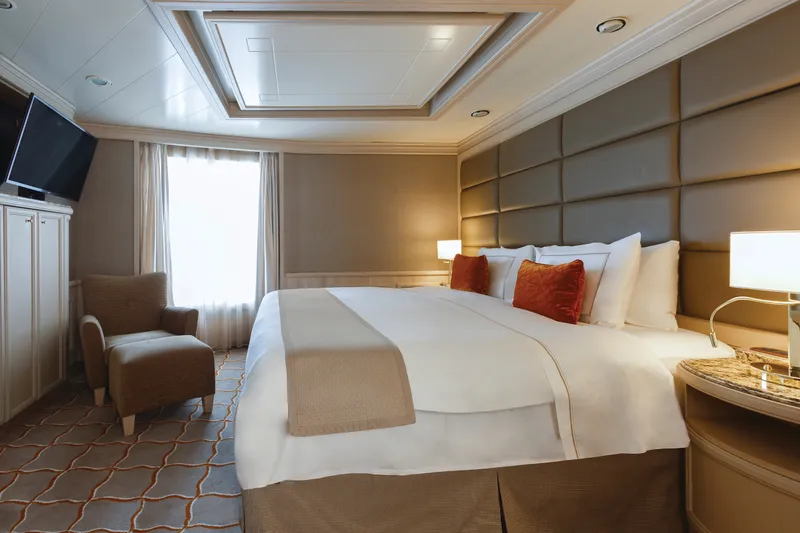
Stately describes the Royal Suite. Commanding and majestic. Perfect for entertaining. Enough living space to roam. The pinnacle of good living. Available as a one-bedroom configuration or as two bedrooms by adjoining with a Veranda Suite.
Large veranda with patio furniture and floor-to-ceiling glass doors; bedroom two has additional veranda.
Living room with convertible sofa to accommodate an additional guest.
Sitting area; bedroom two has additional sitting area.
Separate dining area.
Twin beds or king-sized bed; bedroom two has additional twin beds or queensized bed.
Marble bathroom with double vanity, separate shower and full-sized bath, plus a powder room; bedroom two has
additional marble bathroom with fullsized bath, separate shower.
Beds mattresses.
Walk-in wardrobe(s) with personal safe.
Vanity table(s).
Writing desk(s).
One 55” / 140 cm and one 40” / 102 cm flat-screen HD TVs in main suite, plus one 40” / 102 cm flat-screen HD TV in
bedroom two.
Sound System with Bluetooth connectivity.
Illy espresso machine.
Unlimited Premium Wifi.
Lounge AreaShowerToiletries ProvidedRoom Service AvailableSuite BenefitsTV+16
View Details
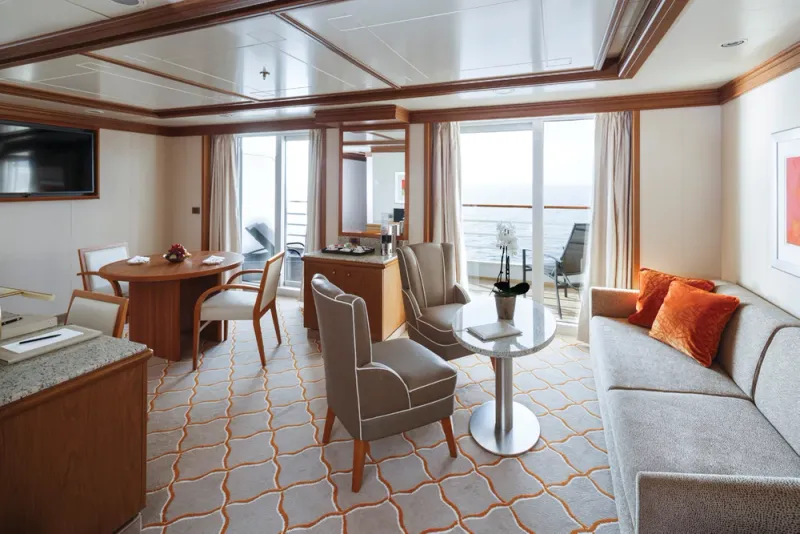
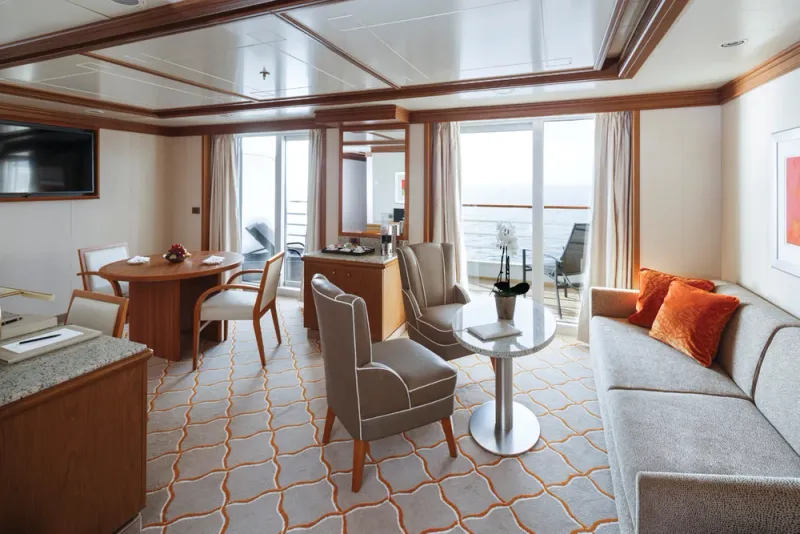
Silver 1 Suite
Suite
743–1076 m²Max 5
SL
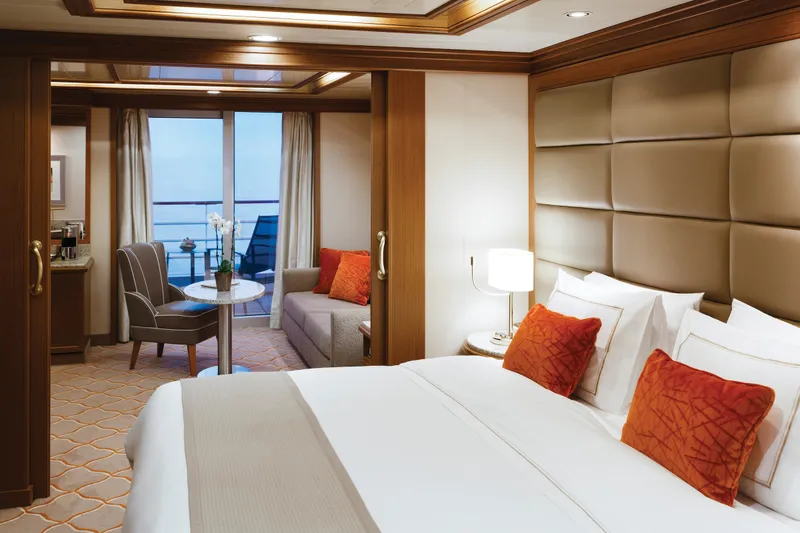
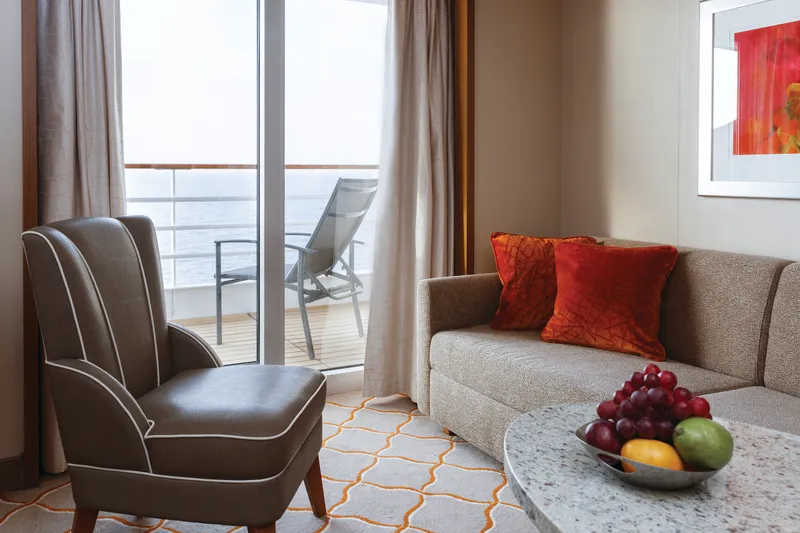
Step onto your terrace and bask in the calm feeling of the ocean breeze. Dissolve into the comfort of your king size bed. Prepare for the evening in the beautiful marble bathroom. The upper deck location gives the most spectacular of sea views, the spacious living area allows for comfortable relaxing where cosy nights in become veritable experiences in themselves. The two-bedroom configuration of this suite makes this it the ideal option for families.
Veranda with patio furniture and floor-to-ceiling glass doors.
Living room with convertible sofa to accommodate an additional guest.
Sitting area.
Separate dining area.
Twin beds or king-sized bed.
Marble bathroom with double vanity, full-sized bath, separate shower; bedroom two has additional marble bathroom with walk-in rain shower.
Walk-in wardrobe with personal safe.
Vanity table.
Writing desk.
One 49” / 125 cm and one 40” / 102 cm flat-screen HD TVs in main suite.
Sound System with Bluetooth connectivity.
Illy espresso machine.
Unlimited Premium Wifi.
ShowerToiletries ProvidedRoom Service AvailableSuite BenefitsTVFree Wi-Fi+16
View Details
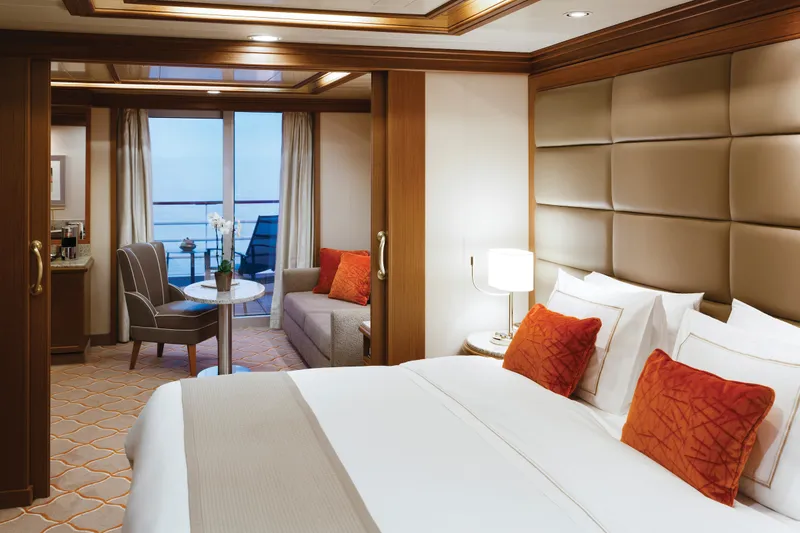
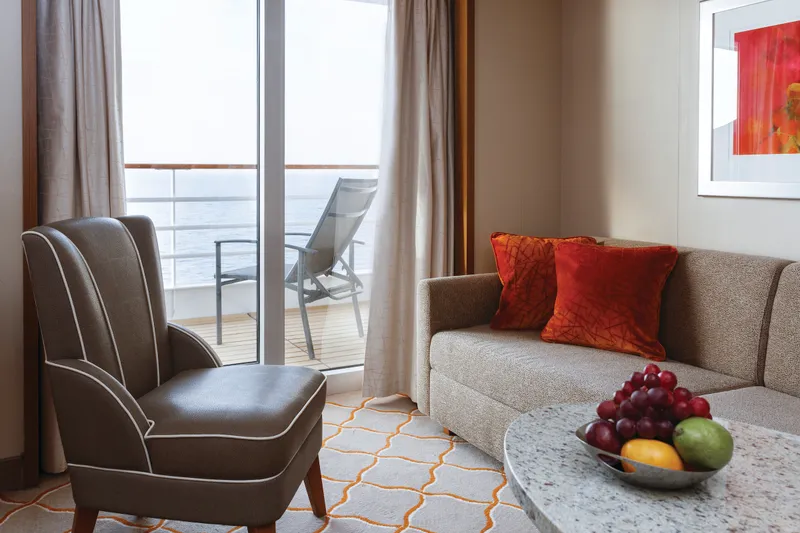
Silver 2 Suite
Suite
743–1076 m²Max 5
S2
Step onto your terrace and bask in the calm feeling of the ocean breeze. Dissolve into the comfort of your king size bed. Prepare for the evening in the beautiful marble bathroom. The upper deck location gives the most spectacular of sea views, the spacious living area allows for comfortable relaxing where cosy nights in become veritable experiences in themselves. The two-bedroom configuration of this suite makes this it the ideal option for families.
Veranda with patio furniture and floor-to-ceiling glass doors.
Living room with convertible sofa to accommodate an additional guest.
Sitting area.
Separate dining area.
Twin beds or king-sized bed.
Marble bathroom with double vanity, full-sized bath, separate shower; bedroom two has additional marble bathroom with walk-in rain shower.
Walk-in wardrobe with personal safe.
Vanity table.
Writing desk.
One 49” / 125 cm and one 40” / 102 cm flat-screen HD TVs in main suite.
Sound System with Bluetooth connectivity.
Illy espresso machine.
Unlimited Premium Wifi.
ShowerToiletries ProvidedRoom Service AvailableSuite BenefitsTVFree Wi-Fi+16
View Details
Superior Veranda Suite
Suite
377 m²Max 3
SV
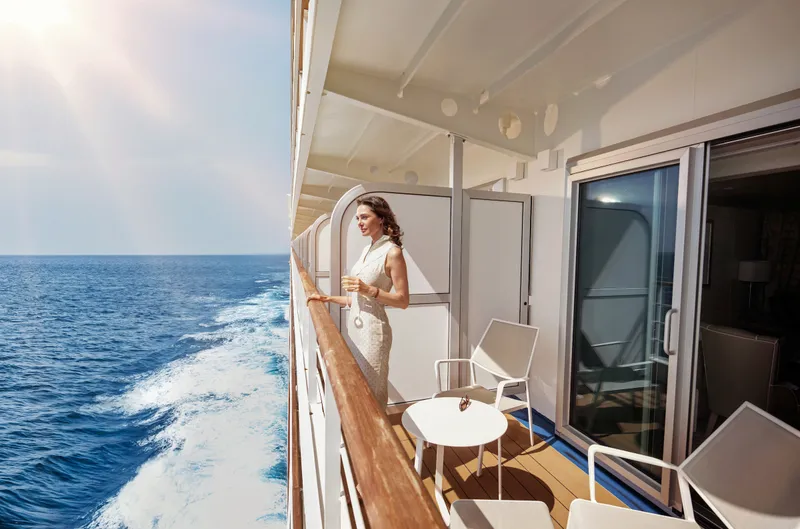
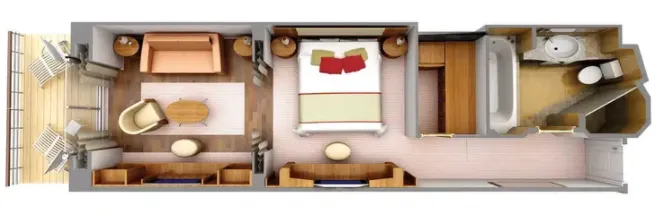
Located on the upper deck, and offering spectacular sunset views, the Superior Veranda Suite has all the comforts and luxury that you can expect aboard. A comfortable living space, attention to detail and a generous expanse of amenities, this stunning suite makes for a cosy home while on the seas. But perhaps this suite’s finest asset lies just outside, as floor-to-ceiling glass doors open onto a private veranda, making every sunset feel as if it is yours alone.
Veranda with patio furniture and floor-to-ceiling glass doors.
Sitting area.
Twin beds or queen-sized bed.
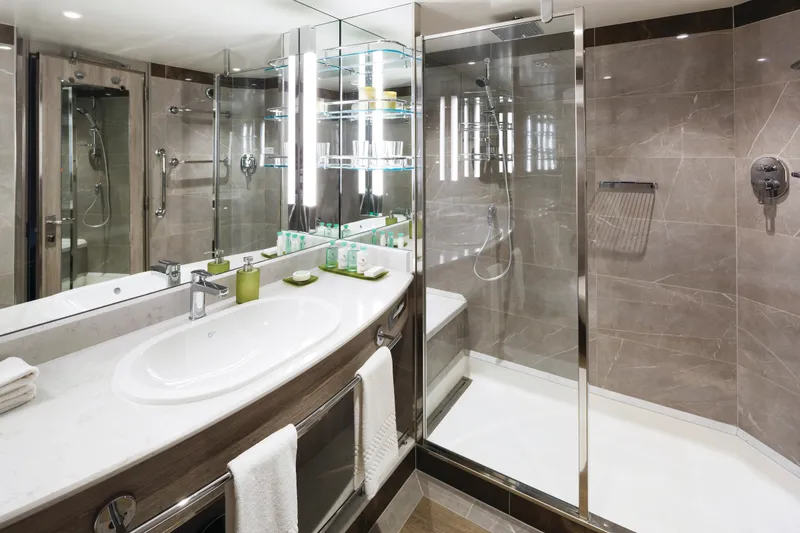
Marble bathroom with vanity, full-sized bath, separate shower.
Walk-in rain shower (no full-sized bath.
Walk-in wardrobe with personal safe.
Writing desk.
One 40” / 102 cm flat-screen HD TV.
Unlimited Standard Wifi.
Queen or Twin ConfigurationShowerBathToiletries ProvidedRoom Service AvailableSuite Benefits+13
View Details
Vista Suite
Suite
344 m²Max 3
VI
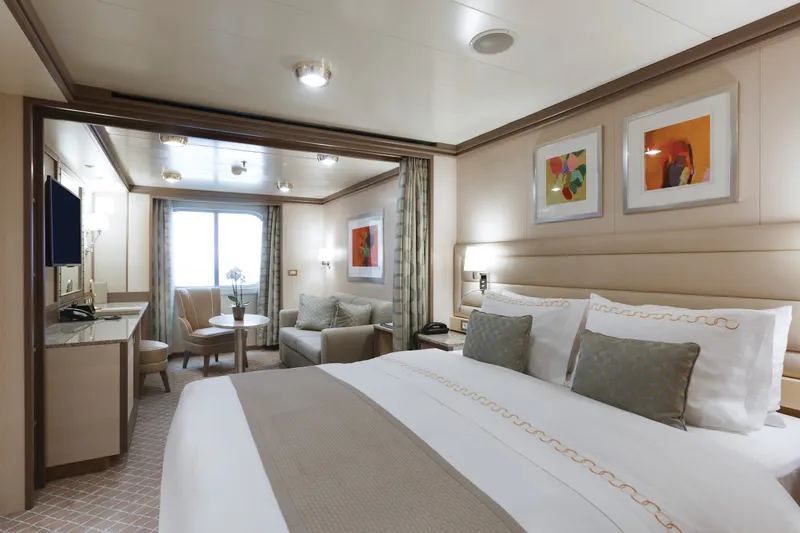
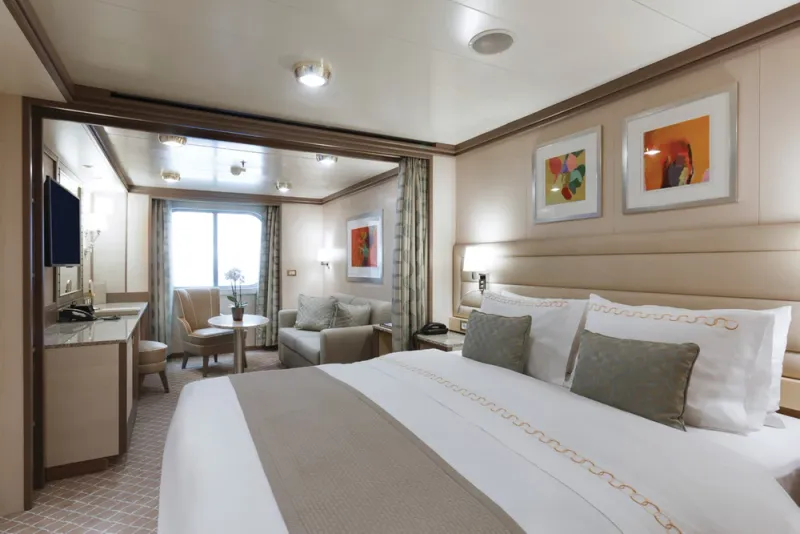
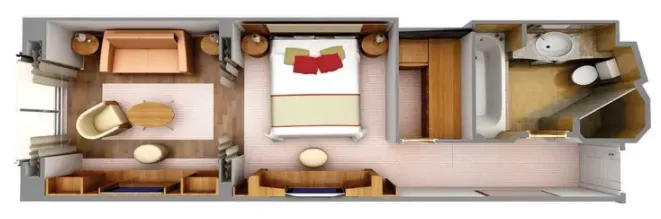
A quiet sanctuary. The sitting area of the Vista Suite has plenty of room to relax. Large picture windows frame panoramic ocean views. The perfect backdrop for breakfast in bed during the cruise. Some Vista Suites accommodate three guests.
Sitting area.
Twin beds or queen-sized bed.
Marble bathroom with vanity, full-sized bath, separate shower.
Walk-in wardrobe with personal safe.
Writing desk.
One 40” / 102 cm flat-screen HD TV.
Unlimited Standard Wifi.
Queen or Twin ConfigurationShowerToiletries ProvidedRoom Service AvailableSuite BenefitsTV+12
View Details
Interested in This Voyage?
Our cruise specialists can help you find the perfect cabin and the best available pricing.
(+886) 02-2721-7300Contact Advisor