Date
2027-04-04
Duration
7 nights
Departure Port
Paris
France
Arrival Port
Bordeaux
France
Rating
Luxury
Theme
History & Culture
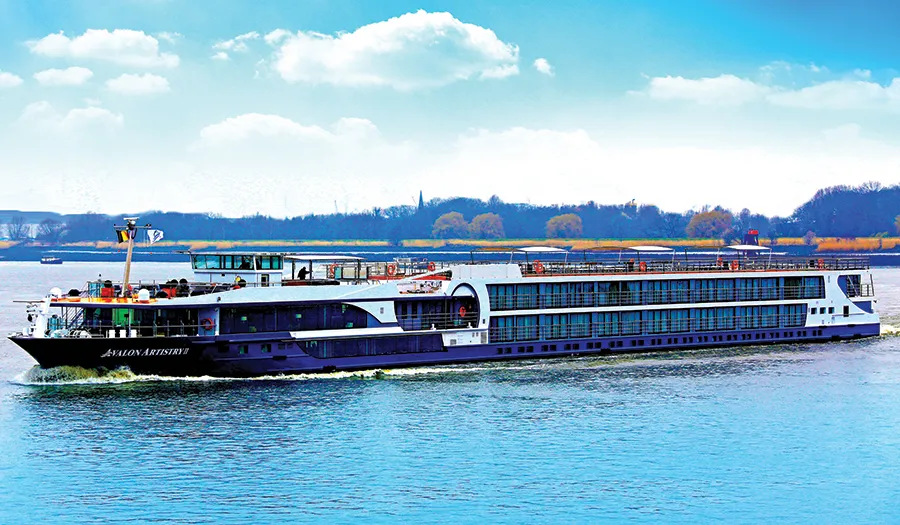


Avalon Waterways
Suite Ship
2013
2025
2,022 GT
130
64
37
361 m
12 m
13 knots
No

Budapest, divided by the Danube into the hilly Buda of thermal baths and medieval castle lanes on one bank and the grand Pest of coffee-house culture and Art Nouveau splendor on the other, delivers the most theatrical first impression of any European capital — whether approached by river as the neo-Gothic Parliament materializes from the water or by night from the Citadella's sweep of illuminated panorama below. The city's celebrated thermal bath culture, rooted in Ottoman-era hammams and perfected in palatial Secession-era pools like the Széchenyi, is an experience entirely unlike anything else in Europe. Visit spring and autumn for comfortable temperatures; Vienna is two and a half hours west by train.

Caudebec-en-Caux nestles in a Seine meander between Rouen and the sea, famous for its Flamboyant Gothic Eglise Notre-Dame — a masterwork of late medieval stone lacework so exquisite that Henri IV called it 'the most beautiful chapel in my kingdom.' The town serves as an ideal quiet base for exploring the Seine Valley's quieter pleasures: the remarkable Abbaye de Jumiéges, its roofless nave open to the Norman sky, and the Manoir d'Ango, a Renaissance manor of extraordinary ambition, are both within easy reach. The tidal atmosphere of the Seine at this point rewards early morning walks along the embankment. Rouen, with its Gothic cathedral and Impressionist legacy, lies forty minutes east.

Vukovar, Croatia's largest river port, sits at the confluence of the Vuka and Danube rivers, offering a rich historical narrative and vibrant local culture. Must-do experiences include savoring traditional dishes like fiš paprikaš and exploring nearby attractions such as Trogir and Solin. The best time to visit is in late spring and early autumn when the weather is pleasant and the local events are in full swing.

Novi Sad — the "Serbian Athens" — unfolds along the left bank of the Danube beneath the commanding walls of the Petrovaradin Fortress, a Habsburg military masterpiece whose underground tunnel labyrinth and hilltop clock tower (with hands reversed, to confuse enemy gunners) make for one of Europe's most unusual fortress visits. The city's elegant pedestrian street, the Zmaj Jovina, is lined with 19th-century Habsburg architecture that rewards a leisurely afternoon, while the Serbian cultural renaissance of the same era left behind museums, galleries, and coffee house traditions that endure today. In July, the EXIT music festival transforms the fortress into one of Europe's most storied outdoor stages. Visit May through September for the finest weather.

Belgrade, the 'White City' rebuilt at least forty times at the confluence of the Danube and Sava rivers, surprises every visitor with its raw, uncurated vitality — a capital that wears its turbulent history lightly while embracing the present with irresistible energy. The Kalemegdan Fortress, fortified for over two thousand years, offers the most dramatic river panorama on the entire Danube; below it, the Skadarlija cobblestone quarter fills nightly with kafana musicians and the aromas of Serbian rakija and roasted meats. Belgrade's nightlife — centered on the floating river clubs called splavovi — is genuinely legendary in Europe. Spring and early autumn offer the most comfortable conditions; the Iron Gate gorge is two hours downstream by river.

Poised at the confluence of the Oise and the Seine, Conflans-Sainte-Honorine has been France's inland waterway capital for over a century, its quays mooring more than a thousand traditional péniches whose painted hulls form a floating village of singular charm. The hilltop medieval town commands sweeping views over the meeting of rivers, while the National Inland Waterways Museum aboard a converted barge chronicles France's extraordinary network of canals and waterways. Just thirty kilometres from Paris, Conflans is best visited in summer, when barge festivals fill the riverbank with music, local produce, and the unhurried pleasures of la vie fluviale.

Golubac is a medieval fortress village on Serbia's Danube, where a magnificently restored fourteenth-century stronghold guards the entrance to the Iron Gates gorge — Europe's deepest river canyon. Visitors should explore the nine-towered fortress and sample *riblja čorba*, the local paprika-laced fish soup, at a riverside *kafana*. Late spring through early autumn offers the most rewarding conditions, with warm days ideal for both fortress ramparts and the lush trails of Đerdap National Park.

Vidin is a captivating port town on the Danube River known for its rich history, eclectic architecture, and vibrant local culture. Must-do experiences include exploring the Baba Vida Fortress and savoring local dishes like **kavarma** and **lutenitsa**. The best time to visit is during the spring and autumn months when the weather is pleasant and the local markets are bustling with activity.

Ruse, Bulgaria's elegant Danube gateway, surprises with a Belle Époque city centre of Austro-Hungarian grandeur — neoclassical facades, ornate fountains, and a Liberty Monument that would not look out of place in Vienna. The city serves as the gateway to the spectacular Rusenski Lom Nature Park, whose limestone canyon shelters medieval rock-carved monasteries of eerie beauty. The remarkable Basarbovo Monastery, still inhabited by monks, clings to cliffs above the turquoise river. Local wineries produce distinguished Mavrud and Cabernet from the nearby Danube plains. May through September offers the most pleasant temperatures for exploration.
Day 1

Budapest, divided by the Danube into the hilly Buda of thermal baths and medieval castle lanes on one bank and the grand Pest of coffee-house culture and Art Nouveau splendor on the other, delivers the most theatrical first impression of any European capital — whether approached by river as the neo-Gothic Parliament materializes from the water or by night from the Citadella's sweep of illuminated panorama below. The city's celebrated thermal bath culture, rooted in Ottoman-era hammams and perfected in palatial Secession-era pools like the Széchenyi, is an experience entirely unlike anything else in Europe. Visit spring and autumn for comfortable temperatures; Vienna is two and a half hours west by train.
Day 3

Caudebec-en-Caux nestles in a Seine meander between Rouen and the sea, famous for its Flamboyant Gothic Eglise Notre-Dame — a masterwork of late medieval stone lacework so exquisite that Henri IV called it 'the most beautiful chapel in my kingdom.' The town serves as an ideal quiet base for exploring the Seine Valley's quieter pleasures: the remarkable Abbaye de Jumiéges, its roofless nave open to the Norman sky, and the Manoir d'Ango, a Renaissance manor of extraordinary ambition, are both within easy reach. The tidal atmosphere of the Seine at this point rewards early morning walks along the embankment. Rouen, with its Gothic cathedral and Impressionist legacy, lies forty minutes east.

Vukovar, Croatia's largest river port, sits at the confluence of the Vuka and Danube rivers, offering a rich historical narrative and vibrant local culture. Must-do experiences include savoring traditional dishes like fiš paprikaš and exploring nearby attractions such as Trogir and Solin. The best time to visit is in late spring and early autumn when the weather is pleasant and the local events are in full swing.
Day 4

Novi Sad — the "Serbian Athens" — unfolds along the left bank of the Danube beneath the commanding walls of the Petrovaradin Fortress, a Habsburg military masterpiece whose underground tunnel labyrinth and hilltop clock tower (with hands reversed, to confuse enemy gunners) make for one of Europe's most unusual fortress visits. The city's elegant pedestrian street, the Zmaj Jovina, is lined with 19th-century Habsburg architecture that rewards a leisurely afternoon, while the Serbian cultural renaissance of the same era left behind museums, galleries, and coffee house traditions that endure today. In July, the EXIT music festival transforms the fortress into one of Europe's most storied outdoor stages. Visit May through September for the finest weather.
Day 5

Belgrade, the 'White City' rebuilt at least forty times at the confluence of the Danube and Sava rivers, surprises every visitor with its raw, uncurated vitality — a capital that wears its turbulent history lightly while embracing the present with irresistible energy. The Kalemegdan Fortress, fortified for over two thousand years, offers the most dramatic river panorama on the entire Danube; below it, the Skadarlija cobblestone quarter fills nightly with kafana musicians and the aromas of Serbian rakija and roasted meats. Belgrade's nightlife — centered on the floating river clubs called splavovi — is genuinely legendary in Europe. Spring and early autumn offer the most comfortable conditions; the Iron Gate gorge is two hours downstream by river.
Day 6

Poised at the confluence of the Oise and the Seine, Conflans-Sainte-Honorine has been France's inland waterway capital for over a century, its quays mooring more than a thousand traditional péniches whose painted hulls form a floating village of singular charm. The hilltop medieval town commands sweeping views over the meeting of rivers, while the National Inland Waterways Museum aboard a converted barge chronicles France's extraordinary network of canals and waterways. Just thirty kilometres from Paris, Conflans is best visited in summer, when barge festivals fill the riverbank with music, local produce, and the unhurried pleasures of la vie fluviale.

Golubac is a medieval fortress village on Serbia's Danube, where a magnificently restored fourteenth-century stronghold guards the entrance to the Iron Gates gorge — Europe's deepest river canyon. Visitors should explore the nine-towered fortress and sample *riblja čorba*, the local paprika-laced fish soup, at a riverside *kafana*. Late spring through early autumn offers the most rewarding conditions, with warm days ideal for both fortress ramparts and the lush trails of Đerdap National Park.
Day 7

Vidin is a captivating port town on the Danube River known for its rich history, eclectic architecture, and vibrant local culture. Must-do experiences include exploring the Baba Vida Fortress and savoring local dishes like **kavarma** and **lutenitsa**. The best time to visit is during the spring and autumn months when the weather is pleasant and the local markets are bustling with activity.
Day 8

Ruse, Bulgaria's elegant Danube gateway, surprises with a Belle Époque city centre of Austro-Hungarian grandeur — neoclassical facades, ornate fountains, and a Liberty Monument that would not look out of place in Vienna. The city serves as the gateway to the spectacular Rusenski Lom Nature Park, whose limestone canyon shelters medieval rock-carved monasteries of eerie beauty. The remarkable Basarbovo Monastery, still inhabited by monks, clings to cliffs above the turquoise river. Local wineries produce distinguished Mavrud and Cabernet from the nearby Danube plains. May through September offers the most pleasant temperatures for exploration.


Comfort Collection Beds
Luxurious mattress toppers
Bedside tables with reading lamps
Hairdryer
L'Occitane bath products
Spacious 3-door closets with shelves for ample storage
Easy under-bed luggage storage
Make-up mirror
Direct-dial telephone
Bathrobes & slippers
Well-stocked minibar
Complimentary water
In-room safe
Individual climate control
Elegant, contemporary design
Large mirror in bathroom
Full shower with glass door
Writing desk and chair
Sofa
Complimentary Wi-Fi


Comfort Collection Beds
Luxurious mattress toppers
Bedside tables with reading lamps
Hairdryer
L'Occitane bath products
Spacious 3-door closets with shelves for ample storage
Easy under-bed luggage storage
Make-up mirror
Direct-dial telephone
Bathrobes & slippers
Well-stocked minibar
Complimentary water
In-room safe
Individual climate control
Elegant, contemporary design
Large mirror in bathroom
Full shower with glass door
Writing desk and chair
Sofa
Complimentary Wi-Fi
One King-Sized Bed or Two Twins


Comfort Collection Beds
Luxurious mattress toppers
Bedside tables with reading lamps
Hairdryer
L'Occitane bath products
Spacious 3-door closets with shelves for ample storage
Easy under-bed luggage storage
Direct-dial telephone
Bathrobes & slippers
Well-stocked minibar
Complimentary water
In-room safe
Individual climate control
Elegant, contemporary design
Large mirror in bathroom
Full shower with glass door
Writing desk and chair
Complimentary Wi-Fi
Our cruise specialists can help you find the perfect cabin and the best available pricing.
(+886) 02-2721-7300Contact Advisor