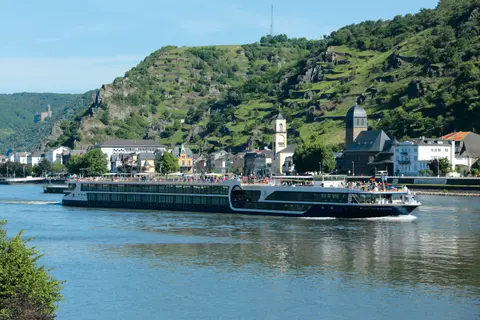
Avalon Waterways60612
Active & Discovery on the Danube with 1 Night in Budapest (Westbound)
Date
2026-06-12
Duration
7 nights
Departure Port
Budapest
Hungary
Arrival Port
Vilshofen
Germany
Rating
Luxury
Theme
History & Culture
Date
2026-06-12
Duration
7 nights
Departure Port
Budapest
Hungary
Arrival Port
Vilshofen
Germany
Rating
Luxury
Theme
History & Culture

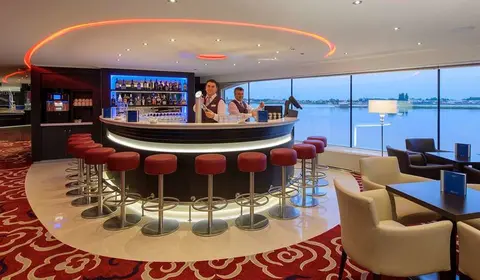
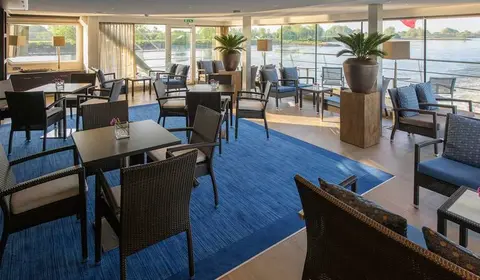
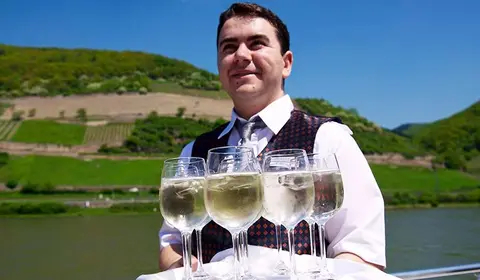
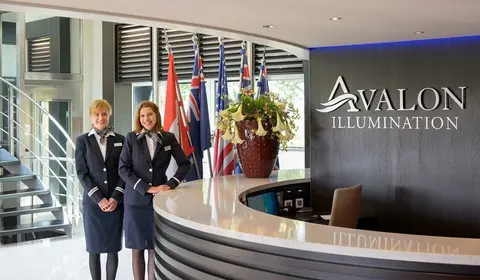
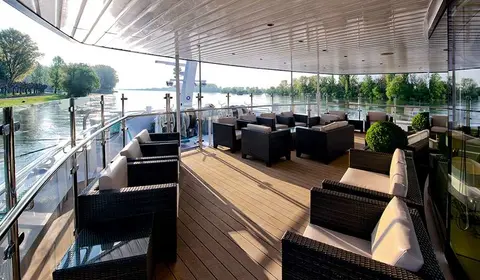
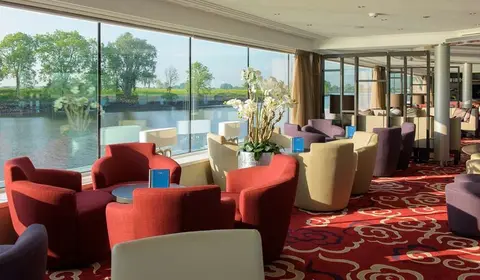
Avalon Waterways
Suite Ship
2014
—
2,775 GT
166
83
47
443 m
12 m
12 knots
No
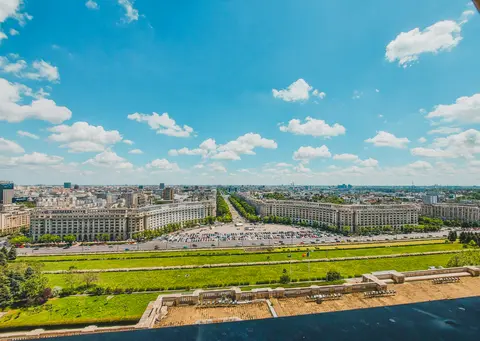
Bucharest, Romania's sprawling and magnificently contradictory capital, layers Belle Époque mansions, communist-era boulevards, and a furiously creative twenty-first-century scene into a city that rewards the curious traveler who looks beyond the obvious. Ceaușescu's colossal Palace of the Parliament — the world's heaviest building and a monument to totalitarian hubris — is unmissable; equally essential is the neighborhood of Floreasca, where design studios, natural wine bars, and acclaimed restaurants have made Bucharest one of Europe's most exciting emerging food capitals. Visit April through June for the most pleasant weather. Transylvania, with Bran Castle and the medieval city of Brașov, lies two hours north through dramatic Carpathian scenery.
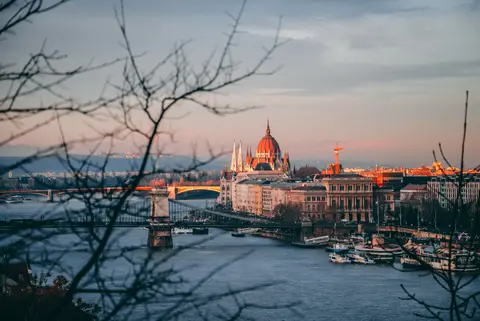
Budapest, divided by the Danube into the hilly Buda of thermal baths and medieval castle lanes on one bank and the grand Pest of coffee-house culture and Art Nouveau splendor on the other, delivers the most theatrical first impression of any European capital — whether approached by river as the neo-Gothic Parliament materializes from the water or by night from the Citadella's sweep of illuminated panorama below. The city's celebrated thermal bath culture, rooted in Ottoman-era hammams and perfected in palatial Secession-era pools like the Széchenyi, is an experience entirely unlike anything else in Europe. Visit spring and autumn for comfortable temperatures; Vienna is two and a half hours west by train.
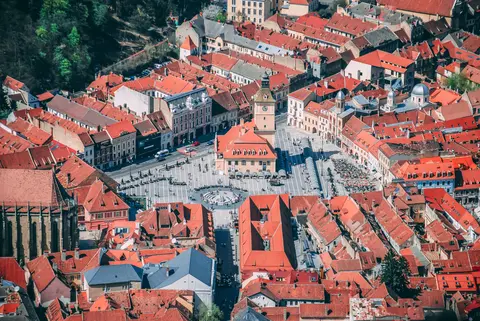
Brasov is a magnificently preserved medieval Saxon city at the foot of the Carpathian Mountains in Transylvania, home to the Gothic Black Church, fortified walls, and proximity to the legendary Bran Castle. Must-dos include exploring the Council Square, tasting sarmale and mici in the old town, and hiking in Piatra Craiului National Park. May through October offers the best weather, with autumn bringing spectacular mountain foliage.
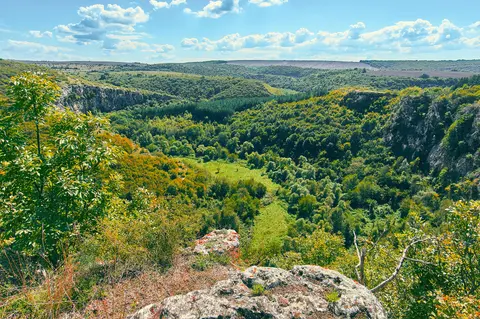
Ruse, Bulgaria's elegant Danube gateway, surprises with a Belle Époque city centre of Austro-Hungarian grandeur — neoclassical facades, ornate fountains, and a Liberty Monument that would not look out of place in Vienna. The city serves as the gateway to the spectacular Rusenski Lom Nature Park, whose limestone canyon shelters medieval rock-carved monasteries of eerie beauty. The remarkable Basarbovo Monastery, still inhabited by monks, clings to cliffs above the turquoise river. Local wineries produce distinguished Mavrud and Cabernet from the nearby Danube plains. May through September offers the most pleasant temperatures for exploration.
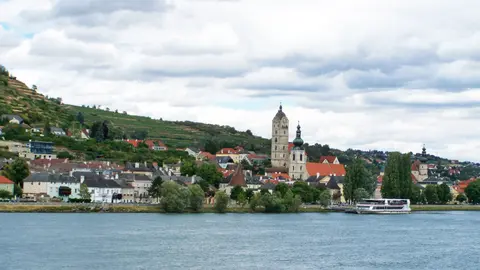
Krems an der Donau has stood at the eastern gateway of the Wachau Valley — Austria's most beautiful stretch of the Danube — since Emperor Otto III granted it market rights in 995 AD, making it one of the country's oldest documented towns. The UNESCO-listed Wachau landscape surrounding the city is a masterpiece of vineyard terraces, Baroque abbeys, and medieval castles reflected in the river; the Grüner Veltliner and Riesling wines produced here are among Austria's finest. Must-dos include visiting the monumental Melk Abbey and cycling the Danube Cycle Path through the valley. Krems is most enchanting April through October, with the harvest season in September offering wine cellar tastings of exceptional depth.
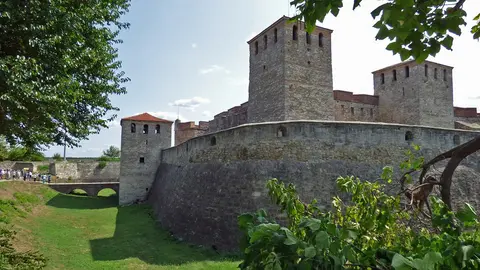
Vidin is a captivating port town on the Danube River known for its rich history, eclectic architecture, and vibrant local culture. Must-do experiences include exploring the Baba Vida Fortress and savoring local dishes like **kavarma** and **lutenitsa**. The best time to visit is during the spring and autumn months when the weather is pleasant and the local markets are bustling with activity.
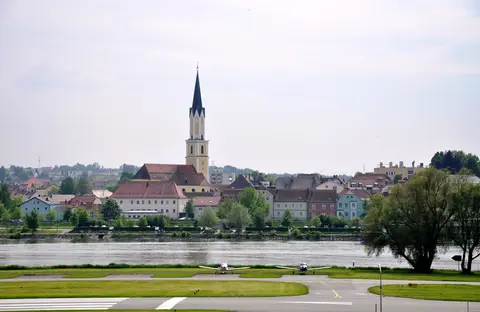
Vilshofen an der Donau is a handsome Bavarian river town where three streams converge with the Danube, its medieval market charter and Gothic Stadtturm bearing witness to eight centuries of river trade prosperity — though its most joyful claim to fame is the boisterous Vilshofen Volksfest, Bavaria's second-largest folk festival after Oktoberfest, held each June. The pastel-painted baroque townhouses and arcaded courtyards of the compact old town make for an idyllic Danube-side stroll, while the surrounding farmland and rolling hills of Lower Bavaria offer cycling routes of pastoral serenity. Summer brings the festival season; spring and autumn lend the Danube Valley its most golden and peaceful character.
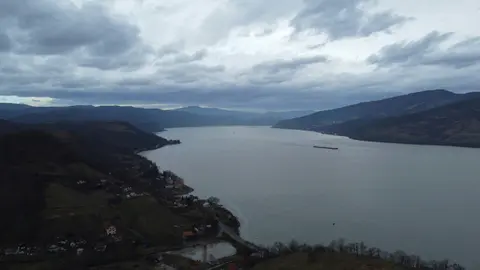
Donji Milanovac is a tranquil Serbian town on the banks of Lake Đerdap, nestled within the dramatic Iron Gates gorge of the Danube and surrounded by pristine national parkland. Visitors should not miss the Lepenski Vir archaeological site, home to seven-thousand-year-old Mesolithic sculptures, and the restored medieval fortress at nearby Golubac. The ideal time to cruise through the Iron Gates is from late May through September, when long daylight hours illuminate the gorge walls and riverside terraces invite lingering over fresh riblja čorba and local šljivovica.
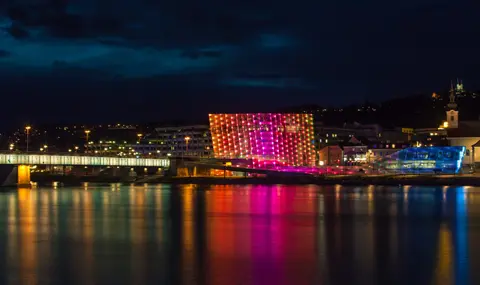
Austria's third city has accomplished one of Europe's most convincing urban transformations — reinventing itself from industrial centre to cultural powerhouse, a journey recognised in 2009 when it was named European Capital of Culture. The Ars Electronica Center, a museum of digital art and technology that glows with LED light across the Danube each evening, epitomises Linz's forward-looking identity. Yet the city's Roman roots, its baroque Hauptplatz (one of Austria's finest main squares), and its proximity to the Wachau Valley anchor it firmly in history. The Upper Austrian cuisine — particularly Linzer Torte, the world's oldest-documented cake recipe — is exceptional. Linz is most agreeable May through September.
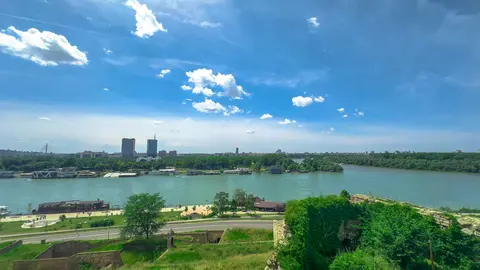
Belgrade, the 'White City' rebuilt at least forty times at the confluence of the Danube and Sava rivers, surprises every visitor with its raw, uncurated vitality — a capital that wears its turbulent history lightly while embracing the present with irresistible energy. The Kalemegdan Fortress, fortified for over two thousand years, offers the most dramatic river panorama on the entire Danube; below it, the Skadarlija cobblestone quarter fills nightly with kafana musicians and the aromas of Serbian rakija and roasted meats. Belgrade's nightlife — centered on the floating river clubs called splavovi — is genuinely legendary in Europe. Spring and early autumn offer the most comfortable conditions; the Iron Gate gorge is two hours downstream by river.
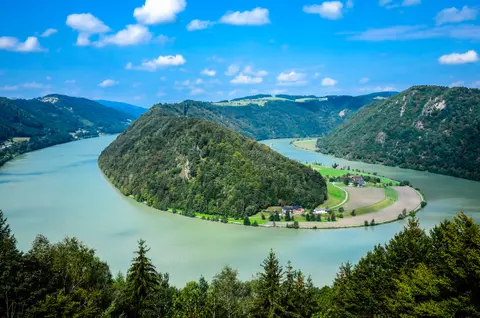
Schlögen, Austria, is a charming port town known for its breathtaking views along the Danube River and rich historical significance. Must-do experiences include savoring traditional dishes like Wiener Schnitzel and exploring nearby attractions such as Vienna and Dürnstein. The best season to visit is during the spring and summer months when the landscapes are vibrant and the local festivals are in full swing.
Day 1
Bucharest, Romania's sprawling and magnificently contradictory capital, layers Belle Époque mansions, communist-era boulevards, and a furiously creative twenty-first-century scene into a city that rewards the curious traveler who looks beyond the obvious. Ceaușescu's colossal Palace of the Parliament — the world's heaviest building and a monument to totalitarian hubris — is unmissable; equally essential is the neighborhood of Floreasca, where design studios, natural wine bars, and acclaimed restaurants have made Bucharest one of Europe's most exciting emerging food capitals. Visit April through June for the most pleasant weather. Transylvania, with Bran Castle and the medieval city of Brașov, lies two hours north through dramatic Carpathian scenery.
Day 2
Budapest, divided by the Danube into the hilly Buda of thermal baths and medieval castle lanes on one bank and the grand Pest of coffee-house culture and Art Nouveau splendor on the other, delivers the most theatrical first impression of any European capital — whether approached by river as the neo-Gothic Parliament materializes from the water or by night from the Citadella's sweep of illuminated panorama below. The city's celebrated thermal bath culture, rooted in Ottoman-era hammams and perfected in palatial Secession-era pools like the Széchenyi, is an experience entirely unlike anything else in Europe. Visit spring and autumn for comfortable temperatures; Vienna is two and a half hours west by train.
Day 3
Brasov is a magnificently preserved medieval Saxon city at the foot of the Carpathian Mountains in Transylvania, home to the Gothic Black Church, fortified walls, and proximity to the legendary Bran Castle. Must-dos include exploring the Council Square, tasting sarmale and mici in the old town, and hiking in Piatra Craiului National Park. May through October offers the best weather, with autumn bringing spectacular mountain foliage.
Day 5
Ruse, Bulgaria's elegant Danube gateway, surprises with a Belle Époque city centre of Austro-Hungarian grandeur — neoclassical facades, ornate fountains, and a Liberty Monument that would not look out of place in Vienna. The city serves as the gateway to the spectacular Rusenski Lom Nature Park, whose limestone canyon shelters medieval rock-carved monasteries of eerie beauty. The remarkable Basarbovo Monastery, still inhabited by monks, clings to cliffs above the turquoise river. Local wineries produce distinguished Mavrud and Cabernet from the nearby Danube plains. May through September offers the most pleasant temperatures for exploration.
Day 6
Krems an der Donau has stood at the eastern gateway of the Wachau Valley — Austria's most beautiful stretch of the Danube — since Emperor Otto III granted it market rights in 995 AD, making it one of the country's oldest documented towns. The UNESCO-listed Wachau landscape surrounding the city is a masterpiece of vineyard terraces, Baroque abbeys, and medieval castles reflected in the river; the Grüner Veltliner and Riesling wines produced here are among Austria's finest. Must-dos include visiting the monumental Melk Abbey and cycling the Danube Cycle Path through the valley. Krems is most enchanting April through October, with the harvest season in September offering wine cellar tastings of exceptional depth.
Vidin is a captivating port town on the Danube River known for its rich history, eclectic architecture, and vibrant local culture. Must-do experiences include exploring the Baba Vida Fortress and savoring local dishes like **kavarma** and **lutenitsa**. The best time to visit is during the spring and autumn months when the weather is pleasant and the local markets are bustling with activity.
Day 7
Vilshofen an der Donau is a handsome Bavarian river town where three streams converge with the Danube, its medieval market charter and Gothic Stadtturm bearing witness to eight centuries of river trade prosperity — though its most joyful claim to fame is the boisterous Vilshofen Volksfest, Bavaria's second-largest folk festival after Oktoberfest, held each June. The pastel-painted baroque townhouses and arcaded courtyards of the compact old town make for an idyllic Danube-side stroll, while the surrounding farmland and rolling hills of Lower Bavaria offer cycling routes of pastoral serenity. Summer brings the festival season; spring and autumn lend the Danube Valley its most golden and peaceful character.
Donji Milanovac is a tranquil Serbian town on the banks of Lake Đerdap, nestled within the dramatic Iron Gates gorge of the Danube and surrounded by pristine national parkland. Visitors should not miss the Lepenski Vir archaeological site, home to seven-thousand-year-old Mesolithic sculptures, and the restored medieval fortress at nearby Golubac. The ideal time to cruise through the Iron Gates is from late May through September, when long daylight hours illuminate the gorge walls and riverside terraces invite lingering over fresh riblja čorba and local šljivovica.
Austria's third city has accomplished one of Europe's most convincing urban transformations — reinventing itself from industrial centre to cultural powerhouse, a journey recognised in 2009 when it was named European Capital of Culture. The Ars Electronica Center, a museum of digital art and technology that glows with LED light across the Danube each evening, epitomises Linz's forward-looking identity. Yet the city's Roman roots, its baroque Hauptplatz (one of Austria's finest main squares), and its proximity to the Wachau Valley anchor it firmly in history. The Upper Austrian cuisine — particularly Linzer Torte, the world's oldest-documented cake recipe — is exceptional. Linz is most agreeable May through September.
Day 8
Belgrade, the 'White City' rebuilt at least forty times at the confluence of the Danube and Sava rivers, surprises every visitor with its raw, uncurated vitality — a capital that wears its turbulent history lightly while embracing the present with irresistible energy. The Kalemegdan Fortress, fortified for over two thousand years, offers the most dramatic river panorama on the entire Danube; below it, the Skadarlija cobblestone quarter fills nightly with kafana musicians and the aromas of Serbian rakija and roasted meats. Belgrade's nightlife — centered on the floating river clubs called splavovi — is genuinely legendary in Europe. Spring and early autumn offer the most comfortable conditions; the Iron Gate gorge is two hours downstream by river.
Schlögen, Austria, is a charming port town known for its breathtaking views along the Danube River and rich historical significance. Must-do experiences include savoring traditional dishes like Wiener Schnitzel and exploring nearby attractions such as Vienna and Dürnstein. The best season to visit is during the spring and summer months when the landscapes are vibrant and the local festivals are in full swing.
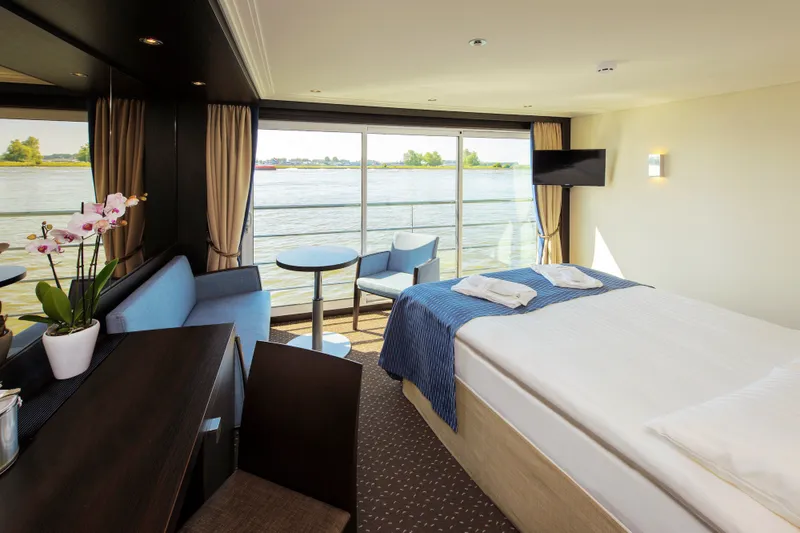
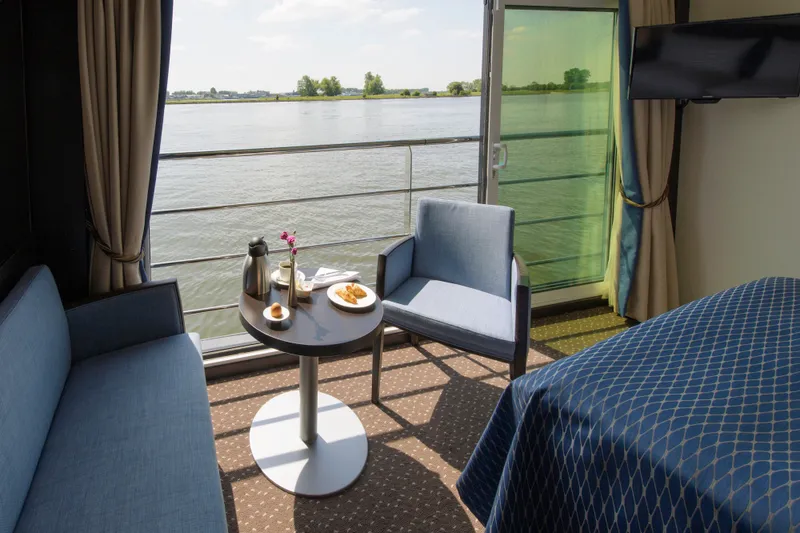
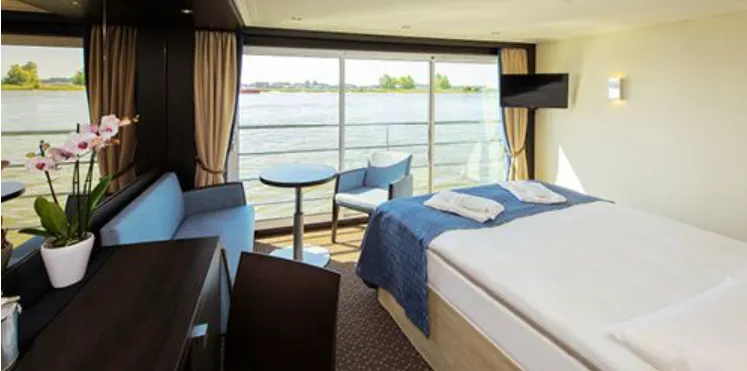
Stateroom Features:
Comfort Collection Beds
Luxurious mattress toppers
Egyptian super-combed cotton linens
European-style duvets
Soft & firm pillows
Extra blankets
Choice of bed configuration
Nightly turn-down service
Bedside tables with reading lamps
Premium Hairdryer
L'Occitane bath products
Spacious 3-door closets with shelves for ample storage
Easy under-bed luggage storage
Flatscreen satellite TV with English-speaking channels & over 100 free movie options
Alarm clock
Make-up mirror
Direct-dial telephone
Bathrobes & slippers
Well-stocked minibar
Complimentary filtered water
In-room safe
Individual climate control
Elegant, contemporary design
Large mirror in bathroom
Marble countertops in bathroom
Wall-to-Wall Panoramic Window with Open-Air Balcony
6-person sitting area
Full shower with glass door
Writing desk and chair
Lighted makeup mirror
Sofa
Coffee table
Complimentary Wi-Fi
One Queen-Sized Bed or Two Twins
USB Ports
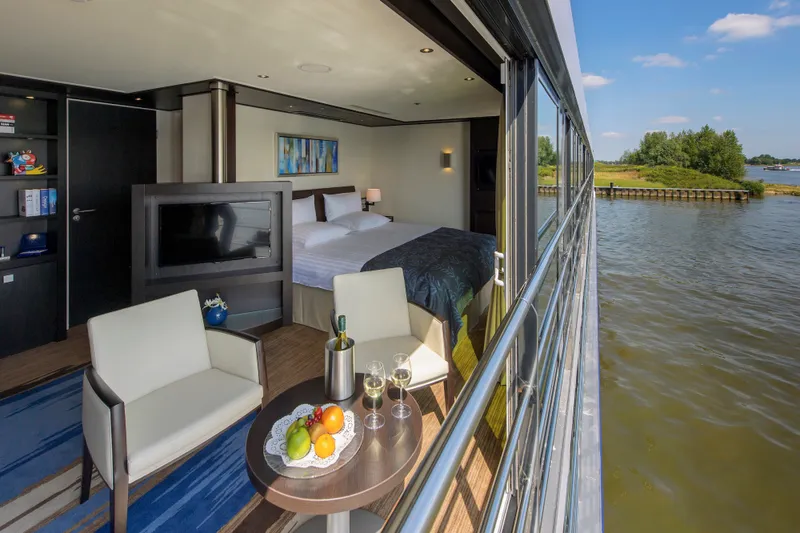
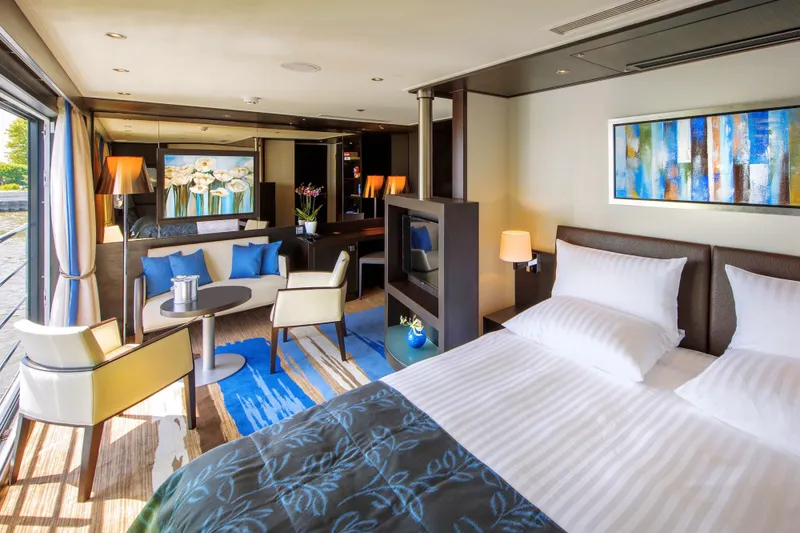
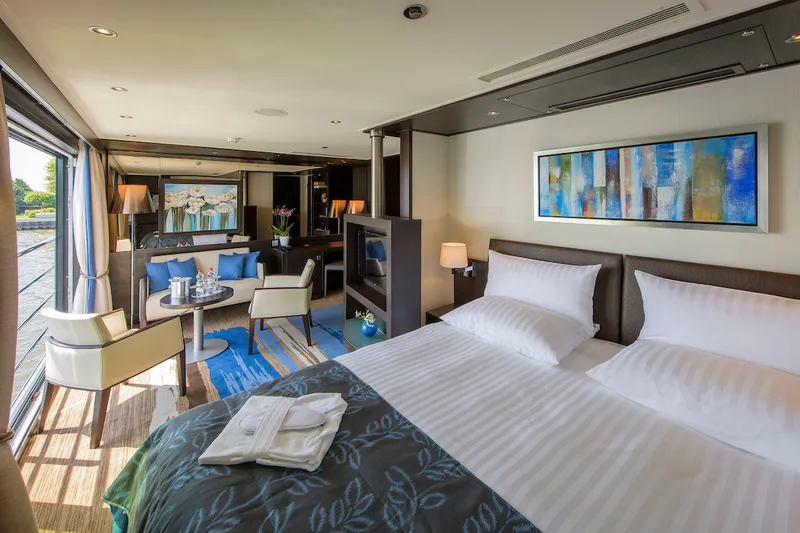
Comfort Collection Beds
European-style duvets
Soft & firm pillows
Extra blankets
Choice of bed configuration
Easy under-bed luggage storage
Flatscreen satellite TV with English-speaking channels & over 100 free movie options
Direct-dial telephone
Well-stocked minibar
Complimentary water
In-room safe
Marble countertops in bathroom
Wall-to-Wall Panoramic Window with Open-Air Balcony
6-person sitting area
Writing desk and chair
Sofa
Complimentary Wi-Fi
One King-Sized Bed or Two Twins
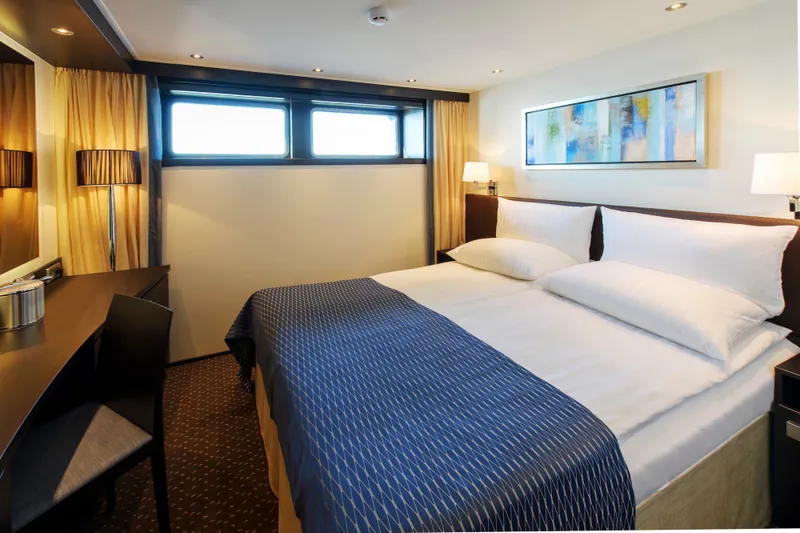
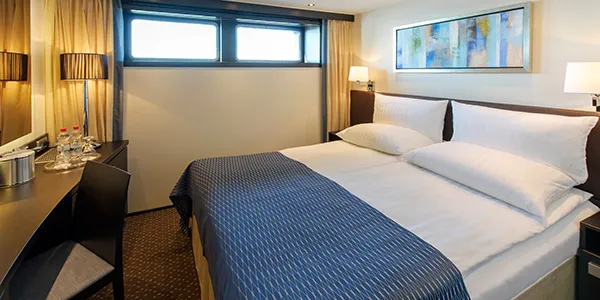
Stateroom Features:
Comfort Collection Beds
Luxurious mattress toppers
Egyptian super-combed cotton linens
European-style duvets
Soft & firm pillows
Extra blankets
Choice of bed configuration
Nightly turn-down service
Bedside tables with reading lamps
Premium Hairdryer
L'Occitane bath products
Spacious 3-door closets with shelves for ample storage
Easy under-bed luggage storage
Flatscreen satellite TV with English-speaking channels & over 100 free movie options
Alarm clock
Make-up mirror
Direct-dial telephone
Bathrobes & slippers
Well-stocked minibar
Complimentary filtered water
In-room safe
Individual climate control
Elegant, contemporary design
Large mirror in bathroom
Marble countertops in bathroom
Wall-to-Wall Panoramic Window with Open-Air Balcony
6-person sitting area
Full shower with glass door
Writing desk and chair
Lighted makeup mirror
Sofa
Coffee table
Complimentary Wi-Fi
One Queen-Sized Bed or Two Twins
USB Ports
Our cruise specialists can help you find the perfect cabin and the best available pricing.
(+886) 02-2721-7300Contact Advisor