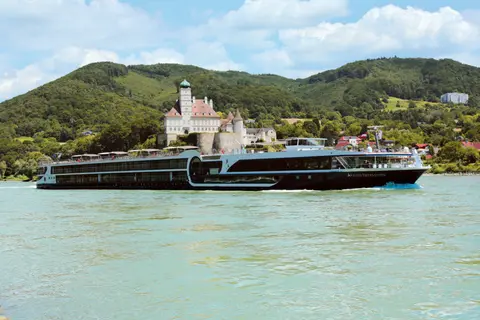
Avalon Waterways70517
Illuminations on the Danube with 2 Nights in Prague (Eastbound)
Date
2027-05-17
Duration
9 nights
Departure Port
Prague
Czech Republic
Arrival Port
Budapest
Hungary
Rating
Luxury
Theme
History & Culture
Date
2027-05-17
Duration
9 nights
Departure Port
Prague
Czech Republic
Arrival Port
Budapest
Hungary
Rating
Luxury
Theme
History & Culture

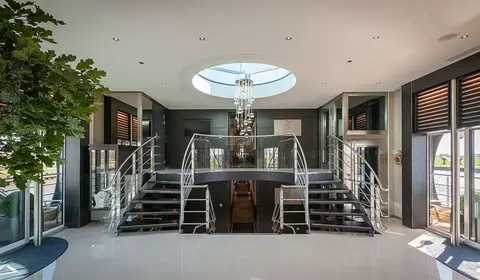
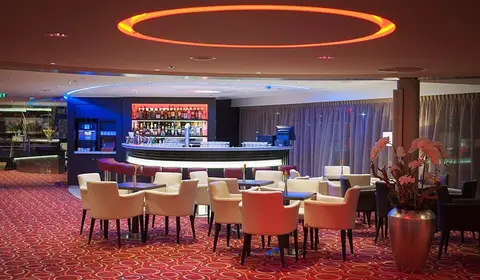
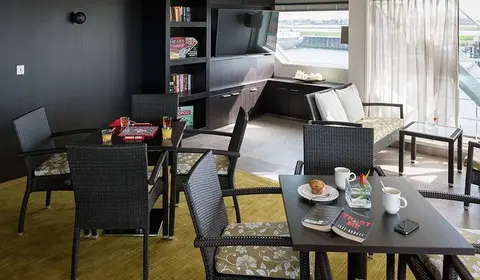
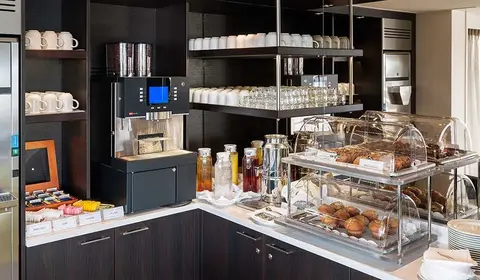
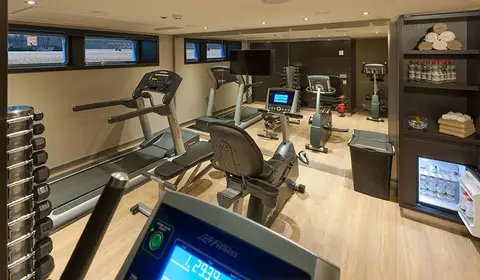
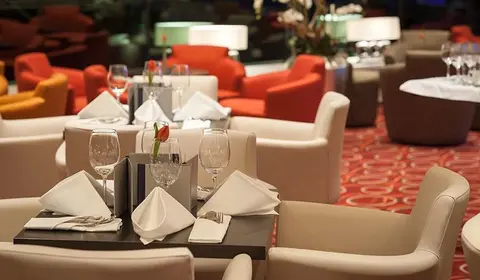
Avalon Waterways
Suite Ship
2014
—
2,775 GT
166
83
47
443 m
12 m
12 knots
No
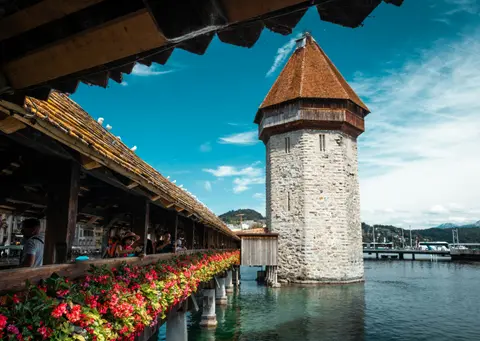
Framed by snowcapped Alps and the mirror-bright waters of Lake Lucerne, this medieval Swiss gem centres on the 14th-century Kapellbrücke — one of Europe's oldest covered bridges — and a colourful Altstadt that has changed little in five centuries. Ride the cog railway to cloud-wreathed Mount Pilatus, savour Älplermagronen in a timber-beamed tavern, and explore the nearby wonders of Interlaken and Grindelwald. Late spring through early autumn offers the most spectacular lake reflections and settled mountain weather.
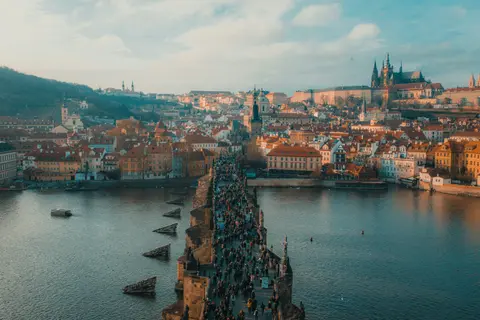
The port of Prague is a vibrant gateway to Central Europe, renowned for its stunning architecture, rich history, and culinary delights. Must-do experiences include savoring traditional dishes like svíčková and exploring the charming streets of Český Krumlov. The best time to visit is during spring or early fall when the weather is pleasant and the city is alive with cultural festivals.
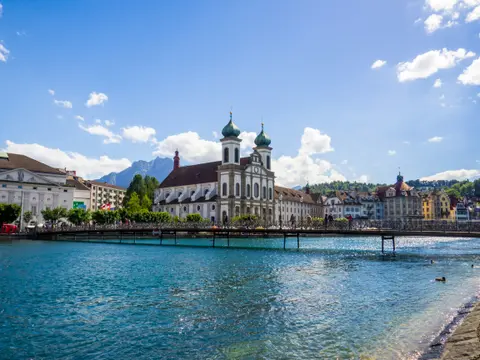
Framed by snowcapped Alps and the mirror-bright waters of Lake Lucerne, this medieval Swiss gem centres on the 14th-century Kapellbrücke — one of Europe's oldest covered bridges — and a colourful Altstadt that has changed little in five centuries. Ride the cog railway to cloud-wreathed Mount Pilatus, savour Älplermagronen in a timber-beamed tavern, and explore the nearby wonders of Interlaken and Grindelwald. Late spring through early autumn offers the most spectacular lake reflections and settled mountain weather.
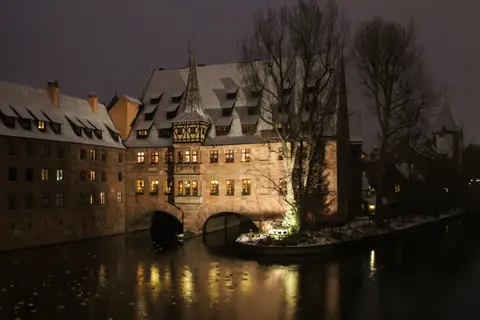
Nuremberg commands the imagination on two levels: as the glittering medieval city where Holy Roman Emperors held court, Albrecht Dürer was born, and craftsmen produced the first pocket watch — and as the site of the 20th century's darkest chapter, where Nazi rallies and subsequent war crimes trials left permanent marks on European history and conscience. The Kaiserburg castle crowning the hill above the perfectly preserved old town offers sweeping views of a cityscape that, despite wartime bombing, remains one of Germany's most beautiful. The Documentation Centre on the former Nazi Rally Grounds is essential, sobering history; the Christmas Market on the Hauptmarkt, held since 1628, is among Europe's finest. Visit May through October or December.
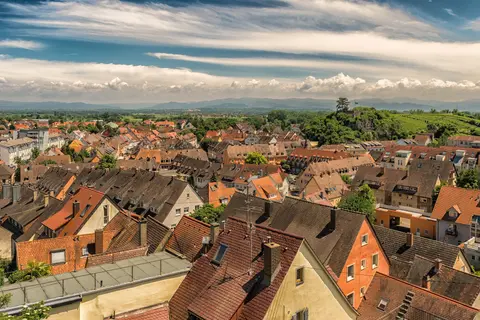
Breisach am Rhein clings to a volcanic hilltop at the French-German border, commanding the Upper Rhine crossing that made it one of the most fought-over towns in European history — a past the Romanesque-Gothic Münster St. Stephan surveys serenely from its commanding heights. Today peace reigns, and Breisach's true gift is its position as a gateway to three celebrated wine regions: the German Kaiserstuhl, producing some of Germany's finest Spätburgunder; the French Alsace, just across the Rhine; and the rolling hills of the Baden wine country to the east. Visit in autumn for harvest season across all three regions simultaneously. Freiburg im Breisgau, the Black Forest's graceful capital, lies twenty minutes east.
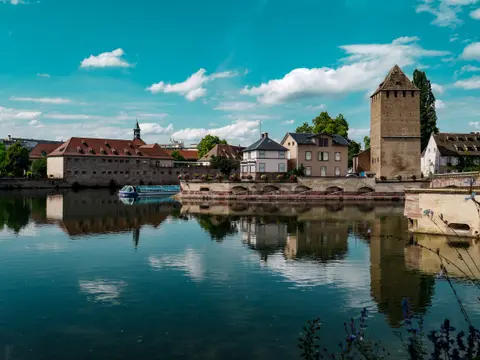
Strasbourg is one of Europe's great border cities, its Franco-German soul etched into every half-timbered façade of the UNESCO-listed Grande Île and every turret of the soaring rose-sandstone cathedral that reigned as the world's tallest building for over two centuries. As the seat of the European Parliament and home to the European Court of Human Rights, this sophisticated Alsatian capital savors outstanding Riesling and choucroute garnie with equal Continental pride. The city dazzles year-round, though December's legendary Christmas market — among the oldest in Europe — transforms its medieval squares into an enchanted winter spectacle.
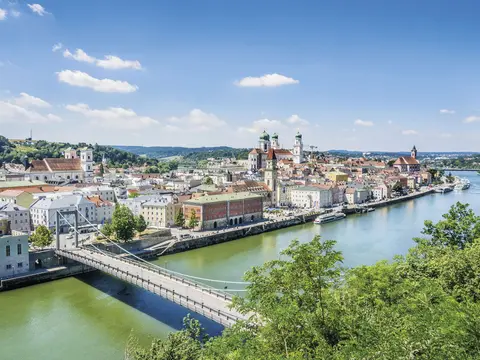
Passau occupies one of Central Europe's most dramatic natural stages — a narrow peninsula at the confluence of three rivers, the Danube, Inn, and Ilz, where the old town's baroque spires and shuttered merchants' houses crowd the very tip of the land between the waters. St. Stephen's Cathedral houses the world's largest church organ, a 17,974-pipe instrument whose daily concerts fill the nave with a sound that seems architectural in its density. The Veste Oberhaus fortress above the city commands panoramic views across three countries on clear days. Passau is a classic Danube river cruise departure point; spring and early autumn, when the river runs high and the light turns golden, are the finest seasons.
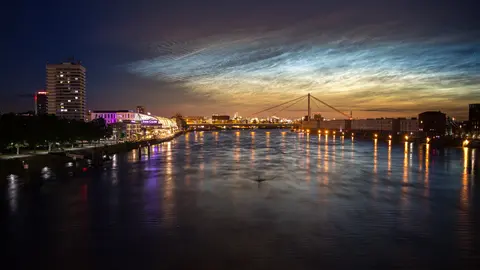
Ludwigshafen am Rhein was founded by Bavarian royal ambition in 1843 and grew rapidly into one of Germany's great industrial cities — home to BASF, the world's largest chemical company, whose vast campus stretches along the Rhine for kilometres. Though industrial in character, Ludwigshafen occupies a prime Rhine valley position that places it within easy reach of Heidelberg, Germany's most romantic university city, and the rolling vineyards of the Palatinate wine region. The Kunstmuseum Ludwigshafen houses a noteworthy collection of contemporary art. Ludwigshafen is a year-round river cruise port, though May through October offers the most pleasant conditions for excursions into the surrounding wine country.
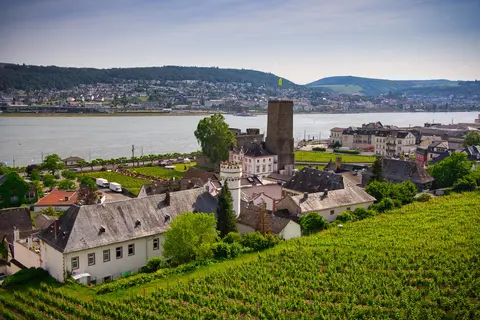
Rüdesheim am Rhein, a jewel of the UNESCO-listed Upper Middle Rhine Valley, is where Germany's most storied wine river cuts through vine-terraced slopes and medieval castle ruins. The pedestrianised Drosselgasse laneway — beloved since the Romantic era — hums with wine taverns pouring the region's celebrated Rieslings, crisp and mineral from the slate soils. The Niederwald Monument surveys the river from the heights, reached by cable car above the vineyards. Day trips by boat unlock Bacharach, Boppard, and the legendary Lorelei rock. September's harvest festivals transform the entire valley into a convivial celebration of the vintage.
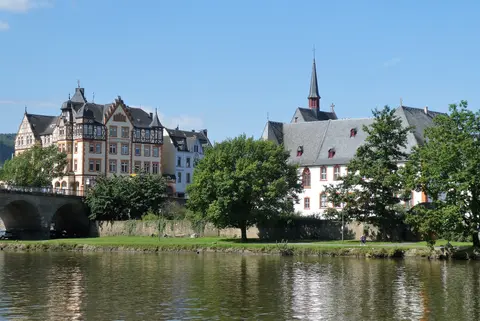
Bernkastel-Kues, the twin town straddling the Moselle, has been synonymous with Riesling for six centuries — home to the legendary Bernkasteler Doctor vineyard, whose precipitous south-facing slope has produced wines of such renown that a single hectare once sold for a record price. The Marktplatz, virtually unchanged since the seventeenth century, is Germany's most photogenic half-timbered market square: a stage-set of crooked facades and flower-hung balconies best appreciated over a glass of Spätlese in the late afternoon light. September brings the annual Moselle Wine Festival to the riverbanks. Trier, Germany's oldest city with its spectacular Roman amphitheatre, lies forty minutes upstream.
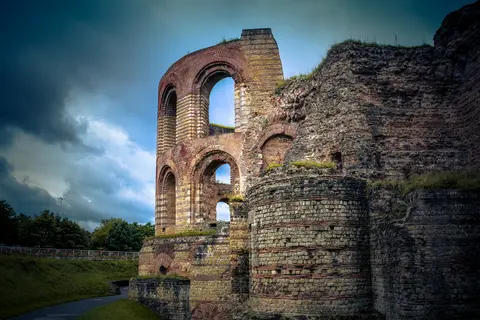
Trier is Germany's oldest city and once the northern capital of the Western Roman Empire, its incomparable UNESCO-listed ensemble of monuments — the blackened Porta Nigra gate, the vast Imperial Baths, the Amphitheater, and a Roman bridge still carrying traffic across the Moselle — more than justifying the title 'Rome of the North.' The birthplace of Karl Marx and a gateway to the Moselle wine region's elegant Riesling estates, Trier rewards a long visit with layers of history spanning two millennia within an effortlessly walkable historic center. The summer months from May to September are ideal, when Moselle Valley vineyard terraces gleam in full-leafed splendor.
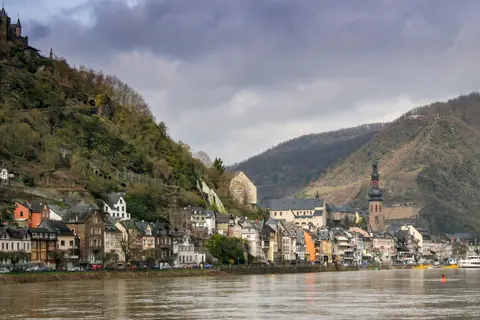
The Reichsburg Cochem — a turreted fairy-tale castle presiding over a loop of the Moselle River — is among Germany's most photogenic medieval fortresses, its silhouette rising above terraced vineyards of ancient Riesling vines. The town below offers a charming ensemble of half-timbered houses, wine-cellar tastings, and cycle paths threading through valley landscapes that have barely changed in centuries. Arrive in September for the harvest festival, when the whole town smells of fermenting Riesling, or choose May for blossom-framed panoramas and long golden evenings on the riverside terraces.
Day 1
Framed by snowcapped Alps and the mirror-bright waters of Lake Lucerne, this medieval Swiss gem centres on the 14th-century Kapellbrücke — one of Europe's oldest covered bridges — and a colourful Altstadt that has changed little in five centuries. Ride the cog railway to cloud-wreathed Mount Pilatus, savour Älplermagronen in a timber-beamed tavern, and explore the nearby wonders of Interlaken and Grindelwald. Late spring through early autumn offers the most spectacular lake reflections and settled mountain weather.
Day 3
The port of Prague is a vibrant gateway to Central Europe, renowned for its stunning architecture, rich history, and culinary delights. Must-do experiences include savoring traditional dishes like svíčková and exploring the charming streets of Český Krumlov. The best time to visit is during spring or early fall when the weather is pleasant and the city is alive with cultural festivals.
Framed by snowcapped Alps and the mirror-bright waters of Lake Lucerne, this medieval Swiss gem centres on the 14th-century Kapellbrücke — one of Europe's oldest covered bridges — and a colourful Altstadt that has changed little in five centuries. Ride the cog railway to cloud-wreathed Mount Pilatus, savour Älplermagronen in a timber-beamed tavern, and explore the nearby wonders of Interlaken and Grindelwald. Late spring through early autumn offers the most spectacular lake reflections and settled mountain weather.
Day 4
Nuremberg commands the imagination on two levels: as the glittering medieval city where Holy Roman Emperors held court, Albrecht Dürer was born, and craftsmen produced the first pocket watch — and as the site of the 20th century's darkest chapter, where Nazi rallies and subsequent war crimes trials left permanent marks on European history and conscience. The Kaiserburg castle crowning the hill above the perfectly preserved old town offers sweeping views of a cityscape that, despite wartime bombing, remains one of Germany's most beautiful. The Documentation Centre on the former Nazi Rally Grounds is essential, sobering history; the Christmas Market on the Hauptmarkt, held since 1628, is among Europe's finest. Visit May through October or December.
Breisach am Rhein clings to a volcanic hilltop at the French-German border, commanding the Upper Rhine crossing that made it one of the most fought-over towns in European history — a past the Romanesque-Gothic Münster St. Stephan surveys serenely from its commanding heights. Today peace reigns, and Breisach's true gift is its position as a gateway to three celebrated wine regions: the German Kaiserstuhl, producing some of Germany's finest Spätburgunder; the French Alsace, just across the Rhine; and the rolling hills of the Baden wine country to the east. Visit in autumn for harvest season across all three regions simultaneously. Freiburg im Breisgau, the Black Forest's graceful capital, lies twenty minutes east.
Day 5
Strasbourg is one of Europe's great border cities, its Franco-German soul etched into every half-timbered façade of the UNESCO-listed Grande Île and every turret of the soaring rose-sandstone cathedral that reigned as the world's tallest building for over two centuries. As the seat of the European Parliament and home to the European Court of Human Rights, this sophisticated Alsatian capital savors outstanding Riesling and choucroute garnie with equal Continental pride. The city dazzles year-round, though December's legendary Christmas market — among the oldest in Europe — transforms its medieval squares into an enchanted winter spectacle.
Day 6
Passau occupies one of Central Europe's most dramatic natural stages — a narrow peninsula at the confluence of three rivers, the Danube, Inn, and Ilz, where the old town's baroque spires and shuttered merchants' houses crowd the very tip of the land between the waters. St. Stephen's Cathedral houses the world's largest church organ, a 17,974-pipe instrument whose daily concerts fill the nave with a sound that seems architectural in its density. The Veste Oberhaus fortress above the city commands panoramic views across three countries on clear days. Passau is a classic Danube river cruise departure point; spring and early autumn, when the river runs high and the light turns golden, are the finest seasons.
Ludwigshafen am Rhein was founded by Bavarian royal ambition in 1843 and grew rapidly into one of Germany's great industrial cities — home to BASF, the world's largest chemical company, whose vast campus stretches along the Rhine for kilometres. Though industrial in character, Ludwigshafen occupies a prime Rhine valley position that places it within easy reach of Heidelberg, Germany's most romantic university city, and the rolling vineyards of the Palatinate wine region. The Kunstmuseum Ludwigshafen houses a noteworthy collection of contemporary art. Ludwigshafen is a year-round river cruise port, though May through October offers the most pleasant conditions for excursions into the surrounding wine country.
Day 7
Rüdesheim am Rhein, a jewel of the UNESCO-listed Upper Middle Rhine Valley, is where Germany's most storied wine river cuts through vine-terraced slopes and medieval castle ruins. The pedestrianised Drosselgasse laneway — beloved since the Romantic era — hums with wine taverns pouring the region's celebrated Rieslings, crisp and mineral from the slate soils. The Niederwald Monument surveys the river from the heights, reached by cable car above the vineyards. Day trips by boat unlock Bacharach, Boppard, and the legendary Lorelei rock. September's harvest festivals transform the entire valley into a convivial celebration of the vintage.
Day 8
Bernkastel-Kues, the twin town straddling the Moselle, has been synonymous with Riesling for six centuries — home to the legendary Bernkasteler Doctor vineyard, whose precipitous south-facing slope has produced wines of such renown that a single hectare once sold for a record price. The Marktplatz, virtually unchanged since the seventeenth century, is Germany's most photogenic half-timbered market square: a stage-set of crooked facades and flower-hung balconies best appreciated over a glass of Spätlese in the late afternoon light. September brings the annual Moselle Wine Festival to the riverbanks. Trier, Germany's oldest city with its spectacular Roman amphitheatre, lies forty minutes upstream.
Day 9
Trier is Germany's oldest city and once the northern capital of the Western Roman Empire, its incomparable UNESCO-listed ensemble of monuments — the blackened Porta Nigra gate, the vast Imperial Baths, the Amphitheater, and a Roman bridge still carrying traffic across the Moselle — more than justifying the title 'Rome of the North.' The birthplace of Karl Marx and a gateway to the Moselle wine region's elegant Riesling estates, Trier rewards a long visit with layers of history spanning two millennia within an effortlessly walkable historic center. The summer months from May to September are ideal, when Moselle Valley vineyard terraces gleam in full-leafed splendor.
Day 10
The Reichsburg Cochem — a turreted fairy-tale castle presiding over a loop of the Moselle River — is among Germany's most photogenic medieval fortresses, its silhouette rising above terraced vineyards of ancient Riesling vines. The town below offers a charming ensemble of half-timbered houses, wine-cellar tastings, and cycle paths threading through valley landscapes that have barely changed in centuries. Arrive in September for the harvest festival, when the whole town smells of fermenting Riesling, or choose May for blossom-framed panoramas and long golden evenings on the riverside terraces.
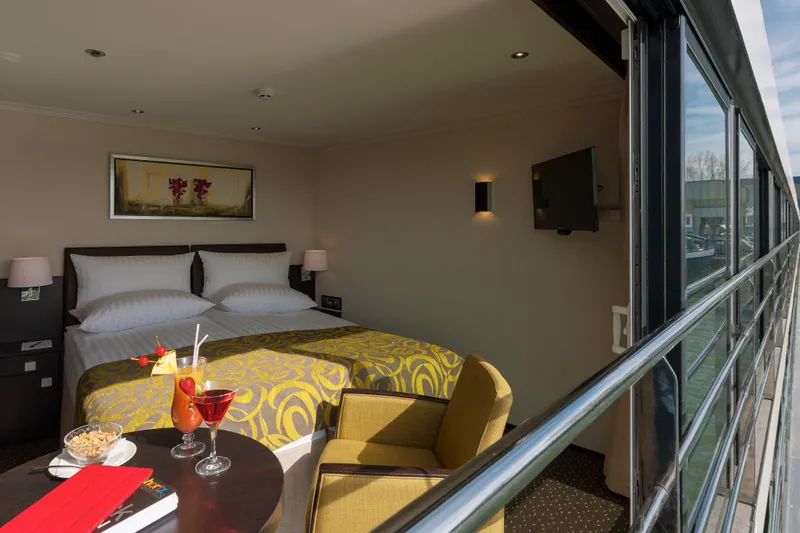
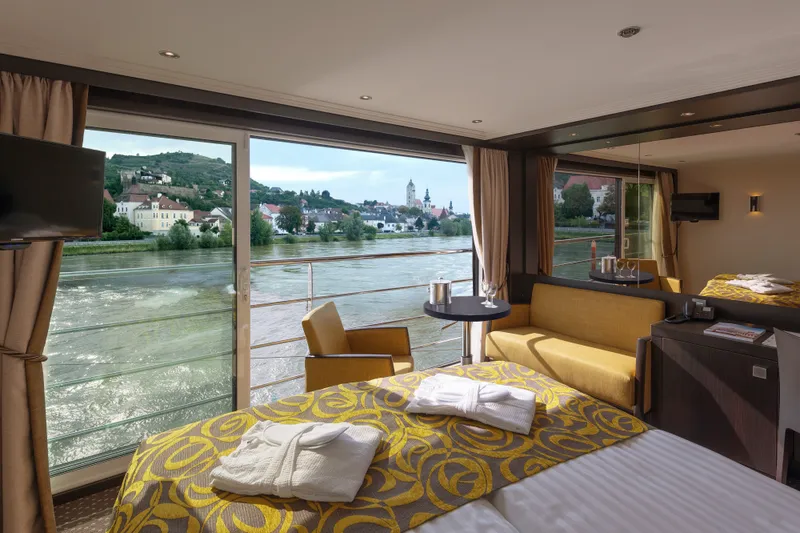
Stateroom Features:
Comfort Collection Beds
Luxurious mattress toppers
Egyptian super-combed cotton linens
European-style duvets
Soft & firm pillows
Extra blankets
Choice of bed configuration
Nightly turn-down service
Bedside tables with reading lamps
Premium Hairdryer
L'Occitane bath products
Spacious 3-door closets with shelves for ample storage
Easy under-bed luggage storage
Flatscreen satellite TV with English-speaking channels & over 100 free movie options
Alarm clock
Direct-dial telephone
Bathrobes & slippers
Well-stocked minibar
Complimentary filtered water
In-room safe
Individual climate control
Elegant, contemporary design
Large mirror in bathroom
Two windows
Full shower with glass door
Writing desk and chair
Lighted makeup mirror
Complimentary Wi-Fi
One Queen-Sized Bed or Two Twins
USB Ports
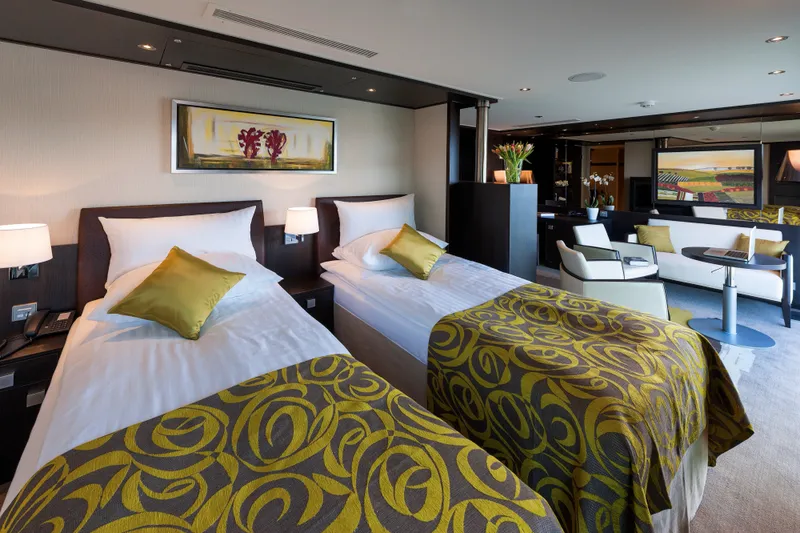
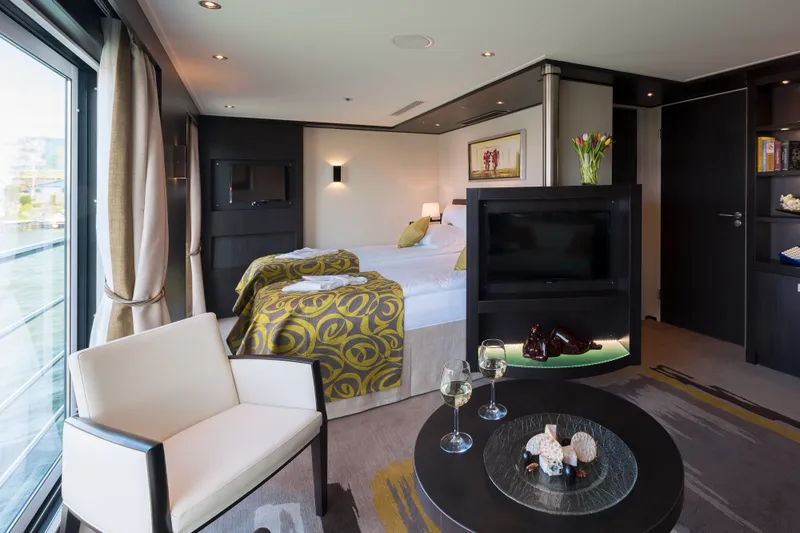
Stateroom Features:
Comfort Collection Beds
Luxurious mattress toppers
Egyptian super-combed cotton linens
European-style duvets
Soft & firm pillows
Extra blankets
Choice of bed configuration
Nightly turn-down service
Bedside tables with reading lamps
Premium Hairdryer
L'Occitane bath products
Spacious 3-door closets with shelves for ample storage
Easy under-bed luggage storage
Flatscreen satellite TV with English-speaking channels & over 100 free movie options
Alarm clock
Direct-dial telephone
Bathrobes & slippers
Well-stocked minibar
Complimentary filtered water
In-room safe
Individual climate control
Elegant, contemporary design
Large mirror in bathroom
Two windows
Full shower with glass door
Writing desk and chair
Lighted makeup mirror
Complimentary Wi-Fi
One Queen-Sized Bed or Two Twins
USB Ports
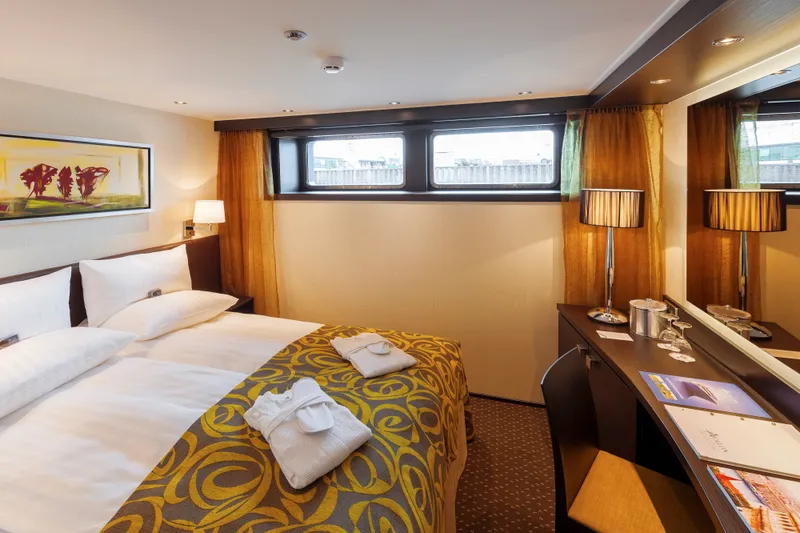
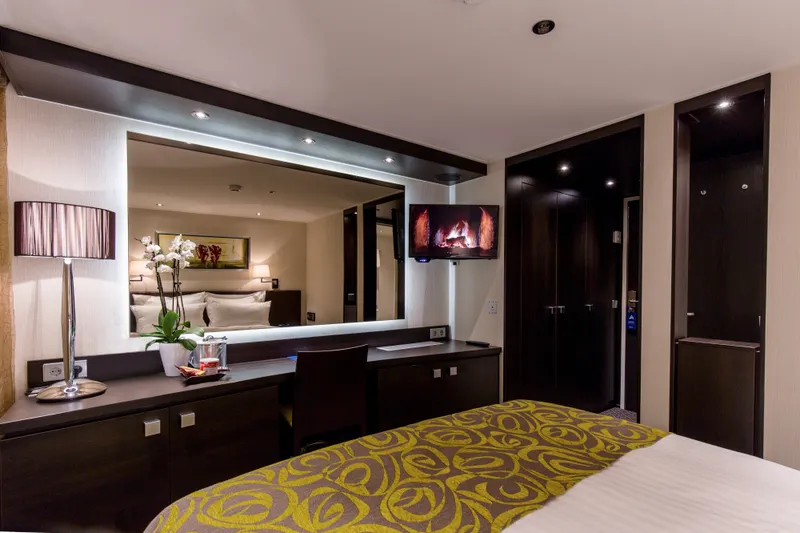
Stateroom Features:
Comfort Collection Beds
Luxurious mattress toppers
Egyptian super-combed cotton linens
European-style duvets
Soft & firm pillows
Extra blankets
Choice of bed configuration
Nightly turn-down service
Bedside tables with reading lamps
Premium Hairdryer
L'Occitane bath products
Spacious 3-door closets with shelves for ample storage
Easy under-bed luggage storage
Flatscreen satellite TV with English-speaking channels & over 100 free movie options
Alarm clock
Direct-dial telephone
Bathrobes & slippers
Well-stocked minibar
Complimentary filtered water
In-room safe
Individual climate control
Elegant, contemporary design
Large mirror in bathroom
Two windows
Full shower with glass door
Writing desk and chair
Lighted makeup mirror
Complimentary Wi-Fi
One Queen-Sized Bed or Two Twins
USB Ports
Our cruise specialists can help you find the perfect cabin and the best available pricing.
(+886) 02-2721-7300Contact Advisor