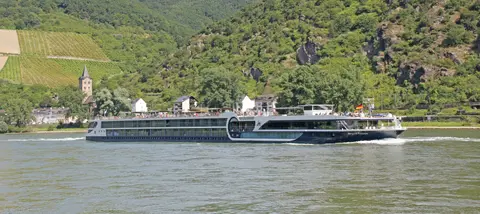
Avalon Waterways60912
The Danube from Romania to Budapest with 1 Night in Bucharest
Date
2026-09-12
Duration
8 nights
Departure Port
Bucharest
Romania
Arrival Port
Budapest
Hungary
Rating
Luxury
Theme
History & Culture
Date
2026-09-12
Duration
8 nights
Departure Port
Bucharest
Romania
Arrival Port
Budapest
Hungary
Rating
Luxury
Theme
History & Culture




Avalon Waterways
Suite Ship
2016
—
2,775 GT
166
83
47
443 m
12 m
12 knots
No
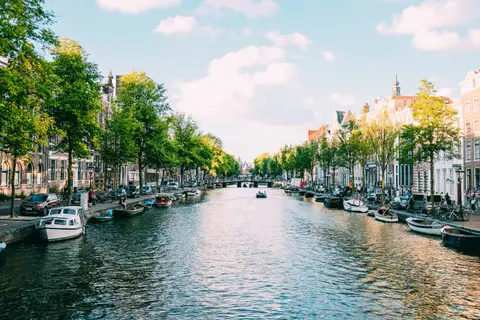
Amsterdam's UNESCO-listed canal ring — a concentric web of seventeenth-century merchant houses and arching stone bridges — remains one of the Western world's most perfectly preserved Golden Age cityscapes, best explored by bicycle or canal boat at a pace that lets the city's genius reveal itself slowly. The Rijksmuseum's collection of Rembrandt and Vermeer masterpieces is essential, while the Anne Frank House offers one of Europe's most profoundly moving historical encounters. Spring brings the iconic tulip season; summer fills the terraces of the Jordaan district. Schiphol Airport makes Amsterdam a seamless gateway to the entire European continent.
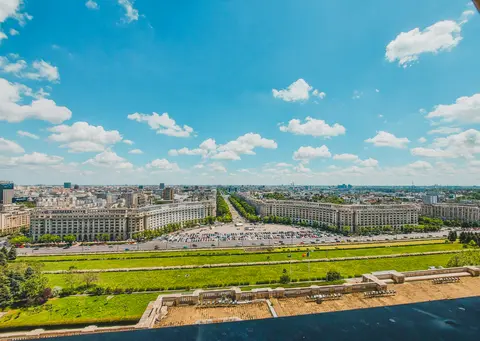
Bucharest, Romania's sprawling and magnificently contradictory capital, layers Belle Époque mansions, communist-era boulevards, and a furiously creative twenty-first-century scene into a city that rewards the curious traveler who looks beyond the obvious. Ceaușescu's colossal Palace of the Parliament — the world's heaviest building and a monument to totalitarian hubris — is unmissable; equally essential is the neighborhood of Floreasca, where design studios, natural wine bars, and acclaimed restaurants have made Bucharest one of Europe's most exciting emerging food capitals. Visit April through June for the most pleasant weather. Transylvania, with Bran Castle and the medieval city of Brașov, lies two hours north through dramatic Carpathian scenery.
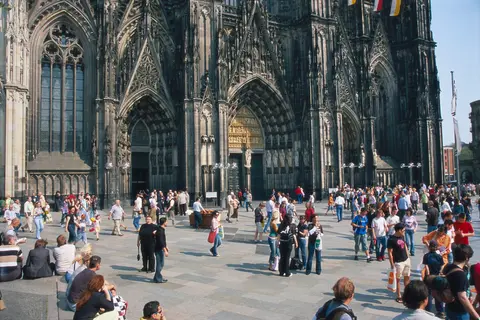
Cologne's twin-spired Gothic cathedral, six hundred years in the building and still the city's defining monument, is the inevitable starting point — but this ancient Rhine city rewards exploration well beyond its iconic silhouette. The Romano-Germanic Museum reveals the city's Roman foundations, while the Chocolate Museum on the riverbank offers a distinctly sweeter history lesson. Cologne's famed Kölsch beer culture thrives in the old town's traditional brew-houses, where one round follows another in centuries-old wooden halls. The city is welcoming year-round, though the legendary Christmas markets (November–December) attract visitors from across Europe.
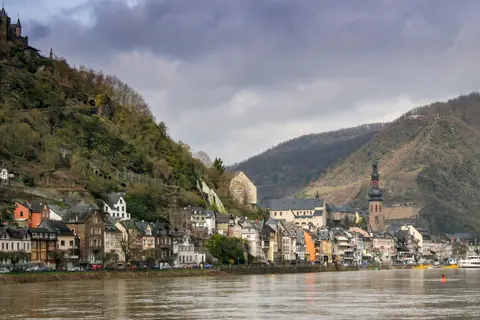
The Reichsburg Cochem — a turreted fairy-tale castle presiding over a loop of the Moselle River — is among Germany's most photogenic medieval fortresses, its silhouette rising above terraced vineyards of ancient Riesling vines. The town below offers a charming ensemble of half-timbered houses, wine-cellar tastings, and cycle paths threading through valley landscapes that have barely changed in centuries. Arrive in September for the harvest festival, when the whole town smells of fermenting Riesling, or choose May for blossom-framed panoramas and long golden evenings on the riverside terraces.
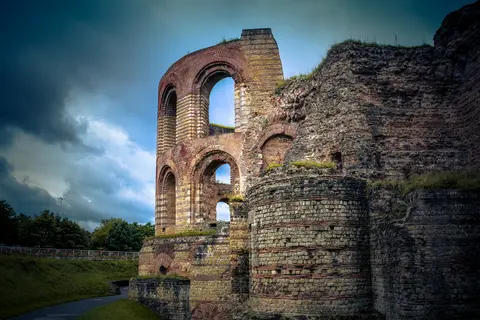
Trier is Germany's oldest city and once the northern capital of the Western Roman Empire, its incomparable UNESCO-listed ensemble of monuments — the blackened Porta Nigra gate, the vast Imperial Baths, the Amphitheater, and a Roman bridge still carrying traffic across the Moselle — more than justifying the title 'Rome of the North.' The birthplace of Karl Marx and a gateway to the Moselle wine region's elegant Riesling estates, Trier rewards a long visit with layers of history spanning two millennia within an effortlessly walkable historic center. The summer months from May to September are ideal, when Moselle Valley vineyard terraces gleam in full-leafed splendor.
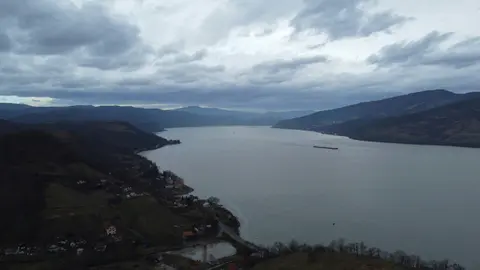
Donji Milanovac is a tranquil Serbian town on the banks of Lake Đerdap, nestled within the dramatic Iron Gates gorge of the Danube and surrounded by pristine national parkland. Visitors should not miss the Lepenski Vir archaeological site, home to seven-thousand-year-old Mesolithic sculptures, and the restored medieval fortress at nearby Golubac. The ideal time to cruise through the Iron Gates is from late May through September, when long daylight hours illuminate the gorge walls and riverside terraces invite lingering over fresh riblja čorba and local šljivovica.
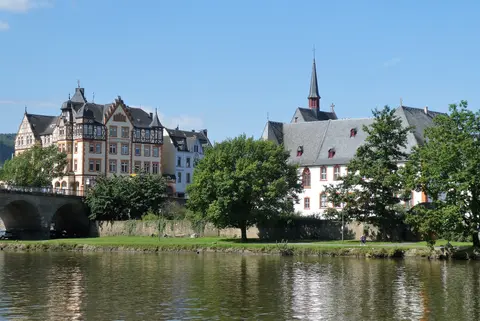
Bernkastel-Kues, the twin town straddling the Moselle, has been synonymous with Riesling for six centuries — home to the legendary Bernkasteler Doctor vineyard, whose precipitous south-facing slope has produced wines of such renown that a single hectare once sold for a record price. The Marktplatz, virtually unchanged since the seventeenth century, is Germany's most photogenic half-timbered market square: a stage-set of crooked facades and flower-hung balconies best appreciated over a glass of Spätlese in the late afternoon light. September brings the annual Moselle Wine Festival to the riverbanks. Trier, Germany's oldest city with its spectacular Roman amphitheatre, lies forty minutes upstream.
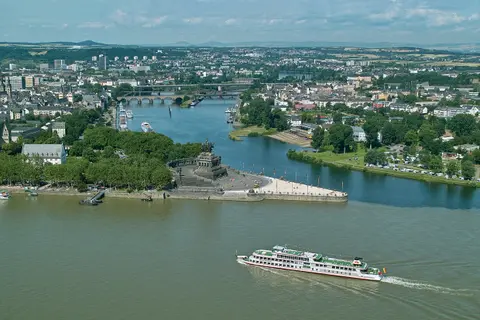
Koblenz stands at the Deutsches Eck — the German Corner — where the Moselle river pours into the Rhine in a confluence so geographically commanding that the Romans built a fortress here in 9 BC. The result is a city of exceptional Rhine Gorge scenery, with the formidable Ehrenbreitstein Fortress, one of Europe's largest, crowning the opposite bank and reachable by gondola for panoramas that stretch across three river valleys. A Rhine wine tasting at one of the city's historic Weinstuben, followed by a stroll through the Altstadt's baroque squares, is the definitive Koblenz afternoon. The finest weather arrives April through October, with the Rhine in Flames fireworks festival in August being particularly spectacular.
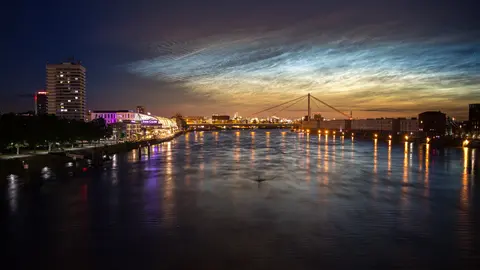
Ludwigshafen am Rhein was founded by Bavarian royal ambition in 1843 and grew rapidly into one of Germany's great industrial cities — home to BASF, the world's largest chemical company, whose vast campus stretches along the Rhine for kilometres. Though industrial in character, Ludwigshafen occupies a prime Rhine valley position that places it within easy reach of Heidelberg, Germany's most romantic university city, and the rolling vineyards of the Palatinate wine region. The Kunstmuseum Ludwigshafen houses a noteworthy collection of contemporary art. Ludwigshafen is a year-round river cruise port, though May through October offers the most pleasant conditions for excursions into the surrounding wine country.
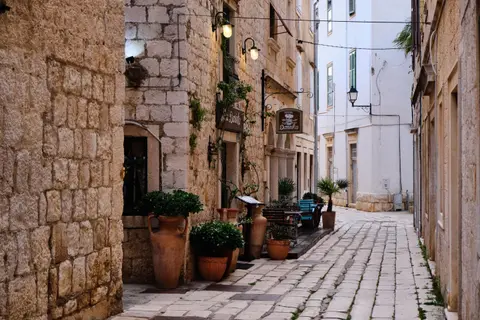
Vukovar, Croatia's largest river port, sits at the confluence of the Vuka and Danube rivers, offering a rich historical narrative and vibrant local culture. Must-do experiences include savoring traditional dishes like fiš paprikaš and exploring nearby attractions such as Trogir and Solin. The best time to visit is in late spring and early autumn when the weather is pleasant and the local events are in full swing.
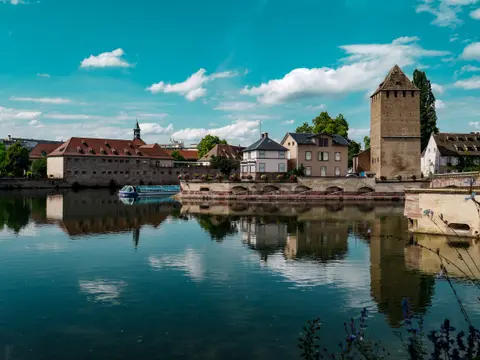
Strasbourg is one of Europe's great border cities, its Franco-German soul etched into every half-timbered façade of the UNESCO-listed Grande Île and every turret of the soaring rose-sandstone cathedral that reigned as the world's tallest building for over two centuries. As the seat of the European Parliament and home to the European Court of Human Rights, this sophisticated Alsatian capital savors outstanding Riesling and choucroute garnie with equal Continental pride. The city dazzles year-round, though December's legendary Christmas market — among the oldest in Europe — transforms its medieval squares into an enchanted winter spectacle.
Day 1
Amsterdam's UNESCO-listed canal ring — a concentric web of seventeenth-century merchant houses and arching stone bridges — remains one of the Western world's most perfectly preserved Golden Age cityscapes, best explored by bicycle or canal boat at a pace that lets the city's genius reveal itself slowly. The Rijksmuseum's collection of Rembrandt and Vermeer masterpieces is essential, while the Anne Frank House offers one of Europe's most profoundly moving historical encounters. Spring brings the iconic tulip season; summer fills the terraces of the Jordaan district. Schiphol Airport makes Amsterdam a seamless gateway to the entire European continent.
Day 2
Bucharest, Romania's sprawling and magnificently contradictory capital, layers Belle Époque mansions, communist-era boulevards, and a furiously creative twenty-first-century scene into a city that rewards the curious traveler who looks beyond the obvious. Ceaușescu's colossal Palace of the Parliament — the world's heaviest building and a monument to totalitarian hubris — is unmissable; equally essential is the neighborhood of Floreasca, where design studios, natural wine bars, and acclaimed restaurants have made Bucharest one of Europe's most exciting emerging food capitals. Visit April through June for the most pleasant weather. Transylvania, with Bran Castle and the medieval city of Brașov, lies two hours north through dramatic Carpathian scenery.
Day 3
Cologne's twin-spired Gothic cathedral, six hundred years in the building and still the city's defining monument, is the inevitable starting point — but this ancient Rhine city rewards exploration well beyond its iconic silhouette. The Romano-Germanic Museum reveals the city's Roman foundations, while the Chocolate Museum on the riverbank offers a distinctly sweeter history lesson. Cologne's famed Kölsch beer culture thrives in the old town's traditional brew-houses, where one round follows another in centuries-old wooden halls. The city is welcoming year-round, though the legendary Christmas markets (November–December) attract visitors from across Europe.
Day 4
The Reichsburg Cochem — a turreted fairy-tale castle presiding over a loop of the Moselle River — is among Germany's most photogenic medieval fortresses, its silhouette rising above terraced vineyards of ancient Riesling vines. The town below offers a charming ensemble of half-timbered houses, wine-cellar tastings, and cycle paths threading through valley landscapes that have barely changed in centuries. Arrive in September for the harvest festival, when the whole town smells of fermenting Riesling, or choose May for blossom-framed panoramas and long golden evenings on the riverside terraces.
Day 5
Trier is Germany's oldest city and once the northern capital of the Western Roman Empire, its incomparable UNESCO-listed ensemble of monuments — the blackened Porta Nigra gate, the vast Imperial Baths, the Amphitheater, and a Roman bridge still carrying traffic across the Moselle — more than justifying the title 'Rome of the North.' The birthplace of Karl Marx and a gateway to the Moselle wine region's elegant Riesling estates, Trier rewards a long visit with layers of history spanning two millennia within an effortlessly walkable historic center. The summer months from May to September are ideal, when Moselle Valley vineyard terraces gleam in full-leafed splendor.
Donji Milanovac is a tranquil Serbian town on the banks of Lake Đerdap, nestled within the dramatic Iron Gates gorge of the Danube and surrounded by pristine national parkland. Visitors should not miss the Lepenski Vir archaeological site, home to seven-thousand-year-old Mesolithic sculptures, and the restored medieval fortress at nearby Golubac. The ideal time to cruise through the Iron Gates is from late May through September, when long daylight hours illuminate the gorge walls and riverside terraces invite lingering over fresh riblja čorba and local šljivovica.
Day 6
Bernkastel-Kues, the twin town straddling the Moselle, has been synonymous with Riesling for six centuries — home to the legendary Bernkasteler Doctor vineyard, whose precipitous south-facing slope has produced wines of such renown that a single hectare once sold for a record price. The Marktplatz, virtually unchanged since the seventeenth century, is Germany's most photogenic half-timbered market square: a stage-set of crooked facades and flower-hung balconies best appreciated over a glass of Spätlese in the late afternoon light. September brings the annual Moselle Wine Festival to the riverbanks. Trier, Germany's oldest city with its spectacular Roman amphitheatre, lies forty minutes upstream.
Day 7
Koblenz stands at the Deutsches Eck — the German Corner — where the Moselle river pours into the Rhine in a confluence so geographically commanding that the Romans built a fortress here in 9 BC. The result is a city of exceptional Rhine Gorge scenery, with the formidable Ehrenbreitstein Fortress, one of Europe's largest, crowning the opposite bank and reachable by gondola for panoramas that stretch across three river valleys. A Rhine wine tasting at one of the city's historic Weinstuben, followed by a stroll through the Altstadt's baroque squares, is the definitive Koblenz afternoon. The finest weather arrives April through October, with the Rhine in Flames fireworks festival in August being particularly spectacular.
Day 8
Ludwigshafen am Rhein was founded by Bavarian royal ambition in 1843 and grew rapidly into one of Germany's great industrial cities — home to BASF, the world's largest chemical company, whose vast campus stretches along the Rhine for kilometres. Though industrial in character, Ludwigshafen occupies a prime Rhine valley position that places it within easy reach of Heidelberg, Germany's most romantic university city, and the rolling vineyards of the Palatinate wine region. The Kunstmuseum Ludwigshafen houses a noteworthy collection of contemporary art. Ludwigshafen is a year-round river cruise port, though May through October offers the most pleasant conditions for excursions into the surrounding wine country.
Vukovar, Croatia's largest river port, sits at the confluence of the Vuka and Danube rivers, offering a rich historical narrative and vibrant local culture. Must-do experiences include savoring traditional dishes like fiš paprikaš and exploring nearby attractions such as Trogir and Solin. The best time to visit is in late spring and early autumn when the weather is pleasant and the local events are in full swing.
Day 9
Strasbourg is one of Europe's great border cities, its Franco-German soul etched into every half-timbered façade of the UNESCO-listed Grande Île and every turret of the soaring rose-sandstone cathedral that reigned as the world's tallest building for over two centuries. As the seat of the European Parliament and home to the European Court of Human Rights, this sophisticated Alsatian capital savors outstanding Riesling and choucroute garnie with equal Continental pride. The city dazzles year-round, though December's legendary Christmas market — among the oldest in Europe — transforms its medieval squares into an enchanted winter spectacle.
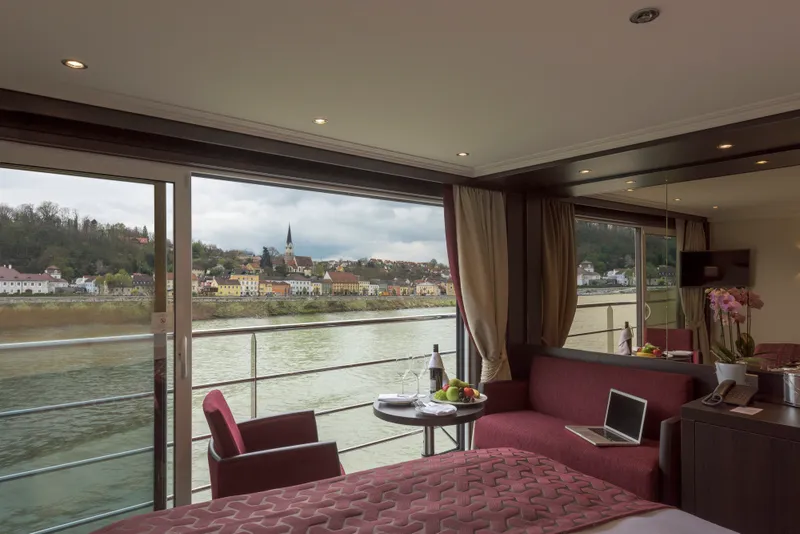
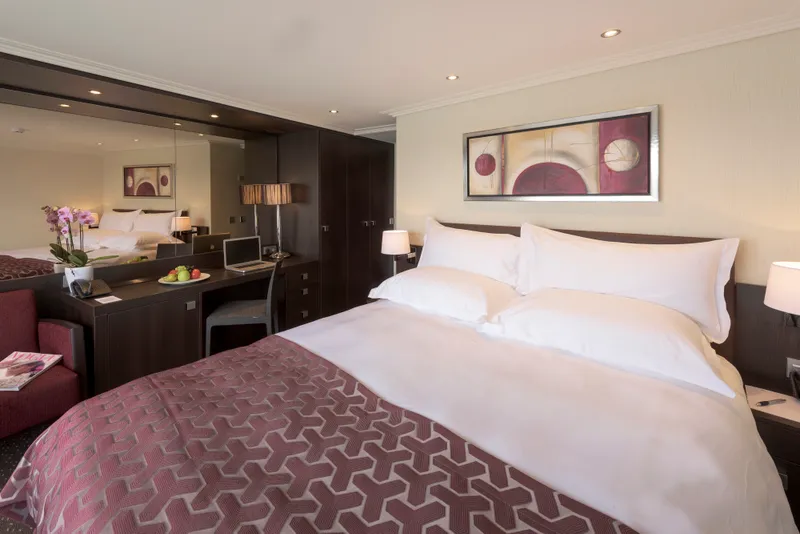
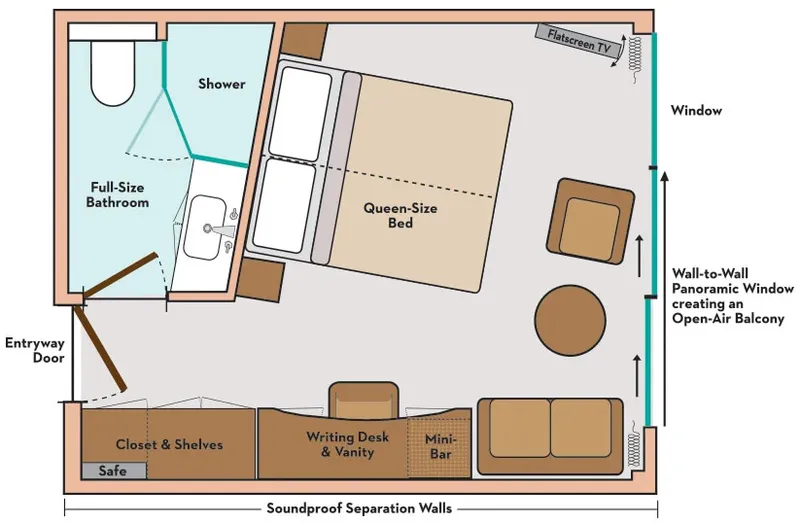
Comfort Collection Beds
European-style duvets
Soft & firm pillows
Extra blankets
Choice of bed configuration
Hairdryer
L'Occitane bath products
Spacious 3-door closets with shelves for ample storage
Alarm clock
Direct-dial telephone
Individual climate control
Elegant, contemporary design
Large mirror in bathroom
Marble countertops in bathroom
Wall-to-Wall Panoramic Window with Open-Air Balcony
6-person sitting area
Full shower with glass door
Vanity and lighted makeup mirror
Sofa
USB Ports
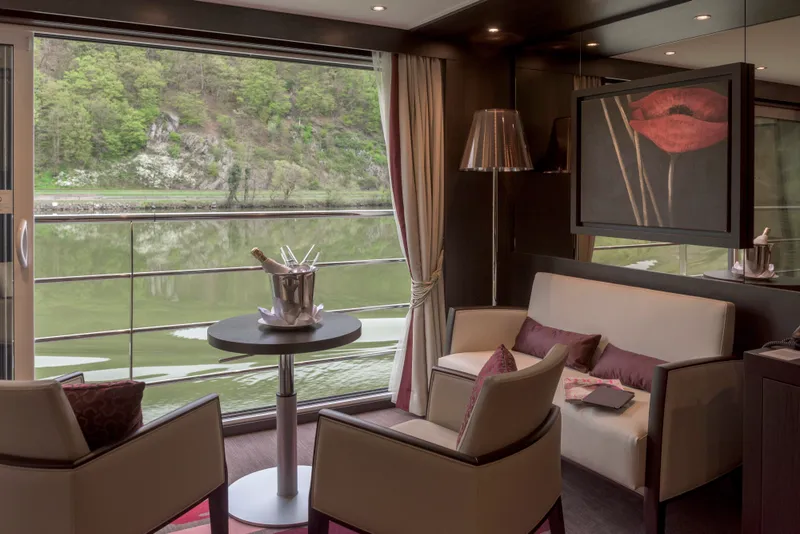
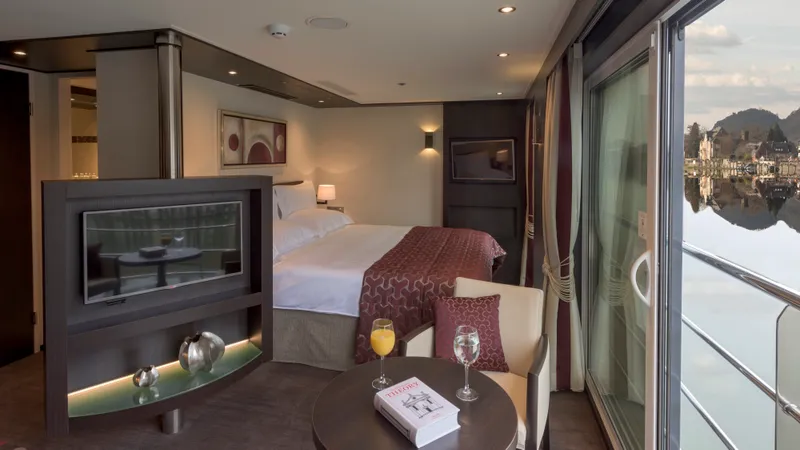
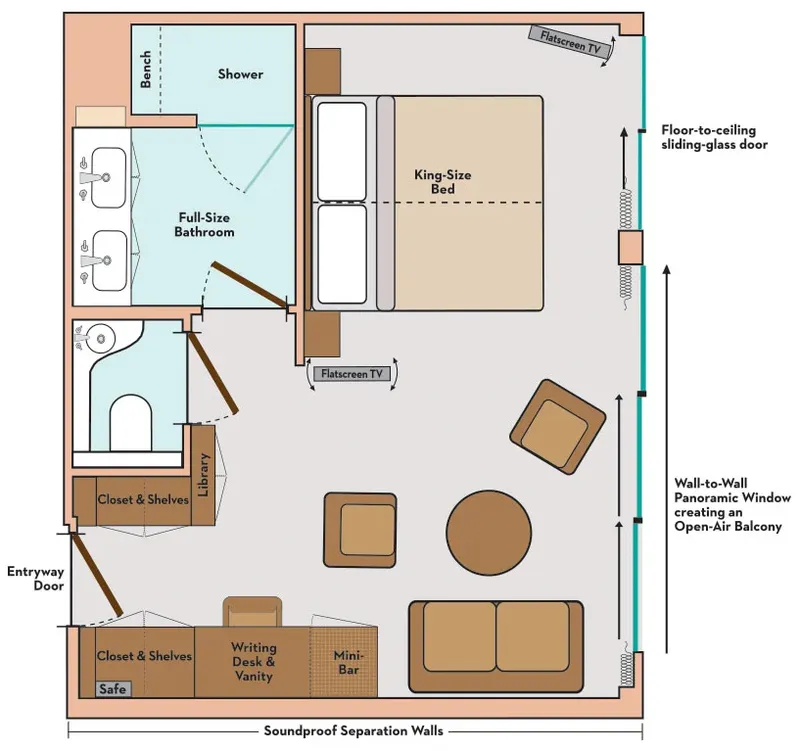
Stateroom Features:
Comfort Collection Beds
Luxurious mattress toppers
Egyptian super-combed cotton linens
European-style duvets
Soft & firm pillows
Extra blankets
Choice of bed configuration
Nightly turn-down service
Bedside tables with reading lamps
Premium Hairdryer
L'Occitane bath products
Spacious 3-door closets with shelves for ample storage
Easy under-bed luggage storage
Flatscreen satellite TV with English-speaking channels & over 100 free movie options
Alarm clock
Make-up mirror
Direct-dial telephone
Bathrobes & slippers
Well-stocked minibar
Complimentary filtered water
In-room safe
Individual climate control
Elegant, contemporary design
Large mirror in bathroom
Marble countertops in bathroom
Wall-to-Wall Panoramic Window with Open-Air Balcony
6-person sitting area
Full shower with glass door
Writing desk and chair
Lighted makeup mirror
Sofa
Coffee table
Double sinks
Complimentary Wi-Fi
USB Ports
One King-Sized Bed or Two Twins
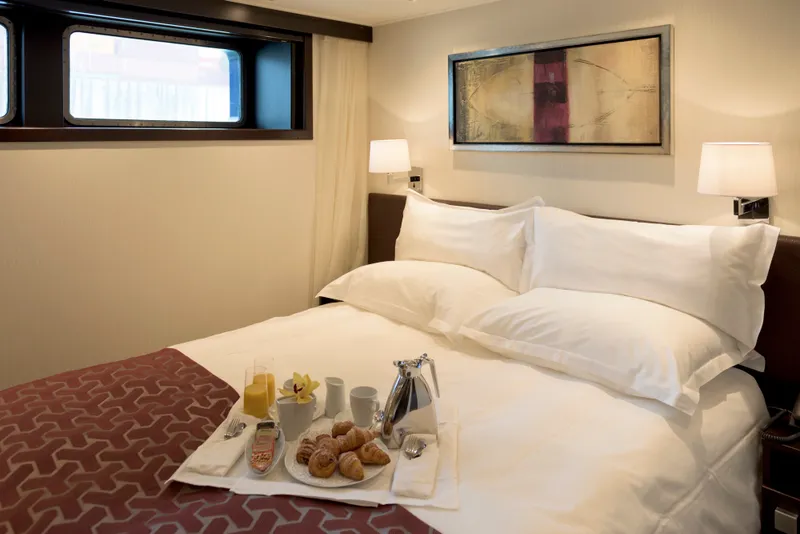
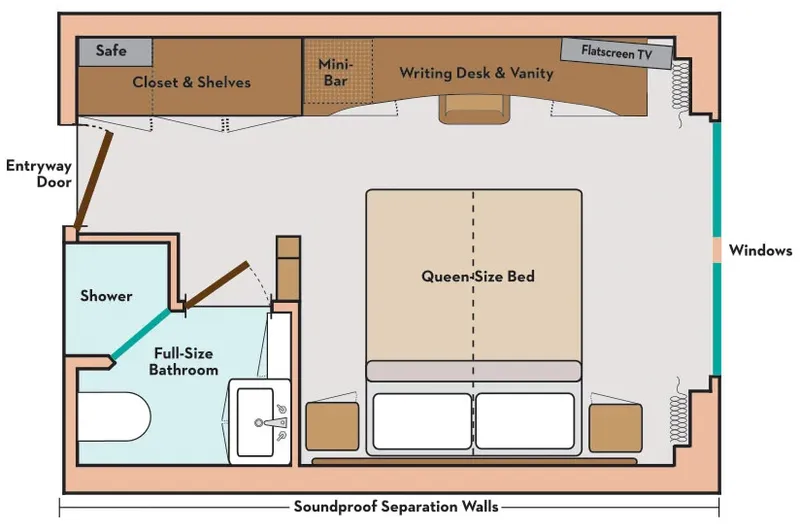
Stateroom Features:
Comfort Collection Beds
Luxurious mattress toppers
Egyptian super-combed cotton linens
European-style duvets
Soft & firm pillows
Extra blankets
Choice of bed configuration
Nightly turn-down service
Bedside tables with reading lamps
Premium Hairdryer
L'Occitane bath products
Spacious 3-door closets with shelves for ample storage
Easy under-bed luggage storage
Flatscreen satellite TV with English-speaking channels & over 100 free movie options
Alarm clock
Direct-dial telephone
Bathrobes & slippers
Well-stocked minibar
Complimentary filtered water
In-room safe
Individual climate control
Elegant, contemporary design
Large mirror in bathroom
Two windows
Full shower with glass door
Writing desk and chair
Lighted makeup mirror
Complimentary Wi-Fi
One Queen-Sized Bed or Two Twins
USB Ports
Our cruise specialists can help you find the perfect cabin and the best available pricing.
(+886) 02-2721-7300Contact Advisor