Date
2026-10-02
Duration
7 nights
Departure Port
Hanoi
Vietnam
Arrival Port
Bangkok
Thailand
Rating
Luxury
Theme
History & Culture
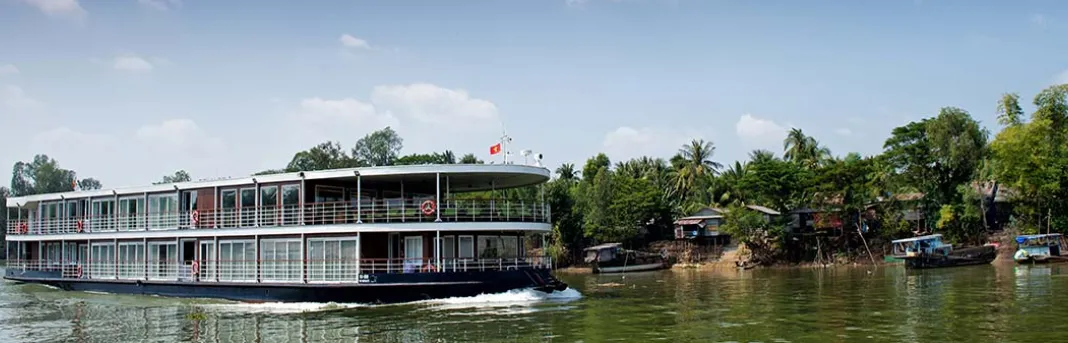


Avalon Waterways
2018
—
950 GT
36
18
24
195 m
—
9 knots
No

Amsterdam's UNESCO-listed canal ring — a concentric web of seventeenth-century merchant houses and arching stone bridges — remains one of the Western world's most perfectly preserved Golden Age cityscapes, best explored by bicycle or canal boat at a pace that lets the city's genius reveal itself slowly. The Rijksmuseum's collection of Rembrandt and Vermeer masterpieces is essential, while the Anne Frank House offers one of Europe's most profoundly moving historical encounters. Spring brings the iconic tulip season; summer fills the terraces of the Jordaan district. Schiphol Airport makes Amsterdam a seamless gateway to the entire European continent.

Nijmegen, the oldest city in the Netherlands, is a captivating port known for its rich history, vibrant atmosphere, and delightful culinary offerings. Don’t miss the opportunity to try the traditional **Nijmeegse Dikke Tuit** soup and explore the bustling markets. The best time to visit is during the spring and summer months when the city comes alive with festivals and outdoor activities.

Ha Long Bay is a UNESCO World Heritage landscape of nearly two thousand limestone karst islands rising from emerald waters in Vietnam's Gulf of Tonkin. Must-dos include an overnight junk cruise through the karst formations, kayaking into hidden lagoons, and exploring the cathedral-scale Sung Sot Cave. October through April offers the best weather, with spring mist adding an ethereal quality to the already otherworldly scenery.

Founded on a dragon's auspice in 1010 AD, Hanoi is Southeast Asia's most historically layered capital — a city where French colonial boulevards wrap around ancient temple islands and where the morning ritual of phở bò at a pavement stall carries the weight of a thousand years of tradition. Venture to Halong Bay's limestone karst seascape or explore the lantern-lit lanes of Hội An via nearby Chan May. October through April brings dry, pleasant weather ideal for exploring Vietnam's storied north.

Cologne's twin-spired Gothic cathedral, six hundred years in the building and still the city's defining monument, is the inevitable starting point — but this ancient Rhine city rewards exploration well beyond its iconic silhouette. The Romano-Germanic Museum reveals the city's Roman foundations, while the Chocolate Museum on the riverbank offers a distinctly sweeter history lesson. Cologne's famed Kölsch beer culture thrives in the old town's traditional brew-houses, where one round follows another in centuries-old wooden halls. The city is welcoming year-round, though the legendary Christmas markets (November–December) attract visitors from across Europe.

Frankfurt’s port is a dynamic entry point to the heart of Germany, blending modern finance with rich history. Must-do experiences include savoring traditional dishes like Frankfurter Rippchen and exploring the bustling Kleinmarkthalle. The best season to visit is during the spring, when the city comes alive with festivals and outdoor markets.

Siem Reap, the gateway city to the ancient Khmer empire's greatest achievement, is the essential staging post for exploring Angkor — the twelfth-century temple complex whose scale and ambition remain without parallel in human history. Angkor Wat at sunrise, its towers mirrored in the lily-covered moat, is one of the world's most transcendent spectacles; Angkor Thom's enigmatic Bayon, with its serene stone faces emerging from the jungle canopy, is another. The city's Old Market quarter offers silk workshops, street food vendors, and celebrated restaurants serving amok — fish steamed in coconut and lemongrass. November through April brings the driest, most comfortable conditions.

Speyer, one of the oldest cities in Germany, rises from the Rhine plain with a skyline dominated by its magnificent Romanesque Imperial Cathedral — a UNESCO World Heritage site and the burial place of eight Holy Roman Emperors. The adjacent Jewish Quarter, also UNESCO-listed, preserves a medieval synagogue and mikveh of extraordinary rarity. The Technik Museum houses one of Europe's most celebrated collections of historic aircraft, including a full-sized Space Shuttle replica. The surrounding Palatinate wine country produces fine Riesling and Pinot Noir. Spring and early autumn offer the most agreeable conditions for exploring this quietly remarkable city.

Strasbourg is one of Europe's great border cities, its Franco-German soul etched into every half-timbered façade of the UNESCO-listed Grande Île and every turret of the soaring rose-sandstone cathedral that reigned as the world's tallest building for over two centuries. As the seat of the European Parliament and home to the European Court of Human Rights, this sophisticated Alsatian capital savors outstanding Riesling and choucroute garnie with equal Continental pride. The city dazzles year-round, though December's legendary Christmas market — among the oldest in Europe — transforms its medieval squares into an enchanted winter spectacle.
Day 1

Amsterdam's UNESCO-listed canal ring — a concentric web of seventeenth-century merchant houses and arching stone bridges — remains one of the Western world's most perfectly preserved Golden Age cityscapes, best explored by bicycle or canal boat at a pace that lets the city's genius reveal itself slowly. The Rijksmuseum's collection of Rembrandt and Vermeer masterpieces is essential, while the Anne Frank House offers one of Europe's most profoundly moving historical encounters. Spring brings the iconic tulip season; summer fills the terraces of the Jordaan district. Schiphol Airport makes Amsterdam a seamless gateway to the entire European continent.
Day 3

Nijmegen, the oldest city in the Netherlands, is a captivating port known for its rich history, vibrant atmosphere, and delightful culinary offerings. Don’t miss the opportunity to try the traditional **Nijmeegse Dikke Tuit** soup and explore the bustling markets. The best time to visit is during the spring and summer months when the city comes alive with festivals and outdoor activities.
Day 4

Ha Long Bay is a UNESCO World Heritage landscape of nearly two thousand limestone karst islands rising from emerald waters in Vietnam's Gulf of Tonkin. Must-dos include an overnight junk cruise through the karst formations, kayaking into hidden lagoons, and exploring the cathedral-scale Sung Sot Cave. October through April offers the best weather, with spring mist adding an ethereal quality to the already otherworldly scenery.

Founded on a dragon's auspice in 1010 AD, Hanoi is Southeast Asia's most historically layered capital — a city where French colonial boulevards wrap around ancient temple islands and where the morning ritual of phở bò at a pavement stall carries the weight of a thousand years of tradition. Venture to Halong Bay's limestone karst seascape or explore the lantern-lit lanes of Hội An via nearby Chan May. October through April brings dry, pleasant weather ideal for exploring Vietnam's storied north.

Cologne's twin-spired Gothic cathedral, six hundred years in the building and still the city's defining monument, is the inevitable starting point — but this ancient Rhine city rewards exploration well beyond its iconic silhouette. The Romano-Germanic Museum reveals the city's Roman foundations, while the Chocolate Museum on the riverbank offers a distinctly sweeter history lesson. Cologne's famed Kölsch beer culture thrives in the old town's traditional brew-houses, where one round follows another in centuries-old wooden halls. The city is welcoming year-round, though the legendary Christmas markets (November–December) attract visitors from across Europe.
Day 5
Day 6

Frankfurt’s port is a dynamic entry point to the heart of Germany, blending modern finance with rich history. Must-do experiences include savoring traditional dishes like Frankfurter Rippchen and exploring the bustling Kleinmarkthalle. The best season to visit is during the spring, when the city comes alive with festivals and outdoor markets.
Day 7

Siem Reap, the gateway city to the ancient Khmer empire's greatest achievement, is the essential staging post for exploring Angkor — the twelfth-century temple complex whose scale and ambition remain without parallel in human history. Angkor Wat at sunrise, its towers mirrored in the lily-covered moat, is one of the world's most transcendent spectacles; Angkor Thom's enigmatic Bayon, with its serene stone faces emerging from the jungle canopy, is another. The city's Old Market quarter offers silk workshops, street food vendors, and celebrated restaurants serving amok — fish steamed in coconut and lemongrass. November through April brings the driest, most comfortable conditions.

Speyer, one of the oldest cities in Germany, rises from the Rhine plain with a skyline dominated by its magnificent Romanesque Imperial Cathedral — a UNESCO World Heritage site and the burial place of eight Holy Roman Emperors. The adjacent Jewish Quarter, also UNESCO-listed, preserves a medieval synagogue and mikveh of extraordinary rarity. The Technik Museum houses one of Europe's most celebrated collections of historic aircraft, including a full-sized Space Shuttle replica. The surrounding Palatinate wine country produces fine Riesling and Pinot Noir. Spring and early autumn offer the most agreeable conditions for exploring this quietly remarkable city.
Day 8

Strasbourg is one of Europe's great border cities, its Franco-German soul etched into every half-timbered façade of the UNESCO-listed Grande Île and every turret of the soaring rose-sandstone cathedral that reigned as the world's tallest building for over two centuries. As the seat of the European Parliament and home to the European Court of Human Rights, this sophisticated Alsatian capital savors outstanding Riesling and choucroute garnie with equal Continental pride. The city dazzles year-round, though December's legendary Christmas market — among the oldest in Europe — transforms its medieval squares into an enchanted winter spectacle.


Stateroom Features:
Comfort Collection Beds
Egyptian super-combed cotton linens
Soft & firm pillows
Choice of bed configuration
Nightly turn-down service
Bedside tables with reading lamps
14' Wall-to-Wall Panoramic window measuring that opens to create a large Open-Air Balcony
Large private bathroom featuring full shower with glass door, hairdryer, and premium L'Occitane bath amenities
Spacious closets with shelves for ample storage
Easy under-bed luggage storage
Alarm clock
Writing desk/vanity with mirror & comfortable chair
In-house telephone
Bathrobes & slippers
Complimentary filtered water
In-room safe
Individual climate control
One King-Sized Bed or Two Twins
USB Ports
Our cruise specialists can help you find the perfect cabin and the best available pricing.
(+886) 02-2721-7300Contact Advisor