Date
2026-10-05
Duration
7 nights
Departure Port
Siem Reap
Cambodia
Arrival Port
Bangkok
Thailand
Rating
Luxury
Theme
History & Culture
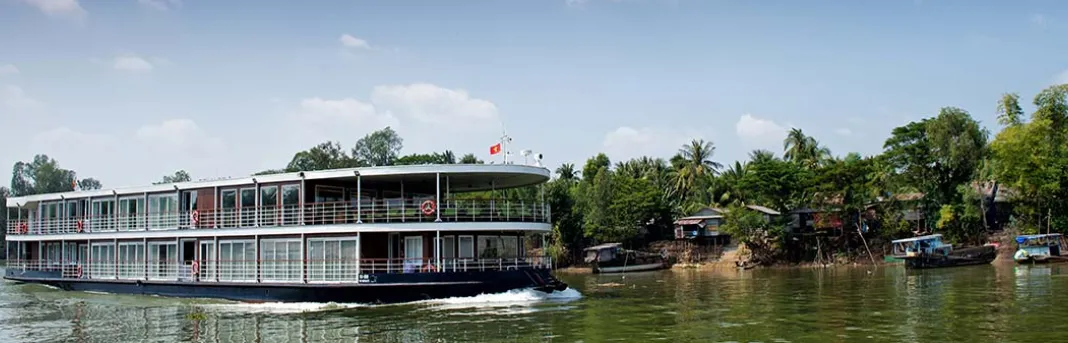


Avalon Waterways
2018
—
950 GT
36
18
24
195 m
—
9 knots
No

Budapest, divided by the Danube into the hilly Buda of thermal baths and medieval castle lanes on one bank and the grand Pest of coffee-house culture and Art Nouveau splendor on the other, delivers the most theatrical first impression of any European capital — whether approached by river as the neo-Gothic Parliament materializes from the water or by night from the Citadella's sweep of illuminated panorama below. The city's celebrated thermal bath culture, rooted in Ottoman-era hammams and perfected in palatial Secession-era pools like the Széchenyi, is an experience entirely unlike anything else in Europe. Visit spring and autumn for comfortable temperatures; Vienna is two and a half hours west by train.

Vukovar, Croatia's largest river port, sits at the confluence of the Vuka and Danube rivers, offering a rich historical narrative and vibrant local culture. Must-do experiences include savoring traditional dishes like fiš paprikaš and exploring nearby attractions such as Trogir and Solin. The best time to visit is in late spring and early autumn when the weather is pleasant and the local events are in full swing.

Siem Reap, the gateway city to the ancient Khmer empire's greatest achievement, is the essential staging post for exploring Angkor — the twelfth-century temple complex whose scale and ambition remain without parallel in human history. Angkor Wat at sunrise, its towers mirrored in the lily-covered moat, is one of the world's most transcendent spectacles; Angkor Thom's enigmatic Bayon, with its serene stone faces emerging from the jungle canopy, is another. The city's Old Market quarter offers silk workshops, street food vendors, and celebrated restaurants serving amok — fish steamed in coconut and lemongrass. November through April brings the driest, most comfortable conditions.

Novi Sad — the "Serbian Athens" — unfolds along the left bank of the Danube beneath the commanding walls of the Petrovaradin Fortress, a Habsburg military masterpiece whose underground tunnel labyrinth and hilltop clock tower (with hands reversed, to confuse enemy gunners) make for one of Europe's most unusual fortress visits. The city's elegant pedestrian street, the Zmaj Jovina, is lined with 19th-century Habsburg architecture that rewards a leisurely afternoon, while the Serbian cultural renaissance of the same era left behind museums, galleries, and coffee house traditions that endure today. In July, the EXIT music festival transforms the fortress into one of Europe's most storied outdoor stages. Visit May through September for the finest weather.

Belgrade, the 'White City' rebuilt at least forty times at the confluence of the Danube and Sava rivers, surprises every visitor with its raw, uncurated vitality — a capital that wears its turbulent history lightly while embracing the present with irresistible energy. The Kalemegdan Fortress, fortified for over two thousand years, offers the most dramatic river panorama on the entire Danube; below it, the Skadarlija cobblestone quarter fills nightly with kafana musicians and the aromas of Serbian rakija and roasted meats. Belgrade's nightlife — centered on the floating river clubs called splavovi — is genuinely legendary in Europe. Spring and early autumn offer the most comfortable conditions; the Iron Gate gorge is two hours downstream by river.

Kampong Tralach, Cambodia is a distinctive port city where deep cultural heritage meets authentic local atmosphere, featured on itineraries by AmaWaterways. Must-do experiences include exploring the vibrant local markets for regional specialties and fresh seafood, and discovering the waterfront quarter where maritime heritage meets contemporary energy. The optimal time to visit is November through April, when dry season brings clear skies and calm seas.

Golubac is a medieval fortress village on Serbia's Danube, where a magnificently restored fourteenth-century stronghold guards the entrance to the Iron Gates gorge — Europe's deepest river canyon. Visitors should explore the nine-towered fortress and sample *riblja čorba*, the local paprika-laced fish soup, at a riverside *kafana*. Late spring through early autumn offers the most rewarding conditions, with warm days ideal for both fortress ramparts and the lush trails of Đerdap National Park.

Phnom Penh rises from the confluence of the Mekong, Tonlé Sap, and Bassac rivers with a resilience that makes it one of Southeast Asia's most affecting capitals — a city that endured the Khmer Rouge's "Year Zero" and has re-emerged as a place of broad riverfront boulevards, excellent Khmer cuisine, and a cultural energy that feels earned rather than manufactured. The Royal Palace and its Silver Pagoda, housing a life-size gold Buddha studded with 9,584 diamonds, is the city's architectural centrepiece; the Tuol Sleng Genocide Museum, a former high school converted to a prison by the Khmer Rouge, is sobering but essential history. November through February offers the most comfortable climate for extended exploration.

Vidin is a captivating port town on the Danube River known for its rich history, eclectic architecture, and vibrant local culture. Must-do experiences include exploring the Baba Vida Fortress and savoring local dishes like **kavarma** and **lutenitsa**. The best time to visit is during the spring and autumn months when the weather is pleasant and the local markets are bustling with activity.

Ruse, Bulgaria's elegant Danube gateway, surprises with a Belle Époque city centre of Austro-Hungarian grandeur — neoclassical facades, ornate fountains, and a Liberty Monument that would not look out of place in Vienna. The city serves as the gateway to the spectacular Rusenski Lom Nature Park, whose limestone canyon shelters medieval rock-carved monasteries of eerie beauty. The remarkable Basarbovo Monastery, still inhabited by monks, clings to cliffs above the turquoise river. Local wineries produce distinguished Mavrud and Cabernet from the nearby Danube plains. May through September offers the most pleasant temperatures for exploration.
Day 1

Budapest, divided by the Danube into the hilly Buda of thermal baths and medieval castle lanes on one bank and the grand Pest of coffee-house culture and Art Nouveau splendor on the other, delivers the most theatrical first impression of any European capital — whether approached by river as the neo-Gothic Parliament materializes from the water or by night from the Citadella's sweep of illuminated panorama below. The city's celebrated thermal bath culture, rooted in Ottoman-era hammams and perfected in palatial Secession-era pools like the Széchenyi, is an experience entirely unlike anything else in Europe. Visit spring and autumn for comfortable temperatures; Vienna is two and a half hours west by train.
Day 3

Vukovar, Croatia's largest river port, sits at the confluence of the Vuka and Danube rivers, offering a rich historical narrative and vibrant local culture. Must-do experiences include savoring traditional dishes like fiš paprikaš and exploring nearby attractions such as Trogir and Solin. The best time to visit is in late spring and early autumn when the weather is pleasant and the local events are in full swing.
Day 4

Siem Reap, the gateway city to the ancient Khmer empire's greatest achievement, is the essential staging post for exploring Angkor — the twelfth-century temple complex whose scale and ambition remain without parallel in human history. Angkor Wat at sunrise, its towers mirrored in the lily-covered moat, is one of the world's most transcendent spectacles; Angkor Thom's enigmatic Bayon, with its serene stone faces emerging from the jungle canopy, is another. The city's Old Market quarter offers silk workshops, street food vendors, and celebrated restaurants serving amok — fish steamed in coconut and lemongrass. November through April brings the driest, most comfortable conditions.

Novi Sad — the "Serbian Athens" — unfolds along the left bank of the Danube beneath the commanding walls of the Petrovaradin Fortress, a Habsburg military masterpiece whose underground tunnel labyrinth and hilltop clock tower (with hands reversed, to confuse enemy gunners) make for one of Europe's most unusual fortress visits. The city's elegant pedestrian street, the Zmaj Jovina, is lined with 19th-century Habsburg architecture that rewards a leisurely afternoon, while the Serbian cultural renaissance of the same era left behind museums, galleries, and coffee house traditions that endure today. In July, the EXIT music festival transforms the fortress into one of Europe's most storied outdoor stages. Visit May through September for the finest weather.
Day 5

Belgrade, the 'White City' rebuilt at least forty times at the confluence of the Danube and Sava rivers, surprises every visitor with its raw, uncurated vitality — a capital that wears its turbulent history lightly while embracing the present with irresistible energy. The Kalemegdan Fortress, fortified for over two thousand years, offers the most dramatic river panorama on the entire Danube; below it, the Skadarlija cobblestone quarter fills nightly with kafana musicians and the aromas of Serbian rakija and roasted meats. Belgrade's nightlife — centered on the floating river clubs called splavovi — is genuinely legendary in Europe. Spring and early autumn offer the most comfortable conditions; the Iron Gate gorge is two hours downstream by river.
Day 6

Kampong Tralach, Cambodia is a distinctive port city where deep cultural heritage meets authentic local atmosphere, featured on itineraries by AmaWaterways. Must-do experiences include exploring the vibrant local markets for regional specialties and fresh seafood, and discovering the waterfront quarter where maritime heritage meets contemporary energy. The optimal time to visit is November through April, when dry season brings clear skies and calm seas.

Golubac is a medieval fortress village on Serbia's Danube, where a magnificently restored fourteenth-century stronghold guards the entrance to the Iron Gates gorge — Europe's deepest river canyon. Visitors should explore the nine-towered fortress and sample *riblja čorba*, the local paprika-laced fish soup, at a riverside *kafana*. Late spring through early autumn offers the most rewarding conditions, with warm days ideal for both fortress ramparts and the lush trails of Đerdap National Park.

Phnom Penh rises from the confluence of the Mekong, Tonlé Sap, and Bassac rivers with a resilience that makes it one of Southeast Asia's most affecting capitals — a city that endured the Khmer Rouge's "Year Zero" and has re-emerged as a place of broad riverfront boulevards, excellent Khmer cuisine, and a cultural energy that feels earned rather than manufactured. The Royal Palace and its Silver Pagoda, housing a life-size gold Buddha studded with 9,584 diamonds, is the city's architectural centrepiece; the Tuol Sleng Genocide Museum, a former high school converted to a prison by the Khmer Rouge, is sobering but essential history. November through February offers the most comfortable climate for extended exploration.
Day 7

Vidin is a captivating port town on the Danube River known for its rich history, eclectic architecture, and vibrant local culture. Must-do experiences include exploring the Baba Vida Fortress and savoring local dishes like **kavarma** and **lutenitsa**. The best time to visit is during the spring and autumn months when the weather is pleasant and the local markets are bustling with activity.
Day 8

Ruse, Bulgaria's elegant Danube gateway, surprises with a Belle Époque city centre of Austro-Hungarian grandeur — neoclassical facades, ornate fountains, and a Liberty Monument that would not look out of place in Vienna. The city serves as the gateway to the spectacular Rusenski Lom Nature Park, whose limestone canyon shelters medieval rock-carved monasteries of eerie beauty. The remarkable Basarbovo Monastery, still inhabited by monks, clings to cliffs above the turquoise river. Local wineries produce distinguished Mavrud and Cabernet from the nearby Danube plains. May through September offers the most pleasant temperatures for exploration.


Stateroom Features:
Comfort Collection Beds
Egyptian super-combed cotton linens
Soft & firm pillows
Choice of bed configuration
Nightly turn-down service
Bedside tables with reading lamps
14' Wall-to-Wall Panoramic window measuring that opens to create a large Open-Air Balcony
Large private bathroom featuring full shower with glass door, hairdryer, and premium L'Occitane bath amenities
Spacious closets with shelves for ample storage
Easy under-bed luggage storage
Alarm clock
Writing desk/vanity with mirror & comfortable chair
In-house telephone
Bathrobes & slippers
Complimentary filtered water
In-room safe
Individual climate control
One King-Sized Bed or Two Twins
USB Ports
Our cruise specialists can help you find the perfect cabin and the best available pricing.
(+886) 02-2721-7300Contact Advisor