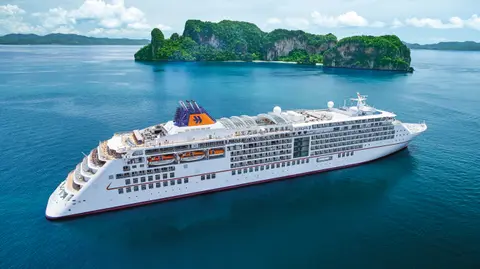
Miami to Miami
Date
2028-02-08
Duration
80 nights
Departure Port
Miami
United States
Arrival Port
Hamburg
Germany
Rating
—
Theme
—
Date
2028-02-08
Duration
80 nights
Departure Port
Miami
United States
Arrival Port
Hamburg
Germany
Rating
—
Theme
—


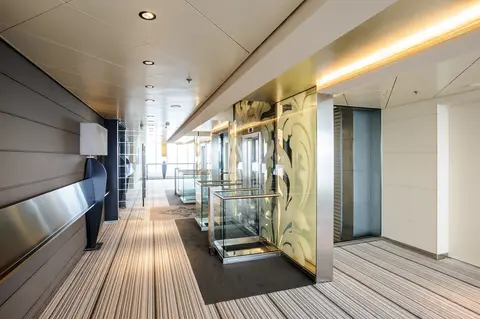

Hapag-Lloyd Cruises
2013
2017
42,830 GT
516
251
370
739 m
27 m
21 knots
No
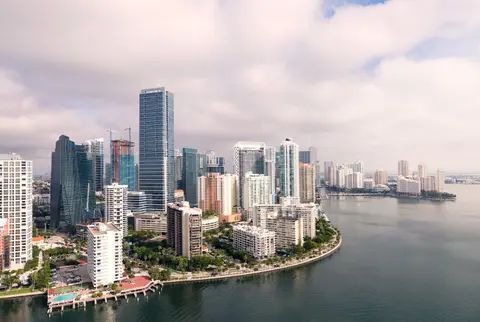
Miami is a city of perpetual reinvention — the Art Deco jewel of South Beach giving way to the street-art murals of Wynwood, the Cuban rhythms of Calle Ocho, and the glass-and-steel towers of a skyline that has redrawn itself every decade since Julia Tuttle convinced Henry Flagler to extend his railroad south in 1896. Must-dos include strolling the pastel-fronted Ocean Drive at dusk and exploring the world-class collections at the Pérez Art Museum Miami overlooking Biscayne Bay. November through April delivers idyllic weather — warm and dry — while summer brings heat, humidity, and hurricane risk. Miami handles cruise departures elegantly, with the Port of Miami a short taxi ride from the best neighbourhoods.
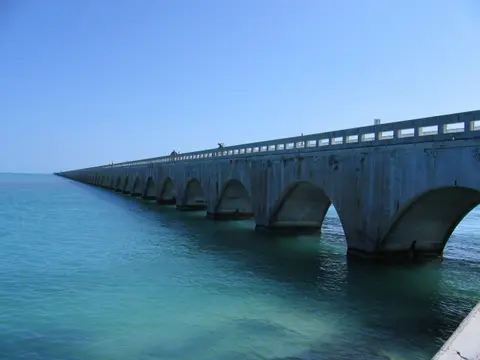
Key West is the southernmost point of the continental United States, a tropical island of Victorian conch houses, Hemingway's six-toed cats, and the only living coral reef in the country. Must-dos include touring the Hemingway Home, tasting authentic Key lime pie and conch fritters, and watching the sunset spectacle at Mallory Square. November through April offers the most comfortable weather with lower humidity and warm ocean temperatures.
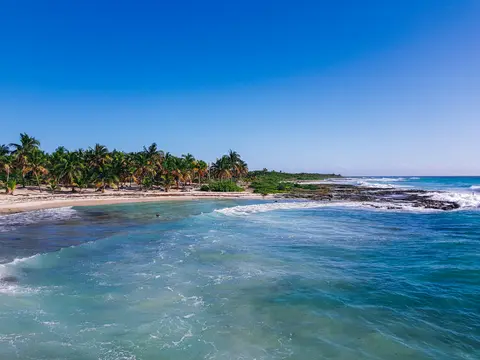
On Mexico's Southern Caribbean coast, Costa Maya blends ancient Maya heritage with turquoise Caribbean beauty in one of the region's most unspoiled cruising destinations. The nearby archaeological site of Chacchoben — its jungle-shrouded temples dating to 200 AD — rewards those who venture inland with an atmosphere of genuine discovery, far from the well-trodden ruins of the north. The protected Mesoamerican Barrier Reef, the world's second largest, offers exceptional snorkelling and diving directly offshore. November through April guarantees dry, sunny days with crystalline visibility in the water — the ideal season for exploring both reef and rainforest.
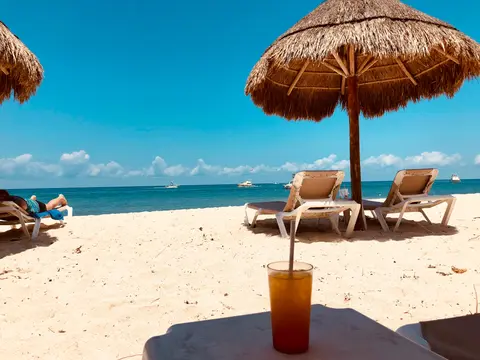
Sacred pilgrimage island of the ancient Maya and now Mexico's most celebrated diving destination, Cozumel offers two distinct experiences in perfect combination. The vast Palancar Reef — part of the Mesoamerican Barrier Reef system — delivers some of the Caribbean's most spectacular underwater scenery, with drift diving through canyons draped in black coral and sea fans. Ashore, San Miguel's colourful streetlife, fresh ceviche, and handcrafted silver jewellery invite leisurely exploration. Diving conditions are excellent year-round, though November through April brings the clearest visibility and the calmest seas for surface excursions.
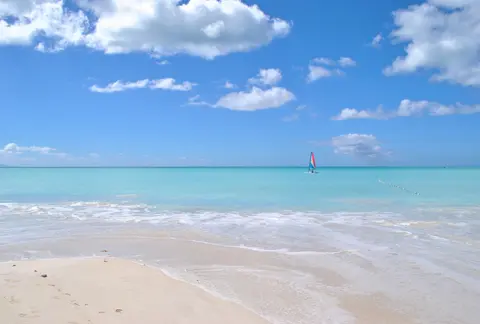
Progreso is the Yucatán Peninsula's principal cruise gateway, offering access to Chichén Itzá, the elegant colonial city of Mérida, and some of Mexico's most distinctive cuisine, including cochinita pibil and papadzules. The region's archaeological treasures, cenote-studded limestone landscape, and rich Maya heritage make it one of the Western Caribbean's most culturally rewarding ports of call. Visit between November and April for warm, dry weather ideal for exploring ruins and coastline alike.
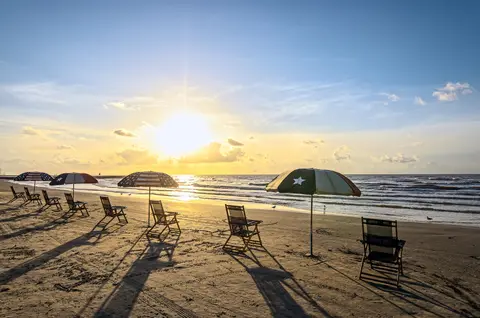
Once the wealthiest city per capita in the United States and nicknamed the 'Wall Street of the Southwest', Galveston retains a dignity that speaks of extraordinary ambition and resilience — the great 1900 storm that killed up to 12,000 people was answered not with retreat but with the construction of a massive seawall and the audacious raising of the entire island. The Victorian and Romanesque architecture of The Strand historic district, the Bishop's Palace, and the East End's ornate 'Oleander City' mansions tell the story of a gilded age. The island's 32 miles of Gulf beaches attract visitors year-round; spring and autumn offer the most temperate conditions.
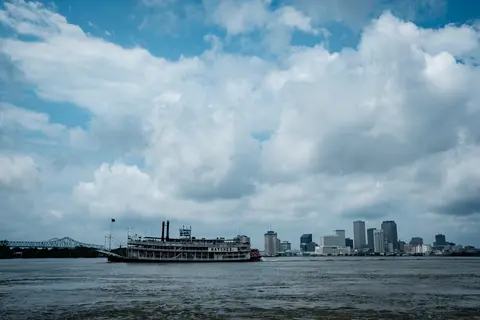
New Orleans is a culturally rich Gulf Coast port city where French, African, Spanish, and Caribbean influences converge in a tapestry of jazz, Creole cuisine, and architectural splendor. Visitors should not miss the char-grilled oysters and beignets that define the local table, nor an evening wandering Frenchmen Street as live jazz spills from every doorway. October through April offers the most comfortable climate, with the cooler months bringing festival season — including Mardi Gras and Jazz Fest — when the city's legendary spirit reaches its most magnificent crescendo.
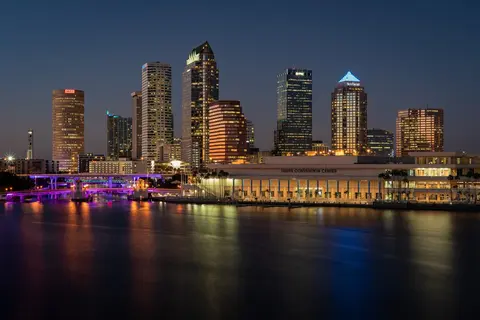
The Port of Tampa is a bustling maritime hub rich in history and culture, known for its vibrant Ybor City and diverse culinary scene. Must-do experiences include savoring a Cuban sandwich and exploring the local markets. The best season to visit is during the spring, when the weather is pleasant and outdoor activities abound.
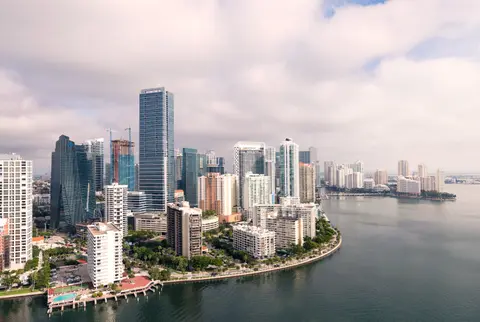
Miami is a city of perpetual reinvention — the Art Deco jewel of South Beach giving way to the street-art murals of Wynwood, the Cuban rhythms of Calle Ocho, and the glass-and-steel towers of a skyline that has redrawn itself every decade since Julia Tuttle convinced Henry Flagler to extend his railroad south in 1896. Must-dos include strolling the pastel-fronted Ocean Drive at dusk and exploring the world-class collections at the Pérez Art Museum Miami overlooking Biscayne Bay. November through April delivers idyllic weather — warm and dry — while summer brings heat, humidity, and hurricane risk. Miami handles cruise departures elegantly, with the Port of Miami a short taxi ride from the best neighbourhoods.
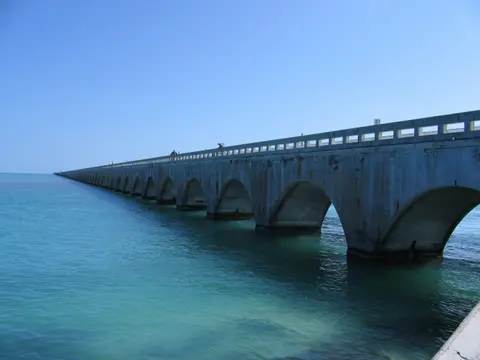
Key West is the southernmost point of the continental United States, a tropical island of Victorian conch houses, Hemingway's six-toed cats, and the only living coral reef in the country. Must-dos include touring the Hemingway Home, tasting authentic Key lime pie and conch fritters, and watching the sunset spectacle at Mallory Square. November through April offers the most comfortable weather with lower humidity and warm ocean temperatures.
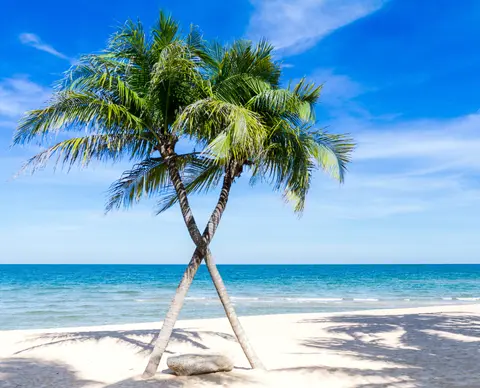
Jost Van Dyke is a tiny, uncommercialised island in the British Virgin Islands named after a Dutch privateer, celebrated for its pristine white-sand beaches, legendary beach bars, and barefoot Caribbean culture. Visitors should not miss savouring a Painkiller cocktail at the Soggy Dollar Bar on White Bay and exploring the granite grottos of The Baths on nearby Virgin Gorda. The dry season from December through April offers the most radiant sailing conditions and calm turquoise waters, making it the ideal window for a luxury small-ship call at this intimate Caribbean gem.
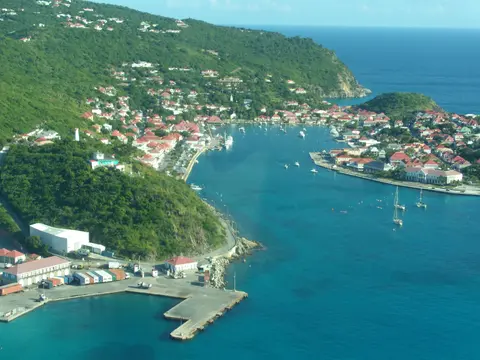
Gustavia, the capital of Saint Barthélemy, is a charming port known for its luxurious yachts, vibrant boutiques, and rich historical tapestry. Must-do experiences include exploring Fort Karl for stunning views and indulging in local dishes like accras de morue while enjoying the sun at Colombier Beach. The best season to visit is from December to April, when the weather is pleasantly warm and the island is bustling with activity.
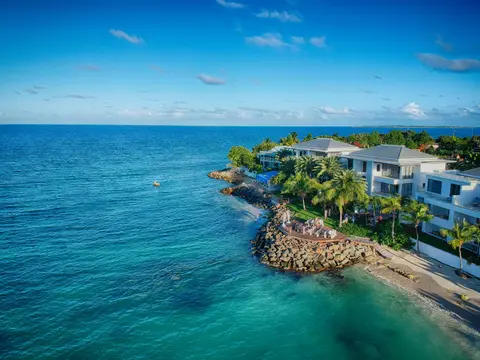
St. John's, Antigua's storied capital, anchors a natural harbor that has drawn seafarers since the seventeenth century, its Georgian cathedral and pastel-painted market hall bearing quiet witness to a complex colonial past. The crown jewel lies an hour's drive away at Nelson's Dockyard in English Harbour — the world's only still-functioning Georgian naval dockyard, set against the turquoise waters of one of the Caribbean's finest anchorages. Antigua's warm, dry climate makes it a year-round destination, though the exhilarating Sailing Week regatta in late April draws the most glamorous international crowd.
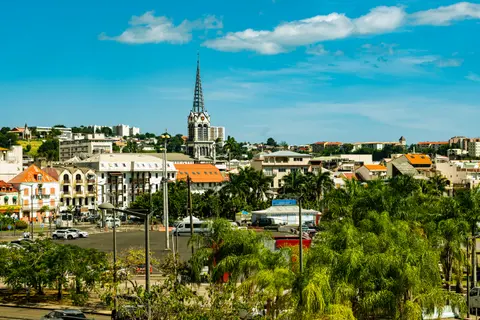
Fort-de-France, Martinique's gracious capital, blends French metropolitan sophistication with deep Caribbean soul in a way that no other island quite replicates. The Bibliothèque Schoelcher, a beautiful Art Nouveau building transported piece by piece from Paris for the 1889 World's Fair, anchors a downtown of wrought-iron balconies and aromatic spice markets. The surrounding countryside offers rum distilleries — some of the finest aged agricole rums in the world — dramatic rainforest hikes, and the haunting ruins of Saint-Pierre, destroyed by Mont Pelée's catastrophic 1902 eruption. December through May brings the driest, sunniest weather on this endlessly captivating island.
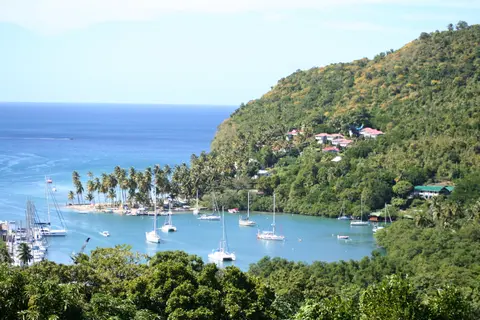
Marigot Bay is a famously beautiful narrow inlet on Saint Lucia's western coast, so sheltered that an entire British fleet once hid within its palm-fringed embrace. Visitors should dine on Creole-spiced fresh catch at waterside restaurants, take a water taxi to the bay's beach, and excursion to the iconic UNESCO Pitons and Soufriere sulphur springs. January through April offers the driest weather and most reliable sunshine.
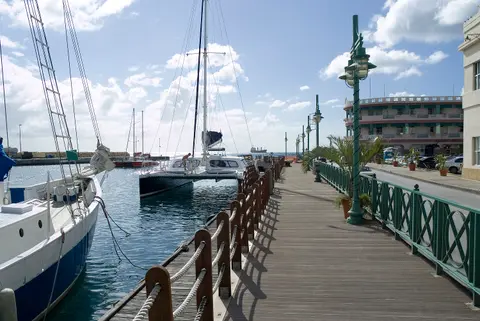
Bridgetown, Barbados's compact and convivial capital, carries three centuries of uninterrupted British colonial heritage — a UNESCO World Heritage Site of Georgian townhouses, coral-stone churches, and the Garrison Savannah, whose racecourse is the oldest in the Western Hemisphere — all infused with the irresistible rhythms of a proud Caribbean nation. The island's culinary scene has matured into one of the Caribbean's most sophisticated, with flying fish cutter sandwiches from roadside stalls competing for devotion with the elegant seafood preparations of the Platinum Coast's celebrated restaurants. Visit December through May for the driest season; the island's sheltered west coast offers superlative year-round sailing conditions.
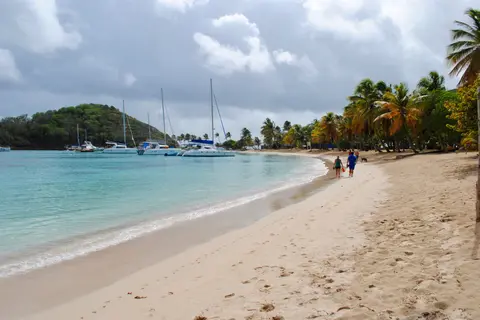
Mayreau is the smallest inhabited island in the Grenadines, a car-free Caribbean gem with fewer than three hundred residents, the exquisite Salt Whistle Bay beach, and views across the pristine Tobago Cays Marine Park. Must-do experiences include snorkelling with sea turtles in the Tobago Cays, feasting on fresh grilled lobster, and watching sunset from the hilltop church. January through May's dry season offers the most reliable weather.
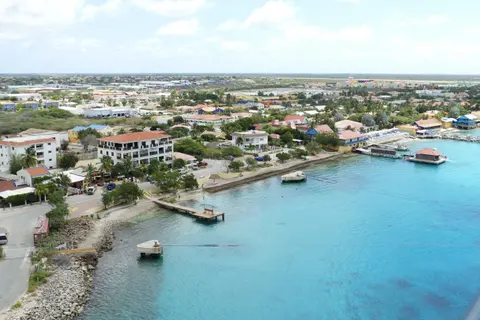
Kralendijk, Bonaire's compact and colorful Dutch Caribbean capital, is a gateway to some of the hemisphere's most pristine coral reefs and one of the few Caribbean destinations where conservation genuinely shapes the visitor experience. Shore diving along the Bonaire National Marine Park's sixty-three marked sites and exploring the flamingo colonies of Washington Slagbaai National Park are essential pursuits. The dry season from November through April offers ideal conditions, with steady trade winds and virtually no rainfall.
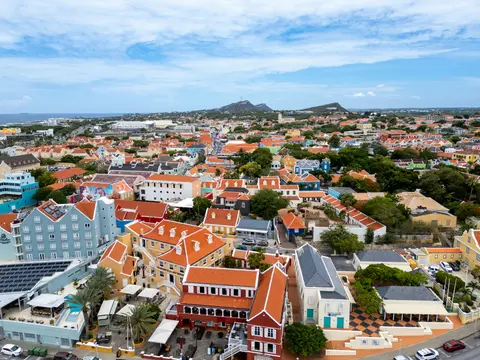
Willemstad, the capital of Curaçao, is a vibrant port city celebrated for its colorful architecture and rich history. Must-do experiences include trying local delicacies like "keshi yena" and exploring the stunning beaches of Playa Kenepa. The best season to visit is during the dry months from December to April, when the weather is ideal for exploring both the city and its beautiful surroundings.
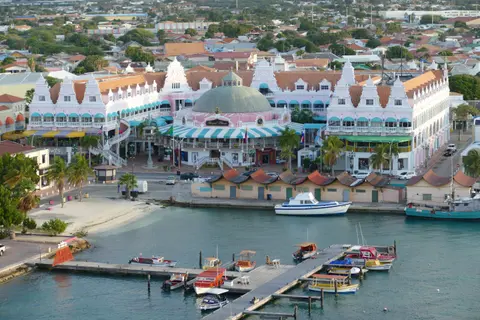
Oranjestad shimmers with an unlikely elegance — Dutch colonial architecture painted in ochre, terracotta, and sky-blue lining streets just fifteen miles off the Venezuelan coast, in a perpetual trade wind that keeps the island blissfully dry and golden-skied almost every day of the year. The island's Arikok National Park preserves ancient Caquetío petroglyphs, a rugged volcanic interior, and the dramatic Natural Pool carved from black rock on the windward coast. Eagle Beach, consistently ranked among the finest beaches in the Caribbean, lies minutes from the capital. Aruba's reliably brilliant weather — average 29°C with near-zero hurricane risk — makes it genuinely year-round, though December through April is the classic season.
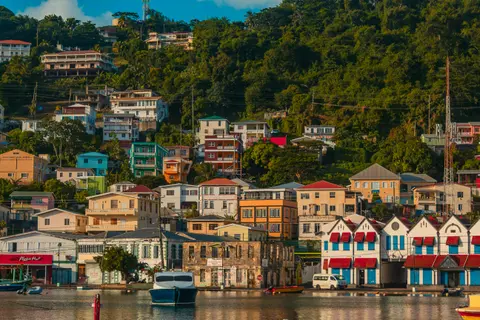
St. George's, Grenada, is a vibrant port known for its rich history, stunning architecture, and fragrant markets brimming with local spices. Must-do experiences include savoring the local delicacies at the Market Square and exploring nearby Carriacou Island for its tranquil beaches. The best season to visit is from December to April, when the weather is pleasantly warm and dry.
Marigot Bay is a famously beautiful narrow inlet on Saint Lucia's western coast, so sheltered that an entire British fleet once hid within its palm-fringed embrace. Visitors should dine on Creole-spiced fresh catch at waterside restaurants, take a water taxi to the bay's beach, and excursion to the iconic UNESCO Pitons and Soufriere sulphur springs. January through April offers the driest weather and most reliable sunshine.
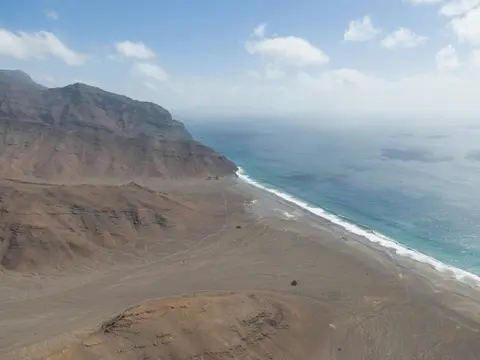
Mindelo, on the island of São Vicente, is Cape Verde's cultural capital — a harbour city of pastel colonial facades, vibrant street art, and the soulful musical heritage of Cesária Évora. Visitors should savour *cachupa rica* at a waterfront restaurant and take the ferry to Santo Antão for world-class hiking through terraced volcanic valleys. The best time to call is between November and June, when the trade winds temper the tropical heat and transatlantic cruise itineraries converge on Porto Grande's magnificent natural bay.
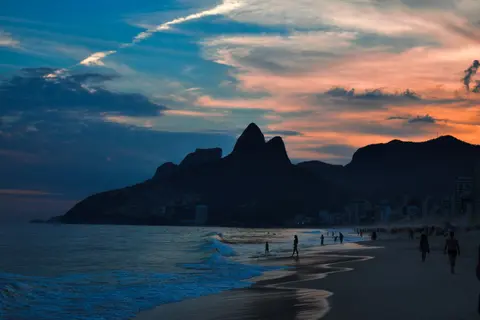
Porto Novo on Santo Antão, Cape Verde, is the gateway to one of the Atlantic's finest hiking islands, where dramatic volcanic mountains separate an arid southern coast from impossibly green terraced valleys of sugarcane and tropical fruit. Must-dos include the spectacular mountain road to Ribeira Grande, hiking the Paul Valley, and tasting local goat cheese with grogue rum. November through June's dry season provides the clearest skies for mountain exploration.
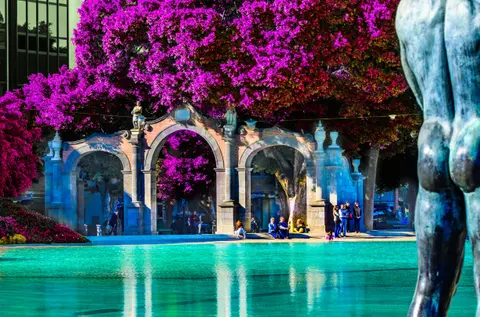
Santa Cruz de la Palma is the charming capital of La Palma, known for its colonial architecture and rich maritime history. Must-do experiences include savoring local dishes like "papas arrugadas" and exploring the stunning landscapes of Taburiente National Park. The best time to visit is during the spring and fall months when the weather is mild and perfect for outdoor adventures.
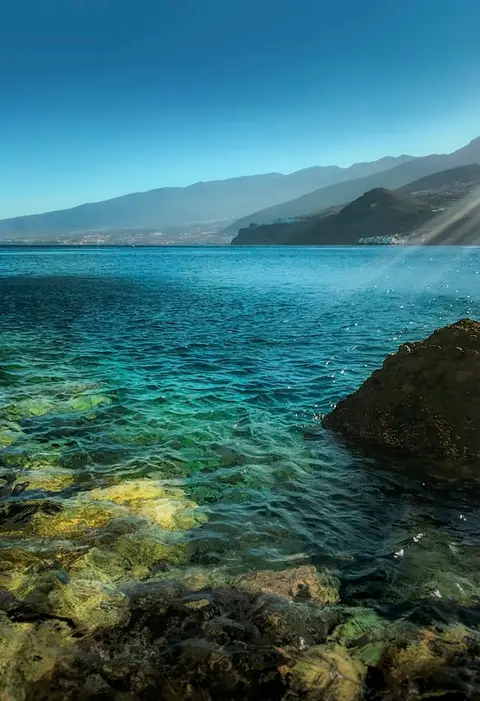
Santa Cruz de Tenerife, the cosmopolitan capital of the Canary Islands, balances volcanic grandeur with refined urban pleasures — from the Santiago Calatrava–designed Auditorio rising beside the Atlantic to the ancient dragon tree at Icod de los Vinos and the World Heritage Teide volcano looming above the island. The city's Carnival, second in scale only to Rio de Janeiro's, erupts each February in spectacular costumes and street revelry. Local wines from the volcanic slopes, wrinkled potatoes with mojo verde, and fresh Atlantic fish define the island's culinary character. November through April offers reliably warm, sun-drenched conditions.
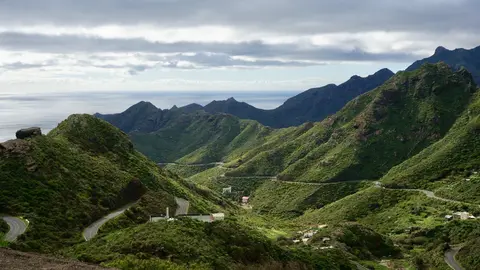
El Hierro is the Canary Islands' smallest and westernmost island—once the world's prime meridian and now the first island powered entirely by renewable energy—with dramatic volcanic landscapes and exceptional diving in the clear Atlantic waters. Must-dos include diving the Mar de las Calmas, standing at the Golfo Valley viewpoint overlooking the ancient landslide amphitheater, and visiting the renewable energy installation. The mild Canarian climate offers pleasant conditions year-round.
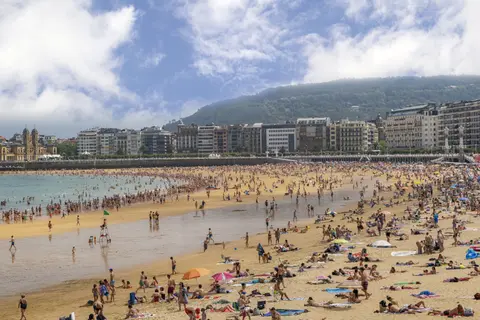
San Sebastián de La Gomera is the tranquil capital of a UNESCO Biosphere Reserve in the Canary Islands — the very harbour from which Columbus departed for the New World in 1492. Visitors should lose themselves in the primordial laurel forests of Garajonay National Park and taste almogrote, the island's singular smoked-cheese spread, at a hillside terrace overlooking the Atlantic. The mild subtropical climate makes La Gomera rewarding year-round, though late spring and autumn offer the clearest skies for hiking the cloud forest trails.
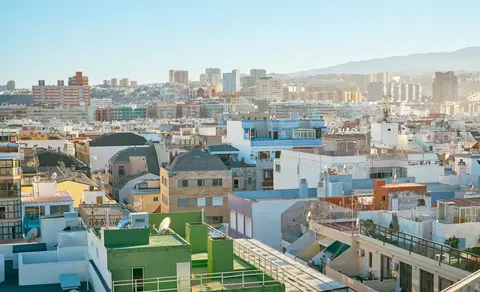
Las Palmas de Gran Canaria, a historic port city founded in 1478, offers a rich tapestry of culture, architecture, and culinary delights. Must-do experiences include sampling **papas arrugadas** at the Mercado de Vegueta and exploring the charming streets of Vegueta. The best time to visit is during the mild spring months when the weather is ideal for outdoor exploration.
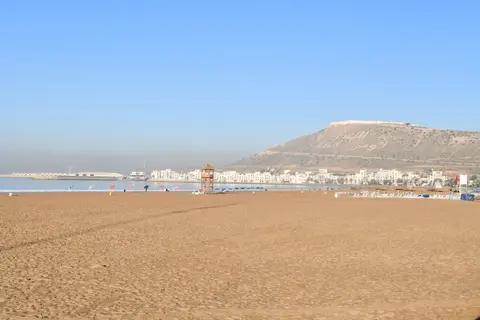
Agadir is southern Morocco's premier coastal resort, rebuilt after a devastating 1960 earthquake into a modern city framed by a magnificent six-kilometer beach and the Atlas Mountains. Feast on just-caught sardines grilled at the harbor, shop for argan oil at the vast Souk El Had, and day-trip to the palm-shaded swimming pools of Paradise Valley. October through April provides ideal temperatures, with Azamara, Costa, and Viking calling at the commercial port.
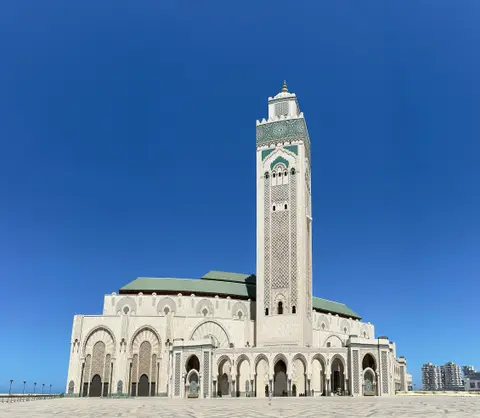
Casablanca is Morocco's largest city, a striking fusion of Berber heritage, French colonial art deco architecture, and contemporary ambition anchored by the towering Hassan II Mosque on the Atlantic shore. Visitors should not miss the Central Market's freshly grilled seafood and a half-day excursion to the imperial capital Rabat or the UNESCO-listed fortress of Aït Ben Haddou. The optimal season for cruising into Casablanca is April through June or September through November, when temperatures hover between twenty and twenty-seven degrees and the Atlantic light renders the white city at its most luminous.
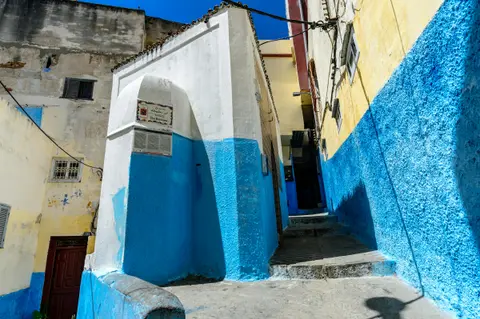
Tangier is Morocco's storied gateway between Africa and Europe, a city of Phoenician origins where a whitewashed medina, vibrant souks, and a cosmopolitan waterfront converge at the Strait of Gibraltar. Visitors should not miss savouring traditional pastilla in a rooftop riad and exploring the Kasbah's amber-lit ramparts at sunset. The ideal season to arrive is April through June or September through October, when mild Mediterranean temperatures and fewer crowds allow the city's layered beauty to reveal itself at an unhurried, luxurious pace.
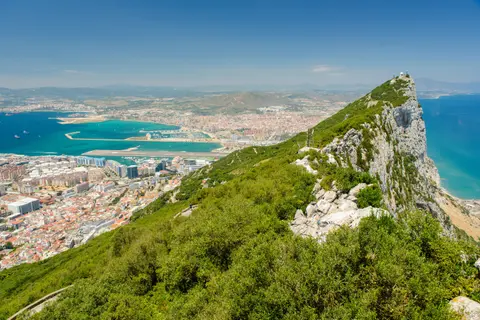
Gibraltar is a British Overseas Territory perched at the southern tip of the Iberian Peninsula, where the Mediterranean meets the Atlantic beneath an iconic limestone monolith steeped in over a millennium of contested history. No visit is complete without ascending the Rock to encounter the Barbary macaques and the panoramic views stretching to North Africa, followed by a plate of calentita — the territory's beloved Genoese-heritage chickpea bake — at a Main Street bakery. The mild Mediterranean climate makes Gibraltar a rewarding port call year-round, though spring and early autumn offer the clearest skies for spotting whales and dolphins in the Strait.
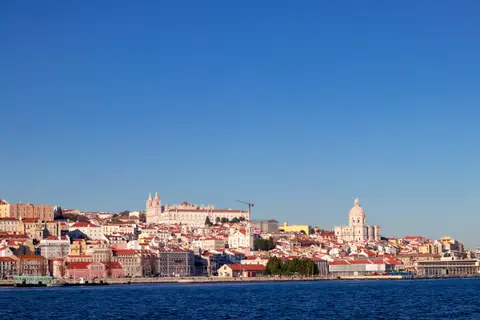
Lisbon, Portugal's enchanting capital, stands out for its rich history, stunning architecture, and vibrant culture. Must-try experiences include savoring local dishes like bacalhau à brás and pastéis de nata at Mercado da Ribeira. The best time to visit is during the spring or fall, when the weather is mild and the city is alive with festivals and events.
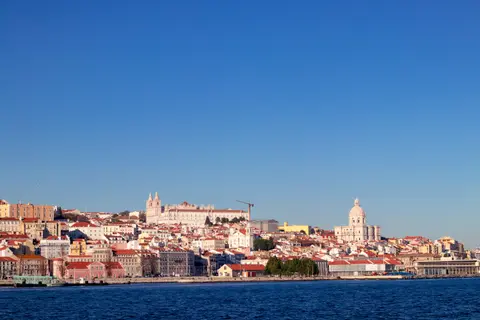
Lisbon, Portugal's enchanting capital, stands out for its rich history, stunning architecture, and vibrant culture. Must-try experiences include savoring local dishes like bacalhau à brás and pastéis de nata at Mercado da Ribeira. The best time to visit is during the spring or fall, when the weather is mild and the city is alive with festivals and events.
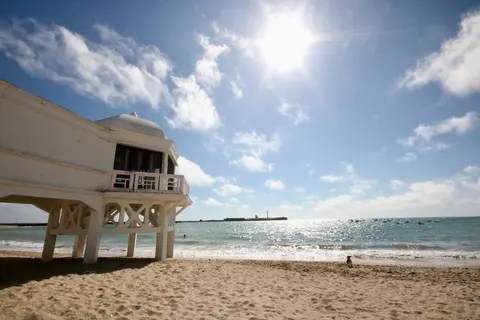
Cádiz, founded by Phoenician traders around 1100 BC and a strong contender for the oldest continuously inhabited city in Western Europe, juts into the Atlantic on a narrow peninsula where honey-colored ramparts frame improbable views of open ocean and the sun sets directly into the sea. The old quarter is an intoxicating labyrinth of baroque churches, hidden plazas, and carnival spirit — Cádiz's annual February carnival is the wildest and most satirically sharp in Spain — while the tapas culture here, centered on fresh Atlantic seafood cooked with Andalusian simplicity, represents Spanish cuisine at its most elemental and joyful. Visit February for carnival or spring for gentle Atlantic breezes. Seville is ninety minutes inland by bus or rail.

Funchal — Madeira's radiant capital, its name derived from the wild fennel that greeted Portuguese settlers in 1419 — cascades down volcanic hillsides to a deep-water harbour that has welcomed mariners and wanderers for six centuries. The Reid's Palace, opened in 1891, remains one of the Atlantic's most legendary hotels, its clifftop terraces commanding views that inspired Churchill, Shaw, and a century of distinguished guests. The city's floating flower market, levada walks through ancient laurisilva forest, and the exhilarating toboggan descent from Monte combine for days of effortless discovery. The subtropical climate makes Funchal appealing year-round, with spring particularly spectacular for wildflowers.
Ponta Delgada, on São Miguel Island, is the capital of the Azores archipelago of Portugal. The striking, 3-arched city gates and the Gothic-style Church of St. Sebastian are near the harbor. The Convent and Chapel of Our Lady of Hope houses a revered image of Christ. The Carlos Machado Museum offers diverse artifacts of Azorean culture. The city is a gateway to the crater lakes of Sete Cidades, to the northwest.
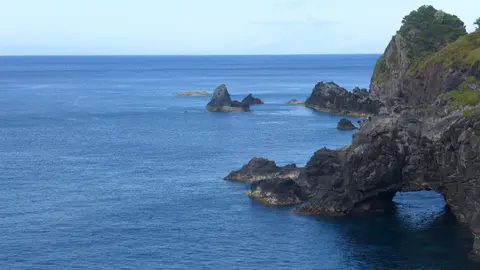
Praia da Vitoria, Azores, Portugal is a distinctive port city where deep cultural heritage meets authentic local atmosphere, featured on itineraries by Ambassador Cruise Line. Must-do experiences include walking the historic center to experience the layered architectural heritage, and seeking out the regional culinary traditions at a locally favored establishment away from the port area. The optimal time to visit is May through September, when mild temperatures and long days favor unhurried exploration.

Leixões is the cruise port for Porto — UNESCO's dramatic river city where 20,000 azulejo tiles line a railway station, port wine lodges offer centuries of vintage tastings, and the Ribeira district cascades to the Douro in granite-and-tile splendor. Visit June via Celebrity or Ambassador Cruise Line for the São João festival and authentic Porto character.
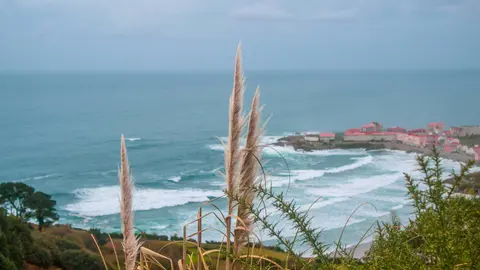
La Coruña, the Atlantic gateway to Spain's verdant Galicia region, is home to the Tower of Hercules — the world's oldest functioning Roman lighthouse and a UNESCO World Heritage Site — and a waterfront of luminous glass galleries unlike anything else in Europe. Visitors should not miss savouring pulpo á feira and wild percebes at the local markets, nor the short journey to Santiago de Compostela along the Camino. Late spring through early autumn offers the mildest weather, with September providing warm days, golden light, and fewer crowds along the granite streets of the Ciudad Vieja.
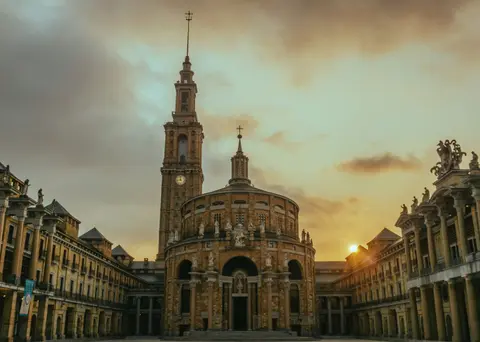
Gijón is a refined Atlantic port city on Spain's Asturian coast, where a three-thousand-year history, a celebrated cider and culinary culture, and the dramatic headland quarter of Cimadevilla converge to create one of Iberia's most compelling yet uncrowded cruise destinations. Visitors should not miss the traditional cider houses of Cimadevilla and a day trip to the Picos de Europa via Cangas de Onís. The finest months to visit are May through September, when long coastal evenings and mild Cantabrian weather reveal the city at its luminous best.

Bilbao is the Basque Country's cultural capital, where Frank Gehry's iconic Guggenheim Museum anchors a city transformed from industrial port to world-class destination. Visitors should not miss the pintxo bars of the Casco Viejo and the extraordinary Michelin-starred dining scene, alongside the museum's titanium splendor. The ideal months to visit are May through October, when mild Atlantic weather bathes the city in soft light perfect for exploring its riverside promenades and nearby Rioja wine country.
La Pallice, La Rochelle, France is a compelling Mediterranean port in France where centuries of history, vibrant local cuisine, and luminous coastal scenery converge. Visitors should explore the historic quarters on foot and surrender to the local dining culture, where fresh seafood and regional wines provide a masterclass in Mediterranean living. Best visited May through October, when the climate is at its most welcoming for outdoor exploration. Cruise lines including Ambassador Cruise Line feature this port on their most compelling itineraries. Whether you have a few hours or a full day, the port rewards exploration at every pace and in every direction.
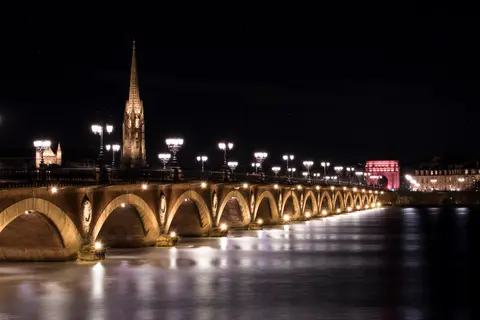
Bordeaux, France's premier port city, is renowned for its historical significance, stunning architecture, and world-class wine. Must-do experiences include savoring local delicacies at Marché des Quais and exploring the breathtaking art installations at Place de la Bourse. The best season to visit is during the late spring and early autumn, when the weather is pleasant and the vineyards are in full bloom.
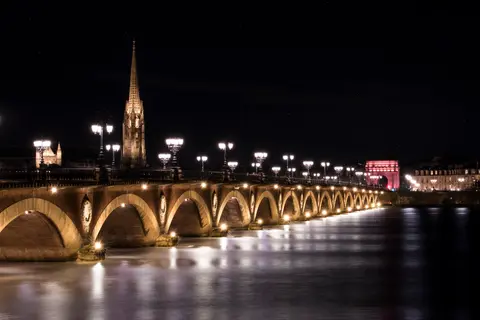
Bordeaux, France's premier port city, is renowned for its historical significance, stunning architecture, and world-class wine. Must-do experiences include savoring local delicacies at Marché des Quais and exploring the breathtaking art installations at Place de la Bourse. The best season to visit is during the late spring and early autumn, when the weather is pleasant and the vineyards are in full bloom.

Brest is Brittany's principal Atlantic port, where seventeen centuries of naval heritage meet vibrant Breton culture in a city rebuilt with defiant spirit after wartime destruction. Visitors should explore the ancient Château de Brest, feast on buckwheat galettes and Cancale oysters, and take excursions to the dramatic Crozon Peninsula. May through September is ideal, especially during the biennial Fêtes Maritimes tall ship festival.
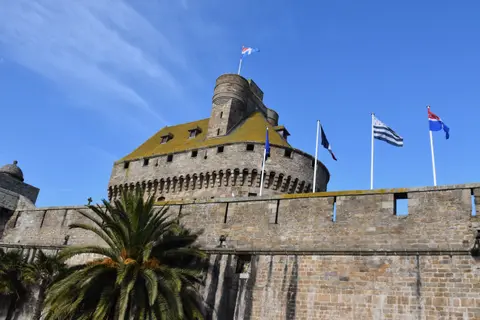
Saint-Malo is a historic fortified port city in France, renowned for its maritime heritage and picturesque architecture. Must-do experiences include savoring local delicacies like galettes and oysters while exploring its charming cobbled streets. The best time to visit is during the summer months when the city comes alive with vibrant festivals and outdoor activities.
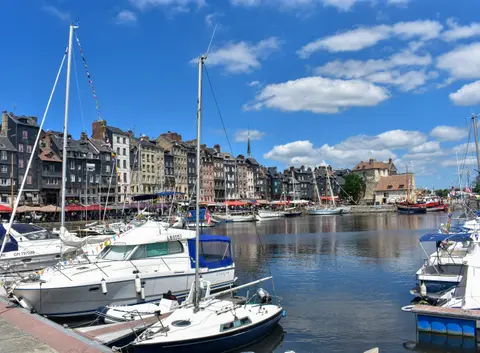
Honfleur, a historic port in Normandy, is known for its stunning waterfront and vibrant artistic heritage, having been a launching point for significant voyages like Samuel de Champlain's to Quebec. Don’t miss the chance to savor local specialties such as moules marinières and tarte normande while exploring the charming cobbled streets. The best time to visit is during the spring and summer months when the town bursts into bloom and outdoor dining thrives.
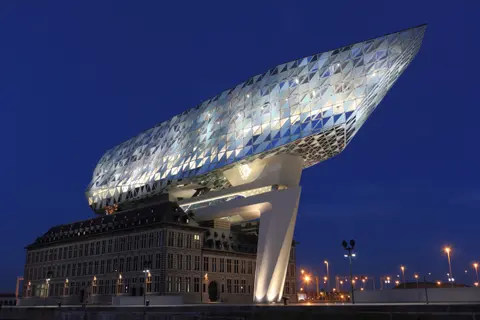
Antwerp has been one of Europe's great mercantile capitals since the fifteenth century, when it commanded the world's first commodity exchange and Peter Paul Rubens made it the artistic capital of the Baroque world — a legacy preserved in the magnificent Rubenshuis studio and the soaring Cathedral of Our Lady, whose nave houses four of the master's greatest altarpieces. Today the city leads global fashion from the acclaimed Antwerp Six design school and remains the diamond capital of the world, with 84% of the world's rough diamonds trading through its storied district. Visit in spring or autumn; Brussels and Bruges are each under an hour away by train.
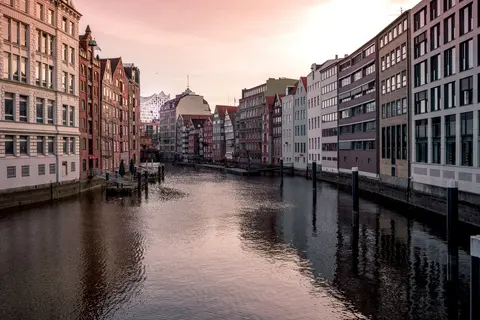
Hamburg — once the 'Gateway to the World' and still Germany's greatest port — combines Hanseatic grandeur with an unmatched contemporary creative energy. The Speicherstadt, a vast nineteenth-century brick warehouse district now housing design studios, museums, and the Elbphilharmonie concert hall perched dramatically above the Elbe, exemplifies the city's gift for transforming history into living culture. The Reeperbahn's legendary nightlife, the Alster lake's elegant promenades, and an exceptional restaurant scene anchored by the finest fresh fish from the daily harbour market complete an irresistible portrait. Hamburg rewards visits year-round, though May through September offers the longest, most luminous days.
Day 1
Miami is a city of perpetual reinvention — the Art Deco jewel of South Beach giving way to the street-art murals of Wynwood, the Cuban rhythms of Calle Ocho, and the glass-and-steel towers of a skyline that has redrawn itself every decade since Julia Tuttle convinced Henry Flagler to extend his railroad south in 1896. Must-dos include strolling the pastel-fronted Ocean Drive at dusk and exploring the world-class collections at the Pérez Art Museum Miami overlooking Biscayne Bay. November through April delivers idyllic weather — warm and dry — while summer brings heat, humidity, and hurricane risk. Miami handles cruise departures elegantly, with the Port of Miami a short taxi ride from the best neighbourhoods.
Day 3
Key West is the southernmost point of the continental United States, a tropical island of Victorian conch houses, Hemingway's six-toed cats, and the only living coral reef in the country. Must-dos include touring the Hemingway Home, tasting authentic Key lime pie and conch fritters, and watching the sunset spectacle at Mallory Square. November through April offers the most comfortable weather with lower humidity and warm ocean temperatures.
Day 4
Day 5
On Mexico's Southern Caribbean coast, Costa Maya blends ancient Maya heritage with turquoise Caribbean beauty in one of the region's most unspoiled cruising destinations. The nearby archaeological site of Chacchoben — its jungle-shrouded temples dating to 200 AD — rewards those who venture inland with an atmosphere of genuine discovery, far from the well-trodden ruins of the north. The protected Mesoamerican Barrier Reef, the world's second largest, offers exceptional snorkelling and diving directly offshore. November through April guarantees dry, sunny days with crystalline visibility in the water — the ideal season for exploring both reef and rainforest.
Day 6
Sacred pilgrimage island of the ancient Maya and now Mexico's most celebrated diving destination, Cozumel offers two distinct experiences in perfect combination. The vast Palancar Reef — part of the Mesoamerican Barrier Reef system — delivers some of the Caribbean's most spectacular underwater scenery, with drift diving through canyons draped in black coral and sea fans. Ashore, San Miguel's colourful streetlife, fresh ceviche, and handcrafted silver jewellery invite leisurely exploration. Diving conditions are excellent year-round, though November through April brings the clearest visibility and the calmest seas for surface excursions.
Day 7
Progreso is the Yucatán Peninsula's principal cruise gateway, offering access to Chichén Itzá, the elegant colonial city of Mérida, and some of Mexico's most distinctive cuisine, including cochinita pibil and papadzules. The region's archaeological treasures, cenote-studded limestone landscape, and rich Maya heritage make it one of the Western Caribbean's most culturally rewarding ports of call. Visit between November and April for warm, dry weather ideal for exploring ruins and coastline alike.
Day 8
Day 9
Once the wealthiest city per capita in the United States and nicknamed the 'Wall Street of the Southwest', Galveston retains a dignity that speaks of extraordinary ambition and resilience — the great 1900 storm that killed up to 12,000 people was answered not with retreat but with the construction of a massive seawall and the audacious raising of the entire island. The Victorian and Romanesque architecture of The Strand historic district, the Bishop's Palace, and the East End's ornate 'Oleander City' mansions tell the story of a gilded age. The island's 32 miles of Gulf beaches attract visitors year-round; spring and autumn offer the most temperate conditions.
Day 10
Day 11
New Orleans is a culturally rich Gulf Coast port city where French, African, Spanish, and Caribbean influences converge in a tapestry of jazz, Creole cuisine, and architectural splendor. Visitors should not miss the char-grilled oysters and beignets that define the local table, nor an evening wandering Frenchmen Street as live jazz spills from every doorway. October through April offers the most comfortable climate, with the cooler months bringing festival season — including Mardi Gras and Jazz Fest — when the city's legendary spirit reaches its most magnificent crescendo.
Day 13
Day 14
The Port of Tampa is a bustling maritime hub rich in history and culture, known for its vibrant Ybor City and diverse culinary scene. Must-do experiences include savoring a Cuban sandwich and exploring the local markets. The best season to visit is during the spring, when the weather is pleasant and outdoor activities abound.
Day 15
Day 16
Miami is a city of perpetual reinvention — the Art Deco jewel of South Beach giving way to the street-art murals of Wynwood, the Cuban rhythms of Calle Ocho, and the glass-and-steel towers of a skyline that has redrawn itself every decade since Julia Tuttle convinced Henry Flagler to extend his railroad south in 1896. Must-dos include strolling the pastel-fronted Ocean Drive at dusk and exploring the world-class collections at the Pérez Art Museum Miami overlooking Biscayne Bay. November through April delivers idyllic weather — warm and dry — while summer brings heat, humidity, and hurricane risk. Miami handles cruise departures elegantly, with the Port of Miami a short taxi ride from the best neighbourhoods.
Day 17
Key West is the southernmost point of the continental United States, a tropical island of Victorian conch houses, Hemingway's six-toed cats, and the only living coral reef in the country. Must-dos include touring the Hemingway Home, tasting authentic Key lime pie and conch fritters, and watching the sunset spectacle at Mallory Square. November through April offers the most comfortable weather with lower humidity and warm ocean temperatures.
Day 18
Day 19
Day 20
Jost Van Dyke is a tiny, uncommercialised island in the British Virgin Islands named after a Dutch privateer, celebrated for its pristine white-sand beaches, legendary beach bars, and barefoot Caribbean culture. Visitors should not miss savouring a Painkiller cocktail at the Soggy Dollar Bar on White Bay and exploring the granite grottos of The Baths on nearby Virgin Gorda. The dry season from December through April offers the most radiant sailing conditions and calm turquoise waters, making it the ideal window for a luxury small-ship call at this intimate Caribbean gem.
Day 21
Gustavia, the capital of Saint Barthélemy, is a charming port known for its luxurious yachts, vibrant boutiques, and rich historical tapestry. Must-do experiences include exploring Fort Karl for stunning views and indulging in local dishes like accras de morue while enjoying the sun at Colombier Beach. The best season to visit is from December to April, when the weather is pleasantly warm and the island is bustling with activity.
Day 22
St. John's, Antigua's storied capital, anchors a natural harbor that has drawn seafarers since the seventeenth century, its Georgian cathedral and pastel-painted market hall bearing quiet witness to a complex colonial past. The crown jewel lies an hour's drive away at Nelson's Dockyard in English Harbour — the world's only still-functioning Georgian naval dockyard, set against the turquoise waters of one of the Caribbean's finest anchorages. Antigua's warm, dry climate makes it a year-round destination, though the exhilarating Sailing Week regatta in late April draws the most glamorous international crowd.
Day 23
Fort-de-France, Martinique's gracious capital, blends French metropolitan sophistication with deep Caribbean soul in a way that no other island quite replicates. The Bibliothèque Schoelcher, a beautiful Art Nouveau building transported piece by piece from Paris for the 1889 World's Fair, anchors a downtown of wrought-iron balconies and aromatic spice markets. The surrounding countryside offers rum distilleries — some of the finest aged agricole rums in the world — dramatic rainforest hikes, and the haunting ruins of Saint-Pierre, destroyed by Mont Pelée's catastrophic 1902 eruption. December through May brings the driest, sunniest weather on this endlessly captivating island.
Day 24
Marigot Bay is a famously beautiful narrow inlet on Saint Lucia's western coast, so sheltered that an entire British fleet once hid within its palm-fringed embrace. Visitors should dine on Creole-spiced fresh catch at waterside restaurants, take a water taxi to the bay's beach, and excursion to the iconic UNESCO Pitons and Soufriere sulphur springs. January through April offers the driest weather and most reliable sunshine.
Day 25
Bridgetown, Barbados's compact and convivial capital, carries three centuries of uninterrupted British colonial heritage — a UNESCO World Heritage Site of Georgian townhouses, coral-stone churches, and the Garrison Savannah, whose racecourse is the oldest in the Western Hemisphere — all infused with the irresistible rhythms of a proud Caribbean nation. The island's culinary scene has matured into one of the Caribbean's most sophisticated, with flying fish cutter sandwiches from roadside stalls competing for devotion with the elegant seafood preparations of the Platinum Coast's celebrated restaurants. Visit December through May for the driest season; the island's sheltered west coast offers superlative year-round sailing conditions.
Day 26
Mayreau is the smallest inhabited island in the Grenadines, a car-free Caribbean gem with fewer than three hundred residents, the exquisite Salt Whistle Bay beach, and views across the pristine Tobago Cays Marine Park. Must-do experiences include snorkelling with sea turtles in the Tobago Cays, feasting on fresh grilled lobster, and watching sunset from the hilltop church. January through May's dry season offers the most reliable weather.
Day 27
Day 28
Kralendijk, Bonaire's compact and colorful Dutch Caribbean capital, is a gateway to some of the hemisphere's most pristine coral reefs and one of the few Caribbean destinations where conservation genuinely shapes the visitor experience. Shore diving along the Bonaire National Marine Park's sixty-three marked sites and exploring the flamingo colonies of Washington Slagbaai National Park are essential pursuits. The dry season from November through April offers ideal conditions, with steady trade winds and virtually no rainfall.
Day 29
Willemstad, the capital of Curaçao, is a vibrant port city celebrated for its colorful architecture and rich history. Must-do experiences include trying local delicacies like "keshi yena" and exploring the stunning beaches of Playa Kenepa. The best season to visit is during the dry months from December to April, when the weather is ideal for exploring both the city and its beautiful surroundings.
Day 30
Oranjestad shimmers with an unlikely elegance — Dutch colonial architecture painted in ochre, terracotta, and sky-blue lining streets just fifteen miles off the Venezuelan coast, in a perpetual trade wind that keeps the island blissfully dry and golden-skied almost every day of the year. The island's Arikok National Park preserves ancient Caquetío petroglyphs, a rugged volcanic interior, and the dramatic Natural Pool carved from black rock on the windward coast. Eagle Beach, consistently ranked among the finest beaches in the Caribbean, lies minutes from the capital. Aruba's reliably brilliant weather — average 29°C with near-zero hurricane risk — makes it genuinely year-round, though December through April is the classic season.
Day 31
Day 32
St. George's, Grenada, is a vibrant port known for its rich history, stunning architecture, and fragrant markets brimming with local spices. Must-do experiences include savoring the local delicacies at the Market Square and exploring nearby Carriacou Island for its tranquil beaches. The best season to visit is from December to April, when the weather is pleasantly warm and dry.
Day 33
Marigot Bay is a famously beautiful narrow inlet on Saint Lucia's western coast, so sheltered that an entire British fleet once hid within its palm-fringed embrace. Visitors should dine on Creole-spiced fresh catch at waterside restaurants, take a water taxi to the bay's beach, and excursion to the iconic UNESCO Pitons and Soufriere sulphur springs. January through April offers the driest weather and most reliable sunshine.
Day 34
Day 35
Day 36
Day 37
Day 38
Day 39
Mindelo, on the island of São Vicente, is Cape Verde's cultural capital — a harbour city of pastel colonial facades, vibrant street art, and the soulful musical heritage of Cesária Évora. Visitors should savour *cachupa rica* at a waterfront restaurant and take the ferry to Santo Antão for world-class hiking through terraced volcanic valleys. The best time to call is between November and June, when the trade winds temper the tropical heat and transatlantic cruise itineraries converge on Porto Grande's magnificent natural bay.
Day 40
Porto Novo on Santo Antão, Cape Verde, is the gateway to one of the Atlantic's finest hiking islands, where dramatic volcanic mountains separate an arid southern coast from impossibly green terraced valleys of sugarcane and tropical fruit. Must-dos include the spectacular mountain road to Ribeira Grande, hiking the Paul Valley, and tasting local goat cheese with grogue rum. November through June's dry season provides the clearest skies for mountain exploration.
Day 41
Day 42
Day 43
Santa Cruz de la Palma is the charming capital of La Palma, known for its colonial architecture and rich maritime history. Must-do experiences include savoring local dishes like "papas arrugadas" and exploring the stunning landscapes of Taburiente National Park. The best time to visit is during the spring and fall months when the weather is mild and perfect for outdoor adventures.
Day 44
Santa Cruz de Tenerife, the cosmopolitan capital of the Canary Islands, balances volcanic grandeur with refined urban pleasures — from the Santiago Calatrava–designed Auditorio rising beside the Atlantic to the ancient dragon tree at Icod de los Vinos and the World Heritage Teide volcano looming above the island. The city's Carnival, second in scale only to Rio de Janeiro's, erupts each February in spectacular costumes and street revelry. Local wines from the volcanic slopes, wrinkled potatoes with mojo verde, and fresh Atlantic fish define the island's culinary character. November through April offers reliably warm, sun-drenched conditions.
Day 45
El Hierro is the Canary Islands' smallest and westernmost island—once the world's prime meridian and now the first island powered entirely by renewable energy—with dramatic volcanic landscapes and exceptional diving in the clear Atlantic waters. Must-dos include diving the Mar de las Calmas, standing at the Golfo Valley viewpoint overlooking the ancient landslide amphitheater, and visiting the renewable energy installation. The mild Canarian climate offers pleasant conditions year-round.
Day 46
San Sebastián de La Gomera is the tranquil capital of a UNESCO Biosphere Reserve in the Canary Islands — the very harbour from which Columbus departed for the New World in 1492. Visitors should lose themselves in the primordial laurel forests of Garajonay National Park and taste almogrote, the island's singular smoked-cheese spread, at a hillside terrace overlooking the Atlantic. The mild subtropical climate makes La Gomera rewarding year-round, though late spring and autumn offer the clearest skies for hiking the cloud forest trails.
Day 47
Las Palmas de Gran Canaria, a historic port city founded in 1478, offers a rich tapestry of culture, architecture, and culinary delights. Must-do experiences include sampling **papas arrugadas** at the Mercado de Vegueta and exploring the charming streets of Vegueta. The best time to visit is during the mild spring months when the weather is ideal for outdoor exploration.
Day 48
Day 49
Agadir is southern Morocco's premier coastal resort, rebuilt after a devastating 1960 earthquake into a modern city framed by a magnificent six-kilometer beach and the Atlas Mountains. Feast on just-caught sardines grilled at the harbor, shop for argan oil at the vast Souk El Had, and day-trip to the palm-shaded swimming pools of Paradise Valley. October through April provides ideal temperatures, with Azamara, Costa, and Viking calling at the commercial port.
Day 50
Day 51
Casablanca is Morocco's largest city, a striking fusion of Berber heritage, French colonial art deco architecture, and contemporary ambition anchored by the towering Hassan II Mosque on the Atlantic shore. Visitors should not miss the Central Market's freshly grilled seafood and a half-day excursion to the imperial capital Rabat or the UNESCO-listed fortress of Aït Ben Haddou. The optimal season for cruising into Casablanca is April through June or September through November, when temperatures hover between twenty and twenty-seven degrees and the Atlantic light renders the white city at its most luminous.
Day 52
Tangier is Morocco's storied gateway between Africa and Europe, a city of Phoenician origins where a whitewashed medina, vibrant souks, and a cosmopolitan waterfront converge at the Strait of Gibraltar. Visitors should not miss savouring traditional pastilla in a rooftop riad and exploring the Kasbah's amber-lit ramparts at sunset. The ideal season to arrive is April through June or September through October, when mild Mediterranean temperatures and fewer crowds allow the city's layered beauty to reveal itself at an unhurried, luxurious pace.
Day 53
Gibraltar is a British Overseas Territory perched at the southern tip of the Iberian Peninsula, where the Mediterranean meets the Atlantic beneath an iconic limestone monolith steeped in over a millennium of contested history. No visit is complete without ascending the Rock to encounter the Barbary macaques and the panoramic views stretching to North Africa, followed by a plate of calentita — the territory's beloved Genoese-heritage chickpea bake — at a Main Street bakery. The mild Mediterranean climate makes Gibraltar a rewarding port call year-round, though spring and early autumn offer the clearest skies for spotting whales and dolphins in the Strait.
Day 54
Day 55
Lisbon, Portugal's enchanting capital, stands out for its rich history, stunning architecture, and vibrant culture. Must-try experiences include savoring local dishes like bacalhau à brás and pastéis de nata at Mercado da Ribeira. The best time to visit is during the spring or fall, when the weather is mild and the city is alive with festivals and events.
Day 57
Lisbon, Portugal's enchanting capital, stands out for its rich history, stunning architecture, and vibrant culture. Must-try experiences include savoring local dishes like bacalhau à brás and pastéis de nata at Mercado da Ribeira. The best time to visit is during the spring or fall, when the weather is mild and the city is alive with festivals and events.
Day 58
Cádiz, founded by Phoenician traders around 1100 BC and a strong contender for the oldest continuously inhabited city in Western Europe, juts into the Atlantic on a narrow peninsula where honey-colored ramparts frame improbable views of open ocean and the sun sets directly into the sea. The old quarter is an intoxicating labyrinth of baroque churches, hidden plazas, and carnival spirit — Cádiz's annual February carnival is the wildest and most satirically sharp in Spain — while the tapas culture here, centered on fresh Atlantic seafood cooked with Andalusian simplicity, represents Spanish cuisine at its most elemental and joyful. Visit February for carnival or spring for gentle Atlantic breezes. Seville is ninety minutes inland by bus or rail.
Day 59
Day 60
Funchal — Madeira's radiant capital, its name derived from the wild fennel that greeted Portuguese settlers in 1419 — cascades down volcanic hillsides to a deep-water harbour that has welcomed mariners and wanderers for six centuries. The Reid's Palace, opened in 1891, remains one of the Atlantic's most legendary hotels, its clifftop terraces commanding views that inspired Churchill, Shaw, and a century of distinguished guests. The city's floating flower market, levada walks through ancient laurisilva forest, and the exhilarating toboggan descent from Monte combine for days of effortless discovery. The subtropical climate makes Funchal appealing year-round, with spring particularly spectacular for wildflowers.
Day 61
Day 62
Ponta Delgada, on São Miguel Island, is the capital of the Azores archipelago of Portugal. The striking, 3-arched city gates and the Gothic-style Church of St. Sebastian are near the harbor. The Convent and Chapel of Our Lady of Hope houses a revered image of Christ. The Carlos Machado Museum offers diverse artifacts of Azorean culture. The city is a gateway to the crater lakes of Sete Cidades, to the northwest.
Day 63
Praia da Vitoria, Azores, Portugal is a distinctive port city where deep cultural heritage meets authentic local atmosphere, featured on itineraries by Ambassador Cruise Line. Must-do experiences include walking the historic center to experience the layered architectural heritage, and seeking out the regional culinary traditions at a locally favored establishment away from the port area. The optimal time to visit is May through September, when mild temperatures and long days favor unhurried exploration.
Day 64
Day 65
Day 66
Leixões is the cruise port for Porto — UNESCO's dramatic river city where 20,000 azulejo tiles line a railway station, port wine lodges offer centuries of vintage tastings, and the Ribeira district cascades to the Douro in granite-and-tile splendor. Visit June via Celebrity or Ambassador Cruise Line for the São João festival and authentic Porto character.
Day 67
La Coruña, the Atlantic gateway to Spain's verdant Galicia region, is home to the Tower of Hercules — the world's oldest functioning Roman lighthouse and a UNESCO World Heritage Site — and a waterfront of luminous glass galleries unlike anything else in Europe. Visitors should not miss savouring pulpo á feira and wild percebes at the local markets, nor the short journey to Santiago de Compostela along the Camino. Late spring through early autumn offers the mildest weather, with September providing warm days, golden light, and fewer crowds along the granite streets of the Ciudad Vieja.
Day 68
Gijón is a refined Atlantic port city on Spain's Asturian coast, where a three-thousand-year history, a celebrated cider and culinary culture, and the dramatic headland quarter of Cimadevilla converge to create one of Iberia's most compelling yet uncrowded cruise destinations. Visitors should not miss the traditional cider houses of Cimadevilla and a day trip to the Picos de Europa via Cangas de Onís. The finest months to visit are May through September, when long coastal evenings and mild Cantabrian weather reveal the city at its luminous best.
Day 69
Bilbao is the Basque Country's cultural capital, where Frank Gehry's iconic Guggenheim Museum anchors a city transformed from industrial port to world-class destination. Visitors should not miss the pintxo bars of the Casco Viejo and the extraordinary Michelin-starred dining scene, alongside the museum's titanium splendor. The ideal months to visit are May through October, when mild Atlantic weather bathes the city in soft light perfect for exploring its riverside promenades and nearby Rioja wine country.
Day 71
La Pallice, La Rochelle, France is a compelling Mediterranean port in France where centuries of history, vibrant local cuisine, and luminous coastal scenery converge. Visitors should explore the historic quarters on foot and surrender to the local dining culture, where fresh seafood and regional wines provide a masterclass in Mediterranean living. Best visited May through October, when the climate is at its most welcoming for outdoor exploration. Cruise lines including Ambassador Cruise Line feature this port on their most compelling itineraries. Whether you have a few hours or a full day, the port rewards exploration at every pace and in every direction.
Day 72
Bordeaux, France's premier port city, is renowned for its historical significance, stunning architecture, and world-class wine. Must-do experiences include savoring local delicacies at Marché des Quais and exploring the breathtaking art installations at Place de la Bourse. The best season to visit is during the late spring and early autumn, when the weather is pleasant and the vineyards are in full bloom.
Day 74
Bordeaux, France's premier port city, is renowned for its historical significance, stunning architecture, and world-class wine. Must-do experiences include savoring local delicacies at Marché des Quais and exploring the breathtaking art installations at Place de la Bourse. The best season to visit is during the late spring and early autumn, when the weather is pleasant and the vineyards are in full bloom.
Day 75
Brest is Brittany's principal Atlantic port, where seventeen centuries of naval heritage meet vibrant Breton culture in a city rebuilt with defiant spirit after wartime destruction. Visitors should explore the ancient Château de Brest, feast on buckwheat galettes and Cancale oysters, and take excursions to the dramatic Crozon Peninsula. May through September is ideal, especially during the biennial Fêtes Maritimes tall ship festival.
Day 76
Saint-Malo is a historic fortified port city in France, renowned for its maritime heritage and picturesque architecture. Must-do experiences include savoring local delicacies like galettes and oysters while exploring its charming cobbled streets. The best time to visit is during the summer months when the city comes alive with vibrant festivals and outdoor activities.
Day 77
Honfleur, a historic port in Normandy, is known for its stunning waterfront and vibrant artistic heritage, having been a launching point for significant voyages like Samuel de Champlain's to Quebec. Don’t miss the chance to savor local specialties such as moules marinières and tarte normande while exploring the charming cobbled streets. The best time to visit is during the spring and summer months when the town bursts into bloom and outdoor dining thrives.
Day 78
Antwerp has been one of Europe's great mercantile capitals since the fifteenth century, when it commanded the world's first commodity exchange and Peter Paul Rubens made it the artistic capital of the Baroque world — a legacy preserved in the magnificent Rubenshuis studio and the soaring Cathedral of Our Lady, whose nave houses four of the master's greatest altarpieces. Today the city leads global fashion from the acclaimed Antwerp Six design school and remains the diamond capital of the world, with 84% of the world's rough diamonds trading through its storied district. Visit in spring or autumn; Brussels and Bruges are each under an hour away by train.
Day 80
Day 81
Hamburg — once the 'Gateway to the World' and still Germany's greatest port — combines Hanseatic grandeur with an unmatched contemporary creative energy. The Speicherstadt, a vast nineteenth-century brick warehouse district now housing design studios, museums, and the Elbphilharmonie concert hall perched dramatically above the Elbe, exemplifies the city's gift for transforming history into living culture. The Reeperbahn's legendary nightlife, the Alster lake's elegant promenades, and an exceptional restaurant scene anchored by the finest fresh fish from the daily harbour market complete an irresistible portrait. Hamburg rewards visits year-round, though May through September offers the longest, most luminous days.
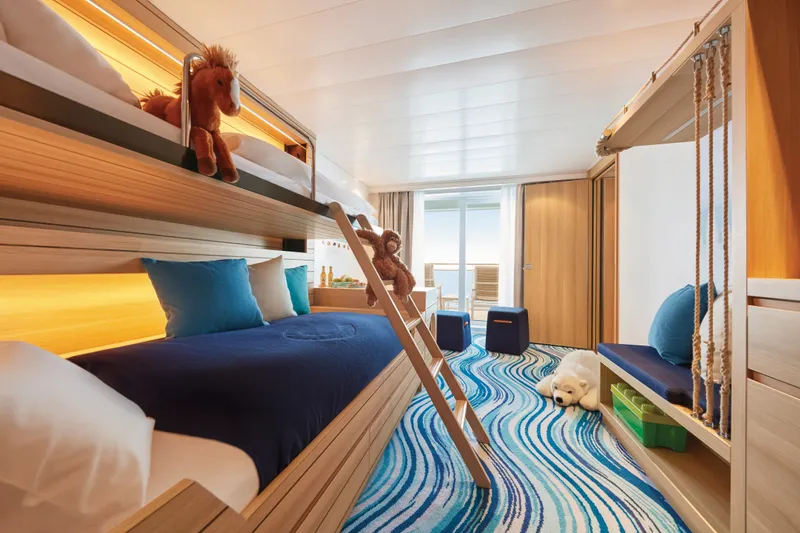
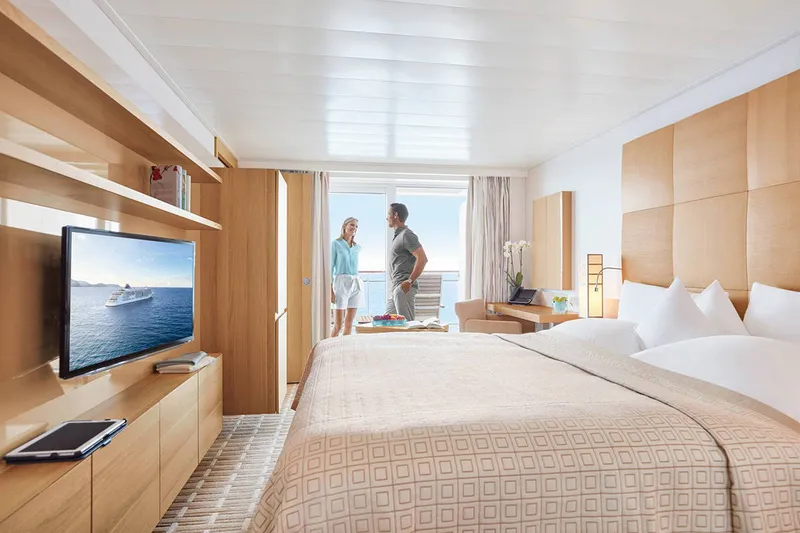

In the family apartment, parents and children live in two separate sections that are connected with each other by a door and via the veranda.
Living area: 2× 20 m²; veranda: 2× 7 m²
Connecting door between the rooms and verandas.
Separate WCs.
Free mini bar (beer and soft drinks).
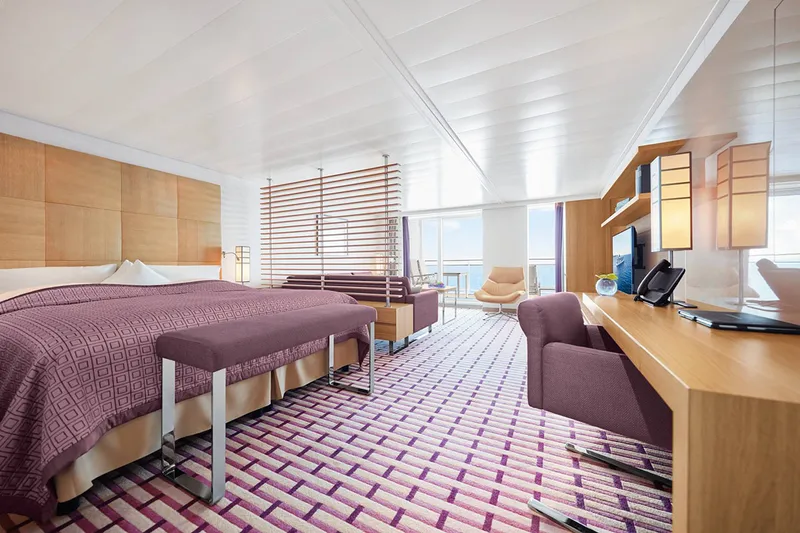
Private oasis of wellbeing and stylish relaxation zone – in the Spa Suite, everyday life is nothing but a distant memory. Indulge your body and soul at the highest level – with warm shades and a spa bathroom with panoramic views of the sea.
Living area: 42 m²; veranda: 10 m².
Bathroom with two washbasins.
Separate WC..
Butler service.
Daylight in the bathroom.
TV in the bathroom mirror.
Rain shower with steam sauna.
Whirlpool tub.
Free mini bar (beer, soft drinks and a selection of high-quality spirits)
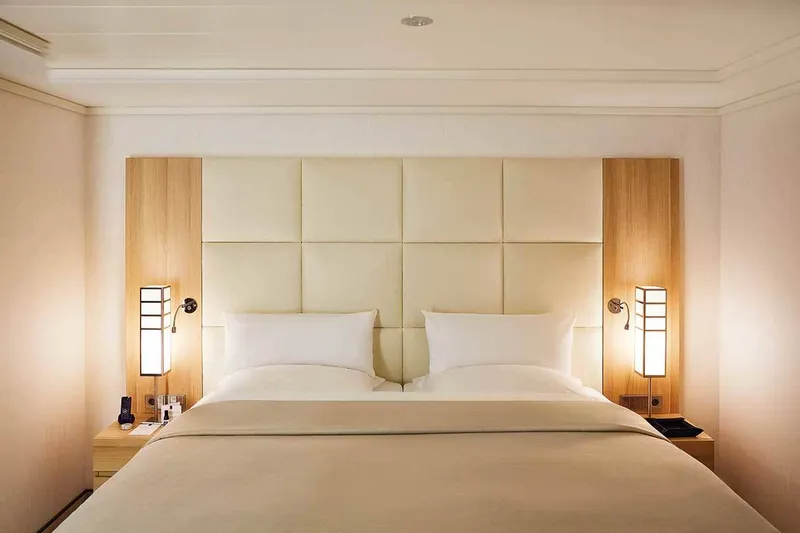
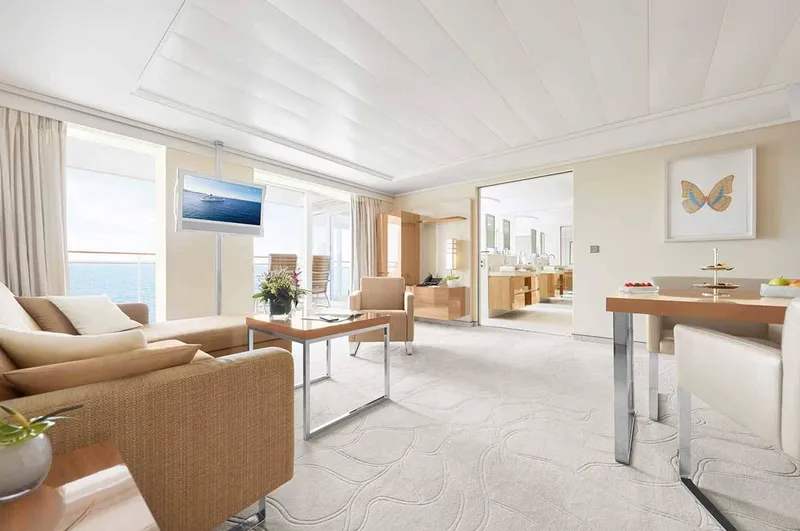

In the Grand Penthouse Suite you can enjoy lavishness at sea and experience an exclusive break of superior quality – on a daybed with view of the endless sea or while taking a bath in the middle of the ocean in your private whirlpool.
Living area: 78 m²; veranda: 10 m²
Separate living and sleeping areas.
Separate dining table.
Guest WC.
Bathroom with two washbasins.
Shower with steam sauna.
Whirlpool.
Daybed and TV in the bathroom area
Spacious walk-in wardrobe
Butler service
Free mini-bar (beer, soft drinks and a selection of high-quality spirits).
Further exclusive service privileges.
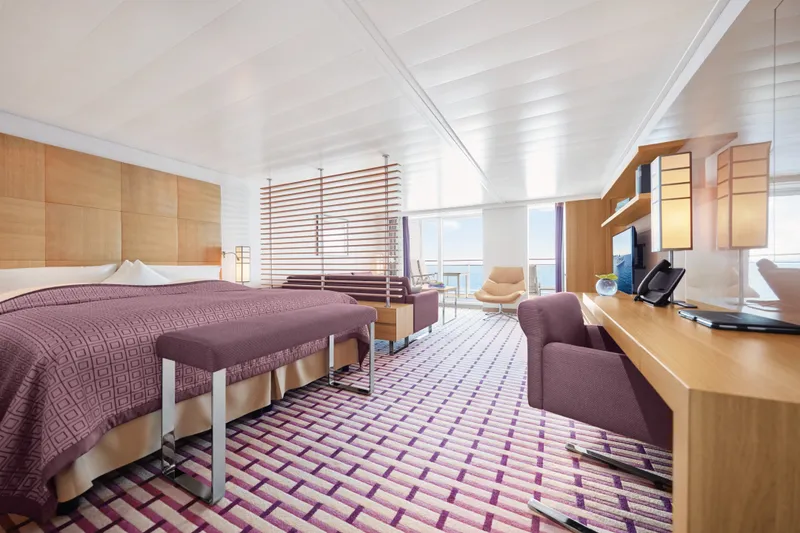
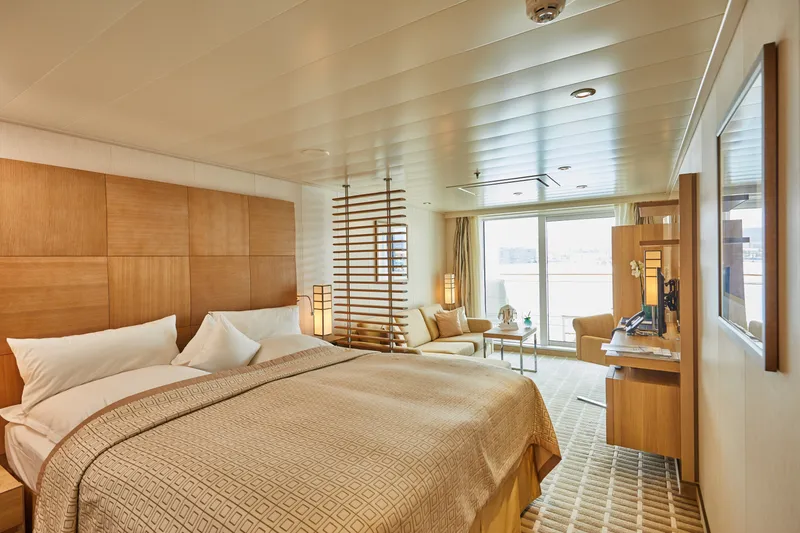
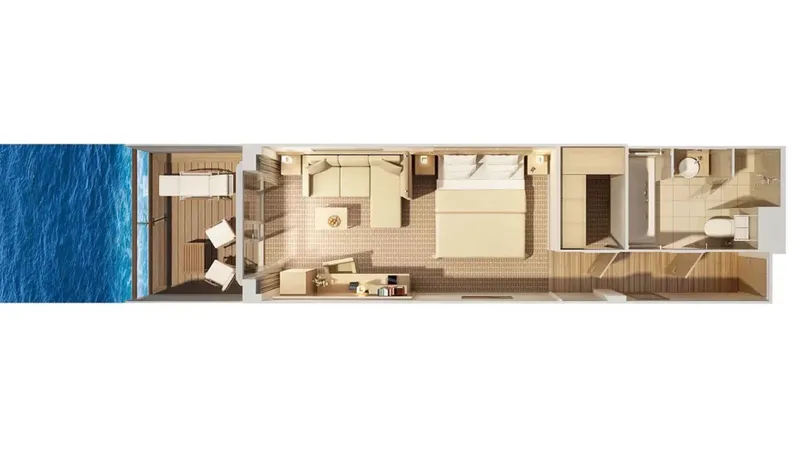
Guaranteed Suite
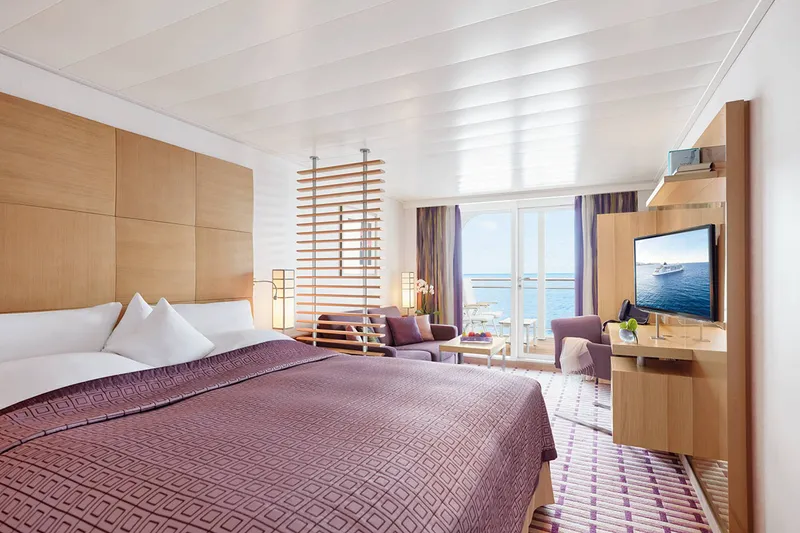
Living area: 28 m² (301 ft²)
Veranda: 7 m² (75 ft²)
Natural light in the bathroom
Bathroom with two sinks
Whirlpool tub and separate shower
Separate toilet
Free mini bar
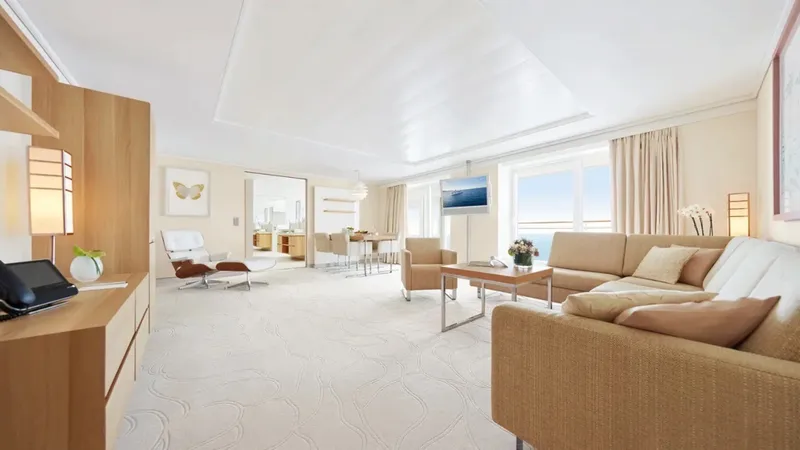
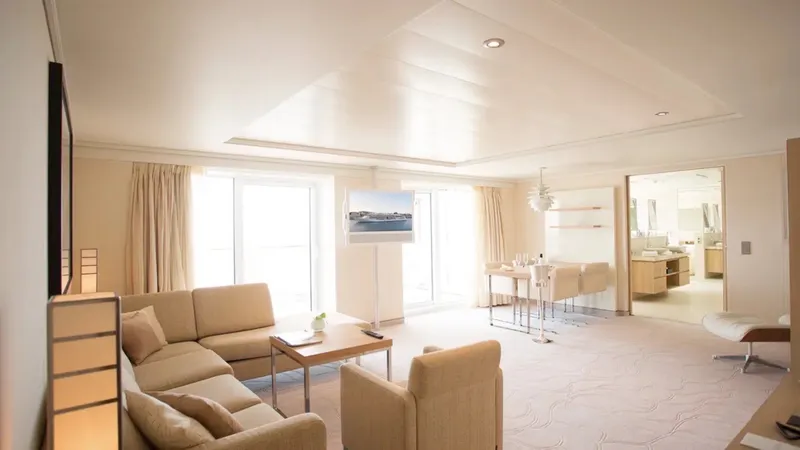

The Owner’s Suite is far more than our most exclusive suite; it is a select domicile on the oceans of the world. Enjoy every imaginable convenience on more than 114 square metres of personal freedom.
Living area: 99 m²; veranda: 15 m².
Separate living and sleeping areas.
Separate dining table.
Guest WC.
Bathroom with two washbasins.
Shower with steam sauna.
Whirlpool.
Daybed and TV in the bathroom area.
Spacious walk-in wardrobe.
Butler service.
Free mini bar (beer, soft drinks and a selection of high-quality spirits).
Further exclusive service privileges.
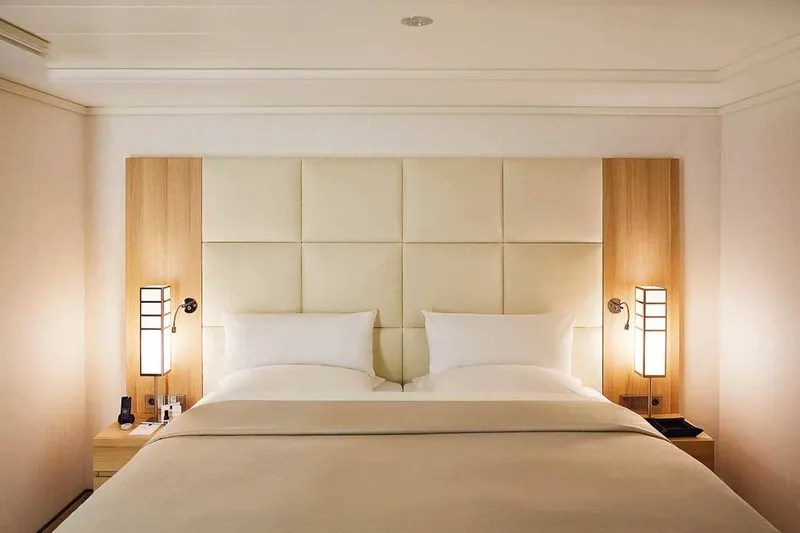
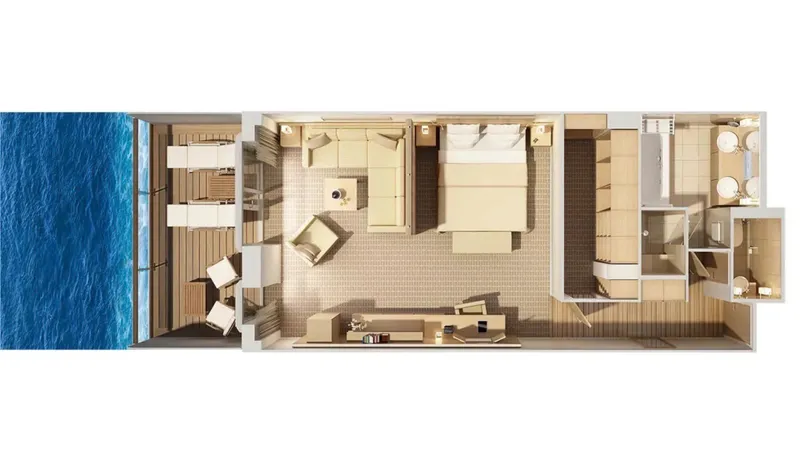

A fantastically spacious suite with every conceivable comfort, uniquely located on the upper decks – is there a more beautiful place to relax? In the Grand Suite, you can enjoy the endless views of the sea and the conveniences of a classical Grand Suite.
Living area: 42 m²; veranda: 10 m².
Bathroom with two washbasins.
Separate WC.
Butler service.
TV in the bathroom mirror.
Walk-in wardrobe.
Bathtub and separate shower.
Free mini bar (beer, soft drinks and a selection of high-quality spirits).
The Grand Suite is also available with facilities suitable for the physically disabled.
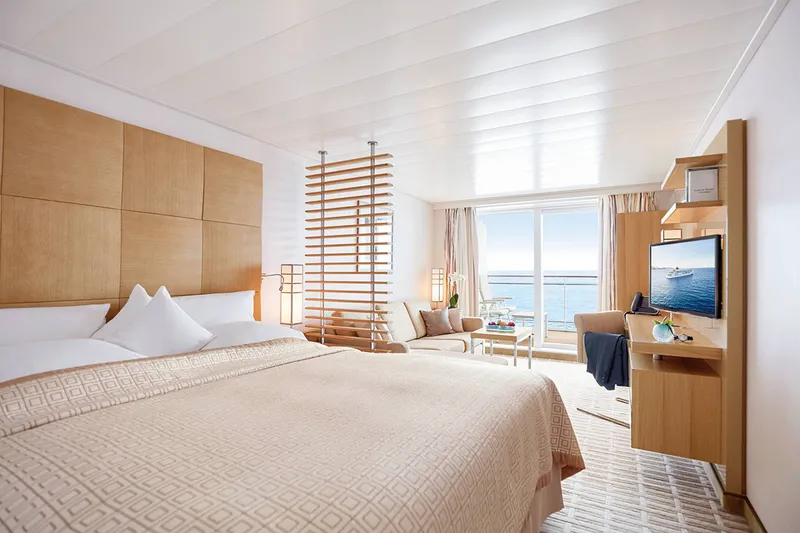
Living area: 28 m² (301 ft²)
Veranda: 7 m² (75 ft²)
Walk-in wardrobe
Exclusive living area with a chaise longue
Bathtub and separate shower
Free mini bar
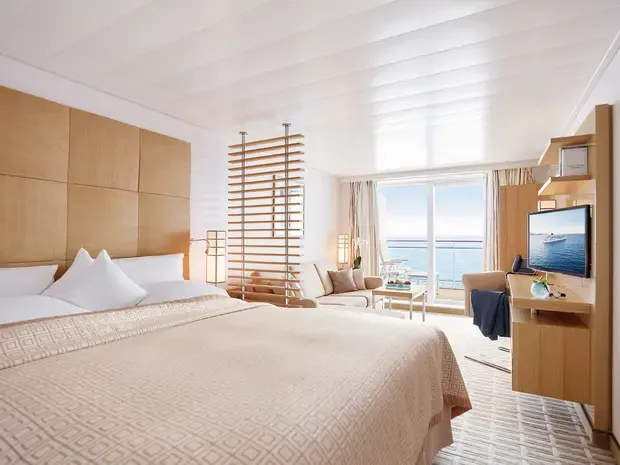
Guaranteed Balcony
Our cruise specialists can help you find the perfect cabin and the best available pricing.
(+886) 02-2721-7300Contact Advisor