Date
November 7, 2026
Duration
24 nights
Departure Port
Southampton · United Kingdom
Arrival Port
Rio de Janeiro · Brazil
Rating
Resort
Theme
—
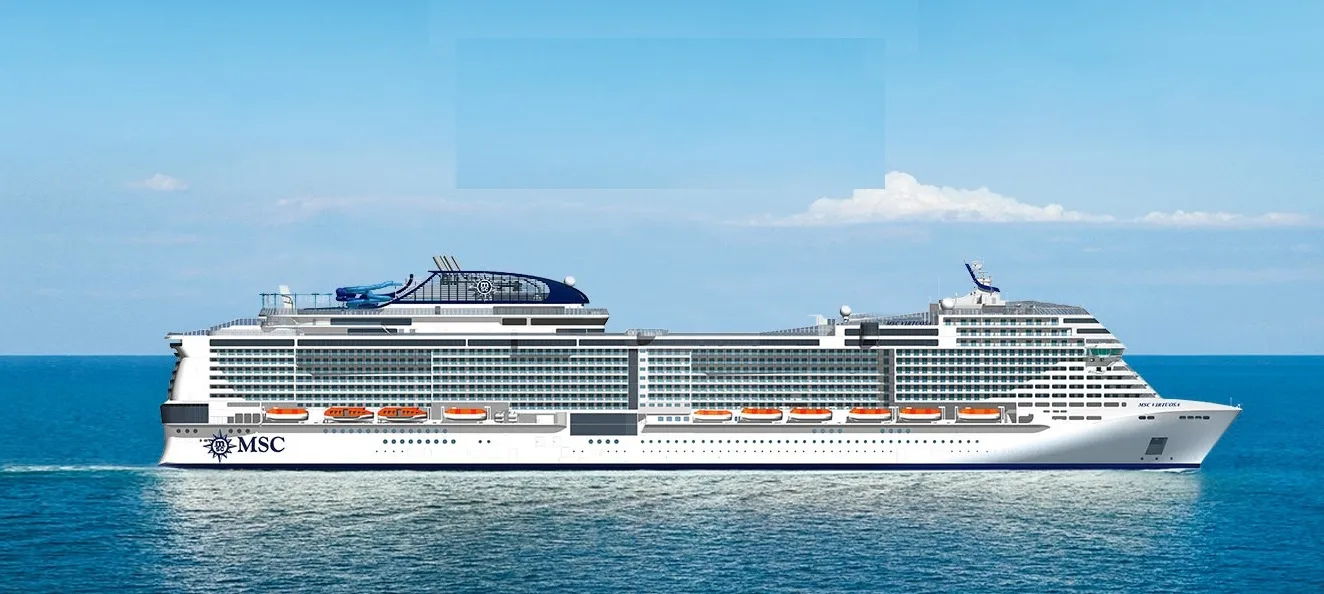


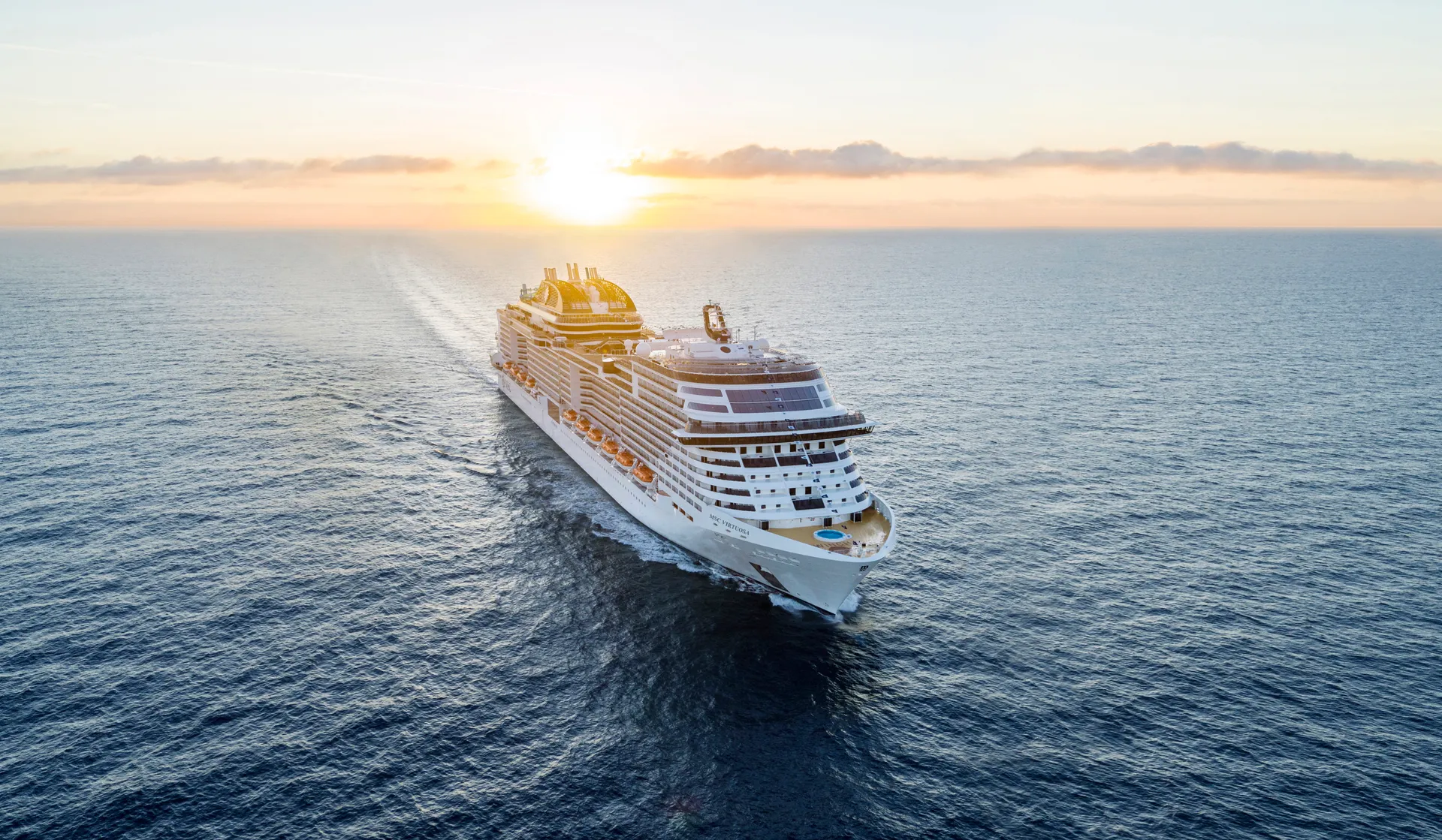
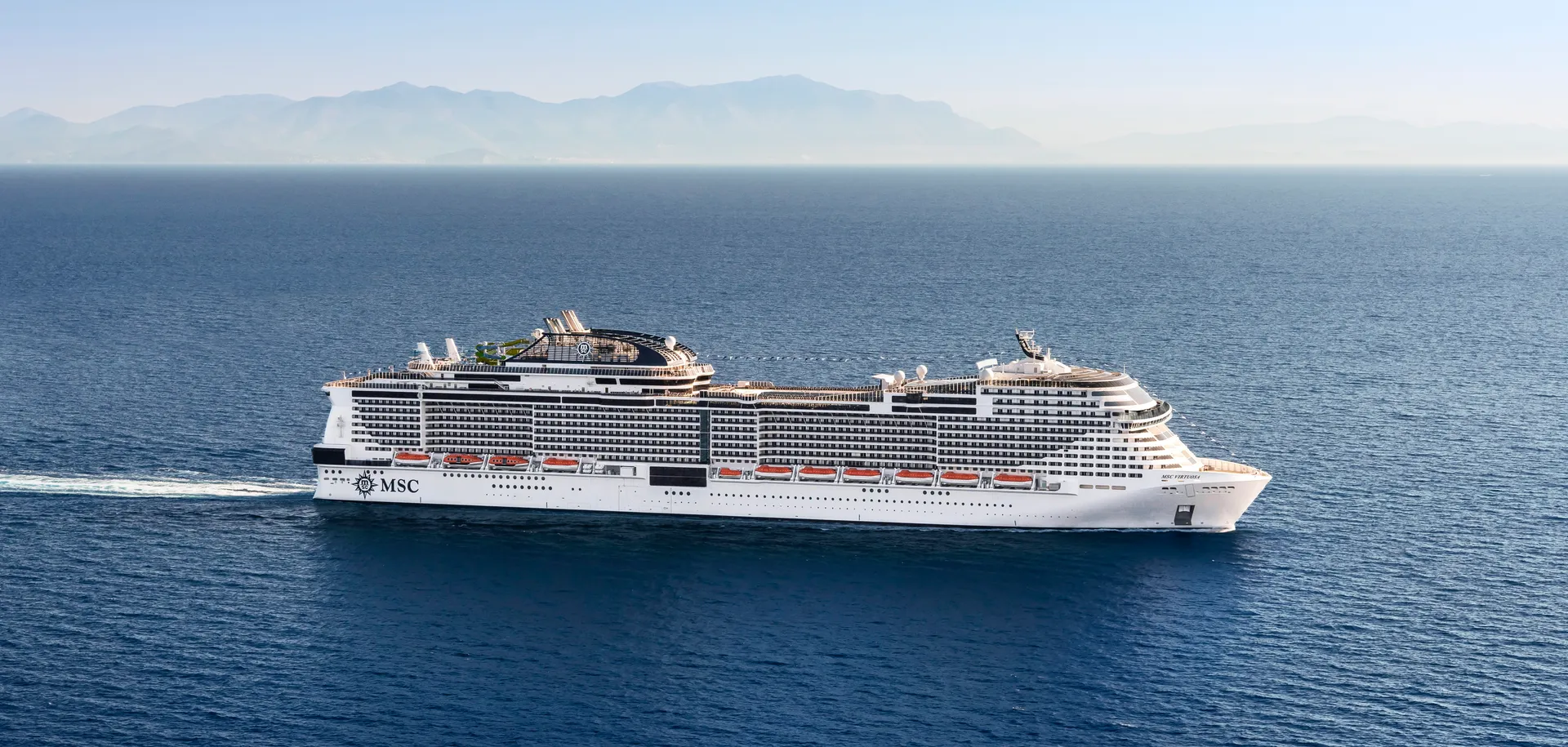
MSC Cruises
Meraviglia Plus
2019
—
181,541 GT
6,334
2,421
1,704
1092 m
43 m
22 knots
No


Cruises from Southampton are part of a storied maritime heritage. Famous ships have sailed from Southampton port and, before commercial air travel, it was the gateway to the world with Hollywood celebrities like Bette Davis and Elizabeth Taylor passing through to board a Southampton cruise. In its atmospheric Old Town, 12th-century churches, cobbled streets, and timber-framed houses like the impressive Tudor House & Garden sit side-by-side, surrounded by one of the most complete Medieval city walls in the UK where the Bargate – the ancient entrance – still stands intact. There are bustling marina-side bars, shiny shopping districts and a vibrant cultural quarter where the Mayflower Theatre puts on West End musicals and the SeaCity Museum catalogues Southampton’s seafaring past. Some of England’s most impressive landmarks are an easy drive away, including the Neolithic wonder Stonehenge, the picturesque spa city Bath or Buckingham Palace, Tate Modern and Tower Bridge in the bustling capital of London. Discover 5,000 years of history and more on a Southampton cruise.


La Coruсa, the largest city in Spain's Galicia region, is among the country's busiest ports. The remote Galicia area is tucked into the northwest corner of the Iberian Peninsula, surprising visitors with its green and misty countryside that is so much unlike other parts of Spain. The name “Galicia” is Celtic in origin, for it was the Celts who around the 6th century BC occupied the region and constructed fortified defenses. La Coruсa was already a busy port under the Romans.They were followed by an invasion of Suevians, Visigoths and, much later in 730, the Moors. It was after Galicia was incorporated into the Kingdom of Asturias that the epic saga of the Pilgrimage to Santiago (St. James) began. From the 15th century, overseas trade developed rapidly; in 1720, La Coruсa was granted the privilege of trading with America - a right previously only held by Cadiz and Seville. This was the great era when adventurous men voyaged to the colonies and returned with vast riches. Today, the city's significant expansion is evident in three distinct quarters: the town center located along the isthmus; the business and commercial center with wide avenues and shopping streets; and the “Ensanche” to the south, built up with warehouses and industry. Many of the buildings in the old section feature the characteristic glazed faзades that have earned La Coruсa the name “City of Crystals.” Plaza Maria Pita, the beautiful main square, is named after the local heroine who saved the town when she seized the English standard from the beacon and gave the alarm, warning her fellow townsmen of the English attack.


More than a hundred watchtowers gaze out across the waves surrounding this ancient Andalusian city. Sprinkled with evocative cobbled side streets, you’ll explore 3,000 years’ worth of history, while stumbling across palm-tree lined plazas of shaded coffee sippers. Cadiz claims the mantle of Western Europe’s oldest city, and every piece of architecture - and every wrong turn - offers a chance to discover fascinating new tales. Founded by the Phoenicians in 1100BC, Christopher Columbus used the city as a base for his exploratory, map-defining voyages of 1493 and 1502. The port grew in importance and wealth as Cadiz’s strategic location close to Africa’s northern tip helped it blossom into a centre for New World trade. Catedral de Cádiz, is a display of the city’s wealth and importance, looming spectacularly over the Atlantic’s waves, with cawing seagulls sweeping between its twin bell towers. Inside, treasures from the city’s trading exploits in the West Indies and beyond - which helped fuel the growth of this historically prosperous city – are on display. Enveloped by ocean on almost every side, Cadiz has something of an island feel, and you can cool off from southern Spain’s unrelenting sunshine on the sweeping golden sand beach of Playa Victoria. The two towers of the new El Puente de la Constitución de 1812 mark a contemporary landmark in this most ancient of cities, in the form of a spectacular new road bridge. Torre Tavira, meanwhile, is the most famous of Cadiz’s army of watchtowers, and the highest point in the city. Reach the top for a view of the ocean fringing the city’s expanse, and to learn about the towers - constructed so trading merchants could survey the harbour from their lavish homes. The Central Market is a chaotic place of bartering, where flashing knives dissect fresh fish. Stop in at the orbiting bars to enjoy tapas, freshly prepared with the market’s produce.


As you sail into Malaga you will notice what an idyllic setting the city enjoys on the famous Costa del Sol. To the east of this provincial capital, the coast along the region of La Axarqua is scattered with villages, farmland and sleepy fishing hamlets - the epitome of traditional rural Spain. To the west stretches a continuous city where the razzmatazz and bustle creates a colourful contrast that is easily recognisable as the Costa del Sol. Surrounding the region, the Penibéetica Mountains provide an attractive backdrop overlooking the lower terraced slopes which yield olives and almonds. This spectacular mountain chain shelters the province from cold northerly winds, giving it a reputation as a therapeutic and exotic place in which to escape from cold northern climes. Malaga is also the gateway to many of Andalusia's enchanting historic villages, towns and cities.


Fresh sea breezes, mountain backdrops and vibrant locals have made this magical city a must-see for both international tourists and residents of Spain alike. It's easy to slip into the local rhythm. Spend your day exploring everything from the Old Town and Santa Bárbara Castle to the trendiest of Spanish stores. Promenade down the marble Explanada de España, an iconic and bustling boulevard dotted with palm trees. Enjoy a proper Spanish lunch that spans several courses and hours, prepared by some of the best chefs in the country. Take advantage of the proximity to the sea to dine on the freshest seafood, or try one of Alicante's many traditional rice dishes. And don’t forget to sample the outstanding regional wines, which are also very tasty souvenirs. Even just a day here will open your eyes to the natural beauty and subtle charms that make proud and elegant Alicante a gem of the Costa Blanca.


The Balearics are comprised of 16 islands; the three principal ones are Mallorca, Ibiza and Minorca. Carthaginians, Romans, Vandals and Arabs have invaded these islands over the centuries. Ruins show evidence of the prehistoric Talayot civilization, a megalithic culture that flourished here between 1500 BC and the Roman conquest. Today the islands are besieged by invaders of a different sort - hordes of tourists. Lying 60 miles (97 km) off the Spanish mainland, the islands' lush and rugged landscape combined with an extremely mild, sunny climate proves irresistible, especially to northern Europeans. As a result, the Balearics boast cosmopolitan resorts with lively nightlife and plenty of sports activities. Mallorca (also spelled Majorca) is the largest of the islands, with an area of more than 1,400 square miles (3626 sq.km). The scenery is magnificent, with cliffs along indented shorelines jutting out of the sea and mountain ranges sheltering the plains from harsh sea breezes. The fertile plain in the centre is covered with almond and fig trees plus olive groves with some trees more than 1,000 years old. Tall pines, junipers and oaks line the mountain slopes. Palma de Mallorca is the capital of the archipelago. A cosmopolitan city with sophisticated shops and restaurants, it also offers buildings of spectacular Moorish and Gothic architecture. In the western part of Mallorca, nestled into the mountains, lies the village of Valldemosa. It is known for its Carthusian Monastery where Frédéric Chopin and George Sand spent the winter of 1838-39.


Marseille is the second largest city in France after Paris. It is also one of the oldest continuously inhabited cities in the Mediterranean. Cave paintings in the nearby Calanques are estimated to be 30,000 years old, and remains of brick habitations date from 6,000 BCE. The more recent history begins with a Hellenic port in about 600 BCE, some remains of which are on view at the city’s History Museum. It has been one of the world’s major seaports almost from its founding, and served as the main European terminus of the French colonial empire in Africa and the Far East. It is located in the Provence-Alpes-Cote d’Azur region and is the capital of the Bouches-du-Rhone department. On an island in the expansive bay of Marseille stands the prison of Chateau d’If made famous by the Alexandre Dumas novel “The Count of Monte Cristo.” The Vieux-Port with its atmospheric buildings and wharves is the area where visitors can search for the perfect example of the local specialty bouillabaisse, a rich fish stew containing at least three, and often more varieties of local fishes. Marseille’s newly renovated port at the venerable Joliette Docks is situated very close to the striking Cathédrale de la Major and the fascinating collections at the Museum of African, Oceanic and American Indian Arts.


On the northeast coast of Spain, overlooking the Mediterranean, Barcelona is a vibrant port city, packed with centuries of iconic art and architecture—Gaudí and Picasso both called it home—and lined with sunny white-sand beaches. Explore the Catalan capital's tourist attractions and historic neighborhoods, Modernisme and world-renowned art museums, galleries and local crafts shops—some of which are centuries old and stock traditional Catalan wares. After you see the sights, there are lively tapas bars around every corner where you can stop for a drink, a café amb llet (Catalan for espresso with steamed milk) or a snack, no matter the hour. Green spaces for picnics, long walks and respite from the hustle and bustle are scattered throughout Barcelona's attractions: There's Gaudí's mosaic-decorated park, a neoclassical maze at the Laberint d'Horta, as well as plenty of high places (mountains, monuments and edifices) where sightseeing visitors can take in the view. A short trip from Barcelona by car or train, luxury outlets, cava wineries, a mountaintop abbey and the sandy beaches of the Mediterranean coast await.


As you arrive in Funchal on an MSC cruise, your ship will cast anchor in a bay protected by mountains rising straight up behind the port. The name, Funchal, derives from that of the fennel plant, the funcho still used today in the traditional sweets known as rebuçados de funcho, that one can find anywhere on the island of Madeira. An excursion will take you around the town centre, to visit historic churches, from the A Sé Cathedral, with its inlaid ceiling, to the majestic Church of the Incarnation, to the church of Carmo without a vault. Another MSC excursion will take you up to the village of Monte, from where one can admire a spectacular view of the Funchal bay. You can visit its 18th century church and the tomb of the last Austrian emperor, Charles I, and stroll around the magnificent botanic gardens. But if you like heights, there’s nothing more impressive than the Cabo Girão and its 589 metre tall cliffs, amongst the highest in the world, at the foot of which lie the cultivated lands known as Fajãs do Cabo Girão. If you’re looking for an equipped beach during your MSC cruise, another excursion will take you to Machico. Founded in the 15th century, it hosts the oldest religious building on the island, the Capela dos Milagres, and the fortresses of São João Baptista and Nossa Senhora do Amparo built in the beginning of the 16th century. The more lively tourist attraction is instead in Calheta, on the south-west coast. Splendid yachts cruising across the Atlantic are moored in the port and if you want to go for a swim there are two beautiful beaches of golden sand; in spite of the modern structures Calheta dates back to the mid-15th century. This is where they make the “Aguardente”, the best white rhum, and fundamental ingredient of Madeira’s typical drink, the “Poncha” .
With its feel of mainland-Spain, spiced up with an eclectic mix of Asian and African cultures, Las Palmas is one of the Canary Island's most popular destinations, attracting sun-seekers who come to relax on its golden-sand beaches and soak up the gorgeous, year-round climate of Gran Canaria. Founded over 500 years ago, Las Palmas is the largest city in the Canary Islands, and has three gorgeous beaches, including Playa de las Canteras, regarded as one of the world's best beaches, to enjoy. Vegueta, the oldest quarter, is both atmospheric and fashionable, with extensive historical architecture plus a fine selection of boutiques and smart bars. At its centre stand the twin towers of Santa Ana Cathedral; started in 1500 but still unfinished, the cathedral has a unique mix of Renaissance, Gothic and Neoclassical styles in its construction. In Plaza Santa Ana, bronze statues of dogs – the Romans named the islands after legendary canines – stand guard over the 17th-century Palacio Regental, the Town Hall and the Bishop's Palace. The sweet arc of Playa de las Canteras at the town’s other end offers the tantalising possibility of taking a dip between sightseeing and shopping. The bewildering maze of streets behind the beach hides many fine restaurants serving an array of wonderful Canarian cuisine.


Though part of Spain, the Canary Islands sit in the open Atlantic Ocean, about 100 kilometers (60 miles) west of Morocco. The mild climate mixed with a rich volcanic landscape and beautiful sandy beaches makes the main city of Santa Cruz, on the largest island of Tenerife, a welcome stop for many cruise voyages. The isolated island is dominated by the Teide volcano, the tallest mountain in Spain and site of one of the world’s most popular national parks. A cable car carries visitors to the top, offering unrivaled views of the island. Travelers interested in learning about the history of the island, its unique wildlife and the population of indigenous people that lived here before the arrival of European settlers should visit the Museum of Nature and Man in Santa Cruz, while architecture buffs can stroll the streets of La Laguna to see colonial-era mansions. And travelers keen on food and wine should venture into the countryside to sample local dishes or make the drive to Casa del Vino, where they can learn about, and taste, local wines while shopping for a bottle or two to bring home.


High above the enormous bay of Todos os Santos (All Saints), where your MSC cruise ship awaits your return, Salvador de Bahia has an electric feel from the moment you arrive. This is the great cultural and historical centre of Brazil, where Afro-Brazilian heritage is strongest and where capoeira, candomblé and samba de roda were created. MSC South America cruises offer excursions to the centro histórico of this magical place, a melange of narrow cobbled streets, peeling purple walls, grand Baroque churches, kids kicking footballs, rastas, locals sipping bottled beer on plastic chairs, the wafting aroma of herbs and the almost constant beating of drums, especially as the sun sets. Beyond the old town Salvador is a vast, sprawling city, with a vibrant beach life, modern skyscrapers and plenty of favelas. The centro histórico is the traditional heart of Salvador; it’s built around the craggy, 70m-high bluff that dominates the eastern side of the bay, and is split into upper and lower sections. Cidade Alta (or simply “Centro”) is strung along its top, linked to the less interesting Cidade Baixa (the old commercial centre, aka “Comércio”) by precipitous streets and the towering Art Deco lift-shaft of the Elevador Lacerda. Cidade Alta is the cultural centre of the city, and the section known as the Pelourinho is the groovy old district with colourful and hilly winding streets, its most vibrant and beguiling neighbourhood. The best spot to begin a walking tour of the city is at the Praça Municipal, the square dominated by the impressive Palácio do Rio Branco, the old governor’s palace which was in use until 1979. The fine interior is a blend of Rococo plasterwork, polished wooden floors and painted walls and ceilings.


As you’ll be able to appreciate when you cruise the Atlantic Ocean with MSC Cruises, in its position on the southern shore of the magnificent Guanabara Bay, Rio de Janeiro has, without a shadow of a doubt, one of the most stunning settings in the world. Extending for 20km along an alluvial strip, between an azure sea and forest-clad mountains, the city’s streets and buildings have been moulded around the foothills of the mountain range that provides its backdrop, while out in the bay there are many rocky islands fringed with white sand. The aerial views over Rio are breathtaking, and even the concrete skyscrapers that dominate the city’s skyline add to the attraction. As the former capital of Brazil and now its second-largest city, Rio has a remarkable architectural heritage, some of the country’s best museums and galleries, superb restaurants and a vibrant nightlife – in addition to its legendary beaches. A shore excursion on your MSC South America cruise can be the opportunity to visit the Pão de Açúcar. The Sugar Loaf Mountain rises where Guanabara Bay meets the Atlantic Ocean. Its name may simply reflect a resemblance to the moulded loaves in which sugar was once commonly sold. Alternatively, it may be a corruption of the indigenous Tamoya word Pau-nh-Açuquá, meaning “high, pointed or isolated hill”. On the top of Corcoavado Mountain instead the Art Deco statue of Cristo Redentor (Christ the Redeemer), arms outstretched in welcome, stands 30m high and weighs over 1000 tonnes. It was supposed to be completed for Brazil’s centenary independence celebrations in 1922, but wasn’t actually finished until 1931. In clear weather, fear no anticlimax: climbing to the statue is a stunning experience, with the whole of Rio and Guanabara Bay laid out before you.


Large balcony with a private whirlpool bath
Walk-in closet
Sitting area with double sofa bed
Bathroom with shower, vanity area and hairdryer
Interactive TV, telephone, safe and minibar
Wi-Fi access available


Balcony
Sitting area with sofa
Comfortable double or single beds (on request)
Spacious wardrobe
Bathroom with shower or bathtub , vanity area with hairdryer
Interactive TV, telephone, Wifi connection included, safe and minibar
Surface approx. 28 sq.m.


Balcony
Sitting area with sofa
Spacious closet
Bathroom with shower or bathtub, vanity area and hairdryer
Interactive TV, telephone, safe and minibar
Complimentary Wi-Fi


MSC Yacht Club Royal Suite with Whirlpool Bath


Balcony
Spacious closet
Bathroom with bathtub, vanity area and hairdryer
Interactive TV, telephone, safe and minibar
Wi-Fi access available
Accommodates up to 6 guests


Large balcony with a private whirlpool bath
Walk-in closet
Sitting area with double sofa bed
Bathroom with shower, vanity area and hairdryer
Interactive TV, telephone, safe and minibar
Wi-Fi access available


Sitting area with sofa
Comfortable double or single beds (on request)
Spacious wardrobe
Bathroom with shower or bathtub , vanity area with hairdryer
Interactive TV, telephone, Wifi connection available (for a fee), safe and minibar
Surface approx. 21 sq. m.*
Discover a world of privileges with MSC Yacht Club


Balcony
Sitting area with sofa
Bathroom with shower or bathtub, vanity area and hairdryer
Interactive TV, telephone, safe and minibar
Wi-Fi access available


Balcony Bella


Balcony
Sitting area with sofa
Bathroom with shower or bathtub, vanity area and hairdryer
Interactive TV, telephone, safe and minibar
Wi-Fi access available


Surface 17 sqm, balcony 6 sqm, deck 8-14.
Sitting area with sofa.
Bathroom with shower or bathtub, vanity area with hairdryer.
Comfortable double or single beds (on request).
Interactive TV, telephone, Wifi connection available (for a fee), safe and minibar.
ZOE - in-cabin Bluetooth speaker.


Balcony
Sitting area with sofa
Bathroom with shower or bathtub, vanity area and hairdryer
Interactive TV, telephone, safe and minibar
Wi-Fi access available


Window with sea view
Relaxing armchair
Bathroom with shower, vanity area and hairdryer
Interactive TV, telephone, safe and minibar
Wi-Fi access available


Window with sea view
Relaxing armchair
Bathroom with shower, vanity area and hairdryer
Interactive TV, telephone, safe and minibar
Wi-Fi access available


Window with sea view
Relaxing armchair
Bathroom with shower, vanity area and hairdryer
Interactive TV, telephone, safe and minibar
Wi-Fi access available


Ocean View Bella


Window with sea view
Relaxing armchair
Bathroom with shower, vanity area and hairdryer
Interactive TV, telephone, safe and minibar
Wi-Fi access available


Relaxing armchair
Bathroom with shower, vanity area and hairdryer
Interactive TV, telephone, safe and minibar
Wi-Fi access available


Bathroom with shower, vanity area and hairdryer
TV, telephone, safe and minibar
Wi-Fi access available


Relaxing armchair
Bathroom with shower, vanity area and hairdryer
Interactive TV, telephone, safe and minibar
Wi-Fi access available
Our cruise specialists can help you find the perfect cabin and the best available pricing.
(+886) 02-2721-7300Contact Advisor