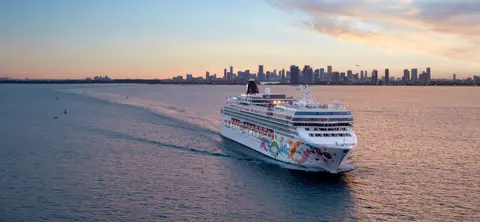
Norwegian Cruise Line22997487
7-Day Greek Isles from Athens to Venice: Greece & Croatia
Date
2026-06-21
Duration
7 nights
Departure Port
Athens (Piraeus)
Greece
Arrival Port
Ravenna
Italy
Rating
—
Theme
—
Date
2026-06-21
Duration
7 nights
Departure Port
Athens (Piraeus)
Greece
Arrival Port
Ravenna
Italy
Rating
—
Theme
—
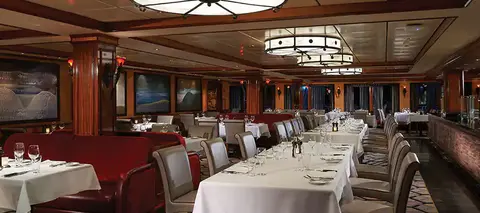
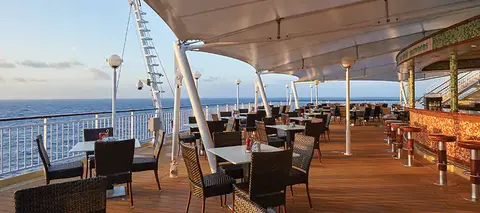
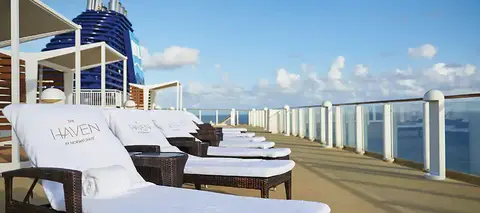
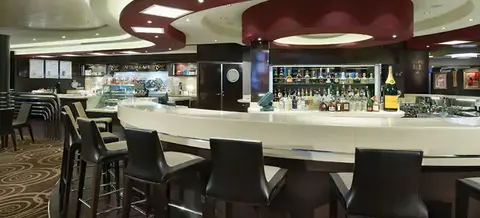
Norwegian Cruise Line
2006
2021
93,530 GT
2,394
1,197
1,099
965 m
32 m
25 knots
No

Piraeus, the bustling port city of Athens, is a vibrant blend of ancient history and modern charm, inviting travelers to explore its rich culture. Must-do experiences include savoring traditional Greek dishes at the Varvakeios Agora and embarking on day trips to nearby islands like Symi and Nydri. The best time to visit is during the spring and fall when the weather is pleasant and the tourist crowds are fewer.
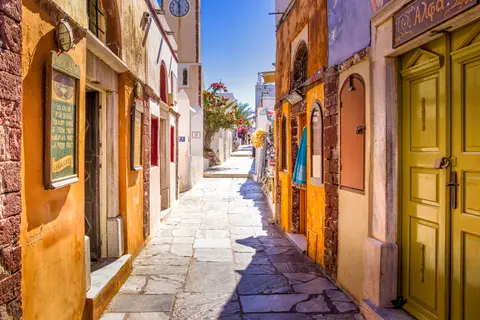
Santorini, the ancient volcanic caldera rising from the Aegean, is Greece's most theatrical landscape — a crescentic island of sheer white cliffs plunging into an indigo sea, its clifftop villages of Fira and Oia draped in bougainvillea and culminating in the world's most photographed sunset. The island's unique Assyrtiko wine, grown on ancient ungrafted vines in volcanic pumice, is one of the Mediterranean's greatest expressions of terroir. Byzantine frescoes of extraordinary beauty fill the Prehistoric Museum of Thera. The volcanic black and red sand beaches of Perissa and Perivolos are unlike any others in Greece. April through June and September through October offer the finest conditions.
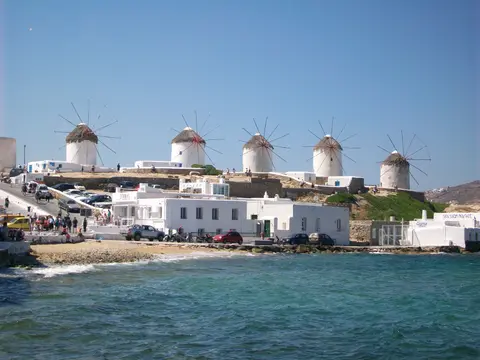
Katakolon is the unassuming port that holds an extraordinary secret: just fourteen kilometres inland lies ancient Olympia, birthplace of the Olympic Games and one of the most sacred sites in the ancient world. The Archaeological Museum of Olympia — housing the breathtaking sculptures from the Temple of Zeus — ranks among Greece's finest, while walking the original stadium still sends a current of wonder through even the most seasoned traveller. The village itself charms with whitewashed tavernas and a relaxed pace that feels authentically Greek. Katakolon is best visited April through October; late spring and early autumn offer ideal temperatures for the Olympia excursion.
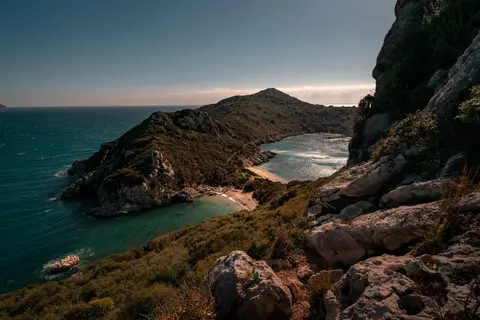
Where Homer placed the island of the Phaeacians and four centuries of Venetian rule left their most enduring Mediterranean legacy, Corfu is a singular island of extraordinary historical depth and natural beauty. The UNESCO-listed Old Town — its narrow Kantounia alleyways, the elegant Liston arcade, and twin Venetian fortresses — is the finest preserved Venetian streetscape in Greece. Beyond the town, secret coves, olive groves of immense antiquity, and mountain villages offer weeks of unhurried discovery. May through June and September offer perfect conditions: warm sea temperatures, clear skies, and the island before or after its summer crescendo.
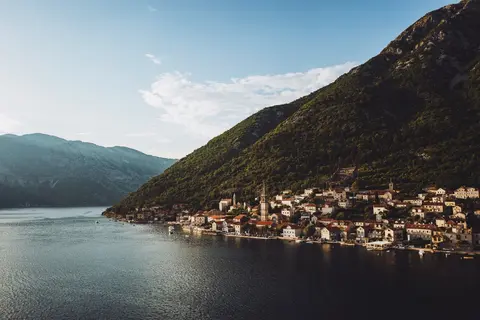
The port of Kotor, a UNESCO World Heritage site, is renowned for its stunning natural beauty and rich historical tapestry. A must-do experience includes wandering the cobblestone streets of the Old Town, where culinary delights like "kacamak" and fresh seafood await. The best time to visit is during the spring or early fall, when the weather is pleasant and the crowds are fewer.
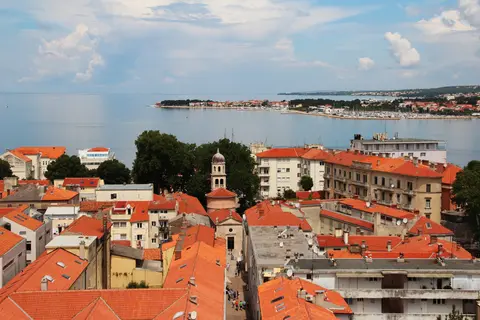
Zadar, a historic port city on Croatia's Dalmatian coast, is a captivating blend of ancient architecture and vibrant culture. Must-do experiences include visiting the Church of St. Donatus and enjoying the enchanting music of the Sea Organ. The best season to visit is during the warm summer months when the city comes alive with festivals and outdoor activities.
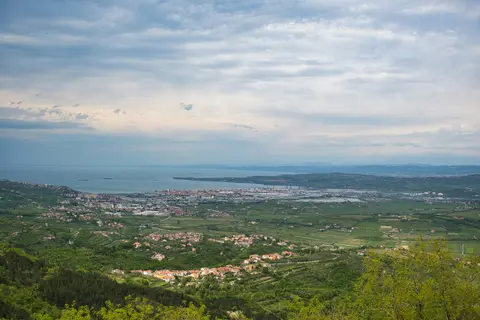
Koper is Slovenia's historic Adriatic port with a beautifully preserved Venetian old town, world-class Istrian olive oil, and easy access to the spectacular Škocjan Caves. Essential experiences include tasting Malvazija wines in hillside villages, exploring the medieval Dance of Death frescoes at Hrastovlje, and dining on truffle pasta in centuries-old courtyards. May through October is prime season, with September ideal for harvest festivities.
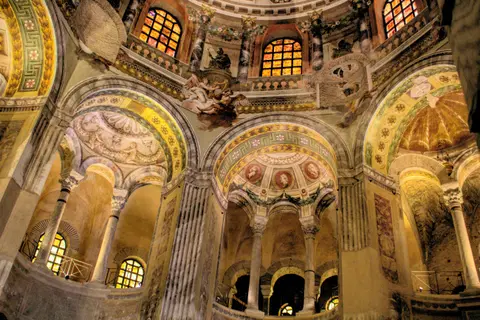
Ravenna, a historic port in Emilia-Romagna, is famed for its stunning Byzantine mosaics and rich cultural heritage, boasting eight UNESCO World Heritage sites. Must-do experiences include savoring local dishes like cappelletti and exploring the vibrant Mercato Coperto. The best season to visit is spring or early fall, when the weather is pleasant and the city is alive with local events.
Day 1
Piraeus, the bustling port city of Athens, is a vibrant blend of ancient history and modern charm, inviting travelers to explore its rich culture. Must-do experiences include savoring traditional Greek dishes at the Varvakeios Agora and embarking on day trips to nearby islands like Symi and Nydri. The best time to visit is during the spring and fall when the weather is pleasant and the tourist crowds are fewer.
Day 2
Santorini, the ancient volcanic caldera rising from the Aegean, is Greece's most theatrical landscape — a crescentic island of sheer white cliffs plunging into an indigo sea, its clifftop villages of Fira and Oia draped in bougainvillea and culminating in the world's most photographed sunset. The island's unique Assyrtiko wine, grown on ancient ungrafted vines in volcanic pumice, is one of the Mediterranean's greatest expressions of terroir. Byzantine frescoes of extraordinary beauty fill the Prehistoric Museum of Thera. The volcanic black and red sand beaches of Perissa and Perivolos are unlike any others in Greece. April through June and September through October offer the finest conditions.
Day 3
Katakolon is the unassuming port that holds an extraordinary secret: just fourteen kilometres inland lies ancient Olympia, birthplace of the Olympic Games and one of the most sacred sites in the ancient world. The Archaeological Museum of Olympia — housing the breathtaking sculptures from the Temple of Zeus — ranks among Greece's finest, while walking the original stadium still sends a current of wonder through even the most seasoned traveller. The village itself charms with whitewashed tavernas and a relaxed pace that feels authentically Greek. Katakolon is best visited April through October; late spring and early autumn offer ideal temperatures for the Olympia excursion.
Day 4
Where Homer placed the island of the Phaeacians and four centuries of Venetian rule left their most enduring Mediterranean legacy, Corfu is a singular island of extraordinary historical depth and natural beauty. The UNESCO-listed Old Town — its narrow Kantounia alleyways, the elegant Liston arcade, and twin Venetian fortresses — is the finest preserved Venetian streetscape in Greece. Beyond the town, secret coves, olive groves of immense antiquity, and mountain villages offer weeks of unhurried discovery. May through June and September offer perfect conditions: warm sea temperatures, clear skies, and the island before or after its summer crescendo.
Day 5
The port of Kotor, a UNESCO World Heritage site, is renowned for its stunning natural beauty and rich historical tapestry. A must-do experience includes wandering the cobblestone streets of the Old Town, where culinary delights like "kacamak" and fresh seafood await. The best time to visit is during the spring or early fall, when the weather is pleasant and the crowds are fewer.
Day 6
Zadar, a historic port city on Croatia's Dalmatian coast, is a captivating blend of ancient architecture and vibrant culture. Must-do experiences include visiting the Church of St. Donatus and enjoying the enchanting music of the Sea Organ. The best season to visit is during the warm summer months when the city comes alive with festivals and outdoor activities.
Day 7
Koper is Slovenia's historic Adriatic port with a beautifully preserved Venetian old town, world-class Istrian olive oil, and easy access to the spectacular Škocjan Caves. Essential experiences include tasting Malvazija wines in hillside villages, exploring the medieval Dance of Death frescoes at Hrastovlje, and dining on truffle pasta in centuries-old courtyards. May through October is prime season, with September ideal for harvest festivities.
Day 8
Ravenna, a historic port in Emilia-Romagna, is famed for its stunning Byzantine mosaics and rich cultural heritage, boasting eight UNESCO World Heritage sites. Must-do experiences include savoring local dishes like cappelletti and exploring the vibrant Mercato Coperto. The best season to visit is spring or early fall, when the weather is pleasant and the city is alive with local events.
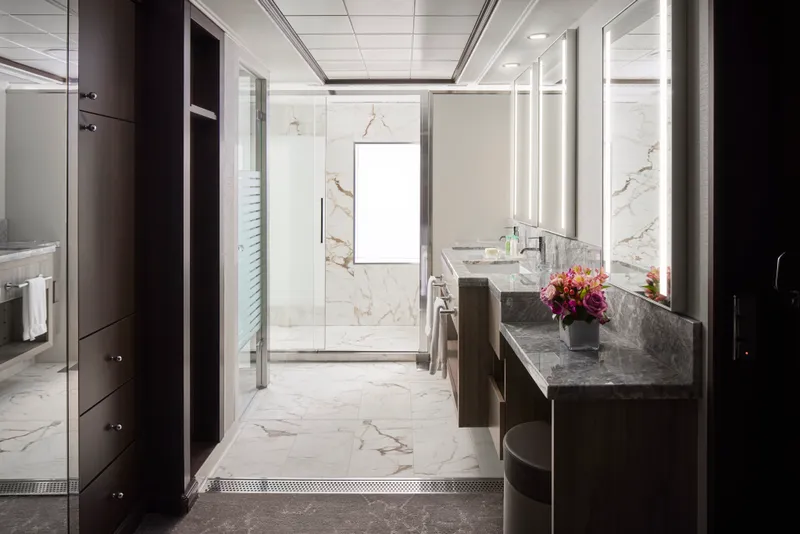
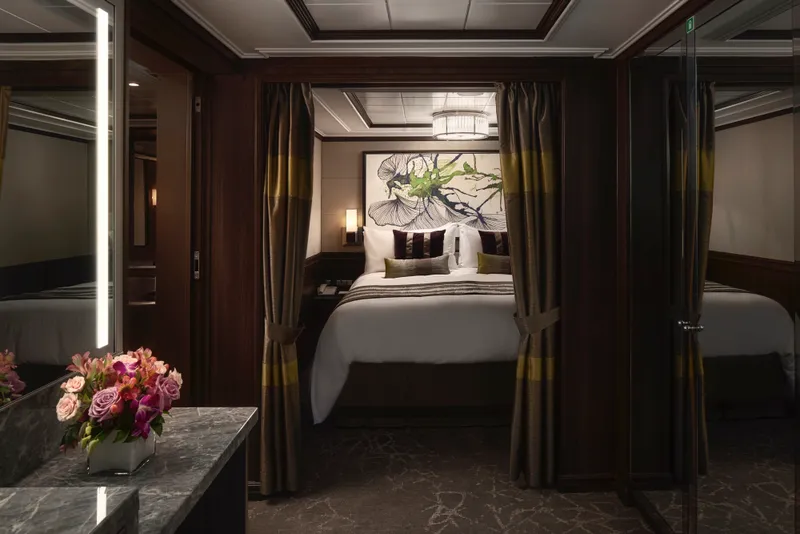
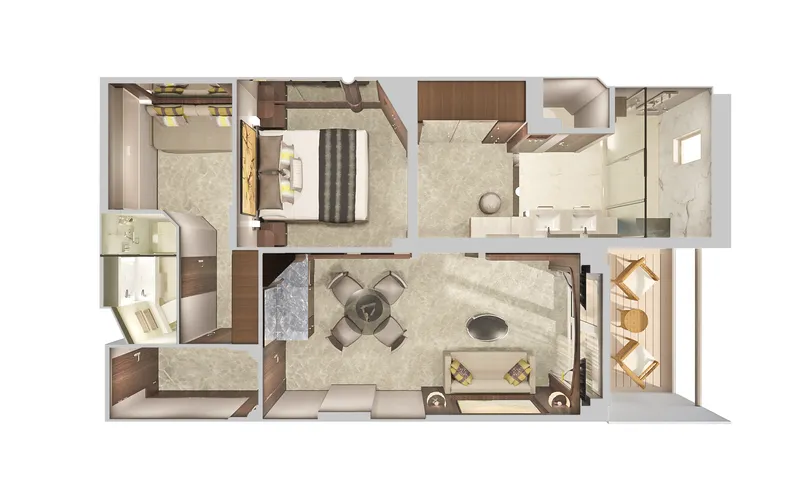
Perfect for your whole family. Up to six guests can stay in these luxurious Suites that include a bedroom with a queen-size bed and a separate children's bedroom. In addition to the living area, dining area, private balcony and luxury bath with separate shower. Includes butler and concierge service. Plus they can connect to a Mini-Suite so you can spread out in style.
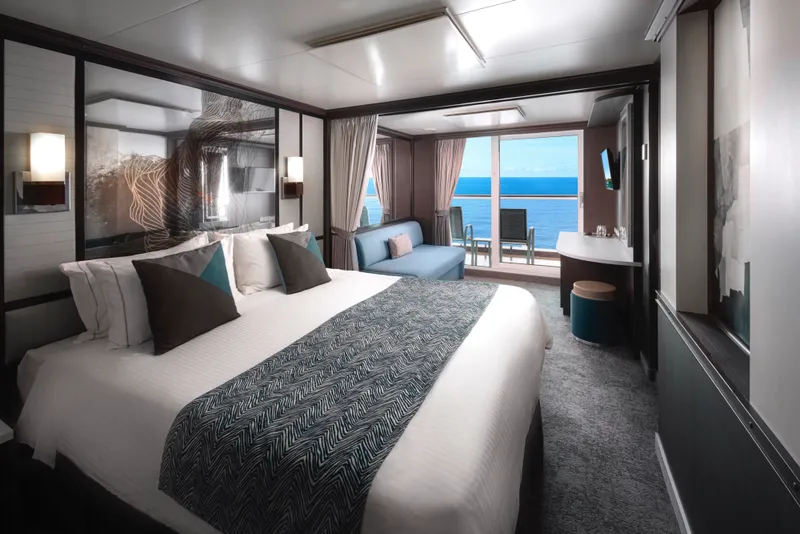
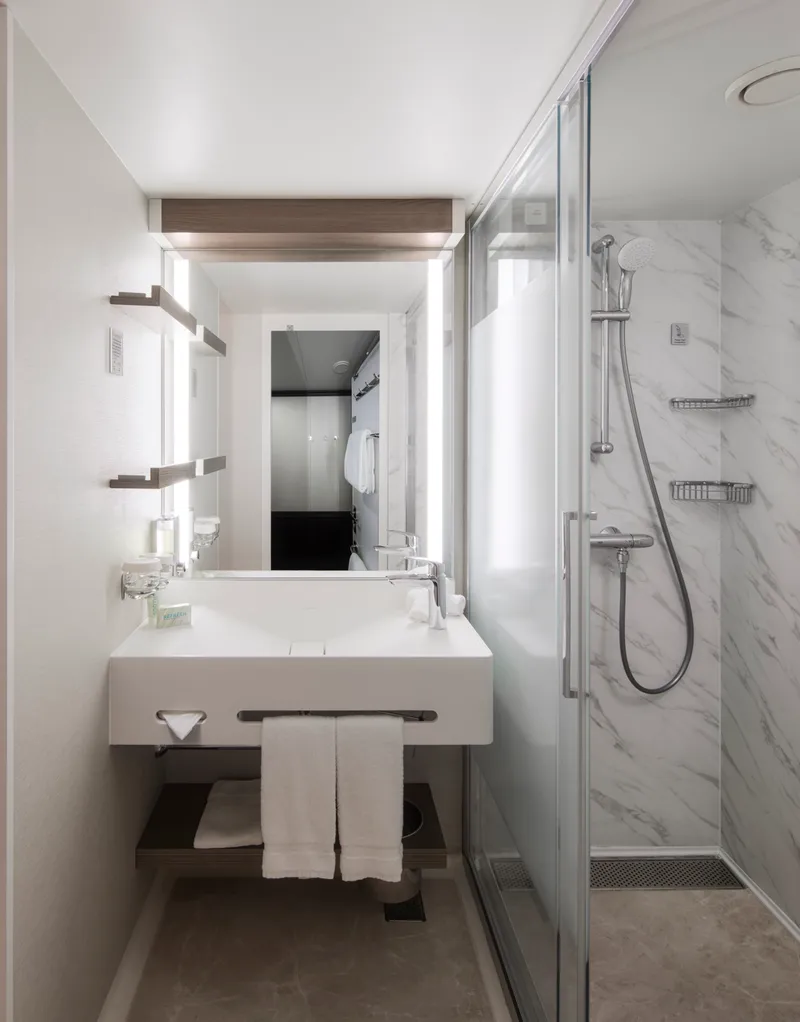
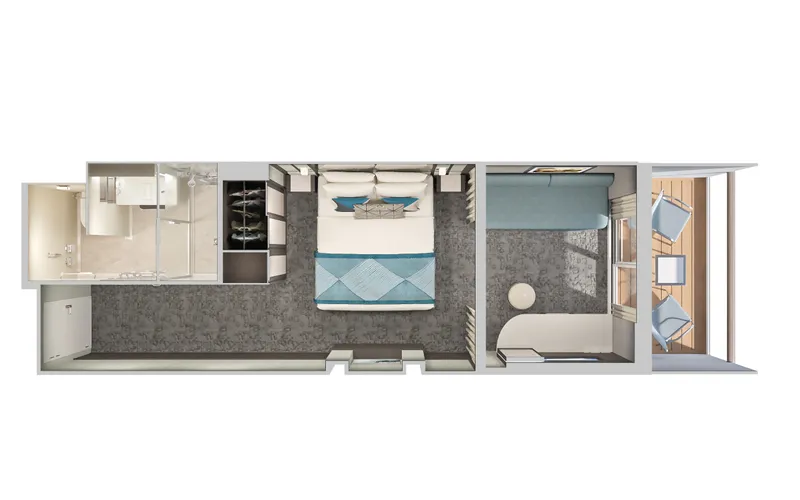
These Club Balcony Suites sleep up to four guests, making them ideal if you want to bring the kids. They have two lower beds that convert into a queen-size bed as well as a sitting area, luxury bath with shower and additional bedding to sleep two additional guests. Because they are aft-facing suites, the view from your private balcony is truly amazing. And some can connect so you can enjoy the views together.
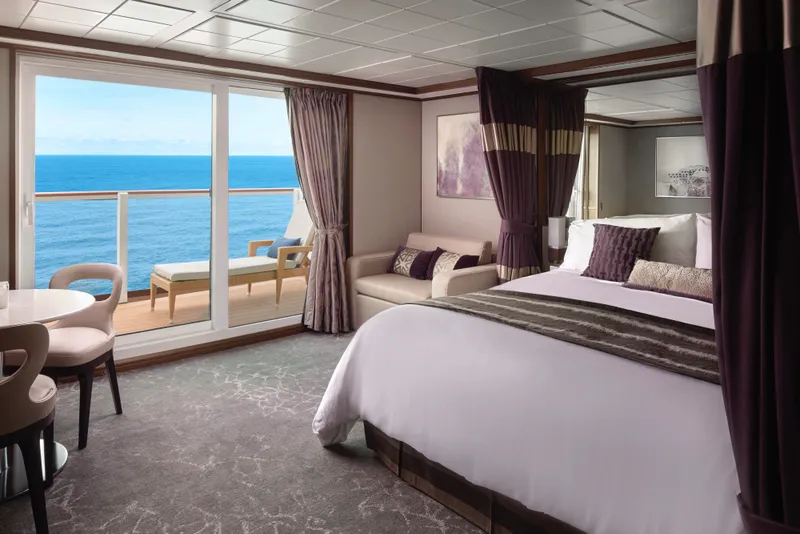
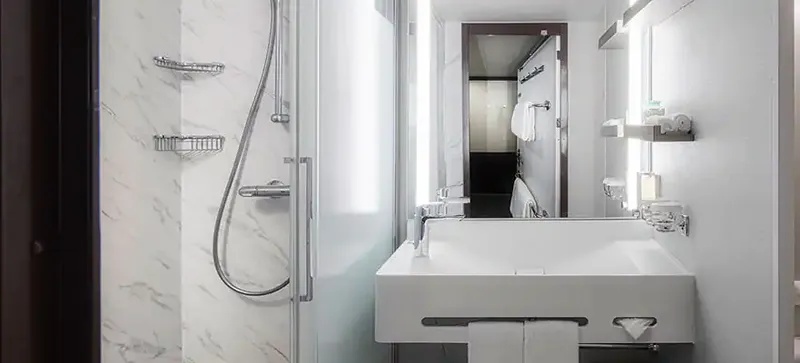
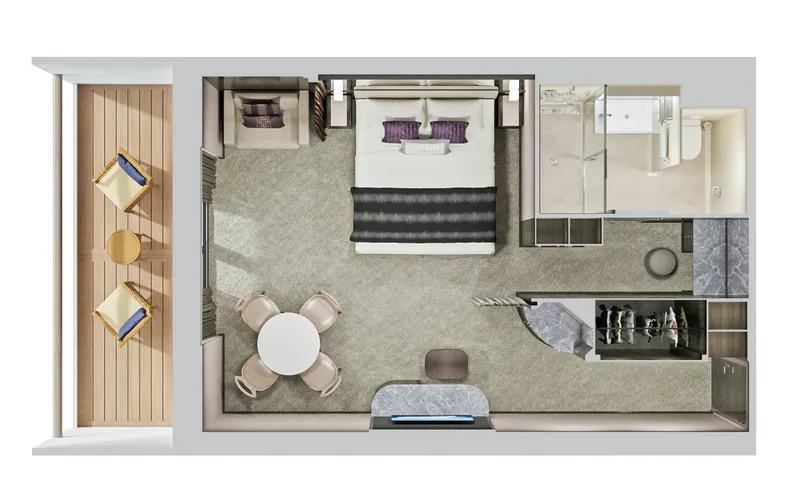
Up to three guests can enjoy the fabulous views from the aft-facing balcony of these Penthouses that include a queen-size bed plus a single sofabed, luxurious bath with shower, a sitting area, and some even have a living and dining area. Includes butler and concierge service in select cabins.
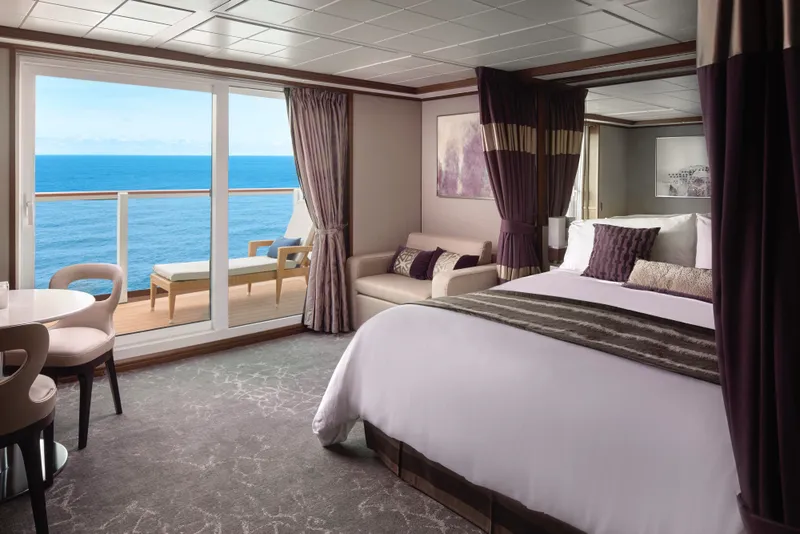
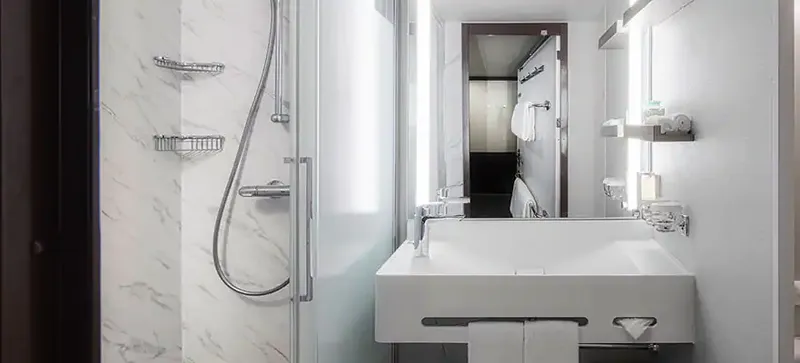
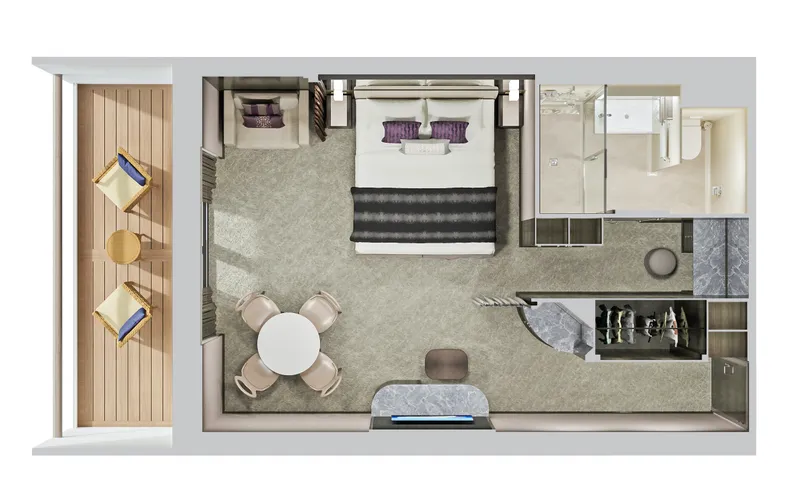
Perfect for a romantic getaway, you will fall head over heels for these fabulous Penthouses. Sleeps up to three, featuring a bedroom with queen-size bed and luxury bath and shower, in addition to the living area, dining area and large, private, aft-facing balcony. Includes butler and concierge service.
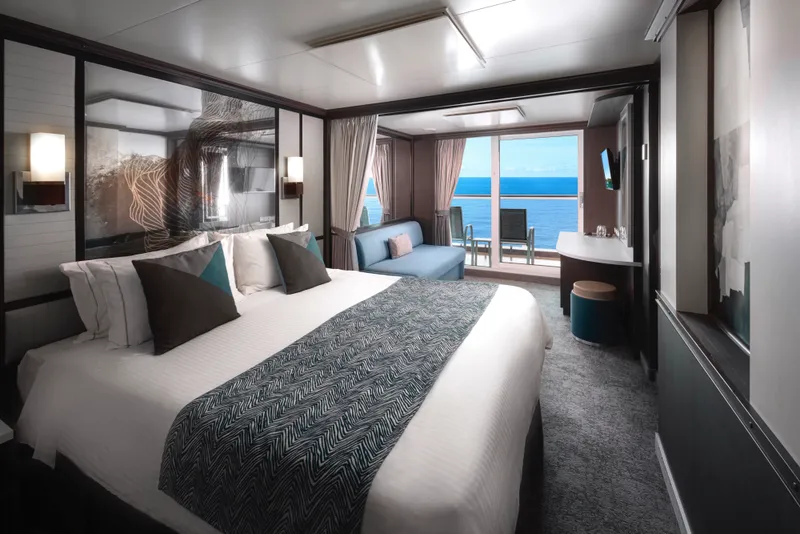
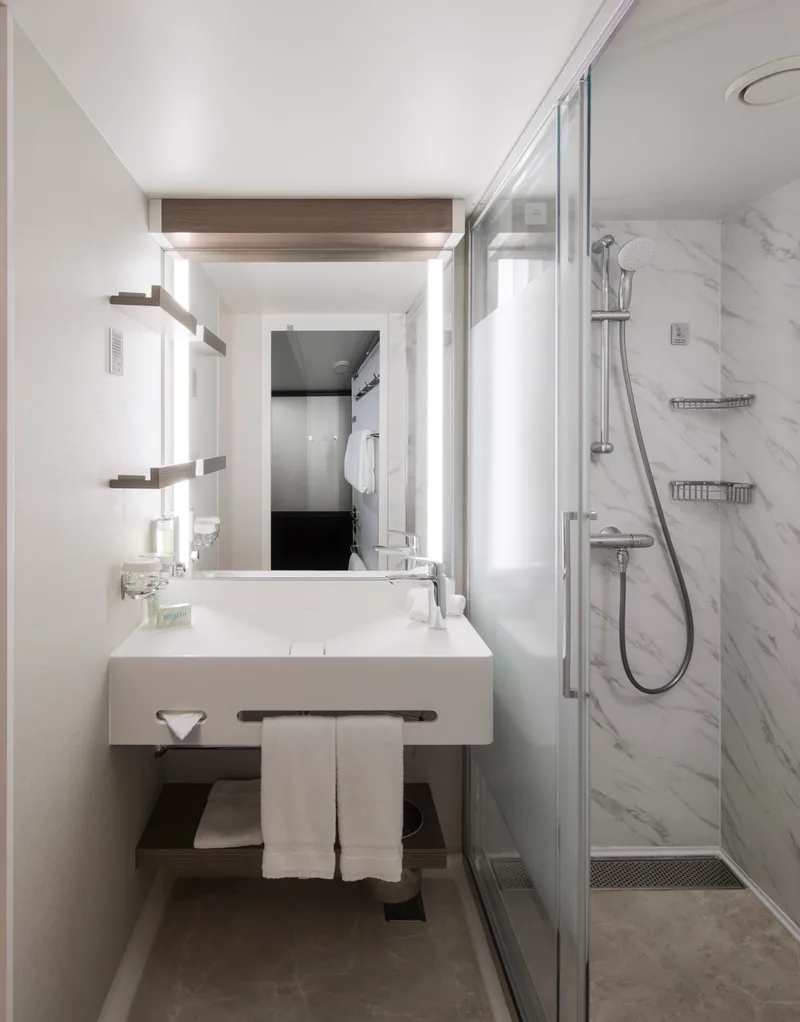
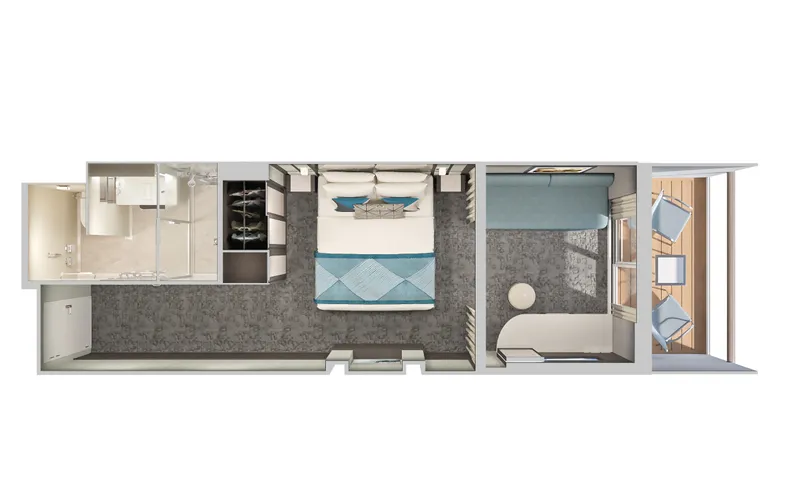
Up to four guests can stay in these Club Balcony Suites that come with a sitting area, luxury bath with shower, two lower beds that convert into a queen-size bed and additional bedding to sleep two additional guests. Not to mention you'll have a private balcony to enjoy the incredible view. Plus some can connect so you can spread out yet stay together.
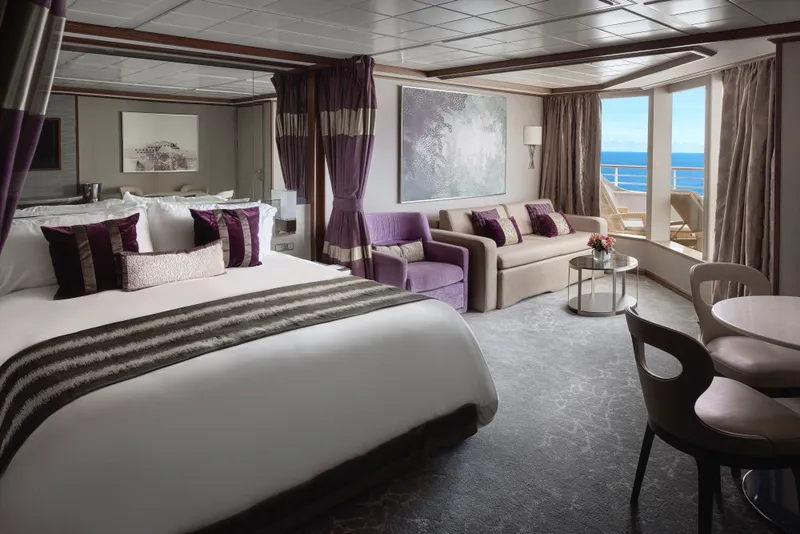
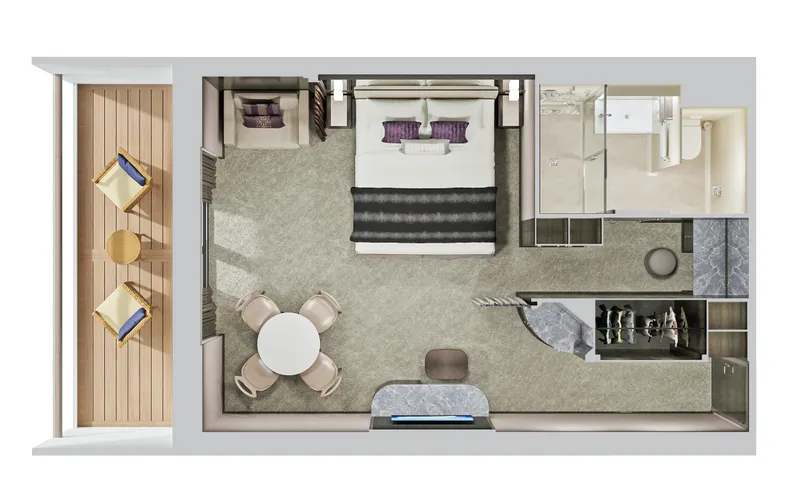
These incredible Penthouses sleep up to four, with queen-size bed and luxury bath and shower. Also includes a living area, dining area and large, private balcony that offers an amazing view. Includes butler and concierge service.
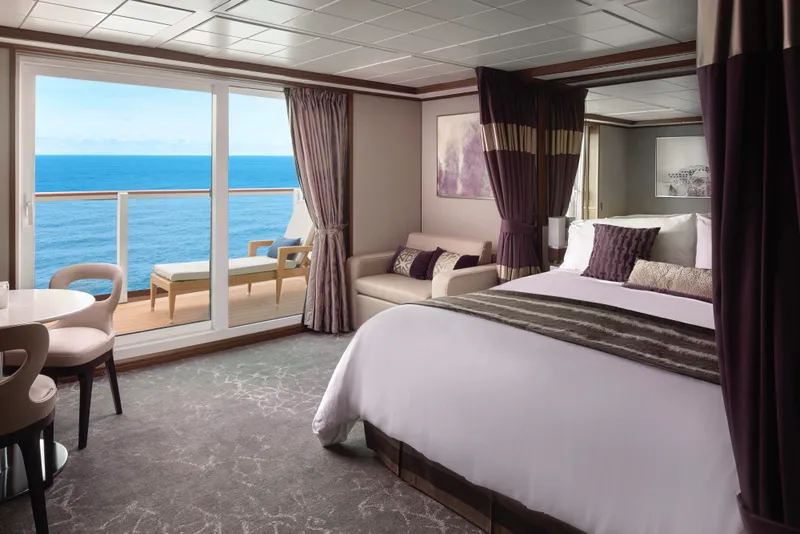
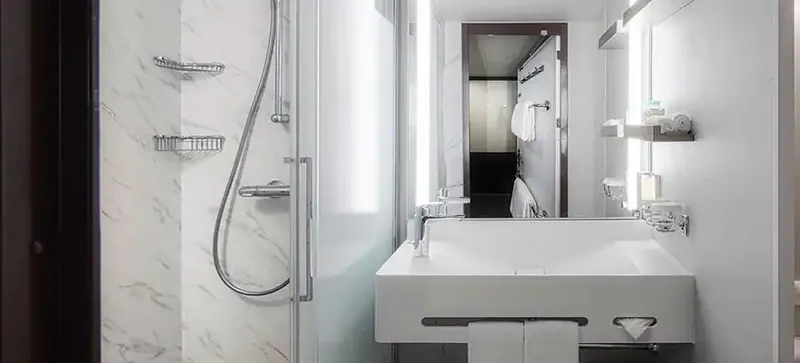
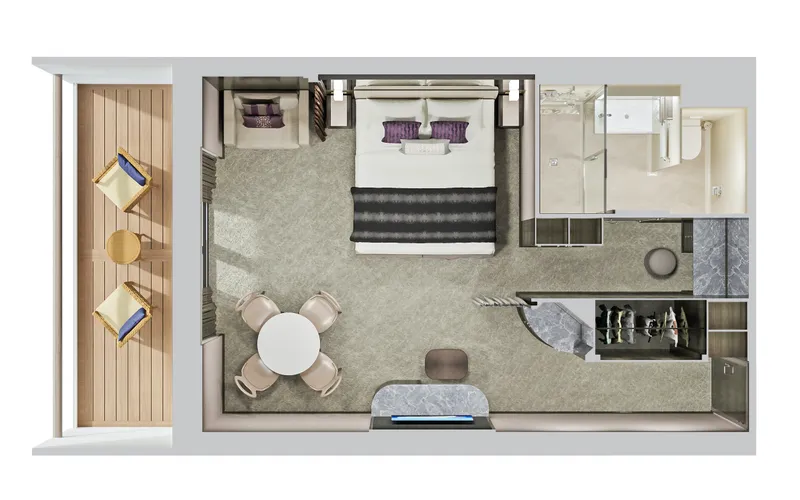
Stunning views are straight ahead from the large, private balcony of these forward-facing, luxurious Penthouses. Includes a queen-size bed, luxury bath, living and dining area, plus the indulgence of butler and concierge service. Sleeps up to three. Some can connect to an Owner's Suite, a luxurious option when travelling with family or friends.
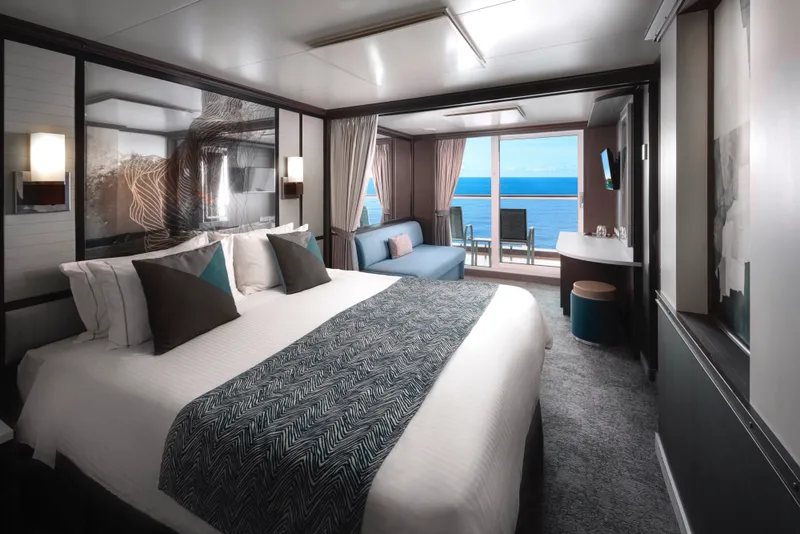
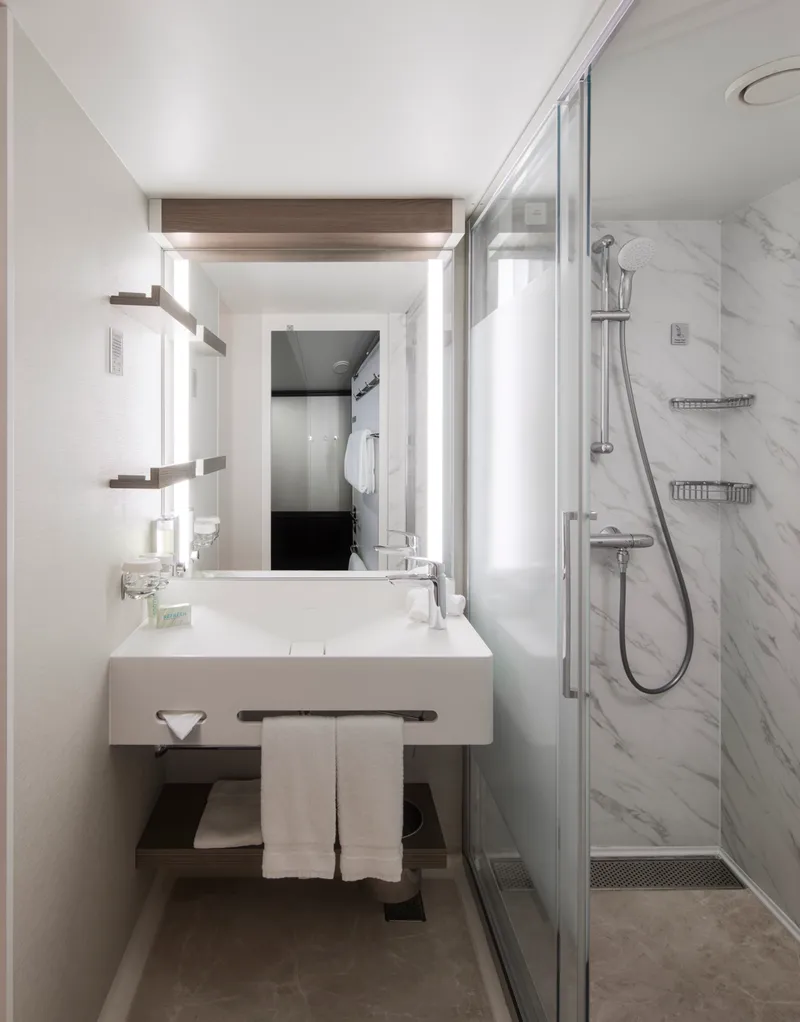
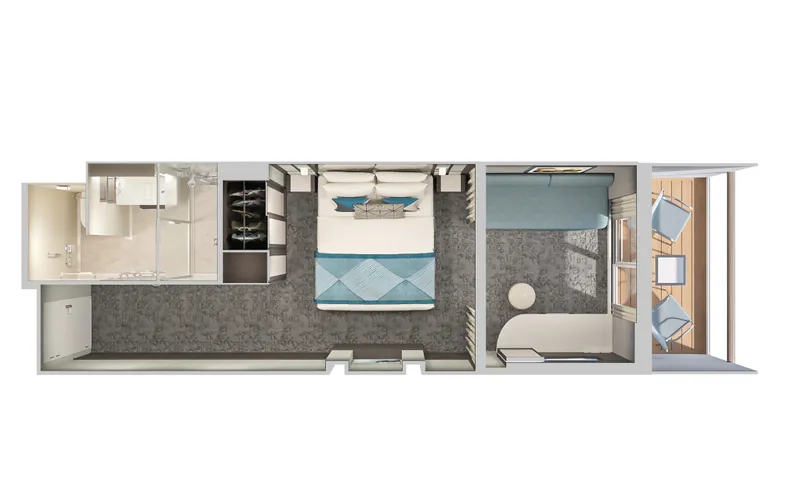
A Sail Away Club Balcony Suite stateroom guarantees a Club Balcony Suite stateroom or better! Your stateroom may be on any deck and assigned up to one day prior to embarkation.
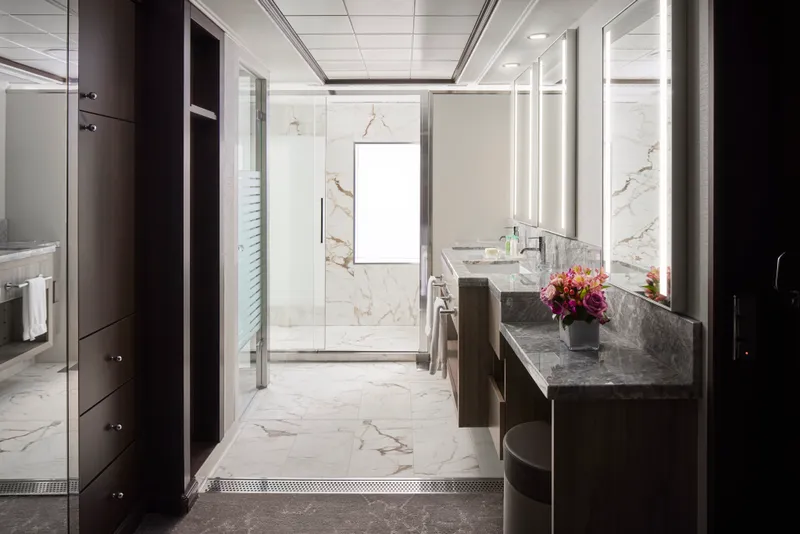
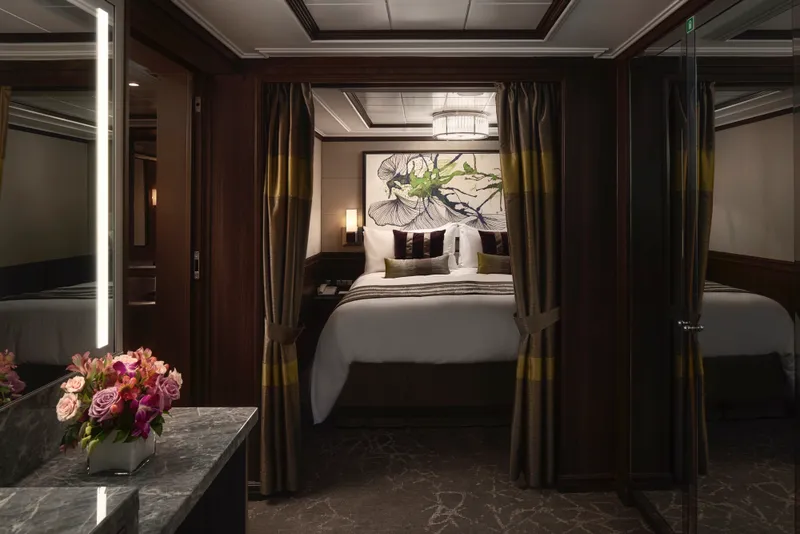
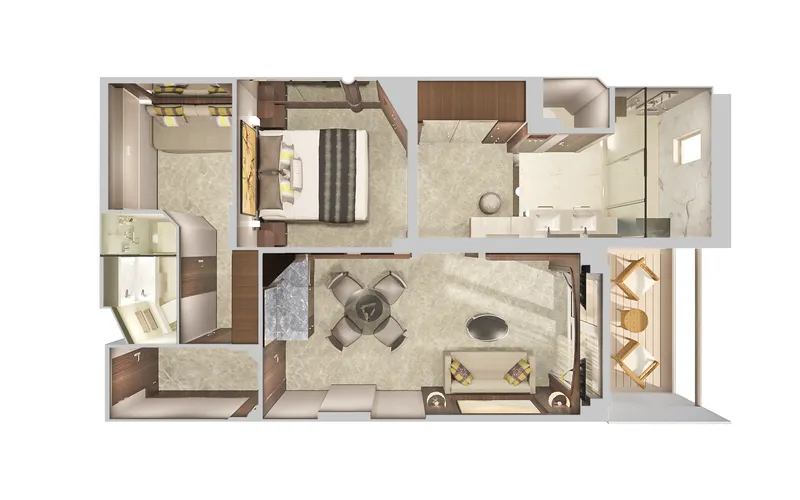
Up to six guests can enjoy these Villas that are perfect if you want to bring the kids. They have one bedroom with a queen-size bed and a luxury bath and shower, as well as a separate children's bedroom. Most feature a living area and dining area, plus a private balcony. You will also have access to the private courtyard area. Includes butler and concierge service.
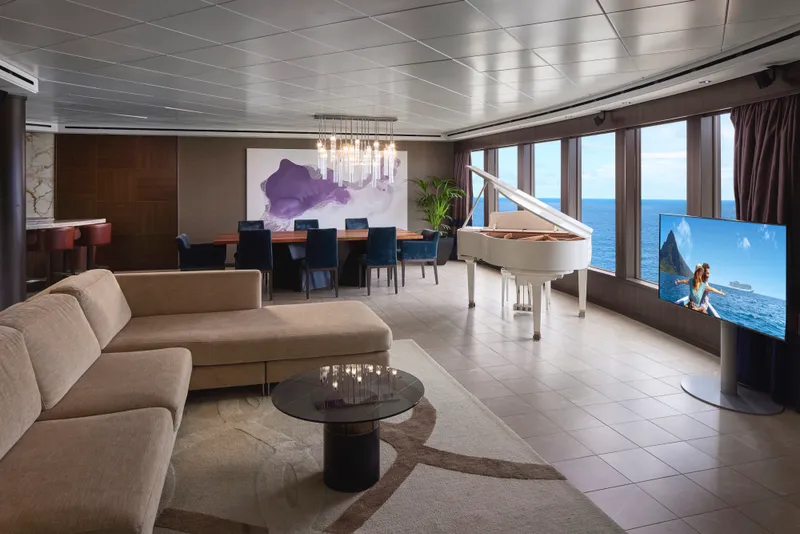
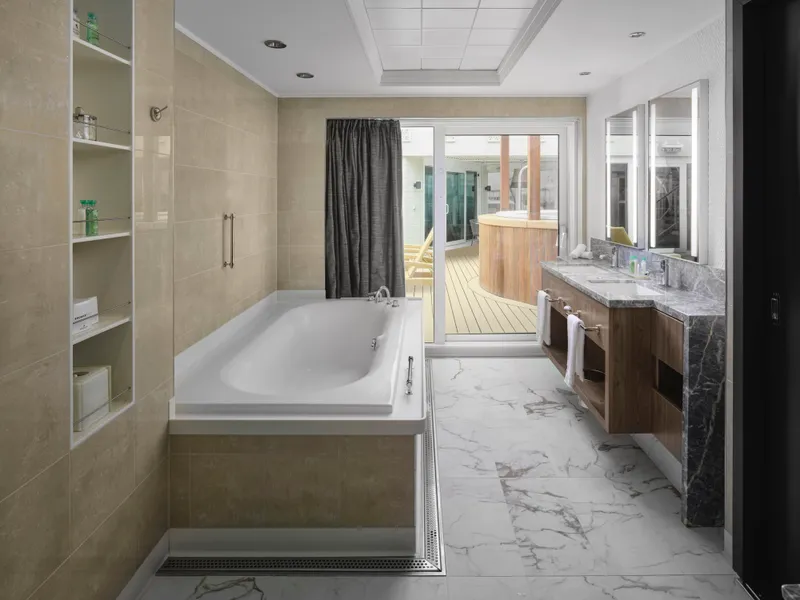
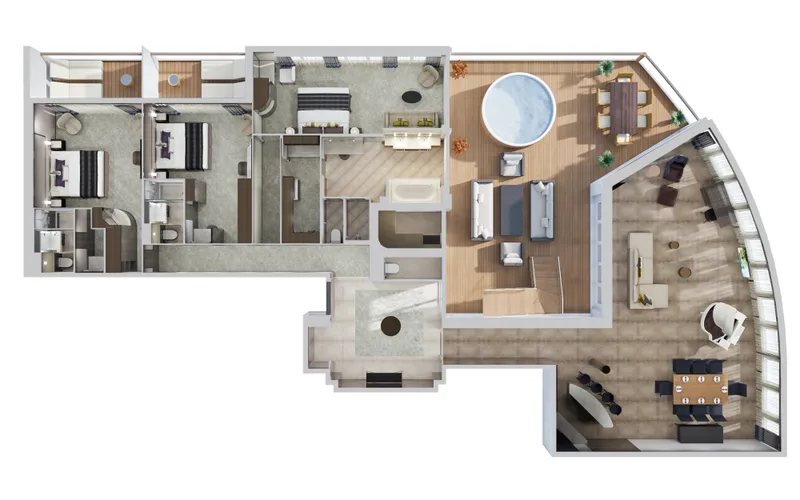
These amazing Norwegian Pearl Villas sleep up to eight with three separate bedrooms, each with a king- or queen-size bed and luxury bath. With a living room, dining room and incredible private garden with hot tub, you will have more than enough space to spread out and unwind. You'll also have access to the private courtyard area. Includes butler and concierge service.
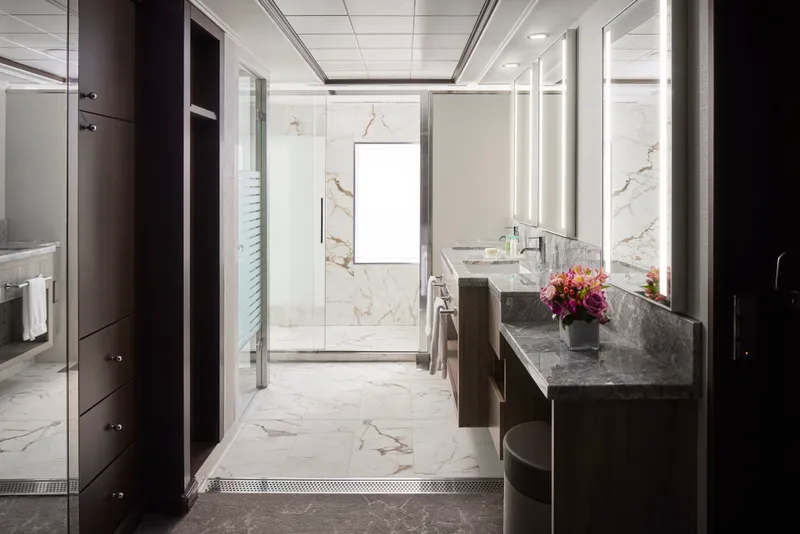
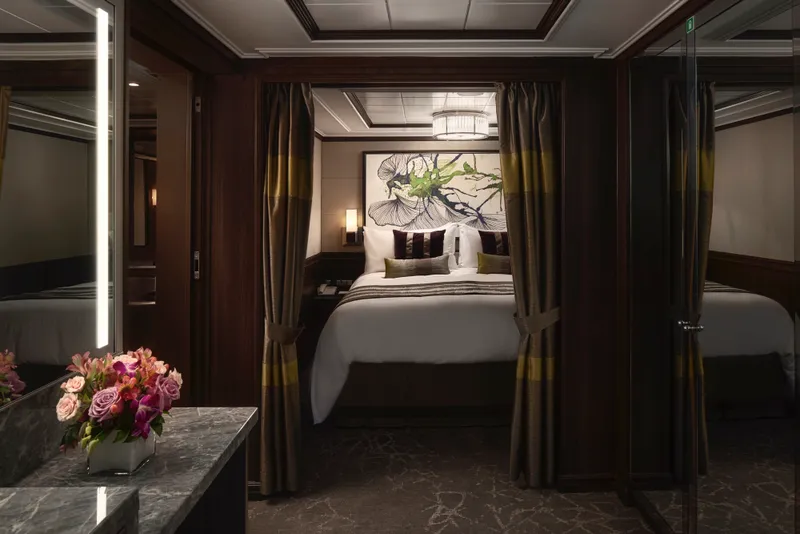
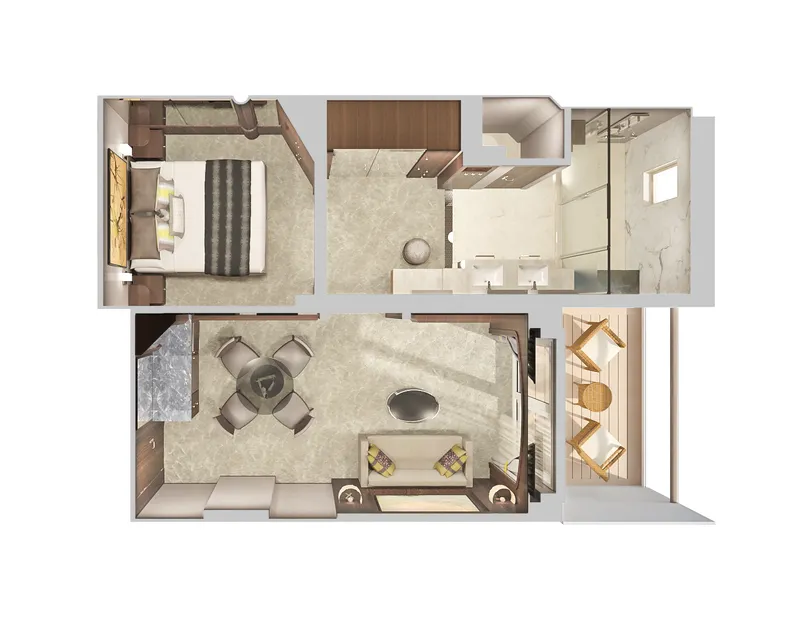
Norwegian Pearl Courtyard Penthouses make for an amazing cruising experience. Sleeps three, with a bedroom featuring a queen-size bed, luxury bath and shower and additional bedding to sleep one additional guest. Also features a living area, dining area, private balcony and access to the private courtyard area. Includes butler and concierge service.
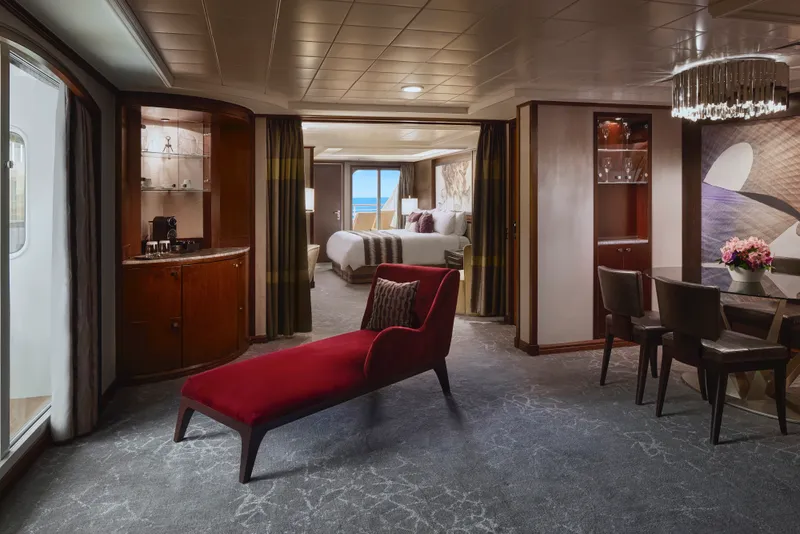
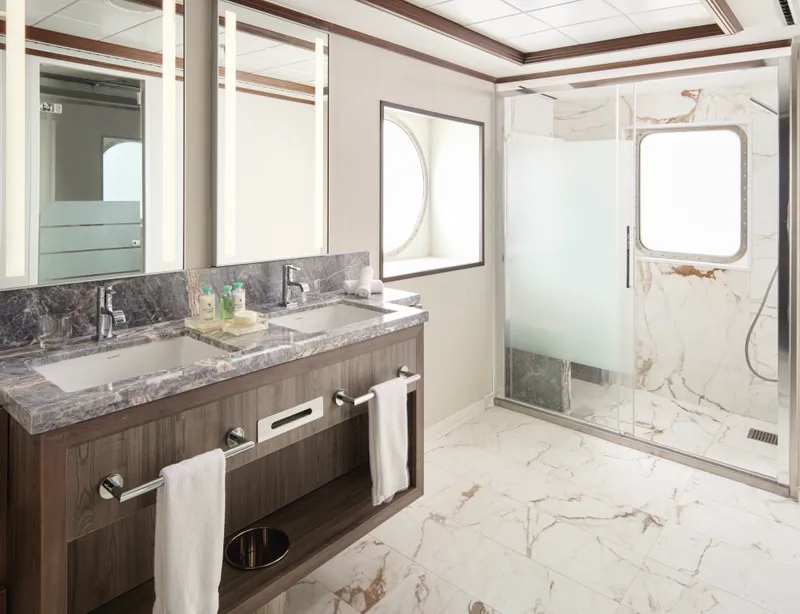
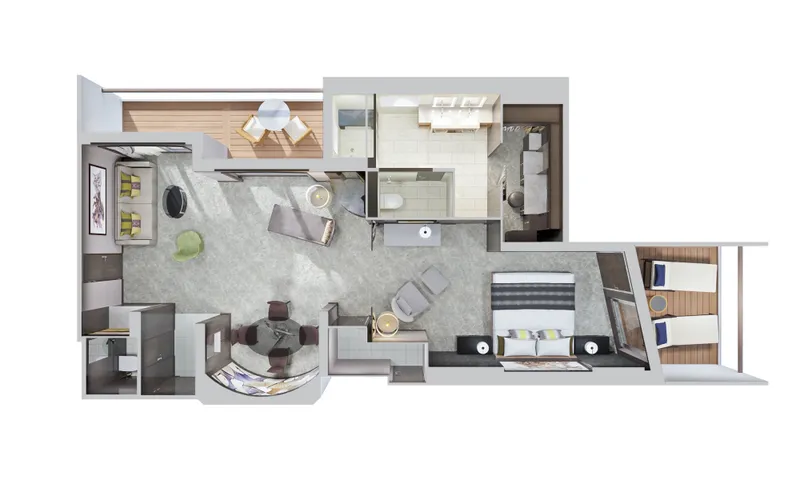
Indulge in supreme comfort and luxury in these Deluxe Owner's Suites featuring a separate bedroom with a king-size bed, a double sofabed, luxury bath with a separate shower, as well as a guest bath. Also includes a living room and dining room and fabulous views from two private balconies, plus access to the private courtyard and butler and concierge service. These Suites also can connect to a Penthouse so you can spread out in luxury.
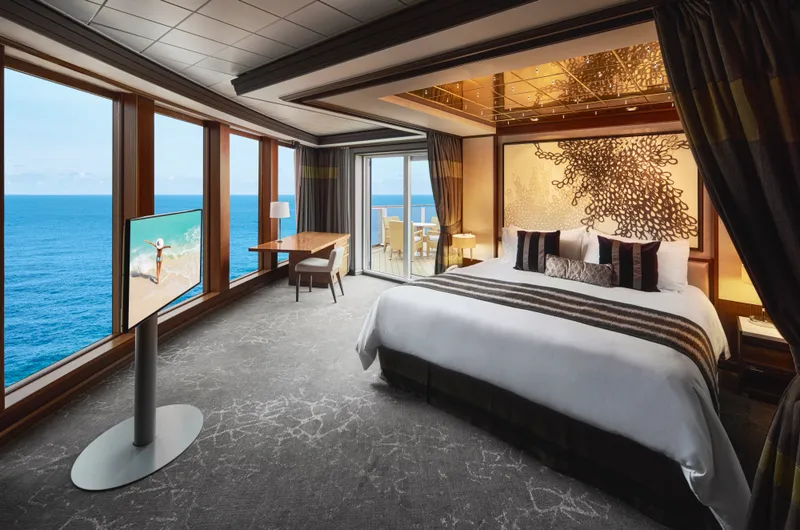
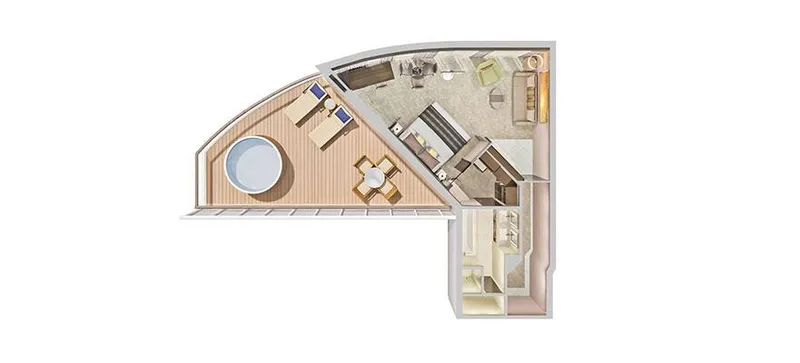
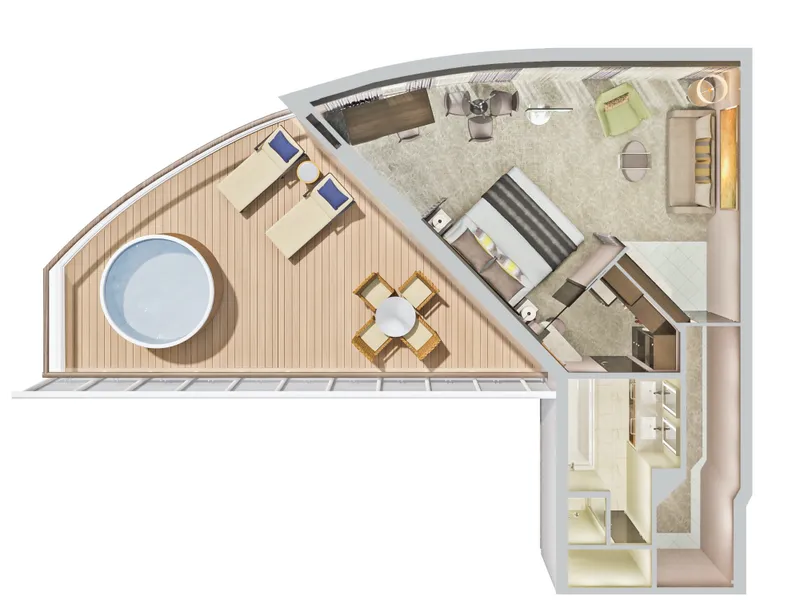
Enjoy the perfect escape in the Deluxe Owner's Suites. With a living room, dining room, wall of windows and separate bedroom with king-size bed and luxury bath, you will have an unforgettable experience in this suite. Sleeps up to four and includes access to the private courtyard area. Not to mention the large balcony and amazing view. Includes butler and concierge service.
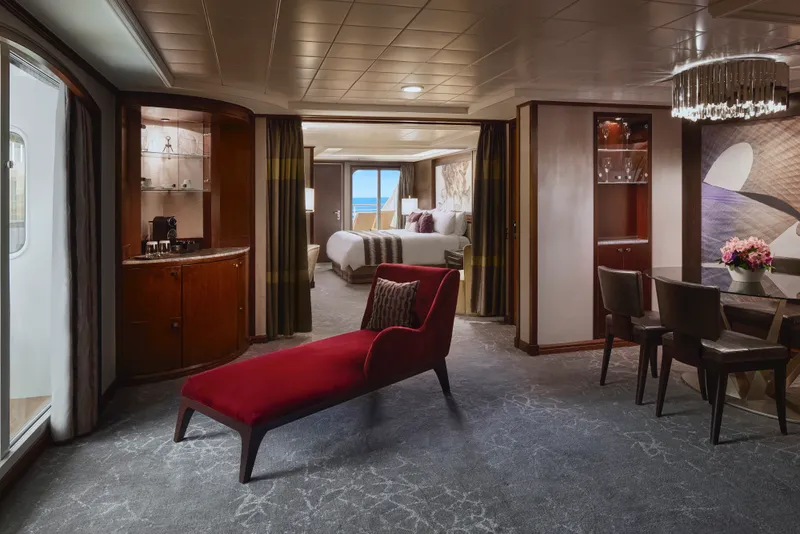
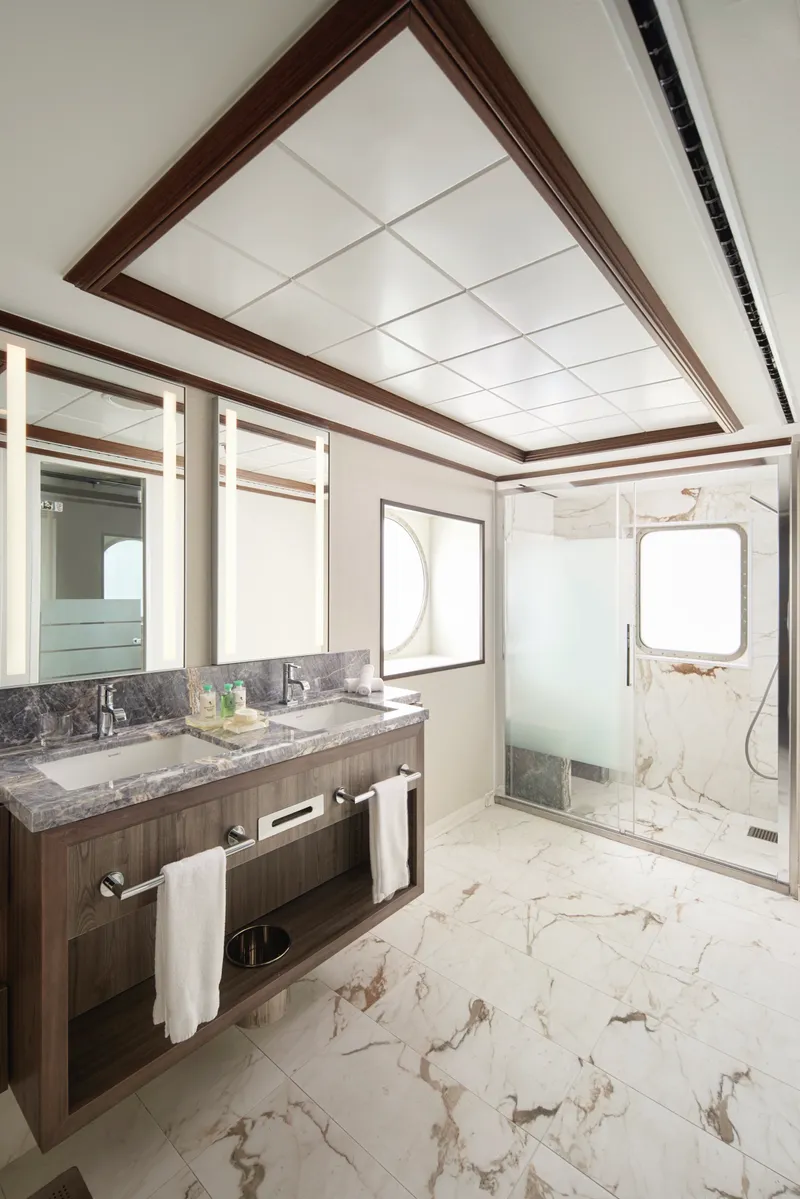
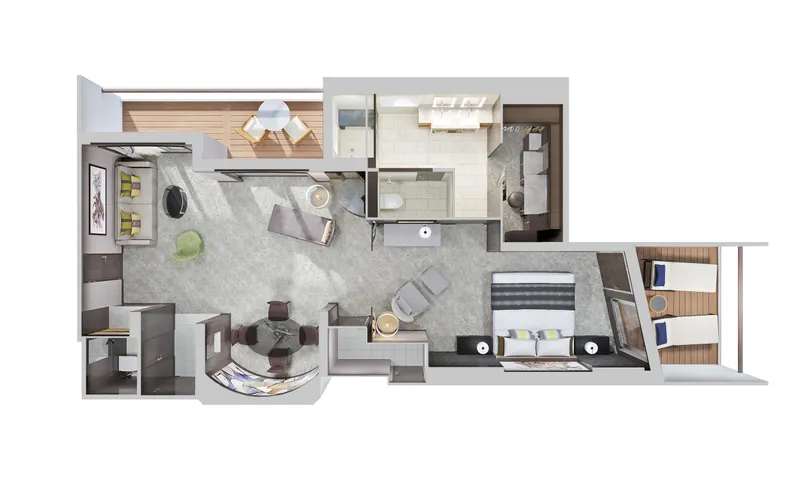
These Owner's Suites are a truly luxurious way for you to get away. Includes a separate bedroom with a king-size bed and luxury bath with separate shower, in addition to the living room, dining room and large private balconies with incredible views. Sleeps up to four and guests receive access to the private courtyard area. Plus they can connect to a Penthouse for even more space and luxury. Includes butler and concierge service.
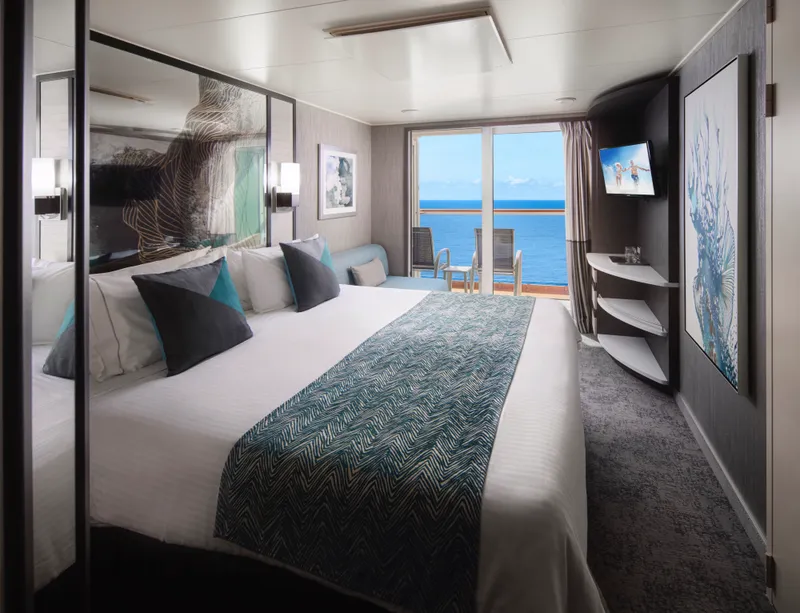
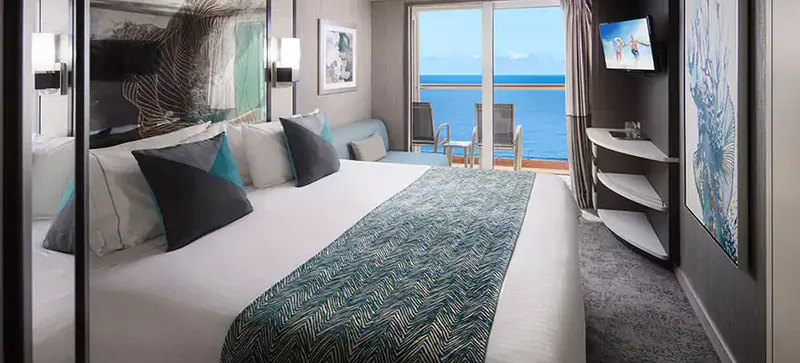
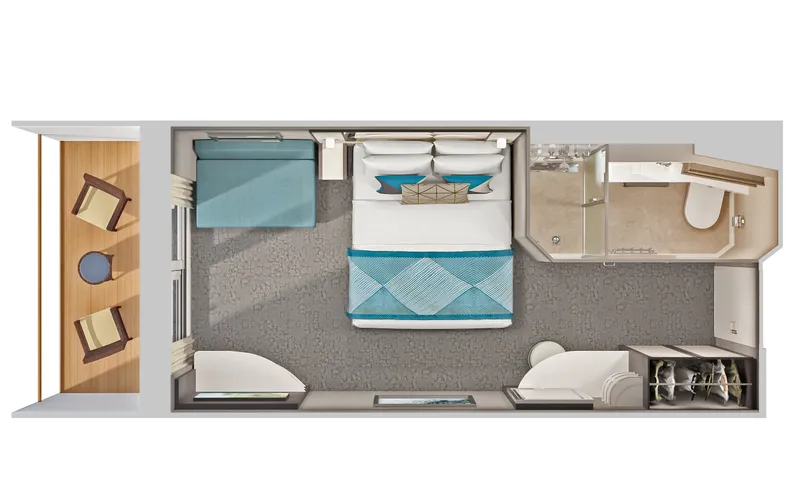
You'll enjoy every inch of these staterooms, with enough space to sleep up to four guests. The two lower beds can be converted into a queen-size bed and the convertible sofa pulls out to sleep two more. You'll also have a sitting area and floor-to-ceiling glass doors that open to a private balcony. Because these are aft-facing, the view from your balcony is amazing and truly unforgettable.
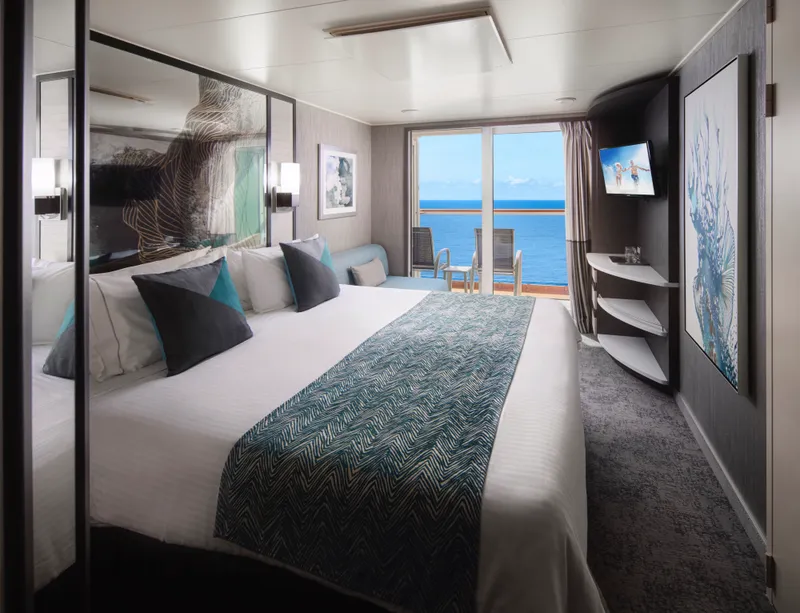
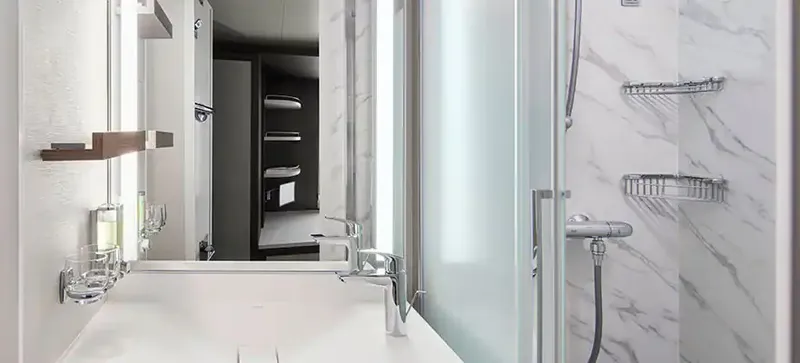
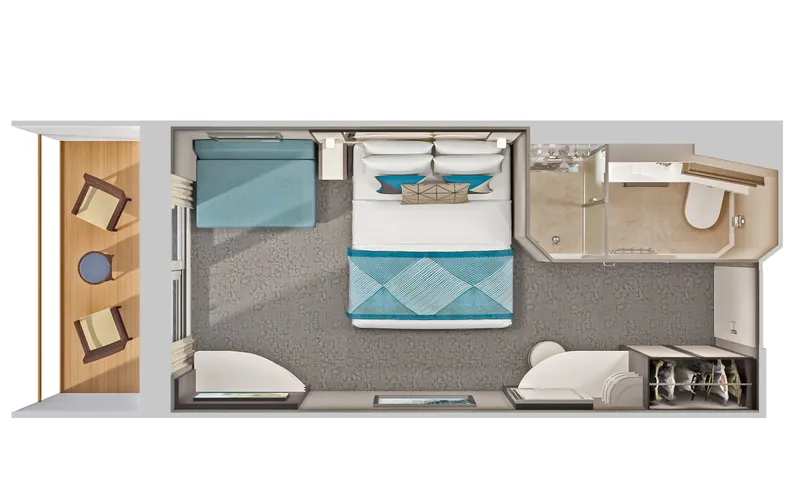
Balcony staterooms come with two lower beds that convert into a queen-size bed, with additional bedding to accommodate one or two more guests. Also includes a sitting area and floor-to-ceiling glass doors that open to a private balcony. Plus some can connect to other staterooms, a great option when travelling with family or friends.
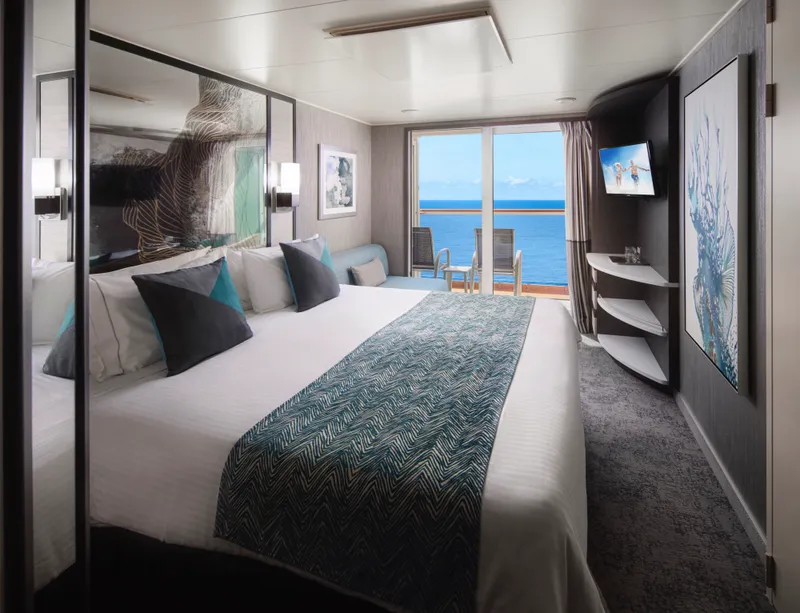
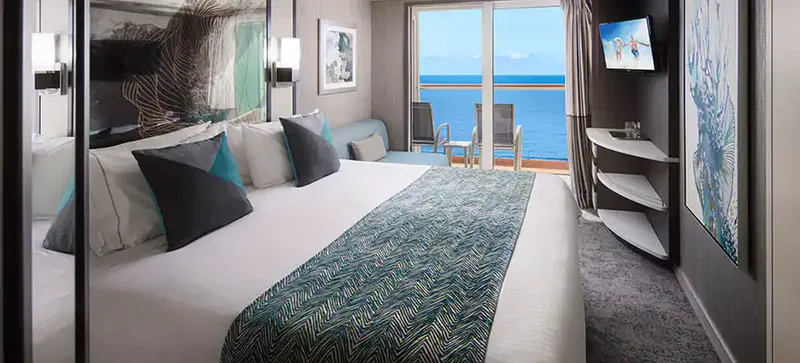
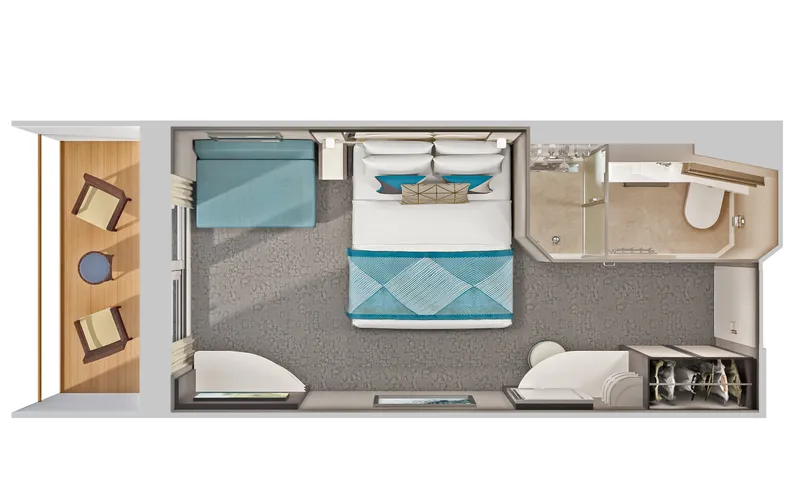
Norwegian Pearl Family Balcony staterooms are perfect if you want to bring the whole family. With room for four guests, there are two lower beds that convert into a queen-size bed, one pullman and one single sofabed. Also includes a sitting area and floor-to-ceiling glass doors that open to a private balcony. Plus many can connect so you can spread out yet stay together.
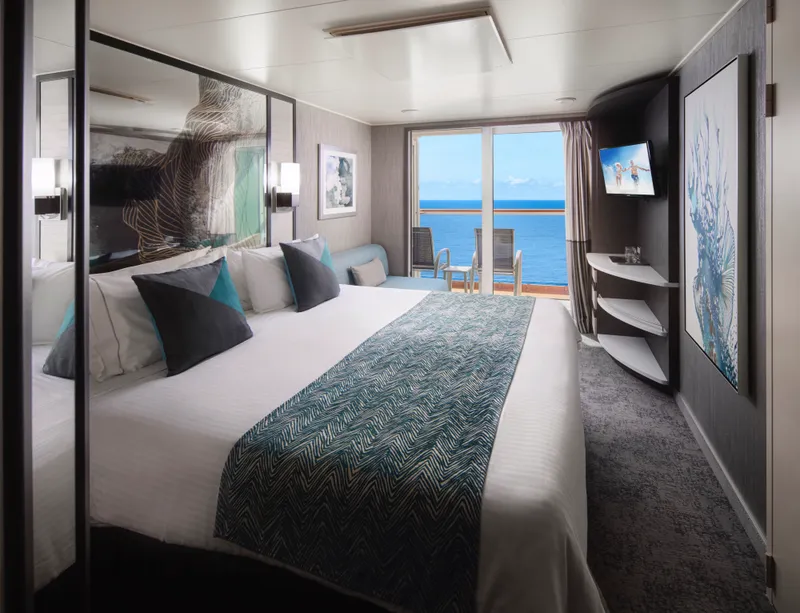
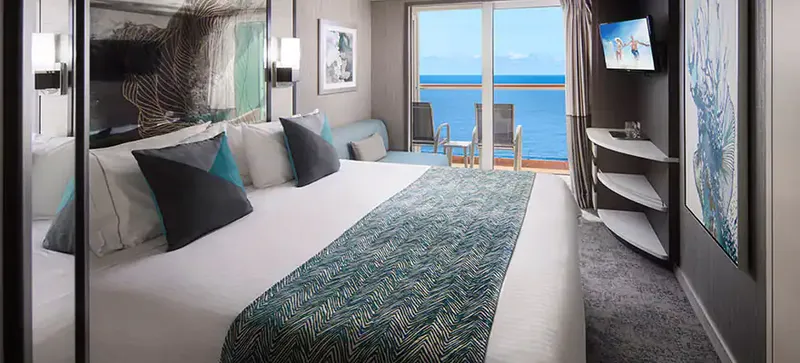
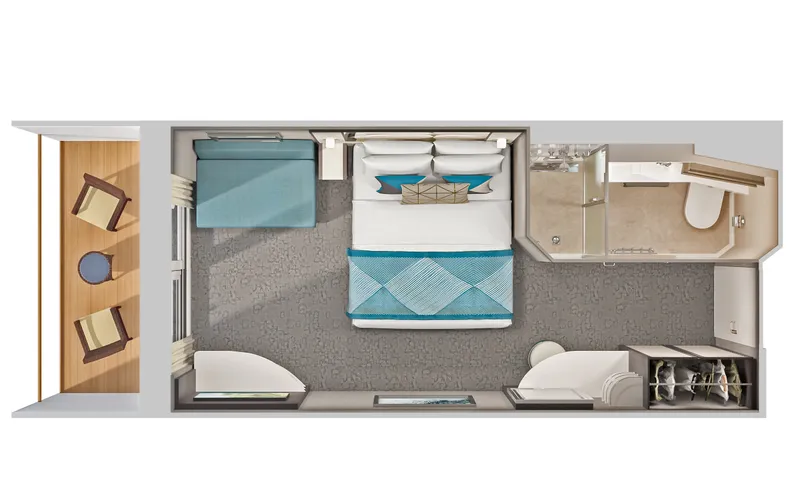
A Sail Away Balcony stateroom guarantees a Balcony stateroom or better! Please note that the view from your balcony may be fully obstructed or partially obstructed. Your stateroom may be on any deck and assigned up to one day prior to embarkation.
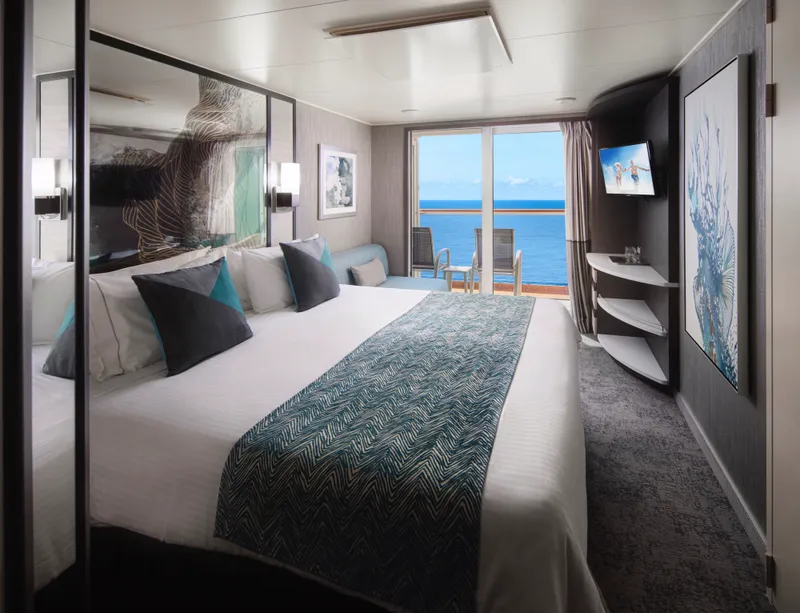
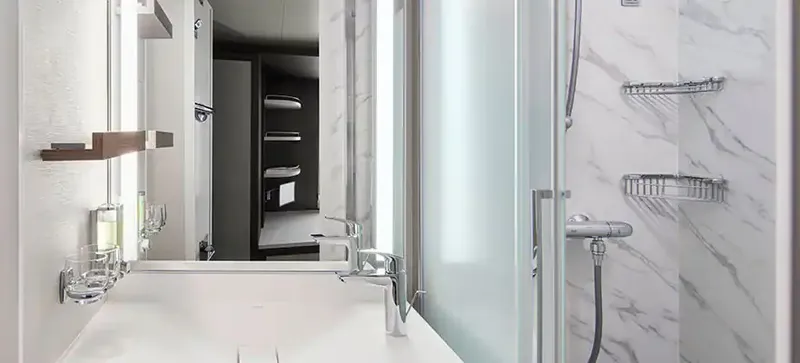
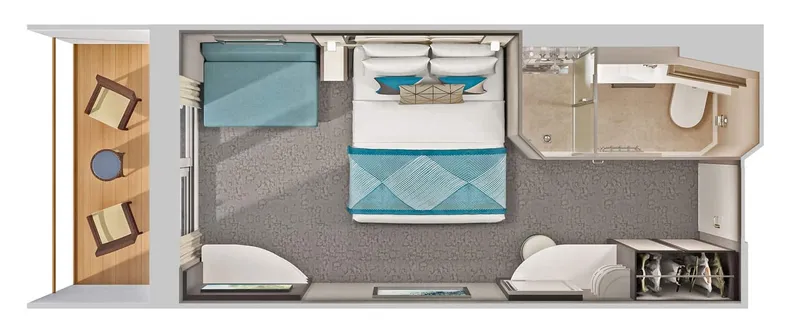
Solo Balcony
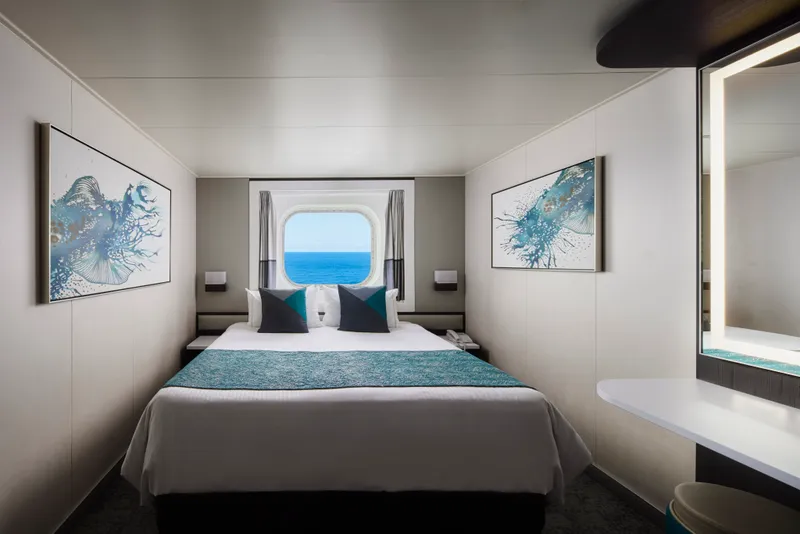

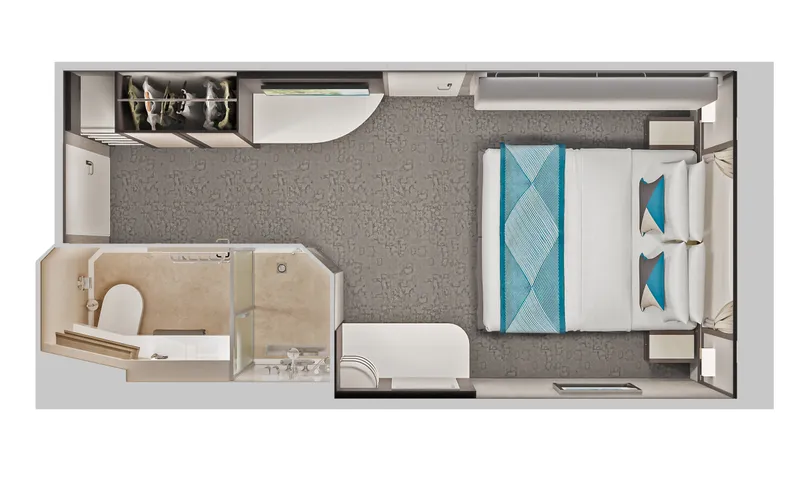
You can comfortably fit up to four guests in these staterooms, making them perfect for families. You'll enjoy an amazing view from the big picture window. Two lower beds convert into a queen-size bed and there is additional bedding to accommodate two more. Of course, you'll have room service and many other amenities. Some also can connect, a great option when travelling with family or friends.
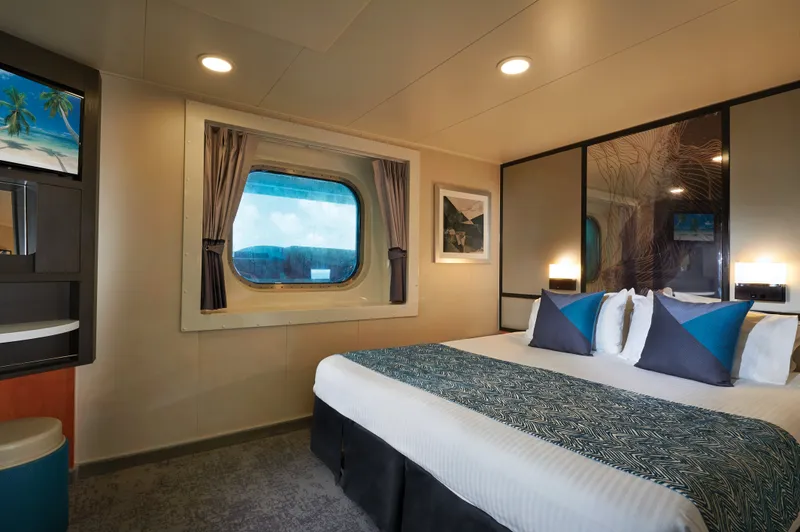

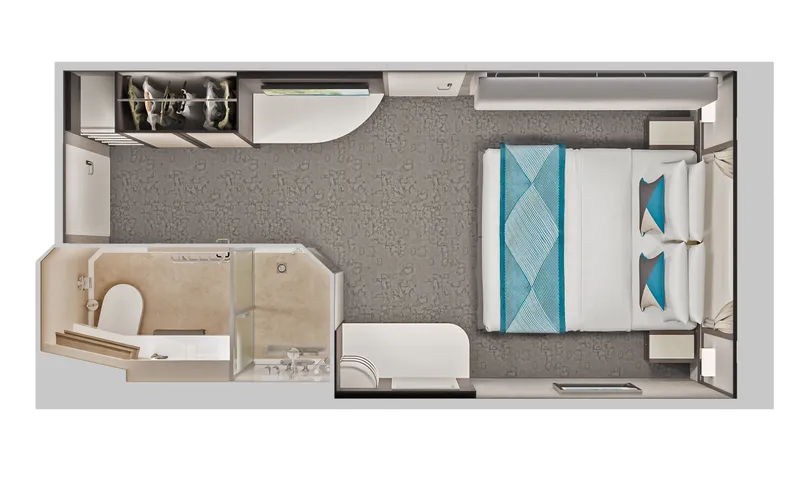
These Oceanview Staterooms sleep up to four guests and have either a picture window or porthole, with an obstructed view, two lower beds that convert into a queen-size bed and additional bedding to accommodate two more.
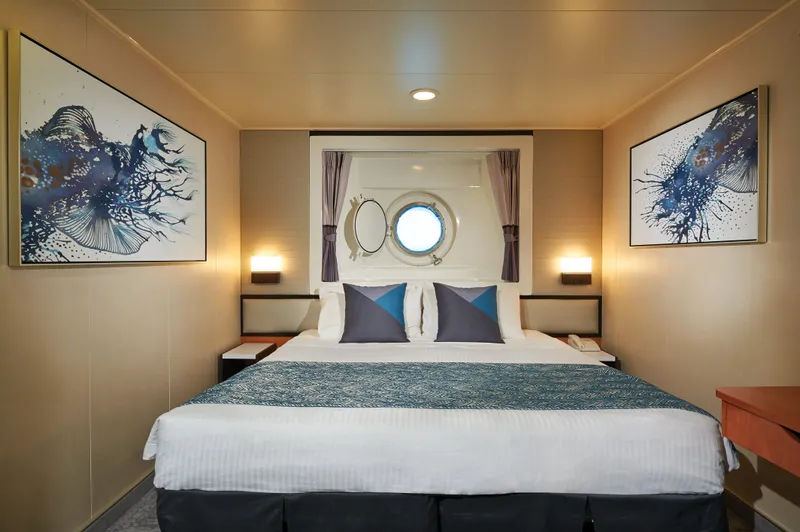

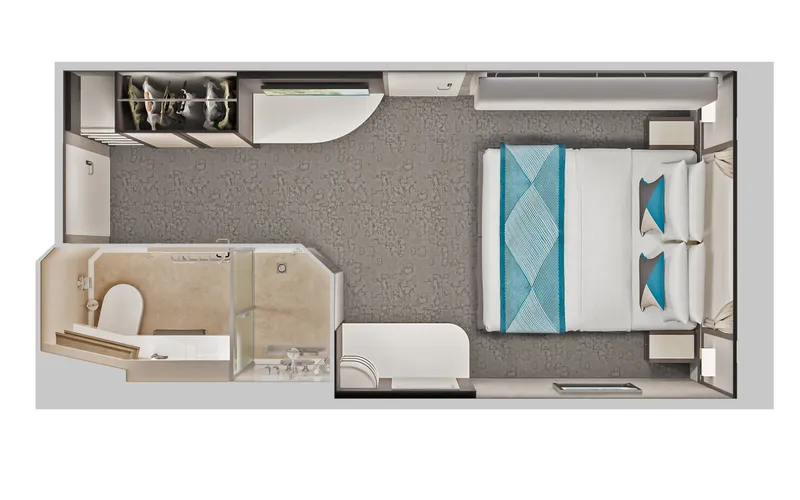
Up to four guests can stay in these Oceanview Staterooms. Includes two lower beds that convert into a queen-size bed and additional bedding to accommodate up to two more, as well as a porthole to enjoy the view. Plus some can connect so you can spread out yet stay together.
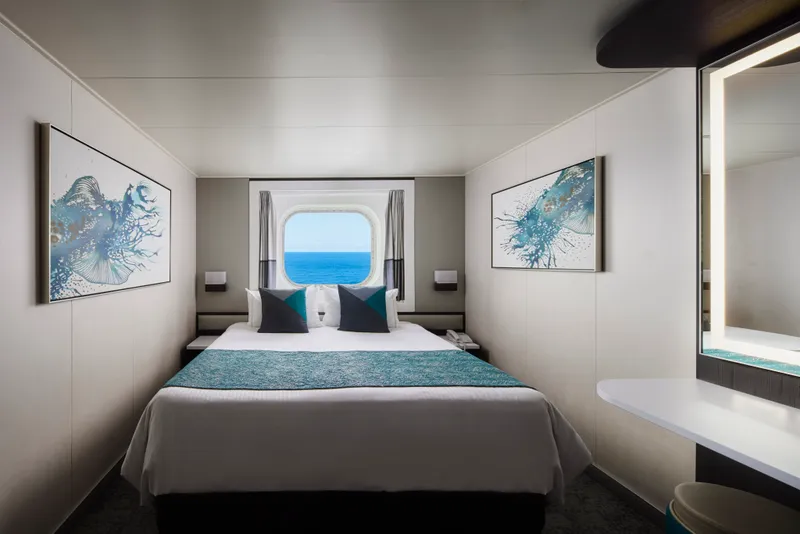

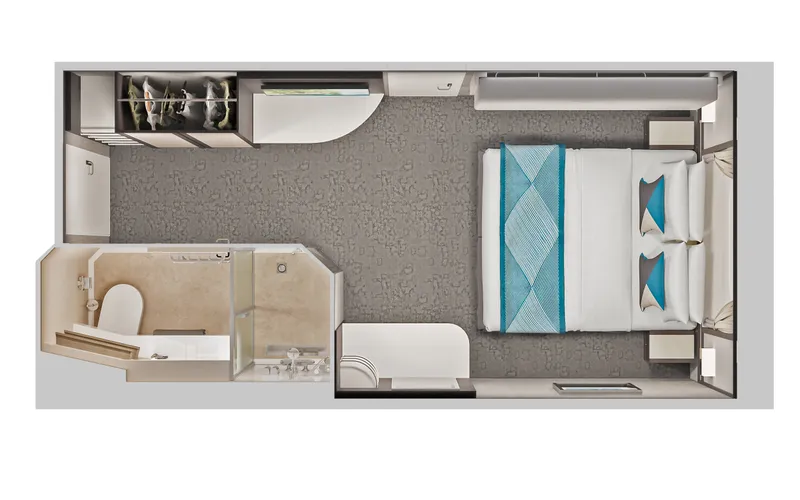
These comfortable staterooms accommodate up to three guests, making them ideal to kick back, relax and enjoy an amazing view from the big picture window. Two lower beds convert into a queen-size bed, and some have additional bedding for one more. Of course, you'll have room service and many other amenities. Plus some can connect, a great option to spread out even more.
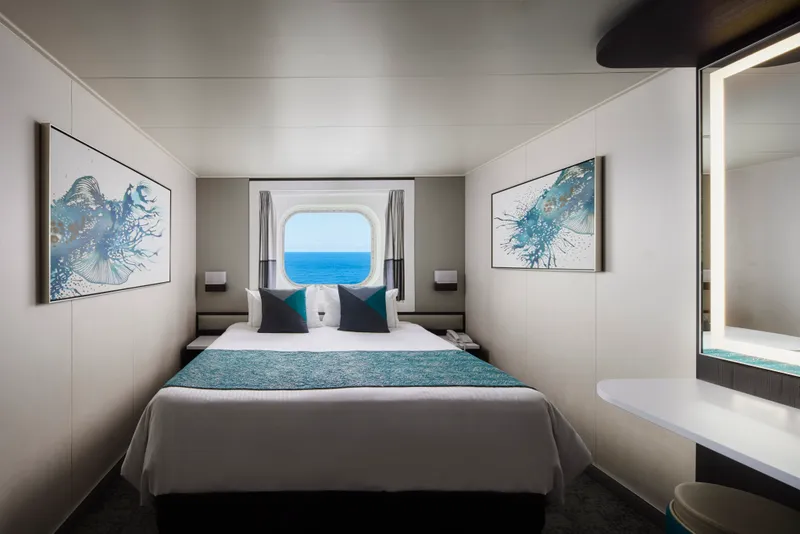

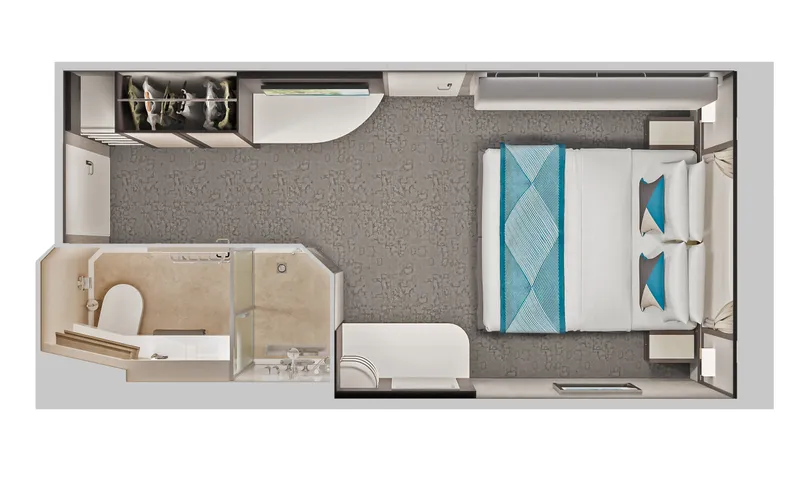
These comfortable staterooms accommodate up to three guests, making them ideal to kick back, relax and enjoy an amazing view from the big picture window. Two lower beds convert into a queen-size bed, and some have additional bedding for one more. Of course, you'll have room service and many other amenities. Plus some can connect, a great option to spread out even more.
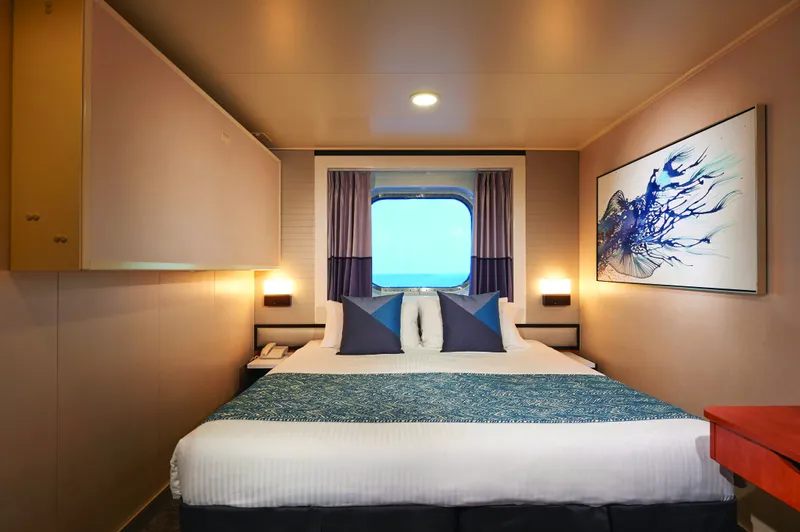

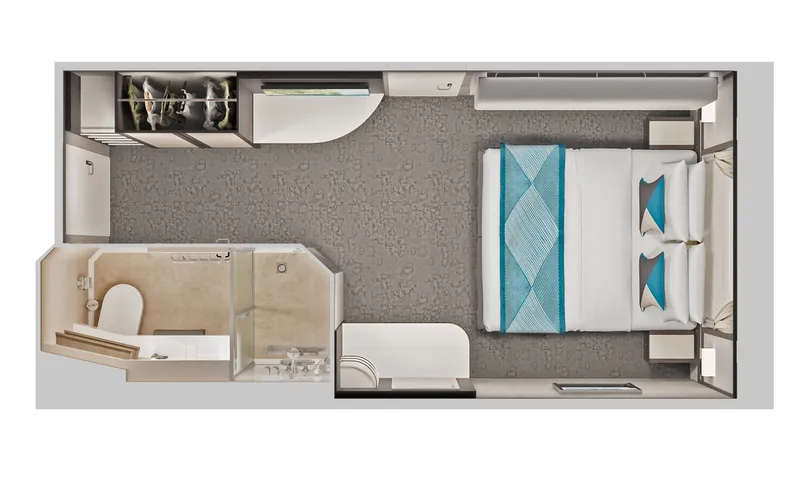
A Sailaway Oceanview stateroom guarantees an Oceanview stateroom or better! Please note that the view may be fully obstructed, partially obstructed, porthole or picture window. Your stateroom may be on any deck and assigned up to one day prior to embarkation.
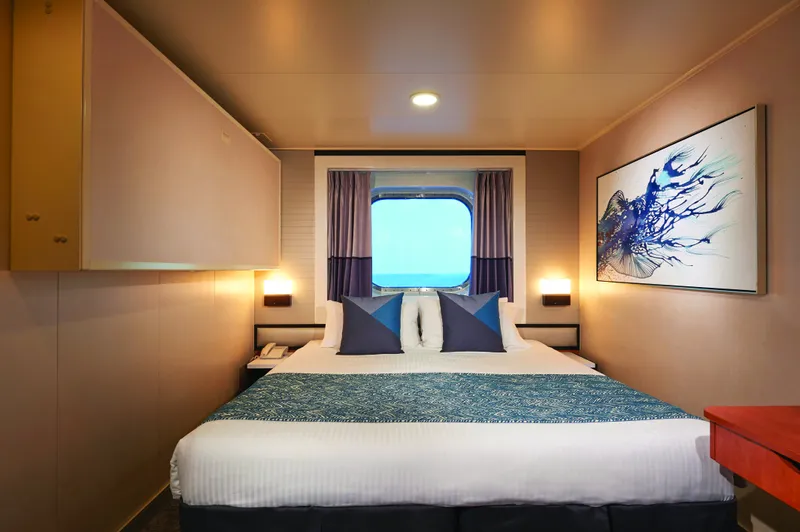

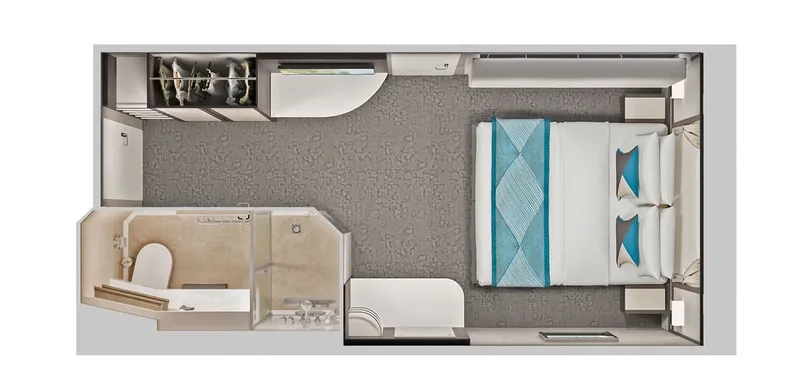
Solo Oceanview
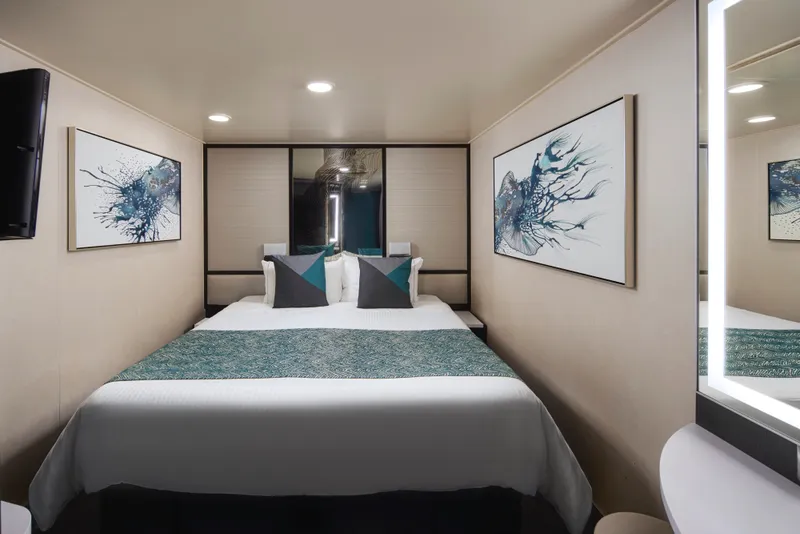

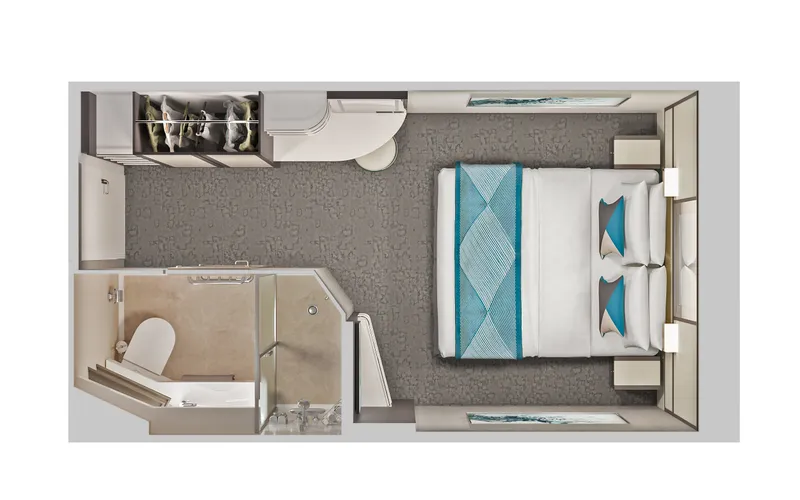
Norwegian Pearl Inside Staterooms are the most affordable way for your family to cruise. With room for up to four guests, you'll have two lower beds that convert into a queen-size bed and additional bedding to accommodate two more. And of course, room service and many other amenities.
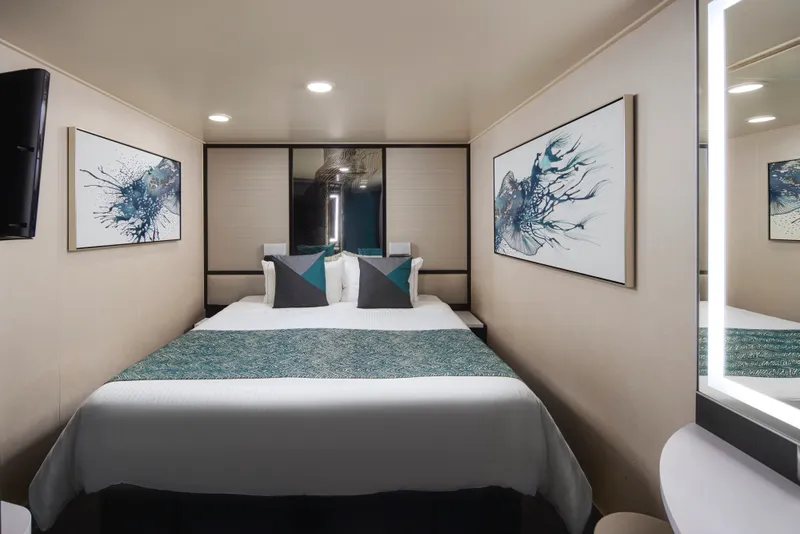

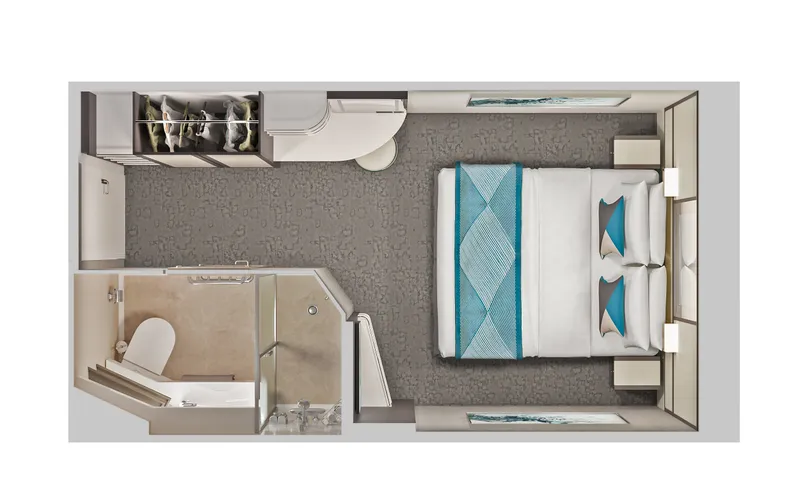
These Inside Staterooms are the most affordable way to cruise. There's room for up to four guests and they include two lower beds that convert into a queen-size bed and of course, you'll have room service and many other amenities.
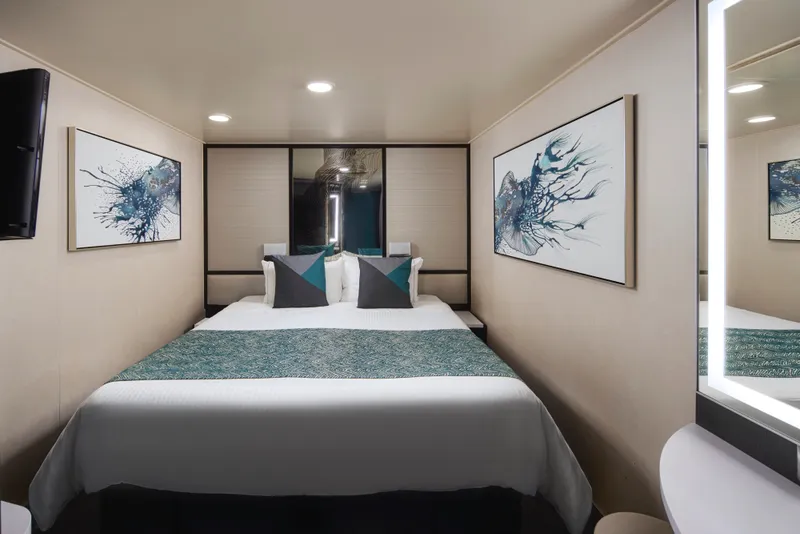

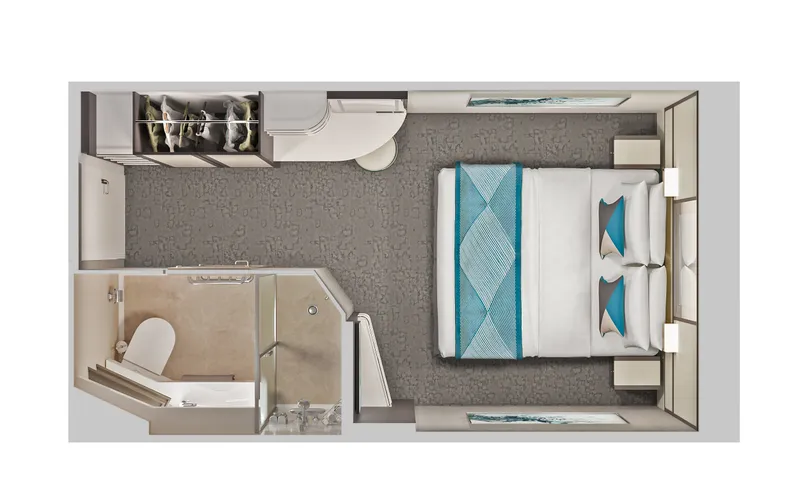
A Sail Away Inside stateroom guarantees an Inside stateroom or better! Your stateroom may be on any deck and assigned between time of booking up to one day prior to embarkation.
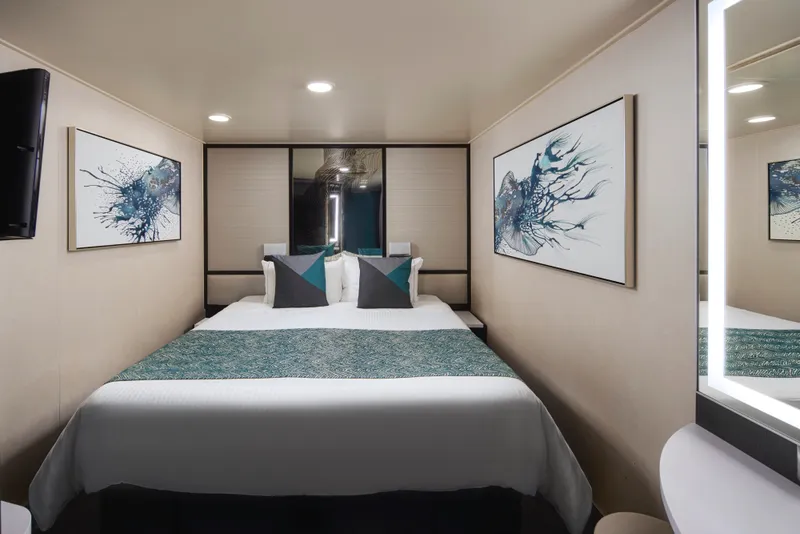

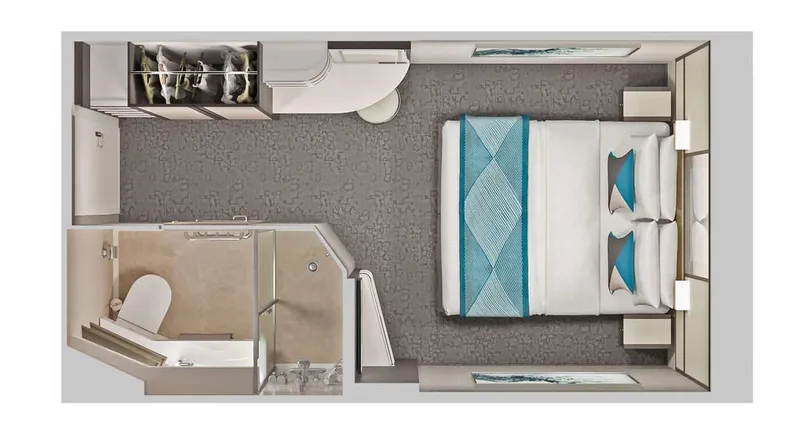
Solo Inside
Our cruise specialists can help you find the perfect cabin and the best available pricing.
(+886) 02-2721-7300Contact Advisor