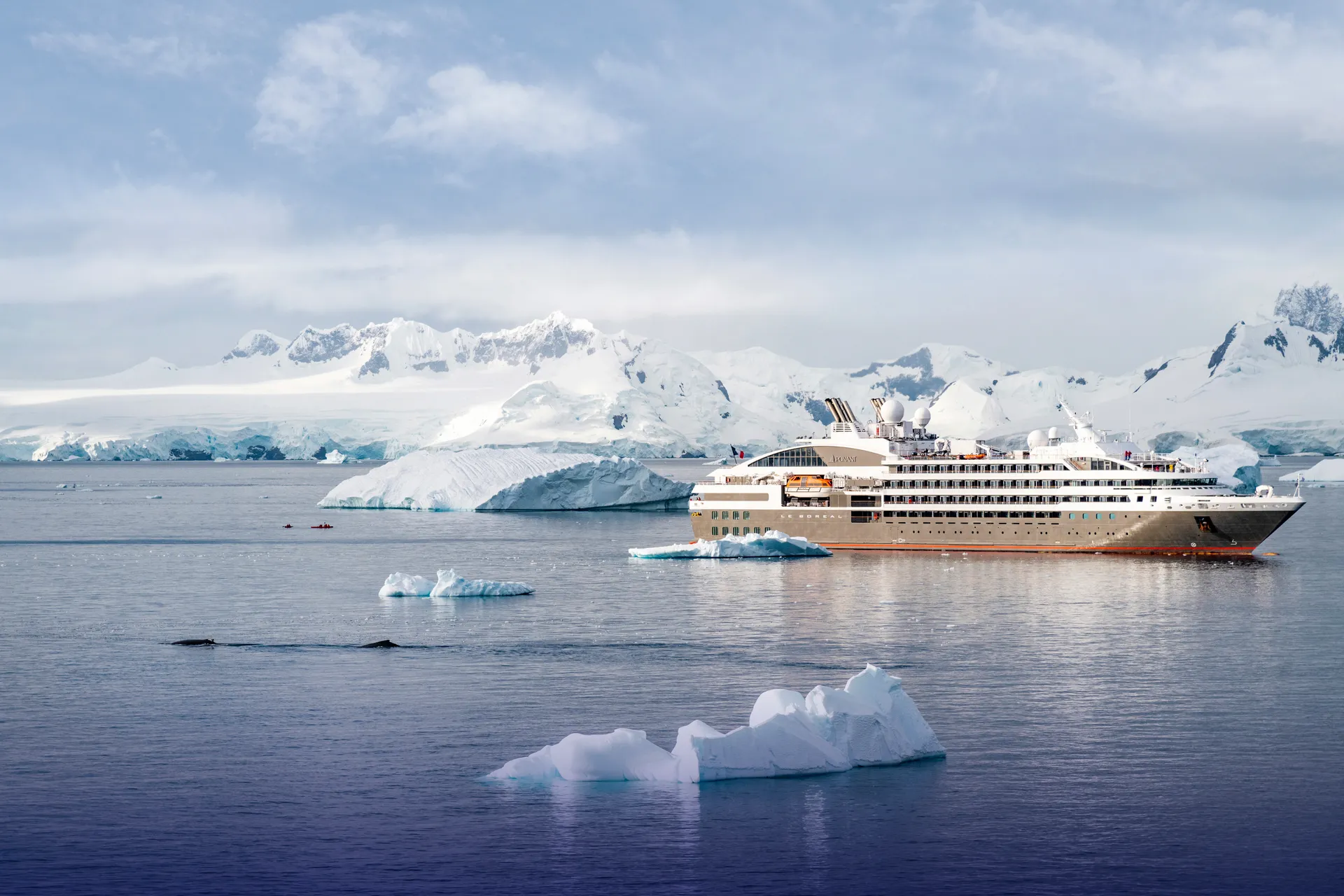
Date
March 3, 2027
Duration
18 nights
Departure Port
Ushuaia · Argentina
Arrival Port
Buenos Aires · Argentina
Rating
Luxury
Theme
—
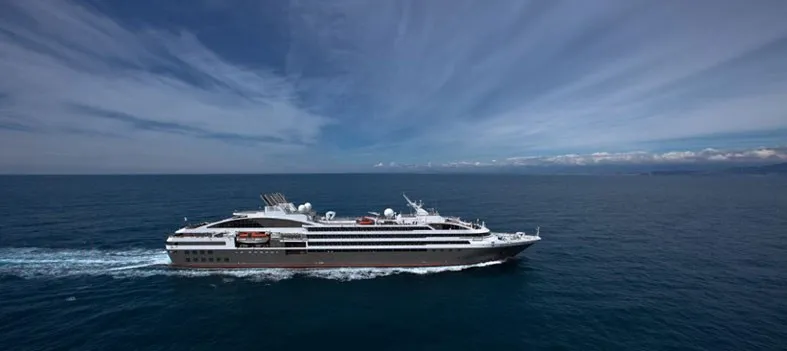


Ponant
2010
—
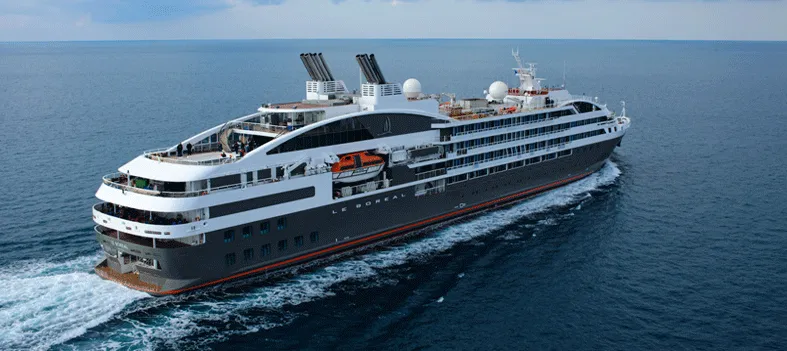
10,944 GT
264
132
139
466 m
18 m
14 knots
No


Ushuaia, capital of Tierra del Fuego and the province’s main tourist hub, is located at the southern end of Isla Grande. Boasting a spectacular location, sandwiched between the mountains – including Cerro Martial and Mount Olivia – and the sea, Ushuaia extends down the hill towards the arm of land that surrounds the Bay, where the ship will stop during your MSC WorldCruise. The city is protected from the icy Southwest winds and occasional storms that occur in the Beagle Channel. Interesting excursions include the small islands in the middle of the channel in front of the city, with their colonies of seabirds, and the nearby Parque Nacional Tierra del Fuego. Ushuaia is the most populous and popular city in Tierra del Fuego, and depends largely on the thriving tourism industry, which capitalises on the beauty of the area’s natural landscapes. Overlooking the sea is the Antigua Casa de Gobierno, a late-20th century building that was originally the Governor's mansion before being used by the local government and then as a police station. It has been restored so as to return it to its original use, so you can get an idea of how the rich lived in Ushuaia at the dawn of the city. The Fin del Mundo Museum houses exhibitions that focus on the region’s history and wildlife, as well as the polychrome figurehead of the Duchess of Albany, an English ship wrecked on the eastern end of the island in 1883. The Parque Nacional Tierra del Fuego, 12 km west of Ushuaia, is 630 sq. km of rugged mountains, sinuous lakes, southern beech forests, marshy bogs, sub-Antarctic tundra and lush coasts. It extends along the border with Chile, from the Beagle Channel to Sierra Inju-Goiyin, north of the huge Lake Fagnano, which you can also visit on an MSC Cruise day trip, combined with Lake Escondido. This is just one of the fantastic destinations of our cruise around the world: MSC World Cruise 2020!


The Antarctic Peninsula unravels upwards towards South America, reaching out a beckoning finger to the adventurous, who dare to explore this untamed realm. Stretching up from the heart of the world’s southernmost continent, the Antarctic Peninsula lies a mere 620 mile from Tierra del Fuego and, for many, offers a spectacular first taste of the snow-blanketed landscapes and colossal ice sculptures, which make up Earth’s least-explored continent. Unseen by humans until 1820 - a blink of an eye ago in relative terms - this is an adventure sure to make your hairs stand on end, as you experience the thrill of the truly unknown and extraordinary. The vast peninsula is sprinkled with research bases, which are at the frontline of human scientific endeavour, pushing to study and understand this unique landscape, its exceptional wildlife, and the impact that humans are having on this pristine continent. Witness cathedral-sized icebergs up close, and blue-hued glaciers, slowly slipping from imposing locations like Hope Bay. Blanched mountain peaks cover the peninsula, and you’ll find thousands of adorable Adelie penguin pairs thriving undisturbed in this peninsula’s unique setting.


South Georgia may include the following experiences. The exact itinerary is subject to permissions, weather, ice conditions and time available. The daily program will be determined by the Expedition Team and is subject to site availability. Cooper Bay, South Georgia A wealth of wildlife and awe-inspiring scenery reward those who visit Cooper Bay, a hidden gem awaiting discovery at the southeastern-most extremity of South Georgia. Four species of penguins nest and breed at Cooper Bay, including the island’s largest chinstrap penguin colony, together with colonies of macaroni and gentoo penguins and a small number of king penguins. While macaroni penguins are the most abundant species on South Georgia, with numbers estimated at ten million, they are usually extremely hard to find. Elsewhere, they nest on inaccessibly high cliffs and steep rocky slopes, making Cooper Bay one of the few easily accessible locations. Giant petrels and both light-mantled and sooty albatrosses find safe nesting sites among the waist-high tussock grass that covers the steep slopes above the bay. Masses of fur seals swarm the beaches and are often seen playing in the kelp beds offshore. Cooper Bay was named after Robert Cooper, First Lieutenant of James Cook’s ship HMS Resolution that visited here in 1775. Drygalski Fjord, South Georgia Drygalski Fjord is one of the most scenic areas of South Georgia, and also one of the windiest. Its narrow, two-and-a-half mile (4 km) waterway is bordered by steep-sided rock walls crowned by spectacular snow-covered peaks rising to over a 3,200’ (1,000 m). At the head of the fjord looms the mass of the Risting Glacier. The sharply pointed ice pinnacles and deep blue crevasses of its massive face occasionally send huge blocks of ice thundering into the water. Despite its impressive and seemingly inhospitable appearance, Drygalski Fjord supports a surprising amount of wildlife. This is the main breeding area in South Georgia for snow petrels. Blue-eyed shags, Wilson’s storm petrels, and Antarctic terns are common visitors, and the fjord is also the northernmost recorded breeding site for Weddell seals. The fjord was named to honor Professor Eric Von Drygalski, leader of the First German Antarctic Expedition of 1901-03. Fortuna Bay, South Georgia Scenic Fortuna Bay offers both prolific wildlife viewing and a magnificent panorama from its beach of jagged summit peaks and the impressive expanse of the Konig Glacier. Named after the first whale-catcher to operate here in the early 1900s, Fortuna Bay was used by early explorers and sealers long before the establishment of whaling stations on South Georgia. It boasts a large population of elephant and fur seals along its mile-and-a-half (2km) long pebble beach. Seal pups congregate here in huge numbers. The curious pups run to and fro, playing frisky games and exploring the world around them, resembling a chaotic animal kindergarten. The bay also supports a colony of several thousand photogenic king penguins, the largest on South Georgia. The best-known human history of Fortuna Bay comes from the tribulations of Sir Ernest Shackleton. It was here that he and his companions descended to the bay in 1916, after a treacherous crossing of the island’s ice cap, to reach their rescuers at the Stromness Whaling Station. Gold Harbour, South Georgia Gold Harbour, its small, crescent cove framed by the glacier-covered peaks of the Salvesen Range, is regarded as one of the most beautiful areas in all of South Georgia. The prominent icefall of the Betrab Glacier hangs dramatically from the cliffs above, from time to time releasing a large ice block to fall thundering into the sea. The highlight of a visit to Gold Harbour is the large colony of king penguins that covers the length of the beach. Raucous penguin calls fill the air with never-ending whistles and chatters as fluffy penguin chicks roam the beach in search of their parents. A small gentoo penguin colony has tucked itself in amongst the grass nearby. Massive elephant seals, weighing thousands of pounds, lounge at the water’s edge, while leopard seals lurk off the beach in hopes of a careless penguin. Above, light-mantled albatrosses glide along the cliff faces as giant petrels hover over the colony. Grytviken, South Georgia Tucked in at the head of King Edward Cove and encircled by steep rugged mountains is the capital of South Georgia, Grytviken. It was established by the Norwegian captain Carl Larsen in 1904 as the island’s first land-based whaling station, and its name literally means “Pot Bay” for the number of seal- oil try-pots left here by early sealers. Over 300 people lived in Grytviken during its busiest years. Nowadays it resembles a ghost town strewn with the remnants of rusty oil tanks, oil processing plants and the skeletons of derelict whaling vessels. The house of the station manager has been restored to become the South Georgia Museum. The Lutheran church and the white crosses of the cemetery are restored to their former state and stand in stark contrast to the verdant green peaks above. A monument marks the grave of the heroic British explorer Sir Ernest Shackleton, affectionately known by his men as ‘the boss.’ Grytviken also has its own post office, selling unique South Georgia stamps, while across the cove is the British Scientific Station at King Edward Point. Salisbury Plain, South Georgia Salisbury Plain is a stunningly beautiful place to visit. It was deposited by retreating glaciers along the shore of the Bay of Isles, and resembles an open stage rimmed by a towering amphitheater of snow-capped mountains. Its name first appeared on British Admiralty charts in 1930 and likely refers to the similarly named feature back in England. Salisbury Plain is home to the second largest king penguin colony on the island. It is immense in size and overwhelming in numbers, with over 250,000 birds nesting, breeding, and molting on its shores. Penguins are everywhere, dotting the beach and covering the adjacent hillsides. A cacophony of trumpeting and chirping adult penguins and whistling chicks fills the air against a rhythmic backdrop of the surf crashing on the beach. One of South Georgia’s largest elephant seal populations also comes to haul out along this 1.8 mile (3 km) long pebble beach. Fur seals are here in great abundance, hustling between penguin congregations and clusters of massive elephant seals in a scene of controlled biological chaos! South Georgia Remote and forbidding South Georgia, the most rugged of all sub-Antarctic islands, digests the fury of the stormy Southern Seas. The island’s dramatic glacier-covered mountains rise sharply and are crowned by Mount Paget at 6,900’ (2935m). Some 50 percent of South Georgia is permanently covered by glaciers, nourished by the proximity of the Antarctic Circumpolar Current. The cold, surrounding seas in this area the most nutrient-rich on earth, and make South Georgia a mecca for wildlife. Amidst the vastness of the Southern Ocean, it is a place of pilgrimage for penguins: a place to feed, to breed, and to rear young. Over 250,000 king penguins return to South Georgia annually, transforming its bays and beaches into a mosaic of motion and sound. Several other species of penguins, along with skuas, petrels, albatrosses, pipits and other birds nest along its shores. A few million fur seals hustle about like playful puppies, and hundreds of thousands of elephant seals gather in haul-outs so unimaginably immense they must be seen to be believed. St Andrews Bay, South Georgia Few places on earth are as immensely grand as St Andrews Bay. This is a place of such sheer vast scale that it must be truly experienced to be believed. Its wave-battered, windswept beaches border a broad plain left behind by retreating glaciers, their white snouts clearly visible at the base of the mountains. The desolation left behind by the glaciers didn’t stay vacant for long. The void was filled by literally hundreds of thousands of king penguins, gathering in one of the largest colonies on earth. Take the time to climb onto the crest of the moraine view to the unforgettable sight of a sea of penguins standing shoulder to shoulder. One of the largest Elephant seals haul-outs on the island is also here. In the early summer months, the beach seems carpeted by animals, an ever-changing labyrinth of massive gray forms and shapes. They growl and grunt while the wails and whimpers of fur seals fill the air from afar. Stromness, South Georgia The name Stromness is tied in history books to one of the greatest human endeavors of adversity and hope ever recorded. It was here that Sir Ernest Shackleton and his companions arrived in 1916 after an arduous 36-hour crossing of the island, traversing uncharted ice caps and treacherous mountain terrain, and finally reached this remote outpost of civilization. Stromness Bay on the northern coast of South Georgia once housed a prominent whaling station. Established in 1907 as a site for a factory ship, it was enlarged in 1912 when the processing moved on shore. Buildings were constructed, and the population of the station dramatically increased. In 1961, it was abandoned to the mercy of the elements, and today the station’s ghostly appearance has given way to the forces of nature. Fur seals have reclaimed the bay and the occupy the ruins. Often, hundreds of fur seal pups only a few weeks old congregate on the beach and around the station, playing, fighting, hustling and running among the remnants of the abandoned equipment.


South Georgia may include the following experiences. The exact itinerary is subject to permissions, weather, ice conditions and time available. The daily program will be determined by the Expedition Team and is subject to site availability. Cooper Bay, South Georgia A wealth of wildlife and awe-inspiring scenery reward those who visit Cooper Bay, a hidden gem awaiting discovery at the southeastern-most extremity of South Georgia. Four species of penguins nest and breed at Cooper Bay, including the island’s largest chinstrap penguin colony, together with colonies of macaroni and gentoo penguins and a small number of king penguins. While macaroni penguins are the most abundant species on South Georgia, with numbers estimated at ten million, they are usually extremely hard to find. Elsewhere, they nest on inaccessibly high cliffs and steep rocky slopes, making Cooper Bay one of the few easily accessible locations. Giant petrels and both light-mantled and sooty albatrosses find safe nesting sites among the waist-high tussock grass that covers the steep slopes above the bay. Masses of fur seals swarm the beaches and are often seen playing in the kelp beds offshore. Cooper Bay was named after Robert Cooper, First Lieutenant of James Cook’s ship HMS Resolution that visited here in 1775. Drygalski Fjord, South Georgia Drygalski Fjord is one of the most scenic areas of South Georgia, and also one of the windiest. Its narrow, two-and-a-half mile (4 km) waterway is bordered by steep-sided rock walls crowned by spectacular snow-covered peaks rising to over a 3,200’ (1,000 m). At the head of the fjord looms the mass of the Risting Glacier. The sharply pointed ice pinnacles and deep blue crevasses of its massive face occasionally send huge blocks of ice thundering into the water. Despite its impressive and seemingly inhospitable appearance, Drygalski Fjord supports a surprising amount of wildlife. This is the main breeding area in South Georgia for snow petrels. Blue-eyed shags, Wilson’s storm petrels, and Antarctic terns are common visitors, and the fjord is also the northernmost recorded breeding site for Weddell seals. The fjord was named to honor Professor Eric Von Drygalski, leader of the First German Antarctic Expedition of 1901-03. Fortuna Bay, South Georgia Scenic Fortuna Bay offers both prolific wildlife viewing and a magnificent panorama from its beach of jagged summit peaks and the impressive expanse of the Konig Glacier. Named after the first whale-catcher to operate here in the early 1900s, Fortuna Bay was used by early explorers and sealers long before the establishment of whaling stations on South Georgia. It boasts a large population of elephant and fur seals along its mile-and-a-half (2km) long pebble beach. Seal pups congregate here in huge numbers. The curious pups run to and fro, playing frisky games and exploring the world around them, resembling a chaotic animal kindergarten. The bay also supports a colony of several thousand photogenic king penguins, the largest on South Georgia. The best-known human history of Fortuna Bay comes from the tribulations of Sir Ernest Shackleton. It was here that he and his companions descended to the bay in 1916, after a treacherous crossing of the island’s ice cap, to reach their rescuers at the Stromness Whaling Station. Gold Harbour, South Georgia Gold Harbour, its small, crescent cove framed by the glacier-covered peaks of the Salvesen Range, is regarded as one of the most beautiful areas in all of South Georgia. The prominent icefall of the Betrab Glacier hangs dramatically from the cliffs above, from time to time releasing a large ice block to fall thundering into the sea. The highlight of a visit to Gold Harbour is the large colony of king penguins that covers the length of the beach. Raucous penguin calls fill the air with never-ending whistles and chatters as fluffy penguin chicks roam the beach in search of their parents. A small gentoo penguin colony has tucked itself in amongst the grass nearby. Massive elephant seals, weighing thousands of pounds, lounge at the water’s edge, while leopard seals lurk off the beach in hopes of a careless penguin. Above, light-mantled albatrosses glide along the cliff faces as giant petrels hover over the colony. Grytviken, South Georgia Tucked in at the head of King Edward Cove and encircled by steep rugged mountains is the capital of South Georgia, Grytviken. It was established by the Norwegian captain Carl Larsen in 1904 as the island’s first land-based whaling station, and its name literally means “Pot Bay” for the number of seal- oil try-pots left here by early sealers. Over 300 people lived in Grytviken during its busiest years. Nowadays it resembles a ghost town strewn with the remnants of rusty oil tanks, oil processing plants and the skeletons of derelict whaling vessels. The house of the station manager has been restored to become the South Georgia Museum. The Lutheran church and the white crosses of the cemetery are restored to their former state and stand in stark contrast to the verdant green peaks above. A monument marks the grave of the heroic British explorer Sir Ernest Shackleton, affectionately known by his men as ‘the boss.’ Grytviken also has its own post office, selling unique South Georgia stamps, while across the cove is the British Scientific Station at King Edward Point. Salisbury Plain, South Georgia Salisbury Plain is a stunningly beautiful place to visit. It was deposited by retreating glaciers along the shore of the Bay of Isles, and resembles an open stage rimmed by a towering amphitheater of snow-capped mountains. Its name first appeared on British Admiralty charts in 1930 and likely refers to the similarly named feature back in England. Salisbury Plain is home to the second largest king penguin colony on the island. It is immense in size and overwhelming in numbers, with over 250,000 birds nesting, breeding, and molting on its shores. Penguins are everywhere, dotting the beach and covering the adjacent hillsides. A cacophony of trumpeting and chirping adult penguins and whistling chicks fills the air against a rhythmic backdrop of the surf crashing on the beach. One of South Georgia’s largest elephant seal populations also comes to haul out along this 1.8 mile (3 km) long pebble beach. Fur seals are here in great abundance, hustling between penguin congregations and clusters of massive elephant seals in a scene of controlled biological chaos! South Georgia Remote and forbidding South Georgia, the most rugged of all sub-Antarctic islands, digests the fury of the stormy Southern Seas. The island’s dramatic glacier-covered mountains rise sharply and are crowned by Mount Paget at 6,900’ (2935m). Some 50 percent of South Georgia is permanently covered by glaciers, nourished by the proximity of the Antarctic Circumpolar Current. The cold, surrounding seas in this area the most nutrient-rich on earth, and make South Georgia a mecca for wildlife. Amidst the vastness of the Southern Ocean, it is a place of pilgrimage for penguins: a place to feed, to breed, and to rear young. Over 250,000 king penguins return to South Georgia annually, transforming its bays and beaches into a mosaic of motion and sound. Several other species of penguins, along with skuas, petrels, albatrosses, pipits and other birds nest along its shores. A few million fur seals hustle about like playful puppies, and hundreds of thousands of elephant seals gather in haul-outs so unimaginably immense they must be seen to be believed. St Andrews Bay, South Georgia Few places on earth are as immensely grand as St Andrews Bay. This is a place of such sheer vast scale that it must be truly experienced to be believed. Its wave-battered, windswept beaches border a broad plain left behind by retreating glaciers, their white snouts clearly visible at the base of the mountains. The desolation left behind by the glaciers didn’t stay vacant for long. The void was filled by literally hundreds of thousands of king penguins, gathering in one of the largest colonies on earth. Take the time to climb onto the crest of the moraine view to the unforgettable sight of a sea of penguins standing shoulder to shoulder. One of the largest Elephant seals haul-outs on the island is also here. In the early summer months, the beach seems carpeted by animals, an ever-changing labyrinth of massive gray forms and shapes. They growl and grunt while the wails and whimpers of fur seals fill the air from afar. Stromness, South Georgia The name Stromness is tied in history books to one of the greatest human endeavors of adversity and hope ever recorded. It was here that Sir Ernest Shackleton and his companions arrived in 1916 after an arduous 36-hour crossing of the island, traversing uncharted ice caps and treacherous mountain terrain, and finally reached this remote outpost of civilization. Stromness Bay on the northern coast of South Georgia once housed a prominent whaling station. Established in 1907 as a site for a factory ship, it was enlarged in 1912 when the processing moved on shore. Buildings were constructed, and the population of the station dramatically increased. In 1961, it was abandoned to the mercy of the elements, and today the station’s ghostly appearance has given way to the forces of nature. Fur seals have reclaimed the bay and the occupy the ruins. Often, hundreds of fur seal pups only a few weeks old congregate on the beach and around the station, playing, fighting, hustling and running among the remnants of the abandoned equipment.

The Falkland Islands are situated some 350 miles east of Tierra del Fuego, 1,000 miles north of Antarctica and, as the locals claim, a mere 8,000 miles from Britain. Port Stanley is home to the majority of the island's residents -1,990 out of a total population of 2,490. These 700 islands have long been of historical importance to scientists and seamen alike. Prior to the construction of the Panama Canal, they offered safe anchorage and provisions for sailing vessels as they headed around Cape Horn. Today, maritime interests center mostly on the British Royal Navy, fishing fleets from a variety of nations and scientific expeditions to Antarctica. In 1982, world attention was riveted on these islands when Argentine and British forces fought fiercely for the right to call them their own. A number of vessels, numerous aircraft, thousands of troops and many local residents were involved in the conflict. After heavy combat, the will of Britain, supported by the island people, prevailed and the Falkland Islands remain British to this day.


Puerto Madryn, where you will stop on your MSC World Cruise, is on the shores of the beautiful and protected Nuevo Gulf. The city is the gateway to the incredible Ecocentro, east of the city, an ecological treasure of the Valdés Peninsula where you can discover the rich marine life in the area. The Welsh landed here for the first time in 1865, but development was slow until the arrival of the railway two decades later, when Puerto Madryn became the port for the villages in the lower Valley of the Chubut River. The Parque Histórico Punta Cuevas marks the first Welsh settlement in Patagonia with the Monumento al Indio Tehuelche, a statue that celebrates the centenary of the arrival of the Welsh and pays homage to the Tehuelche. From here you can enjoy breathtaking views of the Nuevo Golf at sunset, lit up by the lights of the city. Along the promontory lies Puerto Madryn’s most important attraction, the outstanding Ecocentre. This interactive museum promotes awareness and respect for marine ecosystems. You can take an MSC day trip to go dolphin and sea lion watching out at sea, or to visit the Valdés Peninsula and Punta Tombo. The Valdés Peninsula is one of the most important marine reserves in the world, recognised as a UNESCO World Heritage Site in 1999. Nothing can prepare you for the amazing richness of the marine environment that surrounds it – and in particular the southern right whales which migrate here every year to swim in the waters off the town of Puerto Pirámides – nor for the immense colonies of animals living on the Peninsula’s steep, crumbly cliffs. Punta Tombo is home to the continent's largest colonyof penguins; the noise produced by the black and white Magellanic penguins is deafening, but walking through this avian metropolis, surrounded by the strangest sounds and tottering birds is a unique experience. This is just one of the fantastic destinations of our cruise around the world: MSC World Cruise 2020!


Passionate, and alive with an infectious crackling energy, the Argentine capital is a breathlessly romantic city, which blends old-world colonial architecture with a down-to-earth Latin American clamour. Famed for steamy tango interplays, and expertly seared steak slabs, a visit to Buenos Aires is a fiery fiesta for the senses. Parque Tres de Febrero is a 400-hectare oasis where 18,000 rose bushes bloom, and skyscrapers give way to still lakes and pretty paths of rollerblading locals. Mighty palm trees - that look like exploding fireworks - stand tall in Plaza de Mayo, the heart of this sprawling cosmopolitan capital of 48 barrios. The square has served as the stage for many fundamental events in this country’s history, and the location where the seeds of independence were sewn continues to serve as the city’s gathering point - and is a place for solidarity, rebellion and revolution. The presidential Casa Rosada’s salmon-hued Palatial Palace borders the plaza, while nearby Museum Nacional de Bellas Artes houses the largest collection of public art in Latin America. Teatro Colón, the opulent 1908 opera house, is one of the world’s finest venues - musical performance here take on an ethereal quality, with the exceptional acoustics transferring every quiver of bow, and tremor of vocal cord, to the audience in spine-tingling clarity. The gargantuan, precipitous terraces of Bombonera Stadium form another of Buenos Aires’s incredible venues, and a wall of noise emanates from it when Boca Juniors take to the field. Juicy steak and punchy Malbec flow in the city’s parrillas – steakhouses - while glitzy bars and thumping nightclubs welcome revellers late into the night. It’s not just the meat that sizzles here either - tango dancers fill milongas - dance halls - to strut passionately until the early hours. Sip steaming mate, the country’s national drink, shop in covered markets, and explore Cementerio de la Recoleta - a city of grand graves and intricate memorials honouring presidents, politicians and notable Argentine heroes from history.

In addition to the common services provided to all our suites and staterooms:
Priority boarding (depending on port of embarkation)
Champagne and fruit basket upon arrival
Butler service
An assortment of sweet or savoury canapés and fruit basket every day
One king-size bed (180 x 200 cm) or two single beds (90 x 200 cm)
An armchair and sofa (167 x 70 cm)
A bathroom with shower and small bathtub
A private 5 m² balcony
A panoramic sliding bay window


In addition to the common services provided to all our suites and staterooms:
Private return transfer
Priority boarding (depending on port of embarkation)
Champagne and fruit basket upon arrival
Butler service
An assortment of sweet or savoury canapés and fruit basket every day
A bedroom with one king-size bed (180 x 200 cm) or two single beds (90 x 200 cm)
A living/dining room with a sofa, armchair, second TV, 4-seater table, and sliding courtesy door
A bathroom with shower and Balneo bathtub
A one-hour spa treatments per person (for 2 people) in the well-being space, chosen from the facial and body treatments on offer
Included premium pass: access to a selection of premium spirits at the bar
A private 9 m² balcony
Two panoramic sliding bay windows


In addition to the common services provided to all our suites and staterooms:
Champagne and fruit basket upon arrival
An assortment of sweet or savoury canapés and fruit basket every day
A bedroom with king-size bed (180 x 200 cm) or two single beds (90 x 200 cm)
A lounge with convertible sofa to a king-size bed (180 x 200 cm) or two single beds (90 x 200 cm), armchairs, second TV, and sliding courtesy door
Two bathrooms with showers
A private 8 m² balcony
Two panoramic sliding bay windows


In addition to the common services provided to all our suites and staterooms:
Priority boarding (depending on port of embarkation)
Champagne and fruit basket upon arrival
Butler service
An assortment of sweet or savoury canapés and fruit basket every day
A bedroom with king-size bed (180 x 200 cm) or two single beds (90 x 200 cm)
A lounge with convertible sofa to a king-size bed (180 x 200 cm) or two single beds (90 x 200 cm), armchairs, second TV, and sliding courtesy door
Two bathrooms with showers
A private 8 m² balcony
Two panoramic sliding bay windows


In addition to the common services provided to all our suites and staterooms:
One king-size bed or two single beds (180 x 200 cm)
A bathroom with shower
A window (except for stateroom 300: a round porthole only)


In addition to the common services provided to all our suites and staterooms:
One king-size bed (180 x 200 cm) or two single beds (90 x 200 cm)
A bathroom with shower
A private 4 m² balcony
A window and panoramic glazed swing door


In addition to the common services provided to all our suites and staterooms:
One king-size bed (180 x 200 cm) or two single beds (90 x 200 cm)
A bathroom with shower
A private 4 m² balcony
A panoramic sliding bay window


In addition to the common services provided to all our suites and staterooms:
One king-size bed (180 x 200 cm) or two single beds (90 x 200 cm)
A bathroom with shower
A private 4 m² balcony
A panoramic sliding bay window


In addition to the common services provided to all our suites and staterooms:
One king-size bed (180 x 200 cm) or two single beds (90 x 200 cm)
A bathroom with shower
A private 4 m² balcony
A panoramic sliding bay window
Our cruise specialists can help you find the perfect cabin and the best available pricing.
(+886) 02-2721-7300Contact Advisor