Regent Seven Seas CruisesPRT270729
Fusina (Venice) to Piraeus
Date
2027-07-29
Duration
7 nights
Departure Port
Venice
Italy
Arrival Port
Athens (Piraeus)
Greece
Rating
Ultra Luxury
Theme
—
Date
2027-07-29
Duration
7 nights
Departure Port
Venice
Italy
Arrival Port
Athens (Piraeus)
Greece
Rating
Ultra Luxury
Theme
—


Regent Seven Seas Cruises
—
—
77,000 GT
850
—
—
—
31 m
22 knots
No
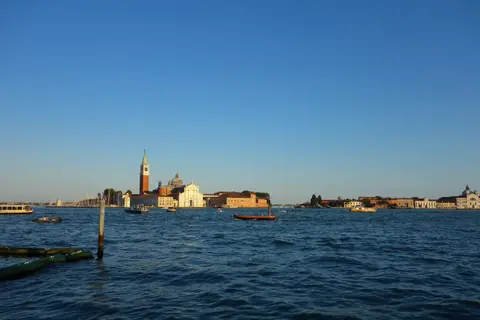
Venice, approached from the Fusina port across its luminous lagoon, remains one of the world's most extraordinary cities — a thousand-year-old republic built on 118 islands and laced with canals, palaces, and masterpieces. Must-dos include riding the Grand Canal by vaporetto, savouring cicchetti at a traditional bacaro, and visiting the colourful islands of Murano and Burano. April through June and September through November offer the finest light and the most manageable crowds.
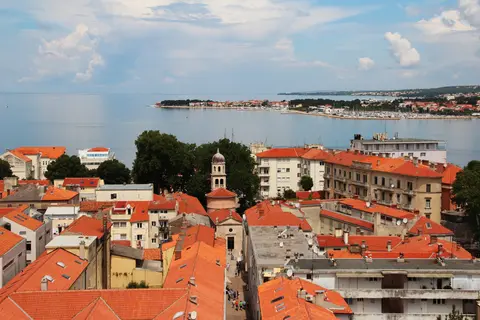
Zadar, a historic port city on Croatia's Dalmatian coast, is a captivating blend of ancient architecture and vibrant culture. Must-do experiences include visiting the Church of St. Donatus and enjoying the enchanting music of the Sea Organ. The best season to visit is during the warm summer months when the city comes alive with festivals and outdoor activities.
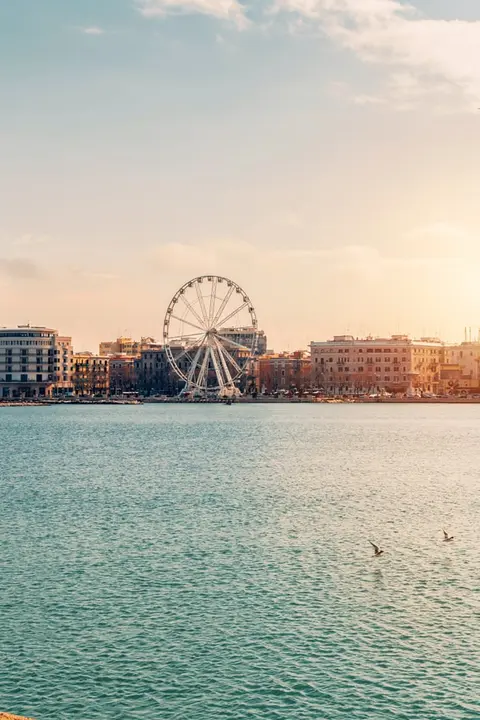
Bari, Puglia's ancient capital on the Adriatic, has served as a bridge between Western Europe and the Eastern Mediterranean for over two millennia — a heritage visible in the magnificent Basilica di San Nicola, one of medieval Christendom's most important pilgrimage churches, and in the labyrinthine Bari Vecchia where elderly women still hand-roll orecchiette in the street. The surrounding region of Puglia is among Italy's most compelling culinary destinations: burrata born in Andria, focaccia barese, and the puglian cuisine that has recently attracted international attention as Rome's and Florence's quieter, more authentic cousin. Visit April through June and September through October; the Trulli of Alberobello are forty minutes south.
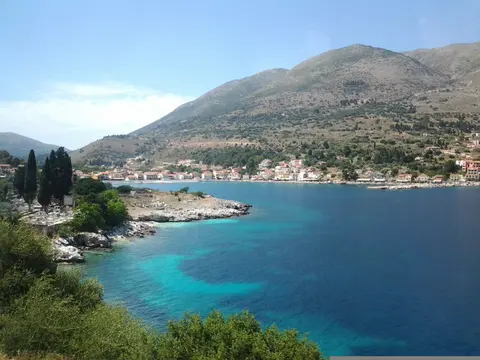
Argostoli is the capital of Kefalonia, the largest Ionian Island, renowned for dramatic geological wonders, pristine beaches, and the literary fame of Captain Corelli's Mandolin. Must-dos include visiting the subterranean Melissani Lake, admiring the cliffs of Myrtos Beach, and tasting Robola wine with fresh-grilled fish. May through October offers warm weather and calm seas, with June and September providing the best balance of conditions.
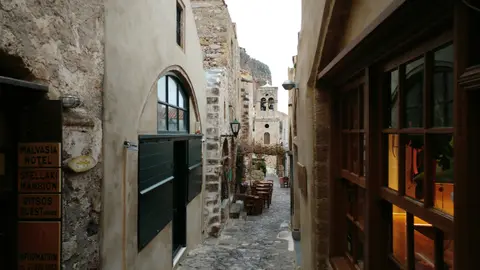
Monemvasia, a fortified port town on the Peloponnese, is celebrated for its medieval architecture and rich history dating back to the 6th century. Must-do experiences include savoring local dishes like **mpakaliaro** and exploring nearby attractions such as Nydri and Symi. The best time to visit is spring or early autumn when the weather is mild and the crowds are manageable.
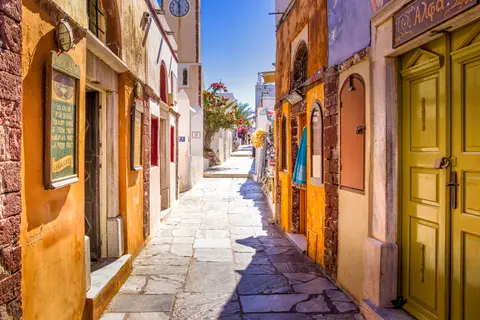
Santorini, the ancient volcanic caldera rising from the Aegean, is Greece's most theatrical landscape — a crescentic island of sheer white cliffs plunging into an indigo sea, its clifftop villages of Fira and Oia draped in bougainvillea and culminating in the world's most photographed sunset. The island's unique Assyrtiko wine, grown on ancient ungrafted vines in volcanic pumice, is one of the Mediterranean's greatest expressions of terroir. Byzantine frescoes of extraordinary beauty fill the Prehistoric Museum of Thera. The volcanic black and red sand beaches of Perissa and Perivolos are unlike any others in Greece. April through June and September through October offer the finest conditions.
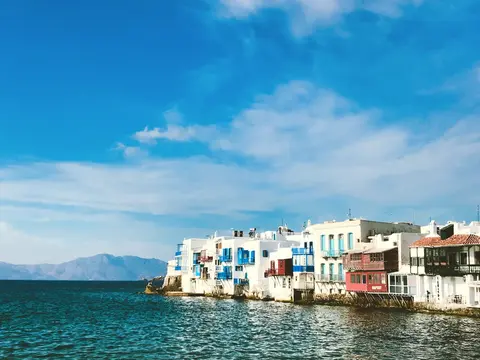
Mykonos is the Aegean at its most seductive — a labyrinth of bougainvillea-draped whitewashed alleys designed to disorient pirates (and occasionally visitors) leading to Kástro, the medieval hilltop quarter overlooking Little Venice, where balconied houses hang directly above the sea. The island's famous windmills, perched on a ridge above the old harbour, are best photographed at golden hour as pelicans patrol the waterfront below. Visit the sacred archaeological island of Delos — a 30-minute boat crossing — for one of the most significant ancient sites in the Greek world. May, June, and September offer the perfect balance of warmth, light, and bearable crowds.
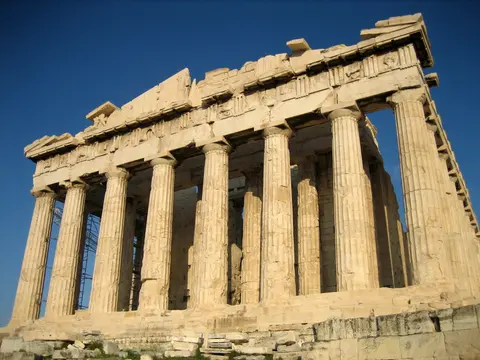
The port that launched Athenian democracy's naval supremacy at the Battle of Salamis, Piraeus remains Greece's maritime heartbeat — and the most convenient gateway to both the Acropolis and the Aegean island chains. Dine on grilled sea bream at a Mikrolimano harbourside taverna, visit the extraordinary bronze Piraeus Apollo, and set sail for Hydra or Santorini by afternoon. Late April through June and September offer the Aegean at its most golden and uncrowded.
Day 1
Venice, approached from the Fusina port across its luminous lagoon, remains one of the world's most extraordinary cities — a thousand-year-old republic built on 118 islands and laced with canals, palaces, and masterpieces. Must-dos include riding the Grand Canal by vaporetto, savouring cicchetti at a traditional bacaro, and visiting the colourful islands of Murano and Burano. April through June and September through November offer the finest light and the most manageable crowds.
Day 2
Zadar, a historic port city on Croatia's Dalmatian coast, is a captivating blend of ancient architecture and vibrant culture. Must-do experiences include visiting the Church of St. Donatus and enjoying the enchanting music of the Sea Organ. The best season to visit is during the warm summer months when the city comes alive with festivals and outdoor activities.
Day 3
Bari, Puglia's ancient capital on the Adriatic, has served as a bridge between Western Europe and the Eastern Mediterranean for over two millennia — a heritage visible in the magnificent Basilica di San Nicola, one of medieval Christendom's most important pilgrimage churches, and in the labyrinthine Bari Vecchia where elderly women still hand-roll orecchiette in the street. The surrounding region of Puglia is among Italy's most compelling culinary destinations: burrata born in Andria, focaccia barese, and the puglian cuisine that has recently attracted international attention as Rome's and Florence's quieter, more authentic cousin. Visit April through June and September through October; the Trulli of Alberobello are forty minutes south.
Day 4
Argostoli is the capital of Kefalonia, the largest Ionian Island, renowned for dramatic geological wonders, pristine beaches, and the literary fame of Captain Corelli's Mandolin. Must-dos include visiting the subterranean Melissani Lake, admiring the cliffs of Myrtos Beach, and tasting Robola wine with fresh-grilled fish. May through October offers warm weather and calm seas, with June and September providing the best balance of conditions.
Day 5
Monemvasia, a fortified port town on the Peloponnese, is celebrated for its medieval architecture and rich history dating back to the 6th century. Must-do experiences include savoring local dishes like **mpakaliaro** and exploring nearby attractions such as Nydri and Symi. The best time to visit is spring or early autumn when the weather is mild and the crowds are manageable.
Day 6
Santorini, the ancient volcanic caldera rising from the Aegean, is Greece's most theatrical landscape — a crescentic island of sheer white cliffs plunging into an indigo sea, its clifftop villages of Fira and Oia draped in bougainvillea and culminating in the world's most photographed sunset. The island's unique Assyrtiko wine, grown on ancient ungrafted vines in volcanic pumice, is one of the Mediterranean's greatest expressions of terroir. Byzantine frescoes of extraordinary beauty fill the Prehistoric Museum of Thera. The volcanic black and red sand beaches of Perissa and Perivolos are unlike any others in Greece. April through June and September through October offer the finest conditions.
Day 7
Mykonos is the Aegean at its most seductive — a labyrinth of bougainvillea-draped whitewashed alleys designed to disorient pirates (and occasionally visitors) leading to Kástro, the medieval hilltop quarter overlooking Little Venice, where balconied houses hang directly above the sea. The island's famous windmills, perched on a ridge above the old harbour, are best photographed at golden hour as pelicans patrol the waterfront below. Visit the sacred archaeological island of Delos — a 30-minute boat crossing — for one of the most significant ancient sites in the Greek world. May, June, and September offer the perfect balance of warmth, light, and bearable crowds.
Day 8
The port that launched Athenian democracy's naval supremacy at the Battle of Salamis, Piraeus remains Greece's maritime heartbeat — and the most convenient gateway to both the Acropolis and the Aegean island chains. Dine on grilled sea bream at a Mikrolimano harbourside taverna, visit the extraordinary bronze Piraeus Apollo, and set sail for Hydra or Santorini by afternoon. Late April through June and September offer the Aegean at its most golden and uncrowded.
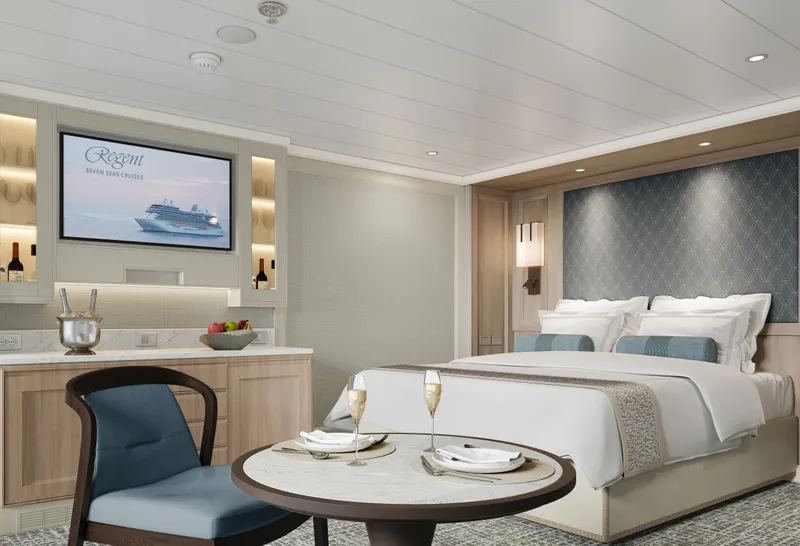
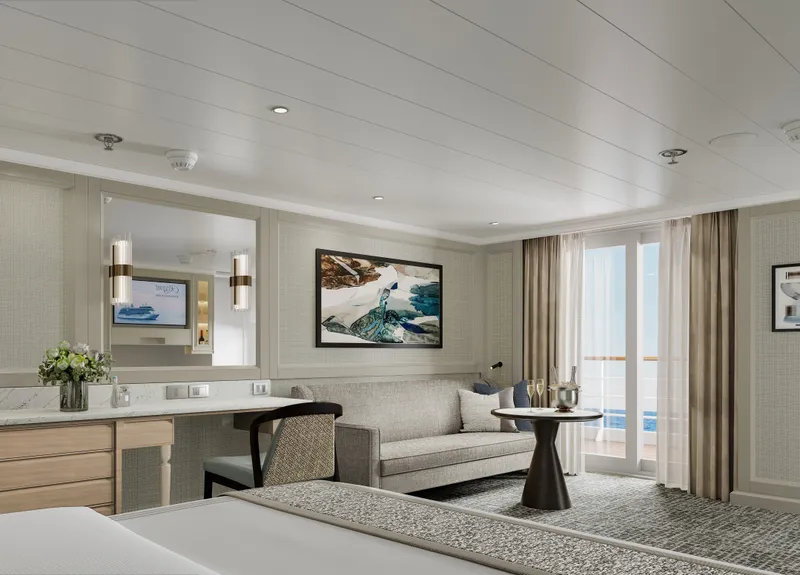
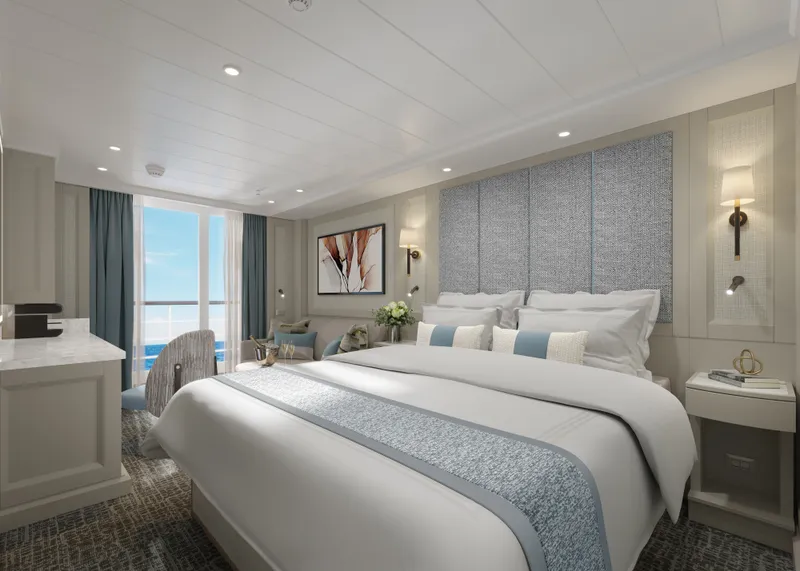
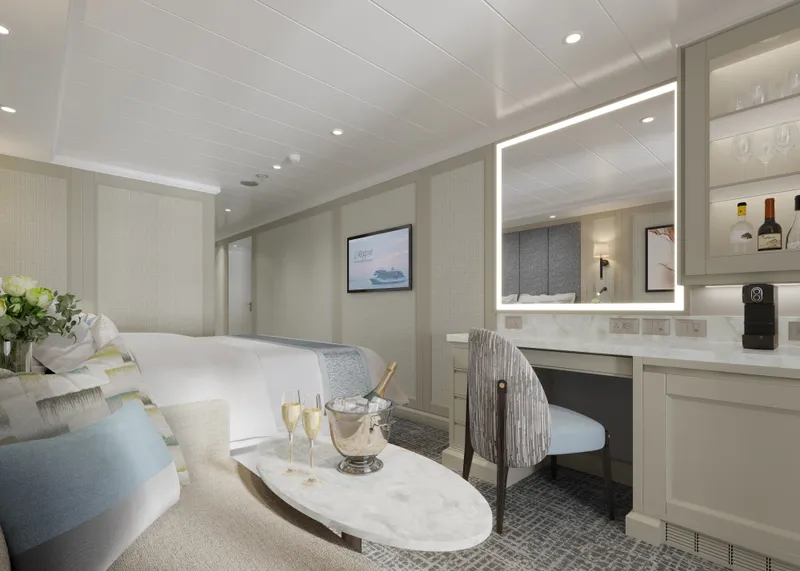
In this superbly designed suite, enjoy once-in-a-lifetime views of the horizon from the comfort of your King-Sized Elite Slumber™ Bed as well as exclusive luxuries available only in suites at the Concierge level and higher. From the marble bath to the spacious furnished veranda, this sophisticated suite is perfect for relaxing or entertaining with champagne or espresso in hand.
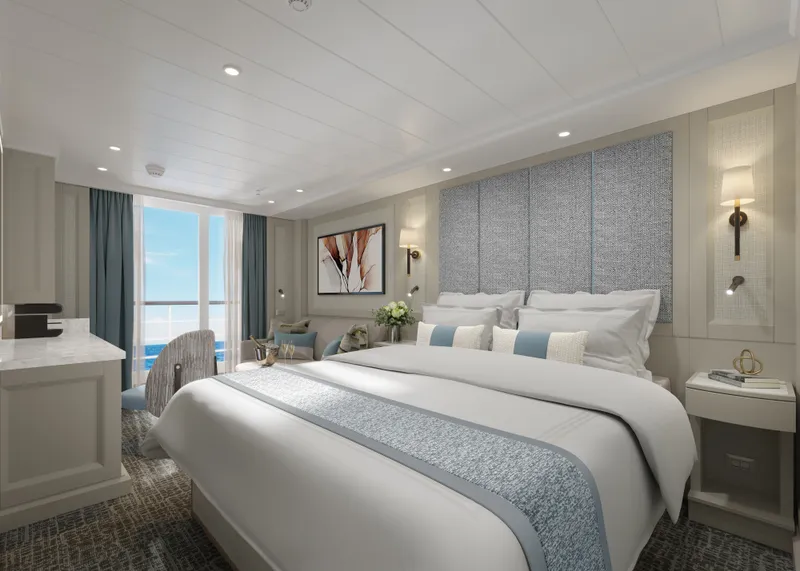
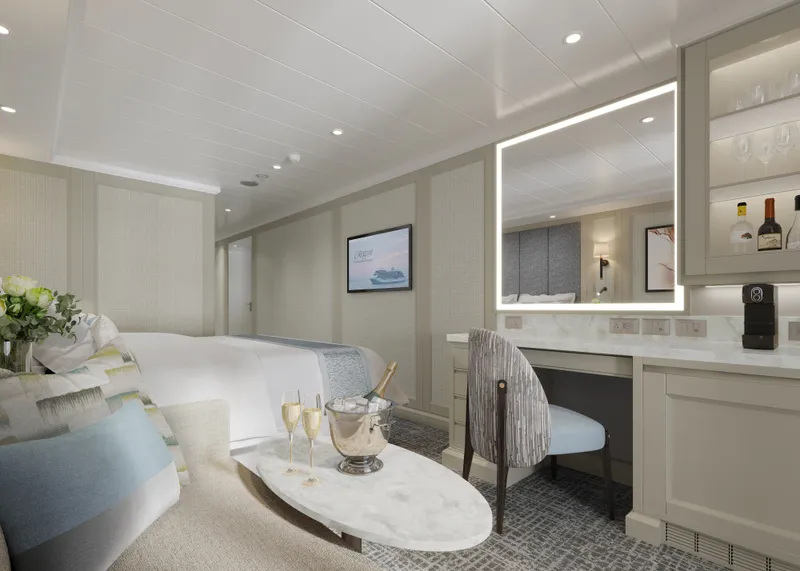
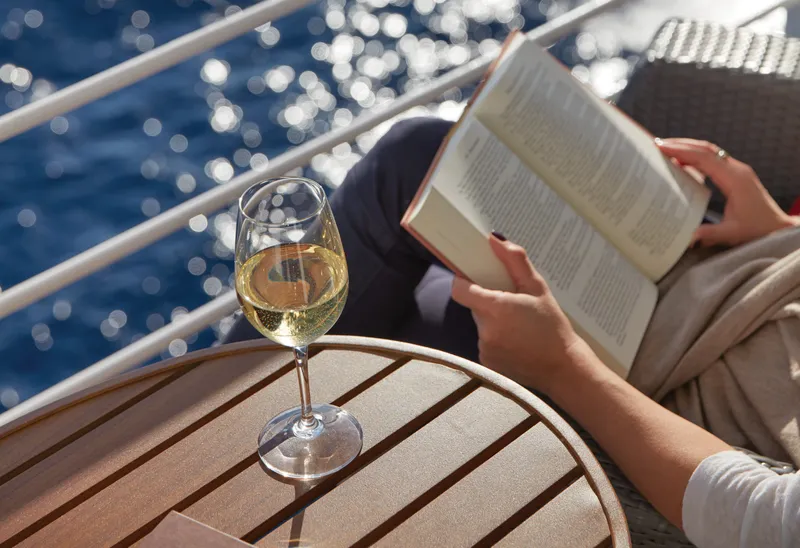
Thoughtfully designed to maximize interior space and embrace the magnificent scenery outdoors, this suite is a joyful retreat. From the sitting area, admire the ocean views through the floor-to-ceiling windows, or better yet, take a seat outside on your private balcony to watch the world go by. Elegant finishes such as luxurious bedding and beautiful marble detailing in the bath further enhance your comfort.
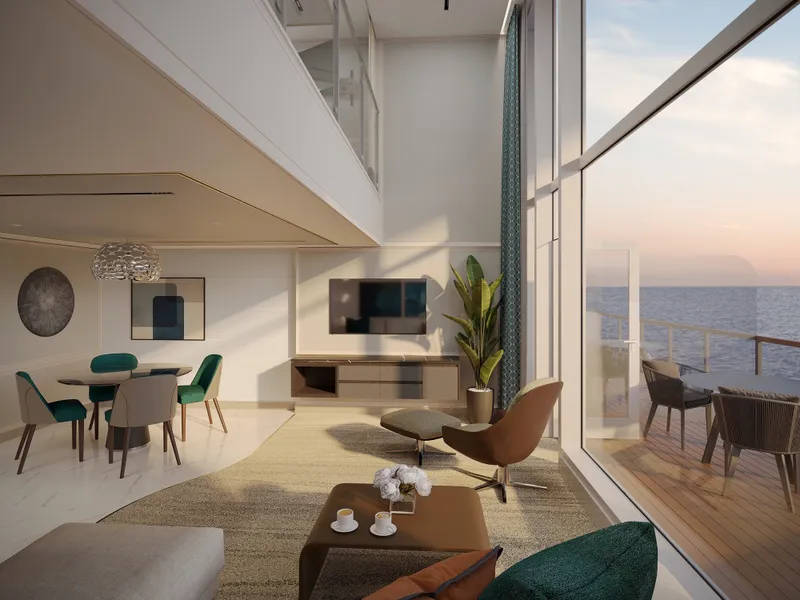
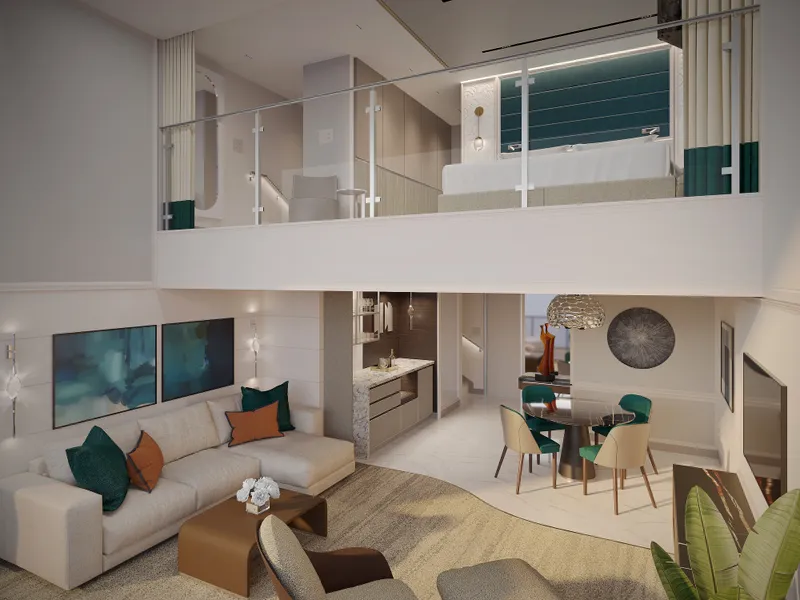
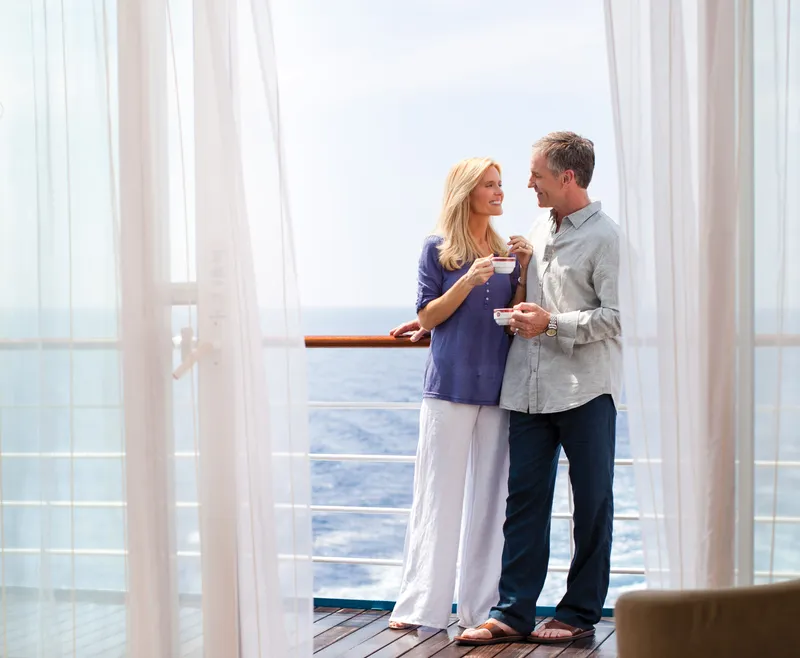
With its contemporary design, this double-story, 856-square-foot suite evokes the feel of a refined Lower Manhattan residence. A soaring double-height space and extraordinary window wall create jaw-dropping views from the upstairs bed, which faces directly toward the horizon.
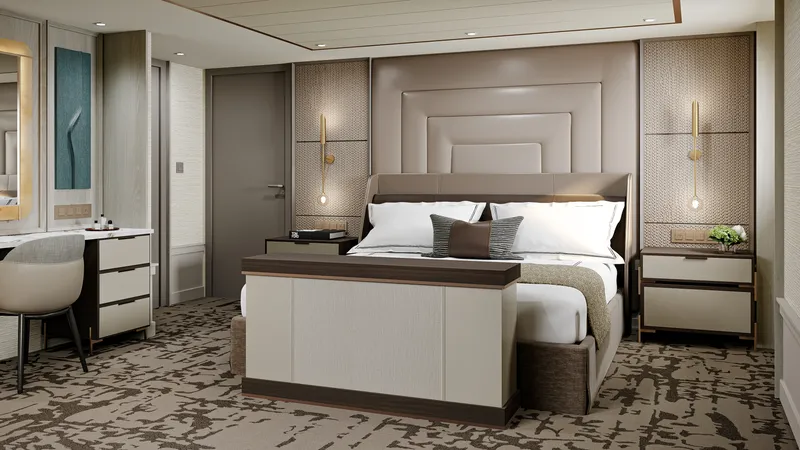
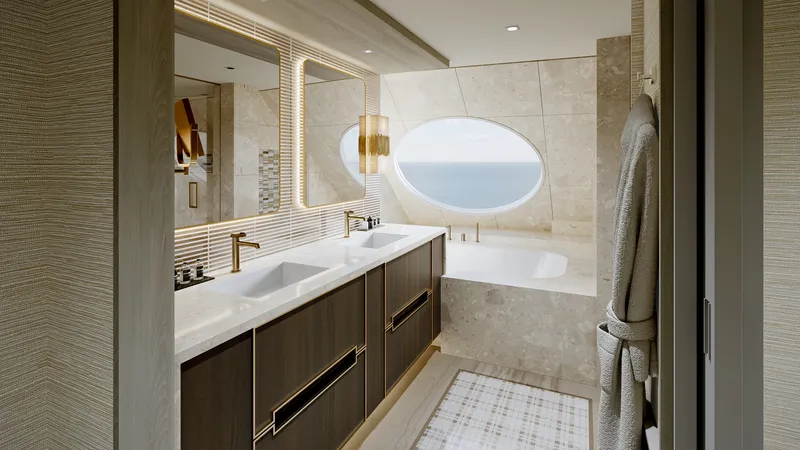
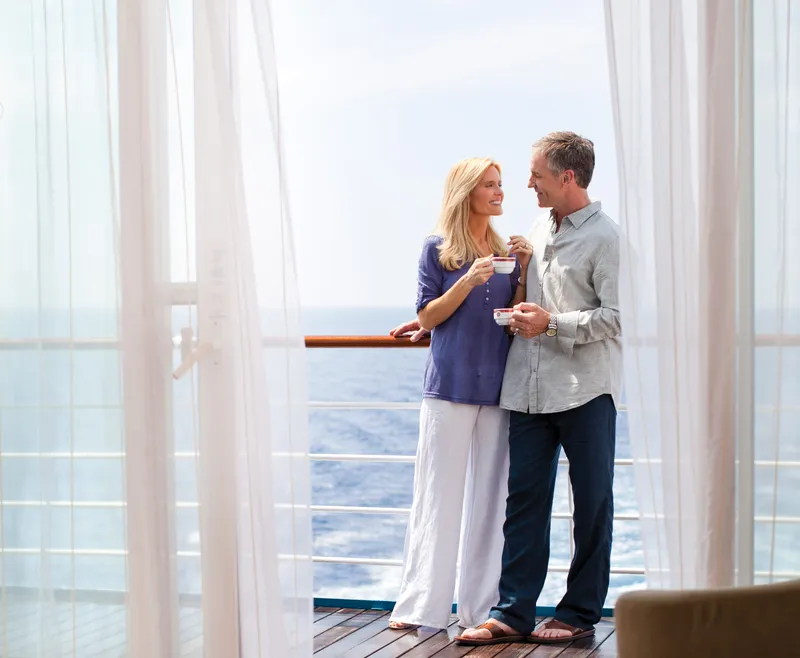
The Grand Suites pair mid-century elegance with Italian artistry, featuring clean lines, neutral tones with green accents, and custom-crafted furnishings. Spanning over 1,200 square feet, the suite features a private terrace and dining room for in-suite meals, thoughtfully located forward and mid-ship for optimal access and panoramic views.
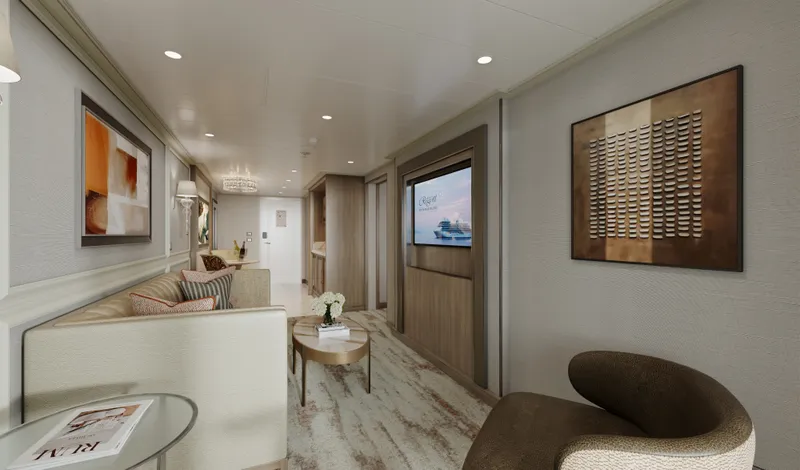
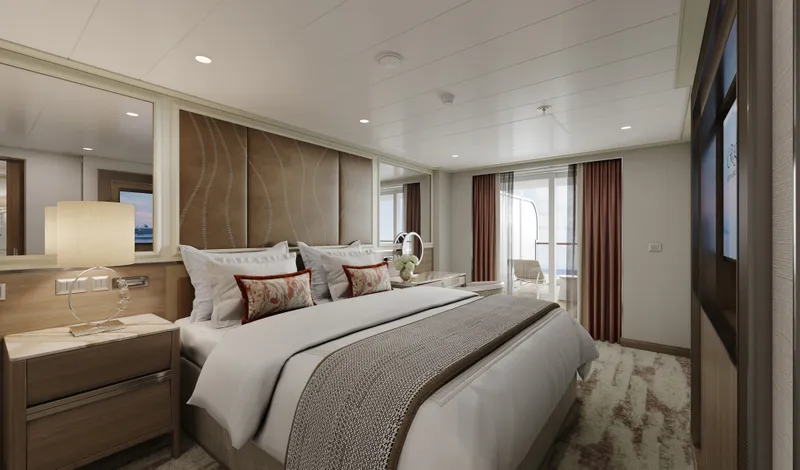
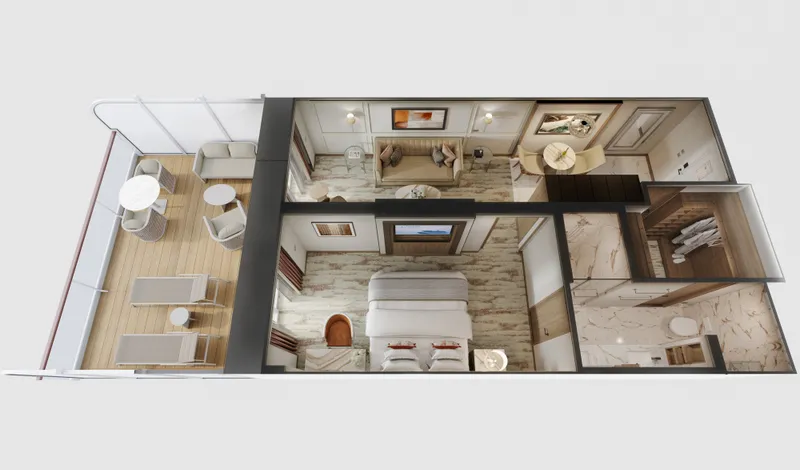
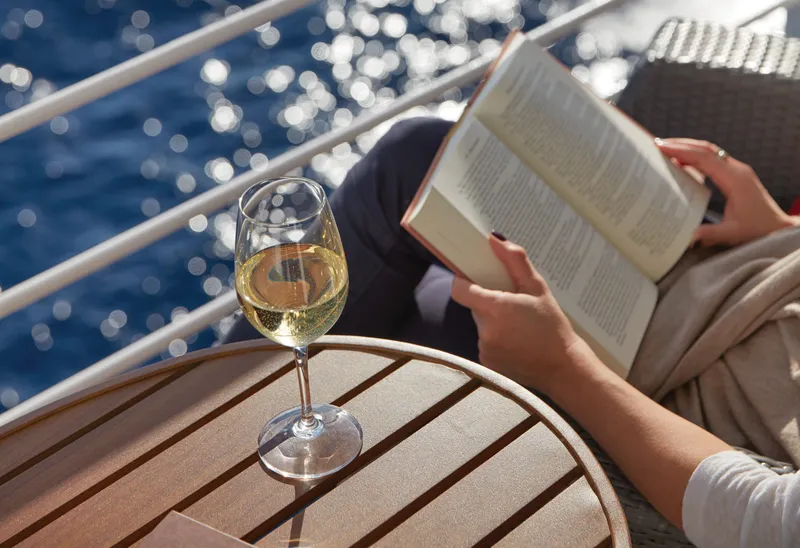
Introducing our new Horizon Penthouse suite category, where refined design and thoughtful details create a serene, elevated escape. Whether you're enjoying breakfast with a view, savoring a quiet moment with a book, or soaking up the sun, your stay is tailored to your desires. With your personal butler attending to every detail, your voyage is elevated to an unforgettable level of ultra-luxury.
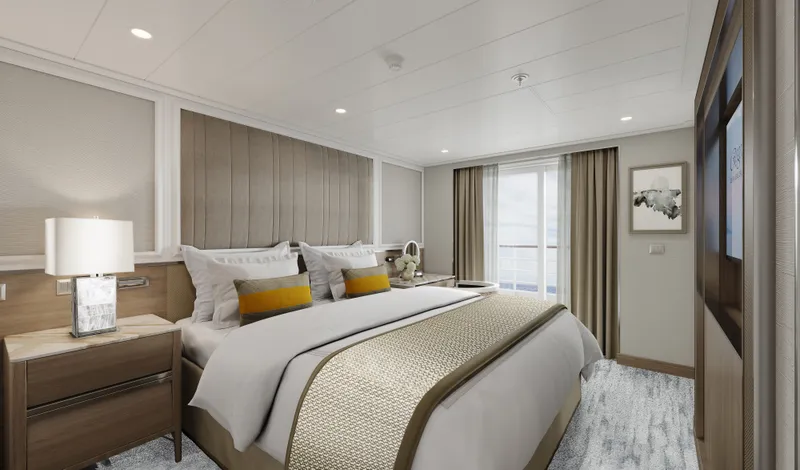
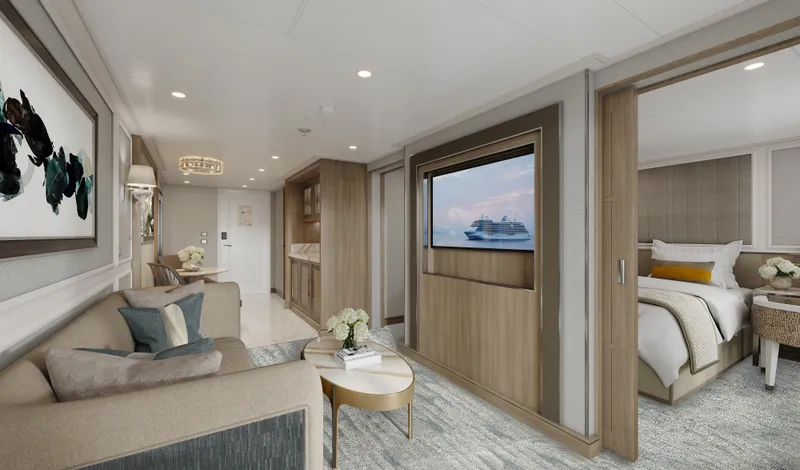
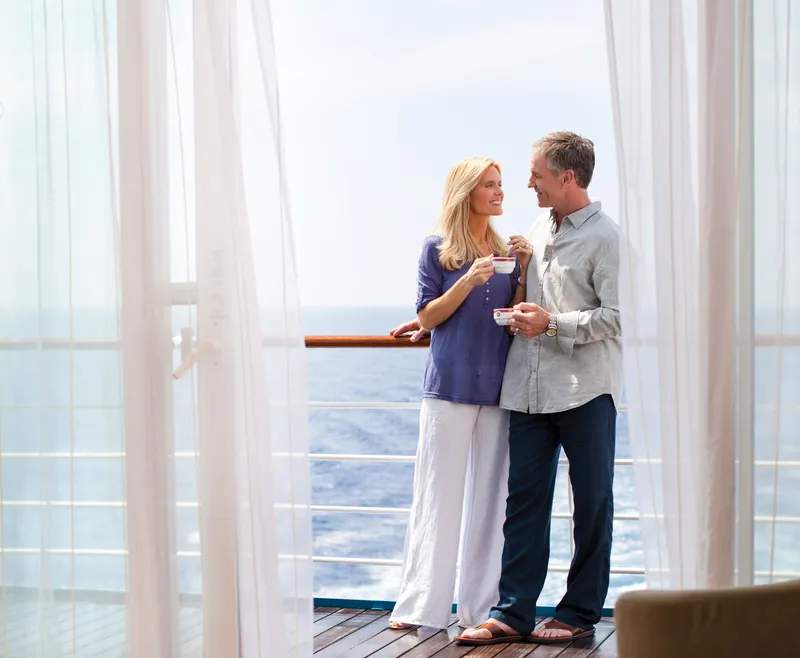
This luxurious suite has been carefully designed to maximize space and comfort, with more than 600 square feet from door to balcony deck. As you make your way through the separated living and bedroom, you have the choice to section off the area with a pocket door for added privacy. Your Penthouse also features a spacious walk-through closet that offers ample storage.
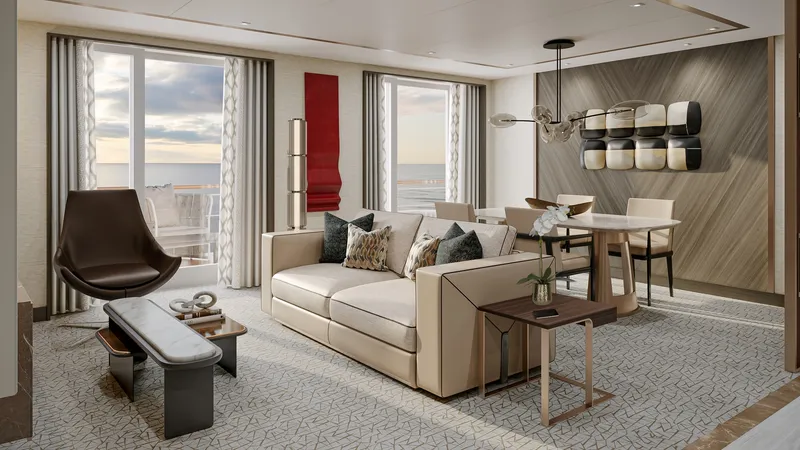
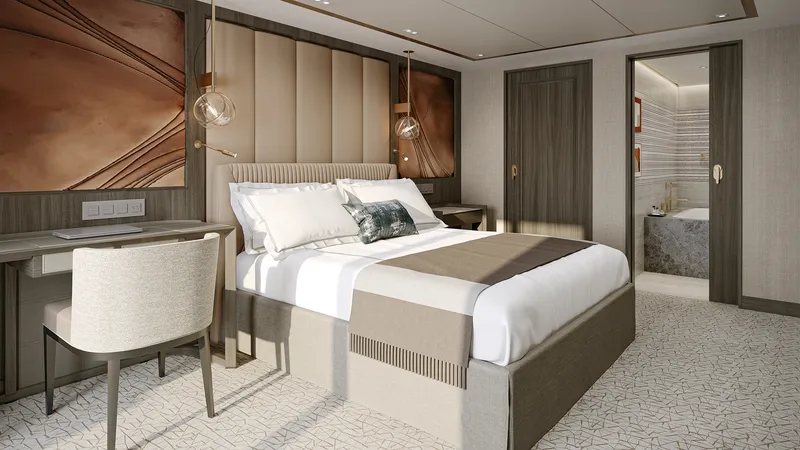
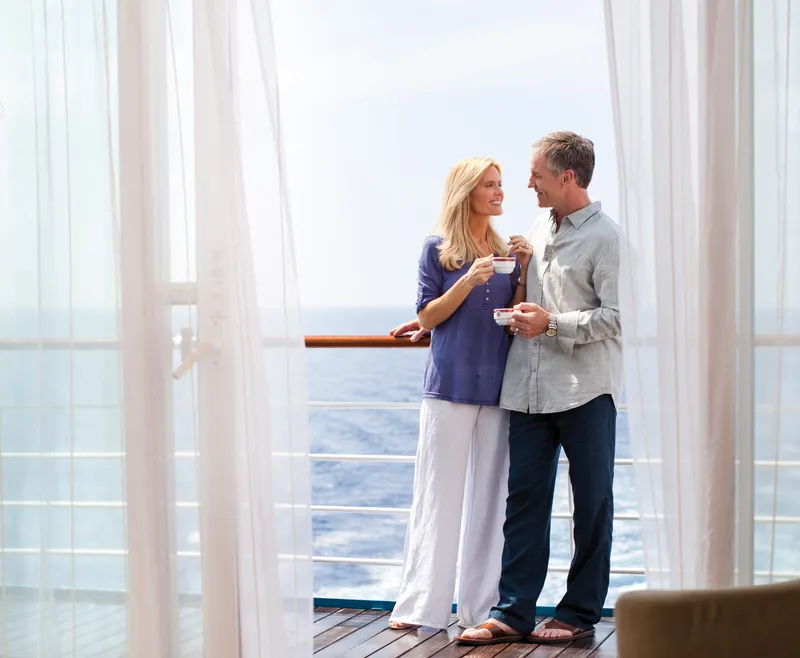
This home away from home is larger than some penthouse apartments, with more than 800 square feet of living space that includes a large private balcony. The one-bedroom, one-and-a-half bathroom suites are designed with calming hues of cream, gray and brown. They feature a dining table for in-suite service, a spacious closet and an elegant bath.
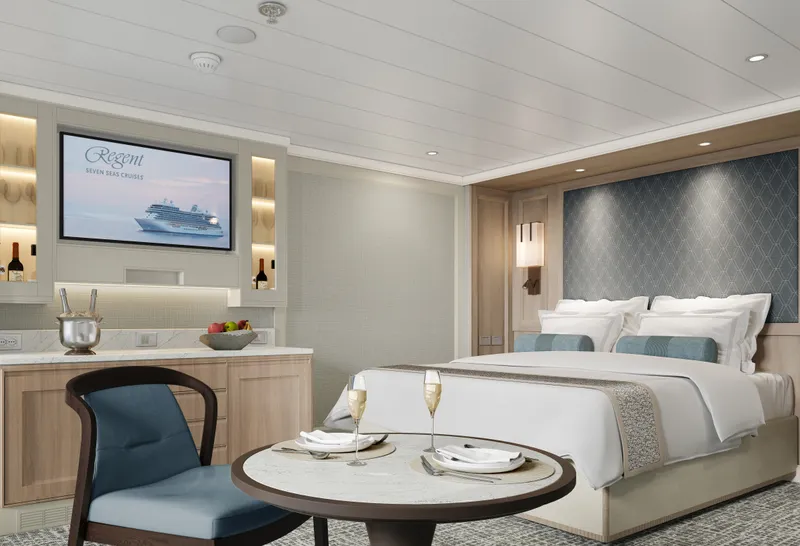
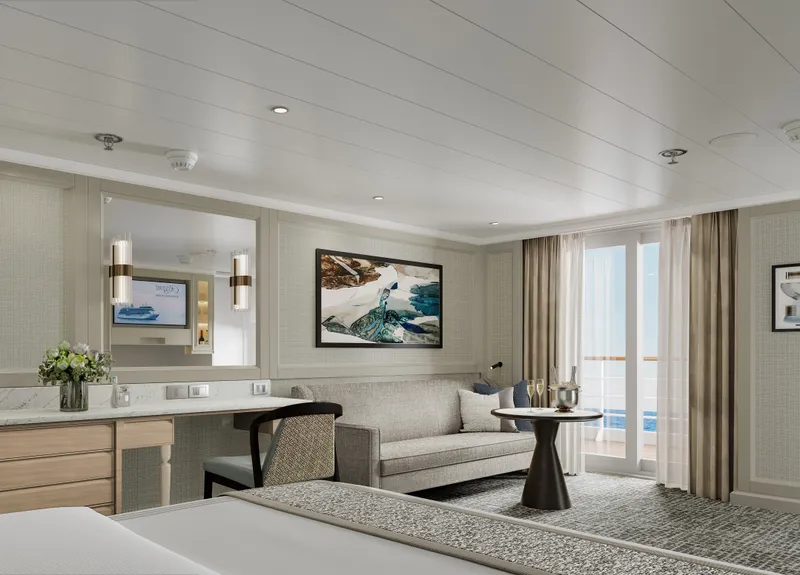
Rivaling the top suites of luxury hotels, you have plenty of space to stretch out and can take in the expansive view from your private balcony. Marble bathrooms are stocked with luxurious bath amenities and our amiable crew will tend to your requests, delivering a flawless experience at every turn.
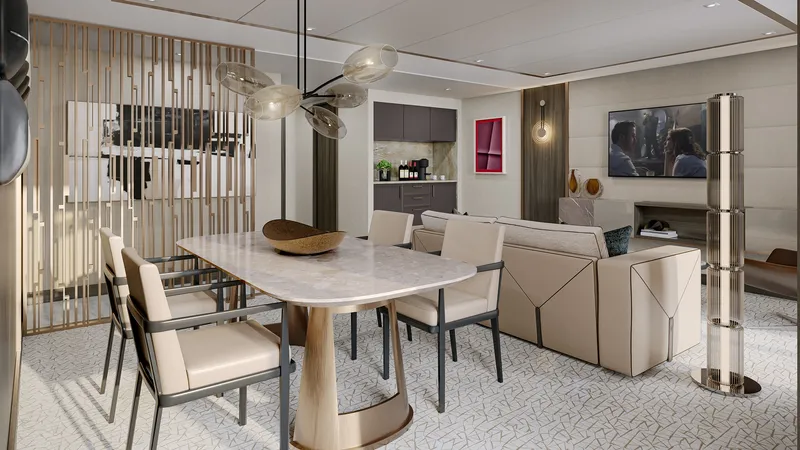
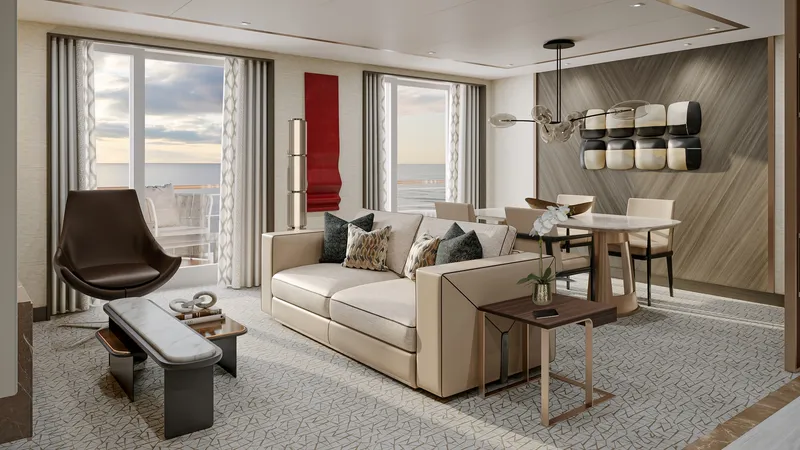
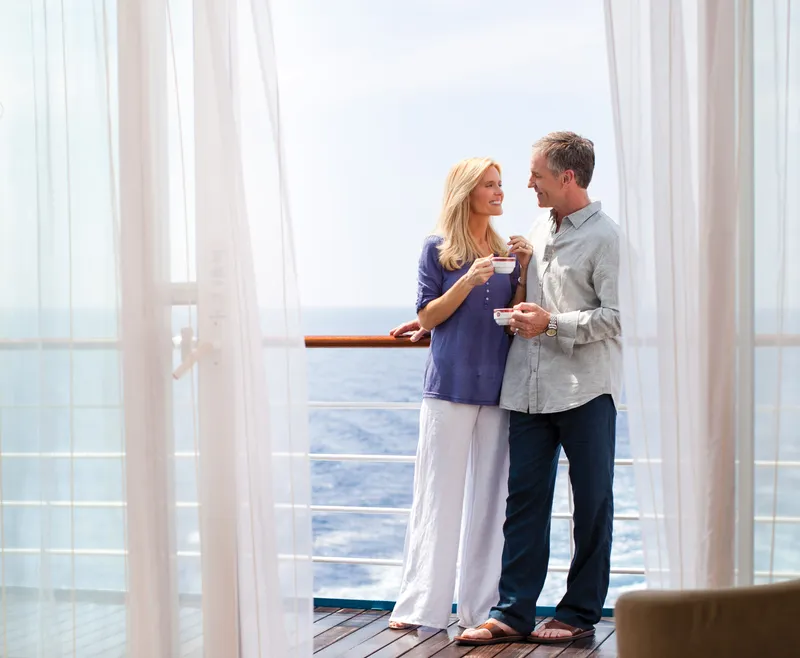
These suites exude a cosmopolitan apartment feel, with a soothing color palette complemented by plush furnishings. The suite flows effortlessly from the living room to the dining area to the bedroom, with sliding glass doorways leading to a spacious private balcony. A magnificent marble bathroom sits adjacent to the oversized bedroom and large walk-in closet.
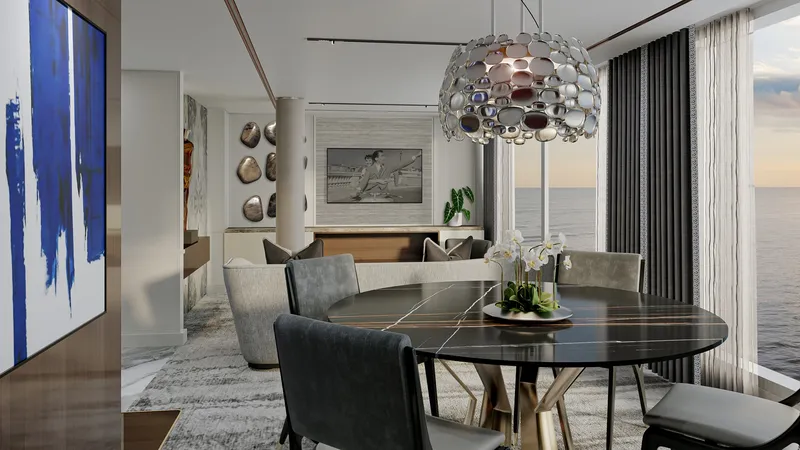
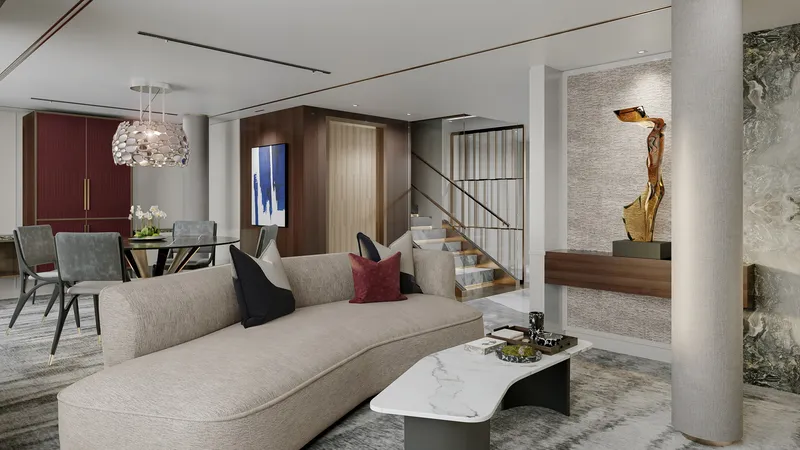

Your Signature Suite is outfitted with a rice color palette and the finest fabrics across two spacious bedrooms and two marble-and-stone baths, plus a generous living room. The private wrap-around balcony – one of the largest at sea – extends the living space outward, making it ideal for entertaining or simply soaking in the view.
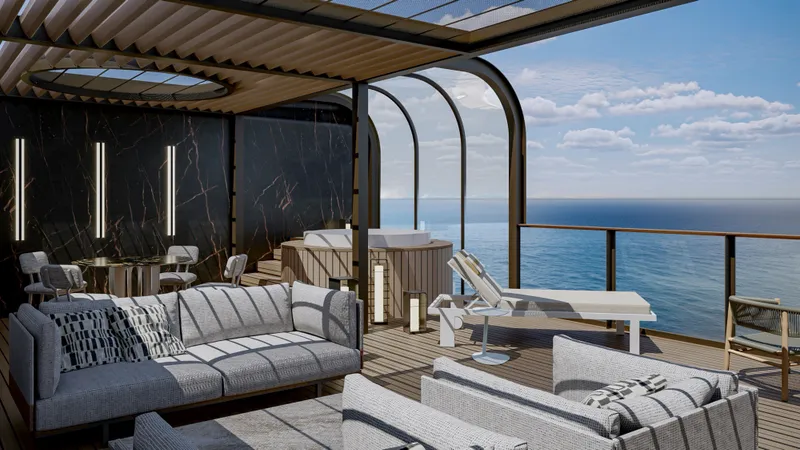
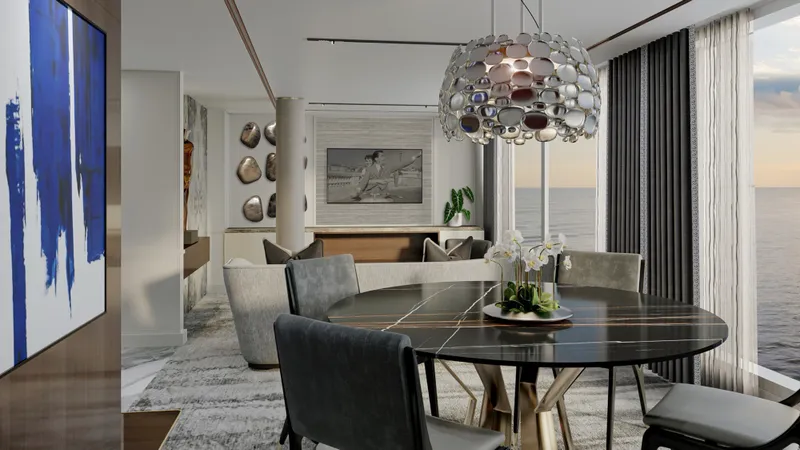
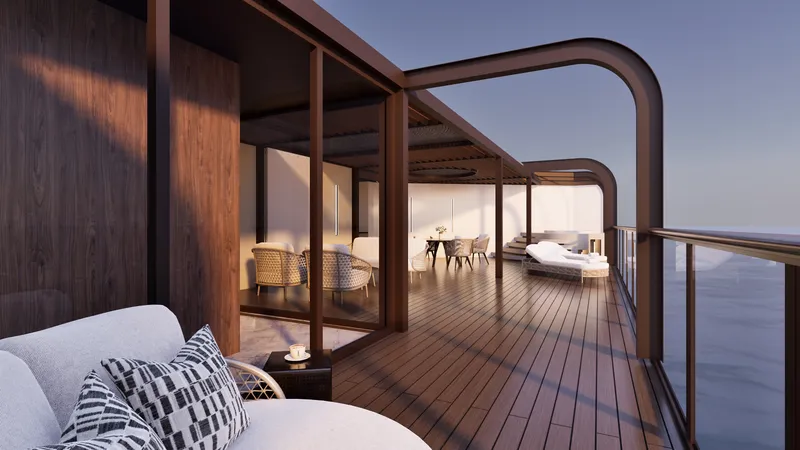
A new accommodation category, the Skyview Suites offer a sophisticated, high-end residential feel, each with its own private second-floor Skyview terrace on top of the ship, double-height spaces and two stories with your own in-suite elevators. Guests of the Skyview Suites can enjoy private access to Deck 15, reserved for only six Skyview Suites and the Skyview Regent Suite.
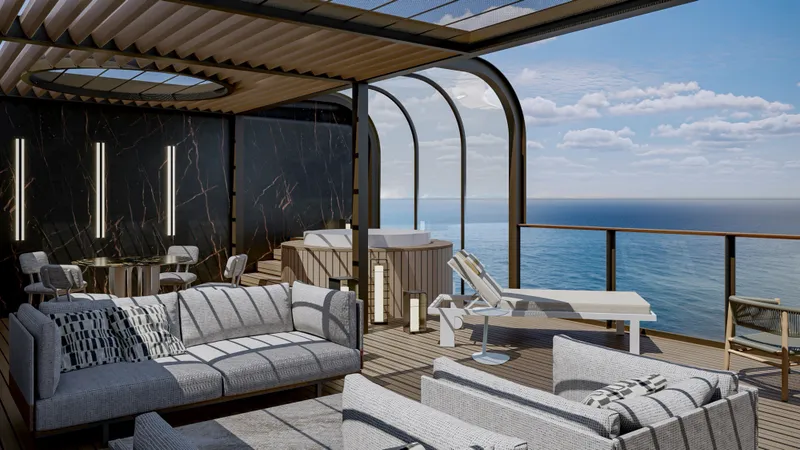
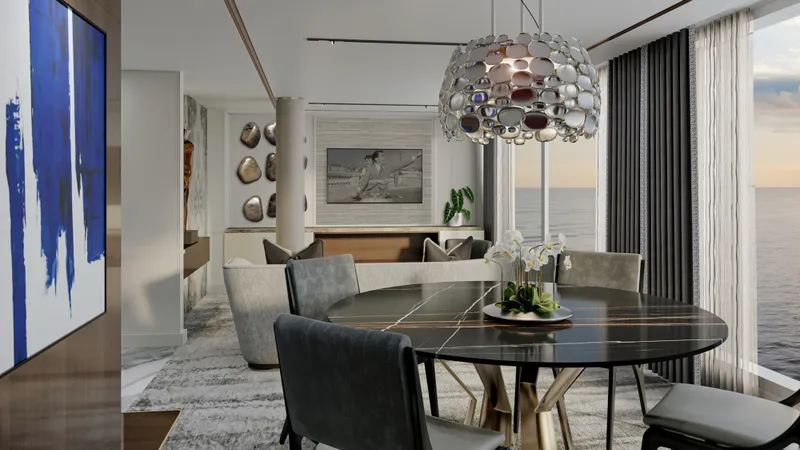
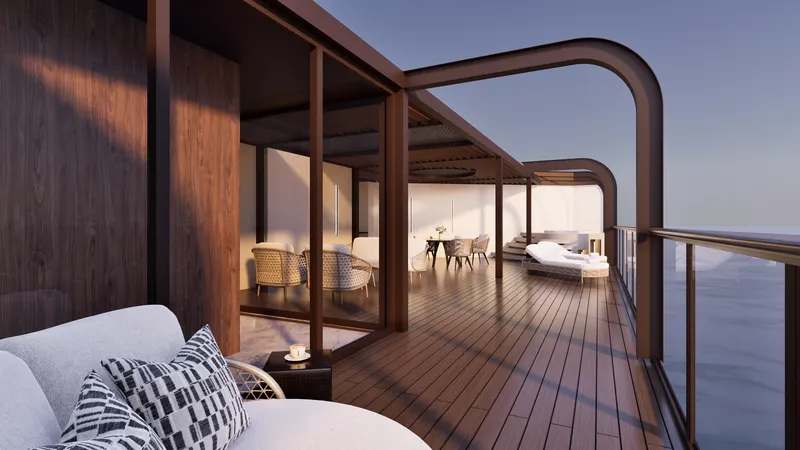
A new accommodation category, the Skyview Suites offer a sophisticated, high-end residential feel, each with its own private second-floor Skyview terrace on top of the ship, double-height spaces and two stories with your own in-suite elevators. Guests of the Skyview Suites can enjoy private access to Deck 15, reserved for only six Skyview Suites and the Skyview Regent Suite.
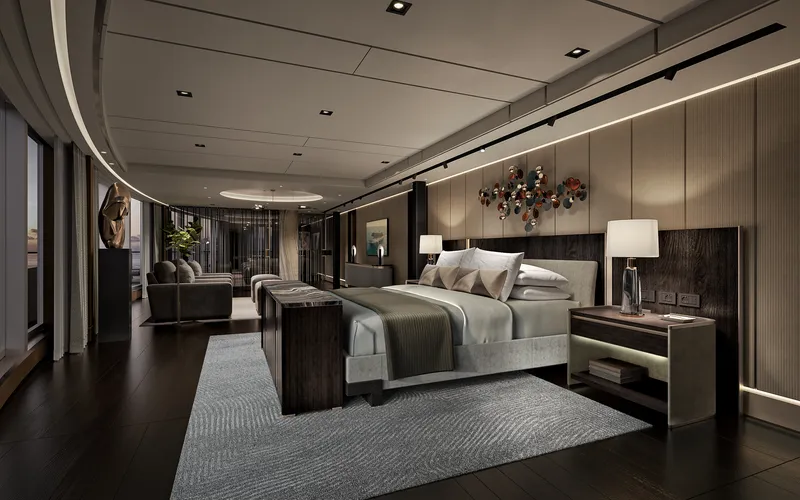

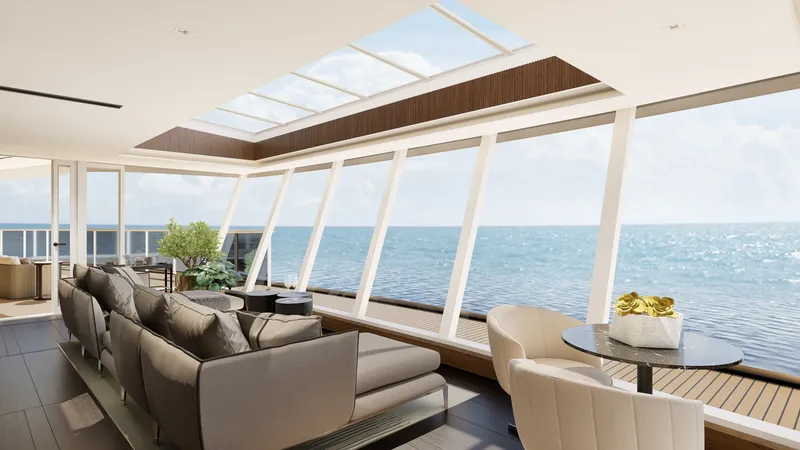
Welcome to the newest and The Most Exclusive Address at Sea®, the Skyview Regent Suite. Spanning nearly 9,000 square feet, this ultra-luxury suite features a sculptural living room, floating stone staircase plus a private in-suite elevator, and a formal dining area complemented by a glass-enclosed bar. Guests also have exclusive access to The Study, an intimate dining room for up to 12 guests.
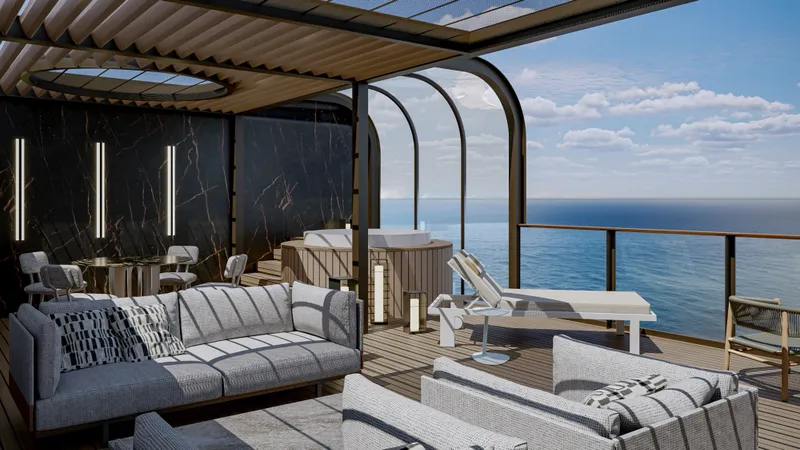
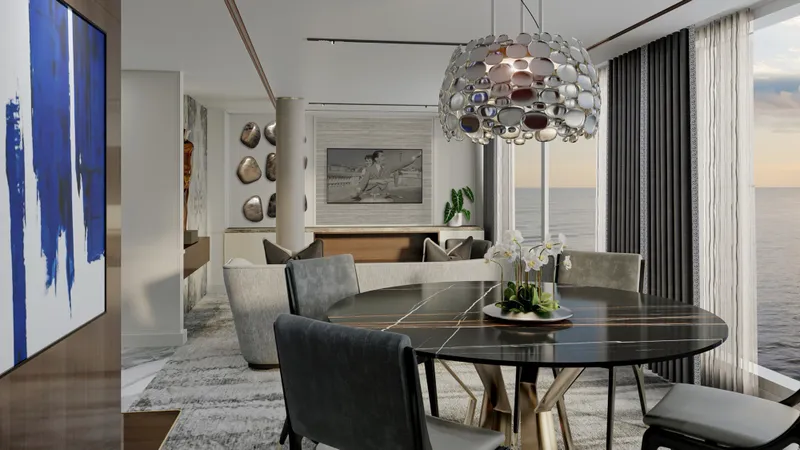
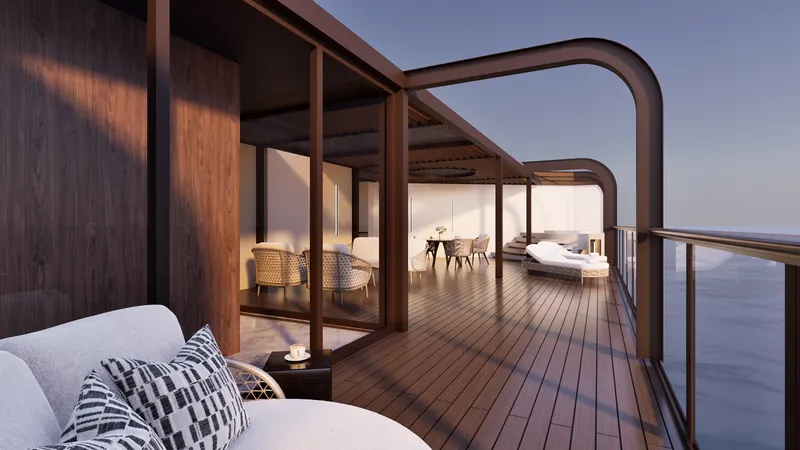
A new accommodation category, the Skyview Suites offer a sophisticated, high-end residential feel, each with its own private second-floor Skyview terrace on top of the ship, double-height spaces and two stories with your own in-suite elevators. Guests of the Skyview Suites can enjoy private access to Deck 15, reserved for only six Skyview Suites and the Skyview Regent Suite.
Suite
Our cruise specialists can help you find the perfect cabin and the best available pricing.
(+886) 02-2721-7300Contact Advisor