Date
August 7, 2026
Duration
14 nights
Departure Port
Dublin · Ireland
Arrival Port
Budapest · Hungary
Rating
Luxury
Theme
—


Scenic River Cruises
Space-Ship
2012
—
2,721 GT
169
—
53
—
—
—
No


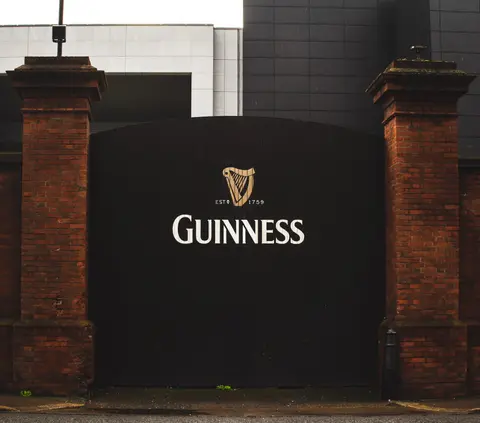
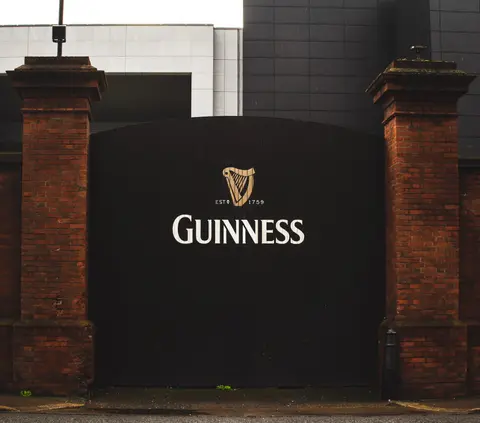
Atmospheric cobbled streets, with buskers scraping fiddles and characterful pubs inviting passersby inside, is Dublin in a snapshot. A city of irrepressible energy and lust for life, Ireland's capital is as welcoming a place as you'll find. Horse-drawn carriages plod along cobbled centuries-old streets, blending with an easy-going, cosmopolitan outlook. Known for its fun-filled gathering of pubs, any excuse works to enjoy a celebratory toast and chat among good company. Home to perhaps the world's most famous beer - slurp perfect pourings of thick, dark Guinness - cranked out for the city's thirsty punters. Learn more of the humble pint's journey at the Guinness Storehouse. Dublin has come along way since the Vikings established a trading port here, back in the 9th Century. In the time since, the city became the British Empire's defacto second city, and the Georgian imprint still adds oodles of historic character. Learn of 1916's Easter Uprising, when the Irish rebelled and established their independence here, as you visit the infamous, haunting Kilmainham Gaol. The uprising's leaders were tried and executed in these dark confines. Dublin's St. Patrick's Cathedral has immense history below its steep spire, which dates back to 1191. There's rich literary heritage to leaf through too, and the city's streets were rendered vividly in James Joyce's classic Ullyses. The Museum of Literature celebrates the full scope of Dublin's lyrical talents. Trinity College also has a prestigious roll-call of alumni - visit to see the Book of Kells, a beautifully illustrated bible of the medieval era.


Atmospheric cobbled streets, with buskers scraping fiddles and characterful pubs inviting passersby inside, is Dublin in a snapshot. A city of irrepressible energy and lust for life, Ireland's capital is as welcoming a place as you'll find. Horse-drawn carriages plod along cobbled centuries-old streets, blending with an easy-going, cosmopolitan outlook. Known for its fun-filled gathering of pubs, any excuse works to enjoy a celebratory toast and chat among good company. Home to perhaps the world's most famous beer - slurp perfect pourings of thick, dark Guinness - cranked out for the city's thirsty punters. Learn more of the humble pint's journey at the Guinness Storehouse. Dublin has come along way since the Vikings established a trading port here, back in the 9th Century. In the time since, the city became the British Empire's defacto second city, and the Georgian imprint still adds oodles of historic character. Learn of 1916's Easter Uprising, when the Irish rebelled and established their independence here, as you visit the infamous, haunting Kilmainham Gaol. The uprising's leaders were tried and executed in these dark confines. Dublin's St. Patrick's Cathedral has immense history below its steep spire, which dates back to 1191. There's rich literary heritage to leaf through too, and the city's streets were rendered vividly in James Joyce's classic Ullyses. The Museum of Literature celebrates the full scope of Dublin's lyrical talents. Trinity College also has a prestigious roll-call of alumni - visit to see the Book of Kells, a beautifully illustrated bible of the medieval era.


Atmospheric cobbled streets, with buskers scraping fiddles and characterful pubs inviting passersby inside, is Dublin in a snapshot. A city of irrepressible energy and lust for life, Ireland's capital is as welcoming a place as you'll find. Horse-drawn carriages plod along cobbled centuries-old streets, blending with an easy-going, cosmopolitan outlook. Known for its fun-filled gathering of pubs, any excuse works to enjoy a celebratory toast and chat among good company. Home to perhaps the world's most famous beer - slurp perfect pourings of thick, dark Guinness - cranked out for the city's thirsty punters. Learn more of the humble pint's journey at the Guinness Storehouse. Dublin has come along way since the Vikings established a trading port here, back in the 9th Century. In the time since, the city became the British Empire's defacto second city, and the Georgian imprint still adds oodles of historic character. Learn of 1916's Easter Uprising, when the Irish rebelled and established their independence here, as you visit the infamous, haunting Kilmainham Gaol. The uprising's leaders were tried and executed in these dark confines. Dublin's St. Patrick's Cathedral has immense history below its steep spire, which dates back to 1191. There's rich literary heritage to leaf through too, and the city's streets were rendered vividly in James Joyce's classic Ullyses. The Museum of Literature celebrates the full scope of Dublin's lyrical talents. Trinity College also has a prestigious roll-call of alumni - visit to see the Book of Kells, a beautifully illustrated bible of the medieval era.


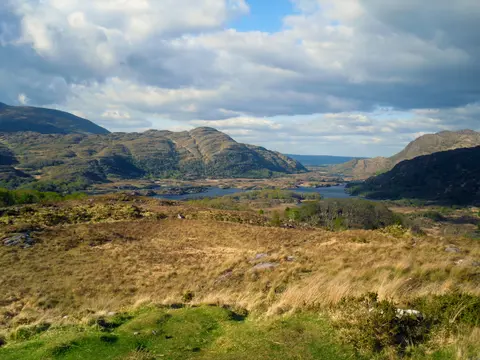
Killarney is a town on the shores of Lough Leane in southwest Ireland’s County Kerry. It’s a stop on the Ring of Kerry scenic drive, and the start and finishing point of the 200-km Kerry Way walking trail. The town's 19th-century buildings include St. Mary’s Cathedral. Across the bridge from the cathedral is Killarney National Park. Victorian mansion Muckross House, Gardens & Traditional Farms sits in the park.


Killarney is a town on the shores of Lough Leane in southwest Ireland’s County Kerry. It’s a stop on the Ring of Kerry scenic drive, and the start and finishing point of the 200-km Kerry Way walking trail. The town's 19th-century buildings include St. Mary’s Cathedral. Across the bridge from the cathedral is Killarney National Park. Victorian mansion Muckross House, Gardens & Traditional Farms sits in the park.


Killarney is a town on the shores of Lough Leane in southwest Ireland’s County Kerry. It’s a stop on the Ring of Kerry scenic drive, and the start and finishing point of the 200-km Kerry Way walking trail. The town's 19th-century buildings include St. Mary’s Cathedral. Across the bridge from the cathedral is Killarney National Park. Victorian mansion Muckross House, Gardens & Traditional Farms sits in the park.

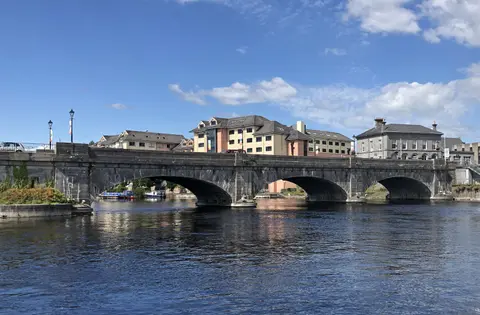
Galway is a city in the West of Ireland in the province of Connacht. It lies on the River Corrib between Lough Corrib and Galway Bay and is surrounded by County Galway. It is the fourth most populous urban area in the Republic of Ireland and the sixth most populous city in the island of Ireland. It is both a picturesque and lively city with a wonderful avant-garde culture and a fascinating mixture of locally owned speciality shops, often featuring locally made crafts. Indeed local handcrafts are a feature of the entire region including hand knits, pottery, glass, jewellery and woodwork. The city’s hub is 18th-century Eyre Square, a popular meeting spot surrounded by shops, and traditional pubs that often offer live Irish folk music. Nearby, stone-clad cafes, boutiques and art galleries line the winding lanes of the Latin Quarter, which retains portions of the medieval city walls. The city bears the nickname "The City of the Tribes" because "fourteen tribes" of merchant families led the city in its Hiberno-Norman period. The merchants would have seen themselves as Irish gentry and loyal to the King. They later adopted the term as a badge of honour and pride in defiance of the town's Cromwellian occupier.

Galway is a city in the West of Ireland in the province of Connacht. It lies on the River Corrib between Lough Corrib and Galway Bay and is surrounded by County Galway. It is the fourth most populous urban area in the Republic of Ireland and the sixth most populous city in the island of Ireland. It is both a picturesque and lively city with a wonderful avant-garde culture and a fascinating mixture of locally owned speciality shops, often featuring locally made crafts. Indeed local handcrafts are a feature of the entire region including hand knits, pottery, glass, jewellery and woodwork. The city’s hub is 18th-century Eyre Square, a popular meeting spot surrounded by shops, and traditional pubs that often offer live Irish folk music. Nearby, stone-clad cafes, boutiques and art galleries line the winding lanes of the Latin Quarter, which retains portions of the medieval city walls. The city bears the nickname "The City of the Tribes" because "fourteen tribes" of merchant families led the city in its Hiberno-Norman period. The merchants would have seen themselves as Irish gentry and loyal to the King. They later adopted the term as a badge of honour and pride in defiance of the town's Cromwellian occupier.


Reborn as a cool, modern city, Belfast has successfully left its troubles behind, emerging as a hotbed of culture and architecture, where the comfort of a cosy pub is never far away. Take a voyage of discovery in its maritime quarter, home to a celebrated museum dedicated to the most famous ship ever built, which was constructed right here in the city’s shipyards. A walk across the Lagan Weir Footbridge brings you to Belfast’s fascinating Titanic District – an area of the city devoted to its rich ship-building heritage. The state-of-the-art Titanic Museum brings the story of the doomed vessel to life, and is the largest museum dedicated to the infamously ‘unsinkable’ ship. Wind up a nautical-themed ramble along the Maritime Mile with a visit to SS Nomadic, the smaller cousin of the Titanic, and a ship which serves as a fascinating time capsule back to the pomp and grandeur of the Titanic, while also telling its own stories of service in both World Wars. There’s just enough time to give the 10-metre long Salmon of Knowledge sculpture a quick peck for luck, before continuing to explore. A stark barbed wire and graffitied sheet metal barrier marks an abrupt scar through the city’s residential areas. The Peace Line was constructed during the height of the Troubles, when Belfast was plagued by sectarian divisions between Protestants and Catholics. Nowadays, you can jump in a black taxi tour to see the colourful murals and living history of the walls, which stand as a stark reminder of the fragility of peace. After exploring the city’s historic divisions, a reminder of Belfast’s uniting creativity can be found at the Metropolitan Arts Centre – a seven-storey tall building, which invites light to gloriously cascade inside. The Cathedral Quarter is a cobbled blend of flower-adorned pubs, restaurants and theatres, and venues where music spills out onto the streets at night, and many a pint is cheerily shared.


Reborn as a cool, modern city, Belfast has successfully left its troubles behind, emerging as a hotbed of culture and architecture, where the comfort of a cosy pub is never far away. Take a voyage of discovery in its maritime quarter, home to a celebrated museum dedicated to the most famous ship ever built, which was constructed right here in the city’s shipyards. A walk across the Lagan Weir Footbridge brings you to Belfast’s fascinating Titanic District – an area of the city devoted to its rich ship-building heritage. The state-of-the-art Titanic Museum brings the story of the doomed vessel to life, and is the largest museum dedicated to the infamously ‘unsinkable’ ship. Wind up a nautical-themed ramble along the Maritime Mile with a visit to SS Nomadic, the smaller cousin of the Titanic, and a ship which serves as a fascinating time capsule back to the pomp and grandeur of the Titanic, while also telling its own stories of service in both World Wars. There’s just enough time to give the 10-metre long Salmon of Knowledge sculpture a quick peck for luck, before continuing to explore. A stark barbed wire and graffitied sheet metal barrier marks an abrupt scar through the city’s residential areas. The Peace Line was constructed during the height of the Troubles, when Belfast was plagued by sectarian divisions between Protestants and Catholics. Nowadays, you can jump in a black taxi tour to see the colourful murals and living history of the walls, which stand as a stark reminder of the fragility of peace. After exploring the city’s historic divisions, a reminder of Belfast’s uniting creativity can be found at the Metropolitan Arts Centre – a seven-storey tall building, which invites light to gloriously cascade inside. The Cathedral Quarter is a cobbled blend of flower-adorned pubs, restaurants and theatres, and venues where music spills out onto the streets at night, and many a pint is cheerily shared.


Reborn as a cool, modern city, Belfast has successfully left its troubles behind, emerging as a hotbed of culture and architecture, where the comfort of a cosy pub is never far away. Take a voyage of discovery in its maritime quarter, home to a celebrated museum dedicated to the most famous ship ever built, which was constructed right here in the city’s shipyards. A walk across the Lagan Weir Footbridge brings you to Belfast’s fascinating Titanic District – an area of the city devoted to its rich ship-building heritage. The state-of-the-art Titanic Museum brings the story of the doomed vessel to life, and is the largest museum dedicated to the infamously ‘unsinkable’ ship. Wind up a nautical-themed ramble along the Maritime Mile with a visit to SS Nomadic, the smaller cousin of the Titanic, and a ship which serves as a fascinating time capsule back to the pomp and grandeur of the Titanic, while also telling its own stories of service in both World Wars. There’s just enough time to give the 10-metre long Salmon of Knowledge sculpture a quick peck for luck, before continuing to explore. A stark barbed wire and graffitied sheet metal barrier marks an abrupt scar through the city’s residential areas. The Peace Line was constructed during the height of the Troubles, when Belfast was plagued by sectarian divisions between Protestants and Catholics. Nowadays, you can jump in a black taxi tour to see the colourful murals and living history of the walls, which stand as a stark reminder of the fragility of peace. After exploring the city’s historic divisions, a reminder of Belfast’s uniting creativity can be found at the Metropolitan Arts Centre – a seven-storey tall building, which invites light to gloriously cascade inside. The Cathedral Quarter is a cobbled blend of flower-adorned pubs, restaurants and theatres, and venues where music spills out onto the streets at night, and many a pint is cheerily shared.


In 1933, an enterprising editor in Inverness enlivened a slow news week with the story of an odd sighting in Loch Ness. The legend grew overnight - and today individuals still scan the dark waters of the Loch for a sight of Nessie, the Loch Ness Monster. Legend goes back as far as the 6th century and insists that the celebrated Loch Ness Monster inhabits a cave beneath the picturesque ruins of Urquhart Castle. Welcome to Invergordon, your gateway to Loch Ness and that area of the Highlands known as the "Great Glen."

In 1933, an enterprising editor in Inverness enlivened a slow news week with the story of an odd sighting in Loch Ness. The legend grew overnight - and today individuals still scan the dark waters of the Loch for a sight of Nessie, the Loch Ness Monster. Legend goes back as far as the 6th century and insists that the celebrated Loch Ness Monster inhabits a cave beneath the picturesque ruins of Urquhart Castle. Welcome to Invergordon, your gateway to Loch Ness and that area of the Highlands known as the "Great Glen."

In 1933, an enterprising editor in Inverness enlivened a slow news week with the story of an odd sighting in Loch Ness. The legend grew overnight - and today individuals still scan the dark waters of the Loch for a sight of Nessie, the Loch Ness Monster. Legend goes back as far as the 6th century and insists that the celebrated Loch Ness Monster inhabits a cave beneath the picturesque ruins of Urquhart Castle. Welcome to Invergordon, your gateway to Loch Ness and that area of the Highlands known as the "Great Glen."


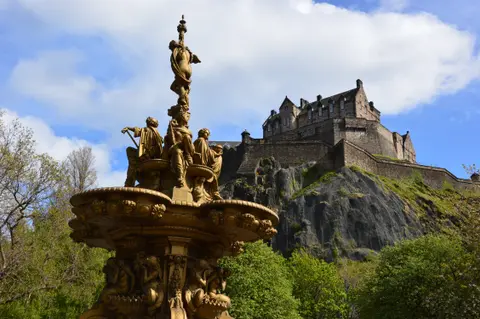
Two miles distant from its ancient seaport of Leith lies Edinburgh, Scotland's national capital. The Scottish capital since the 15th century, Edinburgh is comprised of two distinct areas - the Old Town, dominated by a medieval fortress, and the neoclassical New Town, whose development from the 18th century onwards had a far-reaching influence on European urban planning. The harmonious juxtaposition of these two contrasting historic areas, each with many important buildings, is what gives the city its unique character. Always favored by geography, Edinburgh is ideally situated on the Firth of Forth, an inlet from the North Sea, and built on extinct volcanoes surrounded by woods, rolling hills and lakes. On a clear day, there are glorious vistas from each of these hilltops. Looming above the city is the striking fairy tale castle built on the site of a 7th-century fortress. Towards the Middle Ages life within the fortress spilled onto the long ridge running to the foot of Arthur's Seat, which crowns Holyrood Park. The city's most legendary citizens are the arch Presbyterian John Knox and Mary Queen of Scots, who dominated the Edinburgh of the late 16th century. Edinburgh's delightful city center is a joy to explore on foot. Every alley reveals impressive steeples, jagged, chimney-potted skylines, or lovely rotund domes.


Two miles distant from its ancient seaport of Leith lies Edinburgh, Scotland's national capital. The Scottish capital since the 15th century, Edinburgh is comprised of two distinct areas - the Old Town, dominated by a medieval fortress, and the neoclassical New Town, whose development from the 18th century onwards had a far-reaching influence on European urban planning. The harmonious juxtaposition of these two contrasting historic areas, each with many important buildings, is what gives the city its unique character. Always favored by geography, Edinburgh is ideally situated on the Firth of Forth, an inlet from the North Sea, and built on extinct volcanoes surrounded by woods, rolling hills and lakes. On a clear day, there are glorious vistas from each of these hilltops. Looming above the city is the striking fairy tale castle built on the site of a 7th-century fortress. Towards the Middle Ages life within the fortress spilled onto the long ridge running to the foot of Arthur's Seat, which crowns Holyrood Park. The city's most legendary citizens are the arch Presbyterian John Knox and Mary Queen of Scots, who dominated the Edinburgh of the late 16th century. Edinburgh's delightful city center is a joy to explore on foot. Every alley reveals impressive steeples, jagged, chimney-potted skylines, or lovely rotund domes.


Two miles distant from its ancient seaport of Leith lies Edinburgh, Scotland's national capital. The Scottish capital since the 15th century, Edinburgh is comprised of two distinct areas - the Old Town, dominated by a medieval fortress, and the neoclassical New Town, whose development from the 18th century onwards had a far-reaching influence on European urban planning. The harmonious juxtaposition of these two contrasting historic areas, each with many important buildings, is what gives the city its unique character. Always favored by geography, Edinburgh is ideally situated on the Firth of Forth, an inlet from the North Sea, and built on extinct volcanoes surrounded by woods, rolling hills and lakes. On a clear day, there are glorious vistas from each of these hilltops. Looming above the city is the striking fairy tale castle built on the site of a 7th-century fortress. Towards the Middle Ages life within the fortress spilled onto the long ridge running to the foot of Arthur's Seat, which crowns Holyrood Park. The city's most legendary citizens are the arch Presbyterian John Knox and Mary Queen of Scots, who dominated the Edinburgh of the late 16th century. Edinburgh's delightful city center is a joy to explore on foot. Every alley reveals impressive steeples, jagged, chimney-potted skylines, or lovely rotund domes.


About 8 miles downstream—which means seaward, to the east—from central London, Greenwich is a small borough that looms large across the world. Once the seat of British naval power, it is not only home to the Old Royal Observatory, which measures time for our entire planet, but also the Greenwich Meridian, which divides the world into two—you can stand astride it with one foot in either hemisphere. Bear in mind that the journey to Greenwich is an event in itself. In a rush, you can take the driverless DLR train—but many opt for arriving by boat along the Thames. This way, you glide past famous sights on the London skyline (there’s a guaranteed spine chill on passing the Tower) and ever-changing docklands, and there’s usually a chirpy Cock-er-ney navigator enlivening the journey with his fun commentary. A visit to Greenwich feels like a trip to a rather elegant seaside town—albeit one with more than its fair share of historic sites. The grandiose Old Royal Naval Hospital, designed by Christopher Wren, was originally a home for veteran sailors. Today it’s a popular visitor attraction, with a more glamorous second life as one of the most widely used movie locations in Britain. Greenwich was originally home to one of England's finest Tudor palaces, and the birthplace of Henry VIII, Elizabeth I, and Mary I. Inigo Jones built what is considered the first "classical" building in England in 1616—the Queen's House, which now houses a collection of fine art. Britain was the world’s preeminent naval power for over 500 years, and the excellent National Maritime Museum> details that history in an engaging way. Its prize exhibits include the coat worn by Admiral Lord Nelson (1758–1805) in his final battle—bullet hole and all. The 19th-century tea clipper Cutty Sark was nearly destroyed by fire in 2007, but reopened in 2012 after a painstaking restoration. Now it’s more pristine than ever, complete with an impressive new visitor center. Greenwich Park, London's oldest royal park, is still home to fallow red deer, just as it has been since they were first introduced here for hunting by Henry VIII. The Ranger's House now houses a private art collection, next door to a beautifully manicured rose garden. Above it all is the Royal Observatory, where you can be in two hemispheres at once by standing along the Greenwich Meridian Line, before seeing a high-tech planetarium show. Toward north Greenwich, the hopelessly ambitious Millennium Dome has been successfully reborn as the O2 and now hosts major concerts and stand-up comedy gigs. More adventurous visitors can also go Up the O2 on a climbing expedition across the massive domed surface. Meanwhile, those who prefer excursions of a gentler kind may prefer to journey a couple of miles south of the borough, farther out into London’s southern suburbs, to the shamefully underappreciated Eltham Palace. Once a favorite of Henry VIII, parts of the mansion were transformed into an art deco masterpiece during the 1930s.

About 8 miles downstream—which means seaward, to the east—from central London, Greenwich is a small borough that looms large across the world. Once the seat of British naval power, it is not only home to the Old Royal Observatory, which measures time for our entire planet, but also the Greenwich Meridian, which divides the world into two—you can stand astride it with one foot in either hemisphere. Bear in mind that the journey to Greenwich is an event in itself. In a rush, you can take the driverless DLR train—but many opt for arriving by boat along the Thames. This way, you glide past famous sights on the London skyline (there’s a guaranteed spine chill on passing the Tower) and ever-changing docklands, and there’s usually a chirpy Cock-er-ney navigator enlivening the journey with his fun commentary. A visit to Greenwich feels like a trip to a rather elegant seaside town—albeit one with more than its fair share of historic sites. The grandiose Old Royal Naval Hospital, designed by Christopher Wren, was originally a home for veteran sailors. Today it’s a popular visitor attraction, with a more glamorous second life as one of the most widely used movie locations in Britain. Greenwich was originally home to one of England's finest Tudor palaces, and the birthplace of Henry VIII, Elizabeth I, and Mary I. Inigo Jones built what is considered the first "classical" building in England in 1616—the Queen's House, which now houses a collection of fine art. Britain was the world’s preeminent naval power for over 500 years, and the excellent National Maritime Museum> details that history in an engaging way. Its prize exhibits include the coat worn by Admiral Lord Nelson (1758–1805) in his final battle—bullet hole and all. The 19th-century tea clipper Cutty Sark was nearly destroyed by fire in 2007, but reopened in 2012 after a painstaking restoration. Now it’s more pristine than ever, complete with an impressive new visitor center. Greenwich Park, London's oldest royal park, is still home to fallow red deer, just as it has been since they were first introduced here for hunting by Henry VIII. The Ranger's House now houses a private art collection, next door to a beautifully manicured rose garden. Above it all is the Royal Observatory, where you can be in two hemispheres at once by standing along the Greenwich Meridian Line, before seeing a high-tech planetarium show. Toward north Greenwich, the hopelessly ambitious Millennium Dome has been successfully reborn as the O2 and now hosts major concerts and stand-up comedy gigs. More adventurous visitors can also go Up the O2 on a climbing expedition across the massive domed surface. Meanwhile, those who prefer excursions of a gentler kind may prefer to journey a couple of miles south of the borough, farther out into London’s southern suburbs, to the shamefully underappreciated Eltham Palace. Once a favorite of Henry VIII, parts of the mansion were transformed into an art deco masterpiece during the 1930s.

About 8 miles downstream—which means seaward, to the east—from central London, Greenwich is a small borough that looms large across the world. Once the seat of British naval power, it is not only home to the Old Royal Observatory, which measures time for our entire planet, but also the Greenwich Meridian, which divides the world into two—you can stand astride it with one foot in either hemisphere. Bear in mind that the journey to Greenwich is an event in itself. In a rush, you can take the driverless DLR train—but many opt for arriving by boat along the Thames. This way, you glide past famous sights on the London skyline (there’s a guaranteed spine chill on passing the Tower) and ever-changing docklands, and there’s usually a chirpy Cock-er-ney navigator enlivening the journey with his fun commentary. A visit to Greenwich feels like a trip to a rather elegant seaside town—albeit one with more than its fair share of historic sites. The grandiose Old Royal Naval Hospital, designed by Christopher Wren, was originally a home for veteran sailors. Today it’s a popular visitor attraction, with a more glamorous second life as one of the most widely used movie locations in Britain. Greenwich was originally home to one of England's finest Tudor palaces, and the birthplace of Henry VIII, Elizabeth I, and Mary I. Inigo Jones built what is considered the first "classical" building in England in 1616—the Queen's House, which now houses a collection of fine art. Britain was the world’s preeminent naval power for over 500 years, and the excellent National Maritime Museum> details that history in an engaging way. Its prize exhibits include the coat worn by Admiral Lord Nelson (1758–1805) in his final battle—bullet hole and all. The 19th-century tea clipper Cutty Sark was nearly destroyed by fire in 2007, but reopened in 2012 after a painstaking restoration. Now it’s more pristine than ever, complete with an impressive new visitor center. Greenwich Park, London's oldest royal park, is still home to fallow red deer, just as it has been since they were first introduced here for hunting by Henry VIII. The Ranger's House now houses a private art collection, next door to a beautifully manicured rose garden. Above it all is the Royal Observatory, where you can be in two hemispheres at once by standing along the Greenwich Meridian Line, before seeing a high-tech planetarium show. Toward north Greenwich, the hopelessly ambitious Millennium Dome has been successfully reborn as the O2 and now hosts major concerts and stand-up comedy gigs. More adventurous visitors can also go Up the O2 on a climbing expedition across the massive domed surface. Meanwhile, those who prefer excursions of a gentler kind may prefer to journey a couple of miles south of the borough, farther out into London’s southern suburbs, to the shamefully underappreciated Eltham Palace. Once a favorite of Henry VIII, parts of the mansion were transformed into an art deco masterpiece during the 1930s.


Few can resist the grand beauty of Amsterdam’s famous canals, which thread through this place of evocative beauty and thrilling contrast. Open-minded and tolerant, Amsterdam is a place for history buffs and hedonists alike, and its diverse neighbourhoods have something for everyone - whether it’s the beachside relaxation of Bloemendaal, nocturnal thuds of Buiksloterham, or characterful charm of Jordaan. 160 serene canals serve as the arteries of this city, imbuing it with its unique essence. Cruise along concentric waterways, past cherry red and oak-wood cladded houseboats, as you learn of its Golden Age history. Culture is also deep in Amsterdam’s DNA, and the Van Gogh Museum – which pays tribute to the tortured genius of the Dutch post-impressionist artist - stands out among its leading museums and galleries. One of history’s greatest tragedies is also rendered in heart-breaking clarity at Anne Frank House. Visit the site where the precocious teenager hid from the Nazi regime for so long, and the room where she penned the most famous diary ever written. Compact and easily walkable, Amsterdam remains consistently postcard-perfect as you watch bright bicycles trundling over ornate bridges, and stumble across hidden, tulip-decorated courtyards. ‘Gezellig’ is the local word for Amsterdam’s unhurried outlook on life. No translation can quite do the concept justice, but you’ll recognise it instinctively as hours float by in a happy haze browsing De Negen Straatjes street’s independent shops, or as you sip coffee with gooey stroopwafel. Broodje haring - a raw herring sandwich - is Amsterdam’s must-try delicacy, but many visitors find tompouce, a delicious pastry topped with vivid pink icing, a little more to their taste.


Few can resist the grand beauty of Amsterdam’s famous canals, which thread through this place of evocative beauty and thrilling contrast. Open-minded and tolerant, Amsterdam is a place for history buffs and hedonists alike, and its diverse neighbourhoods have something for everyone - whether it’s the beachside relaxation of Bloemendaal, nocturnal thuds of Buiksloterham, or characterful charm of Jordaan. 160 serene canals serve as the arteries of this city, imbuing it with its unique essence. Cruise along concentric waterways, past cherry red and oak-wood cladded houseboats, as you learn of its Golden Age history. Culture is also deep in Amsterdam’s DNA, and the Van Gogh Museum – which pays tribute to the tortured genius of the Dutch post-impressionist artist - stands out among its leading museums and galleries. One of history’s greatest tragedies is also rendered in heart-breaking clarity at Anne Frank House. Visit the site where the precocious teenager hid from the Nazi regime for so long, and the room where she penned the most famous diary ever written. Compact and easily walkable, Amsterdam remains consistently postcard-perfect as you watch bright bicycles trundling over ornate bridges, and stumble across hidden, tulip-decorated courtyards. ‘Gezellig’ is the local word for Amsterdam’s unhurried outlook on life. No translation can quite do the concept justice, but you’ll recognise it instinctively as hours float by in a happy haze browsing De Negen Straatjes street’s independent shops, or as you sip coffee with gooey stroopwafel. Broodje haring - a raw herring sandwich - is Amsterdam’s must-try delicacy, but many visitors find tompouce, a delicious pastry topped with vivid pink icing, a little more to their taste.


It’s not just the locals who consider Cologne to be among the best cities in the world. The typical friendliness that you find at every turn makes visitors feel at home right away. It’s not unusual to quickly get chatting to strangers and even go for a couple glasses of Kölsch with them. The main landmark – Cologne Cathedral – watches over the whole city. It is the third-tallest church building in the world, at 157.38 metres. It might be a bit of a trek up to the top of the tower, but it’s worth it. You’ll be rewarded with an unforgettable view of the city and the Rhine spread out before you.


Bonn is an independent city in North Rhine-Westphalia, which was the former capital of Germany. The banks of the Rhine invite you to take a walk and offer well-developed inline and bike paths. The old town offers traditional shops and branches of large brand chains. Not far away is the cathedral. Bonn is considered a university city. The botanical garden of the local university is not only used for research purposes, but is open to visitors. The "House of History" is accessible free of charge and tells German history.


In the Upper Middle Rhine Valley – a UNESCO World Heritage Site – the town of Rüdesheim marks the end of several old merchants’ routes. This strategically important point used to be protected by four castles. Picturesque Rüdesheim is known all around the world for its outstanding wines. Make sure you take a walk through the charming little streets of the old town. Drosselgasse, an alleyway with half-timbered facades, is known as ‘The World’s Longest Wine Bar‘ and is reputed to be the most-visited tourist attraction in Germany after Cologne Cathedral. Wine cultivation was already in full swing here in Roman times – learn more about the winegrowers of antiquity and their successors at the Rheingauer Weinmuseum in the Brömserburg, an old castle. And if you want to sample the wines that are being produced today, head to the rustic wine taverns in the old town.


The lovely town of Miltenberg entered history as early as 1237 and soon achieved considerable prosperity. On the Main loop, the small town enchants with the most beautiful half-timbered houses, the famous gate tower "Schnatterloch" and with what is probably Germany's oldest inn. Wallenstein was already staying here. Stately half-timbered gables form the unmistakable backdrop of the medieval market square. The Mildenburg towers above the idyllic town on the mountain. Up to this point the Romans had advanced to the Main and secured the strategically important place with a fort.


The small town of Wertheim is located where the Tauber River meets the Main. Magnificent half-timbered buildings shape the marketplace. The parish church, which dates from the Gothic era, is one of the sights of the village. The Counts of Wertheim, who ruled here from the 15th to the 18th century, found their final resting place in the interior. Other tourist attractions include the glass museum and a stately castle that sits enthroned on a mountain high above the city.


The Bavarian city of Würzburg with its impressive buildings in Baroque and Rococo styles is definitely worth a visit. Below the Marienberg Fortress, which is well worth seeing, there are walking paths through the beautiful vineyards that stretch right down to the Main. This is where the good Franconian wine comes from in Bocksbeuteln. The Würzburg Residence is a special attraction, as is the monumental Käppele pilgrimage church. The cathedral and the striking old bridge over the Main are also special points of contact. The Haus zum Falken on the market square is built in Rococo and Gothic styles.


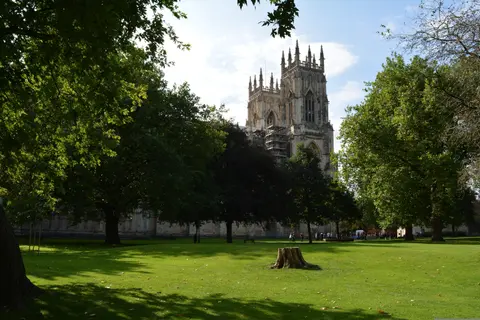
Bamberg is a town in northern Bavaria, Germany, laid out over 7 hills where the Regnitz and Main rivers meet. Its old town preserves structures from the 11th to 19th centuries including the muraled Altes Rathaus (town hall), which occupies an island in the Regnitz reached by arched bridges. The Romanesque Bamberg Cathedral, begun in the 11th century, features 4 towers and numerous stone carvings. ―


Nuremberg is an independent city in Bavaria, which is not far from Fürth. You can still see the medieval architecture that runs through the entire city. The old city walls and the imperial castle tell of days long gone. Nuremberg is famous for its Christmas market. The Christ Child heralds the advent and Christmas market time. The classic Christmas stollen is world famous and a real treat. Numerous museums such as the Albrecht Dürer House or the Toy Museum are popular sights in the city.


The breath of almost 2000 years can be felt in Regensburg. Spared from the destruction of past wars, the city on the Danube invites you to look and be amazed. The past was preserved here in a particularly impressive way. The medieval cityscape of the former free imperial city is characterized by numerous patrician buildings and residential towers from the 13th and 14th centuries. The stone bridge and the "Porta Praetoria" are particularly worth seeing. Anyone who wants to experience history is in the right place in the largest city in Eastern Bavaria.


Passau is known as a three-river city and is the first port on the Danube that is navigable by cruise ships. From here the big tours via Vienna, Bratislava and down to the Black Sea start. But the city itself also has a lot to offer, such as the opera house, the Ilz, a small river that is great for hiking, or St. Stephen's Cathedral and the old town hall. A visit to the Passau Glass Museum is particularly recommended, if you want to turn your back on the city, you can go to the Mariahilf pilgrimage church just outside.


The small town is part of the Lower Austrian cultural landscape of Wachau, is located directly on the Danube and is surrounded by vineyards. Those arriving by ship have a beautiful view of the two main attractions of Dürnstein: The ruins of the Kuenringerburg towering high above the city, in which Richard the Lionheart was held for several months in 1192/93, and the Dürnstein monastery. The latter is a monastery of the Augustinian Canons which was closed at the end of the 18th century and is known for its blue and white bell tower.


The 1,000-year-old city of Krems lies at the end of the Wachau valley. With its medieval buildings and the Steiner Tor – a city gate and popular landmark – it’s a lovely place for a leisurely stroll. Its historic monuments include the Bürgerspitalkirche, a church built in 1470 under Frederick III, Holy Roman Emperor. It has a high altar, which was created by Johann Bernhard Grabenberger between 1860 and 1882. Further sites of interest include the Kunsthalle Krems – a museum which focuses on contemporary art – and the Caricature Museum Krems. At the latter, regular special exhibitions as well as permanent exhibitions by the artists Manfred Deix and Gustav Peichl are sure to put a smile on your face.


The Viennese have a special aura about them. They come across as a bit arrogant, but underneath it all they’re warm-hearted. You could say the same about the city itself. Once you’ve been there a few hours and settled in, you won’t want to leave again anytime soon. There are all those cafes to visit, where the traditional Viennese coffee-house culture is still very much alive and well. The city’s history, with its emperors, Elisabeth of Austria and the ostentatious Habsburgs, adds to its fascination. Then there’s the music of the First Viennese School – this city brought out the best in its composers, making its own special contribution to great masterpieces. What’s more, the Austrian capital also produces excellent cuisine. It’s no coincidence that the city’s famous Wiener schnitzel and Sachertorte became popular all around the world.


The Viennese have a special aura about them. They come across as a bit arrogant, but underneath it all they’re warm-hearted. You could say the same about the city itself. Once you’ve been there a few hours and settled in, you won’t want to leave again anytime soon. There are all those cafes to visit, where the traditional Viennese coffee-house culture is still very much alive and well. The city’s history, with its emperors, Elisabeth of Austria and the ostentatious Habsburgs, adds to its fascination. Then there’s the music of the First Viennese School – this city brought out the best in its composers, making its own special contribution to great masterpieces. What’s more, the Austrian capital also produces excellent cuisine. It’s no coincidence that the city’s famous Wiener schnitzel and Sachertorte became popular all around the world.


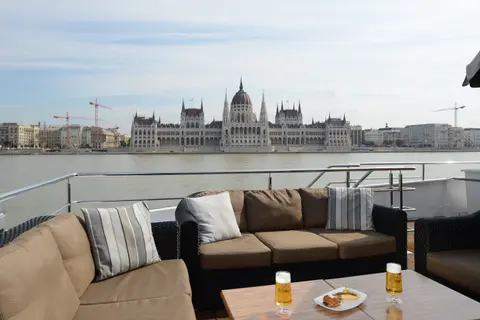
On one bank of the Danube is hilly Buda with its Fisherman’s Bastion and Castle Hill; on the other, there’s flat Pest with its House of Parliament. These two beautiful districts couldn’t be more different. Perhaps that’s why it took until 1873 for the two cities on opposite sides of the river to merge and form Budapest. Right from the start, the landmark of this new metropolis was Buda Castle, a monumental structure that rises high above Budapest and provides mesmerising views across the city. In terms of monumental grandeur, the House of Parliament is certainly on a par with Buda Castle. Erected to mark the millennium celebrations of 1896, this gigantic building was completed in just 22 years. Considering it is 96 metres high, 268 metres long and 118 meters wide, with a total of 691 rooms, that’s an incredible achievement. Budapest is a place where you keep coming across echoes from days gone by. There are traces of Ottoman rule, the extravagant Habsburg era and Soviet socialism – different cultural influences that have combined to create a vibrant, lively city that’s a must-see destination.


On one bank of the Danube is hilly Buda with its Fisherman’s Bastion and Castle Hill; on the other, there’s flat Pest with its House of Parliament. These two beautiful districts couldn’t be more different. Perhaps that’s why it took until 1873 for the two cities on opposite sides of the river to merge and form Budapest. Right from the start, the landmark of this new metropolis was Buda Castle, a monumental structure that rises high above Budapest and provides mesmerising views across the city. In terms of monumental grandeur, the House of Parliament is certainly on a par with Buda Castle. Erected to mark the millennium celebrations of 1896, this gigantic building was completed in just 22 years. Considering it is 96 metres high, 268 metres long and 118 meters wide, with a total of 691 rooms, that’s an incredible achievement. Budapest is a place where you keep coming across echoes from days gone by. There are traces of Ottoman rule, the extravagant Habsburg era and Soviet socialism – different cultural influences that have combined to create a vibrant, lively city that’s a must-see destination.


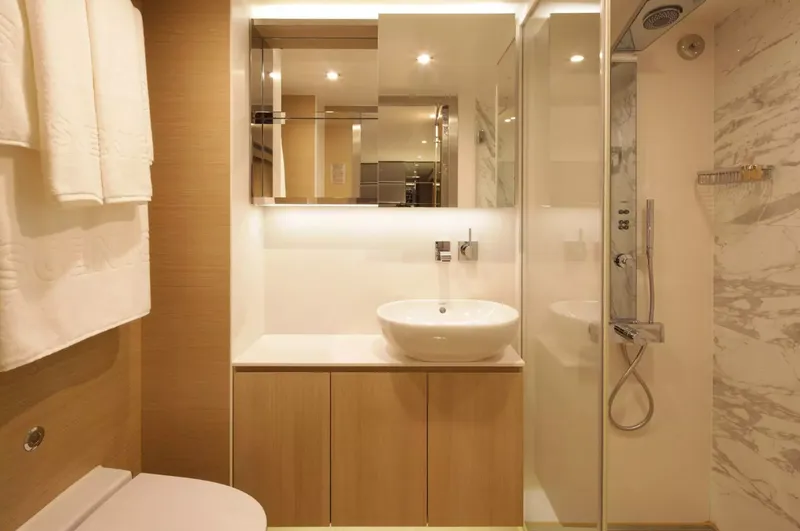
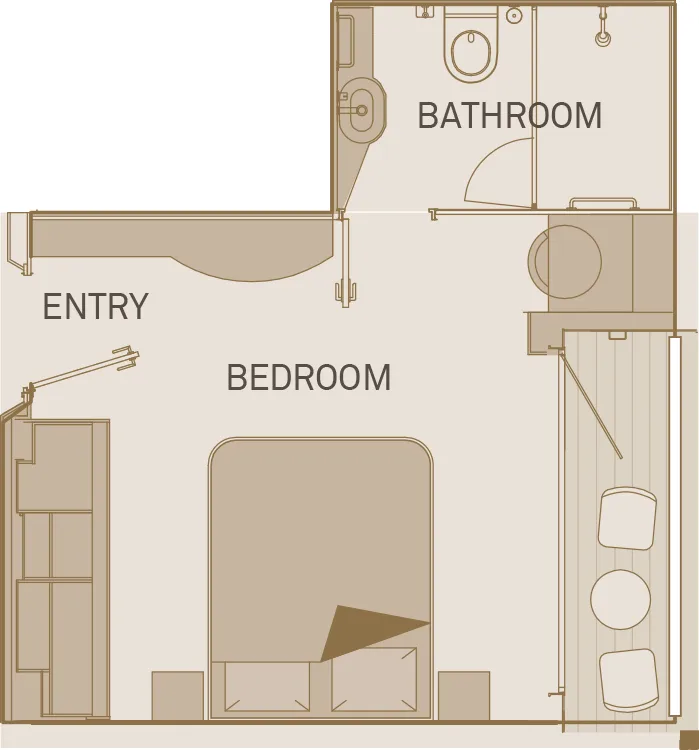
These spacious Suites, located on the Sapphire and Diamond Decks, have a private full-length balcony complete with a Scenic Sun Lounge and elegant en-suite bathrooms featuring a large vanity basin and shower.

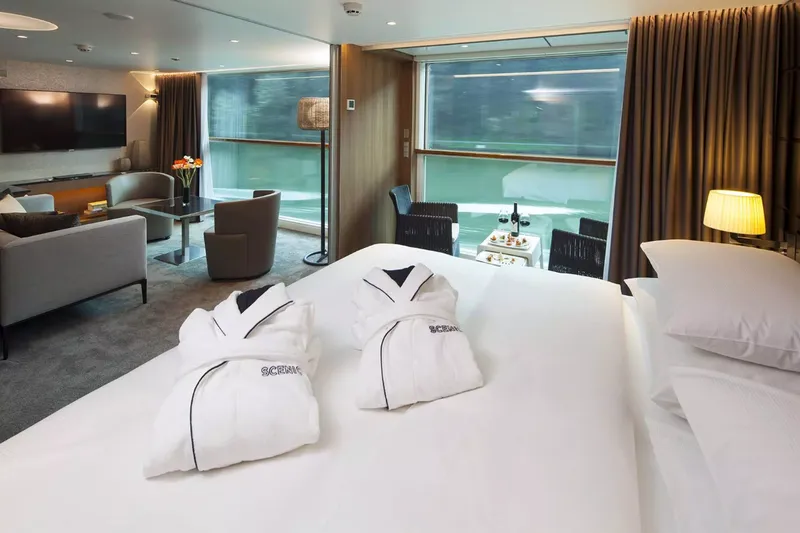
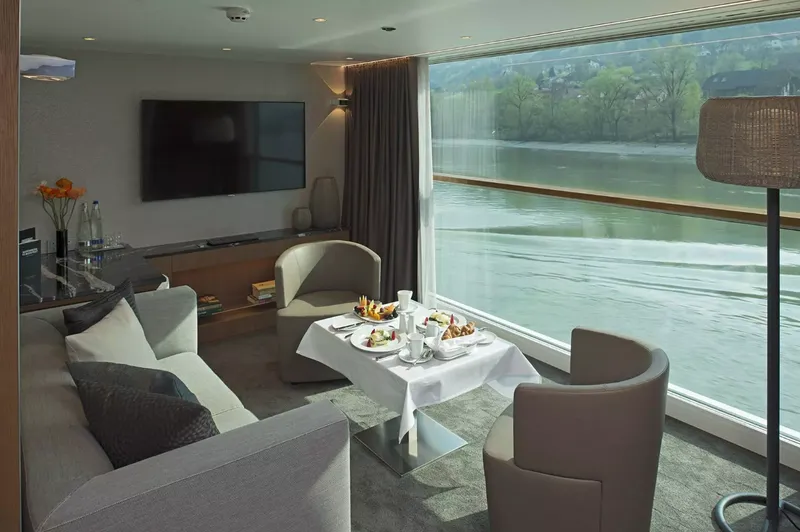
These Suites located on the Diamond Deck are the ultimate in luxury with more space, impeccable service, thoughtful touches, an outdoor balcony, lounge area and an oversized bathroom.
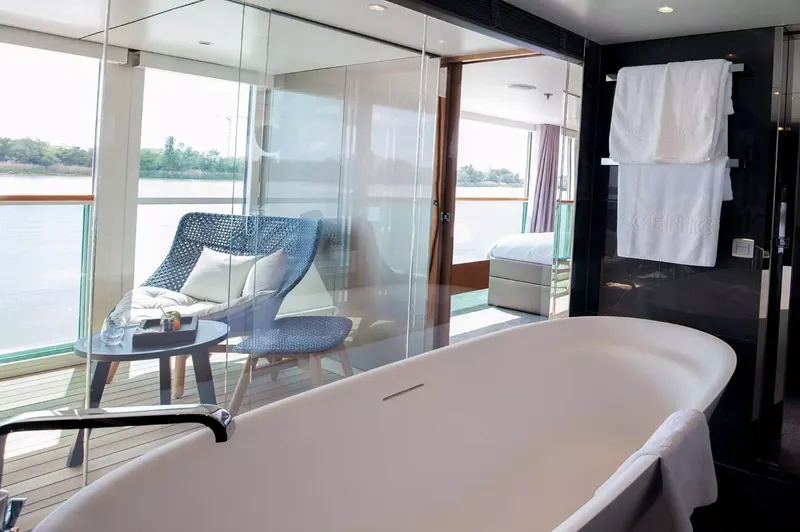
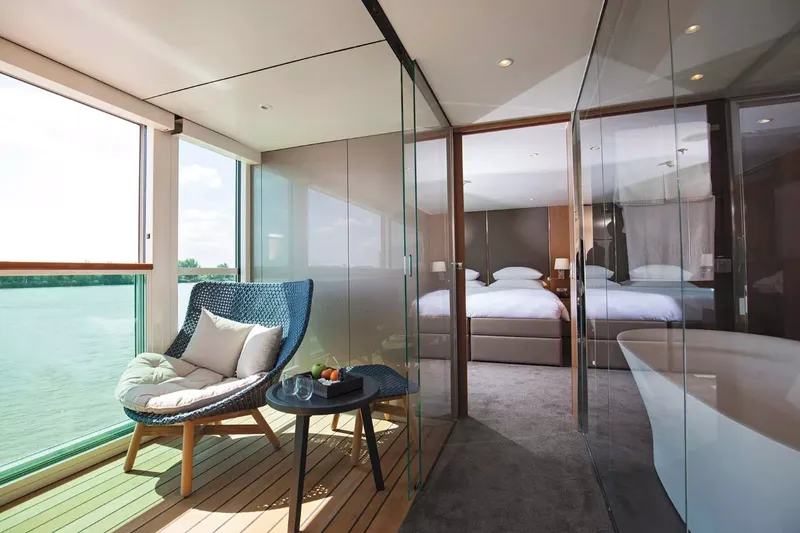
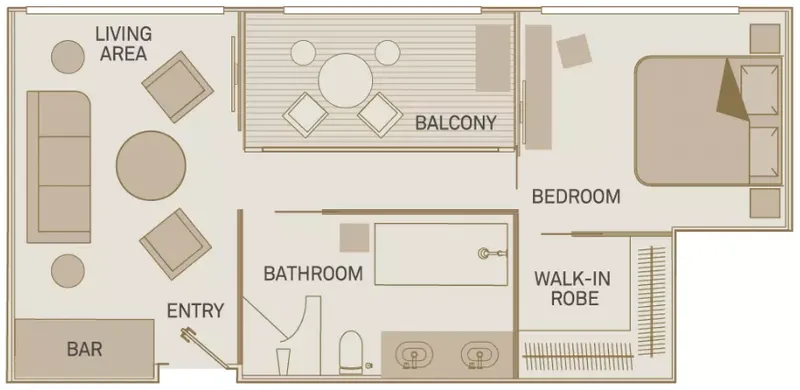
These Suites on the Diamond Deck are the ultimate in luxury with more space (315ft²), impeccable service, thoughtful touches, an outdoor balcony, lounge area and an oversized bathroom.
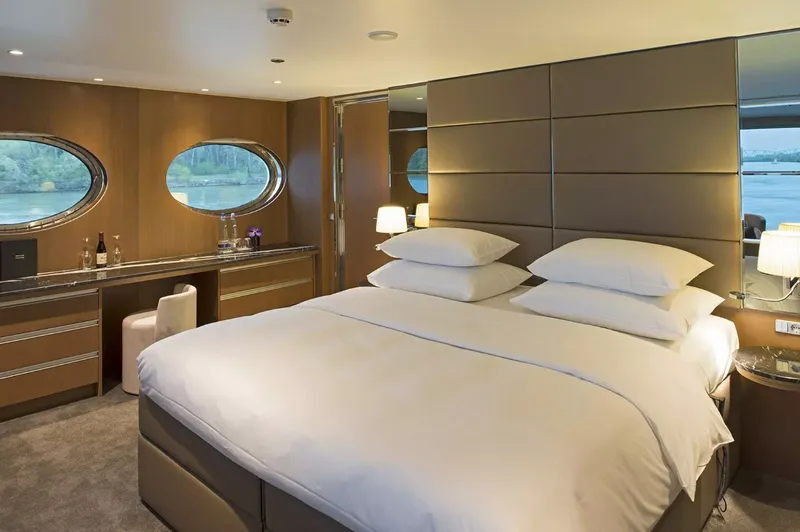
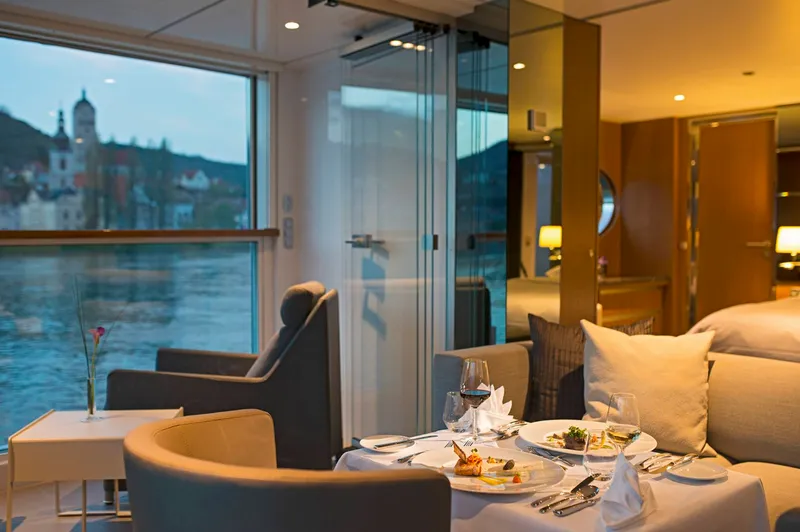
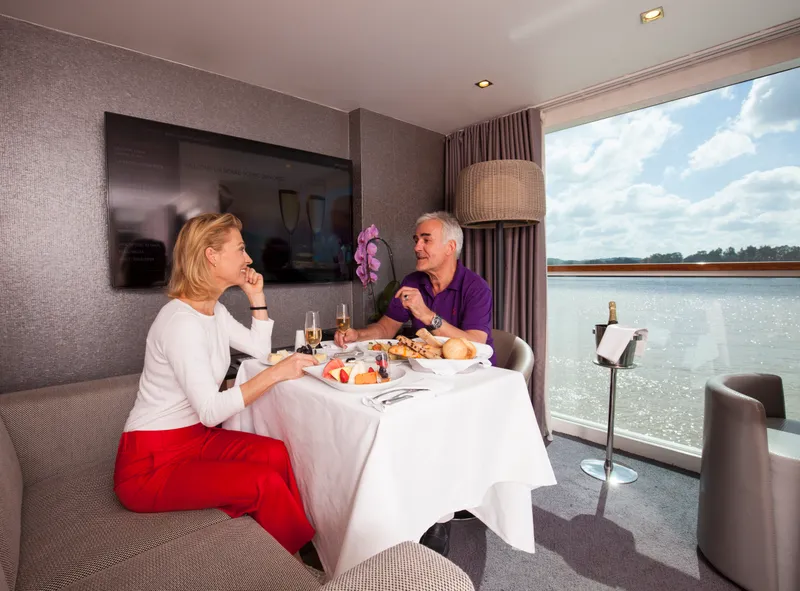
At 325ft², these are the largest suites on the ship. Located on the Diamond Deck, both suites enjoy fantastic views of the passing scenery from your private balcony complete with Scenic Sun Lounge. Each Suite has a lounge area and a luxurious bathroom.
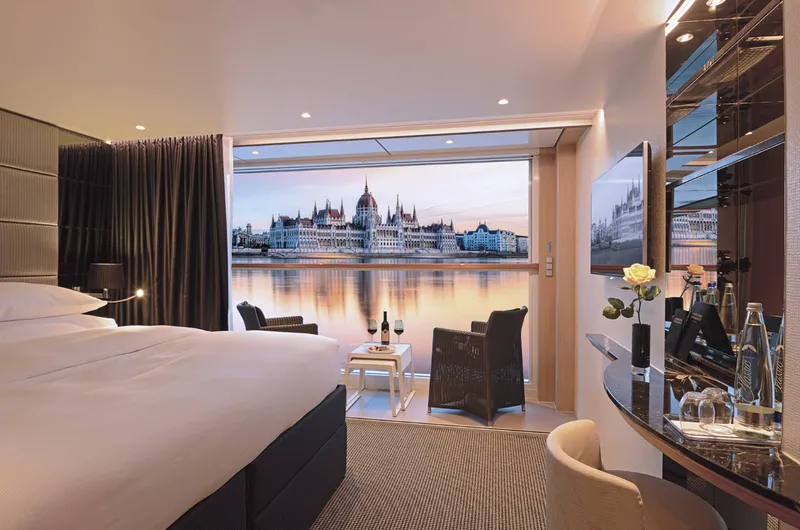
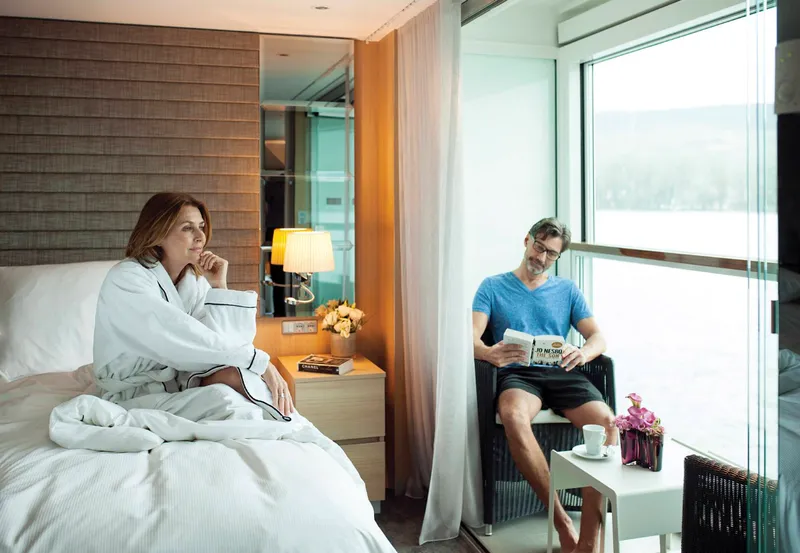
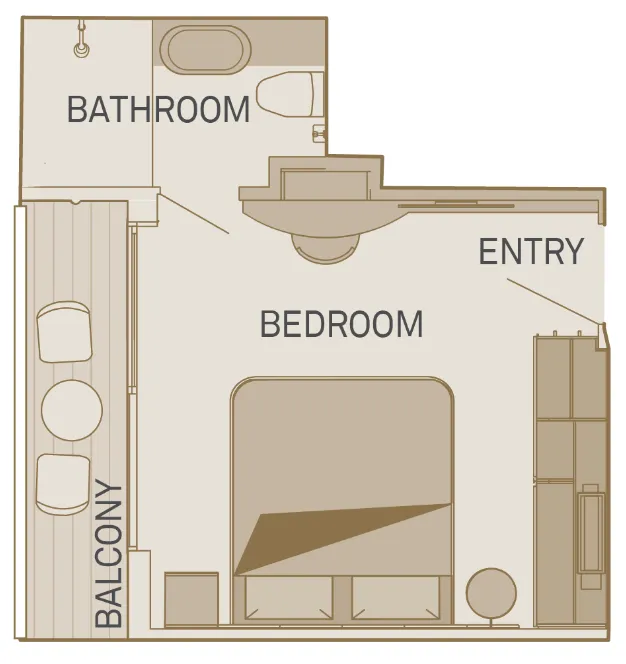
Located on the Sapphire and Diamond Decks these stylishly decorated suites feature a full-length outdoor balcony with the exclusive Scenic Sun Lounge and offer private bathrooms with a luxurious vanity basin and shower.
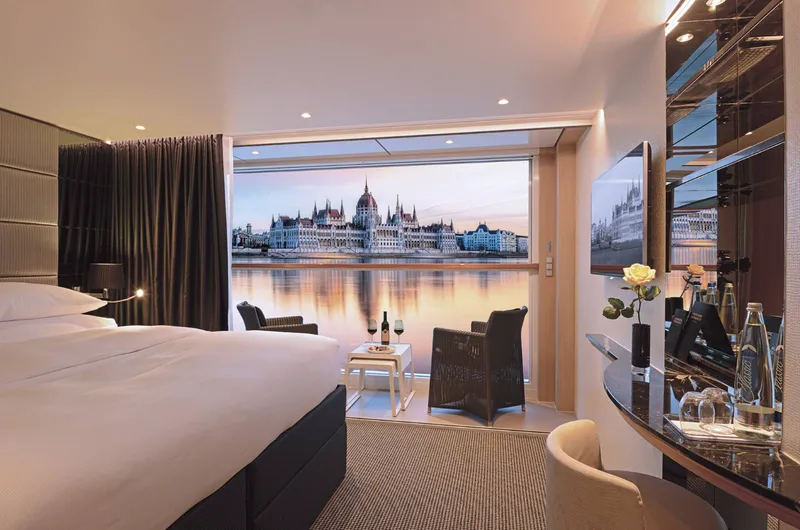
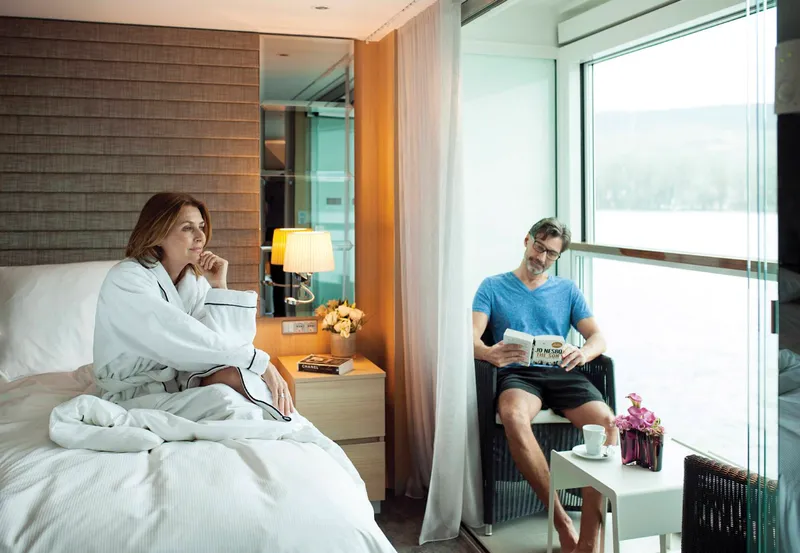
Located in prime locations at the front of the ship on both the Sapphire and Diamond Decks, they offer all the features of our private Balcony Suites with our ingenious Scenic Sun Lounge, but with even more space to relax.
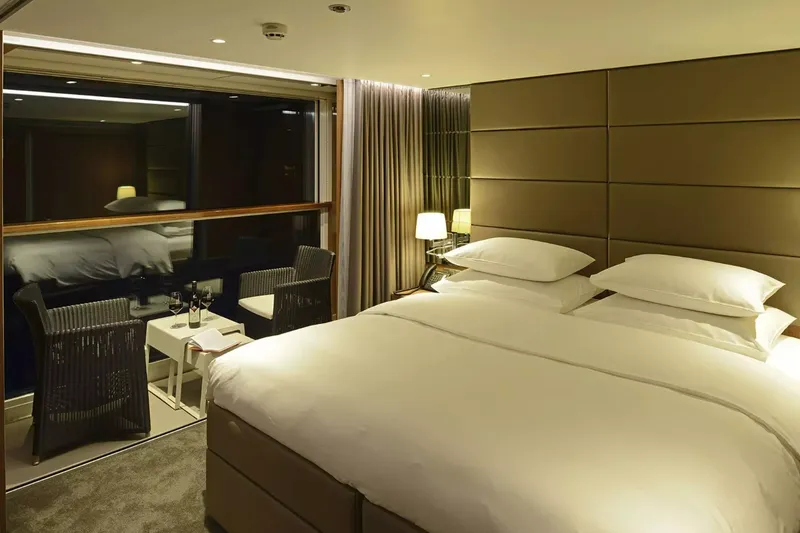
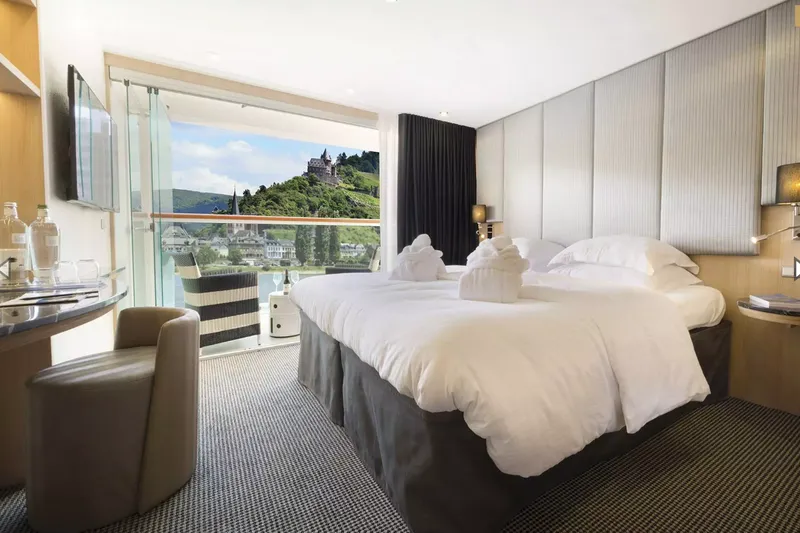
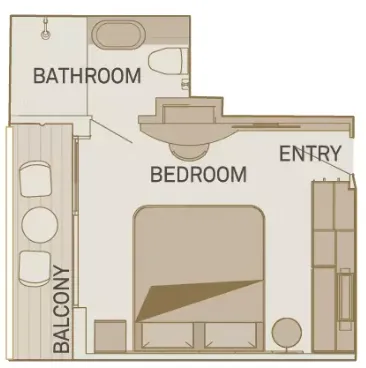
Single Balcony Suite


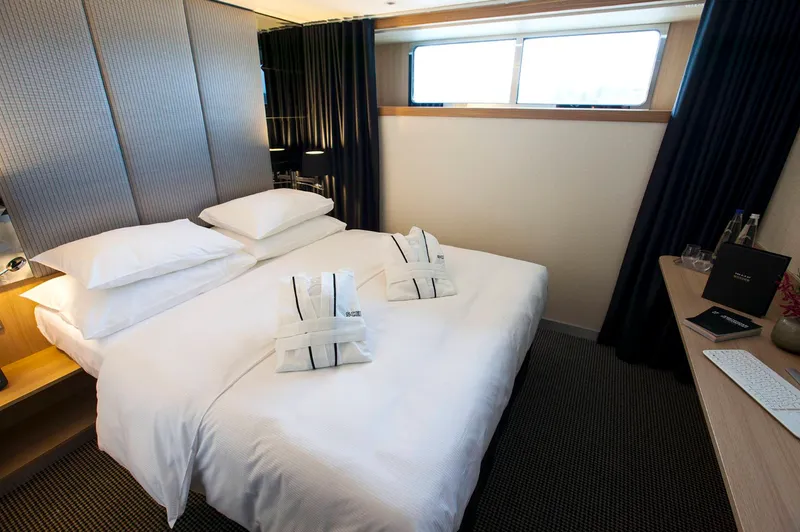
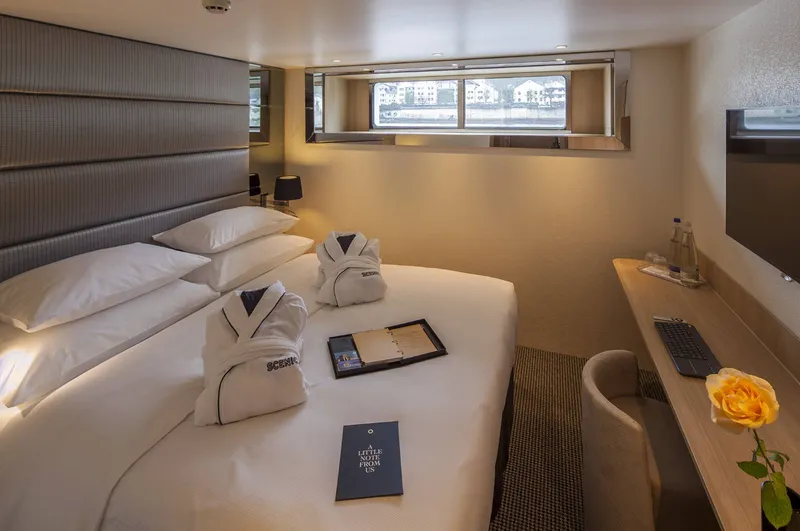
Standard Suites are located on the Jewel Deck with large picture windows to ensure a great view. They have a spacious design and clever layout alongside all the usual luxurious amenities and furnishings.
Our cruise specialists can help you find the perfect cabin and the best available pricing.
(+886) 02-2721-7300Contact Advisor