December 19, 2026
14 nights
Prague
Czech Republic
Amsterdam
Netherlands


Scenic River Cruises
2015-01-01
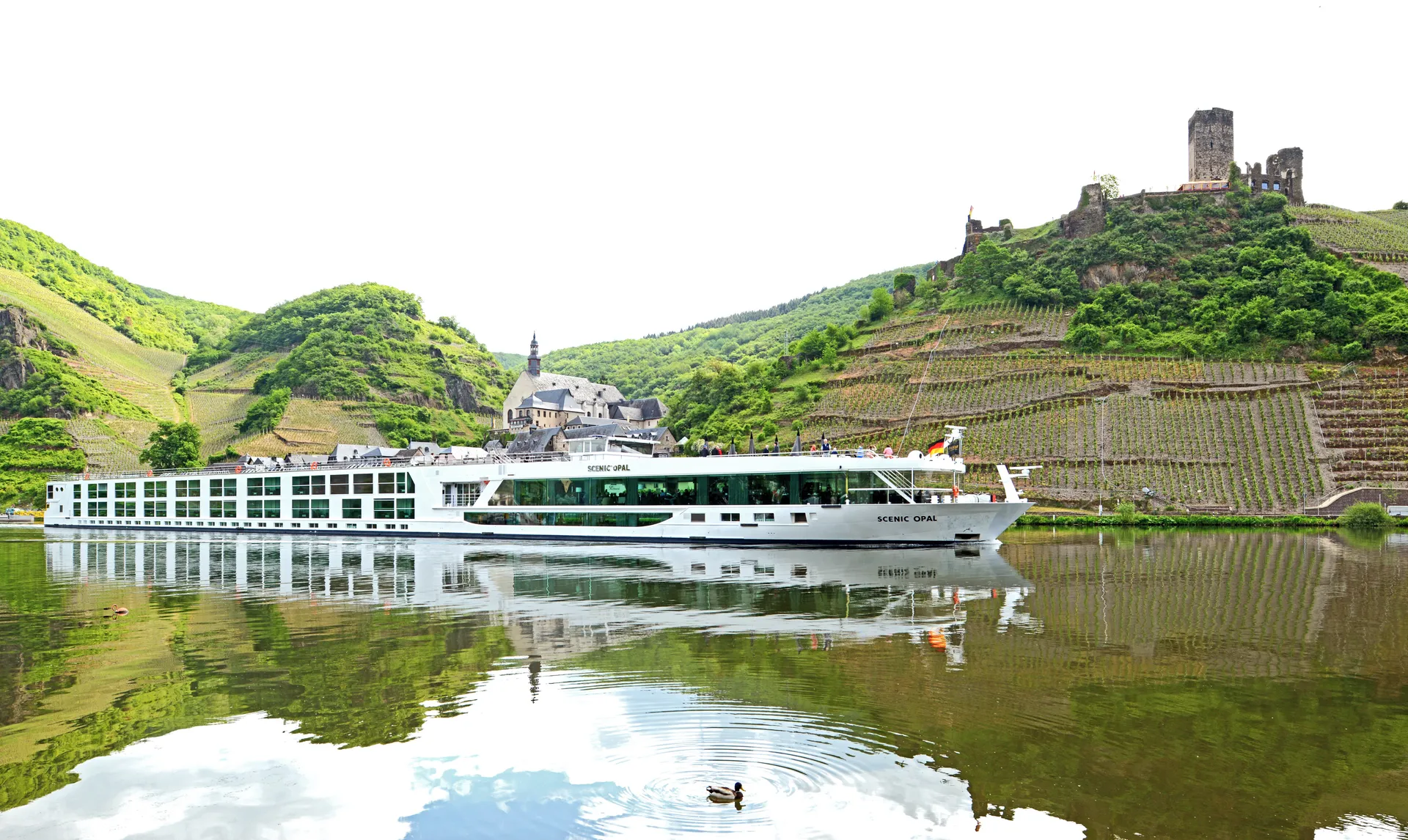
2,721 GT
169 guests
53


Prague, capital city of the Czech Republic, is bisected by the Vltava River. Nicknamed “the City of a Hundred Spires,” it's known for its Old Town Square, the heart of its historic core, with colorful baroque buildings, Gothic churches and the medieval Astronomical Clock, which gives an animated hourly show. Completed in 1402, pedestrian Charles Bridge is lined with statues of Catholic saints.


Prague, capital city of the Czech Republic, is bisected by the Vltava River. Nicknamed “the City of a Hundred Spires,” it's known for its Old Town Square, the heart of its historic core, with colorful baroque buildings, Gothic churches and the medieval Astronomical Clock, which gives an animated hourly show. Completed in 1402, pedestrian Charles Bridge is lined with statues of Catholic saints.


Prague, capital city of the Czech Republic, is bisected by the Vltava River. Nicknamed “the City of a Hundred Spires,” it's known for its Old Town Square, the heart of its historic core, with colorful baroque buildings, Gothic churches and the medieval Astronomical Clock, which gives an animated hourly show. Completed in 1402, pedestrian Charles Bridge is lined with statues of Catholic saints.


Prague, capital city of the Czech Republic, is bisected by the Vltava River. Nicknamed “the City of a Hundred Spires,” it's known for its Old Town Square, the heart of its historic core, with colorful baroque buildings, Gothic churches and the medieval Astronomical Clock, which gives an animated hourly show. Completed in 1402, pedestrian Charles Bridge is lined with statues of Catholic saints.


On one bank of the Danube is hilly Buda with its Fisherman’s Bastion and Castle Hill; on the other, there’s flat Pest with its House of Parliament. These two beautiful districts couldn’t be more different. Perhaps that’s why it took until 1873 for the two cities on opposite sides of the river to merge and form Budapest. Right from the start, the landmark of this new metropolis was Buda Castle, a monumental structure that rises high above Budapest and provides mesmerising views across the city. In terms of monumental grandeur, the House of Parliament is certainly on a par with Buda Castle. Erected to mark the millennium celebrations of 1896, this gigantic building was completed in just 22 years. Considering it is 96 metres high, 268 metres long and 118 meters wide, with a total of 691 rooms, that’s an incredible achievement. Budapest is a place where you keep coming across echoes from days gone by. There are traces of Ottoman rule, the extravagant Habsburg era and Soviet socialism – different cultural influences that have combined to create a vibrant, lively city that’s a must-see destination.


On one bank of the Danube is hilly Buda with its Fisherman’s Bastion and Castle Hill; on the other, there’s flat Pest with its House of Parliament. These two beautiful districts couldn’t be more different. Perhaps that’s why it took until 1873 for the two cities on opposite sides of the river to merge and form Budapest. Right from the start, the landmark of this new metropolis was Buda Castle, a monumental structure that rises high above Budapest and provides mesmerising views across the city. In terms of monumental grandeur, the House of Parliament is certainly on a par with Buda Castle. Erected to mark the millennium celebrations of 1896, this gigantic building was completed in just 22 years. Considering it is 96 metres high, 268 metres long and 118 meters wide, with a total of 691 rooms, that’s an incredible achievement. Budapest is a place where you keep coming across echoes from days gone by. There are traces of Ottoman rule, the extravagant Habsburg era and Soviet socialism – different cultural influences that have combined to create a vibrant, lively city that’s a must-see destination.


The Viennese have a special aura about them. They come across as a bit arrogant, but underneath it all they’re warm-hearted. You could say the same about the city itself. Once you’ve been there a few hours and settled in, you won’t want to leave again anytime soon. There are all those cafes to visit, where the traditional Viennese coffee-house culture is still very much alive and well. The city’s history, with its emperors, Elisabeth of Austria and the ostentatious Habsburgs, adds to its fascination. Then there’s the music of the First Viennese School – this city brought out the best in its composers, making its own special contribution to great masterpieces. What’s more, the Austrian capital also produces excellent cuisine. It’s no coincidence that the city’s famous Wiener schnitzel and Sachertorte became popular all around the world.


The small town is part of the Lower Austrian cultural landscape of Wachau, is located directly on the Danube and is surrounded by vineyards. Those arriving by ship have a beautiful view of the two main attractions of Dürnstein: The ruins of the Kuenringerburg towering high above the city, in which Richard the Lionheart was held for several months in 1192/93, and the Dürnstein monastery. The latter is a monastery of the Augustinian Canons which was closed at the end of the 18th century and is known for its blue and white bell tower.


Passau is known as a three-river city and is the first port on the Danube that is navigable by cruise ships. From here the big tours via Vienna, Bratislava and down to the Black Sea start. But the city itself also has a lot to offer, such as the opera house, the Ilz, a small river that is great for hiking, or St. Stephen's Cathedral and the old town hall. A visit to the Passau Glass Museum is particularly recommended, if you want to turn your back on the city, you can go to the Mariahilf pilgrimage church just outside.


The breath of almost 2000 years can be felt in Regensburg. Spared from the destruction of past wars, the city on the Danube invites you to look and be amazed. The past was preserved here in a particularly impressive way. The medieval cityscape of the former free imperial city is characterized by numerous patrician buildings and residential towers from the 13th and 14th centuries. The stone bridge and the "Porta Praetoria" are particularly worth seeing. Anyone who wants to experience history is in the right place in the largest city in Eastern Bavaria.


Nuremberg is an independent city in Bavaria, which is not far from Fürth. You can still see the medieval architecture that runs through the entire city. The old city walls and the imperial castle tell of days long gone. Nuremberg is famous for its Christmas market. The Christ Child heralds the advent and Christmas market time. The classic Christmas stollen is world famous and a real treat. Numerous museums such as the Albrecht Dürer House or the Toy Museum are popular sights in the city.


Bamberg is a town in northern Bavaria, Germany, laid out over 7 hills where the Regnitz and Main rivers meet. Its old town preserves structures from the 11th to 19th centuries including the muraled Altes Rathaus (town hall), which occupies an island in the Regnitz reached by arched bridges. The Romanesque Bamberg Cathedral, begun in the 11th century, features 4 towers and numerous stone carvings. ―


The Bavarian city of Würzburg with its impressive buildings in Baroque and Rococo styles is definitely worth a visit. Below the Marienberg Fortress, which is well worth seeing, there are walking paths through the beautiful vineyards that stretch right down to the Main. This is where the good Franconian wine comes from in Bocksbeuteln. The Würzburg Residence is a special attraction, as is the monumental Käppele pilgrimage church. The cathedral and the striking old bridge over the Main are also special points of contact. The Haus zum Falken on the market square is built in Rococo and Gothic styles.


In the Upper Middle Rhine Valley – a UNESCO World Heritage Site – the town of Rüdesheim marks the end of several old merchants’ routes. This strategically important point used to be protected by four castles. Picturesque Rüdesheim is known all around the world for its outstanding wines. Make sure you take a walk through the charming little streets of the old town. Drosselgasse, an alleyway with half-timbered facades, is known as ‘The World’s Longest Wine Bar‘ and is reputed to be the most-visited tourist attraction in Germany after Cologne Cathedral. Wine cultivation was already in full swing here in Roman times – learn more about the winegrowers of antiquity and their successors at the Rheingauer Weinmuseum in the Brömserburg, an old castle. And if you want to sample the wines that are being produced today, head to the rustic wine taverns in the old town.


It’s not just the locals who consider Cologne to be among the best cities in the world. The typical friendliness that you find at every turn makes visitors feel at home right away. It’s not unusual to quickly get chatting to strangers and even go for a couple glasses of Kölsch with them. The main landmark – Cologne Cathedral – watches over the whole city. It is the third-tallest church building in the world, at 157.38 metres. It might be a bit of a trek up to the top of the tower, but it’s worth it. You’ll be rewarded with an unforgettable view of the city and the Rhine spread out before you.


Few can resist the grand beauty of Amsterdam’s famous canals, which thread through this place of evocative beauty and thrilling contrast. Open-minded and tolerant, Amsterdam is a place for history buffs and hedonists alike, and its diverse neighbourhoods have something for everyone - whether it’s the beachside relaxation of Bloemendaal, nocturnal thuds of Buiksloterham, or characterful charm of Jordaan. 160 serene canals serve as the arteries of this city, imbuing it with its unique essence. Cruise along concentric waterways, past cherry red and oak-wood cladded houseboats, as you learn of its Golden Age history. Culture is also deep in Amsterdam’s DNA, and the Van Gogh Museum – which pays tribute to the tortured genius of the Dutch post-impressionist artist - stands out among its leading museums and galleries. One of history’s greatest tragedies is also rendered in heart-breaking clarity at Anne Frank House. Visit the site where the precocious teenager hid from the Nazi regime for so long, and the room where she penned the most famous diary ever written. Compact and easily walkable, Amsterdam remains consistently postcard-perfect as you watch bright bicycles trundling over ornate bridges, and stumble across hidden, tulip-decorated courtyards. ‘Gezellig’ is the local word for Amsterdam’s unhurried outlook on life. No translation can quite do the concept justice, but you’ll recognise it instinctively as hours float by in a happy haze browsing De Negen Straatjes street’s independent shops, or as you sip coffee with gooey stroopwafel. Broodje haring - a raw herring sandwich - is Amsterdam’s must-try delicacy, but many visitors find tompouce, a delicious pastry topped with vivid pink icing, a little more to their taste.


Few can resist the grand beauty of Amsterdam’s famous canals, which thread through this place of evocative beauty and thrilling contrast. Open-minded and tolerant, Amsterdam is a place for history buffs and hedonists alike, and its diverse neighbourhoods have something for everyone - whether it’s the beachside relaxation of Bloemendaal, nocturnal thuds of Buiksloterham, or characterful charm of Jordaan. 160 serene canals serve as the arteries of this city, imbuing it with its unique essence. Cruise along concentric waterways, past cherry red and oak-wood cladded houseboats, as you learn of its Golden Age history. Culture is also deep in Amsterdam’s DNA, and the Van Gogh Museum – which pays tribute to the tortured genius of the Dutch post-impressionist artist - stands out among its leading museums and galleries. One of history’s greatest tragedies is also rendered in heart-breaking clarity at Anne Frank House. Visit the site where the precocious teenager hid from the Nazi regime for so long, and the room where she penned the most famous diary ever written. Compact and easily walkable, Amsterdam remains consistently postcard-perfect as you watch bright bicycles trundling over ornate bridges, and stumble across hidden, tulip-decorated courtyards. ‘Gezellig’ is the local word for Amsterdam’s unhurried outlook on life. No translation can quite do the concept justice, but you’ll recognise it instinctively as hours float by in a happy haze browsing De Negen Straatjes street’s independent shops, or as you sip coffee with gooey stroopwafel. Broodje haring - a raw herring sandwich - is Amsterdam’s must-try delicacy, but many visitors find tompouce, a delicious pastry topped with vivid pink icing, a little more to their taste.


These spacious Suites, located on the Sapphire and Diamond Decks, have a private full-length balcony complete with a Scenic Sun Lounge and elegant en-suite bathrooms featuring a large vanity basin and shower.


These Suites located on the Diamond Deck are the ultimate in luxury with more space, impeccable service, thoughtful touches, an outdoor balcony, lounge area and an oversized bathroom.


These Suites on the Diamond Deck are the ultimate in luxury with more space (315ft²), impeccable service, thoughtful touches, an outdoor balcony, lounge area and an oversized bathroom.


These Suites located on the Diamond Deck are the ultimate in luxury with more space, impeccable service, thoughtful touches, an outdoor balcony, lounge area and an oversized bathroom.


Located on the Sapphire and Diamond Decks these stylishly decorated suites feature a full-length outdoor balcony with the exclusive Scenic Sun Lounge and offer private bathrooms with a luxurious vanity basin and shower.


Located in prime locations at the front of the ship on both the Sapphire and Diamond Decks, they offer all the features of our private Balcony Suites with our ingenious Scenic Sun Lounge, but with even more space to relax.


Located on the Sapphire deck this suite is perfect for the solo traveller. Enjoy fantastic views from your full size balcony complete with Scenic Sun Lounge. This cabin also includes an elegant bathroon with a luxurious vanity basin and shower.


Our Jewel Deck Suites provide a lovely introduction to river cruising. Comfortable and luxurious with the finest in amenities.
Our cruise specialists can help you find the perfect cabin and the best available pricing.
Contact Advisor