SILOAH.tRAVEL
SILOAH.tRAVEL
Login
Brands28
6
16
6
Ships240
38
137
65
Voyages25,786
TrainsComing Soon
ExperienceComing Soon
Siloah Travel

SILOAH.tRAVEL

Siloah Travel — crafting premium cruise experiences for you.

Explore

  • Search Cruises
  • Destinations
  • Cruise Lines

Company

  • About Us
  • Contact Advisor
  • Privacy Policy

Contact

  • +886-2-27217300
  • service@siloah.travel
  • 14F-3, No. 137, Sec. 1, Fuxing S. Rd., Taipei, Taiwan

Popular Brands

SilverseaRegent Seven SeasSeabournOceania CruisesVikingExplora JourneysPonantDisney Cruise LineNorwegian Cruise LineHolland America LineMSC CruisesAmaWaterwaysUniworldAvalon WaterwaysScenicTauck

希羅亞旅行社股份有限公司|戴東華|交觀甲 793500|品保北 2260

© 2026 Siloah Travel. All rights reserved.

HomeFavoritesProfile
|
  1. Home
  2. Cruises
  3. Seabourn
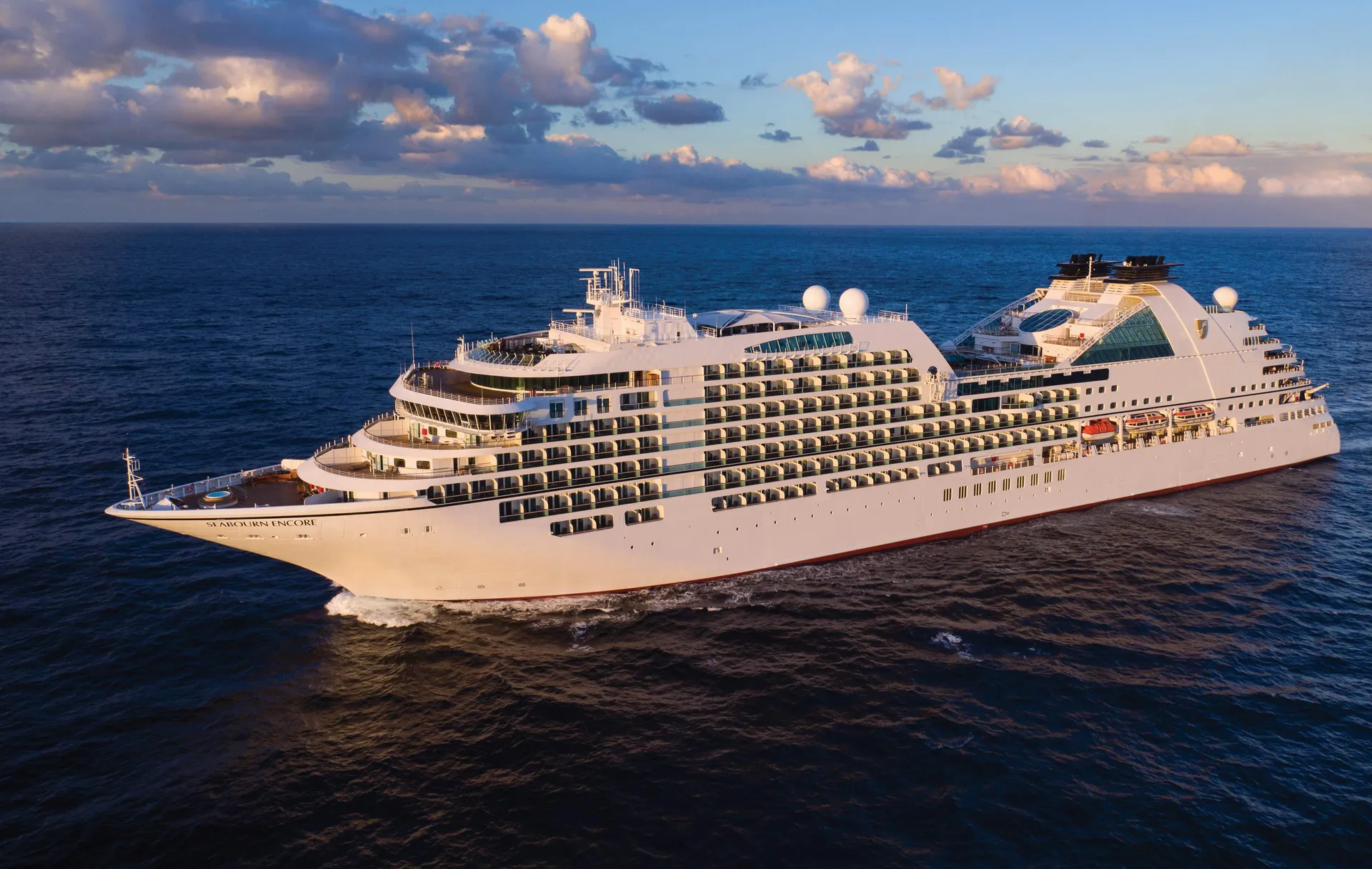
  4. Seabourn Encore
  5. 26-Day Taiwan & Japan's Plum Blossoms
26-Day Taiwan & Japan's Plum Blossoms
Seabourn7715A

26-Day Taiwan & Japan's Plum Blossoms

Date

February 15, 2027

Duration

26 nights

Departure Port

Hong Kong · Hong Kong

Arrival Port

Tokyo · Japan

Rating

Luxury

Theme

—

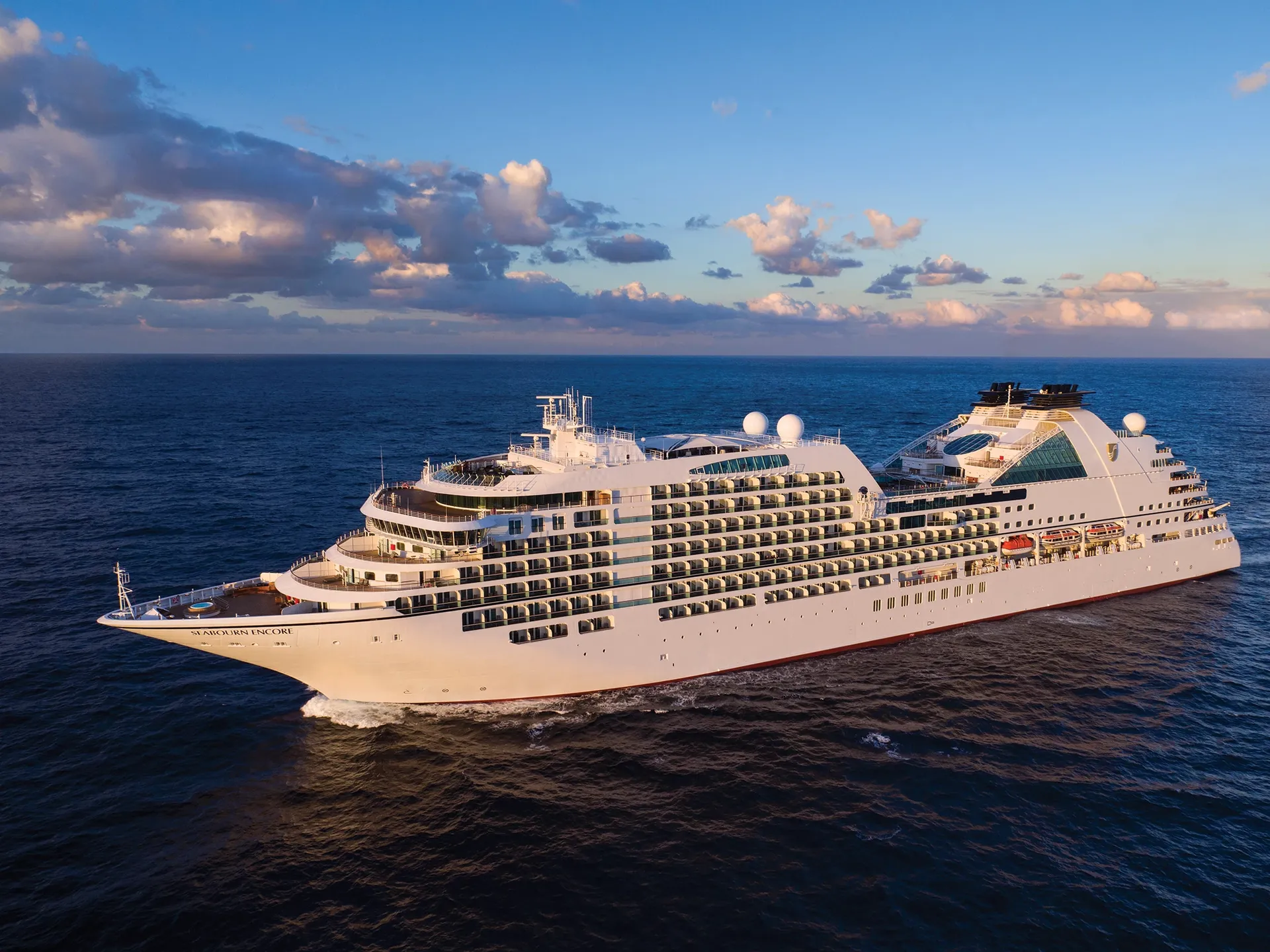
Seabourn Encore 1
Seabourn Encore 2
Seabourn Encore 3
Seabourn Encore 4
Seabourn Encore 5
Seabourn Encore 6
Seabourn Encore 7
Seabourn Encore 8
1 / 8

Seabourn

Seabourn Encore

Launched

2016

Refitted

—

Tonnage

40,350 GT

Passengers

600

Cabins

266

Crew

330

Length

690 m

Width

28 m

Speed

19 knots

Adults Only

No

View Details

Itinerary

Day 1

Day 1

Hong Kong 1
Hong Kong 2
Hong Kong 5

Hong Kong

Hong Kong

A spectacular cityscape As you will discover during your MSC Grand Voyages cruise, Hong Kong Island is the heart of the whole territory, its administrative and business centre and site of some of the most expensive real estate in the world. Development is concentrated along the island’s north shore, a 6km-long strip of financial, commercial and entertainment districts overlooking Victoria Harbour. At its core, Central sprouts an astounding array of high-tech towers, edged to the west by Sheung Wan’s smaller-scale and traditional Chinese businesses. Behind this the land climbs steeply to The Peak, wherever you get them from, vistas are stupendous, down over the island’s intensely crowded north shore, across the busy harbour to a lower-rise, unspectacular Kowloon and the green peaks of the New Territories. Man Mo Temple is one of the oldest in Hong Kong, waiting to be value on an MSC Grand Voyages cruise excursion. It dates to the 1840s and was originally founded as a charitable institution; the central atrium beyond is hung with great spiral incense coils suspended from the ceiling, filling the interior with eye-watering, aromatic smoke. Back along the harbour and moving east through Wan Chai and Causeway Bay, the emphasis shifts from finance to wining, dining and shopping. The south side of Hong Kong Island straggles into the sea in a series of dangling peninsulas and islets. The attractions here are separate towns such as Aberdeen and Stanley, with a flavour of their own, and also beaches, the best of which fronts the little outpost of Shek O. East of the Aberdeen expressway, Causeway Bay forms a knot of lively, seething streets packed with restaurants, accommodation and shopping plazas, its eastern part is dominated by Victoria Park, an extensive, open space containing shady paths, swimming pools and other sport facilities.

Day 2

Day 2

At Sea

Day 3

Day 3

Keelung 1
Keelung 2
Keelung 5

Keelung

Taiwan

With over 2,600,000 inhabitants, Taipei is the largest city on the island of Taiwan and its capital. It represents the fulcrum of the country: the headquarters of the government is located here and it is the cultural and commercial center of Taiwan. An MSC Cruise will take you inside this crossroads of Japanese and Chinese cultures, where the ancient and modern coexist with no distinction. One of the symbols of the city is the Taipei 101 Tower, named for the fact that there are 101 floors. First known as the Taipei World Financial Center, it is located in the Xinyi district. Reachable on an MSC excursion, this singular construction, built in 2004, is bamboo-shaped and its 509 meters in height made it the the tallest building in the world in 2004: today, it is in fifth place; first place is held by Burj Khalifa in Dubai. Chiang Kai-shek Memorial Hall is also one of the destinations that can be reached with an excursion: a white building with a blue octagonal roof, whose colors also reflect the national flag, it is a symbol of freedom, equality and brotherhood. Consisting of 89 steps, one for each year of the leader's life, it is surrounded by Chinese-style gardens and buildings housing examples of Taiwanese culture. Considered one of the most important monuments of the 20th century, the Memorial Hall tells the story of the head of the Chinese nationalist government which was in charge from 1950 to 1975; the hall opened in 1980. More than 700 thousand pieces representing 8,000 years of Chinese history and art from the Neolithic to the present day are exhibited in the National Palace Museum which can be visited on an MSC excursion. The museum was once located inside the walls of the Forbidden City of Beijing. In 1949, it was moved to the Shilin district in Taipei, into the current building, after the government of the Republic of China was also transferred.

Day 4

Day 4

Ishigaki 1
Ishigaki 2
Ishigaki 4

Ishigaki

Japan

Talk with the Japanese a while about the Japanese and you’re going to hear the word shimagunikonjo. The breakdown is simple: shima—island; guni—nation; konjo—consciousness. In one word, it's the firm belief that people who live on islands are different from people who live on continents, and anyone who’s done both is likely to agree. American culture may be the strongest influence in Japan now, but the Japanese will understand the motivations of the Brits a whole lot better. Islands require a different mind-set than continents. Islands require manners. But what if your island was never meant to be part of another bunch of islands? That’s what’s happened with today’s Okinawa Prefecture. The people who’ve always been there are Okinawan, one of the healthiest, longest-living people on earth. But now they’re part of Japan and seriously outnumbered by the Japanese. (And they’re not at all happy that the Japanese interlopers gave so much of their land over to U.S. military bases.) Signs of Okinawan culture can be subtle but are easier to pick out in more remote islands of the chain, like Ishigaki. Traditional buildings are a mixture of Chinese and Japanese influences. In the markets, you’ll find fu chanpuru (an Okinawan stir fry dish) and whole-wheat soba, which the Japanese won't touch. The ryuso robe holds on despite crowded kimono stores. The few people left who speak Uchinaguchi are praying for a movement like the Hawaiian renaissance to bring the culture back. The tipping point is close. A trip to Ishigaki now is to witness either the beginning or the end.

Day 5

Day 5

At Sea

Day 6

Day 6

Kagoshima 1
Kagoshima 2

Kagoshima

Japan

One of Japan's most southerly major cities, Kagoshima is dominated by the imposing Sakurajima volcano's cone – a legendary active volcano that broods, churns and puffs out ash nearby. A pretty old-time ferry chugs across the still waters to the gently sloping foothills of the volcano's cone, and it's easy to imagine where the comparisons with its sister city Naples materialised, as you sail the glorious sweeping Kinko Bay, below beaming sunshine, towards the immense volcanic spectacle. View less This is certainly no historic relic, and the volcano remains revered and feared, with the most dramatic recent eruption taking place in 1914, and spewing out a new bridge of land into the sea. Make the most of the geothermal activity in the area by indulging in a stress-simmering black sand bath. Incredibly relaxing, you'll be submerged in the warm sand, as you feel your muscles relaxing in the heat, and rejuvenating blood pumping around your body. Enjoy a privileged view of the iconic volcano's loom from the terraced garden of Senganen Garden. Built in 1658, this elegant, traditional garden has belonged to the Shimadzu family for 350 years. Wander the gardens - which bloom with Japan's renowned cherry tree blossoms and feature tiny bridges looping over ponds and rock pools - before sitting back and sipping a wholesome green matcha latte. Elsewhere, museums offer Feudal Era and Satsuma Province history, as well as insights into the Kamikaze squadrons of World War II. Lake Ikeda is also close by, so be sure to keep an eye out for the legendary Issie monster.

Day 7

Day 7

Aburatsu (Japan)

Aburatsu (Japan)

Japan

Located on the south eastern side of Japan, Aburatsu is a tiny port that packs a big punch. More commonly known under the name of Miyazaki – the region where Aburatsu is found, the clement weather and fortuitous topography give Aburatsu a feeling of being on permanent holiday. Visitors should expect along with warm weather a warm welcome from the locals with samples of local culture – such as the traditional Nichinan Taihei dance being performed and bites of exquisite gastronomy for the more adventurous as soon as you disembark. Venturing further afield and one discovers an atypical town that is light years away from the Japan of the future that one might associate other parts of the country with. On the do not miss list should be first and foremost Aoshima, a tiny island of just 1.50km in circumference, connected to the mainland by a 300-metre long bridge. Not to be confused with an identically named island in Ehime Prefecture which is known for its cat population, those with allergies to felines need not worry! Celebrated for its lush vegetation, the island is ringed with white sandy beaches and shallow waters. At the center of the island is Aoshima Jinja, a colorful shrine set back in the jungle that is said to bring luck to married couples. Surrounded at low tide by the geological phenomenon known as Oni no Sentakuita (eroded sandstone and shale boulders) that protrude from the sea between the waves, the straight rows of basalt rock look man made. Because of this, Aoshima is designated a National Natural Monument. Finally, Obi Castletown is a definite must see. A highly impressive traditional castle, the gardens have a cherry tree orchard that is a fine example of Sakura, should you be lucky enough to visit in Spring.

Day 8

Day 8

Kochi

Kochi

Japan

An MSC cruise will take you to Kochi, situated in the prefecture of the same name, on the island of Shikoku. You can visit Kochi castle on an excursion; it is one of the twelve Japanese castles to have survived fires, wars and other catastrophes of the post-feudal age. It was built between 1601 and 1611. What you can see of the building today however, dates back to 1748, the year in which the castle was rebuilt after a fire. Curiosity: its main tower was not used only for military purposes, but it was also the residence of noble families. Quite unusual, since the nobility would usually reside in other parts of the castle. The wooden interior is typical of the traditional style of the Edo period. Near Kochi harbour is the picturesque beach of Katsurahama. In the local restaurants you can eat Katsuo, a type of tuna which is typical to Japanese waters, cut into slices and lightly grilled on straw fuelled fire which gives it a slightly smoky flavour. Seventy kilometres from Kochi there is an unusual tourist attraction, the ancient Kazurabashi Bridge, 45 meters wide and 2 metres wide, it stretches 14 metres above the waters of the river Iya. Today, the bridge – which is made from Actinidia arguta wood, a kind of vine similar to a kiwi plant – is reinforced with steel wires. It should not be missed for the surrounding landscape and the brief but thrilling walk it offers. Closer to Kochi is the wonderful Oboke gorge: we cross the river Yoshino on a boat and marvel at how over hundreds of millions of years the river has eroded the rocks of the Shikoku mountains shaping the stone into bizarre shapes.

Day 9

Day 9

Osaka 1
Osaka 2

Osaka

Japan

Japan’s third-biggest city has thrown off its shackles and stepped out of the shadows to light up the sky with glaring neon signs and a larger than life outlook. Giant octopuses cling to buildings and bustling restaurants pack in the crowds in this great and garish place, which is Japan at its most friendly, extroverted and flavourful. So dive in headfirst to experience an all-out sensory assault of delicious food, shopping cathedrals and glittering temples. View less Dotombori Bridge bathes in the multicoloured, jewel-like lights of signage-plastered buildings, and the neon lights dance on the canal's waters below. Osaka is known as the nation's kitchen, and the Kuromon Ichiba Market has served as the city's spot to tuck in for almost 200 years. Full of street food stalls - try pufferfish, savoury Okonomiyaki pancakes, or ginger and onion flavoured octopus, among the endless feast of exotic flavours. Osaka Castle is another of the city’s landmarks, built in the 16th century by Toyotomi Hideyoshi. A modern museum now waits inside, where you can learn about the country's history, and why this castle is a symbol of Japanese unity. Be sure to take the elevator up to the observation deck for a panoramic view of Osaka's spread. A colourful park encloses the castle and blooms with an ocean of pale pink cherry blossom during the season - the elegant black tiers rising from the pink haze below is one of Osaka's most alluring visions. Kyoto’s peaceful cultural treasures and temples are also just a short jaunt away on Japan’s sleek trains, should you wish to explore further afield.

Day 10

Day 10

Osaka 1
Osaka 2

Osaka

Japan

Japan’s third-biggest city has thrown off its shackles and stepped out of the shadows to light up the sky with glaring neon signs and a larger than life outlook. Giant octopuses cling to buildings and bustling restaurants pack in the crowds in this great and garish place, which is Japan at its most friendly, extroverted and flavourful. So dive in headfirst to experience an all-out sensory assault of delicious food, shopping cathedrals and glittering temples. View less Dotombori Bridge bathes in the multicoloured, jewel-like lights of signage-plastered buildings, and the neon lights dance on the canal's waters below. Osaka is known as the nation's kitchen, and the Kuromon Ichiba Market has served as the city's spot to tuck in for almost 200 years. Full of street food stalls - try pufferfish, savoury Okonomiyaki pancakes, or ginger and onion flavoured octopus, among the endless feast of exotic flavours. Osaka Castle is another of the city’s landmarks, built in the 16th century by Toyotomi Hideyoshi. A modern museum now waits inside, where you can learn about the country's history, and why this castle is a symbol of Japanese unity. Be sure to take the elevator up to the observation deck for a panoramic view of Osaka's spread. A colourful park encloses the castle and blooms with an ocean of pale pink cherry blossom during the season - the elegant black tiers rising from the pink haze below is one of Osaka's most alluring visions. Kyoto’s peaceful cultural treasures and temples are also just a short jaunt away on Japan’s sleek trains, should you wish to explore further afield.

Day 11

Day 11

Toba

Toba

Japan

Toba, located at the northeastern end of the Shima-hanto Peninsula in Mie, flourished as the castle town of the Kuki family who ruled this region from the 16th century. It was also a landing spot for visitors on the sea route to Ise-jingu Shrine and belongs to Ise-Shima National Park.

Day 12

Day 12

Shimizu

Shimizu

Japan

Feel your heart thumping, at your first sight of Japan’s most heavenly vision - Mount Fuji’s cone emerging through the haze. With its summit dipped in pure white snow, the iconic volcano’s cone is one of the most famous natural landmarks in the world - and a picturesque backdrop for Shimizu. View less Come ashore to this serene vision of beauty – and whether you head straight for the siren-call of the volcano’s slopes, or the sanctuary of gorgeous, heritage-rich shrines, and tranquil tea plantations - spine-tingling views of Japan’s most tallest mountain are never far away. A perfectly symmetrical spectacle, visible for miles around, Mount Fuji is an adored national symbol of Japan. Travel closer to its slopes to soak in some of the country’s finest panoramas. Or take in the views with a dash of local culture, at the Fujisan Hongu Sengen Shrine – an elegant shrine, that stands in thrall to the salt and pepper volcano close by. The Shiraito Waterfall World Heritage Site flows just beneath the volcano – visit to see the gloriously wide curtain of water gushing through the thick vegetation. Visit Kunozan Toshogu Shrine for another perspective, or to soak up the tranquil site before swinging above on a scenic ropeway. Located on the adjacent Mount Kuno – privileged views of the mountain and Suruga Bay will unroll before you. Nihondaira Plateau is another option, where you can soak in panoramic views of the bay and Mount Fuji dominating behind. However you choose to experience it, Shimizu welcomes you into the heart of Japan, to absorb the mesmerising panoramas of the country’s most famous sight.

Day 13

Day 13

Tokyo 1
Tokyo 2
Tokyo 5

Tokyo

Japan

Lights, sushi, manga! Sprawling, frenetic, and endlessly fascinating, Japan’s capital is a city of contrasts. Shrines and gardens are pockets of calm between famously crowded streets and soaring office buildings. Mom-and-pop noodle houses share street space with Western-style chain restaurants and exquisite fine dining. Shopping yields lovely folk arts as well as the newest electronics. And nightlife kicks off with karaoke or sake and continues with techno clubs and more. Whether you seek the traditional or the cutting edge, Tokyo will provide it.

Day 14

Day 14

At Sea

Day 15

Day 15

Osaka 1
Osaka 2

Osaka

Japan

Japan’s third-biggest city has thrown off its shackles and stepped out of the shadows to light up the sky with glaring neon signs and a larger than life outlook. Giant octopuses cling to buildings and bustling restaurants pack in the crowds in this great and garish place, which is Japan at its most friendly, extroverted and flavourful. So dive in headfirst to experience an all-out sensory assault of delicious food, shopping cathedrals and glittering temples. View less Dotombori Bridge bathes in the multicoloured, jewel-like lights of signage-plastered buildings, and the neon lights dance on the canal's waters below. Osaka is known as the nation's kitchen, and the Kuromon Ichiba Market has served as the city's spot to tuck in for almost 200 years. Full of street food stalls - try pufferfish, savoury Okonomiyaki pancakes, or ginger and onion flavoured octopus, among the endless feast of exotic flavours. Osaka Castle is another of the city’s landmarks, built in the 16th century by Toyotomi Hideyoshi. A modern museum now waits inside, where you can learn about the country's history, and why this castle is a symbol of Japanese unity. Be sure to take the elevator up to the observation deck for a panoramic view of Osaka's spread. A colourful park encloses the castle and blooms with an ocean of pale pink cherry blossom during the season - the elegant black tiers rising from the pink haze below is one of Osaka's most alluring visions. Kyoto’s peaceful cultural treasures and temples are also just a short jaunt away on Japan’s sleek trains, should you wish to explore further afield.

Day 16

Day 16

At Sea

Day 17

Day 17

Busan 1
Busan 2
Busan 5

Busan

South Korea

"A tapestry of kaleidoscopic colours, intense seafood flavours, and urban beach bliss, Busan rolls across a glorious natural setting on the Korean Peninsula's south-east. One of the largest and busiest ports in the world, 3.5 million people call South Korea's second city home, and the amiable locals help to lend the city its quirky, offbeat outlook. A spacious, playful and cosmopolitan place, Busan is a lively, liveable city, cradled by lush mountains and endless ocean scenery. Haedong Yonggung Temple nestles on a dramatic cliffside, just above the crumbling rocks and crashing waves of the East Sea. Dating back to 1376, the temple's multi-storey pagoda is adorned with lions - each representing a different emotion. Elsewhere, lanterns glitter in the night sky around Mount Geumjeongsan, freshly released from the beautiful Beomeosa Temple, which was established in AD 678. The hillside shantytown of Gamcheon Culture Village has completed an improbable transformation, blossoming from a sea of makeshift homes for Korean war refugees, into a colourful explosion of creativity and curiosity. Local artists have been let loose to create interactive installations, and the entire area is now an expansive canvas for expression. Lose yourself among vibrant alleyways of flamingo-pink, lemon-yellow and baby-blue painted facades in this unique area. Sample bibimbap, fiery-hot beef and rice, from street food vendors, before relaxing on one of South Korea's best beaches - Haeundae's banana bend of sand. Metallic skyscrapers offer an unusual backdrop to this pristine expanse of golden powder and are mirrored by elaborate sandcastles and sculptures during the annual sand festival - when spontaneous water fights and firework displays also take place. Gwangalli beach is another urban option, laying out spectacular views of the reaching Gwangan Bridge - the country's second largest bridge. At night, 16,000 bulbs bathe this engineering marvel in colour."

Day 18

Day 18

Sakaiminato

Sakaiminato

Japan

Wedged between sea, sky and mountains, this small fishing port has been esteemed for centuries for its superb seafood. Here, the Sea of Japan yields up both crab and hon-maguro, the prized Bluefin tuna esteemed by gourmets around the world. Sakaiminato is also your gateway to a very ancient region of Honshu. West of the city lies Izumo-taisha, one of the oldest and holiest shrines in Shinto. This area is dotted with burial mounds from Japan's Bronze Age. The town of Matsue boasts the celebrated "Black Castle," a six-story, black-walled castle that home to a clan of the mighty Tokugawa dynasty that ruled Japan for over 250 years. And to the east rises the great snow-capped summit of Mt. Daisen, considered one of the four most scenic mountains in all Japan.

Day 19

Day 19

Kanazawa

Kanazawa

Japan

One of Japan’s best-preserved cities, Kanazawa escaped war damage and natural disasters to reward visitors with a wealth of architecture as an important clan castle town from the mid-17th century until the middle of the 19th. The mighty Kanazawa Castle did not survive intact, but its famous Ishikawa Gate, the Sunjikken Longhouse and lavish Kenrokuen Garden hint at the grandeur. Of special note are the surviving Higashi Geisha District and Samurai District streets. The Temple area holds the Myoryuji Temple with its hidden passages and secret doors giving it the nickname the Ninja Temple. The Oyamajinja Shrine is a later addition, its three-story gate with impressive stained glass windows reveal a Dutch influence. Museums worth exploring include the Kanazawa Yasue Gold Leaf Museum, with examples of the arts and crafts using the pure gold decoration for which the region is famous. Another museum celebrates the Buddhist philosopher D. T. Suzuki, credited with introducing Zen philosophy to the West, and a striking 21st Century Museum of Contemporary Art. Nearby Mt. Utatsu is renowned for its Three Shrines. VIEW CRUISES

Day 20

Day 20

Kanazawa

Kanazawa

Japan

One of Japan’s best-preserved cities, Kanazawa escaped war damage and natural disasters to reward visitors with a wealth of architecture as an important clan castle town from the mid-17th century until the middle of the 19th. The mighty Kanazawa Castle did not survive intact, but its famous Ishikawa Gate, the Sunjikken Longhouse and lavish Kenrokuen Garden hint at the grandeur. Of special note are the surviving Higashi Geisha District and Samurai District streets. The Temple area holds the Myoryuji Temple with its hidden passages and secret doors giving it the nickname the Ninja Temple. The Oyamajinja Shrine is a later addition, its three-story gate with impressive stained glass windows reveal a Dutch influence. Museums worth exploring include the Kanazawa Yasue Gold Leaf Museum, with examples of the arts and crafts using the pure gold decoration for which the region is famous. Another museum celebrates the Buddhist philosopher D. T. Suzuki, credited with introducing Zen philosophy to the West, and a striking 21st Century Museum of Contemporary Art. Nearby Mt. Utatsu is renowned for its Three Shrines. VIEW CRUISES

Day 21

Day 21

Niigata 1
Niigata 2
Niigata 4

Niigata

Japan

A sophisticated sake capital, Niigata is an intoxicating, creative place of Japanese traditions and flavours. Learn of the many crafts and creativities that are practised here, from kite-making to alcohol fermentation and ceramic work, and immerse yourself in the beautiful coastline and waterfall-laced mountains of Niigata prefecture. The city evolves with each season, taking on a new appearance - whether it's the thick layers of snow during winter, or the cherry blossoms of spring. View less Look out for the gorgeous curved black roof tiers of Shibata Castle, rising from a picturesque bed of pale-pink flowers. Sitting overlooking the Sea of Japan, out towards the intrigues of Sado Island, where the rare Toki bird - with its scythe-like beak - lives protected. This busy port city is famous for the high-quality and pure taste of its rice. As a result, sake produced here is among Japan's finest, and distilleries will teach you the artistry behind its creation, and to appreciate the subtle flavours. Pia Bandai market is a bustling place to take a stroll and sip a morning coffee. Japan’s first public park, Hakusan Park was built in 1873 and is perfect for whiling away an afternoon, among drifting lotus flowers and swaying trees. Appreciate a magical tea ceremony in the Edo-era Shimizu-en Gardens, or savour the tranquillity of the peaceful Hakusan Shrine - dedicated to the god of marriage.

Day 22

Day 22

Akita 1
Akita 2
Akita 5

Akita

Japan

Say the word Akita and you would be forgiven for thinking immediately of the lovable dog of the same name. But in fact, visitors to Akita will be treated not to a friendly furry face, rather to a beautiful city located on the northern tip of the island, around 500 km north of Tokyo. Lucky visitors will arrive in time for the superb sakura (cherry blossom), and surely there can be no sight more lovely than the elegant dip of the cherry trees alongside ancient Samurai residences. Akita is also home to a 2km tunnel of blossoming trees that run along the banks of the Hinokinai River, which is said to “bring a grown man to his knees and weep at its beauty”. If to you, Japan is synonymous with peace and serenity, then a trip to one of the onsens is a superb bucket list experience. Buses and taxis are easily available in the centre of town that will take you to Mizusawa, Oyu and Oyasukyo hot springs, some of the loveliest onsens in the country. Some of the superb sights in Akita are: Senshu Park, on the former site of Kubota Castle, the elegant red-brick folk Museum (housing works by block printer Katsuhira Tokushi (1907-1971) and metalwork by Sekiya Shiro (1907-1994) and the Old Kaneko Family Home. The Akita Museum of Art opened in 2012 and is home to the largest canvas painting in the world, Events of Atika, by Foujita (1886-1968). The painting measures a staggering 3.65 x 20.5 m (12 x 67 ft). The Museum also has many works by European masters such as Goya, Rubens, Rembrandt and Picasso.

Day 23

Day 23

Aomori

Aomori

Japan

From fiery festivals to spectacular mountain scenery, soaring temples to castles surrounded by cherry blossom blooms, Aomori is one of Japan’s most enchanting destinations. Framed by dark peaks clad with dense forestry, the city enjoys a picturesque location on Japan’s main island Honshu. While there are gorgeous pink tinted parks, tiered castles and towering Buddha statues to explore, the Aomori Prefecture’s capital is perhaps best known for the summer festival of fire that lights it up each year. Lavish illuminated floats fill the streets during Nebuta Matsuri festival, as dancing locals wave flickering lanterns through the night sky - and drummers pound out pulsating rhythms. Nebuta Matsuri has a euphoric and energetic atmosphere which makes it stand out as an unmissable experience compared with some of Japan’s more restrained festivals. At other times of the year, places like the stunning Hirosaki Castle bloom with rose-pink cherry blossom, as spring’s sunshine clears away winter’s plentiful snowfall. The castle’s moat, glowing with the pale hue of fallen blossom, is a truly mesmerising sight to behold. Don’t worry if you’re too late though, you might be able to catch the pink-flush of the apple blossom - which comes slightly later. Extraordinary prehistoric Jomon period history is waiting to be unearthed at the living archaeological site, Sannai-Maruyama Ruins. Or, the untouched wilderness of UNESCO World Heritage Site Shirakami Sanchi is within reach. This sprawling mass of beech trees covers a third of the Shirakami mountain range, and the dense forestry once blanketed the majority of northern Japan’s land. Visit to scratch the surface of this untamed landscape’s beauty and see sprawling waterfalls cascading down mountainsides, in a beautiful off-bounds landscape, where black bears roam freely.

Day 24

Day 24

Miyako

Miyako

Japan

A pretty prefecture located on the northeastern coast of Honshu, Japan's main island, Miyako, Iwate, is situated along the Pacific coast surrounded by stunning scenery of Sanriku Fukko National Park and a sandy coastline defined by dramatic rock formations carved by the pounding surf. This iconic landscape invokes images of the 'Pure Land,' a Buddhist concept of paradise, and is best appreciated from the deck of a cruise boat on the waters of Jodogahama. The city's natural wonders are woven within its cultural highlights, and a visit to Kamaishi Daikannon Statue, a towering statue of the Buddhist 'Goddess of Mercy,' showcases sparkling Kamaishi Bay, while the historic Rokando Cave, is home to "the waterfall of the heavenly cave," an underground cascade. No visit to Miyako's shores would be complete without paying reverence to the tragedy that occurred on March 11, 2011, when a powerful earthquake triggered a devastating 17-meterhigh tsunami. The Taro Kanko Hotel Tsunami Remains is a testament to the power of the community's resiliency and serves as commemorative site, an important destination for those lucky enough to visit the island as it blooms with renewal.

Day 25

Day 25

Sendai 1
Sendai 2
Sendai 5

Sendai

Japan

Situated in the centre of the Miyagi Prefecture, Sendai City is the largest city in the Tohoku region, and the political and economic centre of the Northwest region. In spite of its large size, Sendai is renowned throughout Japan as a modern city in harmony with nature. The city possesses beautiful scenery, including the Hirose-gawa River running through Central Sendai and the lush zelkova trees lining its streets. Greenery is especially abundant in the centre of the city, which has tree-lined streets and parks. As a result, Sendai is called the ‘City of Trees’.

Day 26

Day 26

Hitachinaka

Hitachinaka

Japan

Hitachinaka is a city located in Ibaraki Prefecture, Japan. As of 1 July 2020, the city had an estimated population of 154,663 in 64,900 households and a population density of 1547 persons per km². The percentage of the population aged over 65 was 26.1%. The total area of the city is 99.96 square kilometres.

Day 27

Day 27

Tokyo 1
Tokyo 2
Tokyo 5

Tokyo

Japan

Lights, sushi, manga! Sprawling, frenetic, and endlessly fascinating, Japan’s capital is a city of contrasts. Shrines and gardens are pockets of calm between famously crowded streets and soaring office buildings. Mom-and-pop noodle houses share street space with Western-style chain restaurants and exquisite fine dining. Shopping yields lovely folk arts as well as the newest electronics. And nightlife kicks off with karaoke or sake and continues with techno clubs and more. Whether you seek the traditional or the cutting edge, Tokyo will provide it.

Cabin Categories

Grand Wintergarden Suite 1
Grand Wintergarden Suite 2
Grand Wintergarden Suite 7

Grand Wintergarden Suite

Suite
1536 m²Max 4
GR

Located on Deck 8; Combine mid-ship suites 849 and 851 for suite 8491 or suites 846 and 848 for suite 8468 for a total inside space of 1,292 square feet (120 square meters) plus two verandas totaling 244 square feet (23 square meters)

Grand Wintergarden Suites feature

Large windows
Dining for six
Glass-enclosed solarium with tub and day bed
Two bedrooms
Two bathrooms (one whirlpool)
Convertible sofa bed for one
Pantry with wet bar
Two flat-screen TVs
Complimentary Internet/Wi-Fi service

Queen or Twin ConfigurationSecond BedroomSofa BedShowerWhirlpool BathTV+13
View Details
Owners Suite 1
Owners Suite 2
Owners Suite 3

Owners Suite

Suite
718–1375 m²Max 2
O1O2

Located on Deck 7, 8, 9 and 10; total inside space of between 576 and 597 square feet (54 and 55 square meters) plus veranda of between 142 and 778 square feet (13 and 72 square meters).

Owner's Suites feature:

Expansive ocean views
Forward-facing windows
Dining for four to six
Bathroom with whirlpool bathtub
Guest bath
Pantry with wet bar
Two flat-screen TVs
Complimentary Internet/Wi-Fi service.

Queen or Twin ConfigurationDining AreaShowerWhirlpool BathTVSafe+11
View Details
Penthouse Spa Suite 1
Penthouse Spa Suite 2
Penthouse Spa Suite 4

Penthouse Spa Suite

Suite
893–965 m²Max 2
PS

Penthouse Spa Suite
Located on Deck 11; total inside space of between 639 and 677 square feet (59 and 63 square meters) plus veranda of between 254 and 288 square feet (24 and 27 square meters)

All Penthouse Spa Suites feature

Dining table for two to four
Separate bedroom
Glass door to veranda
Two flat-screen TVs
Fully stocked bar
Spacious bathroom with tub, shower and large vanity

Lounge AreaVanity AreaToiletries ProvidedSuite BenefitsFull BarFree Wi-Fi+10
View Details
Penthouse Suite 1
Penthouse Suite 2
Penthouse Suite 3

Penthouse Suite

Suite
542–553 m²Max 2
PH

Located on Deck 10 and 11; total inside space of between 449 and 450 square feet (42 square meters) plus one veranda of between 93 and 103 square feet (9 and 10 square meters)

All Penthouse Suites feature:

Dining table for two to four
Separate bedroom
Glass door to veranda
Two flat-screen TVs
Fully stocked bar
Spacious bathroom with tub, shower and large vanity

Queen or Twin ConfigurationShowerBathTVSafeHair Dryer+11
View Details
Signature Suite 1
Signature Suite 2
Signature Suite 5

Signature Suite

Suite
1937 m²Max 2
SS

Located on Deck 8; forward suites 800 and 801 inside space of approximately 977 square feet of inside space (90 square meters), plus one veranda of 960 square feet (89 square meters).

Signature Suites feature

Expansive ocean views
Forward-facing windows
Dining for four to six
Bathroom with whirlpool bathtub
Guest bath
Pantry with wet bar
Two flat-screen TVs
Complimentary Internet/Wi-Fi service

Queen or Twin ConfigurationShowerTVFree Wi-FiSafeHair Dryer+11
View Details
Wintergarden Suite 1
Wintergarden Suite 2
Wintergarden Suite 7

Wintergarden Suite

Suite
1186 m²Max 3
WG

Located on Deck 8; mid-ship suites 846 and 849 inside space of 989 square feet (92 square meters) plus one veranda of 197 square feet (18 square meters)

Wintergarden Suites feature:

Large windows
Dining for six
Whirlpool bathtub
Guest bath
Convertible sofa bed for one
Pantry with wet bar
Glass-enclosed solarium with tub and day bed
Two closets
Two flat-screen TVs
Complimentary Internet/Wi-Fi service.

Queen or Twin ConfigurationSofa BedDining AreaShowerTVFree Wi-Fi+11
View Details
Single Veranda Suite Guarantee 1
Single Veranda Suite Guarantee 2
Single Veranda Suite Guarantee 5

Single Veranda Suite Guarantee

Suite
314–385 m²Max 2
SV

Single Veranda Suite Guarantee

BathQueen or Twin ConfigurationLounge AreaDining AreaVanity AreaShower+11
View Details
Veranda Suite 1
Veranda Suite 2
Veranda Suite 6

Veranda Suite

Suite
314–385 m²Max 2
V1V2V3V4

Located on Deck 6, Deck 7, Deck 8, Deck 9, total inside space of between 246 and 302 square feet (23 and 28 square meters) plus one veranda of between 68 and 83 square feet (6 and 7 square meters)

All Veranda Suites feature

A full-length window.
Glass door to private veranda.
Comfortable living area.
Queen-size bed or two twin beds.
Dining table for two.
Walk-in closet.
Interactive flat-screen television with music and movies.
Fully stocked bar and refrigerator.
Makeup vanity.
Spacious bathroom with separate tub and shower.

ShowerBathTVSafeHair DryerRoom Service Available+11
View Details
Veranda Suite Guarantee 1
Veranda Suite Guarantee 2
Veranda Suite Guarantee 6

Veranda Suite Guarantee

Suite
314–385 m²Max 2
OBRB

VERANDA SUITE GUARANTEE

ShowerBathTVSafeHair DryerRoom Service Available+11
View Details

Interested in This Voyage?

Our cruise specialists can help you find the perfect cabin and the best available pricing.

(+886) 02-2721-7300Contact Advisor