Date
March 27, 2027
Duration
49 nights
Departure Port
Tokyo · Japan
Arrival Port
Vancouver · Canada
Rating
Luxury
Theme
—
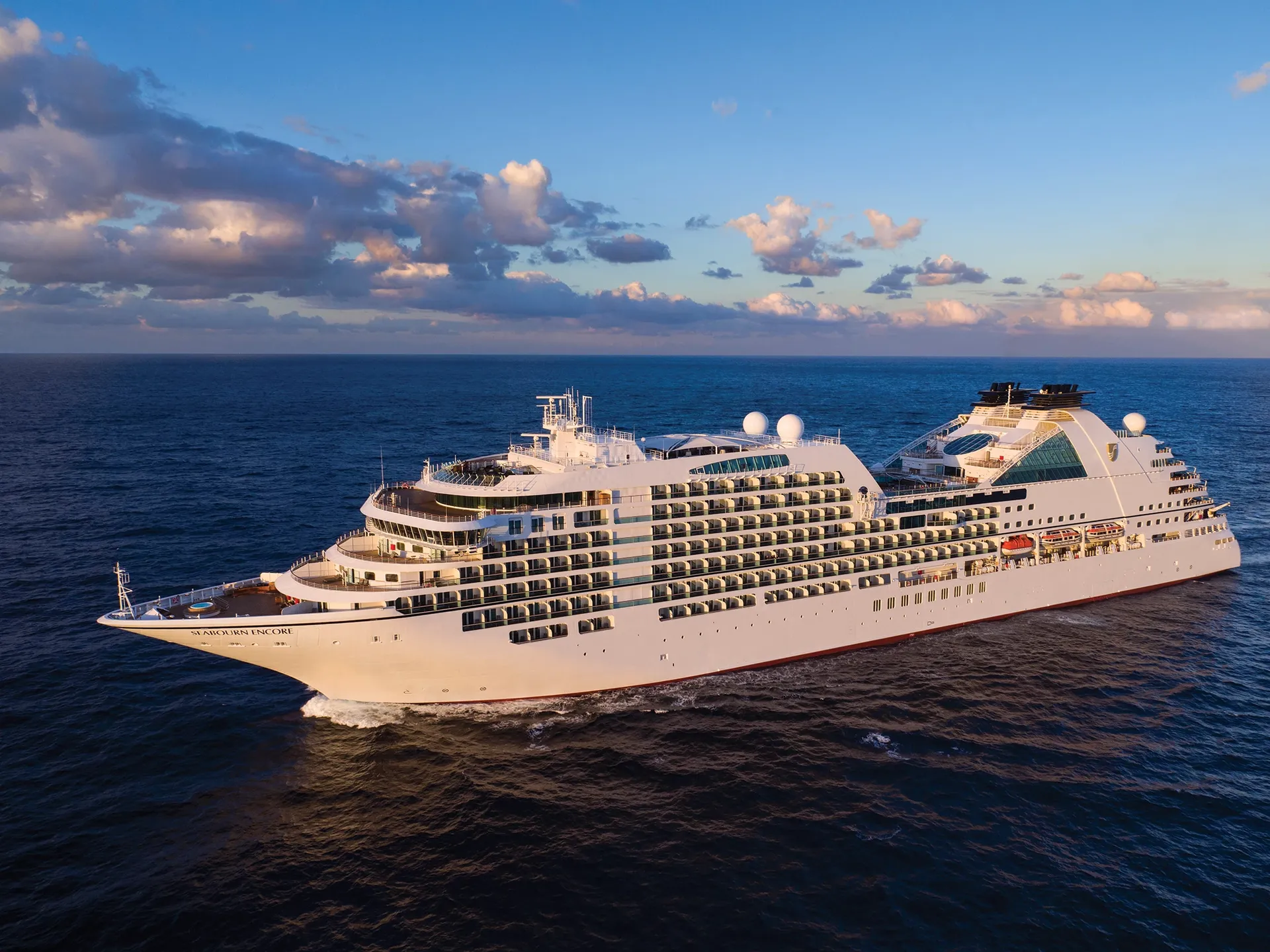


Seabourn
2016
—
40,350 GT
600
266
330
690 m
28 m
19 knots
No


Lights, sushi, manga! Sprawling, frenetic, and endlessly fascinating, Japan’s capital is a city of contrasts. Shrines and gardens are pockets of calm between famously crowded streets and soaring office buildings. Mom-and-pop noodle houses share street space with Western-style chain restaurants and exquisite fine dining. Shopping yields lovely folk arts as well as the newest electronics. And nightlife kicks off with karaoke or sake and continues with techno clubs and more. Whether you seek the traditional or the cutting edge, Tokyo will provide it.

An MSC cruise will take you to Kochi, situated in the prefecture of the same name, on the island of Shikoku. You can visit Kochi castle on an excursion; it is one of the twelve Japanese castles to have survived fires, wars and other catastrophes of the post-feudal age. It was built between 1601 and 1611. What you can see of the building today however, dates back to 1748, the year in which the castle was rebuilt after a fire. Curiosity: its main tower was not used only for military purposes, but it was also the residence of noble families. Quite unusual, since the nobility would usually reside in other parts of the castle. The wooden interior is typical of the traditional style of the Edo period. Near Kochi harbour is the picturesque beach of Katsurahama. In the local restaurants you can eat Katsuo, a type of tuna which is typical to Japanese waters, cut into slices and lightly grilled on straw fuelled fire which gives it a slightly smoky flavour. Seventy kilometres from Kochi there is an unusual tourist attraction, the ancient Kazurabashi Bridge, 45 meters wide and 2 metres wide, it stretches 14 metres above the waters of the river Iya. Today, the bridge – which is made from Actinidia arguta wood, a kind of vine similar to a kiwi plant – is reinforced with steel wires. It should not be missed for the surrounding landscape and the brief but thrilling walk it offers. Closer to Kochi is the wonderful Oboke gorge: we cross the river Yoshino on a boat and marvel at how over hundreds of millions of years the river has eroded the rocks of the Shikoku mountains shaping the stone into bizarre shapes.
With stunning countryside and quite indescribable vistas, Hososhima welcomes its visitors with jagged coastlines and traditional charms. Gloss over the industrial port – Hososhima having only recently been opened as a tourist spot – and you will find some of the region’s most spectacular landscapes. Undoubtedly the most striking of these can be found at the Takachicho Gorge. A gentle drive with excellent views of active volcano Mount Aso takes you to the sheer cliffs, aquamarine waters and the thundering 56-foot waterfall of the gorge proper. For a fully immersive experience, do not hesitate to descend the (easy to negotiate) steps to the bottom and hire a rowing boat, before indulging in a bowl of udon noodles from one of the local restaurants. Further afield yet still less than five kilometres away from Hososhima lies Hyuga, a small town that boasts some of the most beautiful Mimitsu townhouses outside of Kyoto and Osaka. Described by one enthusiastic visitor as being like “time travel – we feel like we have stepped back at least two centuries”, this exemplary area in the city has been designated a national important preservation district for groups of traditional buildings, and much of the 19th-century atmosphere, including traditional buildings, earthen walls, and stone pavements, remains.


One of Japan's most southerly major cities, Kagoshima is dominated by the imposing Sakurajima volcano's cone – a legendary active volcano that broods, churns and puffs out ash nearby. A pretty old-time ferry chugs across the still waters to the gently sloping foothills of the volcano's cone, and it's easy to imagine where the comparisons with its sister city Naples materialised, as you sail the glorious sweeping Kinko Bay, below beaming sunshine, towards the immense volcanic spectacle. View less This is certainly no historic relic, and the volcano remains revered and feared, with the most dramatic recent eruption taking place in 1914, and spewing out a new bridge of land into the sea. Make the most of the geothermal activity in the area by indulging in a stress-simmering black sand bath. Incredibly relaxing, you'll be submerged in the warm sand, as you feel your muscles relaxing in the heat, and rejuvenating blood pumping around your body. Enjoy a privileged view of the iconic volcano's loom from the terraced garden of Senganen Garden. Built in 1658, this elegant, traditional garden has belonged to the Shimadzu family for 350 years. Wander the gardens - which bloom with Japan's renowned cherry tree blossoms and feature tiny bridges looping over ponds and rock pools - before sitting back and sipping a wholesome green matcha latte. Elsewhere, museums offer Feudal Era and Satsuma Province history, as well as insights into the Kamikaze squadrons of World War II. Lake Ikeda is also close by, so be sure to keep an eye out for the legendary Issie monster.


In Japan’s third-largest island – Kyushu – an MSC cruise will help you discover the city of Nagasaki. Gathered in the tucks and crevices of steep hills rising from a long, narrow harbour, and spreading its tentacles along several tributary valleys, Nagasaki is one of Japan’s more picturesque cities, and one of the most popular with international visitors. This appeal is furthered by an easy-going attitude and an unusually cosmopolitan culture, resulting from over two centuries of contact with foreigners when the rest of Japan was all but closed to the world. On an excursion you can visit GloverGarden, as well as offering some of Nagasaki’s best views, it features seven late nineteenth-century, European-style buildings, each typically colonial with wide verandas, louvred shutters and high-ceilinged, spacious rooms. The houses also contain odds and ends of furniture and evocative photos of the pioneering inhabitants they once housed. The best approach is to take the“SkyRoad”up to the garden’s upper entrance and work down. Glover’s house, the oldest Western-style building in Japan, is worth a look around, as are those formerly belonging to Frederick Ringer, founder of the Nagasaki Press, and tea merchant William Alt. The exit from Glover Garden takes you through the Museum of Traditional Performing Arts, which displays the beautifully fashioned floats and other paraphernalia used during the Kunchi festivities. Nagasaki is not short of good viewpoints, but none can compare with the spectacular panorama from Inasa-yama, a 333m-high hill to the west of the city. A ropeway, or cable-car, whisks you up there in just five minutes. From the top, you get stunning views of the contorted local coastline, as well as the confetti of nearby islands and islets.


"A tapestry of kaleidoscopic colours, intense seafood flavours, and urban beach bliss, Busan rolls across a glorious natural setting on the Korean Peninsula's south-east. One of the largest and busiest ports in the world, 3.5 million people call South Korea's second city home, and the amiable locals help to lend the city its quirky, offbeat outlook. A spacious, playful and cosmopolitan place, Busan is a lively, liveable city, cradled by lush mountains and endless ocean scenery. Haedong Yonggung Temple nestles on a dramatic cliffside, just above the crumbling rocks and crashing waves of the East Sea. Dating back to 1376, the temple's multi-storey pagoda is adorned with lions - each representing a different emotion. Elsewhere, lanterns glitter in the night sky around Mount Geumjeongsan, freshly released from the beautiful Beomeosa Temple, which was established in AD 678. The hillside shantytown of Gamcheon Culture Village has completed an improbable transformation, blossoming from a sea of makeshift homes for Korean war refugees, into a colourful explosion of creativity and curiosity. Local artists have been let loose to create interactive installations, and the entire area is now an expansive canvas for expression. Lose yourself among vibrant alleyways of flamingo-pink, lemon-yellow and baby-blue painted facades in this unique area. Sample bibimbap, fiery-hot beef and rice, from street food vendors, before relaxing on one of South Korea's best beaches - Haeundae's banana bend of sand. Metallic skyscrapers offer an unusual backdrop to this pristine expanse of golden powder and are mirrored by elaborate sandcastles and sculptures during the annual sand festival - when spontaneous water fights and firework displays also take place. Gwangalli beach is another urban option, laying out spectacular views of the reaching Gwangan Bridge - the country's second largest bridge. At night, 16,000 bulbs bathe this engineering marvel in colour."

Kyushu’s largest city, Fukuoka is one of the most likeable places in Japan – indeed, despite the fact that it’s not exactly a household name abroad, it regularly pops up on global best-places-to-live lists. While it boasts few actual sights, there’s a certain Kyushu-style joie de vivre here, best exemplified at the umpteen rustic street-side yatai, where locals slurp happily away on their ramen while knocking back beer, sake or whatever takes their fancy. Until recently, the city was an industrial nonentity, notable only for its transport connections to Korea and the rest of the island, but its renaissance has been remarkable. When you are cruising the Pacific Ocean with MSC Cruises you’ll find that Fukuoka is a squeaky-clean metropolis; it deserves a day of any cruiser’s time. Highlights here include one or two excellent museums and ranks of eye-catching modern architecture – most notable in the latter category are Canal City, a self-contained cinema, hotel and shopping complex built around a semi-circular strip of water, and Hawks Town, which forms part of a major seafront redevelopment incorporating venues for shopping, eating and entertainment. If you feel like something more educational during your MSC Grand Voyages cruise, head for Fukuoka renowned festivals and folk crafts, which are presented at Hakata Machiya Folk Museum. As with any self-respecting Japanese city of this size, Fukuoka maintains a lively entertainment district, in this case crammed onto the tiny island of Nakasu, though it’s safer on the wallet to head for the less glitzy bars and restaurants of Tenjin, the city’s main downtown area. There are also a couple of excellent sights just south of Fukuoka: the ancient temple town of Dazaifu, once the seat of government for all of southern Japan, but now a pleasant backwater best known for its collection of temples and shrines; and the healing waters of nearby Futsukaichi Onsen.

Kyushu’s largest city, Fukuoka is one of the most likeable places in Japan – indeed, despite the fact that it’s not exactly a household name abroad, it regularly pops up on global best-places-to-live lists. While it boasts few actual sights, there’s a certain Kyushu-style joie de vivre here, best exemplified at the umpteen rustic street-side yatai, where locals slurp happily away on their ramen while knocking back beer, sake or whatever takes their fancy. Until recently, the city was an industrial nonentity, notable only for its transport connections to Korea and the rest of the island, but its renaissance has been remarkable. When you are cruising the Pacific Ocean with MSC Cruises you’ll find that Fukuoka is a squeaky-clean metropolis; it deserves a day of any cruiser’s time. Highlights here include one or two excellent museums and ranks of eye-catching modern architecture – most notable in the latter category are Canal City, a self-contained cinema, hotel and shopping complex built around a semi-circular strip of water, and Hawks Town, which forms part of a major seafront redevelopment incorporating venues for shopping, eating and entertainment. If you feel like something more educational during your MSC Grand Voyages cruise, head for Fukuoka renowned festivals and folk crafts, which are presented at Hakata Machiya Folk Museum. As with any self-respecting Japanese city of this size, Fukuoka maintains a lively entertainment district, in this case crammed onto the tiny island of Nakasu, though it’s safer on the wallet to head for the less glitzy bars and restaurants of Tenjin, the city’s main downtown area. There are also a couple of excellent sights just south of Fukuoka: the ancient temple town of Dazaifu, once the seat of government for all of southern Japan, but now a pleasant backwater best known for its collection of temples and shrines; and the healing waters of nearby Futsukaichi Onsen.


Hiroshima means “wide island” in Japanese. The city was established in the 16th Century on Japan’s largest island, Honshu, and grew into an important shipping center and prefecture capital, boasting a fine castle. Although it was an important city in Japan throughout the imperial period, its reputation in the greater world was burned into history when it became to target of the first atomic bombing of a civilian target in August of 1945. The United States airplane Enola Gay dropped a nuclear device nicknamed “Little Boy” on the city that morning, obliterating everything within a two-kilometer radius and directly killing 80,000 people. Approximately 70 percent of Hiroshima’s buildings were destroyed. Within a year, injury and radiation illness had killed an additional 90, 000 to 116,000 citizens. The attacks on Hiroshima and nearby Nagasaki quickly led to the surrender of Japan and effectively precipitated the end of World War II in Asia. Within a few years, Hiroshima had begun to rebuild, and the city became the focus of an international movement to eliminate nuclear weapons from future wars. Relics of its past such as the impressive Hiroshima Castle and the tranquil Shukkeien Garden were rebuilt, and the city undertook the construction of a Memorial Peace Park, which today attracts visitors from around the world. The park, which holds a museum and a memorial “Atomic Dome” constructed on the closest remaining building to the blast site, is a moving and impactful place of pilgrimage in this re-born City of Peace. One notable feature is a colorful memorial to Sadako Sasaki, a young woman whose dying wishes for world peace were recounted in the story A Thousand Paper Cranes.


Japan’s third-biggest city has thrown off its shackles and stepped out of the shadows to light up the sky with glaring neon signs and a larger than life outlook. Giant octopuses cling to buildings and bustling restaurants pack in the crowds in this great and garish place, which is Japan at its most friendly, extroverted and flavourful. So dive in headfirst to experience an all-out sensory assault of delicious food, shopping cathedrals and glittering temples. View less Dotombori Bridge bathes in the multicoloured, jewel-like lights of signage-plastered buildings, and the neon lights dance on the canal's waters below. Osaka is known as the nation's kitchen, and the Kuromon Ichiba Market has served as the city's spot to tuck in for almost 200 years. Full of street food stalls - try pufferfish, savoury Okonomiyaki pancakes, or ginger and onion flavoured octopus, among the endless feast of exotic flavours. Osaka Castle is another of the city’s landmarks, built in the 16th century by Toyotomi Hideyoshi. A modern museum now waits inside, where you can learn about the country's history, and why this castle is a symbol of Japanese unity. Be sure to take the elevator up to the observation deck for a panoramic view of Osaka's spread. A colourful park encloses the castle and blooms with an ocean of pale pink cherry blossom during the season - the elegant black tiers rising from the pink haze below is one of Osaka's most alluring visions. Kyoto’s peaceful cultural treasures and temples are also just a short jaunt away on Japan’s sleek trains, should you wish to explore further afield.


Japan’s third-biggest city has thrown off its shackles and stepped out of the shadows to light up the sky with glaring neon signs and a larger than life outlook. Giant octopuses cling to buildings and bustling restaurants pack in the crowds in this great and garish place, which is Japan at its most friendly, extroverted and flavourful. So dive in headfirst to experience an all-out sensory assault of delicious food, shopping cathedrals and glittering temples. View less Dotombori Bridge bathes in the multicoloured, jewel-like lights of signage-plastered buildings, and the neon lights dance on the canal's waters below. Osaka is known as the nation's kitchen, and the Kuromon Ichiba Market has served as the city's spot to tuck in for almost 200 years. Full of street food stalls - try pufferfish, savoury Okonomiyaki pancakes, or ginger and onion flavoured octopus, among the endless feast of exotic flavours. Osaka Castle is another of the city’s landmarks, built in the 16th century by Toyotomi Hideyoshi. A modern museum now waits inside, where you can learn about the country's history, and why this castle is a symbol of Japanese unity. Be sure to take the elevator up to the observation deck for a panoramic view of Osaka's spread. A colourful park encloses the castle and blooms with an ocean of pale pink cherry blossom during the season - the elegant black tiers rising from the pink haze below is one of Osaka's most alluring visions. Kyoto’s peaceful cultural treasures and temples are also just a short jaunt away on Japan’s sleek trains, should you wish to explore further afield.

Feel your heart thumping, at your first sight of Japan’s most heavenly vision - Mount Fuji’s cone emerging through the haze. With its summit dipped in pure white snow, the iconic volcano’s cone is one of the most famous natural landmarks in the world - and a picturesque backdrop for Shimizu. View less Come ashore to this serene vision of beauty – and whether you head straight for the siren-call of the volcano’s slopes, or the sanctuary of gorgeous, heritage-rich shrines, and tranquil tea plantations - spine-tingling views of Japan’s most tallest mountain are never far away. A perfectly symmetrical spectacle, visible for miles around, Mount Fuji is an adored national symbol of Japan. Travel closer to its slopes to soak in some of the country’s finest panoramas. Or take in the views with a dash of local culture, at the Fujisan Hongu Sengen Shrine – an elegant shrine, that stands in thrall to the salt and pepper volcano close by. The Shiraito Waterfall World Heritage Site flows just beneath the volcano – visit to see the gloriously wide curtain of water gushing through the thick vegetation. Visit Kunozan Toshogu Shrine for another perspective, or to soak up the tranquil site before swinging above on a scenic ropeway. Located on the adjacent Mount Kuno – privileged views of the mountain and Suruga Bay will unroll before you. Nihondaira Plateau is another option, where you can soak in panoramic views of the bay and Mount Fuji dominating behind. However you choose to experience it, Shimizu welcomes you into the heart of Japan, to absorb the mesmerising panoramas of the country’s most famous sight.


Lights, sushi, manga! Sprawling, frenetic, and endlessly fascinating, Japan’s capital is a city of contrasts. Shrines and gardens are pockets of calm between famously crowded streets and soaring office buildings. Mom-and-pop noodle houses share street space with Western-style chain restaurants and exquisite fine dining. Shopping yields lovely folk arts as well as the newest electronics. And nightlife kicks off with karaoke or sake and continues with techno clubs and more. Whether you seek the traditional or the cutting edge, Tokyo will provide it.

The lantern-lit hot springs of Beppu, known for its eight scorching “Hells”, is a town that’s prettier than a picture. The town is found in a particularly volcanically active part of Japan (hence the abundance of hot springs, or in Japanese, onsens). The viewing pools have evocative names; think Sea Hell, Blood Pond Hell and Tornado Hell. While the names might seem a little off putting, the reality is stunning; sulphur laced air and vast spectrums of blues and reds, depending on the mineralisation of the earth. As if the gorgeous palette of colours at the onsen was not enough, Beppu is also world famous for its Sakura, or cherry blossom season. More than 2,000 cherry trees near the base of the ropeway to Mount Tsurumi make for one of Beppu’s most impressive hanami (flower viewing) spots. If not lucky enough to be in the area during Sakura, from May to June rhododendrons colour the mountain. The view from this 1,375m mountain is beyond impressive, allowing you to see all the way to the Kuju Mountains, Chugoku and Shikoku. If brave enough to climb all the way to the top, the stone Buddhas that were carved into the mountainside during the Heian Period (794-1185) are a worthy reward! As with much of Japan, duality is ever present. Modernity sits very comfortably by ancient buildings. While Beppu’s biggest pull is by far the hot springs and the thermal baths, nearby (10 km) Yufuin has a wealth of art museums, cafes and boutiques, catering to trend setters and urbanites alike.


"A tapestry of kaleidoscopic colours, intense seafood flavours, and urban beach bliss, Busan rolls across a glorious natural setting on the Korean Peninsula's south-east. One of the largest and busiest ports in the world, 3.5 million people call South Korea's second city home, and the amiable locals help to lend the city its quirky, offbeat outlook. A spacious, playful and cosmopolitan place, Busan is a lively, liveable city, cradled by lush mountains and endless ocean scenery. Haedong Yonggung Temple nestles on a dramatic cliffside, just above the crumbling rocks and crashing waves of the East Sea. Dating back to 1376, the temple's multi-storey pagoda is adorned with lions - each representing a different emotion. Elsewhere, lanterns glitter in the night sky around Mount Geumjeongsan, freshly released from the beautiful Beomeosa Temple, which was established in AD 678. The hillside shantytown of Gamcheon Culture Village has completed an improbable transformation, blossoming from a sea of makeshift homes for Korean war refugees, into a colourful explosion of creativity and curiosity. Local artists have been let loose to create interactive installations, and the entire area is now an expansive canvas for expression. Lose yourself among vibrant alleyways of flamingo-pink, lemon-yellow and baby-blue painted facades in this unique area. Sample bibimbap, fiery-hot beef and rice, from street food vendors, before relaxing on one of South Korea's best beaches - Haeundae's banana bend of sand. Metallic skyscrapers offer an unusual backdrop to this pristine expanse of golden powder and are mirrored by elaborate sandcastles and sculptures during the annual sand festival - when spontaneous water fights and firework displays also take place. Gwangalli beach is another urban option, laying out spectacular views of the reaching Gwangan Bridge - the country's second largest bridge. At night, 16,000 bulbs bathe this engineering marvel in colour."

Wedged between sea, sky and mountains, this small fishing port has been esteemed for centuries for its superb seafood. Here, the Sea of Japan yields up both crab and hon-maguro, the prized Bluefin tuna esteemed by gourmets around the world. Sakaiminato is also your gateway to a very ancient region of Honshu. West of the city lies Izumo-taisha, one of the oldest and holiest shrines in Shinto. This area is dotted with burial mounds from Japan's Bronze Age. The town of Matsue boasts the celebrated "Black Castle," a six-story, black-walled castle that home to a clan of the mighty Tokugawa dynasty that ruled Japan for over 250 years. And to the east rises the great snow-capped summit of Mt. Daisen, considered one of the four most scenic mountains in all Japan.
Maizuru is a city in south-central Japan. The Goro Sky Tower has panoramic views over the islands of Maizuru Bay. Maizuru Park contains the ruins of Tanabe Castle, and is known for spring cherry blossoms. East, Brick Park is a group of Meiji-era warehouses, now home to the World Brick Museum. Kongō-in Temple is known for its ornate pagoda and fall colors. On the north coast, Ryuguhama Beach faces the sea.

One of Japan’s best-preserved cities, Kanazawa escaped war damage and natural disasters to reward visitors with a wealth of architecture as an important clan castle town from the mid-17th century until the middle of the 19th. The mighty Kanazawa Castle did not survive intact, but its famous Ishikawa Gate, the Sunjikken Longhouse and lavish Kenrokuen Garden hint at the grandeur. Of special note are the surviving Higashi Geisha District and Samurai District streets. The Temple area holds the Myoryuji Temple with its hidden passages and secret doors giving it the nickname the Ninja Temple. The Oyamajinja Shrine is a later addition, its three-story gate with impressive stained glass windows reveal a Dutch influence. Museums worth exploring include the Kanazawa Yasue Gold Leaf Museum, with examples of the arts and crafts using the pure gold decoration for which the region is famous. Another museum celebrates the Buddhist philosopher D. T. Suzuki, credited with introducing Zen philosophy to the West, and a striking 21st Century Museum of Contemporary Art. Nearby Mt. Utatsu is renowned for its Three Shrines. VIEW CRUISES

One of Japan’s best-preserved cities, Kanazawa escaped war damage and natural disasters to reward visitors with a wealth of architecture as an important clan castle town from the mid-17th century until the middle of the 19th. The mighty Kanazawa Castle did not survive intact, but its famous Ishikawa Gate, the Sunjikken Longhouse and lavish Kenrokuen Garden hint at the grandeur. Of special note are the surviving Higashi Geisha District and Samurai District streets. The Temple area holds the Myoryuji Temple with its hidden passages and secret doors giving it the nickname the Ninja Temple. The Oyamajinja Shrine is a later addition, its three-story gate with impressive stained glass windows reveal a Dutch influence. Museums worth exploring include the Kanazawa Yasue Gold Leaf Museum, with examples of the arts and crafts using the pure gold decoration for which the region is famous. Another museum celebrates the Buddhist philosopher D. T. Suzuki, credited with introducing Zen philosophy to the West, and a striking 21st Century Museum of Contemporary Art. Nearby Mt. Utatsu is renowned for its Three Shrines. VIEW CRUISES


A sophisticated sake capital, Niigata is an intoxicating, creative place of Japanese traditions and flavours. Learn of the many crafts and creativities that are practised here, from kite-making to alcohol fermentation and ceramic work, and immerse yourself in the beautiful coastline and waterfall-laced mountains of Niigata prefecture. The city evolves with each season, taking on a new appearance - whether it's the thick layers of snow during winter, or the cherry blossoms of spring. View less Look out for the gorgeous curved black roof tiers of Shibata Castle, rising from a picturesque bed of pale-pink flowers. Sitting overlooking the Sea of Japan, out towards the intrigues of Sado Island, where the rare Toki bird - with its scythe-like beak - lives protected. This busy port city is famous for the high-quality and pure taste of its rice. As a result, sake produced here is among Japan's finest, and distilleries will teach you the artistry behind its creation, and to appreciate the subtle flavours. Pia Bandai market is a bustling place to take a stroll and sip a morning coffee. Japan’s first public park, Hakusan Park was built in 1873 and is perfect for whiling away an afternoon, among drifting lotus flowers and swaying trees. Appreciate a magical tea ceremony in the Edo-era Shimizu-en Gardens, or savour the tranquillity of the peaceful Hakusan Shrine - dedicated to the god of marriage.


Say the word Akita and you would be forgiven for thinking immediately of the lovable dog of the same name. But in fact, visitors to Akita will be treated not to a friendly furry face, rather to a beautiful city located on the northern tip of the island, around 500 km north of Tokyo. Lucky visitors will arrive in time for the superb sakura (cherry blossom), and surely there can be no sight more lovely than the elegant dip of the cherry trees alongside ancient Samurai residences. Akita is also home to a 2km tunnel of blossoming trees that run along the banks of the Hinokinai River, which is said to “bring a grown man to his knees and weep at its beauty”. If to you, Japan is synonymous with peace and serenity, then a trip to one of the onsens is a superb bucket list experience. Buses and taxis are easily available in the centre of town that will take you to Mizusawa, Oyu and Oyasukyo hot springs, some of the loveliest onsens in the country. Some of the superb sights in Akita are: Senshu Park, on the former site of Kubota Castle, the elegant red-brick folk Museum (housing works by block printer Katsuhira Tokushi (1907-1971) and metalwork by Sekiya Shiro (1907-1994) and the Old Kaneko Family Home. The Akita Museum of Art opened in 2012 and is home to the largest canvas painting in the world, Events of Atika, by Foujita (1886-1968). The painting measures a staggering 3.65 x 20.5 m (12 x 67 ft). The Museum also has many works by European masters such as Goya, Rubens, Rembrandt and Picasso.

From fiery festivals to spectacular mountain scenery, soaring temples to castles surrounded by cherry blossom blooms, Aomori is one of Japan’s most enchanting destinations. Framed by dark peaks clad with dense forestry, the city enjoys a picturesque location on Japan’s main island Honshu. While there are gorgeous pink tinted parks, tiered castles and towering Buddha statues to explore, the Aomori Prefecture’s capital is perhaps best known for the summer festival of fire that lights it up each year. Lavish illuminated floats fill the streets during Nebuta Matsuri festival, as dancing locals wave flickering lanterns through the night sky - and drummers pound out pulsating rhythms. Nebuta Matsuri has a euphoric and energetic atmosphere which makes it stand out as an unmissable experience compared with some of Japan’s more restrained festivals. At other times of the year, places like the stunning Hirosaki Castle bloom with rose-pink cherry blossom, as spring’s sunshine clears away winter’s plentiful snowfall. The castle’s moat, glowing with the pale hue of fallen blossom, is a truly mesmerising sight to behold. Don’t worry if you’re too late though, you might be able to catch the pink-flush of the apple blossom - which comes slightly later. Extraordinary prehistoric Jomon period history is waiting to be unearthed at the living archaeological site, Sannai-Maruyama Ruins. Or, the untouched wilderness of UNESCO World Heritage Site Shirakami Sanchi is within reach. This sprawling mass of beech trees covers a third of the Shirakami mountain range, and the dense forestry once blanketed the majority of northern Japan’s land. Visit to scratch the surface of this untamed landscape’s beauty and see sprawling waterfalls cascading down mountainsides, in a beautiful off-bounds landscape, where black bears roam freely.


Facing out on two bays, Hakodate is a 19th-century port town, with clapboard buildings on sloping streets, a dockside tourist zone, streetcars, and fresh fish on every menu. In the downtown historic quarter, a mountain rises 1,100 feet above the city on the southern point of the narrow peninsula. Russians, Americans, Chinese, and Europeans have all left their mark; this was one of the first three Japanese ports the Meiji government opened up to international trade in 1859. The main sights around the foot of Mt. Hakodate can be done in a day, but the city is best appreciated with an overnight stay for the illumination in the historic area, the night views from either the mountain or the fort tower, and the fish market at dawn. City transport is easy to navigate and English information is readily available. Evening departure trains from Tokyo arrive here at dawn—perfect for fish-market breakfasts.


Lights, sushi, manga! Sprawling, frenetic, and endlessly fascinating, Japan’s capital is a city of contrasts. Shrines and gardens are pockets of calm between famously crowded streets and soaring office buildings. Mom-and-pop noodle houses share street space with Western-style chain restaurants and exquisite fine dining. Shopping yields lovely folk arts as well as the newest electronics. And nightlife kicks off with karaoke or sake and continues with techno clubs and more. Whether you seek the traditional or the cutting edge, Tokyo will provide it.

Hitachinaka is a city located in Ibaraki Prefecture, Japan. As of 1 July 2020, the city had an estimated population of 154,663 in 64,900 households and a population density of 1547 persons per km². The percentage of the population aged over 65 was 26.1%. The total area of the city is 99.96 square kilometres.

Ishinomaki is a city on Japan’s Honshu mainland. Housed in a striking spaceship-shaped building, the Mangattan Museum is dedicated to the work of manga artist Shotaro Ishinomori. Along the coast, San Juan Bautista is a replica of a 17th-century Japanese galleon. Offshore, Kinkasan Island is home to wild deer and the 8th-century Koganeyama-jinja Shrine. Trails lead to the island’s summit for panoramic city views.

A pretty prefecture located on the northeastern coast of Honshu, Japan's main island, Miyako, Iwate, is situated along the Pacific coast surrounded by stunning scenery of Sanriku Fukko National Park and a sandy coastline defined by dramatic rock formations carved by the pounding surf. This iconic landscape invokes images of the 'Pure Land,' a Buddhist concept of paradise, and is best appreciated from the deck of a cruise boat on the waters of Jodogahama. The city's natural wonders are woven within its cultural highlights, and a visit to Kamaishi Daikannon Statue, a towering statue of the Buddhist 'Goddess of Mercy,' showcases sparkling Kamaishi Bay, while the historic Rokando Cave, is home to "the waterfall of the heavenly cave," an underground cascade. No visit to Miyako's shores would be complete without paying reverence to the tragedy that occurred on March 11, 2011, when a powerful earthquake triggered a devastating 17-meterhigh tsunami. The Taro Kanko Hotel Tsunami Remains is a testament to the power of the community's resiliency and serves as commemorative site, an important destination for those lucky enough to visit the island as it blooms with renewal.


Facing out on two bays, Hakodate is a 19th-century port town, with clapboard buildings on sloping streets, a dockside tourist zone, streetcars, and fresh fish on every menu. In the downtown historic quarter, a mountain rises 1,100 feet above the city on the southern point of the narrow peninsula. Russians, Americans, Chinese, and Europeans have all left their mark; this was one of the first three Japanese ports the Meiji government opened up to international trade in 1859. The main sights around the foot of Mt. Hakodate can be done in a day, but the city is best appreciated with an overnight stay for the illumination in the historic area, the night views from either the mountain or the fort tower, and the fish market at dawn. City transport is easy to navigate and English information is readily available. Evening departure trains from Tokyo arrive here at dawn—perfect for fish-market breakfasts.

Blessed by a protective range of mountains and a relatively warm ocean current, Kushiro gets less than a third of the winter snow of its Hokkaido neighbor Sapporo, and twice as much sunshine as the nearby Kuril Islands. Thus it is an important reliably ice-free port during the winter. Like all of Japan, it is riddled with semi-active geothermal features and occasionally rattled by tremors. Scenic Lake Akan is ringed by hot springs. It also has an Ainu Koten museum with a replica village and folklore performances of the indigenous Hokkaido people. The Japanese Crane Reserve is a good place to see breeding populations of these large and graceful birds, so respected by the Japanese. The city encompasses Japan’s largest wetland, and the Kushiro City Marsh Observatory has a boardwalk to see it, as well as the Fureai Horse Park which offers equestrian tours into the forest.

If tiny islands that resonate with peace and tranquillity are your idea of travel heaven, then welcome to Iona. Almost 200 miles east of Edinburgh, set in Scotland’s Inner Hebrides, this magical island has a spiritual reputation that precedes it. And luckily, more than lives up to. The island is miniscule. Just three miles long and only one and a half miles wide, this is not a place that hums with urban attractions. View less 120 people call Iona home (this number rises significantly if the gull, tern and Kittiwake population is added), although residential numbers do go up (to a whopping 175) in summer. The beautiful coastline is lapped by the gulf stream and gives the island a warm climate with sandy beaches that look more Mediterranean than Scottish! Add to that a green field landscape that is just beautiful, and you’ll find that Iona is a place that stays with you long after you leave. Iona’s main attraction is of course its abbey. Built in 563 by Saint Columbia and his monks, the abbey is the reason why Iona is called the cradle of Christianity. Not only is the abbey (today an ecumenical church) one of the best – if not the best – example of ecclesiastical architecture dating from the Middle Ages, but it also serves as an important site of spiritual pilgrimage. St. Martin’s Cross, a 9th century Celtic cross that stands outside the abbey, is considered as the finest example of Celtic crosses in the British Isles. Rèilig Odhrain, or the cemetery, allegedly contains the remains of many Scottish kings.


The domain of grizzlies, brown and black bears, Kodiak Island is a raw, wild, and utterly authentic Alaskan wilderness. The Emerald Isle is the USA's second-largest island, and with a wilderness stretching out over 3,670 square miles, it's a thrilling voyage into the Alaskan unknown. The weather may get a little cloudy at times, but the locals actively welcome a covering of cloud – perhaps partly because the clouds and fog are said to have deterred Japanese attacks during World War II's hostilities. View less Be sure to bring your camera with you; it's nigh on impossible to take a bad photo of these irresistible vistas - and you'll quickly see why Kodiak Island is the destination of choice for wildlife documentary producers. Cinematic setpieces regularly play out, as eagles soar over expansive sweeps of fir-tree forested mountains and still lakes, releasing occasional piercing calls. Some of the animal kingdom's most feared and revered creatures call Kodiak Island home, and your first sight of a bear reaching a massive paw into the water, or treading through a gently burbling stream, will live with you forever. Soar in a seaplane to track the bears with an expert guide. Masters of disguise, it often takes a trained eye to spot the bears in their natural habitats. Brush up on the skills you'll need in advance, with a read of our bear watching blog. [Insert blog: 7 tips for bear watching in Alaska]. The waters of Kodiak Island are also home to some of the world's most productive fishing. Try out your own skills, or accompany a seafaring fishing vessel, to witness life on the waves first-hand, as they plunder the depths of the ocean.


Glacier Bay National Park and Preserve is an American national park located in Southeast Alaska west of Juneau. President Calvin Coolidge proclaimed the area around Glacier Bay a national monument under the Antiquities Act on February 25, 1925.


Glacier Bay National Park and Preserve is an American national park located in Southeast Alaska west of Juneau. President Calvin Coolidge proclaimed the area around Glacier Bay a national monument under the Antiquities Act on February 25, 1925.


Sitka began as a major Tlingit Indian village and was called “Shee Atika,” which translates roughly as “settlement on the outside of Shee.” “Shee” is the Tlingit name of Baranof Island. In 1799, Alexander Baranof, the general manager of the Russian American Company, decided to move his base of operations from Kodiak and set up camp at what is now called Old Sitka, 7.5 miles north of the present-day town. He called the settlement St. Archangel Michael. The Tlingit Indians of the area resisted the occupation and, in 1802, with Baranof away, burned the fort and massacred the Russian settlers. Two years later, Baranof returned and besieged the Indian fort. The Tlingits withdrew and the area was once again in Russian hands. This time, the Russians built the new city on a different site and called it New Archangel. For over six decades, New Archangel was the capital of the Russian empire in Alaska. By 1867, the Alaska colony had become too much of a financial burden to Russia. William Seward, U.S. Secretary of State, negotiated with the Russian Czar to purchase the Territory of Alaska for $7.2 million. The American press scoffed at Seward and the U.S. government for purchasing what they called “Seward's Folly,” “Seward's Icebox,” and “Walrussia.” On October 18, 1867, the Russian flag was lowered at New Archangel and the Stars and Stripes were raised over newly renamed Sitka. The name comes from the Tlingit word “Sheetkah,” which means “in this place.” All Russian citizens living in the former colony were given the opportunity to become American citizens. Many went home, although a few stayed or migrated to California. Sitka remained the capital of the Territory of Alaska from 1867 to 1906, when it was moved to Juneau. The move was a direct result of the gold rush. In plain terms, Sitka did not have any and Juneau did. After the Japanese attack on Pearl Harbor, Sitka became a full-scale naval base. At one time during the war, Sitka had a total population of 37,000. With the end of World War II, however, the city settled into a quieter existence. The biggest boom in modern days for Sitka came in 1959 when the Alaska Lumber and Pulp Company built a pulp mill at Silver Bay, near the city. Today, picturesque Sitka is known for its fishing and of course its many historic attractions.

Klawock is a city in Prince of Wales–Hyder Census Area, in the U.S. state of Alaska, on the west coast of Prince of Wales Island, on Klawock Inlet, across from Klawock Island. The population was 755 at the 2010 census, down from 854 in 2000.
Historic Prince Rupert captivates both mind and heart with its maritime history and awe-inspiring scenery. Located near the Alaska panhandle, Prince Rupert was established in 1910 as the intersection of commerce and trade for First Nations people and continued to develop as a town when selected as the western terminus for the Grand Turk Pacific Railway. Nestled within a temperate rainforest, it experiences 220 days of rain each year, earning it the poetic nickname "The City of Rainbows." But from within the raindrops, Prince Rupert shines with heritage charms best seen in its Kwinitsa Railway Station Museum, The Museum of Northern British Columbia and the historic North Pacific Cannery compound. Its stunning vistas captured in flight from the window of a seaplane adventure amaze travelers. Abundant wildlife can be observed on land at the Khutzeymateen Grizzly Bear Sanctuary. And seen from the deck of a wildlife cruise on the chilly waters, breeching humpback whales and soaring eagles inspire. Hike through the Butze Rainforest or the Exchamsiks River Provincial Park, then end the day with a stroll among the colorful gift shops stopping in a charming bistro to sample the freshest catch of the day.


Boasting mountains, sea, culture, art and so much more, many cities claim to have it all, but few can back it up like Vancouver. Famously livable, just visiting this highrise city - surrounded by staggering natural beauty - is a thrill. Offering all of the creature comforts of an ultra-modern, worldly metropolis - even downtown has a hint of mountain-freshness to its air - and part of Vancouver's appeal is how easily you can swap the skyscrapers for whale-filled oceans and mountain-punctured skies. View less Head up to the Vancouver Lookout Tower for the ultimate 360-degree views of the city glistening, amid the beautiful embrace of the beckoning wilderness beyond. But what to see first? Art lovers might choose the Vancouver Art Gallery or the Contemporary Art Gallery. Nature lovers might rush for the ferry to visit Vancouver Island - where they can encounter grizzly bears, whales and orcas. Culture vultures, on the other hand, will probably head for the sights and sounds of Canada's biggest Chinatown. From steaming dim sum for lunch to Chinese apothecaries offering herbs to soothe any illness, it’s all here thanks to the migrant workers of the 19th century. The one-of-a-kind treasure of Stanley Park brings wild wonder and natural beauty to this cosmopolitan city's doorstep, and the pine-tree clad park offers isolated trails and amazing views. Wander the Seawall that encircles it - a 20-mile coastal path, full of joggers, whizzing skaters and wandering couples. Grab a bike and cycle between Coal Harbour and Kitsilano Beach. You can top up your tan on the shore, as you soak in the glorious views of the mountains and cityscape from the sands.


Located on Deck 8; Combine mid-ship suites 849 and 851 for suite 8491 or suites 846 and 848 for suite 8468 for a total inside space of 1,292 square feet (120 square meters) plus two verandas totaling 244 square feet (23 square meters)
Grand Wintergarden Suites feature
Large windows
Dining for six
Glass-enclosed solarium with tub and day bed
Two bedrooms
Two bathrooms (one whirlpool)
Convertible sofa bed for one
Pantry with wet bar
Two flat-screen TVs
Complimentary Internet/Wi-Fi service


Located on Deck 7, 8, 9 and 10; total inside space of between 576 and 597 square feet (54 and 55 square meters) plus veranda of between 142 and 778 square feet (13 and 72 square meters).
Owner's Suites feature:
Expansive ocean views
Forward-facing windows
Dining for four to six
Bathroom with whirlpool bathtub
Guest bath
Pantry with wet bar
Two flat-screen TVs
Complimentary Internet/Wi-Fi service.


Penthouse Spa Suite
Located on Deck 11; total inside space of between 639 and 677 square feet (59 and 63 square meters) plus veranda of between 254 and 288 square feet (24 and 27 square meters)
All Penthouse Spa Suites feature
Dining table for two to four
Separate bedroom
Glass door to veranda
Two flat-screen TVs
Fully stocked bar
Spacious bathroom with tub, shower and large vanity


Located on Deck 10 and 11; total inside space of between 449 and 450 square feet (42 square meters) plus one veranda of between 93 and 103 square feet (9 and 10 square meters)
All Penthouse Suites feature:
Dining table for two to four
Separate bedroom
Glass door to veranda
Two flat-screen TVs
Fully stocked bar
Spacious bathroom with tub, shower and large vanity


Located on Deck 8; forward suites 800 and 801 inside space of approximately 977 square feet of inside space (90 square meters), plus one veranda of 960 square feet (89 square meters).
Signature Suites feature
Expansive ocean views
Forward-facing windows
Dining for four to six
Bathroom with whirlpool bathtub
Guest bath
Pantry with wet bar
Two flat-screen TVs
Complimentary Internet/Wi-Fi service


Located on Deck 8; mid-ship suites 846 and 849 inside space of 989 square feet (92 square meters) plus one veranda of 197 square feet (18 square meters)
Wintergarden Suites feature:
Large windows
Dining for six
Whirlpool bathtub
Guest bath
Convertible sofa bed for one
Pantry with wet bar
Glass-enclosed solarium with tub and day bed
Two closets
Two flat-screen TVs
Complimentary Internet/Wi-Fi service.


Single Veranda Suite Guarantee


Located on Deck 6, Deck 7, Deck 8, Deck 9, total inside space of between 246 and 302 square feet (23 and 28 square meters) plus one veranda of between 68 and 83 square feet (6 and 7 square meters)
All Veranda Suites feature
A full-length window.
Glass door to private veranda.
Comfortable living area.
Queen-size bed or two twin beds.
Dining table for two.
Walk-in closet.
Interactive flat-screen television with music and movies.
Fully stocked bar and refrigerator.
Makeup vanity.
Spacious bathroom with separate tub and shower.


VERANDA SUITE GUARANTEE
Our cruise specialists can help you find the perfect cabin and the best available pricing.
(+886) 02-2721-7300Contact Advisor