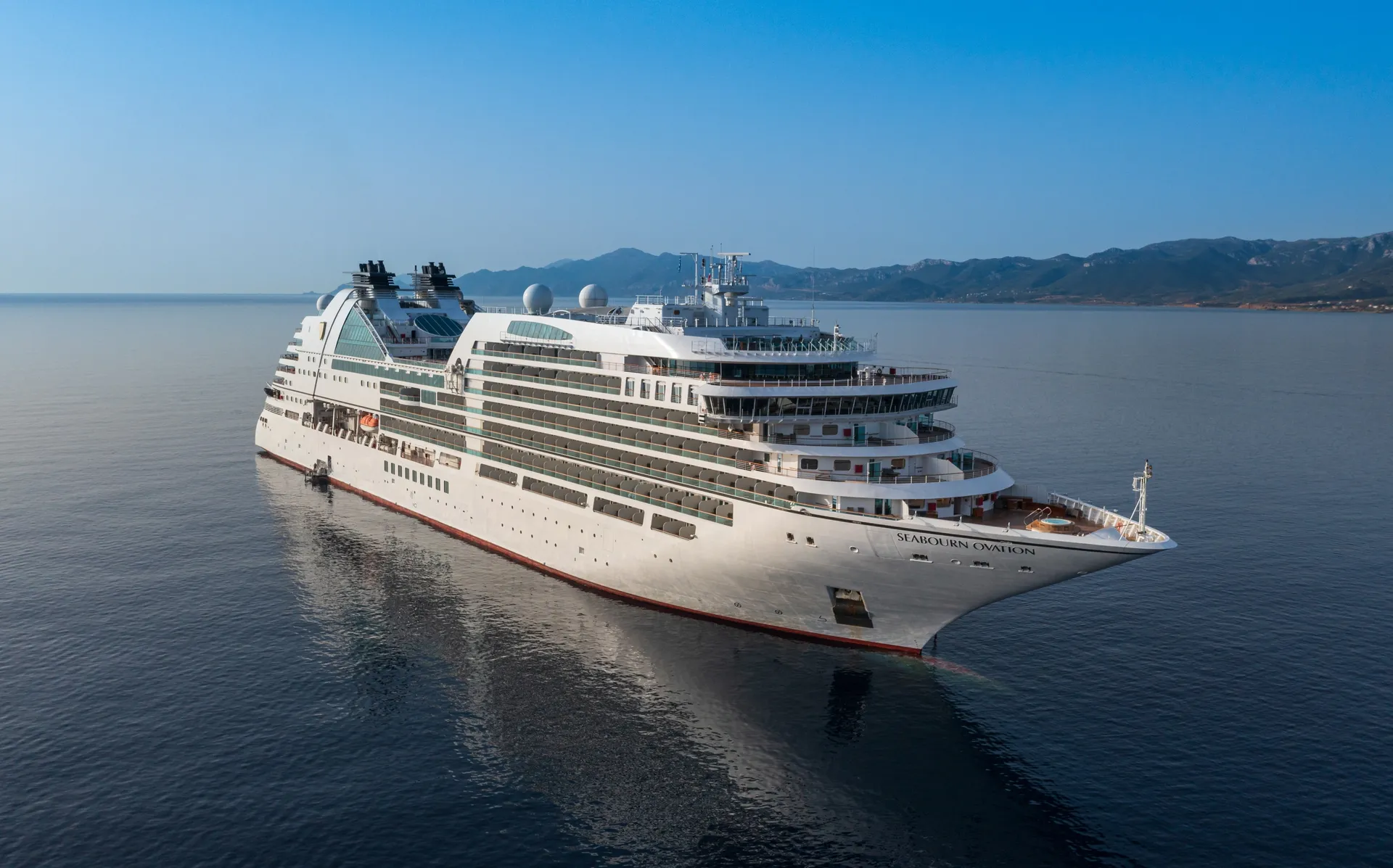
Date
September 25, 2026
Duration
12 nights
Departure Port
Montreal · Canada
Arrival Port
Montreal · Canada
Rating
Luxury
Theme
—


Seabourn
2017
—
40,350 GT
600
266
330
690 m
28 m
19 knots
No


Canada's most diverse metropolis, Montréal, is an island city that favors style and elegance over order or even prosperity, a city where past and present intrude on each other daily. In some ways it resembles Vienna—well past its peak of power and glory, perhaps, yet still vibrant and grand.But don't get the wrong idea. Montréal has always had a bit of an edge. During Prohibition, thirsty Americans headed north to the city on the St. Lawrence for booze, music, and a good time, and people still come for the same things. Summer festivals celebrate everything from comedy and French music and culture to beer and fireworks, and, of course, jazz. And on those rare weeks when there isn't a planned event, the party continues. Clubs and sidewalk cafés are abuzz from late afternoon to the early hours of the morning. And Montréal is a city that knows how to mix it up even when it's 20 below zero. Rue St-Denis is almost as lively on a Saturday night in January as it is in July, and the festival Montréal en Lumière, or Montréal Highlights, enlivens the dreary days of February with concerts, balls, and fine food.Montréal takes its name from Parc du Mont-Royal, a stubby plug of tree-covered igneous rock that rises 764 feet above the surrounding cityscape. Although its height is unimpressive, "the Mountain" forms one of Canada's finest urban parks, and views from the Chalet du Mont-Royal atop the hill provide an excellent orientation to the city's layout and major landmarks.Old Montréal is home to museums, the municipal government, and the magnificent Basilique Notre-Dame-de-Montréal within its network of narrow, cobblestone streets. Although Montréal's centre-ville, or Downtown, bustles like many other major cities on the surface, it's active below street level as well, in the so-called Underground City–-the underground levels of shopping malls and food courts connected by pedestrian tunnels and the city's subway system, or métro. Residential Plateau Mont-Royal and trendy neighborhoods are abuzz with restaurants, nightclubs, art galleries, and cafés. The greener areas of town are composed of the Parc du Mont-Royal and the Jardin Botanique.

"The otherworldly, limestone structures of the Mingan Archipelago await at Havre St. Pierre, Quebec's most northerly call. Perched on the northern shore of the mighty St Lawrence River's gaping jaws - and looking out across the vast stretch of water to the distant Anticosti Island - where white-tailed deer stalk dense forests - Havre St. Pierre is a feast of staggering scenery and diverse wildlife. View less The Mingan Archipelago's monolith treasures have been carefully, painstakingly sculpted by Mother Nature's hand - using ocean, wind and ice erosion to create towering rock outcrops, which stand improbably counterweighted and precariously balanced over the waters. Sail between the scattered array of islands and formations, and keep your eyes peeled - you may be joined by pods of friendly minke whales as you weave between skerries and rocky isles. Look out for eagles soaring overhead too, and the colourful puffins which nest on the sheer cliffs. Back at Havre St. Pierre, stroll isolated river beaches, and wander the wooden boardwalk to soak in panoramas of the world's largest estuary - which lures the world's mightiest animal, the blue whale, to feast in its krill-rich depths. A walk out to the quaint lighthouse which crowns the shore is a pleasant way to spend an afternoon, or you can take some time to learn a little more about the culture and traditions of the region's Inuit people."

Located at the most northerly tip of Newfoundland, L'Anse aux Meadows is nestled near the fishing village of St. Anthony. It is the site of the first European settlement in the New World, approximately 500 years before Columbus' arrival. Other Norse groups had relocated from their homelands to the New World. In 1961, explorer and writer Helge Instad discovered a group of large mounds in the countryside. These mounds were excavated revealing the remains of a Norse settlement. This site became L'Anse aux Meadows National Historic Park in 1977 and is noted on the UNESCO World Heritage List of important cultural properties. The site at L'Anse aux Meadows has been completely excavated allowing visitors to see the remains of the homes, a smithy, and various worksheds. The park's interpretive center displays Norse artifacts from the excavation which include iron rivets, a flywheel and the floorboard of a boat. Researchers still debate as to whether the site at L'Anse aux Meadows is Leif Eriksson's 'Vinland,' a lush, beautiful area where he settled in for the winter around the year 1000. Parks Canada will greet you on disembarking the ship and you may explore at leisure this first settlement of the New World.

St. John's is the most easterly point in North America and closest point of land to Europe. Due to it strategic location, St. John's has been vitally important for centuries to explorers, adventurers, merchants, soldiers, pirates, and all manner of seafarers, who provided the foundation for this thriving modern day city. Explore this, one of the oldest cities in North America, and a city unlike any other. This "City of Legends" is cradled in a harbor carved from granite, and surrounded by hills running down to the ocean. Quaint side streets of a thousand colors are home to friendly faces that wait to greet you.

St. John's is the most easterly point in North America and closest point of land to Europe. Due to it strategic location, St. John's has been vitally important for centuries to explorers, adventurers, merchants, soldiers, pirates, and all manner of seafarers, who provided the foundation for this thriving modern day city. Explore this, one of the oldest cities in North America, and a city unlike any other. This "City of Legends" is cradled in a harbor carved from granite, and surrounded by hills running down to the ocean. Quaint side streets of a thousand colors are home to friendly faces that wait to greet you.

Situated on the north shore of the Gulf of St. Lawrence, Havre-Saint-Pierre is a charming town embraced by the spectacular scenery of the Mingan Archipelago National Park Reserve. With a geological history dating back 500 million years, the archipelago is a captivating array of more than a thousand limestone islands, islets and reefs. Granite monoliths, soaring cliffs, graceful arches and secluded grottoes adorn the islands, along with an amazing diversity of plant and animal life. Marvel at the unique seascape during a coastal drive along Route 138, or take a boating excursion to visit several of the islands.

Although it is the administrative and economic centre of the Magdalen Islands archipelago, in the Gulf of Saint Lawrence, the village of Cap-aux-Meules remains a peaceful location and is ideal for exploring preserved nature. Located on the eponymous island, in reference to the sandstone rocks of the cape that were used in the past to make grindstones, the location is above all considered to be the maritime gateway to the archipelago. In this respect, it offers privileged access to many sites renowned for their natural and historic heritage, such as the village of Havre-Aubert which is a member of the Most Beautiful Villages of Quebec.


The gateway to the Saguenay Fjord, the city lies at the intersection of a triad of sprawling national parks, amid some of North America’s most impressive scenery. Embark on adventures to witness leaping waterfalls, forest-clad fjord banks, and whales crashing athletically offshore. Learn more of Saguenay's heritage, with a tour of the picturesque pulp mill, which dates back to the 1800s, and now houses a museum. Elsewhere the Petite Maison Blanche is a humble wooden house that was one of the few buildings to survive the floods of 1947. View less It’s the expansive scenery of Fjord-du-Saguenay National Park that draws most visitors to this part of Northern Quebec, however, and you can venture out to immerse yourself in the immense Ice Age fjord's national park, as it gouges through a spectacular 60-mile route, before unloading into the St. Lawrence River. Said to be the Northern Hemisphere’s most southerly fjord – and one of the world’s longest - it's 270 metres deep in parts, and towered over by steep, scenic slopes. Get out to meet the area’s varied wildlife – which ranges from moose and wolves to orcas, belugas and blue whales. Sail on the surface in kayaks, or take a sightseeing cruise. Earthy trails invite you to hike in the fresh air, among fragrant pine needles, while daring strung bridges, mountain bike routes, and climbable rock faces cater to the adventurous. Secluded rocky beaches and rejuvenating spas offer a more relaxed way to experience Saguenay's charms.


For centuries, a native Iroquois village occupied the cliff-top site of what is now Quebec City. The first permanent European settlement began in 1608 when Samuel de Champlain established a fur trading post. By 1663, New France had become a royal province, administered by a council appointed directly by the crown and answerable to the king's council in France. Long-brewing European struggles between England and France spilled over into the colonies, prompting the construction of Quebec's formidable fortifications. The Seven Years War put an end to French reign and left the city in English hands. The English successfully warded off an American attack in 1775, and for the next century Quebec quietly earned its livelihood as a center for shipbuilding and timber trade. By 1840, when it was declared the provincial capital of Lower Canada, the accessible supplies of timber had run out. The final blow came with the appearance of steamships that could travel as far as Montreal, while sailing ships found it difficult to proceed beyond Quebec City. Losing its importance as a major port, the city experienced a decline but remained a center of small industry and local government. Later years saw a tremendous rise as tourism made use of Quebec's fantastic location and appearance. Being Canada's most historic city and the only walled city in North America earned it the classification of World Heritage Treasure by UNESCO in 1985. Today, the visitor is greeted by an authentic, profoundly French city, where 95% of its half million people are French-speaking. Both parts of the city - Haute-Ville and Basse-Ville (Upper and Lower Town) - feature winding, cobbled streets flanked by 17th- and 18th-century stone houses and churches, graceful parks and squares and countless monuments. Croissants and steaming cups of coffee at sidewalk cafés conjure images and aromas of Paris. Great emphasis has been placed on Quebec nationalism; as a result the city has become a symbol of the glory of French heritage. The motto "Je me souviens" (I remember) is inscribed above the entrance to the Parliament Building and on the license plates of Quebec cars. As you come ashore, endless pleasures await you in this marvelous city.


Canada's most diverse metropolis, Montréal, is an island city that favors style and elegance over order or even prosperity, a city where past and present intrude on each other daily. In some ways it resembles Vienna—well past its peak of power and glory, perhaps, yet still vibrant and grand.But don't get the wrong idea. Montréal has always had a bit of an edge. During Prohibition, thirsty Americans headed north to the city on the St. Lawrence for booze, music, and a good time, and people still come for the same things. Summer festivals celebrate everything from comedy and French music and culture to beer and fireworks, and, of course, jazz. And on those rare weeks when there isn't a planned event, the party continues. Clubs and sidewalk cafés are abuzz from late afternoon to the early hours of the morning. And Montréal is a city that knows how to mix it up even when it's 20 below zero. Rue St-Denis is almost as lively on a Saturday night in January as it is in July, and the festival Montréal en Lumière, or Montréal Highlights, enlivens the dreary days of February with concerts, balls, and fine food.Montréal takes its name from Parc du Mont-Royal, a stubby plug of tree-covered igneous rock that rises 764 feet above the surrounding cityscape. Although its height is unimpressive, "the Mountain" forms one of Canada's finest urban parks, and views from the Chalet du Mont-Royal atop the hill provide an excellent orientation to the city's layout and major landmarks.Old Montréal is home to museums, the municipal government, and the magnificent Basilique Notre-Dame-de-Montréal within its network of narrow, cobblestone streets. Although Montréal's centre-ville, or Downtown, bustles like many other major cities on the surface, it's active below street level as well, in the so-called Underground City–-the underground levels of shopping malls and food courts connected by pedestrian tunnels and the city's subway system, or métro. Residential Plateau Mont-Royal and trendy neighborhoods are abuzz with restaurants, nightclubs, art galleries, and cafés. The greener areas of town are composed of the Parc du Mont-Royal and the Jardin Botanique.

Located on Deck 8; Combine mid-ship suites 800 and 804 for suite 8004 or suites 801 and 805 for suite 8015 for a total inside space of 1,292 square feet (120 square meters) plus two verandas totaling 244 square feet (23 square meters)
Signature Suites feature
Expansive ocean views
Forward-facing windows
Dining for four to six
Bathroom with whirlpool bathtub
Guest bath
Pantry with wet bar
Two flat-screen TVs
Complimentary Internet/Wi-Fi service


Located on Deck 8; Combine mid-ship suites 849 and 851 for suite 8491 or suites 846 and 848 for suite 8468 for a total inside space of 1,292 square feet (120 square meters) plus two verandas totaling 244 square feet (23 square meters)
Grand Wintergarden Suites feature:
Large windows
Dining for six
Glass-enclosed solarium with tub and day bed
Bathroom with whirlpool bathtub
Two bedrooms
Two bathrooms (one whirlpool)
Convertible sofa bed for one
Pantry with wet bar
Two flat-screen TVs


Located on Deck 7, 8, 9 and 10; total inside space of between 576 and 597 square feet (54 and 55 square meters) plus veranda of between 142 and 778 square feet (13 to 72 square meters)
Owner's Suites feature:
Expansive ocean views
Forward-facing windows
Dining for four to six
Bathroom with whirlpool bathtub
Guest bath
Pantry with wet bar
Two flat-screen TV
Complimentary Internet/Wi-Fi service


Located on Deck 10 and 11; total inside space of between 449 and 450 square feet (42 square meters) plus one veranda of between 93 and 103 square feet (9 and 10 square meters)
All Penthouse Suites feature:
Dining table for two to four
Separate bedroom
Glass door to veranda
Two flat-screen TVs
Fully stocked bar
Spacious bathroom with tub
Shower and large vanity


Located on Deck 8; forward suites 800 and 801 inside space of approximately 977 square feet of inside space, plus one veranda of 960 square feet (89 square meters).
Signature Suites feature:
Expansive ocean views
Forward-facing windows
Dining for four to six
Bathroom with whirlpool bathtub
Guest bath
Pantry with wet bar
Two flat-screen TVs
Complimentary Internet/Wi-Fi service


Located on Deck 11; total inside space of between 639 and 677 square feet (59 and 63 square meters) plus one veranda of 254 and 288 square feet. (24 and 27 square meters).
All Penthouse Spa Suites feature:
Dining table for two to four
Separate bedroom
Glass door to veranda
Two flat-screen TVs
Fully stocked bar
Spacious bathroom with tub
Shower and large vanity


Located on Deck 8; mid-ship suites 846 and 849 inside space of 989 square feet (92 square meters) plus one veranda of 197 square feet (18 square meters)
Wintergarden Suites feature:
Large windows
Dining for six
Whirlpool bathtub
Guest bath
Convertible sofa bed for one
Pantry with wet bar
Glass-enclosed solarium with tub and day bed
Two closets
Two flat-screen TVs
Complimentary Internet/Wi-Fi service


Located on Deck 5; total inside space of between 246 and 302 square feet (23 and 28 square meters) plus one veranda of between 68 and 83 square feet (6 and 7 square meters)
All Veranda Suites feature:
A full-length window
Glass door to private veranda
Comfortable living area
Queen-size bed or two twin beds
Dining table for two
Walk-in closet
Interactive flat-screen television with music and movies
Fully stocked bar and refrigerator
Makeup vanity
Spacious bathroom with shower.


Veranda Suite Guarantee
Our cruise specialists can help you find the perfect cabin and the best available pricing.
(+886) 02-2721-7300Contact Advisor