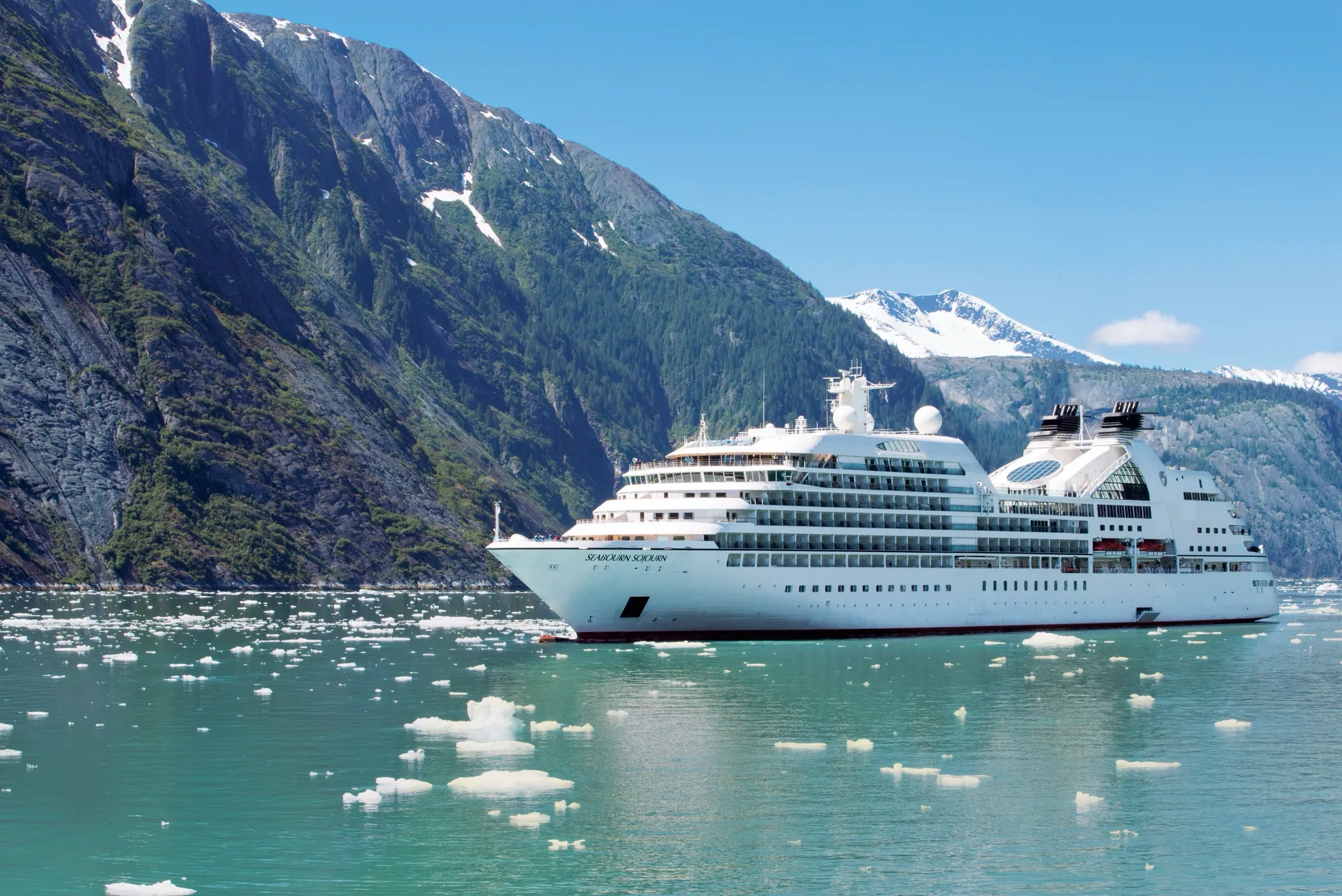
Date
October 26, 2026
Duration
30 nights
Departure Port
Monte Carlo · Monaco
Arrival Port
Barcelona · Spain
Rating
—
Theme
—


Seabourn
2010
2018
32,000 GT
450
225
330
650 m
25.6 m
19 knots
No


The tiny principality of Monaco, a sovereign state of just under one square mile, has an outsized resume, boasting some of the planet's most expensive real estate, and the world's most prestigious casino. Facing the sea, and engulfed on the other three sides by France, it has been the domain of the Grimaldi dynasty since the 14th century, and enjoys the same glamorous reputation as the rest of the Riviera.


Vidin is a port town on the southern bank of the Danube in north-western Bulgaria. It is close to the borders with Romania and Serbia, and is also the administrative centre of Vidin Province, as well as of the Metropolitan of Vidin.
Versailles is a city in the department of the Yvelines, Île-de-France, renowned worldwide for the Château de Versailles and the gardens of Versailles, designated UNESCO World Heritage Sites.


Nice, often called the Queen of the Riviera, is a delightful city that is fashionable yet relaxed and fun. Sprawling over an extensive area, Nice comprises a wonderful blend of old and new. The old town is one of the delights of the Riviera. Narrow streets and winding alleys are lined with faded 17th- and 18th-century buildings, where families sell crafts and produce. The Italian façades of modern Nice and the exuberant, early 20th-century residences, which made the city one of Europe's fashionable winter retreats, remain intact. Although not blessed with the best beaches, its pebbled sands continue to attract scores of visitors every year. Adding to the city's attractions are relics of its ancient past. Greek seafarers founded Nice around 350 BC. The Romans took control 196 years later, settling farther uphill in the area that is now Cimiez. By the 10th century, Nice was ruled by the Counts of Provence and in the 14th century fell to the House of Savoy. Although the French occupied Nice for short periods during the 18th and 19th centuries, the city did not become a definitive part of France until 1860 when Napoleon III made a deal with the House of Savoy. Nice grew in popularity during the Victorian period when the English aristocracy favored it as a winter retreat because of the mild climate. Backed by scenic mountains, the city is generally divided into the Old Town and modern Nice. The look of the old town has changed little since the 1700s. Its colorful flower market should not be missed. The celebrated, palm-lined Promenade des Anglais follows the gently curved beachfront for about three miles and visitors as well as residents enjoy strolling along its path. Everything costs more along this famed strip; expensive shops, restaurants and art galleries blend with more modest establishments. The showpiece of the Promenade des Anglais is the palatial Hotel Negresco. North of the Old Town, the stately Place Massena is the main hub of Nice. The square is surrounded by neo-classical, arcaded buildings painted in shades of ochre and red. The central part of the city contains fine restaurants and hotels and is particularly known for its pedestrian zone with many boutiques of well-known designers. North of the city center is the posh suburb of Cimiez, where several museums are located.


Marseille is the second largest city in France after Paris. It is also one of the oldest continuously inhabited cities in the Mediterranean. Cave paintings in the nearby Calanques are estimated to be 30,000 years old, and remains of brick habitations date from 6,000 BCE. The more recent history begins with a Hellenic port in about 600 BCE, some remains of which are on view at the city’s History Museum. It has been one of the world’s major seaports almost from its founding, and served as the main European terminus of the French colonial empire in Africa and the Far East. It is located in the Provence-Alpes-Cote d’Azur region and is the capital of the Bouches-du-Rhone department. On an island in the expansive bay of Marseille stands the prison of Chateau d’If made famous by the Alexandre Dumas novel “The Count of Monte Cristo.” The Vieux-Port with its atmospheric buildings and wharves is the area where visitors can search for the perfect example of the local specialty bouillabaisse, a rich fish stew containing at least three, and often more varieties of local fishes. Marseille’s newly renovated port at the venerable Joliette Docks is situated very close to the striking Cathédrale de la Major and the fascinating collections at the Museum of African, Oceanic and American Indian Arts.


Marseille is the second largest city in France after Paris. It is also one of the oldest continuously inhabited cities in the Mediterranean. Cave paintings in the nearby Calanques are estimated to be 30,000 years old, and remains of brick habitations date from 6,000 BCE. The more recent history begins with a Hellenic port in about 600 BCE, some remains of which are on view at the city’s History Museum. It has been one of the world’s major seaports almost from its founding, and served as the main European terminus of the French colonial empire in Africa and the Far East. It is located in the Provence-Alpes-Cote d’Azur region and is the capital of the Bouches-du-Rhone department. On an island in the expansive bay of Marseille stands the prison of Chateau d’If made famous by the Alexandre Dumas novel “The Count of Monte Cristo.” The Vieux-Port with its atmospheric buildings and wharves is the area where visitors can search for the perfect example of the local specialty bouillabaisse, a rich fish stew containing at least three, and often more varieties of local fishes. Marseille’s newly renovated port at the venerable Joliette Docks is situated very close to the striking Cathédrale de la Major and the fascinating collections at the Museum of African, Oceanic and American Indian Arts.


n the beginning, under the gallo-romans Sète was known as Ceta or Sita. It was a town on the island of Mont Saint Clair, and made a name for itself in the production of pickled fish. Soon fishing built the towns wealth, making it the envy of local lords and barons. Under the control of the Abbot of Aniane since the 9th century, Sete came under the bishop of Agde in 1246, no doubt to provoke the King of Aragon and the bishops of Maguelone. During this time the lagoon closed up creating the Bassin de Thau. Similarly, silt forced the eventual closure of the then sea ports of Aigues Mortes, Agde, and Narbonne. Under the Duke of Montmorency, Governor of Languedoc, Sète became the definitive Languedoc port, replacing those that had died under the mud. It became the base to hunt the last of the privateers led by the infamous Barbe Rousette. In 1596, construction work was started on a jetty that was to serve to protect the port from the storms of the sea. Because of financial problems the jetty was not completed until 1666 by Colbert. Finally Sète was a secure anchorage for commerce and the royal fleet, as well as a sea entrance for the Canal du Midi. The town was officially created by a decree of the Council of State on 30 September 1673. Forty years later in July 1710, the English attacked and seized the port with apparently little difficulty, before eventually being hunted out. Consequently Languedoc immediately improved the defenses at Fort Saint Pierre and the Citadelle Richeleu. Two centuries later the town was almost totally destroyed whilst being liberated by the allies at the end of the second World War. However, Sète was quickly reborn to become the principal fishing port for France on the Mediterranean.
Founded by Greeks in the pre-Christian era, the Catalan town is set on a lovely curve of beaches on Spain’s Costa Brava. It is crowned by the Castell de la Trinitat, which anchored the wall that encircled the entire town in medieval times. It was the site, until 2011, of Ferran Adria’s Michelin three-star restaurant El Bulli, which will reportedly reopen in 2014 as a culinary creativity center. Shop for a souvenir from the back of a street hawker’s donkey, or wander to nearby Figueres or Cadaques to visit one of Salvador Dali’s museums.

Trapani, the most important town on Sicily’s west coast, lies below the headland of Mount Erice and offers stunning views of the Egadi Islands on a clear day. Trapani’s Old District occupies a scimitarshaped promontory between the open sea on the north and the salt marshes to the south. The ancient industry of extracting salt from the marshes has recently been revived, and it is documented in the Museo delle Saline. In addition to the salt marshes,Trapani’s other interesting environs include the beautiful little hill town of Erice, the promontory of Capo San Vito stretching north beyond the splendid headland of Monte Cofano, the lovely island of Motya and the town of Marsala. Trips farther afield will take you to the magnificent site of Segesta or the Egadi Islands, reached by boat or hydrofoil from Trapani Port.


Situated between two of Italy’s most beautiful and best-known destinations, the Amalfi Coast and Cilento National Park, the lively city of Salerno is – perhaps unsurprisingly, but not justifiably – overlooked by many visitors to, and explorers of, the gorgeous Campania region. However, the loss of the ‘over lookers’ is certainly the gain of those who do take the time to visit and explore Salerno; there are centuries of rich history – influenced by the Romans, Goths and Byzantines – to delve into here, landmarks, monuments and museums and aplenty awaiting discovery, and authentic local life to immerse yourself in. Whether you choose to see the medieval churches and capture the gritty elegance of the neighbourhood trattorias; sample traditional cuisine at the finest restaurants, or people watch at one of the cafés over a proper Italian espresso; or take a stroll along the picturesque, tree-lined promenade, Salerno is sure to get under your skin.


The Balearics are comprised of 16 islands; the three principal ones are Mallorca, Ibiza and Minorca. Carthaginians, Romans, Vandals and Arabs have invaded these islands over the centuries. Ruins show evidence of the prehistoric Talayot civilization, a megalithic culture that flourished here between 1500 BC and the Roman conquest. Today the islands are besieged by invaders of a different sort - hordes of tourists. Lying 60 miles (97 km) off the Spanish mainland, the islands' lush and rugged landscape combined with an extremely mild, sunny climate proves irresistible, especially to northern Europeans. As a result, the Balearics boast cosmopolitan resorts with lively nightlife and plenty of sports activities. Mallorca (also spelled Majorca) is the largest of the islands, with an area of more than 1,400 square miles (3626 sq.km). The scenery is magnificent, with cliffs along indented shorelines jutting out of the sea and mountain ranges sheltering the plains from harsh sea breezes. The fertile plain in the centre is covered with almond and fig trees plus olive groves with some trees more than 1,000 years old. Tall pines, junipers and oaks line the mountain slopes. Palma de Mallorca is the capital of the archipelago. A cosmopolitan city with sophisticated shops and restaurants, it also offers buildings of spectacular Moorish and Gothic architecture. In the western part of Mallorca, nestled into the mountains, lies the village of Valldemosa. It is known for its Carthusian Monastery where Frédéric Chopin and George Sand spent the winter of 1838-39.


Mahon is the capital of Menorca, second largest of the Balearic Islands. It stands out from the others because of the abundance of prehistoric structures, and because its culture was influenced by British occupation in the 18th century. The people who built the prehistoric constructions are believed to have been responsible for similar works in Sardinia, and for Stonehenge in England. Believed to have been founded by the Carthaginian General Mago, Mahon was held by the Moors from the 8th to the 13th century and in turn occupied by the English, the French and the Spanish. Mahon was finally ceded to Spain by the Treaty of Amiens in 1802.


The UNESCO-protected port of Valletta, the capital of the island of Malta, is one of the must-see stops for every Mediterranean cruise of merit. You can admire this port, constructed in the second half of the 16th century by the Frenchman Jean de la Valette and moulded by the religious and military Order of Saint John of Jerusalem, from your MSC ship even before disembarking. The over 300 monuments rising in little more than half a square kilometre make this a place with one of the greatest density of historical attractions to visit during a cruise, not mentioning other attractions such as its beaches, seaside locales and restaurants. An excursion to the island can start right from its capital, Valletta, which enchants the cruise-goer with its famous Maltese balconies, which decorate the facades of houses in its old quarter. Surrounded by a multitude of churches, which the islanders assure are as many as the days of the year, the St. John’s Co-Cathedral is one of Malta’s biggest tourist attractions. The National Museum of Archaeology, on the other hand, hosts prehistoric artefacts found on the island. By the Grand Harbour, one can visit the underground passages of Auberge de Castille and the beautiful Baracca Gardens, which overlook the harbour; at night, when the city gates would close, its porticoes served as shelter for travellers. To get a taste of the life of Malta’s ancient nobility, visit Casa Rocca Piccola. A 16th century Palazzo now the residence of the 9th Marquis De Piro, it has period furnishings and has a bomb shelter built for protection against bombings during the Second World War. The set of the film Popeye can still be seen from Malta’s largest beach, as well as the Sanctuary of Our Lady of Mellieha with a fresco of the Blessed Virgin Mary with Christ; according to tradition, Saint Luke, who was shipwrecked on the island with Saint Paul, is the author of this Byzantine-style fresco.

A port not often visited by cruise ships, being more accustomed to welcoming fishing boats and private yachts. Malta’s smaller sister-isle has a lot of charm to offer. Villages such as Mgarr all boast tall, elaborately carved churches, the result of a combination of fine-grained, easily carved stone, time, and stonemasons whose skill is matched only by their religious devotion. The city of Victoria was so named to honor the British queen’s Diamond jubilee.
Burg is a town of about 22,400 inhabitants on the Elbe–Havel Canal in northeastern Germany, 25 km northeast of Magdeburg. It is the capital of the Jerichower Land district in the state of Saxony-Anhalt. The town is known for its mediaeval churches and towers.


The serene sea approach to Cagliari is an exquisitely beautiful way to first lay eyes on the city’s mesmerising interplay of colour, spires and domed churches. Sat on Sardinia’s south coast, Cagliari is the island’s largest city, and a sun-blessed escape of beaches, architecture and Mediterranean food – where stress evaporates on contact. That first sight of Cagliari’s mosaic of architecture reveals much about the island’s history, and is a living document of the civilisations and influences that have passed through. Combining Byzantine churches with crumbling Roman ruins and Pisan towers, it’s an elegant, beguiling place to explore. Usher in the morning with a short, sharp espresso hit, before wandering along to San Benedetto market’s bustle, crammed full of overflowing heaps of local produce. Taste crisp, freshly-baked bread, thin shavings of sheep’s cheese, and ripe red strawberries, as you wander amid the market’s melody of good-natured bartering. The Castello quarter’s tight, flower-draped streets and salmon-hued brick buildings incline up above the Med’s softly lapping waves. Climb Bastione di Saint Remy staircase to Terrazza Umberto’s views of the turquoise Gulf of Angels. Next, Cathedral of Santa Maria awaits, with its marbled interiors, elaborate side chapels and intricately decorated crypt. Once you’ve unravelled Cagliari’s historical tapestry, Poetto Beach invites you to find a spot on almost five miles of uninterrupted sand, met by a dazzling expanse of turquoise water. On a hot summer’s day, soak up some sun before saluting the sunset with an ice cold Spritz at a beachside bar. Spaghetti with salted bottarga and artichokes will keep the good times rolling, perfectly accompanied by a glass of ruby-coloured Cannonau wine.


Situated on the beautiful North East coast of Sardinia, Olbia is often ignored in the dash for the fashionable Costa Smeralda resort, but the port has more to offer than first meets the eye. This handsome city, with its centro storico (historic centre), is laden with chic boutiques, wine bars and cafe-rimmed piazzas. It also has a number of historic structures and archaeological sites well worth discovering. These include the beautiful 11th century Basilica of San Simplicio and the Church of St. Paul Apostle. Several of Sardinia's impressive, fortress-like Nuraghes still remain including the hilltop Nuraghe Riu Mulinu. Called the ‘happy city’ by the Greeks, ancient Olbia is a wonderful place to explore and enjoy in the soothing Sardinian sunshine. On the palm-lined waterfront to the east, the Museo Archeologico di Olbia has Roman warships to discover.Show less Just north from the city is Costa Smeralda, a millionaire’s paradise which is popular with celebrities and wealthy business people who visit to top-up their tan on the gorgeous golden-sand beaches – said to be among the finest on earth – and make the most of the warm, crystal clear waters.


Beloved by the French, yet still relatively undiscovered by the rest of the world, the French island of Corsica is a gem. And right at its southern tip lies Bonifacio, a medieval town known as the “the city of sentinels”. Closer to Rome than Paris (and less than an hour’s ferry ride to Sardinia), Bonifacio remains one of the Mediterranean’s best kept secrets. The first thing you should know is that Bonifacio is stunning. And by that, we mean, awe-inspiringly beautiful. The town itself is worthy of a painting – a long, hilltop town that snakes over milky white limestone cliffs that stretch for 70 kilometres. The turquoise blue seas that lap at the foot of these are both warm and clear, and a joy for bathers of all ages. Although the cliffs have proved perilous to sailors in the past - Bonifacio counts the wreckage of the French Navy’s 1855 ship Semillante among its most visited diving sites and top tourist attractions. It is also here, in the harbour, that scholars place the catastrophic encounter between Ulysses's fleet and the Laestrygonians, who hurled lethal boulders down from the cliffs. The proximity of nearby Sardinia is everywhere. The islands were once joined before volcanic activity tore them apart, and much of the local dialect – still prevalently used particularly in the back country – is heavily influenced by Italian. This is also true for the local cuisine; think large plates of thinly sliced charcuterie and stuffed pasta filled with creamy local brocciu, a cheese similar to ricotta.


Italy's vibrant capital lives in the present, but no other city on earth evokes its past so powerfully. For over 2,500 years, emperors, popes, artists, and common citizens have left their mark here. Archaeological remains from ancient Rome, art-stuffed churches, and the treasures of Vatican City vie for your attention, but Rome is also a wonderful place to practice the Italian-perfected il dolce far niente, the sweet art of idleness. Your most memorable experiences may include sitting at a caffè in the Campo de' Fiori or strolling in a beguiling piazza.


Beloved by the French, yet still relatively undiscovered by the rest of the world, the French island of Corsica is a gem. And right at its southern tip lies Bonifacio, a medieval town known as the “the city of sentinels”. Closer to Rome than Paris (and less than an hour’s ferry ride to Sardinia), Bonifacio remains one of the Mediterranean’s best kept secrets. The first thing you should know is that Bonifacio is stunning. And by that, we mean, awe-inspiringly beautiful. The town itself is worthy of a painting – a long, hilltop town that snakes over milky white limestone cliffs that stretch for 70 kilometres. The turquoise blue seas that lap at the foot of these are both warm and clear, and a joy for bathers of all ages. Although the cliffs have proved perilous to sailors in the past - Bonifacio counts the wreckage of the French Navy’s 1855 ship Semillante among its most visited diving sites and top tourist attractions. It is also here, in the harbour, that scholars place the catastrophic encounter between Ulysses's fleet and the Laestrygonians, who hurled lethal boulders down from the cliffs. The proximity of nearby Sardinia is everywhere. The islands were once joined before volcanic activity tore them apart, and much of the local dialect – still prevalently used particularly in the back country – is heavily influenced by Italian. This is also true for the local cuisine; think large plates of thinly sliced charcuterie and stuffed pasta filled with creamy local brocciu, a cheese similar to ricotta.


The serene sea approach to Cagliari is an exquisitely beautiful way to first lay eyes on the city’s mesmerising interplay of colour, spires and domed churches. Sat on Sardinia’s south coast, Cagliari is the island’s largest city, and a sun-blessed escape of beaches, architecture and Mediterranean food – where stress evaporates on contact. That first sight of Cagliari’s mosaic of architecture reveals much about the island’s history, and is a living document of the civilisations and influences that have passed through. Combining Byzantine churches with crumbling Roman ruins and Pisan towers, it’s an elegant, beguiling place to explore. Usher in the morning with a short, sharp espresso hit, before wandering along to San Benedetto market’s bustle, crammed full of overflowing heaps of local produce. Taste crisp, freshly-baked bread, thin shavings of sheep’s cheese, and ripe red strawberries, as you wander amid the market’s melody of good-natured bartering. The Castello quarter’s tight, flower-draped streets and salmon-hued brick buildings incline up above the Med’s softly lapping waves. Climb Bastione di Saint Remy staircase to Terrazza Umberto’s views of the turquoise Gulf of Angels. Next, Cathedral of Santa Maria awaits, with its marbled interiors, elaborate side chapels and intricately decorated crypt. Once you’ve unravelled Cagliari’s historical tapestry, Poetto Beach invites you to find a spot on almost five miles of uninterrupted sand, met by a dazzling expanse of turquoise water. On a hot summer’s day, soak up some sun before saluting the sunset with an ice cold Spritz at a beachside bar. Spaghetti with salted bottarga and artichokes will keep the good times rolling, perfectly accompanied by a glass of ruby-coloured Cannonau wine.

Trapani, the most important town on Sicily’s west coast, lies below the headland of Mount Erice and offers stunning views of the Egadi Islands on a clear day. Trapani’s Old District occupies a scimitarshaped promontory between the open sea on the north and the salt marshes to the south. The ancient industry of extracting salt from the marshes has recently been revived, and it is documented in the Museo delle Saline. In addition to the salt marshes,Trapani’s other interesting environs include the beautiful little hill town of Erice, the promontory of Capo San Vito stretching north beyond the splendid headland of Monte Cofano, the lovely island of Motya and the town of Marsala. Trips farther afield will take you to the magnificent site of Segesta or the Egadi Islands, reached by boat or hydrofoil from Trapani Port.


The UNESCO-protected port of Valletta, the capital of the island of Malta, is one of the must-see stops for every Mediterranean cruise of merit. You can admire this port, constructed in the second half of the 16th century by the Frenchman Jean de la Valette and moulded by the religious and military Order of Saint John of Jerusalem, from your MSC ship even before disembarking. The over 300 monuments rising in little more than half a square kilometre make this a place with one of the greatest density of historical attractions to visit during a cruise, not mentioning other attractions such as its beaches, seaside locales and restaurants. An excursion to the island can start right from its capital, Valletta, which enchants the cruise-goer with its famous Maltese balconies, which decorate the facades of houses in its old quarter. Surrounded by a multitude of churches, which the islanders assure are as many as the days of the year, the St. John’s Co-Cathedral is one of Malta’s biggest tourist attractions. The National Museum of Archaeology, on the other hand, hosts prehistoric artefacts found on the island. By the Grand Harbour, one can visit the underground passages of Auberge de Castille and the beautiful Baracca Gardens, which overlook the harbour; at night, when the city gates would close, its porticoes served as shelter for travellers. To get a taste of the life of Malta’s ancient nobility, visit Casa Rocca Piccola. A 16th century Palazzo now the residence of the 9th Marquis De Piro, it has period furnishings and has a bomb shelter built for protection against bombings during the Second World War. The set of the film Popeye can still be seen from Malta’s largest beach, as well as the Sanctuary of Our Lady of Mellieha with a fresco of the Blessed Virgin Mary with Christ; according to tradition, Saint Luke, who was shipwrecked on the island with Saint Paul, is the author of this Byzantine-style fresco.

A port not often visited by cruise ships, being more accustomed to welcoming fishing boats and private yachts. Malta’s smaller sister-isle has a lot of charm to offer. Villages such as Mgarr all boast tall, elaborately carved churches, the result of a combination of fine-grained, easily carved stone, time, and stonemasons whose skill is matched only by their religious devotion. The city of Victoria was so named to honor the British queen’s Diamond jubilee.
Burg is a town of about 22,400 inhabitants on the Elbe–Havel Canal in northeastern Germany, 25 km northeast of Magdeburg. It is the capital of the Jerichower Land district in the state of Saxony-Anhalt. The town is known for its mediaeval churches and towers.


Mahon is the capital of Menorca, second largest of the Balearic Islands. It stands out from the others because of the abundance of prehistoric structures, and because its culture was influenced by British occupation in the 18th century. The people who built the prehistoric constructions are believed to have been responsible for similar works in Sardinia, and for Stonehenge in England. Believed to have been founded by the Carthaginian General Mago, Mahon was held by the Moors from the 8th to the 13th century and in turn occupied by the English, the French and the Spanish. Mahon was finally ceded to Spain by the Treaty of Amiens in 1802.


The Balearics are comprised of 16 islands; the three principal ones are Mallorca, Ibiza and Minorca. Carthaginians, Romans, Vandals and Arabs have invaded these islands over the centuries. Ruins show evidence of the prehistoric Talayot civilization, a megalithic culture that flourished here between 1500 BC and the Roman conquest. Today the islands are besieged by invaders of a different sort - hordes of tourists. Lying 60 miles (97 km) off the Spanish mainland, the islands' lush and rugged landscape combined with an extremely mild, sunny climate proves irresistible, especially to northern Europeans. As a result, the Balearics boast cosmopolitan resorts with lively nightlife and plenty of sports activities. Mallorca (also spelled Majorca) is the largest of the islands, with an area of more than 1,400 square miles (3626 sq.km). The scenery is magnificent, with cliffs along indented shorelines jutting out of the sea and mountain ranges sheltering the plains from harsh sea breezes. The fertile plain in the centre is covered with almond and fig trees plus olive groves with some trees more than 1,000 years old. Tall pines, junipers and oaks line the mountain slopes. Palma de Mallorca is the capital of the archipelago. A cosmopolitan city with sophisticated shops and restaurants, it also offers buildings of spectacular Moorish and Gothic architecture. In the western part of Mallorca, nestled into the mountains, lies the village of Valldemosa. It is known for its Carthusian Monastery where Frédéric Chopin and George Sand spent the winter of 1838-39.


Situated between two of Italy’s most beautiful and best-known destinations, the Amalfi Coast and Cilento National Park, the lively city of Salerno is – perhaps unsurprisingly, but not justifiably – overlooked by many visitors to, and explorers of, the gorgeous Campania region. However, the loss of the ‘over lookers’ is certainly the gain of those who do take the time to visit and explore Salerno; there are centuries of rich history – influenced by the Romans, Goths and Byzantines – to delve into here, landmarks, monuments and museums and aplenty awaiting discovery, and authentic local life to immerse yourself in. Whether you choose to see the medieval churches and capture the gritty elegance of the neighbourhood trattorias; sample traditional cuisine at the finest restaurants, or people watch at one of the cafés over a proper Italian espresso; or take a stroll along the picturesque, tree-lined promenade, Salerno is sure to get under your skin.


Approximately 1189 square feet (110 square meters) of inside space, plus two verandas totaling 214 square feet (20 square meters)
Grand Wintergarden Suites feature:
Large windows
Dining for six
Glass-enclosed solarium with tub and day bed
Bathroom with whirlpool bathtub
Guest bath
Glass-enclosed solarium with tub and day bed
Two bedrooms
Two bathrooms (one whirlpool)
Convertible sofa bed for one
Pantry with wet bar
Two flat-screen TVs
Complimentary Internet/Wi-Fi service.


Approximately 526 and 593 square feet (49 and 55 square meters) of inside space, plus one veranda of 133 & 354 square feet (12 and 33 square meters).
Owner's Suites feature:
Expansive ocean views
Forward-facing windows
Dining for four to six
Bathroom with whirlpool bathtub
Guest bath
Pantry with wet bar
Two flat-screen TVs
Complimentary Internet/Wi-Fi service.


Approximately 536 to 539 square feet (50 square meters) of inside space, plus one veranda of 167 to 200 square feet (16 to 19 square meters)
All Penthouse Spa Suite feature
Dining table for two to four
Separate bedroom
Glass door to veranda
Two flat-screen TVs
Fully stocked bar
Spacious bathroom with tub, shower and large vanity


Approximately 436 square feet (41 square meters) of inside space, plus one veranda of 98 square feet (9 square meters)
All Penthouse Suite feature
Dining table for two to four
Separate bedroom
Glass door to veranda
Two flat-screen TVs
Fully stocked bar
Spacious bathroom with tub, shower and large vanity.


Approximately 859 square feet (80 square meters) of inside space, plus one veranda of 493 square feet (46 square meters)
Signature Suites feature
Expansive ocean views
Forward-facing windows
Dining for four to six
Bathroom with whirlpool bathtub
Guest bath
Pantry with wet bar
Two flat-screen TVs
Complimentary Internet/Wi-Fi service.


Approximately 914 square feet (85 square meters) of inside space, one veranda of 183 sq. ft. (17 square meters.).
Wintergarden Suites feature:
Large windows
Dining for six
Whirlpool bathtub
Guest bath
Convertible sofa bed for one
Pantry with wet bar
Glass-enclosed solarium with tub and day bed
Two closets
Two flat-screen TVs
Complimentary Internet/Wi-Fi service


Located on Deck 7; Approximately 300 square feet (28 square meters) of inside space, plus one veranda of 65 square feet (6 square meters)
All Veranda Suites feature
A full-length window
Glass door to private veranda
Comfortable living area
Queen-size bed or two twin beds
Dining table for two
Walk-in closet
Interactive flat-screen television with music and movies
Fully stocked bar and refrigerator
Makeup vanity
Spacious bathroom with separate tub and shower

Veranda Suite Guarantee


Located on Deck 4; Approximately 295 square feet (28 square meters) of inside space
All Ocean View Suites feature:
A large picture window
Comfortable living area
Queen-size bed or two twin beds
Dining table for two
Walk-in closet
Interactive flat-screen television with music and movies
Fully stocked bar and refrigerator
Makeup vanity
Spacious bathroom with separate tub and shower.
Our cruise specialists can help you find the perfect cabin and the best available pricing.
(+886) 02-2721-7300Contact Advisor