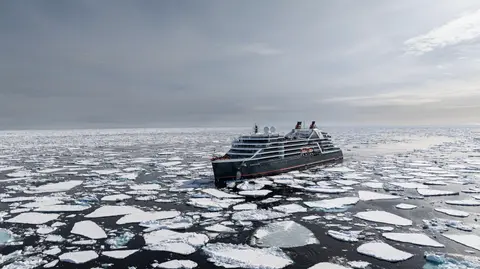
SeabournV630
Tyrrhenian Yacht Treasures
Date
2026-05-05
Duration
9 nights
Departure Port
Civitavecchia
Italy
Arrival Port
Barcelona
Spain
Rating
Expedition
Theme
—
Date
2026-05-05
Duration
9 nights
Departure Port
Civitavecchia
Italy
Arrival Port
Barcelona
Spain
Rating
Expedition
Theme
—
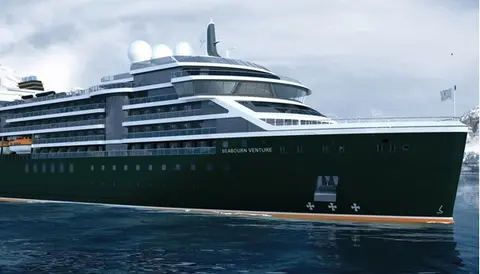





Seabourn
2021
—
23,000 GT
264
132
120
558 m
24 m
19 knots
No
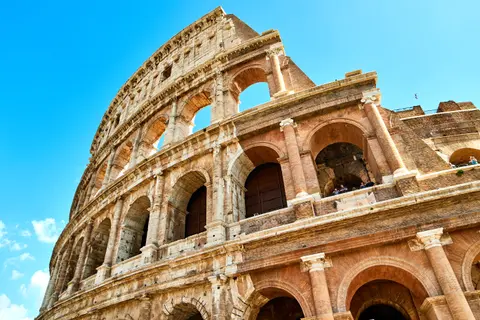
Rome's ancient maritime gateway since the Emperor Trajan commissioned its harbour in 106 AD, Civitavecchia is the natural prologue to the Eternal City — just seventy minutes southeast by express rail. The port's Renaissance fortress, designed in part by Michelangelo, anchors a working waterfront that has welcomed travellers for millennia. Beyond Rome's unmissable monuments, consider an afternoon in the Civitavecchia thermal baths, drawing on mineral waters prized since antiquity. Spring and autumn offer the ideal balance of mild weather and manageable crowds for exploring the capital's layered history.
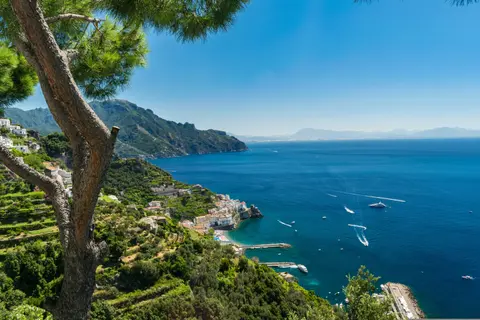
Amalfi is the former maritime republic that gave its name to Italy's most celebrated coastline, where the Arab-Norman cathedral, medieval paper mills, and whitewashed buildings cascading to the Tyrrhenian Sea create the definitive image of Italian coastal beauty. Visit April through June via Windstar or Azamara for the Cloister of Paradise and the coastline that has been the world's standard for scenic perfection.
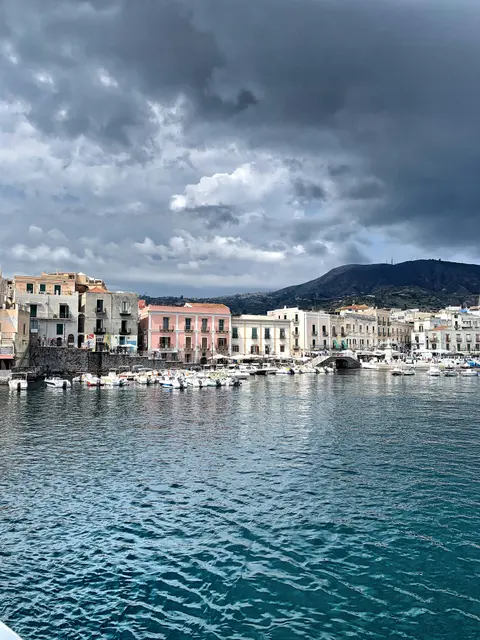
Lipari, the largest of Sicily's volcanic Aeolian Islands, has been a Mediterranean trading hub for over 6,000 years, featuring a dramatic Castello, world-class archaeological museum, and gateway access to Stromboli's erupting crater. Must-dos include exploring the fortified old town, tasting caper-laced Aeolian cuisine and Malvasia wine, and island-hopping to Vulcano and Stromboli. May through October offers ideal conditions.
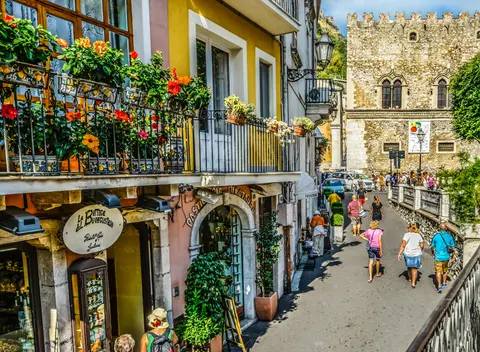
Giardini Naxos is the Sicilian bay where Greek civilization first touched western shores in 734 BC, serving today as the gateway to hilltop Taormina's extraordinary Greek-Roman theatre with Mount Etna as its eternal backdrop. Visit May or September via Windstar or Explora Journeys for ancient ruins, cable-car ascents to Sicily's most famous resort, and the view that convinced the first Greek colonists they had found paradise.
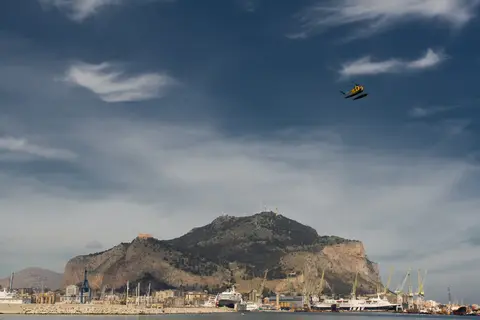
Palermo is the Mediterranean's most intoxicating crossroads of civilisations — Arab arches meet Byzantine gold mosaics beneath Norman royal chapels in the extraordinary Palatine Chapel, a monument to 12th-century multicultural brilliance that is Sicily's single greatest work of art. The Ballarò and Capo street markets, among southern Italy's most atmospheric, tumble through the ancient city in a sensory barrage of swordfish, blood oranges, jasmine, and street food improvised across centuries. Do not leave without tasting arancini and sfincione, Sicily's gloriously thick street pizza. Spring (April–May) and autumn (September–October) offer the ideal climate — warm enough for the sea, cool enough for extended walking.
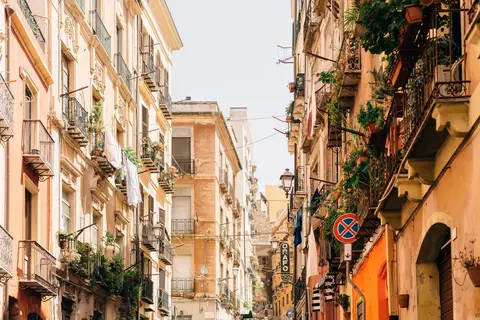
Cagliari, Sardinia's sun-drenched capital overlooking the Gulf of Angels, has absorbed three thousand years of Phoenician, Carthaginian, Roman, Pisan, and Spanish ambitions into a layered and deeply compelling Mediterranean city — where the flamingo-fringed salt lagoons stretching to the city's western edge create one of Europe's most surreal urban vistas. The Castello quarter's medieval ramparts enclose a cathedral, Pisan towers, and panoramic terraces that survey the entire city and coastline, while the Marina district below offers some of the finest bottarga pasta and fresh tuna in Italy. Visit May through September for beach perfection; the prehistoric Nuraghe Su Nuraxi at Barumini, a UNESCO Wonder, is an hour's drive north.
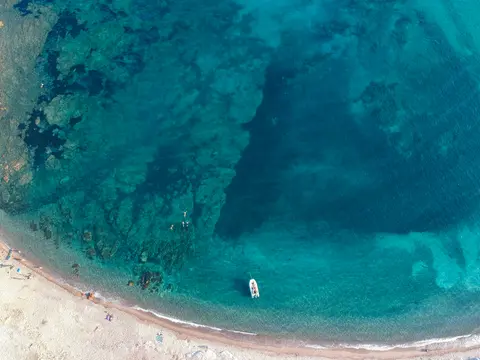
Bonifacio is a dramatically cliff-perched medieval citadel at Corsica's southern tip, where Genoese ramparts tower above a fjord-like natural harbour in the turquoise Strait of Bonifacio. Visitors should descend the vertiginous Escalier du Roi d'Aragon carved into the limestone cliffs and take a boat excursion to the pristine Lavezzi archipelago nature reserve for world-class snorkelling among sculpted granite formations. The ideal window is June or September, when the Mediterranean light is at its most luminous and the narrow streets of the haute ville remain blissfully uncrowded.
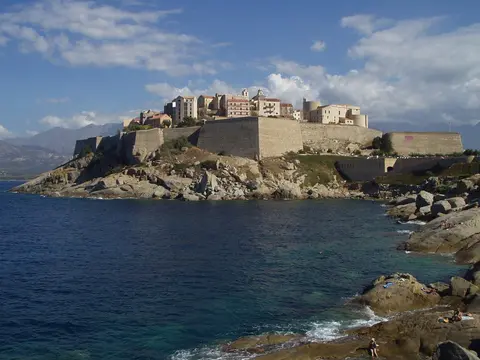
Calvi is Corsica's jewel-box port town where a commanding Genoese citadel overlooks the Mediterranean's finest urban beach — four miles of white sand lapped by Caribbean-clear water beneath snow-capped mountains. Visit June or September via Ponant or Explora Journeys for citadel walks, Corsican wild boar and brocciu cheese, and the essential paradox of an island that is French by law but entirely its own in character.
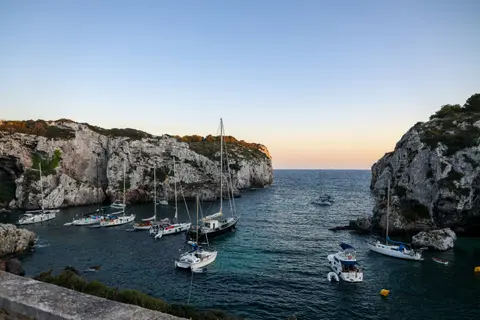
Mahón commands one of the Mediterranean's deepest natural harbours, a fjord-like inlet on Menorca that captivated British admirals, Phoenician traders, and Roman generals in turn — its Georgian townhouses and gin distilleries speaking eloquently to centuries of contested heritage. Explore the clifftop old town's baroque Santa María church with its 3,200-pipe organ, then cross the water to the imposing fortress of La Mola for sweeping harbour views. The island's prized caldereta de langosta, a slow-simmered lobster stew, is best savoured at the fishing village of Fornells. Visit between May and June or September and October for warmth without the summer crowds.
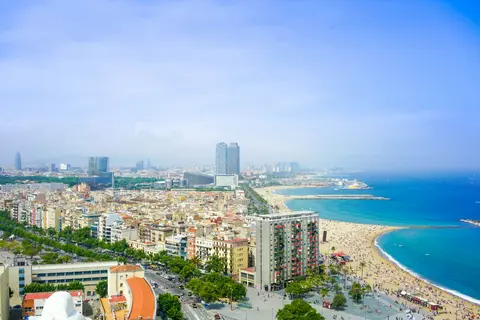
Barcelona is the city where Roman history, Gothic grandeur, and Gaudí's delirious Modernisme collide in a Mediterranean coastal capital of astonishing energy and beauty. The Sagrada Família — still under construction after 140 years — continues its audacious ascent toward completion, while the Gothic Quarter's Roman-era foundations and the Passeig de Gràcia's extraordinary concentration of Modernisme masterpieces reward days of exploration. For a complete sensory experience, lose an afternoon in the covered labyrinth of La Boqueria market before descending to the waterfront for Catalan seafood at its finest. May through June and September through October offer the most pleasant weather; the city connects directly to Paris by overnight train.
Day 1
Rome's ancient maritime gateway since the Emperor Trajan commissioned its harbour in 106 AD, Civitavecchia is the natural prologue to the Eternal City — just seventy minutes southeast by express rail. The port's Renaissance fortress, designed in part by Michelangelo, anchors a working waterfront that has welcomed travellers for millennia. Beyond Rome's unmissable monuments, consider an afternoon in the Civitavecchia thermal baths, drawing on mineral waters prized since antiquity. Spring and autumn offer the ideal balance of mild weather and manageable crowds for exploring the capital's layered history.
Day 2
Amalfi is the former maritime republic that gave its name to Italy's most celebrated coastline, where the Arab-Norman cathedral, medieval paper mills, and whitewashed buildings cascading to the Tyrrhenian Sea create the definitive image of Italian coastal beauty. Visit April through June via Windstar or Azamara for the Cloister of Paradise and the coastline that has been the world's standard for scenic perfection.
Day 3
Lipari, the largest of Sicily's volcanic Aeolian Islands, has been a Mediterranean trading hub for over 6,000 years, featuring a dramatic Castello, world-class archaeological museum, and gateway access to Stromboli's erupting crater. Must-dos include exploring the fortified old town, tasting caper-laced Aeolian cuisine and Malvasia wine, and island-hopping to Vulcano and Stromboli. May through October offers ideal conditions.
Day 4
Giardini Naxos is the Sicilian bay where Greek civilization first touched western shores in 734 BC, serving today as the gateway to hilltop Taormina's extraordinary Greek-Roman theatre with Mount Etna as its eternal backdrop. Visit May or September via Windstar or Explora Journeys for ancient ruins, cable-car ascents to Sicily's most famous resort, and the view that convinced the first Greek colonists they had found paradise.
Day 5
Palermo is the Mediterranean's most intoxicating crossroads of civilisations — Arab arches meet Byzantine gold mosaics beneath Norman royal chapels in the extraordinary Palatine Chapel, a monument to 12th-century multicultural brilliance that is Sicily's single greatest work of art. The Ballarò and Capo street markets, among southern Italy's most atmospheric, tumble through the ancient city in a sensory barrage of swordfish, blood oranges, jasmine, and street food improvised across centuries. Do not leave without tasting arancini and sfincione, Sicily's gloriously thick street pizza. Spring (April–May) and autumn (September–October) offer the ideal climate — warm enough for the sea, cool enough for extended walking.
Day 6
Cagliari, Sardinia's sun-drenched capital overlooking the Gulf of Angels, has absorbed three thousand years of Phoenician, Carthaginian, Roman, Pisan, and Spanish ambitions into a layered and deeply compelling Mediterranean city — where the flamingo-fringed salt lagoons stretching to the city's western edge create one of Europe's most surreal urban vistas. The Castello quarter's medieval ramparts enclose a cathedral, Pisan towers, and panoramic terraces that survey the entire city and coastline, while the Marina district below offers some of the finest bottarga pasta and fresh tuna in Italy. Visit May through September for beach perfection; the prehistoric Nuraghe Su Nuraxi at Barumini, a UNESCO Wonder, is an hour's drive north.
Day 7
Bonifacio is a dramatically cliff-perched medieval citadel at Corsica's southern tip, where Genoese ramparts tower above a fjord-like natural harbour in the turquoise Strait of Bonifacio. Visitors should descend the vertiginous Escalier du Roi d'Aragon carved into the limestone cliffs and take a boat excursion to the pristine Lavezzi archipelago nature reserve for world-class snorkelling among sculpted granite formations. The ideal window is June or September, when the Mediterranean light is at its most luminous and the narrow streets of the haute ville remain blissfully uncrowded.
Day 8
Calvi is Corsica's jewel-box port town where a commanding Genoese citadel overlooks the Mediterranean's finest urban beach — four miles of white sand lapped by Caribbean-clear water beneath snow-capped mountains. Visit June or September via Ponant or Explora Journeys for citadel walks, Corsican wild boar and brocciu cheese, and the essential paradox of an island that is French by law but entirely its own in character.
Day 9
Mahón commands one of the Mediterranean's deepest natural harbours, a fjord-like inlet on Menorca that captivated British admirals, Phoenician traders, and Roman generals in turn — its Georgian townhouses and gin distilleries speaking eloquently to centuries of contested heritage. Explore the clifftop old town's baroque Santa María church with its 3,200-pipe organ, then cross the water to the imposing fortress of La Mola for sweeping harbour views. The island's prized caldereta de langosta, a slow-simmered lobster stew, is best savoured at the fishing village of Fornells. Visit between May and June or September and October for warmth without the summer crowds.
Day 10
Barcelona is the city where Roman history, Gothic grandeur, and Gaudí's delirious Modernisme collide in a Mediterranean coastal capital of astonishing energy and beauty. The Sagrada Família — still under construction after 140 years — continues its audacious ascent toward completion, while the Gothic Quarter's Roman-era foundations and the Passeig de Gràcia's extraordinary concentration of Modernisme masterpieces reward days of exploration. For a complete sensory experience, lose an afternoon in the covered labyrinth of La Boqueria market before descending to the waterfront for Catalan seafood at its finest. May through June and September through October offer the most pleasant weather; the city connects directly to Paris by overnight train.
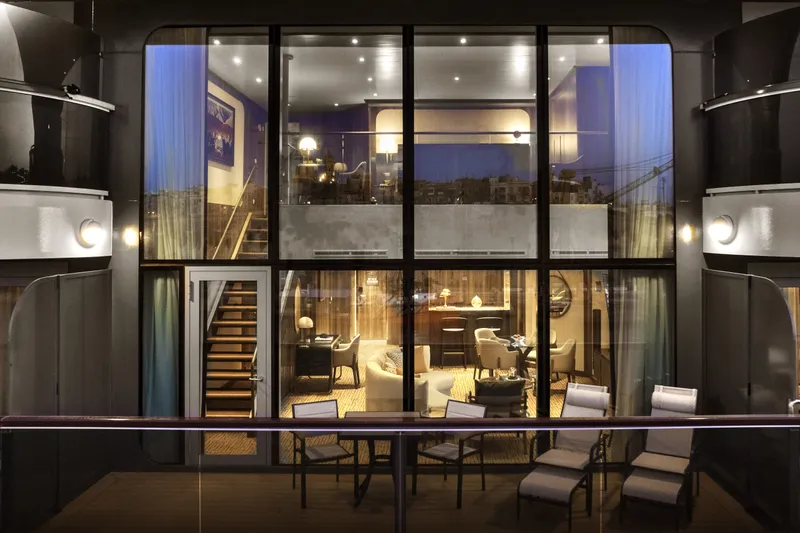
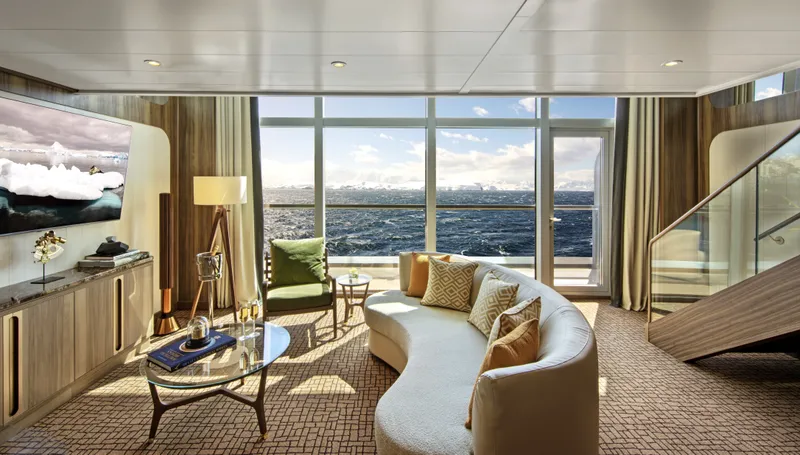
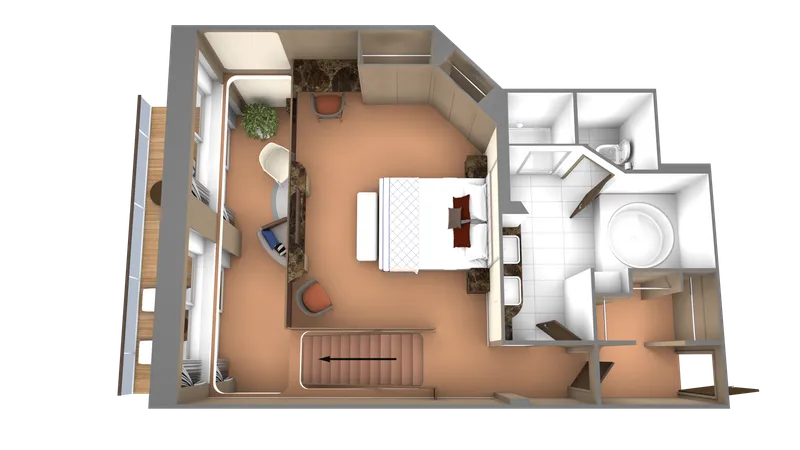
Deck 7 Combine mid-ship Suites 733 and 735 for Suite 7353, or Suites 734 and 736 for Suite 7364 Total space: 1,399 sq. ft. (130 sq. m.) including two verandas totaling 205 sq. ft. (19 sq. m.)
All Grand Wintergarden Suites onboard Seabourn Venture feature a comfortable living area; private veranda; queen-size bed or two twin beds; walk-in closet; personal safe; interactive TV with music and movies; fully stocked bar and refrigerator; writing desk with personalized stationery; makeup vanity; spacious bathroom, separate tub and shower, plush robes, slippers, luxury health and beauty products, hairdryer and 110/220V AC outlets.
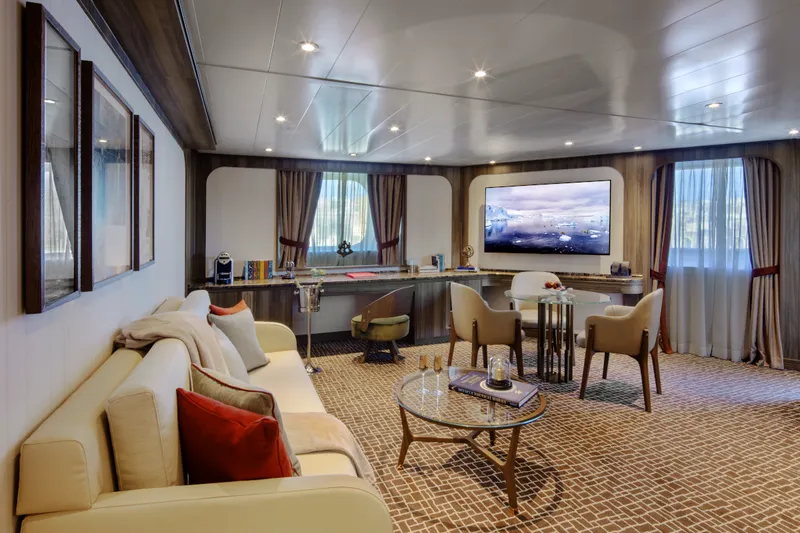
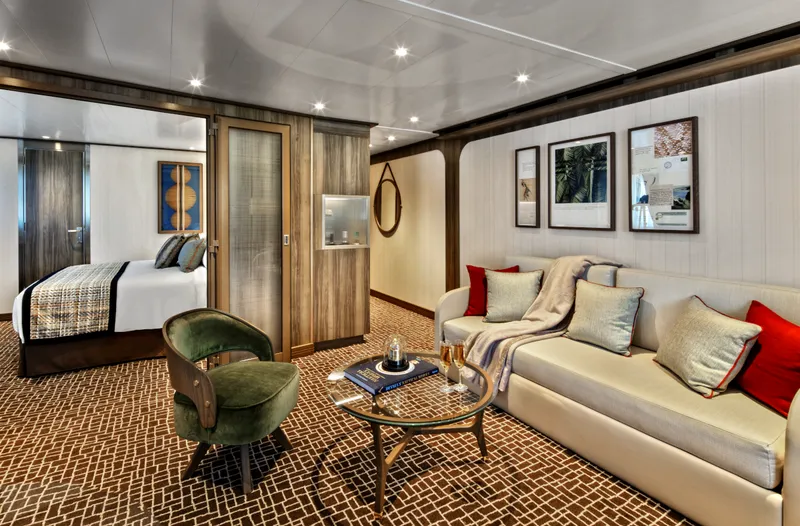
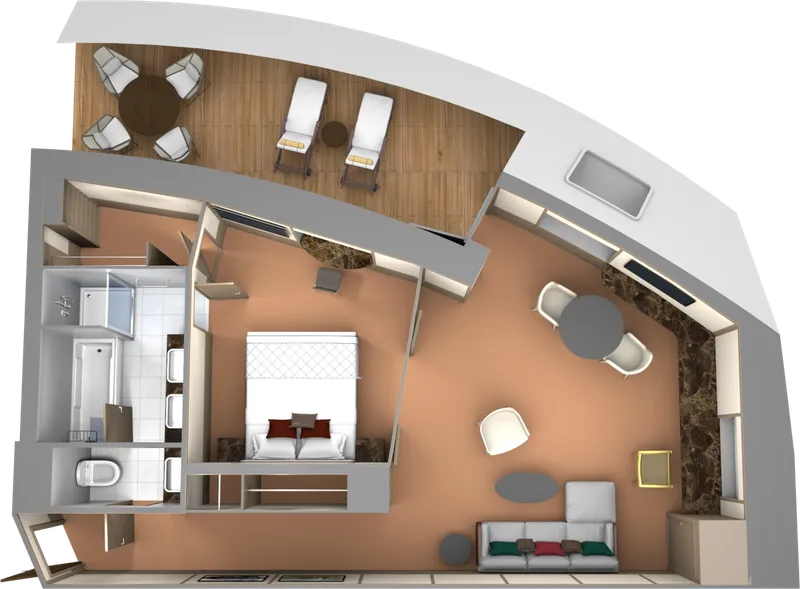
Deck 7 Suites 700, 701 Total space 1,023 sq. ft. (95 sq. m.) incl. veranda of 484 sq. ft. (45 sq. m.)
Owner's Suites on Seabourn Venture feature a comfortable living area; private veranda; queen-size bed or two twin beds; extra-large walk-in closet for expedition gear; personal safe; interactive flat-screen TV with music and movies; fully stocked bar and refrigerator; writing desk with personalized stationery; makeup vanity; spacious bathroom with double vanities, tub and shower, plush robes, slippers, hairdryer and 110/220V AC outlets.
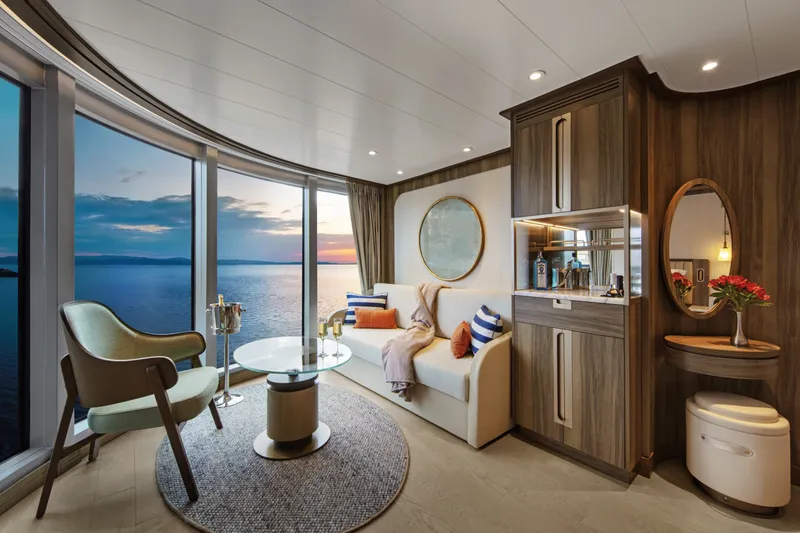
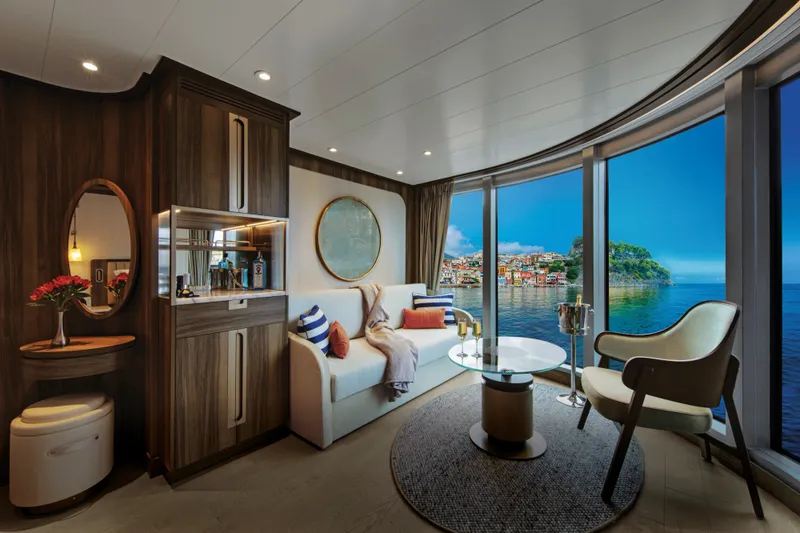
Suites 513-516, 611-614, 711-714, 802-805; Total space: 417 sq. ft. (39 sq. m.) incl. veranda of 85 sq. ft. (8 sq. m.) All Panorama Veranda Suites feature a comfortable living area; private veranda; queen-size bed or two twin beds; walk-in closet; personal safe; interactive TV with music and movies; fully stocked bar and refrigerator; writing desk with personalized stationery; makeup vanity; spacious bathroom, separate tub and shower, plush robes, slippers, luxury health and beauty products, hairdryer and 110/220V AC outlets. *Some veranda sizes vary.
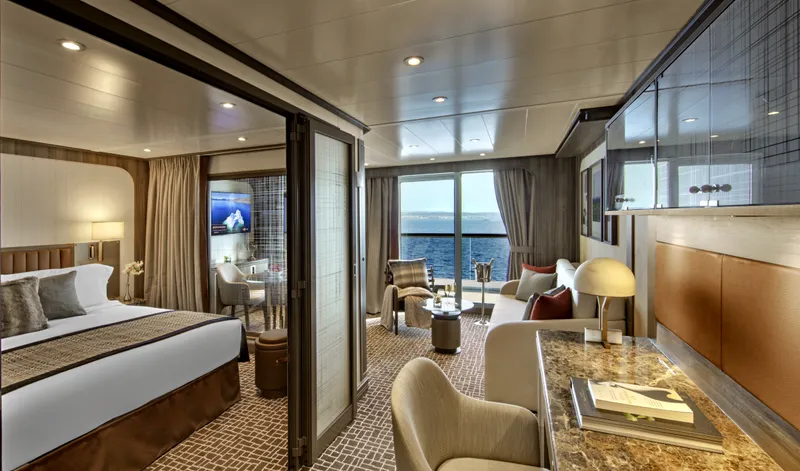
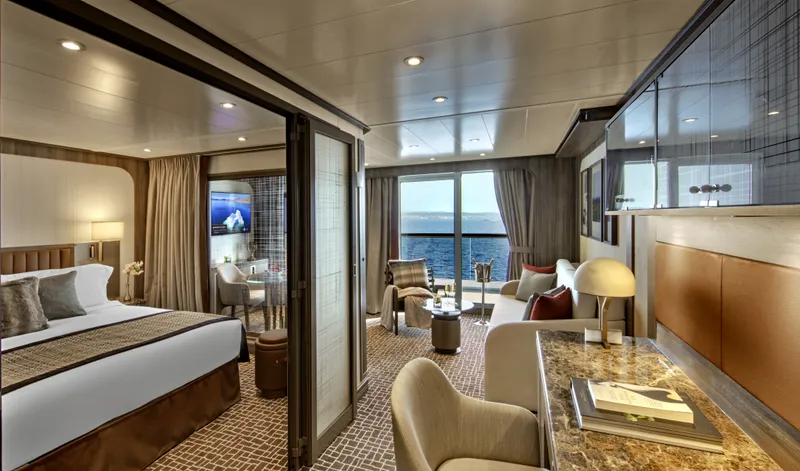
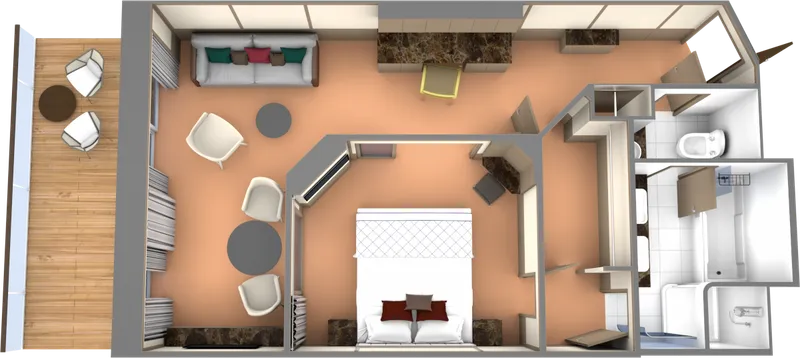
Deck 8 Suites 818-821; Approximate total space: 527 sq. ft. (49 sq. m.) including veranda of 97 sq. ft. (9 sq. m.)
All Penthouse Suites onboard Seabourn Venture feature a comfortable living area; private veranda; queen-size bed or two twin beds; walk-in closet; personal safe; interactive TV with music and movies; fully stocked bar and refrigerator; writing desk with personalized stationery; makeup vanity; spacious bathroom, separate tub and shower, plush robes, slippers, luxury health and beauty products, hairdryer and 110/220V AC outlets.
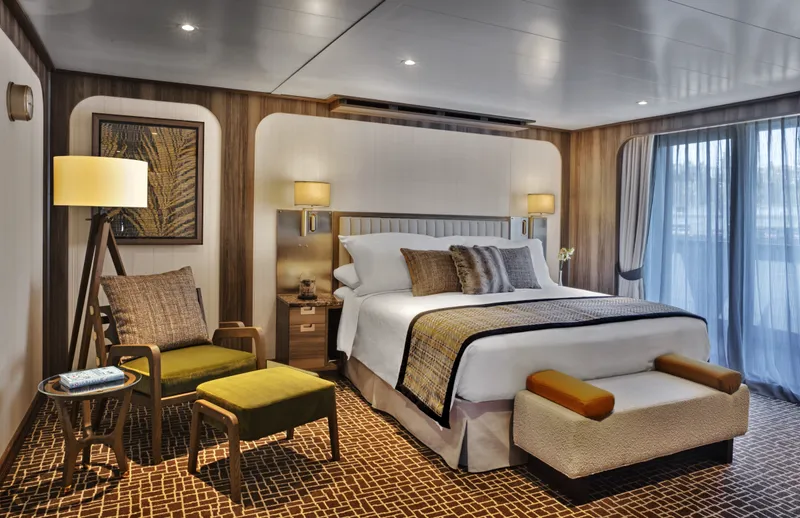
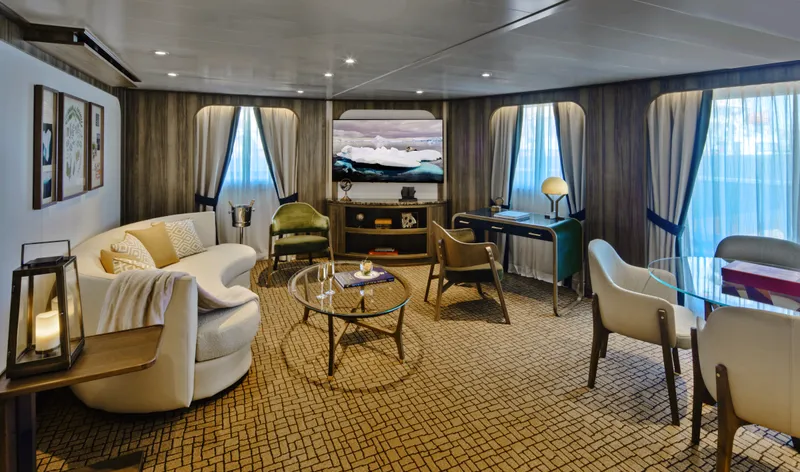
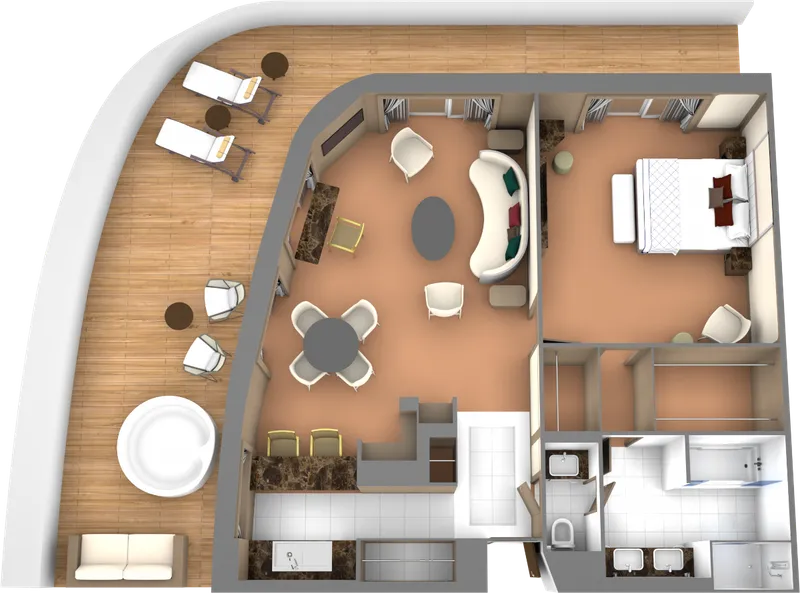
All Signature Suites onboard Seabourn Venture feature a comfortable living area; private veranda; queen-size bed or two twin beds; walk-in closet, personal safe; interactive TV with music and movies; fully stocked bar and refrigerator; writing desk with personalized stationery; makeup vanity; spacious bathroom, separate tub and shower, plush robes, slippers, luxury health and beauty products, hairdryer and 110/220V AC outlets.
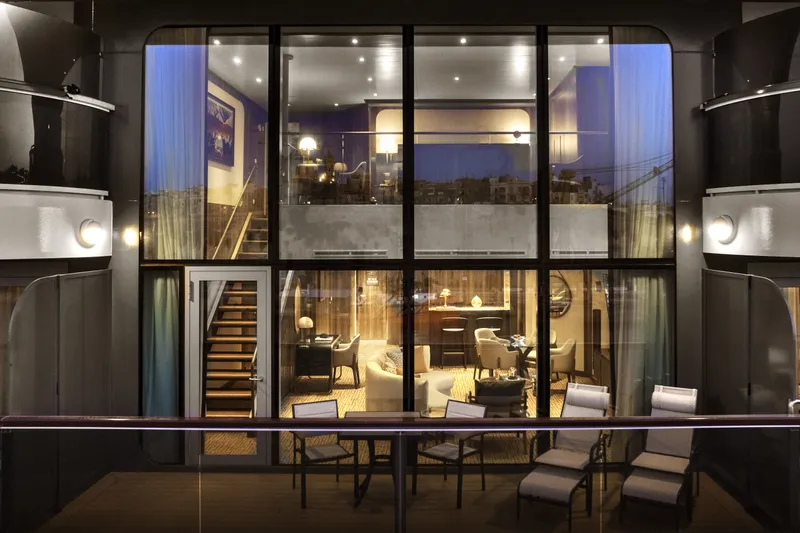
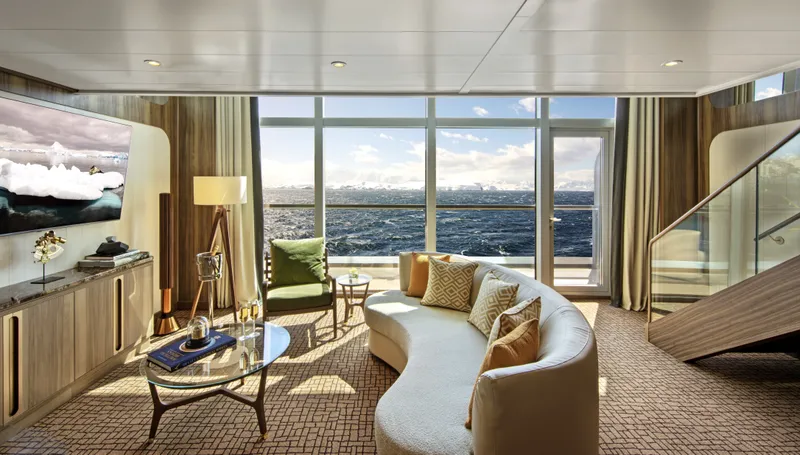
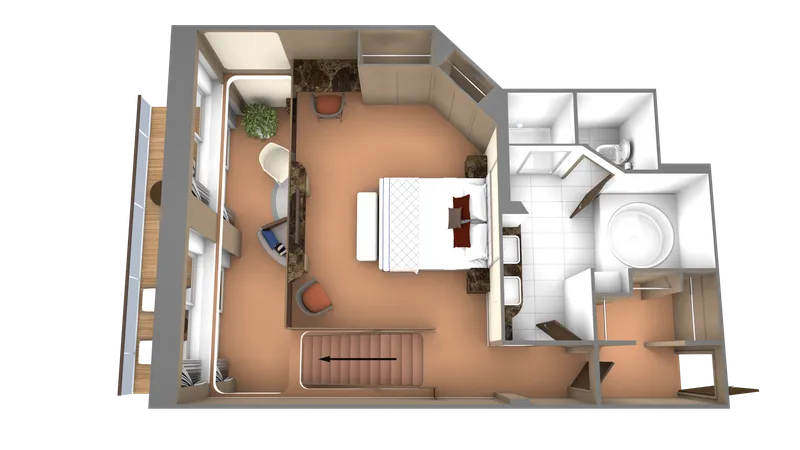
Deck 7 Suites 735, 736; Total space: 1,044 sq. ft. (97 sq. m.) including veranda of 129 sq. ft. (12 sq. m.)
All Wintergarden Suites onboard Seabourn Venture feature a comfortable living area; private veranda; queen-size bed or two twin beds; walk-in closet; personal safe; interactive TV with music and movies; fully stocked bar and refrigerator; writing desk with personalized stationery; makeup vanity; spacious bathroom, separate tub and shower, plush robes, slippers, luxury health and beauty products, hairdryer and 110/220V AC outlets.
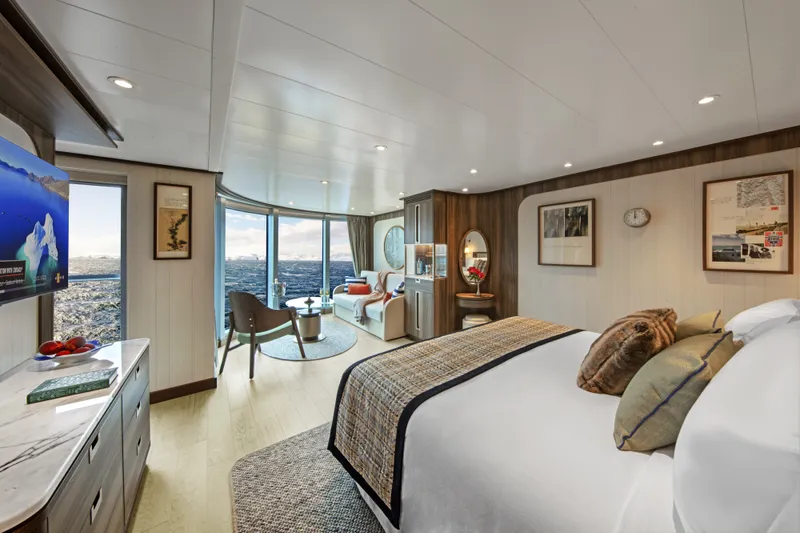
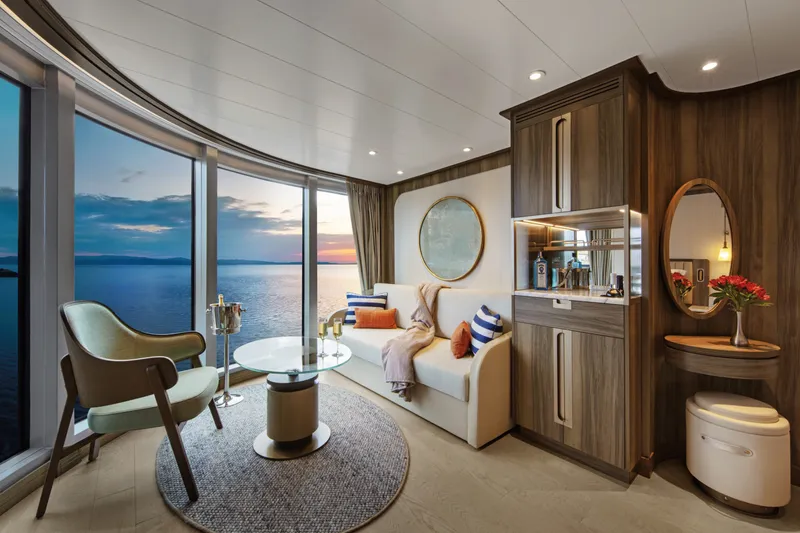
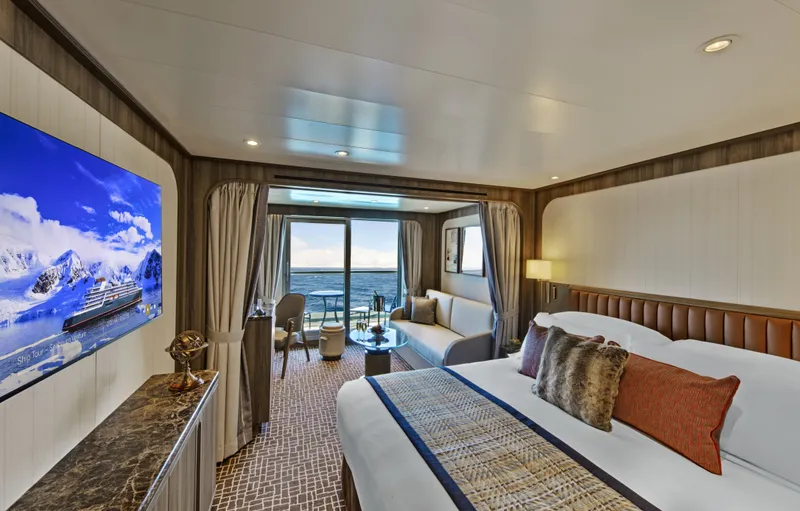
Decks 6, 7, 8; Approximate total space: 355 sq. ft. (33 sq. m.) including veranda of 75 sq. ft. (7 sq. m.)*
All Veranda Suites onboard Seabourn Venture feature a comfortable living area; private veranda; queen-size bed or two twin beds; walk-in closet; personal safe; interactive TV with music and movies; fully stocked bar and refrigerator; writing desk with personalized stationery; makeup vanity; spacious bathroom, separate tub and shower, plush robes, slippers, luxury health and beauty products, hairdryer and 110/220V AC outlets. *Some veranda sizes vary.
Our cruise specialists can help you find the perfect cabin and the best available pricing.
(+886) 02-2721-7300Contact Advisor